
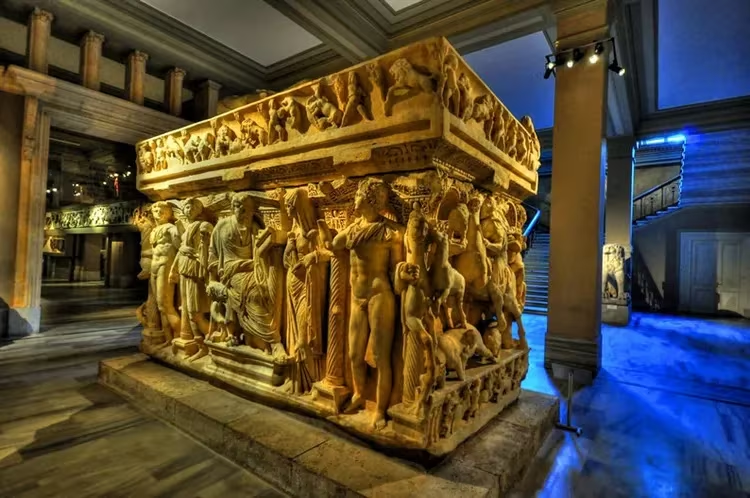
30 best museums in Istanbul – list, prices 2021, opening hours, map
The museums of Istanbul are just what diversifies a beach holiday. Turkey is a country with a long history. And you can study it by walking through the halls, looking at the expositions. Significant events in the life of this country are intertwined with the history of Russia. And it is especially pleasant to meet the canvases of Ivan Aivazovsky far from his native land.
Saint Sophie Cathedral
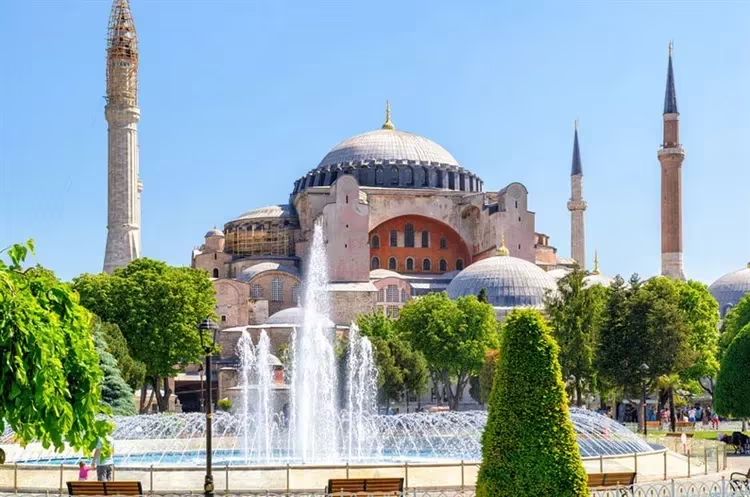
Hagia Sophia is not called by the name of the Orthodox martyr. The name immortalizes the meaning of the word Sophia: wisdom. The cathedral was ordered to be built by Emperor Justinian. He believed that the main temple of the country should be located in the center of Constantinople. The work was carried out for 6 years: from 532 to 537. The labor of 10,000 residents of the city was used. And considerable funds were released: more than 130 tons of gold alone were brought. Rhodian bricks were used: they had cavities inside to reduce mass. Columns of green marble were brought from the plundered temple of Artemis of Ephesus. And from the Roman Temple of the Sun – columns for decoration.
The temple was Christian, and after the fall of Constantinople and the arrival of the Turks, it was rebuilt into a mosque. Minarets were added, interior paintings and mosaics were plastered. This saved valuable monuments from complete destruction. The architecture of the building was repeated by the designers of the Blue Mosque. It was in the Hagia Sophia that the Pope of Rome excommunicated the Patriarch of Constantinople. In response, the Patriarch excommunicated the Pope. This is how the churches split.
In 1935 of the last century, Atatürk ordered the minarets to be removed, the plaster to be removed from the inner walls and a museum to be organized in the building. But the full completion of the restoration is still far away. US activists launched a movement to return the cathedral to believers. But the Turkish authorities rejected this proposal.
The building is not empty. Tourists are attracted by:
Sightseeing should be either early in the morning or in the evening, shortly before closing: at this time there are fewer people.
Topkapy
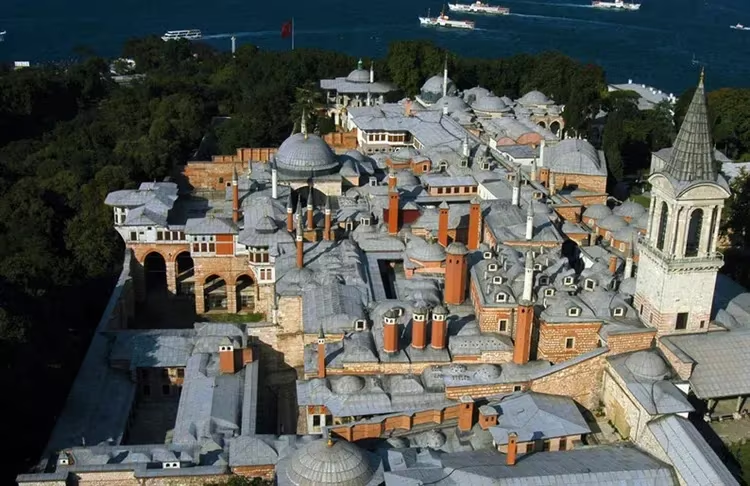
The palace was built by order of Mehmed the Conqueror. And in this complex the sultans of the Ottoman Empire lived for 4 centuries. At first, the ruler settled near Bayazid Square. Before the Turkish invasion, the Byzantine emperor lived here in his palace. But during the siege of the city, only the church of St. Irene remained from the complex. Therefore, the Sultan's palace was built around the temple. The Sultan's Palace is like a fortress: on both sides it is protected by the Sea of Marmara. In addition, the complex is protected by land by 2 rows of walls: external and internal.
Conventionally, the whole complex is divided into several courtyards:
- 1st. Visitors to the complex enter the courtyard through the main gate. Here, tourists visit the oldest church in the city – the Temple of St. Irene, Meydan, where the Janissaries lived, a fountain and a mint.
- 2nd. It is separated from the previous courtyard by the Welcome Gate. This territory includes: kitchens, hammam, sofa (council) building, treasury, place for servants.
- 3rd. It is separated from the second palace by the Gate of Happiness. And this is not surprising: the main building in the courtyard is a harem. Additional buildings: a library, an audience hall (throne room), a school where officials studied, a treasury, barns and storerooms.
- 4th. This courtyard is a place where the Sultan could take a break from government affairs. Therefore, everything here is arranged with taste and comfort. Particularly attractive is the Marble Terrace, which hangs over the shore of the Marmara Sea. Tulip garden is very beautiful. Of the outbuildings, the tower is interesting, where the laboratory of the palace doctor was located.
The complex was built taking into account a possible siege: a tower was erected over the divan, which was used as a lookout, and an underground passage led from the Tulip garden to the bay so that the sultan could urgently sail away from the besieged Istanbul. There was always a ship equipped for sailing in the bay.
Archaeological Museum
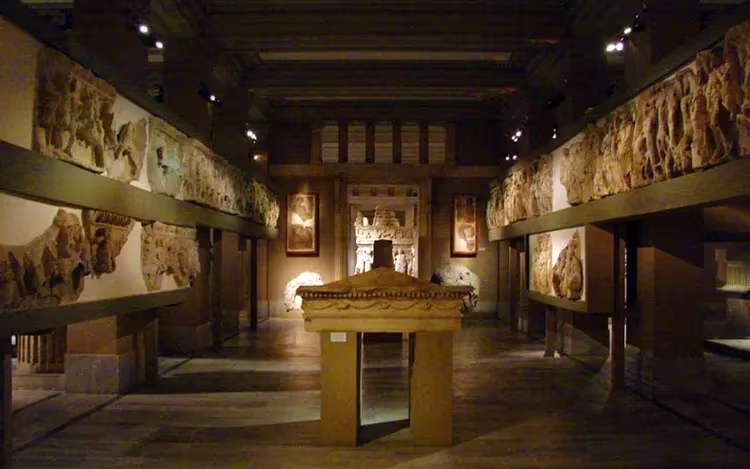
Artifacts were regularly exported from Turkey. Progressive citizens called for an end to plunder. One of them was Osman Hamdi Bey. It was he who called on the authorities to establish an archaeological museum. Work began at the end of the 19th century and lasted 12 years. The initial exhibition offered to see only the tombs. But later the exposition was supplemented by the antiquities of the East and the pavilion of tiles, previously exhibited in the Topkapi Palace.
The collection is constantly updated. At the end of the twentieth century, a building of 6 floors was rebuilt for her. There is also a complex where children can see antiquities. An interactive tour allows the children to become more familiar with the history of the empire. The advantage of the complex is its location in the city center. It is located in the historical part, not far from the Topkapi Palace.
Sirkeci Railway Museum
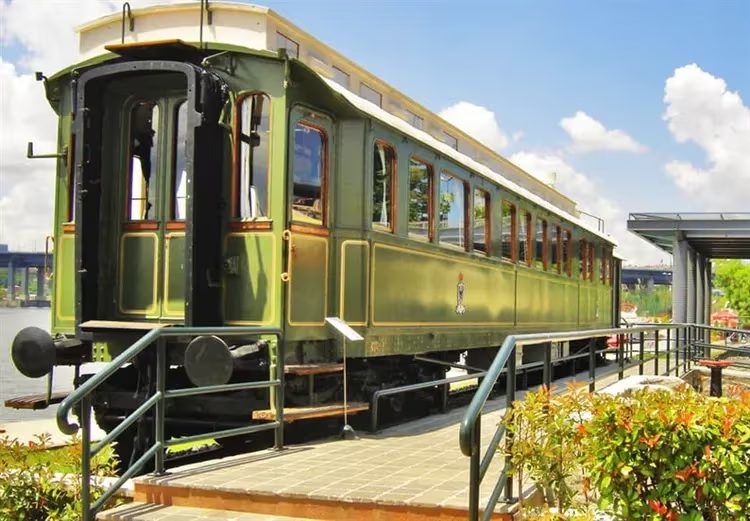
The exposition is located in the part of the Sirkeci station. Its area is insignificant (about 45 square meters), but the objects exhibited here are very interesting. Tourists are invited to see:
- Parts of the interiors and decoration of the carriages of the Orient Express, which once arrived in Istanbul. Silver dishes are presented, part of the dining car is restored.
- Parts of the decoration of the halls: stoves for heating passengers, chairs from the waiting rooms, station clocks are on display.
- Medical equipment that was on every long-distance train in Turkey. There are first aid kits and tools to help.
- Signs that informed passengers about services at stations and trains.
- The means of communication used by the services for the organization of transportation: telegraph, teletype, telephone, signal flags.
- Cash equipment: adding machines, typewriters.
- The current layout of the train.
Adult visitors are attracted by the exhibited cab of a 1955 model locomotive. It is noteworthy that it is realistic to see the entire exposition in half an hour or an hour.
Basilica Cistern
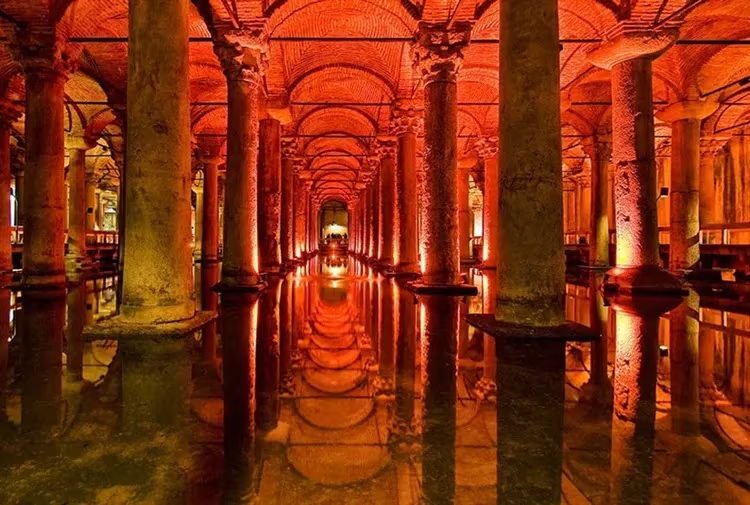
This is an underground reservoir that provided water to the entire population of Constantinople. Construction began under Constantine and ended under Justinian. When the Turks captured the city, they used the Basilica Cistern to water the Tulip Garden of the Topkapı Palace. Soon the new owners of Istanbul abandoned the Basilica. But ordinary citizens knew about the existence of the reservoir: they punched pits in houses and used the liquid for personal needs. Some lowered boats and caught fish, which were in abundance.
The reservoir was found in 1545 by a French digger. But the city authorities did not react to an interesting find. Soon the Basilica began to resemble a waste dump. The Turkish government decided to restore the Basilica at the end of the 20th century. To do this, they pumped out the water, removed the garbage, strengthened the vault. For the convenience of visitors, platforms made of wood were laid. The room is illuminated with lamps. But the floor is covered with a layer of water 1 meter thick. Inside, the Basilica is a cavity with walls more than 4 meters thick. They are impregnated with a water-repellent compound. The ceiling is supported by columns. The researchers claim that they are taken from the destroyed temples.
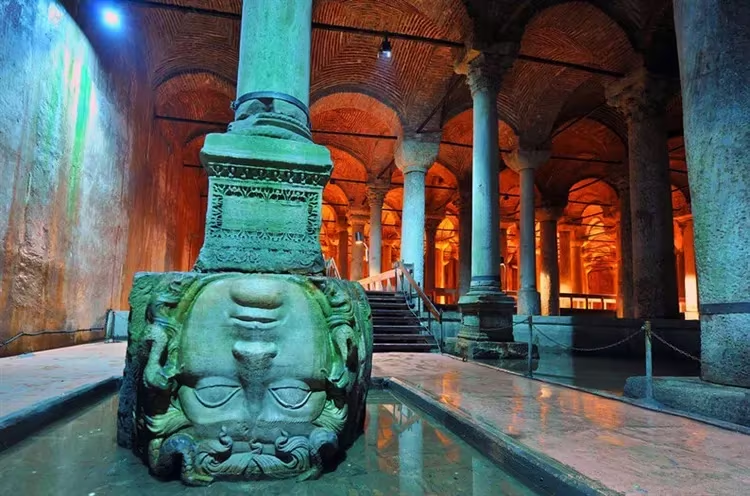
Tourists are attracted by the inverted heads of the jellyfish. These are pedestals from columns, which for some reason are installed in a different place. A legend has been invented that explains this position of the heads. Upside down, they won't turn visitors to stone. The second attraction: the weeping column. Its surface is decorated with carved drops, and the surface is always wet. Legend claims that these are the tears of slaves who died during construction. In the far corner of the Basilica live carp, which are considered the silent guardians of the cistern.
Philoxena Cistern
This is another reservoir built underground. It could supply fresh water to the entire city for a month. It has 3 tiers. But not all of them are available to visitors. Emperor Constantine began to store fresh water for the future. To strengthen the ceiling, columns of Marmari marble were erected. They were hewn in the form of cylinders, consisting of 2 parts, and then fastened with marble rings. The bases of the columns are decorated with carvings. It is noteworthy that the columns are marked by the workers who made them.
It was not easy to get inside the Basilica: the entrance was closed by bronze statues of animals. The water supply was regulated by the machine shop, and in order for the liquid not to fade, the air was passed through holes cut in the ceiling and covered with gratings. During the Byzantine Empire, the cistern accumulated and stored water to supply it to residential areas. And under the Turks, silk was dyed in it. Today, tourists can get acquainted with the building, unique in its beauty and functionality.
Maritime Museum
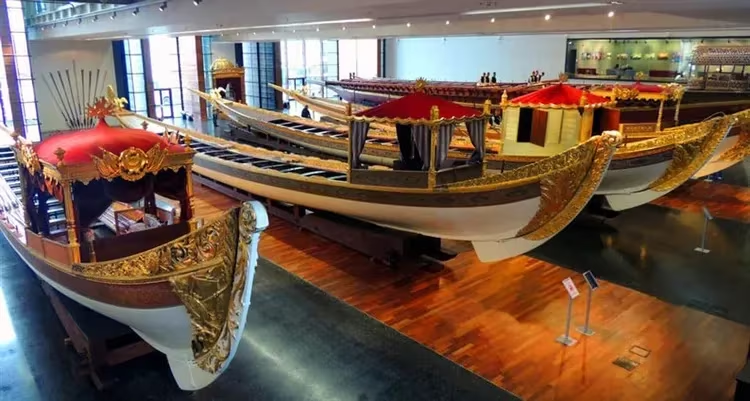
The complex is located on the banks of the Bosphorus. The building has 3 floors, where everything related to navigation in Turkey is exhibited:
Visitors are interested in the hall where the exposition dedicated to Ataturk is presented. Personal yachts, a cruiser, household items belonging to the national hero are exhibited here. Artifacts exhibited in the room are interesting for both adults and children. Nearby is a cozy park where the Turkish admiral Barbarossa Hayreddin is buried. After viewing the exposition, it is pleasant to sit in the shade here.
Park Museum of Miniatures
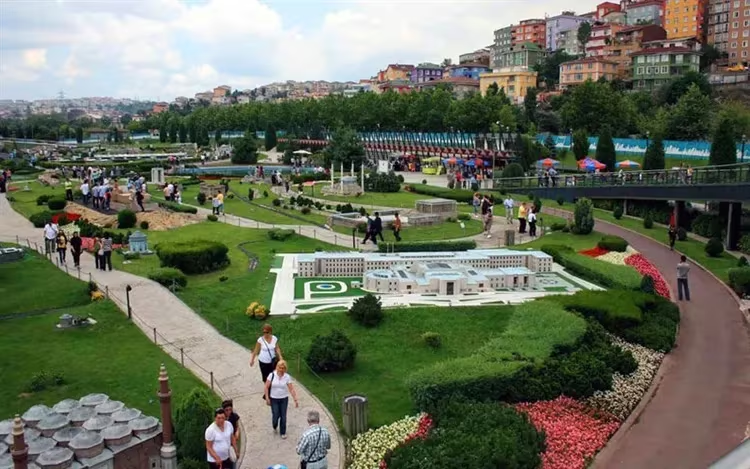
This is a very young museum: it was opened in 2003. The Turkish authorities decided to perpetuate in miniature the most significant monuments for the country and the whole world. The exposition is located on an area of about 60,000 square meters.
Conventionally, it can be divided into several parts:
- Attractions in the city. This is the airport, Sultanahmed Square with the Blue Mosque and Hagia Sophia, Basilica Cistern and Topkapi Palace.
- Landmarks located in Turkey. Tourists are invited to see the Temple of Artemis, the Mausoleum of Halicarnassus, the Malabadi Bridge, Cappadocia.
- Landmarks built during the Ottoman Empire, but currently located outside the country. These are the Damascus Gate, located in Israel, Cairo mosques, the city of Thessaloniki.
The complex has a restaurant, playground, gift shop, parking. Tourists can have a bite to eat without leaving the exposition.
Rahmi M. Koç Industrial Museum
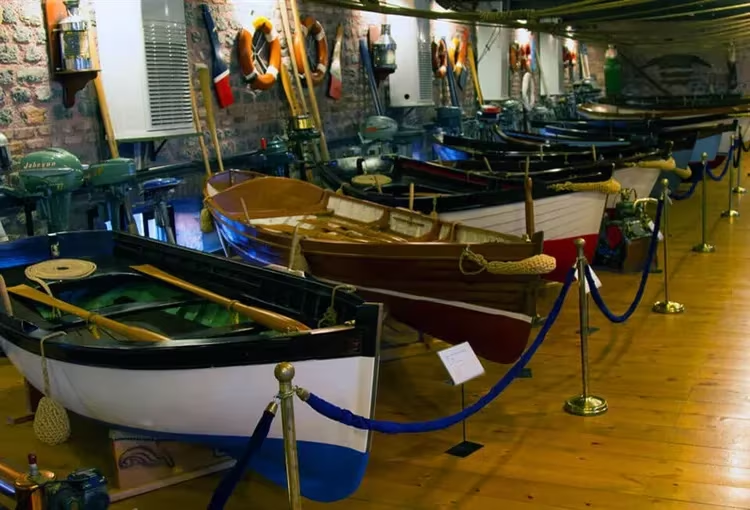
The exposition was founded at his own expense by the Turkish billionaire Rahmi Koch. He, an engineer by profession, decided to exhibit all those creations of human thought that amaze humanity. To begin with, Koch bought out idle foundries located in the Golden Horn Bay. The premises were in need of extensive restoration. Already in 1991 the first tourists visited the exhibition. A few years later, Koch bought out the abandoned shipyards located near the already acquired building.
Again, a large-scale restoration was required, but it justified itself: there was a place for new exhibits. Rahmi Koch did not stop there: he acquired an open area where he placed ferries, steam locomotives, and cars. Now he can boast that he has collected all the outlandish exhibits that can move, fly or simply rotate.
Dolmabahce
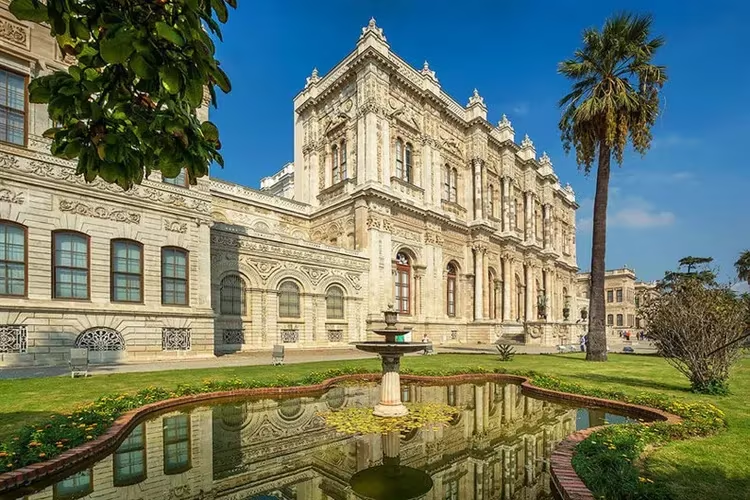
In the 17th century, the waters of the Bosphorus splashed on the site of construction. But the Sultan came up with the idea to fill up a small bay and build a palace out of wood. Over time, the building collapsed. But in the 19th century, Sultan Abdulmejid, who was fed up with palace luxury, decided to build a luxurious castle on the site of the embankment, which differed from the simple but functional Topkapı Palace. The structure is therefore called the “mound garden”. The palace was distinguished by unprecedented luxury: hundreds of kilograms of gold and silver were used to decorate it.
The interiors of Dolmabahce still impress visitors today. Tourists are invited to see the throne room, where Abdul-Mehmed held solemn receptions, the premises of the harem, the palace kitchen and the personal quarters of the Sultan. The treasury attracts visitors, where jewelry and personal belongings of the inhabitants of Dolmabahce are exhibited. Abdul-Mehmed was a fan of Ivan Aivazovsky. The halls of the palace are decorated with paintings by the artist, specially ordered by the Sultan. Basically, they depict the Bosphorus.
Rumelihisar
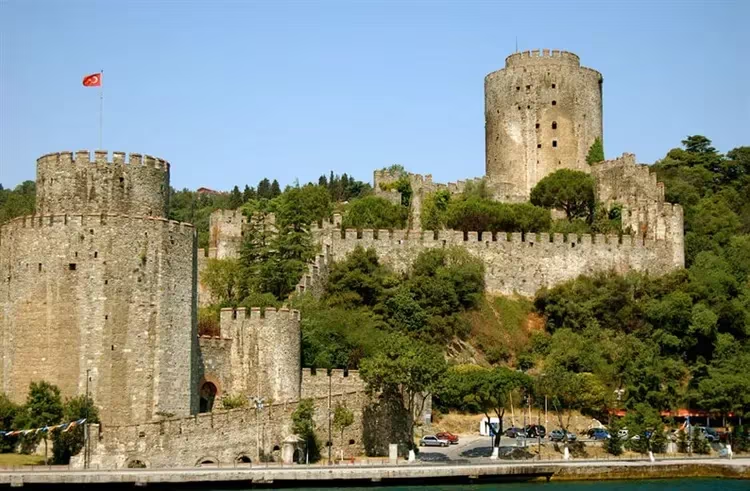
The fortress played an important role during the siege of Constantinople by the Turks. It was built opposite the already existing Anadolu Hissar fortress, making the Bosphorus closed to the passage of warships from the Black Sea. The fortress was built in a uniquely short time: 4 months and 16 days. At the same time, the construction was personally controlled by Sultan Mehmed the Conqueror. The garrison consisted of 400 Janissaries armed with cannons.
Currently, tourists are invited to view the courtyard, where the cannons that were in service with the garrison during the capture of Constantinople are exhibited. You can climb to the observation deck or just wander along the walls, enjoying the views of the Bosphorus.
Military Museum
Initially, the exposition was located in the Church of St. Irene. Moreover, from time to time the exhibition was closed, and weapons were simply stored in the temple. But in 1950, a place was found for the exposition in the gymnasium of the military academy of the Ottoman Empire. And again, not everything went smoothly: the exhibition was moved, the premises were reconstructed and rebuilt. Since 1993, tourists have been offered a permanent exhibition of 22,000 items. The main value is a unique collection of weapons. Copies of the 16th-20th centuries are presented. All significant battles in the history of the Ottoman Empire are shown in the halls.
Tourists will get acquainted with:
From 15:00 to 16:00, the Mehter military band plays in the halls. There was a tradition: during the movement of troops and before the start of operations, an orchestra passed through the streets, performing military marches in a minor key. The inhabitants knew that a new era was beginning.
Beylerbey Museum
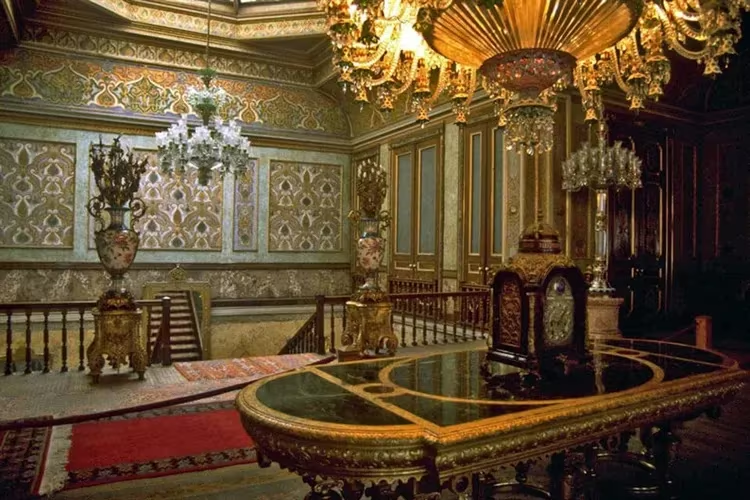
This building is located in the Asian part of the city. The complex consists of the house itself and the garden around it. Once upon a time, the Sultan lived in the palace with his family in the summer. Recently, the inspection was carried out only with a guided tour. Now tourists can get acquainted with the interior and architecture on their own. The audio guide helps them with this. Initially, Mehmed 2 ordered the construction of a summer residence made of wood on this site. The palace stood for several years and burned down. But instead of the building that died in the fire, they rebuilt another one, made of marble. The building is 3 floors high, it has a basement.
The style is modern baroque. The interiors of the rooms are rich: Bohemian crystal chandeliers, Egyptian reed mats on the floor (they protected the owners' feet from extreme temperatures), and Chinese vases. The furniture is finished with wood carvings. It is forbidden to shoot on camera: this is strictly monitored by the museum staff. There are many trees and flowers in the yard, the territory is decorated with images of animals. There are benches for tired tourists in the garden. Everywhere is very clean. The site offers a marvelous view of the Bosphorus.
Museum of Turkish and Islamic Art
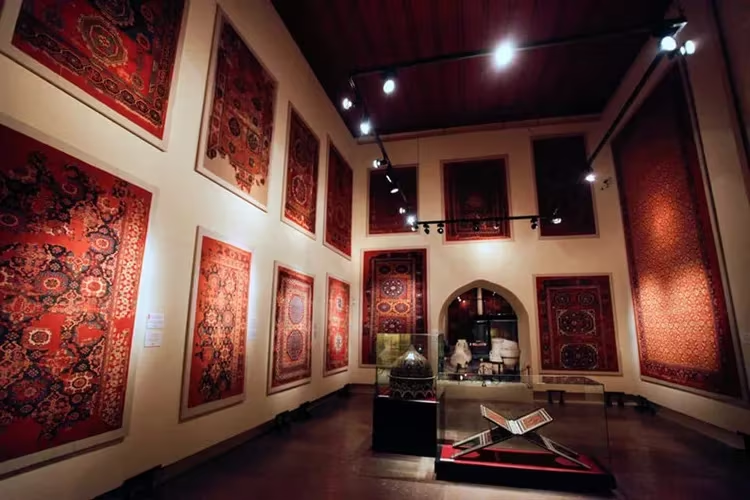
The modern exposition is located in the mansion donated by Suleiman the Magnificent to Ibrahim Pasha. This building is an architectural monument, its value is commensurate with the Topkapi Palace. Only by visiting the complex, you can understand the tastes and preferences of the Turkish people. The exhibition is huge: it consists of 40,000 items belonging to the nobility. The earliest artifacts date back to the 16th century. Until 1914, the exhibition was very modest: it occupied the dining room of the Suleymaniye Mosque. The heyday of the complex came in 1938: at that time the Republic of Turkey was proclaimed. In 1985 the museum was included in the UNESCO catalogue.
Visitors are invited to see:
The exposition ends in the hall of ethnography. Yurts, costumes from the Ottoman times, parts of the interior are exhibited here.
Yedikule Museum
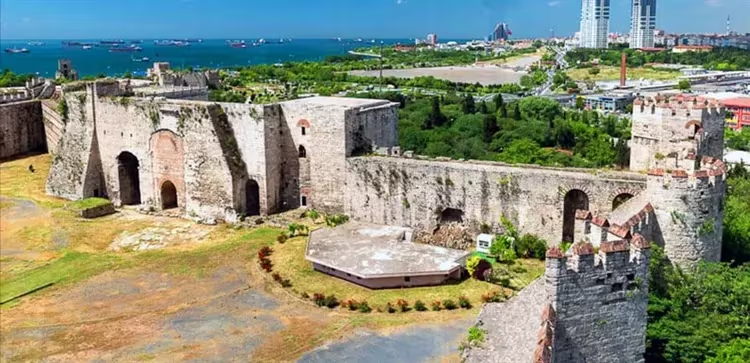
Any tourist strives to visit the Golden Gate. But they are part of the fortress wall, which once protected Constantinople along the entire perimeter. Through this triumphal arch, the emperors of the empire entered the city. After the fall of Constantinople, Mehmed the Conqueror did not destroy the Golden Gate: on the contrary, he ordered to build around 7 towers, to further strengthen the walls. This is how the seven-tower (edikule in Turkish means 7 towers) fortress appeared.
In the courtyard, visitors will see the guns that fired at the city in 1453 and the cannonballs for them. The walls offer a marvelous panorama of the city and the Bosphorus. You can walk and admire the surroundings from half past ten in the morning until half past five in the evening on all days of the week, except Wednesday.
Panorama 1453
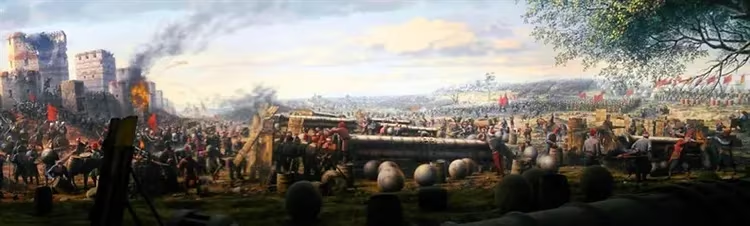
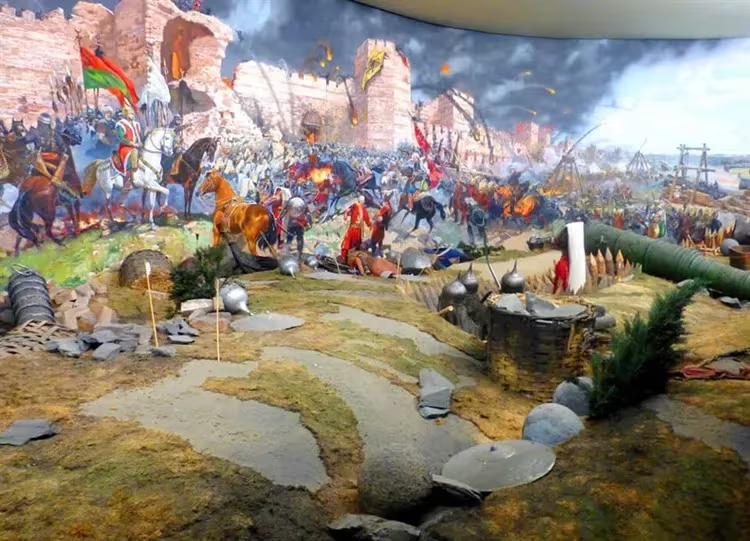
The center has been operating since 2009. It was organized at that time by Prime Minister Erdogan and Mayor Topbash. Especially for the exposition, a building with a height of 20 m and a diameter of the main hall of 38 m was built. The exhibition is dedicated to 54 days of the siege, after which the Byzantine Empire fell and another, the Ottoman Empire, arose. The painting depicts 100,000 military men participating in the battle from both sides. The canvas is highlighted, which enhances the overall impression of the panorama.
All types of weapons that were used during the battle are presented. Moving along the observation deck, you can get acquainted with all the stages of a long and bloody siege. The complex is equipped with an elevator and a lift for people with limited mobility who want to visit the panorama.
Aviation Museum
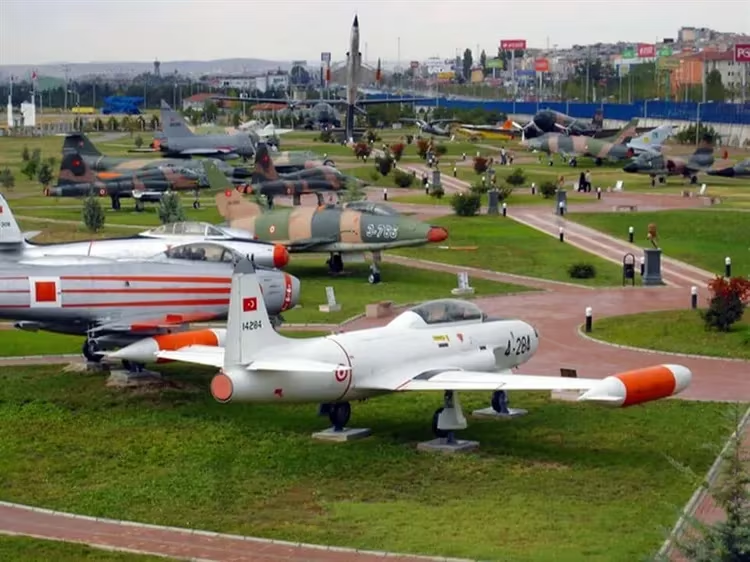
The advantage is the proximity to the international airport. You can get there in just 20 minutes by commuter train. And you can view the exposition located in the open air for 3-4 hours. Aviation lovers will get a lot of positive emotions. On the open-air site, all variants of what was in service with Turkey in different years are exhibited.
Visitors will see aircraft built by Turkish design bureaus, purchased in Italy and South Africa. For tired tourists, there is a cozy cafe on the territory where you can have a bite to eat and rest. Viewing the exhibition is a great activity for transit passengers who have a few hours of free time.
Museum of Palace Collections
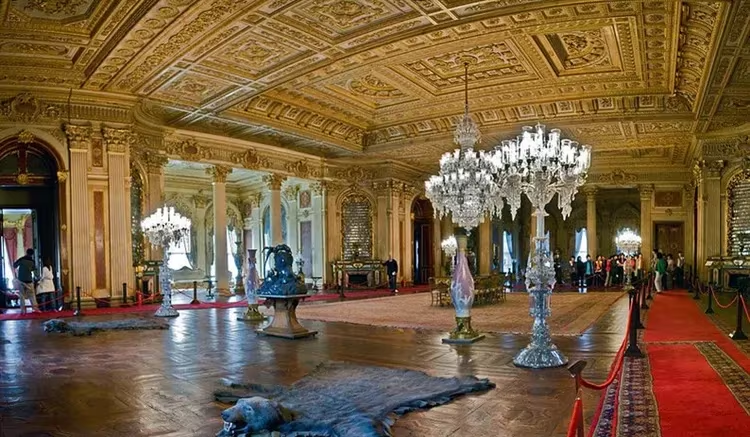
Everyman dreams of learning the secrets of the life of nobles. The exposition of the complex of the Palace Collections helps to satisfy this passion. The exhibition is located in the building where the Sultan's kitchens were once located – in the Dolmabahce Palace. The value of the exposition lies in the fact that the artifacts belonged to the sultans of different dynasties. Crockery, parts of interiors, clothes, books, watches, furniture are exhibited. The complex is open on all days of the week from 9 am to 5 pm, except Monday and Thursday.
Museum of Painting and Sculpture
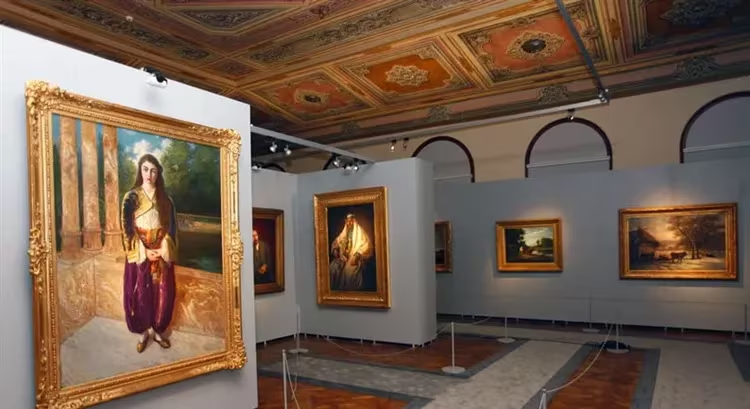
The exposition received its first visitors in 1937. And the initiator of this exhibition was Ataturk. For a Muslim country, the opening of such a complex was revolutionary. The basis of the exhibition is the works of Turkish artists and sculptors who created art objects in the 19th and 20th centuries. The administration of the complex is proud of the sculptures of Eyyuboglu and the paintings of Abidin Dino. But the paintings of the Russian marine painter Ivan Aivazovsky are also presented in the halls. Unfortunately, part of the premises is under reconstruction, it will not be possible to visit them. The exhibition can be viewed from Tuesday to Saturday. The complex is closed on Sunday and Monday.
Carillé Museum
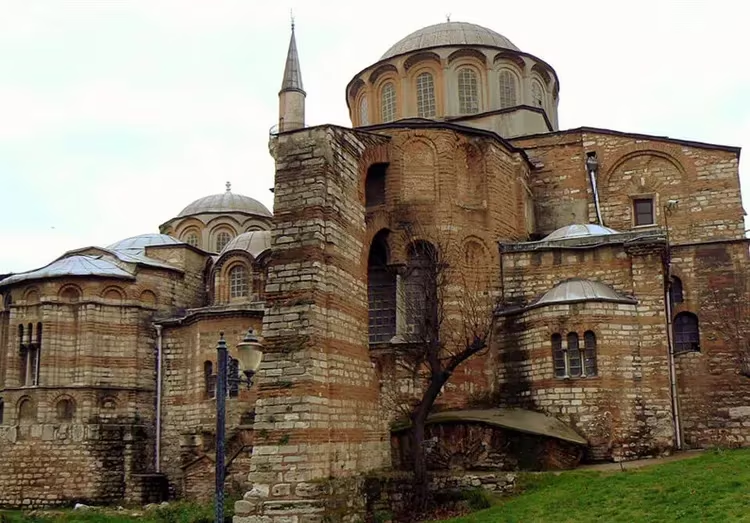
The building of the modern museum was built by the Byzantines in the 5th century. It was called the church of Hora, which means: “outside the city.” At that time it was an Orthodox church where regular services were held. After the fall of Constantinople, the church of Chora was turned into a mosque, then again given to Orthodox believers. Since 1958 it has been an exhibition complex, services are not held here.
From the outside, the building looks modest, but inside there are unique collections. Visitors will see perfectly preserved Byzantine frescoes and mosaics. Chora Church has the only mosaics illustrating biblical scenes. Stories from the childhood period of the Savior, miracles performed by God are presented. The doors of the Chora Church are open to visitors on all days of the week, except Wednesday, from 9 am to half past five in the evening.
Museum of retro cars
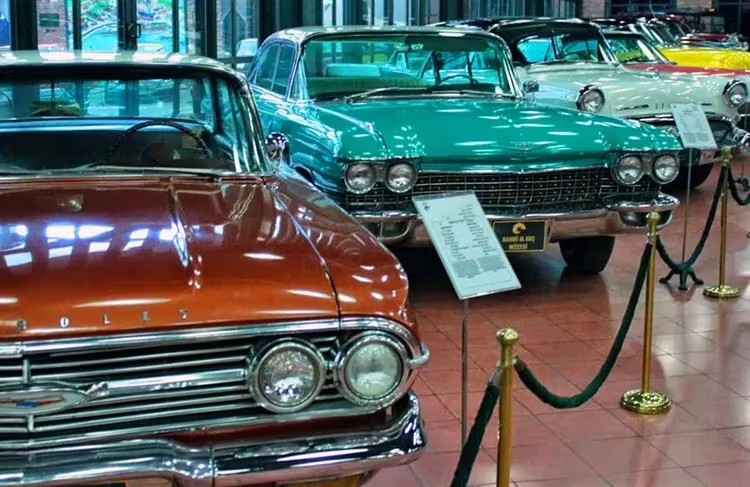
This exhibition will appeal to anyone who loves cars and the history of the automotive industry. The complex is located in the Asian part of the city, next to the Eminenu pier. This is a new private complex: it was created in 1988 by the collector and motorist Chingiz Artam. All his life he collected vintage cars, looking for rusty rubbish in the province, buying it from the owners and restoring it. And when the collection grew, Chingiz Artam decided that it was time to show it to everyone. Thus, a unique complex appeared.
The owner of the vernissage not only exposes wonderful specimens for inspection. He promotes motoring. In 2004, several Artam cars participated in retro races. One of them was driven by Schumacher. Turkish television showed a documentary film about these competitions. Main idea: Turkey is ready to win the hearts of tourists with outlandish expositions on industrial topics.
Museum of Calligraphy
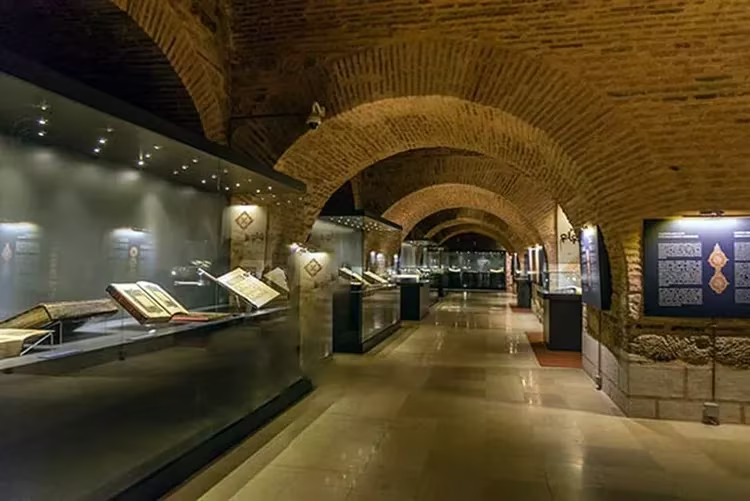
Muslim art is quite unusual: the faithful are forbidden to depict the faces and figures of people. But rewriting suras from the Koran in different fonts, richly decorating the inscriptions with floral ornaments, is allowed. This was the beginning of calligraphy. Many noble persons of the empire owned this art. Sultan Bayazid 2 himself was engaged in calligraphy with enthusiasm. And Mehmed 2 the Conqueror enthusiastically portrayed suras. Samples of his manuscripts are presented at the exhibition.
Visitors will see:
The exhibition can be visited from 9 am to 12 noon and from 1 pm to 4 pm.
Carpet Museum
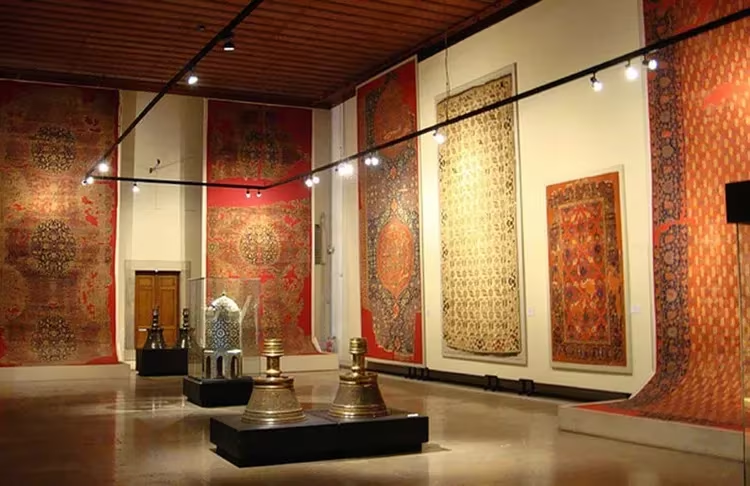
In 1979, the exhibition was located in one of the pavilions of the Sultanahmet Mosque. But the collection has grown: the number of presented artifacts has approached 2500 units. Therefore, in 2013, the exposition was transferred to a specially restored building near the Hagia Sophia. Modern premises allow you to maintain the required temperature and humidity to preserve unique specimens.
For the convenience of visitors, the collection is divided into the main periods of the development of carpet weaving:
- Early Ottoman and late Seljuk periods.
- The middle period of the development of the Ottoman Empire. During this time, prayer mats became popular. Rich exposition of Anatolian carpets.
- late period of the Ottoman Empire. Huge carpets on display. Tourists will see how prayer mats have changed.
The exhibition welcomes visitors from 9 am to 4 pm on all days except Sunday and Monday.
Pera Museum
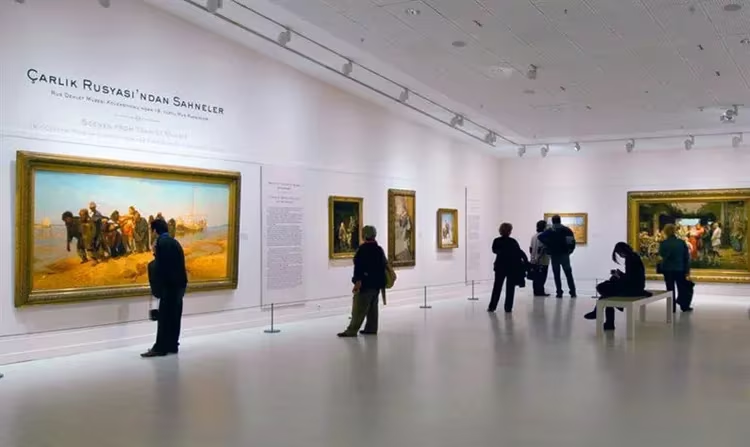
This is a fairly new exhibition, but it has already become popular with tourists. To accommodate all the artifacts, it was necessary to reconstruct the buildings of the 19th century. Exhibitions here are divided into permanent (they are located on the first 2 floors) and thematic (other rooms are reserved for them). The exposition is constantly working: a collection of measures and weights that existed in Anatolia, coffee porcelain, paintings of the 19th century, painted by Turkish artists.
The complex has a cinema hall where films on topics related to the expositions are shown. The administration organizes activities for visitors. Tired tourists can dine in an inexpensive cafe on the territory of the complex. There is a small souvenir shop on the ground floor. The complex welcomes visitors from 10 am to 6 pm on all days except Mondays.
Modern Art Museum
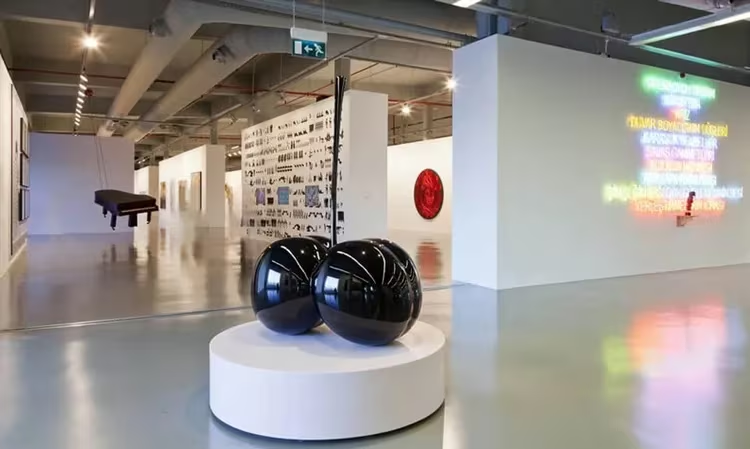
The warehouse building in the port was reconstructed to accommodate the exhibition. Now it is a fashionable place, which is visited not only by tourists, but also by residents.
The complex has:
- A modern cinema hall where interesting films are shown
- Library with a collection of books and magazines on contemporary art
- Halls for thematic and permanent exhibitions
- Premises for events dedicated to contemporary art
- Photo gallery, which presents pictures of Turkish photographers
- An exhibition of modern sculpture, which is located in a small cozy courtyard
All exhibits have explanatory plates in Turkish and English. In addition, visitors can use the audio guide. It is possible to visit the complex from 10 am to 6 pm on all days except Monday.
Church of St. Irene
This church was built by Emperor Constantine. He forced his subjects to be baptized, but at the same time he immortalized this event as peaceful (Irina means “peace”). The temple was repeatedly damaged. The reasons were different: religious wars, natural disasters, the coming of the Ottomans. But he didn't die. Today it is a cultural institution. It is called the Temple of Art. Concerts are held here, all performers and listeners note the unique acoustics of the room. Visitors can see the remains of frescoes and mosaics on the walls. They are well preserved. Inside is the tomb of Emperor Constantine. You can visit the Church of St. Irene from 9 am to 5 pm on all days except Tuesday.
Museum of Innocence
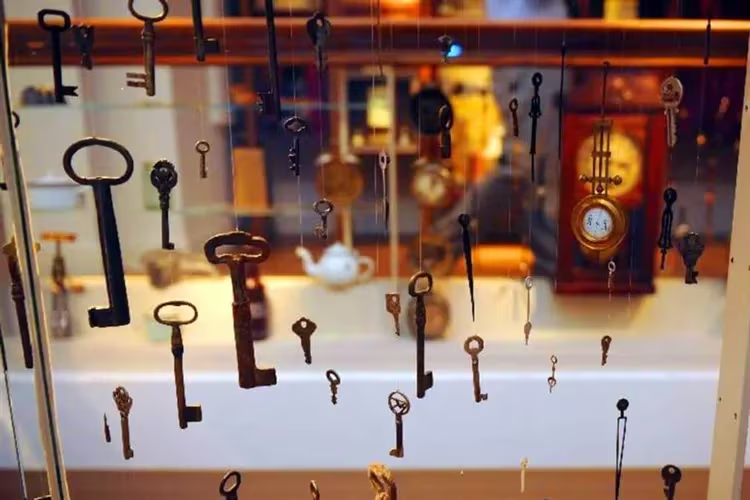
This exposition will be interesting for people who are truly in love. It was created by the author of the novel “Museum of Innocence” Orhan Pamuk. The novel was published in 2008. The exhibition was created exactly as described by the author. He bought a house from the municipality, where, in his opinion, the heroine Fusun was supposed to live. Then Pamuk filled the room with things that, as it were, the heroine of the novel used. He bought them in advance at flea markets.
And to create a touching exposition turned out to be a matter of technique. None of the visitors are left indifferent by cigarette butts with a description of events or worn-out shoes. In addition, there is a desire to read the entire novel. You can view the romantic exhibition from 10 am to 6 pm on all days except Mondays.
Living History Museum and Dioramas
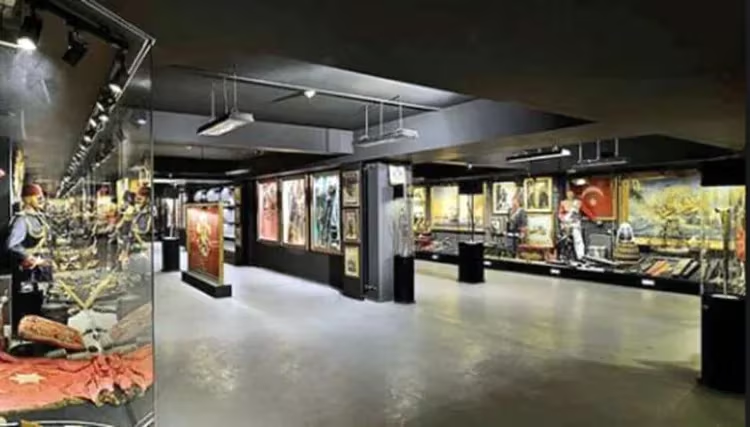
This exposition was prepared by a creative person, artist and industrialist. He collected exhibits and designed dioramas on his own for 18 years. The purpose of the exhibition is not only to study the past of the world, but also to try to model the future. Not a single event that took place on the planet remained outside the framework of the exhibition.
All elements of the dioramas are observed exactly. But the owner of the center does not stop there. He wants to expand the exposition, add premises for a library with a reading room and a cozy garden where visitors can take a break. The administration plans to move the complex closer to the historical center in order to make it easier for tourists to get there.
Кючюксу
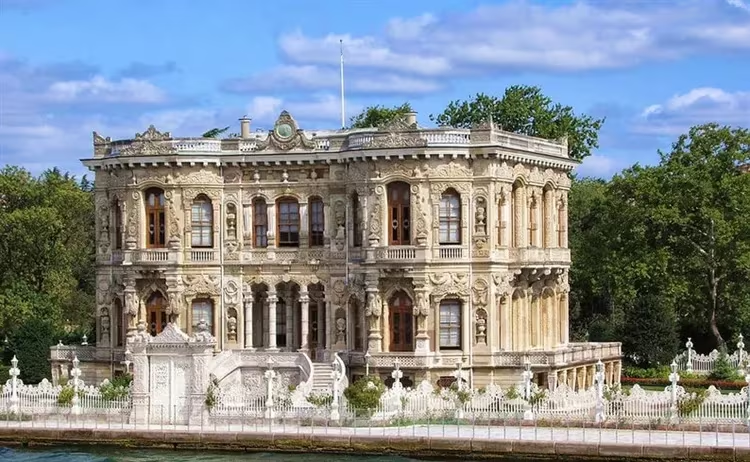
Sultans are capricious people. And Abdul Majid was no exception: he needed a summer residence. No sooner said than done. Between two rivers, Kyuchuksu and Geksu, a wooden palace was built. But this is too vulnerable material, so Abdul Majid soon rebuilt the building. From now on, he had stone apartments. The building style is defined as New Baroque. At the same time, the European sophistication was complemented by Asian splendor.
The complex has been operating as an exhibition since 1944. But the palace was dilapidated, and in 1992 a large-scale restoration was carried out. Inside, the original interiors of the time of Abdul Mezhid are presented, and in the courtyard there is a cozy garden with ponds. Today the palace can be visited with a guided tour. The complex is open for tourists from 9 am to 5 pm on all days of the week except Mondays.
Porcelain Factory Museum
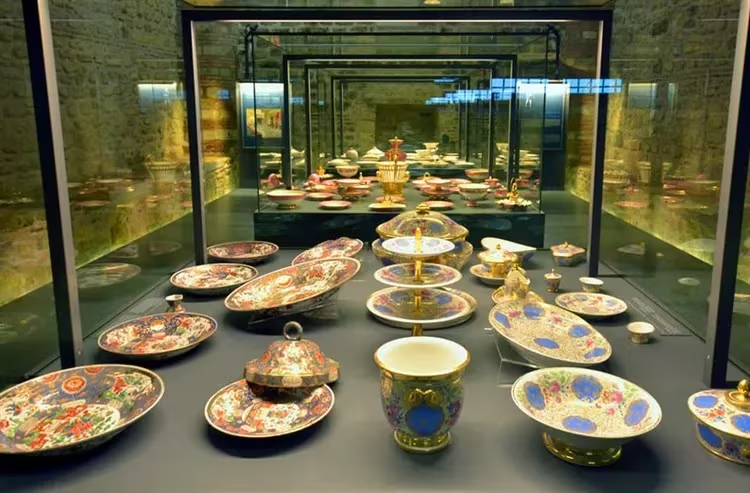
The Turkish authorities at the end of the 19th century took measures to improve the efficiency of local porcelain production. For this, process engineers from France were invited. New products conquered not only the nobility of Istanbul, but also the inhabitants of Europe. Products were decorated with images of the Sultan, animals, landscapes. Vases, plates, jugs, cups were not only beautiful, but also of high quality. These products were bought not only in Turkey, but also abroad.
In the 30s of the twentieth century, the plant still stopped producing products, and was closed. But in 1957, porcelain production began again. In 1995, a museum was organized at the factory. Now tourists can not only take a tour of the workshops, learn the intricacies of porcelain production, but also purchase their favorite exhibits in the souvenir shop.