
30 best museums in Krakow – list, photo, description, prices 2021, map
Krakow is a city where Gothic architecture, Renaissance and modern times are closely intertwined. It has always been famous for its buildings, picturesque landscape, the oldest university in Central Europe. There is something to see here for both lovers of old houses and those who like to enjoy active sports in ski resorts. This city is considered the second capital of Poland. There are many entertainment venues located in the Kazimierz area, theater, opera. The museums of Krakow are ready to offer acquaintance with the customs of this country, various new and old equipment, and the history of aviation. Outside the city, you can see beautiful dilapidated medieval castles that have seen many battles in their lifetime, against the backdrop of mountains and green valleys. Here everyone will find something that he will like.
cloth rows
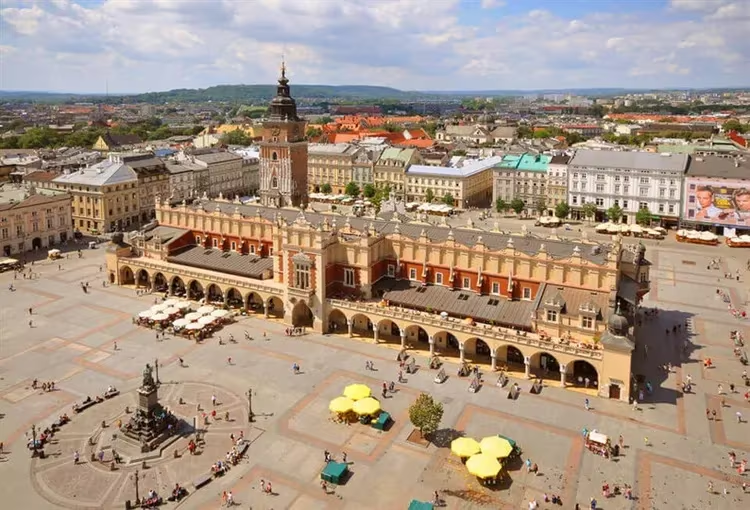
In the 13th century, local weavers produced large quantities of quality cloth. There was a constant increase in demand for high-quality products, both from the local nobility and foreigners. King Bolesław V solved the marketing problem by building the Cloth Hall. The building is located on the market square. Since the completion of construction, Poland has experienced many wars, during which the Cloth Hall was repeatedly burned, partially destroyed. But each time it was restored.
Many architects worked on its restoration, and each time they completed something new, changed the exterior, expanded it. Today, you can see the hall as it was rebuilt by King Casimir the Great in the 14th century. Minor changes to the appearance of the facade were made at the end of the 19th century by the architect Tomasz Prylinsky. The cloth hall has two floors. On its facade there are many decorations in the form of human heads, molded, as they say, from real citizens. The building belongs to the UNESCO World Heritage Site. Inside the cloth rows, everything is still being traded, as it was many centuries ago, but not with cloth, but with souvenirs.
Book a private transfer from the airport to your hotel for 1 971 RUB
Ethnographical museum
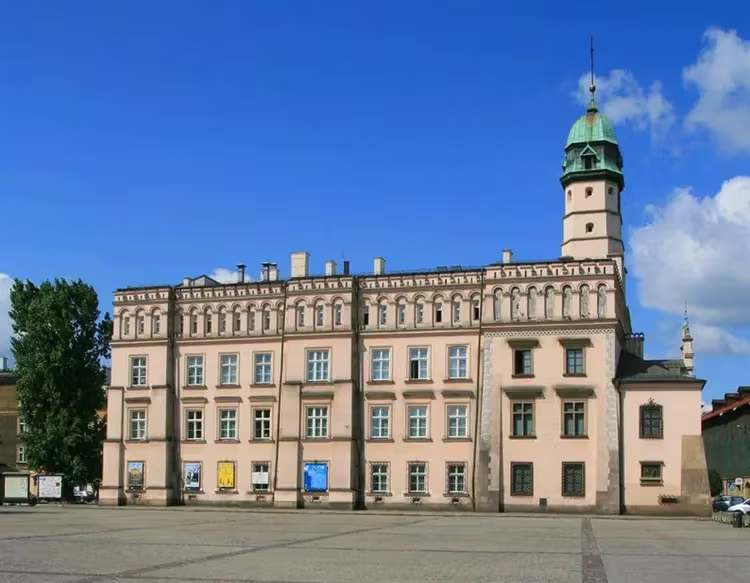
The idea to build a complex, where all the exhibits will be devoted to Polish and European history, appeared in 1902. The construction was preceded by an exhibition of folk art, where exhibits belonging to the researcher and ethnographer Severin Udzeli were exhibited. The institution was opened in 1911. After the Second World War, the exhibits were moved to the building of the former Kazimierz Town Hall. The complex houses more than 8,000 exhibits. Many of them used to belong to Severin Udzeli, Tadeusz Eistrakher, writer Stanislav Witkevich.
As the institution developed, the museum began to replenish with things from non-European countries. There you can see an ancient iconostasis, a Tibetan collection, archival manuscripts, photographs and drawings of the 19th century, chests with baroque paintings, musical instruments, spindles, spinning wheels. Items are exhibited that acquaint visitors with the old interior of the premises of bygone times, workshops, traditional clothes of Poles and other nationalities. In addition to ancient items, there is a library with about 30 thousand valuable books.
Museum of the Krakow Archdiocese
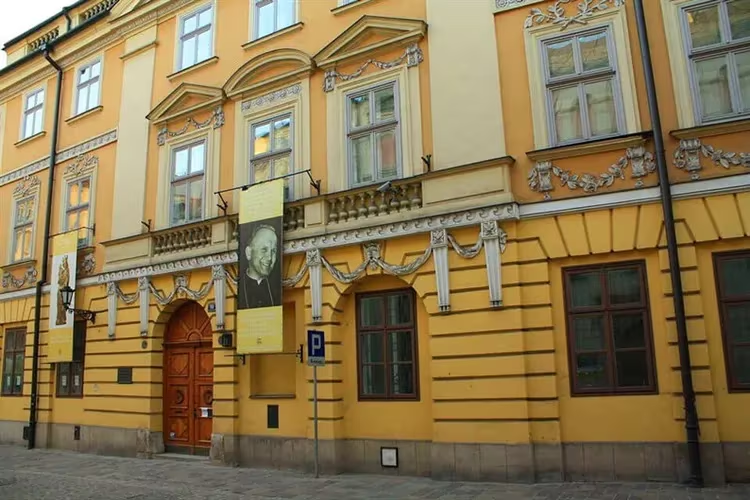
It was opened in 1906. The initiator of this idea was Archbishop Cardinal Jan Puzynia. The institution was named after Cardinal Karol Wojtyla. For many years the collection was in the process of formation. The institution was headed by the historian Tadeusz Krushinsky. After his death in 1959, all exhibits were transferred from Wawel to the former Augustinian monastery at the church of St. Catherine of Alexandria. In 1994, due to a significant expansion of the collections, they were divided into two parts and placed in two different buildings on the street. Canonical.
The first part is located in the “Dzekansky house”, and the second – in the “House of St. Stanislav”. These two houses were opened with the participation of Archbishop Franciszek Macharski of Krakow. Now, within the walls of the institutions, unique exhibits of the 13th-19th centuries are stored, including magnificent religious sculptures, church paintings, applied art, and temporary exhibitions of sacred art are also held there. Within the walls of one of these houses there is a room where Pope John Paul II once lived.
MOSAC
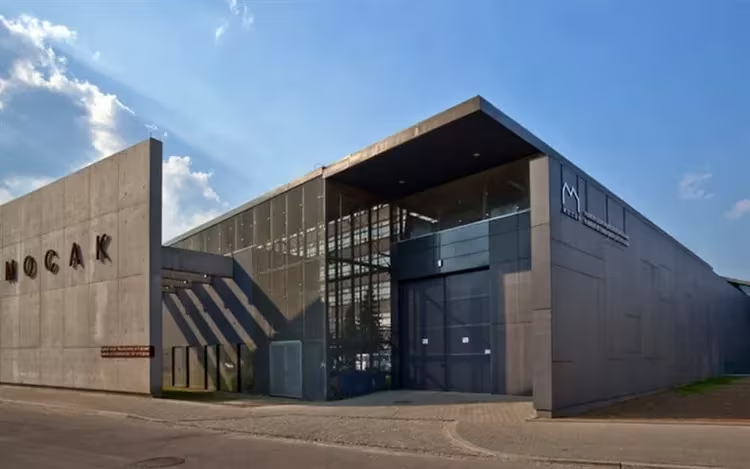
The abbreviation MOSAK belongs to the Krakow Museum of Modern Art. The idea of opening this institution came from the mayor of the city, Jacek Majchrovsky. In 2005, an application was submitted for its construction, and already in 2009, construction began on the building. They decided to organize the museum at the old Schindler factory. At the time of construction, the premises belonged to the mayor, and he handed it over to the institution. It was decided to divide the building into two parts – in the first building there is a historical museum, and in the second – contemporary art. The opening of the institution took place in 2011.
Exhibitions of masters and contemporary artists are regularly held there. Mostly there are exhibited works covering the period of the last 20 years. In addition to temporary exhibitions, there are also permanent exhibitions. Each project is accompanied by an educational program. Permanent exhibitions are located on the first floor, while temporary ones are held indoors on the second. There is a library and a restoration workshop on the premises, the services of which, if necessary, can be used by visitors.
Pharmacy under the eagle
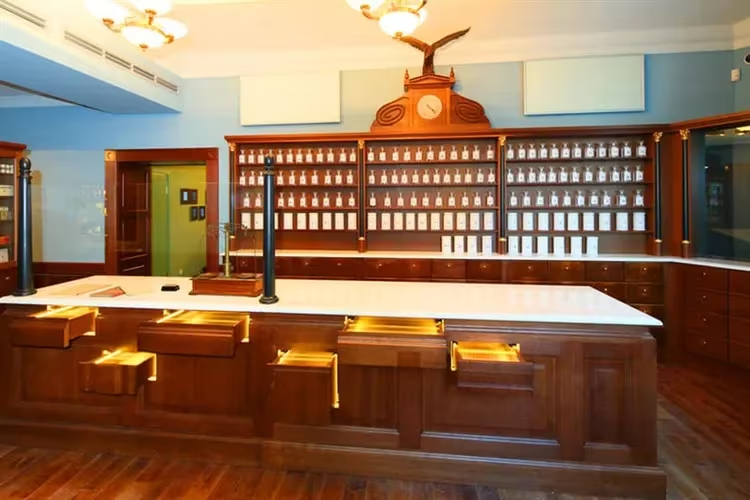
The object is located at the place where there was a ghetto during the war. There were no other pharmacies in that area but this one. She worked in 1940-1943, at a time when the Nazis occupied Poland. The establishment belonged to the only inhabitant of Polish origin in that area – Tadeusz Pankiewicz. In addition to its direct purpose, the institution served for underground meetings, and was closely associated with the Jewish resistance. The institution is located on the street. Heroes of the Ghetto.
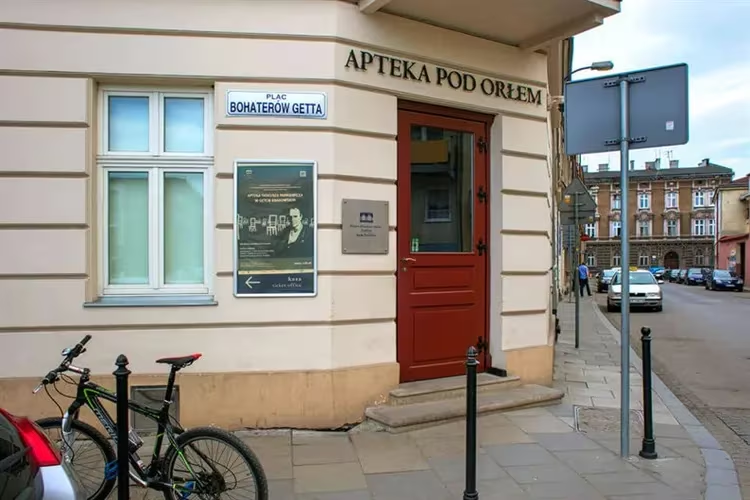
At the moment, there are exhibits in the room that tell about how Jewish families lived in wartime, what role the pharmacy played during the occupation. Many exhibits are connected with the underground activities of Tadeusz Pankiewicz himself, a pharmacist and pharmacist who repeatedly risked his life to save the Jews. The museum was opened in 2003.
This place is remembered in the film of the famous director Steven Spielberg “Schindler's List“. In 2004, the director of the film provided financial support to the museum, for which he was awarded the honorary title “Patron of Culture of Krakow”. In order for visitors to feel the tragedy of the events more, innovative computer technologies are used.
stained glass museum
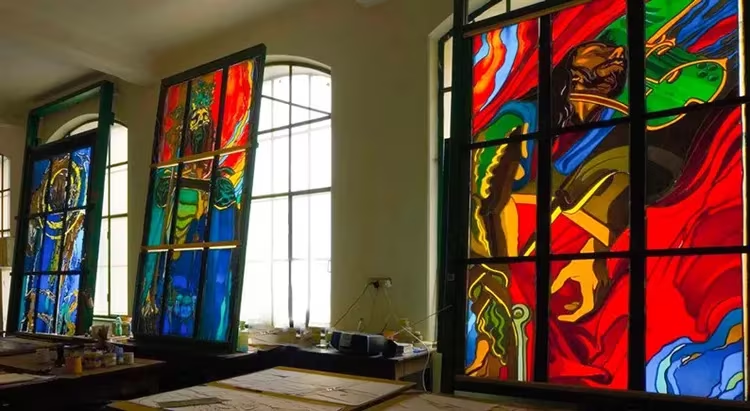
Poland is a country where ancient traditions, crafts, and art are honored even now. A striking example is the museum and stained-glass workshop. Both institutions are located in the same building. In 1902 a stained glass factory was opened. Today, only a workshop remains from the factory, where these works of art are still produced. This is the only enterprise of this type, where all the traditions of production have been preserved. The workshop has received more than 80 awards during its existence.
During the economic crisis of the 90s, the company was in crisis and was on the verge of closing. But, it was bought by businessman Pyotr Ostrovsky. Thanks to financial support and an innovative approach, the workshop was revived. Both old and new technologies are used in production. You can see examples of stained glass art. Visitors are presented with unique collections, including original works by the master Matejko. Also, there are paid master classes on creating stained-glass windows of different levels of complexity.
Krakow Historical Museum
It was founded in 1899, at the archive of ancient acts of the city. Then, he was transferred to the House under the cross. The institution was transferred several times to different buildings, and only in 1964 it was placed in the Christophora Palace, which is an architectural monument of the 17th century. It was built in the Baroque style. Over time, the institution expanded and now has 14 branches scattered throughout the city. In “Kristofory” is the main building.
There is a permanent exhibition “Life and Culture of Krakow”. The exhibits have been collected for a long time. It was a painstaking work of scientists, archaeologists, scientists. The first exhibition of artifacts took place only in 1952. In the institution you can see maps from the 16th to the 20th century, unique engravings, paintings, guild items, theatrical artifacts, firearms and stabbing weapons, ancient armor, watch collections, portraits of representatives of famous noble families, paintings of Polish artists, objects acquainting visitors with the uprisings of the 19th century, the First World War.
Pomeranian street
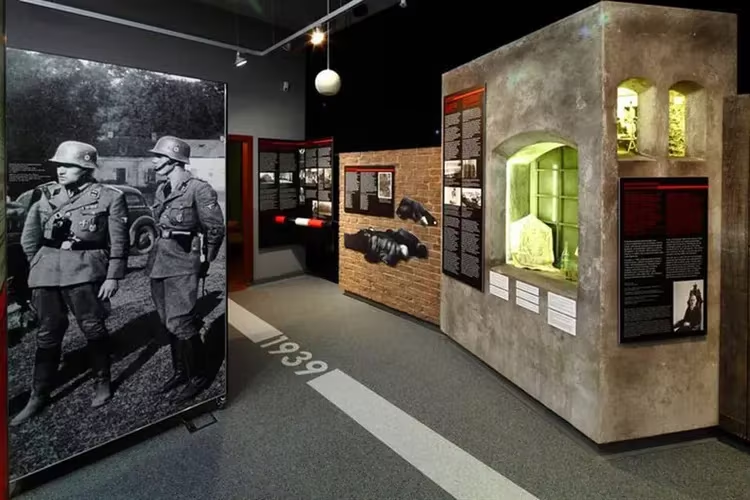
The Pomorska Street Museum has a short, but very tragic history. The house itself was built in 1932. And already in 1936, the headquarters of the political police of the Gestapo was located there. This historic site is closely related to Schindler's Factory and the Eagle Pharmacy. The basement of the house was converted into torture chambers. The second and third floors were occupied by interrogation rooms. The structure of the Gestapo occupied until 1945.
It was founded in 1981. This historical site is a place of memory. There were mass executions, torture, interrogations. The exposition is divided into three parts. The first part consists of artefacts that introduce the history of the House of Silesia and the activities of the Association for the Protection of Western Frontier Regions. The second exhibition includes objects that tell about the life of ordinary citizens during the occupation. The third part includes archival documents, photographs showing the struggle of the citizens of Krakow, first with the occupation, and then with the communist regime. The exhibits show the similarity of the actions of these two modes.
Market Dungeons
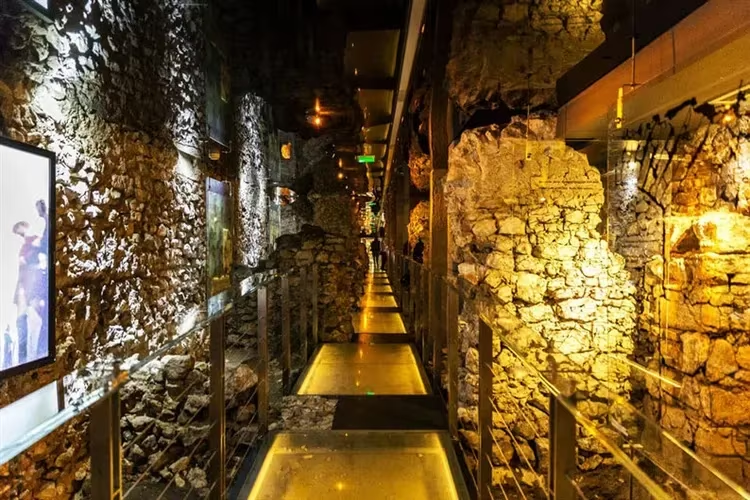
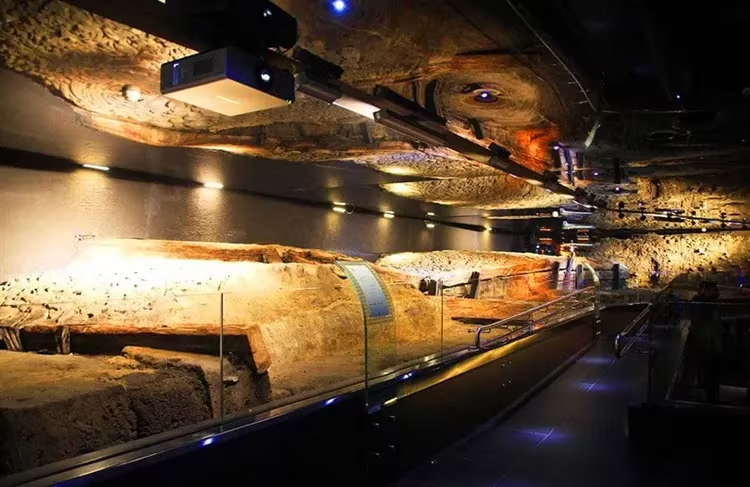
In 2005, the Polish authorities initiated the reconstruction of the Market Square. But, during the work, the workers found underground trading shops, dungeons, an old cemetery, cobblestone pavements. In order not to lose such historical value, it was decided to turn the excavation into a museum, covering it with a glass dome. The work stretched over five years. This historical landmark was dug up in 2010. Once in the dungeon, you can see a restored jewelry workshop, a smithy, old walls of houses, mothballed gravestones.
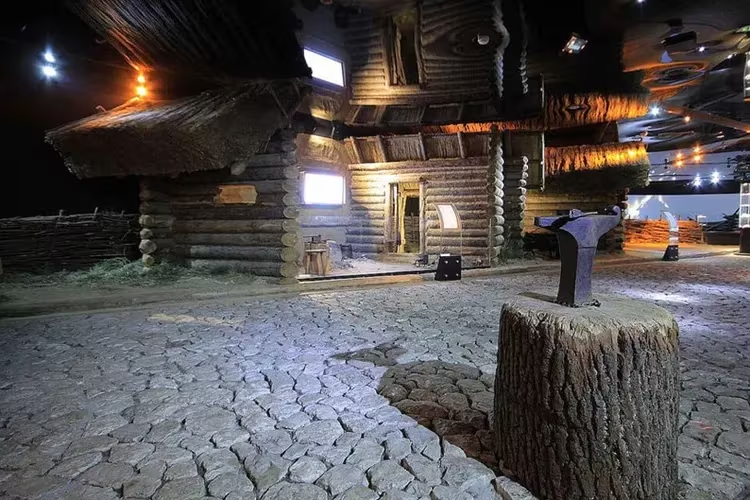
Medieval artefacts and landmarks are combined with innovative 3D technologies. The effect is created as if visitors were in the real Middle Ages. For guests of this place, there are ancient scales on which you can weigh yourself. But, for this, you must first familiarize yourself with the units of measurement that were used many centuries ago. There is also a mechanical theater underground, introducing the legends of the Middle Ages.
Zwierzynetsky house
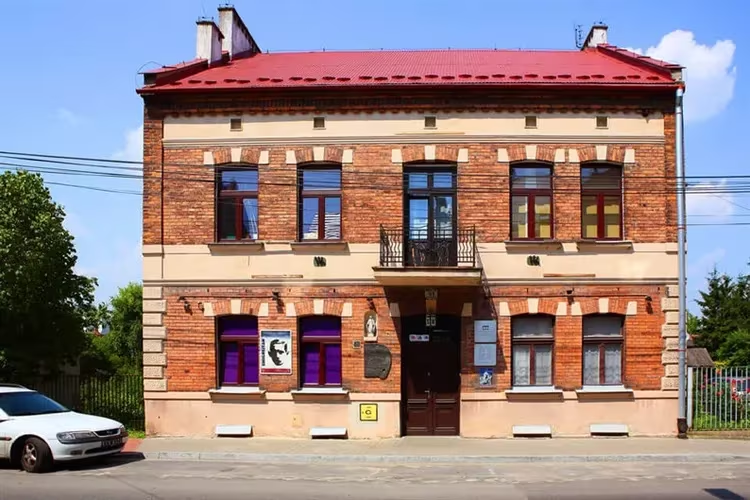
Not far from the hill of St. Bronislava, located Zwierzynetsky house. It was erected at the end of the 19th century by order of Jan Flochik. It is noteworthy that in 1912 V. Lenin and his family lived in it for some time during emigration, when he was hiding from persecution at home. After the fall of the communist regime, this fact began to remain silent. At the end of the Second World War, the building was bought by the city authorities to organize a museum. In 1993, the Zwierzynetsk Artistic Salon was opened there. It consists of two floors and several rooms.
Unlike other historical buildings, the building has a fairly limited space. In the premises of the house, educational work is constantly carried out, introducing in detail the history of Zwierzynec. The exhibits include works by local artists. The premises host temporary exhibitions dedicated to the area, and there is a small permanent exhibition. It shows what the room looked like 100 years ago. The interior consists of old furniture of that time, household items.
Museum of Polish Aviation
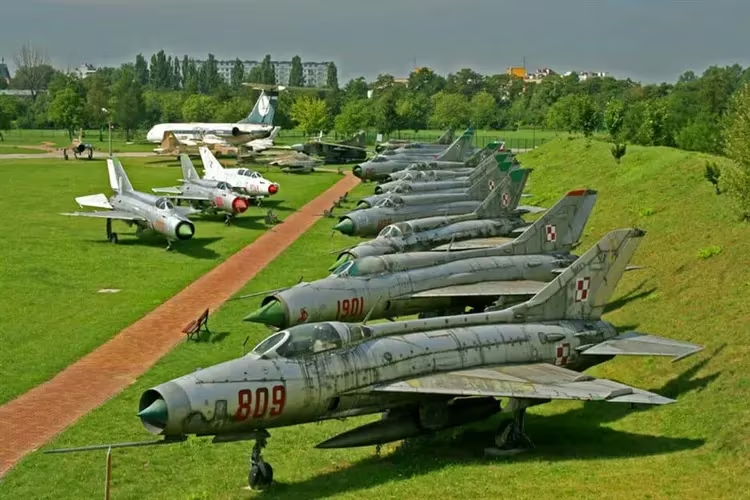
Founded in 1964. This is the largest institution of its kind in the country. It is noteworthy that the exhibits give tourists the opportunity to get acquainted not only with the history of Polish aviation, but also with other countries. The exhibition is located on the territory of one of the oldest airports in the world, closed back in 1963. This place has a rather rich history. The airfield here was built in 1918. It was used by postal airlines for air communications between Krakow, Vienna, Odessa and Kiev. When the Second World War began, the air base was captured by the Germans.
The first valuable exhibits began to appear here in wartime. Goebbels collected them and used the airport to store them. After the victory over fascism, all the planes went to the Polish government. In the 60s, the airport was closed, and a museum was made from it, replenishing the collection with new aircraft every year. Now, more than 200 aircraft are exhibited there – helicopters, planes, gliders, engines, which were produced in just one copy.
Military Museum
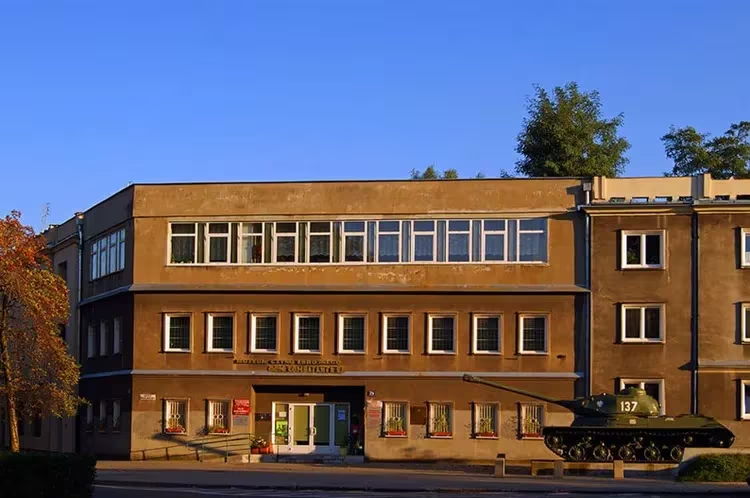
It is located in Nowa Huta. The first exhibition took place in 1963. The first exhibits were collected thanks to the efforts of Huta workers, members of the Polish legions who participated in the Silesian and Greater Poland uprisings, as well as the Soviet-Polish and World War II. Already in 1970, there were more than 3 thousand collectible artifacts within the walls of the institution. The exhibition halls present various military equipment, military uniforms (Soviet, Polish uniforms), clothes of concentration camp prisoners, a collection of orders, insignia, medals, original printed materials of the war and post-war period, documents acquainting with the life of concentration camp prisoners.
There you can see the standards of the Polish Legions, the rebels, the banners of prisoners and other military organizations operating on the territory of Poland. The visiting card is a tank installed in front of the entrance to the building. This combat vehicle, many decades ago, participated in the capture of Berlin and the liberation of Prague.
National Museum
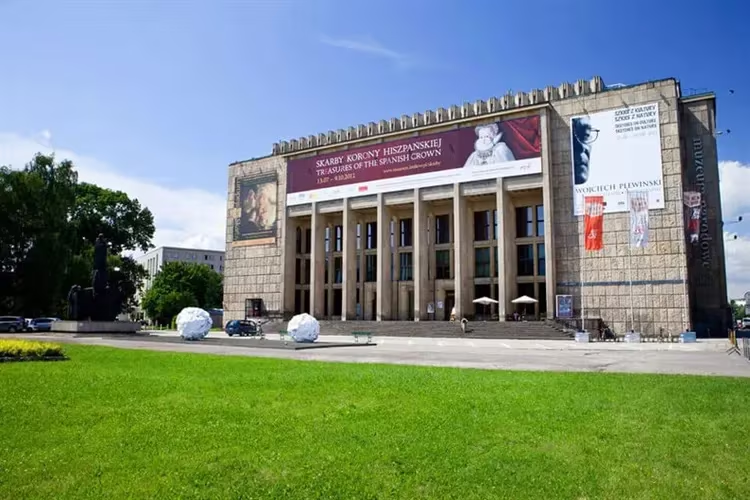
One of the most interesting places is the National Museum. There are collected many works of art by Polish and foreign masters. The institution was established in 1879. Initially, it was placed on the upper floors of the Cloth Rows. Many patrons donated rare collectibles, sculptures, valuable paintings, ethnographic exhibits, rare coins, and archaeological finds to the museum. Gradually, the number of artifacts increased, and soon exceeded the mark of 100 thousand units. In the 30s of the 20th century, it was decided to move the exhibition halls to a new building.
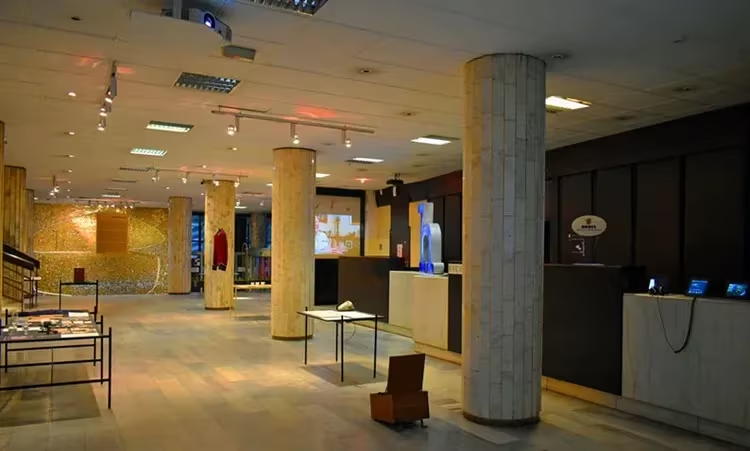
Such a need arose due to the fact that the old room was not able to accommodate all the items. Under the museum began to build a new building, but soon had to suspend the process due to the outbreak of war. During the hostilities, many artifacts were looted. After the end of the war, the building was completed, and most of the collections were returned. Although, until now, about 1000 items are considered lost forever.
House of Jozef Mehoffer
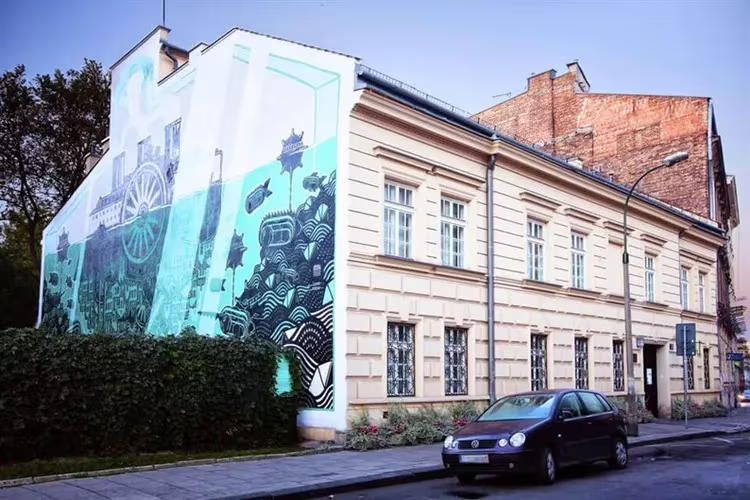
Jozef Mehoffer is one of the leading figures in the Young Poland movement. He is known as an artist, stained glass artist, creator of a number of graphic works. The house in Krakow was acquired by him in 1930. The premises were used for the meeting of Young Poland participants. The organization was engaged in educational activities, the development of modernism, which was considered at that time a progressive and new style. After the artist's death, his son was inspired by the idea of opening a museum that would be entirely dedicated to his father's work. In 1979, the Mehoffer family moved to another house, and repair and reconstruction work began in the old building, which ended only in 1992.
The interior of the rooms was restored from photographs. It was completely made as it looked before World War II. There is a large exposition in the rooms, covering an area of 400 square meters. It consists of the master's personal belongings, among which there is a unique collection of Japanese engravings, and works by the artist himself – paintings, graphic drawings, lithographs, etchings.
Jewish Museum “Galicia”
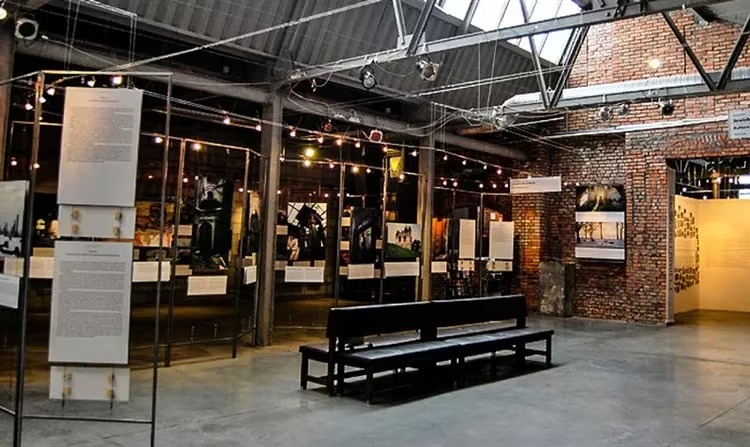
The idea to open “Galicia” belongs to the photographer Chris Schwartz and Professor of the University of Birmingham Jonathan Webber. The collection of materials took almost 12 years. A lot of research work has been done. This attraction was opened in 2004. The exposition materials tell about Jewish life, traditions, culture, about life before the Holocaust, and about it. Meetings are held with those who managed to survive the difficult war times. The interior design of the space combines wooden, metal and glass elements.
The interior is designed in such a way that it is easy to hold meetings and organize temporary exhibitions. The permanent exhibition is located in five sections. There you can see documentary evidence of the destruction of the Jewish population by the Nazis, photographs from concentration camps, Jewish cultural objects collected before the war. One of the halls is completely dedicated to Auschwitz. The last two rooms are allocated for exhibits introducing the figures of the post-war period, who made a lot of efforts to restore the life and culture of the Jewish people.
Czartoryski Museum
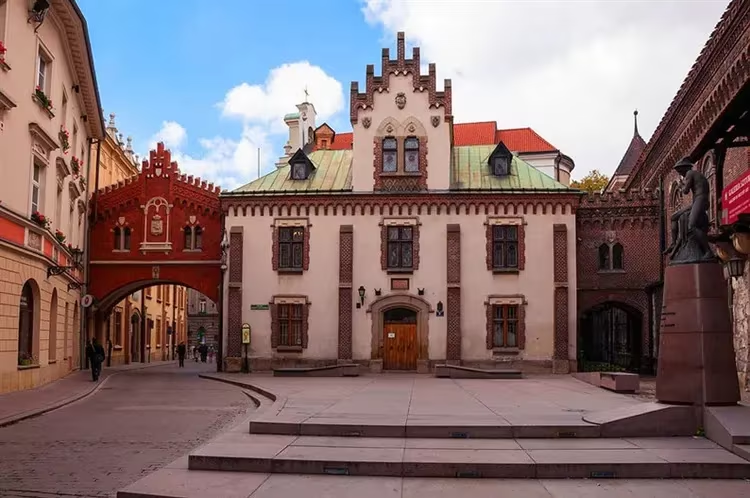
It is the pride of Poland. Its history begins in 1801. It was then that Princess Isabella Czartoryska opened this institution. At the very beginning, the works of Polish masters were exhibited there, many of the exhibits introduced visitors to the life of famous figures of the country. A little later, the son of the princess decided to replenish the exhibition halls with new collections, consisting of works by well-known foreign painters. The main exhibit of the gallery is Leonardo da Vinci's Lady with an Ermine.
During the November Uprising, the Czartoryski family left the country, moving to Paris. All objects and paintings were taken out. And when the Franco-Prussian war began, the son of Princess Jerzy Wladislaw left France, and the unique collections were transferred to the Krakow arsenal. His son Vladislav managed to revive the institution after returning to Krakow. Then, unique things were added to the already existing exhibits, telling the history of Egypt, China and Ancient Rome. Some of the paintings were lost during the Second World War, but after it ended, many of them were returned.
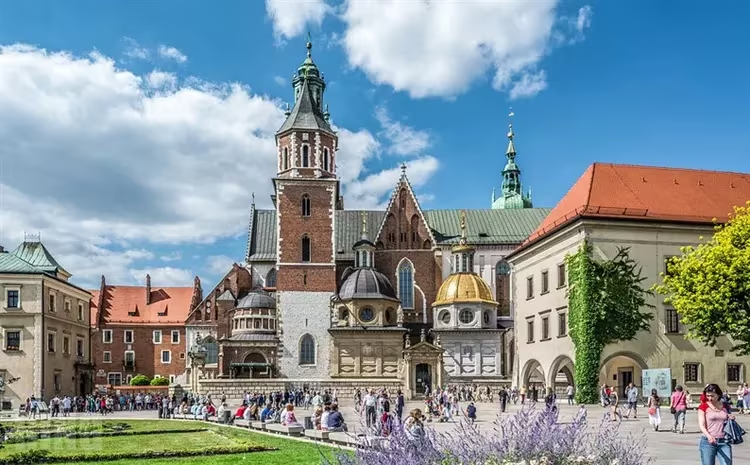
Wawel Castle
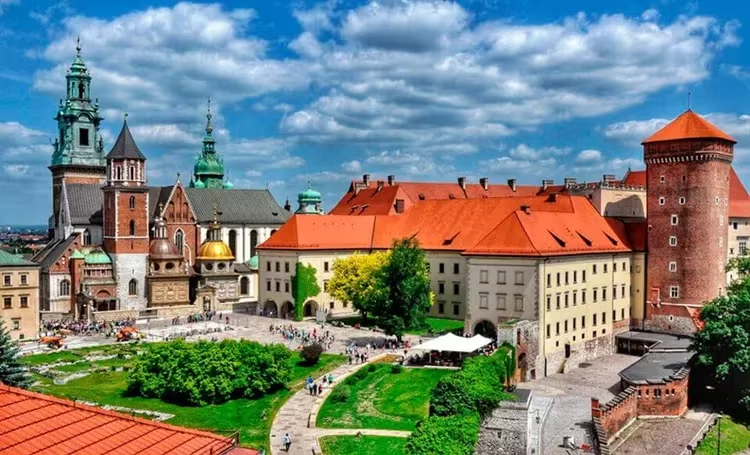
The ancient Wawel Castle is located in a picturesque part of the city, on the hill of the same name. Now it is one of the most visited places in the country, and once many monarchs were crowned in it. By order of King Casimir III the Great, in 1609 new buildings were added to the castle. At that time, the capital of Poland was located in Krakow. The building was decorated with numerous sculptures. This architectural monument was repeatedly subjected to fires, destruction, but it was always restored. Restoration work was carried out by the best architects of those times.
Constantly, new elements and decorations were added to its architecture. It combines several styles at once – Romanesque, Gothic, Renaissance and Baroque. After the transfer of the capital to Warsaw, the castle gradually fell into disrepair, and even later was occupied by the Prussian army. Before the Second World War, the seat of the Polish government was located there. Since 1979, the castle has been included in the UNESCO World Heritage List. In the room is the Altar of the Fatherland, the royal tombs. The castle complex includes the rotunda of the Blessed Virgin Mary, the Sigmund Chapel, the Jagiellon Chapel.
Archaeological Museum
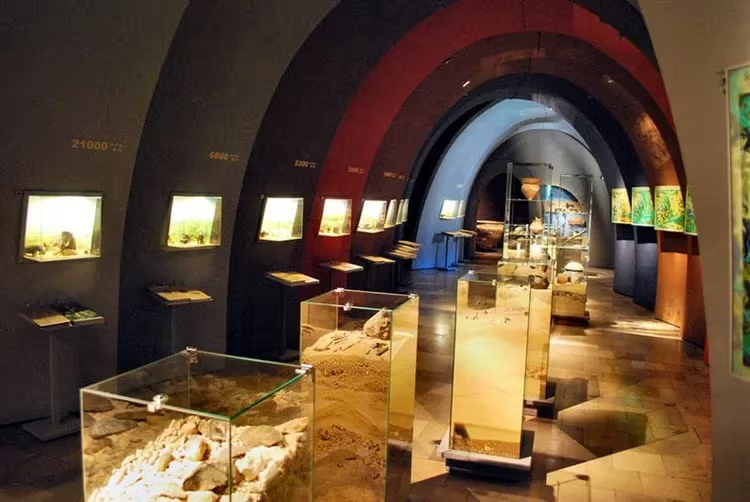
In the first half of the 19th century, the country was going through hard times. It was divided into several parts. In order to preserve the culture of the country, its heritage, numerous organizations and scientific communities began to emerge. First, in 1848, the Department of Art and Archeology was established, and two years later, the Archaeological Museum. After its creation, a room in the Jagiellonian Library was assigned to the exhibition hall. The exposition was moved to a separate room in 1967.
The exhibition halls present collections of antiquities found during archaeological excavations – Roman coins, figurines and other bronze items. Of great interest is the collection “Gods of Ancient Egypt“. It includes the finds of the archaeologist Tadeusz Smolensky, who excavated at Giza in 1907-1908, four sarcophagi, figurines, rulers from the Ptolemaic dynasty. In addition to antiquities, the exposition presents items related to the Polish soldiers of the Carpathian Rifle Brigade. Ceramic items found during excavations on Polish soil are presented separately.
house under the cross
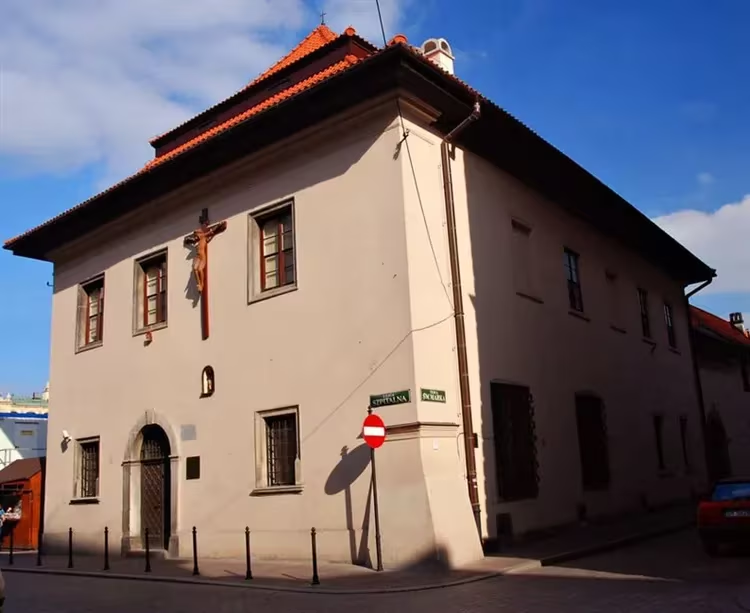
The house got its name from the cross that is attached to its facade. The first records about this building appear in 1474, in the chronicles of Jan Długosz. Since then, the house has been rebuilt many times, and now looks like a modern building. In the 18th century, a shelter for the needy was built within its walls. In the 20th century, the city authorities planned to demolish the house, but in the end, several residential premises and small shops were placed there. Part of the building was given over to the office of the Association of Polish Artists.
In 1933, the premises were given over to the theater, and six years later, a museum was organized there. Initially, temporary exhibitions were held in the House under the Cross. The permanent exhibition was exhibited only in 1969. The exhibits for the exhibition were provided by the National Museum in Krakow. A lot of artifacts were collected by the famous Polish theatrical figure – Ludwik Solsky. Some of the items were donated by private individuals, theater workers. Now, the House under the Cross is called the Theater Museum. Stanislav Wyspiansky.
Museum of the History of Photography
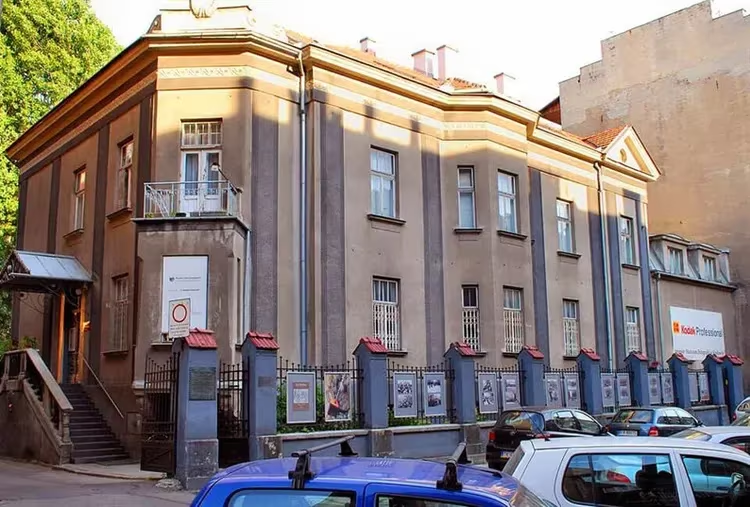
Despite the fact that the institution was founded in 1972, its opening took place only 14 years later. All this time, the process of collecting exhibits and materials continued. The main mission of the attraction is to preserve the cultural heritage displayed in photographs and the memory of outstanding photographers. More than 2,000 different exhibits are presented in the exhibition halls – artistic photographs, portraits, landscapes, architectural images, works of the late 19th century, 40s of the 20th century.
For those who are interested in the history of this art form, there is a separate collection of cameras produced in Poland. Among them there are unique samples made in a single version. There is a technique created 125 years ago. In the exhibition halls there is a lot of information related to photographic equipment, various instructions, and photo production technologies. Separately, Soviet-style equipment is exhibited, which is no less interesting than foreign-made devices.
House of Jan Matejko
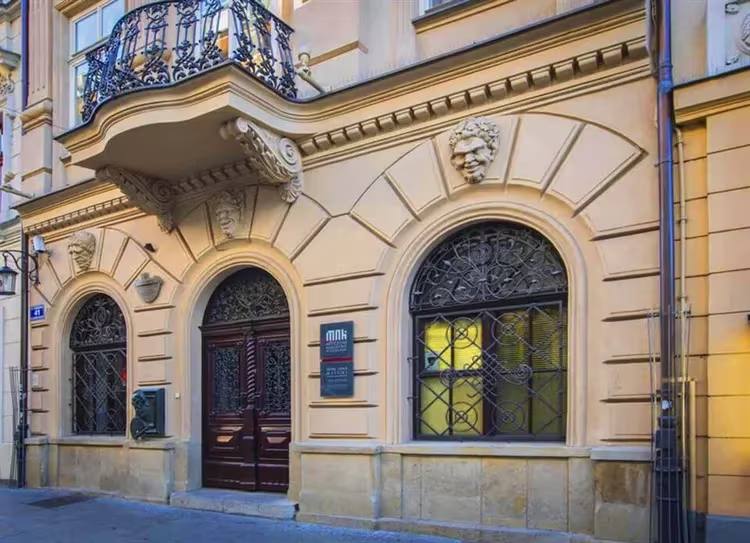
Jan Matejko's house deserves special attention among the city sights. The mansion itself was erected in the 16th century, on the street. Florian. In addition to architectural features, the house attracts attention because in the 19th century, the famous muralist Jan Matejko lived in it. After the death of the master, the journalist Marian Sokolovsky began to promote the idea of creating a museum. This initiative was supported by public figure Yevstakhiy Sangushko. They created the community of Jan Matejko. A few years later, he managed to buy the mansion and collect a small collection of the artist's paintings.
In 1896, the institution was opened. The first exposition consisted of publications, a collection of books, photographs introducing the life and work of Matejko. The second included the interior of the bedroom and living room, recreated as the rooms looked during the artist's lifetime. After the first exhibition, reconstruction began in the mansion. After the Second World War, the collections were replenished with many personal belongings of the master – paintings, and working tools.
Palace of Bishop Erasmus Tsiolek
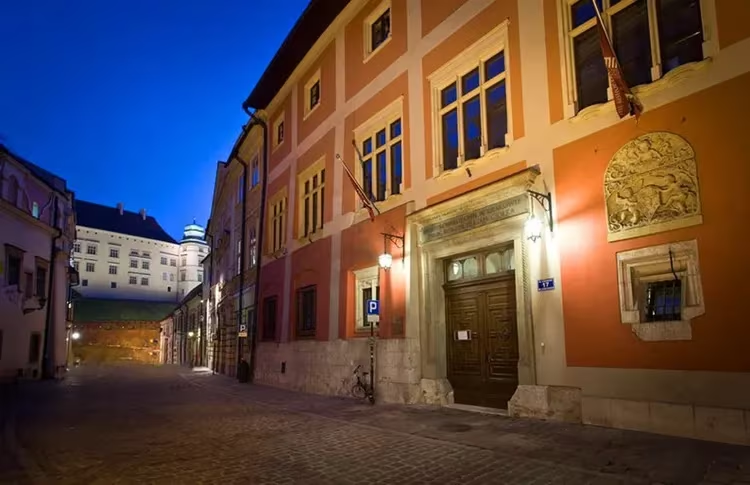
The Palace of Bishop Erasmus Tsiolek is a majestic, medieval building. In the place of the palace, in the 16th century there were two philistine houses. By order of the bishop, these structures were interconnected together. Inside, the rooms were richly decorated with stucco and other decorative elements. There was a large courtyard around the palace. The next owners of the building were Nikolai Volsky, and then Cardinal I. Radziwill. At a time when this region of the country was ceded to Austria-Hungary, the palace fell into disrepair. Many elements of the interior decoration were stolen or destroyed.
The restoration of the palace began only in the 1990s, and the repair work was completed in 2007. The palace has three floors. Above the entrance to the room there is a coat of arms with the letter “S” and the image of an eagle. This suggests that the attraction was built during the reign of Sigismund the Old. Inside the building, two expositions are shown – Orthodox painting and Polish art of the 12th-18th centuries. The most valuable exhibit exhibited there is a wooden statue of the Virgin Mary (15th century).
Museum of Urban Engineering
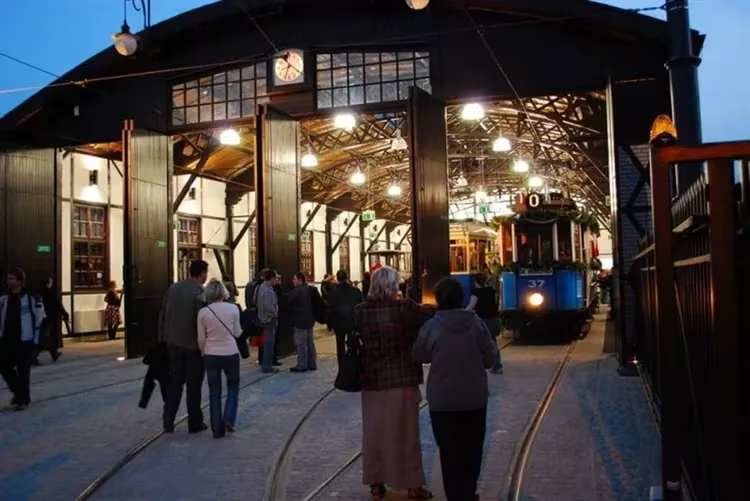
It attracts the attention of both adults and the youngest visitors. There is a collection of photographs showing all types of transport used at different times, in different countries – from the very first vehicles to more modern models. Physical experiments are carried out in the second hall. Each visitor can join the scientific experiment. There is an Obscura camera, and you can also see with your own eyes how the law of conservation of energy, the moment of momentum, is being proved.
In one of the exhibition halls, models of robots and unusual types of equipment are demonstrated. In addition to scientific experiments, photographs and new technologies, models of a variety of cars are assembled in a specially equipped hangar – from Zhiguli to buses of the 30s. Genuine interest is caused by trams of the century before last. Another hangar houses old printing equipment. They show a film-instruction on how to use this or that device.
Pinball Museum
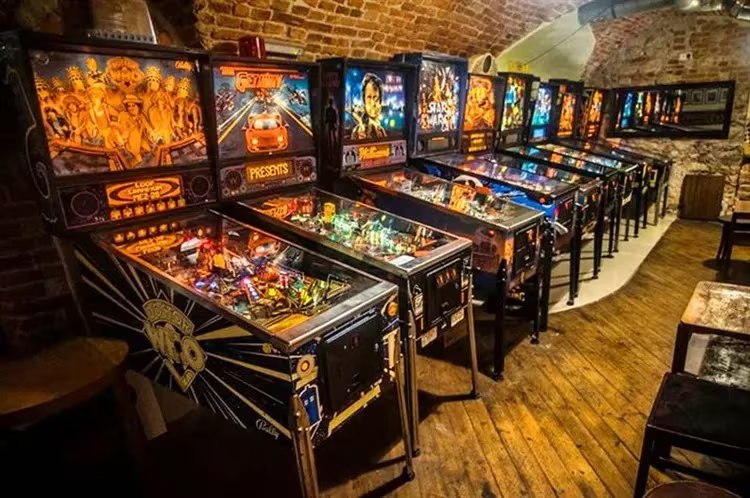
One of the most interesting places in the city is the museum of pinball or slot machines (second name). In the 60-70s of the twentieth century. pinball slot machines were very popular. They were installed in hotels, bars, restaurants and other places of entertainment. Over time, technology improved, computers with a wide variety of games appeared, and mechanical machines were forgotten.
Here are collected models of mechanical slot machines. Despite the simplicity, each machine is a complex mechanism, with many lamps, wires, installed inside a stylish case. The institution has a collection of thirty automatic machines, which still work properly to this day. Each visitor can spend time playing pinball. In addition to slot machines, there is a large selection of board games and arcades. In between the game, you can buy soft drinks there. The institution provides an opportunity not only to learn the history of these cars, but also touch retro entertainment.
Manggha
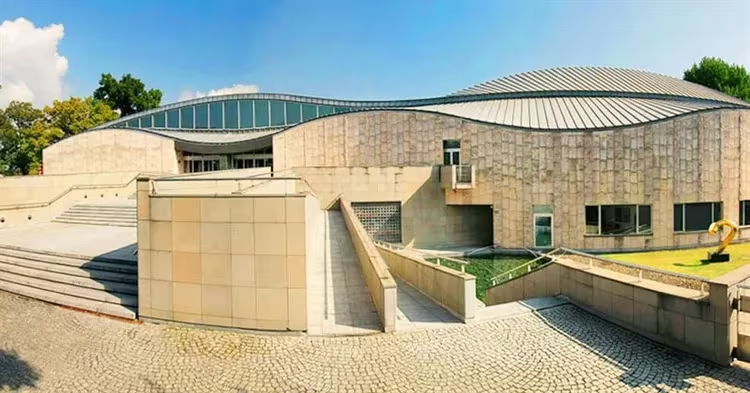
Among the tourist attractions in the city, there are many other interesting places dedicated to the culture of other countries. Mangha is a prime example of this. The building, where the Museum of Japanese Culture is located, is recognized as one of the most beautiful. The history of this amazing place dates back to 1920, when the Krakow critic and writer Felix Jasensky donated his collection of Japanese art to the local authorities. It contained more than 6500 items. The only condition for the transfer was that all things must be displayed together and stored in one place.
He himself was appointed honorary director of exhibits. When the honorary director died, things gathered dust in boxes for a long time, until the Germans began to occupy the city. In wartime, the German occupation authorities organized an exhibition in the Cloth Hall. These unique items caught the eye of the young Andrzej Wajda, a well-known theater and film director in the future. What he saw impressed him so much that he gave all the money from the film award he received to organize the museum. Now items for the tea ceremony, exhibits collected by Yasensky, are being exhibited in Manggha, courses on creating ikebana are being held.
Schindler's Factory
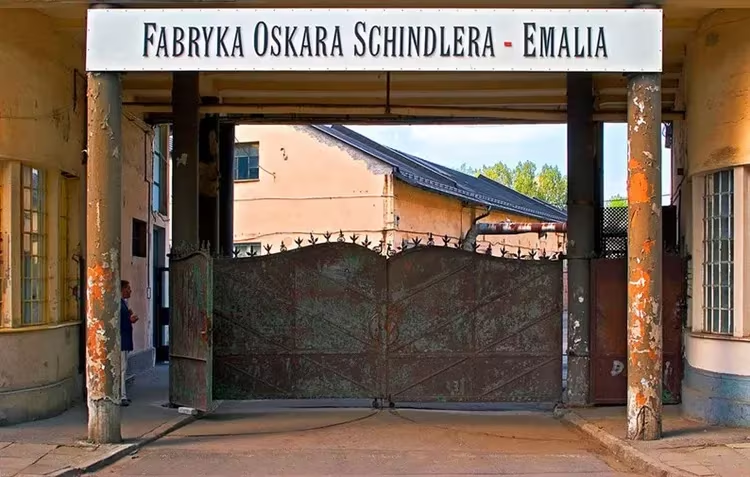
Schindler's factory belonged to a German entrepreneur, and it got its name in honor of him. The company initially produced metal utensils. But, fame came to this place for a different reason. They started talking about the factory after the release of the film Schindler's List. During the occupation of Poland, Oskar Schindler began to recruit Jews for work. He recruited workers from Auschwitz, the Plaszow concentration camp, thereby saving their lives.
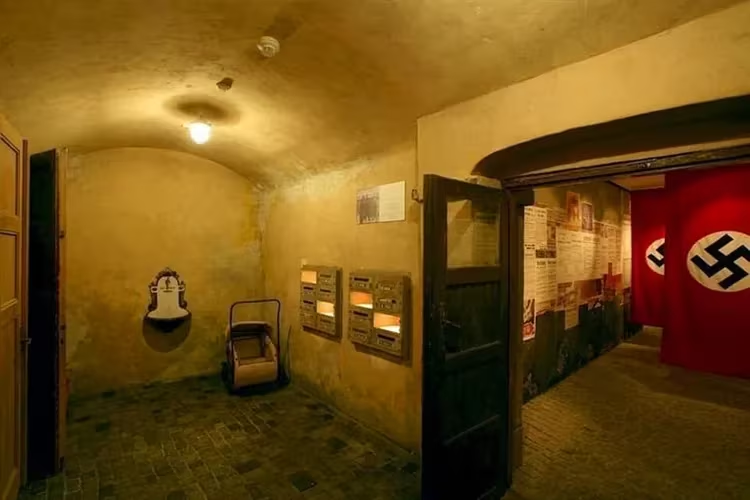
When the front approached the city, the occupying authorities began to close enterprises, leaving only those that let in military ammunition and weapons to work. To protect the safety of the workers, Schindler moved the factory to Brunnlitz, and set up production for the Wehrmacht. Working Jews (1100 people) worked there until 1945. Today, a museum is open on the territory of the factory. There are exhibited photographs that depict the life of Jews during the German occupation, newspaper clippings. In one of the halls, on the walls in several languages, there are memories of Poles and Jews who managed to survive those difficult times.
Collegium Maius
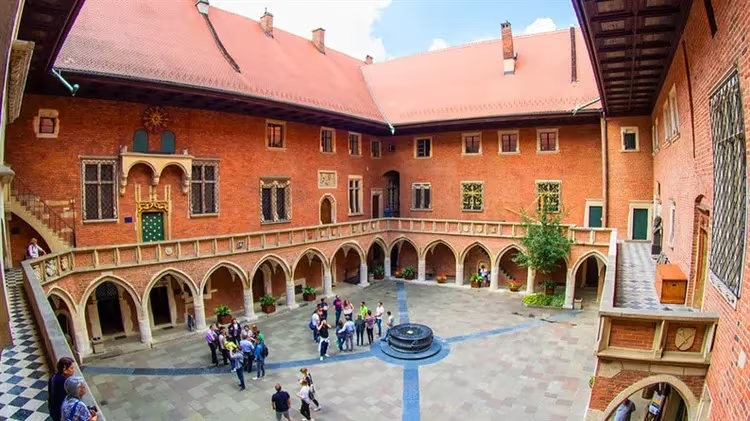
The Jagiellonian University is the oldest educational institution in Poland. Collegium Maius is part of the university architectural complex. It is believed that the collegium building was built the very first. Unfortunately, the exact date of construction of this part of the attraction has not been preserved. There is evidence that at the end of the 14th century, it was used as a residential building, and in 1400 the premises were purchased by King Vladislav Jagiello. Almost then begins the history of the creation of the university. A little later, other houses were purchased, which were combined into one architectural ensemble.
After a fire and restoration work in 1492, the rooms of the Collegium Maius were given over to the library. Currently, this attraction serves as a museum. The building has three floors. Its façade is decorated with Gothic eker and late Gothic designs. On the walls, there is still an old clock depicting King Vladislav and Queen Jadwiga. The house is surrounded by a well-groomed courtyard.
old synagogue
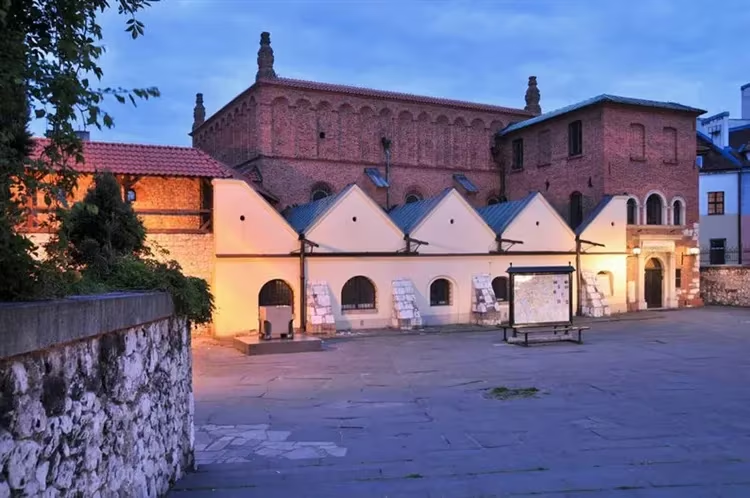
The first Jews began to populate the territory of Poland in the 14th century. There was a whole district in Krakow – Kazimierz, which was inhabited by the Jewish community. The old synagogue was built in the 15th century, and it is considered the oldest Jewish shrine in the city. One of its walls adjoined the city wall. Initially, the building consisted of several halls with columns, and had a gable roof. After a fire in 1570, the synagogue was rebuilt. Its construction was carried out by the Florentine architect Matteo Guzzi. After the reconstruction, a vestibule and a chapel for women appeared in it, and the facade itself was made in the Renaissance style.
Today the Old Synagogue is a museum. There are exhibited items that tell about the life and life of Jews in Poland. The exhibits cover a period of 500 years. There are three permanent exhibitions in the halls. The first is entirely devoted to the history of the synagogue itself, the second to the holidays, traditions and rituals of the Jewish community, and the last exposition tells about the tragic fate of this people during the Holocaust.
Czapski Palace
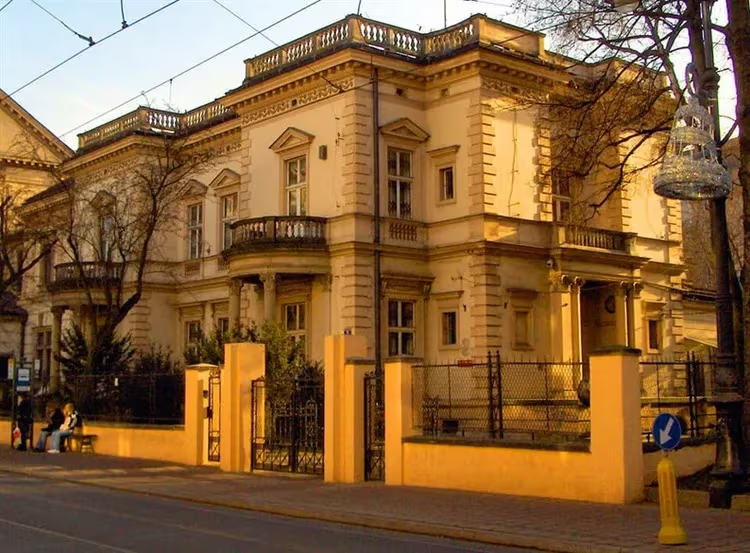
The Czapski Palace is located on the Pilsudski. It belongs to the legally protected monuments of architecture. Once the palace was built on the orders of Krasinsky, and after his death, the building was bought by the scientist and politician Emerik Hutten-Czapsky. The new owner of the palace was famous for compiling the first catalog of Polish and Lithuanian minted coins. He was known as a passionate numismatist collector. After moving to the palace, he organized the construction of a special pavilion to house his collection there. Construction work was carried out under the supervision of the architect Tadeusz Syrensky.
But, the arrangement of the pavilion cost not only coins. It has a huge collection of books. They needed six railway cars. All these precious specimens were donated to the city of Chapa. Today, within the walls of the palace you can see a unique collection of coins, orders and medals, books published in the 15th-17th centuries, glass and porcelain objects, autographs of prominent figures. These expositions are stored on the ground floor. The second floor houses the second collection of books, ancient weapons, and small exhibits.
House of Hippolytes
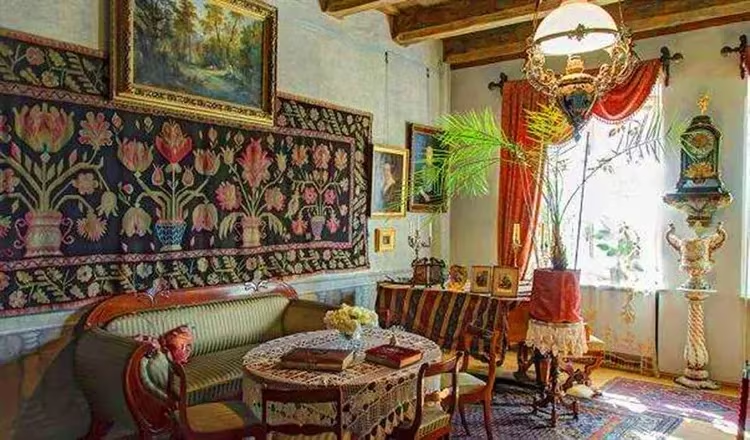
Although the house itself was built long before the Hippolytus family moved in, it got its name because of the transformations that took place when the new owners moved in. The merchant family has lived in this house for more than a hundred years. During this time, they remade part of the rooms, decorating them with elegant Renaissance frescoes, stucco, carved doors, stone portals.
From the 18th century, the house of Ippolitov passed into the possession of the merchants Zalessky, and then began to change owners altogether. But, every time when restoration work was carried out in it, all the features of the original decoration were preserved. Now, the house has been turned into a museum. The restorers managed to completely recreate the luxurious interior of those times, along with frescoes and ceiling paintings. The rooms are furnished with period furniture, cutlery and crockery. There is an open book on the table. It seems that the owners of the house are about to return. The attraction shows in all its glory the life and culture of society in the old days.