
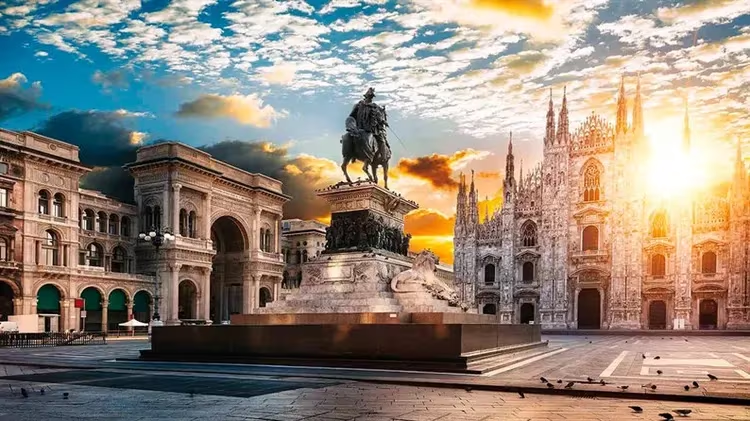
Sights of Milan – 30 most interesting places
Milan is an incredible city with a rich history and unique architecture. Especially surprising is its versatility. This is the capital of world fashion, and the financial heart of Italy, and medieval cultural monuments. The sights of Milan will not leave anyone indifferent. The city remembers and honors its centuries-old history, but at the same time looks confidently into the future. Every year it is visited by millions of tourists, and everyone finds here something that will resonate in his soul. It is worth coming here once, and you will want to come back again and again. From the Duomo to the Naviglio Grande canal, our city itinerary includes the most delightful and popular places. We will tell you where to go and what to see first.
Duomo Cathedral
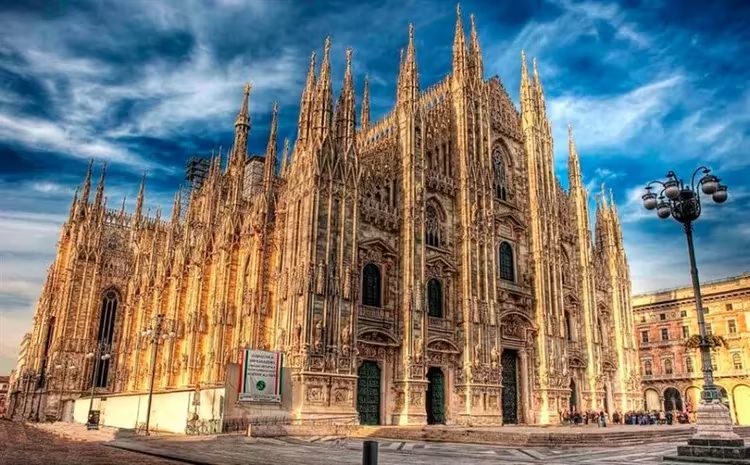
The Cathedral of the Nativity of the Virgin Mary, or Duomo (meaning “Cathedral”), as the Milanese call it, stands in the very center. All the ancient roads of the city lead to the temple, as it should be – this is perfectly visible on any map of the city or from above, from the roof of the cathedral. There is no person in the world who has never heard of this amazing structure.
The cathedral began to be erected at the end of the 14th century on the site of ancient Celtic sanctuaries, but most of the work to complete the construction of the facade was carried out already in the 19th century by Amati by order of Napoleon. The facade is decorated with spiers, columns, towers and sculptures. The most majestic is the bronze 4-meter figure of the Virgin Mary, raised on a hundred-meter spire above the city.
Book a private transfer from the airport to your hotel for 6 210 RUB
Inside, stained-glass windows of the 15th century, skillful painting, an unusually realistic sculpture of St. Bartholomew, tombstones of saints and the main treasure of the temple, stored above the altar, are preserved – a nail from the crucifixion of Christ. There is a fee to enter the cathedral. If you are going to take pictures inside the temple, then you need to buy a special bracelet. The three-level roof of the Duomo is the best observation deck in the city. The roof can be accessed by stairs or an elevator.
Duomo Square
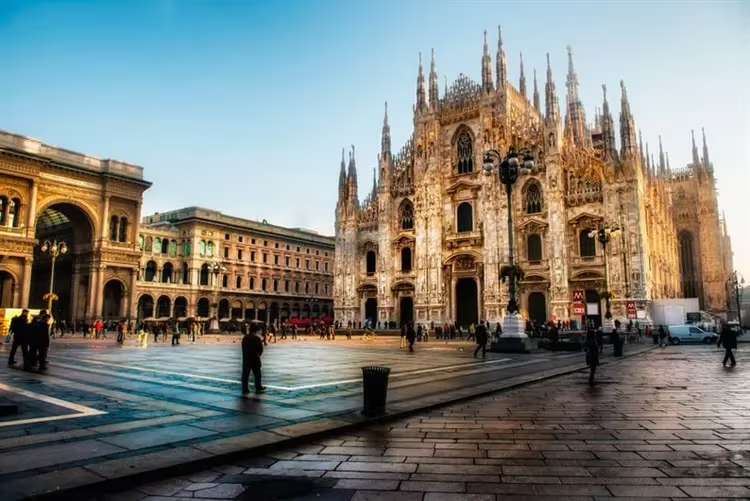
Cathedral Square is the heart of the city. The most important sights are collected there, revival always reigns and is very beautiful. The square dates back to the 14th century. The order to found it was given by an important dignitary Adzone Visconte. The buildings located along the perimeter were built according to the designs of the most famous architects. In the second half of the 19th century, the square underwent a major restoration by the architect Giuseppe Mengoni.
The main building is the Milan Cathedral, which defines the atmosphere of this place. It was built from the end of the 14th century to the beginning of the 19th century. The high spire of the building is crowned with a gilded sculpture of the Madonna. Next to the cathedral, the gallery of Victor Emmanuel II draws attention. This is one of the very first shopping galleries that appeared in Europe. Opposite is a majestic and discreet building – the Royal Palace. But this is not the only palazzo on the square. Here you can find buildings from different eras – the Archbishop's Palace, the Palazzo del Orologio, the Palazzo Carminati.
Gallery of Victor Emmanuel II
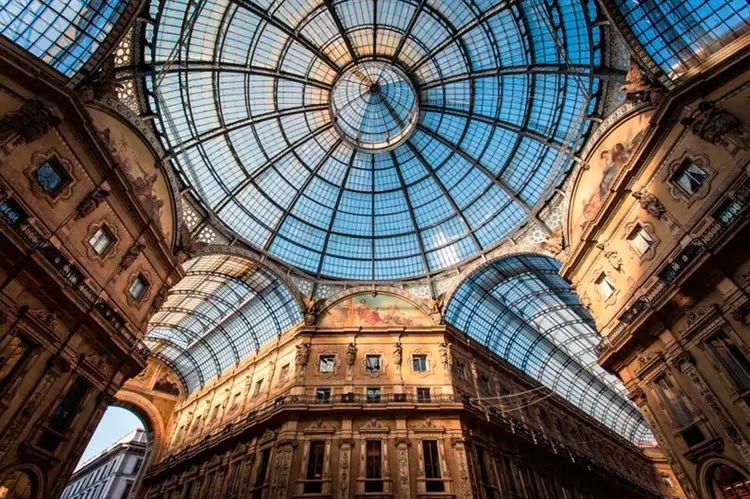
It is named after the king of the united state of Italy. Emmanuel II personally attended the opening of the passage in 1877. The architect D. Mengoni, who designed the building, died a little earlier than this grandiose event, breaking when falling from scaffolding. This building, the pride of citizens, has been attracting tourists from all over the world for centuries. The gallery was erected in the form of a Latin cross. It has four exits, each representing a continent (not counting Australia).
The roof of the building is made in an innovative style for that century – a luxurious glass dome framed with iron. In the center of the gallery, on the floor, the Italian coat of arms with the image of a bull is laid out in mosaic. It is believed that if you step on his groin with your heel and spin 3 times, you will inevitably become lucky and rich. This passage has long been a permanent place for fashion shows, concerts and exhibitions.
We recommend unusual excursions from local residents in Russian:
- Daily walk – get to know and love the city in 2 hours (€ 20 per person)
- Evening promenade – get to know the openwork city in the rays of the setting sun and feel its atmosphere (€ 20 per person)
- Milanese lessons – get to know the city from La Scala to the laundress district, understand the locals and learn a few phrases in Italian (€ 91 per group)
- The city through the eyes of an architect – sort out the mosaic of architectural styles (€ 95
for 1-2 people or € 35 per person if there are more of you) - I can see everything from above – get to know the city from a new angle, consider its main symbols – and fall in love again (€ 155 per group)
- Lake Como, or “where it's beautiful at 360 degrees!” – Incredible nature, charming lakeside towns and an introduction to the Italian lifestyle (€ 298 per group)
- Journey to Orta San Giulio – the legendary island of dragons, medieval streets and chapels of Sacro Monte di Orta (€ 120 per person or € 70 per person if there are more of you)
Monument to Leonardo da Vinci
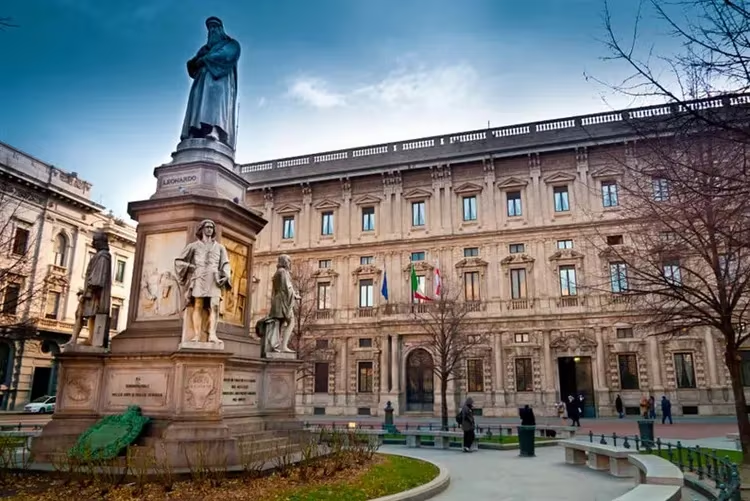
Passing straight through the gallery, you will find yourself near the La Scala theater. But about him a little later. And in the middle of the square, which you came to, rises the majestic monument of Leonardo da Vinci. Da Vinci is one of the most amazing and unimaginably talented figures given to the world by the 15th century. He excelled in many arts and sciences, from painting to anatomy.
Even notes in his diaries Leonardo wrote in a mirror image (without a mirror, of course). Like any genius, he had followers. The monument consists of several figures. On the pedestal is a sculpture of the scientist himself, at its base are his most famous students: C. de Sesto, D. Boltraffio, A. Salaino and M. d'Oggiono.
La Scala Theater
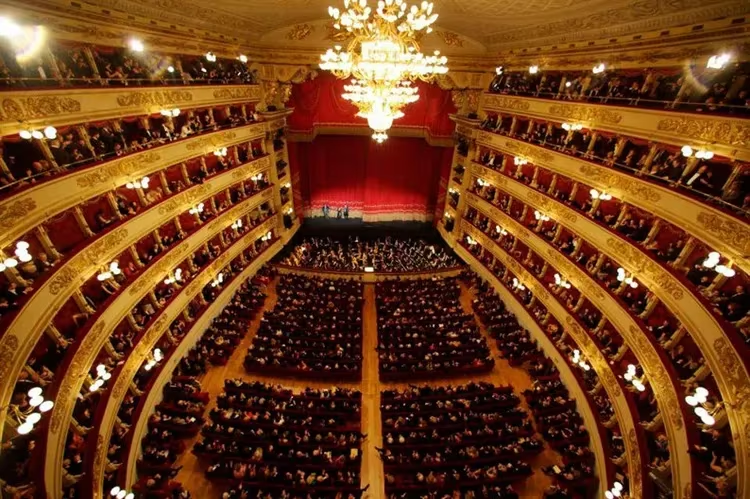
As promised earlier, we return to the world-famous La Scala Opera House. Many mistakenly believe that it got its name from the Italian word Scala (“ladder”). In fact, it was built on the site of the church of Santa Maria della Scala, hence the name. The theater was designed by the architect D. Piermarine. The building itself looks rather nondescript compared to other Italian buildings, and Piermarine had her reasons for that.
Firstly, it was driven by the Milanese aristocrats who sponsored the construction, and secondly, the building was located surrounded by ordinary residential buildings. So the designer decided not to spend extra time and budget on the formation of the facade. Thanks to this decision, La Scala was rebuilt in an unprecedentedly short time – 2 years. Despite the inconspicuous appearance, inside the building greets its visitors with the richest decoration and amazing acoustics. Glory began right in this place: Salieri, Verdi, Puccini and other now recognized composers.
Mercanti Square
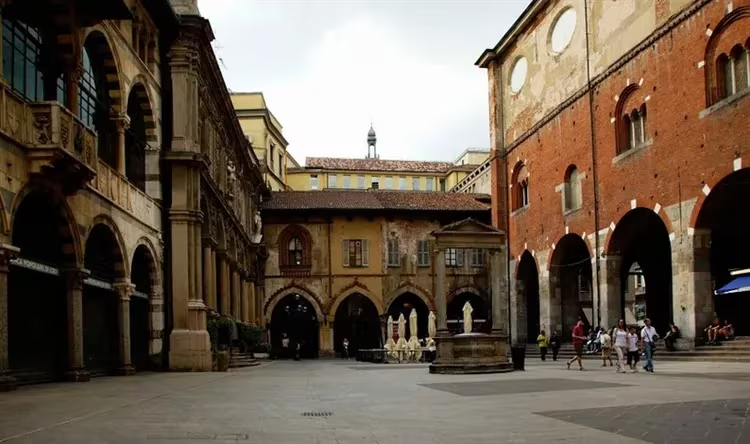
From La Scala, follow the Via Santa Margherita past the Palace of the Legal Counsels until you reach Piazza Mercanti. In the old days, it was possible to get to the square from 6 passages, each of which was called by the guild of craftsmen located on them, for example, the street of jewelers. This place is not included in the mandatory tourist routes, and guides often bypass the area. But attentive tourists will definitely find time to explore this medieval pearl of Milan.
Mercanti Square is not large, it hosted significant city events – meetings of the guild of merchants, court hearings, and so on. When visiting it, one should pay attention to the Palace of the Lawyers, built in the Renaissance style popular in those days. Another masterpiece of architecture is the Palazzo della Ragione, built in the Middle Ages. Before, justice was done here. Opposite the palazzo, attention is drawn to the scuole Palatine, created in the first half of the 17th century. This square traditionally houses a book market, where you can even find rare publications.
Cordusio Square
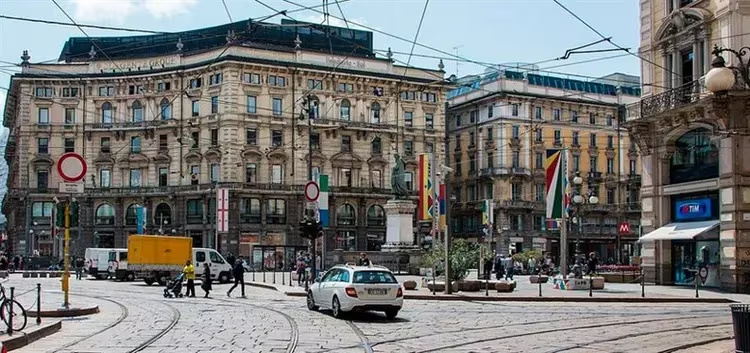
Passing Piazza Cordusio, you will find yourself at the beginning of Via Dante. The unique elliptical square was created at the end of the 19th century. The three buildings facing it have an amazing concave shape, which gives an interesting shape to the square. Six roads intersect at this point. Starting your tourist route from here, it is easy to get to the most significant places of the city. Cordusio is often referred to as “the square of the banks” – the headquarters of large financial institutions are located here.
The square got its name from the words Curia Ducis, which translates as the Ducal Court. The building for holding court sessions was built here by the king of the Lombard tribe. Another interesting fact from the history of Cordusio is that it was here that the first electric tram was launched in 1893. This type of transport interested the townspeople so much that almost 10,000 tickets were sold on the first day of its operation. The tram has survived to this day and can be seen in the Museum of Science.
Via Dante
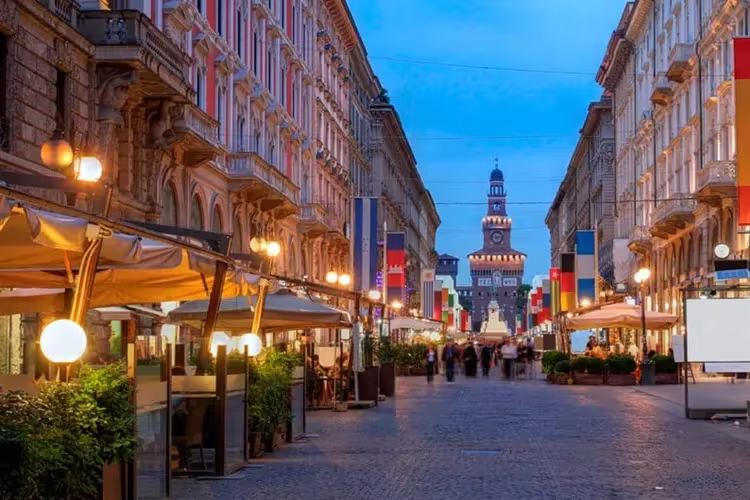
To feel the atmosphere of the ancient city, travelers can walk along Via Dante, one of the most beautiful pedestrian streets. It got its name in honor of the famous poet Dante Alighieri. More recently, tram rails were laid along it and city transport traveled, but then the authorities gave the street at the disposal of pedestrians. The houses on it were built in the XVIII-XIX centuries, they are perfectly preserved.
The city authorities made another wise decision by banning all new buildings on Via Dante. Thanks to this, the street has been preserved as it was several centuries ago. Now tourists can not only enjoy walking around the ancient city, but also go to one of the theaters located on Via Dante. Particularly interesting is the Piccolo Theater (Little Theatre). He was awarded the title of theater of Europe. The first play that was staged in it was “At the Bottom” by Maxim Gorky.
Milan Cathedral: Terraces Ticket – €16
Milan Cathedral and Terraces by Elevator: Fast Track Ticket – €25
Sightseeing Bus Tour – 48h, 72h or 1 day – from €22
Serravalle Designer Outlet: Round trip bus – 20 €
Monument to Giuseppe Garibaldi
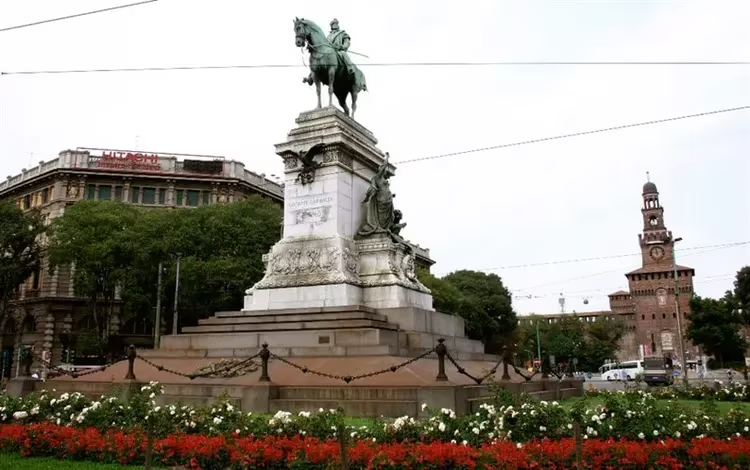
From Via Dante, you will immediately go to Cairoli Square, where you will find the monument to D. Garibaldi. He was the greatest commander who fought for justice, and is now the national hero of Italy. Throughout his life, Giuseppe, as a true patriot, waged a war for the unification of Italy, torn between strife and invaders. Ironically, one of the streets adjacent to the square is named after the conqueror of Italy – Bonaparte. However, it rests on the monument to the liberator – Giuseppe Garibaldi. From here you can see the next attraction, to which we will move on.
Sforza Castle
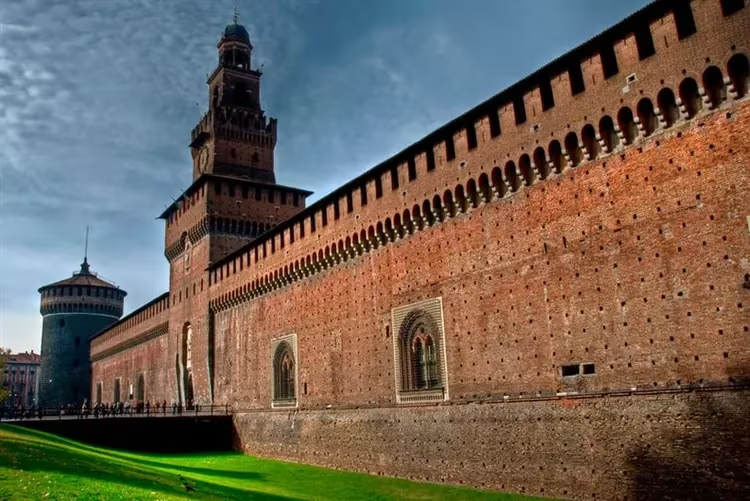
For many of our compatriots, the castle resembles the Kremlin, located in Moscow. The towers and battlements are similar. This is not surprising, because it was the Sforza Castle that served as the prototype for the creation of the Kremlin. The castle was built in the 14th century by the Duke of Visconti. He was the owner of this building for a short time. The duke was overthrown during the uprising, and power passed to Francesco Sforza. The castle was badly damaged, and Sforza took up its restoration.
His descendants continued to improve the building and decorated it with rich decoration. The history of Russia also influenced the castle. It was stormed by Suvorov soldiers during the Italian campaign. Many events left their mark on the appearance of the building – the arrival of Napoleon, the capture by Austrian troops, the Second World War. Now it has been completely restored and is available for tourists to visit. Now one of the most popular museums is located on the territory of the castle, which all travelers consider it their duty to visit. Here, art lovers enjoy the masterpieces of Michelangelo, Leonardo da Vinci and other masters of the Italian school.
Sempione Park
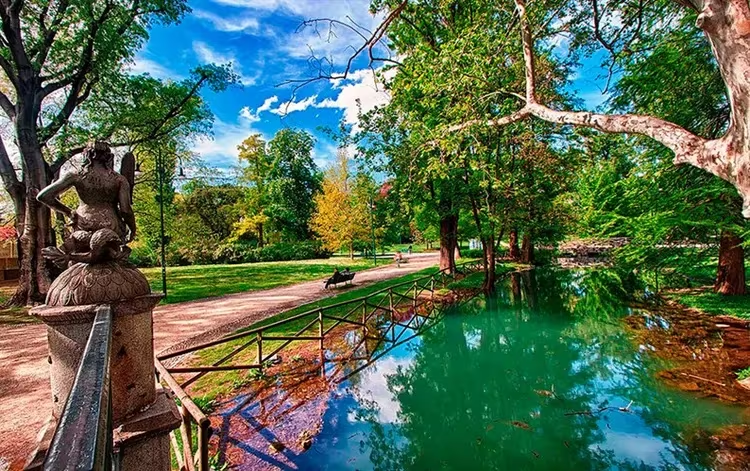
Among the stone buildings of the city in the immediate vicinity of the Sforza Castle are the green lungs of the city – Sempione Park. It was developed by the Italian Alemagna relatively recently – at the end of the 19th century. The park has been preserved in its original form and occupies a significant area – almost 50 hectares. This favorite walking place of the city residents attracts visitors with amazing beauty. An extensive water system of ponds and channels, manicured lawns, a huge number of blooming roses, fountains and sculptures make Sempione Park very popular.
Ducks, swans, turtles live in reservoirs. There are areas for active recreation. There are cycle tracks and playgrounds for children. Fans of football and frisbee will also find a place for leisure here. Not far from the Sforza castle, in the park, there are remains of the gate that led to the castle even under the Visconti. They date from the 14th century. Previously, in the park there were farm buildings and lands that belonged to the owners of the Sforza castle.
Recommended hotels:
Church of Santa Maria delle Grazie
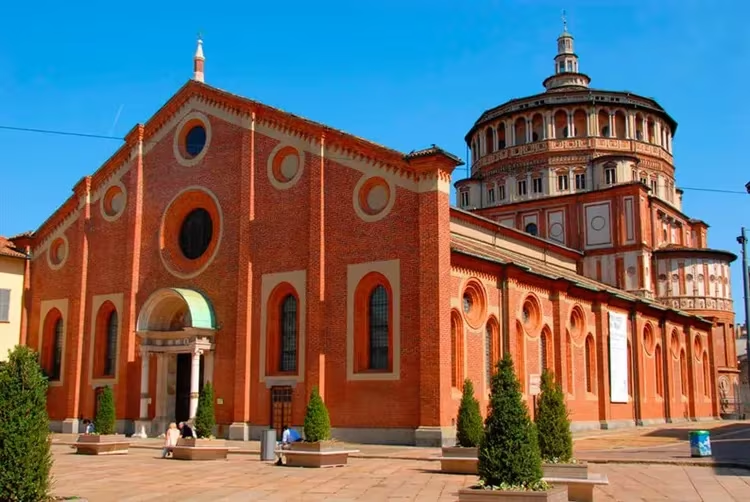
In the very center stands the symbol of Italian Renaissance art – the church of Santa Maria delle Grazie. It was built at the end of the 15th century as part of a Dominican monastery. The inner part of the church was divided into two halves: the first was accessible to parishioners, and the second was closed, and only monks could enter there. But the main value of the basilica is the fresco of the great Leonardo “The Last Supper” stored in the refectory. In August 1943, she miraculously survived the bombardment of the allied forces.
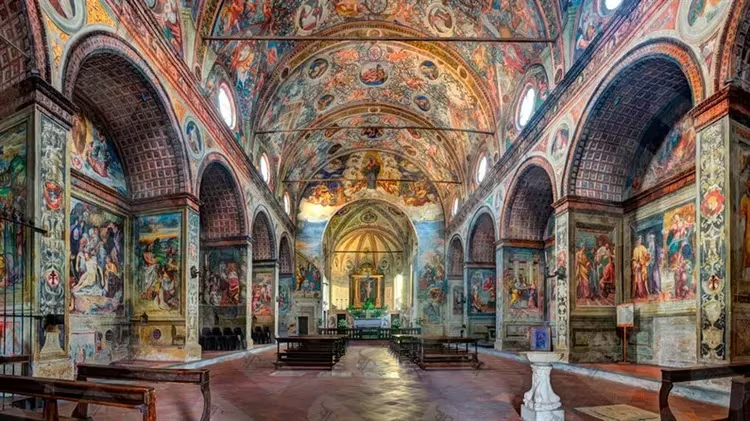
The parishioners covered the wall with the fresco with sandbags, thanks to which it was preserved. However, the consequences of the war, time and natural factors have led to the fact that the fresco is now far from its original state. To preserve it, those who wish are allowed to visit it only by prior appointment by phone. To see the work of the Master, you need to sign up for a tour by calling 02 92 800 360 from Monday to Saturday from 8.30 am to 6.30 pm.
Half an hour before the start of the tour, you need to arrive and buy a ticket or do it online. Of those who wish, they form groups of 25 people and are allowed to stay in the refectory for no more than 15 minutes. This is possible from Tuesday to Sunday from 8.15 to 18.45. Entrance to the territory of the church itself is free. It is open daily from 7 am to 7 pm, with a break in the afternoon – from 12 to 3 pm.
Basilica of San Lorenzo Maggiore
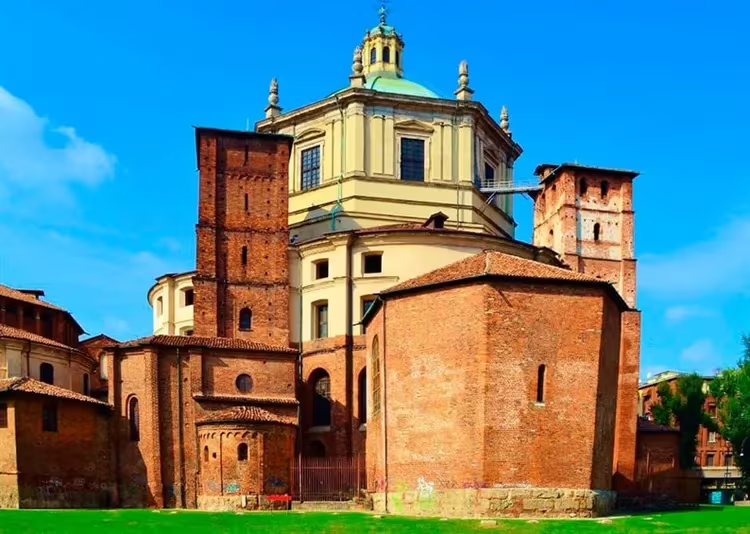
This is perhaps one of the oldest churches in Europe. Many walls were erected in the 4th century on the site of ancient Roman pagan temples. It suffered a lot from fires, was often rebuilt and was finally restored in the 16th century.
The main attraction is the Sant'Aquilino Chapel. It was built in the 5th century as a tomb for the daughter of Theodosius I. The chapel is richly decorated with mosaics depicting Jesus and the apostles. The relics of St. Aquilino and the martyr Natalia are also kept here. The basilica is also called San Lorenzo Colonne because of the twelve Corinthian columns that stand in front of it.
They belong to pre-Christian buildings and may have been intended for the construction of an ancient temple or baths. On the square in front of the church stands a monument to Emperor Constantine, whose name is associated with the end of the persecution of Christians and the beginning of the Christian era in the Roman Empire. The temple is open every day, from Monday to Saturday – from 8 to 18.30, and on Sundays – from 9 to 19 hours.
If you are planning a trip from Milan, we recommend the flixbus.ru service. On the site you can buy tickets online to:
Basilica of Saint Ambrose
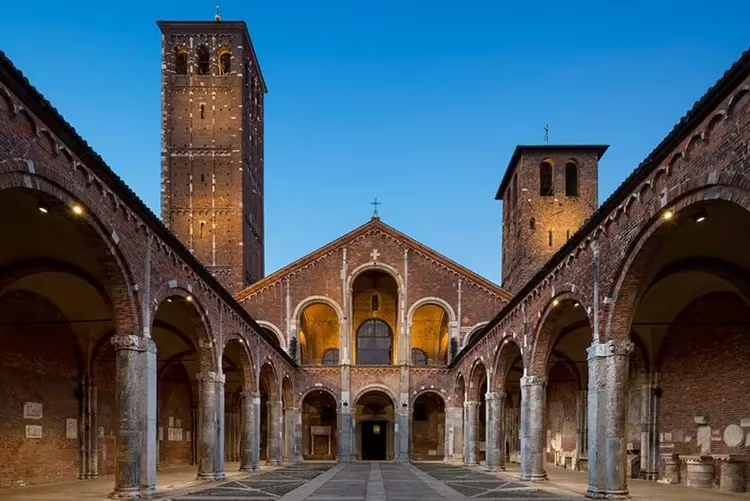
Saint Ambrose is considered the protector of Milan. He was born here, and in 379 founded a church in memory of the holy martyrs Protasius and Gevrasios. After the death of the priest, she received his name. The old basilica has not been preserved. In the 9th century, a new one was built in its place, which was rebuilt again in the 12th century. It was then that she acquired her final form and features characteristic of the Romanesque style. The relics of St. Ambrose were kept in the church, to which pilgrims came from all over Italy. Once it was the main cathedral of the city.
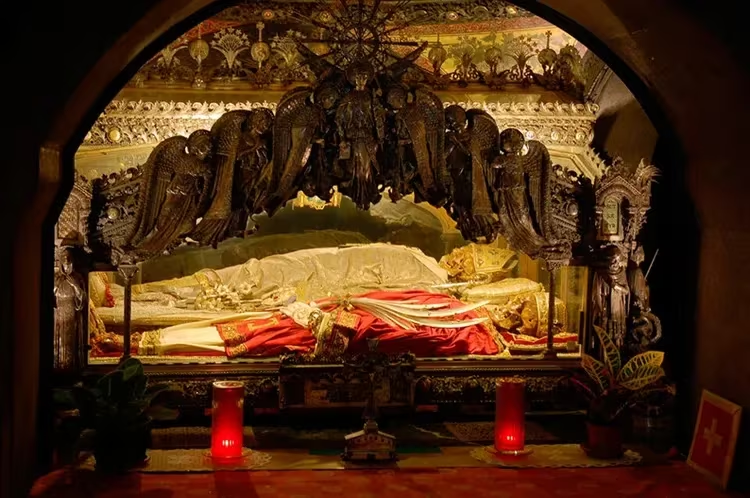
The entrance to the basilica leads through an atrium surrounded by columns. Each has relief images illustrating the struggle between God and the Devil. On one of them there are small round holes – according to legend, these are traces of the Devil's horns. During the fight, he hit them in the column. Tradition claims that by putting your ear to the column, you will hear his whisper. Inside the church, an altar of the 9th century made of gold has been preserved, on its front side are depicted gospel scenes, and the other side is decorated with images telling about the life of St. Ambrose.
In the chapel of San Vitorrio, under the dome, you can see a golden mosaic made back in the 5th century. The main shrines of the temple are the relics of the first great martyrs of Milan, Gevrasios and Protasius, and Ambrose himself. They are kept in a silver sarcophagus in the main crypt. In addition, the burials of Louis II and the sarcophagus with the remains of the Roman general of the 4th century Stilicho are of great value. Entrance to the church is free from 8.30 to 18.30.
Pinakoteka Brera
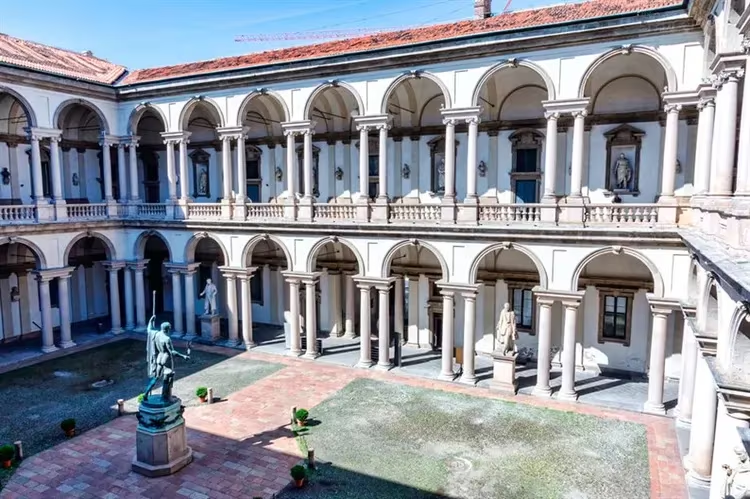
Pinacoteca Brera is one of the best art galleries in Italy. Here is a collection of masterpieces of Italian and European painters of the XIV-XVII centuries. The Pinacoteca is located in a 16th-century palazzo. In the 18th century, Maria of Austria founded a gallery here. It reached its peak under Napoleon. He was going to turn the city into the capital of the European Empire, so he ordered to collect the best examples of painting here.
Here you can see the works of Raphael, Michelangelo, Piero della Francesco, Caravaggio, Rembrandt, El Greco and other artists, ancient icons are also kept here. The main treasure of the gallery is the famous work of Raphael “Betrothal of the Virgin”. On the ground floor of the palace housed the Milan Academy of Arts. In addition to the art gallery and study rooms, the Pinakothek has its own botanical garden and observatory. The Pinakothek is open every day from 8.30 to 19.15.
On Thursday, the visiting time has been extended to 22:00. Day off is Monday. The gallery is also closed on holidays – December 25, January 1 and May 1.
Ambrosian Pinakothek
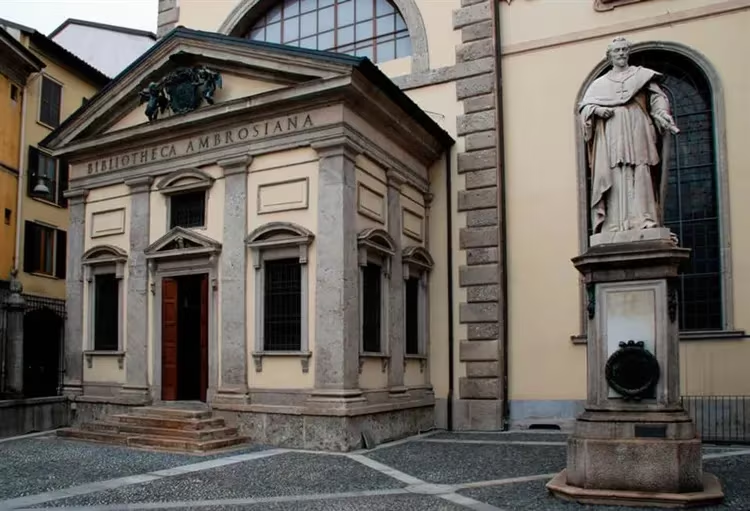
The Milanese archbishop Federico Borromeo was a great patron of the arts and sciences. He collected old manuscripts from Greece, Syria, European countries and in 1602 decided to build a library. In 1609, the Ambrosian Library was opened to the public. With her, the archbishop ordered in 1618 to establish a Pinakothek and an art academy. The art gallery was based on sculptures and canvases, which were in the personal collection of the archbishop.
Later it was supplemented by the most famous works of Italian and European artists. Today in the Pinakothek you can see the autographs of Virgil, Aristotle, the manuscripts of Leonardo da Vinci: his drawings, diagrams – the famous Codex Atlanticus. In addition to manuscripts, Leonardo's art works, as well as paintings by Raphael, Caravaggio, Brueghels, Botticelli, Titian, Dürer and other artists are kept in the gallery.
The gallery is open from Tuesday to Sunday from 10:00 to 17:30. It is closed on Mondays and holidays: January 1, Easter, May 1 and December 25. Photo and video filming is prohibited in the Pinakothek. But the facades of the building, the courtyards are allowed to be removed.
Leonardo da Vinci Museum of Science and Technology
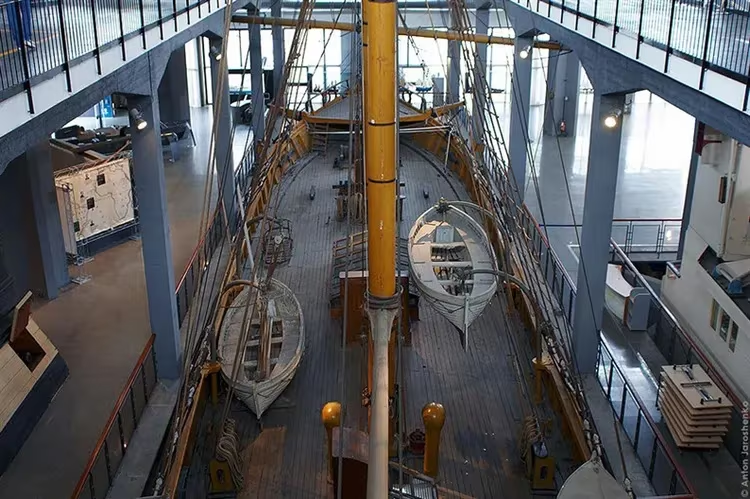
Even people who are completely far from scientific research and technical projects will be able to find a lot of interesting things here. The museum is located in the premises of an ancient monastery, and some of the exhibits are located directly under the open sky. Of great interest is usually the pavilion, which presents the inventions of Leonardo da Vinci – wooden models, famous diagrams, drawings and drawings of a diving suit, a description of a parachute, a submarine and other creations of the great scientist.
You can look through a telescope from the times of Galileo, look into an old submarine and a tram, see how a sailing ship was built, compare an old and ultra-modern, high-speed train. Open from Tuesday to Friday from 9.30 to 17.00, on weekends – until 18.30. Closed on Mondays, as well as January 1, December 24 and 25.
Poldi Pezzoli Museum
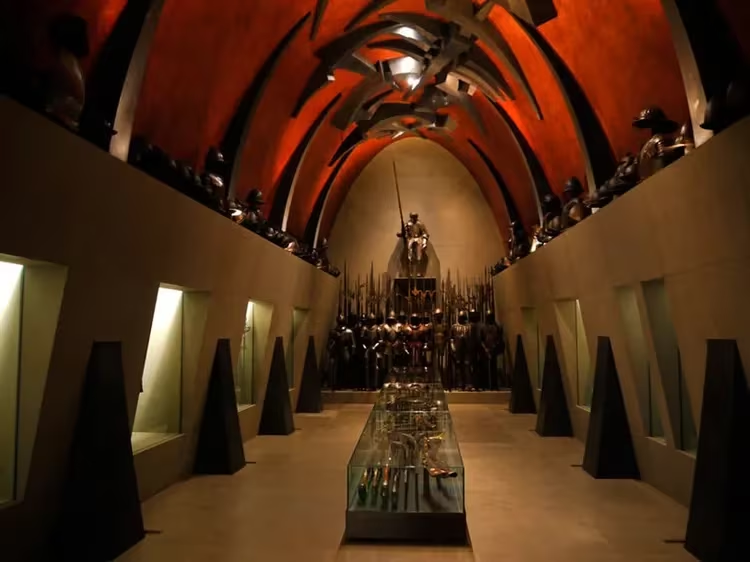
The city is very rich in various exhibitions, so it is not easy for a museum to win success. Sophisticated tourists choose the most interesting places to visit. This is exactly what the Poldi Pezzoli Museum can be called. The building it occupies was built in the 17th century. The collection was started by Gian Giacomo Poldi-Pezzoli. During his life he visited many countries, where he got acquainted with world art. He began turning his house into a museum in 1849.
Masterpieces of painting coexisted in it with unique antique weapons. The collector bequeathed his entire collection to the city. He died in 1879, and three years later the public was able to get acquainted with the exposition of the new museum. During the Second World War, the city was bombed, and the building was noticeably damaged. It was a great success that many of the exhibits were saved. After reconstruction and restoration, the doors were opened only in 1951.
Villa Reale
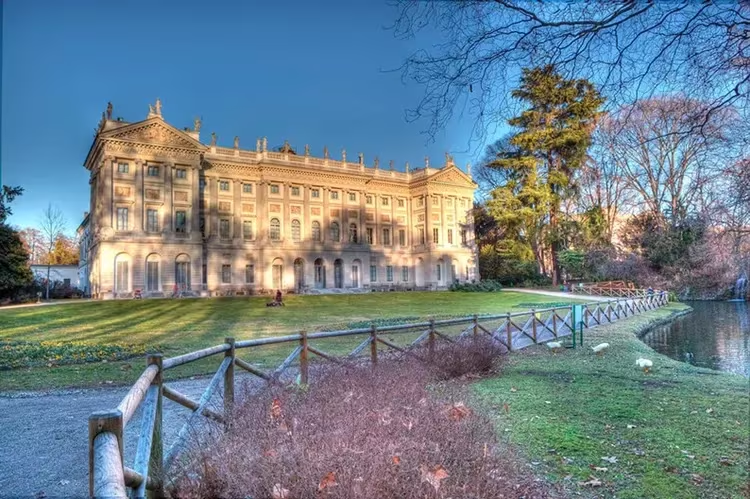
The famous residence of Napoleon, Villa Reale, an example of the era of classicism, was built for the ambassador to England, Count Belgioiso, at the end of the 18th century. Its main attraction was the first English park in Italy, decorated with numerous sculptures, pavilions and bridges. Napoleon made the villa his home, after which it was called Villa Bonaparte. After his overthrow, the residence of the Austrian governor of Lombardy was located here.
Since 1921, the Gallery of Modern Art has been located here. It contains works by Modigliani, Renoir, Giovanni Fattoni, Picasso, Gauguin, Van Gogh and other artists and sculptors of the 19th-20th centuries. The villa is open to visitors from 9 am to 5.30 pm, with a break from 1 pm to 2 pm every day except Monday.
Skyscraper Pirelli
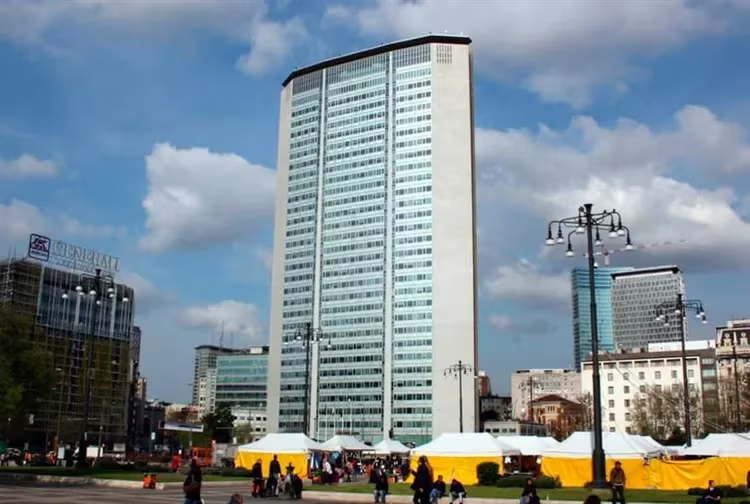
One of the main attractions of modern Italy, the Pirelli skyscraper, began to be built in 1950 on the initiative of Alberto Pirelli, the president of the world-famous Pirelli company, on the very spot where the first factory of this famous dynasty of Italian industrialists had stood since 1872. Construction lasted 10 years. As a result, a 127.1 m high tower was built, which rose above the spire of the Duomo. And since it was forbidden to build above the Madonna, the creators of the skyscraper got out of the situation by placing an exact copy of it on the roof. However, in 2002, a private jet crashed into the spire.
The skyscraper is made almost entirely of concrete, glass and aluminum and is decorated with glass mosaics. Inside, the tower looks no less original: for example, the floors in the building are made of rubber, the same rubber from which Pirelli makes their famous tires, and painted yellow.
Velasca Tower
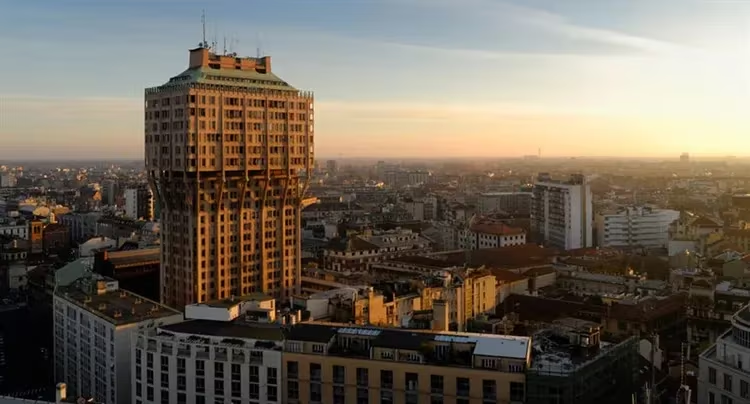
Another interesting skyscraper in the middle of Gothic cathedrals and early medieval temples. Right in the center of the city, not far from the Duomo, on Piazza Velaska, a 106-meter building rises, which is included in the list of the ugliest buildings in the world. However, the absurdity and ambiguity made it popular with tourists. The tower was built in 1958 in neo-modernist style. The lower part of the building is intended for office space, above it there is a wider upper part, in which residential apartments are located.
Because of this, the building is shaped like a mushroom – a square “hat” is put on a wide rectangular “leg”. The facades of the building are also unusually decorated: the architects were inspired by the then fashionable ideas of industrial architecture, which they tried to combine with the stylistic solutions traditional for the Middle Ages for the design of fortresses and monasteries. The building turned out impregnable and gloomy, like a medieval castle.
Monument to the Middle Finger
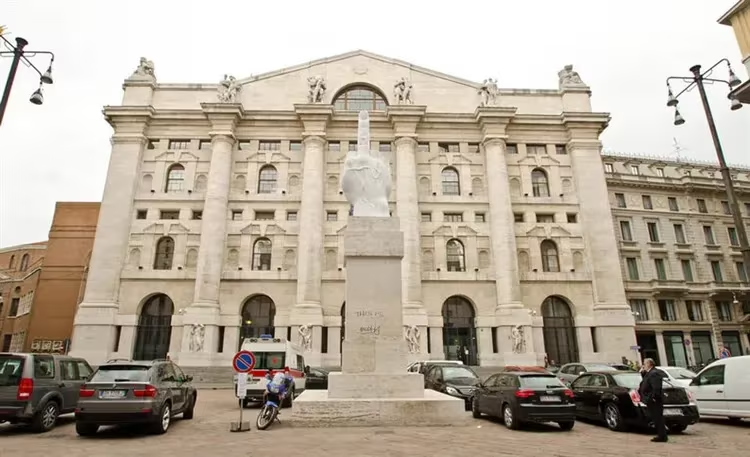
Another scandalous and controversial example of modern monumental art. The monument depicting a hand with an outstretched middle finger (the same gesture that representatives of any culture understand the direction of movement) was supposed to stand on Affari Square in front of the stock exchange building for only two days. The author, the Venetian sculptor Maurizio Cattelanu, made it for the exhibition Against Ideology. However, even after its completion, the monument remained in its original place.
A huge 4-meter marble fist is erected on a pedestal 7 meters high. Right behind him is the famous building of the Milan Stock Exchange.
San Siro Stadium
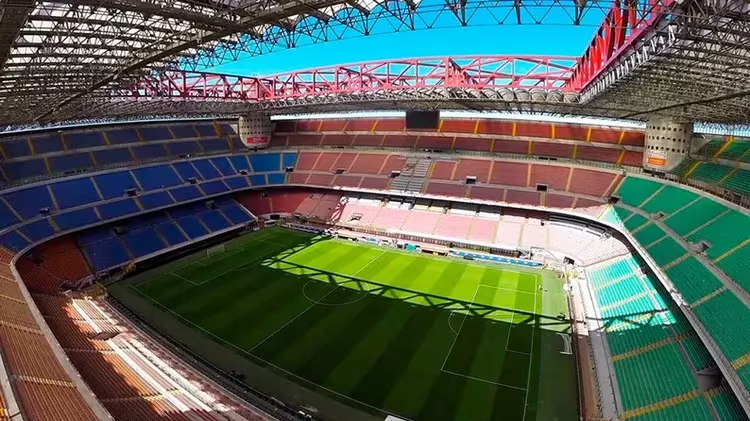
The first match on the field of the famous Milan stadium took place in 1926 between the football clubs Milan and Internazionale. The stadium at that time belonged to the Milan club and was named after the church located nearby. Over time, it has been modernized several times. After the war, both clubs began to share the stadium – Milan and Inter. Later it was decided to rename it in honor of the famous Inter player Giuseppe Meazza.
For many years he played for both clubs and for the national team, he was a true urban legend. However, fans of the club still call the stadium by its old name – “San Siro”. For the 1990 FIFA World Cup, the stadium underwent a major renovation. Today it is one of the best and most modern stadiums in the world. It is designed for 80,000 spectators in the stands, as well as separate VIP boxes and a large press area. Not only club competitions are held here, but the world's largest tournaments: the finals of the Champions League, the European Cup and others.
On the days of matches between clubs, the whole city is filled with their fans, which is why it becomes painted in black, red and blue. From Piazza Duomo, fans can board the special buses of their clubs, which will take them to the stadium. The stadium has a sports museum. Most of his collection, of course, is dedicated to the history of Italian football and home clubs – Milan and Inter. It works from 9.30 am to 6 pm. At this time, you need to go to the entrance number 8 – there, under the stands, the museum is located.
monumental cemetery
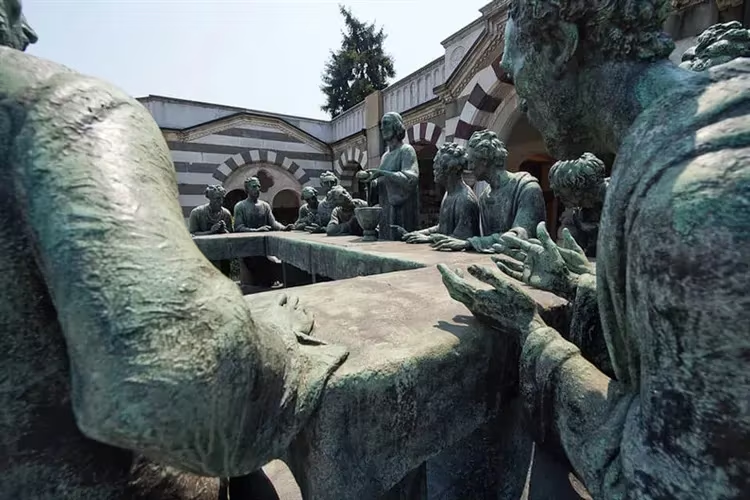
This city of the dead is more like a sculpture park than a final resting place. It was designed back in 1866 by Carlo Macchiacini. At that time, this cemetery was available only to the most noble and wealthy citizens. Places for burials were bought in advance, sketches of tombstones were also prepared ahead of time, inscriptions on gravestones were approved.
Monuments keep the ideas of the then Milanese about beauty and luxury, their tastes, the level of spiritual culture. Most of them were made by famous architects and sculptors. All of them are unique and cannot be found repeating. Here you can see the Egyptian pyramids, ancient temples, images of angels and entire sculptural groups.
For example, the family tomb of the Campari family is decorated with a composition that repeats the “Last Supper” by Leonardo da Vinci. Not only wealthy citizens are buried at the cemetery, but also famous citizens, famous cultural figures, patrons, industrialists and businessmen, politicians. You can come to the cemetery from 8 am to 6 pm every day except Monday. On holidays it is open only until lunch – until 13:00.
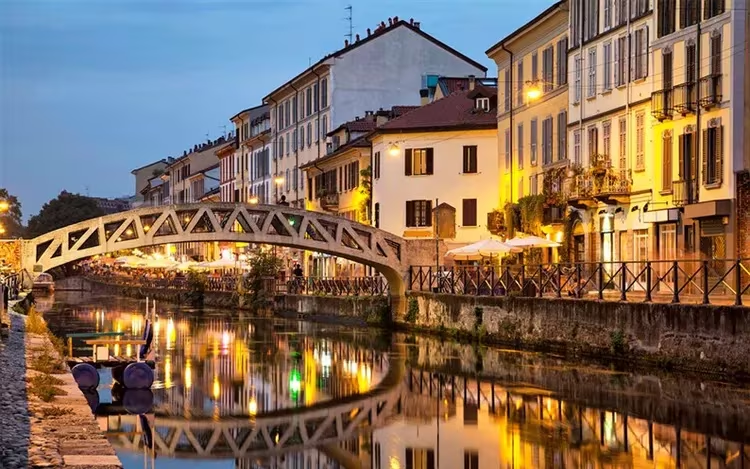
The Naviglio area is the most romantic area of the city. Once upon a time, the Milanese wanted to turn their city into a second Venice. For this, it was planned to conduct a network of canals, Leonardo da Vinci also participated in the development of this project. To date, only three of the entire branched network of canals that were once the city's transport arteries have remained.
The most picturesque of them is Naviglio Grande. Small footbridges, churches and the famous Prachek Lane (Vicolo dei Lavandai) have been preserved here. In the warm season, sightseeing boats go along the canal, and numerous antique and tourist shops work on the banks. In the evenings, many youth clubs and bars open here, various performances are arranged.
Branca Tower
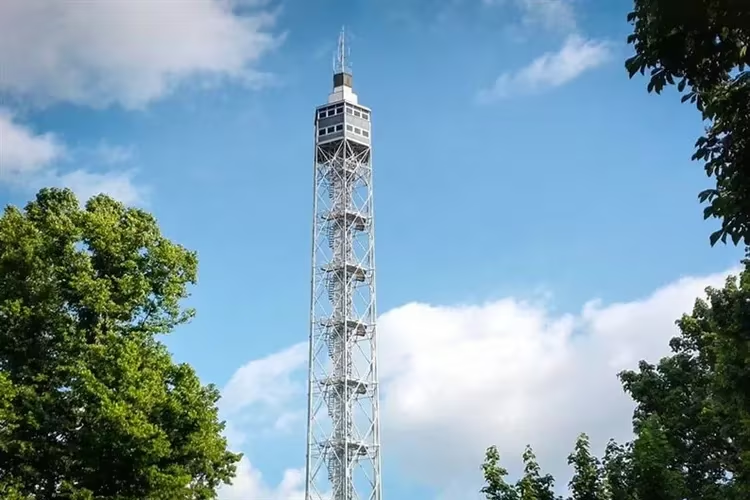
Not only medieval architectural masterpieces attract the attention of tourists. Branca Tower is always popular. It was built in 1933, and the order for the construction was given personally by Benito Mussolini. Thus he celebrated the opening of the anniversary exhibition at the Palazzo del Arte. The Branca Tower has a second name – Milan's Eiffel Tower.
Indeed, the openwork structure, towering 108 meters, surprisingly resembles the work of the engineer Eiffel. This building was created in a surprisingly short time – just three months. In 1972, a real threat loomed over the tower. The fasteners connecting the steel elements have been greatly weakened. The city authorities feared that the structure might collapse.
Thirty years were spent on the restoration of the building. The costs were borne by a well-known company that produces wine – Distilleria. Its owner, Fratelli Branca, gave the tower a new name. After the restoration, visitors were able to climb the observation deck already in 2002. The building ranks sixth in the city in terms of height, and from there a beautiful view of Milan, the Lombard Plain and the peaks of the Alps opens.
Basilica of Sant'Eustorgio
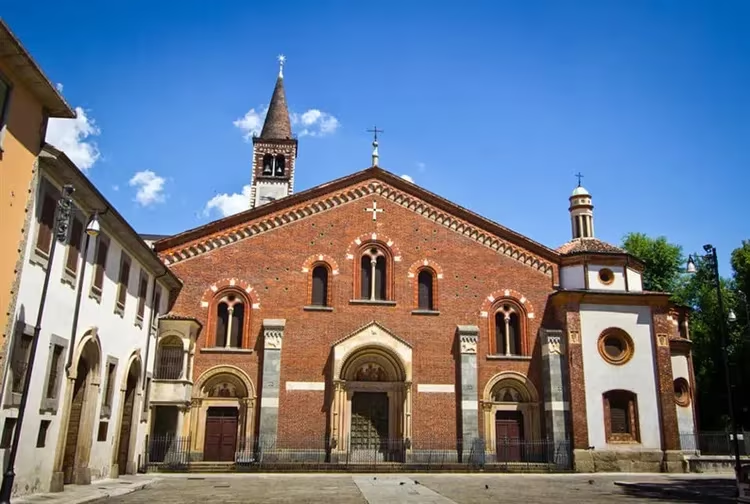
This church is located near the lake of the same name. The place it occupies is remarkable. In ancient times, Saint Barnaba preached here, and many of his followers were baptized here. The basilica is revered by Christians. Tradition says that it kept the relics of the kings who came to bow to the newborn Jesus and brought him their gifts. Later, Friedrich Barbarossa took these relics and moved them to Cologne. In the Middle Ages, the courts of the Inquisition were held within these walls. Since the 13th century, the residence of the Dominican order has been located in the basilica.
The church was built gradually, absorbing ancient buildings. The early Christian temple left behind an apse, which is now under the choirs. Chapels were then added. In one of them there are burials dating from the Renaissance. The other contains masterpieces of Florentine art. The basilica went through all the trials of the harsh 20th century, but it still required a large-scale restoration. In 1999 the work was completed. An eight-pointed star was erected on the temple and a beautiful backlight was installed.
Church of San Fedele
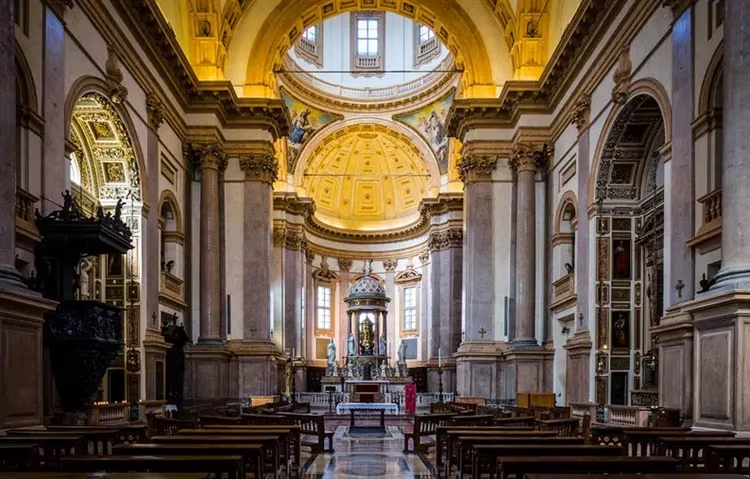
The historic center is adorned with many churches. One of the most interesting is San Fedele, located on the square of the same name. The initiator of the construction was the Archbishop of San Carlo Borromeo. He represented the Jesuit order – the largest belonging to the Catholic Church. The architect was Pellegrino Tibaldi. Construction lasted 69 years and ended in 1596.
The building was built in a strict and solemn classical style. Majestic columns, niches and decor look amazingly harmonious and beautiful. The high dome is designed in such a way that it appears to float above the altar. Be sure to visit the chapels included in the church. Each of them is unique and can be called a masterpiece. Particularly striking is the “Pieta” – the grieving Virgin of the work of the artist Peterziano.
Brera Astronomical Observatory
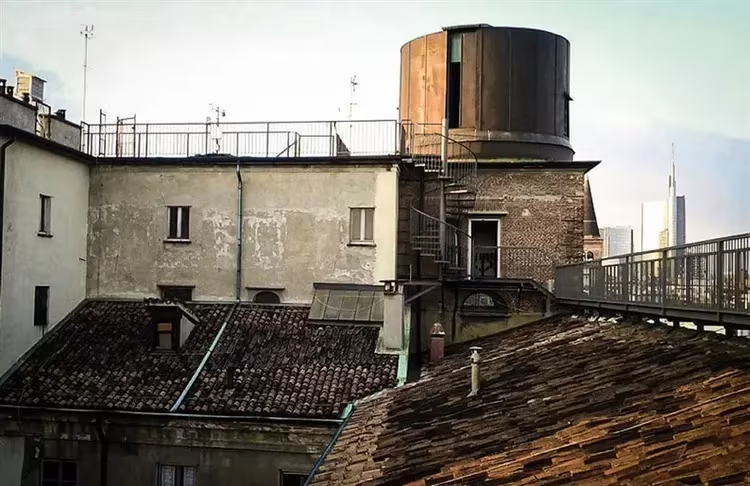
In the second half of the 18th century, the Jesuit order founded an astronomical observatory in the Brera Palace. The work was supervised by the Croatian priest and scientist Rudzher Josip Boskovic. He also became the head of the institution. The Jesuit order ceased to exist in 1773, at the same time the observatory was transferred to the state.
For many years it served science, but at the beginning of the 20th century, a deterioration in the astroclimate, the conditions for observing celestial bodies, was noticed. It was decided to create a new observatory in the city of Merate. Interesting discoveries were made within the walls of the Brera Palace. So, the astronomer Giovanni Schiaparelli in 1861 discovered an asteroid called Hesperia. A few years later, in 1877, the same scientist was able to see the channels on Mars and draw them.
Museo del Novecento
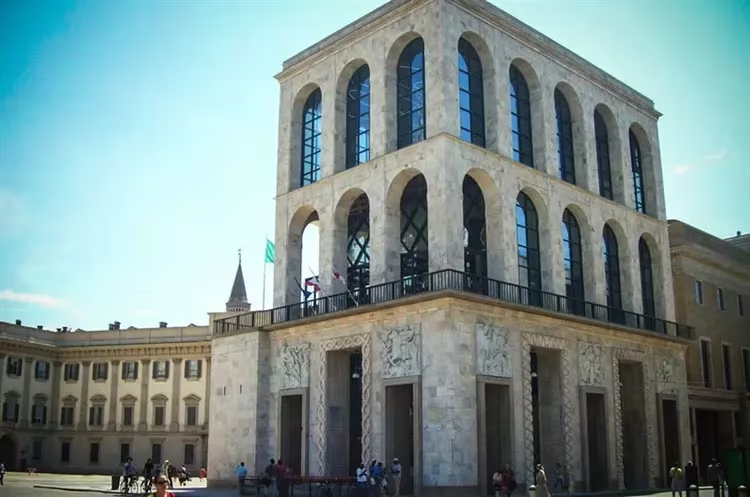
Contemporary art lovers will also find a lot of interesting things for themselves. The Novecento Museum is located in the Arengario Palace. In order to accommodate the exposition in the building, large-scale restoration work was needed, for which more than 30 million euros were spent. As a result, the city has acquired another unique attraction that attracts tourists. The museum was opened relatively recently, in 2010, but now the exposition is represented by more than 400 works by famous masters.
The museum is rightfully proud of the masterpieces of Picasso, Amedeo Modigliani, Kandinsky and others. There are interesting works in the style of futurism and abstract art. Art connoisseurs of the 50s and 60s of the 20th century will find here a large collection represented by such names as Manzoni or Bonalumi. The last floor is occupied by a grandiose exhibition by Lucio Fontano. In addition to paintings, visitors can admire the view of Duomo Square through huge panoramic windows. In addition to the art gallery, you can also visit the museum restaurant and bookstore, which offers a wide selection of printed materials.
The trip will definitely leave vivid memories and unforgettable impressions. It is difficult to find another place where modernity harmoniously combines with antiquity.