
Sights of Sintra – 16 most interesting places
“A place where nature and art complement each other perfectly.” This is how Hans Christian Andersen wrote about the romantic Sintra, nestled comfortably at the foot of the Serra de Sintra mountain range. The Danish storyteller did not sin against the truth. Here, on the coast of the Atlantic, you will be charmed by picturesque hills covered with greenery of pine forests, breathtaking views of the vast ocean, medieval castles and luxurious palaces. The ancient town, whose history dates back to 1154, is located just 29 km from Lisbon. Therefore, a one- or two-day trip here will become an obligatory point of the excursion program for those who travel around the Portuguese capital. In this magical land, you can walk through exotic parks, eat in authentic cafes and visit the sights of Sintra, which will be discussed today.
Moors castle
Sintra, 2710
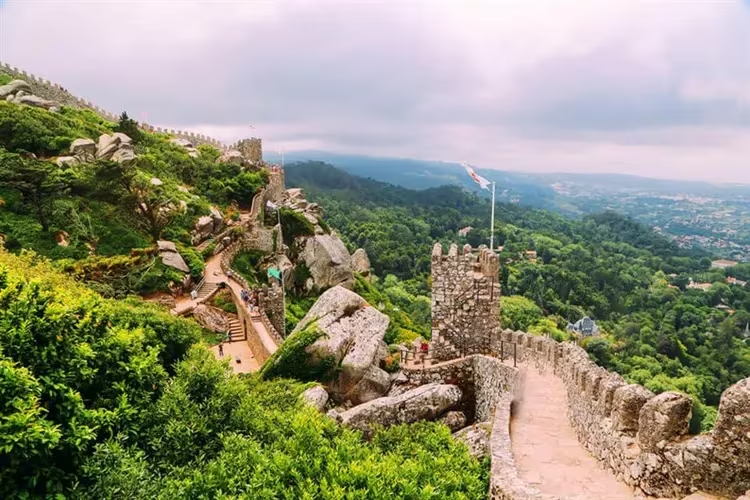
In the 9th century, Portugal came under the control of newcomers from North Africa – the Moors, who had a huge impact on the appearance and culture of the country. One of the architectural legacies left behind by the subjugating Arabs was a defensive castle atop a range of hills. The impregnable fortress was surrounded by a double wall. Its thickness reached 2.5 m. To build a powerful structure, the conquerors used a cunning method: wooden stakes were inserted into the cracks of stone blocks, with the help of which pieces of the desired size were chipped off.
In 1147, the Portuguese returned the occupied lands, and the Castle of the Moors lost its protective functions. In the following centuries, it gradually fell into decay. Only in 1860 the ancient bastion was partially reconstructed. Only five jagged towers, part of a winding wall and fragments of medieval buildings carved with ominous bas-reliefs remained from the original fortification.
Today, the Castle of the Moors is a real platform for adventure. Here you can climb the moss-covered walls, explore the ruins of St. Peter's Church, or climb the 500 steps to conquer the Real Tower. From a height of 412 m, a fantastic view of the green parks, delightful palaces and red-tiled roofs of the old city opens up.
Opening hours: daily (from 10:00 to 18:00).
Quinta da Regaleira
Barbosa do Bocage 5
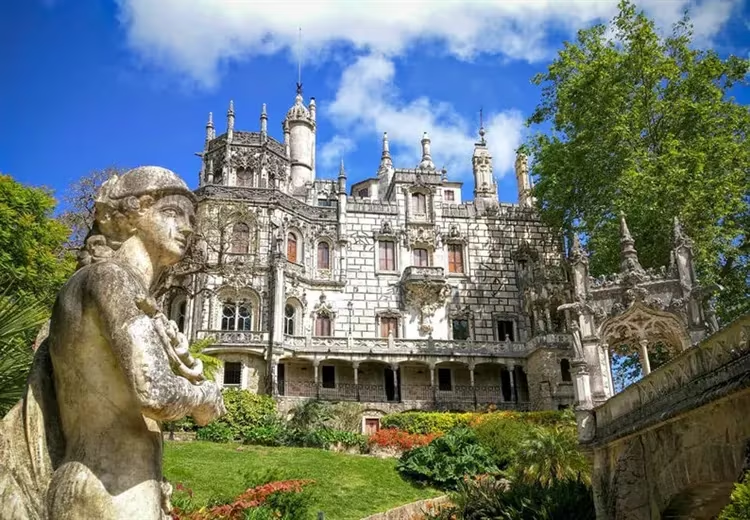
The Quinta da Regaleira palace and park complex is located 8 km from the historical center – one of the youngest sights in the vicinity of the city. Its construction began in 1904 and lasted 6 years. The owner of the estate, Dr. Carvalho Monteiro, filled with the desire to turn his possessions into the likeness of Eden, created a truly heavenly place that combines natural beauty and human creations.
The main decoration of Quinta da Regaleira is a delightful multi-tiered garden. If you are going for a walk along the numerous alleys full of marble sculptures, openwork pavilions, fancy grottoes and graceful fountains, stock up on a map. Without it, you risk getting lost.
In the center of the romantic park rises the palace, whose vaults are crowned with carved Gothic turrets. The grand facade, decorated with patterned stucco, was chosen by stone gargoyles, mystical animals and fantastic plants. Inside the building there are spacious halls located on four floors that have retained the original decoration of ceilings and walls.
Quinta da Regaleira's most famous attraction is the Well of Initiation. Down, to a depth of 27 meters, leads a spiral staircase, consisting of 9 spans. These levels represent the 9 circles of hell that Dante described in his Divine Comedy. At the bottom of the gloomy dungeon is the coat of arms of Monteiro – a giant eight-pointed star; one of the walls is decorated with a triangle – a symbol of the Masonic brotherhood.
Opening hours: from 09:30 to 20:00 (April-September) and from 09:30 to 18:00 (October-March).
Montserrat Palace
Monserrate, 2710—405
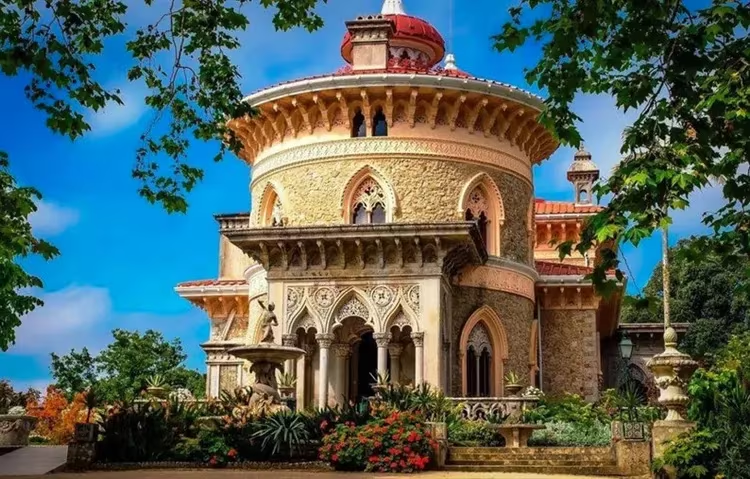
The palace and park ensemble of Montserrat owes its fame to the merchant Gerard de Vizhme. In 1790, a respectable 64-year-old native of Britain rented land located 4 km. Here, a native of Foggy Albion began the construction of a castle, named in memory of the Montserrat chapel that once stood on this site.
The main treasure of the estate is a delightful landscaped garden. On an area of 33 hectares, about 3,000 representatives of flora from all continents have found their home. Gigantic pines, sprawling palms, age-old araucaria and lush rhododendrons grow among man-made waterfalls, manicured ponds and romantic ruins. Paths surrounded by evergreen lawns take you to a multi-colored rose garden, a Japanese garden, a fern valley, a eucalyptus forest and a corner of Mexico.
Walking around the extensive park, you will find yourself in a palace whose architectural style is a vibrant mixture of Neo-Gothic, Mudéjar and eclecticism. Despite the fact that many of the original furnishings have been sold, Monserrate Palace has not lost its inherent solemnity and elegance. Luxurious halls still captivate guests with ornate stucco, dazzling decoration of walls and ceilings, marble columns and openwork arches.
Opening hours: daily (except 25.12 and 01.01) from 10:00 to 18:00.
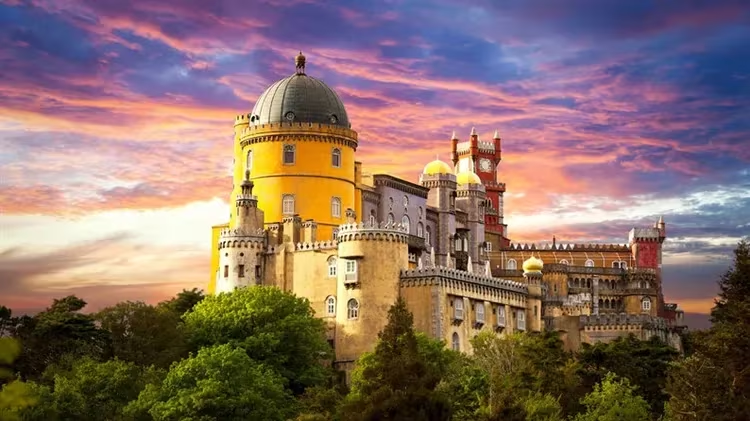
Pena Palace
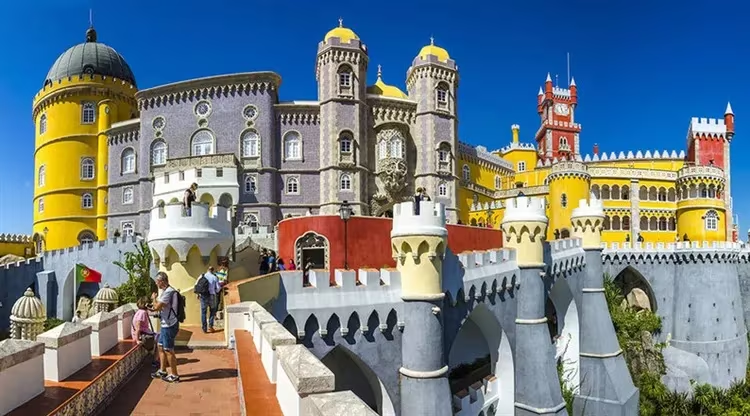
Pena road
The National Palace of Pena rises above the lush greenery of the endless valley. This enchanting building, built in the 19th century on a 450-meter cliff, seems to have descended from the pages of fairy tales. Its unique architecture combines several trends: Neo-Renaissance and Gothic coexist here with Portuguese Manueline and Moorish style, and bright, rich colors perfectly complement the severity of gray stone. The decorative finish of the chic interiors amazes with amazingly beautiful frescoes, mosaics and wall paintings.
The history of the extraordinary castle began in the 15th century. According to legend, the place for the construction of the future palace was indicated by the Virgin Mary. King Juan II, to whom the Mother of God revealed her face, built a chapel in honor of the Heavenly Queen. In 1501 it was replaced by the monastery of the Hieronymites. A sad fate awaited the abbey: in the 18th century it was struck by lightning, and the earthquake of 1755 turned the building into ruins.
After 79 years, the dilapidated monastery was bought by the consort king Fernando II. The German-born monarch entrusted the construction of the summer residence to the Prussian architect Ludwig von Eschwege. The architect gave the features of the famous German castles to his brainchild, which was born in 1854: Reinstein in Rhineland-Palatinate and Babelsberg in Potsdam.
Opening hours: daily (except 25.12 and 01.01) from 10:00 to 18:00.
Those who wish can take part in a guided tour (available languages - English, Portuguese, Spanish).
Chalet of the Countess of Edla
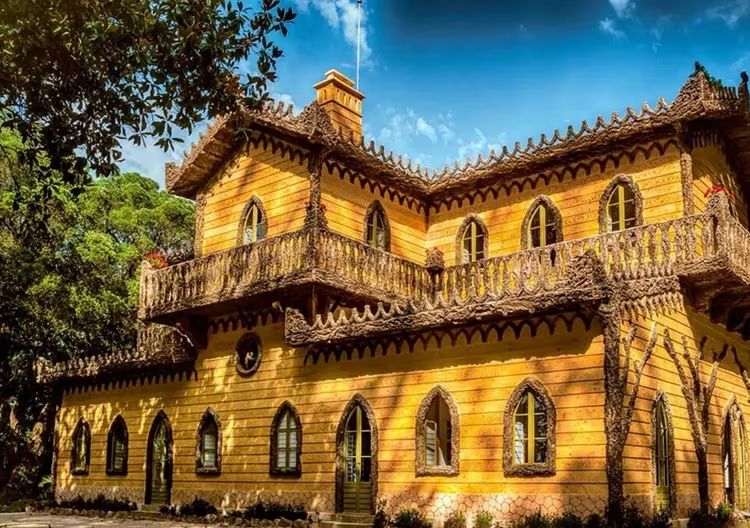
Pena Palace is surrounded by a huge park covering an area of 240 hectares. In its western part, among tree-like ferns and flowering camellias, a small house is hidden, built on the model of alpine chalets popular in the 19th century. The picturesque building resembles a fairy-tale hut. Skillfully painted exterior walls imitate wooden architraves and door jambs, while carved elements decorating the balcony resemble oak branches.
The romantic building keeps the memory of one of the most famous Portuguese love stories. Fernando II, who in 1853 lost his royal title after the death of his wife Maria II, 6 years later fell in love with the opera singer Eliza Hensler. From evil tongues and prying eyes, the couple took refuge in a cozy house built in a park near the royal residence.
The lovers legalized their relationship only in 1869. Before the wedding, the chosen one Fernando received the title of Countess of Edla. A fire in 1999 partially destroyed the love nest. Restoration work began in 2007, and after another 4 years, the chalet of Countess Edla again appeared before the guests of Pena Park in its original form.
National Palace
Largo Rainha Dona Amelia
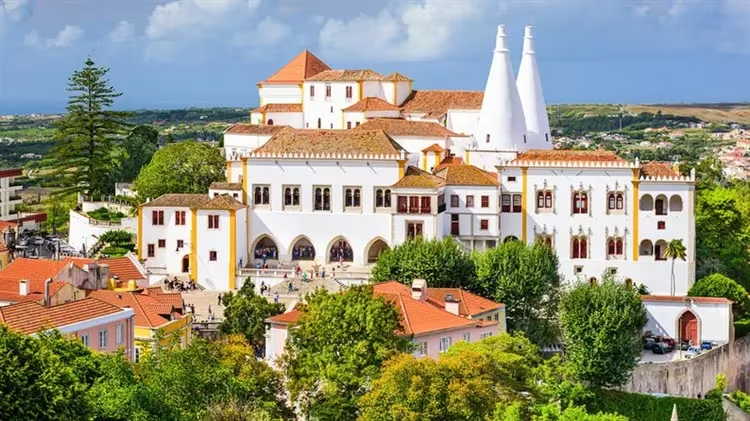
The National Palace, located in the Old City, is easily recognizable by its two cone-shaped 33-meter twin towers, which for several centuries played the role of a kitchen hood. The facade and interior decoration of the former royal residence is a vivid example of a combination of different styles: from medieval Gothic to Arabic Mudéjar and Portuguese azulejo.
The history of the National Palace began in the 10th century, when Portugal was under the yoke of the Moors who occupied the Iberian Peninsula. In the vicinity, the conquerors built two castles: a bastion, later called the Castle of the Moors, and the Alcazar residence, where the ruler of the Muslims settled. The palace, built by the Arabs, did not see any changes until the 14th century, when the Portuguese king João I launched a grandiose building campaign.
During his reign, the building acquired an arched façade, carved windows, conical chimneys, and intricately decorated halls. The infamous earthquake of 1755 also affected the National Palace. The revival of the building was not long in coming: restoration work began a couple of months after the natural disaster. The last restoration of the royal residence, which received the status of a national monument in 1910, took place in the 40s of the last century.
Opening hours: daily from 09:30 to 18:00.
Monastery of the Capuchins
necklaces, portugal
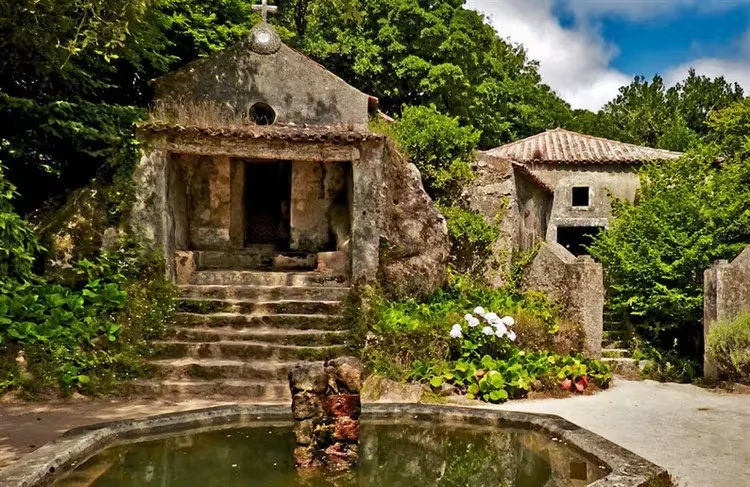
If you are tired of contemplating the endless succession of magnificent castles and avoid popular tourist routes, then the Capuchin Monastery is what should interest you. A visit to the ruins of an ancient monastery, lost in the dense thickets of the Sintra-Cascais National Park, will take you to a long forgotten time. The story introduces us to the commander of the Portuguese fleet, Juan de Castro, who got lost in the forest while hunting and chose a gorge in the rock as a night shelter.
In a dream, the navigator had a revelation that he should build a monastery on this place. Death prevented Juan from starting construction; his father's mission was completed in 1560 by his son. For centuries, poor Capuchin monks lived in complete seclusion. In the 19th century, after the forced dissolution of religious orders, the monastery fell into disrepair and was restored only in 1930.
The entrance to the territory of the monastery is marked with three stone crosses symbolizing Golgotha. Further, the path passes through tiny corridors carved into the rocks. Narrow labyrinths will lead you through the monastic cells, the library, the refectory and the sanitary block. The only decoration of the ascetic decoration are only azulejo tiles covering the walls of the chapel, and a few decorations made of shells and oak bark.
Modern Art Museum
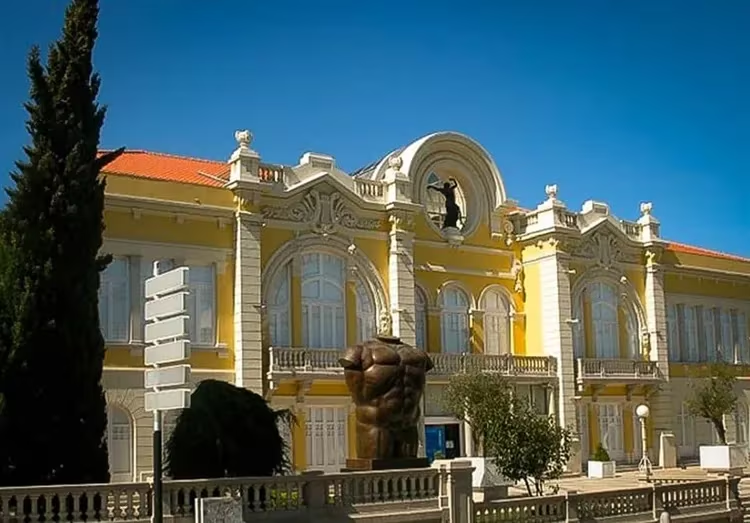
Av. Heliodoro Salgado 102
In the center, in a classic building that used to house the city's casino, today the Museum of Modern Art demonstrates its collection. Many of its exhibits, such as wooden robots studded with syringes or strange-looking figures, can cause misunderstanding among an unprepared viewer. Therefore, if you are not attracted to surrealism, abstract art or pop art, immediately go to the second floor, where there is a good photo exhibition.
More than 70% of the museum's exhibits are the work of local artists and sculptors, part of the world-famous collection of the Portuguese billionaire and admirer of unique rarities, Jose Berardo. The permanent exhibition of the gallery presents the works of authors who worked in the 20th century: Emilio de Paula Campos, Columban Bordal Pinheiro, Antonio Carneiro, Carlos Nogueira.
Opening hours:
city hall
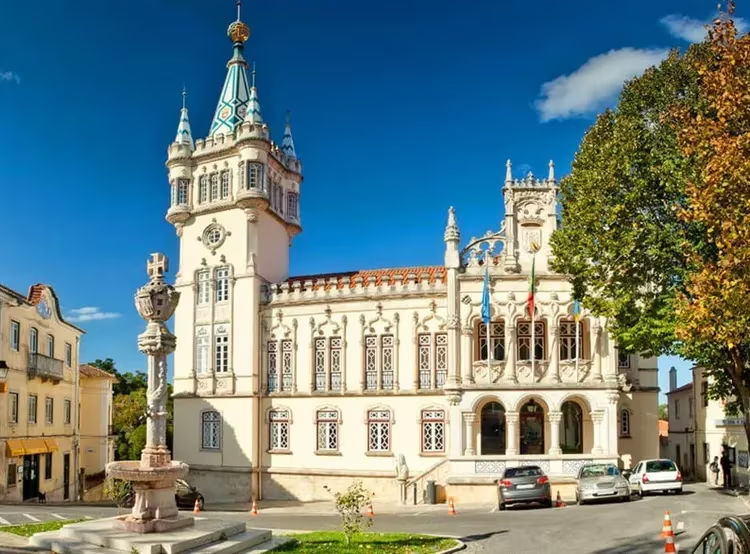
Largo Dr. Virgilio Horta
Near the main gate of the city – the railway station – a fabulous stone building welcomes the guests of the city. This is the town hall, built in 1909 by the Portuguese architect Adies Bermundes. The attraction can only be viewed from the outside. The entrance to the building, where the municipal authorities still sit, is closed to tourists.
The two-storey town hall is designed in neo-Gothic style, complemented by Manueline elements. On the right, the facade is decorated with a wide bay window, divided by a colonnade and crowned with a rectangular pediment with stucco. On the left, a luxurious tower closes the architectural composition. Its spire, decorated with four turrets, is covered with white and blue tiles, on which the Shield of the Motherland and the Cross of Christ are depicted.
Cafe “Keijadash da Sapa”
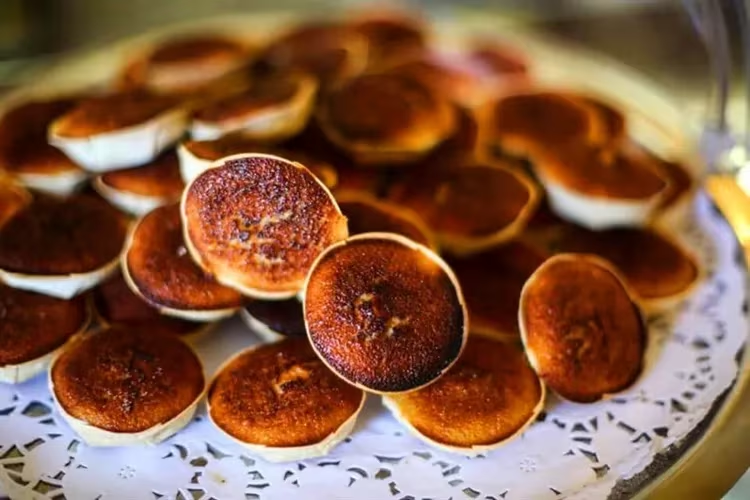
Back from Shower 12
It would be a crime to visit Portugal and not taste the national pastry Queijadas. Every local knows that the best cakes, made with crispy thin text and flavored with soft fresh cheese and cinnamon, are served at Caijadas da Sapa, a famous cafe located near the station.
The doors of the patisserie, named after its founder Maria Sapa, first opened in 1756. Getting here is not so easy – the tables of two small halls are almost always occupied by lovers of traditional pastries. Caijadas da Sapa is not only delicious, but also very comfortable. A sense of comfort is created by the mysterious twilight, flowers in illuminated niches, fabric lampshades and a view of the National Palace from the windows.
The choice of dishes in the cafe is not bad, the prices are pleasing with their availability. So, a standard portion of coffee and the freshest Queijadash will cost only 1.55 €. In addition to traditional cakes and an invigorating drink, you will find hot chocolate, royal Bolo pie, Broa corn biscuits, Pastel de Belem puff pastry and other national sweets on the menu of the confectionery. Waiters who are fluent in English will help to understand the assortment, replete with incomprehensible names.
Freedom Park
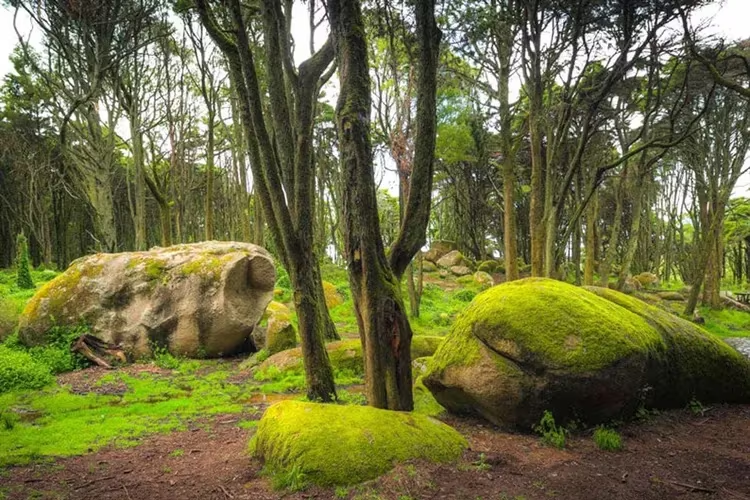
Back Shower 60
In 1935, the authorities rightly noted that the city, known as the land of gardens and flowers, did not have a public green space where locals and tourists could relax among the shady trees, play sports or have a picnic. A year later, the Tourist Board announced the acquisition of a piece of land with the aim of setting up a municipal park on it.
Freedom Park was opened in July 1937. This well-groomed garden-reserve is known for its unique landscape. Descents and ascents continuously replace each other, winding tropics coexist with wide alleys, multi-colored animal sculptures hide among huge boulders overgrown with moss, and geese and ducks waddle by the pond. The flora of the park is represented by 410 plant species. Exotic representatives of the hot tropics are placed in the greenhouse.
In August 1939, fans of outdoor activities joined the orderly ranks of lovers of leisure in the bosom of nature. Tennis courts and ice rinks appeared in the park. Today, only a small skating rink, a meeting place for young hockey fans, reminds of the once popular sports facilities.
Tram in Sintra
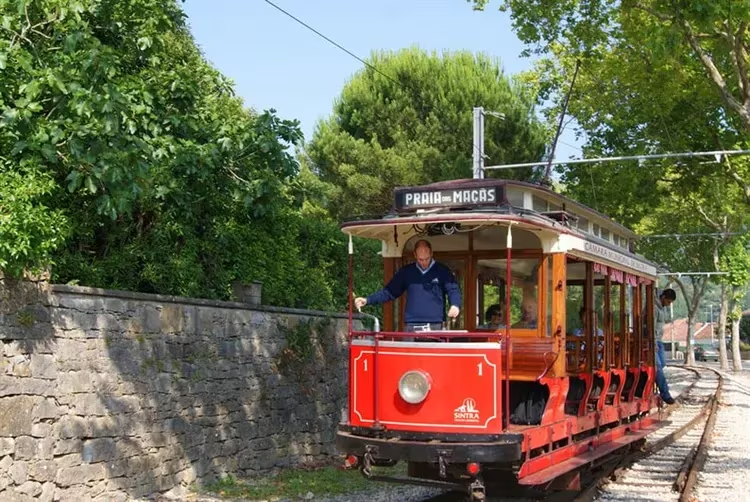
People come to the city not only because of the unique architectural masterpieces. Tourists tend to come here for the sake of meeting the Atlantic Ocean, because the famous Apple Beach (Praia das Maças) is located just 14 km from the historical center. And you can get to the coast on a retro tram, the route of which was laid in 1904.
The tram covers a 13 km long route in 45 minutes. You don't get bored on the road. Amazing views of the sights open from the window, making you forget about the creak of an old carriage and slow climbs uphill. You will see the National Palace, the ruins of the Castle of the Moors, the Pena Palace and the estate of Quinta da Regaleira. For wine lovers, we recommend getting off at the Colares stop and visiting the Adega winery.
The tram runs six times a day, the first run is at 10:30.
Tip: From July to September, the queue of those wishing to ride on a historic vehicle grows significantly. If you don't want to waste time waiting for the cherished place, but you really want to get to the beach, take bus number 441. It follows the same route as the tram.
Church of Santa Maria
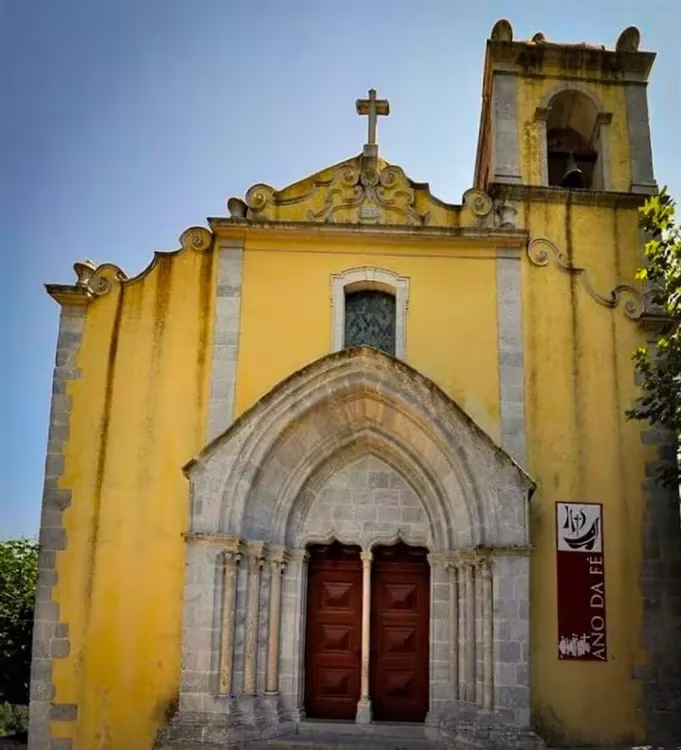
Calçada dos Clérigos 2710-541
One of the few surviving medieval buildings is the Church of Santa Maria, built in the 13th century on the site of a small chapel. A devastating earthquake in 1755 caused serious damage to the building. The restoration of the parish ended in 1760. In 1922, the Gothic church, complemented by Renaissance elements, and the adjacent bell tower, whose bronze bell was cast in 1468, were included in the list of historical monuments of the city.
The discreet facade is decorated with a Catholic cross and a modest white pediment stucco molding. A completely different picture opens behind the maroon doors. The interior impresses with austere capitals, a two-section altar, graceful coffered vaulted ceilings, a Manueline baptismal font and a bowl of holy water (Renaissance). The central element of the interior decoration is a wooden carved statue of the Virgin Mary of the 18th century.
Mafra Palace
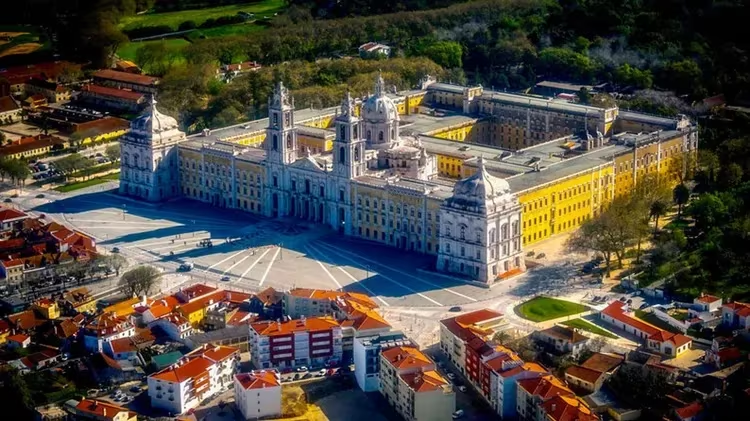
Terreiro D. João V, Mafra
21 km from the city is the largest royal palace of the country and one of the “Seven Wonders of Portugal” – Mafra Palace. Its dimensions are grandiose: the architectural ensemble, surrounded by a picturesque park, occupies 4 hectares. In November 2017, the breathtaking complex of buildings built by order of King João V celebrated its 300th anniversary.
The former residence of the Portuguese monarchs resembles a monumental cathedral. Facade length – 220 m; inside – 1,200 rooms and 29 courtyards. The central part of the gigantic building is occupied by the basilica and adjacent towers with carillons. The chime of 98 bells is heard within a radius of 24 km! In addition to the temple, the palace houses the royal chambers, ceremonial halls, the Franciscan monastery, a hospital and a pharmacy.
The palace's most impressive room is the well-preserved library, enchanting with elegantly curved balconies, noble marble floors and carved bookshelves. The length of the Temple of Knowledge is 85 m. Bats are responsible for the safety of 36,000 tomes. Little hunters at night destroy insects that are dangerous for priceless tomes.
Opening hours: daily from 9:30 to 17:30. On Tuesdays, as well as 25.12, 01.01, 01.05 and Easter Sunday, the palace is closed.
Cape Roca
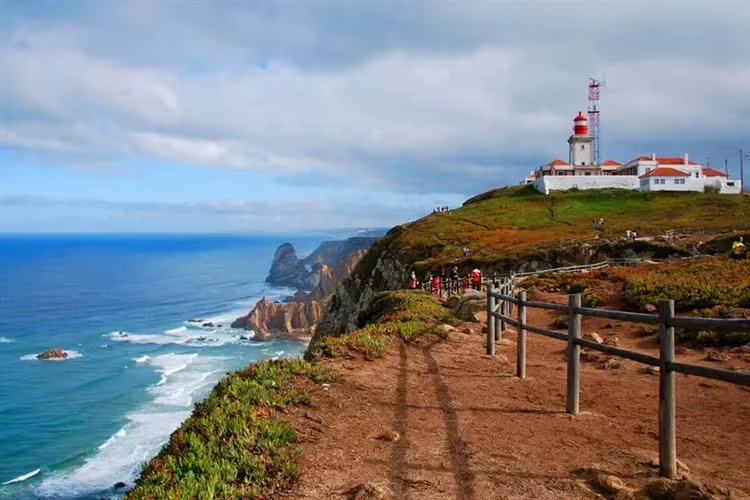
“The place where the land ends and the sea begins.” The Portuguese poet Luis Camoyes dedicated these words to Cape Roca, a 140-meter rock hanging over the Atlantic Ocean, which until the end of the 14th century was considered the Edge of the World. Today, next to the world-famous natural landmark, you will find a tourist office, where for 11 € you can get a certificate confirming your stay in the westernmost point of mainland Europe.
People come to Cape Roca for the harsh beauty of the desert landscape, the omnipresent salty wind and the incomparable panorama of the boundless ocean, depending on the weather, changing its color from gray-blue to bright turquoise. In addition, here you can visit a cafe, a gift shop and a 22-meter lighthouse, which has been operating since 1842. Its prototype, whose light was visible to sailors 46 km from the coast, was built in 1772.
Tip: The best way to get there is by bus number 403, which departs once an hour from the Sintra Estação station. Travel time to Cape Roca (Cabo da Roca) is about 35 minutes.
Seteais Palace
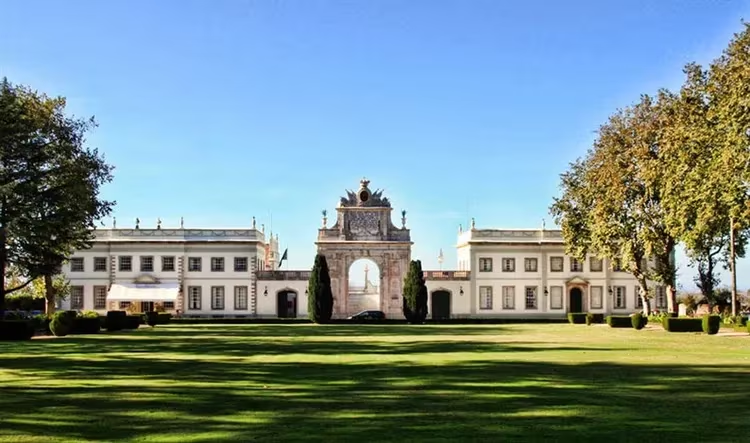
In 1787, Seteaish Palace appeared among the picturesque orchards on the outskirts. Its owner, the Dutch consul Daniel Gildmeister, did not follow the example of his neighbors, whose estates amazed the imagination with an unimaginable mixture of colors and architectural trends. For his possessions, the Dutch subject chose a discreet classical style.
In 1801 the manor became the property of Marquis Marialva. The new owner connected the two wings of the palace with a triumphal arch. By order of a Portuguese nobleman, the monumental building was decorated with a Latin inscription and sculptures of the royal couple: Princess Carlotta-Jaoquin and Prince John VI.
In 1946, the Portuguese government purchased the Palacio de Seteais. Eight years later, a five-star hotel Tivoli-Palacio de Seteais was opened in a reconstructed building. Rooms furnished with antique furniture of the 18th century, wall frescoes depicting mythological scenes and pompous ballrooms attract the constant attention of connoisseurs of comfort and luxury. The windows of the exclusive rooms offer a magical view of the picturesque hills stretching to the ocean and the park of the Pena Palace.