
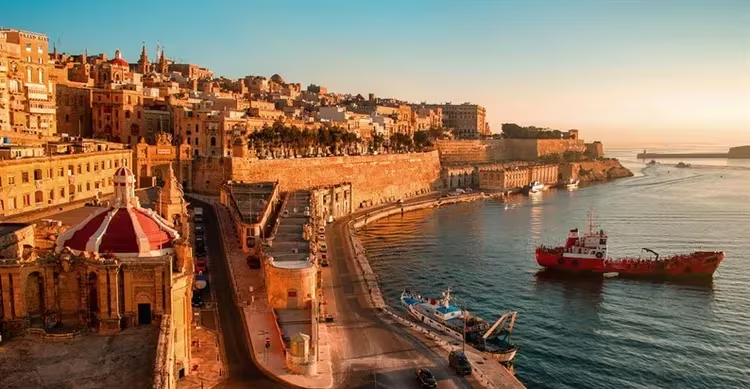
Sights of Valletta – 25 most interesting places
Why, after visiting this Mediterranean city, many begin to believe in ghosts, is it just its atmosphere? Here everything is shrouded in secrets, reminiscent of amazing artifacts, bright personalities who created the history of Europe and, of course, the hospitallers. The sights of Valletta seem to live their own special life, the mysteries of the city attract historians, archaeologists, and numerous tourists. Every day in August, the ghost of the White Lady is expected to appear here – either her lover, or the daughter of the founder of the city – and, interestingly, they see a girl in a light dress walking through the streets. Valletta has never been a quiet place on earth. Life and death, love and hate went hand in hand. The island constantly became the scene of hostilities. And yet the townspeople managed to maintain their special chivalrous attitude to life,
Republic Square
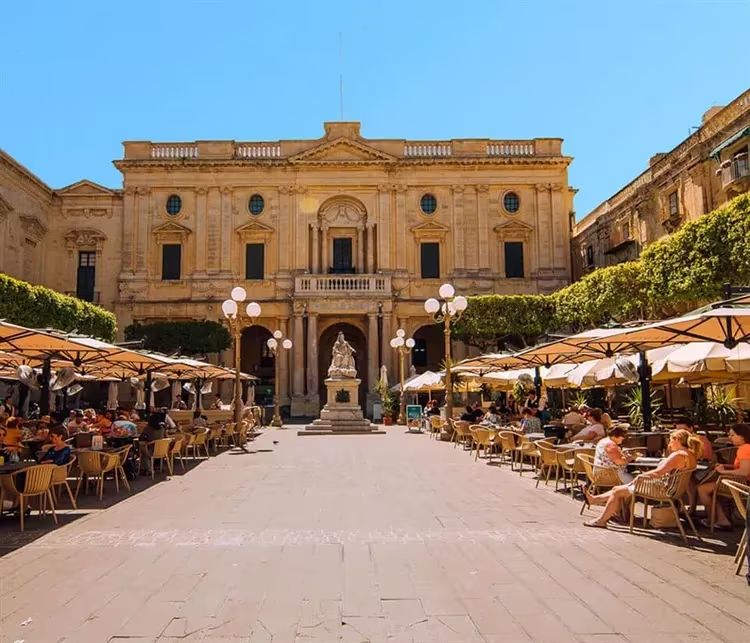
A small area traditionally attracts tourists, lovers of relaxation in cafes and open-air restaurants. The Maltese changed its name several times. In historical chronicles, this place was first mentioned as “Treasury Square”. The site of any city, where the funds of religious orders were kept in the Middle Ages, was a special place.
It was guarded like a royal palace (in some cases even better). It was on this square, where the treasury of the hospitallers was kept, that the house of the National Treasury was erected. She has another name – Royal. Here, at the end of the 19th century, a monument was erected to the English Queen Victoria, who allowed the Order of Malta to be revived in Great Britain.
Formally, the members of the crowned family are not hospitallers, in fact, to this day they patronize the Johnites. Another famous landmark is located on the square – the National Library of Malta. The beginning of the construction of the building dates back to the 16th century; it is a kind of standard of neoclassicism and sets the general tone for the architectural ensemble.
Book a private transfer from the airport to your hotel for 1 886 RUB
Palace of the Grand Master
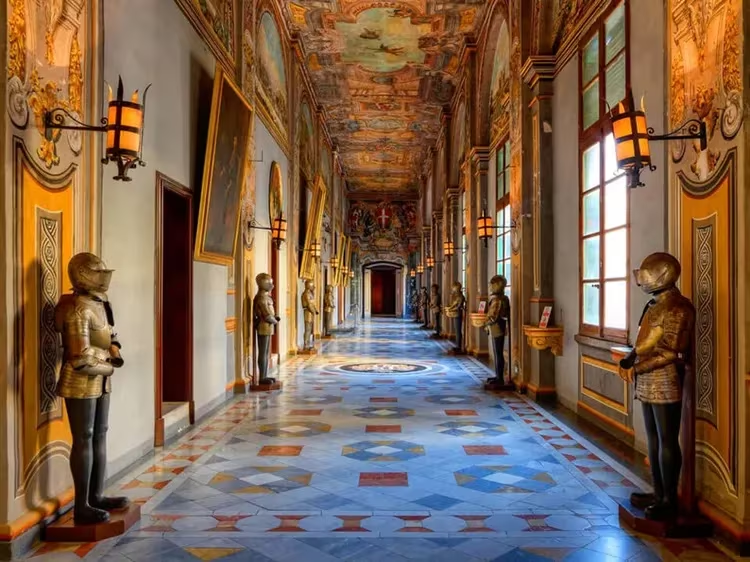
Historians date the construction of the palace to the 16th century. It was originally a barracks. After a major restructuring, they turned into a luxurious palace. Outwardly, it looks modest compared to similar European architectural structures, but the inside is striking in luxury, interesting style solutions. The palace was the official residence and residence of 21 leaders of the Order of Malta.
Each of the Grand Masters, who headed the military-religious association, contributed to the appearance of new masterpieces of art in the palace halls. Later, the building was occupied by the government of Malta, local authorities, and today part of the premises closed to tourists belongs to. However, the rooms open to the public are quite enough to get an idea of the magnificence of the palace, among the relics of which there is a lifetime portrait of Catherine the Great.
The building houses a unique collection of weapons. Those who have little interest in military history visit the attraction to admire its floor mosaics, wall and ceiling frescoes. On the territory of the palace there are two cozy courtyards, where the atmosphere of antiquity also reigns and there is a feeling that soon one of the former masters of the order will go down to the fountain to reflect on the eternal.
Castilian Compound
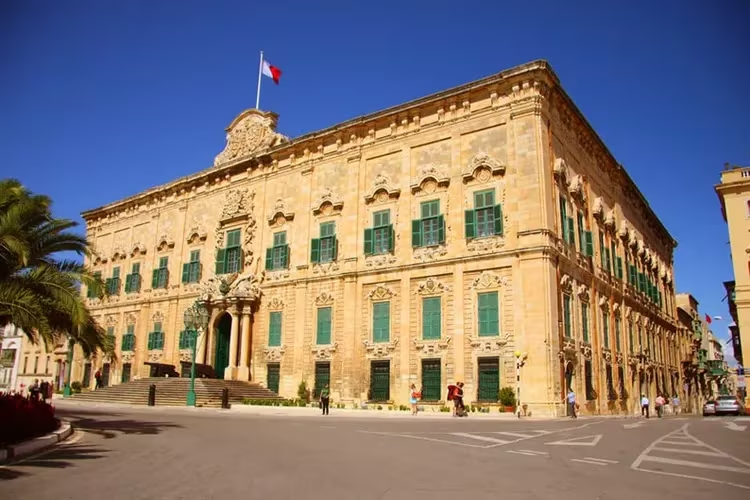
It is hard to imagine that an old three-story mansion built in the Baroque style is an inn. Such establishments in Malta were not intended for the common people, however, rooms for servants are provided in the house. The buildings were “assigned” to the association of the Knights Hospitaller, who did not have their own castles or houses. Warriors served the Order of Malta, and he took care of them.
The association, behind which this farmstead was listed, served on the bastion of St. Barbara. The house, built in the 16th century, hospitably opened its doors for representatives of the clergy and pilgrims. The mansion is located on a hill with a magnificent view of the city. The owners of the courtyard have changed over the past 250 years.
The house was restored after the hostilities, it was bombed during the Second World War and miraculously survived. It is currently the residence of the Prime Minister of Malta. Tourists gather near the courtyard to watch the changing of the guard of honor, admire the decor of the building and the nearby fountain.
Palace of Casa Rossa Piccola
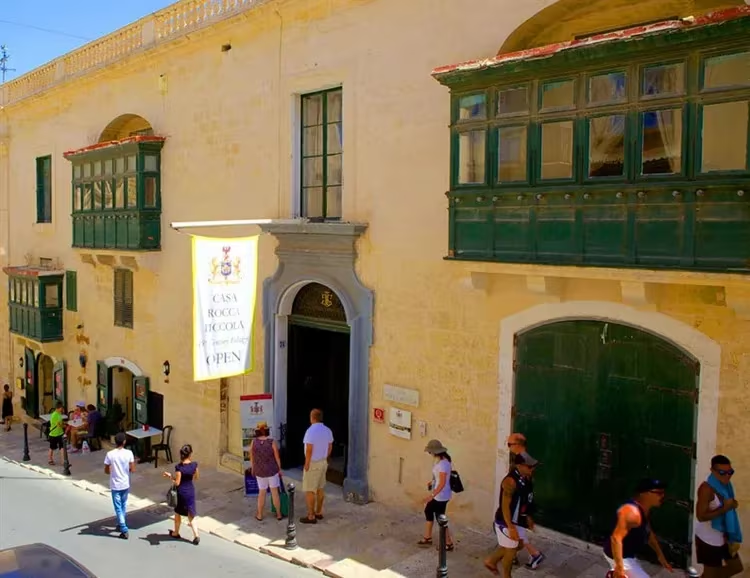
The main value of the building: it was practically not subjected to restructuring and was preserved in its original form. The probable reason for this is that the palace has been owned by the aristocratic de Piro family for 400 years, whose representatives take care of the historical heritage. Today, the owners of the building are happy to host tour groups.
De Piro is one of the richest Maltese, whose museum (located in the palace) is known all over the world, but they are devoid of arrogance and snobbery. Representatives of an aristocratic family are happy to conduct excursions, show antiques, masterpieces of painting, underground passages leading to bomb shelters. For local residents, communication with tourists on the territory of their private property is a common occurrence. The funds received from excursions go to charity, the preservation of monuments.
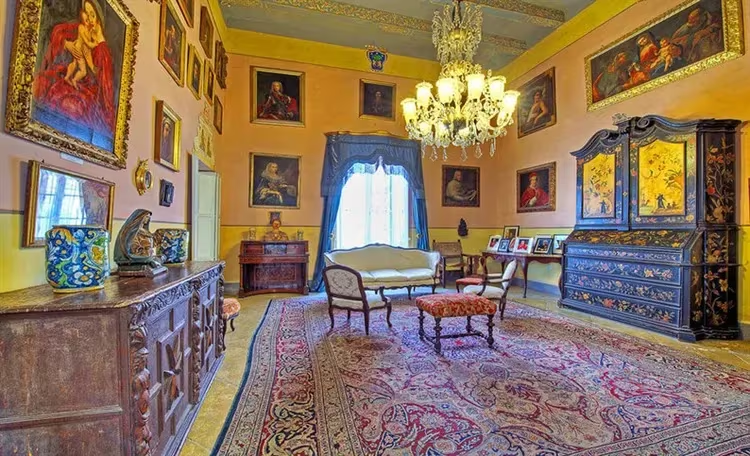
Maltese millionaires, billionaires are not shy about such sources of income, they are proud of their history. At various times, the palace was rented by the Hospitallers, who made an outstanding contribution to church life, the strengthening of law and order, and the creation of a banking system on the skeleton. In the museum you can see things that belonged to famous guests of Casa Rossa Piccola.
Jesuit Church
The oldest church in the city was founded at the end of the 16th century. This event could have happened earlier, but due to various circumstances, the construction was postponed. Initially, the Jesuit order planned to place a college and a small church on this site. As a result, the temple and the building of the educational institution occupied a whole block, forming a single harmonious architectural ensemble.
Over time, the status of the Jesuit institution changed, its leadership began to pay attention to scientific work. At present, the University of Malta is located in the college building, where 10 thousand students from all over the world study. The exterior of the temple is a striking example of the Baroque style. The interior is in harmony with it, however, it was created according to the canons of more strict classics, reminiscent of ancient buildings.
When looking at the church and the college, tourists get the feeling that they are seeing a fortress. This is natural: in the 17th century, there was an explosion here, after which the buildings were reconstructed according to the model of military fortifications so that the buildings, in case of danger, could become an additional line of defense.
city gate
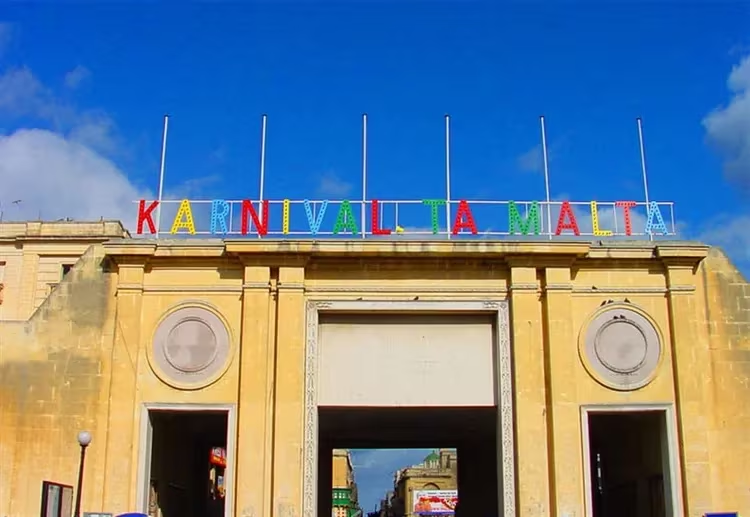
Putirial is one of the symbols of Valletta and Malta. The architecture of the building is simple and functional. The gate, unfortunately, has not been preserved in its original form. An architectural monument, included in the list of UNESCO World Heritage Sites, is the result of several reconstructions. The gate was erected in the 16th century, a wooden drawbridge was attached to it.
In the middle of the 19th century, Putirial was rebuilt, then the building began to deteriorate. Significant damage to the gate was caused by the bombing of German aircraft during the Second World War. Scandals erupted several times around the reconstruction of the symbol of the city in the 20th century. In the 60s, local authorities were inclined to think of giving the building a modern look, which was received with hostility by the Maltese public.
After discussions, meetings of commissions, the search for funds and specialists, the reconstruction of all four main city gates (of which Putirial is a part) began only in the 21st century. The use of new technologies for the restoration of unique monuments, according to the Maltese authorities, will make it possible to protect them as much as possible from the destructive effects of the sun, wind, and humid air.
Argotti Botanical Garden
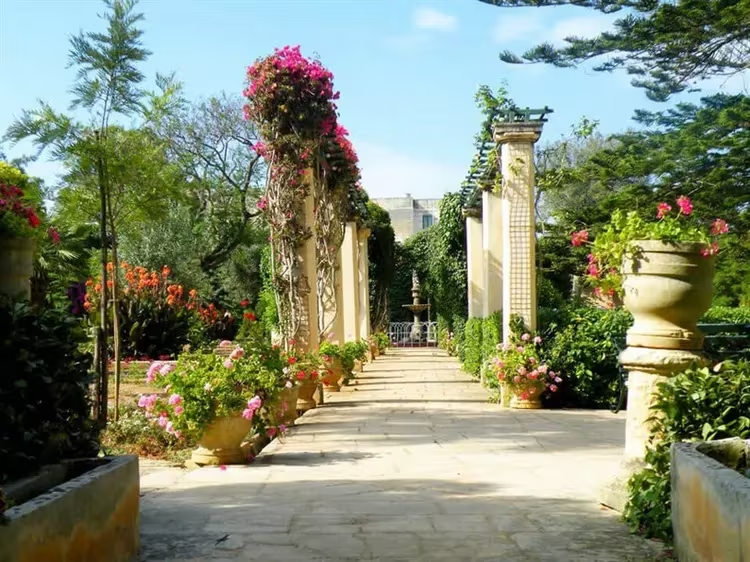
The landscape monument borders on the garden of St. Philip. Both gardens date back to 1741 and owe their appearance to the Grand Master of the Order of the Hospitallers Pinto. An outstanding politician was a connoisseur of exotic plants. In the gardens laid by him, there are unique collections of cacti and medicinal herbs. Argotti is famous for its fountains and gazebos. On its territory there are ponds, water towers.
Tourists tend to the garden to admire rare plants. It is noteworthy that even the Maltese themselves find it difficult to draw the exact boundaries between the gardens of Argotti and St. Philip due to the fact that significant changes have been made to the planning of landscape monuments several times. It is authentically known that most of the fountains were built before the laying of both gardens. The chic rose garden is definitely part of the garden of St. Philip, and the horticultural museum is Argotti.
Church of Our Lady of Lesse
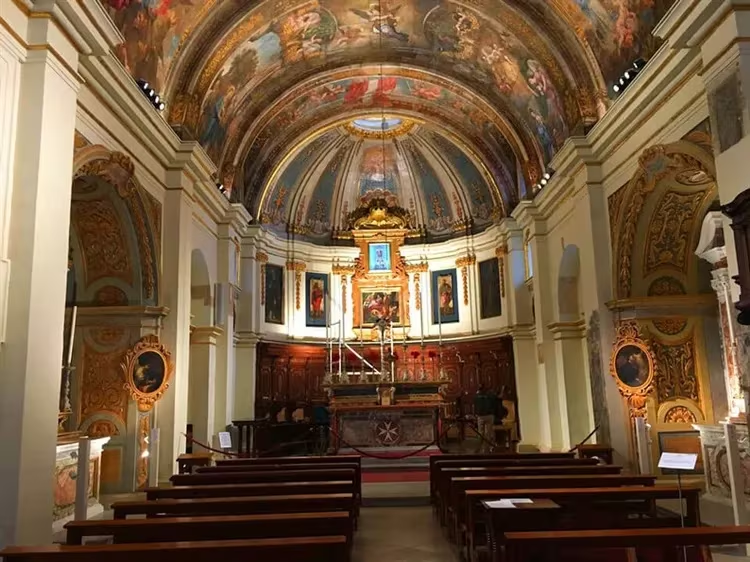
The beginning of the construction of the building is considered to be 1620. The temple was built at the expense of the descendants of the Lusignan dynasty. Representatives of this family became famous during the Crusades for their unbridled desire for power, love of luxury, terrible crimes and deeply pious deeds. The proximity of the church to the harbor, the local market influenced the class composition of the parish: it was mainly visited by merchants and sailors.
The original appearance of the building was not preserved: after 100 years, significant changes were made to its architecture, and baroque canons began to dominate in the exterior. The church was badly damaged during the Second World War, but the Maltese saved the unique building from destruction. The main temple relic is the statue of the Virgin. Believers believe that the sculpture was created by angels 1000 years ago. The statue appeared in response to the prayers of the three Knights Hospitaller.
Those had to show the daughter of the Sultan the image of the Virgin Mary. The Most Pure One heard the prayers of the Johnites, right in front of the knights and the girl (who later converted to Christianity) a miraculous statue arose. Another no less famous temple relic: the relics of the martyr St. Geronese. A mystical story is also connected with them: the French who occupied the island repeatedly tried to take out the shrine, and the ships heading for this purpose sank for no apparent reason right off the coast of Malta.
National Museum of Archeology
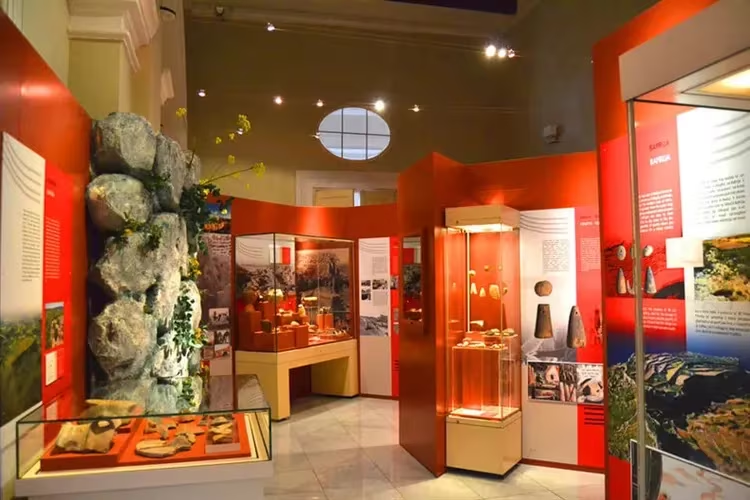
The old mansion on Republic Street, where the museum is located, is itself an amazing monument of history and architecture. The building was built in the 16th century; baroque dominates in its architecture. Thick stone walls, a strategically convenient location evoke the idea that the Hospitallers (if necessary) could rebuild the house in the shortest possible time, turning it into a small fortress. Before the museum, the Union Club operated here.
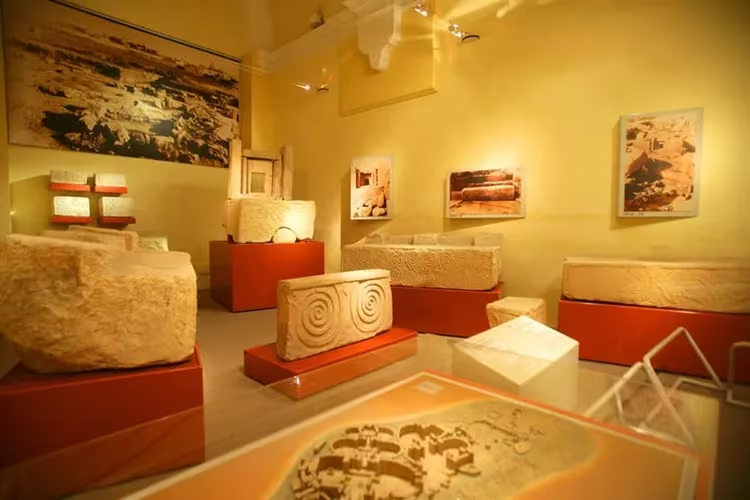
This institution, where the life of the island was decided, was founded by the British when Malta was under the protectorate of Great Britain. The mansion was transferred to the museum at the end of the last century. The search for buildings suitable for archaeological collections has been a lengthy one. It was necessary to ensure the protection of artifacts from criminal elements that periodically manage to enter the island in order to hunt for the relics of the Hospitallers.
On the other hand: for the storage of antiques, a suitable temperature regime was required. The mansion was the perfect solution. Today you can see unique things in it, whose age exceeds 5000 years, weapons, jewelry, church utensils, elements of building decor and much more found in the Maltese excavations.
Church of Saint Francis
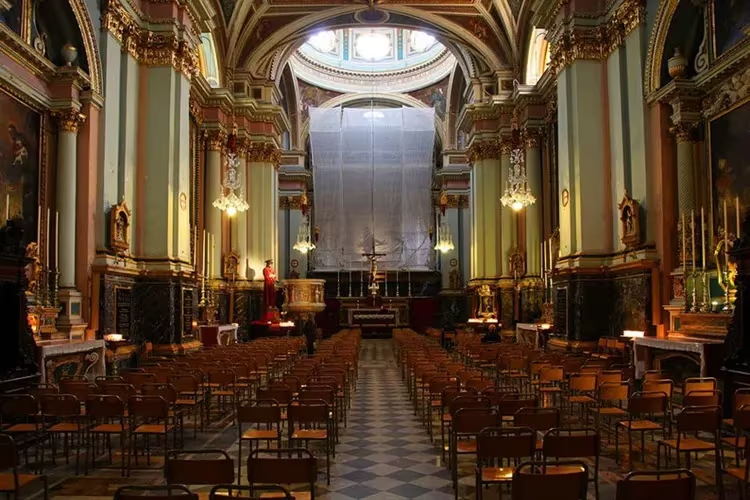
The Catholic church dates back to the end of the 16th century. In the last century, the building was overhauled, it had a different dome. The appearance of a new temple on the territory of Malta was not without mysticism. The first building began to collapse even before the completion of construction. Historians explain this fact as follows: during the construction of the structure, the Hospitallers made gross mistakes.
This is debatable, because the Joannites perfectly mastered the latest (for that time) methods of stone processing and engineering calculations. More than 70 years have passed, no one dared to disturb the ruins of the temple. Grigorio Carafa, who at that time headed the order, allocated funds for the restoration of the church, promising to install a miraculous statue of Francis of Assisi in it.
The second time everything went well, and in memory of the event, the Maltese placed the coat of arms of the Grand Master Karaf on the facade of the temple. Today, Christian pilgrims from all over the world come to the church to see the statue of the saint, to attend Mass. The building has partially preserved ancient frescoes. Among the most famous relics of the temple: paintings dedicated to biblical subjects by famous Italian artists of the Renaissance.
National Library of Malta
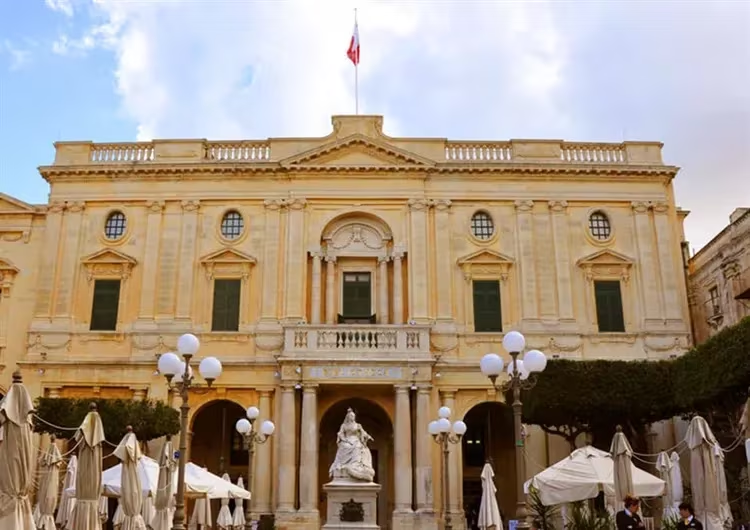
The library was founded in 1776, but the main part of the collection was collected 100-150 years earlier. At the origins of the unique collection were the libraries of famous European feudal families transferred even earlier to the ownership of the Hospitallers. It is noteworthy that after the death of each Johnite, the manuscripts, documents, and books belonging to the knight or lady were transferred to the treasury of the Order of Malta.
To some, such an approach today will seem like excessive formalism, but it was he who helped save rare European editions in those days when manuscripts (like people) were burned at the stake for the mere suspicion of heresy. The current building on Republic Square has been occupied by the library since 1812. It stores over 60 thousand books, manuscripts, folios, unique documents. Prior to this, the library collections changed their location several times.
The greatest damage to the collection was caused by Napoleonic soldiers: during the occupation of the island, they purposefully destroyed the documents of the Hospitallers in order to erase the memory of the past owners of Malta. The current status of the library received in the 70s of the last century. Entrance to it is free. There is a cafe in the building, where there is an exhibition dedicated to the history of the Hospitallers.
Church of Our Lady of Victory
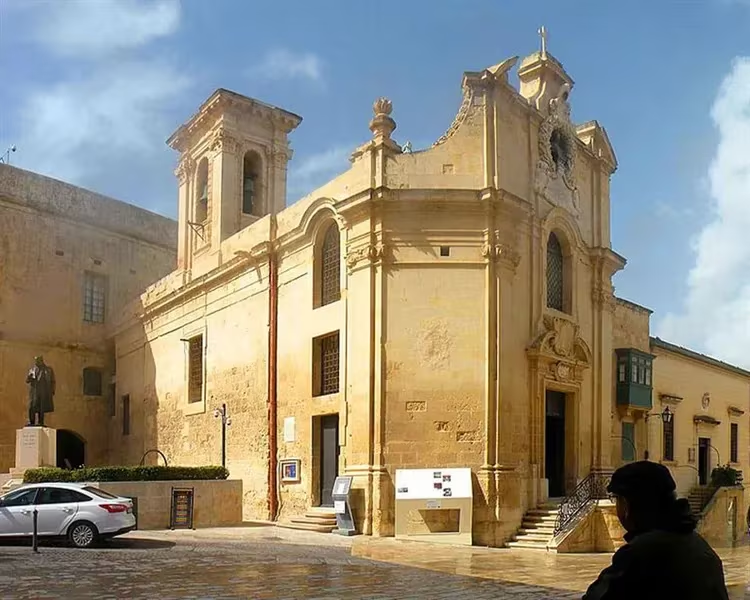
The very first building of the city is located in a mystical place. It is here that the first stone is located, from which the construction of Valletta began. The liberation of the island from the invasion of the huge army of the Ottoman Empire was considered impossible in the 16th century. The knights perceived their victory over the Turks as a miracle and explained it with only one thing: the heavenly patronage of the Virgin Mary. In honor of the Most Pure, it was decided to build a temple. There are legends: huge treasures of the Johnites are hidden in the church foundation.
They contradict historical evidence, as the hospitallers laid their personal awards for courage shown in battles and messages to future generations of knights in the foundation of the building. The founder of the city, the Grand Master of the Order of Malta, Jean Parisot de la Vallette, was buried in this temple. Later, his remains were transferred to the cathedral. The spirit of the founder of the city, according to mystics, periodically appears near the Church of Our Lady of Victory.
The Maltese believe that the will of the master is still violated, because his ashes are in another place. At the end of the 17th – beginning of the 18th centuries, significant changes were made to the architecture of the church, ceiling frescoes and new altars appeared in it. Since that time, the external and internal decoration of the temple began to fully comply with the canons of the Baroque and acquired stylistic completeness.
Manoel Theater
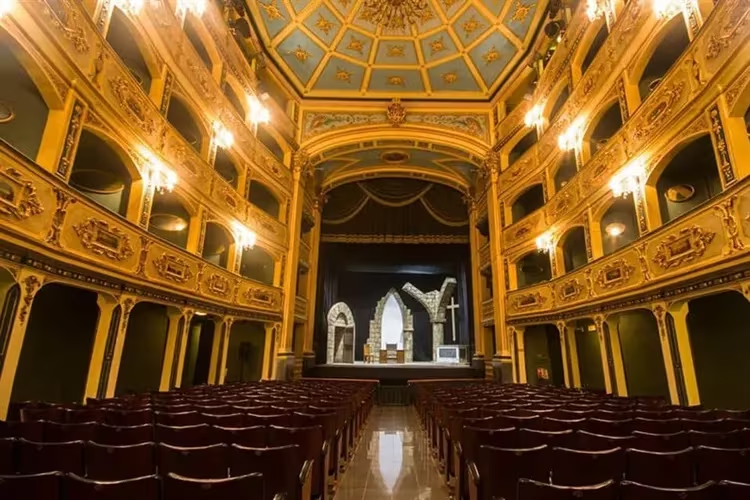
The oldest theater in Europe often changed names. The history of the establishment, built in the first half of the 18th century, is full of unexpected twists and turns. During the Second World War, the building was damaged, but it survived. In it, the Maltese who were left homeless due to the bombings saved their lives. During the war years, the theater was reconstructed in record time, even for peacetime. The fighting failed to destroy the Maltese love for music.
She inspired the townspeople to do the impossible: to return Valletta aristocracy, respectability, when German planes bombed the city every day. Most of the theater's décor elements are originals created in the 18th century, including luxurious Viennese chandeliers. White marble of the main staircase, green velvet draperies, gilded elements, frescoes create a unique atmosphere inside the building.
The theater hall is designed for 600 seats, it has excellent acoustics. The stars of the world stage are considered an honor, a rare success, to perform on this stage. The theater has its own museum, which stores rarities related to the history of the development of art in Malta.
Fort Saint Elmo
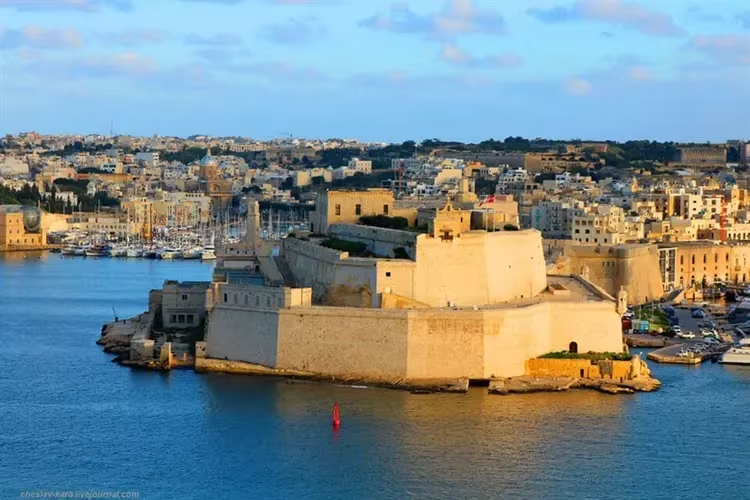
The Christian martyr, after whom the fort and the island are named, is the patron saint of seafarers. Historians and archaeologists date the construction of the first fortifications of the fort to the 14th century. After 200 years, Malta was captured by the Turks. The Knights Hospitaller recaptured the fortress and, first of all, set about restoring the walls and underground communications. It was here that they built a tower (there are versions that they reconstructed it) for the lighthouse.
Today, a police academy, a military museum operate on the territory of the fort, costumed performances are regularly held. Fort Saint Elmo entered the history of the state and as a place of the uprising of the priests. The new Grand Master, after the reign of his predecessor (the second was an influential European politician, a close friend of the famous adventurer Count Cagliostro), found that the treasury of the order… was empty, and, under the pretext of austerity, raised food prices.
This caused discontent among the people. The uprising was led by priests who decided to get rid of the Johnites. An armed mob seized part of the fort, its leaders threatened to blow up the powder magazines. The uprising was crushed, but it was the first bell that heralded the end of the unlimited power of the Hospitallers over the island.
Upper Barrakka Gardens
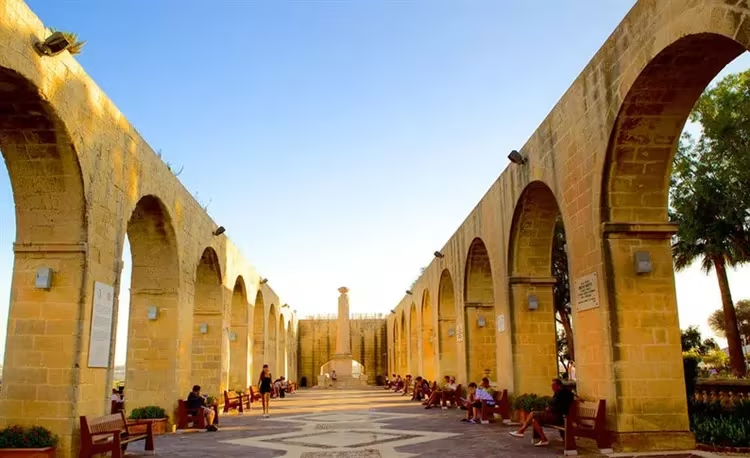
Initially, the park was intended exclusively for the Knights of St. John. The terraces that make up the garden were built in the 18th century. They offer city and harbor views. Originally, each terrace had a roof. The structures were removed after 100 years for security reasons – in order to monitor the appearance of outsiders in the gardens from a height.
The knights did everything possible to maintain their power over the island, but the Napoleonic occupation and the new life of Malta after it were not foreseen. Since 1800, after the island was rid of the French, the park began to work according to new rules (they would have shocked the former leadership of the hospitallers). The local authorities have opened the gardens to the public. Later, monuments to foreign politicians, including Winston Churchill, appeared here.
Among the famous attractions of the park was a sculpture of a literary character: not a noble knight, but the Parisian homeless child Gavroche. Later, an elevator appeared in the gardens. New monuments, technical achievements have given the ancient terraces additional comfort, turning them into a popular place for tourists and citizens to relax.
salute battery
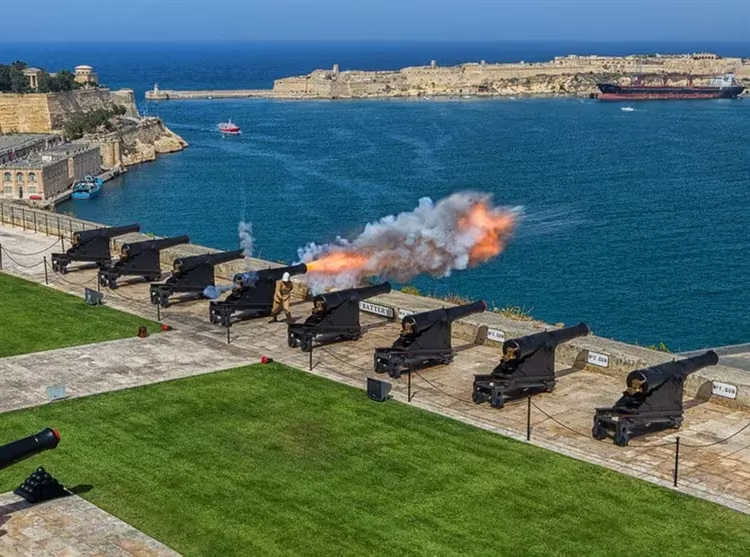
One of the most famous Maltese sights is a row of cannons mounted along the wall. Approximate age of the defensive structure: 500 years. However, the fortifications themselves were built earlier. Every year for two centuries at noon, a cannon is fired. Once upon a time, the Maltese used it to check their watches. Nowadays, it is more a tribute to tradition and a way to attract tourists.
Every day, the cannon shot is preceded by a colorful mini-show with the participation of actors in ancient costumes. It is accompanied by a short lecture on the history of the city and the island. The second daily shot is fired at 16:00 local time. This ceremony looks much more modest, but it is more reliable from a historical point of view.
Laskaris Situation Center
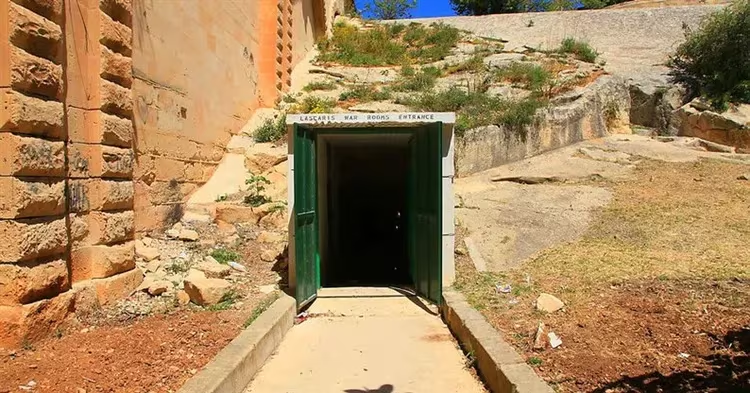
The bunker is located under the gardens of the Upper Barrakka. Previously, the center of Laskaris was a highly classified facility. Today it is open to the public and serves as a museum dedicated to World War II, the confrontation between the Soviet Union and NATO. Initially, the headquarters of the British command was located here. The leadership of the military operations of the countries participating in the anti-Hitler coalition was carried out precisely from this bunker.
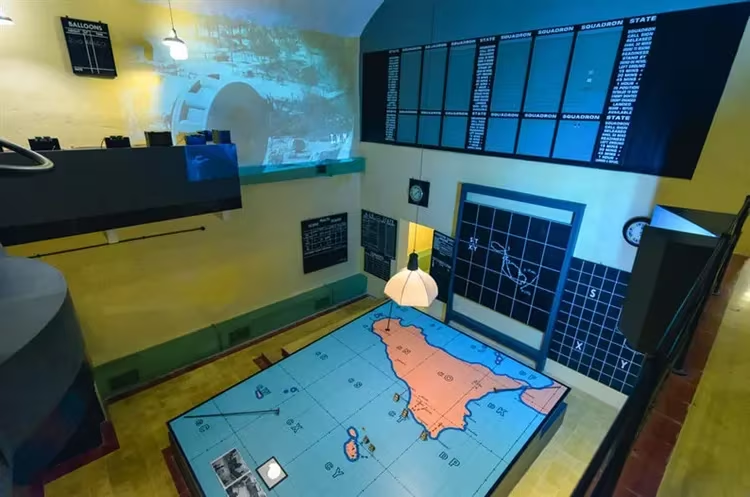
In the 60s, the site was considered the property of NATO troops, but it is likely that the military rented it and then handed over to the local authorities. Enterprising Maltese have turned the bunker into a famous city landmark. Next to it is the building of the former NATO headquarters, which is also part of the museum complex. The structure of the latter includes several more objects: a crypt, a chapel, a salute battery. On the territory of the situational center there is a cafe and an antique shop popular with European collectors.
Toy Museum
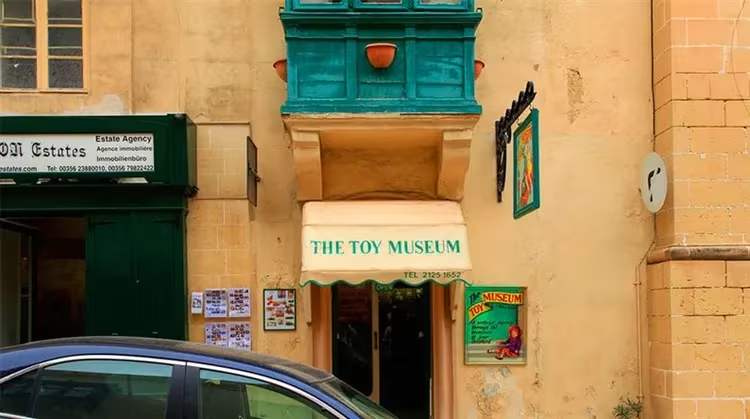
The exposition occupies 3 floors of an old mansion, where an amazing cozy atmosphere reigns, reminiscent of childhood. The museum was opened at the end of the last century, but the history of the private collection of Vincent Brown (its founder) began in the 80s. In Europe, it is not customary to throw away old toys. Such things are changed, sold at flea markets, given to friends. One day, a family friend gave a box of his cars to the Brown children.
Vincent decided to repair the toys, and his collection began with them. Its main part is made up of miniature models of cars. They, along with toy airplanes and boats, occupy the first floor of the mansion. Among the rarities of the museum: pre-war toys, animal figurines, tin soldiers. In order not to deprive the attention of young visitors, Brown specially collected a collection of dolls from around the world.
Hastings Gardens
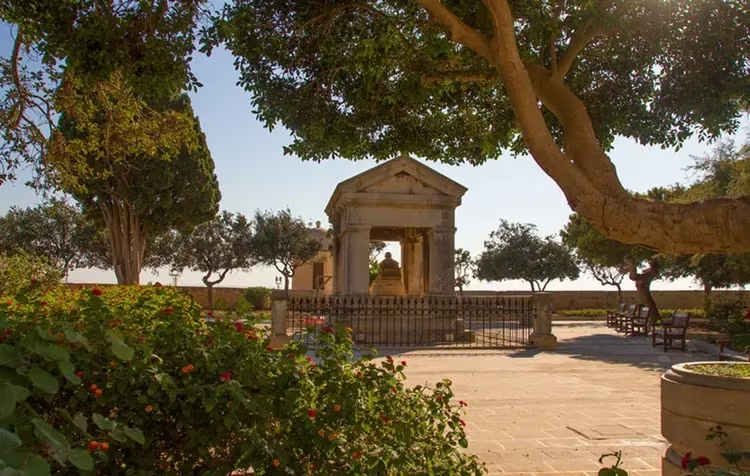
The park area, according to local legends, was created in just a few hours. This is undoubtedly a fiction, but it is he who perfectly reflects the self-esteem of the Maltese and pride in unique sights. The gardens bear the name of the Governor of Malta, who was fond of gardening. They are located on the bastions of St. Michael and St. John – previously completely unsuitable for planting trees, shrubs, flowers.
Hastings in the 19th century developed a plan for the improvement of the plots, acquired seeds and seedlings with personal funds and was able to succeed: the plants planted on his orders transformed the bastions familiar to the Maltese. The ashes of the governor rest in the park, where a monument has been erected to him – a tribute to his relatives. There was a period in the history of the gardens when they fell into disrepair, but local authorities invested in the reconstruction of the park and saved the recreation area. The gardens are known for their collections of statues and exotic plants. They have an atmosphere conducive to leisurely walks and contemplation.
Fountain Triton
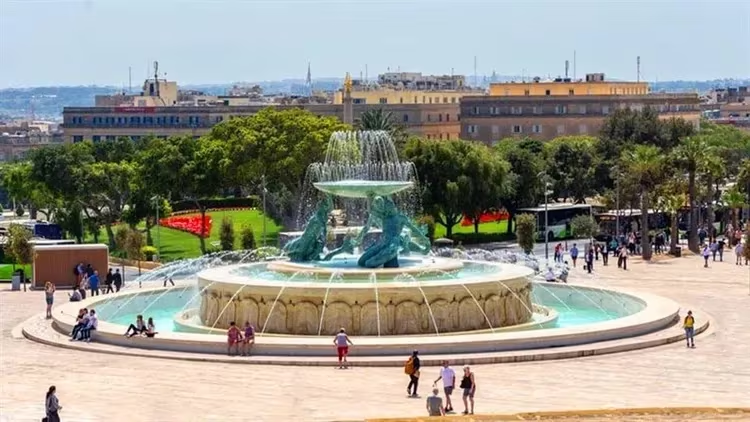
Even the most conservative Maltese call one of the most famous city fountains a symbol of the republic. This is where many tours start. The building is located next to the city gates, striking with a harmonious combination of elegance and monumentality. The fountain is not an ancient monument, but it fits perfectly into the architecture of Valletta.
Officially, the fountain was opened in the late 50s of the last century. Approximately 20 years later, the building needed an urgent overhaul. The organizers of the music festival “had the sense” to install the stage directly on the bowl of the fountain. The holiday was great, but the positive reviews about it were soon replaced by the anger of the townspeople, who learned that the local landmark was damaged.
Restoration work was completed 9 years after the emergency and gradually became the butt of jokes among the Maltese. The fountain symbolizes the water element for the inhabitants of the island, the intercession of higher powers. In the center of the amazing building is the figure of Triton (the son of the main sea god – Poseidon). 98% of the Maltese are deeply religious Catholics, which does not prevent them from admiring the beauty of the sculpture of an ancient deity.
Cathedral of Saint John
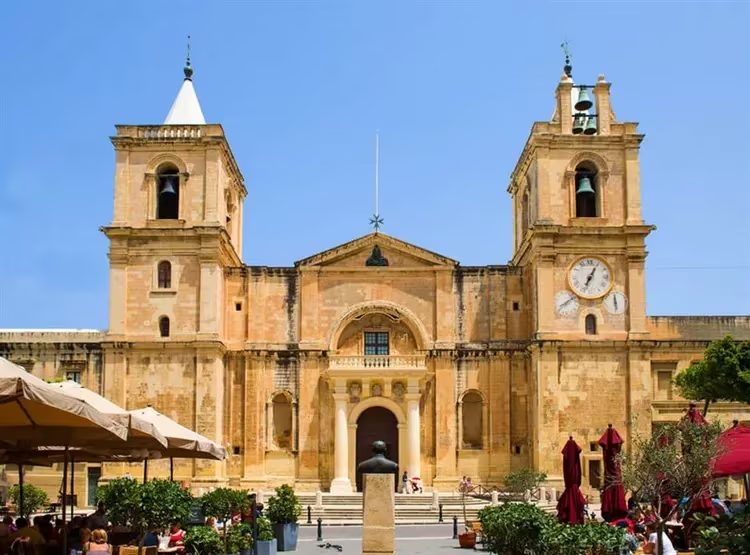
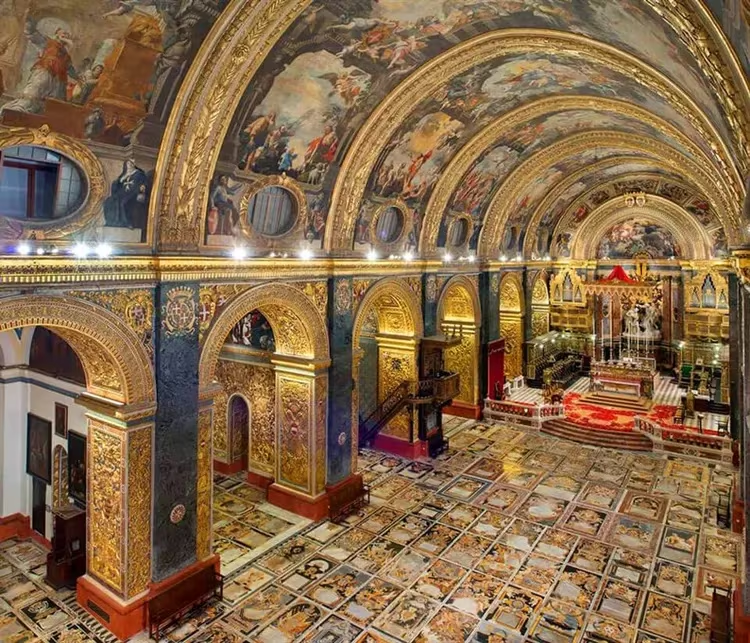
The Catholic church in honor of the heavenly patron of the Order of the Hospitallers has been perfectly preserved since its construction in the 16th century. The exterior of the building remained the same, the only thing is that its interior became even more luxurious after 100 years and began to comply with the canons of the Baroque. Outwardly, the cathedral resembles a military fort, which is quite natural for ancient Maltese buildings.
The exterior of the temple looks impressive and ascetic, enhancing the impression of the stunning splendor of its interior decoration. The main part of the building is shaped like a rectangle. There are 13 chapels around it. At the time of decorating the walls of the temple, the artists did not know 3D technologies, and yet they were able to achieve the effect so that the figures in the images looked three-dimensional. An important part of the cathedral is the tombstones with the names of the valiant Knights Hospitaller.
A museum and an art gallery are attached to the main building, where masterpieces of spiritual painting that belonged to the Order of St. John are placed. Numerous paintings and sculptures by Italian masters of the Renaissance create a fascinating atmosphere. Each element of the decor in the temple can be looked at for hours, forgetting about the time.
Museum of Fine Arts
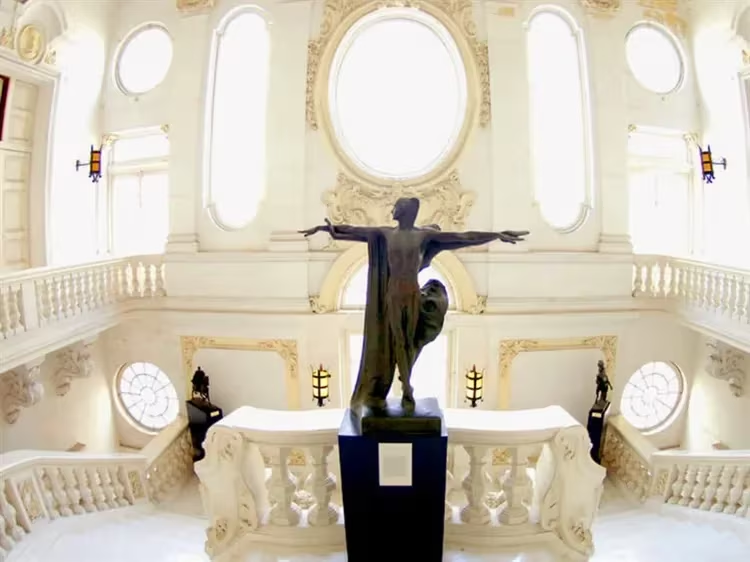
The 16th-century mansion, where the museum is located, belongs to the group of the oldest city buildings. At different times, famous European commanders, politicians, and representatives of the clergy lived here. The building was rebuilt several times; historians can judge its original appearance only from the surviving engravings. The mansion acquired its current appearance about 250 years ago, at the same time its exterior began to correspond to the canons of rococo.
The theological seminary once worked in the building, the command of the Maltese fleet was located, city officials were receiving citizens. In the 70s of the last century, the mansion was reconstructed, at that time a new museum was opened in it. Initially, his collection was part of the National Archaeological Museum. The basis of the unique collection was created by world-famous art historian Vincenzo Bonnelo.
He spent huge amounts of money on the acquisition of masterpieces of world culture. The pearls of his collection were the works of Caravaggio, Perugino, and other Italian masters who worked in the Renaissance and at the dawn of realism in European art. In the museum you can also see collections of Sicilian furniture, majolica, where each item is made in a single copy.
Remembrance Bell
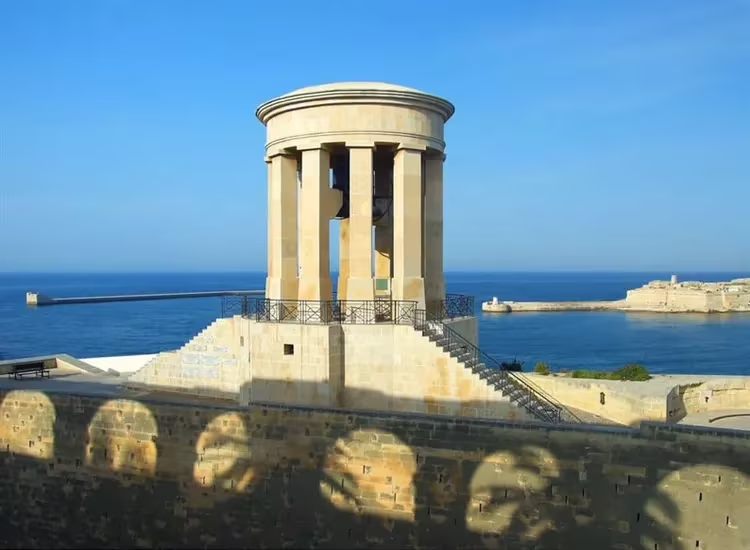
A modern monument, also called the Siege Bell, is located on a cliff. Its strict columns are crowned with a roof. The memorial outwardly resembles an open antique pavilion or a place of worship for the spirits of the winds (similar structures were erected here long before Christianity). It was built at the end of the last century in memory of the Maltese, whose lives were claimed by the Second World War.
The republic was part of the anti-Hitler coalition, German aircraft constantly bombed Valletta. About 8 thousand Maltese died on the battlefields in the city. And thousands more Knights Hospitaller were killed in concentration camps along with the Jews. The order turned out to be indirectly involved in the assassination attempts on Hitler and, in spite of everything, provided medical and food assistance to the population of the territories occupied by the Germans.
The bell rings daily at noon. At this time, many Maltese interrupt business and read prayers for the dead. Not far from the monument is a statue of a soldier covered with a banner – another reminder of the war.
Lower Barrakka Gardens
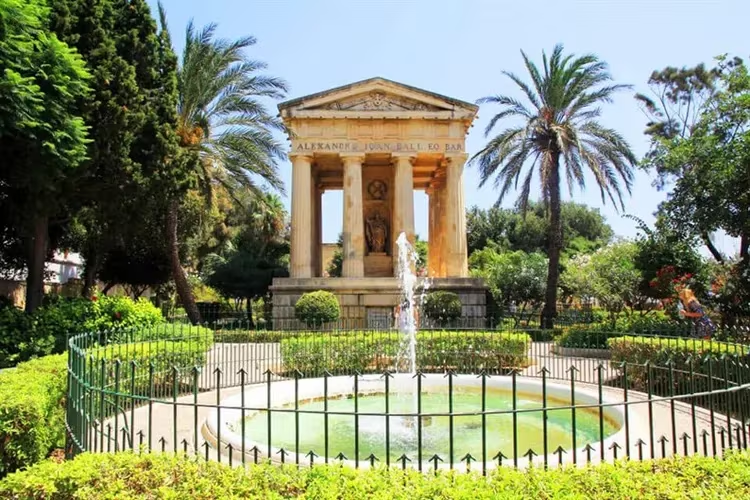
The city park on the bastion of St. Christophe is similar in appearance and layout to the gardens of the Upper Barrakka. One of the most beautiful places in Valletta is both an architectural and landscape monument created in the 19th century. The lower gardens are perfectly visible from the platforms of the upper ones, which allows you to admire the splendor of the first ones without going down to other levels.
In the Lower Garden there are a large number of fountains, miniature artificial reservoirs, and various sculptures. It houses a collection of rare Mediterranean and exotic plants. Notable attractions in the park include the Sir John Ball Monument. The great naval commander, diplomat led the uprising of the Maltese against the Napoleonic troops.
He helped the island become part of the British Empire, was the governor of Malta, invested his own funds in its revival and did a lot to restore Valletta after its barbaric plunder by the French. The buildings on the territory of the gardens outwardly resemble ancient temples. Its terraces overlook the city, the harbor, the Bell of Remembrance. The park is relatively sparsely populated, it is preferred mainly by lovers of solitary walks.
Embankment
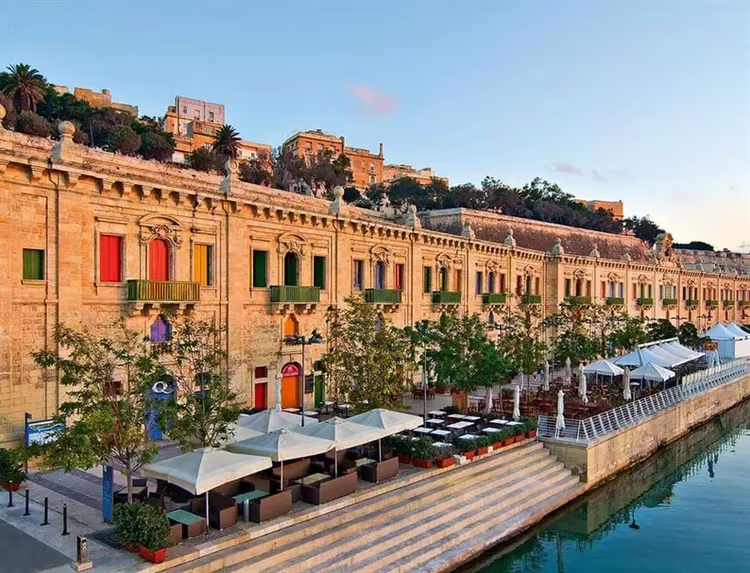
The favorite place of rest for citizens and tourists seems to be specially created for entertainment for every taste. This section of the city was first landscaped over 300 years ago by the forces of the Hospitallers. It's great at any time of the day. There are bars, cafes, restaurants everywhere where you can taste Mediterranean cuisine.
Numerous shops, souvenir shops offer literally everything: from elite spirits, exotic fruits, handmade chocolate – to miniature copies of John's ships and antiques. All buildings of the embankment represent a single architectural complex. Many of its buildings were destroyed during the Second World War and then restored to their original form.
The embankment is a popular venue for international, republican holidays, including the famous jazz and fireworks festivals. Grandiose religious ceremonies are held here at Christmas and Easter. The embankment can be compared to a reflection of the very spirit of the city, where antiquity and the present day coexist peacefully with each other.