
What to see in St. Petersburg in 2 days – route, photo, description, map
“People go to Moscow for work, to St. Petersburg for love” is one of the sayings about the cultural capital of Russia, which once again confirms the uniqueness of the city. You can not love it for its rainy climate, but once you plunge into the history of majestic palaces and monuments, people are imbued with a regal atmosphere and fall in love for life.
How to get from the airport to the center
You can get to the city center from the airport with transfers: first, by one of the buses (city, express, minibus) to the metro, and then from the Moskovskaya station to the Nevsky Prospekt station. The trip by metro takes 17 minutes, by bus – from 20 to 35 minutes.
The ticket price for all types of transport is the same – 85 rubles, but minibus #39K runs every 5 minutes, from 7:00 to 23:30, so this route is the fastest – 50 minutes, taking into account the trip by metro and waiting. Express bus number 39E can reach the center in 70 minutes and is convenient because it has space for luggage. It runs every day, once every half an hour, from 5:25 to 00:20.
City bus number 39 is the least comfortable and spends more time on the road than others – 90 minutes, but it works until late at night – from 5:30 to 1:30, departs every 20 minutes. You can also order a taxi from Pulkovo.
Order a private transfer from the airport to your hotel in St. Petersburg for 1,188 RUB
First day
On the first day, the architectural ensemble of Palace Square, churches, imperial gardens and monuments to prominent personalities of this city will await you. It is better to plan a walk on a sunny day.
Kazan Cathedral
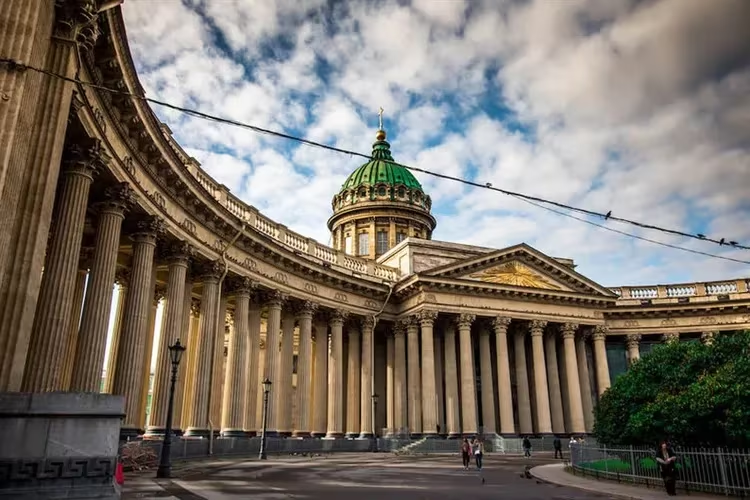
In the city center on Nevsky Prospekt is one of the largest places of worship in the city – Kazan Cathedral, built by order of the Russian Emperor Paul I to store the miraculous icon of the Mother of God.
At the direction of one of the nuns of the Bogoroditsky Monastery, to whom the Virgin Mary came in a dream and marked the burial place of the icon, the relic was found and delivered to Kazan. Everyone who believed in her power was healed of incurable diseases, barely touching her, and she helped commander Dmitry Pozharsky defeat the Polish-Lithuanian invaders.
Hundreds of temples in Russia were dedicated to the Kazan icon; The temple in St. Petersburg turned out to be worthy of it, which was not inferior in luxury to St. Peter's Cathedral in Rome. The construction of the building was entrusted to Vorokhin, the former serf of Count Stroganov.
For 10 years, he and thousands of simple hard workers without special working conditions from domestic materials built an Empire-style temple with a colonnade of 96 columns and bronze sculptures of prominent personalities of Russia (A. Nevsky, M. Kutuzova, etc.), and Russian artists worked on the interior 18th-19th centuries The tour service operates every day from 10:00 to 18:00.
If you do not need a guide, admission is free from 06:30 to 20:00.
Basilica of Saint Catherine of Alexandria
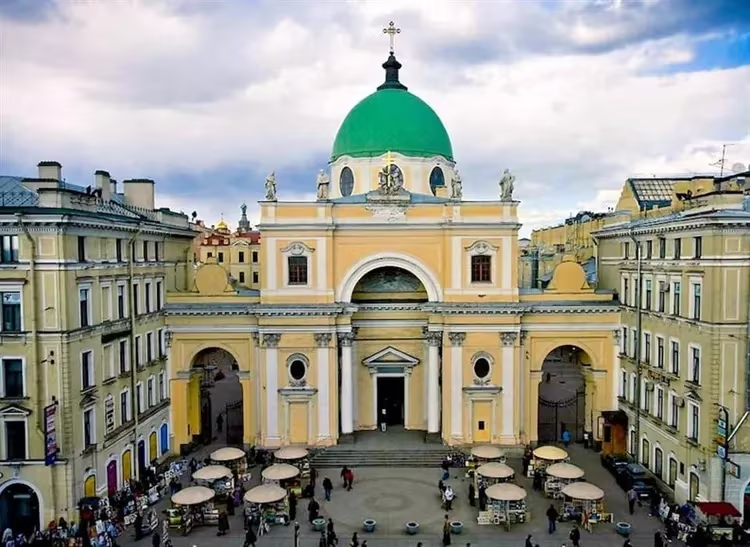
By order of Empress Anna Ioannovna, a permit was signed for the construction of a Catholic church in honor of the Christian Great Martyr Catherine of Alexandria, who professed Christianity under Maximin II. She converted not only the Roman emperor, but also his wife, commander and 200 of his subjects, for which she paid with her life.
A Swiss architect, Trezzini, a French architect, J. B. Vallin-Delamot, and Italian masters, Minciani and Rinaldi, worked on the project for its creation for several decades. The basilica in the form of a Latin cross is crowned with a dome, and the entrance to the building is represented by an arched portal supported by columns.
The temple underwent many destructions and plunders, as a result of which it lost the organ, the altar cross and the iconographic painting by Paolo Veronese “The Mystical Betrothal of St. Catherine”.
A. Poniatowski (Polish king) and J. V. Moreau (French commander) were buried here, and among the parishioners were noted: Z. Volkonskaya (Princess Beloselskaya), M. Lunin (Decembrist and Lieutenant Colonel of the Russian Guards) and others. Basilica of St. Catherine operates daily from 8:00 to 20:00.
Book House
The House of Books, the center of cultural and intellectual life of Petersburgers, was built in 1904 and bought out by a German company to carry out trading activities.
Despite the resistance of the chief architect of Leningrad L. Ilyin, who considered the proximity of the Singer shopping center to the Kazan Cathedral on Nevsky Prospekt outrageous, a six-story Art Nouveau building with a glass roof and a globe almost 3 meters in diameter with an advertising inscription “Singer and K” nevertheless, it was approved by Nicholas II, and Count P. Syuzor, Privy Councilor and Russian Academician of Architecture, completed this task in 2 years.
At first, all floors were given over to shops, a bank, the American consulate and sewing workshops, but in December 1919, the 2 tiers of the innovative building were legally occupied by the Petrogoizdat book publishing house, and since 1938, the House of Books has been selling thousands of works by both Russian authors and abroad, while being one of the largest bookstores in Europe. Opening hours: from 9:00 to 24:00, daily.
Mikhailovsky Theater
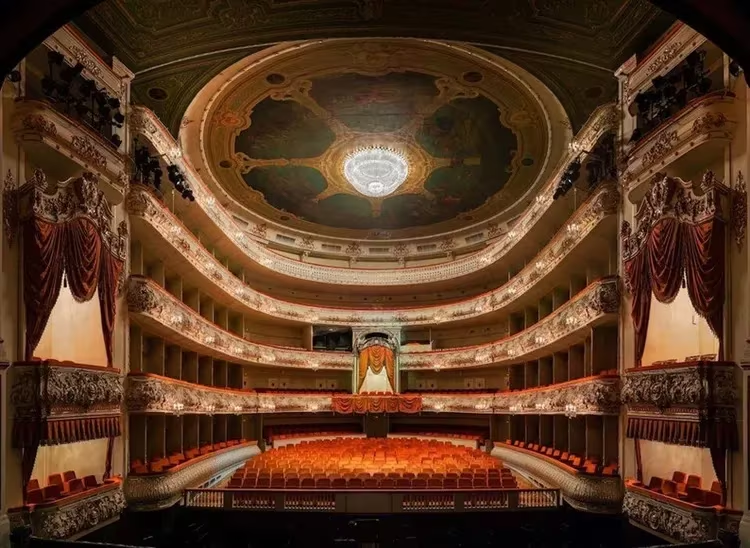
The history of the Mikhailovsky Opera and Ballet Theater began with the assignment of this project to the professor of architecture of the Imperial Academy of Arts – A. Bryullov, the design and decoration of which corresponded to the Mikhailovsky Palace already existing on the Arts Square.
From the outside, the building looks rather modest, but several masters worked on the interior, including A. Cavos, a Russian academician of Italian origin. The stage was expanded, another tier was added, the ceilings were painted with frescoes, the hall was decorated with stucco molding of ancient Greek goddesses, silver, velvet and crystal.
The fame of the theater grew even among the members of the imperial family, they repeatedly came here to the performances of German and French troupes, and I. Strauss himself more than once directed the orchestra. A. Pushkin, P. Tchaikovsky, L. Tolstoy also often visited here as visitors.
After the February Revolution, the theater got a permanent troupe under the direction of S. Samosud, which brought the development of the Soviet opera, which you can learn more about in the museum on the 2nd floor. Opening hours: from 10:00 to 21:00, daily.
Church of St. Catherine
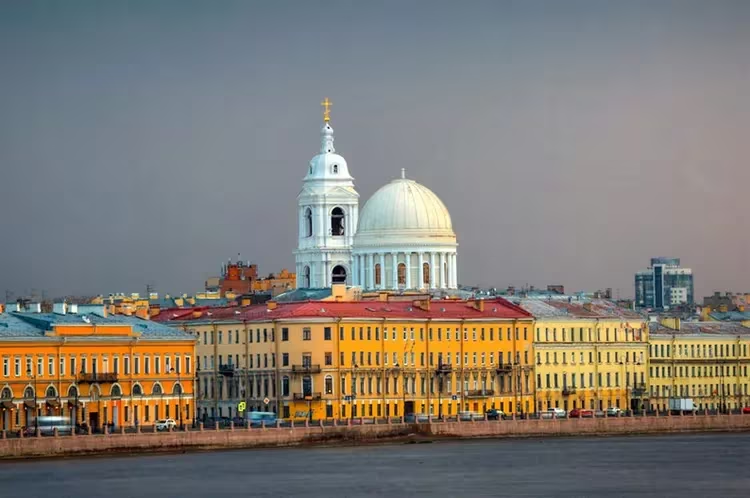
The first mention of this church was noted back in 1745, when it belonged to the Kabardian regiment. Then it was transferred to the possession of the Astrakhan Dragoon Regiment, and then to the Keksgolmsky Infantry Regiment. In 1809, the temple burned down, leaving behind only the icon of the Great Martyr Catherine.
A series of wars and revolutions prevented the restoration of the temple, and the building was returned to believers after decades. Evidence of its existence are the poems of N. Gumilyov and A. Akhmatova, where they described the location of the temple and its name.
The last restoration work was completed in 2017 – the wooden sculpture of an angel on the dome was replaced with a modern one with a gilded cross in its hands, a moleben was served to St. Catherine and divine services were resumed.
Opening hours: from 9:00 to 19:00, daily.
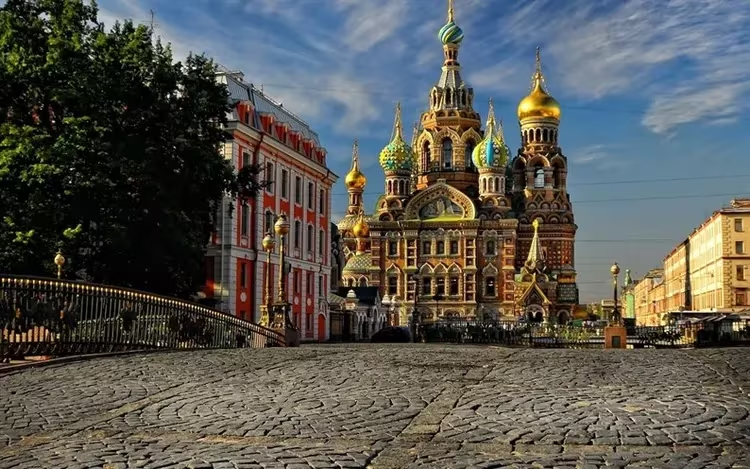
Savior on Spilled Blood
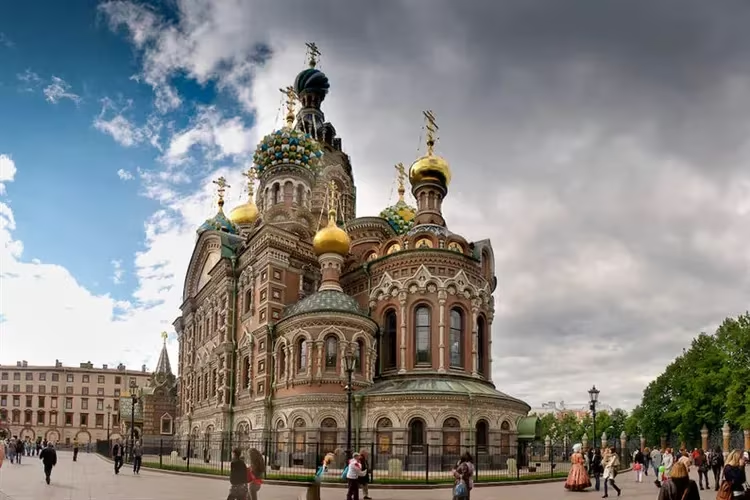
The tragic death of Alexander II as a result of an assassination attempt in 1881 was perceived by believers as a punishment from above for the sins of the Russian people. Since then, the earth, sprinkled with the blood of the Tsar-Liberator blown up by the bomb, began to serve as a place of pilgrimage, where prayers were offered for the soul of the deceased. Funds for perpetuating the memory of the Russian Tsar were collected throughout Russia, and in 1907 it was consecrated.
The “Russian style” of the temple is very similar to St. Basil's Cathedral, it is decorated with an octagonal tent with oblong windows in the form of kokoshniks and four onion domes around it, with colored wrapping strips in the form of decoration, as well as crosses on each of them. All facades of the building amaze with the decorative design of window openings and walls, and make an indelible impression.
It seems that there is no place inside the cathedral that would remain free from the mosaic created according to the sketches of V. Vasnetsov, F. Zhuravlev, V. Belyaev and others. You can visit the Savior on Spilled Blood every day from 10:30 to 18:00, except Wednesday.
Mikhailovsky Garden
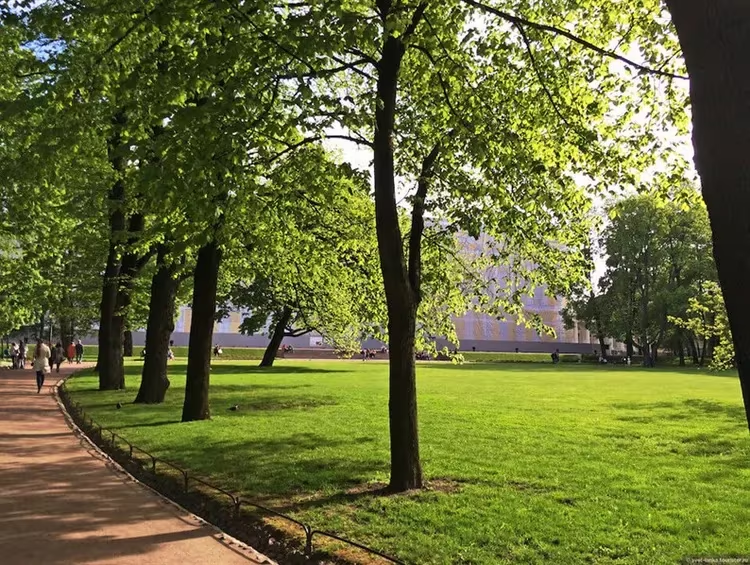
In 2001, the Mikhailovsky Garden was reconstructed, after which it began to serve as a venue for festivals dedicated to the latest trends in landscape design, and before these events it was dominated by the imperial families. At first it was an abandoned area, overgrown with fruit trees, surrounded by ponds for keeping fish delivered to the royal table.
And only under Anna Ioannovna, F. Bartolomeo gave life to the park, namely, he brought marble statues, flower beds, fountains, built pavilions and gazebos, and even an imperial bath.
The last to make changes here was Paul I. Artificial canals were dug around the Summer Palace in such a way that it became inaccessible for free visits, a front square and a monument to Peter I appeared. After the death of the emperor, the Mikhailovsky Garden was abandoned.
Mikhailovsky Castle
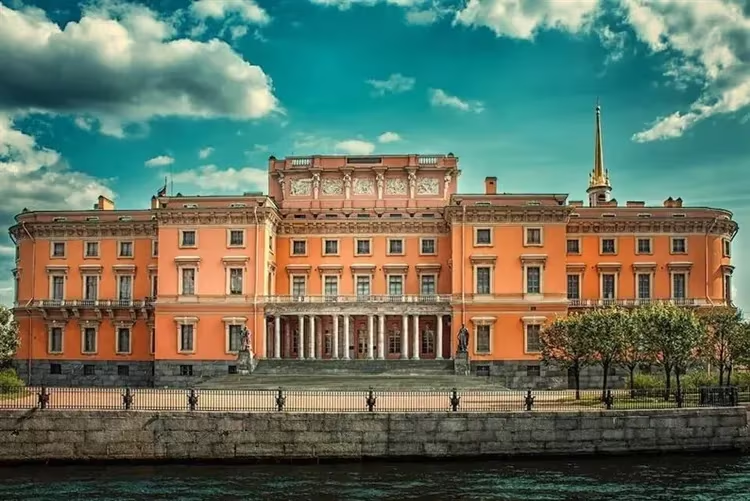
There are many legends around the imperial “castle on the water”, the first of which began with the appearance of the Archangel Michael to a soldier from the guard service of Paul I. The heavenly evangelist in the guise of a young man ordered that the emperor be informed of the demand to build a palace on the site of the Summer House, which previously belonged to Elizabeth Petrovna. The will of God's messenger was fulfilled, and 12 years later, by 1801, Paul I and his family settled in a castle built in the style of “Russian classicism”.
The choice of color for painting its outer walls is interesting – according to one version, gloves dropped at the ball by the emperor's favorite were of brick-red color. He wanted to return them to their owner, when he suddenly noticed an unusual, but pleasant shade for his eyes, demanding the same on the walls of the facade of his residence.
But after 40 days, Pavel was killed by conspirators, with which the last legend about Mikhailovsky Castle is connected – passers-by noticed his luminous ghost in the window more than once, and in connection with this, a commission was even sent here to study anomalous phenomena.
In 1994, the grand opening of the museum took place on its territory; since then, permanent exhibitions have been held here, where you can see the halls and galleries of the royal family. Every day except Tuesday, there are guided tours from 10:00 to 18:00.
Field of Mars
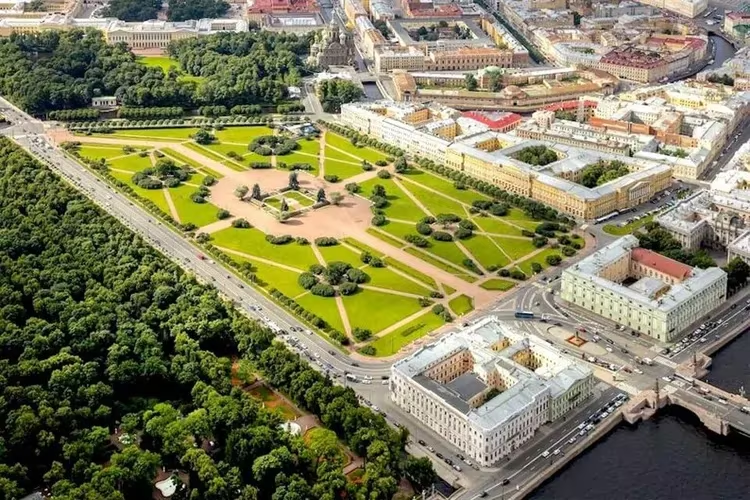
Since 1798, monuments to military commanders (A. Suvorov, P. Rumyantsev) began to appear on an abandoned field where military parades used to take place, and after the events of the February Revolution, Russian writer Maxim Gorky and a group of architects organized a funeral ceremony in memory of those who died on the Field of Mars.
In 1917, a memorial complex was built to the “heroes-fighters for the freedom of Russia” – a granite wall with 12 slabs on which the names of the dead were engraved, and in 1967 the “Eternal Flame” was lit. Then it became necessary to set up a park complex on this territory, where people now relax, hold festive events and hold rallies. Entrance to the Park of Culture and Leisure is free.
marble palace
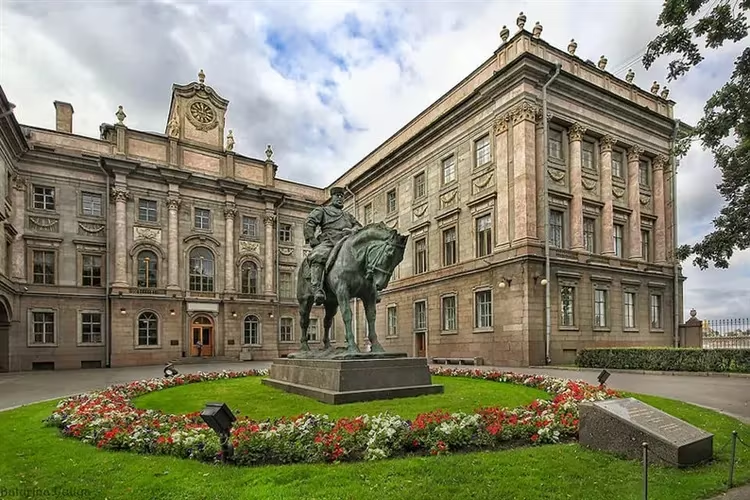
In 1769, Catherine the Great sketched out a sketch of the future Marble Palace, based on which Antonio Rinaldi and other foreign masters carried out the order of the Empress in 16 years. Initially, it was intended for the feldzeugmeister general, favorite of Catherine II, Grigory Orlov, but due to his death, it was transferred to her grandson Konstantin Pavlovich on the occasion of the marriage.
After his departure to Poland, his last heir appeared at the Marble Palace – the grandson of Nicholas I, prince, academician and poet, Konstantin Romanov. Each owner rebuilt the property to his taste, but after the First World War, the original interiors of the palace, except for the Main Staircase and the Marble Hall, were lost. In 1992, the building was given to the Russian Museum, and he began to restore the interior decoration of the palace.
The excursion program dedicated to Konstantin Romanov includes visiting two branches of the Russian Museum (Marble Palace and Mikhailovsky Castle) for 650 rubles for adults and 350 rubles for others. Opening hours: from 10:00 to 18:00, every day (except Tuesday).
State Hermitage
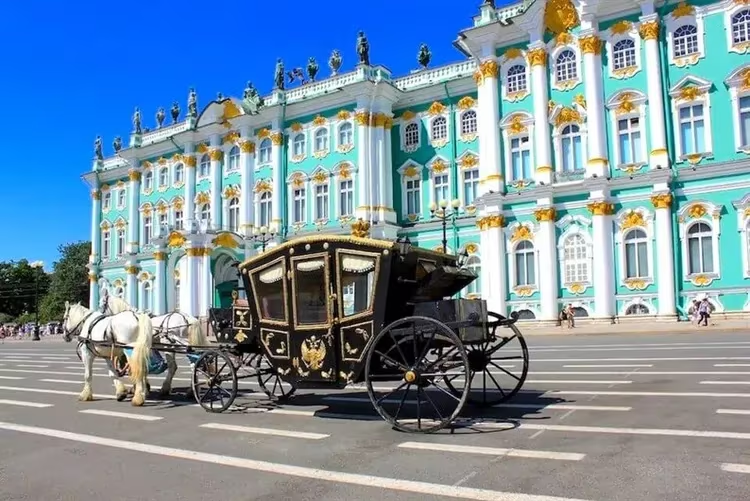
The largest cultural and historical museum in the country, founded by Catherine the Great. The museum complex of 5 buildings has about 3 million works of art, from the Stone Age to our times.
Tourists usually start from the main building of the Hermitage – the Winter Palace, where the main value of the museum is located – the genealogy of the Romanov dynasty, their portraits, chambers, personal belongings and household items. No less important in the history of Russia was the figure of Prince Menshikov, the favorite of Peter I – a separate branch is dedicated to him.
The General Staff has about 3,000 paintings by world-famous artists such as Van Gogh, Renoir, Claude Monet and other painters of the 19th and 20th centuries. Books, carriages, furniture, letters and rare artifacts – everything can be viewed in the Hermitage every day (except Mondays) from 10:30 to 18:00.
Museum Giant's House

The uniqueness of the museum for children and adults is in the exhibition of household items, enlarged several times so much that you can feel like Gulliver in the land of Lilliputians. Against the backdrop of giant furniture, inside a washing machine or a cup, funny photos are obtained, but the entertainment of the museum does not end there.
In the hall of optical illusions and in the glass labyrinth, you can also get an unforgettable experience, and the petting zoo will allow you to make friends with animals – you can pick them up, feed them and take pictures. The Giant's House is open daily from 11:00 to 00:00.
Admiralty
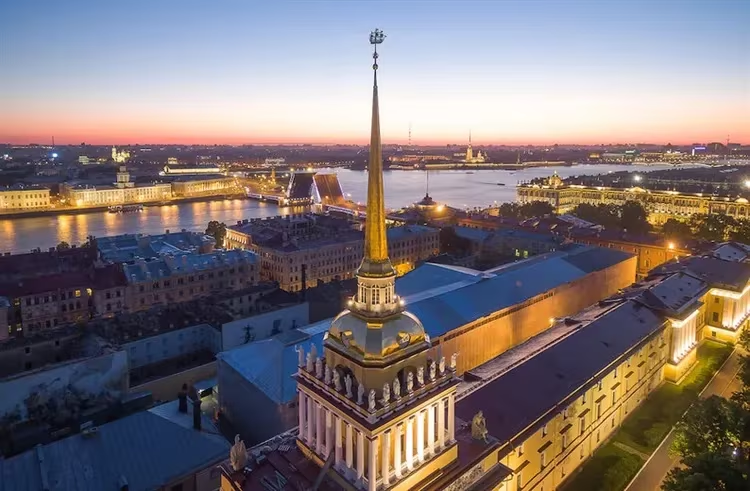
In 1704, the Admiralty appeared on the banks of the Neva River, consisting of a fortress in the form of the letter “P”, including forges, warehouses, a shipyard, workshops for the construction and repair of ships, which produced more than 200 artillery ships during the reign of the last Russian Tsar Peter I. In view of the Northern War with the Swedes, an earthen rampart and 5 bastions were built to defend the city.
Subsequently, the Admiralty was repeatedly rebuilt and improved with sculptural compositions and stucco, but the ship on the spire of the building, which served as a prototype of the first military frigate “Eagle” and is considered one of the symbols of St. Petersburg, has survived to this day unchanged, although it was replaced by its exact copy.
Today, the handiwork of Andrei Zakharov, the creator of one of the most beautiful architectural complexes in the city, can only be viewed from the outside, since the Naval Institute is located inside.
Alexander Garden
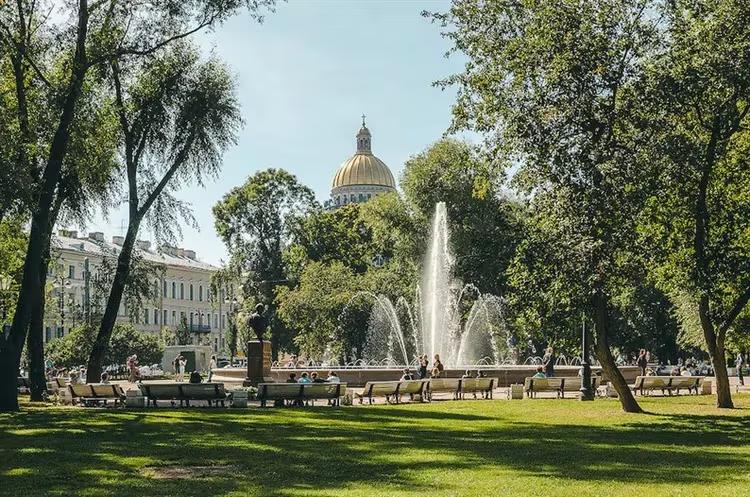
Over time, the Admiralty lost the need to use defensive structures, so the moat near its walls was filled up, and the glacis began to be used as a meadow for military exercises on weekdays, and for folk festivals on holidays. Over time, St. Petersburg became the face of the empire, so it was unacceptable to leave the city center, and the Admiralty is located there, in its previous form.
Alexander I ordered an English gardener to build a fenced boulevard around the fortress with three paths leading to the building, with lanterns and benches on both sides.
Later, Alexander II personally took part in the project of laying out a garden on the territory of the boulevard, thousands of trees and shrubs were planted, a fountain and busts of figures of science and literature were installed – M. Lermontov, V. Zhukovsky, A. Pushkin, N. Gogol and others.
The emperor himself attended the grand opening of the garden, he personally planted one of the oak trees and agreed to name the park in his honor. Today, this attraction is open to everyone.
Bronze Horseman
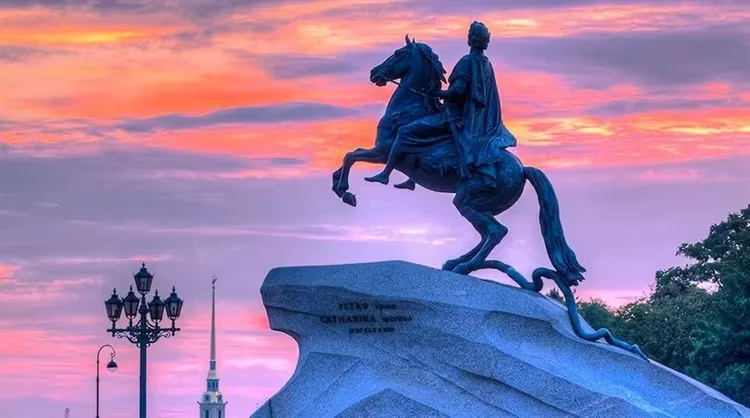
The bronze monument to Peter the Great is one of the three symbols of St. Petersburg and owes its name to the poem of the same name by A. Pushkin, where one of the heroes, having stumbled upon a statue of the Russian Tsar, accuses him of founding the city on a site prone to floods that claimed the life of his beloved. The location of the monument was also not chosen by chance – there is a legend about the appearance of Peter Paul I during a walk along the Senate Square.
The ghost promised to meet him at this very place, where today the “Thunder-stone” is located with its figure on a rearing horse. And so it happened when Catherine II ordered to place a statue of Peter here and entrusted this project to the French sculptor Etienne Falcone.
In 1770, a 10-meter sculpture of the king finally grew up in simple clothes and a bearskin instead of a rich saddle, depicting Peter not as a commander and winner, but as a folk hero; and a crushed snake under horse hooves symbolizes not only defeated enemies, but also adds stability to the monument.
Second day
If rain is expected on the second day, then this is only to your advantage – the main part of the tour is devoted to museums.
Nicholas Palace
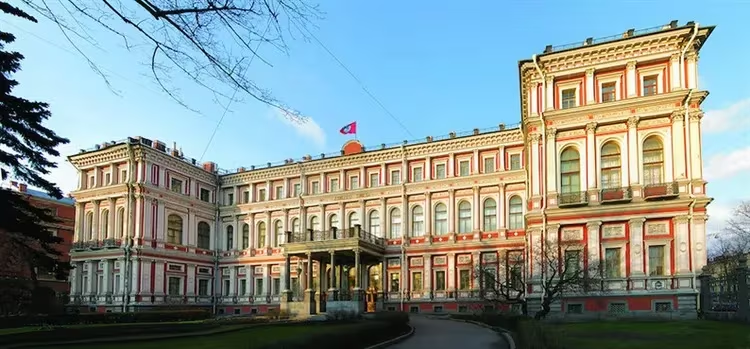
The project to build a three-story residence on Blagoveshchenskaya Square for Nikolai Nikolaevich, the son of Nicholas I, was won by A. Stackenschneider, and for the middle of the 19th century it was a palace well equipped with technical facilities – a heating system, sewerage, water supply and telegraph communication. The palace had a church, stables and rooms for servants.
When decorating the facades of a rectangular building with long narrow windows, Stackenschneider used a mixture of several styles, from Russian classicism to the Renaissance. For the interior halls, the architect used white marble, the ceilings and columns were decorated with stucco and bas-reliefs. Today, some rooms of the palace are leased for office space, but the entrance is still free.
Opening hours: from 11:00 to 22:00, daily.
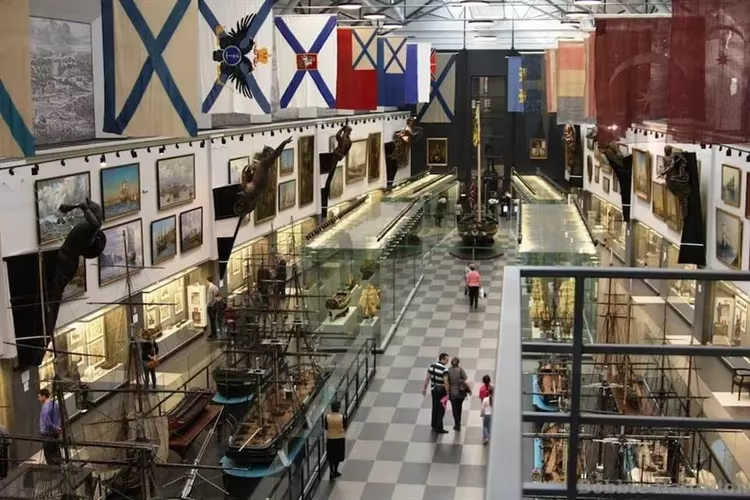
The title of “Central Naval Museum” was assigned to it at the beginning of the 20th century, and before that, a small collection of the “Naval Museum” consisted of shipbuilding models and drawings. After the Great Patriotic War, there were so many war trophies that they had to be distributed among several branches on ships and submarines.
The total number of exhibits is 700 thousand, including ship equipment, cold and firearms, military uniforms, awards, flags, documents, drawings and photographs. Every day (except Monday and Tuesday), from 11:00 to 18:00, excursions are held, the price of which is: 300 rubles for adults, 200 rubles for beneficiaries, 100 rubles for schoolchildren and students.
Yusupov Palace on the Moika
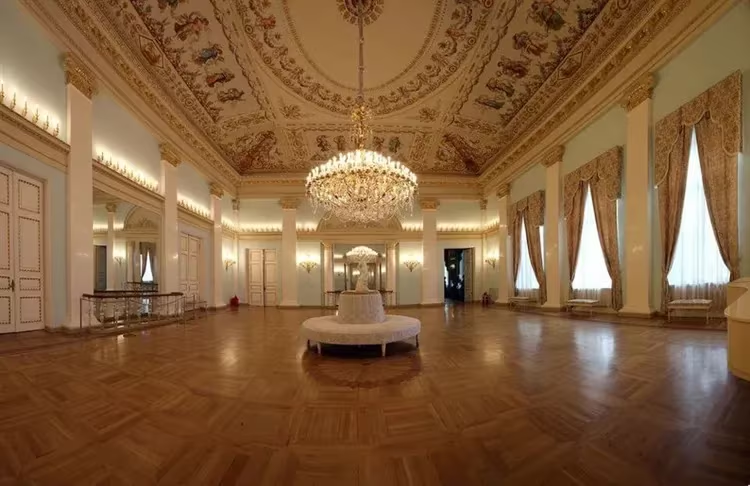
On December 17, 1916, Grigory Rasputin, a healer and close associate of the royal family of Nicholas II, was killed in the palace of Prince Yusupov on the Moika River; here he was poisoned and then shot in the back, but even then he tried to escape.
The unlimited influence exerted by the “holy elder” on Nicholas II, and the conduct of public affairs, was not pleasing to many representatives of the court circles and the intelligentsia, so one of the richest people in Russia (he owned more than 50 palaces throughout the country), Felix Yusupov, lured Rasputin by deceit to his house and prepared the murder.
Today, hundreds of tourists come to see the rich decoration of the Yusupov estates, an exhibition of wax figures dedicated to the mystical personality of Rasputin is held in the basement, and diplomatic meetings, performances and classical music concerts are held in the state rooms, theater and art galleries. Opening hours: from 11:00 to 18:00, daily.
Mariinskii Opera House
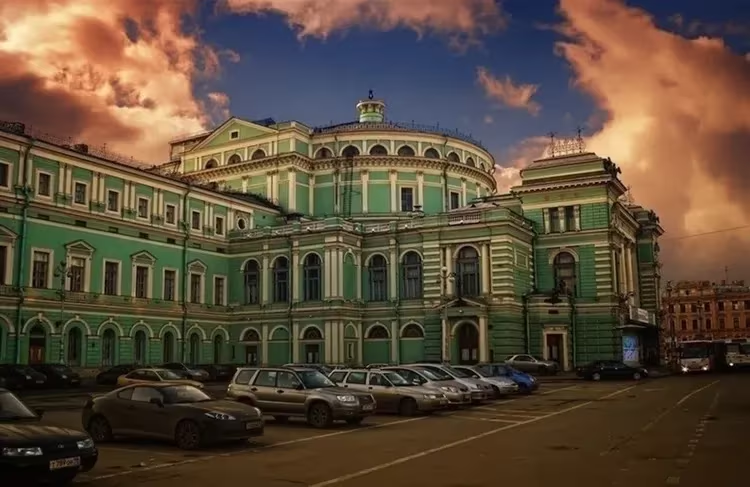
The State Opera and Ballet Theater was named after Maria Alexandrovna, wife of Alexander II, but founded by order of Catherine the Great in 1783, and before the fire in 1860 it had a completely different look.
The repertoire of the theater includes both the classic works The Nutcracker, Don Quixote, The Sleeping Beauty, as well as premiere performances born as a result of cooperation with world-famous theaters – La Scala, Covent Garden, etc.
Ticket offices are open daily from 11:00 to 19:00.
Great Choral Synagogue
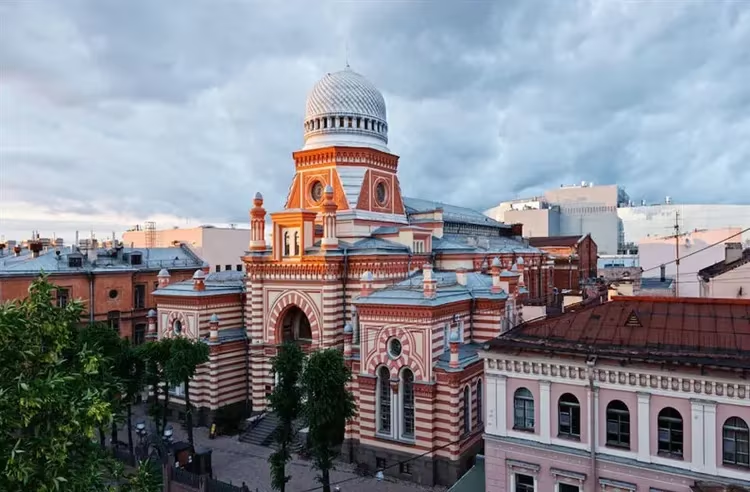
During the reign of Empresses Catherine I and Elizabeth Petrovna, the Jewish community was limited in living on Russian territory due to their religion and for economic reasons, but some families of outstanding talents (doctors, financiers, merchants) and soldiers who served in the Russian army were allowed to live in Russia. They, as a rule, were quite well off, had servants and even small secret chapels inside the house.
Thus, it was impossible to eradicate their faith and Alexander II issued a decree on the construction of a synagogue for 1200 seats. But the joy of the Jewish people did not last long, the members of the government constantly had reasons to close it, and in the post-war period, with the start of the anti-Semitic campaign, they stopped investing in the building and repairing it.
Only by the mid-80s the synagogue was revived and today kindergartens and schools, a hotel, a library, a shop with kosher products and a restaurant with Jewish cuisine operate under it.
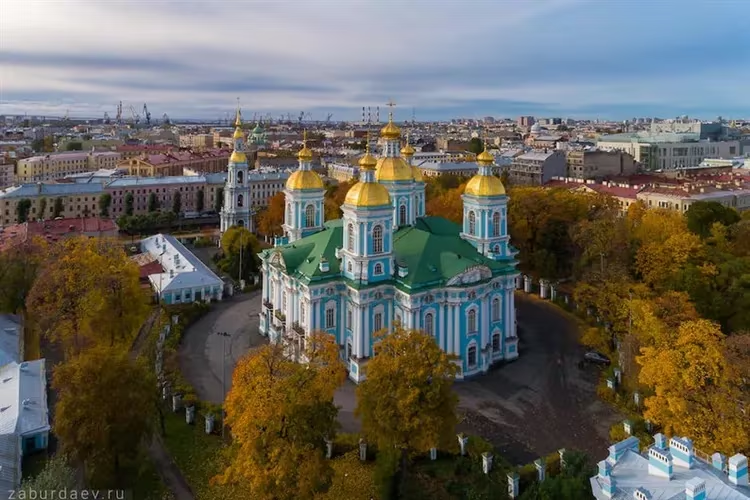
The wooden Church of St. Nicholas the Wonderworker appeared on Nikolskaya Square in 1732, and 20 years later, Elizaveta Petrovna gave the go-ahead for its reconstruction – 5 golden domes with crosses at the top towered over a strong building with a blue facade and stucco molding in the style of “Elizabeth baroque”. This is one of the few churches that was not damaged either as a result of hostilities or natural disasters, and worship services did not stop even during the blockade of Leningrad.
The main shrine of the cathedral is the icon of St. Nicholas the Wonderworker. You can view the Sea Temple, built at the expense of the Admiralty, from Monday to Sunday, from 6:30 to 21:00.
Menshikov Palace
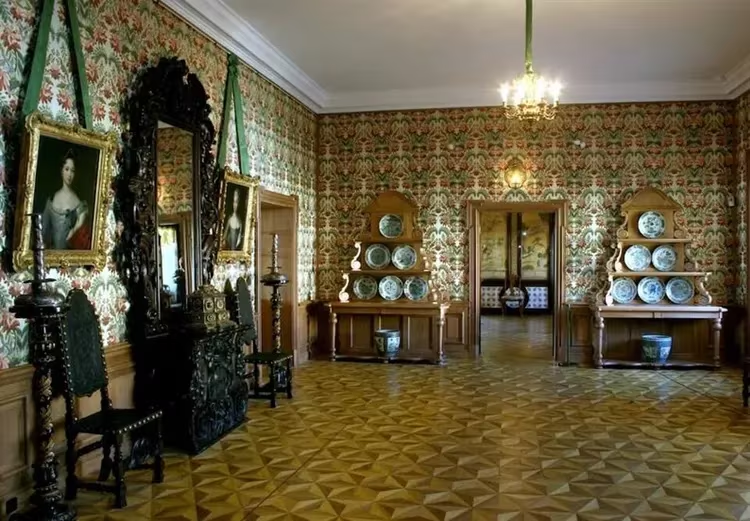
Prince Alexander Danilovich Menshikov, not having a high and noble origin, but possessing a cheerful disposition and wit, fell in love with Peter I and became his ally; and also, having distinguished himself during the siege of fortresses during the Northern War, he received the rank of field marshal general.
He was repeatedly convicted of embezzlement, but his endless devotion to the royal family was paid more attention than sins, for which he was presented with a baroque palace near the Neva embankment. After the death of Menshikov, the building was rebuilt several times, but in 1966 the palace was returned to its original form.
Some of the exhibits have been transferred to other branches of the Hermitage, but most of them remain in their places, as they were under the prince – dishes made by Peter I himself, portraits of the Menshikov family, organ clocks, chests, paintings by European artists, old stoves.
Each room had its own unique design and rich decoration. A sightseeing tour of the palace costs 300 rubles for adults, and free of charge for schoolchildren, students and pensioners. Opening hours: from 10:30 to 18:00, daily (except Monday).
Kunstkammer

The cabinet of rarities, as museums used to be called, was established by Peter I after his trip to the cities of England and Holland, where he adopted the tradition of buying art and “outlandish” things. The collections have reached such a size that now the museum presents 16 expositions that analyze the ethnography of the peoples of the world, natural science research (exotic animals, human anomalies of the body, anatomical collections) and astronomical discoveries.
If the expositions dedicated to the culture of different countries amaze with the antiquity of artifacts and the traditions of those times, then the anatomical section is truly shocking: Siamese twins, a two-headed lamb, a torture chamber are the most popular “rarities” among tourists.
Spit of Vasilyevsky Island
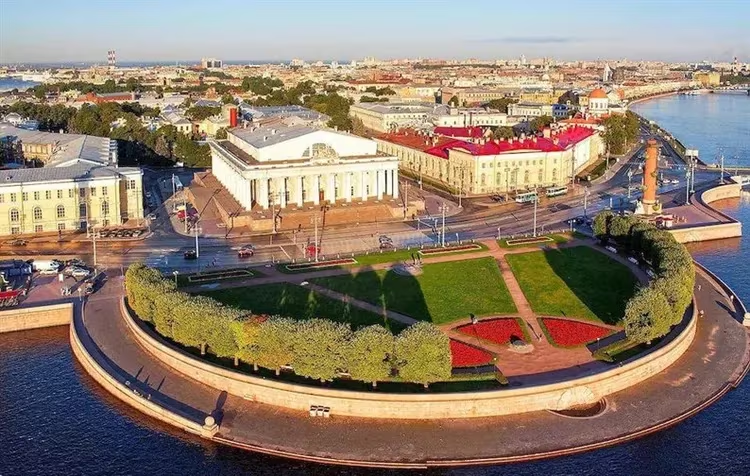
In 1716, noble families and members of the government moved to Birzhevaya Square, which was founded by Peter I and allocated funds for the construction of residential buildings for them. Two embankments diverged from it, thus forming an architectural ensemble in the form of an arrow. On the one hand, palaces were laid, on the other, warehouses, customs and other commercial enterprises.
The buildings of the exchange and customs in the style of the ancient temple, as well as the Rostral columns, have survived to this day, and the rest of the buildings have changed since then and are occupied by numerous museums (zoological, naval, literary, anthropological).
The main sights of the city are within walking distance, so the Spit of Vasilievsky Island is a must-have item in the excursion program of every tourist.
Erarta Museum
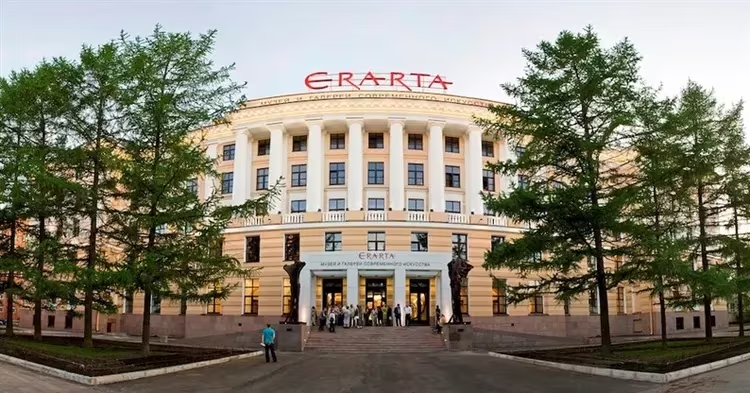
The contemporary work of mainly St. Petersburg artists, sculptors and other masters from the field of art has collected about 3,000 works in a five-story building on Vasilyevsky Island, which has been welcoming visitors for more than 8 years. Eratra encourages new talents and organizes its own projects, educational programs (science cartoons, intellectual games and quests) and excursions.
The exhibitions feature surreal photographs, 3D animations, and original installations by artists who collaborate with international brands such as Google, Ikea, National Geographic and others. Every day (except Tuesday), from 10:00 to 22:00, the doors of Erarta are open for fans of contemporary art.
Dream Museum of Sigmund Freud
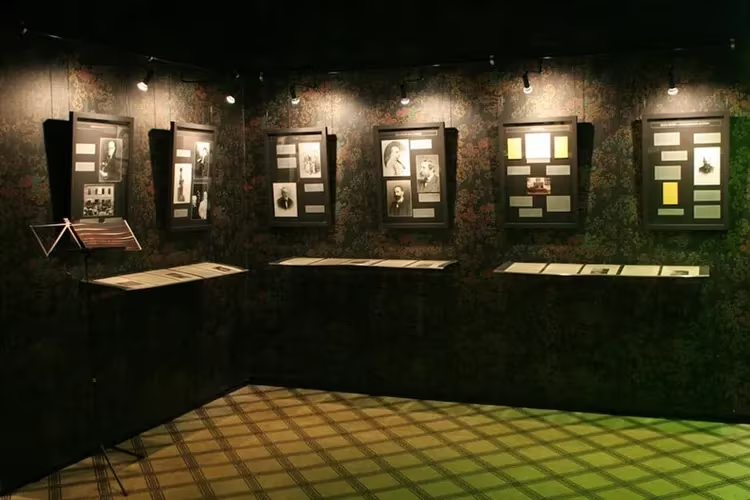
Museums dedicated to the activities of Sigmund Freud are only in three cities in the world where the Austrian psychologist once lived and received his patients. And in 1999, the Russian philosopher and psychoanalyst Viktor Mazin opened such a museum in St. Petersburg, consisting of only two halls – Introductory and Dreaming.
The expositions are presented with stories about his life and relationships with relatives, supported by photographs, but to a greater extent by drawings depicting his dreams, which he interpreted as “repressed desires”. In order to feel the atmosphere of mystery hovering here and understand the meaning of mysterious objects, it is recommended to read Freud's work – “The Interpretation of Dreams”.
There, a psychiatrist explains the meaning of these things and you will not need a guide, for which you need to pay extra 100 rubles to the price of a general ticket – 200 rubles (for children and beneficiaries – 100 rubles). Tours are held on Tuesday, Saturday, Sunday, from 12:00 to 17:00, or by appointment on other days.
Planetarium

Beginning in 1959, the three-story building, topped with an observatory dome, began to invite children and adults to its halls to tell about the secrets of the starry sky through educational lectures and visual material.
So, in the Observatory you can observe the stars with the help of telescopes, in the Star Hall – for the movement of the planets and other astronomical phenomena (thanks to the projection of the sky on a domed screen), in the Planet Hall – for life on Mars or the bottom of the ocean.
There are seven such entertaining halls in total; you will find not only the theoretical part, but also participation in laboratory experiments, flight into space, educational games and optical illusions. Opening hours: from 12:00 to 18:00, daily.
Military Historical Museum of Artillery, Engineers and Signal Corps
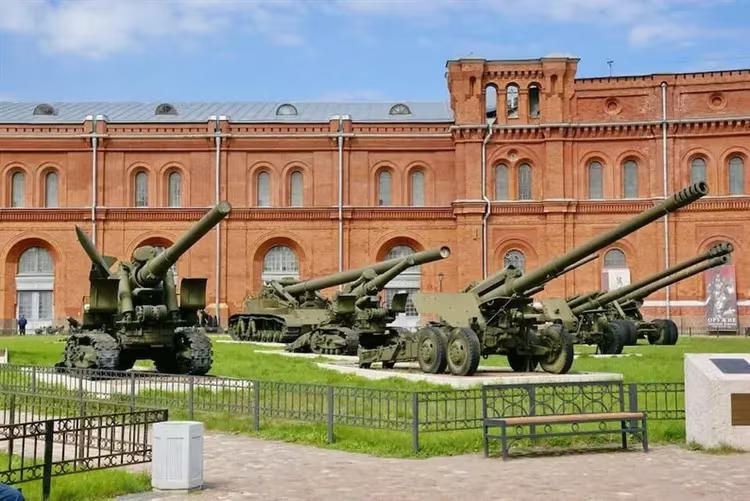
Another military museum, created by the will of Peter I, has been operating for over 300 years. He issued a decree on the transfer of all military historical values to this artillery museum; for tanks and guns, the area near his building was rebuilt and fenced off.
With the onset of the October Revolution, the banners, ancient weapons and trophies of the First World War were lost, and the flood in 1924 reduced the collection by another third. About 850 thousand valuable exhibits have survived to this day, which are located in 13 halls: paintings by battle artists, small arms and edged weapons, engineering equipment, documents, communications, as well as ancient tools of the 15th century.
For children, a separate number of excursion programs are offered that differ from adults. The museum is open from 11:00 to 18:00, every day, weekends – Monday and Tuesday.
Peter-Pavel's Fortress
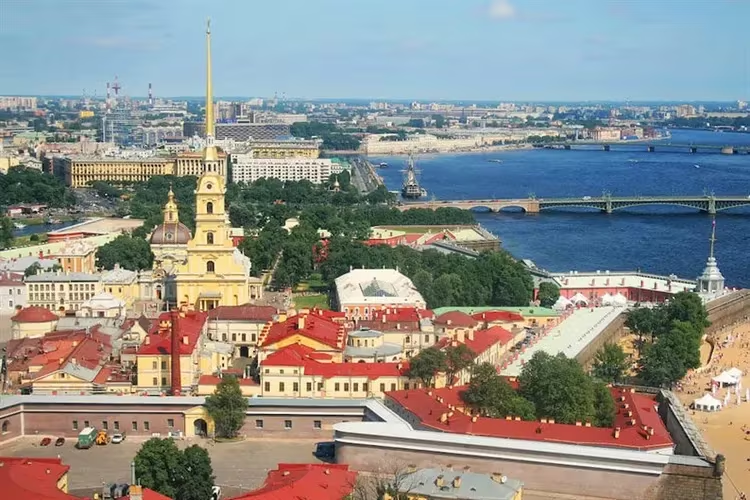
After the Great Northern War was won, Peter I instructed Prince Alexander Menshikov and his son Alexei to supervise the construction of the fortress according to the drawings developed personally by the tsar to protect the conquered lands.
Along the edges of the building were bastions with cannons, and in the walls – warehouses with weapons. But people come here not only to watch the fortress, on its territory there is a whole exhibition complex of historical buildings and monuments: the tsars of the Romanov dynasty are buried in the Peter and Paul Cathedral, and in one of the buildings there was a prison, the prisoner of which was Tsarevich Alexei.
Tourists love to take pictures on their knees at the bronze statue of Peter sitting in an armchair. Since the excursion program is quite diverse and covers several exhibition halls that cannot be seen in one day, tickets for each of them are purchased separately.
Opening hours: from 9:30 to 20:00, daily.
Cruiser Aurora
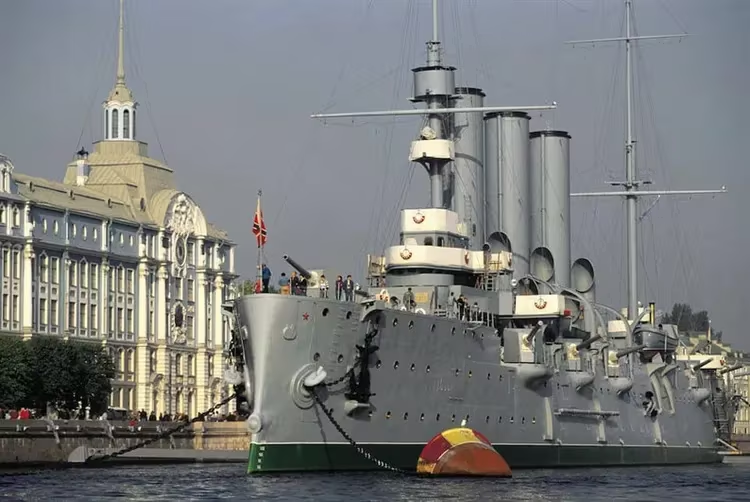
The legendary fate of the warship began in 1897 at the Admiralty shipyard, and 8 years later it showed itself in action for the first time. But the real fame brought him participation in the hostilities of the First World War and the Great Patriotic War, where he took over the shelling and was flooded. Later, it was restored and a branch of the Central Naval Museum was opened on it, where photographs, personal belongings of the crew and other memorabilia of those times are stored.
Ticket price: 300 rubles – for adults, 100 rubles – for students. Opening hours: from 11:00 to 19:00, daily.