
Sights of Belgrade – 30 most interesting places
Serbia is a multinational country with a rich and complex history. The territory of the current state includes lands that previously belonged to the Hungarians, Turks and other peoples. Its culture was affected by the influence of East and West. The capital city of Belgrade, unlike many European capitals, is quiet and calm.
Tourists will be able to learn more about the events of the Middle Ages, the battles of the Slavs with the Turks, visit Orthodox churches and take a leisurely stroll through the uncrowded cozy areas of old Belgrade. Pleasant features of holidays in Serbia include a large number of Russian-speaking guides and low prices. So, we will tell you about the most interesting sights of Belgrade and which of them are required to visit.
Belgrade fortress
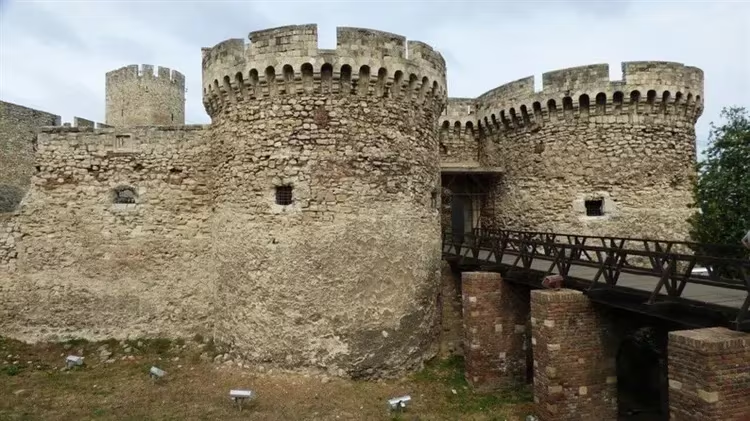
It is located in a picturesque place where the Sava flows into the Danube. The strategically important location determined the fate of the citadel. Like the confluence of two water streams, the economic, political and cultural paths of East and West converged here.
Fierce battles were fought for the fortification hundreds of times, dozens of times its walls were partially or completely destroyed. Today it is peaceful and calm, because now it is one of the most significant historical monuments for the city.
The fortress was built 2 millennia ago from white stone, hence the name of the city. High fortress walls are adjacent to a large cozy park Kalemegdan. This word is translated from Turkish as “battlefield”.
The Turks called the stone fortification “the hill of reflections”, which corresponds to the atmosphere of appeasement that prevails here. The name of the Kalemegdan garden was also assigned to the citadel. There are 12 gates in the walls of the fortress, the main of which is Istanbul. Walking along the pedestrian street of Prince Michael with its bright shop windows, you will find yourself in Kalemegdan.
You can also get there by public transport. Entrance to the territory is free. Of interest to tourists is not only the fortress, but also several museums, functioning churches, towers, statues and the Roman well. You can join the tour and learn more about the centuries-old history of this place, its myths and legends.
The residents of the capital chose Kalemegdan for recreation. The observation deck offers a breathtaking view of the city. On holidays, concerts and festivities are held in the park, and on weekdays you can sit in a cafe or just eat ice cream.
Kalemegdan Park
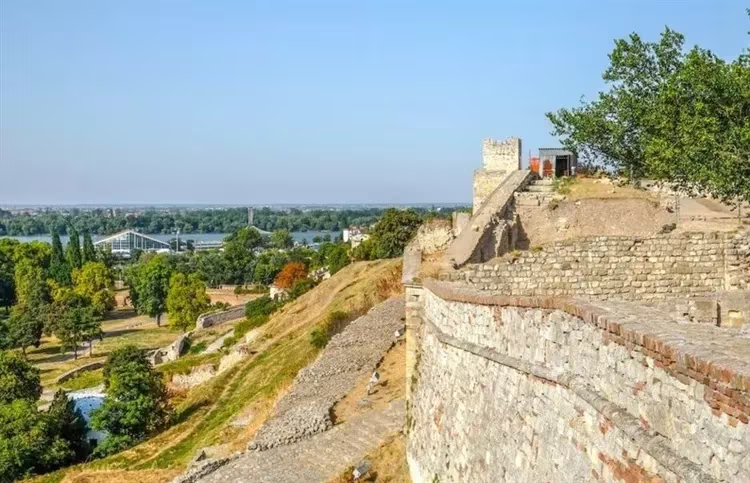
Heading to the main attraction – the Kalemegdan fortress, you will not be able to ignore the magnificent park of the same name. The landscape and park area (the oldest park in Europe) is located near the walls of the Belgrade fortress, being the end of the pedestrian street of Prince Michael. In the Ottoman era, there was a military parade ground on the site of Kalemegdan, later the garrison of the fortress was based here.
The floristic design of the territory began in the second half of the 19th century by the decision of Prince Mikhail. Improvement and expansion of the square continued until 1931. The territory covers Small Kalemegdan and the Upper City. Today Kalemegdan is the main city park and a favorite walking place for citizens and tourists.
The beauty of alleys made of centuries-old trees, gazebos, lawns and lawns is complemented by architectural structures and sculptures. The monument “Gratitude of France” is installed here, symbolizing the gratitude of the Serbian people for help during the 1st World War. Among the green islands are the buildings of the Military Museum and the Museum of Nature.
Aesthetes are given the opportunity to visit the Tsvieta Zuzoric Art Gallery. Children‘s attention is focused on the many children's attractions and the zoo. Many climb to the observation deck of the Upper Town to admire the irresistible beauty of the panorama at the confluence of the Sava and the Danube – two rivers.
Ruzica Church
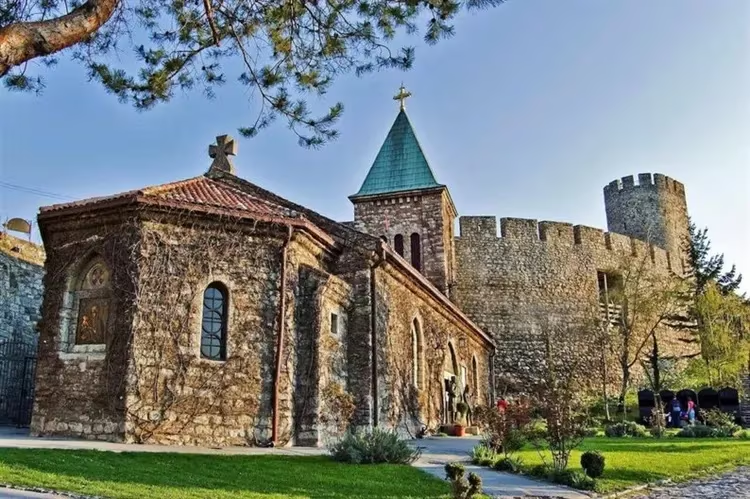
A truly sacred object for the Serbs – the ancient temple of the Assumption of the Virgin (Ruzica), according to the manuscript, was built in the 13th century. Orthodox shrines were kept in the temple: the icon of the Mother of God and the relics of St. Paraskeva Fridays. After conquering Serbia, the Turks converted Ruzica (Rose) into a mosque and later destroyed it. The shrine was “resurrected” in 1867 under the leadership of Prince Obrenovich.
After the destruction of 2 wars, Ruzhitsa was restored by the whole world. The soldiers of the Serbian army took an active part in moments of respite from the fighting. The church is rightly considered a historical monument and a symbol of patriotism of the Serbian people.
Repeated reconstructions have not spoiled the original appearance of Ruzica. It still gives the impression of an ancient temple. Stone walls, completely covered with ivy, reinforce the impression of authenticity of the shrine. Visitors see today a unique chandelier – a man-made masterpiece created from cartridges, cartridge cases, pistol and rifle parts by the hands of fighters.
Everyone admires the elegant gilded carving surrounding the iconostasis (the work of Todorovich). The true adornment of the church is the highly artistic painting “The Sermon on the Mount of Christ”, which the royal persons “listen to”. A visit to a religious monument leaves a deep impression.
Republic Square
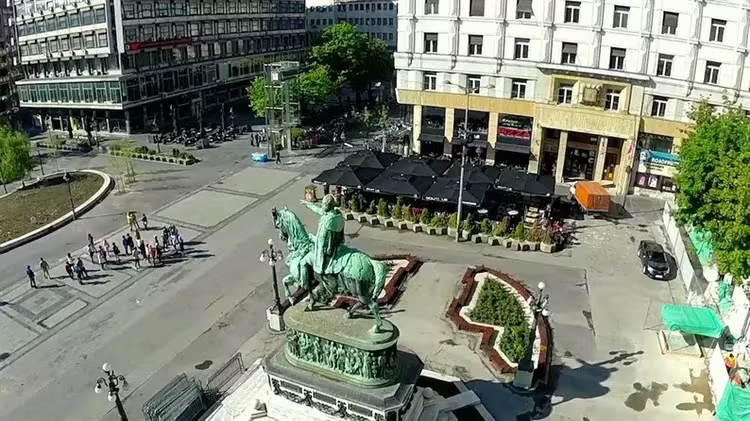
The central square of the Republic was organized in 1866 after the demolition of the Istanbul Gate (the road to Istanbul). They became for the Serbs a symbol of Ottoman cruelty – the Turks carried out terrible executions in front of them, impaling the guilty on a stake. After liberation, the Serbs hurried to destroy the traces of Ottoman tyranny.
Today Republic Square, surrounded by architectural masterpieces, attracts the attention of tourists. Here beats the pulse of the life of the Serbian capital, masses of people flock here. The square is incredibly beautiful, especially in the evening, illuminated by the mysterious light of lanterns. Here is the National Theater, which occupies a magnificent building, built in 1922. A huge collection of various art objects can be seen in the National Museum.
Among the exhibits is the world's largest collection of Impressionist paintings. In front of the museum building stands a bronze monument to the liberator of Serbia – Prince Mikhail Obrenovic. Citizens come here for dates and friendly meetings. The Press House, the department store “Staklenac”, “City Cafe” enjoy the attention of tourists. Instead of a monument to Soviet soldiers moved to the cemetery, the Millennium clock was installed on the square, which arouses public interest.
Monument to Mikhail Obrenovych
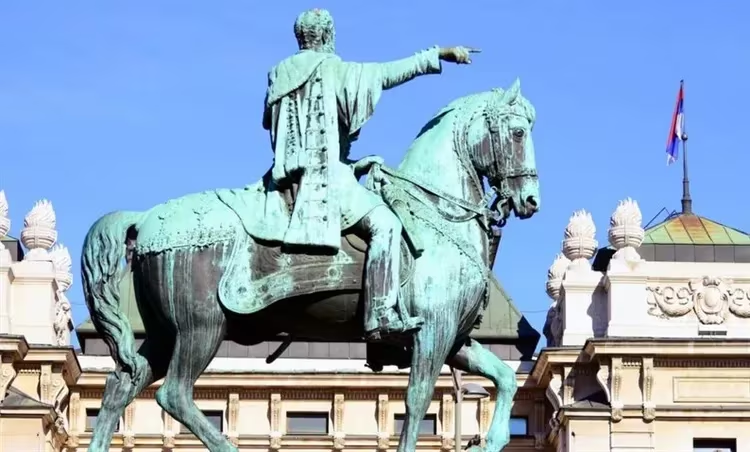
The equestrian sculpture of the greatest Serbian ruler has the status of a historical and cultural monument of great importance for the state. This is not just a tribute to the savior of the nation, but a symbol of the complete liberation of Serbia from the Turks. The opening of the monument in December 1882 was a grandiose event not only in Belgrade, but in the country.
The creator of the monument, the Italian sculptor Pazzi, received a high award – the Order of the Cross of Takov, 2nd degree. Prince Obrenovic earned honor as a great ruler-diplomat who drove the Turks out of the Serbian cities without bloodshed. Their names are marked on the pedestal, on which the prince sits majestically.
The index finger of the prince's right hand is directed towards Constantinople (Istanbul). An eloquent gesture means – the Turks “get out of Serbia.” The bronze monument consists of 3 components: a plinth, a pedestal and an equestrian sculpture. Michael holds the reins in his left hand – the embodiment of strong government.
All sides of the pedestal are decorated with symbolic bas-reliefs glorifying the heroism of the Serbs and the Obrenović dynasty. The side friezes are decorated with bronze garlands on which the names of the liberated cities are inscribed in gold. The bas-relief of the front side depicts the composition “Prince Miloš in Takovo”.
Bridge over Hell
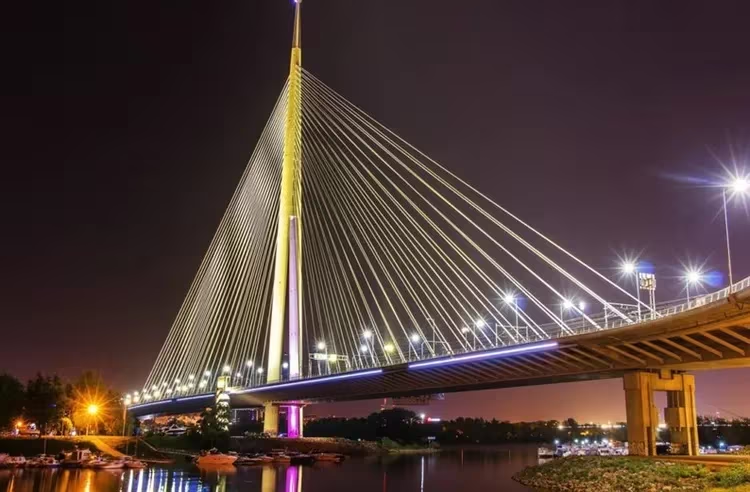
The grandiose crossing of the Sava River, connecting the old and new parts of the city, is a magnificent sight. The bridge is especially beautiful in the evening, illuminated by a kaleidoscope of lights. It is clearly visible not only from the Kalemegdan fortress, but also from other parts of the city. This is the second tallest cable-stayed structure in Belgrade, connecting the communities of Čukarica and Novi Belgrade. It passes over the river. Savoy and the eastern tip of the peninsula of Hell, being the first bridge built in the last 40 years.
Powerful steel cables, fanning around the supports of the automobile bridge, give the impression of an airy crossing. But at the same time, this 4-span structure is distinguished by a large margin of safety and power. There are many road interchanges on the wide bridge bed, allowing a large flow of vehicles to pass through. There are no footpaths on it. The bridge over Ada undoubtedly adorned the Sava River, giving it an urbanistic beauty. They can be admired from a distance or up close while cruising along the river.
Zoo
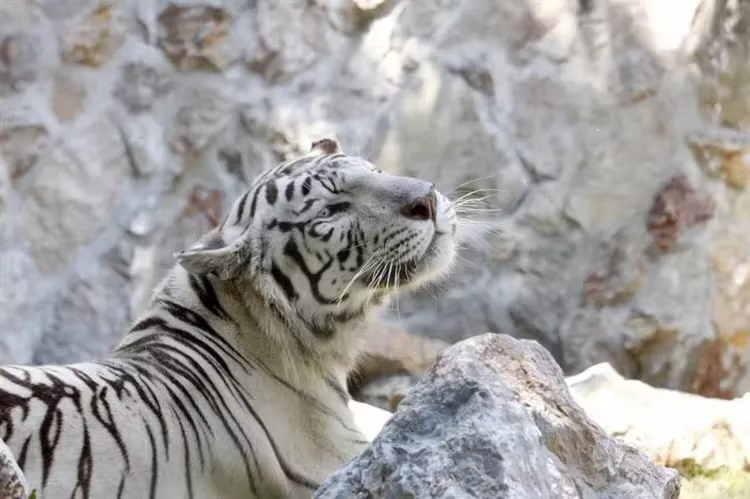
At the walls of the Belgrade Fortress, a spacious zoo with the telling name “Park of Good Hope” is conveniently located. During its history, it was shelled three times: twice during the Second World War and in 1999 during the armed conflict between NATO and Yugoslavia. In memory of those days, the zoo got its bright name, and its management strives to keep pets in the most comfortable conditions.
The zoo is home to over 2,000 individuals of 270 species of animals and birds. At the same time, they are properly cared for: the freedom of pets is practically unlimited, and their cleanliness is a pleasant surprise. Birds walk along the paths of the zoo. In a special pavilion, you can play with lambs, goats and others.
The zoo is distinguished from the rest by several of its attractions. Since 1986, special attention has been paid to albinos. Animals with a white color are collected around the world as a symbol of the “white city”. In the year of the last shelling, a baby elephant was born in the zoological garden. He was given the nickname Rambouillet after the name of the city in France where peace talks were held regarding the situation in Kosovo.
To avoid misunderstandings, carry cash in national currency with you and do not give food to animals. After the death of a giraffe through the fault of visitors, the fine for feeding animals was greatly increased.
Palace of Princess Ljubica
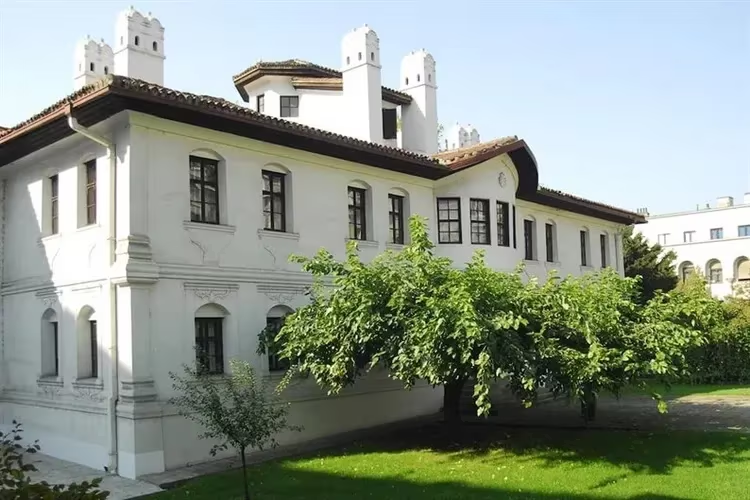
How do you imagine a palace for a princess? In fairy tales, it is described as a tall castle surrounded by two-meter walls. But life is a little different. One of the most beautiful buildings in the old town is the palace of the princess (she is also called the princess) Ljubica.
A low white house was erected in 1830 by order of Prince Milos Obrenovic on the site of their old dwelling. The new building has 3 floors, one of them is a basement. On the second floor, next to the princess's chambers, a hammam was equipped. Over the two centuries of history, the palace has changed several purposes.
At different times, it housed a lyceum, a court, a boarding school for the deaf and dumb, and various museums. At the end of the 20th century, the building was declared a cultural monument and restored. Now the former residence of the wife of Prince Milos is part of the Museum of the Serbian Capital. The palace is valuable in that its architecture, layout and interior decoration are an excellent example of the combination of Eastern and European culture of the 19th century.
The museum collection consists of pieces of furniture and art, personal belongings of the princess. Excursions with the telling name “Coffee with Princess Lyubitsa” take place here. The curators of the museum will not only tell the history of the palace and the life of the ruling family, but will also treat you to strong Turkish coffee with Turkish delight.
In the basement, educational lectures on cultural and historical topics and creative evenings are periodically held. The cultural monument is located in the old part of the city near the Kalemegdan fortress. The ticket price will be 200 Serbian dinars. There are discounts for students.
Museum opening hours: from 9.00 to 18.00. Day off: Monday. The exhibition is allowed to be photographed without the use of a flash.
Ada Gypsy
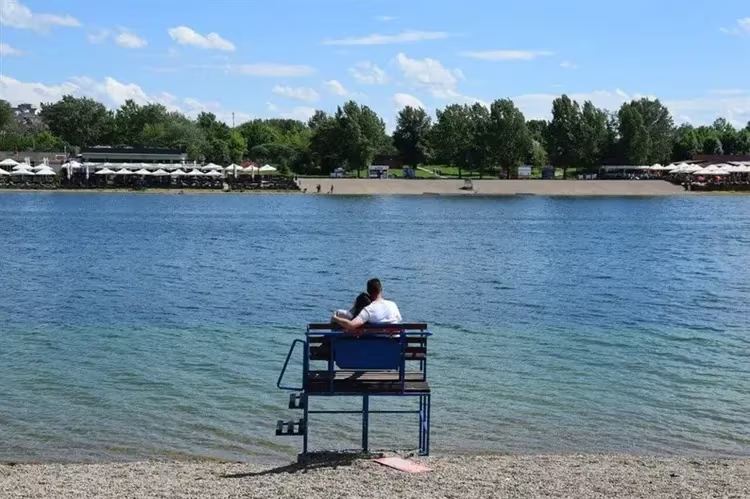
This heavenly place on the outskirts of the city, so beloved by the townspeople, can be called a local “bounty”. Hell Island, transformed into an accessible peninsula by 2 bulk dams, is the most popular leisure object for Belgrade residents. But tourists do not ignore it. It is especially crowded here in the warm season, when you can splash in the river or in Lake Ada, go in for sports, have a picnic, etc.
The name of the island is of Celtic origin “signalia”, meaning underwater land. The word “ada” was fixed from the Turkish “island” – Ada Ciganliya. The corner of rich flora and fauna is famous for its ecology, healing microclimate. Serbian princes in the early 19th century. rated this place as the best for rest and recovery.
Clean water, fresh air, diverse animal world attracted the Serbian nobility here. In 1967, dams were built here, forming a lake. Later they made a suspension bridge, which became a crossing between 2 city districts. The beach on the lake is a favorite vacation spot for locals. The lake hosts national and international competitions in water sports: water skiing, polo, surfing, diving.
Many sports grounds allow you to play tennis, volleyball, football, golf, etc. There is a circular cycling track on which rollers can also ride. A wonderful picnic area is equipped with tables and benches, grills, drinking fountains. There is a cafe where you can buy ready-made dishes of national cuisine.
Aeronautics Museum
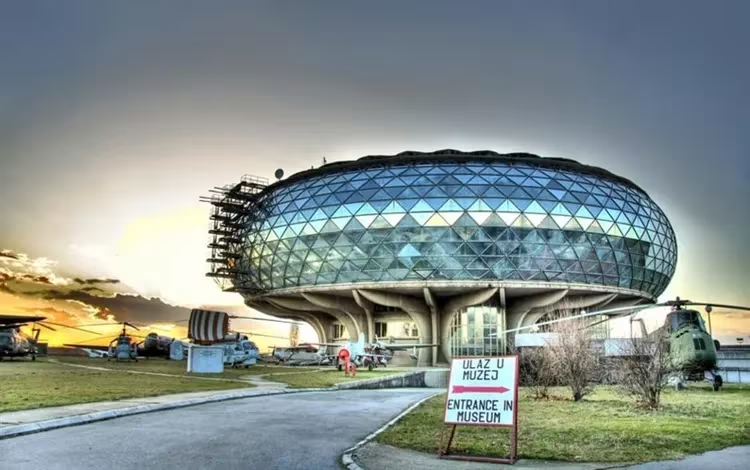
While at the airport. Nikola Tesla, you involuntarily pay attention to the modern building made of glass and concrete with a massive round dome. It houses the Museum of Aeronautics, which is listed as the best institution in the field of aeronautics. Founded in 1957 by the Yugoslav Air Defense and Air Force, the institution, over the years of its existence, has accumulated a large collection of exhibits illustrating the development of aeronautics over a period of more than a century.
Samples of military and civil aircraft, 200 different aircraft, air missiles, engines. Aircraft of the period of the war of 1941-45, which took part in the battles, are presented. There are samples of modern aircraft. A real rarity is the Fiat G-50, an Italian fighter that has been preserved in a single copy. No less valuable exhibits are an analogue of the I. Sarich aircraft (1910), the first military aircraft of Serbia, Oluy-11, and others. There are also Russian aircraft here: the MiG-21, the Yak-3 fighter, etc.
National Museum of Serbia
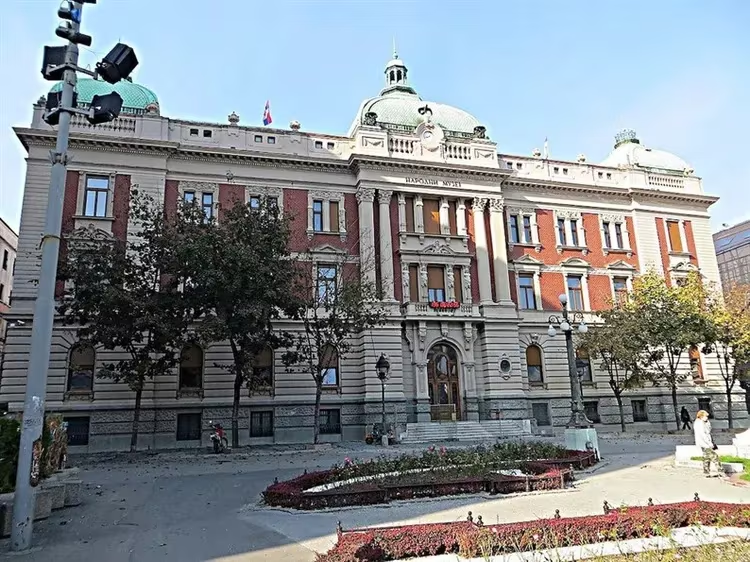
The main museum institution of the country is given a place in a majestic building located on the square. Republic. The ceremonial facade of the museum building shines with fresh colors after a 15-year reconstruction. Glass domes appeared on the roof. The reconstruction also touched on the interior of the 50s of the last century, which is now equipped at a modern level.
Founded in 1844, the museum was moved here in 1952, and the collections, which increase every year, required re-equipment. Today, the funds of the institution include more than 400 thousand exhibits. They are located on 3 floors, occupying an area of 5,000 sq.m. Permanent exhibitions showcase art from the Paleolithic era to the end of the 20th century.
The basis of the museum collection is made up of paintings and engravings by famous artists of the world and Europe. Here you can see French painting (250 paintings of the 16th-20th centuries), Italian (230 paintings of the 16th-18th centuries), Yugoslav (6 thousand works). There are small collections of works by artists from Germany, Austria, England, America, Russia, Austria. Artistic masterpieces of famous masters: Cezanne, Degas, Renoir, Rubens, Titian, Caravaggio, Modigliani and many others excite the imagination of visitors.
Temple of Saint Sava
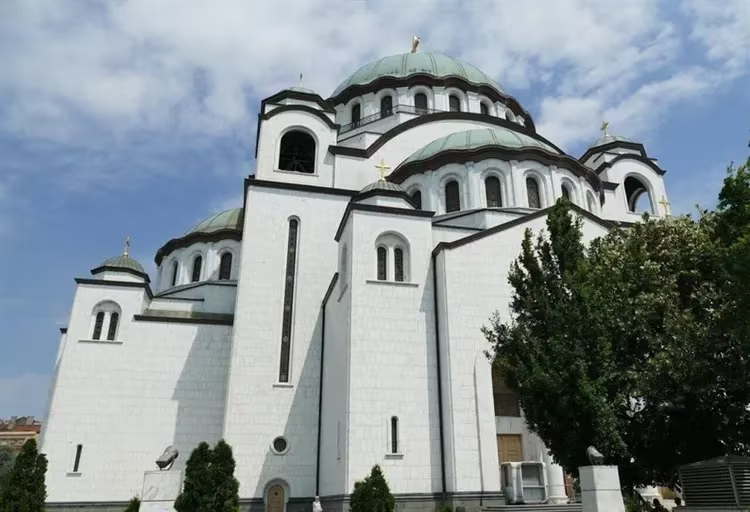
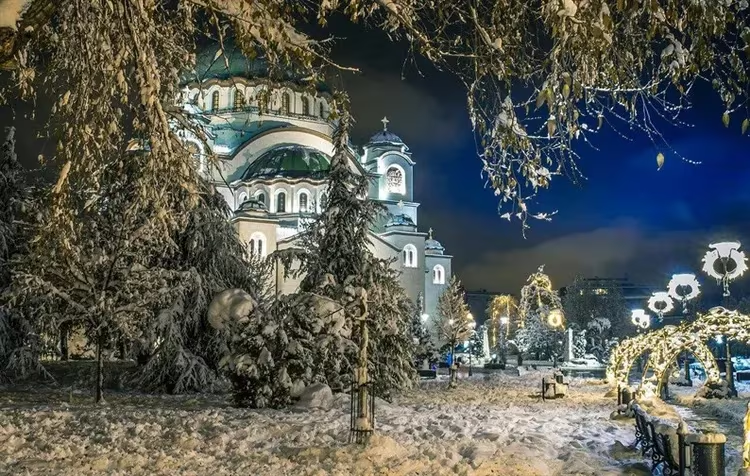
In the capital of Serbia, white is the unofficial symbol of the city. On the hill Vracar in the center of the Serbian capital rises the majestic temple of St. Sava of Serbia, built of white marble. According to Christian canons, the sanctuary is not a cathedral, but due to its impressive size, this name has been attached to the temple among the people.
This is one of the largest Orthodox buildings in the world. Its height is 82 meters, the dome is crowned with 18 crosses, 49 bells fit in the bell tower. 10 thousand believers can be inside the building at the same time, the choir is designed for 800 singers.
The attraction does not have a centuries-old history, but a monument was erected at the site of the burning of the relics of St. Sava, based on the prototype of St. Sophia Cathedral in Constantinople. Planning for the construction began in 1894, and the “first brick” was laid only 40 years later. Since 2004, the temple has been considered open to parishioners; the interior decoration has not yet been completed in it.
It is worth a look here for the huge and amazing mosaic of Jesus Christ, located under the central dome. Finding the Cathedral of St. Sava is not difficult. It is located in the center on a hill and majestically rises above the city. There is a cozy park around the temple, and the National Library of Serbia is located nearby.
Museum of Nikola Tesla
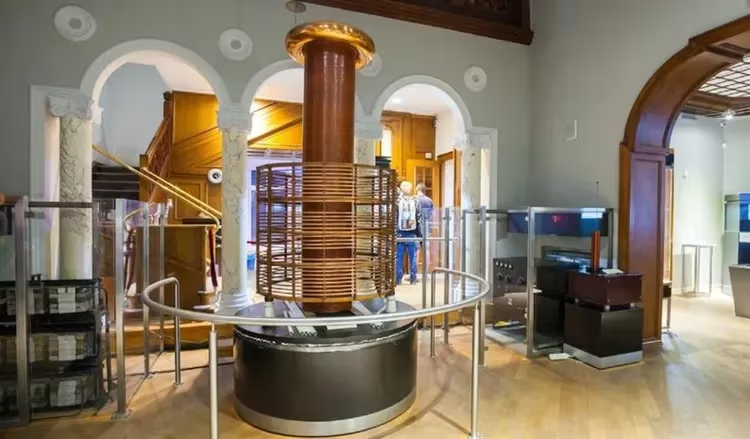
Every nation has its heroes. The Serbs are proud of their great compatriot scientist, whose works have had a tremendous impact on the development of science. The only official museum of Nikola Tesla is located in a small mansion. Even if you have no idea who this man was and why he is considered a great physicist, be sure to visit the museum.
There is an excursion here every hour, the first part of which consists of a short video and a short story from the guide, the second part is much more interesting with a demonstration of the experiments once conducted by the inventor.
During the experiments, everyone can feel like a Jedi and an illusionist. The luminous “sword” and lightning from touching the Tesla coil are real phenomena that were subsequently shown in films and computer games. In addition to the exposition of various equipment for experiments, the exhibition has a collection of personal items and original documents belonging to Nikola Tesla. Among other exhibits is an urn with the ashes of a scientist.
Museum opening hours: from 10.00 to 18.00 from Tuesday to Sunday.
Located in the central part of the city at the address: st. Krunska, 51.
house of flowers
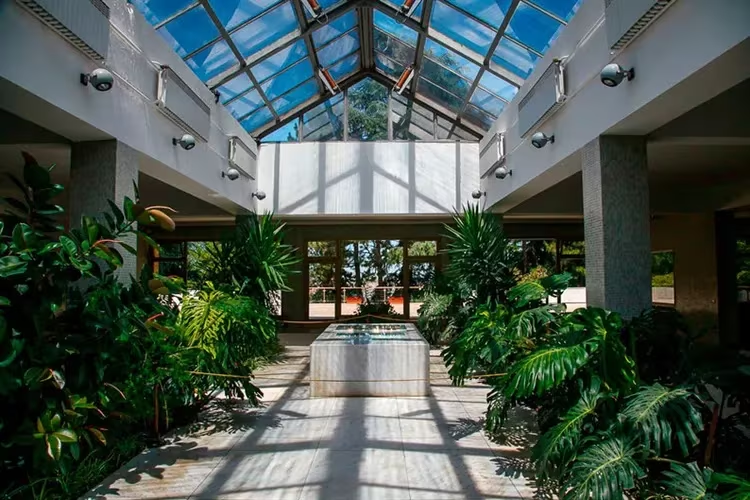
The House of Flowers is indirectly related to floristry; in fact, it is a mausoleum in which the bodies of the former leader of Yugoslavia, Josip Broz Tito, and his last wife are buried. The memorial complex was originally a greenhouse in the Marshal's residence. In his free time from state activities, Tito liked to plant flowers and take care of the garden.
Now silence and tranquility reign in the pavilions, trees grow, there are bizarre statues. You will not find an open coffin with an embalmed body, only a memorial plate. The tomb houses a small museum of Josip Tito. His collection includes some personal items and numerous gifts received by the former president from officials.
The mausoleum is often not crowded. On the birthday of the father of the people on May 25 and on the day of his death on May 4, the memorial complex is visited by the family, friends and comrades-in-arms of Josip Broz Tito. The flower house is located on the outskirts of the city. Nearby is the Museum of the History of Yugoslavia. You can get to them by trolleybuses running along routes No. 40 and 41.
Opening hours: from 10.00 to 18.00. Day off: Monday.
Skadarliya quarter
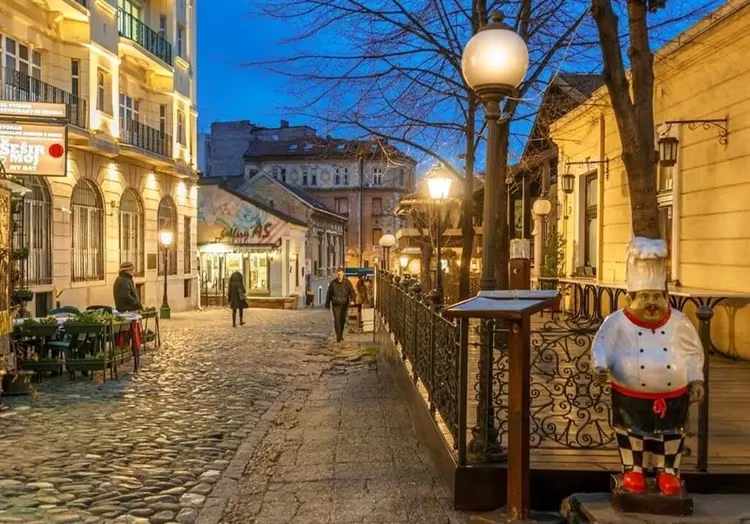
Being in museums, having seen enough of the various sights of the capital of Serbia, it is pleasant to walk along a quiet street, sit in a cozy restaurant. In Belgrade, its old part, there is a small district of Skardalia, which is considered bohemian, and travelers compare it with Parisian Montmartre, Odessa Deribasovskaya, with Moscow's Old Arbat.
The street with a stone pavement is deserted during the day. Toward evening, street artists and musicians appear here, selling souvenirs and knick-knacks from stalls. There are antique shops in Skardalia where you can dive deeper into the culture of the Serbs. The oldest restaurants in the city are also located here. Under live music in a cozy atmosphere, you will get acquainted with the national cuisine, hearty and varied.
Initially, the area was inhabited by people of creative professions, they were attracted by inexpensive apartments and delicious food in neighboring cafes. Writers, poets, actors and dancers created an atmosphere of constant celebration in the quarter. This light mood is still in the air.
Brick walls of low houses are painted like canvases and decorated with fresh flowers. The quarter of Skardalia is easy to find in the community of Stari Grad near Republic Square. Tourists are advised to carry cash Serbian dinars with you in case you suddenly decide to buy a few souvenirs or have dinner. Girls should not wear high heels and thin stilettos.
Hill Gardos and Millennium Tower
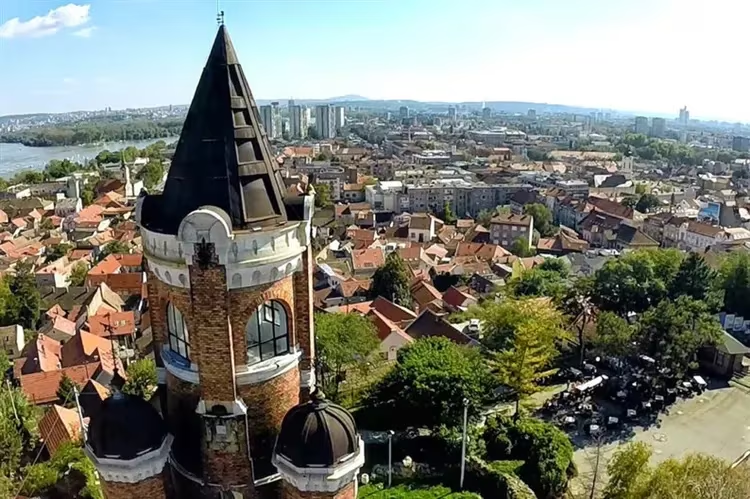
In order to look at the city from above, you do not need to jump with a parachute or fly in a helicopter, just go up to the observation deck of the Millennium Tower (also called the Yanko Tower), which rises on Gardosh Hill in the ancient Zemun district. The building, 36 meters high, was built in the 19th century, when this land was part of Austria-Hungary.
The authorities of the state erected a monument as a symbol of the millennium of the settlement of the Hungarians on the banks of the Danube. Hence the name of the tower. It makes sense to climb Gardosh hill not only for the panorama of the city. Walking up the hill along Zemun will be a pleasant pastime both in the morning and in the evening. The tower is open around the clock and admission is free. For 15-20 euros you can join an excursion with a Russian-speaking guide.
The old quarters can be reached by buses from the city center. Routes No. 704, 706 and 707 lead here. The nearest stop to the tower is Zemun Post, but you can get off earlier and walk along the narrow, winding pavements past the toy houses to the stairs on Stara Visoka Street. Climbing up it, you will get to the Millennium Tower.
On the way to the hill you will meet several small churches that add color to the sleeping area, which has preserved the best traditions of Europe. A road also leads to the hill from the picturesque wide channel of the Danube, along which the city embankment stretches with an alley, benches and bewitching views.
Not far from it there are several small restaurants and cafes that serve delicious home-cooked meals. On the menu, pay attention to dishes made from fresh fish caught in local rivers.
Aval TV tower
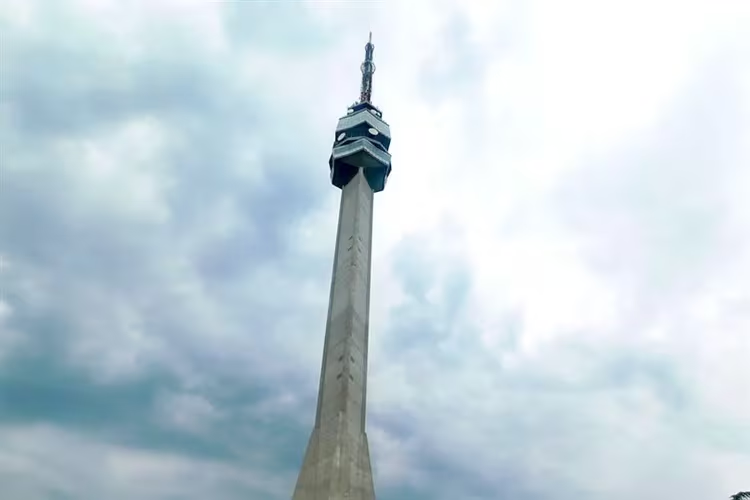
The Millennium Tower is an authentic monument of Slavic culture, but there is a more modern high-rise building that majestically rushes into the sky of the capital – the Aval TV Tower. The attraction is of interest to tourists for several reasons.
Firstly, there are no buildings above it on the Balkan Peninsula.
Secondly, there are only a few buildings in the world that have an equilateral triangle as their base. Thirdly, the tower was completely destroyed during the military conflict with NATO in 1999. It has been completely restored and opened to the public in 2010.
The Avala TV tower is located outside the city on Mount Avala. Three monuments of different times were erected next to it. From the capital, you can get to the place by regular buses No. 401, 403 and 405. In summer, on weekends, an additional route No. 400 is launched. The height of the TV tower reaches 205 meters, and the exit to the site is at a distance of 119 meters from the ground.
The wind blows here and it is quite cool, so sitting at the cafe for a mug of coffee or hot chocolate will be more pleasant to watch the panorama opening. Aval TV tower meets its visitors daily from 9.00 to 20.00.
Skyscraper Genex
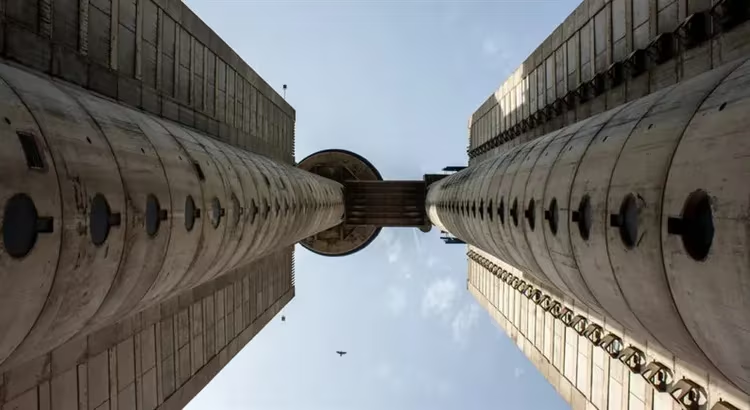
The second tallest building in the Serbian capital is the Geneks skyscraper, also known as the “Western Gate of Belgrade”. Its highest point is 140 meters. The whimsical, futuristic structure was designed and built in 1977, when the architecture was dominated by Art Nouveau and Brutalism. The skyscraper consists of 2 buildings of 35 floors, connected from above by a two-story bridge with a rotating turret.
There is a restaurant inside this structure. Be sure to dine there if you are not afraid of heights. From the windows of the institution offers a bewitching view of the western part of the city. Due to its originality, the complex is perhaps the most memorable in all of Eastern Europe.
Some publications include it among the dozens of the most unusual skyscrapers in the world. The house got its unofficial name because of the Genex company, which occupies one half of the skyscraper. To get to the place, use buses number 65, 74.
Tashmaydan Park
The landscape and park area located in the city center occupies the territory of former quarries, as evidenced by its name. “Tashmaydan” is translated as “stone field”. In the quarries, the ancient Romans mined stone for construction, and the Ottomans extracted saltpeter from the mines. For more than 50 years (1828-86) there was a cemetery here.
And during the 2nd World War, the labyrinths of the quarries served the Nazis as bomb shelters and warehouses. It was decided to turn the gloomy place Tashmaydan into a beautiful park in 1950. Sacred churches are located in the park area, which includes former quarries. As a result of reconstruction (2010-11), the park became prettier, acquired a sports and entertainment center, children's attractions and new monuments.
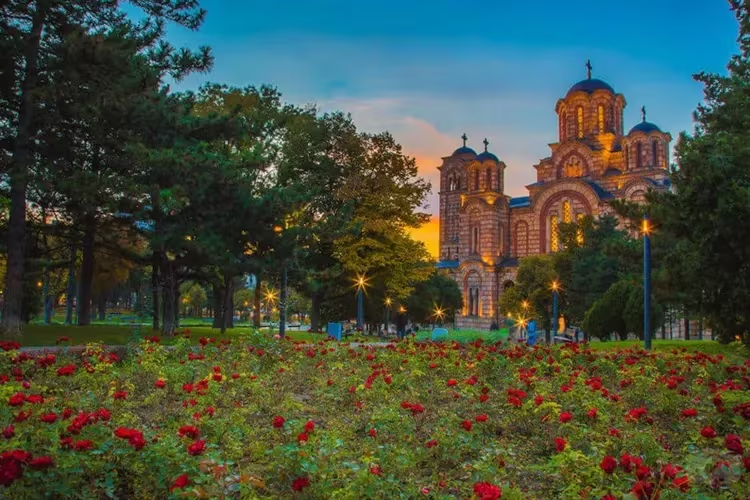
In the very center rises the majestic Church of St. Mark, within the walls of which the ashes of King Dusan, the royal couple of Obrenović, the Serbian Patriarch Herman are buried. General Wrangel rests in the nearby Church of the Holy Trinity. Cultural and historical monuments are installed in the park zone. One of them is dedicated to the innocent children who died during the air bombing of Belgrade by NATO troops in 1999.
A monument to Heydar Aliyev, who provided financial assistance in the reconstruction, was recently erected. There are monuments to Serbian writers and the literary hero Don Quixote. The landscape and floristic beauty of the territory is in harmony with the architectural attractiveness of the objects.
Church of Saint Mark
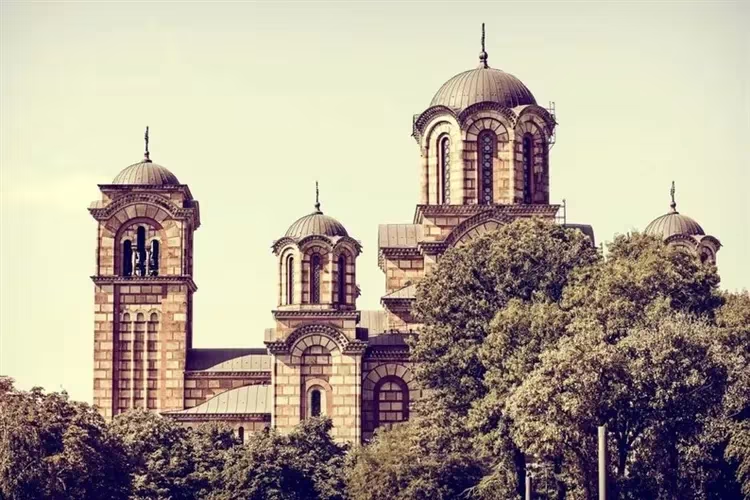
Walking along the eastern side of the Tashmaydan park, it is impossible not to notice the majestic building with arched spans, columns and a high tower above the central portal. This is the Church of St. Mark, erected on the site of the former wooden church in the 30s of the last century. The features of the Serbian-Byzantine style are visible in the architectural appearance of the sanctuary.
The design of the building, developed by the architects-teachers Peter and Kristic, is largely borrowed from the architecture of the Gracanica monastery. It was here, in the old church, that an agreement was signed on the recognition of Serbian autonomy. Therefore, a new temple was erected in this place. Severe destruction was caused by NATO bombing of the church in the 90s. It was carefully restored in 2007 not only as a religious object, but also as a monument to historical figures.
The ashes of Tsar Dushan, the royal couple Obrenovych, Patriarch German were transferred here. Above the entrance is a mosaic depicting St. Mark revered in Serbia. The marble iconostasis and the altar are impressive, made during the last reconstruction of the 90s. A large collection of icons (13-19 centuries) is an invaluable asset of the temple. The general view of the interiors is not striking in luxury and brilliance, everything looks rather modest. But here there is a high spirituality, bringing peace.
Topcider Park
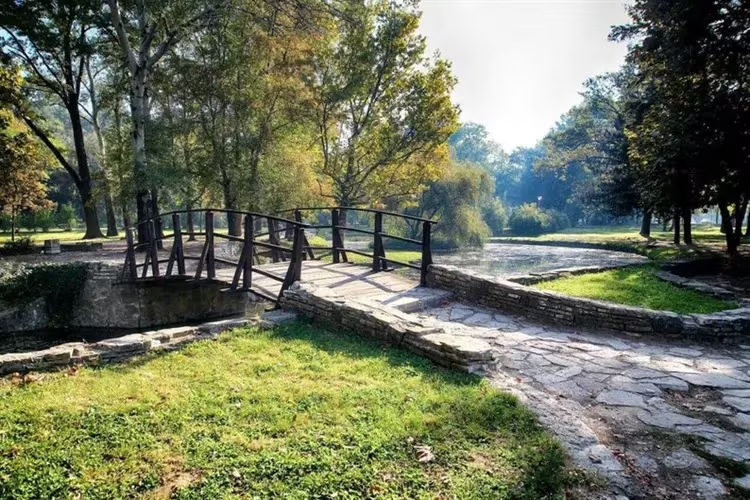
There is a historical place in the Serbian capital, where the Ottoman artillery camp was located in the 16th century. Its name is almost literally translated as follows: “Topchi” – from Turkish means gunner, “der” from Persian – valley. Later, the military parade ground was transformed into a recreation area for the capital's pasha. After the expulsion of the Turks, the piece of paradise was inherited by Milos Obrenovic.
By his order, a palace was built here, the entire territory was completely ennobled, decorating it with flower beds, paths, and planting many trees. Today it is impossible not to admire this green “Eden”. Tents of willows, spreading crowns of oaks, plane trees, firs, maples overshadow cozy paths and green lawns. In front of Obrenović's palace, a giant plane tree grew up, the oldest in Europe. 180 years ago, it was planted here by a French gardener at the request of the prince.
Now the palace houses a museum of the 1st and 2nd liberation uprisings against the Turks. Next to the palace building is the beautiful church of Peter and Paul. Monuments of the 19th century attract attention – the Obelisk in honor of Prince Milos, the sculpture of Ceres-Zhetelica and the bust of Archibald Reiss, a Swiss publicist who described the crimes of the military in Serbia in 2014.
old palace
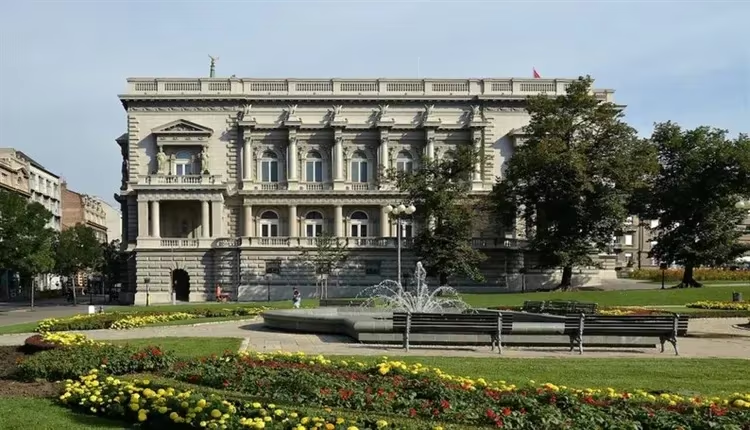
As in many European capitals, Belgrade's city administration is housed in one of the most beautiful buildings in the city. In fact, it is an architectural masterpiece and a historical monument of national importance – the Old Palace. It was built for the representatives of the Serbian Obrenović dynasty (1882-84) as an unsurpassed example of a royal residence.
The building of classical architecture of the 19th century, designed in gray tones, looks majestic and elegant. It was not affected by significant wartime damage. The palace has retained its original appearance, with the exception of some minor changes during the reconstruction. The decoration of the interior halls was unusually luxurious and rich.
The interiors of several rooms shine with gold and silver. But nowadays only representatives of foreign delegations, guests of honor and participants in official receptions can get inside. The rest can admire the external beauty of the Old Palace and the luxurious flower beds in front of it.
new palace
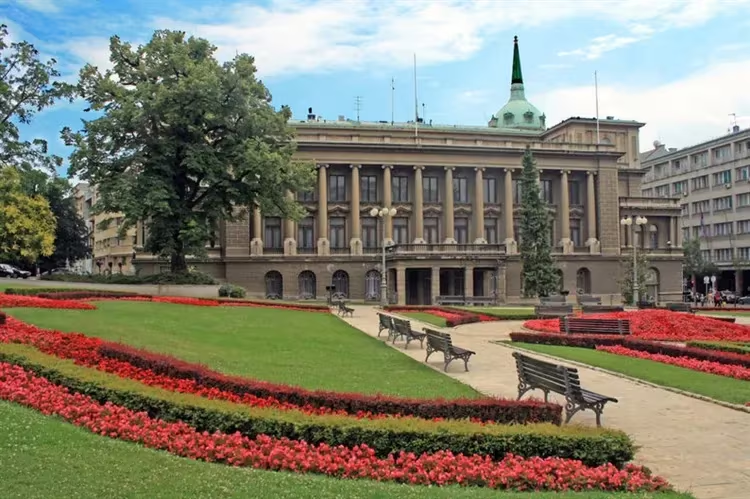
Not far from the Old Palace is the building of the New Palace, which is not inferior in size and grandeur of appearance to its neighbor. It was built (1911-22) on the site of the war-torn palace of Mikhail Obrenovich as the residence of King A. Karageorgievich. In addition to the working rooms of the royals, the residence included living and utility rooms. There was a large library, Japanese and English salons were open.
After 10 years of using the new palace, in 1933 the king ordered that the building be given to the museum of Prince Paul. After 15 years, the Serbian Parliament was located here, then the government (Executive Council) was located in it. Today, the New Palace serves as the residence of the Serbian president. The strict style of the academic architecture of the building is complemented by elements of baroque and renaissance, adding visual appeal. The palace can only be viewed from the outside.
white palace
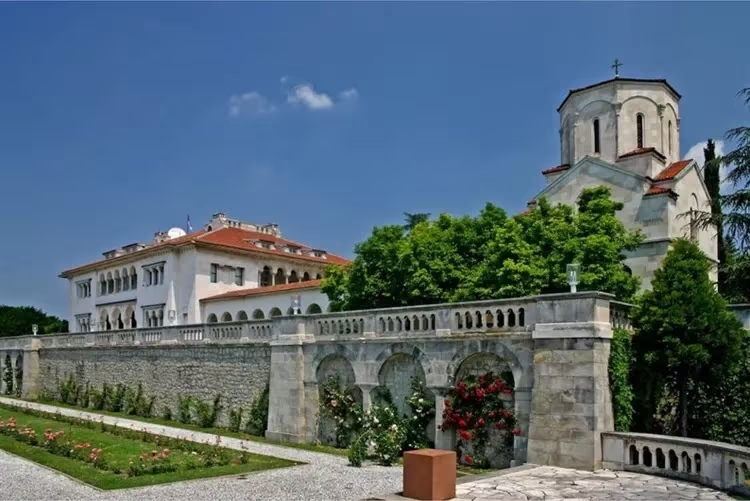
Serbian kings had 4 palaces at their disposal. Two of them were built on the Dedinje hill in the 30s of the 20th century: this palace and park complex was intended for the three sons of King Alexander I. The White Palace, built of white marble, appeared on the hill in 1937. The marble was delivered from the Brac atoll, located in the Adriatic Sea.
With its Serbian-Byzantine architecture, the building resembles the Kremlin chambers of Russian tsars. The building is surrounded by a magnificent park. The interior design of the palace, made in the Baroque-Renaissance style, makes an irresistible impression. It creates the feeling of being in an ethnographic museum. Here you can see espaliers by French masters of the 17th-18th centuries, furniture of different eras and styles.
Interior ceilings are painted with scenes of Serbian folklore, copies of paintings from Solochani and Decani, included in the UNESCO list. The main hall of the White Palace is marked with a portrait of King Alexander. It was made by the famous Serbian artist Jovanovic. The hall also contains paintings by French painters of the 17th century. The dining room is decorated in an English style, and Sevres porcelain from France was used for serving. The ceremonial Great and Small Halls are furnished with items from the era of Louis XV, Venetian chandeliers illuminate them.
Evremovac
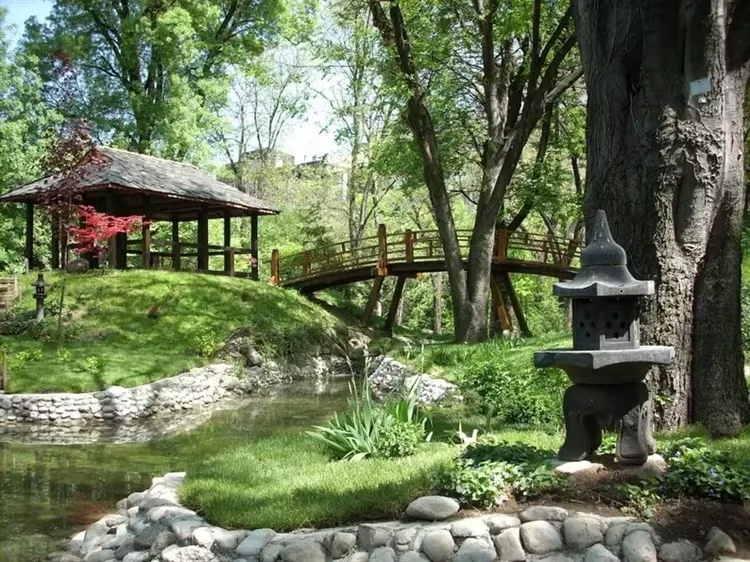
The botanical garden, covering an area of 5 thousand hectares, was formed from a large greenhouse organized at the end of the 19th century. Even then, the greenhouse was considered the most voluminous greenhouse in the center of Europe. Today it occupies an area of 500 square meters, with lush tropical and subtropical vegetation. In recent years, the garden has been under the care of the Faculty of Biology of the University of Belgrade, so every year the number of flora specimens from different parts of the world (300 species) increases in it.
An example of a progressive approach to the development of an important object is the design of the Japanese Garden (2004). This is an example of a classic Japanese garden, where artificial hills, islands, streams are created. Mosses, herbaceous flora grow, cozy arbors are entwined with garlands of climbing plants.
All corners of the garden are undergoing landscape changes, admiring the beauty and valuable content. Glades of wild plants, cultivated plants, grassy lawns, various shrubs, exotic trees – there is something to be surprised here.
Modern Art Museum
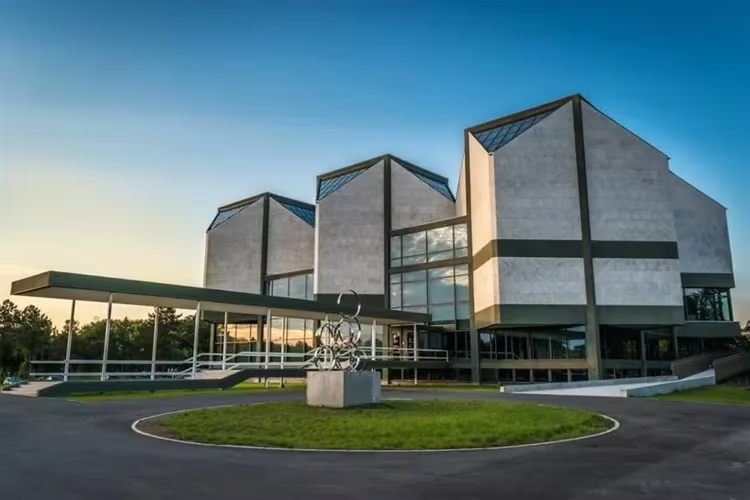
In a picturesque place where the Sava and Danube rivers merge, there is a building of unusual architecture, in the shape of a crystal. It was specially built for the Museum of Modern Art, designed by architects Antic and Raspopovic.
The architectural “crystal” is surrounded by original sculptures by Yugoslav masters. The idea of organizing such an institution arose in 1958, and the construction and decoration of the building were carried out for another 7 years. In 1965 the council of the art gallery gave the official name, and the Museum received its first visitors. Now the museum fund has collected more than 30 thousand objects of contemporary art.
The works of Yugoslav masters of different periods are widely represented. Exhibitions are regularly held to introduce the public to the new names of Serbian artists and sculptors. New talents are being discovered, the modern art of the country is developing. Paintings by other European artists are exhibited here: Warhol, Miro and others.
Cathedral of Saint Michael
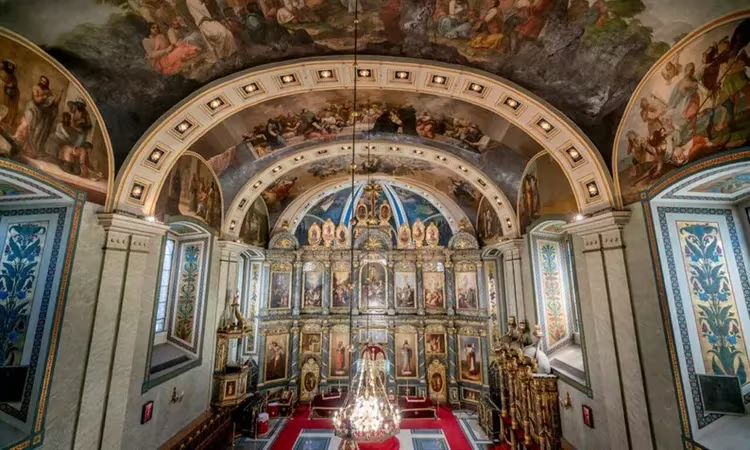
A landmark religious institution – the Orthodox Cathedral of St. Michael is located opposite the building of the Serbian Patriarchate. And this is no coincidence – the cathedral keeps within its walls the centuries-old history of Christianity, associated with the names of prominent clergymen and kings. The solid building, built in the style of late classicism and decorated with baroque elements, took 8 years to build (1837-45).
The gray facade is decorated with bright mosaic images of the Virgin Mary, Archangels Michael and Gabriel, the Holy Trinity. Prince Milan Obrenovich and King Peter I Karageorgievich were crowned here. The relics of King Uros (1276-31), who was recognized as a saint, found their shelter in the cathedral. The cathedral crypt is the burial place of the metropolitans, patriarchs and royal persons of Obrenović.
The interior of the temple impresses with exquisite decoration. The carved gilded iconostasis, created by the sculptor D. Petrovich, admires. One cannot but like the wall paintings and icons of the Serbian artist D. Avramovich. At the temple, a museum of the Orthodox Church of Serbia was opened.
National Theater
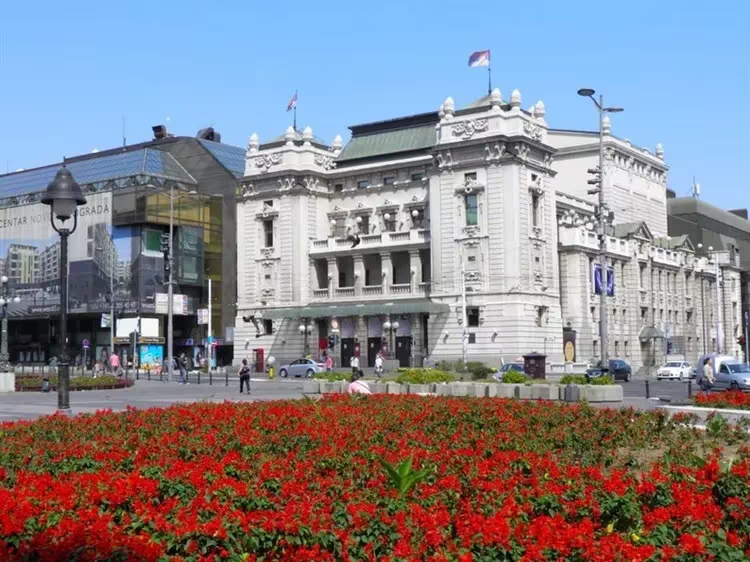
One of the most luxurious buildings on the square. The Republic belongs to the main theater of the state. The magnificent building, outwardly reminiscent of the La Scala theater, shone with pompous decoration. After reconstruction, due to military destruction, the facades lost a significant part of the magnificent decor, but in general the appearance of the building retained its extraordinary attractiveness. The opening of the National Theater was marked by the performance of the play “George Brankovich”.
Various concerts and charity balls were held here, cultural life was in full swing. When Serbia was part of Yugoslavia, the theater was given the status of the Yugoslav National Theatre, with the best acting troupe in the country. Now it employs 3 teams: ballet, drama and opera troupes. Performances take place on the Main Stage (700 seats) and Rashi Plaovic (300 seats).
In the ballet performances Giselle, Swan Lake, The Nutcracker, A. Pavlova, T. Karsavina, L. Novikova and other world ballet stars shone on them. Here in different years the unique voices of opera celebrities sounded: Callas, Chaliapin, Obraztsova, Vishnevskaya. Even during the shelling of NATO aircraft, the artists gave performances.
Petkovic Automobile Museum
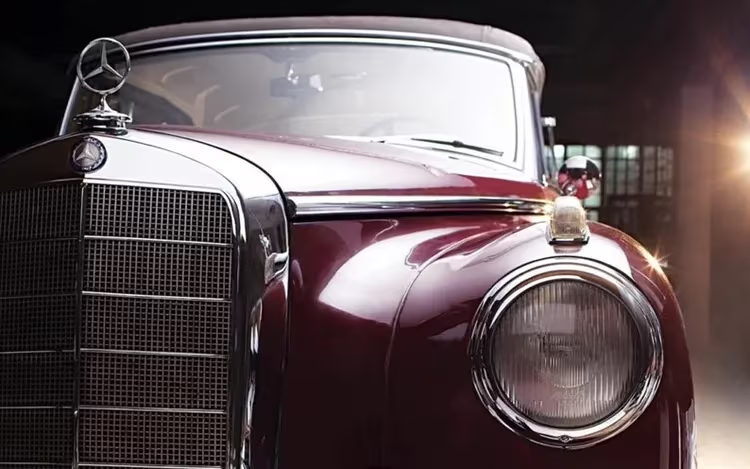
The building of historical significance – a public garage (1926) houses a unique fleet of 100 vintage cars. On the territory adjacent to it, there is a string of old cars awaiting restoration. Inside, a kaleidoscopically colorful row of cars from different eras awaits visitors. According to them, you can trace the path of development of the global automotive industry.
A unique private collection of cars belongs to the famous Serbian cultural figure Bratislav Petkovic. He started collecting cars at the age of 17. It is impossible to list all brands of vintage cars. Here are samples from the end of the 19th century and ending with the 80s of the 20th century. The oldest car model, an 1897 French-made racing tricycle, flaunts in the center.
Next to it is an American Ford Pilot 1903. There is a 1908 Charron car from a French company that produced the first armored cars. The owner of this exhibit was the royal family. A sample of the Ford T (“Iron Lizzie”) is presented, the mass production of which (1908-27) “transplanted” America to wheels. A visit to this museum is a fascinating sight not only for motorists, but also for ordinary people.
Monastery Rakovica
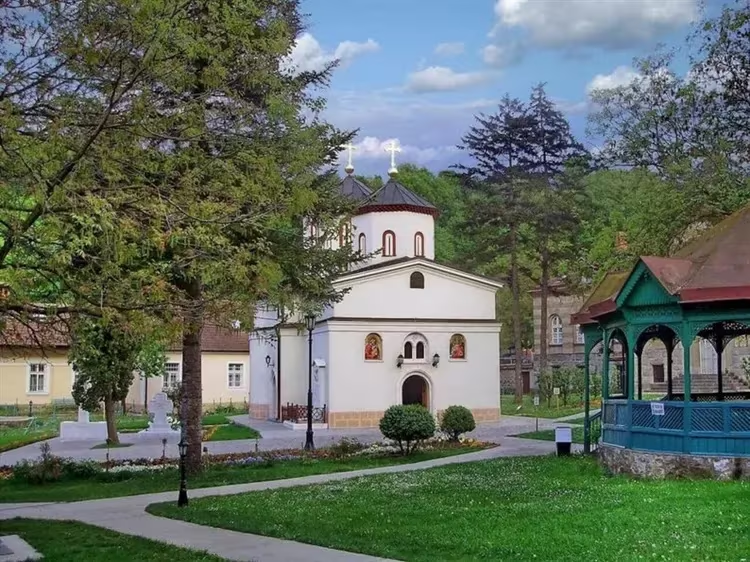
In the village of Rakovica, which has become today a district of Belgrade, there is a monastery of the same name. It was founded during the reign of the monarchs Dragutin and Milutin (16th century) in honor of the holy archangels Michael and Gabriel. Repeatedly monastic buildings dilapidated, destroyed, but rebuilt again.
Great support was given to the monks by Peter I as a token of gratitude for their assistance in concluding amicable agreements between Russia and Turkey. The main building of Rakovica, with a Moravian-style façade, looks very picturesque. This type of church has been preserved since 1862. Redecoration of subsequent years has not changed it.
The entire territory of the monastery gives the impression of well-groomed and attractive. Neat lawns, many flowers, cypresses, an arbor testify to the loving attitude towards the monastery. The internal content and design is not devoid of beauty. The iconostasis is highly artistically decorated, the famous painter-monk Momchilovich worked on its decoration.
The collection of priceless works of art stored in the luxurious sacristy is impressive. Rakovica is the burial place of one of the Obrenović kings, General Blaznavets, Serbian forefathers Pavel and Dmitry.