
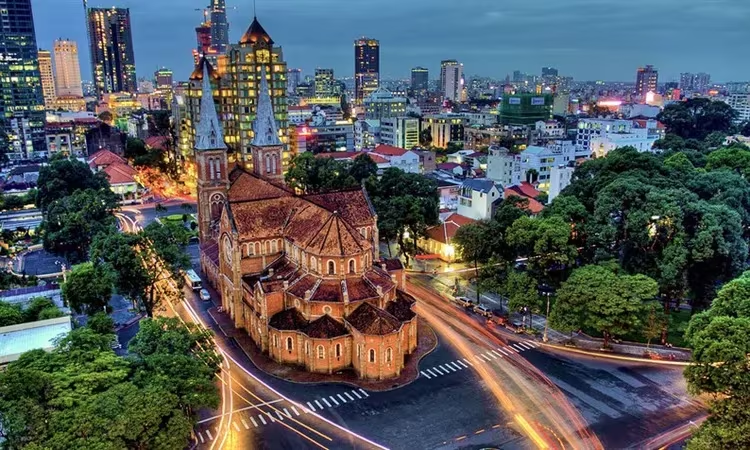
Sights of Ho Chi Minh City – 25 most interesting places
The sights of Ho Chi Minh City will require enough time to see them: after all, the city has so many faces. Although not the capital, it is the true soul of Vietnam. Modern buildings do not suppress, but rather complement the historical part. Temples of different faiths are perfectly combined with each other, allowing tourists to get acquainted with the culture of the Vietnamese, Chinese, Indians in a short time. Traveling around the city and visiting the monuments, guests simultaneously study the history of the country. The colonial era is replaced by the period of gaining independence by the country, then – the unification of the southern and northern parts. Buildings and monuments of different times are so intricately intertwined that the impression remains bright and unusual. Paris of the East touches, beckons and invites you to come back again.
Reunification Palace
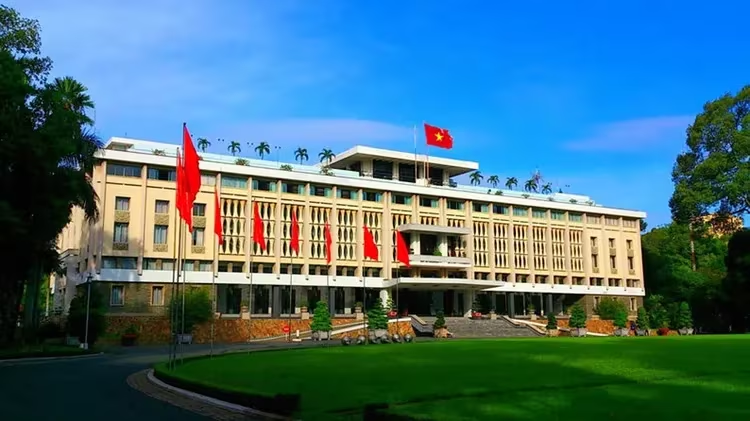
This unique building is a combination of 2 architectural styles: national and European. It is bordered by an oval lake with giant lotuses and lilies. There is a lawn nearby, also oval. On the territory there are tennis courts, a gazebo for relaxation, a garden and a grove. Also exhibited are military equipment that took part in the storming of the palace in 1975. The complex is used for official receptions, but free tours are held around the territory and the building. You can borrow an audio guide from the information desk.
The history of the Reunification Palace is very interesting:
- It received this name after the end of the war between North and South Vietnam. The first building on this site was erected in 1873. The building was called Norodom (after the King of Cambodia).
- In March 1945, after the defeat of France, Norodom became part of Japan. But in September 1945, after the defeat of Japan and the victory of the anti-Hitler coalition, the French returned to Norodom again.
- In September 1954, the building became the property of Ngo Dinh Diem. By his order, Norodom became the Palace of Independence.
- During the war between parts of the once united Vietnam, the Palace was badly damaged. They decided to demolish it and build a new one. Work continued from 1962 to 1966.
- In November 1975, a reunification conference was held. It was after her that the building became known as the Reunification Palace.
- In 1976, the structure of the object received the status of a national monument, in 2009 – a national relic.
The locals often refer to the historical monument as the Dragon Head because according to Feng Shui the building was built on the site of a lizard's head.
Bitexco financial tower
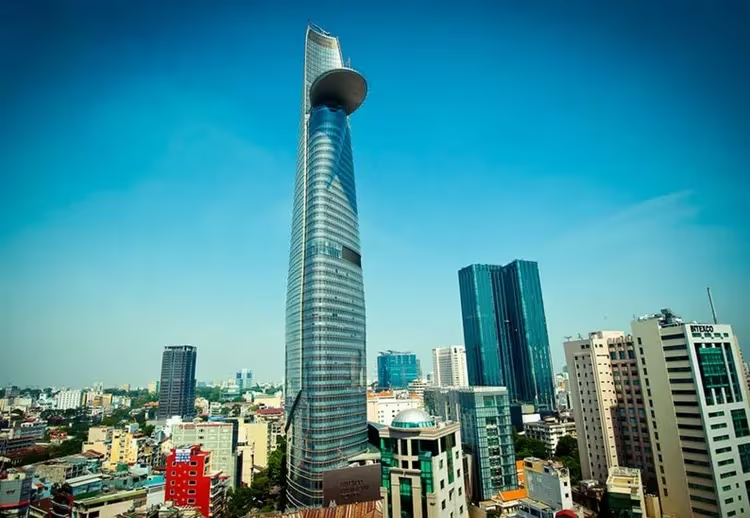
This building is built in the form of one of the symbols of the country – a lotus flower. Some petals have already blossomed and are spreading along the ground, others have curled up and are at rest. The height of the building is more than 260 m. The builders managed to create the illusion of a building made of glass, thanks to continuous glazing. Inside the tower there are restaurants, cafes, shops (including Adidas and Samsung), a cinema, a food court, an indoor observation deck, and a helipad.
One of the entertainments arranged by the tower administration is running up the stairs. Athletes will have to run all the marches from the 1st to the 49th floor. Not only residents of Ho Chi Minh City, but also foreign tourists participate. Basically, guests are attracted by the observation deck, from where the whole city can be seen at a glance. To get here, you should use the high-speed elevator. The rise takes less than 20 seconds.
The site itself is very beautiful: it has unusual lighting, it is clean, there are sofas for relaxing. Souvenir shops sell magnets with the symbols of the tower, calendars, postcards. On interactive screens, you can find out what attractions are nearby, how to get there. The time spent on the observation tower is not limited: tourists who come here during the day are waiting for sunset. Hence it is unusually bright. And you can pass the time in one of the cafes for a portion of delicious ice cream.
Jade Emperor Pagoda
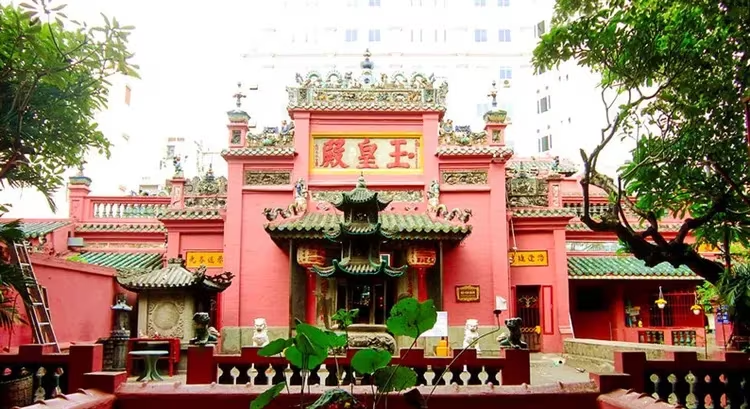
This is the most elegant and visited by tourists pagoda. Guests are attracted by elegant architecture, elegant courtyard with a pool where turtles swim, unusual rituals that bring good luck to visitors. By the way, the second name of the temple is Turtle. The pagoda is active: believers pray here, candles burn inside. But tourists can enter there, most importantly, do not interfere with those praying. It is very cozy in the courtyard of the temple: the paths are paved with tiles, flower beds are laid out, trees are planted.
The banyan tree, sacred to Buddhists, grows here. It is famous for the fact that the branches take root easily. The process goes so fast that it is soon impossible to understand where the main trunk is. The legend explains this property of the plant by the fact that the banyan tree was once the tallest in the world. People climbed up to the 18th sky to ask the supreme god for something. But their requests became too selfish, so Ngoc Hoang ordered the tree to spread along the ground, and people should only ask in temples.
The yard by the turtle pond is always crowded. Rituals can be performed here:
The inside of the temple is dark due to the fact that the light penetrates only through the openings of the roof, and smoky from smoldering incense and burning candles. Here it is worth visiting the altar of 5 Buddhas, where believers leave gifts and pray. If time allows, you should go hiking through the halls of the pagoda.
Central post office
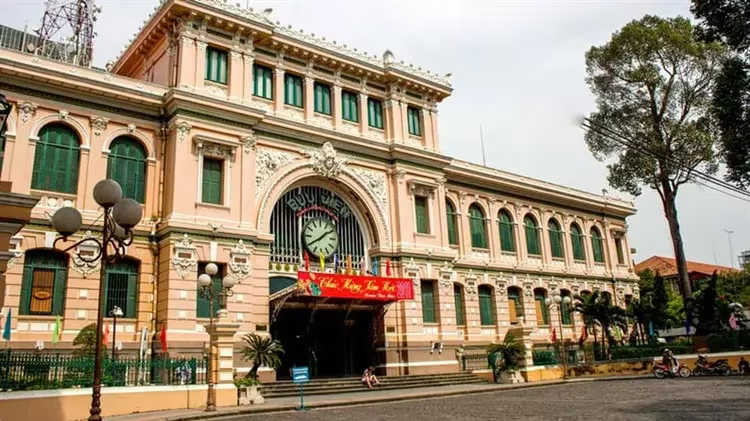
The current post office is also an open-air museum. Here you can call any country on a modern phone from an old booth, buy, write and send a postcard. The building was built in 1891. The author of the project is a French architect.
He managed to combine the colonial style with the traditional oriental:
Such a bizarre mixture of styles leaves no one indifferent. And if we also take into account that the project for the foundation of the building was developed by Eiffel, it becomes clear why tourists study the construction for a long time. For the Vietnamese, it is especially valuable that Ho Chi Minh worked here as a 17-year-old boy. This is reminiscent of his portrait right in front of the entrance.
On the sides are 2 maps: one shows Saigon and the surrounding areas in 1892, the second shows the telegraph lines at the same time. For those wishing to continue their journey around the city, the Infocenter offers its services. Here you can get acquainted with the monuments of culture and architecture, learn how to get to them.
Kuti Tunnel
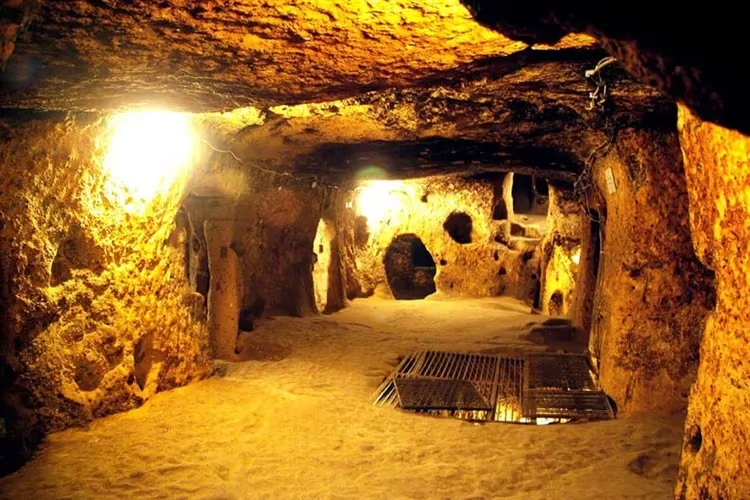
These underground galleries were intended for covert warfare. They were actively used by the Viet Cong in order to inflict unexpected blows on the US military. The invaders responded by spraying defoliants inside the discovered crossings. This measure led to the delay and accumulation of groundwater. For the final destruction of the galleries, carpet bombing was carried out.
The tunnels begin near the village of Cu Ti. Their total length exceeds 150 km, the premises (food and ammunition depots, living rooms, hospital and kitchens) were located on 3 floors and were connected by narrow corridors. The corridors had exits to the surface, which it was impossible for an uninitiated person to find.
Today Kuchi Tunnels are one of the most visited tourist sites. Part of the galleries has been restored, electricity has been installed inside, the passages have been expanded and strengthened. But a large person is unlikely to be able to visit the underground city, and the usual one will have a hard time: in some places you will have to move on your haunches or crawl. In addition, underground is stuffy and there is a lack of oxygen.
For those who want to see the tunnels, but are not able to get inside, some rooms have been reconstructed on the ground:
The installations are supplemented with models of figures of soldiers and officers. Tourists who wish can participate in the quest: find the entrance to the tunnel under your feet. This is an exciting game where it is proposed to find a well-disguised loophole. Kuti Tunnels is a tourist complex with a hotel, a museum, a temple, restaurants, shops and even a place for paintball.
Cathedral of Our Lady of Saigon
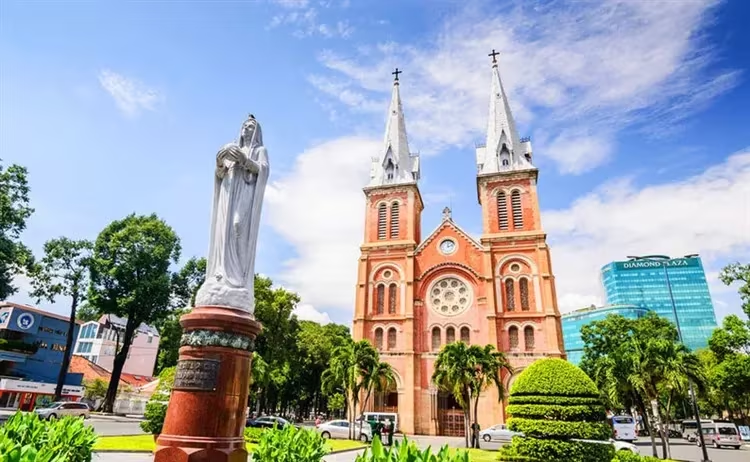
Notre Dame de Saigon was built by French colonists in order to bring some of their faith to Indochina. The cathedral was conceived as huge and ornate in order to impress the locals and outshine their temples. It began to be erected in 1877. Building materials were supplied from France: colored stained-glass windows were made in Chartres, and bricks were made in Marseille. The author of the project was also a French architect: J. Boer. The work continued for 6 years.
There are 6 bells on the bell towers. Each of them sounds in a certain key: all notes are represented, except for FA. The simultaneous ringing of the bells can only be heard on Catholic Christmas. But separately they sound daily. In front of the cathedral stands a statue of the Virgin Mary. She holds a globe in her hands, and crushes a snake with her feet: a symbol of evil. The height of the sculpture is 4 meters.
The interiors of Notre Dame de Saigon are modest: there are benches made of wood for parishioners, the altar is made of white marble and decorated with figures of angels. Everything is very concise, but the singing of the church choir and the sound of the organ during the service are impressive. The cathedral of red Marseille stone is a local attraction: newlyweds of different faiths come here after marriage registration for a photo shoot, tourists come.
Dam Sen Amusement Park
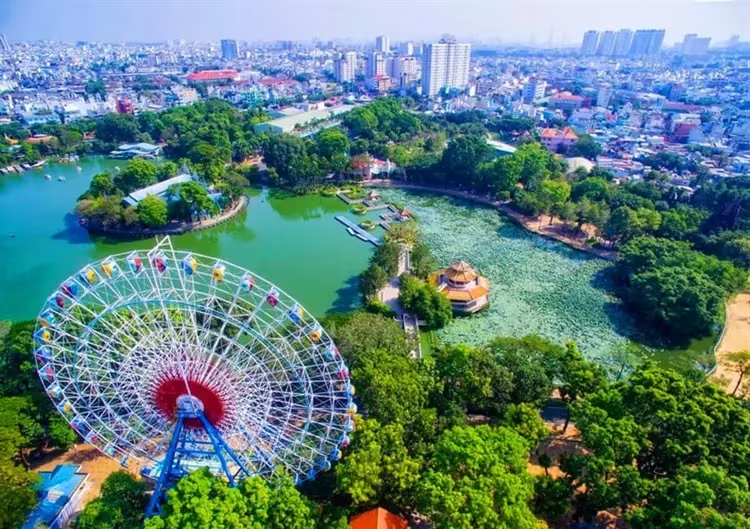
This complex is located very conveniently: in the city center. Dam Sen Park is one of the largest in the country. Here you can have a great rest for children and adults. And if you have at least a little free time, it is recommended to visit it.
The park is compactly located:
The territory is well-groomed: the paths are paved with tiles of different colors, there are benches for visitors to rest, numerous bridges have arches entwined with lianas and flowers. The gardens of succulents and stones are very beautiful. Here it is customary to relax from the hustle and bustle and meditate. To visit the water park, it is recommended to choose a weekday: it is quite empty, there are no problems with cabins in the changing rooms and sunbeds in front of the pools. And you won't have to stand in line for the slides.
Tired of riding the rides and hungry, you can take a break in one of the small restaurants. Dishes are offered as Vietnamese cuisine and European. Tourists prefer to dine at the Tew Ta floating restaurant. And you can relax in one of the gazebos twined with lianas.
Suoi Tien Amusement Park
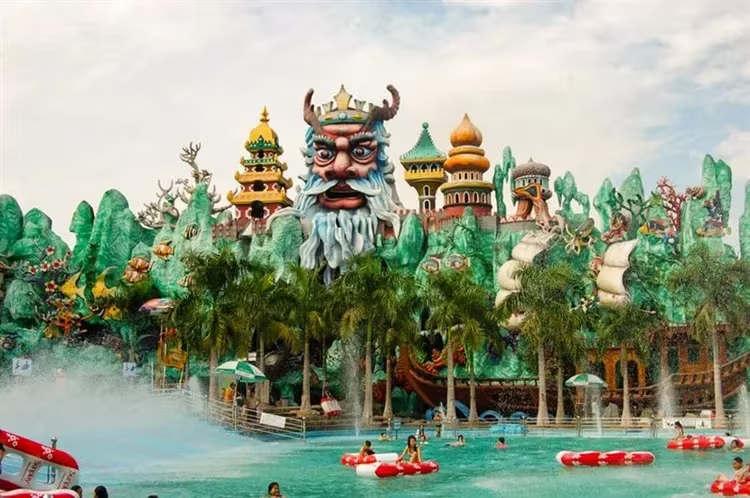
This is an unusual park where you can not only ride rides, but also explore oriental culture. Suoi Thien is located on the site of a farm where pythons were once raised. But in 1992, a decision was made to create a complex for returning to national culture. The center opened to visitors in 1995. Today its area is about 50 hectares, but the country's government plans to expand it.
Here tourists are offered:
You can just sit and relax on an impromptu bench: a lotus sculpture located in the middle of the lake. From one statue to another, it is customary to cross the footbridges. And it is recommended to satisfy your hunger in one of the many restaurants. It serves European and Vietnamese cuisines. By the way, the ticket office at the entrance sells tickets only for the right to visit the park, all other entertainment is paid separately. You can purchase a combined ticket, but it is recommended to find out what it is valid for beforehand.
Tao Dan Park
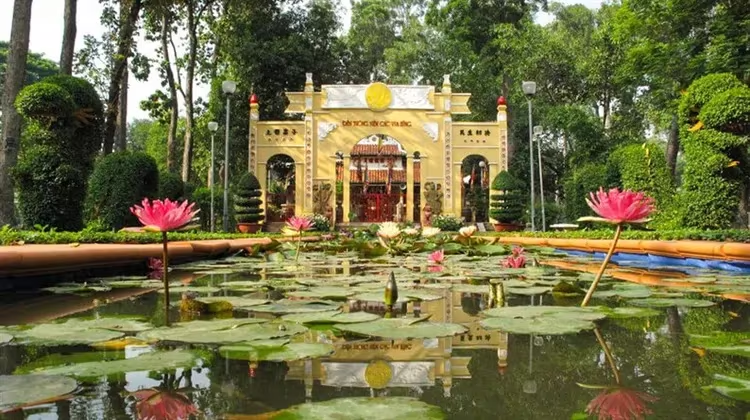
This is an amazing place in the city center, it is recommended to visit it for those who are tired of the hustle and bustle. There are no attractions in Tao Dan, but you can just relax in the shade of neat palm trees and lawns. The territory is decorated with sculptures of animals and gods, bridges, turrets, wall fragments. There are many climbing plants everywhere. Local residents have chosen Tao Dan for exercise and sports.
Amateur ornithologists gather here to watch the birds living on the territory. Ordinary amusement parks are open until late at night. But Tao Dan is empty just after sunset. The townspeople explain this by the fact that the ghost of a young man walks here at night.
Rin Rin Park
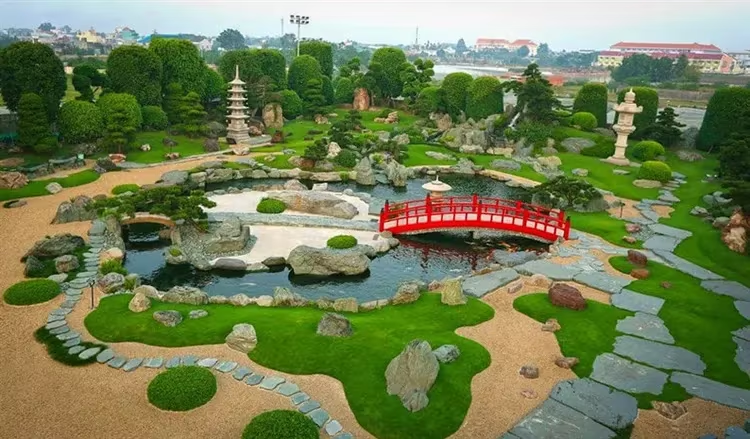
This is a place for solitude and meditation. There are no attractions and playgrounds here, but the atmosphere is full of peace and quiet. The garden was built as part of a long-term program of friendship and cooperation between Vietnam and Japan. It was designed by the Vietnamese Ngo Tien, who lived in the Land of the Rising Sun for a long time. He invested his personal funds here, and Japanese artists, employees of Ngo Tian's company, actively worked on the project. The main idea of the park is the unity of 3 components: stone, fish and plants. Moreover, the beauty of the stone should be 60% natural and only 40% supplemented by man.
Almost all materials for the garden were brought from Japan:
The preparatory work took about 6 years: stones were selected and turned, bonsai were prepared, plants were selected. And the arrangement of the territory itself took only six months. Near each stone there is a sign indicating where the decor element was brought from, which master and how much he worked on it. And the stream falling from the top of the largest stone became the center of the composition. Curious fish swim in the water. The territory is slightly buried, therefore, being in the garden, you can see only neatly trimmed trees, lawns, a stream and a clear sky. All other items disappear.
Zoo and Botanical Garden
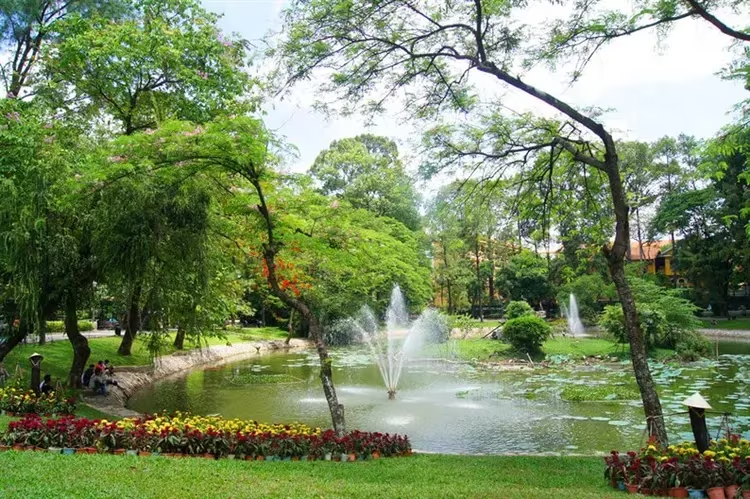
A very pleasant complex for rest from the bustle of the city. It covers an area of more than 20 hectares and is divided into:
The zoo is somewhat different from the usual Europeans: animals are kept in open enclosures, surrounded by a steel mesh. And especially dangerous individuals are also fenced with especially strong glass. Guests have the opportunity to see aggressive crocodiles from above: a path is arranged above the pool with reptiles. The same is located above the habitats of ungulates. Tropical fish settled comfortably in artificial reservoirs.
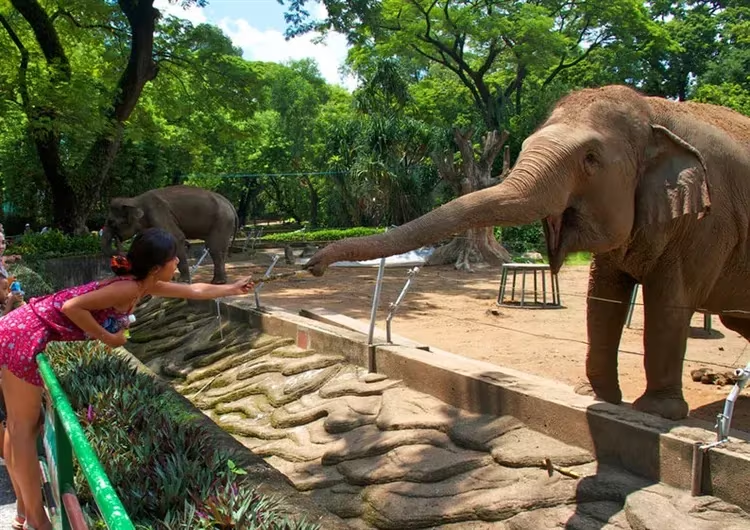
Many animals are listed in the international Red Book. Scientific work is being carried out at the zoo: in 2015, a baby of an endangered white Bengal tiger appeared, in 2018, a wallaby (marsupial mammal). Not so long ago, they began to breed crested argus here. This bird in captivity breeds only in the local zoo. The botanical garden is a natural extension of the zoo.
Some trees and shrubs are planted right next to the enclosures. Plants are placed so that the illusion of a dense forest is created. Many are imported from other countries. Some plants can be found on the pages of the international Red Book. On the territory there is a small lake, decorated with animal figurines. And the greenhouse with rare orchids and ferns leaves no one indifferent.
Water Puppet Theater “Golden Dragon”
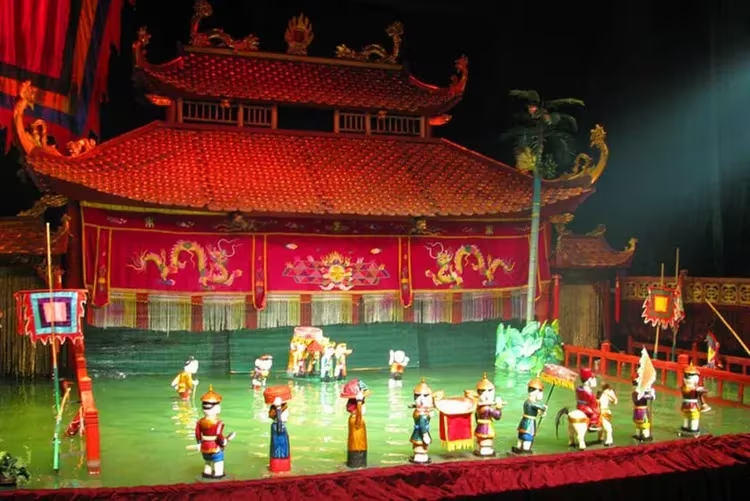
Giving performances on the water is an ancient Vietnamese tradition. Back in the 11th century, when agricultural work was temporarily stopped, the peasants entertained themselves by playing puppet shows. And the stage was flooded rice paddies. The amateur artists played their first performance in the north of the country in the Hongha river delta. Today, the ancient tradition is alive: every day in Tao Dan Park I play performances on the water. By the way, the show is so popular that tickets should be booked in advance. Despite the fact that the puppets speak Vietnamese, all spectators can easily understand what is at stake.
The skill of the performers and the dynamism of the plot are evident. The themes of the performances are different:
Spectators warmly accept funny and sad stories told by the puppeteers of the theater. The performance is accompanied by music performed by ancient instruments: flutes, drums, zithers, violins and even gongs. The instruments are arranged so skillfully that the acoustics around the water stage are amazing.
By the way, all dolls are also made according to the old technology: first, the craftsman cuts a piece of wood, then paints it and covers it with waterproof varnish. Seamstresses create costumes, taking into account the smallest details and character's character. Visiting the Golden Dragon is a great way to relax and learn about culture and customs.
Vietnam History Museum
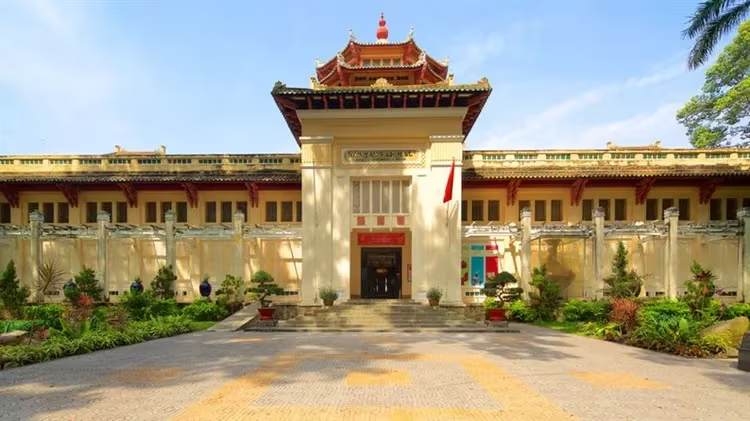
The exposition received its first visitors in 1929. Then it was called the Blanchard de la Brosse Museum. And only in 1979 it was renamed the Museum of the History of Vietnam. Today it is an interesting exhibition that tells guests about the life of the peoples of 300,000 years ago, the Mekong Valley and South Vietnam. Some artifacts are especially valuable.
Tourists can see:
Artifacts are grouped by historical periods and provided with information plates. It will be interesting here for both a simple tourist and a person studying the culture of Southeast Asia.
Building of the People's Committee
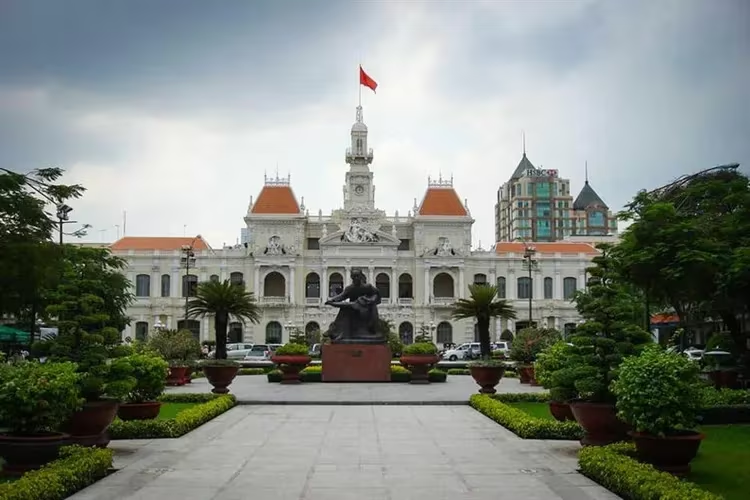
The author of the project is the Frenchman Garda, therefore, looking at the building, tourists feel like they are in the center of Europe, and not in Southeast Asia. The house looks somewhat pretentious, but very beautiful. It is decorated with columns, at the top – stucco. Despite the constant heat and humidity, the pink-brown color of the walls looks quite fresh.
From the moment of construction (1908) until independence, the building was the city hall. And then transformed into the city hall.
The People's Committee was located here after the end of the last Indo-Chinese war. It was then that the house got its current name. But there is one more, unofficial: Saigon City Hall. Unfortunately, it is impossible to get inside the building: the city administration is located here. But you should definitely see it: there is a cozy square with ponds and benches nearby, where locals and tourists relax. And couples in love make dates at the bronze statue of the first president: Uncle Ho with children.
Around the People's Committee there are many cozy cafes where you can spend time with a cup of coffee, tea or a snack. Prices here, despite the proximity to the city administration, are quite democratic.
Opera theatre
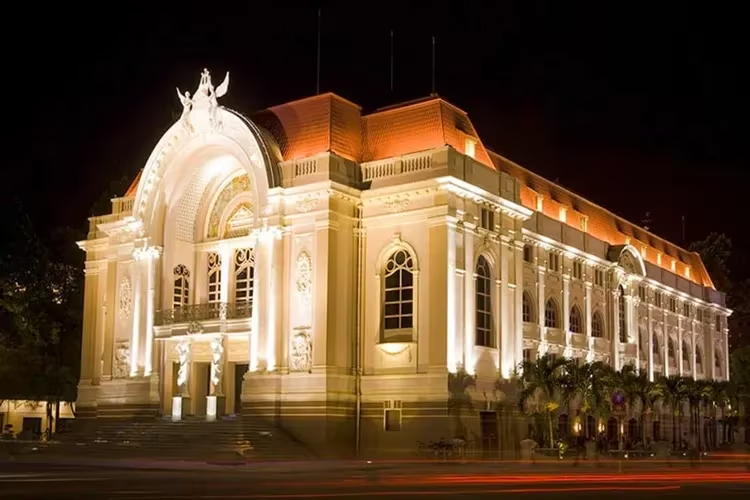
The Opera House was built by the French, so the features of European architecture are easily guessed in its appearance:
At first glance, you can see that the theater is similar to the Grand Opera in Paris. But unexpected moments are also noticeable: often the staircase plays the role of an impromptu stage. The actors perform on the steps while the audience settles down below. The theater is beautiful in the evening: the lights turn on, the building seems absolutely unearthly.
The interiors are also impressive: the floor of the first floor is paved with patterned tiles, the second floor is covered with parquet, wooden chairs are upholstered in crimson velvet. A staircase with forged openwork railings leads upstairs. The acoustics are excellent: you can hear it anywhere in the auditorium. The sound equipment is the most modern, the lighting meets the latest world standards. And the scene turns.
But to see all this, you need to buy a ticket for the performance. The opera house stage hosts the world's celebrities, but tourists love the AO show. The performance tells about the life of ordinary modern Vietnamese and their distant ancestors, and acrobats, jugglers, gymnasts, dancers participate in the performance. Reciters and theatrical scenes add color.
Vinh Ngem Pagoda
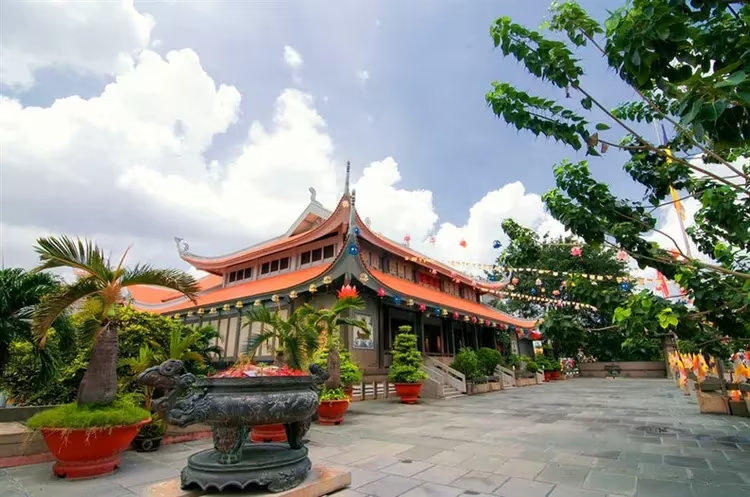
Vinh Nghiem was built from 1964 to 1971. The author of the project is Nguyen Ba Lang. The development took into account the needs of the country's Buddhists. The Association of Japanese-Vietnamese Friendship also took place: many materials were brought from Japan. The modern pagoda is ready for the constant reception of pilgrims: there are enough buildings on the territory where the arrivals settle down for the night, dine and meditate. The city's Buddhist community is in charge of all this.
The chapel is a seven-tiered stone tower 40 m high. Urns with the ashes of the dead are stored in a separate tower. Impressive bronze bell. Its diameter is almost 2 m. All buildings are located on the shore of the lake. The architecture of the buildings shows the traditions of Japan. Behind the prayer house is a building dedicated to the goddess Sakyamuni and the two deities who serve her.
Services are held here daily, which can be visited by any tourist. But at the same time, it is important to respect the feelings of believers: women should cover their heads, it is recommended to hide the body as much as possible with clothes. In memory of this fascinating place, you can buy books and souvenirs. All this is sold in shops on the territory of the complex. The temple community is engaged in charity: it willingly accepts donations from guests.
Jacques Lam Pagoda
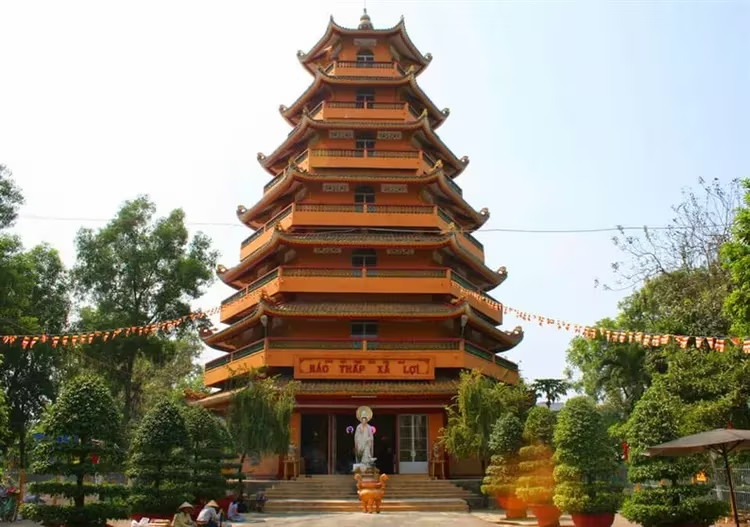
This beautiful temple is listed as a UNESCO World Heritage Site. The main materials used in construction are precious woods. The pagoda Jacques Lam began to receive believers in 1744. But at first it was a small building for celebrating the new year according to the lunar calendar. And already in 1772, Buddhist monks came here. At the same time, economic and residential premises necessary for pilgrims and ministers were built on the territory.
Jacques Lam became the first Buddhist temple in the south of the country. And today there are many pilgrims who came to study or improve spiritual practices. Despite the fact that several centuries have passed since its construction, Jacques Lam is in perfect harmony with the surrounding modern buildings. To enter inside, you will have to pass the amazing beauty of the gate. The structure is painted in warm yellow-brown tones and complemented by the symbols of the East: styrox leaves and lotus flowers.
Numerous Buddha sculptures placed on the territory are made of stone, wood, bronze and even concrete. The authors are talented local sculptors. And in total there are 118 statues in Jacques Lama. They represent the stages of the country's development from the 18th century to the present day. And the relic of the temple is a ceramic vase similar to a column. It is believed that if the rector attaches a note with a wish for something to a nearby screen, it will come true. Collect notes Buddhist monks. The library contains valuable manuscripts.
Thien Hau Temple
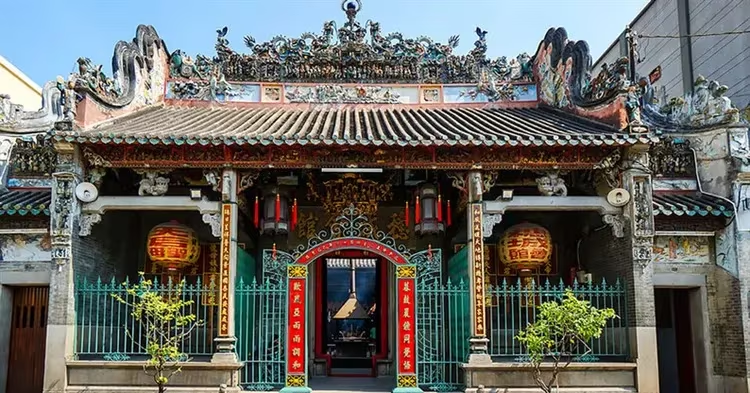
The pagoda is located in the Chinese area of the city. It was built by immigrants from China in gratitude for the fact that the goddess Thien Hau helped them get by sea to a new place of residence. At the same time, building materials are delivered from China too. Thien Hau patronizes fishermen and sailors. Those who go on a long journey come to the temple and leave offerings in the form of spiral fragrant incense. The garland is suspended from the ceiling and set on fire.
As long as the spiral is burning, Thien Hau protects people with his prayers. The temple is visually different from the traditional pagodas: this is Chinese culture. The interiors are decorated with panels and carved wooden details. Thien Hau next to the altar is guarded by her companions (sometimes they are considered demons). And a boat made of wood is attached to the ceiling to remind who the goddess is praying for.
Museum of War Victims
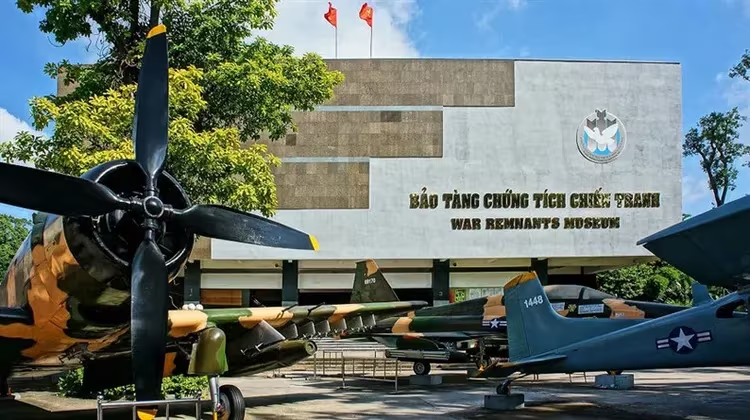
This complex, popular today, was not organized immediately:
- The prototype of the modern center was a small exposition created in honor of the 15th anniversary of the Vietnamese army. Several old Saigon houses were enough to accommodate the artifacts.
- But in 1965, American troops occupied the city, and instead of the recently created exhibition, the building was occupied by the information military service.
- Vietnam gained independence in 1975. The selected buildings were returned to the center, but now the focus of the exposition has changed. Here they began to exhibit evidence of the cruelty of the occupying troops and the thoughtless, barbaric destruction of the civilian population, causing damage to the environment. The exposition has been called the War Crimes House of US imperialism.
- In 1990, the political situation in the world changed. The authorities changed the name of the exhibition. Now the center was called the Museum of American War Crimes.
- 1995 brought a lot of new things. First of all, this is the warming of relations between the United States and the East Asian country. And the exposition received a new name: now the center is called the Museum of War Victims.
- The year 2002 became significant in the history of the complex: a modern building was built with budget money, and the latest equipment was purchased.
Today, the administration of the center considers it most important to show visitors how terrible and life-threatening any war is on the planet. More than 2,000 people visit the exposition every day. For the convenience of guests, the artifacts are provided with information plates in Vietnamese, English and Japanese.
Museum of Fine Arts
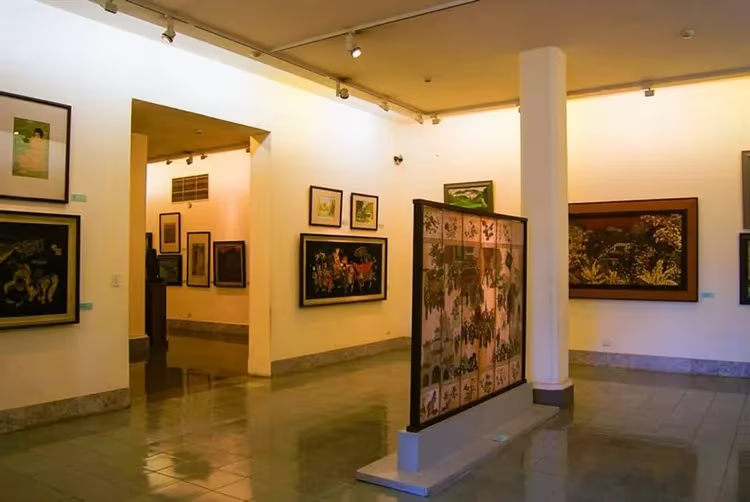
The building is a typical colonial building. Initially, the house was conceived as a residential building: the customer was a wealthy merchant from China. He made a fortune under French rule. The rich man wished his family to live in a house of European architecture. But he could not completely abandon national traditions: inside there are numerous stairs and passages, the courtyard is made according to Feng Shui.
In 1987, the city authorities decided to organize an exhibition where you can see the works of local and international artists and sculptors. The collection was collected gradually, but today it is the second center in terms of the number of artifacts.
Visitors are invited to see:
All artifacts are unusual, therefore extremely interesting. And for those who want to buy souvenirs or a picture, a gallery has been created on the 1st floor. Here you can buy your favorite piece of contemporary art.
Museum of Traditional Vietnamese Medicine
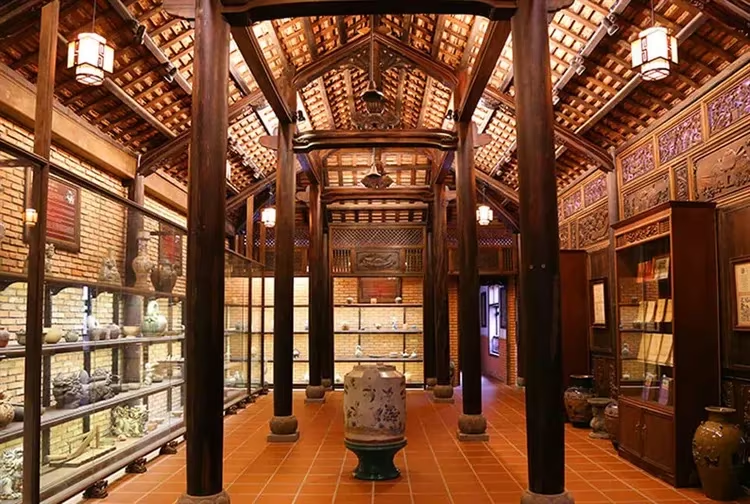
The 15th century was rather difficult for the country: the country was occupied by China. But it was at this time that Vietnamese medicine acquired the features of Chinese medicine. It is this (united) medicine that is the theme of the exposition in the center. This is a private exhibition.
The creators have done everything possible to immerse guests in that distant era as much as possible:
The history of medicine is depicted in paintings. For a complete experience, guests can visit the medieval operating room and pharmacy. Old recipes, medicines and containers for their storage are exhibited here.
Ben Thanh Market
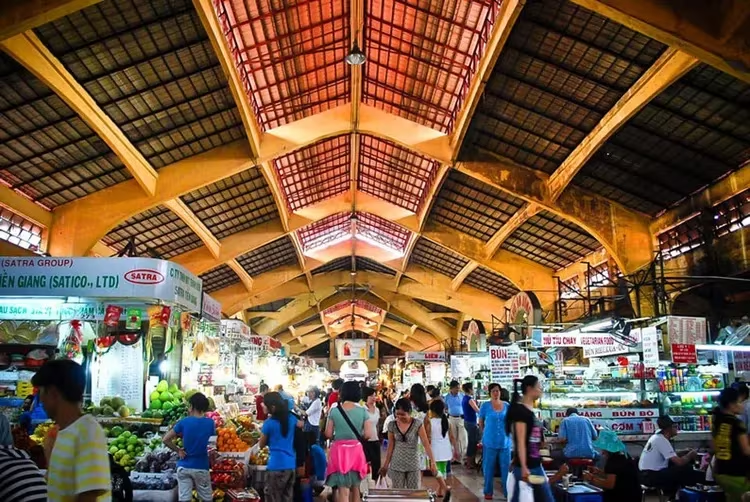
In the 17th century, this place was a spontaneous oriental bazaar. Ben Thanh received official status in 1859. But the buildings quickly dilapidated, so a large-scale reconstruction was required. In 1914, the market opened already renovated. Today this is one of the features of the city: almost all tourists come here. What for? Just because. View, soak in the spirit of the East, bargain.
And the fact of buying is secondary here, although you can buy everything:
Hungry tourists can have a bite to eat in one of the small cafes located between the merchants' shops. Both Asian and European dishes are offered. By the way, if you really want to buy something, but bargaining is unpleasant, you should look for a store with a similar product, where there is a sign: Fixed Price. The goods in it cost as much as indicated on the price tag.
Tan Dinh Church
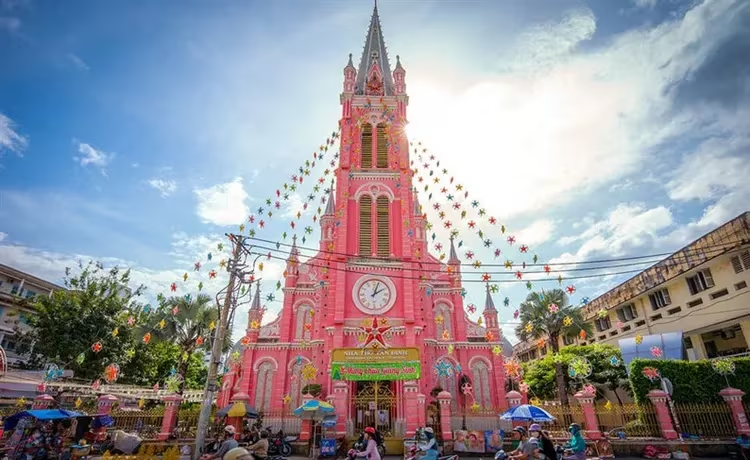
Another legacy of the French colonialists. The church was built in the Gothic style. Unusually, it is painted in a bright pink color. And the elegant white stucco makes the temple unforgettable. The bell tower has 5 bells of different sizes. Their total weight is over 5 tons. And the central tower is decorated with a large clock. Numerous sharp turrets add grace to the building.
In the courtyard there are sculptural compositions depicting Jesus Christ and biblical scenes. Inside, light penetrates through colored stained-glass windows. On the walls, in addition to the faces of saints, stars with 5 rays (symbols of Vietnam) are depicted. In 2016, the authorities closed the temple for restoration. The result was a change in the color of the walls from the original hot pink to snowy white. This greatly upset the parishioners and tourists.
Mariamman Temple
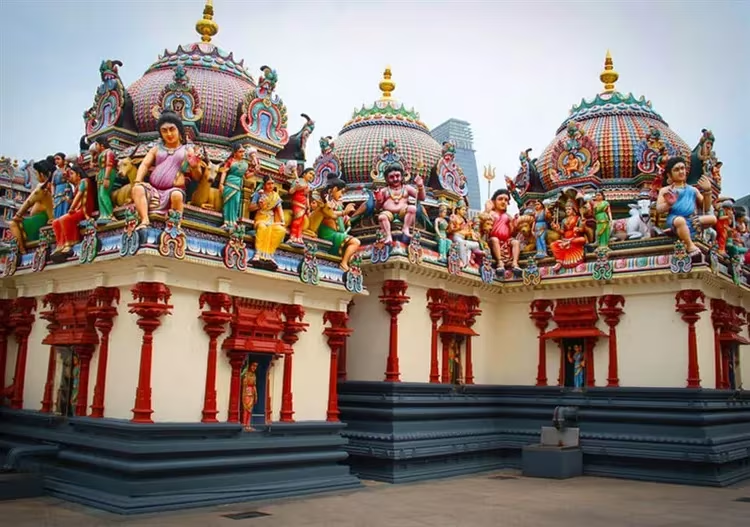
This Hindu temple was built relatively recently: at the end of the 19th century. But it is the most visited among other similar temples in the country. The initiator of its construction was the Tamil community, who settled in the suburbs of the then Saigon. They raised money for the construction. And today the members of the community are the main parishioners of Mariamman. But Vietnamese Buddhists who recognize this religion also visit the temple.
There are always a lot of tourists in Mariamman. There are several reasons:
In the altar there is a sculpture of Mariamman. The goddess has many hands. She is surrounded by servants: Ganesha and goddesses of a lower rank. Incense is constantly burned around the altar.
Saigon River
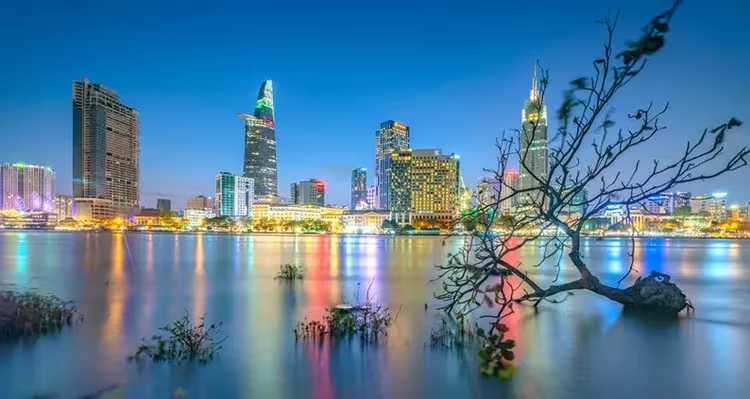
The Saigon River carries a huge amount of cargo. But tourists appreciate it for something else: sailing on a boat or boat, you can see the whole of Ho Chi Minh City in a short time. Within the city limits, several tributaries flow into Saigon, and people supplemented it with canals. Therefore, traveling by water will allow you to see not only the center, but also inaccessible outskirts.
The city is especially unusual with the onset of twilight, when the lights are lit. Then the banks take on a fantastic view: parks and squares alternate with skyscrapers and pagodas, and all this is illuminated by colored lanterns. Tour operators offer many excursions along the river. Some take a whole day, others a few hours. But the guests of the city are unanimous: it is worth taking the time to see Ho Chi Minh City from an unexpected angle.