
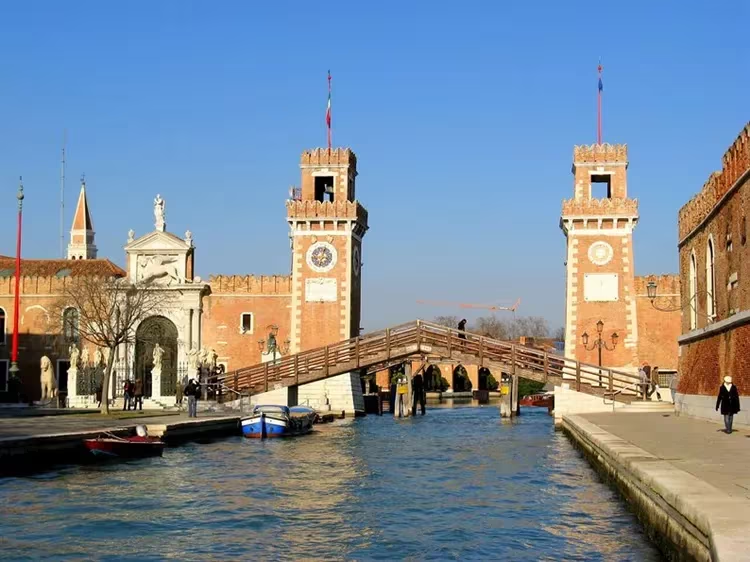
The mighty ancient towers do not sparkle with the lights of modern lighting, do not ring from the sounds of melodies. You can't see sentries on them. Only the lapping of the waves is reflected in the gloomy walls of the majestic complex, which played an important role in the history of Venice. Its most important pages are guarded by the famous Venetian arsenal.
History of the Venice Arsenal
The city of Venice, which appeared in the 9th century, has always been a strategic center of trade relations between the East and Europe. Located on the numerous islands of the Adriatic Sea, it has always been famous for its bridges, canals, channels, which form the living conditions of the townspeople. A tidbit of land created by nature had to be protected from enemies. Participation in the crusades, wars required the creation of powerful warships. Maybe that's why the city‘s hard-working residents are considered the pioneers of shipbuilding in the world. Their engineering thought made it possible to change the shipbuilding technology used by the ancient Romans. For the first time, a unified standard of requirements for a military vessel appeared, and a conveyor method of production was proposed.
For the production of reliable warships, an integrated enterprise was created that combines forges, workshops, a shipyard, and armories. Already in the 16th century, they launched one ship annually. The first galleon was intended for the installation of naval guns. After analyzing the mistakes, changing the design of the nodes, the arsenal specialists quickly created a real floating fortress, called Bucintoro. Its floating copy can now be seen among the museum's offerings. Over time, in the technology of producing 20 galleys, about 40 m long, everything was thought out to the last detail per day. It seems that someone's invisible force fills the ship with everything it needs during its smooth movement along the main channel.
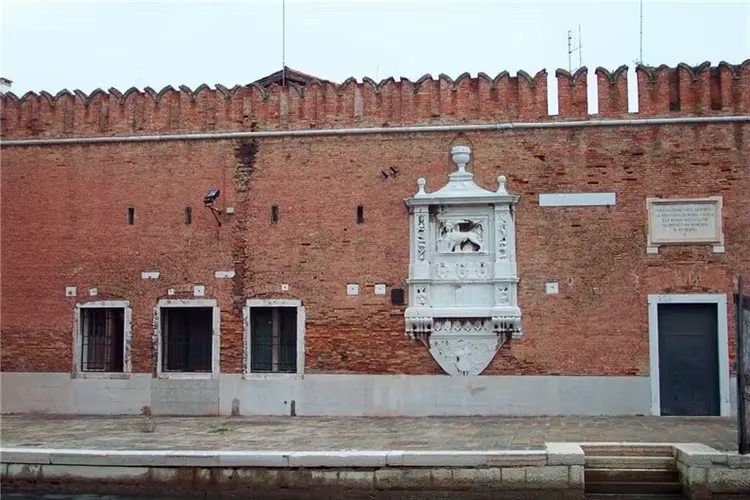
All buildings of the arsenal are surrounded by a wall, about three km long, with two entrances. One is for ships, the other is a land entrance for workers. By the way, the number of workers in the best times of the enterprise reached 16 thousand people. For that time, this value was considered very large, every fifth inhabitant of the city worked at the arsenal. The idea of the power of the ancient shipyard is formed during organized circular routes around Venice. The idea to combine small ship-building workshops into a universal complex was proposed in 1104 by Doge Valier Ordelaffo. It took half a century to implement it. In the future, the complex of buildings was constantly expanded, supplemented by modern workshops, diverse industries, for example, for the production of weapons. Historically, the construction of the arsenal had three stages related to the improvement of production, the introduction of new technologies,
The first stage of the work of the arsenal is connected with meeting the requirements for ships during the Crusades. The golden centuries of the XIV-XVI in the life of the arsenal created the conditions for the renewal of the complex, the opening of the second stage in its activity. Numerous merchant and military vessels flashed in orderly rows at the shipyard. The New Arsenal has arrived. The next expansion of the complex began in 1473. The newest arsenal was built for a long time. The financial difficulties of the country, constantly participating in wars, hindered the construction. Unexplained explosions in huge powder magazines greatly complicated the construction. Together with the arsenal, the city grew, residential areas appeared, and the infrastructure of the future Venice was created.
All work at the shipyard, which has become famous in different countries, was carried out under the strict control of the authorities. The head of the workers was the “Supreme Admiral”. He had unlimited rights over the workers, called the “Mighty Arsenalotti”. Around the clock in the workshops there was a roar, a clang in an atmosphere of tar smoke, soot. To create masts, rudder, skin, numerous types of wood were used, brought from different places. For example, the rudder was made of walnut, the capstans were made of elm, the sheathing was made of fir, the keel, the deck was made of oak, which had previously been soaked in water for 10 years. Gradually, the number of ships reached 80 pieces per day. The country began to sell ships, having a big profit. But the arrival of Napoleon changed the situation, defeating the arsenal, capturing ships, destroying the “city within the city.” It was not possible to fully restore the arsenal.
Buildings of the Arsenal
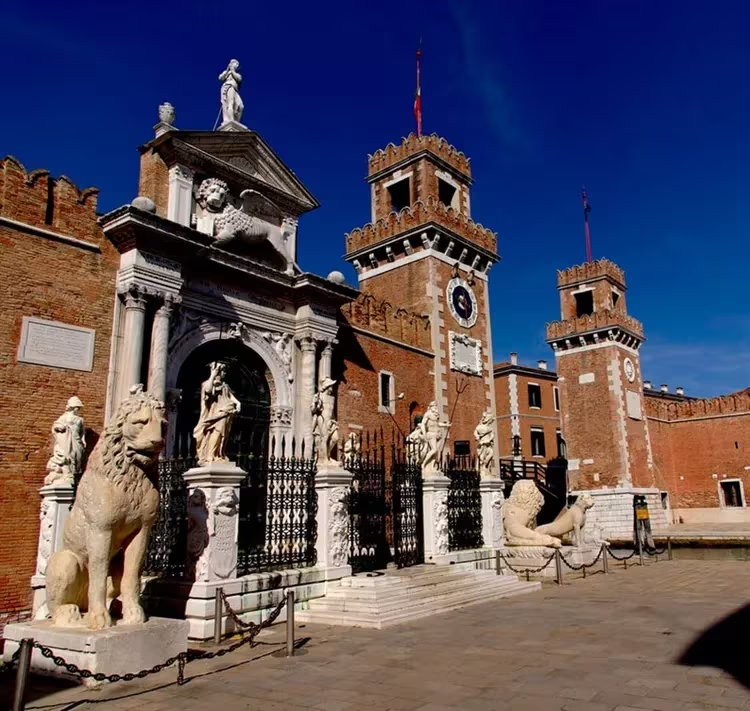
From the land side, you can recognize the ancient architectural structure by the classic gate in the form of a triumphal arch. Built according to the development of the Port of Magny in 1460, as a sign of victory over Turkey, they reliably hide the territory of the arsenal, introducing additional mystery into its atmosphere. Double pelasters, winged lions brought from Greece in 1687, many classical statues on marble slabs greet tourists at the entrance to the arsenal. The Lion of Piraeus still bears a Scandinavian inscription written in medieval script in the 11th century. Arched gates are considered the first architectural building of the classical style in Venice.
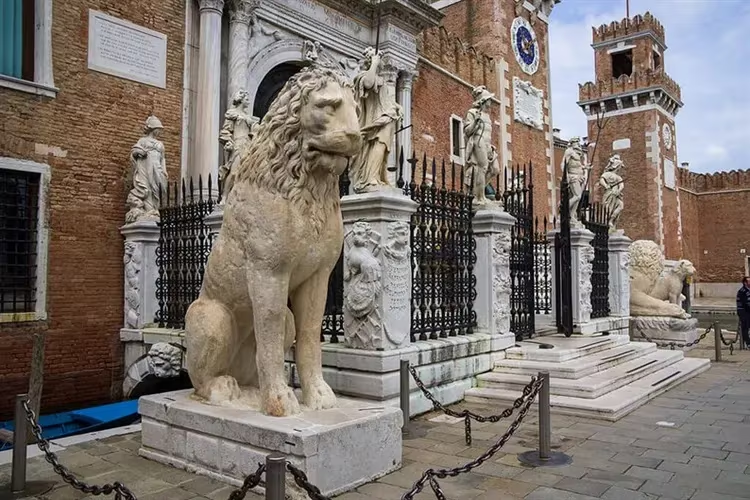
Napoleon's army partially destroyed the gate. They were restored, but at the beginning of the 20th century, the main part of the shipyards of the arsenal was transferred to private ownership. An interesting Maritime Museum functioned for a long time in the granary building of the complex. Now he is in a different place. Its expositions reflect the valiant history of the Venetian fleet. You can hear interesting stories about old models of ships (for example, Bucintaur), boats, cargo ships, see them, and imagine the work of workers in large-scale production.
The second entrance in the form of a sea gate for ships was built in 1687. It is adorned with two majestic towers. They are connected by the oldest wooden bridge that has survived to this day.
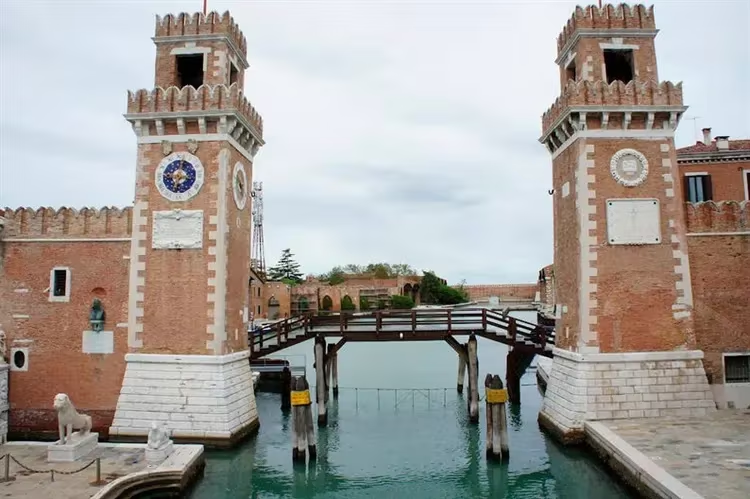
Entry into the territory of the arsenal without special permission was always prohibited. In the old days, they received it from the Inquisition after paying a state duty. The scribes of the arsenal divided the money among themselves, keeping a strict record of incoming. Now the complex does not fulfill its original tasks. Walls, towers, gates are used as an architectural monument. The harbor serves as the seaport of Venice.
Where is and how to get to the Venetian Arsenal
The attraction of Venice is located in its eastern part. This is the Castello area. The Arsenal divides it into two halves. Nearby is the Arsenale vaporetto stop. You can take the 41/42 route via San Pietro. The address of the complex is Castello, 30122. The museum of the complex is closed on Sundays. On normal days, the opening hours are from 9.00 to 13.00. Schoolchildren visit the museum without payment. Cost The entrance ticket for adults is 1.55€.
Now the complex hosts cultural events, the annual Art Nouveau exhibition, Venice festivals. Projects are being developed to reconstruct all the buildings of the arsenal and use them as a modern entertainment center. Maybe someday the towers will come to life, sentries and guards will appear, reminding us of the life that raged here in ancient times.