
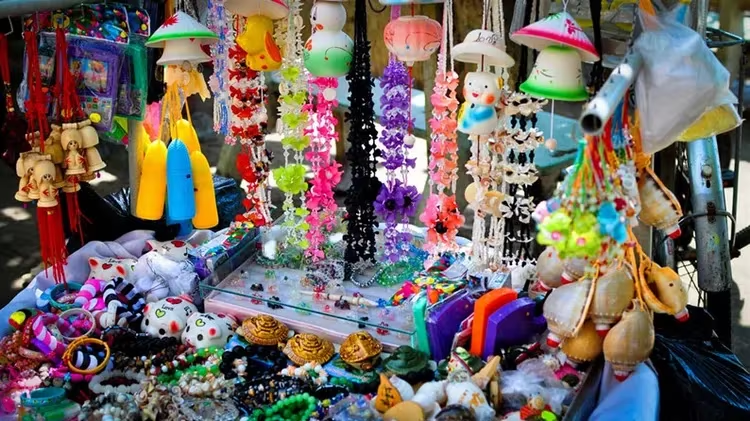
The country of all kinds of exotics, unusually hardworking people who skillfully use the gifts of generous nature, gives tourists not only a lot of stunning impressions. The famous healing balm “Asterisk” has long been known to the whole world, widely used for colds, burns, joint diseases. Meticulous Vietnamese have learned to extract the maximum benefit from the surrounding nature, sea expanses and depths. What unique products, goods, products you will not see in the Vietnamese markets. In order not to get confused when choosing purchases, you should decide in advance what to bring from Vietnam as a gift.
Fruit
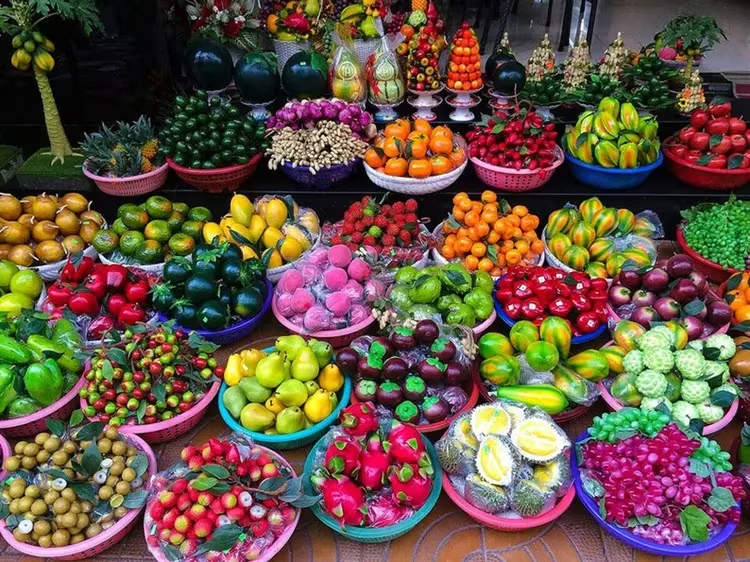
Few countries can rival Vietnam in terms of quantity and variety of fruit. The climate with year-round warm weather allows for 8 months to harvest fruits. Among the Vietnamese garden gifts, there are specimens whose name is even unfamiliar to many, not to mention the taste. Of course, there are some of their types in Russian supermarkets in large cities, but they are sold at fabulous prices and of dubious quality.
Therefore, being in Vietnam, where fruit exotics are offered for a penny, it would be unforgivable not to buy Vietnamese fruits. The best time to buy on the eve of departure is in the morning, when the fruit has not lost its freshness, and the merchants are not tired of being accommodating and can give up the price. If you want to surprise your relatives, buy a longan (dragon's eye) – a fruit with a dense peel and transparent juicy pulp, rich in calcium and phosphorus.
Chinese plum “lychee”, containing a complex of vitamins, with a beautiful peel and sweet tender contents should also interest you. You can not resist the super exotic “hairy” fruit rambutan bright red in color and with curved spikes. Jackfruit – breadfruit, sapodilla (taste of sweet pear), noina (soursop), etc. – the richest choice.
Book excursions in Nha Trang from € 33 per person
Cosmetics
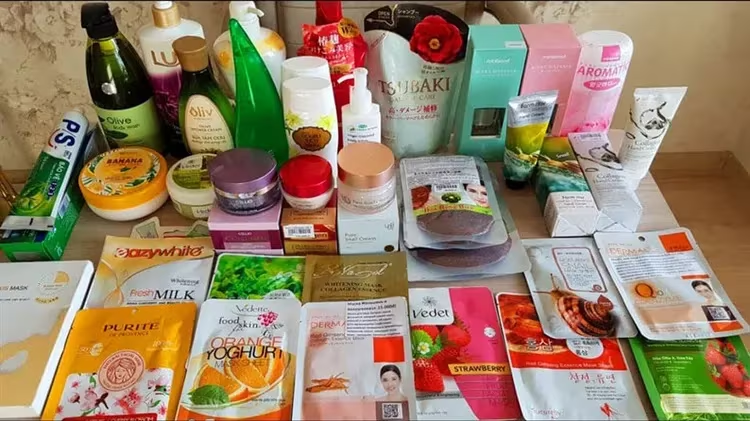
As mentioned above, the Vietnamese are well-known masters of preparing all kinds of potions based on natural products. This applies, first of all, to cosmetics, both medicinal and decorative. From decorative means, for example, rice powder with an admixture of pearl powder. Creams, lotions, masks, foams, shampoos on a natural basis are presented in large quantities. In Vietnamese stores you can buy not only domestic cosmetics, but also other Asian countries: Japan, Korea, Thailand.
Of the plant components, turmeric, coconut, aloe vera, ginseng, tea leaf, chamomile, etc. are widely used here. Animal additives are popular in the production of cosmetics: snail mucus (allantoin), python fat. For skin care, here you can buy creams with the addition of turmeric (turmeric) for a wide range of applications: nourishing, moisturizing, to eliminate pigmentation and acne, from wrinkles under the eyes, etc.
Judging by the reviews, creams with turmeric and python fat are very effective. A good purchase would be a cleansing foam, a film mask (especially for oily skin) with turmeric or activated charcoal. A good assessment was given to the Wondera plant-based cleansing foam with the addition of allantoin and the collagen mask with gold. It is unforgivable to leave Vietnam without coconut oil (200 ml for $1.50). Oriental Herb bamboo salt toothpastes are in demand – worth buying.
Medications
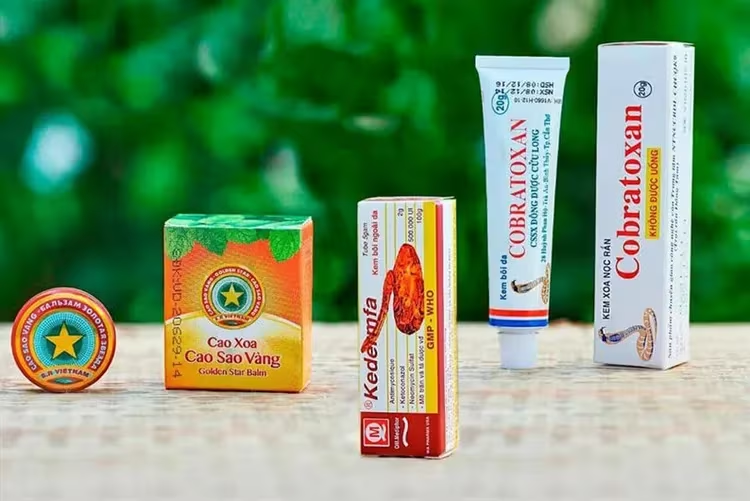
If the Vietnamese Zvezdochka balm has long been popular in Russia, then other drugs are little known. In terms of quality and medicinal properties, they are not inferior to the balm, but surpass it, so some of them are worth bringing. But you do not need to immediately run to the nearest pharmacy located next to the hotel – the prices there will be obviously higher. In any city there is a municipal pharmacy where all medicines are cheaper, and some drugs can be purchased in a kit at a wholesale price.
You will not regret if you buy an anti-cold kit: Lozena syrup and Xoanq herbal sprays for the common cold and Vina Ho for sore throats. It is worth buying Thien Thao Baim herbal balm with a pleasant aroma. An excellent anti-inflammatory agent is the White Tiger balm, which contains 7 oils, menthol and wax. A good useful gift will be pocket inhalers that help eliminate a runny nose, headache, motion sickness symptoms.
The exotic purchase of Mo Tran (python fat) will save you from burns and frostbite, and Tamanu Oil (Alexandrian laurel) heals any wounds and irritations on the skin, relieves inflammation of damaged areas. BAA Euqica Fort – soft capsules based on essential oils and plant extracts actively fight colds. Antibiotic Clamentin, a universal bactericidal agent, will not be superfluous.
Ointments
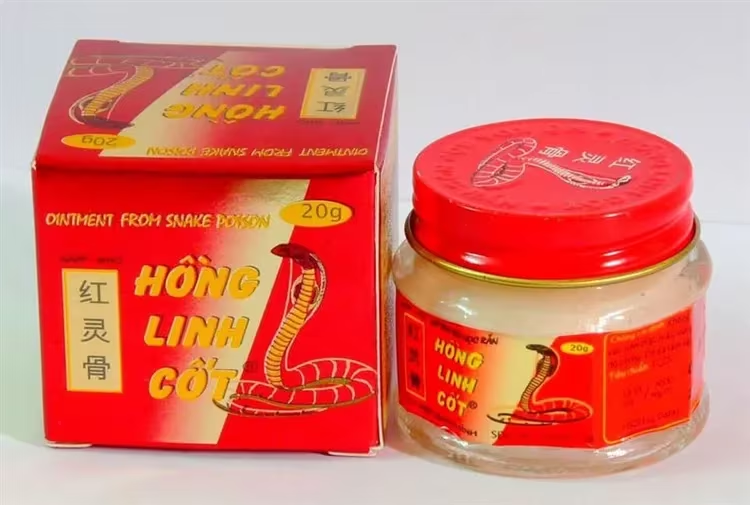
The choice of therapeutic ointments in pharmacies in Vietnam is simply huge – for almost all types of pain. Salonpas gel with essential oils has proven itself well. The ointment is quickly absorbed through the pores of the skin and soothes the pain. The drug began to be produced in the form of patches and in liquid form. Cobrataxan ointment with cobra venom helps to cope with sciatica, arthritis, arthrosis – it's nice to have it in your home arsenal. An ointment with bear bile has a similar effect.
You should definitely buy a universal ointment with cobra venom and with essential oils of plants Hong Linh Cot (Honq Linh Cot) This is a real savior for a variety of joint pains. Miraculously antibacterial sterilizing effect of Bao Phn Knang ointment with turmeric. For those who treat psoriasis, Explaq ointment is suitable, which effectively cleanses, nourishes and aromatizes the affected areas of the skin. Kesermfa ointment will be indispensable for burns and bruises. Healing ointments are a great gift for everyone.
Silk
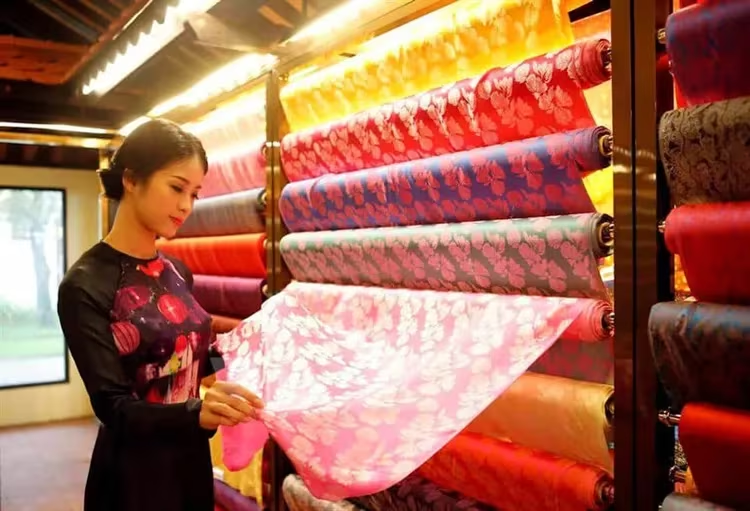
For many centuries, natural Chinese silk has been highly valued in European countries. But Vietnamese silk is not inferior in quality to Chinese silk fabrics, becoming an increasingly popular commodity among foreign tourists. Now silk Vietnamese material can be bought in Russia, but its cost is very high. Where, if not in Vietnam itself, you can buy silk almost at cost. Here in the province of Lam Dong is the largest center of silk production.
On the Baolok Plateau, mulberry plantations for breeding silkworms and large factories for the production of fabrics are concentrated. Local fabrics (20 types) are distinguished by soft elasticity, uniformity of threads and are not electrified. A wide variety of colors, original design, affordable prices will make the purchase of Baolok silk a pleasant surprise. Especially if you buy it in special shops at silk factories, where it is sold directly, without intermediaries.
There are such stores in all major cities of the country. It is cheapest in the north of Vietnam, which produces fabric in huge volumes. If you are a fan of handicrafts, go to Hanoi's surroundings, to the villages of Van Phuc and Chin Tien. Here you can buy both fabric and ready-made clothes, and a picture embroidered with silk at very reasonable prices (from 3€ to 20€).
Crocodile leather products
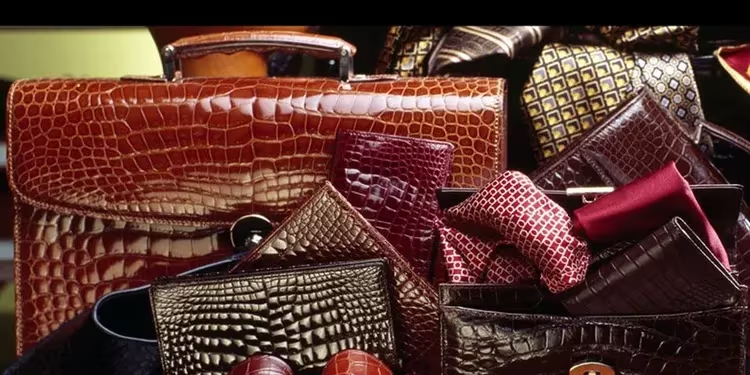
It's no secret that crocodile leather products are a symbol of luxury and respectability of their owners. Bags, briefcases, purses, shoes made of crocodile skin cost a lot of money, which confirms the high material status of their purchasers. However, in Vietnam, such things can be bought at more reasonable prices.
Crocodiles, caimans, alligators are found here in the wild and are grown in large numbers on crocodile farms. Hanoi has 7 companies producing crocodile skin products, one of them, Hoang Long, is also engaged in the cultivation of alligators. 2 modern companies that produce crocodile bags, shoes and products from other natural materials are open in Hanoi. When choosing a product from a crocodile, you need to know that alligator leather items are most valued, while caiman items are cheaper.
In general, the range of prices for women's crocodile bags is from $100 to $900, for a purse – $40-120, for shoes – $110-220. In order not to be deceived by scammers, you should buy goods in branded stores of the above companies (An Fu, T.P. Crocodile, Seanchan, Vintra Vina, Vietnam Nam Nrok, Hoang Long) Carefully inspect the product, look at the patterns, feel the bumps: they should be hard. Thanks to modern dyeing technologies, the skin can be of any color.
non hat
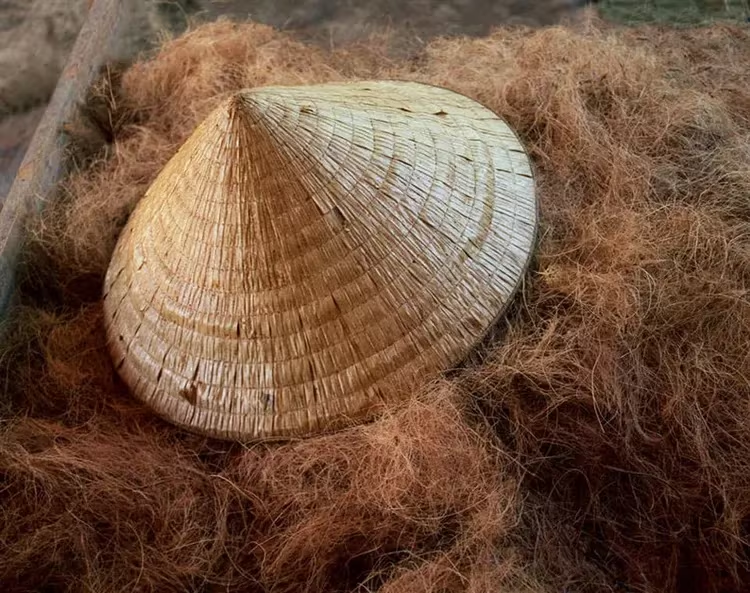
Traditionally, headdresses have become a sign of the national identity of people. For example, Mexicans and sombreros, Americans and baseball caps, Frenchmen and berets are inseparable. English aristocrats are inconceivable without intricate hats – an example of this is Queen Elizabeth. It is just as hard to imagine the Vietnamese without the cone-shaped non hat, which has even become the object of legend. Initially, this headdress, which protected the head from the scorching sun and rain, was worn by Vietnamese peasants.
Rain jets flow down the sides of the cone, protecting not only the head, but also the shoulders. It can be used as a basket for picking vegetables and as a container for water. Now the non hat has become a fashionable accessory for city dwellers. Coquettes tear off their curious glances behind her brim, in the heat they fan themselves with her like a fan, lovers hide behind her with a kiss.
These cute items are made from straw, bamboo and palm leaves. From a working Panama hat, the non hat turned into an exquisite headdress. It is decorated with patterns, embroidery, rhinestones, ribbons, beads. The production of non hats is a painstaking task that requires tremendous patience. Despite this, non hats are sold at a low price (from 0.5 € to 5 €) in any souvenir shop.
Silverware
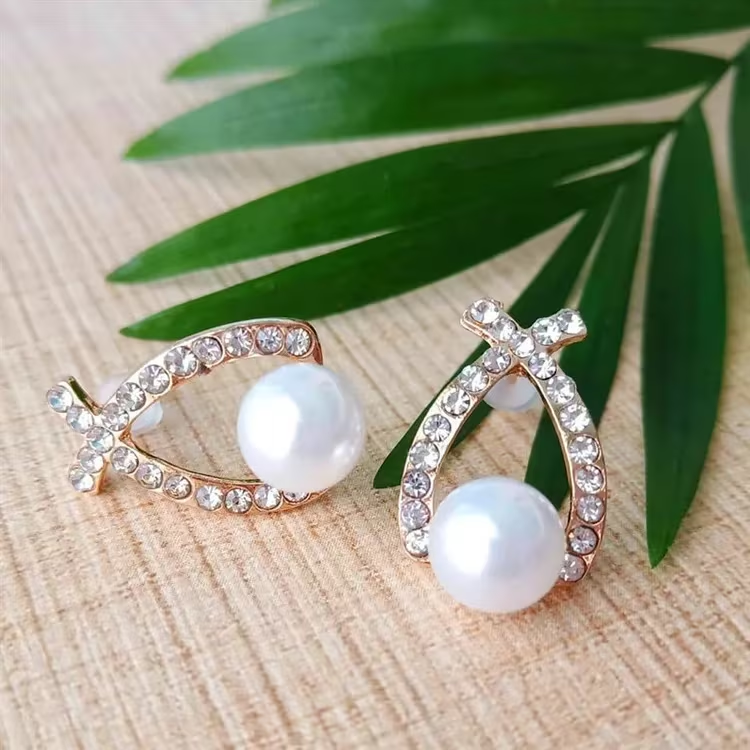
Tourists visiting Vietnamese cities for the first time are surprised by the abundance of silver jewelry. It is forbidden to export gold items. This is probably right, because gold, according to Buddhists, is the metal of devilish temptation, and silver is a symbol of divine mercy. Gold is the equivalent of money all over the world, and carrying money around is not ethical. Jewelry stores in Nha Trang, Hanoi, Da Nang, Mui Ne have a huge assortment of silver items with pearls, sapphires, topaz and other stones.
There is a great opportunity to buy both individual jewelry in the form of a ring, earrings, pendant, and sets. For example, a luxurious set (ring and earrings) in a silver frame with topaz costs 24,000 rubles here, which is half the price in Moscow. In all jewelry stores, the leaders of sales are silver items with pearls. The Vietnamese love jewelry with this stone, both sea and river.
Price from 1.5 thousand rubles. up to 4 thousand rubles. Similar jewelry with sapphire will cost more (from 8 thousand rubles to 20 thousand). Special posters-tables hung in stores help to choose a stone according to the sign of the zodiac. But sellers, distinguished by professionalism, will give useful advice. It is difficult to resist the temptation with such a rich selection of jewelry.
Pearl
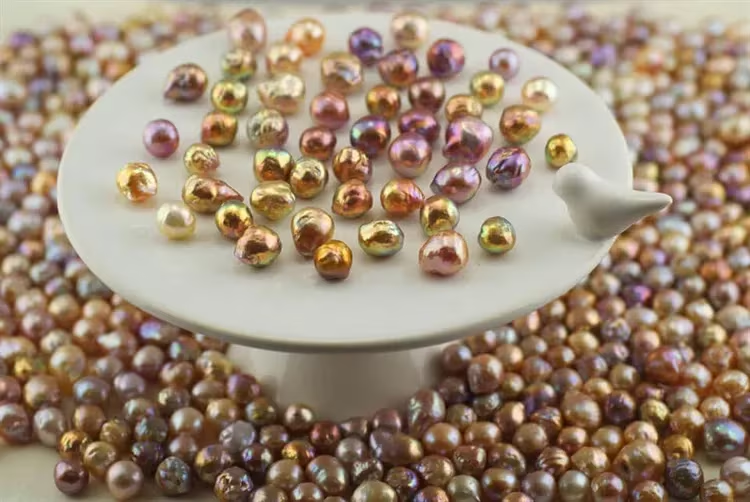
The maritime country of Vietnam is the world leader in the extraction and cultivation of pearls. It is not uncommon for a farm to produce quality pearls. Pearls have been cultivated in Vietnam since the 30s of the last century, stimulating mollusks to release mother-of-pearl. But natural mining in rivers and seas does not stop. Therefore, there is no shortage of pearl products here.
The Vietnamese, sensitive to this divine gift of nature, produce a lot of all kinds of jewelry with pearls. Moreover, it is presented in different shades: dazzling white, milky cream, pink, gray, blue and even black. The most expensive items with rare black pearls. Natural stones come in different sizes, shapes and colors. Natural pearls (cultured and natural) do not have a perfectly round shape, which distinguishes them from a fake.
Pearls are sold everywhere here: on street stalls, on market stalls, in souvenir shops, in elite boutiques. When buying beads or a necklace from a tray, you can “run into” a fake. In jewelry stores, products with pearls are more expensive, but with a guarantee of quality. Some tourists specially go to Phu Quoc Island, where there is a pearl farm, and there they buy earrings, beads, bracelets, as they say, first-hand.
Porcelain
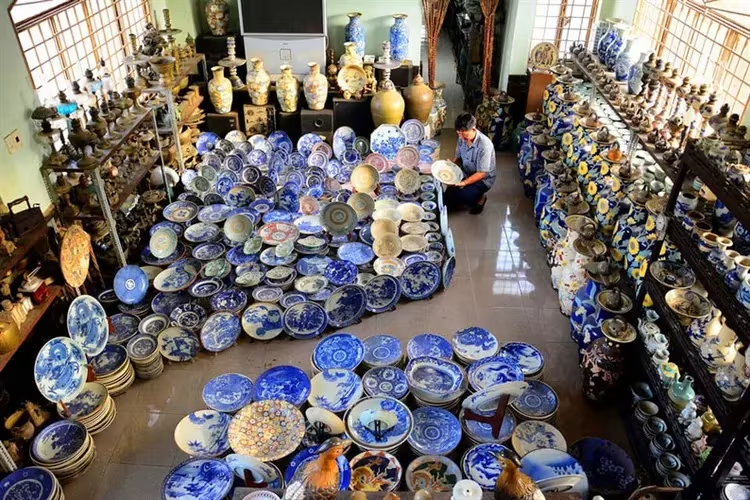
If you are even a little interested in porcelain products, something from Vietnamese porcelain is a must-buy. First of all, because it is unique in composition, it is made from special varieties of clay, which is only found in Vietnam. Secondly, the firing process takes place according to ancient technologies, which make the product thin and durable (meaning manual production). The painting of objects and drying are also distinguished by their originality.
In addition to industrial porcelain production, the traditional craft of hand-made porcelain items is still held in high esteem in Vietnam. In dozens of villages today there are about a thousand kilns and hereditary dynasties of porcelain masters. You can buy various souvenirs, items of practical use made of porcelain in specialized stores in all major cities.
Tea and table sets, tea sets, decorative and table vases with the finest drawings in an exotic style, graceful figurines of animals, birds – for every taste and budget. If you want to buy an exclusive, you should go as part of an excursion to the “ceramic” villages (Batchang, Thokha, Fulang). They can offer you truly unique porcelain items. Between Hanoi and Halong, by the road, there is a large ceramic market with a rich selection of ceramics and porcelain.
Vietnamese oil
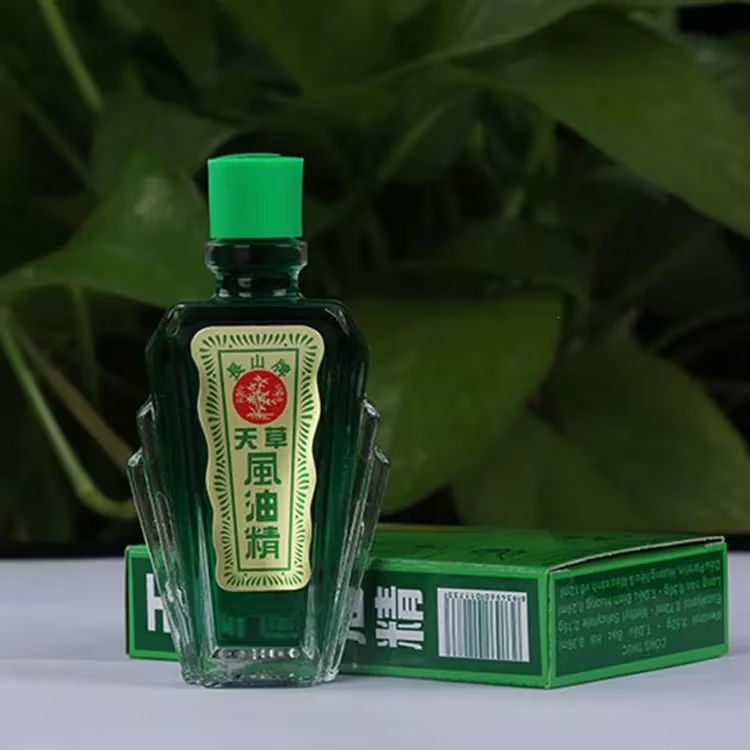
Like other Asian countries, Vietnam is an active producer of various oils, both food and cosmetic. Palm oil, which has become the talk of the town in Russia, is produced here from coconut and is popular. Coconut oil smells good, contains acids that are important for the body, and has a wide range of uses. By purchasing Thien Thao therapeutic oil, you will provide yourself and your loved ones with an excellent preventive measure for colds, treatment of headaches and joint pain.
Essential oil from oud (aloe tree) has a beneficial effect on blood vessels and the heart, the nervous system, but it is very expensive. Those to whom you will give Truong Son oil, which is sold in all Vietnamese pharmacies and shops, will be glad. Its therapeutic effect is universal: cough, runny nose, motion sickness, bruises, insect bites, toothache and headache, etc. It is used only externally, leaving no stains, although it looks emerald green. The most modern preparation in the range of ointments is Ginger based on ginger, complete with other herbal ingredients.
Spices
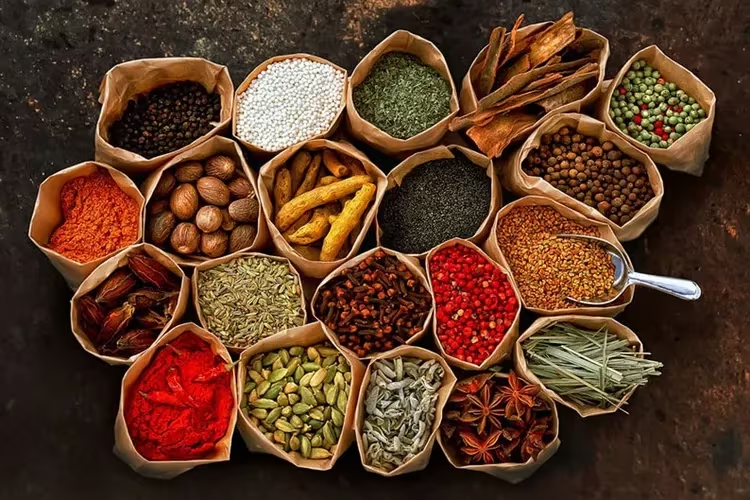
Tropical nature endowed Vietnam with a mass of spicy plants from which various spices are prepared. Their choice is truly great, and if you wish, you can bring from here a whole set of aromatic spices for almost all dishes. Unlike Mexican spices, Vietnamese spices are not as hot and spicy, but have a milder spicy flavor. The most common spice is pepper: black, white, red, chili.
Local farmers plant entire plantations with them: 48% of the world's supply is Vietnamese pepper. It is better to buy it in peas so that it does not lose its properties. And chili – in the form of pods and powder. In total, about 30 types of spices are grown in the country, many of which are unfamiliar to Russians. Very pleasant taste and unique aroma of star anise (star anise), lemongrass, cinnamon.
A wide range of spices are sold in Viet Farm stores. In them you can buy ginger, turmeric, cardamom, fennel, mixtures: lemon with black pepper, mashed dried shrimp with red pepper. For exotics, buy lemongrass, lotus seeds, shrimp, peanut sauce. Indian spices are also sold here: curry, lime, sesame, dried herbs – all at low prices. Tourists visiting Phu Quoc buy spices directly from farmers.
Tea
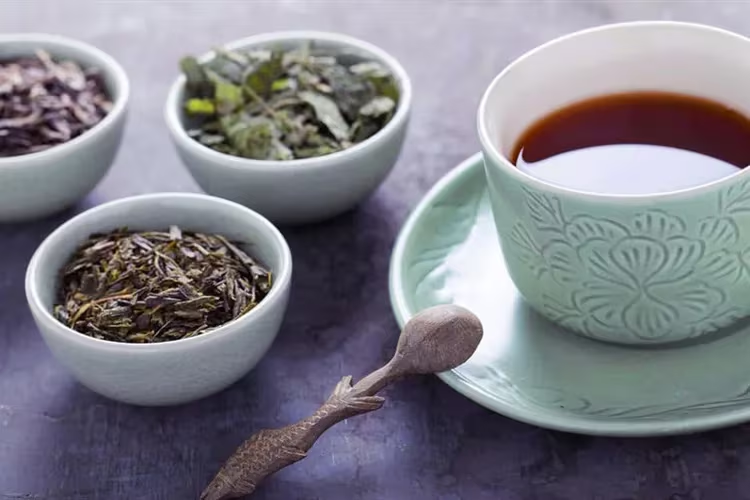
Although Vietnamese tea is not as widely known in the world as Chinese, Ceylon and Indian, some of its varieties are superior in taste and health to the famous brands of recognized teas. The main varieties of the main Vietnamese drink come in 3 colors: green, black, red. Plantations of green tea are located high in the mountains; when brewed, it has a whitish tint, which is why it is also called “snowy”.
This is the most popular drink among the local population. Black tea has a high fermentation, tart bitter taste. Red tea drinks are characterized by a delicate fruity taste and unique aroma. In addition to the main varieties, milk tea (oolong) is sold here, containing a lot of vitamins and useful trace elements. Oolong ginseng, jasmine is offered.
Only here spicy lotus tea is prepared: tea leaves are mixed with lotus flowers and crushed. In specialized stores you can buy tea from artichoke and ginseng, which is prepared in the same way as from lotus. From green varieties, choose Thaingyuen tea with a special taste. There are several types of pu-erh tea pressed in the form of pancakes. Each variety of a unique drink is useful in its own way, but you should not take it on an empty stomach.
Coffee
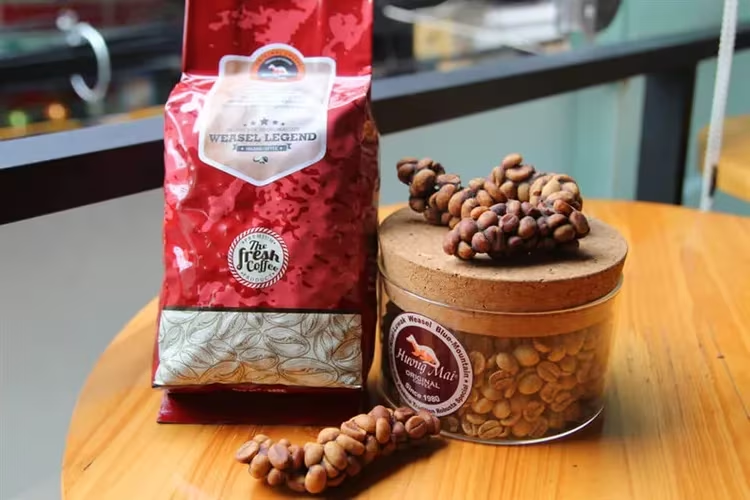
Despite the fact that Vietnam ranks second after Brazil in the export of an invigorating drink, Vietnamese coffee is practically unknown to Russians. If you wish, you can order it in the online store, but you will have to pay 4 times more expensive. Being in any Vietnamese city, it would be logical to buy here an authentic drink produced in the country. This is the only way to appreciate the taste and quality of Vietnamese coffee in its purest form.
The Vietnamese grow several varieties of a popular product: Robusta, Arabica, Coolie, Royal Special, Mocha. Large coffee plantations are located in Dalat. Ground coffee sold in packages is traditionally prepared from a mixture of different varieties, which is very popular with connoisseurs of this drink. If you want to experience the taste of a particular type, buy coffee beans.
The Robusta variety has a rough, bitter taste, rich in caffeine. Robusta grains are a rounded oval with a straight cut. Arabica has a more refined taste, but it costs more. Its grains have an oblong shape with an uneven stripe in the form of S. There are also elite varieties of Luwak and Waysen in stores, imported from Indonesia and now grown here.
Alcohol
Unlike Thailand, alcoholic drinks in Vietnam are much cheaper and are sold in almost all outlets. However, the Vietnamese cannot be called a too drinking nation. The choice of alcoholic products can hardly be called very rich, especially for wine. But on the other hand, the beer produced in Ho Chi Minh City was highly appreciated by the holidaymakers. Dozens of its varieties are sold everywhere. It is worth buying a bottle of Lager or Special, or Red, or Saigon, Hanoi as a gift.
The approximate cost is 60-70 rubles per bottle. Vietnam cannot boast of winemaking: there are no large wineries here. Wine is produced only by small private enterprises in Dalat, Ninh Huang, specializing in French winemaking traditions. Good varieties of grape wine Cardinal, Cabernet Saivignon, Syrah, Chenin Blanc, which can be taken as a gift, are made under the brand name Vang Phan Rang.
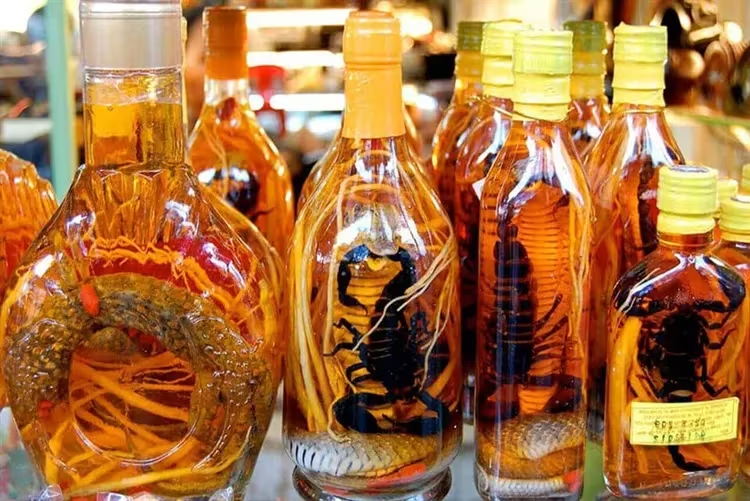
Popular apple wine Tao Meo, with a pleasant taste of cider. Strong rice wine Ruou Nep Cam is considered a man's drink. Present to friends – a bottle of rice vodka (from 100 rubles), Chauvet rum (120 thousand dongs). The most exotic alcoholic souvenir will be a tincture on a snake, gecko or scorpion. But you can drink them only strictly dosed.
Sweets
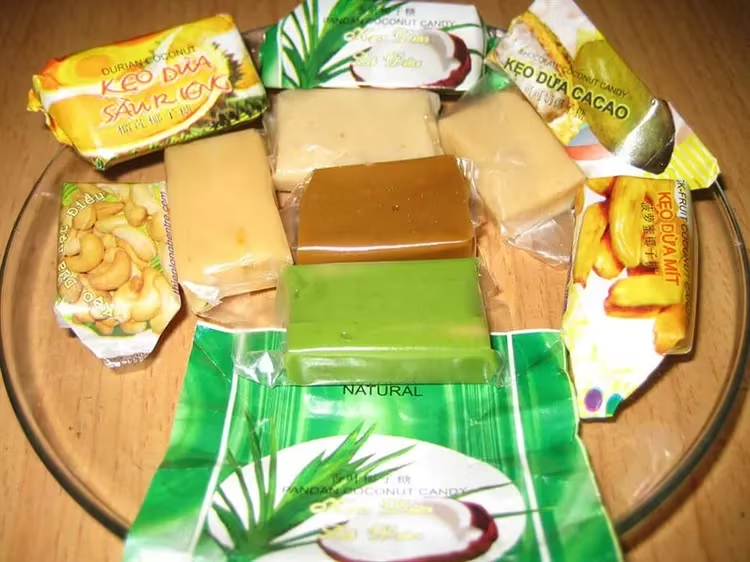
The peculiarity of Vietnamese sweets is that most of them are prepared on the basis of fruits, which are “a dime a dozen” here. Fruit chips – the most common sweet, very healthy. They are made from coconuts, pineapples and other exotic fruits. They are very tasty, low-calorie, but well support the tone of the body. Another variety is candied fruits sprinkled with ginger, powdered sugar, licorice and coconut flakes.
Local sweets with a pronounced taste are made from natural ingredients: peanuts, ginger, sesame seeds, coconut, etc. The Vietnamese call all fruit sweets with one common word “myt”. Products are packed in beautiful boxes and sold in stores. You can bring myt from the lotus: its seeds are covered with caramel balls.
Relatives will also like coconut or ginger pulp, cut into pieces, boiled in syrup and sprinkled with powdered sugar (coconut myt). Noina or rambutan jam, dried exotic fruits will please friends. Unusual rice cookies will surprise you, where, in addition to rice flour, there is beef and soy sauce. Tofu soy cheese – an indispensable product for every Vietnamese – will also not be superfluous.
Crocodile meat
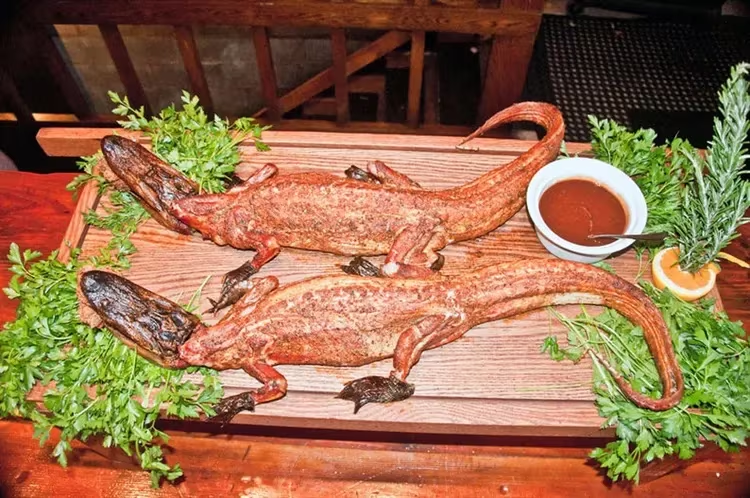
Russians find it hard to imagine that crocodile meat is a common staple in Vietnam along with chicken or beef. Of course, it is not sold here everywhere and everywhere, and it is not always possible to find it in any store. But in every self-respecting restaurant there are dishes of crocodile meat. You will have the opportunity to taste the taste of this unpleasant-looking reptile and decide whether to take its meat as a gift.
In recent years, more and more European countries have begun to import crocodile meat due to the increasing diseases of pigs and cattle. It tastes like chicken with a taste of fish and is environmentally friendly. Crocodile meat is rich in vitamin B 12, proteins and monounsaturated fats, activates leukocytes, so it strengthens the immune system, promotes the full penetration of oxygen into cells. You can bring this exotic delicacy in dried form.
Cloth
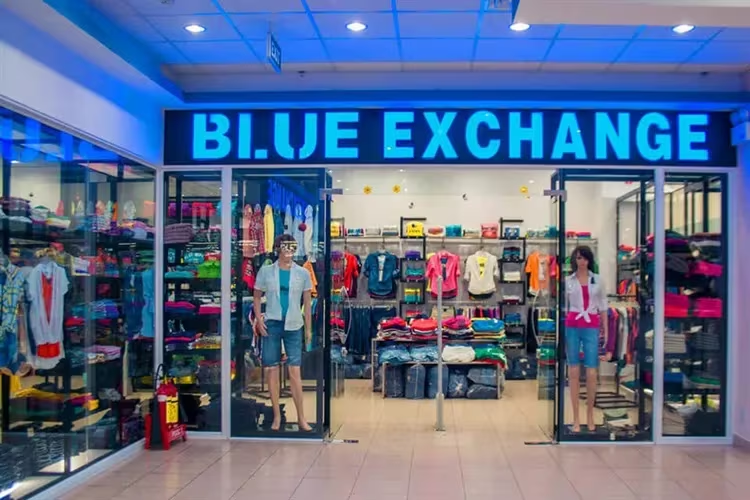
In Vietnam, where clothing production is developed, you can buy good quality clothes made from natural fabrics. Here sports equipment of famous world brands Reebok, Adidas, Nike is sewn; it is sold cheaper than in Russia. Of the Vietnamese clothing brands, Blue Exchanqe and Nino Maxx are quoted. Beautiful dresses, blouses made of natural silk; stylish men's shirts, trousers, children‘s clothing of these companies are in great demand.
The problem may be the lack of the right size: the Vietnamese are guided by their medium-sized physique and small stature. Therefore, it is not easy for Russians and Europeans, especially full ones, to find the right size. Most of all clothes designed for Europeans are in Ho Chi Minh City, Da Nang, Hanoi. Warm clothes are not sold in the south, they can only be bought in the northern provinces. If the search for the desired copy is unsuccessful, it is possible to order it in local workshops. In a couple of days, an order made of high-quality natural material will be ready. For a classic-looking suit, you will have to pay from $ 120, for a dress – $ 50.
Shoes
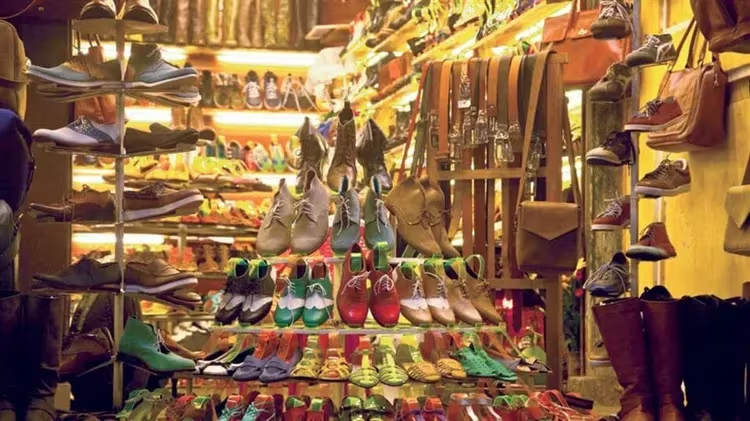
For a long time, Vietnamese shoes were associated with rubber beach slippers, so apart from them, there was nothing else on the Russian market. In the last 10 years, more than a billion pairs of various shoes have been produced here every year, capable of competing with other well-known brands. Shoe factories with modern equipment, constantly updated, have been opened. Strict requirements are imposed on the craftsmen, shoes are sewn from natural materials and leatherette.
10 large companies export shoes, sneakers, clogs, women's sandals, men's sandals to European countries. An original gift for women – clogs or shoes on a wooden block. Leather shoes are quite expensive because 80% of the leather is imported from other countries. But you can easily choose shoes with uppers made of silk, cotton, wood, bamboo in local stores. Large selection of sports shoes of famous world brands. The famous national shoe brand – Vina Zyai supplies luxury shoes. A tourist with any wallet will be able to choose the appropriate version of some shoes.
corals

The sea depths of the Vietnamese coast are rich in unique living organisms – coral polyps. When they die, they form organic coral stones. Jewelry with coral was known in the Paleolithic era, in ancient Greece, in India and other countries. Corals are pink, red, black, blue. Coral beads, necklaces, bracelets have always been highly valued by fashionistas.
Despite the abundance of coral in Vietnam, it is strictly forbidden to take them out of the country. Even for a tiny branch of 5 cm length, a customs fine of $ 500 threatens. The only way to legally bring them home is to buy polyps from a specialized coral farm. There they are sold legally, packaged in a special way for $ 2 apiece. But it is worth buying on the eve of departure in order to bring the polyp alive for the aquarium.