
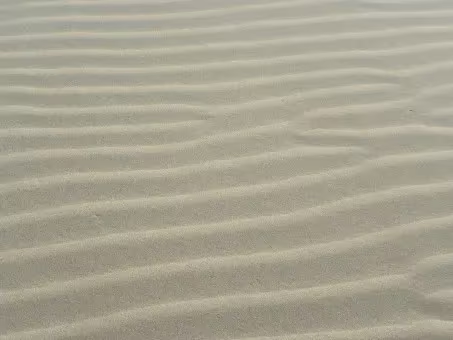
White Sands Desert in New Mexico – photo, description, opening hours, how to get
Many travel lovers recognize one of the most amazing places in the world a corner located in the southern part of the United States – next to Mexico. We are talking about an extraordinary desert, which received the name White Sands (White Sands Desert) for the unique coloring of the surface. By the way, the indigenous population – the Apache Indians – found a more poetic definition for this place: porcelain.
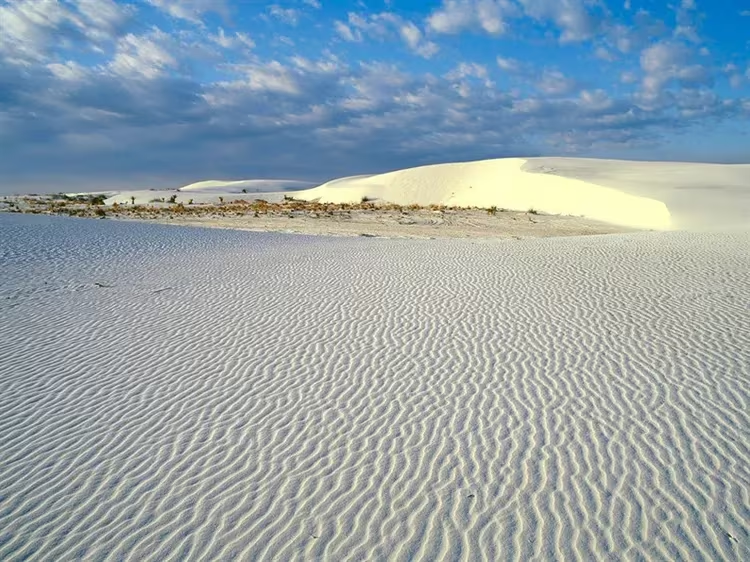
For everyone, sand is associated with yellow or brown: indeed, the Sahara is called yellow, the Gobi – brown. The red Namib desert or the green Kalahari are not surprising either. But most people cannot even imagine that a sandy area with numerous dunes on an area of approximately 700 square kilometers can look like the Arctic or Antarctic.
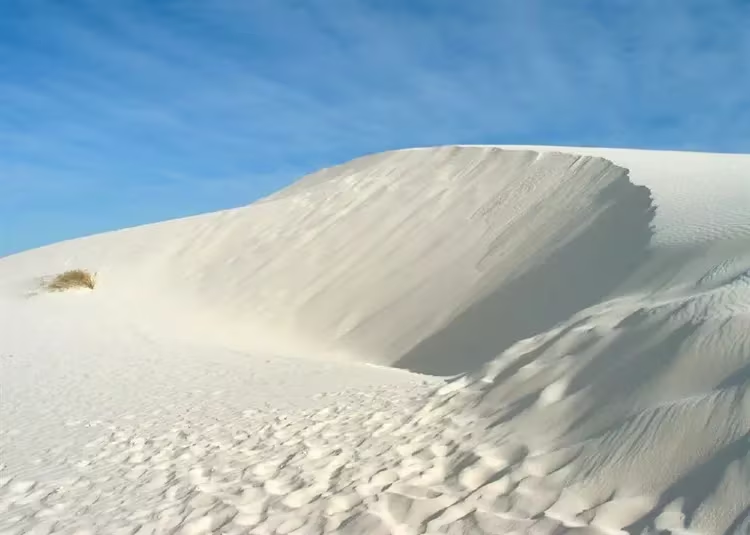
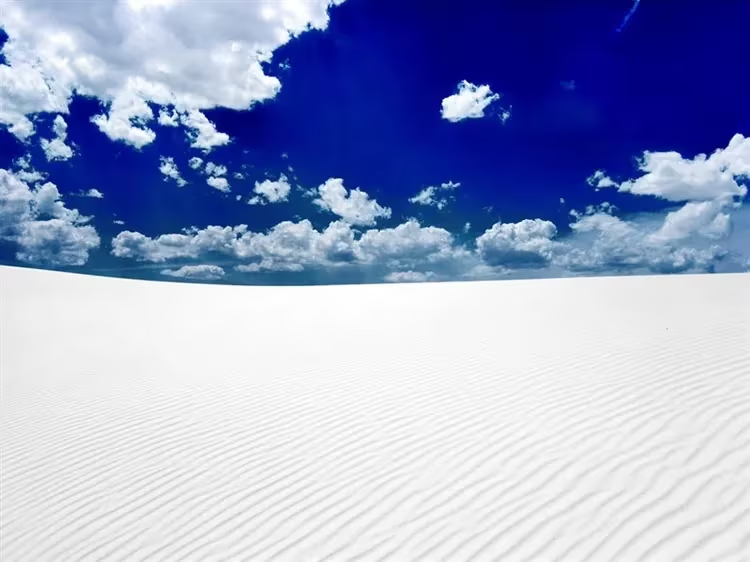
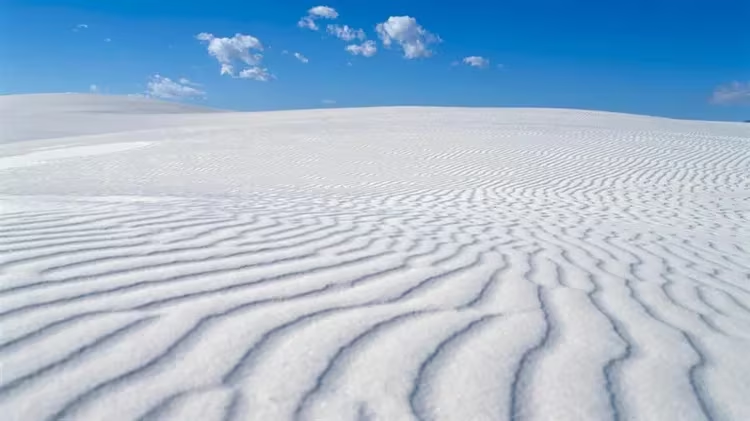
Nevertheless, this huge space sparkles in the sun, as if powdered with the whitest snow, and the dunes look like huge snowdrifts. Only unbearable heat does not allow tourists to feel like they found themselves in the Arctic.
Where is
The desert lies on a plateau about 1200 m above sea level next to the Sacramento mountain range and the Rio Grande. In the northern part, it comes into contact with the Mexican Chihuahua desert – large, but the most common. In this country, sandy areas in deserts are generally very rare, so White Sands is also unique in this. But for wanderers, first of all, its incredible whiteness is interesting.
Why is the sand white here
Experts explain such an unusual view by the fact that the desert does not consist of quartz sand, as usual. The earth in this place is covered with a substance that is a type of gypsum called selenite. In large quantities on the surface, it is very rare, because it is easily soluble in water.
Recall that gypsum deposits are formed as a result of the evaporation of salty sea water. Of course, this is a very long process: in White Sands, it began about 100 million years ago. Scientists explain the changes that took place as follows: initially there was a shallow sea in this place. Drying up, it turned first into small bays, then into salt lakes.
At the bottom, from which the water receded, particles of salt and gypsum remained. A few tens of millions of years later, tectonic movements of the earth's crust began here, as a result of which mountain ranges were formed (now they are called Sacramento and San Andreas). Their tops were made of selenite. Under the influence of precipitation, selenite layers dissolved and flowed down, and already on level ground, the gypsum sediment there again crystallized, forming a selenite crust.
How to apply for a US visa on your own – a detailed guide for independent tourists.
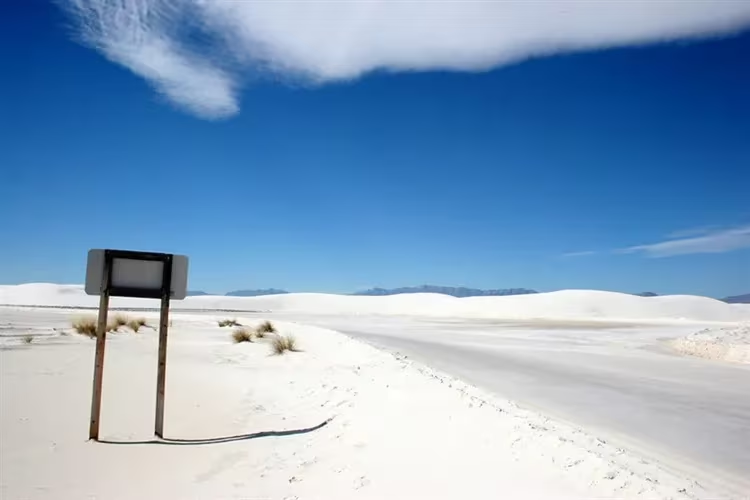
But nature did not calm down: the wind crushed the selenite crusts into small grains of sand, carried them around the surroundings, and laid them in dunes. And so the area was formed, now known as White Sands – a national monument of the United States. Snow-white selenite hills reach 18 m in height, 8 km in width and 40 km in length. They do not stand still, but move slowly in a northwesterly direction.
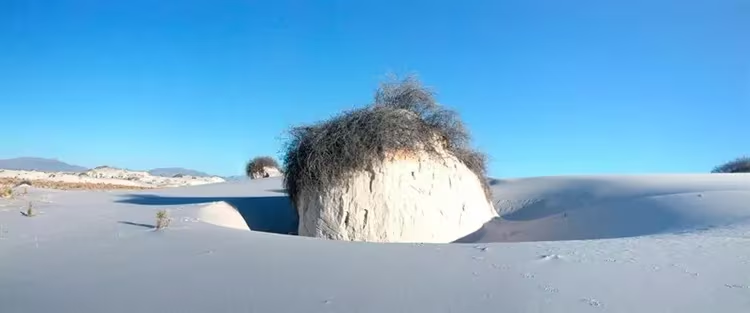
When moving, sometimes one of the dunes covers the other (they seem to climb on top of each other), then very unusual-looking two-story dunes are obtained. Tourists like not only to look at the marvelous landscapes, but also to walk barefoot on the purest sand: even in the heat, it does not burn your feet. Selinite reflects the rays of the Sun and as a result does not heat up much. People who have been in the desert say that it is easy to walk on it – it is dense and the legs do not sink much.
How to get to the USA on your own – read our article.
desert fauna
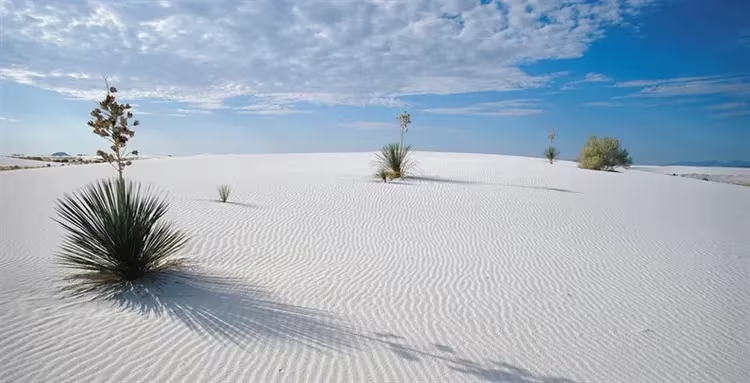
Wildlife lovers will hardly be pleased with the White Sands desert. Both flora and fauna are very scarce here, despite the fact that rains in this region are not uncommon. Plants do not take root here because of the constantly moving sand. Only unpretentious yucca and poplar can withstand such soil: poplars have a very long root system (up to 30 meters), which allows them to gain a foothold in one place, and yucca, although they are carried by the wind from one place to another, easily take root again. In addition to these plants, in the less hot outlying parts of the White Sands, centaury, abronia, echinocactus, and even the so-called desert melon are found.
Another interesting place in America that deserves attention is the Eternal Flame Falls.
How to get around the USA – a useful life hack.
Most living creatures also do not live in the center of the desert. There are only lizards and pouched rats. Moreover, these animals differ from their relatives from other regions in an unusually light color: they had to adapt to local conditions and mimic the surrounding white background. At the foot of Sacramento and San Andreas, the fauna is more diverse: there are coyotes, skunks, porcupines, ground squirrels, badgers, shrews and other animals.
Although during the day you won't see anyone here either: all the animals hide from the exhausting heat in burrows or thorny thickets. Animal life appears only when the Sun disappears behind the horizon. Many animals have a very unusual appearance, as their names eloquently testify: zebra-tailed lizard, antelope hare, grasshopper mouse. There are also animals here that you will not find anywhere else – for example, gila-tooth. At the same time, there are practically no poisonous reptiles here; only black rattlesnake is found in the porcelain desert. It is not difficult to avoid a collision with him: the approach immediately becomes known by the characteristic cod.
We also recommend visiting – Coral Castle and Jacob's Well.

Legends and myths
The White Sands Desert was discovered in the middle of the 19th century by the US military, in 1933 it became a national natural monument. The uniqueness and unusualness of this place gave rise to many legends and myths. In particular, people who are convinced of the existence of extraterrestrial civilizations talk about the fact that it is White Sands that is the landing site for UFOs.
Ufologists claim that alien ships have been seen here more than once. Others believe that Indian tribes regularly come here to communicate with the spirits of their ancestors. It is possible that these rumors are spread on purpose: stories about UFOs or Indian customs do not frighten, but rather attract travelers.
The desert was also chosen by the military. It was in White Sands that the first atomic bomb was detonated in 1945 of the last century, and now in the northern part of the park there is a testing ground for various weapons. But let us reassure you: tests are carried out only on specially designated days, at other times you will not find anything like this here, and you can safely admire the unique views, have picnics and take pictures as a keepsake.
Park opening hours and ticket prices
The park is open every day except December 25, when Christmas is celebrated in the United States. Usually it can be visited from 8 to 20.00, but in some periods of the year the time may change slightly depending on weather conditions: there are sandstorms here. In addition, the strictest rule applies: tourists must vacate the territory of the reserve from their presence immediately after sunset, entry to the park is prohibited at night. In addition, all visitors must be registered in a special journal – both at the entrance and at the exit. This is necessary so that in case of emergency the rescuers come to the rescue in time: there were cases when people lost their way.
You will have to pay for a visit: the cost of an entrance ticket for adults is $ 3, for children under 15 years old – $ 1.5. Entrance tickets are sold at the entrance. There are roads for visitors to drive along, as well as hiking trails marked with tall orange posts (again for safety reasons). The motorway has a length of 12 km.
Entertainment
Hikers can walk along four routes – along the most beautiful places in the desert and where the largest concentration of albino animals is seen.
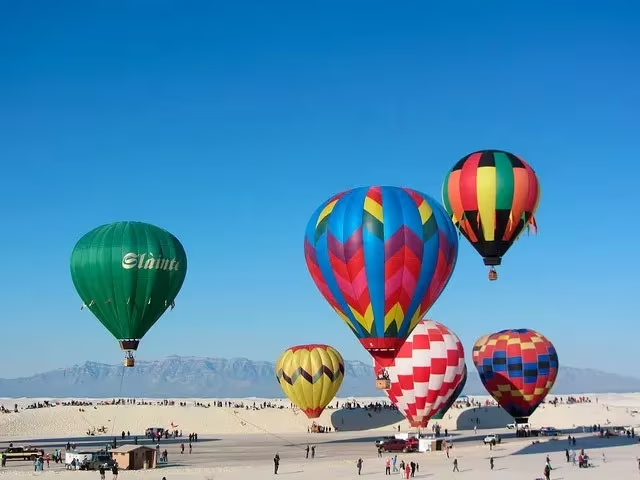
The administration of the national park, in addition, offers some entertainment: you can ride on the sand on special sleds or snowboards; balloon festivals are periodically organized in the desert. Chief among them is the White Sands Balloon Invitational. It is held once a year on the third week of September and lasts 2 days.
As a rule, representatives of all American states come to the festival to demonstrate their offspring to each other and guests. Guests of the holiday are allowed not only to enjoy the magnificent spectacle and watch the actions of aeronauts, but also to rise into the sky themselves and get an idea of how this amazing place looks from above.
How to get there
The nearest landmark for those wishing to visit the White Sands desert is the town of Alamogordo. It is located 25 km from the reserve. The town can be reached by regular bus, taxi or car from any city in the state of New Mexico. The journey will take about an hour and a half. The nearest airport – El Paso – is located 130 km from White Sands – in Texas. Transfers are organized from here to Alamogordo, where travelers can stay at a hotel or campsite.
Best time to visit
Experienced travelers recommend coming to White Sands in winter: during this period there are not too many tourists, and the winter sun is reflected in a special way in selenite crystals, which makes the area even more fantastic. By the way, if you want to take a picture, it is better to do it in the morning or in the evening – in low sunlight, when natural shadows most favorably emphasize the relief of the sands.