
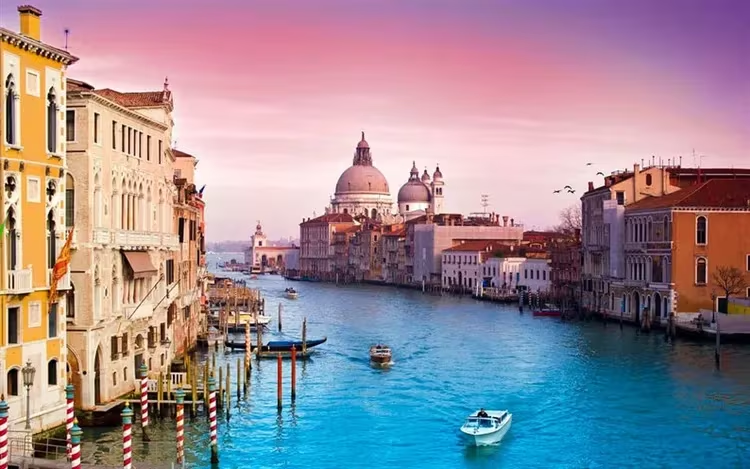
Venice is a city on the water, hosting about 16 million tourists annually. The fate of this unique area was determined by its geographical location. The Grand Canal is the main “street” of the city, along which palaces, cathedrals, and hotels rise. Buildings built at different times reflect changes in architectural styles over the centuries. All this embodies the unique cultural heritage and represents the unique historical value of Venice.
History of the Grand Canal
The Grand Canal is a witness to the historical birth and development of Venice. All major events and transformations of the city took place within this water corridor. In the middle of the 4th century AD, the Roman Empire was attacked by the ancient Germanic tribes. Many peoples suffered from the robbers, including the industrious and tall Venets, who lived on the northern coast of the Adriatic Sea. In search of salvation from the invasion of enemies, they were forced to leave their homes and settle in a small settlement on marshy islands, which were washed by a shallow lagoon. The water surface served as a reliable barrier to the German aliens.
The Veneti built their dwellings on wooden piles, driving sharp logs into the solid foundation of the lagoon floor. Swamp silt covered the supports and thus protected them from decay. This made it possible to keep the houses for many years. Since then, the resettlement of wealthy people to these islands began. At their core, they were also refugees, seeking salvation from the raids of the Goths. The village gradually grew and turned into a city, the Grand Canal became its main artery. Over time, shipbuilding began to flourish in Venice, which led to the emergence of many commercial enterprises. Economic growth and political conjuncture contributed to the emergence of such a state as the Venetian Republic.
In the 10th century, the Grand Canal was already a major market and a major logistics center. Overseas ships moored directly to the houses, which were warehouses for goods from different parts of the world. Merchants quickly enriched themselves, which indicated a sharp increase in the construction of buildings and structures along the canal. The period of the XII-XIII centuries was marked by the transformation of the external appearance of Venice. Marble houses were erected on the canal, decorated with elongated high arches and wide balconies. The first luxurious buildings appeared. In the following centuries, palaces were built in different architectural styles, such as Byzantine, Gothic, Baroque and Renaissance.
Venice took advantage of its unique geographical position between the Byzantine Empire and the Western world of that era. The territory of the republic has become a key port, linking the economies of Western and Eastern civilization. The well-being of the Venetians largely depended on maritime trade relations with China, Egypt and India. Being excellent seafarers and skilled businessmen, the inhabitants of Venice turned the swampy lagoon into an architectural gem of Europe. The Grand Canal was a direct witness to the historical vicissitudes of different centuries. The water keeps the memory of the brave sailors and merchants of the Middle Ages, as well as the advent of Napoleonic, Austro-Hungarian and German residents.
Grand Canal historical artery of Venice
Arriving from the Italian mainland, tourists immediately get to the Grand Canal. This is the main water artery that pierces Venice with its curved channel. Historically, the canal is the only and main “road” of the city. Its length is 4 km, and the width reaches from 30 to 70 meters. The Venetians live as if in another world. On the streets you will not find traffic lights and roads with numerous intersections.
Venice consists of six districts adjacent to a large canal, one end of which leads into the lagoon to the railway station, and the other side flows into the Adriatic Sea. The quarters of the city are connected by four bridges spanning the Grand Canal. Each bridge has its own name: Rialto, Scalzi, Academics and Constitutions. Tourists will certainly swim under each of them. The most famous bridge in the city is Rialto. This single-span arched structure was built in the 16th century and was the only pedestrian crossing for several centuries.
Decorated with marble bas-reliefs and carved columns, the bridge harmoniously stands out against the background of historical architectural buildings. Under the eight-meter height of the Rialto, the first ships passed, delivering goods from the countries of the East. On the bridge itself, 22 meters wide, there were shopping arcades. Rialto is a strategically important object of modern Venice. Drinking and gas pipelines are laid inside the bridge structure.
Sights of the canal in Venice
On the Grand Canal of Venice are the main attractions of the city. The wonders of architecture were mainly erected in the XIII-XVIII centuries. It is amazing that the modern city was able to preserve the appearance of magnificent palaces in its original state. Today, the large halls and apartments of the exquisite palazzos are museums, art galleries, libraries, hotels and casinos.
Traveling along the Grand Canal, tourists are amazed by the abundance of unique buildings. Here you can see examples of the classic Gothic style. They are characterized by high pointed arches and thin numerous columns. The facade of the Kadoro house is especially beautiful. Its walls are decorated with carved balconies and mosaic panels. Nearby is the Sagredo Palace. It recreates the atmosphere of medieval Venice, combining the charm and harmony of the architectural style of that time. The grandiose castle of the Doge surprises with its multi-colored marble lining and unusual arches resting on columns. In the center of the building is a large balcony surrounded by sculptures. The facade is topped with white stone battlements. This palace was the residence of the Venetian rulers – the Doge.
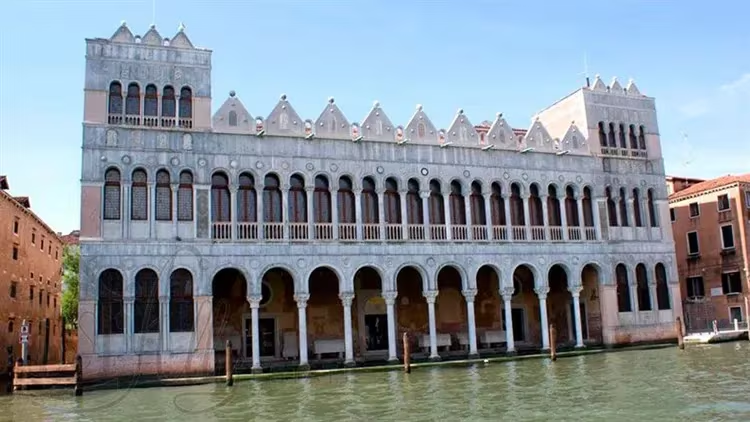
The Fondaco dei Turchi castle is considered one of the oldest objects. This three-storey Byzantine-style building was built in the first half of the 13th century. It belonged to Turkish merchants who used the huge loggias as a warehouse for their goods. Ships with cargo were moored directly to the basement. The facade of the palazzo consists of two side towers connected by two rows of arches with columns. Attic gapes with loopholes.
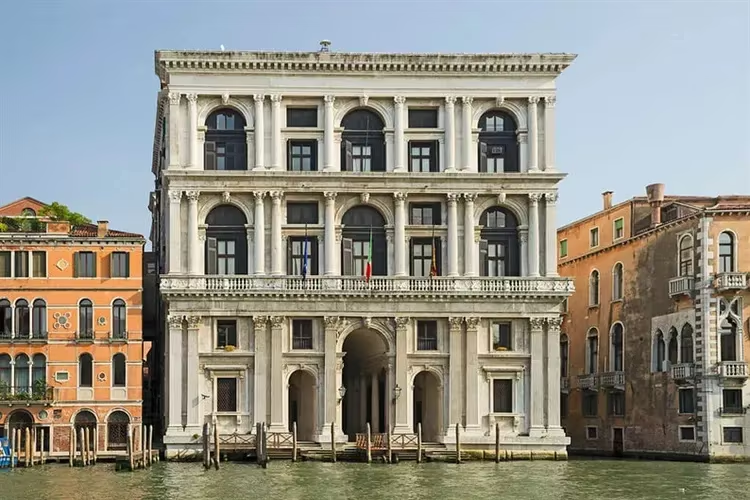
The palaces of Dario and Grimani are striking masterpieces of the Renaissance. Both buildings are faced with colored marble and decorated with wide arches. The Palazzo Calegri is considered a classic Renaissance building, embodying the proportionality and beauty of the architectural elements of the facade. Large arched window openings and decorative trim add elegance to this architectural masterpiece. The house was once home to the German composer Richard Wagner.
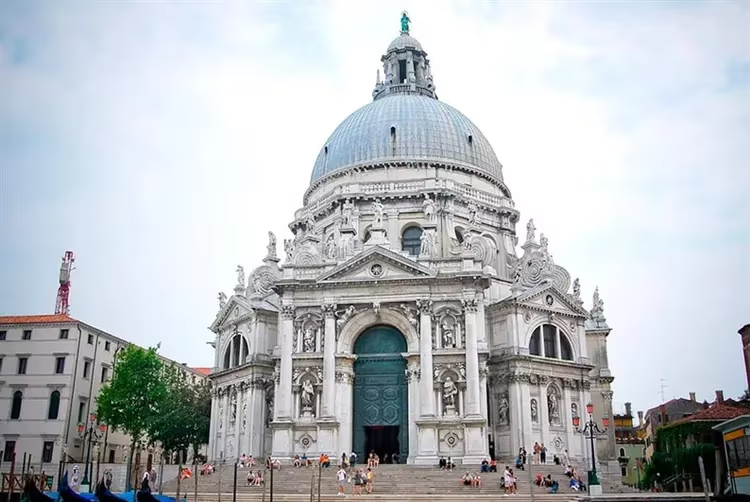
The Cathedral of Santa Maria rises above the Grand Canal. The structure is crowned with two domes, elevated in the center of an octagonal structure, which is surrounded by high arches. The church was built in the 17th century in gratitude to the saints for saving people from the plague. Worthy of special attention is the chapel of San Simeone Picolo. The religious landmark looks like a copper dome resting on massive columns. A wide front staircase leads to the entrance to the sanctuary directly from the canal water. Lovers of modern painting, as well as connoisseurs of Asian art, will be interested in visiting the marble palace of Capesaro. This building was built in the 18th century in the Venetian Baroque style and is today an international gallery and museum.
Water transport is the main and only means of transportation on the Grand Canal of Venice. Pleasure diesel boats of various sizes are very popular among tourists. They are called vaporetto. The Venetian public “bus” runs on routes linking the airport and train station with the central part of the Grand Canal.
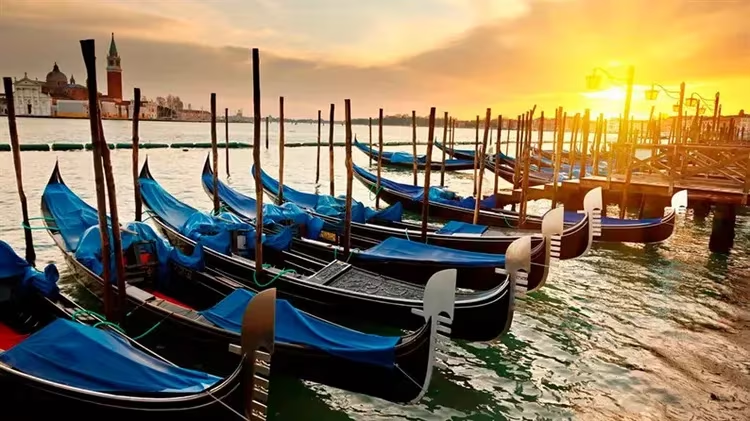
It's hard to imagine Venice without gondolas. This transport is considered the most desirable for tourists. The oarlock, where the oar is inserted, allows the gondolier to skillfully maneuver through the waters of the Grand Canal. Many residents, guests of the city, as well as municipal services (policemen, firefighters, doctors) travel by boats and boats.