
Sights of Porto – 30 most interesting places
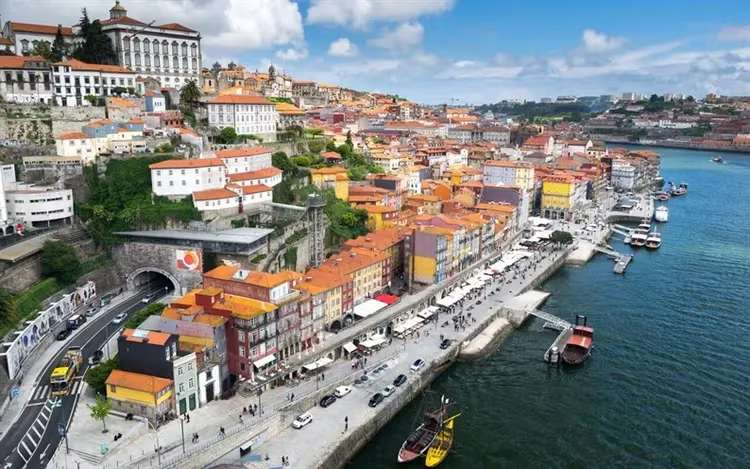
Not even all sophisticated tourists know how rich in sights the city of Porto is the northern capital of Portugal. The special natural mountain-sea landscape surrounding the ancient city successfully complements the urbanistic picture, which is unusually picturesque and bright. It is impossible not to admire the winding streets, steeply descending and ascending, with thousand-year-old buildings lined with azulejo tiles. Church of St. Francis, Bolsa Palace, Clerigos House of Music – not all the sights of Porto. Magnificent bridges, ancient wineries, the region of the Middle Ages – Ribeira amaze the imagination of foreign tourists.
Freedom Square
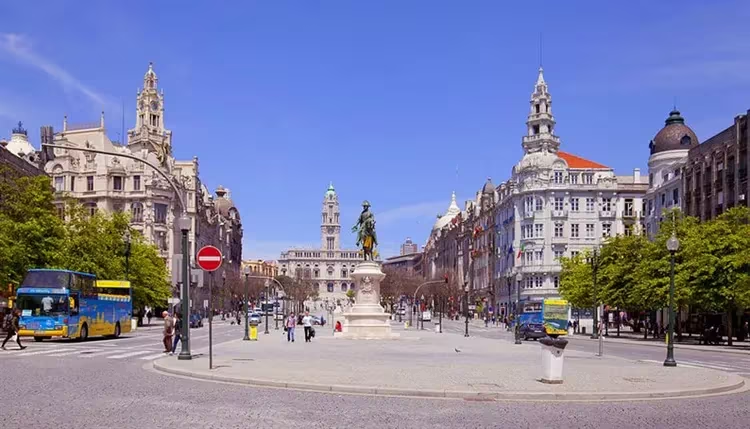
Once in the southern part of the city, you will certainly pass along the famous Rua das Flores street of master jewelers. Walking past luxurious shop windows with gold and silver jewelry, you can quietly walk to one of the most beautiful squares in Portugal – Freedom Square – the administrative center of the city. It was equipped at the beginning of the 18th century during the era of perestroika. At first, it was limited by fortress walls, instead of them a monastery was erected.
Later it became known as the Cardozas Palace, delighting tourists not only with ancient architecture, but also with modern hotel comfort. In the center of “Freedom” there is a monument to King Pedro IV. On the marble pedestal are bronze figures of a galloping horse and the king sitting on it, the author of the Constitution of the country. Opposite the monument rises the tall tower of the City Hall, on all sides the square is surrounded by beautiful buildings of banks, restaurants, office offices.
Book a private transfer from the airport to your hotel for 1 690 RUB
Suarisha dos Reis
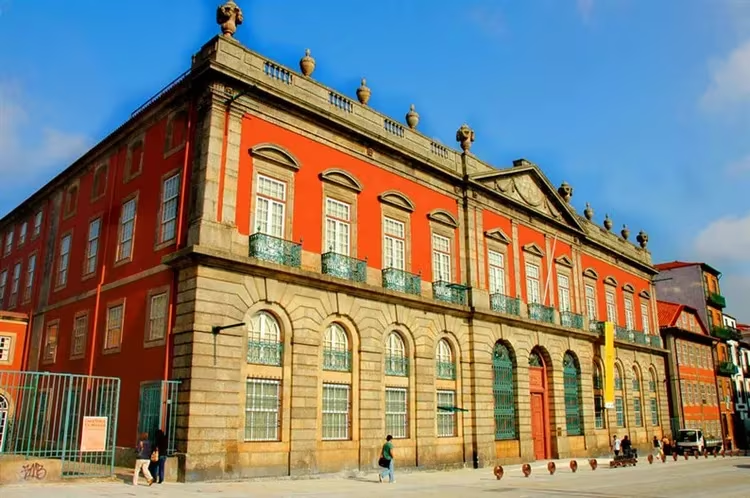
The magnificent building of the Carrancas Palace houses the National Museum of Fine and Decorative Arts of the State of Suaris dos Reis. During the civil war, many monasteries ceased to exist. In order to preserve their property, accumulated over the centuries, it was necessary to find a place. At first, everything was stored in one of the buildings in the center of Porto. The vast halls of Carrancas became a receptacle for various works of painting, sculpture, jewelry, etc. in 1942.
In 1833, Emperor Pedro IV approved a decree on the organization of the repository. In 1839, its funds were transferred to the Academy of Fine Arts as the National Museum for the public to visit. For many years, the talented sculptor Antonio Suares dos Reis, whose name was given to the institution in 1911, was engaged in systematizing and forming the collection. Here, visitors will get acquainted with the outstanding creations of Portuguese painters, sculptors and masters of applied art.
Unique samples of handmade furniture, ceramic dishes, metal products of the 19th and 20th centuries, presented in museum expositions, amaze with their virtuosity and beauty. Those who were not familiar with Portuguese painting at all can see the beautiful paintings of dozens of Portuguese artists. Paintings by Sequeira, Roquemont, Resende, de Oliveira, de Souza and many other authors are widely represented. The sculptures of Suaris dos Reis himself, Santo, Loposh and other sculptors cannot but admire.
Lello Bookstore
If many believe that today in the age of the Internet there is no need for bookstores, then this cannot be true of the famous Lello store. A well-known attraction not only in Portugal, but throughout the world, is not just a bookstore, but an architectural masterpiece, a temple of the book, the art of architecture and artistic design.
Everything in this extraordinary building delights, from the facades to the service premises. This miracle was created through the efforts of the Lello brothers, the owners of a book publishing house who published and sold books. In order to expand their business, in 1906 they opened a large new store, which immediately became an object of admiration and pilgrimage for visitors.
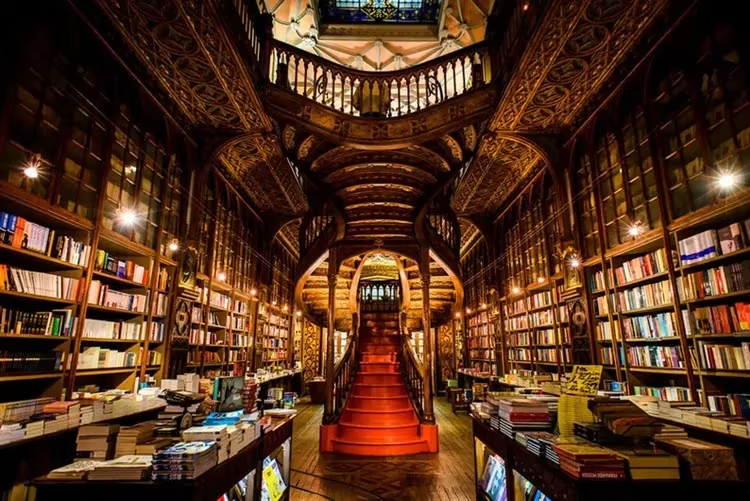
Here, a magical world opens up before them. The neo-Gothic façade with graceful pilasters, paintings and openwork decorations is designed in a similar way to the monastery of Batalha. Art Nouveau interiors amaze the imagination with their intricate beauty. It is impossible not to admire the stained-glass ceiling window with the inscription “Dignity in work”.
Recently restored, it has regained its former golden glow, shedding light on the bookshelves. The stunning design of the staircase is stunning, with bright red steps rising up following the smooth curves of the railing. Ceiling vaults, decorated with stucco patterns, form niches above the shelves, creating an atmosphere of magical magic.
Over the years of its centennial existence, Lello has repeatedly experienced difficult periods, reaching the stage of bankruptcy. But the appearance of J.K. Rowling's bestseller about Harry Potter and the details of its writing changed the sad fate of the store. The public, having learned that the place that inspired Rowling to create a fantastic story, was Lello's store, it aroused the same interest of the public. All readers have searched and are looking for similarities with Rowling's description in the interiors of the building. Many are sure that it was the Portuguese students who became the prototypes of the students of Hogwarts, the Slytherin faculty was named after the dictator of Portugal Salazar. Despite the paid entrance, the flow of visitors does not decrease here.
Church of Saint Francis
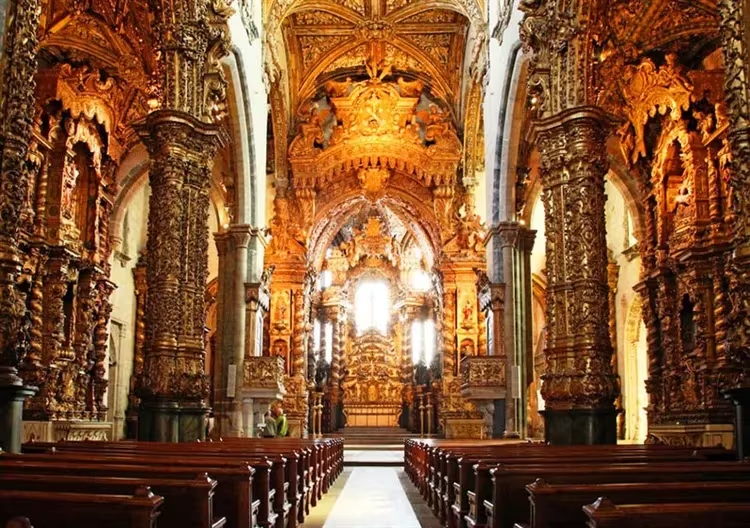
No one passes indifferently past a truly amazing building of the 14th century – the ancient church of St. Francis. Its Gothic façades immediately attract attention with the openwork of the window bars, the bell tower and the sculptures of saints on the attic. Marble statue of St. Francis, installed in a niche under a large rose window at the main entrance to the temple, overshadows those who enter. Everyone experiences a real emotional shock when they enter the golden vaults of the church. After all, it is popularly called “golden” because of the generous gilding on carved decorations, which took 400 kg of gold.
The incredible beauty of wooden carving literally plunges you into aesthetic shock. No wonder the Church of St. Francis is considered the most luxurious in Europe. The whole baroque decor is an undoubted artistic masterpiece, from which it is impossible to take your eyes off! It seems that it is woven by some kind of magic wand, and not by human hands – the patterns are so skillful and intricate. How not to admire the family tree of Jesse, created from multi-colored wood by Portuguese artists F, Silva and A. Gomez!?
The figures of 12 Jewish kings are mounted on branches like birds, the top of the tree is crowned with a sculpture of the Madonna and Child. The base is the figure of the lying Jesse, from where the tree “sprouts”. Cherubim, birds of paradise, bunches of grapes paint a picture of a fabulous forest, under the charm of which every visitor falls. Against the background of a huge window with a semicircular vault, the Holy Crucifix attracts attention. The golden radiance and brilliance in the first minute dazzle, and the eyes run up from the grandiose picture. In the underground floor of the temple there is a crypt with the ashes of representatives of the local nobility and especially important members of the Franciscan Order.
Ponti di Don Luis Bridge
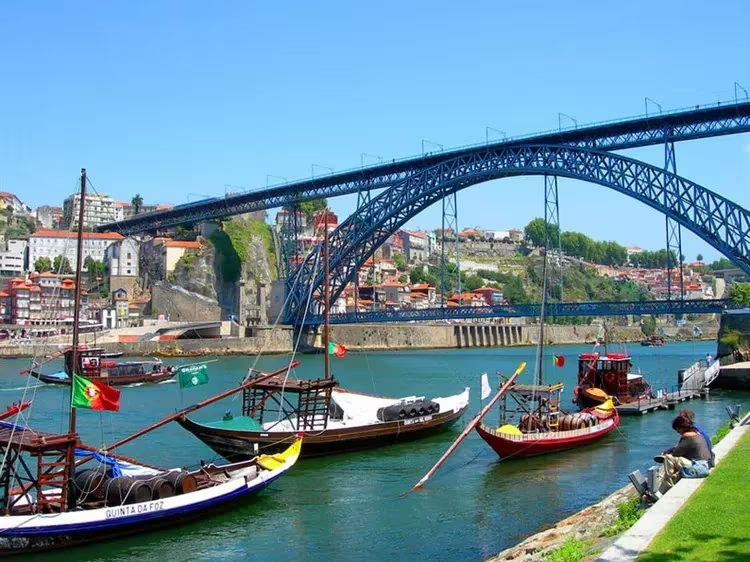
Every self-respecting tourist considers it his duty to see the hallmark of Porto – the masterpiece of bridge building Ponti di Don Luis. The bridge, woven from openwork metal structures, strikes with extraordinary grace and originality of execution. At first glance, there is an association with the design of the Eiffel Tower, and this impression does not deceive.
An engineering marvel designed by Eiffel's student Theophilus Seyrig. The city authorities invited him to create a semblance of a bridge, previously built here by Eiffel himself. The new ferry was supposed to connect Porto with the wine cellars of the city of Vila Nova de Gaia. The soft soil of the bottom of the Douro River did not allow piles to be driven in, so an extraordinary structure was needed, hanging over the river. This was successfully achieved: the only span was thrown from one coast to another.
The result is an elegant multifunctional bridge, named after King Luis I. Cars and pedestrians move along the lower tier. A railroad was laid along the upper span for subway trains moving along a deep niche, enclosed by high walls. 2 sidewalks on both sides are provided for pedestrians. An observation deck is equipped here, from where picturesque urban views open.
Arrabida
No less famous is another, very important pedestrian and automobile bridge of Arrábida, which was built for ten years (1953-63). The rapidly developing Port needed a new reliable crossing over the Douro. The author and leader of the project was the famous architect Cardoso, a recognized bridge builder. The most powerful monolithic reinforced concrete crossing, created according to his project, has become a reliable bridge for many years. Despite the fact that only one 52 m high arch was thrown across the river, the construction, which is not strong in appearance, still functions flawlessly.
When a structure was erected, people always crowded around the construction site, doubting its future reliability. There was talk that the bridge would not last long, Cardoso was criticized for such an extraordinary project. But the brainchild of the architect passed all the tests, and today the 6th bridge across the river. Dora is informally called Cardoso. The most important connection between the wine region and Porto has contributed to the significant development of this industry. In 2013, it was given the status of a National Monument of Portugal.
Se Cathedral
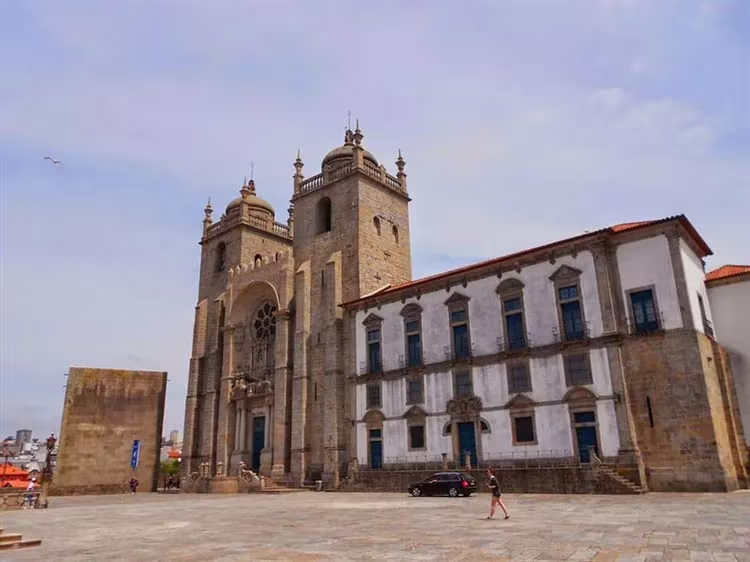
The main shrine of the Portuguese Catholics – the Cathedral of Se in Porto in appearance resembles a fortress. The building in the Romanesque style looks like a majestic monument erected in the 12th century. It became the center around which the city developed and developed. But today, only the main façade has survived from the former Romanesque style, with the traditional rose window and crenellated bordering of the walls. 2 square towers on the sides are crowned with domes and spiers. The roof above the central entrance is supported by an arched vault.
Later, in 1333, a Gothic chapel was added to the temple, in which the ashes of the Maltese knight João Gordo are kept. A decade later, a monastery was erected nearby, and a whole religious complex was formed. The inner courtyard, lined with the famous azulejo tiles, makes an impression. The interior decoration of the cathedral and the monastery does not leave indifferent. The interiors of the temple are decorated in restrained and gloomy colors, corresponding to the Middle Ages.
Heavy arched vaults, massive doors and columns, windows in the form of “roses” enhance the authenticity of the overall surroundings. The silver altar, a tribute to the Baroque in one of the chapels, amazes with its beauty and pomposity. Statues of saints, antique furniture, paintings in majestic frames take you back to past centuries. The cathedral, built at the highest point of the city, is visible from afar. It is no coincidence that an observation deck is equipped next to it, from where tourists explore the surroundings.
House of Music
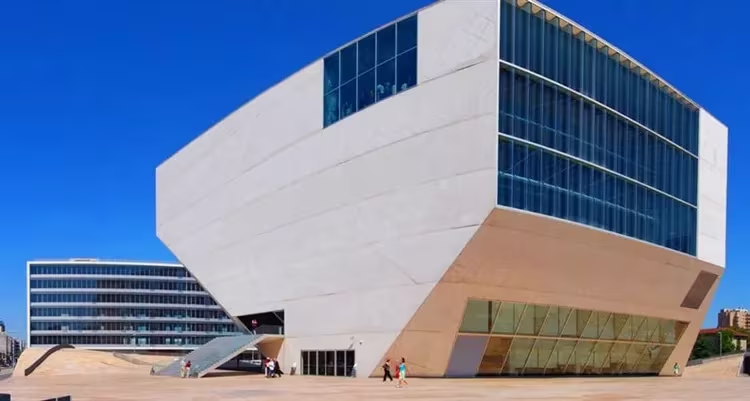
The construction a la modern in the form of a giant faceted crystal of irregular shape is located on the Boavisto square circle – the border between the old and the new city. The symbol of a new era in the architecture of Porto – the House of Music was designed by the Dutch architect Rem Koolhaas, an employee of the well-known Dutch bureau OMA. The history of the extraordinary building began in 2001, when Porto was declared the European Capital of Culture along with Rotterdam. The winning architect Koolhaas decided to break away from the traditional outer form of concert halls and create something new.
At the opening in April 2005, Koolhaas' brainchild was named his “most attractive” project in comparison with the Berlin Philharmonic and the Guggenheim Museum in Bilbao. The House of Music has become a model of innovative architecture, the use of modern building materials and optimal space planning. The special composition of the concrete mixture made it possible to create a super-strong outer shell. The building contains 10 rehearsal rooms, recording studios, educational rooms, a huge concert hall and many other facilities.
All rooms are connected by stairs, elevators and escalators, which makes the House of Music multifunctional at the same time. Panoramic windows of the Central Hall from 2 sides open the panorama of the city, against which concerts and celebrations are held. To ensure excellent acoustics, concert halls are made in the form of rectangular boxes. Wave-shaped glass is installed in the windows to dampen outside noise. The interiors of all rooms impress with their modern design.
Cleric
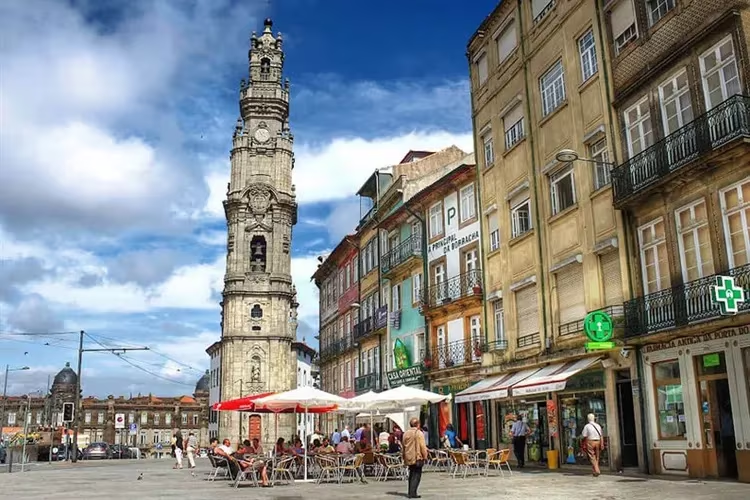
A magnificent example of baroque architecture – a complex consisting of 3 objects: a church, a hospital and a tower, united by the common name Clerigos. The construction, headed by Nicollo Nasoni, was problematic due to soil erosion and lasted 16 years. The talented architect managed not only to organically fit the buildings into the surrounding landscape, but also to create a real masterpiece of architecture. The bell tower (one of the two planned) was erected later, in 1854. The ashes of Nasoni, as an honorary citizen, are buried in the church.
The campanile tower, impressive with its intricate appearance, is not just a decoration of the city. An interesting story is connected with it, called “tea in the clouds”, when in 1917 acrobats Puertullanos (father and son) climbed to its very top, climbing the walls. The reason was an advertisement for Invicta cookies, with which they drank tea. At the very top there is an observation deck with a wonderful panorama. A staircase with 225 steps leads to it. The thickness of the granite walls of the 1st floor is almost 2 meters. The bell tower is now listed as a UNESCO World Heritage Site.
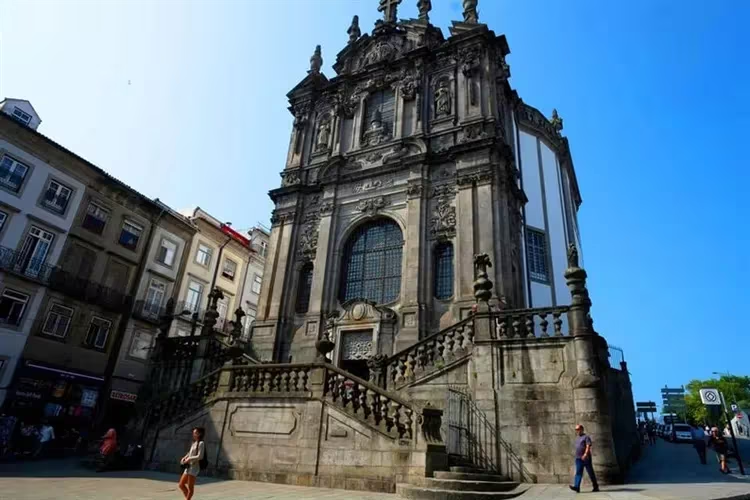
The church itself is admired by the baroque decorations of the facade: relief patterns carved from stone are distinguished by filigree and elegance of workmanship. Majestic columns crown the entrance to it; sculptures of saints are installed in the niches. The top is decorated with figured spiers and a 3-tiered cross. Rich stucco, numerous baroque elements make the facade of the church look like a palace. Today it hosts concerts, charity meetings, and excursions.
Exchange Palace
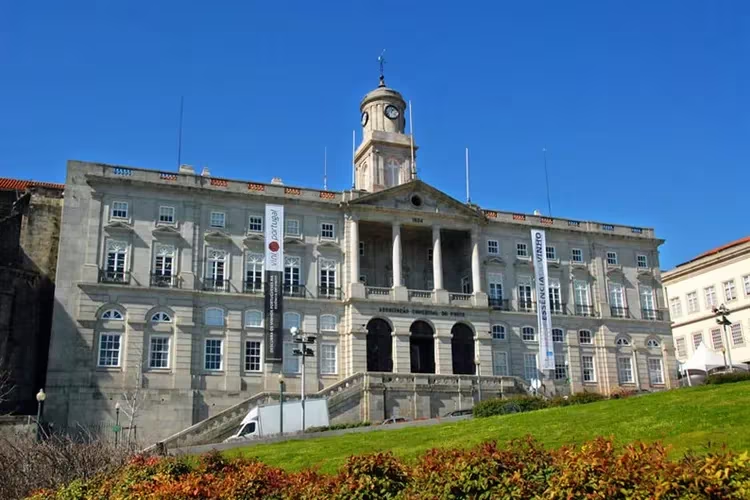
It is impossible not to notice the magnificent building on the square. Enfanta Henrique, in the historic center of Porto. The Exchange Palace or Bolsa Palace stands out from the rest of the buildings with its neoclassical appearance. It was built in the middle of the 19th century on the site of the burned-out church of St. Francis according to the project of J. Junior. Although some parts of the building were created by other architects. The dome covering the Court of Nations was designed by Tomas Soler. Mr. Sousa worked on the interior design.
The building served as the residence of noble merchants for many years. The fruit of the collective work of the craftsmen still delights visitors with the beauty of architecture and design. Today the Exchange Palace is open as a museum demonstrating various works of art: sculptures, frescoes, paintings. The magnificent beauty of the interior decoration of the Arab Hall, the pearl of the Moorish-style palace, delights visitors. Solemn meetings of heads of state are held here.
In the Presidential Salon you can see unique old frescoes, paintings by famous artists. The luxurious front staircase captivates with its amazing design. The Court of Nations, covered with a glass dome and decorated with the coats of arms of the countries, is amazing.
Karmu Church
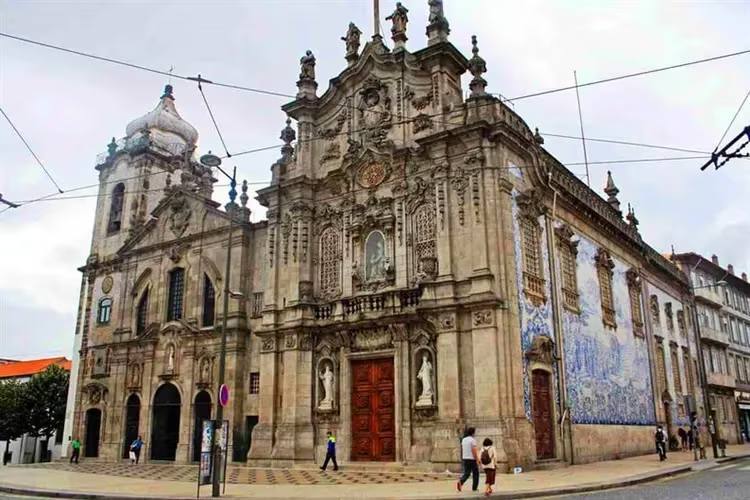
The old city center is also decorated with an architectural masterpiece in the Rococo style – the Karmu Church, located on the square. Gomez Teixeira. The majestic religious building immediately catches the eye with an elegant side facade, lined with blue and white azulejo tiles. The tiled canvas, created by the artist Silvestri, depicts scenes of the birth and development of the Carmelite Order. The top of the main facade is decorated with statues of the 4 evangelists and sculptures of the prophets Elisha and Elijah. The interior of the temple is dazzling with the brilliance of gold, generously decorating the walls, columns, balconies and altars.
All 7 altars are decorated with skillful carved patterns covered with gilding. They are made by the famous master Campagnan. At first glance, it seems that the Karmu Church is one large building. But this is not so: there is a Carmelite temple nearby, separated by the narrowest house in the world with a width of 1 meter. According to Catholic laws, two religious objects could not end up next to each other, so they were separated by a space in the form of a residential building.
Oceanarium “Center of Marine Life”
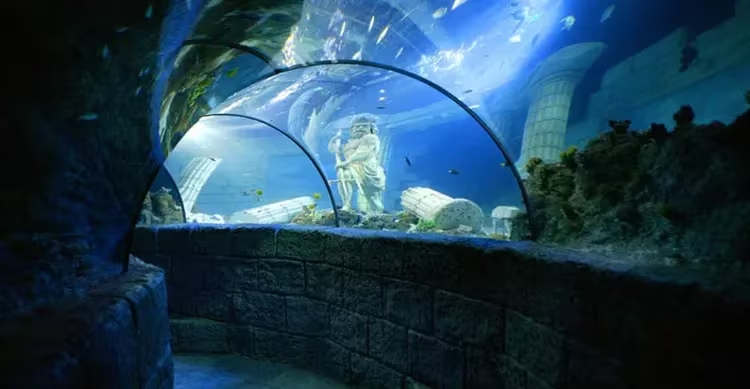
The fantastic world of the underwater kingdom opens to visitors at the Sea Life Center – the local Oceanarium. Of course, it cannot be compared with the size of other European aquariums, but the design, the richness of the marine flora, and the riot of colors do not leave anyone indifferent. The kaleidoscope of marine life from the smallest to the largest specimens captures the imagination. Color illumination turns the spectacle into a real magic.
It seems that you yourself are in a mysterious depth next to the marine fauna. Dances of tropical fish flicker before your eyes, electric rays swim lazily, sharks quickly cut through the water. Seahorses delight with their unusual appearance. Everyone especially likes to stay in the “Kingdom of Neptune” – the largest aquarium. A tunnel leads to it, along which you can go, watching the aquarium inhabitants on both sides.
Some representatives of these individuals have already disappeared from the ocean expanses, some, like bamboo sharks, have already been born in an aquarium. The interest of young spectators is the process of feeding the inhabitants, which is carried out several times a day. You can go up to the observation deck, located on the roof of the pavilion, to see the ocean views. Here, the cafe offers a varied menu, there is a playground.
Bishop's Palace
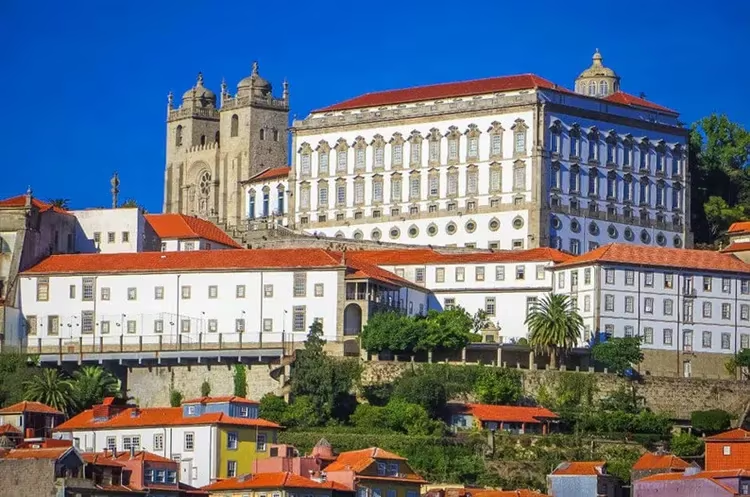
An architectural masterpiece, an example of the late Baroque, an extraordinarily beautiful building, the Bishop's Palace is located next to the Cathedral. The history of its appearance dates back to the 12th-13th century, when it was planned to build the residence of bishops. The palace performed this role until the 19th century, having survived more than one reconstruction. In the 16th-17th centuries, the building was expanded, adding a building with 2 towers. Paying tribute to the architectural fashion, in the 18th century they rebuilt the monument in the Baroque style, as it is seen today. The reconstruction project was developed by the Italian architect Nicola Nasoni.
The rectangular building with an inner courtyard captivates with external beauty. The walls of the façade, painted white, set off the rows of windows with brown figured architraves. The main portal, finished with dark granite, is in harmony with the windows. Above the balcony of the portal is the coat of arms of Bishop de Mendoza, whose efforts completed the last reconstruction. The decoration of the long vestibule with marble vaults supported by Corinthian columns is admirable. The niches between them are finished with azulesh tiles in the form of narrative paintings from the life of bishops. The magnificent building can be admired endlessly.
Monastery of the Serra do Pilar
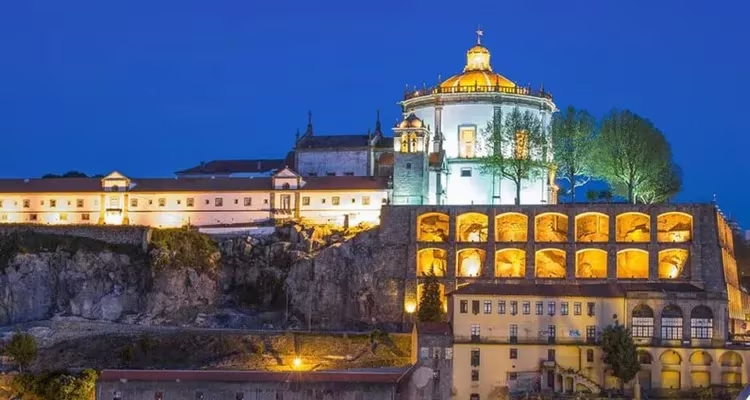
In the picturesque district of Porto, there is an ancient architectural and religious monument included in the UNESCO World Heritage List – the Augustinian monastery of Serra do Pilar. It began to be built in the 16th century by the decree of the Portuguese king John III. For 70 years, powerful battlements were erected, interior premises were finished, despite the lack of funds.
Due to the convenient strategic location of the monastery, it was used as a defensive object during the Anglo-French war. It was here that the Earl of Wellington, the hero of the Battle of Waterloo, drew up battle plans. The military was based in Serra do Pilar and during the siege of the city during the Portuguese Civil War (1832-33).
Today, more than half of the monastery, owned by the military department, is closed to visitors. But the part that is allowed to visit leaves a deep impression. It is impossible not to admire the beautiful Renaissance decoration of the local church, made by analogy with the Roman church of St. Mary. Semicircular vaults, decorated with ornate carvings, perfect sculptures of saints, engravings on gold amaze with their beauty. Other premises of the Serra do Pilar are also of interest.
City Park
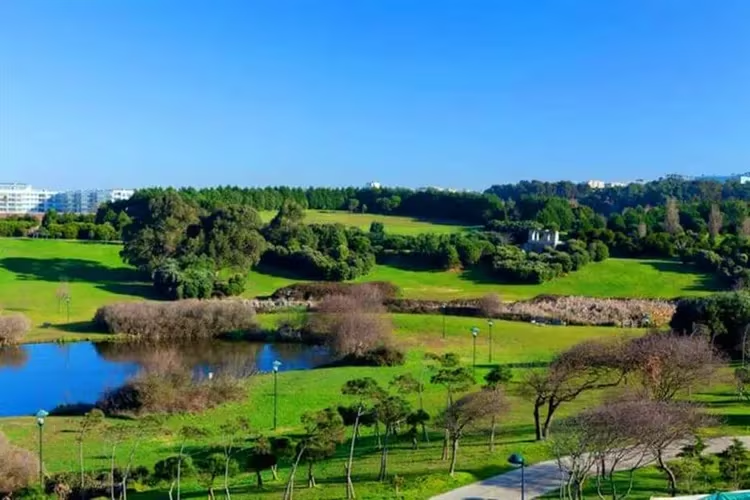
An oasis of wildlife, a city park opened to visitors in 2002, enjoys constant interest among citizens and tourists. The realm of green lawns, shady alleys, forests, groves, lawns and flower beds is spread over 83 hectares. Wonderful landscape landscapes created by the hands of designers delight everyone who comes here for the first time. The Portuguese love the park, having chosen it as their favorite vacation spot, where you can practice various sports, enjoy communication with nature.
In special places, picnics are organized to the accompaniment of bird singing. Along the paths there are benches for rest, ice cream stalls, cafes. Winding paths lead to picturesque lakes located off the coast of the ocean. There are rental boats, scooters, boats. On the territory of the park there is a historical building of the Water Pavilion, opened in 1998 for the international exhibition Expo-98.
Currently, the Water Pavilion is under the jurisdiction of the City Hall and is managed by ONFR (Science and Development Foundation Organization). In the park you can get acquainted not only with the terrestrial fauna, but also with the inhabitants of the deep sea. Here is the private marine aquarium Sea Life Center, which demonstrates representatives of the underwater fauna. The park is the best place for leisure.
Port wine museum
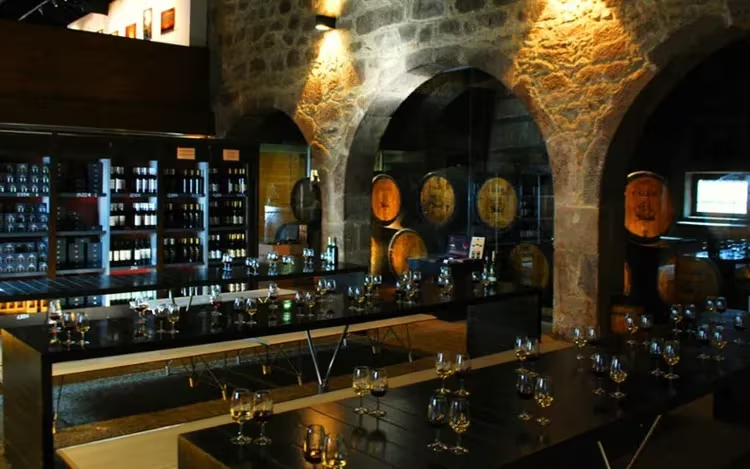
A whole museum is dedicated to one of the main symbols of the city – Port wine. It is located in a rather picturesque building of the former reservoir (18th century). Its exhibits illustrate the 3-century history of the development of wine production in Portugal. For the first time, the name of a branded drink, protected today by the legislation of the country, arose in the 17th century. According to the EU directive, port wine is recognized as a wine of excellent quality and exclusive taste. The Museum of Port Wine as a branch of the Municipal City Museum was opened in 2004.
Looking around the museum exhibitions, you can see the old wooden rabella boats, which transported wooden barrels of grape juice along the Douro River for its storage and aging. The expositions demonstrate all stages of the production and storage of port wine, many samples of labels and bottles of original forms. There are also old oak barrels of the 18-19th centuries, intended for the maturation of the drink. In the tasting room, guests taste the taste of various types of port wine.
Tram Museum
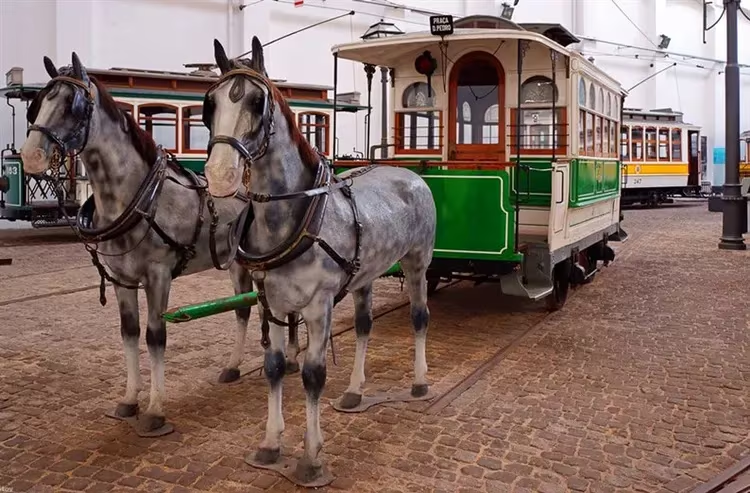
It is already impossible to imagine movement in any big city without a tram. This grateful form of transport, which appeared in the 19th century, replaced dozens of horses. At first it was called “konka”, because light wagons were dragged along the rails by horses until electric trams appeared. A visual history of the tram business in Porto can be seen by visiting the interesting Tram Museum here.
All of its exhibits, from the very first copy to the last, are in excellent condition. Presented in it is a horse-drawn 12-seat carriage, which first appeared in the city on May 15, 1872. Later it functioned as a trailer for an electric tram. Each exhibit reflects the evolutionary stages in the development of tram production. Visitors can climb into the car, touch everything with their hands, sit in the driver's seat, take a photo.
Among the trams there are unique examples made in an exclusive version, such as, for example, car N 100. The restored American tram, produced in the 30s of the 20th century, is presented here. An interesting electric model of the “British carriage”, produced by an English company, appeared in Porto in 1909. The car N 250 is presented, which functioned until 1981 and remained the only one of the 12 produced in Porto.
Museum of Contemporary Art Serralves
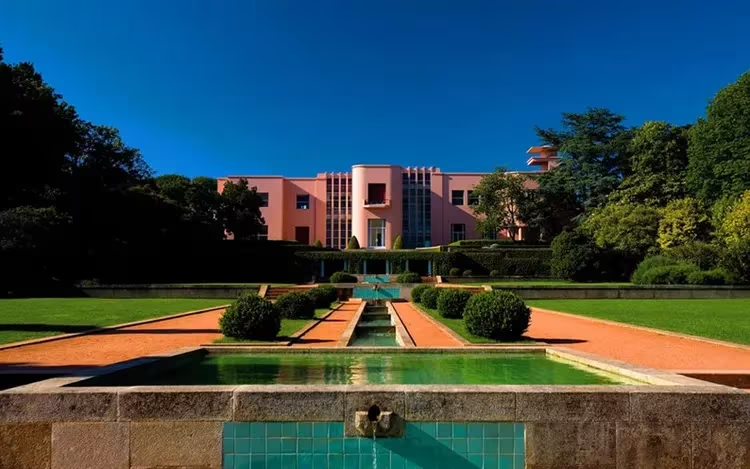
This is the first modern art museum in Portugal, opened in 1999 on the territory of the Serralves estate, among a picturesque park. The opening was marked by the exhibition “Circa 1968”, which aroused great interest among artists and the public. The magnificent Art Deco museum building covers an area of 13 thousand square meters. m., 4.5 thousand square meters. m. there are 14 exhibition galleries.
The construction of the complex, the design of interiors was led by the architect Vieira. The originality of his design solutions can be traced in the interiors of the Central, Wooden and Marble halls, the atrium. In fact, this is a museum complex – installations by contemporary artists are also demonstrated on the territory surrounding the building.
In the “Mirror Pavilion”, located by the reservoir, among lush greenery, short films are shown. Museum guests visit not only exhibitions, but can use the library, shop in a souvenir shop, and relax in a local restaurant. A rich collection of modern paintings is represented by the works of West, Horn, Oldenburg, Hamilton and others. There are also masterpieces by the famous Portuguese artists Helena Almeida and Paula Rego.
Crystal Palace Park
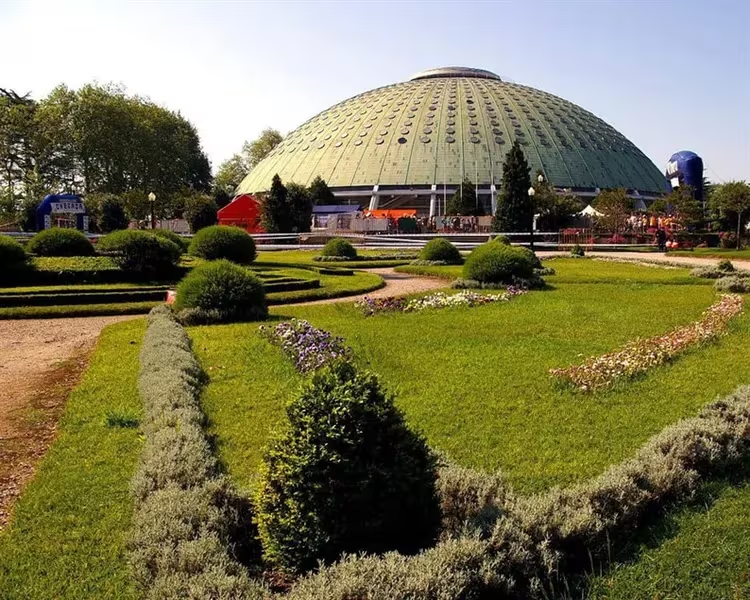
The wonderful park attracts citizens and guests not only with its intriguing name, but also with many interesting objects and extraordinary landscape beauty. The territory of the park is decorated with magnificent sculptures a la antiquity, modern installations, luxurious flower beds, velvet lawns. Surrounded by sprawling trees, the mirror of a beautifully designed large pond sparkles. The Crystal Palace, a building made of iron and glass – a tribute to the fashion of the middle of the 19th century – was opened in 1865 at the time of the international exhibition.
The palace made an indelible impression on visitors, as did the park adjacent to it, divided into thematic zones. Today, instead of the Crystal Palace, there is a vast pavilion built in 1956 for various events. But park areas have been preserved: the Garden of Roses, the Garden of Senses, the Garden of Smells, visiting which is a pleasure. Peacocks roam freely here, willingly accepting treats. It is interesting to visit the Romantic Museum – the mansion of the former king of the Scandinavian kingdom, which presents the atmosphere of a past era.
Santa Catarina Street
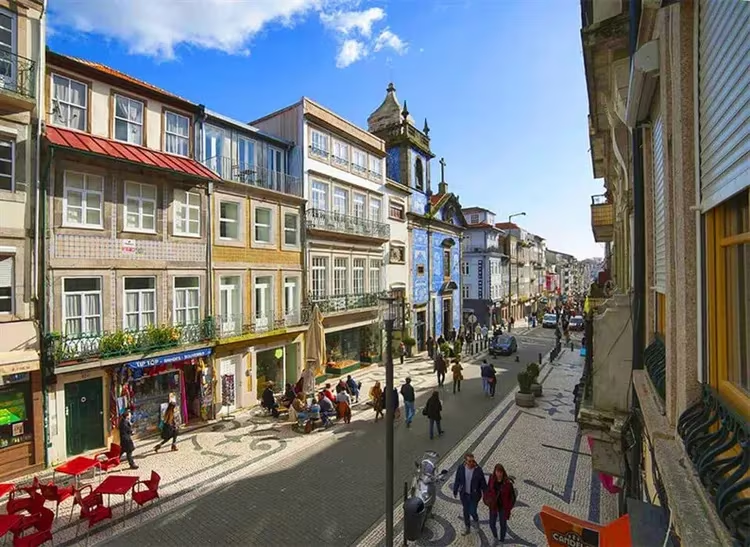
Every self-respecting tourist considers it his duty to walk along the pedestrian street of Santa Catarina. It starts near the railway station and is not only a historical landmark, the trading heart of the city, but also an open-air museum. There are many old buildings, the facades of which are decorated in the national style with azulejo tiles.
Narrative paintings on biblical and historical themes in blue and white turn the facades into stunning works of art. The facades of modern buildings are also beautifully decorated, the owners of which strive to make them attractive. Aesthetic feelings that overwhelm tourists are complemented by exciting shopping in branded boutiques and souvenir shops, concentrated along the entire 1.5-kilometer length of the street. Here everyone can satisfy their consumer demand.
Various souvenirs, high-quality jewelry, clothes, shoes, household items, dishes – the range of goods is very rich. Many cafes and restaurants offer a delicious and inexpensive menu of national cuisine. Tourists are looking for the famous cafe Majestic, famous for its airy pastries. You should come here for shopping on any day except Sunday, when the shops are closed.
Church of Saint Ildefonso
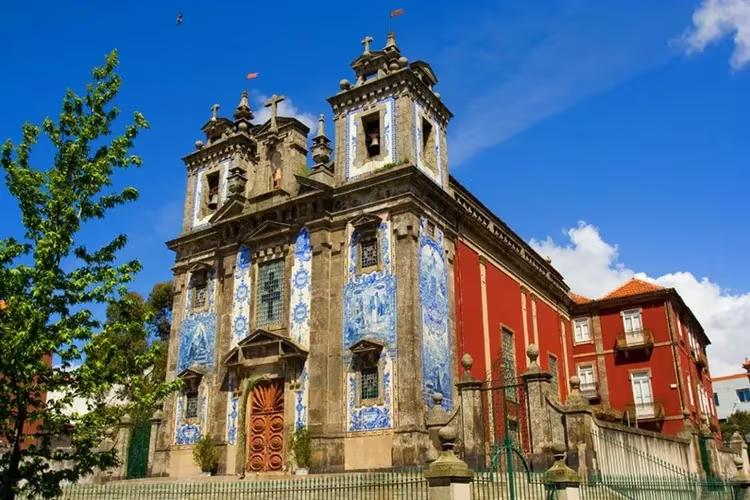
A true masterpiece of ancient architecture – the Baroque Church of St. Ildefonso is located next to the square. Batalha, on the site of the chapel of St. Aliphon. They erected a religious building thoroughly and carefully on a powerful foundation for 30 years (1709-39). First, the central part was built, and then bell towers were erected on both sides. Particular attention was paid to the decoration of facades in the Baroque style.
The best craftsmen worked on the magnificent stucco and laying of tiles from blue and white azulejo tiles, over which time has no power. Paintings depicting scenes from the life of Saint Ildefonso and the Gospel were created by the artist Georges Colas. More than 11,000 tiles were required for the mosaic decoration – one can only imagine the scale of painstaking work. A true pearl of baroque architecture was named after the Metropolitan of Toledo, Ildefonso, who was awarded the status of a saint for his 10-year service.
The interior decoration of the temple is also admirable, with a luxurious decorative composition – retablo, designed by the famous Italian baroque specialist Nasoni. The Portuguese take care of the amazing temple, repeatedly restoring it after damage. In 1819 the church was restored after a hurricane, in 1833 the stained-glass windows were replaced after shelling. The unfading beauty of the ancient building continues to live for centuries.
Church of Saint Lawrence
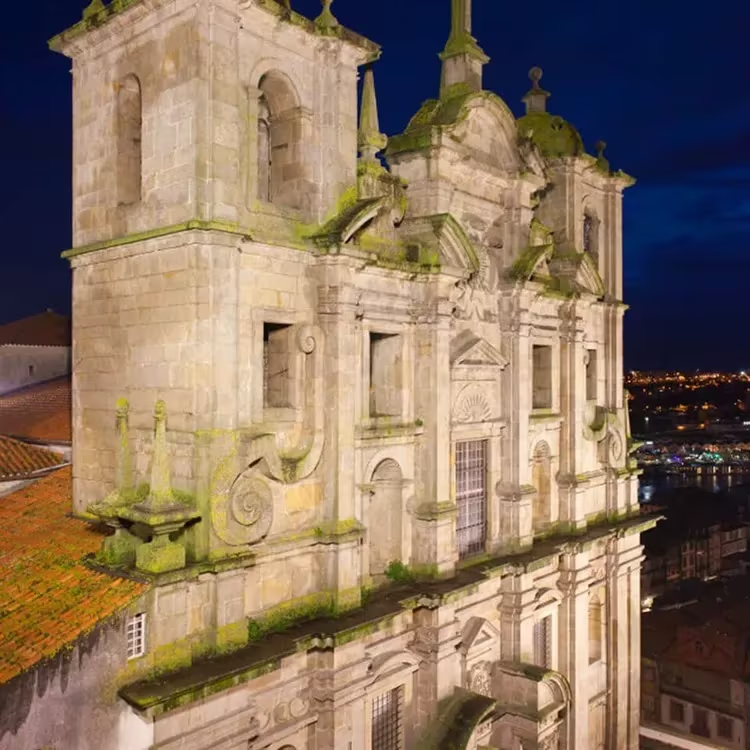
An excellent example of Baroque-Jesuit Mannerism is the Church of St. Lawrence, a religious and architectural monument of the 16th century. The external appearance of the temple successfully combines monumentalism and elegant splendor of many baroque decorations covering the facade. The monumental building was erected by the Jesuit monks, hoping for their long presence. However, during the reign of the Marquis of Pombal, the Jesuits were expelled from the city in 1759, and the church was transferred first to the University of Coimbra, and later to the Augustinian monastic order.
The Augustinian monks who first settled in Lisbon in 1663 in the place of Luqar do Grilo (crickets) began to be called “cricket brothers”, therefore the temple is otherwise called “Grilush”. Today it is owned by the Roman Catholic diocese of the city, which organized the Museum of Sacred Art and Archeology here. A visit to the museum is an interesting immersion in the past, in the history of religion. Here you can see authentic rarities of the 16th-18th centuries. Tours are organized for tourists for donations, there is no fixed price.
Church of Saint Clare
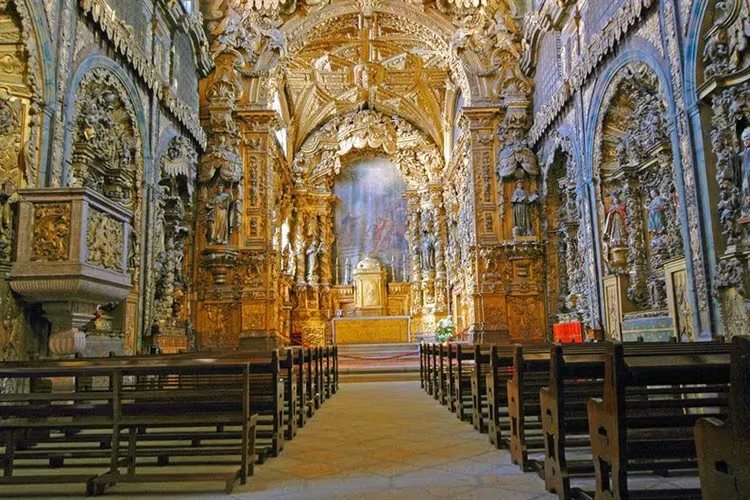
If you do not know what is hidden behind the outwardly modest facade of the inconspicuous gray building of the Church of St. Clara, you can walk past it indifferently. But for tourists who are passionate about historical and cultural monuments, this will be a big mistake. All the interior decoration of the sanctuary is a priceless work of decorative art and painting that boggles the imagination. The temple, “hidden” behind a small square, resembles a box with a secret, when under a simple lid a sparkle of jewels is revealed.
Magnificent carved ornaments in the Rococo and Baroque style, covered with gold leaf, are unusually beautiful. According to information, 470 kg of gold was used for coating. The gilded details of the wall panels fill the main hall with brilliance. Graceful images of angels, cherubs, holy martyrs decorated the interiors in the 17th century, thanks to the brush of the great artist Miguel da Silva. Admire the design of the wooden ceiling, covered gallery in the spirit of Mannerism.
The temple was built in the 15th century. as part of a Franciscan monastery and was intended for the services of Clarisse nuns, members of the Order founded by Saint Clara in 1212. She was the first follower of the sermons of Francis of Assis and the creator of the female branch of the Franciscan order. The church named after her was owned by Clarisse nuns until the 19th century. It is surprising that the Franciscan preaching of poverty, humility and prayer contrasts with the richest decoration of the temple.
Mercy Church
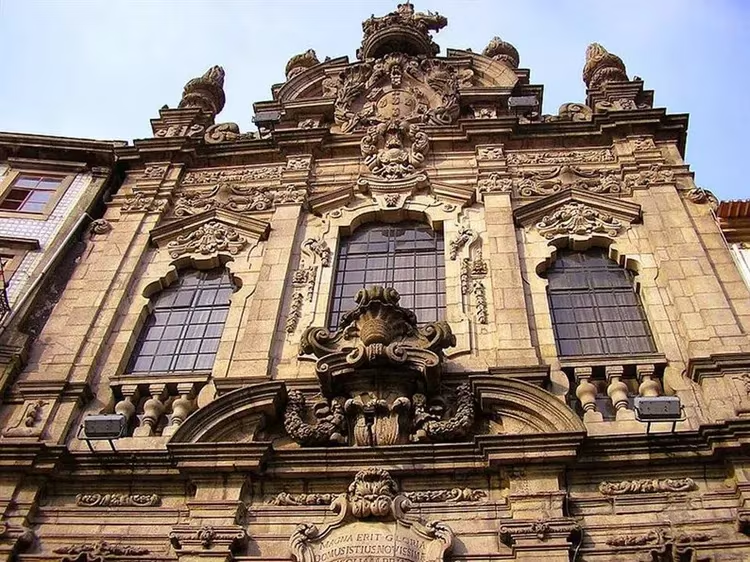
You can feel the atmosphere of the Middle Ages, see with your own eyes the buildings of the 16-17th century on the old Rua das Flores street. There are many authentic houses here that have preserved the architectural features of that era: lattice windows, metal balconies, facade decoration with azulejo tiles, noble coats of arms. Among the ancient buildings stands the Church of Mercy, built at the end of the 16th century. next to the hostel. In the 17th century there has been a restoration. The facade of the temple was decorated with baroque elements: garlands of flowers, leaves, festoons, the royal coat of arms.
The Mannerist interiors are lavishly decorated with neoclassical wood carvings. The walls are lined with azulejo tiles (17th century), the original central altar of the 16th century is superbly finished. At the temple there is a small museum, the main exhibit of which is the artistic masterpiece “Fountain of Life”. The painting by the Flemish artist Colin de Cauter depicts the royal family of Manuel I kneeling before the crucified Christ.
Military Museum
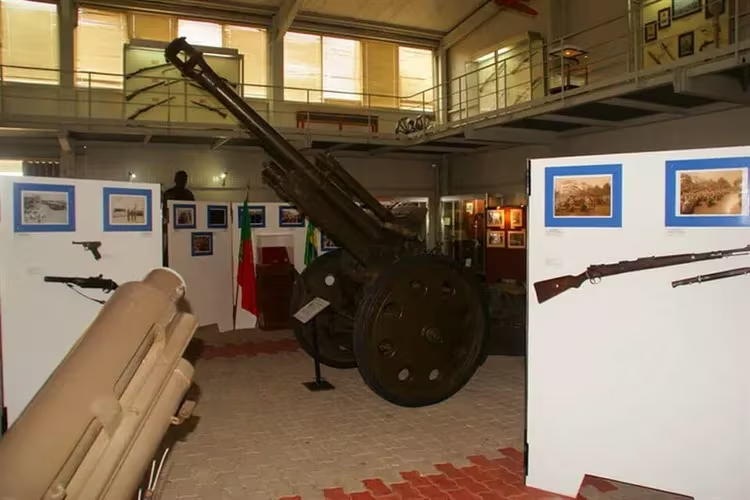
Not a single European country in the past had as many colonies and trading posts on different continents as Portugal. The Portuguese won tidbits on the best islands in the oceans. It is no coincidence that the language of a rather small nationality of the Portuguese is today one of the most common on our planet. The military glory of a modern peaceful state is reflected in the Military Museum of Porto. It is located in the building of the former KGB branch and is not large-scale, but every visitor will find something interesting here.
An undoubted success among museum exhibits is a huge collection of tin soldiers, demonstrating all kinds of uniforms from different armies of the world. All figurines, executed with virtuosity, down to the smallest detail, represent genuine works of miniature sculpture. Among them are images of great historical characters. One of the expositions quite fully reflects the events of the war with Napoleon.
The Civil War of 1832-34, the 11-month heroic defense of Porto are presented in detail. Here you can see the machine gun of the Lewis system, owned by the famous hero of Portugal, Anibal Milyash. Participating in the 1st World War, he received the most soldier awards. The most valuable rarity of the entire exposition is the sword of Enriques, the founder and 1st king of Portugal.
Museum “World of Discoveries”
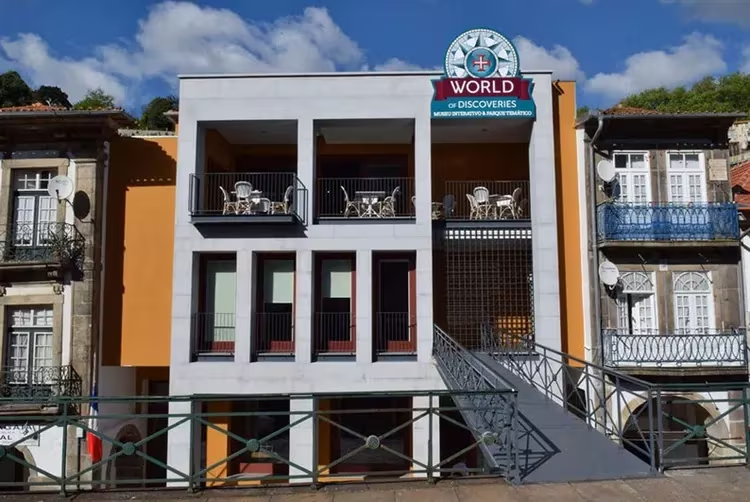
Cultural and educational institution of the 21st century – an interactive museum introduces the numerous discoveries of Portuguese navigators and explorers. A fantastic picture of travel is recreated in the museum halls and on the territory of the theme park. Fascinating odysseys of Magellan, Bartolomeu Diaz, Vasco da Gama open before the eyes of amazed visitors at interactive multi-sensory expositions. The magical world of the tropics, exotic flora and fauna, knight's castles, ancient cities of the East makes an irresistible impression.
20 permanent media scenes-exhibitions make viewers forget that everything is happening in the virtual world – the atmosphere of what is happening around is so realistically recreated. The sense of authenticity is enhanced by live theatrical performances by the park staff. For persuasiveness, the “artists” are dressed in 15th-century clothes, a typical entourage of the era of great discoveries has been created. Being in the tunnel 29 feet long, recreated in the form of the Cape of Good Hope, you really feel the atmosphere of this place.
Theater Coliseum-Porto
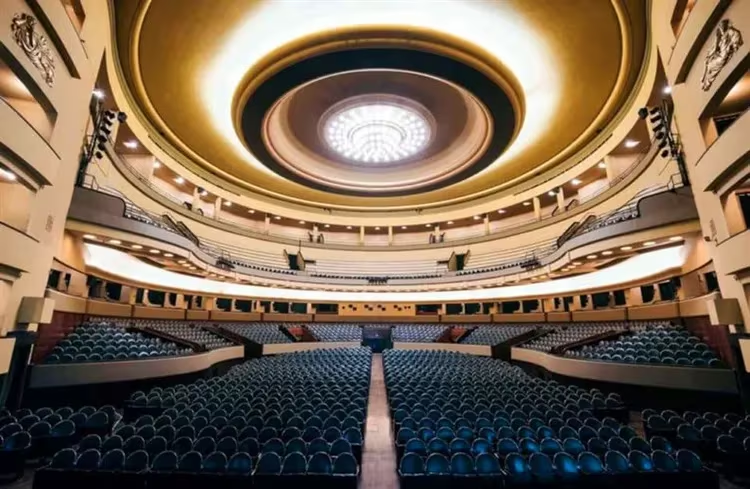
A historic Art Deco building built in 1635, the Porto Colosseum serves as a theatre, concert hall and theater at the same time. It hosts movie premieres, ballet and theatrical performances, concerts of classical and pop music. The Colosseum of Porto is a universal temple of art, where you can hear already famous and just beginning opera performers, see classical ballet performances and modern dance performances.
Theater stages provide an opportunity for all city ballet schools, theater studios, pop groups to present themselves to the audience and gain popularity. A variety of artists perform here, including very young ones. In 2015, the premises of the Colosseum were restored, the acoustics in the concert hall were improved, and 3D equipment was installed in the cinema hall. There are soft sofas in the lobbies, a cafe with an outdoor terrace is equipped on the roof.
cable car
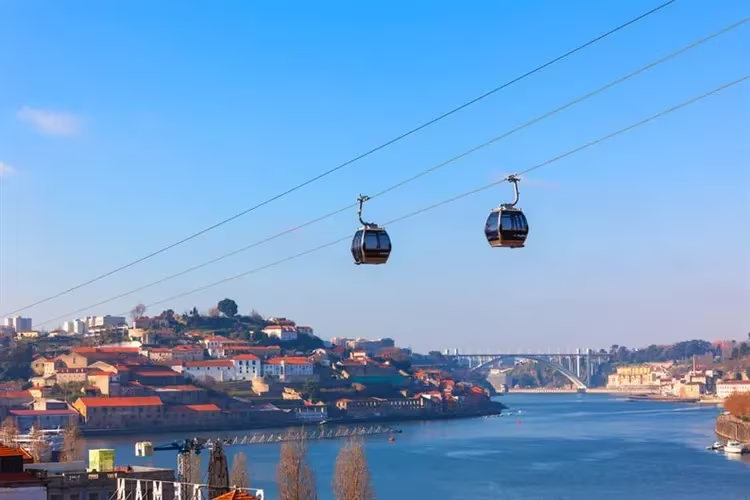
An indispensable attribute of all cities with uneven terrain, the Porto cable car was opened in 2011 and has become an object of tourist entertainment. It connects the promenade of the neighboring municipality of Villa Nova de Gaia with the second tier of the Luis I bridge and for the most part passes over the Villa area. The cabin, designed for 8 people, moves along the cable at a bird's eye view. While driving below, irresistible views of the city open up.
Although the Ribeira promenade is clearly visible from the opposite bank of the Douro River and vice versa, the cable car ride is very convenient for tourists visiting the exhibition and tasting rooms of Villa Nova de Gaia. It's not very pleasant to go upstairs after all the tastings of branded port wine, and going up on the cable car will only add to the pleasure. The air crossing operates from 10 am, a round-trip ticket costs 9 € for adults, a child 4.5 €.
Fortress wall of Fernandina
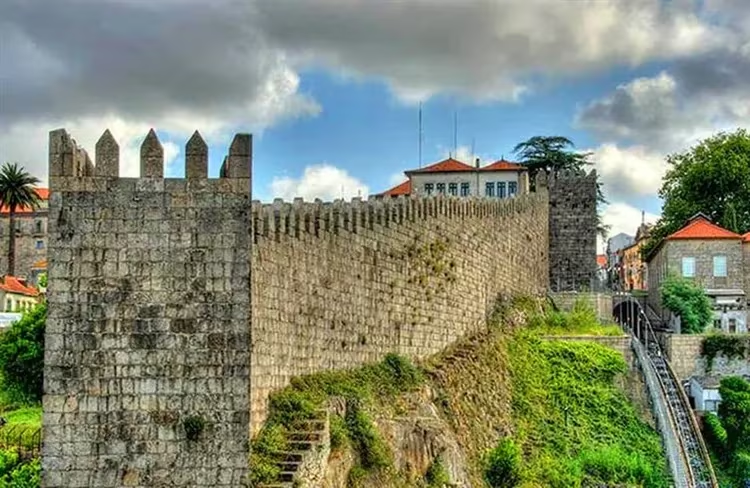
Not far from the Cathedral there is a unique attraction, personifying the Middle Ages, the Fernandina Wall. Today, tourists see only preserved fragments of the original building and part of the restored wall with a tower. The defensive wall was erected in the 14th century instead of the old fence. The construction of a powerful wall 6.6 m high and 2.2 m thick lasted 40 years. Along its entire length of 3400 m, 17 gates made of stone and iron and 30 watchtowers were equipped.
When there was no longer a need for a defensive structure in the 2nd half of the 18th century, its main part was demolished, making room for new streets and buildings. In the 19th century, the destruction of the wall continued. Only in 1926 did the remaining authentic fragments of the powerful wall become a national monument in Portugal. Near the Xie Cathedral, part of it and one tower with a crenellated top were restored. The name of the structure still bears the name of King Ferdinand, under whom the construction of the grandiose structure was completed.
Sao Bento train station
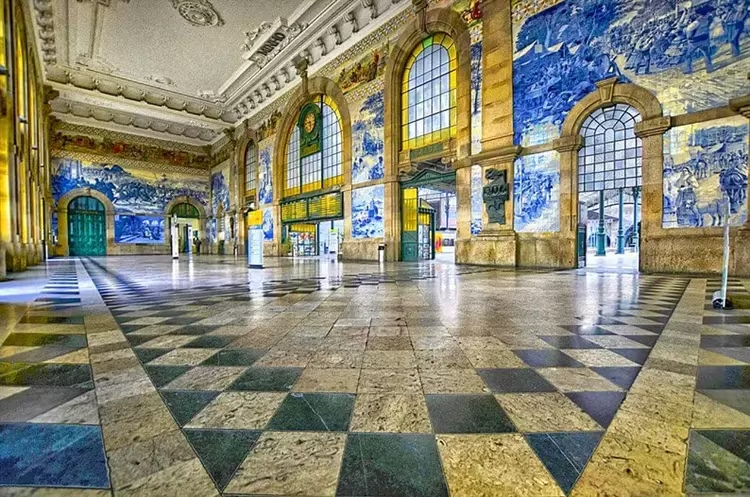
Anyone who first enters under the arches of the historic Sao Bento railway station, freezes with admiration from the amazing beauty of the interior design. This is a true work of art and design art. The station was built at the beginning of the 19th century (1900-1916), when a railway was laid from Lisbon to Porto. Great attention was paid to the construction of the fateful object, the best specialists in architecture and painting were involved. The exterior of the building reflects the neoclassical style in the French spirit.
The interior decoration turned the station into a museum of arts and crafts and glorified it all over the world. Tourists come here to admire the interiors, which have become a masterpiece. Superbly executed wall panels made of azulejo tiles “draw” historical plots, everyday pictures of the life of peasants, military battles. The artist Georges Colas worked on the artistic tiles.
White and blue panels along the perimeter frame plot paintings made of colored tiles. The walls between the vaulted windows are decorated with graceful ornaments. Sao Bento is an active commuter station serving local trains. The main passengers are tourists traveling to nearby cities and towns within a radius of 50-60 km. While waiting for the train, tourists have the opportunity to admire a genuine artistic masterpiece.