
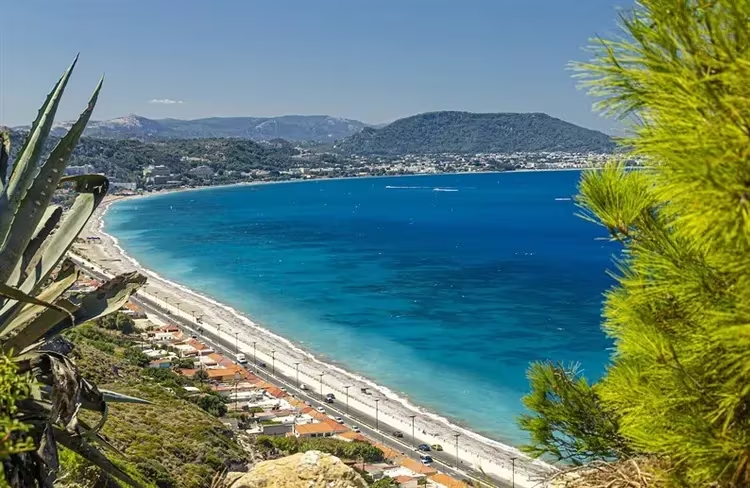
Sights of Rhodes – 30 most interesting places
The name of the island and the city located on its territory are synonymous with sea travel, a carefree vacation. Many consider this place an earthly paradise. Only one amendment: almost the entire territory of Greece is a seismically hazardous zone.
However, the Greeks are philosophical about such a change in activities, they continue to plant vineyards, orchards, breed goats, sheep, cows, arguing their commitment to ancient traditions with their concern for tomorrow.
Rhodes fortress
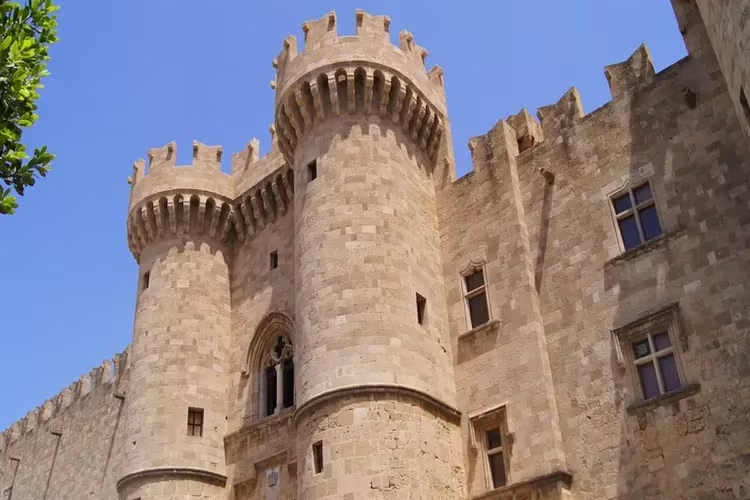
The medieval building impresses with its power. 600 years ago, according to historians, it was the most impregnable fortress on the territory of Christian states. It was erected by the Hospitallers, whose military-religious order then owned the island. The organization, created during the Crusades, is still active today. It is best known as the Order of Malta.
Hospitallers today do not wage wars, knights and ladies organize charitable medical, educational, scientific, cultural programs in all corners of the planet and… have a huge influence on world politics. In the Middle Ages, the leadership of the order was located in the fortress. The building has been under siege several times. The Muslims conquered it in the 16th century, 70 years after the fall of Constantinople.
Забронируйте индивидуальный трансфер от аэропорта до вашего отеля за 2 251 RUB
The reason for the defeat of the defenders of the fortress was not even the numerical superiority of the opponents (a 100,000-strong army was thrown against several hundred knights), but the betrayal of the crowned persons, who enjoyed the support of the order and were afraid of its strengthening. A significant part of the ancient defensive fortifications has survived to this day. After large-scale work in the last century, the restorers managed to restore the appearance of the fortress, close to the original.
Old city
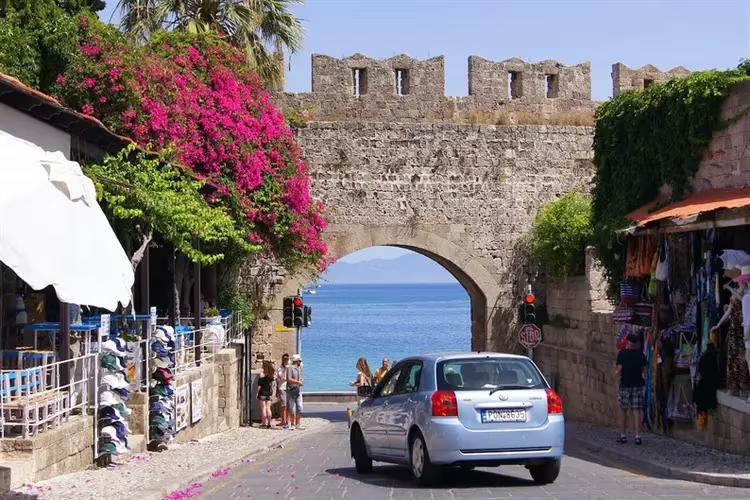
By the decision of the three ancient states of the island (Kamiros, Ialysos, Lindos), a new capital of a single island state, the city of Rhodes, appeared. In addition, he acquired the status of an important military base, based along the seashore. The event happened in the ancient period of 408 BC. The memory of the times is considered to be information about the Colossus of Rhodes, a lighthouse included in the list of seven wonders. The history of the medieval city is filled with knightly raids, the wars of the Ottoman army, the victory of Italian soldiers.
A mixture of eras, traditions, customs of different nationalities left an invaluable historical mark in the form of ancient buildings that have become important sights. Many monuments were carefully restored by the Italians. They gave the city an unusual color, preserved the memory of the events that raged in antiquity to the descendants. Each street, the walls of a small private house are saturated with the atmosphere of antiquity.
Street of the Knights
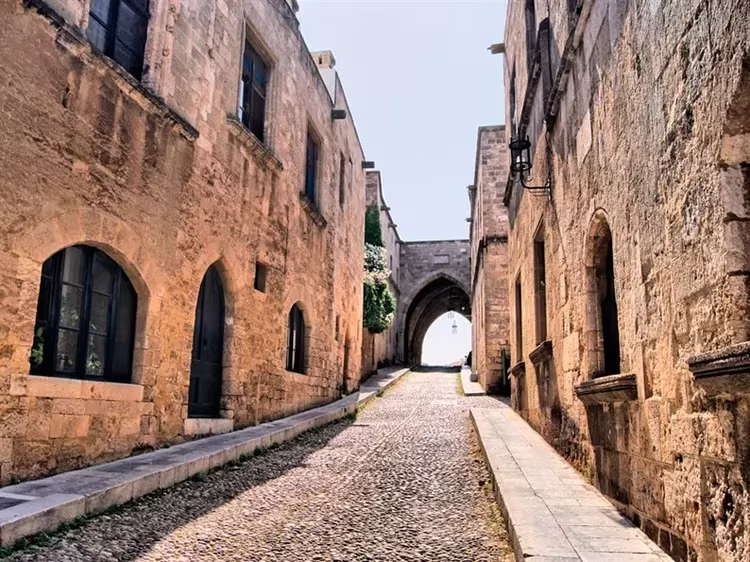
In ancient times, there were houses (residences) of famous “languages” or representatives of various orders of Rhodes on this street. It was their labor that the fortress that protected the city was erected. At the end of the old street, a building has been preserved that served as a Byzantine temple, the Catholic Church of the Mother of God of the Fortress, a mosque. For tourists, the Archaeological and Byzantine museums located along the street are of interest. Several rooms of the Archaeological Museum contain artifacts reflecting the life of the knights (the official name is the “Order of St. John”).
John the Baptist is the patron saint of the city. The fortress, built by the knights, surrounded the medieval city (its length is 4 km.). Hippoton or Knights Street passed through its center. Now she has an external image the same as in those days, when the steps of a passing detachment of knights in armor, ancient robes were heard on it (tourists see them). It is easy to find it, having reached the ancient fortress.
Port of Mandraki
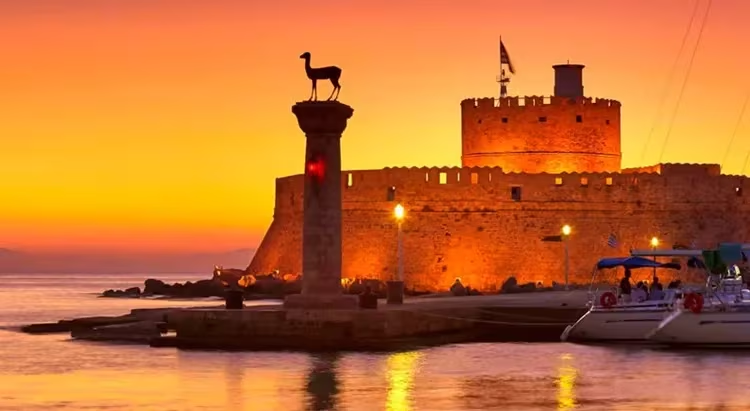
For more than 2500 years, the port of Mandraki has been considered the main harbor. Now life has not stopped: hundreds of fishing boats, modern yachts, small cruise ships moor here all year round. All of them, like thousands of years ago, are met by bronze statues of a deer, deer, fortified on massive stone columns. Deer are recognized as a symbol of the city (according to legend, they saved the island from snakes by trampling them with their feet). According to an old legend, the famous monument of the Colossus of Rhodes (the sun god Helios) was located on the site of the statues. It was viewed from other islands in the Aegean Sea.
An earthquake destroyed the statue in 222 BC. Three surviving medieval mills, reminiscent of the times of the knights, attract attention with red roofs and stone turrets. At first there were 13 of them (the mills were destroyed by the Ottoman troops). They grinded grain arriving at the port. Port of Mandraki belongs to the historical part of the city, located next to the Fortress.
Fort Saint Nicholas
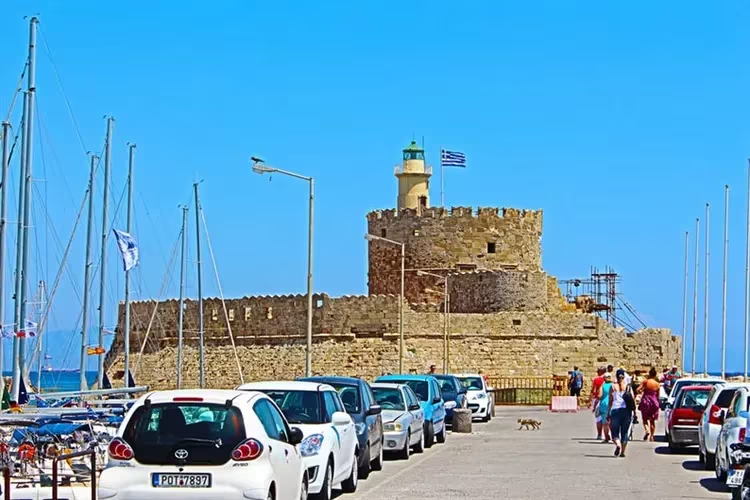
The imposing building of the fort was built to protect the port and harbor. It is located at the end of a 400 m pier built in the ancient period. It separates the harbor and the open sea. Stone mills and the border fortress of St. Nicholas have been preserved. Before the destruction of almost all the mills by the Ottomans, it was called the fortress of the mills. A round tower made of natural stone (its diameter is about 17 m) served as the first defense of the entrance to the harbor. It was built under the authority of Grand Master Pierre Raymond in 1465 on the foundations of an ancient Byzantine church of sailors. Fortifications still perform important security functions today.
For example, on the roof of the ancient tower of Fort St. Nicholas, there is a platform with a lighthouse. It is shown in numerous photographs. For sailors, this is an important navigational element that helps them see the beautiful ancient shores of the legendary island in time. Getting to the fortress of St. Nicholas is easy by car, passing the port of Mandraki.
Acropolis of Lindos
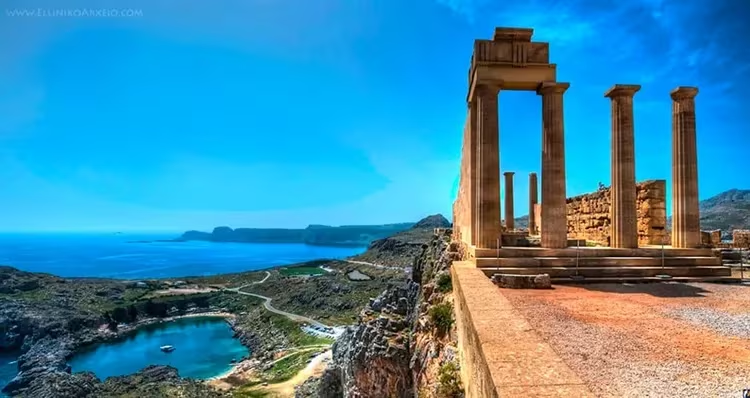
The breath of the ancient powerful city, which was part of the Dorian Hexapolis (Hexapolis), flourishing under the rule of the famous sage Cleobulus, can be felt by looking at the preserved ruins of the Acropolis. It is located on a hill 116 m high. Archaeological excavations have shown that there was also a temple erected on the site of an even more ancient structure. It is said that the stairs at the foot of the hill belong to this temple. Ancient policies always had several levels. At the very top, sanctuaries of patron gods were erected.
The Acropolis of Lindos was popular during the ancient times of the life of the island. The theater appeared on the southwestern part of the hill BC. e. Like an ancient sanctuary, an image of an ancient Greek triemiolian ship, the theater was carved into the rock. Now you can see several spectator rows of stone steps. There are many legends about the Acropolis of Lindos. According to one version, before an important trip to the East, Alexander the Great was here. The ticket price for the Acropolis is 6 €. Opening hours vary depending on the season.
Acropolis of Rhodes
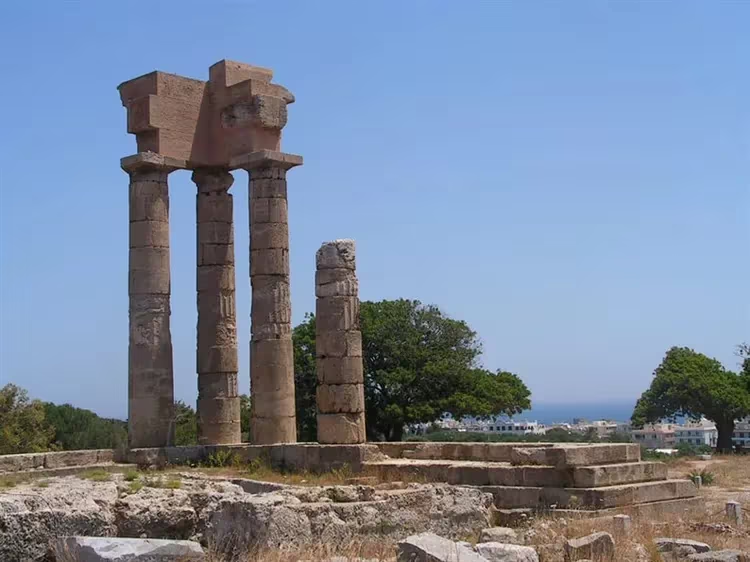
The ancient ruins of the Acropolis are located three kilometers from the city center, on top of Mount Smith. From its top, a unique view of the Old, New City opens. The excavation of the hill began in 1912 and now only a small part of the ancient treasures is available for tourists to see. This is the famous complex of the ruins of the temple of Pythian Apollo, the amphitheater in which Cicero studied the art of orator. Marble odeon (theater), completely restored and with 800 seats. On the bottom row, three steps from the ancient period have been preserved.
The theater now hosts musical performances. Next to the theatre, a Roman stadium has been preserved. Previously, Alion sports competitions were held here. Athletes are training at the stadium now. Partially excavated temple of Athena and Zeus, nymphaeum (underground structures in the rocks), the sanctuary of Artemis. The acropolis did not serve as a fortification. There are no fortresses, stone guard towers.
Rhodes Stadium
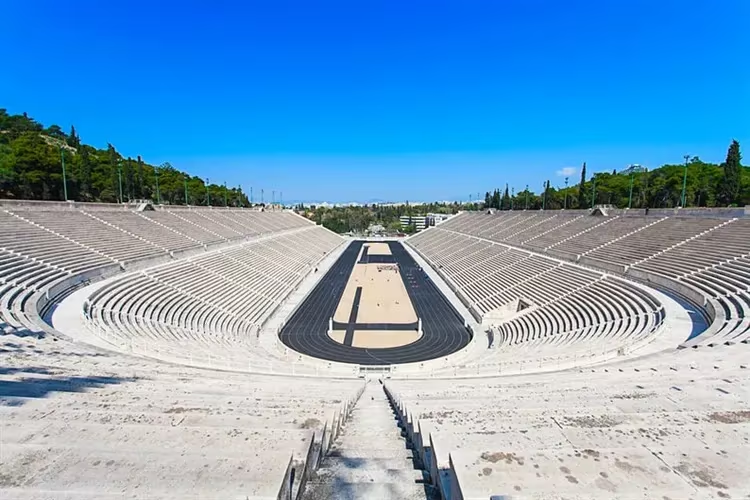
It is hard to believe that such a large-scale structure was built by human hands! A huge cyclopean square stone in the stadium evokes thoughts of giant mythical creatures. The construction of a sports facility dates back to the 3rd century BC. It was specially created for the ancient Olympic Games. The acoustics of the building can be the envy of modern concert venues: the word quietly spoken here is perfectly audible at a distance of 300-400 meters.
On the territory of the stadium stands, stone benches (with backs) for spectators, and running tracks have been perfectly preserved. Next to the building in ancient times was the temple of Apollo – the god of light, the patron saint of soothsayers, doctors, artists. Not far from the stadium there were also gloomy buildings: tombs where the nobles were buried, the altars of Hades – the lords of the underworld of the dead. From the temple there are ruins and 3 columns, the burials are much better preserved (they were relatively recently discovered during excavations).
Ancient Kamiros
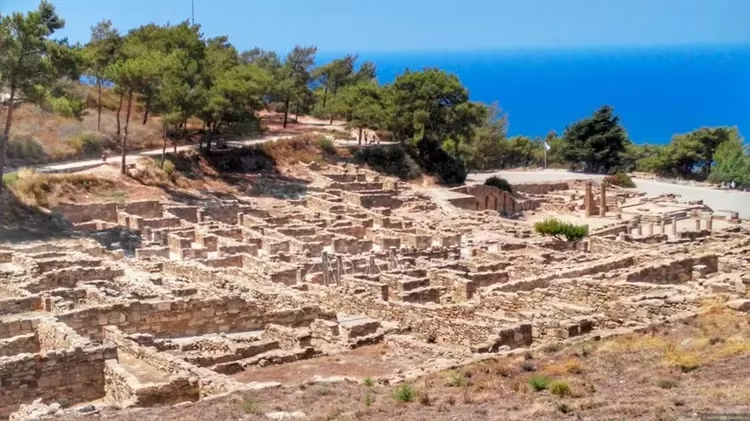
A city from a lost realm, hidden forever by a thick layer of a devastating earthquake 22,000 years ago. He hid his secrets until the middle of the 19th century. The main excavations of the city began at the beginning of the 20th century. They made it possible to see the ruins of a Dorian temple that existed in the 3rd century BC. e. For the first time the ruins of the city, the cemetery, the temples on the top of the hill, the market, the acropolis were discovered in 1859. They belonged to one of the most developed, wealthy cities of the states of the Six Cities of the Dorians.
Interesting facts are found a minted coin depicting a fig (fertility totem), storage of drinking water, aqueducts for supplying it to the population. The main path up the hill leads to the Acropolis, to the place where the temple of the goddess Athena stood. The ruins of the city are open on three levels, and the entire area is located at 120 m above sea level. At the top there is an observation deck that offers a view of the ruins, the city, the sea.
Gora Filerimos
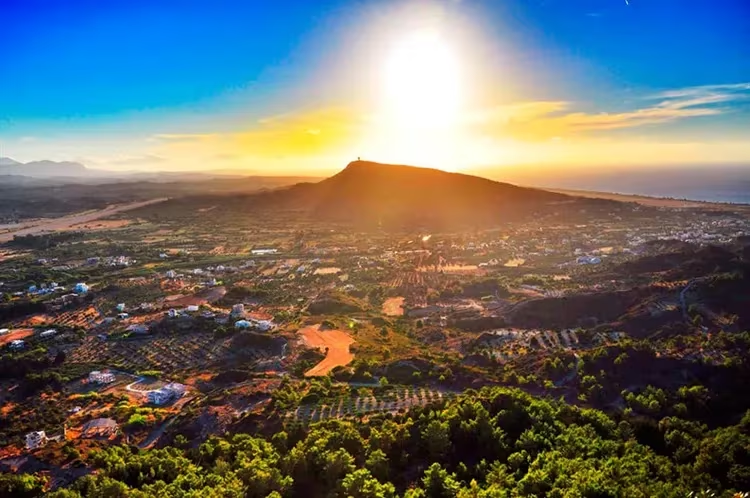
A path bordered by cypresses leads to the majestic cross standing on top. “The way to Calvary” is called this road. Its length is equal to the path that Jesus covered. Stone steles are installed along the road, reflecting the scenes of the torments of the Lord. You can get to the top by an internal spiral staircase. It is narrow, it is difficult for two travelers to disperse on it. A cross was erected (at first wooden, and now stone) by the monks living in the monastery. In ancient times, a small, but very important, famous city of Yalis flourished on the mountain.
Now the ruins of the temples of Zeus, Athena, the monastery, the cell of St. George with preserved frescoes remind of the settlement. The name of the mountain comes from the name of a hermit monk who settled here in the 1st century. It is said that the secret of the famous Filerimos liqueur was invented here. You can buy it only here in the shop of the descendants of the Greek family who preserved it. Filerimos Nature Reserve is open every day except Mondays.
Monastery Tsambika
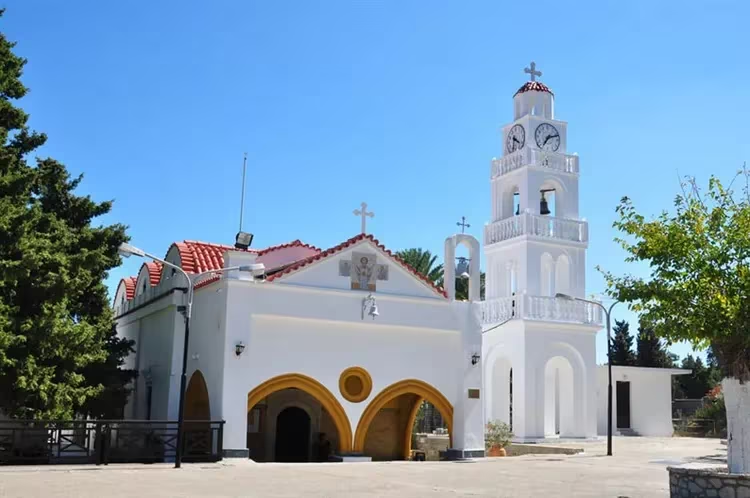
The monastery (another name Panagia Tsambika) houses the icon of the Virgin Mary, the greatest religious shrine. The miraculous power of the icon has helped childless couples more than once. The number of pilgrims to it does not decrease with time. There are two monasteries with the same name: lower (Kato) and upper (Moni). The miraculous icon is located in the first one, built of snow-white stone with a bell tower. Nearby there is an interesting Orthodox museum, souvenir shops.
A staircase with 300 steps leads to the second temple. It contains a copy of the icon. The original is raised here annually on September 8 on the birthday of the Mother of God. The temple is located near the city of Archangelos. You can get to it by bus, then on foot. The entrance to the temples is free.
Church of Our Lady of Lindos
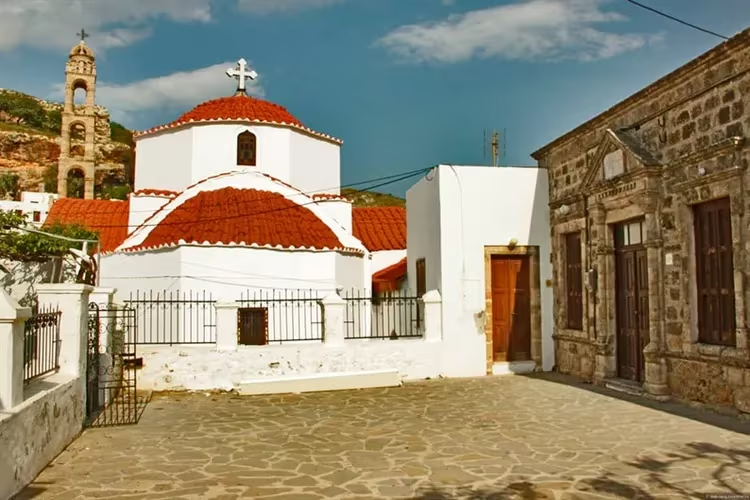
The small town, called the pearl of the island, boasts the most beautiful church of the Virgin. It was erected in the XIII century on the site of the foundation of a religious building in the center of a medieval city. Outwardly, the church is a cross-domed, snow-white temple with an octagonal dome, a Byzantine roof made of red tiles.
The cozy courtyard is paved with a mosaic of white and black pebbles. The carved, wooden iconostasis of the 17th century is considered the main decoration of the church. On the walls are ancient frescoes depicting scenes from the life of Jesus, the Virgin Mary, the holy apostles. The church is open daily. Entrance is free, but in appropriate attire.
Church of St. Nektarios in Filiraki
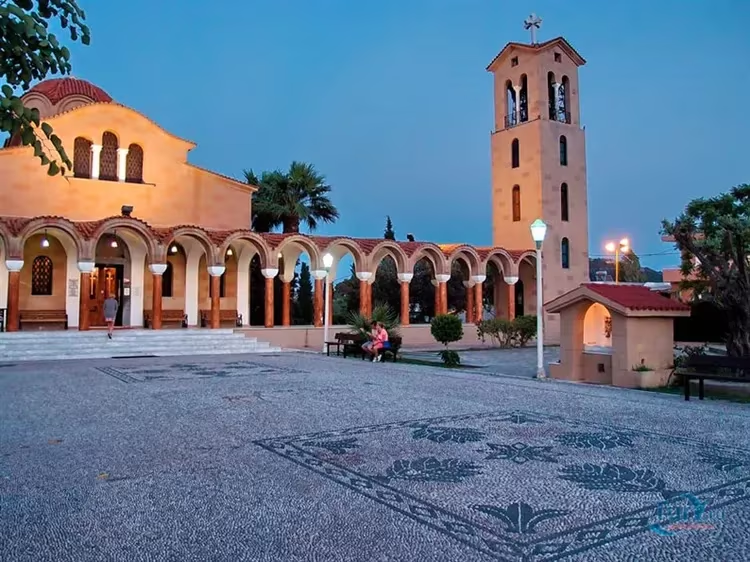
A beautiful terracotta temple with columns was erected in honor of Nectarios, who helps a seriously ill person. This saint was first canonized in modern times in Greece. One of the largest buildings in the resort village was erected in 1976. Inside is the icon of St. Nektarios. According to Greek customs, it is decorated with metal chasing depicting parts of the human body (the tradition of asking for help during illness). There are two churches on the island built in honor of Nectarios.
One of them is located on the road leading from the village of Filiraki to the capital (next to the building of the main shopping center). It contains particles of the relics of the saint. The green area in front of the church is decorated with a platform lined with colored pebble mosaics. There are benches for the rest of numerous pilgrims. You can enter the church for free.
Saint Panteleimon Church in Xi'an
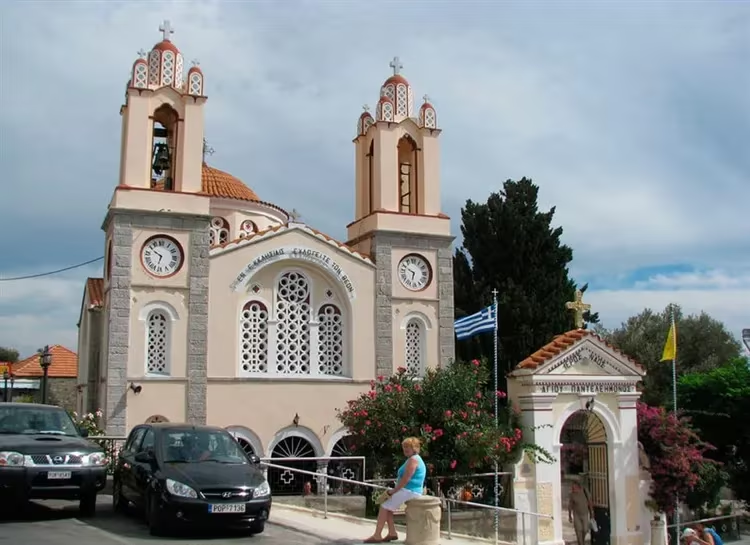
In a small village, popular with tourists who are in a hurry to buy honey, oil, items of local craftsmen, there are two churches of St. Panteleimon. One of them is old (built in the 15th century). It is made of large stone blocks, without a bell tower with a cross on the roof. The new temple erected in honor of St. Panteleimon (a healer revered in Greece) is small, but very elegant. Elements of woven white circles, similar to lace, give it a solemn, festive look.
The church has two towers with painted clocks. On the dome there is a huge image of Jesus Christ. The interior of the church shines with gilding, frescoes, icons, and murals telling about the life of the holy martyr Panteleimon. Parts of his relics are also kept here. The easiest way to get to Xi'an with a tourist tour is by bus, taxi. Entrance to the church is free.
Archaeological Museum of Rhodes
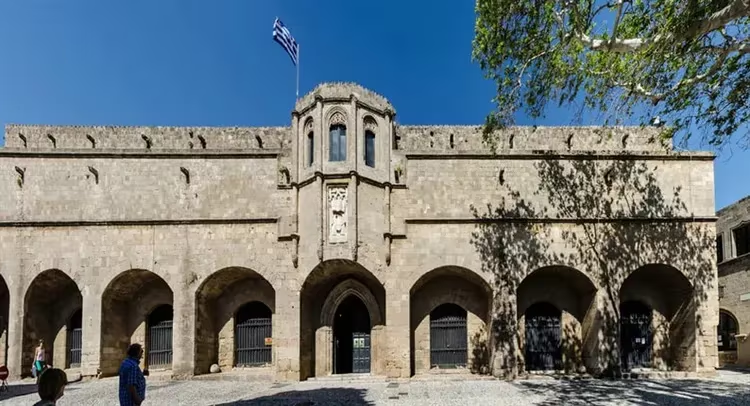
On the ancient street of the Knights (directly on the knight's alley), in a medieval building belonging to the hospital of the knights, there are numerous exhibits of an interesting museum. In the halls where aristocrats used to be treated, archaeological finds from different parts of the island are collected. Among them, the main place belongs to statues, ceramics, amphoras, jewelry. Here you can see the statue of Helios (the patron saint of Rhodes), created in the II century BC. e. A statue of Aphrodite of Rhodes, kneeling and squeezing wet hair (it was made in the 1st century BC) from marble.
There is a hall dedicated to the life of knights. There are many statues in the courtyard of the church. Here is the famous statue of a lion with its paws on the head of a bull. It is made of special black granite. Open from 8 am to 19.45 pm.
Monolithos Castle
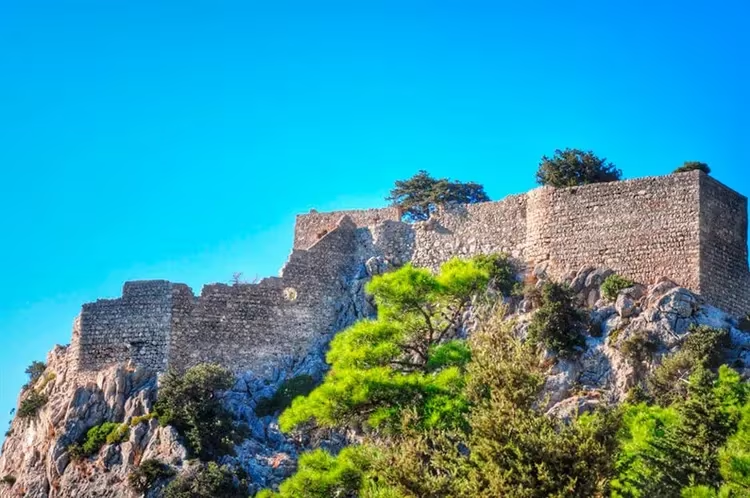
The basis for the medieval castle-fortress is an impregnable rock. The structure, erected at an altitude of 250 meters above sea level, was built at the end of the 16th century. Historians find it difficult to say what was here before, and mystics consider the rock to be one of the places of power.
The building functioned for 30 years. When the Hospitallers left the island, the Muslims did not spend their energy and money on the maintenance of the fortress. That one began to collapse, part of its walls turned into piles of cameos, but they, the remains of towers, colonnades, castle stairs, still look impressive today.
On the territory of the fortress there is a functioning temple of St. Panteleimon the Healer – the heavenly patron of doctors and warriors. Even during the hostilities, services were not interrupted in this church. Its internal and external decoration has practically not changed over the past centuries, and, unfortunately, only a fragment of the wall remains from the luxurious chapel located in the fortress.
Kritinia Castle
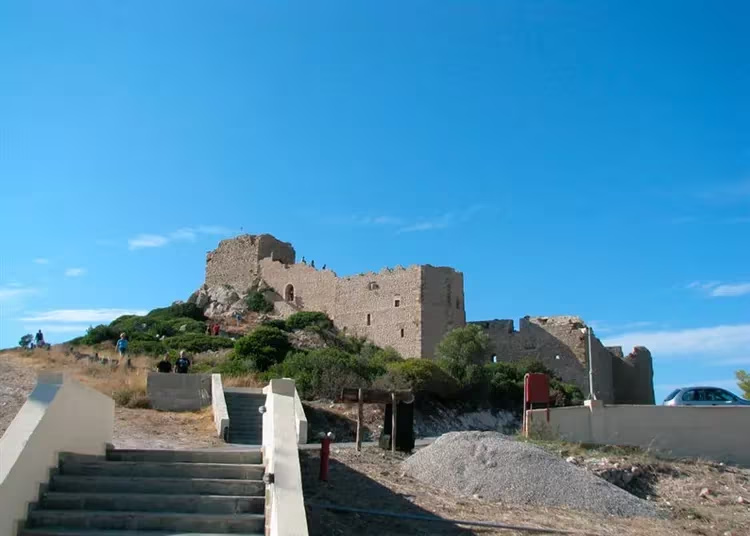
The building belonged to the Hospitallers. It differs from similar castles on the island in its more elegant architecture, which reflects the Italian and Greek medieval canons. The construction of the main part of the fortress was completed in the second half of the 15th century. For a hundred years, the Knights of Malta made changes to the layout of Kritinia, increasing the defenses of the building. Each of the 3 levels of the castle was autonomous and could, independently of its other parts, repel the attacks of the invaders.
When the fortress ceased to belong to the Hospitallers, it quickly fell into disrepair. Local authorities have not been able to organize its restoration. Only powerful outer walls and dilapidated towers remained from the magnificent building. The castle was the church of St. Paul, but the temple suffered a similar fate.
Numerous tourists tend to get into this amazing place to admire nature, plunge into the atmosphere of antiquity, knightly romance. The castle is located between the villages of Kamiros Skala and Kritinia, 50 km from Rhodes. The road here is narrow, tourist buses do not pass. You can get there by car or scooter.
Family Park
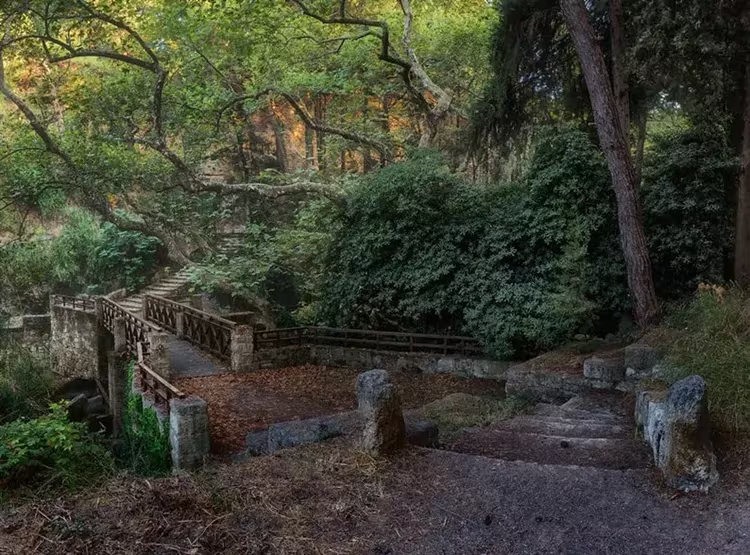
3 km along the road leading to Lindos, there is a landscape creation of the world, made in antiquity. During the time of the knights, there was a Palace on the territory, which belonged to the Grand Masters. The park occupies the territory of a small valley, decorated with oleanders, plane trees, beautiful flowers, murmuring streams of rivers, mirror-like surface of ponds. Openwork bridges pass over a garden of flowering water lilies. Among the magnificent plants, peacocks roam freely. The park has a waterfall, a small zoo with important deer that have become the symbol of Rhodes.
The ancient water supply system has been preserved and operates in the park. Above the Park you can see the ruins of an ancient necropolis with tombs carved into the rock (Ptolemy's tomb). The Ancient Park has been given the status of a tourist attraction. It is open all year round and admission is free.
You can get here by bus number 3.
Kalithea Springs Baths
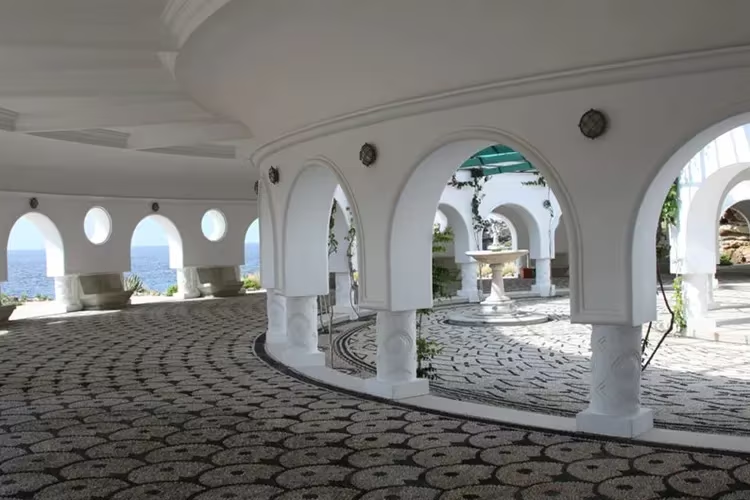
The area of Kallithea is the oldest site of the island, belonging to the city-state of Ialyssos. Numerous churches with amazing frescoes, residential buildings remind of the Byzantine period of life. The main attraction of the town were the famous baths, a hydropathic bath at healing springs, built during the reign of Mussolini. The baths, destroyed by the war, have been completely restored. Now it is beautiful, cozy here among snow-white columns, mosaics, beautiful arches, a sea of flowers in cool healing waters.
The baths of Kallithea have been completely restored. The sandy beach completes the list of pleasures offered in the ancient baths. The Kalithea Springs Museum contains documents describing the stages of restoration of the baths. A natural reserve with a museum, baths is located between Kallithea and Faliraki.
Seven sources
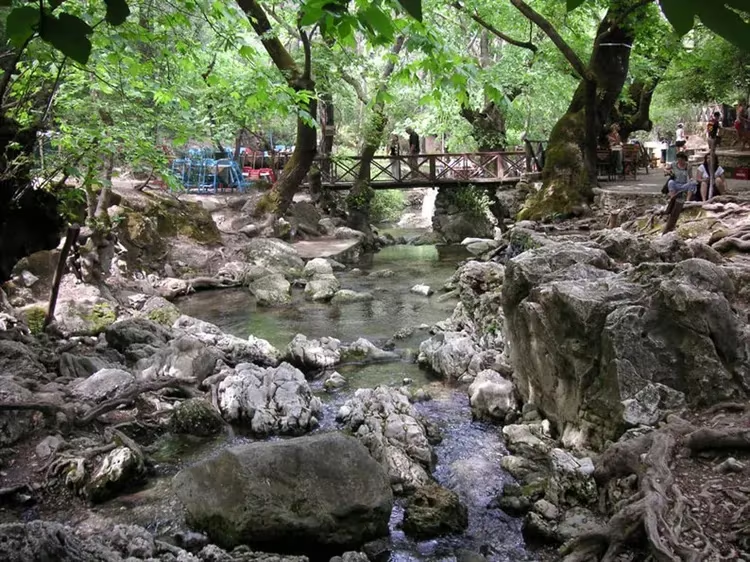
An unusual place, created by nature over the centuries, is considered a popular tourist attraction of the island. A powerful underground spring comes to the surface in seven places, forming beautiful streams of the purest water falling from the rocks. The stream enters the Lutanis River, then rushes through a man-made concrete tunnel into an artificial lake. This is the only reservoir (Kolimbey region) filled with fresh water.
Local legends say that if you go through a dark, 200-meter tunnel leading to the lake, you can cleanse yourself of the seven deadly sins. People walking barefoot through the very cold water of the tunnel receive a lifetime indulgence. There are not many people who want to, but lie down on the shore of the azure lake, breathe in the wonderful aroma of coniferous trees, there are much more rare flowers. You need to go here by car, using the detailed Epta Piges signs.
Cape Prasonisi
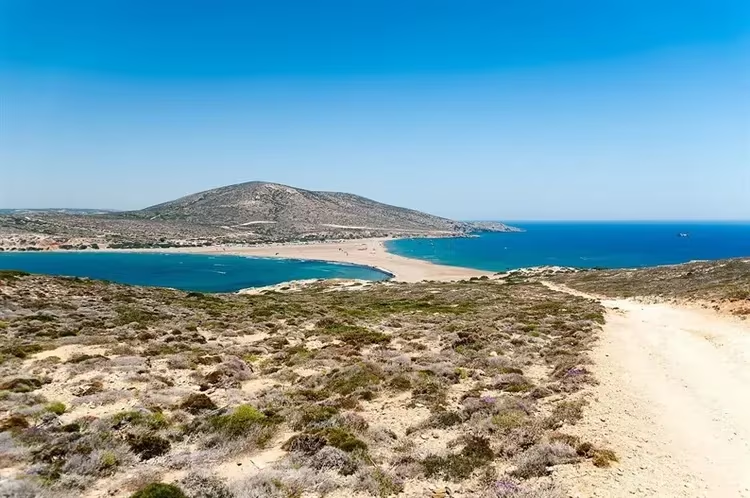
Translated from Greek, the name of the natural monument means: “green island”. It is connected to Rhodes by a sandy isthmus. The cape, where the lighthouse built at the end of the 19th century is located, is simultaneously washed by 2 seas: the Cretan and the Libyan. The first is part of the Aegean Sea, the second – the Mediterranean. The name “Libyan” does not exist on modern geographical maps – this is how the sea was called in antiquity.
On the territory of Prasonisi, the knights of the Order of Malta at one time erected a fortress tower. She and 15 more of the same structures constituted a defensive and at the same time signal Rhodes system. However, civilization existed here long before the advent of the Hospitallers (and a lighthouse probably functioned in the 1st millennium BC). Today, the cape is famous for its beach; about 300 people live permanently in its settlements.
On the cape there are rental services for water equipment, boats, schools for teaching beginners in water sports. A bus goes to the cape twice a day. Driving time 3 hours. If you rent a car, then the choice must be made on an SUV.
Butterfly Valley
Otherwise, it is called the Petaludes Valley (after the name of the municipality). This is a narrow park located along the gorge and going up to the top of the hill. Thousands of different butterflies live here. Nature has created an unusual microclimate in the valley, formed by small streams, subtropical plants, styrax-type trees that emit odorous resins (they have been used in perfumery for many hundreds of years in the manufacture of incense). Their delicate aroma attracts butterflies from the bear family. Variegated butterflies are visible only at the moment of flight. At the beginning of the dry season, all the butterflies of the island gather in the valley.
Among them is the butterfly Ursa Gora, listed in the Red Book. In order not to disrupt the life of rare creatures, special wooden paths have been made for tourists in important places. Against the backdrop of an extraordinary natural panorama, you can see the ancient monastery of the 17th century, built in honor of the Virgin Mary Cleopatra, the ancient (from ancient times) bench of Tiberius (the exiled emperor).
Bay of Agnos Pavlos
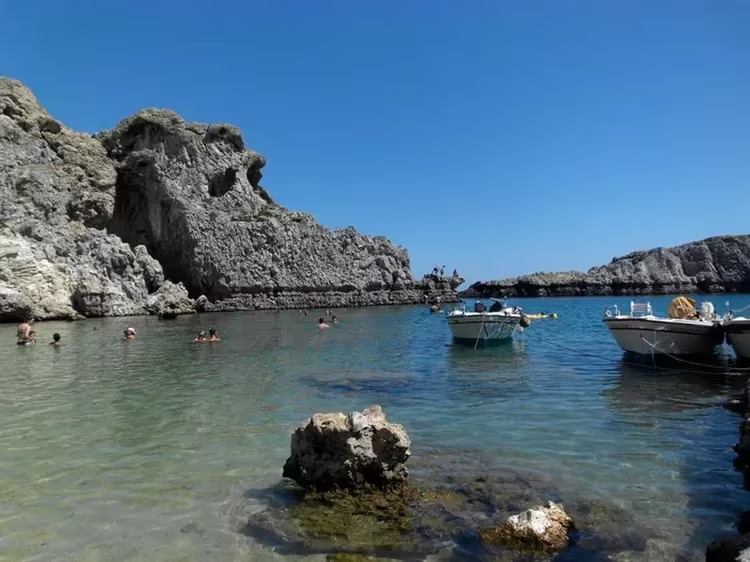
It seems that this place was created for lovers of a relaxing holiday, yoga, diving. Wild coast strewn with stones, sand, covered with rocks, crystal clear water in the bay. Yoga fans from all over the world gather in an extraordinary silence, a completely windless place with strong energy. There is a modern yoga center here. It is also a kingdom for diving. Lovers admire the extraordinary underwater beauty of the bay. The bay is located near the Acropolis of Lindos.
The beach is just a walk away. Local legend says that the ship of the Apostle Paul stopped in this bay in 58 AD. On the edge of the beach area of the bay, a small snow-white church was erected in honor of the holy Orthodox preacher Paul. In it, the inhabitants of the nearest settlements and Lindos are married.
Anthony Quinn bay
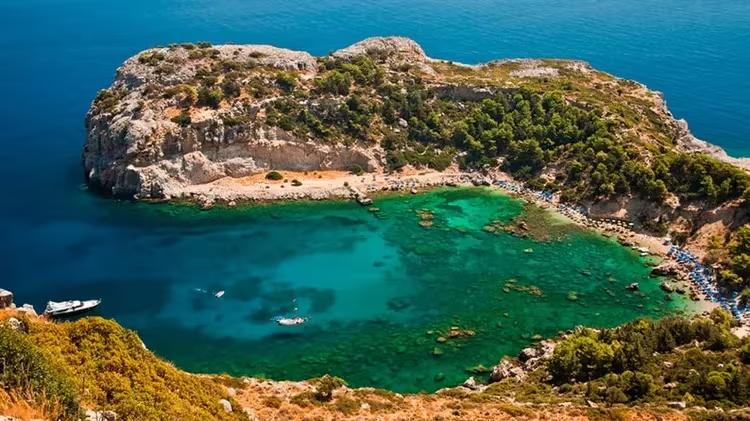
Here is a sand and pebble beach, known far beyond the Mediterranean. Mostly young people rest in the bay – lovers of family holidays choose quieter places. The history of the attraction is a vivid example of how a big name and an emergency on filming can bring world fame to an ordinary, even if very picturesque, bay. It is named after the popular actor, whose list of awards includes an Oscar and other (no less significant for the art world) awards.
There are many versions of the history of renaming the bay. Today it is already difficult to say which of them is closest to the truth. US citizen Anthony Quinn, indeed, was the owner of the bay. However, at the moment, the natural monument and the beach belong to the state. The paradox is that Quinn (100% Mexican by origin) made a unique treasure in the popularization of Greek dance culture by pure chance!
Folk dance “Sirtaki” never existed. It was created in the 60s of the last century from various choreographic elements in order to save the most important scene from the film Zorba the Greek. The actor on the eve of filming broke his leg, could not move quickly, and as a result he got… a new dance that became a symbol of Greece.
Water park in Faliraki
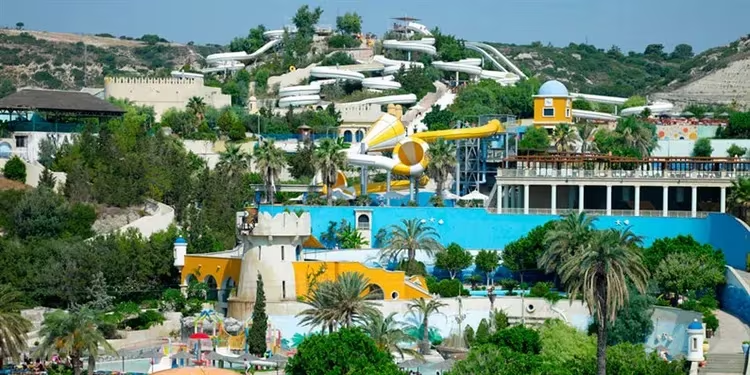
The main entertainment center of the island is Faliraki. In the central part of the town there are many entertainment establishments such as nightclubs, casinos, restaurants, taverns, discos. Resting youth will definitely come here during their holidays. Since 2001, the water park, Luna Park, began to work. The territory of the water park is divided into three zones.
In the first one there are extreme water slides of various types. The second zone is reserved for a large pool with artificial waves. In the third, kids of any age can mess around. They are provided with safe slides, various attractions. Jacuzzi, massage rooms, a shopping center are at the service of vacationers. A taxi ride from the main airport to Faliraki costs 30€.
Monastery of the Archangel Michael
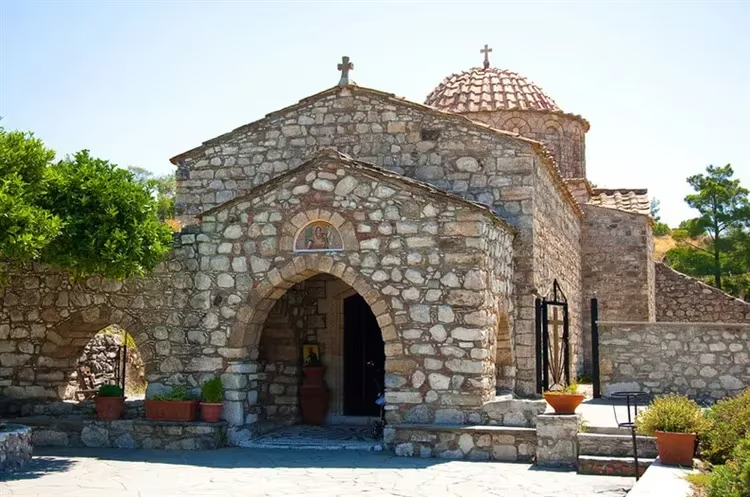
The Greeks call the monastery in honor of the leader of the heavenly host “Farri”. In translation, the word means: “it seems.” It was said, according to legend, by Michael to the princess, who recovered on Rhodes and donated huge funds for the construction of the monastery. According to another version: this is what the crowned lady said, throwing a precious ring on the ground in order to build a temple where it stops. The servants searched for a long time, where is the decoration, and said in response to the questions of the hostess: “Farry!”.
She so tormented her subjects with her orders that the ring began to seem to them everywhere. According to local mystics: the monastery is in a place of power. They argue this by the fact that in ancient times there was a temple of Apollo, where pilgrims came from all over Greece in the hope of healing. The first Christian building on the site of Farri, as it turned out, was built 1500 years ago.
Fragments of this basilica, including the mosaic floor, have been preserved as elements of a later building. The Monastery of the Archangel Michael has never been plundered in its history. In his church, you can still see authentic frescoes of the 12th century, a unique (saved thanks to restoration) iconostasis. In Farri, where Christians come from all over the world in the hope of finding healing and peace of mind, several monks live today.
Traganu beach
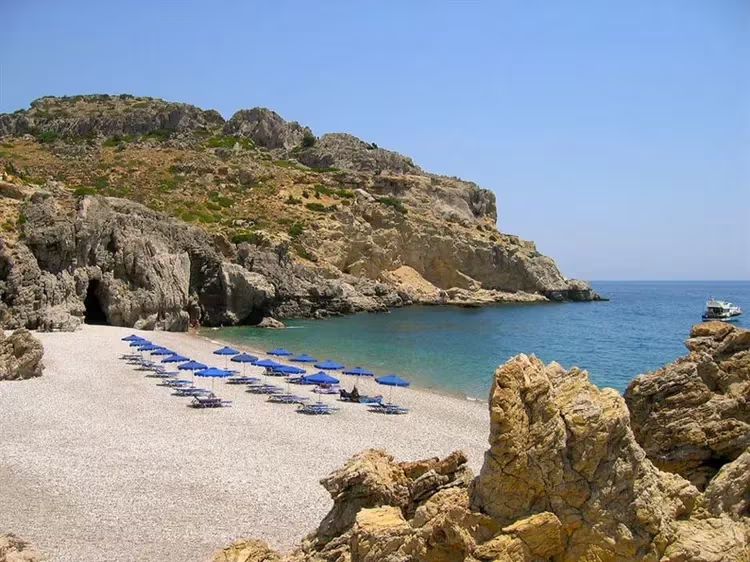
The city of Rhodes and the beach are separated by 20 kilometers. There is no huge number of vacationers, noisy crowds of tourists. Tragana is chosen by those who prefer romance, silence. There are no hotels, hotels, shops, restaurants near the beach. The only thing is that there is a tavern on its territory, which serves local fish dishes prepared according to old recipes. Part of the beach is closed to civilians – only the military rest on this site.
The main attraction of Traganu: the caves. One of them is completely located on land, the other is partially in the underwater kingdom. Sea water in this part of the coast is cooler due to the presence of cold springs. The beach has basic facilities, but the number of sun loungers is very limited. The latter, it must be said, is not a critical moment, since Traganau is sparsely populated and beautiful with its pristine beauty, not distorted by the dubious benefits of civilization.
Tsambika beach
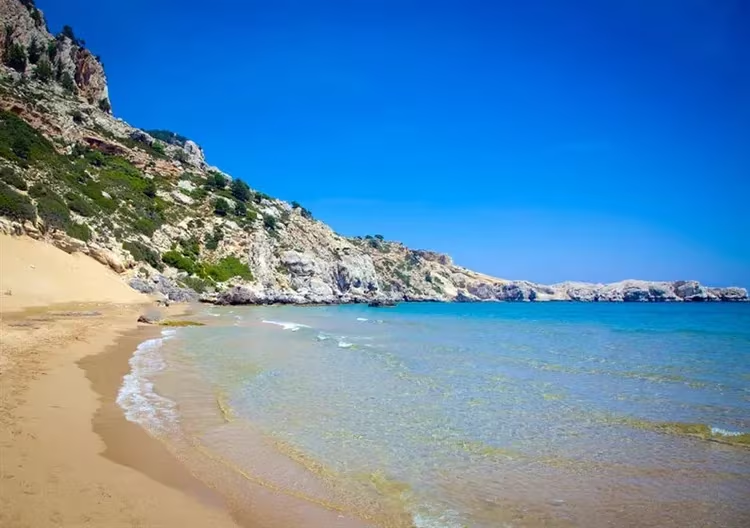
Tsambika (Tsambika) beach is often called the most beautiful in Rhodes. The recreational area is located at the foot of the mountain of the same name. Not far from Tsambika there is a monastery, whose history gave the name to the mountain and the beach. The Greek word “tsambika” meant a fiery spark. Church legends say: the poor shepherd noticed sparks on the mountain, approached them and saw the miraculous icon of the Virgin Mary. The relic is still kept in the monastery, where pilgrims come from all over the world.
The beach has the necessary amenities, but Tsambika differs in a certain severity from typical places of public recreation. There are no entertainment facilities here. Cafes, taverns, retail outlets look modest and very comfortable. Beach length: 800 meters. It is beautiful at any time of the day. Its important advantages are warm sea water compared to neighboring beaches and very clean sand.
Lindos beach
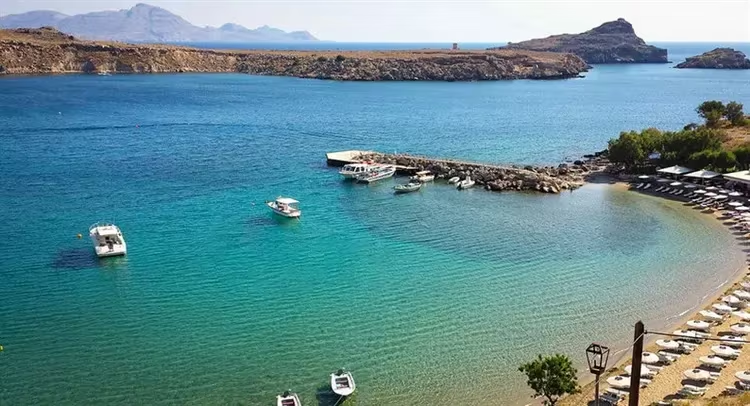
Distance between the beach and the town of Rhodes: 50 kilometers. Lindos is located on the territory of a shallow bay. This place is most often chosen by those who rest with children. Once there was an ancient city of the same name. Not far from the beach you can see the remains of temples, palaces that belonged to the ancient Greeks and Romans. Churches, chapels, and monasteries were built on elevated sites along the coast in the Middle Ages.
Today Lindos is a very small city, whose main value is natural and architectural monuments, an authentic carefree atmosphere, craft workshops where original souvenirs are made from wood, clay, shells and other natural materials. The easiest way to get to the cozy beach of the same name is from the central city square, from where a street leads to the sea. Not far from the popular holiday destination there are shops, entertainment venues, cafes, taverns, restaurants; conditions have been created for a comfortable pastime of tourists.
Jewish Quarter
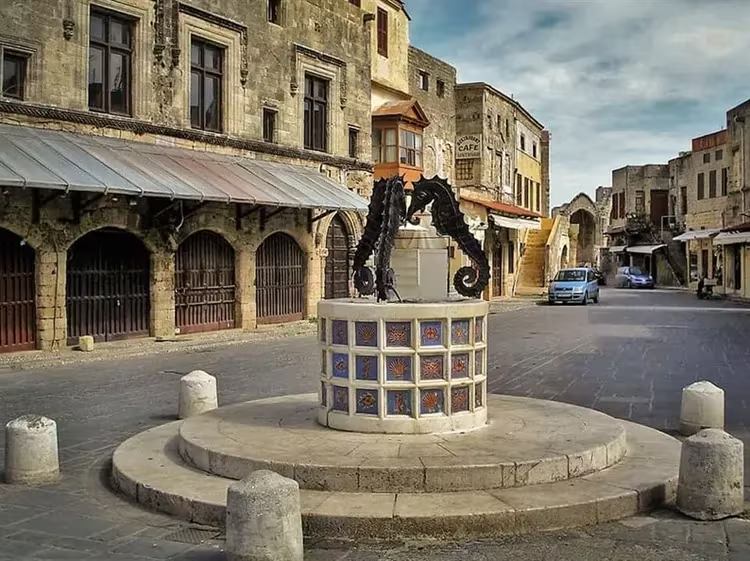
Greek Jewish communities have been leading their history since antiquity. In the Middle Ages, national quarters arose for a very banal reason: it was easier to survive that way. The Jews fled to Rhodes from Spain not in search of a better life – they were fleeing from the fires of the Inquisition. New Greek subjects equipped the streets, erected buildings, opened synagogues, shops, educational institutions.
And then everything happened again in the city. Only there was nowhere to run from the quarter. In the 20s of the last century, 4,000 Jews lived here, in 1944 – 42. The local authorities handed over the inhabitants of the quarter to the Nazis – for extermination in Auschwitz. A Muslim, the Turkish consul, stood up for the surviving Jews at the risk of his own life.
Today, on the site of the quarter, there is a square where a monument to the dead is erected. A part of the architectural complex is a synagogue built in the 16th century (the other five were destroyed during the war), it houses a museum of the Jewish community. Among the well-known sights of the quarter: the Palace of Admirals built in the 15th century and the reconstructed fountain “Sea Horse”.