
Sights of Tallinn – 30 most interesting places
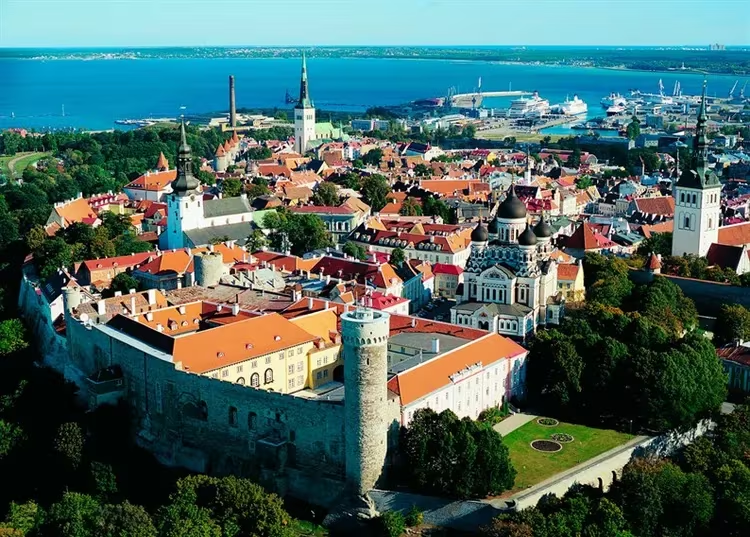
Tallinn is a leisurely and amazingly beautiful city. Narrow streets with stone blocks, waters of the Gulf of Finland and stunning views from the observation decks. Ancient fortresses and temples, amazing museums and mysterious houses – all this attracts tourists to the capital of Estonia all year round. Tallinn is convenient for guests of the city. All his memorable places are concentrated next to each other. There are many inexpensive cafes and shops, and hotel prices are reasonable. The capital of Estonia is increasingly chosen by lovers of inexpensive, but interesting holidays. Let's talk about the most interesting sights of Tallinn.
city wall
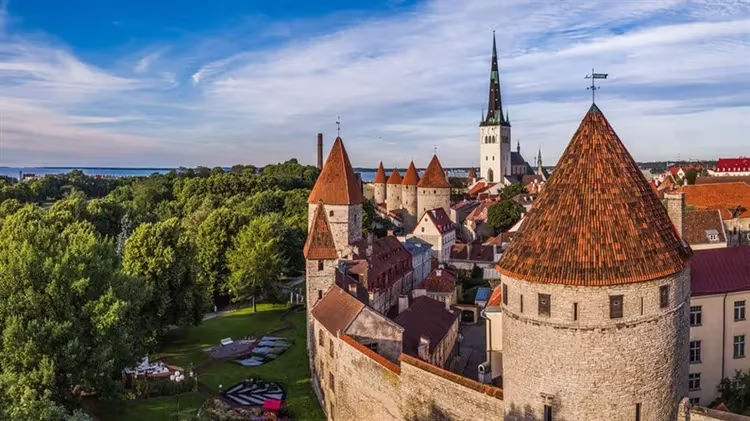
One of the most majestic sights is the city wall. It is built around the entire perimeter of the city. The wall protected the city from enemies for many decades. This is not just a memorable place – it is the strength and support of the city. The wall consists of thick walls and huge towers. The height of the building is about 20 meters. Initially, the building included 26 towers. Now only 18 have survived. The tallest tower – Küster reaches 30 meters in height.
The Maiden's Tower is quite popular among tourists. There is a cafe with a large summer terrace. In the basement of the tower there is a glass museum “Look into the bottle”. From its observation deck offers a beautiful view. Each tower can be visited and climbed to the observation decks. Inside many buildings there are museums and cafes. Near the building there are small markets with souvenirs.
Забронируйте индивидуальный трансфер от аэропорта до вашего отеля за 1 619 RUB
In different places near the city wall it is beautiful in its own way. There are sculptures, benches, lanterns, stairs. A lot of greenery and flowers surround the building. One trip along the wall brings a lot of positive emotions. If you go for Christmas, be sure to visit the wall. The towers, decorated with festive garlands, look simply amazing. Going on a tour, do not forget to wear comfortable shoes. The towers of the city wall, open to tourists, can be visited for 3 euros. The city wall is located in the Old City. You can get to it by tram 1 or 2.
House of the Brotherhood of the Blackheads
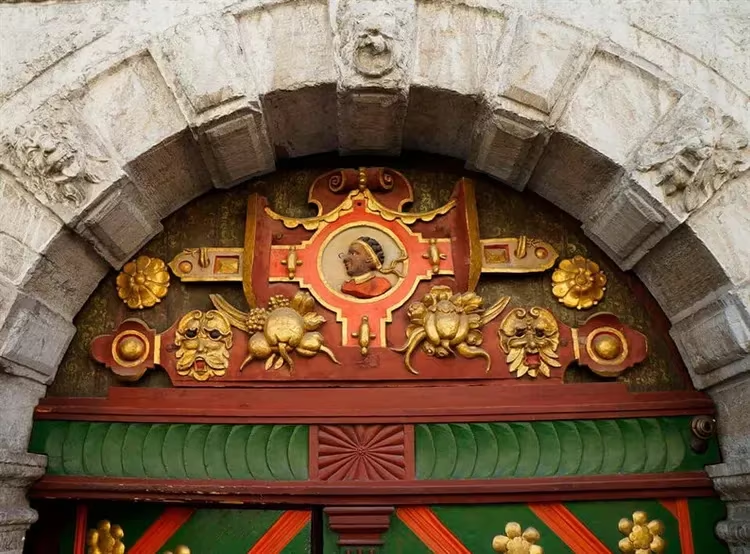
There is a house with a mysterious history on Pikk Street. For a long time it served as a haven for wealthy and unmarried merchants. They spent all their free time here, organized meetings and festivities. After the marriage, the merchants were forced to leave the brotherhood. Often, they left here already with a certain experience and material base.
Young people then began to conduct their own business. The merchants called themselves the “Brotherhood of the Blackheads” in honor of Saint Mauritius. Why exactly he became the inspirer of young people, no one knows so far. However, the house with a dark-skinned saint on the coat of arms is popular with tourists.
The building of the house is aesthetic and beautiful. The central arch is decorated with lion masks. The magnificent gate is crowned with a coat of arms depicting Saint Mauritius. Along the perimeter of the building are a variety of sculptures and reliefs. On them you can see the image of kings, saints and even Christ. The house that stands on Pikk Street now is the last reconstruction of the 1908 retreat of the Brotherhood of the Blackheads.
The building is very beautiful in the evening. Great lighting makes the house even more beautiful. The building was luxuriously furnished inside. Now all the preserved furniture can be seen in the city museum. You can visit from 10 to 19 pm daily and for free. It won't be difficult to find him. The House of the Brotherhood of the Blackheads is close to other attractions in the Old City.
Cathedral of Alexander Nevsky
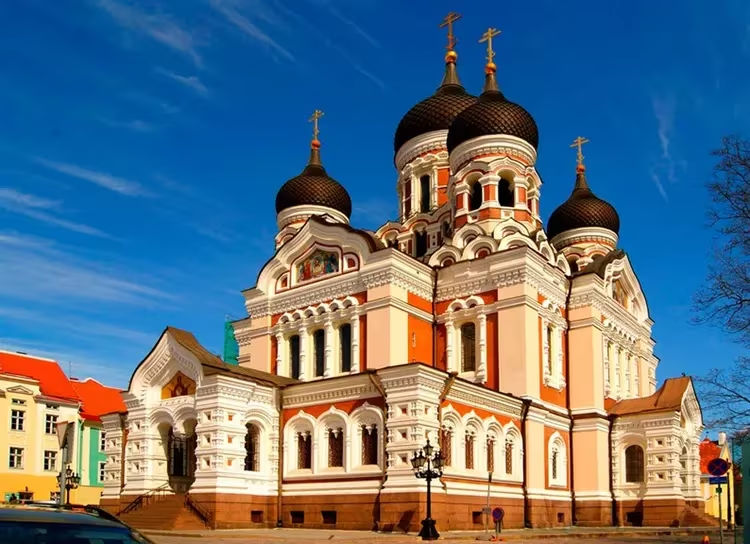
The Cathedral of Alexander Nevsky is considered the most important temple. It was opened back in 1900. Although the history of the cathedral began much earlier. Over the years, the temple was reconstructed and even wanted to be demolished. But, fortunately, the church managed to defend. Now it pleases the eye with its gilded domes. Inside the temple is beautiful and cozy. Its decoration is modest, but harmonious. The wooden iconostasis is decorated with gilding. Fine icons and stained-glass windows are created by famous masters. The mosaic panel that adorns the facades was made by an academician of architecture.
A shop with souvenirs, icons, books, calendars and other products is open on the territory of the church. The cathedral opens its doors daily from 8 am to 7 pm. It can be visited for free, but in appropriate clothing. The church is opposite the building of the Estonian Parliament. And its domes are visible from many points of the city. Photography is not allowed in the temple. However, it is worth showing respect to those who come here to pray. It is worth refraining from visiting the temple during the hours of the liturgy. They take place on weekdays from 8.30 am, on weekends from 9 am and 11 am.
Church of Oleviste
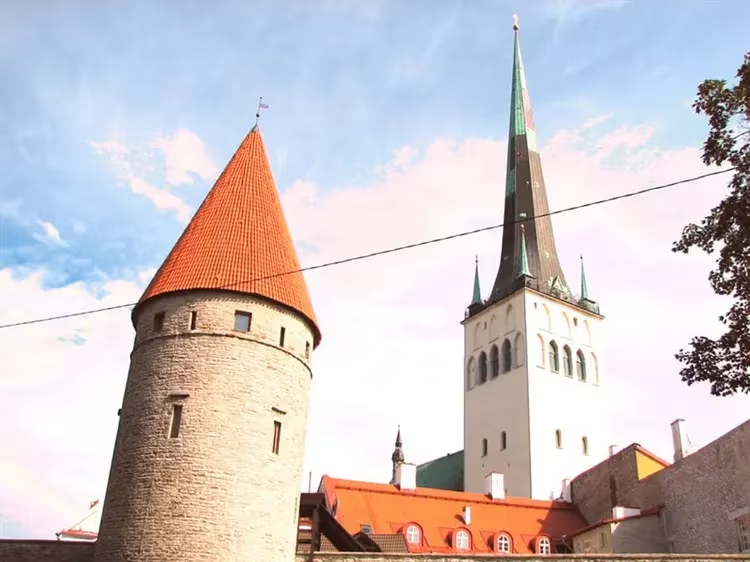
Oleviste Baptist Church, named after the Norwegian King Olaf II. It is recognized as the tallest religious building in the world. The church goes into the sky with a huge sharp spire. The height of the temple is 123 meters. Oleviste Church has unique vaults. They are made in the form of arches, which form a geometric star pattern. On the east side of the temple is the chapel of the Virgin Mary. On its plate are depicted 8 scenes of the suffering of Christ. Behind the altar of the church is the famous relief of St. Olaf.
The temple attracts tourists not only with its wonderful architecture, but also with gorgeous views that open from the observation deck of the spire. From here you can see almost the entire city. To climb to the platform will have to make every effort. The road is quite difficult and almost one-way. A narrow dark staircase leads up. The duration of the ascent is about 10 minutes. Going on such an excursion, measure your strengths and capabilities.
The view that opens up after such an uncomfortable journey justifies all expectations. Multi-colored buildings of the city, a lot of greenery, the Gulf of Finland, the Old Town. Everything you've been to before can be seen from a bird's eye view. The church is located 10 minutes walk from the main square of the Old Town. Trams No. 1 and 2 go there. Get up at the Kolpi stop.
The spire of the temple will not let you get lost. The church receives visitors from 10 am to 8 pm. The climb to the observation deck will cost about 2 euros for an adult and 1 euro for a child from 7 to 14 years old. You can climb the spire until 18:00.
upper town
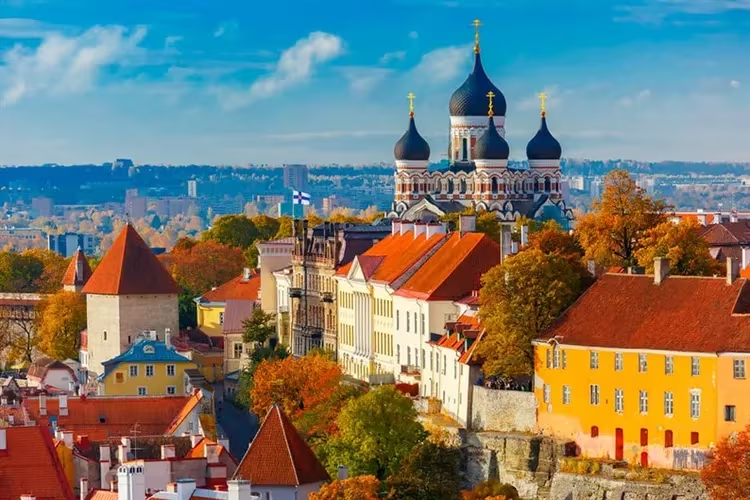
Vyshgorod or Upper Town is located on a hill. It is because of this that he got his name. On the hill of Toompea there is an ancient castle of the same name. Now it has a board of directors. However, this does not interfere with the flow of tourists. Traveling through the Upper Town is very picturesque and interesting. A lot of greenery around, wide hillsides lined with stone, narrow streets – all this causes a storm of emotions.
Miia-Milla-Manda Children‘s Museum
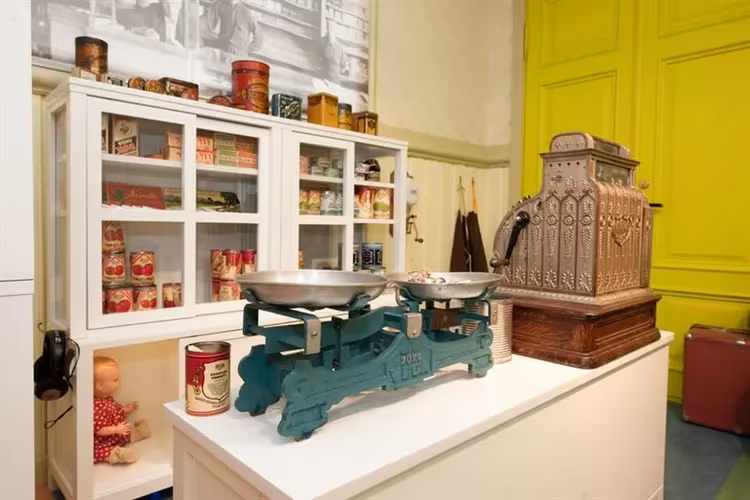
The museum for the youngest tourists is located in the central part, in the Kadriog area. If you are traveling with children, be sure to visit “Miia-Milla-Manda”. The main category of visitors are children from 3 to 10 years old. Its main idea and goal is the theme of friendship. Anyone who says that children at this age are not interested in the museum, he definitely has not been to Miia-Milla-Manda.
The uniqueness of the institution is that here you can touch almost everything with your hands. You must take off your shoes before entering. This is quite unusual, but creates an atmosphere of home comfort. And the kids are so much more comfortable. Here you can ski and boat down the river. There are special rooms for drawing, games and crafts.
Large toy houses cause great delight among visitors. Each hall of the museum has a large number of board and outdoor games, coloring books and toys. The child will definitely not get bored here. There is a cafe with various sweets and drinks. On the territory under the open sky there is a playground with slides, swings and ladders.
The Dome Cathedral
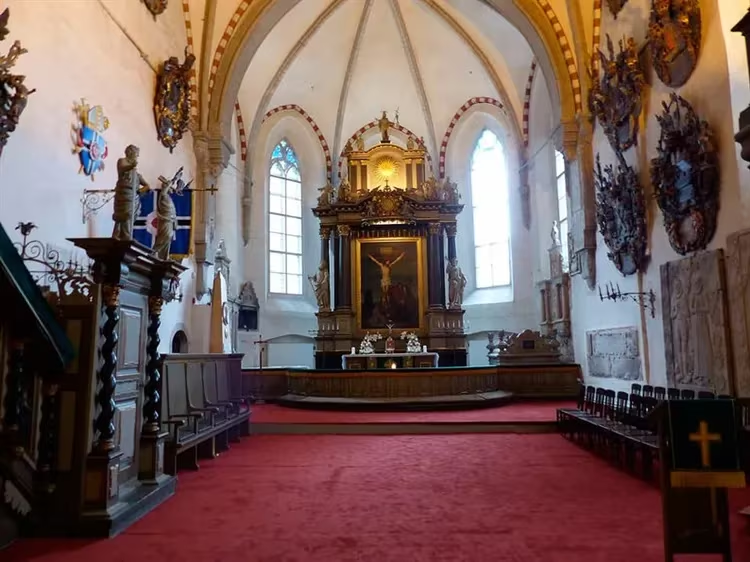
This is another of the famous sights of the Old City. The temple is one of the oldest. Its patroness is the Virgin Mary. The cathedral plays the role of a tomb for many famous people. Kings and commanders, admirals and sailors found peace here. Buried by Otto Tuve. In his will, he asked to be buried in the Dome Cathedral. Otto was a famous joker. Residents claim that he wanted this for a reason.
The secret is that Tove was a lover of women. And the Estonians decided that Otto decided to be buried near the entrance to the temple, so that ladies' legs would always walk on his ashes. Inside the cathedral there is a modest but beautiful altar and an icon with the crucifixion of Christ. Numerous tombstones with sculptures and moldings are located along the perimeter. You can see the largest collection of epitaphs dedicated to noble people in Europe. The cathedral has its own “slab of happiness”. If you hold on to it, then the desire will come true.
The roof has its own name – “aba-vois”. It is built to properly withstand the required acoustics. At an altitude of almost 70 meters there is an observation deck overlooking the city. Those who are afraid of heights should consider this excursion. The temple is located at the crossroads of 5 roads. Therefore, it is not difficult to find it in the Old City.
Doors are open daily from 9 am to 5 pm from May to August. From November to April you can visit from 9 am to 3 pm. Day off – Monday. Photo and video filming is prohibited, admission is free. The observation deck is open from April to early November from 9.30 to 14.30, in summer until 17.30. On Saturdays there are concerts of organ music.
Toompea Castle
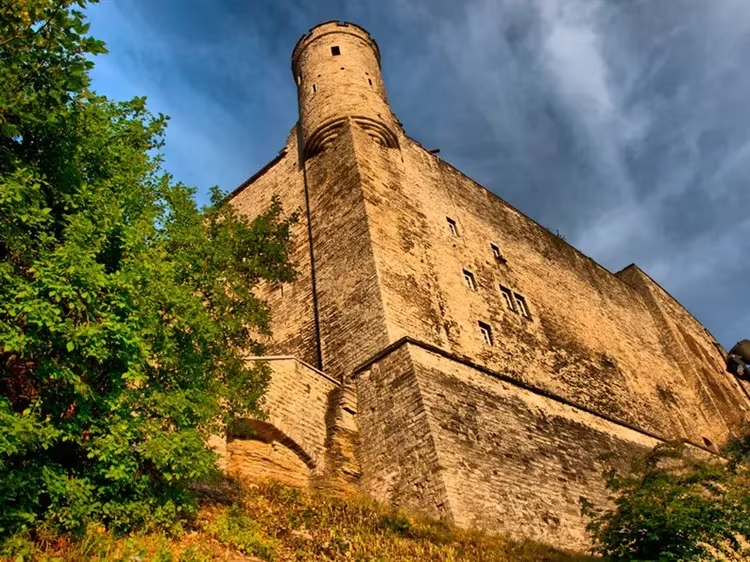
The Reval fortress is located in the Upper Town, on the hill of Toompea. Its construction began in 1219. This is a large-scale complex, which is known far beyond the borders of the country. The castle bears the title of the most preserved ancient building in the Baltics. The complex has gone through many restorations. Now it looks completely different than in the old days. The interior facade of the castle is pink.
Only the old guard remained gray – “Long German”. The fortress rises 50 meters above sea level. On the four edges of the complex there are 4 observation towers. “Long Herman” is the most famous of them. Its height is about 46 meters. It is on the “Long German” that the flag of the country is raised every morning. The castle looks majestic and beautiful. It is especially magnificent at night when the backlight turns on.
The complex is always full of tourists. Finding the castle is easy, it is located in the very center of the city. Tours of the building are held from 10 am to 4 pm by appointment. Getting to them is quite difficult, but possible. This can be done on open days or as part of a tour group. You can only see the castle from the outside. Even if you don't get inside, it’s still worth exploring the castle from the outside.
Kick-in-the-Blue Museum
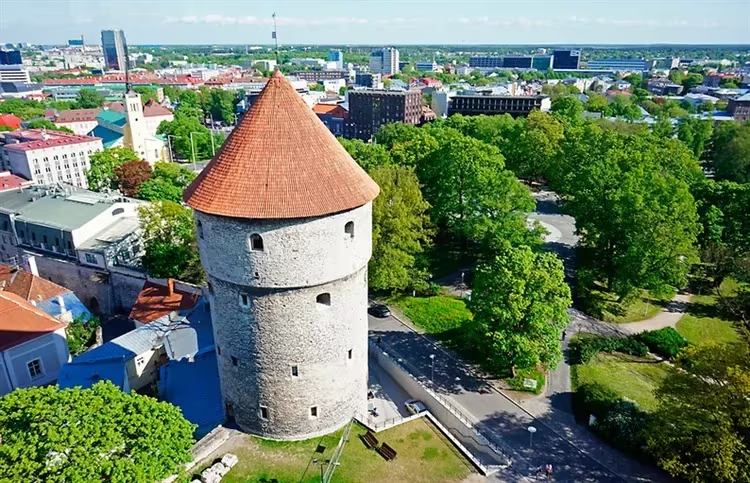
“Look into the kitchen” – this is how the name of this tower is translated into Russian. Kik-in-de-Kök is part of the Toompea Castle complex. She survived the siege during the Livonian War, bravely withstood and even saw victory. A museum was opened here in the 1960s. It is dedicated to the history of the city and the development of the city's defense system. The building consists of 4 floors and several basements. Excursions are not carried out here, visitors study the exhibits on their own.
The staircase is very interesting. It is built according to the “cunning technique”. Its steps go clockwise. If suddenly a siege begins in the tower, the attackers will not have an advantage in hand-to-hand combat. Climbing those stairs is hard enough. However, along the way there are funny pictures that make you think. The inscriptions, unfortunately, are in Estonian. In the museum you can see the layout of the complete complex in its original form. A knight in armor, a medieval toilet bowl, ancient shoes, and a guillotine are all exhibits of the Look into the Kitchen museum.
You can get in from March to October from 10.30 to 18 hours. From November to February – from 10.00 to 17.30. Day off – Monday.
lower city
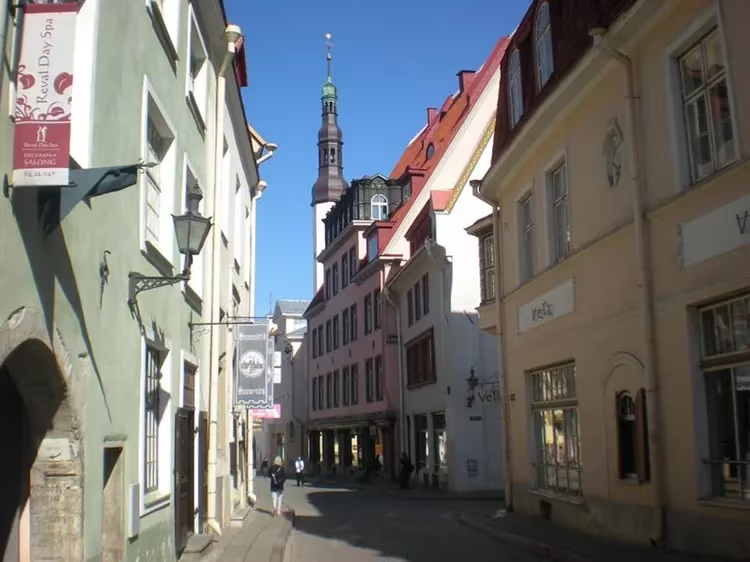
The Lower City is part of the Old City. It is much larger in area than Vyshgorod. The lower city is full of attractions and beautiful places. The main goal of tourists is to see the city wall. It occupies most of the Lower City. There are many towers and walls that have survived to this day. One of the most famous is the Fat Margaret Tower. It got its name because of the non-standard shape for a tower. The diameter of Tolstaya Margarita reaches 25 meters. The building of the tower now houses the Maritime Museum.
The Koismäe Tower is the largest of the key towers in the fortification of the city wall. It reaches 26.5 meters in height and consists of 6 floors. You can climb the wall for about 3 euros. Schedule:
Walking around the Lower City is absolutely free. This is a wonderful place, from which emanates antiquity. The presence of churches, monasteries and various beautiful buildings helps us to briefly travel back to ancient Tallinn. Here you can visit museums, buy souvenirs and just enjoy the beauty of such a place in the Estonian capital.
Kadriorg park
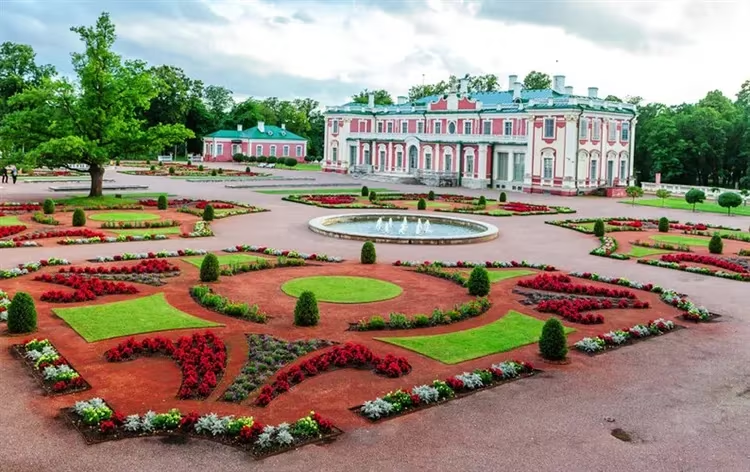
The palace and park ensemble of Kadriorg is a great place where you can relax your soul. The complex was built thanks to Peter the Great, who chose these places as his residence. The decoration of the park is the palace, built according to the project of an Italian architect. Over the years, the building has gone through many renovations. Today, a large hall and vestibule have been preserved.
The beauty of the park around the palace is beyond words. Smooth lines and clear patterns create a magnificent picture of greenery and flowers. The swan pond with black birds is a unique sight. In the middle of the artificial lake there is an island with a platform. On holidays, an orchestra plays here.
Kadriorg can compete in its design with the famous Versailles. There are 4 museums on the territory of the complex, which can be visited for a fee. You can get there by trams 1 and 3 or by buses No. 5, 8, 35, 38, 60, 63.
Town Hall Square
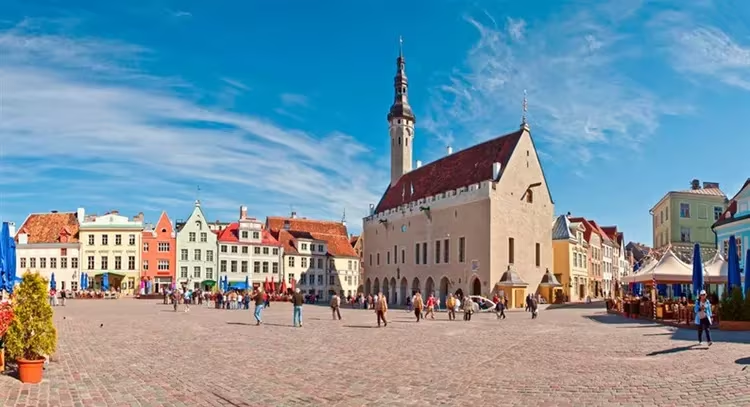
The Town Hall Square is the center of the Old Town. It is always full of people, starting from ancient times. Previously, a market worked on the square, all performances, concerts and even executions of people took place. Now, this is the place for establishing the New Year tree and holding all the mass events of the city. Town Hall Square is very well located.
It overlooks the 5 main spiers: the City Hall Tower, the Dome Cathedral and three churches – Oleviste, Niguliste and the Holy Spirit. Residents of the city say that if you see all 5 spiers and make a wish, it will surely come true. The main attractions of the square are the Town Hall building and the old pharmacy. The City Hall is the only building in all of Europe that has been preserved almost unchanged from ancient times. The building is about 612 years old.
The pharmacy on the Town Hall Square was built in the 13th century. The building originally served as a prison. Then it became a pharmacy, where, in addition to medicines, you could also buy sweets and tobacco. Now there is a museum here. On the shelves of the pharmacy you can buy some developments of pharmaceutical companies.
You can walk around the Town Hall Square on your own. Those wishing to learn many interesting facts about the life of the city are recommended to sign up for a sightseeing tour.
Tallinn Town Hall
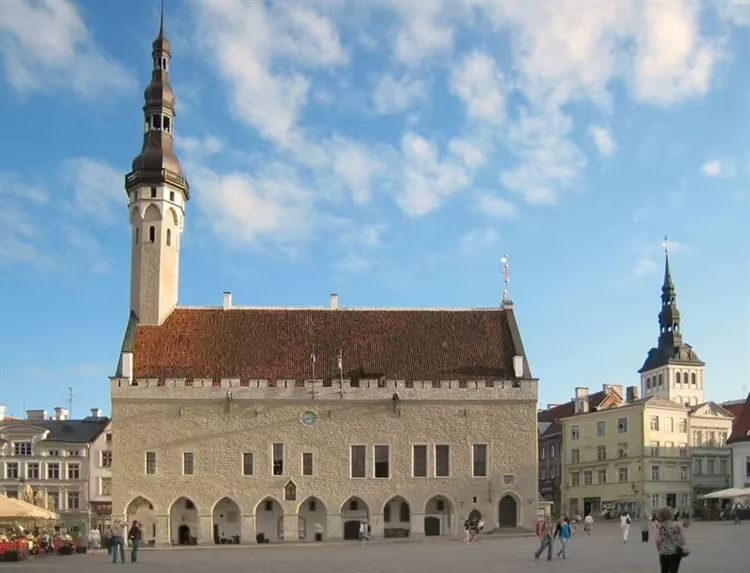
In Northern Europe, the only Gothic-style Town Hall has survived, and it still flaunts in the heart of the Estonian capital. In the Middle Ages, the Town Hall is the foundation of any European city, from where all the affairs of the capital or more or less large city were managed. The capital of Estonia passed from hand to hand to the Swedes, Danes, Russians and other rulers, and the Town Hall stood in the 13th century. Today, the wine cellar, the Hall of the Magistrate and the Burgher Hall with paintings by Johann Aken on biblical subjects are of great interest to tourists.
In handwritten sources, the Revel Town Hall (the name of the city until 1918) was first mentioned in 1322. But, judging by the ancient sketches, it was a one-story limestone building under a high roof with a spire. This is a typical repository of city government traditions. Laws were approved here, from here messengers sent orders to all parts of the country and beyond. The history of the town hall dates back to 1248, when King Eric IV of Denmark approved the Lübeck city law in Reval. The city magistrate from here exercised control over the people who lived on these lands.
The early Gothic building witnessed urban life as it was built on the market square in the center of Reval. Over time, the importance of Revel in the Hanseatic League increased, the well-fortified city began to expand its possessions. The rebuilding of the Town Hall in 1402-1404 transformed this building by adding an arcade, a 2nd floor, a tower and an assembly hall. In 1530, it was supplemented with the Old Thomas weather vane, which became a symbol of the city, and the Town Hall operates as a museum with a wine cellar.
Masters Yard
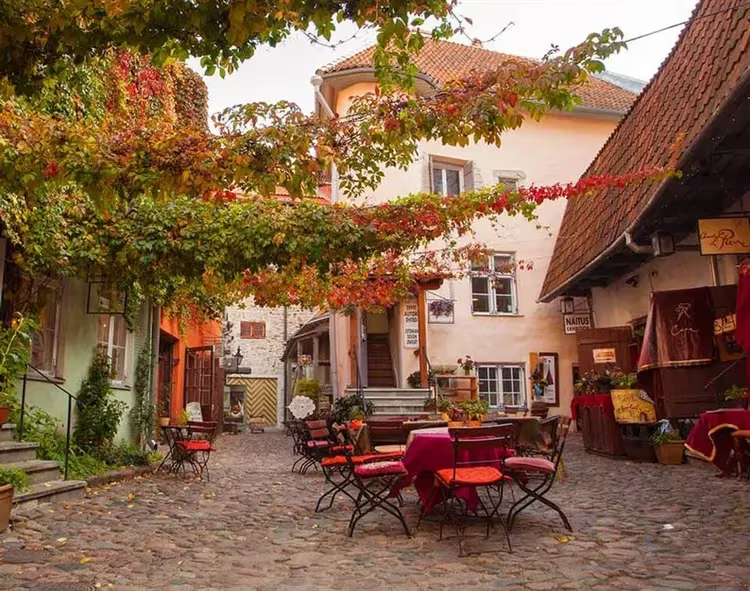
You can feel the atmosphere of the Middle Ages only in a few quarters of the capital. The Masters Yard is one of such wonderful places where you can enjoy aromatic coffee at the Chocolaterie table, enjoying the view of the lane of Old Tallinn. Artists with easels and masters of portrait sketches often work at the intersection of streets. They will willingly depict tourists in ancient clothes against the backdrop of ancient buildings.
Stone streets diverge from here – one leads to the Orthodox St. Nicholas Church, on Muyrivyakh the market of souvenirs and hand-made products. You can walk along the alley to the arched passage along the wall of the Dominican monastery of St. Catherine – 135 meters of walk along the stone pavement, a witness of a bygone era.
The foundation of the old quiet lanes was laid back in the 13th century. Fans of medieval architecture can appreciate the inimitable splendor of vaulted and arched lintels, spiral staircases and stone walls, sometimes without plaster. Here, as many centuries ago, artisans work according to the traditions of the past. Near the building of the Dominican monastery there is the Museum of stone-cutting art, the old market and the patrimony of the Russian merchants.
The Church of St. Catherine is older than the Moscow Kremlin, it was built over 700 years ago. The general entourage of “Monastic Lane” and “Courtyard of the Masters” is complemented by well-groomed facades of old houses built in the 15th – 17th centuries. Many scenes from films on historical themes were filmed here.
Danish King's Garden
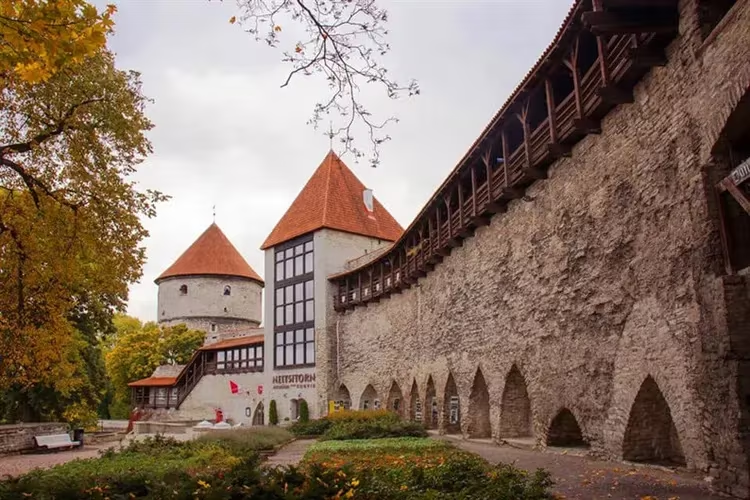
A memorial place for “finding the flag” is the Garden of the Danish King. The Danes call this square the “cradle of the Dannebrog”. According to legend, in 1219 King Valdemar II the Victorious organized a crusade against the pagan Estonians, who were pressing the German knights, on the initiative of the Bishop of Riga. On the outskirts of Kolyvan, the fortress “Taani linn” or “Danish Castle” was founded.
At that time, Pomeranian “glories” led by Prince Vitslav I of Rügen joined the small Danish army. The vassal of the Danish king carried out military service, zealously fighting for the possessions of the Danish crown. Opposed to the planting of Christianity, the Estonians decided to pretend to be baptized, making peace in order to save life. And 3 days after the truce, the pagan army suddenly attacked the Danes, after which the detachment of Valdemar II was forced to flee.
The army of Wenceslas I launched a counterattack without succumbing to panic, and more than a thousand pagan Estonians fell in the decisive battle. It was not Vitslav's bravado that saved the Danes, but God's providence, as the legend goes. At the peak of the battle, a heavenly vision was revealed – red tightly with a white cross. These developments are reflected in the design of the small hillside park of Vyshgorod, Toompea, the Upper Town of the Estonian capital. Sculptures of 3 monks complement the surroundings of the park composition with the Danish flag. Every year on June 15, Dannebrog's birthday is celebrated here.
Freedom Square
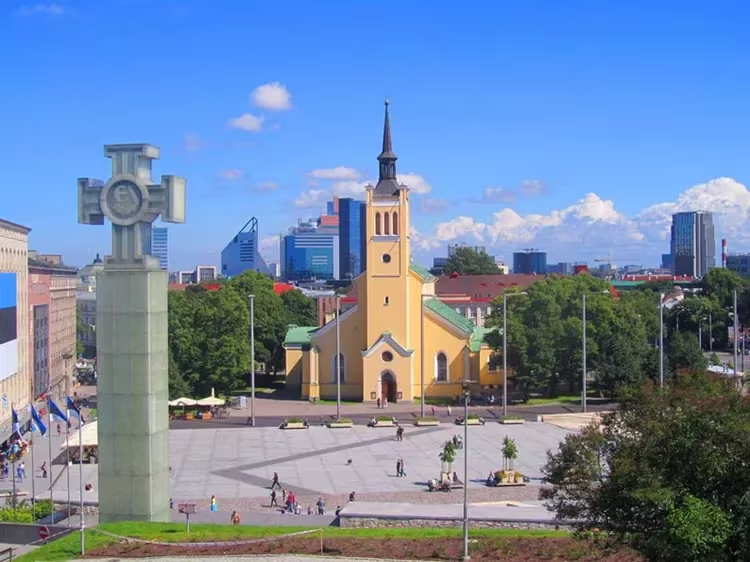
The city square changed its name several times. Vabaduse vyaljak or Freedom Square was previously called Petrovskaya and Sennaya. It was also Victory Square, but this is the same place in the southern part of Old Tallinn. This place acquired its final appearance by the middle of the 19th century, when the Swedish bastion at the Harjus Gate was demolished.
Representative place where many important city and international events are held. Freedom Square is a popular place for leisure in the pedestrian zone, remembered by the guests of the Estonian capital with the Victory Monument dedicated to the War of Independence. It was decided to call this place Freedom Square in 1939. With this name, it was known to tourists until 1948, then the square was renamed again, and it regained its modern name in 1989.
In 1867, a place was cleared for a religious building – the Yaanovskaya Church was later removed by the Sennoy Market. It is noteworthy that the foundations of fortifications discovered during excavations of the old part of the city are conserved here. Their remains have been preserved in the parking lot under the square, and fragments of the tower gate are visible at the dead end of Harju Street – in a glassed-in window.
On the occasion of the 200th anniversary of the capture of the Reval fortress by Russian troops, a monument to Peter the Great was erected, but after 1922 it was dismantled after partial destruction. Subsequently, this part of the city was surrounded by modern buildings, including the administrative building, the House of Arts and the cafe “Vabadus” or “Freedom”.
Suurupi lower lighthouse
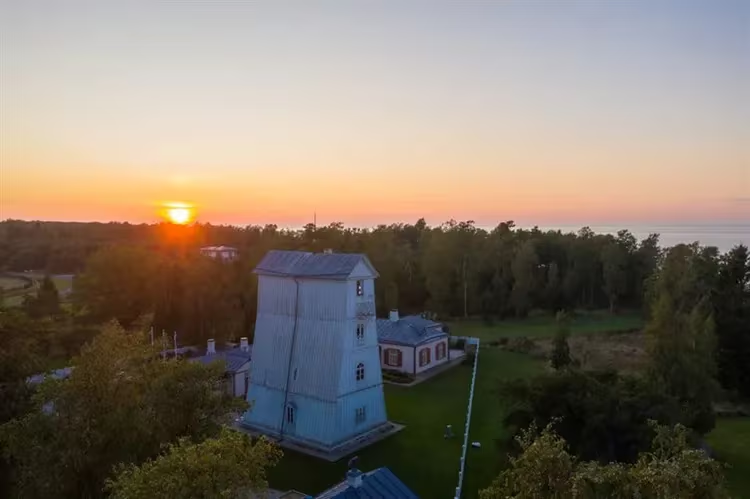
Various Pomeranian tribes have always settled in these rocks, which had well-developed shipping, fishing and trade. Underwater rocks and shoals near the island of Naissaar caused problems for sailors and fish, but the lighthouse was built only in 1760 to ensure the safety of navigation near the Suurupi peninsula.
The building is clearly visible from afar, thanks to the elevation of 16 meters. His searchlight rose 60 meters above the surface of the sea, serving as a guide in the deep foggy nights characteristic of the local climate. This wooden lighthouse in the form of a four-sided pyramid equipped with a gable roof is the only wooden structure of its kind that has been functioning to this day.
The wooden Lower Lighthouse, built in 1859, is the oldest operating lighthouse in Northern Europe, which is included in the list of historical values that have retained their functioning. It is listed on the register of 100 historic lighthouses by the International Maritime Aids to Navigation and Lighthouse Association (IALA). The entire complex of buildings adjacent to the Lower and Upper Lighthouses is under state protection as part of the cultural heritage.
Kadriorg Art Museum
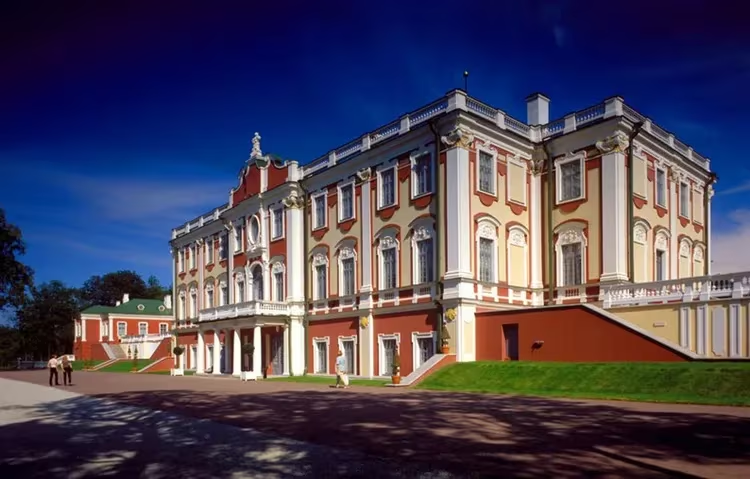
The architectural ensemble in the best traditions of the northern baroque, including a small palace and the Kadriorg landscape park, is one of the favorite places of the townspeople. Tourists are offered to inspect the palace from the inside. Its exquisite interior impresses with its luxury and magnificence. This is a gift from Peter the Great to his wife Catherine – an example of European park culture, “Versailles” in miniature with a park and fountains. Today, a small Japanese garden also flaunts here.
Peter I attracted the best European masters to the construction of the Kadriorg Palace. The Italian Nicola Michetti was entrusted with the position of chief architect. The team of architects included Germans and Italians, Swedish and Russian craftsmen. After completing the main front of the work, Nicola Michetti left for his homeland, and the construction was headed by Mikhail Zemtsov. After that, the tsar appointed him the chief architect of St. Petersburg, so it is easy to assess the scale of the genius of the Russian architect.
Building materials and the main labor force, including soldiers and convicts, were imported from the Russian Empire. Perhaps today the architectural ensemble looks rather modest. But the once unprecedented luxury of the Kadriorg Palace shone in the war-ravaged and almost deserted city-fortress, competing with the palace of Peterhof. It stood out against the background of juniper thickets and modest buildings of Reval among the rocky shores. The museum's collection of paintings includes European masterpieces of the 16th-20th centuries.
Orthodox Church of St. Nicholas “Niguliste”
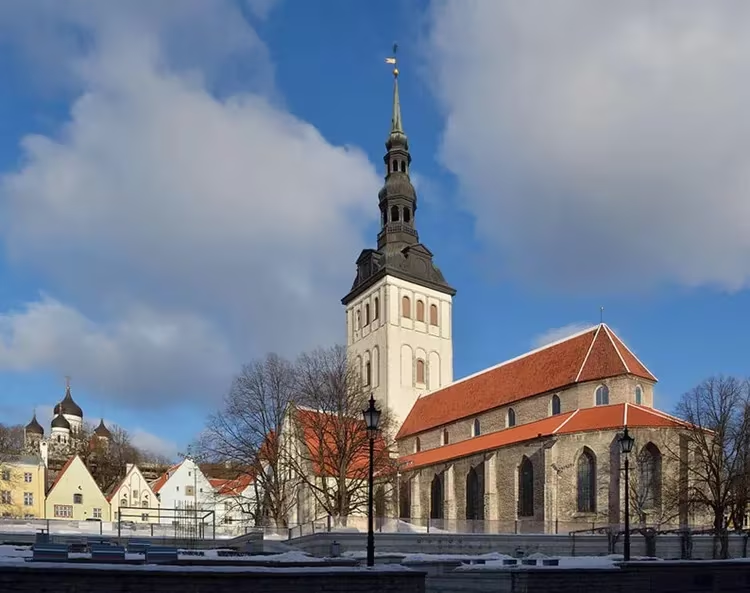
One of the most interesting sights is Niguliste or Niguliste kirik (in Estonian). So it appears in all tourist guides, although it is better known to Russians as the Orthodox Church of St. Nicholas. It was built by German settlers from the island of Gotland, who were engaged in trade.
In the 13th century, most of these buildings combined the functions of religious buildings and fortifications, where the townspeople took refuge from the raids of the conquerors. This explains its formidable appearance, reminiscent of a fortress. In honor of the patron saint of sailors, St. Nicholas, she was named later. In the Middle Ages, the building was decorated with works of art that were ordered in Lübeck, the capital of the Hanseatic League, which included Reval (Tallinn).
Niguliste converted from Catholicism to Lutheranism, and then to an Orthodox parish. In the early Middle Ages, almost all Christian churches in Western and Northern Europe were Catholic. After the Reformation, many joined the supporters of the Lutheran church. It is noteworthy that during the Reformation of 1523 it was the only parish in these places that was not devastated and destroyed by fires.
According to legend, a crowd of angry vandals, after the destruction of other city churches, was stopped by keyholes filled with wine. Another way to get into the fortified outpost was problematic. The only case when the building of the Church of St. Nicholas was badly damaged was the bombing in March 1944.
Soviet air raids on enemy fortifications affected the historical part of the city. At that time, many works of art and parts of the unique interior were destroyed. A fragment of the painting by Bernt Notke “Dance of Death” (XV century), which symbolizes the equality of all classes in the face of death, has been preserved.
Church of the Holy Spirit
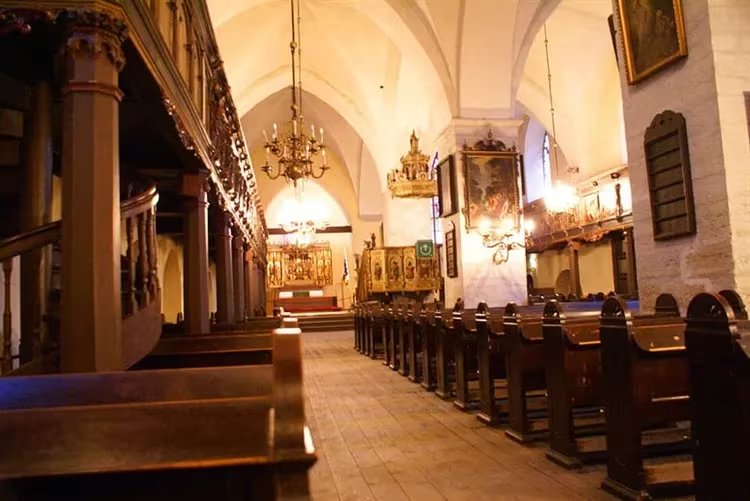
Remember the words of the song from the popular Soviet cinema: “The clock on the old tower strikes, seeing off yesterday, and the bells ring”? These lines were written about the Church of the Holy Spirit on Pühavaime Street. The architectural monument XIV today adorns the historical center – close to the Town Hall Square. There are many memorable events in the history of the Lutheran church. In particular, this is the first place where sermons were heard in Estonian, and the pastors of the church played an important role in the development of the cultural life of the country. Today you can listen to the organist live here for a nominal fee.
The old building with a high snow-white tower belongs to the Lutheran parish (EELC). It is notable for the carved clock, made in 1684 in the tradition of the early baroque. The oldest clock on the public building is still running. The bell is also unique. On its rim is the line: “I beat for everyone equally true, for the maid and the servant, the mistress and the master, and no one will blame me for this.”
The octagonal tower on a stepped pediment is crowned with a renewed spire, which was badly damaged in a fire. Püha Vaimu kirik church was decorated with wall paintings in the 17th century. The illustrations are called the “Bible for the Illiterate”, since the main themes of the events described in the Old and New Testaments are traced in 57 sketches.
The modest interior decoration of the Church of the Holy Spirit is decorated with a “hanging” pulpit donated by the burgomaster, an altar by B. Notke, as well as chandeliers and sconces in the Renaissance style. The sculptural group of the altar, symbolizing the descent of the Holy Spirit, is noteworthy. The main decoration is the altar triptych “The Descent of the Holy Spirit”, preserved from the 15th century.
Church of Kaarli
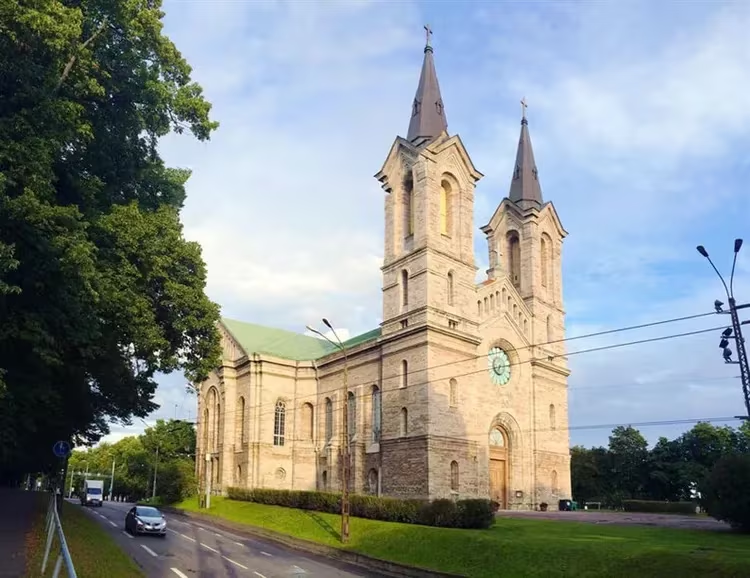
The most representative religious building of large stone blocks, built in memory of the heyday under the Swedish king. The Church of Charles XI was built in the 19th century on Toompea Hill. This is a project of Otto Pius Gippius, a St. Petersburg architect of Estonian origin. Here everything is thought out to the smallest detail, so that from any point in the hall everyone present can clearly see the altar and the pulpit. Lighting and excellent acoustics play an important role in creating a special spiritual atmosphere.
The interior decoration of the Kaarli Church is complemented by an altar made by J. Köhler and S. Kügelgen. The venerable age of the tower clock, which has been working to this day, impresses with its elegance; they were hoisted onto the tower in 1884. Later, the church was provided with organ accompaniment – the German “Walker”, produced in 1923, was brought here. It is the country's largest musical instrument with mechanical contracture, 30 registers and 5 manuals. The first Estonian fresco “Come to Me” (1879) is of great artistic value.
The beginning of the history of the Lutheran parish dates back to 1630, when the Finns and Ests living in these places united. Church services were held in the Toompea castle hall, and the parish received its first building in 1670. The old wooden building was destroyed by fire during the Livonian War in 1710. The facade of the new monastery is distinguished by 2 neo-Romanesque towers, complemented by bells cast in Stockholm and Bohum.
This is one of the most visited places of worship, and besides, both parishioners and tourists come here, who are attracted by the music of the organist at the hour of classical music. It is also customary to see off prominent figures of Estonia who have made a significant contribution to the development of the country on their last journey from here. On Sunday the temple is open from 10.00, on Tuesdays at 17.00 there are concerts of classical and sacred music.
Monument to the battleship “Mermaid”
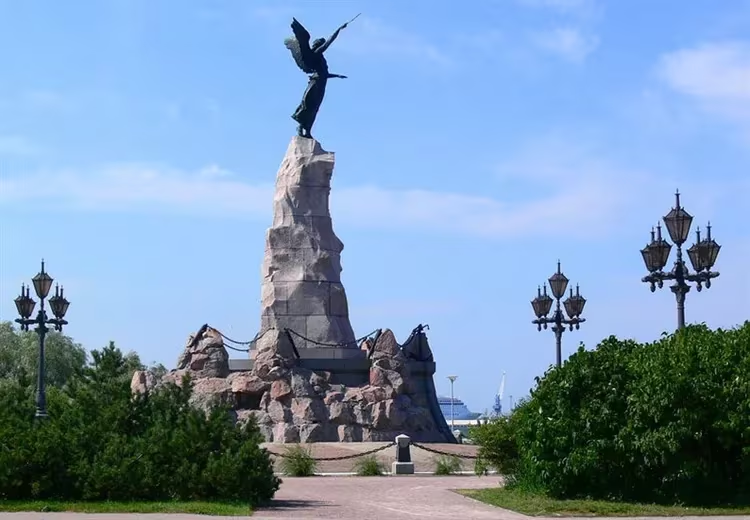
One of the symbols of the capital of Estonia is a bronze monument in the form of an angel. On its granite pedestal is carved: “The Russians do not forget their martyr heroes.” The stele is the work of the sculptor Amandus Adamson and is dedicated to the 177 sailors of the Russian Imperial Navy who died on September 7, 1893. The shipwreck happened on the Rusalka coastal defense battleship, so on the pedestal there is an Angel with a cross, and not a mythical mermaid. The majestic monument is set on a round platform in the form of a compass. In the evening, the monument is illuminated by spotlights.
Historians describe the events of September 1893 as a 9-point storm of unprecedented strength, unusual for these places. The ship was returning to its native harbor from the exercises, having lost control and lost its course. the heavy battleship tilted and sank. All that was brought to the shore in a few days was dismantling the boat with the dead sailor. His remains were found on one of the rocky islands in the Gulf of Finland some time after the events.
Parts of the hull of the battleship “Mermaid” were discovered 40 years later, 25 km from Helsinki, the nose buried in the sand at great depths. Therefore, in the monument built in 1902, everything is symbolic, including a gray rock that looks like the bow of a ship crashing into granite waves. The bronze angel spread its wings towards the storm wind, holding a gilded cross in its right hand – an indication in the direction of the ship's wreck. The steps at the foot of the 16-meter obelisk, according to the number of victims of the officers, lead to a bas-relief where their names are carved. The anchor chains surrounding the monument prop up the columns on which the names of 165 sailors are immortalized.
Fat Margaret Tower
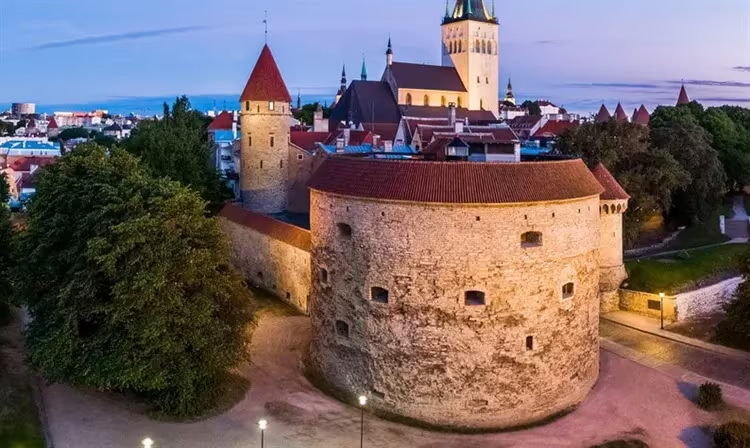
Paks Margareeta or Fat Margaret's Tower is a cylindrical outpost. Construction work was carried out under the leadership of Gert Koning from Westphalia, it was a fortress for the defense of the Great Sea Gate. The building does not differ in special aesthetics, its parameters inspire. It was possible to shoot back from all sides, you can see 155 loopholes at different heights of thick stone walls. The height of the tower is 20 meters, 25 meters in diameter. The five-meter thickness of the outpost could not be penetrated by a cannonball.
Estonians joke when they call Fat Margarita the “wife” of Long Herman. Sarcasm is contained in the comparison of the obvious contrasts of the two structures in terms of the shape and size of the “spouses”. Long German is located on the opposite side of the Old Town, its height is twice as high – about 46 m, diameter is only 9.5 m. At different times, there was a fortress, city warehouses and a prison inside the impressive building. Today it is the Estonian Maritime Museum, which exhibits a collection of weapons and old navigation maps. An observation deck and a cafe overlooking the port have been built for tourists.
The Russian-speaking population called fat Margarita “kutafya”, an offensive nickname for a tastelessly dressed fat woman. This building is located at the exit from the northern part of the Lower City – on the way to the sea harbor. City fortifications began to be built in 1265, by the personal order of Queen Margarita, an ugly Danish woman who ruled the Estonian lands at that time. The tower was completed in 1529 in order to connect the port with the city hill of Toompea (Pikk Street).
Long Herman Tower
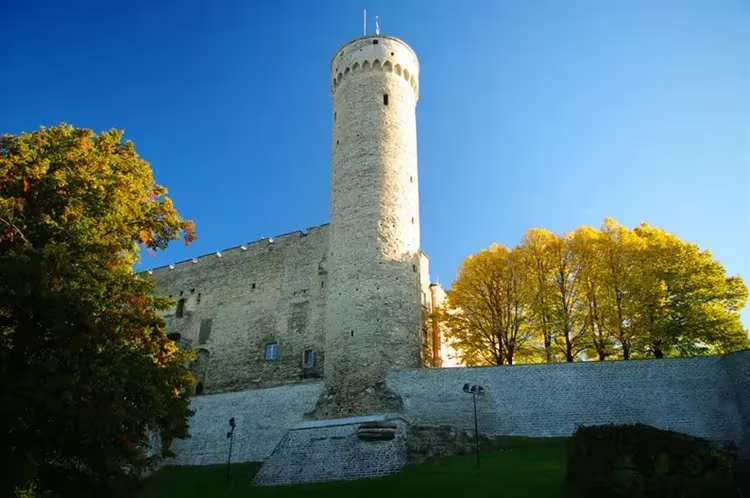
Long Herman is the tallest of the 4 watchtowers of Toompea Castle, where the Estonian Parliament sits today. In the Governor's Garden, adjacent to the building, the entrance is for everyone. Tourists are allowed inside the historical building according to the schedule – on open days. The height of the watchtower has a special advantage. From the upper level, it was easier to see the enemy hordes even on the outskirts of the city (on the sea and on land).
The basement floor of Long Herman is a dungeon where death sentences were carried out. According to legend, there was also a pit with hungry lions. Above were barracks and rooms with loopholes for shooting. From one level to another they moved along the outer staircase, which was removed during the siege.
Today, they climb to the very top of Long Herman, overcoming 215 steps of a ladder. At an altitude of 95 meters above sea level, the national flag of Estonia flutters, which is raised every morning to the sound of the anthem “My beloved Fatherland” (lowered at sunset). All 4 defensive towers, including Long German, were built in 1370-1375. And only by the end of the XV century, the building acquired a modern look.
Seaplane Harbor
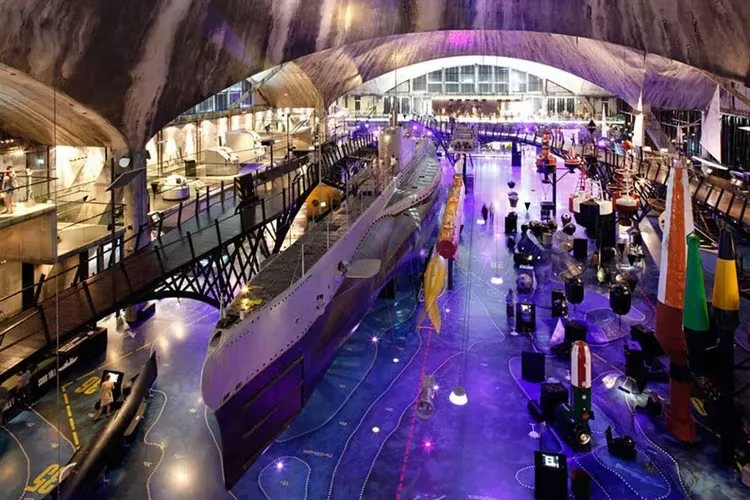
The history of Estonian navigation is vividly presented in the exposition of the Naval Museum. This is the so-called Seaplane Harbor, which is rightly considered the repository and promoter of this important area of the country's life. The mission of the museum is to systematize and increase knowledge, cultivate respect for people of difficult professions and cultivate love for the sea.
The Estonian Maritime Museum was founded in 1935 by a group of retired captains and sailors. A sufficient number of unique exhibits have accumulated that I wanted to save for posterity. Initially in the hangars of the Seaplane Harbor, 1918 – 1940. seaplane unit was based. It was the practical site of the flight school, with which the air defense headquarters functioned. After the war and until 1991, it was a closed-type military facility.
Among the most valuable exhibits are the Short 184 seaplane and the Lembit submarine, the hull of Maasilinn's oldest ship. Other exhibits are of no less interest to visitors – sea mines, small vessels and simulators that allow you to feel like a site of certain historical events. There is a play area for children, a cafeteria and a restaurant, as many walk for hours among the authentic exhibits. Museum ships and amphibians can be viewed outside, including the Suur Tõll icebreaker and the British Short Type 184 floatplane (replica).
Town Hall Pharmacy
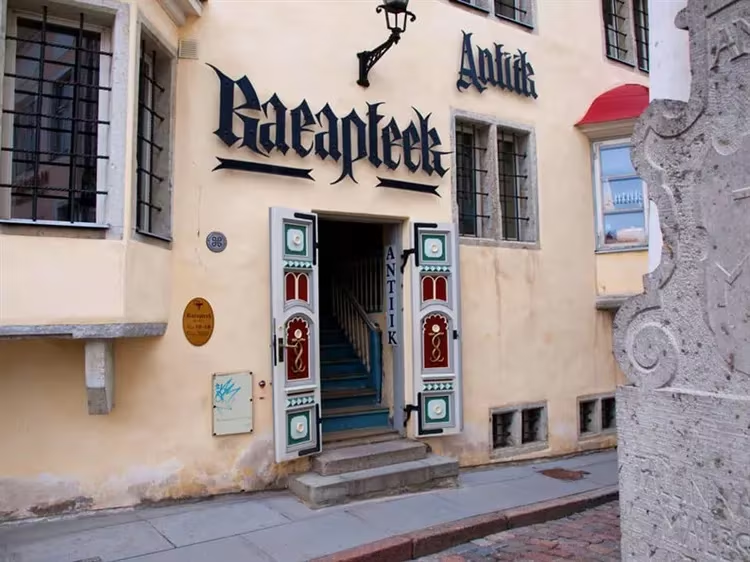
The oldest pharmacy in Europe, which has maintained its medical specialization for centuries, is located in Estonia. The remarkable building, facing the Town Hall Square, belonged to one dynasty of doctors for a long time. The pharmacy is mentioned in the documents of the city magistrate almost 600 years ago, it is assumed that it is much older. But its history is counted from 1422.
Perhaps this is the oldest pharmaceutical institution not only in Europe but also in the world. She worked when there was no official medicine, and all diseases were treated with healers and herbs. In fact, this was the shop of hereditary herbalists, perhaps they were also looking for an elixir of eternal youth and a panacea for all diseases. The uniqueness of the pharmacy is precisely in the continuous care of the health of citizens for 6 centuries in a row.
In those distant times, accounting chronicles were not kept, recipes were not accumulated. But some historical documents were preserved in the court archives, where the dates were indicated, the local pharmacy is occasionally mentioned there too. At that time, not only healing tinctures were traded here, but also magical attributes of that time. Unicorn horn powder and bough udders, ashes of hedgehog needles and dried toads, viper fat and fly agaric powder, everything was as it should be in the Middle Ages. Some of the potions are exhibited as museum exhibits, which, today, this pharmacy is its own. It was here that the first marzipans were made in 1441, the Claret drink in 1467.
Monastery of Saint Birgitta
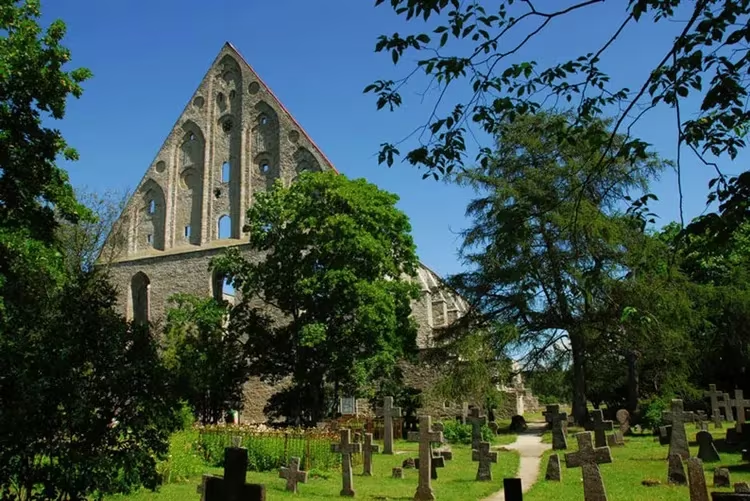
The ruins of an ancient religious building rise along the banks of the Pirita River. It was the largest nunnery in Vana-Liivimaa, where church life was in full swing as early as 1407. It was named after Saint Brigid, the founder of the mother monastery in Sweden. Near the surviving walls and facade there are picturesque parks and an old cemetery. The building is still nominally owned by the sisters of the Order of St. Brigid (Sweden), and the monastery itself has been reorganized into a museum.
The troops of Ivan the Terrible, who invaded this land, behaved like vandals, not sparing the Catholic and Lutheran parishes. In integrity, this unique building stood only until 1577, now these are strong stone walls, giving only a general idea of the grandeur of the monastery. Recently, full-scale excavations and foundation conservation work have been carried out there in order to preserve for future generations at least the facade of the building, the cellar and the perimeter walls.
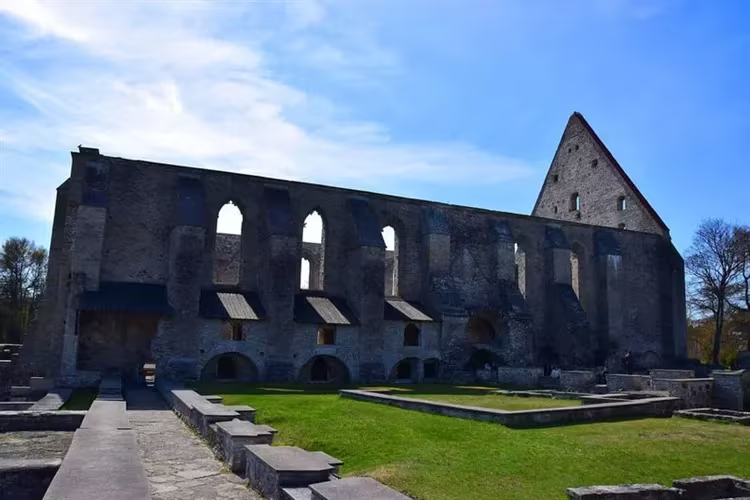
The monastery in Pirita is a typical cult building of the 15th century. in the late Gothic style. The initiators and patrons of the construction were merchants from Reval, who ensured the delivery of building materials, providing comprehensive assistance. Representatives of the Order of St. Birgitta from Sweden played an important role in organizing the affairs of the convent. The main part of the construction work was completed by 1436, and in August it received the consecration of the bishop. Once upon a time, the Birgitta Order owned 74 monasteries – from Estonia to Spain, and this monastery complex was the largest in Livonia.
Estonian Architecture Museum
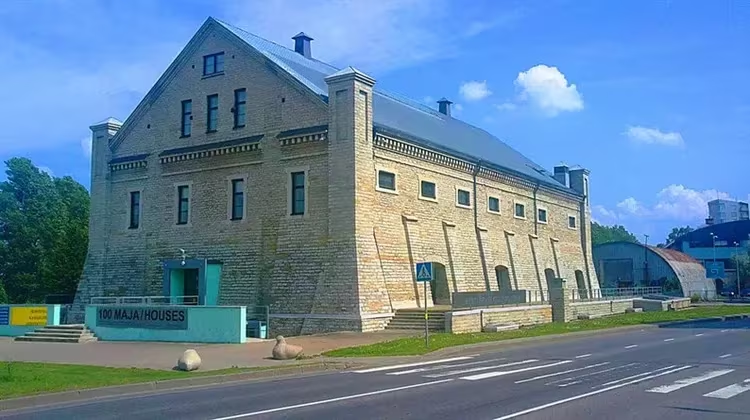
Founded in January 1991. This is the main base for the preservation of important urban planning documentation, systematics and popularization of knowledge on the history of the development of modern architecture of the country and region. The main direction is Estonian architecture of the 20th century and the present.
Since 1996, the Architectural Museum has moved to the Rotermann salt storage building, a unique stone building (designed by the German engineer Ernst Boustedt). At the beginning of the 20th century, there was a warehouse in the vaulted basement level, processing of raw materials was carried out above.
In 1995, they decided to reconstruct the salt warehouse, according to the project of the architect Ülo Peili, the interiors were handled by Taso Myahari. The loft's showroom has undergone significant transformation to function as a museum collection, a center of architecture and art of sorts. The museum collection is a member of the International Confederation of Museums of Architecture ICAM. The Estonian branch functioned in the temporary premises of Old Tallinn (Kooli Street 7), the most interesting part of the exposition is the medieval Loewenschede tower. Today, drawings, models and diagrams of buildings and projects of the modern capital of Estonia are of the greatest value.
Marzipan Museum
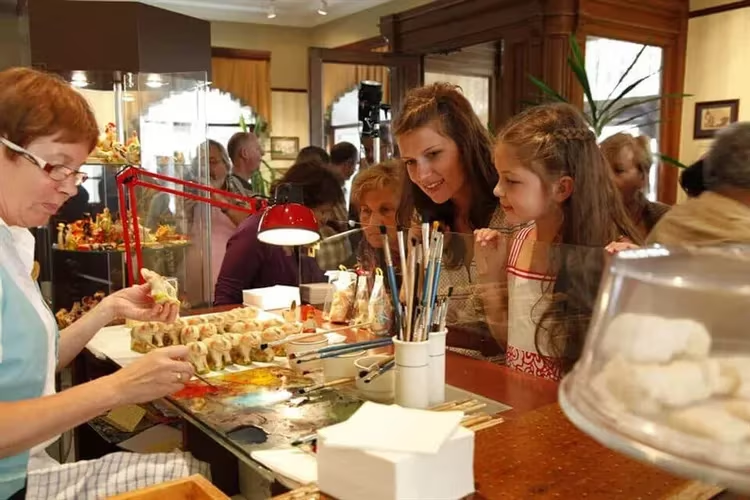
There are only a few such institutions in the world, the most popular Marzipan Museums are in Hungary and Estonia. Until now, not everyone knows what “marzipan” is, although there is a proverb that “a gypsy wedding will cost without marzipans.” And in Hoffmann's tale about the Nutcracker and the Mouse King, a “bribe” is mentioned in the form of a fabulously tasty treat. Most of the exhibits of such exhibitions are, of course, made of confectionery mass.
The Estonian exposition is smaller than the Hungarian, French, German, Israeli or Italian, but no less interesting. It is Tallinn that claims the proud title of “the birthplace of marzipan”, especially since it is here that the oldest recipe for its manufacture was found. In this city, a delicious delicacy has been prepared for several centuries, improving the technology and the proportional composition of the ingredients.
Museum-cafe operates in the old Maiasmokk building near the Town Hall Square. The exposition tells about all the interesting historical facts from the moment marzipans appeared in Estonia to the present day. Unique exhibits are figurines made of marzipan dough, confectionery tiles and cakes. By special order, they can also perform something special, for example, a portrait silhouette of a regular client of a confectionery salon. Anyone can appreciate the work of local confectioners over a cup of aromatic coffee and take something away from the Estonian capital as an edible souvenir.
Kumu Art Museum
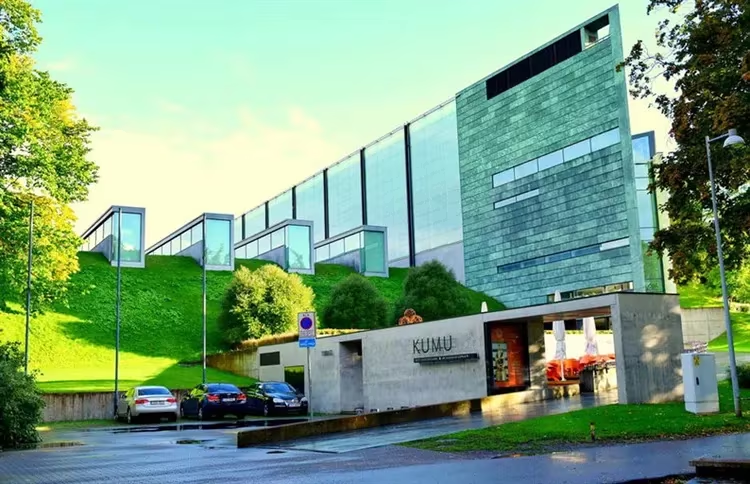
The main building of the Art Museum of Estonia is known as Kumu, it is the largest collection and venue for all kinds of exhibitions in Estonia. The honorary title of the European Museum of the Year KUMU was awarded in 2008. International recognition encourages the museum staff to keep the bar high in the future. The purpose of the main exposition is to introduce visitors to the art of the region from the beginning of the 18th century to the present.
Exhibition galleries are located on different floors; these are permanent and thematic expositions, which are periodically updated. Of great interest to tourists is the 3rd floor, this is the history of the country's art from the 18th century to the Second World War. On the 4th floor, a collection of the 20th century, mainly from the Soviet period, is exhibited. Contemporary art is presented in a separate wing.
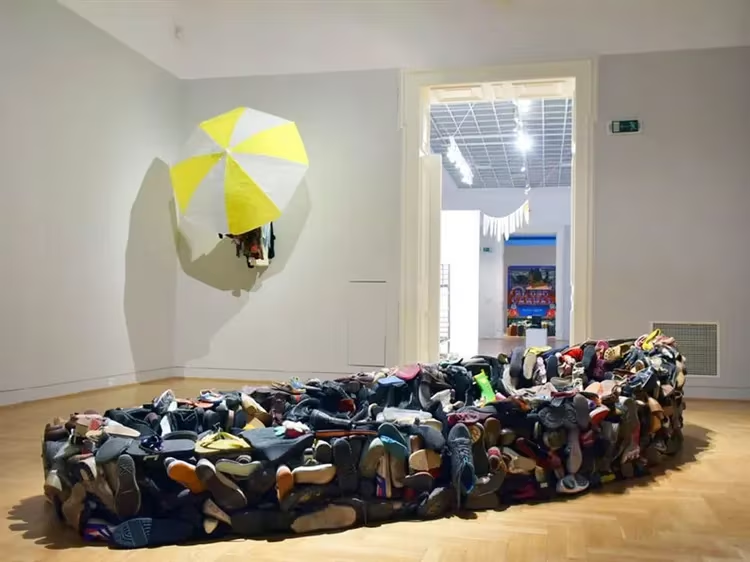
The collection of works of the Estonian Art Museum is considered the largest not only in the Baltic region, but also in Northern Europe. KUMU stands for “KUnstiMUuseum” or art museum. The author of the building project is the Finnish architect Pekka Vapavuori, it was a competitive entry in 1994.