
35 main attractions of Seville – photo and description, map
Seville is perhaps the most famous city in Spain after Barcelona. The number of historical and architectural monuments in it is so great that on almost every street you can find buildings or statues that have their own centuries-old history. The capital of Andalusia is not a million-plus city – about 700 thousand people live in it. Tourism, services, industrial production are the main sources of income for local residents. The main attractions of Seville are located on both banks of the Guadalquivir River, nearby streets and squares. There was a “Golden Age” in the history of the city, when the discovery of America, the wealth exported from the New World created the basis for the development of the province. The Napoleonic Wars undermined its economy. The city came to life during an industrial boom, but it was replaced by new wars, Franco's repressions, mass executions… It seemed: this place will never be resurrected. The fortitude of the inhabitants of the city conquered everything.
Cathedral
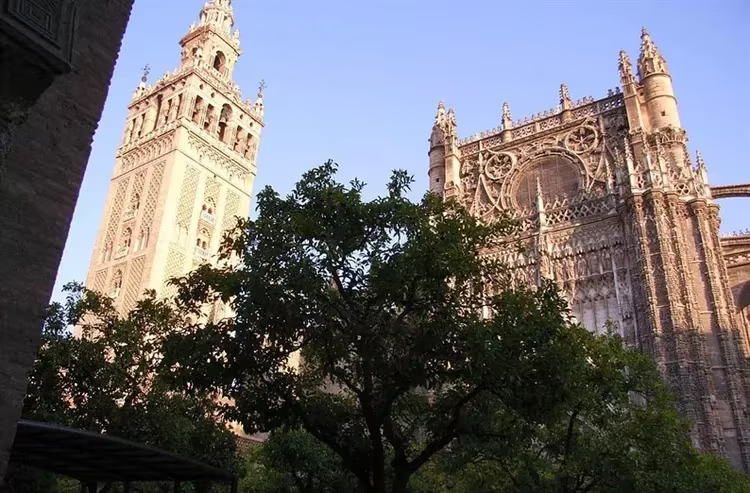
It is rightfully one of the three largest and most ancient temples on earth, and some of its buildings still retain their original appearance. The beginning of its construction dates back to 1401. In addition to its impressive dimensions, the cathedral amazes visitors with the luxury of its decoration. Its interior is a mixture of different styles that harmoniously complement each other. Here are carved figures made in the Gothic style, icons, paintings by Roelas, Morales, Leal, Murillo and other famous artists, copper embossing, jewelry, plateresque grilles and other works of art.
The temple can be entered through one of the nine gates, passing through which you get into the spacious halls. In one of them, the attention of visitors is attracted by a tabernacle made by the master Arfe, who called it his best work. Also noteworthy are stained-glass windows, on which various famous artists worked for a long time. But, of course, the main attraction of the cathedral is the remains of Christopher Columbus, which have survived to this day, placed in a coffin, which is held on the shoulders of four stone giants.
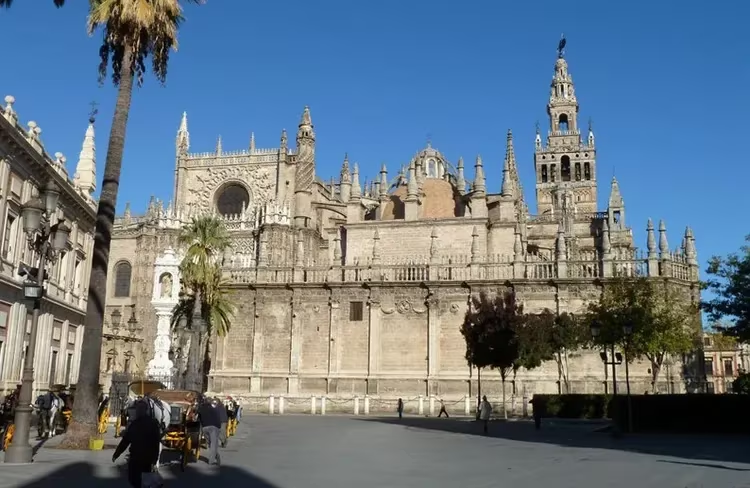
In addition, the temple has the burial places of Cardinal Cervantes, Dona Maria de Padilla, Alphonse the Wise and Pedro the Cruel. But at the foot of the patroness of Our Lady de los Reyes, you can see the body of Saint Fernand III, untouched by decomposition. The largest number of visitors gather in the Cathedral during Holy Week and on the day of the Assumption of the Virgin. But in April, an annual fair opens in front of its entrance, where you can buy all kinds of goods of craftsmen, as well as watch or even take part in the carnival.
Book a private transfer from the airport to your hotel for 3 738 RUB
The Cathedral opens its doors to visitors as early as 11.00, so if you want to see the sights of the city before noon, this place can become another point on the tourist route. Those who prefer to pay attention to excursions in the evening should remember that the cathedral closes at 17.00.
Herald
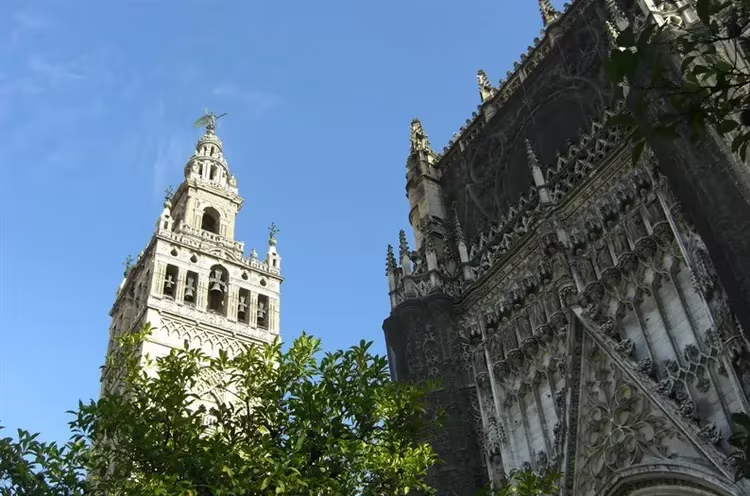
The tower, about 98 meters high, is one of the visiting cards of the city. Giralda is associated with Catholicism, but it is Islam that owes its appearance to a unique architectural monument. The tower was erected at the beginning of the XII century during the Arab rule. For 100 years Giralda, decorated with 4 gilded balls, was a minaret and the largest observatory in Europe. When the Pyrenean Christians recaptured the city, the mosque next to the tower was rebuilt into a cathedral. The Giralda became his bell tower.
The quadrangular tower is called a monument of Moorish architecture, which is not entirely true. Part of the building was destroyed, all elements of the Giralda above 70 meters were created later than the Muslim rule and correspond to the canons of the Spanish Renaissance. In the 16th century, a bronze statue-weather vane was installed at the top of the tower. It symbolizes one of the main Christian virtues: Faith.
In honor of the statue, the building was named: Giralda in Spanish means “weather vane”. The bells installed 500 years ago on the belfry of the tower are perfectly preserved. Inside the Giralda, an exposition of medieval household items operates on a permanent basis. The open terrace of the bell tower serves as an observation deck.
Torre del Oro
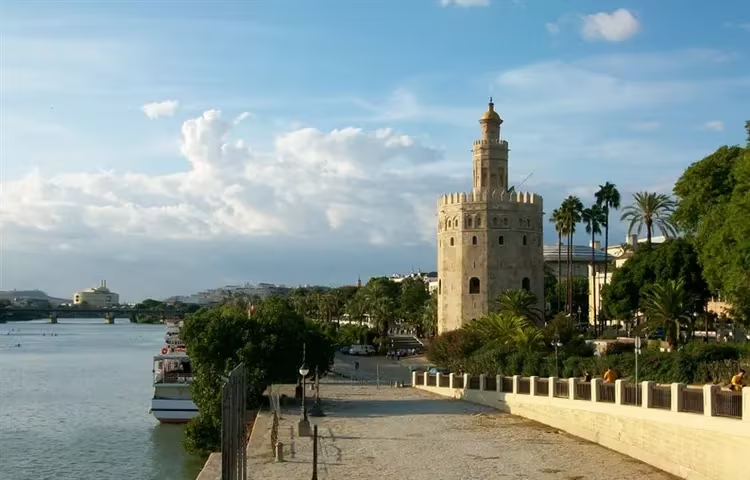
In literal translation, the name means: “golden tower”. Torre del Oro was intended to monitor the harbor and conduct combat operations. Moorish dodecahedral tower 37 meters high served as a fortress. Its counterpart, a similar structure on the other side of the river, has not been preserved. Historians date the construction of the towers to the beginning of the 13th century. The buildings were connected by a chain located in the water. It was raised and lowered with the help of special devices.
A simple design in a matter of minutes closed the entrance to the harbor for enemy ships. During the time of Muslim rule, the tower was decorated with magnificent gilded tiles, in honor of which, according to one version, it was named. Later, the building served as a repository for the gold exported by the Spaniards from America. The locals are sure that the treasures belonging to the killed Indians attracted the curse to the ancient tower.
Torre del Oro was damaged by earthquakes, during the repair work here, under strange circumstances, people died. The building was turned into a prison, a chapel, a port warehouse, and the tragic coincidences continued. Today, the tower houses the Maritime Museum, whose collection of ship models, navigational instruments, ancient weapons is considered one of the best in Spain.
Alcazar Palace
It's worth noting right away that it will take a whole day to explore this attraction. From October to March inclusive, it is open to visitors from 9.30 to 17.00. But from April to September – from 9.30 to 19.00. It is worth mentioning that on Mondays at certain hours you can enter the palace for free. But on other days you have to come here early in the morning to borrow a lot for tickets, the cost of which is 9.50 €.
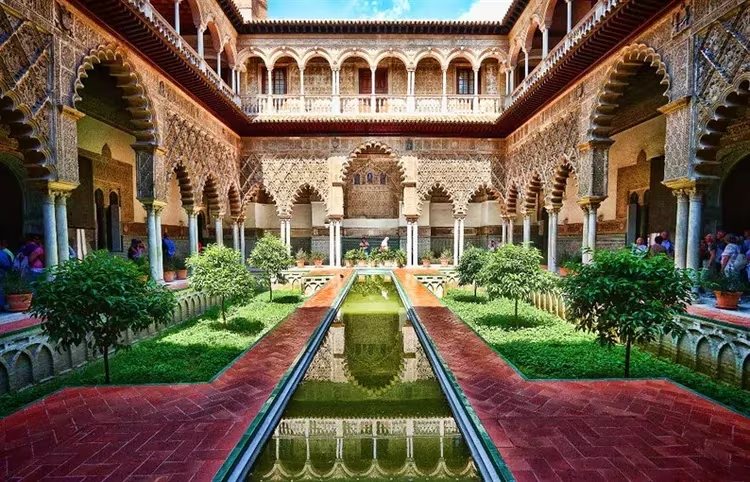
The Alcazar Palace is located in the center and is a monumental building in which various architectural styles and trends are harmoniously intertwined. You can get into it through the Lion Gate, which got its name due to the coat of arms depicting a lion located on them. The gates are decorated with bright scarlet ceramic masonry, which immediately stands out against the background of light walls.
The center is the palace of Pedro I, whose throne room is crowned with a gilded vault, decorated with an unusual ornament made of wood and symbolizing the infinity of the universe. A little lower you can see a frieze with portraits of Spanish monarchs. Next to the palace of Pedro I, there is a building in which the residence of Charles V was, made in the Gothic style and decorated with ceramic mosaics.
The Alcazar Palace also has a room called the Maiden's Patio, which is famous for its exquisite interior, decorated with friezes, tiles and stucco, which are distinguished by their particular elegance and sophistication. The feeling of luxury is complemented by the gardens, which have many fountains, gazebos for relaxation and lawns, on which, like many centuries ago, royal peacocks walk. The garden is filled with the fragrance of all kinds of flowers, orange and other exotic trees, which are carefully trimmed and formed into regular ensembles.
Now the Alcazar is officially considered the residence of the Queen of Spain. It will take more than one day to fully describe this architectural structure, so it’s better to see it yourself once and form your own opinion about its magnificence.
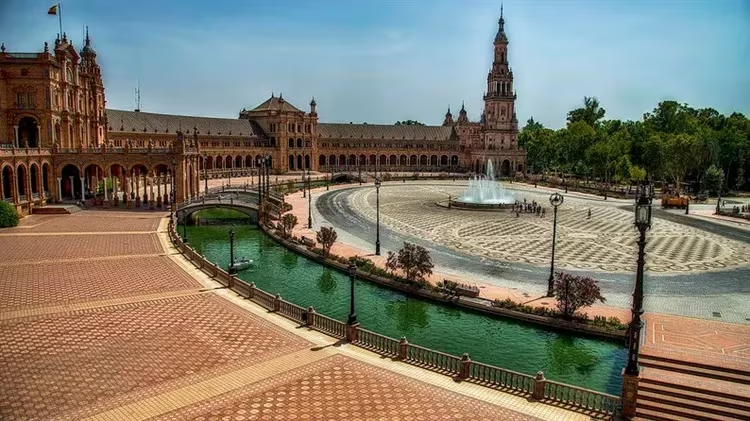
Plaza of Spain
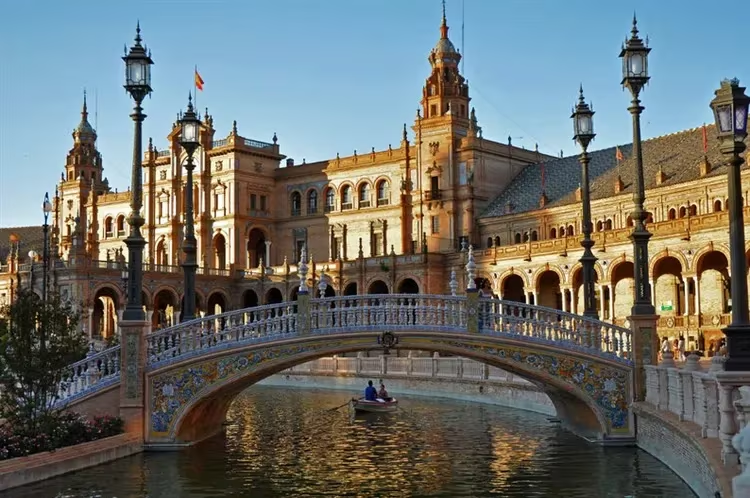
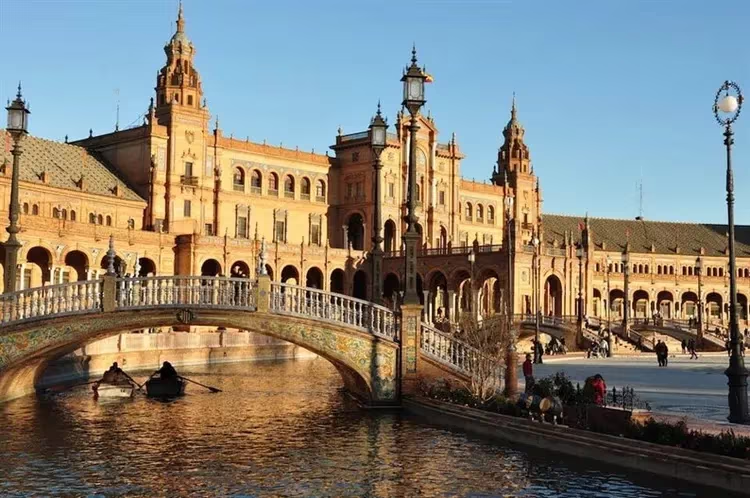
It is impossible not to visit Plaza de España. Despite its modest size (its diameter is only 200 meters), it attracts tourists with such sights as:
An interesting feature of the Plaza de España is the fact that pigeons here are not at all afraid of people and eat food directly from their hands. The square is surrounded by a canal, where you can take a boat trip for a moderate fee. Guides warn tourists not to buy souvenirs from random merchants on the Square, as they are much cheaper in stores. Tired after excursions and walks, you can have a bite to eat in one of the local restaurants. On average, lunch will cost 15-20 euros, and a cup of cappuccino – 1.5-2 euros.
Metropol Parasol
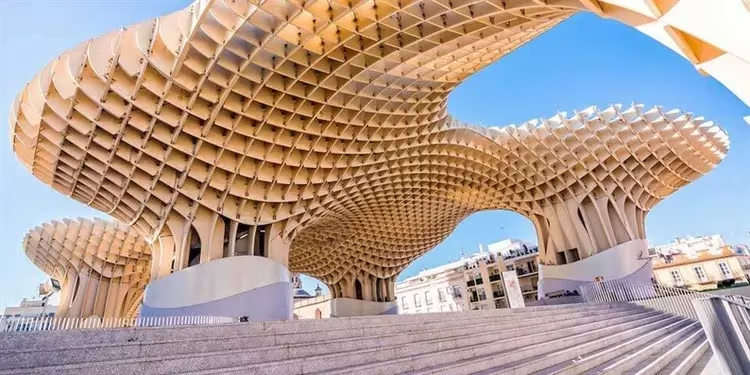
An unusual design of fantastic shapes is located on the Plaza de la Encarnacion, which attracts all visitors with its unusual appearance. Crowds of tourists come to the futuristic building to take a closer look, go inside and make sure that there are halls and corridors, like in ordinary buildings. Looking from the outside at the huge lattice “wings” wide open above the square, it is hard to believe that they are made of wood (Finnish birch). Indeed, the Metropol is by far the largest and most original wooden structure in the world, amazing in size and unusual configuration.
The history of its origin is interesting: until 2009, there was a city market on this site, during the demolition of which the remains of buildings of the Roman era were discovered as a valuable historical monument. In order to preserve it, the authorities have instituted a competition to create a design for a structure that will house the ancient ruins. The project of the German architect Mayer-Hermann, who received a prestigious award in the field of architecture after the completion of construction, won.
In fact, the Parasol Metropolis is a gigantic complex consisting of separate structures resembling huge umbrellas, mounted on massive columns connected to each other. The total height of the four-tiered structure is 26 m, the length is 150 m, the width is 70 m. The Archaeological Museum is located in the underground rooms, where majestic ruins appear to the eyes of those present; the ground floor is occupied by the Central Market; the roof of the 1st level is presented in the form of an open concert venue; on the 2nd and 3rd levels there are terraces from where guests admire the beautiful panorama of the city and the bizarre curves of the Parasol itself.
Archive India
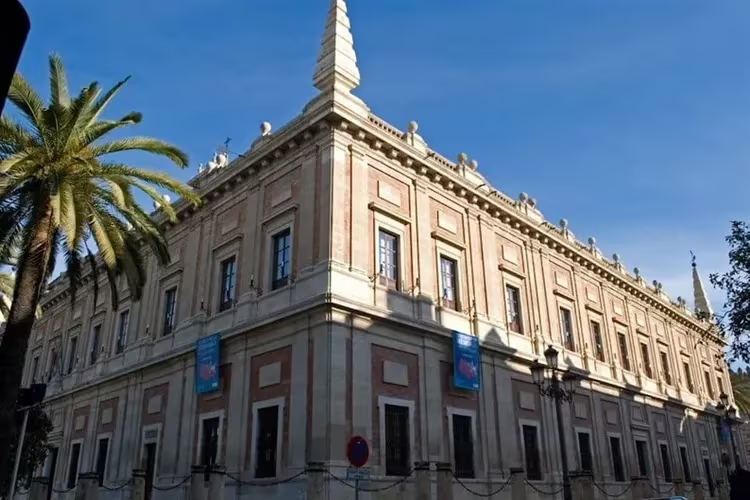
It is rare that a country, and even more so, a city can boast of such a unique treasure as an invaluable collection of documents reflecting the history and development of Seville and Spain as a whole. Here there is evidence of the activities of such great Spaniards as Cervantes (his official request) and Christopher Columbus (discoverer's maritime journal); city building plans, the first maps of Magellan, the original manuscripts of philosophers and writers.
From the materials of the archive you can find out the most accurate information about the conquistadors and their participation in the conquest of America, about the role of Spain in the fate of the Philippines and many other historical facts. The pages of rare documents contain the true past of the city and the state, so the archive is a favorite place for ethnographers, historians and politicians. Now on the shelves of the Indium archive (total length – almost 9 km) there are 43 thousand volumes of true rarities – they have something to work with. Researchers involved in the study of documents need to obtain special permission.
Tourists are also interested in this object, the contents of which link eras and centuries. Its history began in 1572, when King Philip II commissioned the local architect de Herrera to design a building for the Seville merchants' guild. Construction began after 7 years and lasted 14 years until 1598, and interior decoration was already done in the 17th century. The majestic building of the archive, erected in the Renaissance style, is an undoubted masterpiece of architecture and a historical monument. The interiors are just as majestic and monumental. Restorations have been repeatedly carried out here, aimed at preserving a unique cultural and historical object.
Address: Lonja Building Av, de la Constitucion, 3.
City Hall
The Town Hall is not just an administrative building, but an ancient architectural monument that catches the eye with its chic look and graceful beauty of design. The town hall is unique in that since its construction (1527) as the seat of city authorities, it has never changed its status. The reason for its construction was the royal wedding of the ruler of Castile Charles and the Portuguese princess Isabella. A purely Spanish plateresco style was chosen for the building – one of the types of the Renaissance, the characteristic features of which are the decoration of facades with patterns of the finest carving, similar to openwork lace.
Almost the entire structure has been preserved in its original form, except for the fact that in the 19th century. one more front entrance was added (now it is the central one), where features of the new classical style appeared. To see the beautiful details of Plateresque, you need to go around the building and admire the unfading beauty of the old design, sculptures a la grotesque, heraldic symbols of the city. The new main entrance faces Nueva Square, and the old one – on Piazza Nueva. de San Francisco. The appearance of the Town Hall can be viewed at any time, and internal inspection is possible only with a guide as part of a tourist group (at least 45 people).
Open for visits: Monday-Thursday, Sat – the time depends on the work of the administration.
Hospital of the Five Holy Plagues
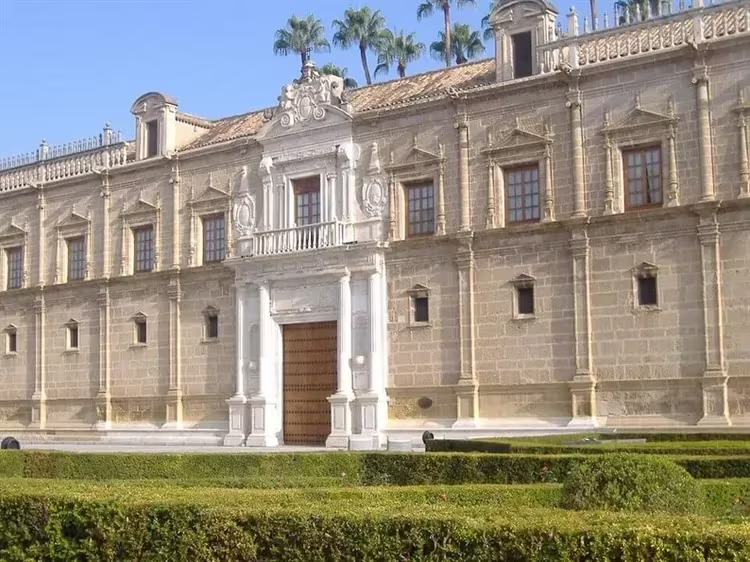
The monumental building of a rectangular shape, with intricate towers at the corners, is, in fact, an architectural complex, with an old beautiful garden, a labyrinth of topiary bushes and benches for rest. It has a long history dating back to the distant 16th century, when a wealthy Seville nobleman bequeathed to build a large hospital for the poor at his expense. The testament was conscientiously executed, and as a result, a solid building in the Renaissance style appeared, with 10 courtyards.
The central facade, decorated with original stucco ornaments, makes an ordinary hospital building a real architectural masterpiece. The local old church of the Baroque style deserves special attention, with many decorations made with artistic carvings. For many years, the poor and soldiers were treated free of charge in the hospital; in the role of nurses were nuns from local monasteries.
The noble work of restoring health continued until 1972, after which the complex was empty for almost 20 years. Deciding that it was unforgivable to leave such a capital building abandoned, the local authorities began to restore it, and in 1992 the Andalusian Parliament was housed in a renovated, well-maintained building. The 5 Sacred Wounds Hospital is an interesting tourist attraction.
Palace of San Telmo
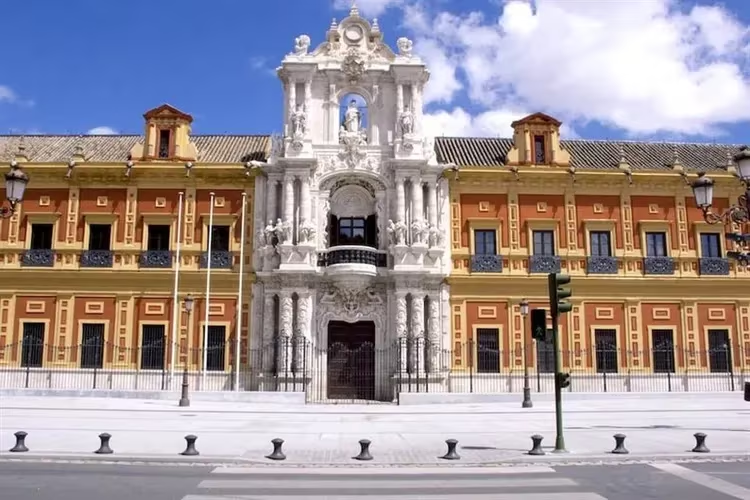
It is impossible not to pay attention to this long terracotta building with many windows and elaborate details – it catches the eye with a style that is not quite typical for Spain – an intricate ultra-baroque in the Mexican spirit. In 1754, upon completion of construction, a naval school was first placed here, a century later – a university, then a seminary. Currently, the regional administration of Andalusia works in it. The authorities sought to preserve the historical appearance of the unique building, and after the reconstruction it appeared in its original form.
The design elements of the central façade and entrance are true works of art: 6 elaborate columns are crowned with magnificent figures of Atlanteans, which serve as a support for a carved balcony with 12 graceful female statues – symbols of marine sciences. Above are sculptures of 3 patron saints of Seville, among which Telmo is the patron saint of sailors. Along the balustrade there are 12 sculptures of great citizens. A masterpiece of ultra-baroque is the local church with a large number of sculptures, lavish decorations and rich decorations.
Address: st. Avenida de Roma, 21.
Marie Louise Park
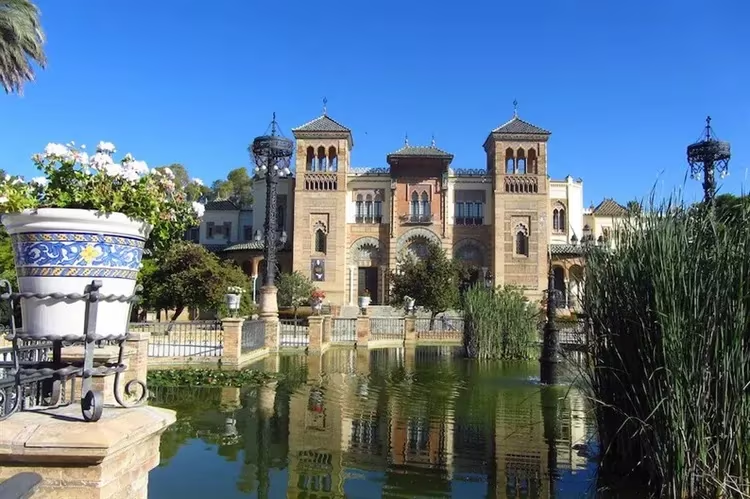
A truly beautiful picturesque corner is the main park, founded in the 20s of the last century in preparation for the event. Ibero-American Industrial Exhibition. It is named so in honor of Queen Marie-Louise, who gave the city a plot of land on which the gardens of St. Telmo, and then they broke the park. And now 2 pavilions of that time have been preserved, on the territory of which the Museum of Folk Arts and Crafts and the Archaeological Museum are located, exhibiting a huge number of interesting items.
Among the beautiful lawns, ponds, in cozy alleys, there are monumental monuments to famous Spaniards. Wonderful rose gardens, flower beds, unique fountains, blossoming orange trees, oleanders, pyramidal cypresses make the park an irresistibly beautiful place. Moorish, Renaissance and Gothic motifs are intertwined in its landscapes, creating amazing landscape paintings that are definitely worth seeing.
Church of St. Luigi of France
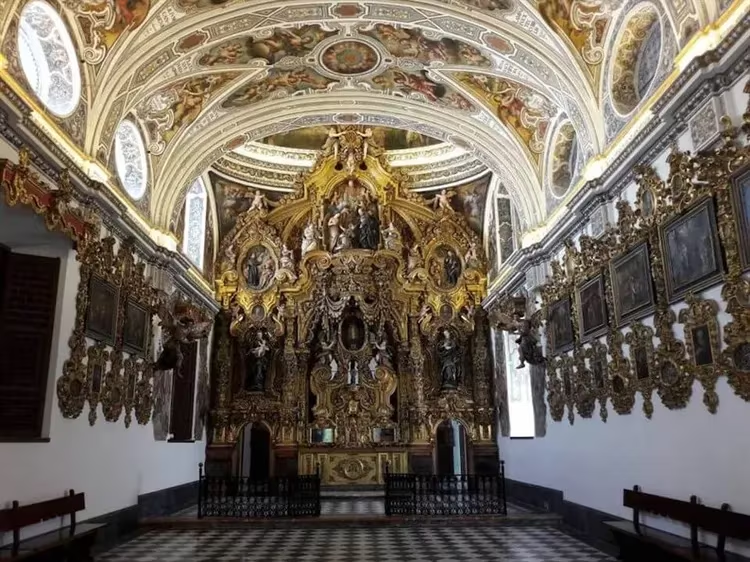
The construction of the temple began in the 17th century and lasted about 100 years. Initially, the building belonged to the Jesuit order, then to the monastery. Within the walls of the church at different times there were a theological seminary, a hospital, a hospice. Today, the building where the museum is located belongs to the city. The church was built in the Baroque style. The authorities invested funds to restore the internal and external decoration of the temple, its towers, columns, and dome. The building in the shape of a cross is not a place of pilgrimage, but the artifacts located here are of particular value to believers.
The restorers managed to restore the frescoes on the ceiling of the temple, unique carved decorative elements, paintings, figures of saints. The altar is recognized as a real work of art in the ultra-baroque style. It is distinguished by an abundance of small details, but the design does not create a feeling of heaviness, because all parts are combined into a harmonious ensemble. It is difficult to imagine that these objects were made by masters of different schools. Artists, sculptors, restorers have managed almost impossible: to maintain the unity of the stylistic solution.
Murillo Gardens
The most beautiful of Spanish parks is called a green paradise by tourists and locals. It is not the only one on the territory – the city is famous for its numerous recreation areas. However, the Murillo Gardens, open to the public in the last century, have become one of his calling cards. The great Spanish artist, whose name the park bears, was fond of landscape painting, boldly included elements of realism in his works.
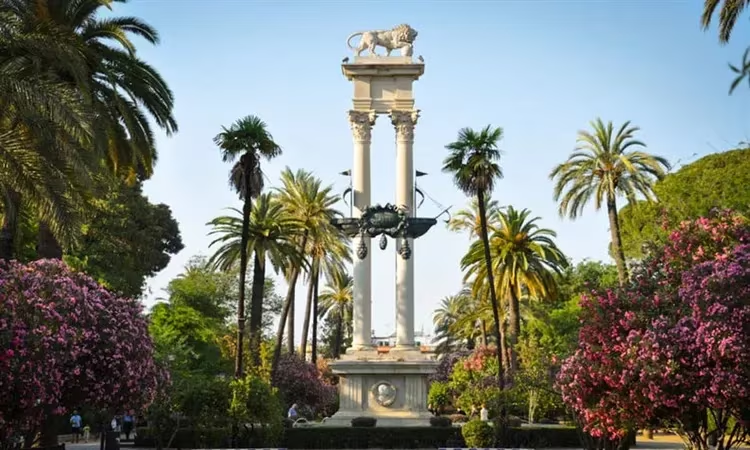
The main works of Esteban Bartolome Murillo are devoted to biblical subjects, the glorification of the Virgin Mary, and the deeds of the saints. His mystical, sublime vision of the world seemed to be transferred to the creators of the park, where a light and at the same time solemn atmosphere reigns. The gardens occupy an area of about 10,000 square meters, previously the site belonged to the royal castle. One of the attractions of the park: the monument to Christopher Columbus. All its details are deeply symbolic. The lion means Spain.
Two snow-white columns looking up are Europe and America. Located in the middle of the ship with the names of the king and queen, who financed the expedition of Columbus, connects the mainland columns. The gardens are famous for their fountains. One of them is named after another great Spanish artist from Seville, José García Ramos.
Murillo House Museum
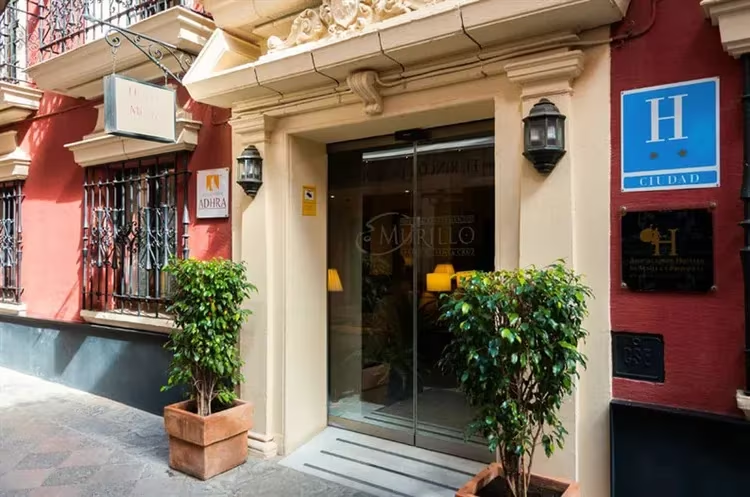
The mansion received museum status in 1972. After 10 years, it was opened to the public, becoming an important part of the most popular Spanish tourist routes. Esteban Bartolome Murillo was born and died in Seville. The last years of his life the artist spent in this two-story building on the cozy street of St. Teresa. The interiors of the bedroom, living room, kitchen are fully consistent with those that were during the life of Murillo in the 17th century. The museum has a collection of paintings, personal belongings of the great master.
The central character of his works: the Virgin Mary. He harmoniously combined Catholic church canons and elements of realism in his frescoes and paintings. Esteban Bartolome gave the images of the Pure features of the indigenous women of Andalusia. As models, he chose representatives of the common people, which at that time was equal to a challenge to public taste.
Murillo created about 500 works, the main customers of his work were temples and monasteries. The main theme of the master's work is feats of mercy. Esteban Bartolome preached Christian values by personal example: he led a moderate lifestyle, helped the poor in Seville, and released slaves before his death. The artist did not become famous for revelry, scandalous novels, eccentric antics. Fate gave him family happiness. At 47, he was left a widower and never remarried. Five children followed in the footsteps of Murillo, but did not reach the creative heights of their father.
Maestranza bullring
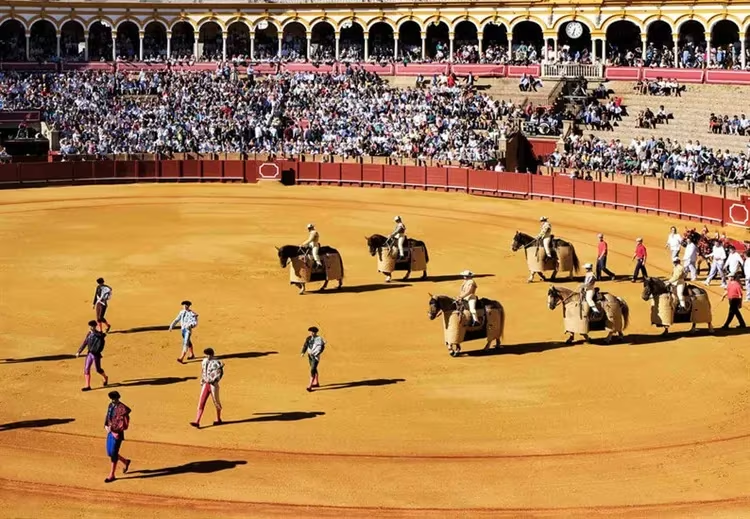
The beginning of the construction of the pompous structure dates back to the 18th century. This is the most famous bullring in Spain. The construction of the object lasted about 120 years. At the same time, 14 thousand people can be on its territory. The arena is a single architectural ensemble with a nearby chapel and infirmary.
Performances are held from spring to autumn, after the death of the dictator Franco, female bullfighters again perform here. Prayer before the battle in the chapel is an obligatory part of the preparation for the battle. Monuments to the famous bullfighters are located at the entrance, the bullfighting museum is inside the building. Any bullfighting arena is a mystical place, and Maestranza is no exception. On days when there are no performances, the Spaniards try to avoid the topic of bullfighting in any conversation in order to preserve the favor of fate.
The bullfighter does not always come out victorious in a fight with an angry animal, and the extra mention of the word “corrida”, according to local residents, brings misfortune. Maestranza is located on Christopher Columbus Boulevard. Its facade is a 30-sided polyhedron. The monument to the gypsy Carmen is installed here. The heroine of the novel by Prosper Merimee seemed to freeze for a moment in motion, heading for the place where she was to die at the hands of her lover.
Royal Tobacco Factory
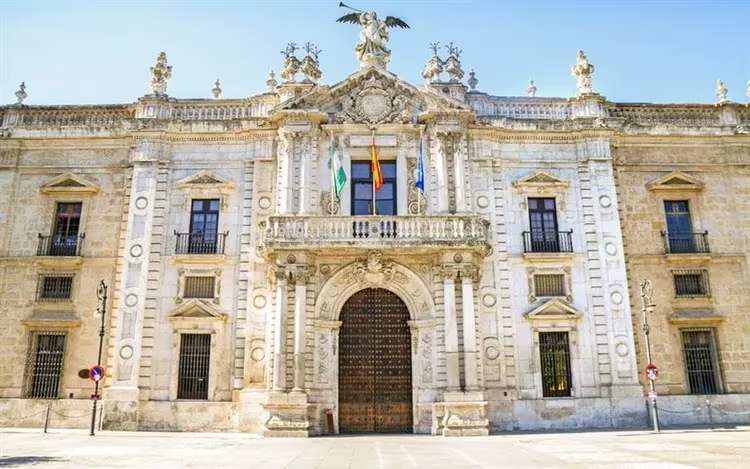
The first tobacco factory built in Europe is recognized as a monument of industrial architecture of the 18th century. Military engineers supervised its construction. Seville at that time had a monopoly on the sale of tobacco imported from America. Raw materials were processed manually. The production of cigarettes required special conditions due to the toxic properties of tobacco dust. The enterprise was taken outside the city wall, where it functioned stably until the middle of the 20th century.
The factory entered the history of the world literary and musical heritage as the place of work of Carmen, the heroine of the famous novel by Prosper Merimee and the opera of the same name by Georges Bizet. Today, the rector's office and several faculties of the University of Seville are located here. Entrance to the building is free, but there are restrictions on viewing – so that tourists do not interfere with students.
Since its construction, the exterior of the tobacco factory, repeating the shape of a rectangle, has remained almost unchanged. The façade, decorated in Baroque style, impresses with its splendor. Adjustments were made to the internal layout of the building when the university moved. Arches, panels, murals of the courtyard have been preserved in their original form.
San Telmo Bridge
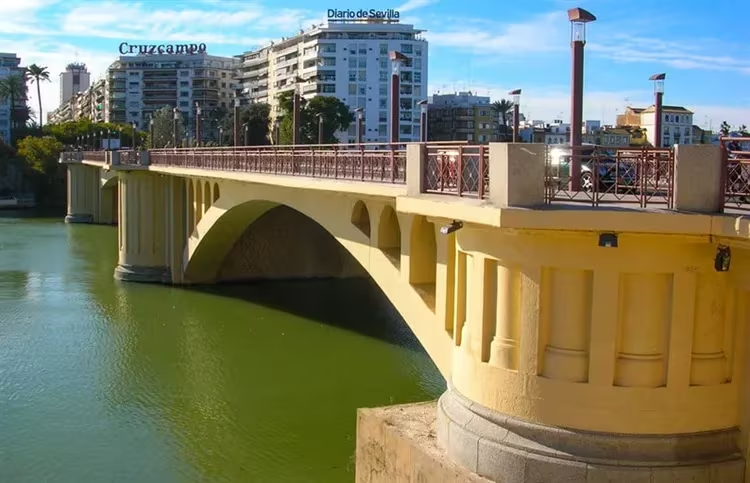
The construction dates back to 1917, when a tender for projects was held by the local authorities. Spanish and French architects presented various options for a bridge across the Guadalquivir River. The erection of the structure eventually turned into a never-ending story of budget savings on everything. The width of the bridge was reduced to 15 meters, and the decor elements proposed by the architects were abandoned. The first tests were carried out on August 13, the date caused superstitious horror among the population: the bridge was unanimously predicted an unhappy fate.
Its maintenance and repair have become a significant item of expenditure for the city budget. Initially, the design was lifting, and by 1961 the mechanism had worn out. The overhaul did not improve the situation. As a result, the bridge, where the pedestrian zone remained, became stationary. In order to increase its capacity and create conditions for traffic, it was necessary to reconstruct and increase the width of the spans up to 18 meters. The monumental building is popular with tourists and guests of the city, but the losses from it continue.
Church of Santa Maria la Blanca
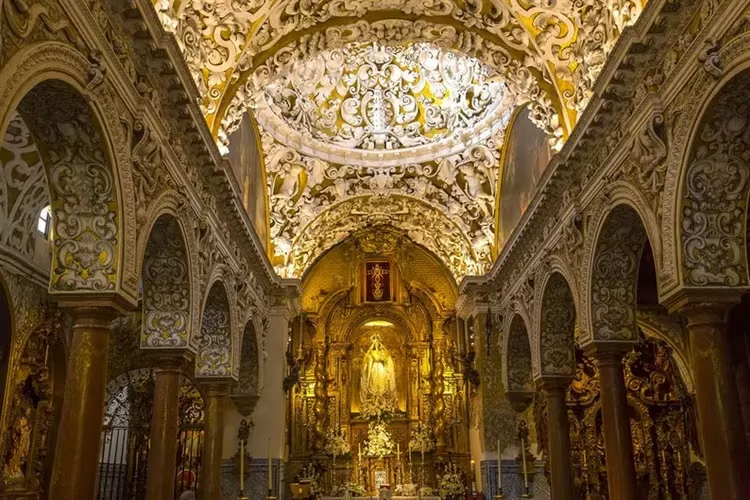
The fate of the building is reminiscent of a simple truth: history, like the road, is full of surprises. Mystics call the site where the temple is erected a place of power. It is difficult to argue with this statement, because representatives of different faiths were attracted to this area. A mosque and a synagogue alternately housed in the building of the Catholic church.
It begins its history from the time of Mauritanian rule. Scientists give different dates for the construction of the mosque, which turned into a synagogue in the middle of the 13th century. By the end of the 14th century, the building was taken over by the Catholic Church, after which regular repair work followed, redevelopment of the interior, and restructuring of the facade. Each of the denominations contributed to the interior, exterior decoration of the temple.
Paradoxically, it was the various style decisions that allowed the building to find a special harmony. Bas-reliefs, stucco, columns, arched structures, figured and floral ornaments – according to the elements of the decor of the temple, as art critics joke, you can study Gothic, Mauritanian applied art and Andalusian baroque at the same time. The temple has preserved the works of the great Spanish artist Murillo, frescoes by unknown masters of the 15th-17th centuries.
Building Adriatic
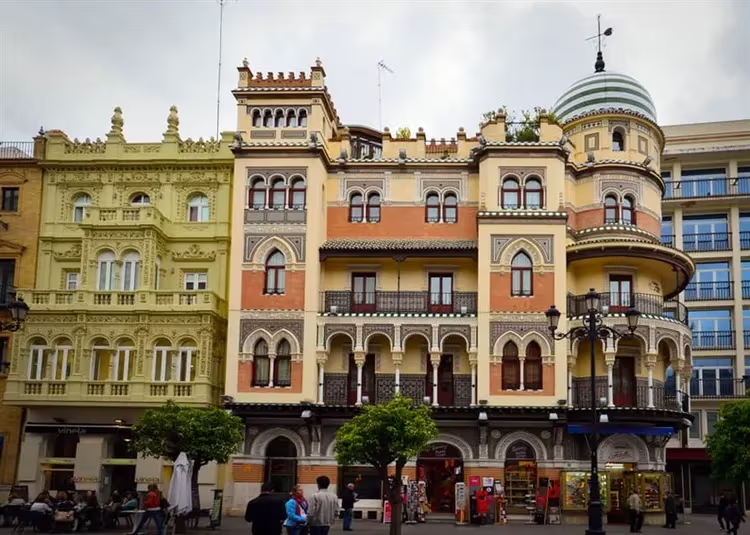
The age of the architectural masterpiece: a little over 100 years. The building was named after the insurance company that invested in its construction during the construction boom in Spain. “La Adriatica” is designed for office space, but outwardly resembles a luxurious palace, where French eclecticism and the Seville version of the neo-Moorish style are mixed. Towers, columns, balconies, stucco moldings, arched decorative elements form a single ensemble. Contrasting color schemes, a dome with a weather vane emphasize the unusual structure.
The company's management financed the construction of similar buildings in different parts of Spain. It was a profitable investment in the implementation of ambitious creative projects. The objects were erected in the historical centers of settlements. However, the architects managed in all cases to emphasize the uniqueness of the urban landscapes surrounding the new buildings.
Flamenco Museum
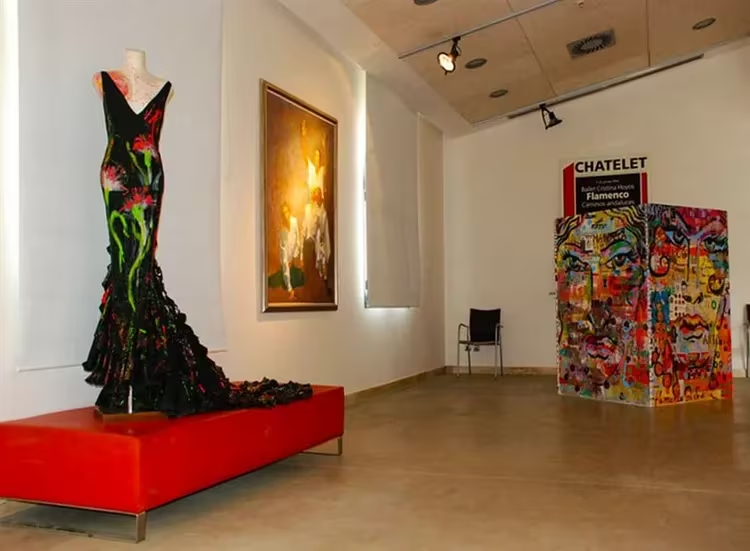
The private museum is housed in an 18th-century house in the Santa Cruz quarter. Creator and owner of the museum: famous flamenco dancer, choreographer, actress Cristina Hoyos. She was born in Seville in 1946 and, having become world famous, founded her own company in the city with the aim of preserving the cultural heritage of Andalusia.
The museum's unique collection includes exhibits related to the history of flamenco: from castanets, combs, women's dresses, men's costumes – to portraits, sculptures dedicated to the dance theme, and personal items of Hoyos. The building serves as a cultural and leisure center. It houses exposition and rehearsal halls, a concert venue for 120 seats, a gift shop, and a bar. The museum conducts flamenco master classes and has a Spanish guitar school on a permanent basis.
Technical equipment allows you to arrange interactive shows, conduct classes online. For younger visitors, special entertainment programs are provided. Flamenco dancers perform here 3 times a day. Tickets for those wishing to get to the show are constantly in short supply. To solve the problem, the museum management has recently introduced a seat reservation system in the auditorium.
House of Pilate
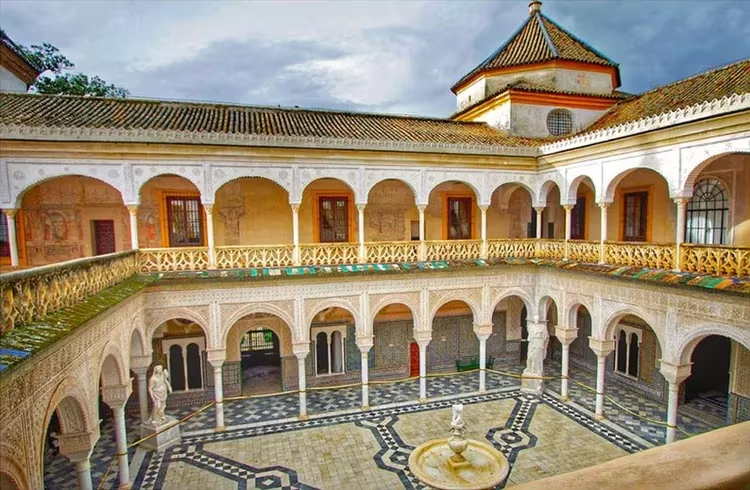
One of the mystical, mysterious, amazing places. The house never belonged to Pontius Pilate! The building was built on the border of the XV and XVI centuries. Its architecture is dominated by exterior and interior solutions, made according to the canons of the Renaissance and the local variety of the Moorish style. The history of the building is connected with the Enriquez dynasty, representatives of the highest Spanish nobility.
Direct branches of the family stopped 300 years after its construction, and the house remained in memory of the piety of its first owners. The family of the next owners also died out. In the 21st century, the building belongs to the direct descendants of the Dukes of Medinaceli. They live in a unique building, take care of its safety, allocate significant funds for restoration work.
According to the legends: the distance between the ruins of the real Pilate's palace and Calvary, where Christ was crucified, is equal to the path between the Seville copy of the house of the procurator of Judea and the chapel of Cruz del Campo. The annual Divine Service of the Way of the Cross (it is held by the Catholic Church on Holy Week) in the Spanish city begins from a copy of Pilate's palace. The procession gathers thousands of pilgrims from different parts of Spain, Andalusia. Catholics believe that participation in it saves from sins.
Church of San Salvador
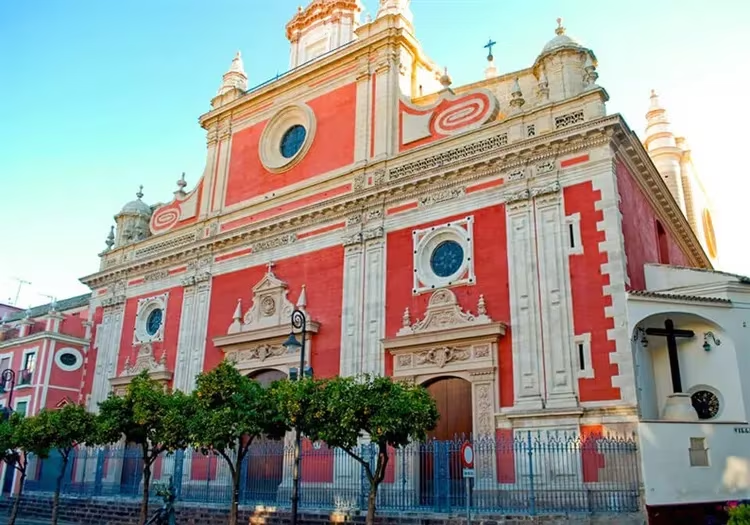
A cozy temple in the old part of the city, as the locals joke, is “hiding” from the ubiquitous tourists. The church was built on the site of a Muslim mosque, whose fragments became part of the foundation of the Catholic church. Some guidebooks indicate that it is located on Serpentine Street, others – on San Salvador or Salvador Square. Visitors to the city, who know about the historical landmark, are looking for a temple with a detailed map in their hands and find it difficult to find the second most important church in the city.
The construction of the building began around the 16th century. After 200 years, changes began to be made to its unique architecture, due to the latter, almost nothing remained of the original decoration. The modern exterior of the temple corresponds to the canons of the Spanish late Baroque, but elements of the late Rococo can be found in the decor. In San Salvador, frescoes on biblical subjects, paintings by Murillo, and sculptures by Montatiez have been perfectly preserved. Numerous Andalusian pilgrims tend to the “hidden” temple to see the divinely inspired works of the great Spanish masters, attend mass, listen to organ music, and receive absolution.
Palace of the Countess de Lebriha
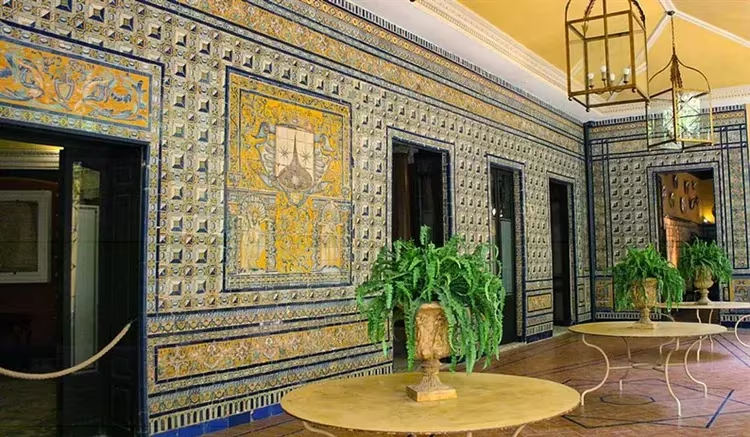
An architectural monument of the 16th century is interesting not only as a unique building of its time. The palace houses a museum of art, whose exhibits cover the ancient and medieval eras. Oriental masterpieces have a separate section and special halls, which is symbolic for Seville, where echoes of Moorish rule are still felt today. A dilapidated building was located on the site of the building. The new palace, as it were, merged with it into a single whole.
This made it possible to preserve the unique style “inherited” from the previous building. The owner of the palace and creator of the museum was one of the most educated women of her time. After her death in 1938, the building changed several owners (relatives of the countess). By the beginning of the 21st century, it was open to the public. The interior of the palace is a unique collection of antiques, paintings, sculptures, furniture, books, decor elements. The building houses authentic ancient Roman mosaics, masterpieces of Etruscan ceramics, antique vases, furniture that belonged to the last king of France. The Seville Palace of the Countess de Lebriha was assembled literally piece by piece in 13 years.
Fragments of the floor were brought from various palaces, ceiling panels from a medieval castle, plinth from a dilapidated ancient monastery. The amazing variety of exhibits does not give the impression of randomness. Interior solutions for each room create a feeling of luxury, harmony, aristocracy.
Casa de Selinas
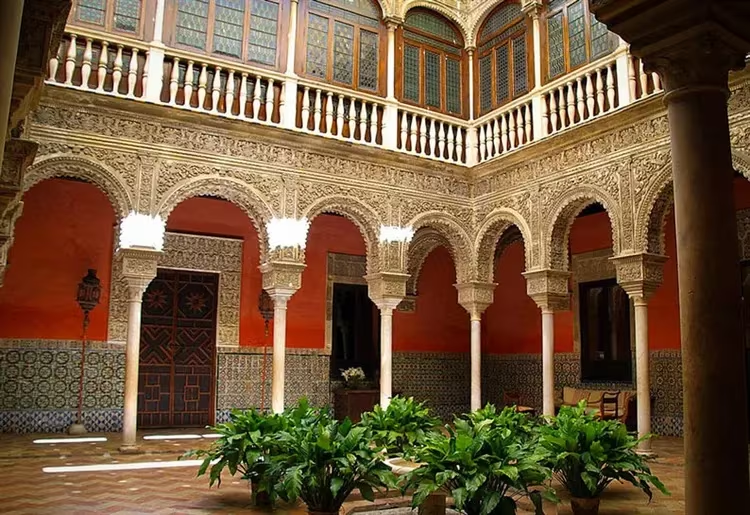
Literally, the name of the museum, translated from Spanish, means: “the house of the Selinas”. Historians date its construction to the 16th century. The building changed owners several times and gradually fell into disrepair. Representatives of the Selinas dynasty faced the problem of repair, reconstruction of a unique architectural monument at the beginning of the 19th century. The house near the royal palace fit perfectly into the architectural ensemble, and changing the exterior of the building, which intertwined elements of Gothic, Moorish style and the Renaissance, would be the wrong decision.
The owners chose an expensive restoration of the house, as close as possible to the original version. The idea was a success, and Casa de Selinas is recognized as one of the best museums in the city. From the outside, the building looks austere. Small windows, massive gates are reminiscent of the times when every house in the city turned into an impregnable fortress when attacked by enemies. The interior of the Casa de Selinas is a realm of light colors, elegant decor, murals, mosaics, and tiles.
The source of natural light is the courtyard, decorated with columns. Open galleries reinforce the impression of lightness, harmony, and comfort. The prosperity of its first owners can be judged by partially preserved interiors, decor elements, and accessories. There is a restaurant in the building, conditions have been created for holding concerts, official events, and creative meetings.
Basilica of Jesus del Grand Poder
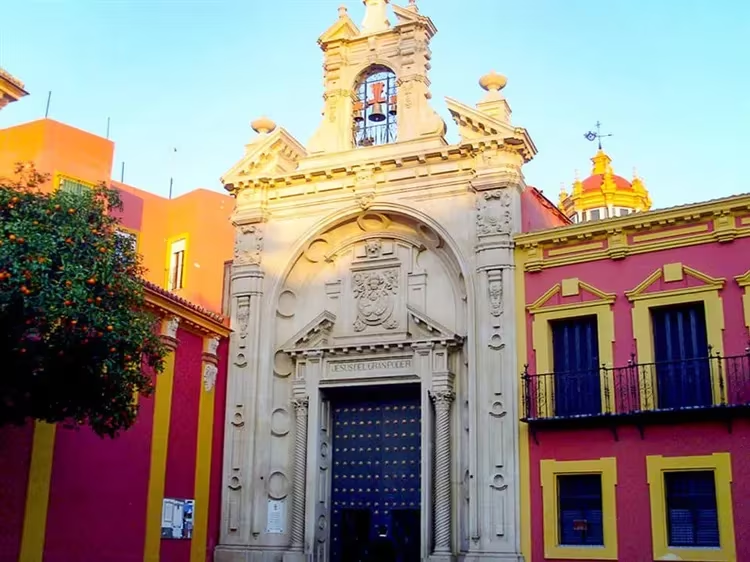
The Catholic shrine attracts pilgrims from around the world. The small building is about 400 years old. Its neo-baroque façade looks like a toy compared to other temples in Seville. The church has hardly changed since the end of construction, which is the merit of the parishioners and all those who donate funds for restoration and repair work. Services in the basilica did not stop during the years of the Spanish Civil War, the fascist dictatorship, when natural disasters hit Andalusia.
The main relic of the temple: a sculpture of Christ, created in the 17th century. It is difficult to believe in its man-made origin – the Savior looks so authentic in the light of numerous candles. The sculptor Juan de Mesa, the author of the masterpiece, lived only 44 years. According to legend, he invested his life in works that were filled with grace from above. Almost all the sculptures made by the master for the temples became shrines. Residents and tourists compare the basilica to an island of calm in the stormy sea of life.
Alameda de Hercules
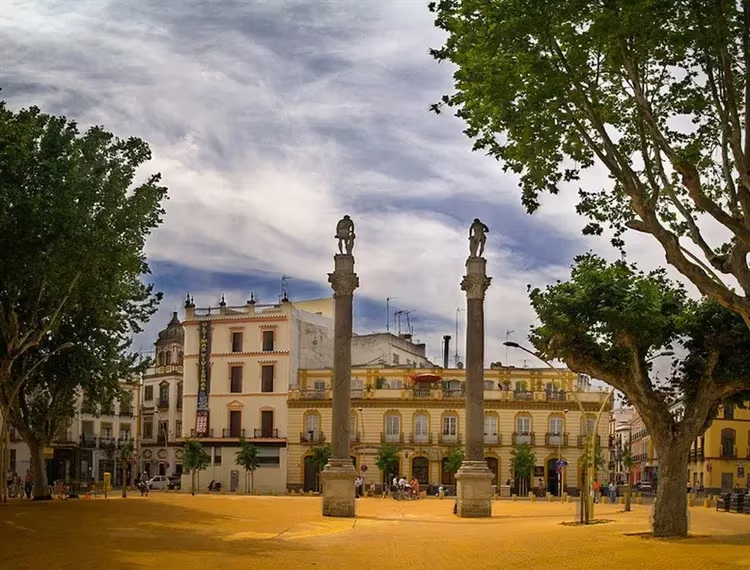
The walking public garden was created in the 17th century and later turned into a square with a sonorous name: Alameda de Hercules. For 300 years, a dam existed near the territory of the future garden. It provoked the rise of groundwater, became the cause of waterlogging of the area. Count Barajas invested in draining the land, building canals and fountains.
Trees were planted here and columns were erected, two of which are genuine ancient monuments. The area gradually acquired its usual appearance. Its columns are divided into southern and northern – according to their location relative to the cardinal points. At the top of the first are sculptures of Hercules and Julius Caesar. The first is considered the founder of the city, the second – contributed to the arrangement of Seville. The lions on top of the remaining columns symbolize Spain and Andalusia.
The square was a favorite resting place for aristocrats until the Spanish Civil War. Later – one of the most dangerous areas where the drug trade was actively going on. At the beginning of the 21st century, after reconstruction at the expense of the city budget, the square turned into a respectable place of rest. On its territory there are bars, restaurants, live music sounds, entertainment venues are open, nightlife is in full swing.
Church of San Lorenzo
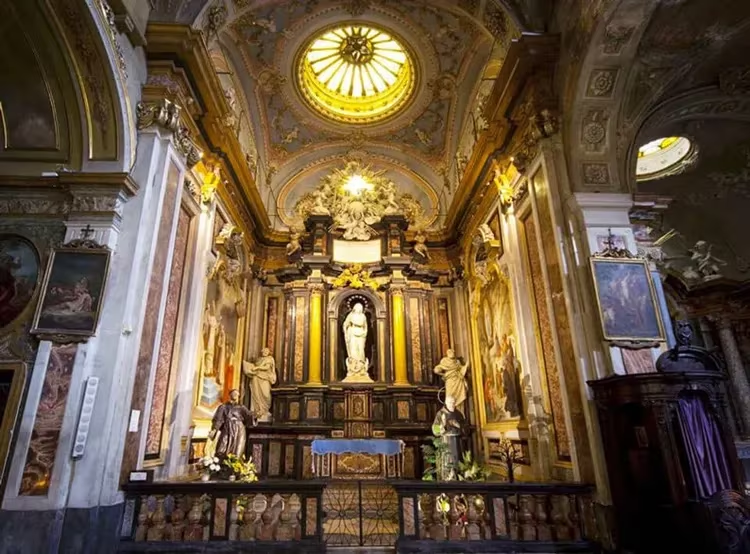
Finding the temple is quite simple – it is located on the territory of the district of the same name. The church was founded around the 13th century, its construction was completed in the 14th century, but this did not mean the end of the process. The increase in the area of the temple was due to new buildings (chapels), which were attached to the main building. The result is an eclectic building, in whose interior and exterior there are elements of baroque, gothic, Moorish style.
The temple has preserved unique frescoes, whose authorship causes heated debate among historians. The history of the creation of the church altar reminds believers of how ambition can stop a good deed. The first craftsmen who worked on the manufacture of the altar refused to continue work, which is why the opening of the temple was postponed indefinitely. Representatives of the dynasty of sculptors de Ribas saved the situation: they created an altar, which has no equal in Spain. The main shrine of the temple remains unchanged: it is a sculpture of St. Lorenzo (Lawrence).
Barquet Bridge
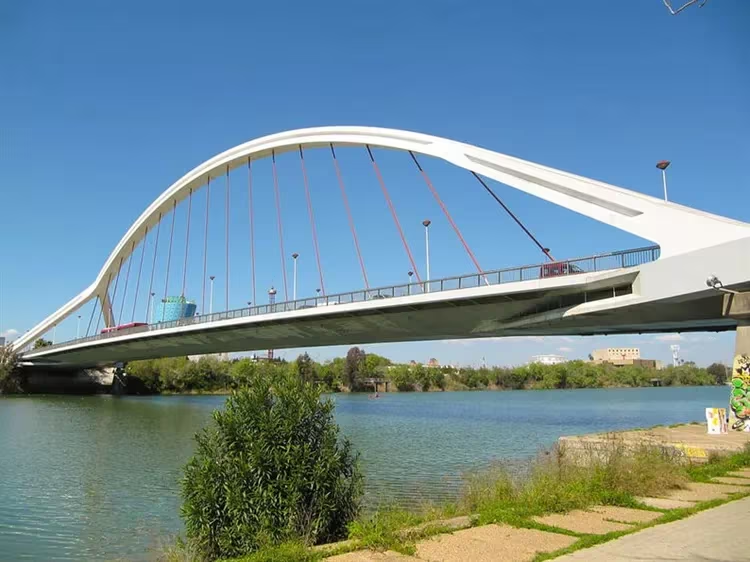
The construction connects the banks of the Guadalquivir River, the old quarters and the area where theme parks, entertainment venues, and modern shopping centers are located. The bridge is not a historical monument – its installation was completed in 1992. Similar structures exist in different parts of the world. The bridge, according to experts, has increased resistance to mechanical stress. It will continue to fully function in a natural disaster, after an earthquake and flood.
The length of the bridge arch is over 200 meters, it is supported by 4 pillars. Barges delivered structural elements to their destination, then specialists performed installation and connection of construction sections. This approach to the organization of construction work allowed the authorities to save significant funds. The pedestrian zone was put into operation first, then the lanes for traffic. The bridge quickly turned into one of the visiting cards, harmoniously blended into the architectural appearance of the city, and became part of popular tourist routes.
Church of St. Anne
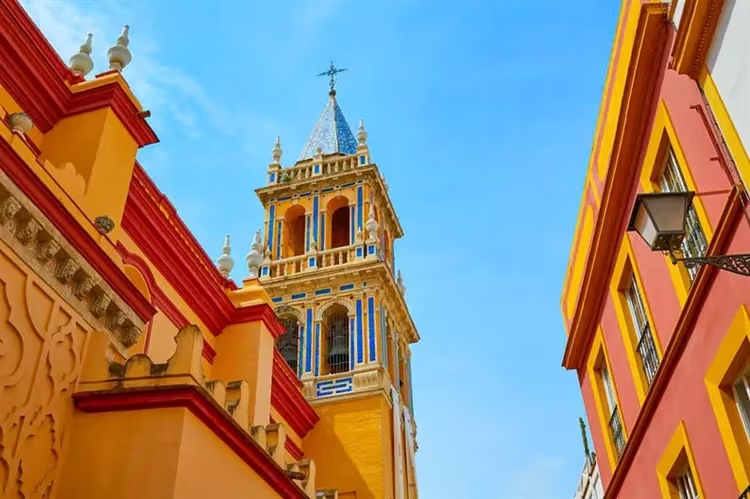
King Alfonso X of Castile went down in history as one of the most educated Spanish rulers, who did not have enough cruelty to fight the Moors, church authorities, and strife in his own family. He received miraculous healing in Seville from an eye disease and ordered the construction of a temple in the city. Historians date the beginning of the work to the second half of the 13th century. After 100 years, the walls and roof of the building were damaged by a strong earthquake. The Gothic building had two centuries of restoration ahead of it.
Its area was expanded by the construction of two new chapels. After 100 years, another earthquake caused damage, and the parishioners again donated funds for restoration work and the rebuilding of the temple. A new altar in the church was installed later. After 300 years, it was restored, retaining the original elements. A lot of beliefs, far from Catholic canons, are connected with the church, nicknamed by the people as a gypsy, and its interior decoration.
Parishioners who are unlucky in their personal lives try to kick one of the tombstones located in the temple 7 times. Replacing the tiles, installing a metal grate on top, punishing with a fine over the past centuries have changed little. Women continue to perform the ritual (in order to successfully marry), and historians debate whose grave it is.
Museum of Ceramics of Triana
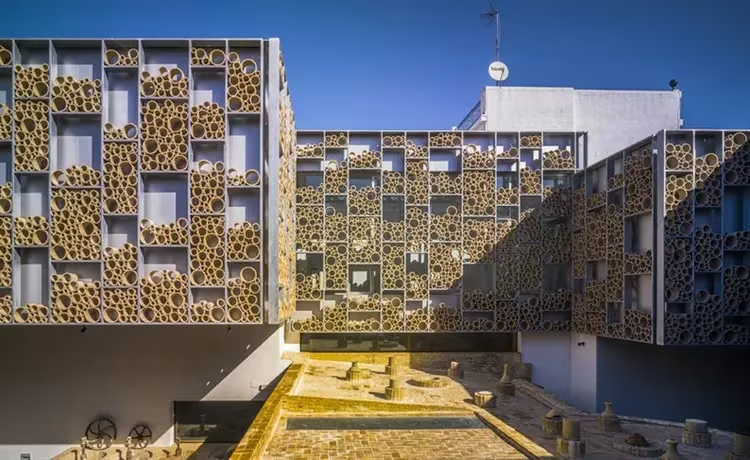
Folk crafts are the pride of Andalusia. The store-museum is popular with locals and tourists who appreciate the original products of the craftsmen. Previously, there was a ceramics factory on this site, named after St. Anne. Production fell into decay, it turned out to be unprofitable to erect another building, open new workshops on the site of the former ones. The restorers gave the building a new life, restored kilns, special baths, where craftsmen kneaded clay and millstones.
Local residents painstakingly recreated the atmosphere of a 16th century ceramic workshop with its amazing atmosphere filled with the joy of creation. Pottery was the main craft of the inhabitants of the Triana region. Modern technologies make it possible to obtain more advanced household items, but they cannot replace handmade products, whose main beauty lies in natural forms, materials, and color palette. The popularity of the museum of ceramics, opened in the 21st century, is growing rapidly. Its two-story building attracts those who are passionate about the history of pottery.
Museum of Fine Arts
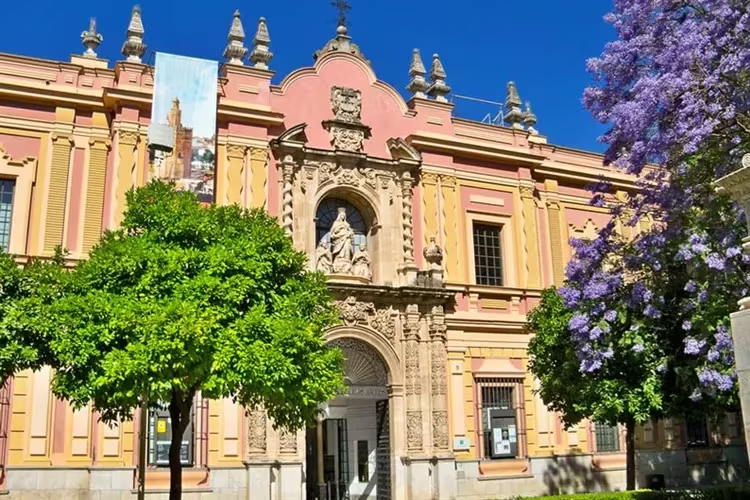
The unique building of the museum used to belong to the monastery. The first buildings in the Moorish style appeared on this site in the 13th century. The Napoleonic Wars did not bypass Seville. The monastery survived the fire, part of the walls were completely destroyed. It took the leading Spanish and European restorers about 25 years to restore the main building and the monastery church located nearby, which became part of the museum. Elements of classicism appeared in its decoration. Courtyards, galleries were again decorated with Seville ceramics.
Experts consider it a miracle that they managed to save the panel with the image of the Virgin Mary – one of the main relics of the temple, made by skilled potters. A significant part of the museum's collection is the work of local artists and sculptors on religious themes. There are 14 halls in the building, where the masterpieces of Bilbao, Velazquez, Zurbaran and other outstanding Spanish painters are presented. The expositions occupy a total area of about 8,000 square meters. Near the facade of the main building there is a monument to Murillo, whose paintings are in the museum's collection.
Amusement park “Magic Island”
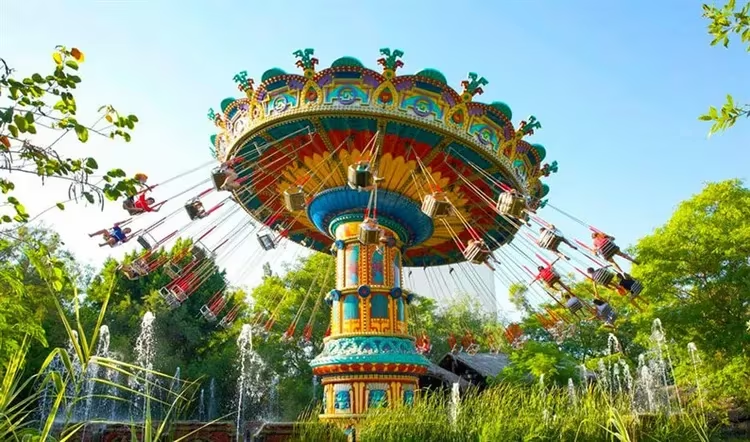
The theme park covers 36 hectares and has been open to the public since 1997. It is called the ideal place for a family vacation. “Magic Island” is recognized as one of the largest city parks in modern infrastructure. The territory is divided into 8 separate sections, where there are various attractions, cafes, restaurants, cinema halls, show grounds, souvenir shops. The park has a huge number of fountains and ponds. There are all conditions for organizing children‘s parties, individual and group recreation.
You don't have to go on a long journey to India, Amazonia, America to touch the culture of different peoples, to play the role of discoverers, treasure hunters, brave sailors, pirates! The attractions of the park create an atmosphere of adventure, acquaint adult children with overseas wonders. Each of the zones of the park is a unique territory. A special place among them is occupied by Children's Island and the legendary Eldorado. The park operates all year round, it has an amphitheater, a schedule of events, the opening hours depend on the season.
Hospital de los Venerables
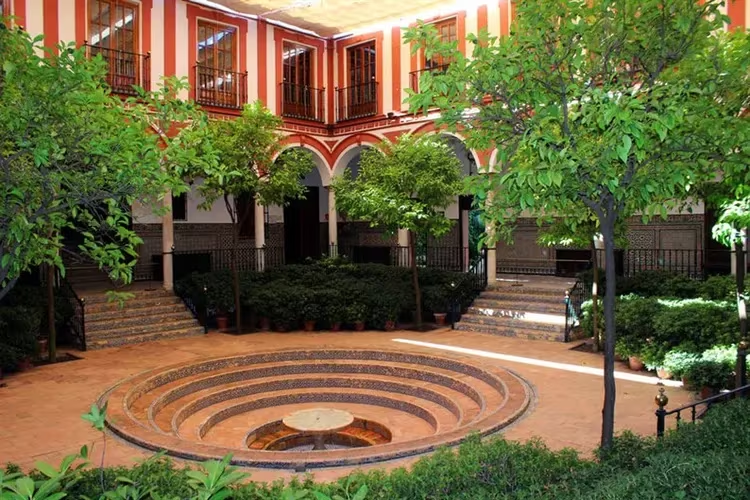
The building was built in the Baroque style in the 17th century. During its history, the hospital performed various functions, was on the verge of demolition, and continued to amaze with its beauty even those who are far from art. Initially, elderly, infirm clergy lived out their lives here. The Brotherhood of Silence provided them with shelter, medical assistance. The construction of the Church of St. Ferdinando became a new page in the history of the hospital. Temple with its magnificent decoration. frescoes, relief figures have been preserved to this day. Its patio with a gallery remained almost unchanged.
The beginning of the 19th century was a very difficult time for a religious organization: there were those who tried to take ownership of the hospital building, which needed repair. Details of the conflict reached the royal palace. Only the intervention of crowned persons was able to restore justice. Nowadays, the building serves as a cultural center; public events are regularly held here. At the end of the last century, after 4 years of large-scale restoration work, it was possible to completely restore the interior and exterior of the main building. One of the “new settlers” of the hospital was the center dedicated to the work of Velazquez.
Monastery of Santa Maria de las Cuevas
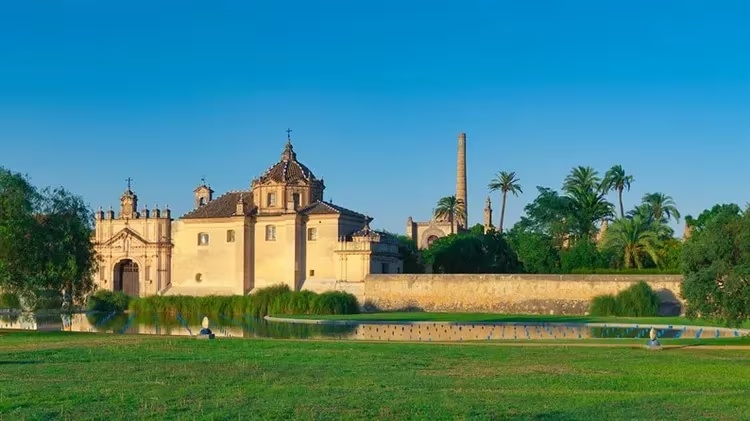
Национальный историко-архитектурный памятник насчитывает 7 столетий. Сооружения монастыря возведены в традиционном эклектичном направлении, где элементы мавританского стиля соседствуют с готикой. Раньше на этом месте добывали глину, изготавливали керамическую посуду, знаменитую севильскую плитку. В пещерах был найден образ Богородицы, и местные жители это посчитали знаком свыше. Вскоре началось строительство монастыря, в числе владельцев которого был орден францисканцев.
The Napoleonic wars left their mark here too: French soldiers set up barracks in the building. Part of the premises was damaged due to the fact that the military were looking for monastery treasures, secret passages. The Portuguese merchant bought the building, which was falling into disrepair, arranged warehouses in it, and equipped ceramic production. At the end of the 20th century, the Seville defenders of ancient monuments managed to get the state to recognize the uniqueness of the buildings of the monastery, where Christopher Columbus found eternal rest. The factory was moved to another location, and a regional center for contemporary art was placed within the walls of Santa Maria de las Cuevas.
Macarena Basilica
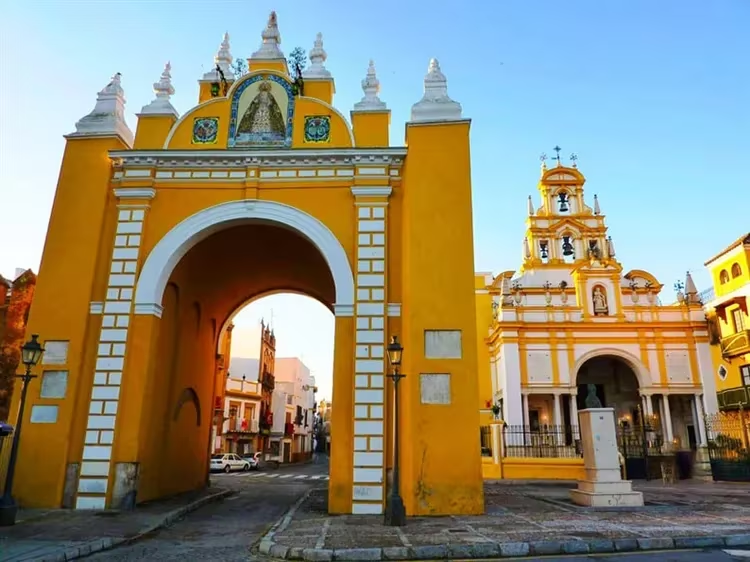
One of the most famous Catholic churches in Spain in honor of the Virgin Mary is located in the La Macarena district of the same name. The magnificent baroque temple impresses with its decoration. It was erected in 1949. Its main relic and mystery: the miraculous image of the Virgin Mary. The sculpture appeared from no one knows where! In historical chronicles, there is no mention of an ancient statue with tears from rock crystal.
Scientists suggest that it was made in the 17th century by one of the masters by order of a private person.
The building hosts worship services and houses a museum. The basilica houses a unique collection of jewels – donations from those who, through prayers at the miraculous statue of the Virgin, received healing and help in difficult life circumstances. Annual temple processions during Holy Week gather tens of thousands of pilgrims, for whom participation in the procession is one of the forms of repentance, expression of hope for divine mercy and compassion.