
What to see in Berlin in 3 days on your own – route, photo, description, map
The main German city with Slavic roots appeared on the world map in the 13th century. Having gone through many ups and downs, today the 3.6 million metropolis is a place full of charm, positive energy and world-famous attractions. It will take at least a month to get to know him closely. But it does not matter if you have only 72 hours for your first date with the capital of Germany. Read our guide before your trip and find out how to plan your stay and what to see in Berlin in 3 days on your own.
How to get from the airport to the city center
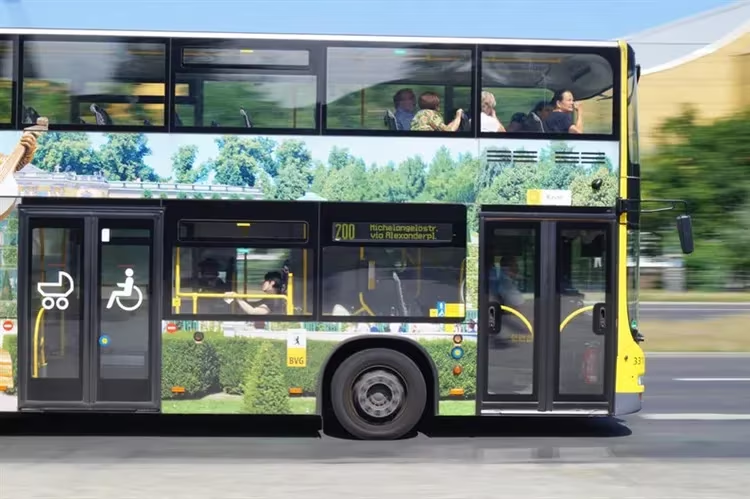
The capital of Germany has two international air ports. Russian tourists flying from Moscow on flights of Pobeda, UTair, S7 Airlines and RusLine are met by Tegel Northern Airport. It is located within the city, so the road from the terminal to the center by public transport will take no more than 25-30 minutes. You can use the buses:
If you are flying with Aeroflot or Mongolian Airlines from Moscow Sheremetyevo or Rossiya Airlines from St. Petersburg Pulkovo, then your destination is the southern Schönefeld airport, located outside the metropolis. The railway station is located 75 meters from the terminal.
From her depart to the center of Berlin:
Every 10-15 minutes, the regular bus X7 departs from Schönefeld, but it only goes to the metro station Rudow (U7) located on the outskirts of the capital.
🏨 🚕 Individual transfer from the airport to the hotel and more
1 day
The first impression is the most important. Start your journey with the most famous sights, and then your acquaintance with the capital of Germany will develop into true friendship. Many of the iconic places are within walking distance from each other, some need to be reached by public transport. We advise you to take bus number 100. Its route starts near Alexanderplatz and passes by the Cathedral, the Brandenburg Gate, the Reichstag, the Bellevue Palace and the Kaiser Wilhelm Church.
Reichstag
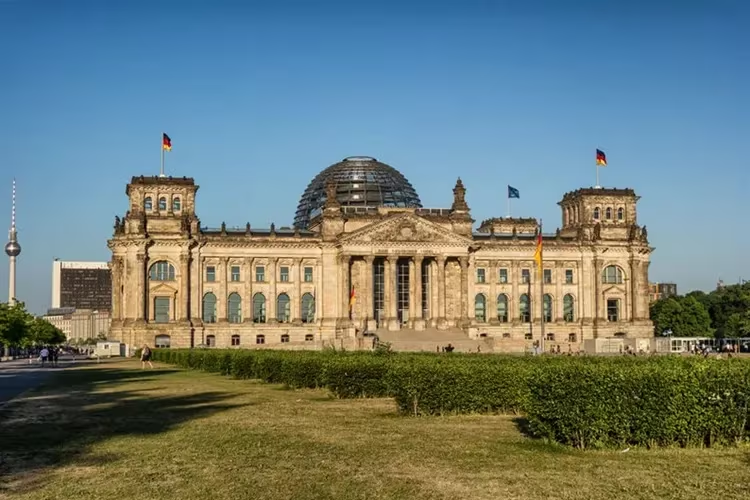
The place where the history of Germany is made is the main point of many walking routes in Berlin. The mighty building, located between the Spree embankment and the Tiergarten park, was erected in 1894 for the new parliament of the united Germany. Construction lasted 10 years and devastated the state treasury by 30 million marks. The brainchild of the architect Paul Valotta was destined for a difficult fate.
Wanting to denigrate communist rivals in the eyes of voters, in 1933, supporters of the NSDAP party, which was striving for power under the leadership of Hitler, set fire to destroy part of the dome and the interior. The year 1945 was even more terrible. In the eyes of the soldiers of the Soviet army, the parliament building was a symbol of Nazi Germany. The Reichstag met the end of the war in ruins. Restoration work started in 1958. Only 19 years later, the Reichstag was returned to its former beauty.
The building, 137 m long and 47 m high, combines the styles of classicism, renaissance and baroque. The facade is decorated with massive columns, and the roof is decorated with 4 towers, symbolizing the lands that became part of Germany in 1874. Inside – a room for plenary sessions of the German Bundestag. The grand structure is crowned with a glass and steel dome. You can climb it as part of an excursion (pre-registration is required).
Brandenburg Gate
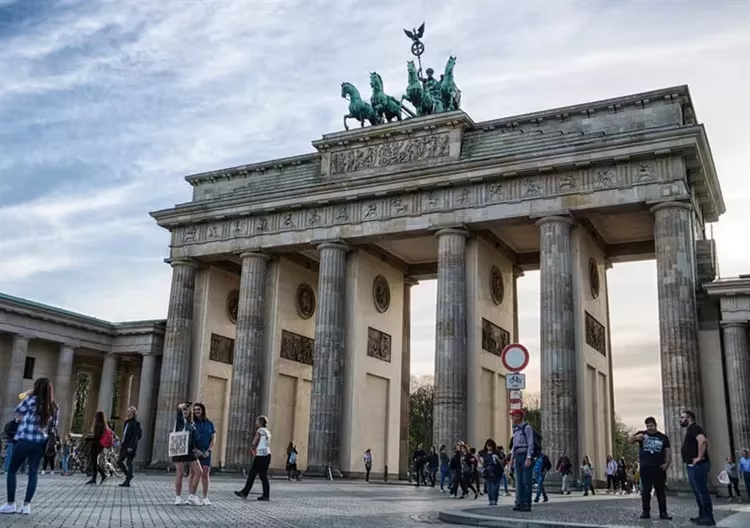
A striking example of the classical architectural style – the triumphal arch that closes the Unter den Linden boulevard – is a symbol of peace and the reunification of the country. In 1949, the Brandenburg Gate entered the forbidden territory, marking the era of the split between Germany and Berlin. Public access to the historical monument was opened only in 1989. Today, public holidays are celebrated here and the most important events are held.
On the night of January 1, thousands of local residents and guests of the metropolis gather at the Brandenburg Gate to celebrate the New Year to the sound of glasses and salutes. The historical building owes its appearance to Kaiser Wilhelm Friedrich II. By his decree in 1791, the road to Brandenburg was decorated with a front arch with two rows of impressive Doric columns.
After 2 years, the sandstone structure, 26 m high and 65.5 m wide, was crowned with a 6-meter quadriga. For those of you who have been to Athens, the Brandenburg Gate will remind you of the Propylaea of the Acropolis, which served as a role model for the Prussian architect Karl Gotthard Langgans.
Gendarmenmarkt square
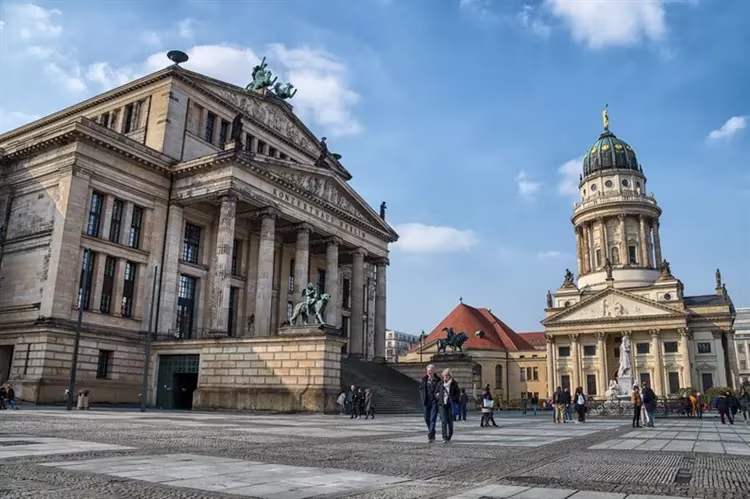
Further, the path passes along the Unter den Linden boulevard framed by buildings of the 18th-19th centuries. Reach the intersection with Charlottenstraße, turn right and in 4 minutes you will find yourself in one of the most beautiful squares in Europe. Today, they enjoy the tranquility, the elegance of architectural monuments, the melodies of street musicians and Open Air concerts.
And 300 years ago, at this place, which was at that time in the suburbs of Berlin, there were stables and barracks, in which the cavalrymen of the elite gendarmerie regiment lodged. Gendarmenmarkt (Gendarmenmarkt) includes an architectural trio of stately buildings, located around the white marble monument to Friedrich Schiller. As if in a mirror, the French and German twin cathedrals, built at the beginning of the 18th century, look at each other.
Between them is the neoclassical building of the Concert Hall, recreated on the model of the National Theater destroyed by the bombings of World War II. Today, within its walls, concerts of symphonic and chamber music are held.
Checkpoint Charlie
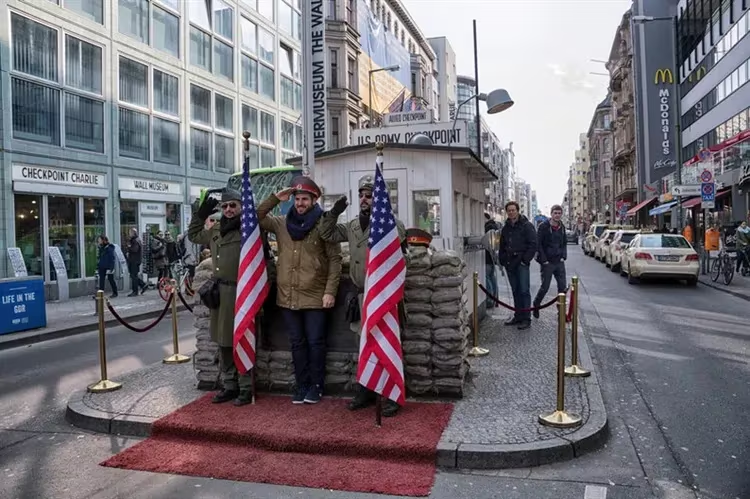
Turning from the Gendarmenmarkt onto Friedrichstrasse and walking 750 m along it (towards the U Kochstrasse metro station), you will see a cult place reminiscent of the time when the German capital was cut through by a concrete wall. Checkpoint Charlie is one of three American checkpoints that appeared in the divided city during the Cold War. The task of the checkpoint was to control the movement of representatives of the allied countries between parts of the divided Berlin.
In 1961, it became an arena where a tank confrontation between the USSR and the USA troops unfolded, which miraculously did not end with the Third World War. Today, on the site of Checkpoint Charlie, which was demolished in 1990, there is a wooden booth imitating the original, at which two “border guards” dressed in American uniforms are on duty. Across the street is the Berlin Wall Museum.
His tragedy-filled collection bears witness to numerous escape attempts across the guarded border. Among the exhibits are a hot air balloon, a miniature submarine, chair lifts and other contrivances created with the sole purpose of escaping from the tight embrace of the GDR.
Berlin Cathedral
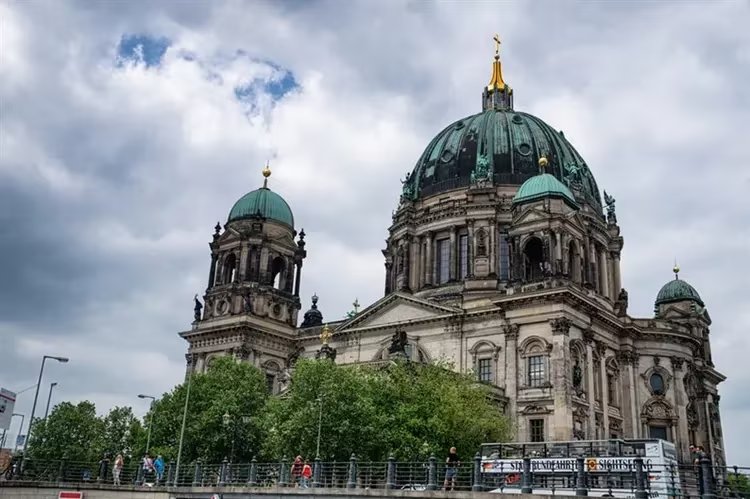
For the next attraction, return to Unter den Linden and walk 800m towards Alexanderplatz. On the left, between the Spree embankment and the green Lustgarten lawn, a grandiose structure rises, whose dome soars to the heavens to a height of 98 m. church and family crypt of members of the Hohenzollern dynasty.
Everyone entering the temple is greeted by the figure of Jesus Christ, frozen in a blessing gesture above the arched portal. The building made of Silesian granite is richly decorated with sculptures, bas-reliefs, columns and sandriks. This splendor is crowned by a dome with a diameter of 33 m, adjacent to small chapels. Those who are strong in spirit and body can climb it by 270 steps.
To match the majestic architecture and the interior of the temple. The main objects of the luxurious interior are a marble altar and a brilliant organ by Wilhelm Sauer. Representatives of the ruling family of Hohenzollerns lie in the family tomb in the crypt of the cathedral.
Alexanderplatz
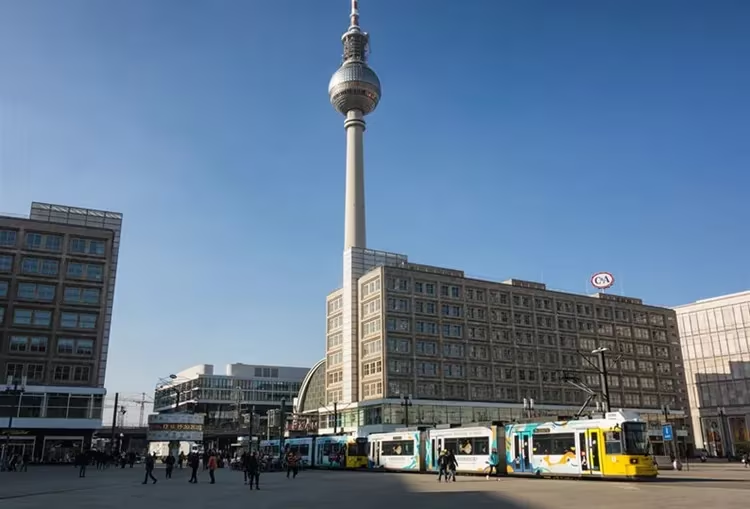
Back in 1272, on the site of the current Alexanderplatz, and at that time the territory hidden from the city dwellers by the fortress wall, a place of execution and a hospital for lepers appeared. The Thirty Years' War made adjustments, destroying many buildings and half the population. To improve protection, a new fortification was erected, and the former outcast zone entered the city. Alexanderplatz owes its modern name to the Russian Emperor Alexander I, who visited Berlin in 1805 to sign an agreement on the creation of an anti-Napoleonic coalition.
Today, noise and chaos reign in the oldest square of the capital. Street musicians and dancers perform, yellow trams run along the rails, office workers scurry about and numerous tourists sparkle with camera lenses. Alexanderplatz can be loved or hated, but it cannot be passed by indifferently. Here are ancient buildings, faceless buildings of the GDR era, large shopping centers and famous sights: the World Clock, the Red Town Hall, the Church of St. Mary, fountains “Neptune” and “Friendship of Peoples”.
Berlin TV tower
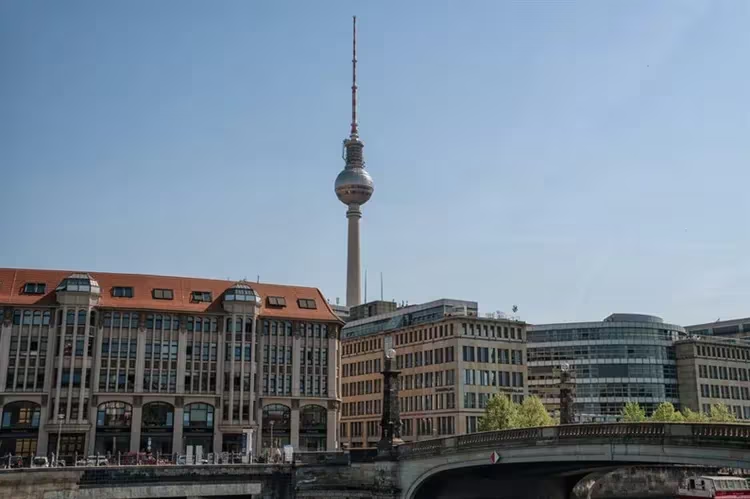
The most recognizable landmark of Alexanderplatz is the highest building in Germany – a reinforced concrete structure with a height of 358 m. The idea of u200bu200bbuilding, overshadowing all historical buildings with its gigantic dimensions, was born in 1965 by Walter Ulbricht, the leader of the Communist Party of the GDR. After 4 years, a TV tower topped with a steel ball and a 118-meter antenna rose above Berlin.
If you do not suffer from dizziness, go up to the observation deck or visit the Sphere Restaurant. Its slowly revolving hall with panoramic windows will give you the opportunity to admire the beautiful views of the metropolis from a 207-meter height. The heavenly menu will delight you with classic European dishes: Berlin chopped cutlets, tomato puree soup, trout fillet with citrus sauce and lamb medallion. Lunch will cost 15-25 euros, dinner will cost 35-60 euros.
TV Tower Speed Ticket – €21.50
Priority Entry: Berlin TV Tower with Window Seat – €23.50
Fast Entry and Non-Window Seating – €19.50
Priority Entry and VIP Dinner – €93.90
Nikolaifertel
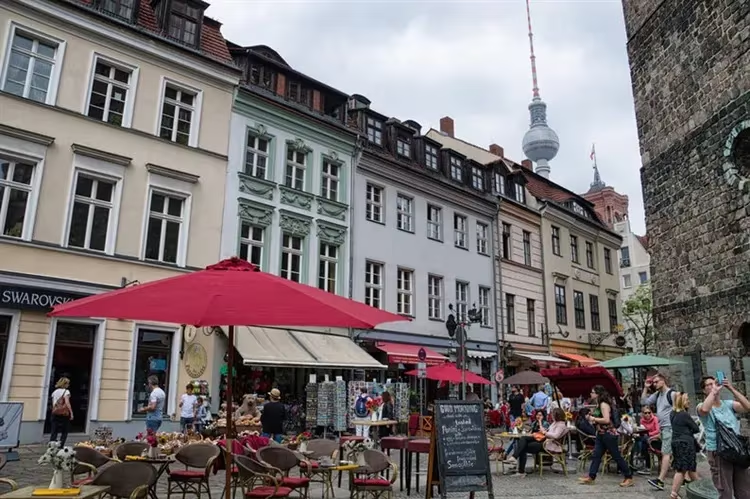
850 meters from the TV tower you will find the historic district, whose old lanterns and cozy “toy” houses are reflected in the waters of the Spree. This is Nikolaiviertel (Nicholas quarter). Walk the narrow cobbled streets, sip a beer on the open veranda of a traditional German restaurant, visit one of the tiny shops of local merchants and you will get an idea of what Berlin looked like during the Middle Ages.
The modern Nikolaiviertel is a recreated imitation of a quarter that was completely destroyed during the Second World War and returned to life in 1987. It got its name from the church of St. Nicholas – the first oldest church in the city, according to archival documents, created in 1230-1250. Currently, the neo-Gothic brick basilica, adorned with two green spiers, is used as a museum. Its permanent exhibition informs about the history and architectural features of the Nikolaikirche.
Kaiser Wilhelm Church
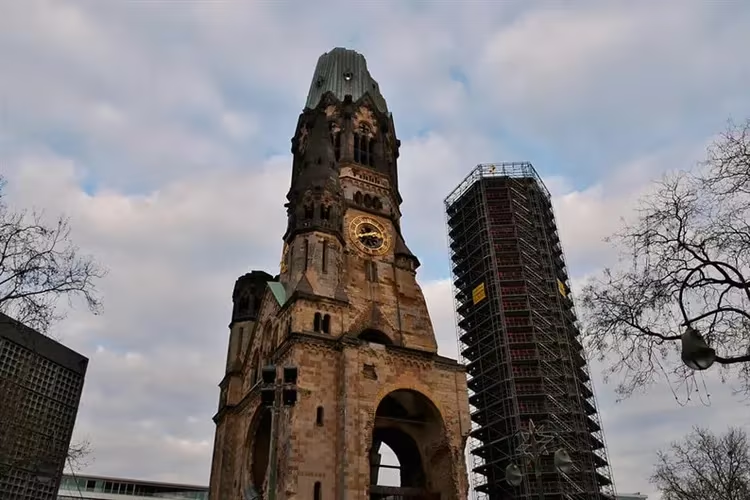
A younger, but no less famous temple – the Kaiser Wilhelm Church – adorns West Berlin. From Alexanderplatz you will be taken here by the city train (lines S 3, 5, 7, 9 to the S + U Zoologischer Garten station) or buses number 100 and 200 (breitscheidplatz stop). Protestant temple built 1891–1895 as a sign of respect to the German Emperor Wilhelm I, better known as the Church of Remembrance (Gedechtniskirche).
In 1943, an Allied air force attack almost completely destroyed the structure. The decision to restore the ruins came only after 14 years, and after another 4 years, the Gedächtniskirche again appeared before the eyes of Berliners. The western tower of the renovated shrine remained dilapidated, reminding posterity of the horrors of war.
Cars roar around, and hundreds of passers-by rush about their business. But one has only to go inside the crippled building – and you will find yourself in a world full of rich blue light and ringing silence. The ceiling and walls are a multi-colored mosaic, above the altar, with outstretched arms, the figure of the Savior soars. On Sunday, evangelical services are held here, and on weekdays prayers are offered for the world. There is also a memorial complex in the building.
Kurfürstendamm
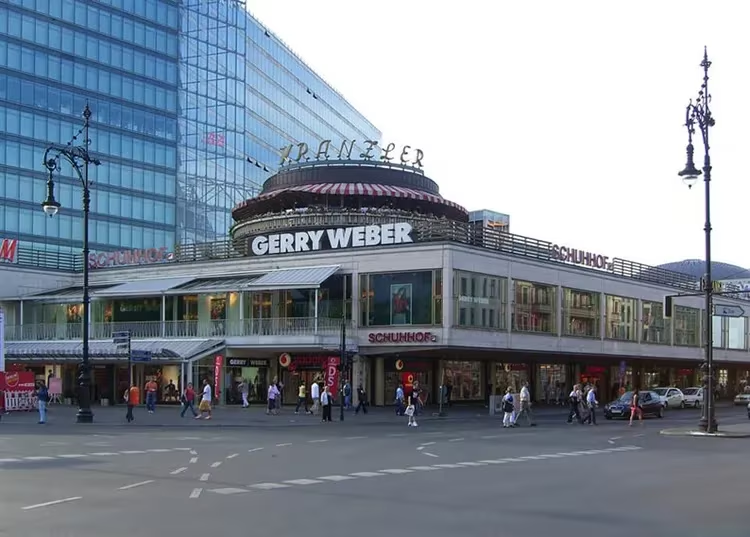
From the Gedächtniskirche, the shopping Mecca of the metropolis originates – Kurfürstendamm Boulevard or Kudamm, as the locals call it. The history of the street takes us back to 1542, when a horse trail appeared in the western part of the city, connecting the royal palace with the hunting castle in the Grunewald lands. Time passed. In 1871, as a result of the reunification of the German lands, the German Empire was born. Its chancellor, Otto von Bismarck, decided to give the narrow walkway a metropolitan look.
Cruise on the Spree and Landwehrkanal
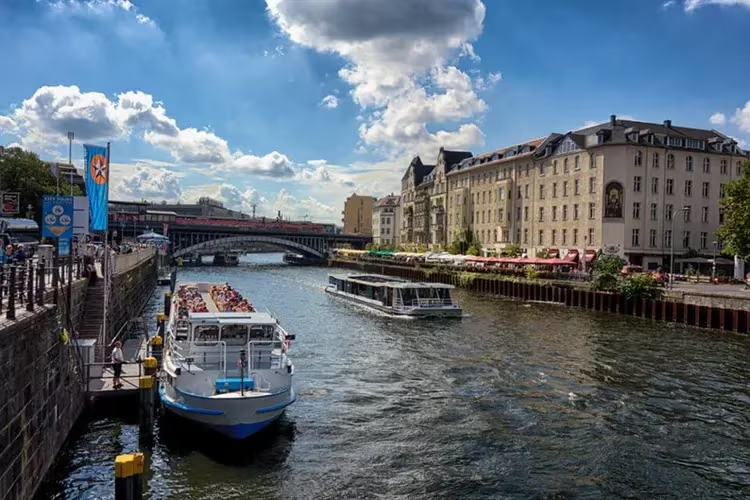
We advise you to end an exciting day and relax after the cultural Berlin marathon on the deck of a motor ship making sightseeing cruises on the Spree River. Pleasure boats depart from the piers located near the Cathedral, Chancellor, Friedrichstrasse and Hauptbahnhof train stations.
The most popular tour is the one-hour river trip, during which you will see the sights of Berlin from a different angle: the House of World Cultures, the Government Quarter, the Reichstag, Museum Island, the Cathedral, the TV Tower and the Nikolaiviertel. Those of you who wish to spend more time on board can take part in a cruise on the River Spree and the adjacent Landwehrkanal. In addition to the iconic places already listed, on your way you will meet Bellevue Palace, Charlottenburg Castle, 64 bridges and the high-rise buildings of Potsdamer Platz.
Cruise on the Spree (2.5 hours) – 18.50 €
4-hour river cruise on the Spree and Landwehrkanal – 23 €
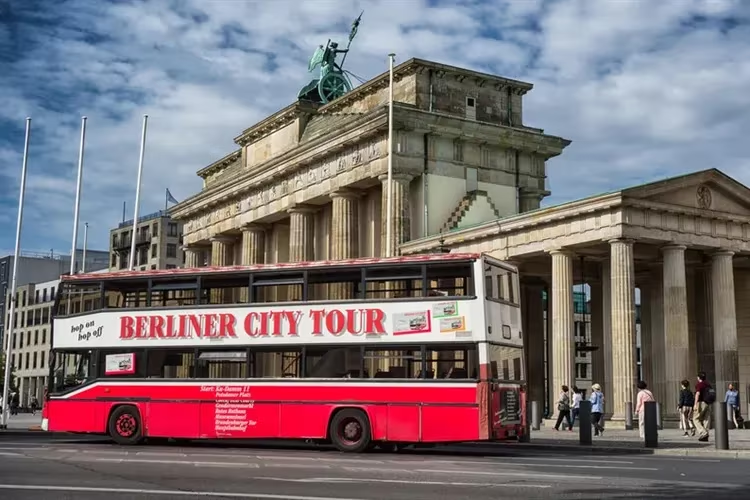
Hop-on hop-off bus tour for 24 or 48 hours – 22 €
2 day
There are about 170 museums and art galleries in the German capital. Naturally, even the most popular of them cannot be visited in such a short time. Therefore, we suggest that you familiarize yourself with the most interesting museums and choose which expositions to dedicate a day to viewing.
museum island
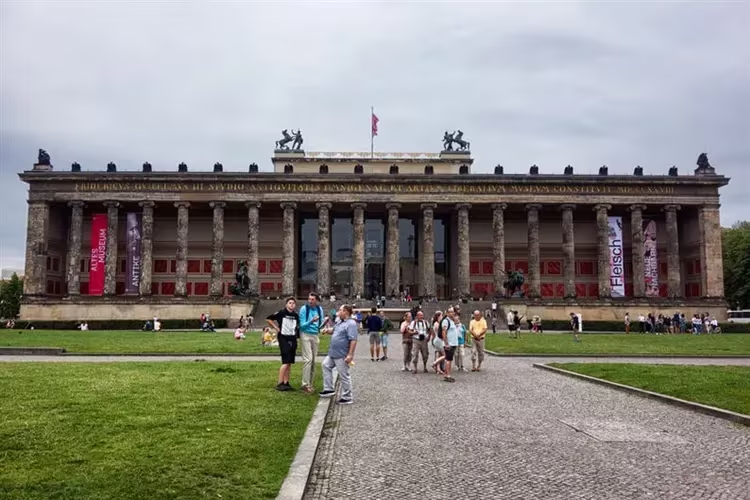
A galaxy of unique museums that has no analogues in the world is located in the northern part of the island formed by the Spree River. The starting point of the ensemble, consisting of five historical buildings, was the building of the Old Museum erected in 1830 according to the project of the architect Schinkel. The last in the architectural constellation is Pergamon, built in 1930.
The magnificent complex includes:
The entrance ticket to the Old Museum and the Old National Gallery is 10 €. To view the collections of other museums, you need to pay 12 €.
Skip-the-line: Pergamon Museum tickets €12
New Museum: Skip-the-line ticket €12
Museum Karlshorst
Zwieseler Strasse 4
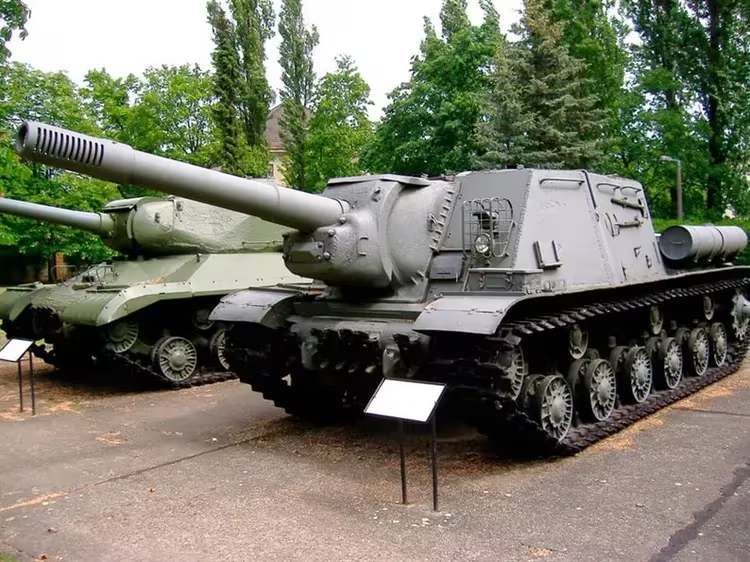
The expositions of the museum located in Karlshorst, a district of East Berlin, tell about the difficult relations between the two countries, which were irreconcilable enemies more than half a century ago. Here, in the officers' club, on the evening of May 8, 1945, an event took place that determined the further course of history. Representatives of the Wehrmacht and the coalition of allies signed the act of surrender of Nazi Germany. In May 1995, after the withdrawal of the last Soviet troops from Germany, the German-Russian Museum Karlshorst opened its doors on this site for the first time.
At the entrance to the gray two-story building, visitors are met by the T34 tank. In rooms with gloomy black walls, there are thousands of original exhibits collected from around the world. Here you will find military uniforms, weapons, posters, diaries of concentration camp prisoners, thousands of field letters, archival photographs and, of course, the historic capitulation hall. Entrance to the museum is free.
Museum of the human body “MeMu”
Panoramastraße 1A
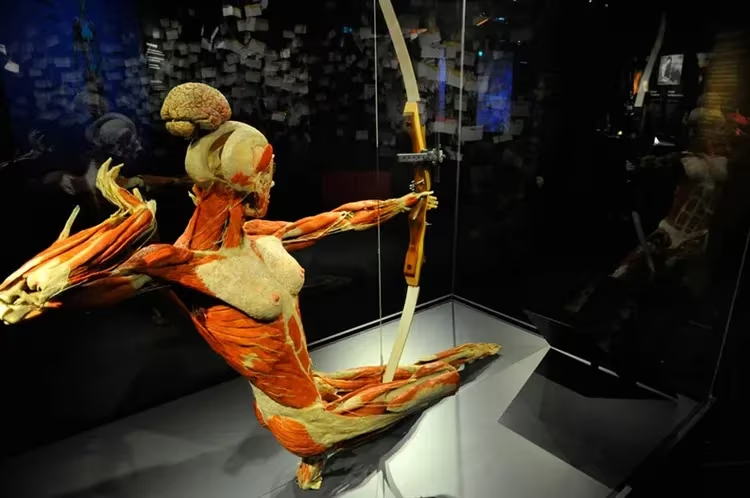
In 2015, the world's first museum dedicated to the human body opened at Alexanderplatz. Its shocking exhibits are plastinata – nothing more than the corpses of people and animals. They have undergone pre-treatment, including the replacement of fats and tissue fluids with reactive polymers. This method of embalming was invented by an eccentric pathologist and part-time museum founder Gunther von Hagens back in 1979.
In total, 220 anatomical exhibits are exhibited here. Among them are human organs, animals and whole bodies of real people who voluntarily decided to turn into plates after death. According to the creator of the collection, the exhibition is designed to acquaint visitors with the peculiarities of the human body, diseases and anomalies. Many objects are provocative.
Attention! Plates can cause a feeling of rejection, disgust and fear. Before you decide to visit “MeMu”, check out the photos of the collection.
Natural History Museum
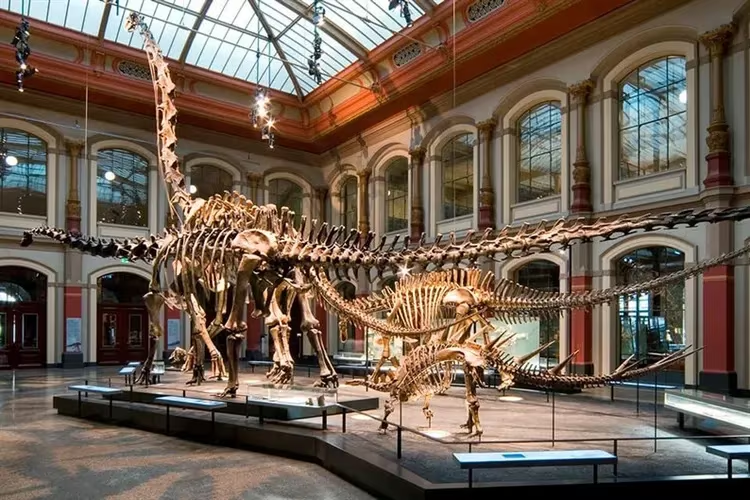
Invalidenstraße 43
The history of the Berlin Natural History Museum, founded with the participation of the Humboldt University, goes back to 1810. In 1889, the exhibition dedicated to the evolution of the Universe and man moved to a magnificent building with powerful columns and huge windows. In over 200 years of existence, the collection has grown to over 30 million pieces, representing four main themes: space, mineralogy, paleontology and zoology.
Museum exposition opens the central atrium. A colossal skeleton of a giraffatitan dinosaur appears before the eyes of visitors. The unique giant with a height of 13.27 m and a length of 22 m is surrounded by life-size prehistoric lizards. Among them are Kentrosaurus, Pterodactyl, Allosaurus and the primitive bird Archeopteryx. Other expositions are no less interesting. Thousands of mock-ups and stuffed specimens of representatives of the world of fauna, semi-precious stones, metals, fragments of meteorites are exhibited behind the glass showcases… The pearl of the collection is the Tristan Otto Hall, the only intact tyrannosaurus rex skeleton in Europe.
Entrance ticket to the Natural History Museum – 8 €
Modern Art Museum
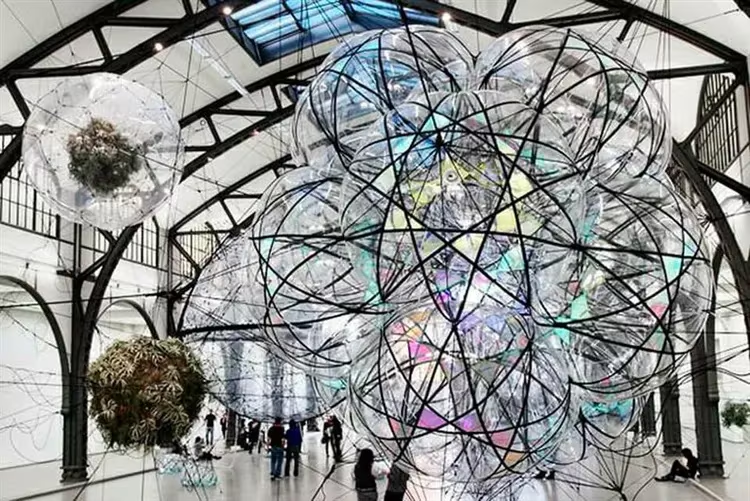
Alte Jakobstrasse 124-128
If you understand and appreciate the conceptual currents of art of the 20th century, then go to the Museum of Modern Art, located in the building of the now defunct Hamburg railway station. The former platforms and waiting rooms housed 2,000 exhibits created in the styles of pop art, expressionism, avant-garde and modernism. In addition to sculptures and paintings, the gallery features photographs and installations.
Walking through the spacious halls, you will come across unusual exhibits. For example, what does a straw-decorated drainpipe plane mean? The idea of the creators of the museum is to convey to the visitors the idea that in contemporary art the mastery of the author is often determined not by the work he created, but by its leitmotif. So that the objects do not seem meaningless and ridiculous to you, use the services of an audio guide.
The ticket price is 10 €.
Madame Tussauds museum

Unter den Linden 74
At 240 meters from the Brandenburg Gate, you will meet the most revered people in the world. Of course, we are not talking about living people, but about their wax copies, which are sometimes difficult to distinguish from the originals. Every day, the Berlin branch of the London Wax Museum, founded in 1835 by the talented sculptor Maria Tussaud (nee Grosholz), invites guests of the city to meet with celebrities.
On an area of 2,500 m², 120 sculptures are exhibited in 9 themed rooms. Karl Marx, John F. Kennedy, Mikhail Gorbachev, Albert Einstein, George Clooney, Leonardo DiCaprio, Angelina Jolie, Rihanna and Michael Jackson appear before the visitors as if alive. Tourists are allowed not only to touch the exhibits, but also to take pictures with them. Pictures of you giving a speech next to Angela Merkel or hugging football star Ronaldo will take their rightful place in your photo album.
The price of a standard ticket is 21.00 €.
Madame Tussauds Berlin: Priority Entrance €19
German Historical Museum
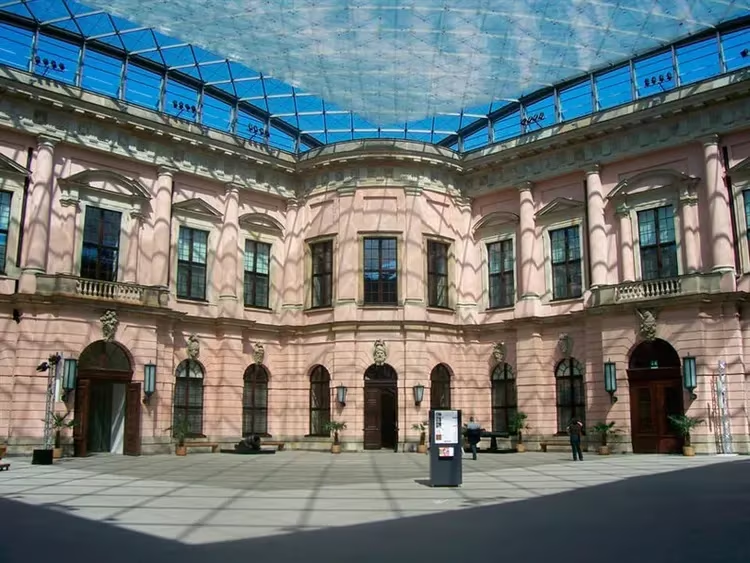
Under the Linden 2
The Unter den Linden boulevard opens the Zeughaus building, decorated with relief compositions and sculptures, which appeared next to the Spreekanal embankment in 1730. The galleries of the Baroque building, built in honor of the Emperor of Prussia Frederick I, housed the royal arsenal. After the split of Germany, the collections of the Museum of the History of the GDR were exhibited here. In 1994, an exhibition moved from the Reichstag to the Zeughaus, whose exhibits became the first in the collection of the new German Historical Museum.
Now, on an area of 8,000 m², numerous relics appear before the audience as illustrations of bygone times. Moving from hall to hall (there are 23 in total), guests get acquainted with the era of the formation of the primitive communal system, the domination of the Roman Empire, the era of the Hohenzollern dynasty, the wars in which Prussia participated, and then united Germany, as well as the period of split and subsequent reunification states.
The cost of visiting is 8 €.
3 day
We propose to spend the third day in the German capital in the central zoo – a green jungle in the western part of the city. But if you are not attracted by the beauty of the world of flora and fauna, devote this time to exploring the stone jungle. Start your day with a tour of the Berlin Wall, wander through the Mauerpark flea market, admire the metropolis from a hot air balloon gondola and visit the heart of modern Berlin, the famous Potsdamer Platz.
Berlin Zoo

Hardenbergplatz 8, Budapester Strasse, 32
An obligatory point of the excursion program for tourists who come to Berlin with children is a visit to the animal kingdom – the largest European landscape zoo located in the western part of the metropolis. More than 19.4 thousand representatives of the world of fauna coexist in spacious enclosures on a well-groomed green area. The three-story building of the aquarium is home to 13,000 reptiles, amphibians, fish and insects.
It will take several hours to walk around the area of 35 hectares. For the convenience of visitors, the park is equipped with a restaurant, cafe and recreation areas. For younger guests, the Berliner Zoo has prepared a huge playground and a paddock with pets: tame goats, lambs and piglets. The trip to the zoo will be made even more entertaining by the regular feeding of its four-legged and winged inhabitants and the show, which is organized daily at 15:15 by a friendly company of sea lions.
Berlin Wall Memorial
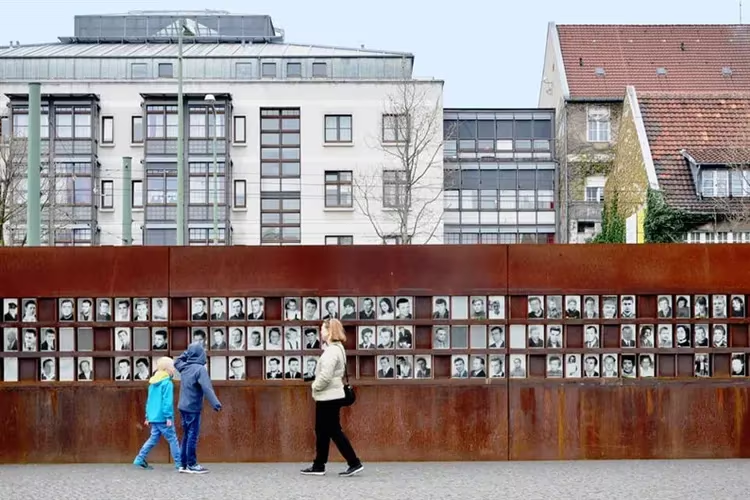
Bernauer Strasse 111
The 28 years of the tragedy – the time when Germany and its capital were separated by a 3.6-meter concrete fence – today are reminiscent of fragments of this sinister structure scattered around the city, a double line of paving stones and memorial centers dedicated to the Berlin Wall. One of these complexes appeared on Bernauer Straße in 2010 and was originally called the Window of Memory. On the spot where the border zone ran from 1961 to 1989, a monument was erected – a monument of rusty steel, on which there are photographs of residents who died while trying to cross the border.
Today, the memorial complex, which stretches for 1.4 km and covers an area of 4 hectares, includes watchtowers, a chapel erected in 2000 on the foundation of the destroyed church, and a documentation center. The inconspicuous gray building keeps within its walls the personal belongings of the townspeople, archival photographs, testimonies and audio recordings. There is an observation deck on the roof.
Mauerpark
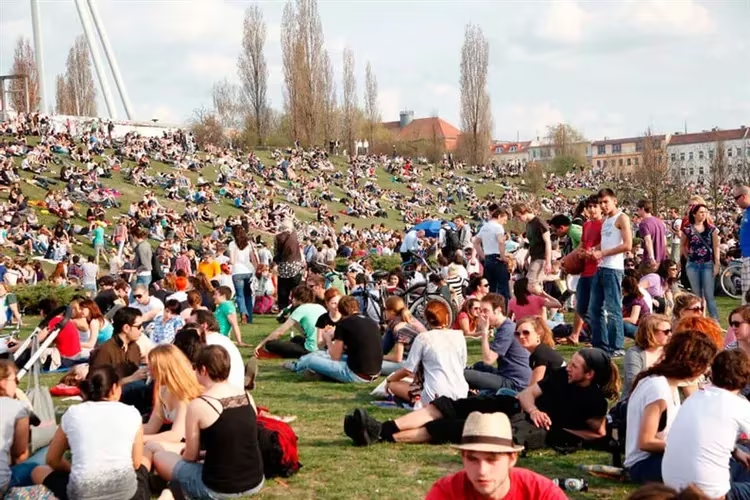
Gleimstrasse 55
If your last day in Berlin falls on a Sunday, spend a couple of hours walking around the area that until 1990 was adjacent to the Berlin Wall. Today, the former wasteland is teeming with life. Since 2004, the city's largest flea market has been located here. Wandering along the long shopping malls, you can stumble upon a gramophone from the beginning of the 20th century that has not been working for a long time, old magazines and books, silverware, moth-eaten shawls, snuffboxes, candelabra, caskets, retro clothes…
Among all this antiques there are original souvenirs, vintage jewelry and even cheap fur coats. However, the huge territory in the Prenzlauer Berg region was chosen not only by merchants. Every day in Mauerpark street musicians, mimes, dancers, clowns and magicians demonstrate their art, skateboarders show breathtaking tricks, freaks and karaoke lovers gather crowds of onlookers. People come here to forget about everyday problems in a relaxed atmosphere, skip a glass or two of beer and have a small picnic on the green lawn.
Ballooning Die Welt
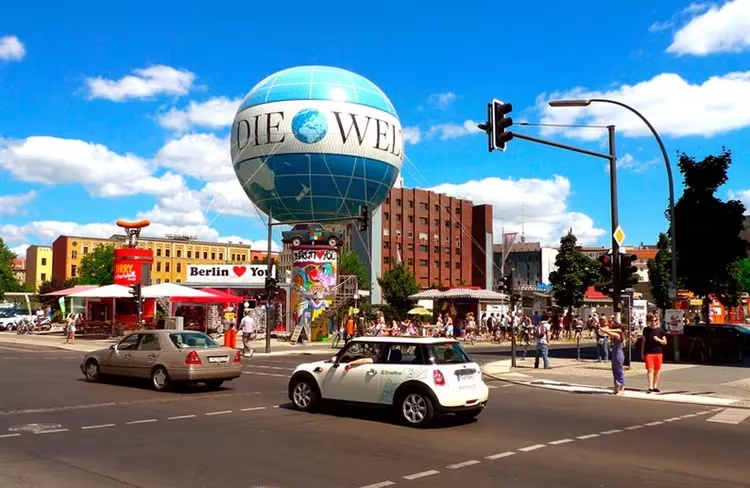
Zimmerstrasse 95-100
Berlin never ceases to amaze its guests. Those who want to feel like balloonists and take a look at the beauties of the city from a height of 150 m will have a great entertainment every day – a hot air balloon ride. It will not be possible to fly freely over the capital – the balloon is securely attached to the winch with a strong steel cable. But unforgettable sensations and a beautiful view of the center of the German capital are guaranteed!
A helium-filled balloon, in the gondola of which 30 people can simultaneously fit, is one of the largest passenger balloons on the planet. The flight session lasts 15 minutes. Important! Due to safety reasons, the ascent will not take place during strong winds. The purchased voucher can be used on another day. Opening hours: from 10:00 to 22:00 (01.04–30.09) and from 11:00 to 18:00 (01.10–31.03).
Ticket price: 23 € (adult), 18 € (youth 11-17 years old) and 10 € (children 3-10 years old).
Buy Die Welt hot air balloon ticket online – 23 €
Potsdamer Platz
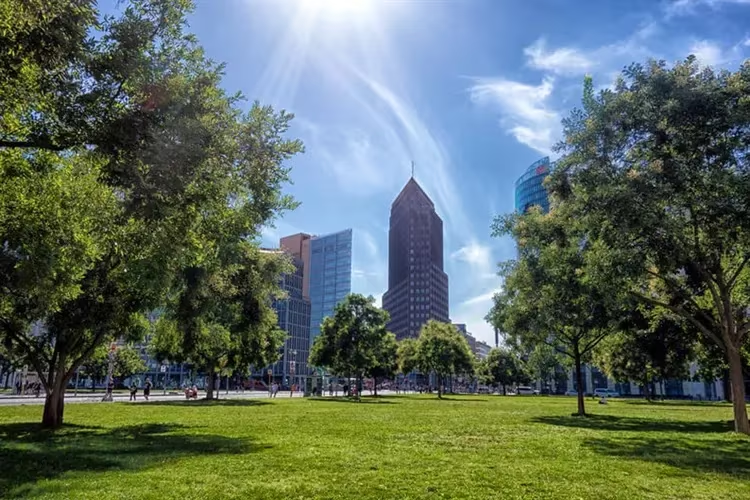
Glass, steel and concrete – this is how Potsdamer Platz appears to tourists – a place where the heart of a modern city beats. Already in 1838, a railway station appeared here, and at the beginning of the 20th century, the first traffic light in Germany to regulate busy street traffic. The bombs of World War II turned the square, which used to be full of life even at night, into a huge wasteland. With the construction of the Berlin Wall, it became a protected exclusion zone that runs along the border of the GDR and the FRG.
The revival of the legendary Potsdamer Platz began in 1994. World-famous architects Helmut Jahn, Hans Kohlhoff and Renzo Piano worked on the creation of a modern mini-district, skyscrapers and futuristic buildings that set off historical sights. Thanks to them, after 6 years, the 103-meter Kohlhoff skyscraper, the 26-storey skyscraper of the German Railways holding, restaurants, casinos, nightclubs, shops, premium apartments, Daimler City quarters and Sony Center appeared.
Sony Center
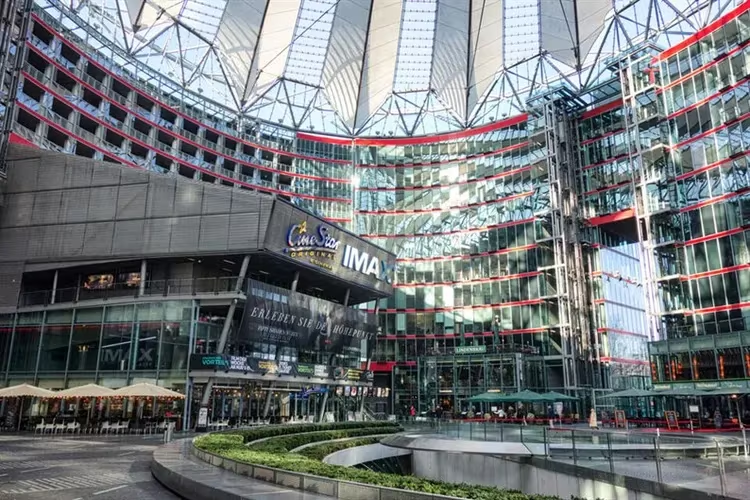
The main attraction of Potsdamer Platz is the Sony Center – an architectural ensemble consisting of 7 ultra-modern buildings, the construction of which cost 600 million euros. An IMAX cinema, an elite residential complex, restaurants, offices of large holdings, including the European headquarters of Sony Corporation, surround an open indoor area. The remains of the famous Grand Hotel Esplanade, destroyed by the war, are integrated into one of the walls of the buildings. All this magnificence is crowned by a dome made of steel and glass, symbolizing the Japanese Mount Fuji.
The Sony Center is especially beautiful in the evening. Multicolored beams of spotlights illuminate the spectacular hipped roof, creating unique play of colors. At this time, there is nowhere for an apple to fall. In the warm season, the internal forum is filled with movie lovers and restaurant visitors. In December, when the magical time of Advent and Christmas comes, a huge cone-shaped lamp sparkles with blue lights. Flickering fantastic creatures hide among the numerous Christmas trees, hot mulled wine flows like a river and fabulous performances are played out.
5 useful tips or how to save money in Berlin
The capital of Germany is included in the list of major European cities with affordable prices. However, even here the tourist encounters necessary and sometimes unforeseen expenses. If the word “savings” is not an empty phrase for you, use the tips on how not to empty your wallet during your Berlin trip.
- Traveling in the main German metropolis is not a cheap pleasure. A standard ticket for using any type of public transport for 120 minutes costs 2.80 €. If you plan to actively move around the city, buy a WelcomeCard. It entitles you to unlimited travel and discounts (up to 50%) on restaurants, tours and famous attractions (including the Berlin TV Tower and Madame Tussauds).
The cost of the card for 72 hours is 28.90 €. The paid WelcomeCard can be collected at special points at airports, the main railway station, tourist information centers at the Brandenburg Gate, the Europa-Center shopping mall and at the Hotel Park Inn by Radisson at Alexanderplatz.
-
Are you a connoisseur of unique artifacts and the main purpose of your trip to Berlin is to get acquainted with historical relics? Then purchase the Museumspass Berlin in advance and enjoy the collections of more than 30 famous museums and exhibition centers for 3 days. The subscription price is 29 €. For schoolchildren and students (subject to the presence of an appropriate certificate), the purchase will cost 14.50 €.
-
Cheap restaurants and cafes in Berlin will help you save on food. In the afternoon, you can have a snack on Turkish doner kebab (3.5 €), traditional Berlin sausage in Currywurst curry sauce (3.5 €), potato soup (3 €) or juicy chop (7 €). Tasty and cheap meals will be served at Mustafa Gemüse Kebap at Neue Promenade 7, Der Wurstler at Chausseestraße 12, the Beer Garden at the Zollpackhof restaurant at Elisabeth-Abegg-Straße 1, Scheers Schnitzel at Warschauer Platz 18 or in the foot courts of large shopping centers.
-
If you want to combine sightseeing with active shopping, choose a two-week sale for a trip, when the discounts reach 65%. Summer SALE starts on July 20-25. In winter, the hunting season for low prices opens on January 20–30.
-
When choosing an inexpensive hotel in the center of Berlin, pay attention to the budget hotels of the Mercury chain (from 80 € per night), Ibis (from 60 €), Meininger (from 49 €), Novum (from 65 €) and Motel One (from 60 €). All of them are located within walking distance from metro stations and popular attractions.