
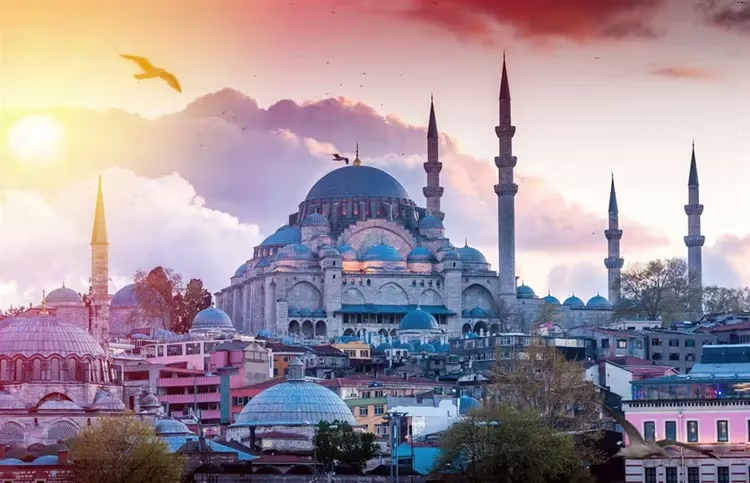
What to see in Istanbul in 2 days on your own – route, photo, description, map
What to see in Istanbul in 2 days on your own – a tourist who arrived in the city for the first time is perplexed. It turns out that you can see the main attractions. For the success of the event, it is necessary to correctly plan the route. On the first day, it is recommended to hike through the historical center of Sultanahmet (this is the European part). Here, cultural heritage sites are located compactly, it is convenient to move from one to another. It will take the whole second day to explore the Asian part of the ancient city. And you will have to move quite a lot and over considerable distances, so it is recommended to rent a car. Of course, a lot of effort will be spent on such a trip, but the impressions received are worth it.
First day
On the first day, it is worth seeing the sights compactly located in the historical center. This is the Sultanahmet area. Here the traditions and cultures of the ancient city are intricately intertwined. The center of Istanbul is focused on tourists: there are many cafes and restaurants, benches for rest are placed in parks and squares. Between excursions you can eat and relax.
Забронируйте индивидуальный трансфер от аэропорта до вашего отеля за 2 463 RUB
Topkapi Palace
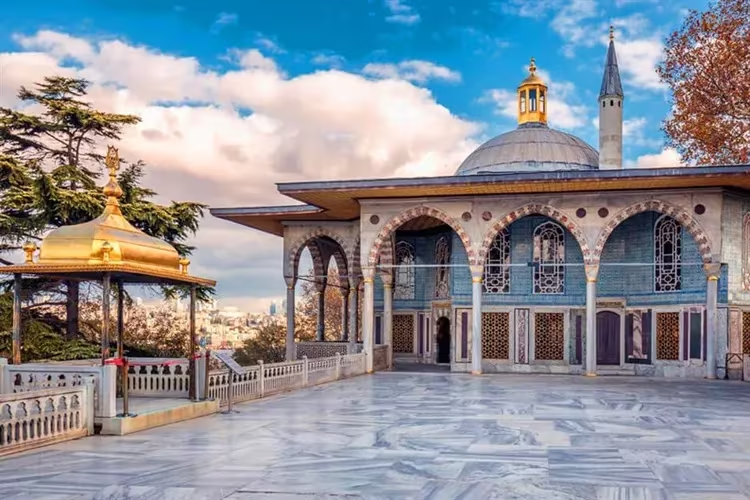
The complex is located at the mouth of the Golden Horn River. And the place was personally chosen by Mehmed 2 the Conqueror to create his own residence. Construction began immediately after the fall of Constantinople and continued for several decades. The dynasties of the sultans changed, and Topkapi was completed taking into account the wishes of the rulers. Initially, the harem was located separately from the general territory, and only at the insistence of the Sultan-Hyurrem joined the main premises.
Topkapi was the residence of the sultans for 400 years, and in the 19th century, Abdulmecid ordered the construction of a new palace: Dolmabahce. The ruler loved European architecture: the ancient castle seemed to him too “Ottoman”. The royal court was located in Dolmabahce until 1923. After the formation of the Turkish Republic, Topkapi became a state museum. The President of the country chose Dolmabahce for living.
But the old Sultan's palace has completely preserved its former interiors and has become a favorite place for residents of the capital and tourists. There is a well-groomed territory, and in the pavilions, guests will see luxury items used by members of the royal family. For a detailed inspection of Topkapi, one day is not enough: but it is quite possible to walk through all the courtyards and get a general idea of the ancient traditions. Parts of the residence (courtyards) are separated from each other by walls, and are connected by gates.
Gulhane Park
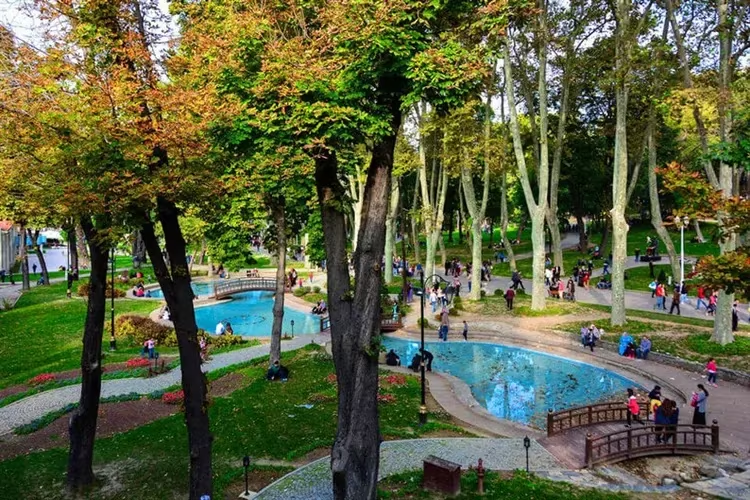
The park can be accessed directly from the Topkapi Gate. This is convenient for tourists with limited time. On the site of the present garden, the Byzantines staged military parades. Nearby was the Church of St. George. The territory had a service purpose. But Mehmed the Conqueror, after the subjugation of Constantinople, decided to create an entertainment center here: Saraiburn turned into ramparts surrounding the Chinese pavilion. Now holidays were organized for the Sultan and his family, and the soldiers competed in military disciplines.
In the future, the rulers decorated the park:
Then for the first time they created a permanent group for cleaning and caring for the territory. But the fire of 1863 destroyed most of the buildings and plants. But the territory remained closed: only representatives of noble families had access here. At the beginning of the 20th century, Gulhane was opened to everyone. But at the same time, the garden began to fall into decay: it was simply not taken care of.
All this led to the need for a large-scale reconstruction in the 21st century: only in 2003 the garden was reopened to guests. Today, Gulhane attracts with flower beds (at any time of the year), well-groomed paths and comfortable benches. There is a cozy teahouse on the territory, from the veranda of which a wonderful view of the Bosphorus opens.
Sultanahmet Square
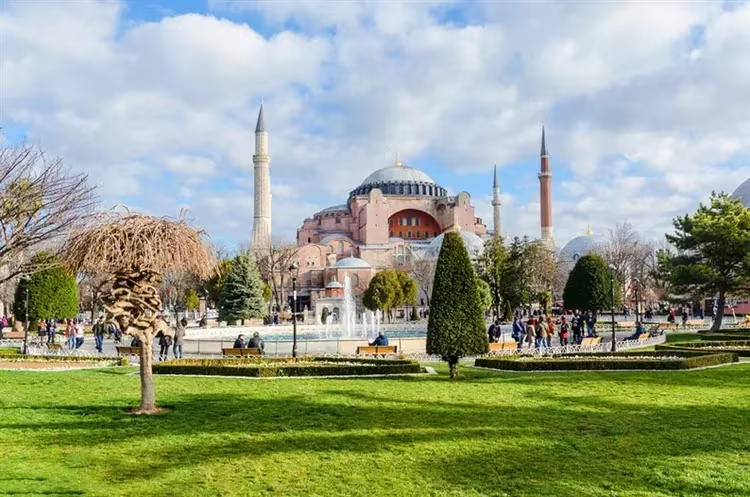
This is the central square of the Fatih district, which is often visited by tourists. It attracts guests by the fact that different eras and cultures intersected in a small space:
- Septimius Severus, after the capture of Byzantium, ordered the destruction of the city center and a hippodrome on the free territory. The work lasted 130 years. In 1204, the crusaders destroyed the hippodrome, the columns and stones were taken away for construction near the lying buildings. Part of the ancient columns support the portico of the Blue Mosque.
- The German Fountain donated Wilhelm 2 to the city in 1901. The construction is unusual: it is rather a gazebo, under the dome of which there is a capacious bowl. The pool is lined with wonderful mosaics. Previously, the townspeople took drinking water from the fountain.
- The Egyptian obelisk is over 3000 years old. He was brought to Constantinople by order of Theodosius 1.
- The Column of Constantine is also called Openwork. Its inscriptions say that the structure should surpass the Colossus of Rhodes.
- The amazing Serpentine Column, although it lost its head, still attracts tourists.
Traveling around the square, guests get acquainted with the main events that took place on the territory of modern Istanbul many centuries ago.
Saint Sophie Cathedral
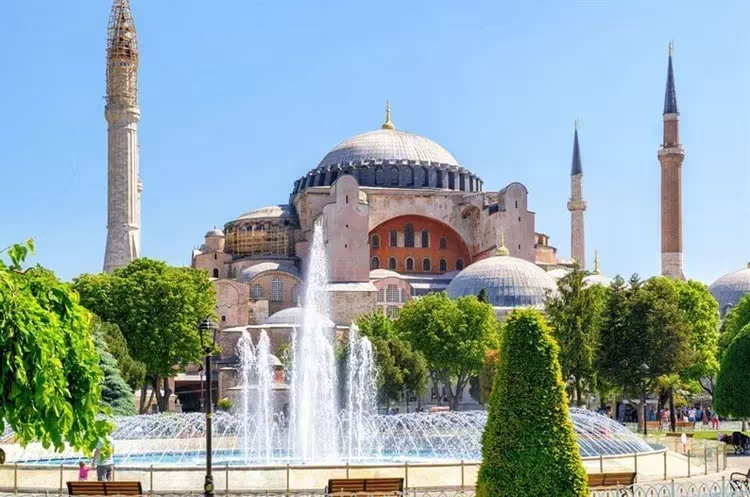
Hagia Sophia is a cathedral with a complicated history. It was built as an Orthodox church. At the same time, there was already a model: a small Hagia Sophia. The main motifs were repeated by the architects in large. During the construction, they did not spare any money: Justinian very freely disposed of the treasury. Sophia was to perpetuate his reign. The emperor wanted to dig into the inner walls with gold. But astrologers later predicted the ruin of the temple, so part of the interior is unique frescoes.
During the 4th crusade, the temple was plundered by brothers in faith: a unique page in history. The valuables were taken to Europe, where they remained forever. But Sofia was restored, and services in it continued until 1453, that is, until the capture of the city by Sultan Mehmed 2. The wise ruler retained the Orthodox cathedral, but ordered it to be converted into a mosque. Hagia Sophia performed this role for about 500 years.
It is noteworthy that its architecture inspired the creators of the Blue Mosque and the Suleymaniye Mosque. In 1935, the President of Turkey issued a decree on the creation of a museum in the Hagia Sophia building. The plaster covering the unique frescoes was knocked off. But some of the later elements of the interior have also been preserved. Therefore, tourists can see a bizarre combination of traditions and cultures of different faiths.
Blue Mosque
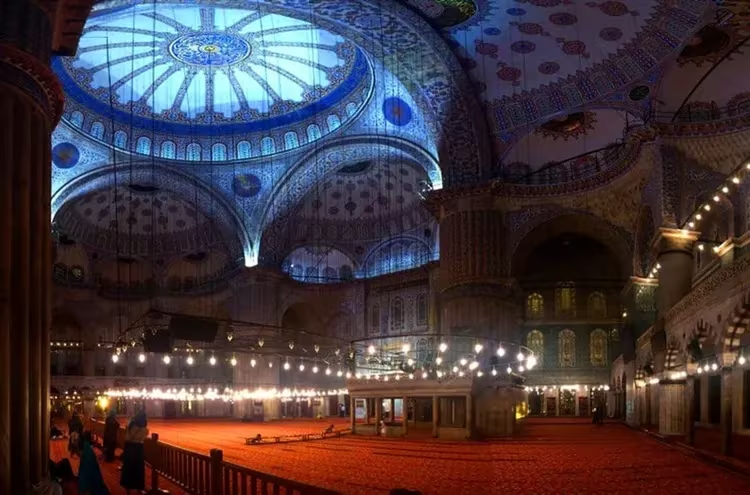
The building is located on Sultanahmet Square: it is worth crossing it, and here it is, a unique mosque. Turkey constantly waged wars of conquest. And Sultan Ahmet 1 constantly lost battles. The subjects grumbled, and they ceased to reckon with the country. In all this, the Sultan saw the disgrace of Allah, and in order to appease the creator, he ordered the construction of a mosque. Construction proceeded quite quickly: 7 years after the foundation was laid, the first service was held here.
The interiors are made in blue tones (hence the name of the mosque). Believers saw walls inlaid with valuable wood, marble tiles and unique carpets on the floor. The mahrib also contained a relic brought from Mecca: a black stone. The architect mixed 2 opposing styles: Ottoman and Byzantine, and made the right decision. The mosque turned out to be unique. And 6 minarets, instead of 4 set by Islam, still makes historians wonder about the reason for such self-will of the builders.
Many historians note that the Kul-Sharif mosque built in Kazan at the beginning of the 21st century is similar to the Blue Mosque in Istanbul. Tourists are given the opportunity to confirm (or disprove) the hypothesis themselves. The Blue Mosque is active, but you can go into it with a guided tour or on your own. In this case, you should adhere to the established rules: they are written on the information board. And you can rent a cape or skullcap in the shop at the entrance.
Basilica Cistern
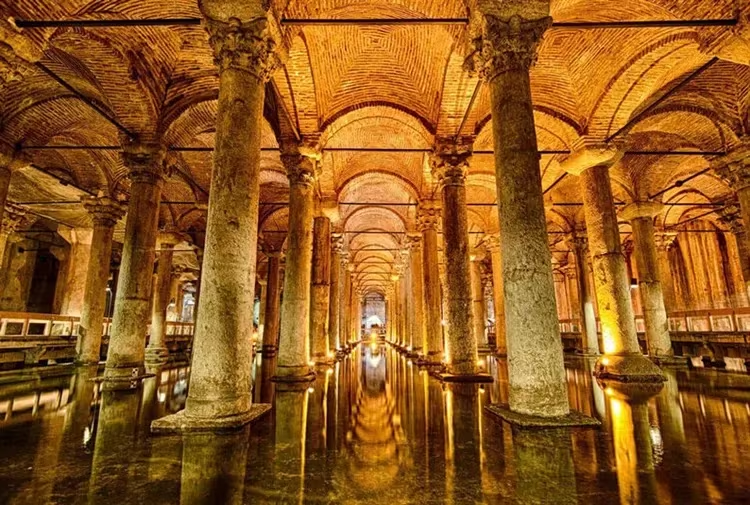
The underground reservoir is located 100 m from Hagia Sophia: very convenient for those who want to see a lot in a short time. The rulers of Constantinople took care of the daily needs of their subjects. And the uninterrupted supply of drinking water to the city is the main one. However, the construction of the cistern was carried out for quite a long time: almost 2 centuries.
The cistern worked well.
- From the collection points in the vicinity of the city, water flowed into it through pipes. Sometimes aqueducts were used (some still survive).
- Then, through pipes, fresh water was supplied to the fountains, from where it was taken by the townspeople.
The system of cisterns made it possible to provide the capital with sufficient moisture in the driest year. The entrance inside was guarded: a necessary measure in any era. After the capture of the city by Mehmet 2, the cistern was abandoned: it was not cleaned, the system of pipes and aqueducts was not repaired. But still, the structure worked properly: the residents dug wells in the basements of houses and provided themselves with drinking water.
Sometimes there were river fish in the buckets. But then the cistern was finally turned into a dump and forgotten about. In 1985, the Turkish government decided to clear the cistern and turn it into a museum. Today, tourists can comfortably stroll through the underground gallery, see the marble vaults and ancient columns.
Cisterns Feodosiya
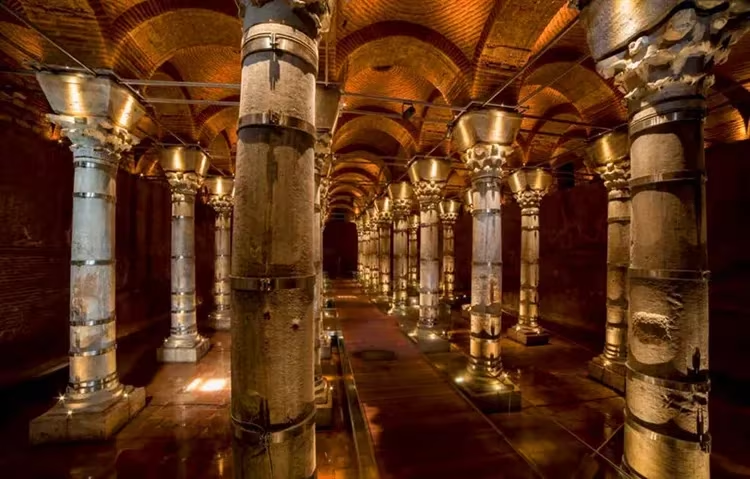
To supply the city with fresh water, a whole network of underground storage facilities was built. The Theodosius Cistern is located next to the Basilica Cistern. It is smaller in size, but older by as much as 100 years. This cistern was discovered by accident: after the planned demolition of the house, an underground water storage facility was opened. It was explored and decided to turn into a museum.
Historians have established that the sister of Emperor Theodosius Elia Pulcheria ordered the construction of the cistern. She was concerned that the Grand Palace had limited water supply. It was sorely lacking for watering flowers and fountains. Elia decided that special offline storage was required. Rain water accumulated in the reservoirs of the Belgrade forest and flowed through the aqueducts into the Theodosius cistern.
Incredibly, this vault has come down to us completely undamaged. For the convenience of guests, lighting is organized inside, wooden bridges are laid. Those who find it difficult to go down the steep steps are invited to use the elevator. Today, tourists can see not only unique Doric and Ionic columns, but also sculptures. All exhibits are provided with information boards.
grand bazaar
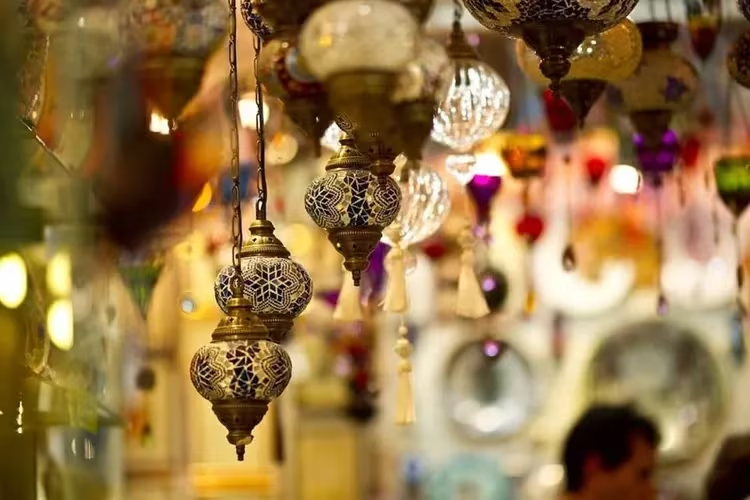
A huge shopping mall adjoins Sultanahmet Square. A little over a kilometer from Hagia Sophia. The Grand Bazaar is one of the largest covered markets in the world. But there is not only an abundance of different goods here: the unique oriental atmosphere attracts guests from all over the world. It is absolutely not necessary to buy anything: an ordinary walk will leave an unforgettable experience.
The huge trading city includes:
Every day, the Grand Bazaar welcomes more than 500,000 visitors. And you can buy a lot: from spices to the latest models of electronics and branded clothing. The goods are attractively priced, but you should be careful: there are quite a lot of fakes here. This is especially true for jewelry and well-known brands.
It is important to remember that you can and should bargain at the Grand Bazaar. The initial price is always very high. As a result of skillfully conducted bargaining, the price can decrease several times. And both parties will get pleasure: both the seller and the buyer.
Evening Bosphorus Cruise
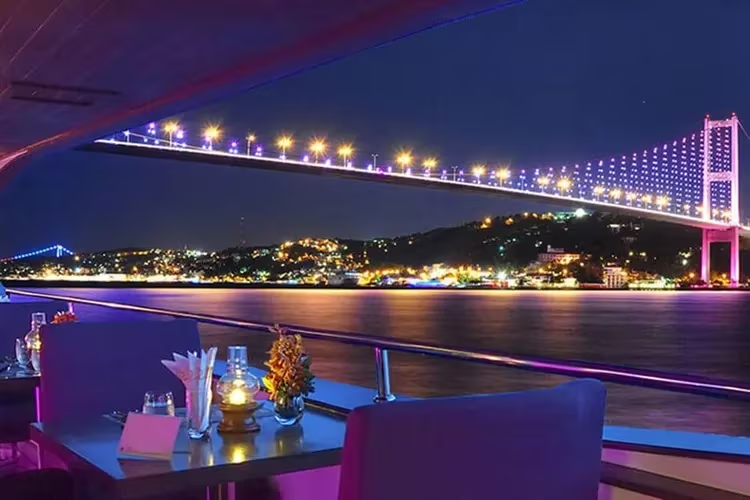
A full day should be completed with a walk along the evening Bosphorus on a comfortable yacht. Guests are picked up directly from the central Sultanahmet area by minibus and brought to the pier by 8 pm. And at 9 o'clock the ship will set off on an exciting voyage along the coast of Turkey. First, the sightseers pass the European part of the city.
Near the bridge across the strait separating the continents, the yacht will stop. Here you can take pictures. On the way back, guests will see the Asian part of the city: mosques and palaces, illuminated by colored lanterns. Tables are laid for guests in comfortable halls with huge windows. Here you can enjoy cold appetizers, taste meat or fish. A traditional oriental dessert will complete the dinner.
The price includes soft drinks. But you can diversify the proposed menu: alcohol is offered for an additional amount. During the journey, guests are entertained by dancers and actors. Tourists will see a performance from the life of the country, folk dances, including an unusual belly dance. After the end of the walk, the tour organizers will take the guests to the hotel.
It is important to understand: this is just a walk along the evening Bosphorus, the presence of a guide is not expected. But there is an employee of the company who will answer questions that arise from guests.
Second day
In order to see the most interesting places located outside the historical center in 1 day, you need a car. It can be rented with or without a driver. When traveling independently, it is recommended to use the navigator when laying the route.
Hill Pierre Loti
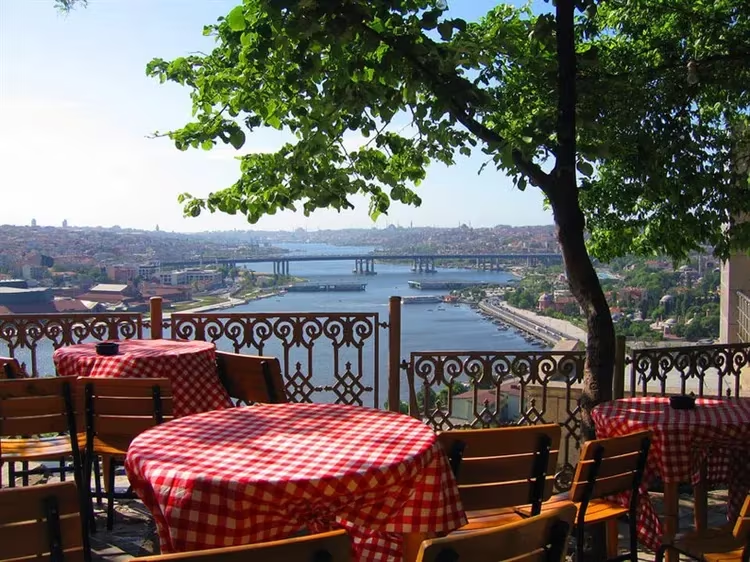
The unusual name was given to the place by the Frenchman Julien Viot. He took a fancy to a small coffee shop at the top of the hill. Here the traveler drank coffee and wrote. The pseudonym of the writer is Pierre Loti. Tourists believe that the hill is the best observation deck in the city, which offers an amazing panorama of the Bosphorus. By the way, Pierre Loti also thought the same: he claimed that from here everything looks like in the palm of your hand.
The height of the slide is 53 meters, the ascent is quite steep. But for the convenience of guests, there is a cable car. From her booths, a view of colorful houses, mosques and palaces gradually opens up. And at the top is the famous cafe: the one that Pierre Loti loved so much. It is still open today: it serves strong coffee, signature apple tea and amazing desserts.
The restaurant's veranda is an additional observation deck. By the way, the prices here are quite high. But this scares few people: tourists are willing to pay for the history of the place, empty tables (especially on the 1st line there are few). There is also a luxurious hotel with a restaurant. The prices for rooms and lunch are quite high, so tourists with a sufficient travel budget stay here.
Taksim Square
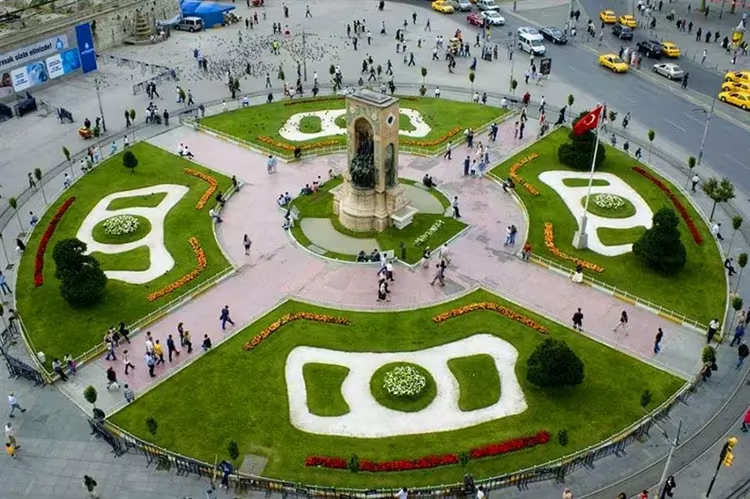
Once it was a place where aqueducts crossed, supplying water to different parts of the city. And today the square is popular with tourists: it is a conditional border between the old and new parts of Istanbul. Taksim is a visited place, the square is loved by citizens and guests of the city:
Taksim is a traffic-free zone, so the car will have to be parked nearby. In the center is a monument to the Republic. Warlords and ordinary soldiers who fought for freedom are immortalized here. As a token of gratitude to the Soviet Union, the author sculpted a sculpture by K. Voroshilov. City streets diverge from the Republic monument in different directions. And on the buildings surrounding the square, observation decks are arranged. Istiklal leaves no one indifferent: it is a concentration of small and large shops, cafes, restaurants, hotels and official buildings. The Russian consulate is also located here. Istiklal Street is always crowded.
Church of the Holy Trinity
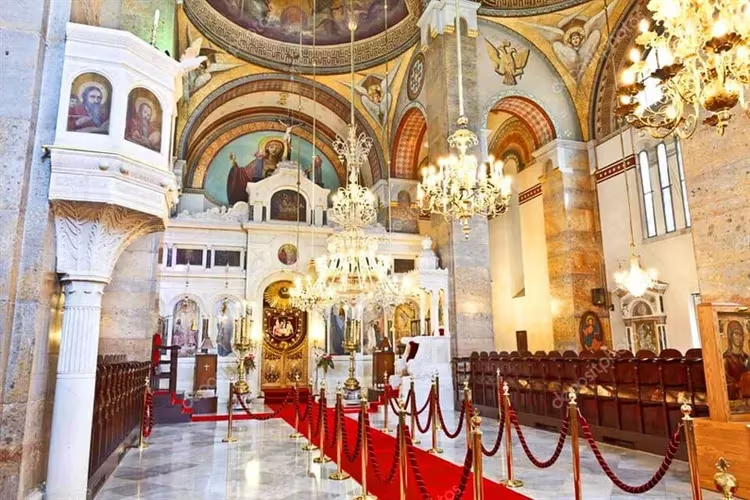
This is the largest of the existing temples in Istanbul. The church was erected on the site where the Church of St. George once stood. Hagia Triada Rum was built as an Orthodox Russian at the end of the 19th century, but later transferred to the Greek Patriarchy. Church services are held daily in Greek. The peculiarity of the temple is 2 bell towers and a dome. It would seem that it is special that an Orthodox church has a dome?
The fact is that in the time of the Ottomans, domes were allowed to be erected only over mosques. An unprecedented indulgence was made for the Church of the Holy Trinity. The main feature is the ancient iconostasis. Some of the images are from the Byzantine period. The interiors are made up of stunningly beautiful frescoes. The ceiling is traditionally domed. It is painted with images of the apostles, Jesus Christ and angels. In the middle of the 20th century, the building of the temple was damaged during the riots. But at the beginning of the 21st century, it was completely reconstructed.
flower arcade
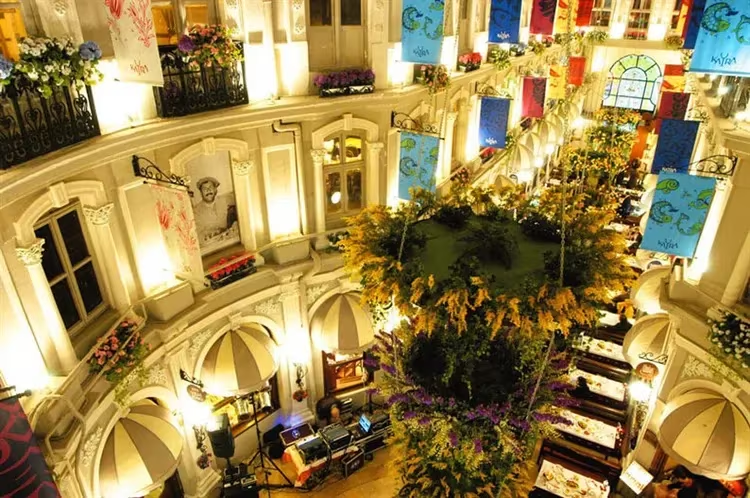
The shopping and entertainment center owes its name to emigrants from revolutionary Russia. They had to somehow earn a living, so many families were engaged in trade. And noble ladies, who had impeccable taste, began to sell flowers, renting places in the shopping center.
In general, during its history, the Chichek passage changed its purpose several times:
There are many flower pavilions, music is constantly playing, artists and poets gather to spend the evening in a pleasant atmosphere. Cafes and restaurants invite you to taste the local cuisine. Prices are quite democratic. It is not surprising that both locals and tourists who came to relax from all over the world love the Çiçek Passage. It is worth spending an hour or two here, listening to the gypsies, tasting the meze prepared according to the author's recipes. An amazing unity of modernity and the ancient spirit of the Ottoman Empire reigns in Chichek Passage.
Modern Art Museum
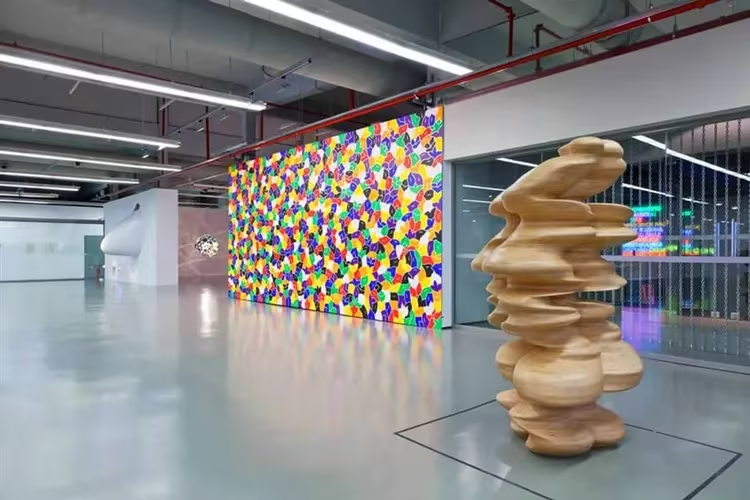
This is the first cultural institution in Istanbul. Only 2 decades ago there were no such centers in Turkey. For the organization of the first exposition, the building of the former warehouse in the port approached. Today, exhibitions, presentations and conferences on various types of art are held here. For these purposes, the halls on the 1st floor are intended. There is also a cinema hall where screenings of author's films are held. There is a library with a reading room.
On the second floor, tourists can get acquainted with the exhibition of paintings by Turkish and foreign artists. Photographs are also presented. All exhibits have information boards, and an audio guide is offered at the reception. The center has a patio where you can take a break and enjoy the exhibition of sculptures. The administration of the complex constantly holds thematic exhibitions. It is never boring in the center: tourists and city dwellers come here.
Galata tower
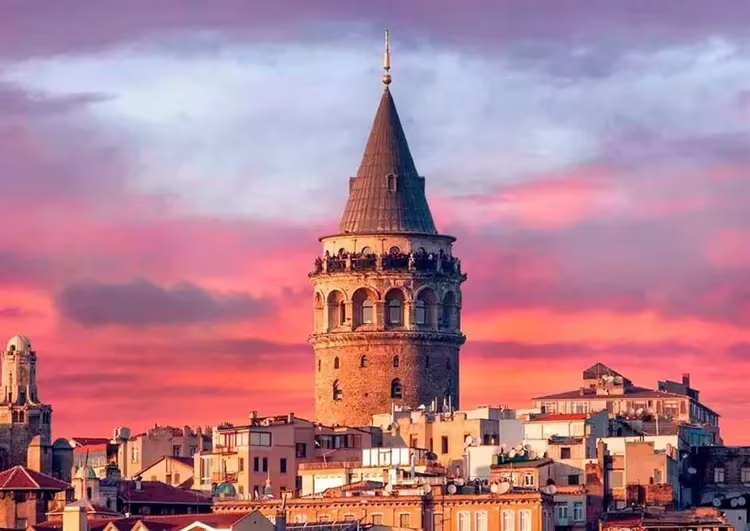
The Galata Tower is an excellent viewpoint of the surroundings. From its highest point, you can see the city, the Bosphorus, and in good weather – the Princes' Islands. And the building was built by the warlike Genoese to protect the new territory from the Byzantines. Only one tower remained from the entire fortress. The Ottomans turned the tall building into an observatory. Then they finalized it (they built a circular balcony) and began to use it as a fire tower. Today Galata Kulesi is a monument of architecture and culture. But you can climb here: on foot along the worn steps of an old staircase or on a high-speed elevator.
Inside the tower is divided into 9 floors:
On the 8th floor, tourists are invited to rent national costumes and take pictures in them against the backdrop of the city.
Chamlyca Mosque
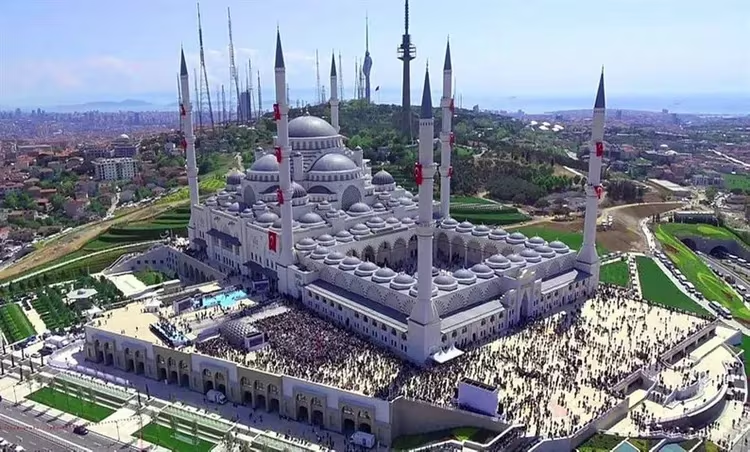
The Camlıca Mosque was built at the highest point in Istanbul: on the Chamlıca Hill. This new mosque is the largest in the world. And the first believers came here in March 1919. Rajep Erdogan, who laid the first stone in its foundation, paid great attention to the construction. Therefore, the building is often called the complex named after Rajep Erdogan.
The architecture of the building combined 3 styles:
A bizarre combination made it possible to make the building unique and national at the same time. The center consists of:
For the convenience of visitors, there is parking for 3,500 cars.
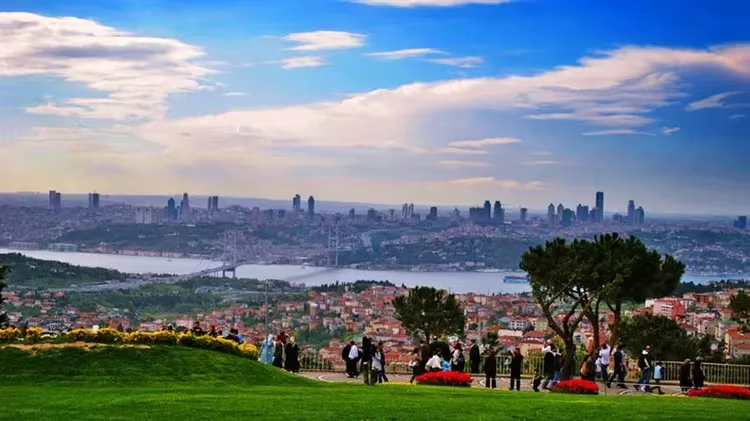
Without a tour of the city from the site located on the Chamlydzha hill, a walk through the Asian part of the city will not be completed. And you can admire the stunning views of the Bosphorus, the European part of the city and seascapes absolutely free of charge. It's nice that the area has been ennobled: flowerbeds have been laid out, trees have been planted, and benches have been placed. Local newlyweds are sure to come to the hill: it has become a tradition. And for those who come by car there is a large parking lot.
And in order to fully enjoy the spirit of the ancient city, it is recommended to go to the absolutely non-tourist area of Kadikoy. It is deserted here: there are no crowds of tourists. On the streets there are cozy shops with goods of local artisans. Cafes and restaurants are focused on local residents: they serve dishes cooked according to family recipes. And the panorama of the Sea of Marmara is unforgettable.
Observation deck on Çamlıca Hill
Haydarpash Station
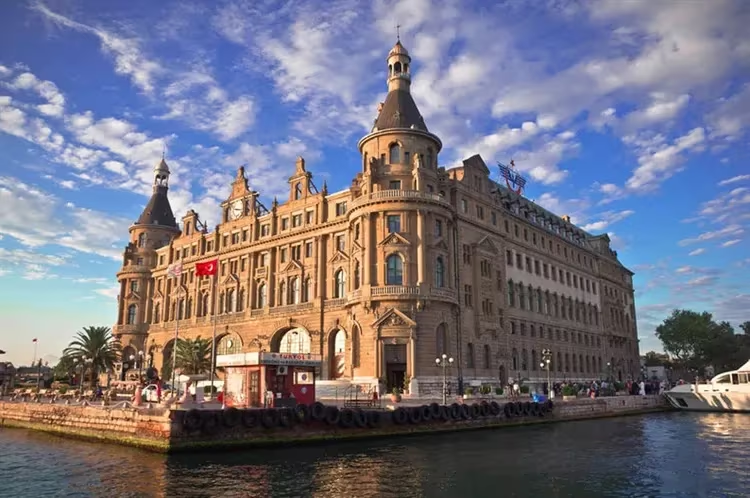
The station was built by the Germans in 1906-1908. In those days, Germany was an economically and industrially developed power, seeking to strengthen its position throughout the world. It was Wilhelm 2 who proposed to Ottoman Turkey to carry out the entire complex of works. It is noteworthy that the station crashes into the sea: water surrounds it from 3 sides, from 2 there are berths for ferries and boats. Some passengers prefer to get here by sea.
The building was built in the Art Nouveau style: the only one possible in times of conservatism and prohibitions. Inside the walls are plastered and painted in oriental style. The columns are lined with marble, and the windows of the cash desks are colored stained-glass windows. It is noteworthy that all elements are authentic, installed during construction. Modern details have been added: electronic cash desks, illuminated displays. They have successfully blended into the old interior.
A steam locomotive from the beginning of the 20th century is exhibited at the entrance. Exactly the same is available at the Sirkeci station. Newlyweds come to the building of the Haydarpasa railway station (more precisely, to the steam locomotive): a modern tradition, as a guarantee of a happy life. The station faces west: the setting sun beautifully illuminates the ancient interiors. Haydarpasa regularly sends trains. But the traffic is not very dense.
Sureya Opera House
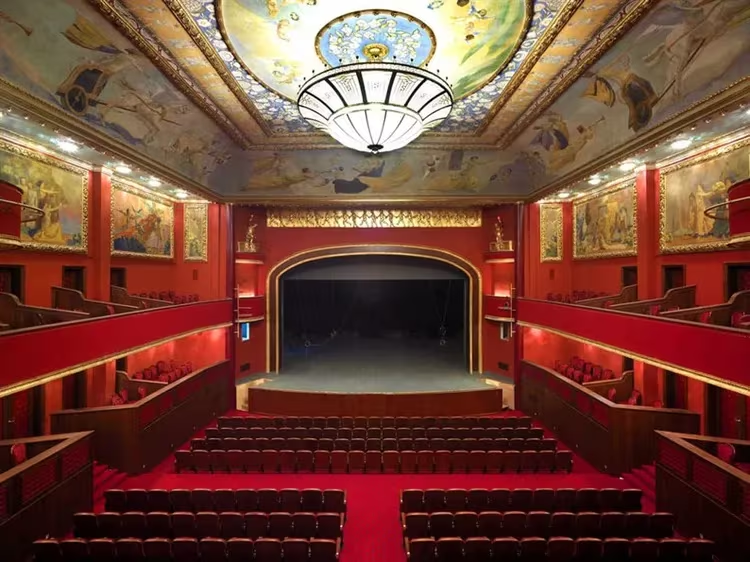
The theater was built in 1927 in order to provide a stage for musical performances. The customer was the wealthy politician Sureya Ilmen, and the designer was the Armenian architect Kegam Kavafyan. But due to the lack of the necessary equipment, neither operas nor ballets were played on the new stage. Only once a week there were dramatic performances. In 1930, it was decided to place a cinema in the hall. And the ballroom on the second floor began to be used for wedding celebrations.
The unique building was abandoned. The situation changed in the 1990s. After carrying out the necessary work, the opera sounded on the stage. It was Ahmed Saygun's production of Yunus Emre's oratorio. Today, the Sureyya Theater staged works by Turkish and foreign authors. Concerts and music festivals are regularly held. Sureya provides the venue for the annual opera festival. The repertoire includes works by Russian composers. Here you can see the Nutcracker and Swan Lake.
Embankment of Fashion
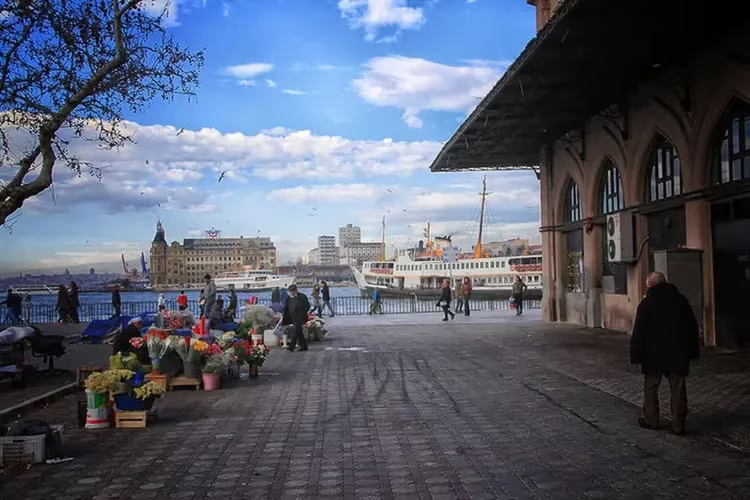
This is the freest and at the same time conservative district of Istanbul. It was its inhabitants that made up the majority of the townspeople protesting on Taksim Square in the 70s of the twentieth century. But it is very warm and cozy here: narrow clean streets, shops with clothes and souvenirs, wooden houses with carved shutters. A small tram, painted in canary color, runs around the area. The most respectable and oldest water club is located in Moda. Entrance to its territory is allowed only to those who present a membership card.
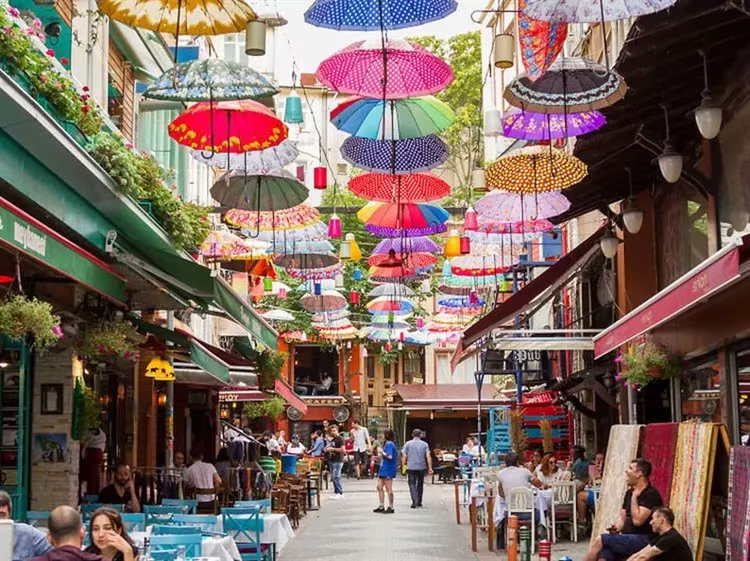
In general, in this coastal area, residents fish, swim, do water sports and even jog along the water. A lot of greenery is in fashion: even the balconies of houses are entwined with plants. There are many homeless animals here: dogs and cats. Dogs are vaccinated and microchipped. Near each house there are bowls with water and dry food: the inhabitants feed the animals. There are warning signs for drivers. But Moda also has enough office space: it is convenient to have a representative office of a small business here. And all this organically exists in the region.