
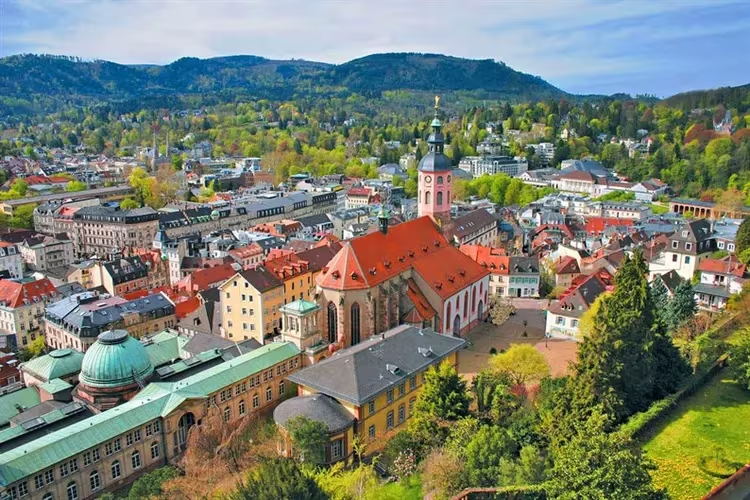
The city seems to have been specially created to surprise, to challenge stereotypes about a quiet, boring German provincial town with a population of 60,000 inhabitants. Its name is associated with hot springs, spa treatments, museums, festivals, mysteries of history, outstanding artists, musicians, crowned persons. The sights of Baden-Baden are a mix of the heritage of different cultures. In the monuments of the German town, located on the banks of the Os River, the influence of neighboring France is noticeable. The old part of Baden – this was the official name until 1931 – can be compared to a fantastic dimension where Ancient Rome, the Austro-Hungarian Empire, pre-revolutionary Russia, Renaissance Italy met. The realities are changing, but the city remains the center of attraction for the elite, connoisseurs of respectable recreation, and adventure seekers. His houses, monuments, the ruins hold secrets about the lives of the rich and famous. An elite resort is like a precious Faberge box full of surprises.
Casino
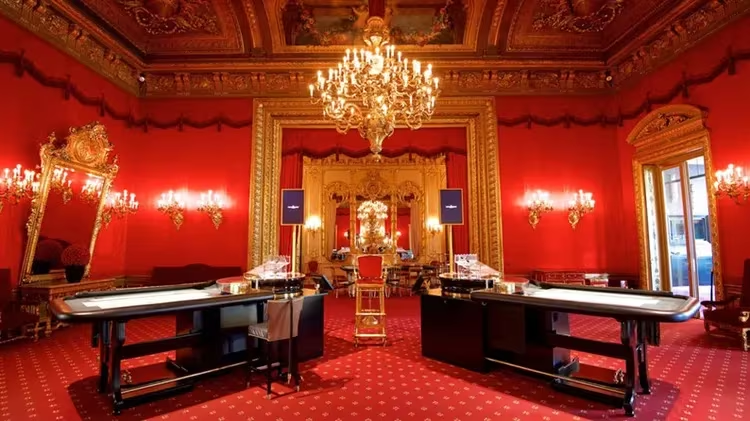
A gambling establishment is more like a museum, and not a “nest of vice” in the version as it is usually depicted in books and films. The Germans consider the Kurhaus casino to be the oldest in Europe. The establishment was opened in 1827. The title of the most beautiful in the world was “assigned” to him by the great film actress, a fan of gambling Marlene Dietrich. Initially, the building was intended for a resort holiday for aristocrats, as the name reminds of (in German, the word means “Resort House”).
Before World War II, the casino played the role of a cultural center where the intellectual, creative, political, and financial European elite gathered. Today, the “Kurhaus” is open to the common people, tourists, fans of gambling, provided that they are decently dressed, have reached the age of majority (21 years of age). The casino retained the functions of a cultural center. The institution regularly hosts historical balls, meetings of prestigious creative and sports clubs, concerts of opera stars.
The interior of the building is divided into 2 parts. One of them is reserved for halls for card games, roulette, “one-armed bandits”, VIP-visitors' offices. The other part is occupied by restaurants, concert halls, ballrooms, rooms with unique historical exhibits. The casino is open all year round except for major Catholic holidays. The institution participates in the German state programs for the prevention of gambling.
Faberge Museum
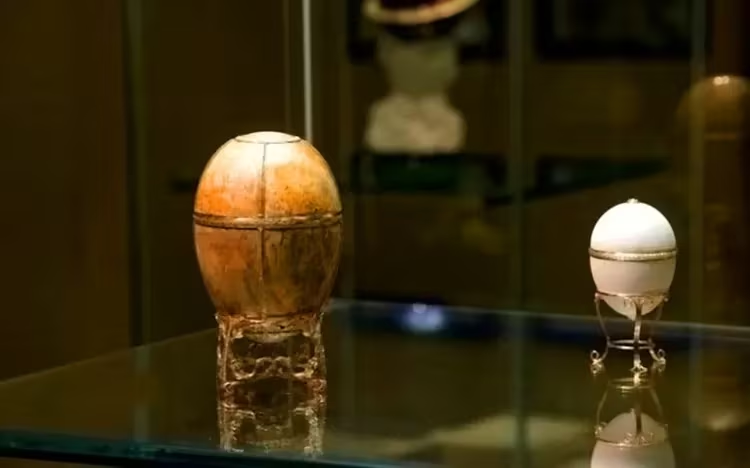
It is called the first and only museum in the world of the firm of an outstanding Russian jeweler. The second statement is debatable, because in St. Petersburg there is an institution of the same name, where another collection of Carl Faberge is kept. In the halls of the Baden Museum there are over 700 exhibits made of silver, gold, platinum, precious and semi-precious stones.
Jewelry for men and women, Easter eggs, cigarette cases, crockery, lamps, figurines, miniatures – there are over 3,000 works of art in the funds. A significant part of the items belonged to the Romanov dynasty. After the revolution, Carl Faberge, whose firm was the official supplier of the imperial court, managed to save a life by illegally leaving Russia. The jeweler lost most of his property. His businesses, custom jewelry, stocks of precious metals, cameos were nationalized by the new state.
The history of the founding of the museum in Baden-Baden by the Moscow collector Alexander Ivanov seems to be symbolic. He handed over the collected antiquities to the German city in order to protect the masterpieces from the encroachments of Russian bandits. The unofficial value of the jewelry was $2 billion. The museum was opened in 2009, its collection continues to replenish the masterpieces of ancient jewelers who lived before the colonization of America by the Indians, modern masters.
collegiate church
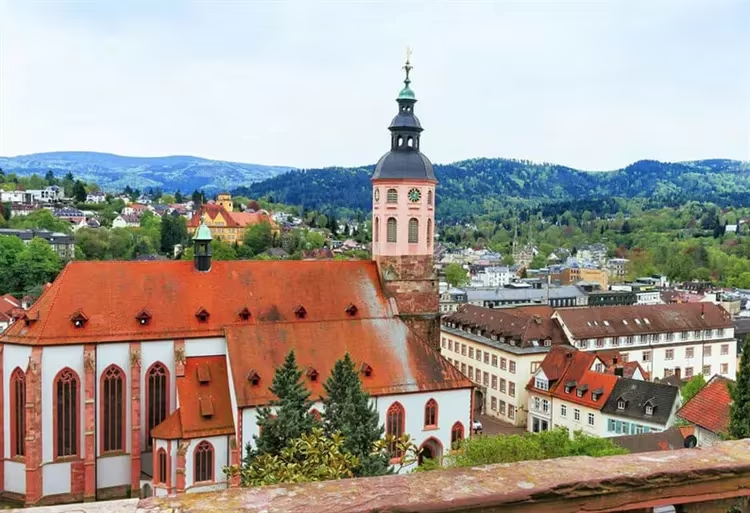
Theologians and historians date the construction of the temple to the 13th century. Information has been preserved that the ancestral tomb of the margraves, the rulers of the Baden district, became part of the church. The latter was erected 3 centuries earlier than the temple, which is dedicated to the supreme Christian apostles Peter and Paul. Today the church belongs to the Protestant community. The temple is open to the public, it hosts divine services and traditional Christmas and Easter concerts of sacred organ music.
The architecture and interior decoration of the building intricately intertwined the dominant elements of the Gothic style, style solutions in the spirit of the Baroque, Romanov style. Pilgrims and tourists from all over the world come to the church to see the windows decorated with stained glass, a stone sculpture of the crucified Christ more than 6 meters high, the figure of the Virgin Mary, a built-on bell tower with a three-tiered roof.
The surviving ancestral tombs in the choirs of the church are reminiscent of the legend, how one of the margraves dreamed of the apostles who promised the last shelter in their house. Ancient temple bells have not been preserved. The oldest of the currently existing “voices of God” was cast in the 13th century, the rest – 200 years later. The foundation of the building is constantly damaged by groundwater, but the townspeople are doing everything possible to save the temple.
drinking pavilion
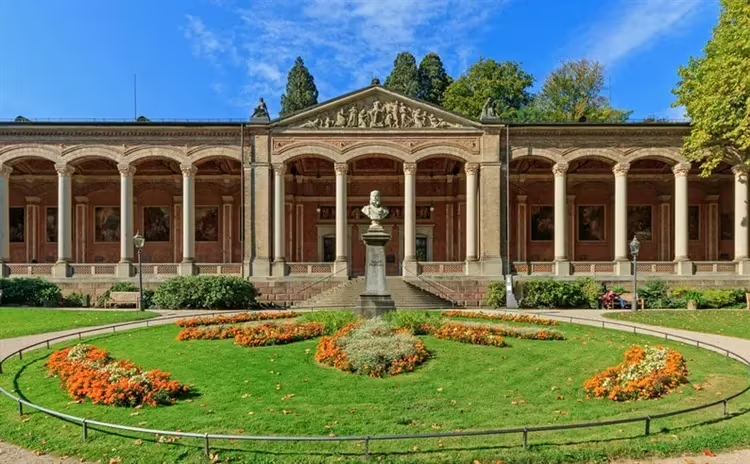
An amazing building with a length of 90 meters is located next to the Kurhaus casino. Outwardly, the pavilion resembles the facade of a royal palace with 16 columns. The pavilion was built in the first half of the 19th century and has hardly changed, which is the merit of outstanding German restorers. The building is decorated with unique frescoes, the plots of which are reminiscent of the legends of Baden-Baden.
The bust of the Kaiser, German Emperor Wilhelm I, installed near the pavilion, is a tribute to the memory of an outstanding personality in European history. The time of his reign is often referred to as the “Golden Age of Baden”. An alley named after the Kaiser leads to the pavilion. The main purpose of visiting a popular place: the unique healing water from 2 Baden springs.
Its properties are still not fully understood. The water has a slight salty taste. Scientifically proven: miraculous liquid strengthens the immune system, treats diseases of the nervous, gastrointestinal, musculoskeletal systems. Baden residents joke that mineral water replaces food, because the first one contains all the microelements that are important for the full functioning of the body.
Caracalla Terme
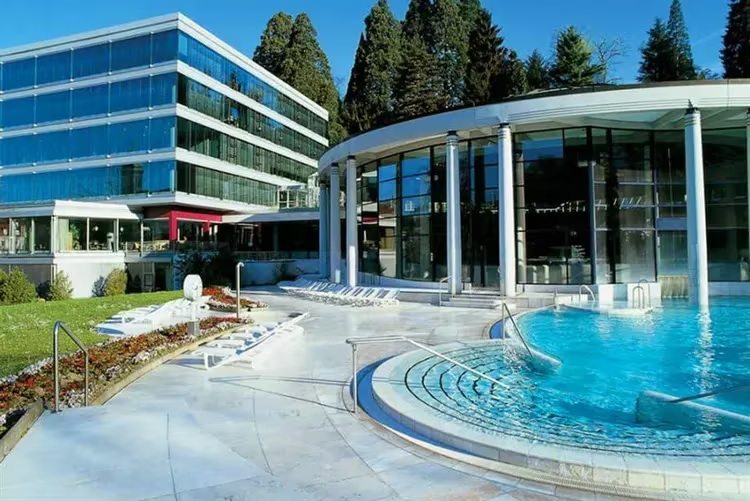
Even the most indifferent to baths, saunas, swimming pools, tourists try to visit an entertaining medical complex with a sonorous name. “Caracalla Terme” covers an area of more than 4000 square meters. The name of the center evokes associations with Ancient Rome. The architecture of German structures, buildings, pools of the complex visually resembles the ancient one, adjusted for the capabilities of modern technologies.
The complex in the very center of the German city began to function in the 80s of the last century. Its layout still arouses the admiration of specialists today: it takes into account the requests of visitors to the thermal baths to the maximum. Outdoor, indoor pools of various depths and shapes, spacious rooms for water-hygienic, inhalation, hydromassage procedures, solariums, baths – only a small part of the list of facilities located on the territory with several hot springs.
The center is open all year round. Restrictions for visiting it: medical contraindications, age under 3 years. For older children, a special playground is equipped, divided into open and closed parts. Young guests of the complex are supervised while their parents rest and gain strength.
Church of the Transfiguration
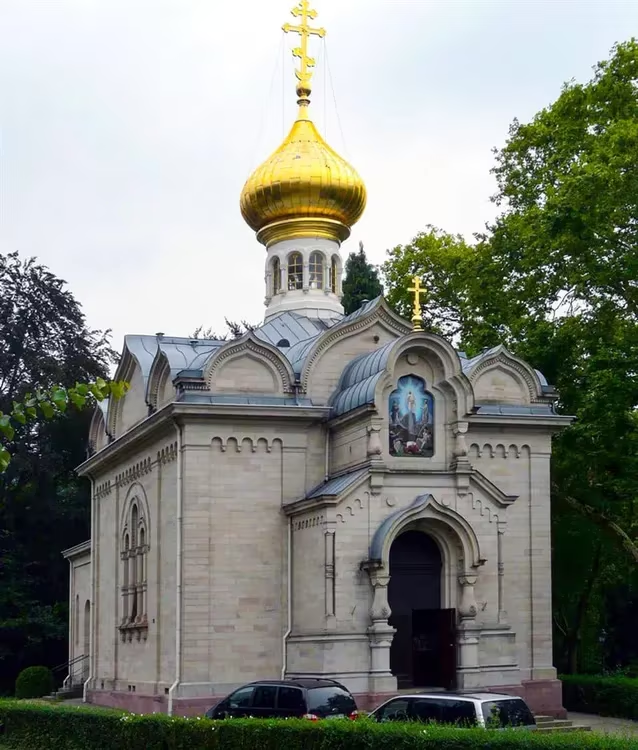
The temple was built according to the canons of the traditional northern Russian style at the end of the 19th century. Many tourists and pilgrims associate the one-domed Church of the Transfiguration with pre-revolutionary Russia. Donations to the temple were made by representatives of the Romanov, Trubetskoy, Stolypin, Gagarin dynasties. Its construction took a year.
The shape of the cross was chosen for the building, marble was used as the main finishing material. The architectural solution, where 6 columns hold the vault, made it possible to distribute the load on the foundation, reduce its destruction from the movement of groundwater. The temple became the spiritual heart of the Russian community in Baden. The walls of the building remember Nicholas II and his wife, who, 20 years before their death, visited the resort town together.
During the world wars, precious temple utensils, some of the icons, disappeared forever. Today, the onion dome is adorned with a different gilding, the previous one having been removed and melted down. The stained-glass windows have miraculously survived. The mosaic icon of the Transfiguration of the Lord, the stone iconostasis remained unchanged. The building and property of the Orthodox community have been the subject of litigation for 20 years. As a result, the church was transferred to the ownership of the Russian Orthodox Church Abroad.
Frieder Burdy Museum
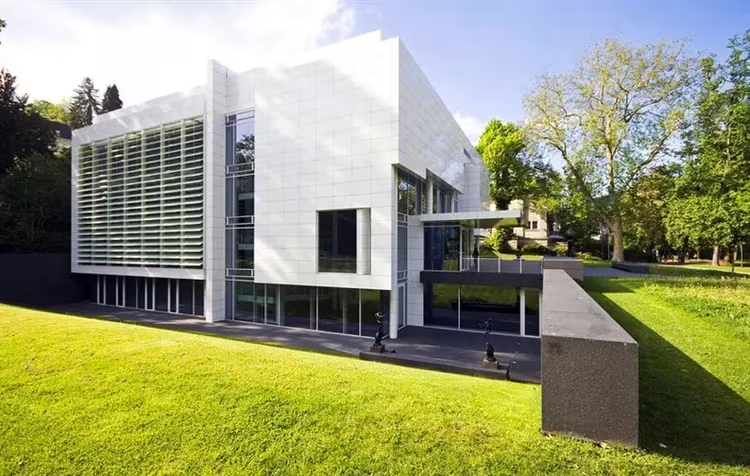
The opening of the art museum was a real sensation. The huge white building impresses with its simple form, functionality and practical layout. Nearby is another Baden-Baden museum – the Kunsthalle, where a glass bridge leads. 2 main and 2 additional exhibition halls, whose area exceeds 1000 square meters, are always filled with visitors.
The collection of Frieder Burda – a philanthropist, founder of a famous publishing house – has been and remains one of the best collections of works by German expressionist artists. It became the basis of the funds of the museum of the same name. Fans of avant-garde art tend to compare the white building to a Picasso painting. There is some truth in this: the work of the Spanish artist inspired Frieder Burdu to experiment. He spared no expense in acquiring paintings by Pablo Picasso, whose philosophy is close to that of Richard Miner, the building's architect.
The exhibition halls contain unique paintings, installations, and sculptures. Experts call the paintings of Pablo Picasso the true gems of the collection. The museum funds are replenished with new masterpieces, and exhibitions often do not have enough space. In such cases, part of the exhibits is hosted by the Kunsthalle.
Funicular Merkurbergbahn
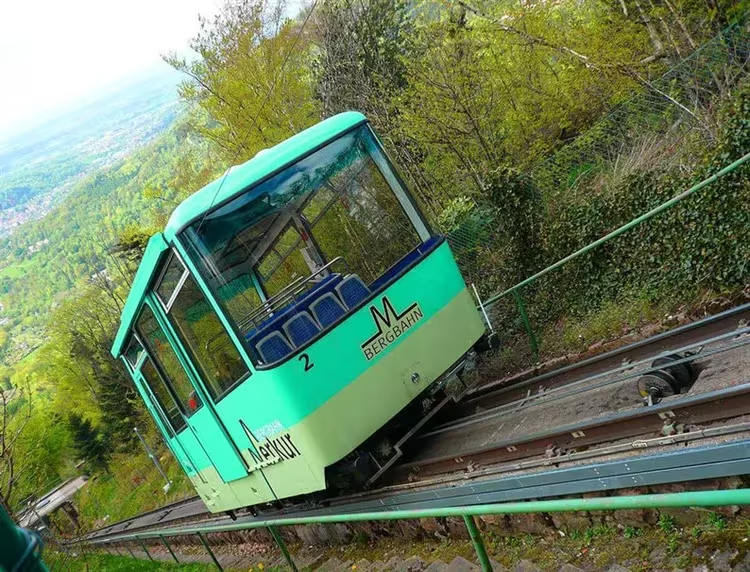
It's great when you have the opportunity to look at the famous resort city from a bird's eye view. Mount Merkur is beautiful at any time of the year. She owns the laurels of the highest point of Baden-Baden. The mountain is hundreds of millions of years old. The cable car to its top has been operating for more than a century. What awaits travelers who reached the highest point in the area in 5 minutes? Restaurant and great views.
The funicular car can accommodate 30 passengers. It provides standing and seated areas. The break between “flights” is no more than 15 minutes. It is also possible to climb to the top on foot along special routes. Practical Badenese have provided a high-speed elevator for those who are not satisfied with both modes of transportation.
Gönneranlage park
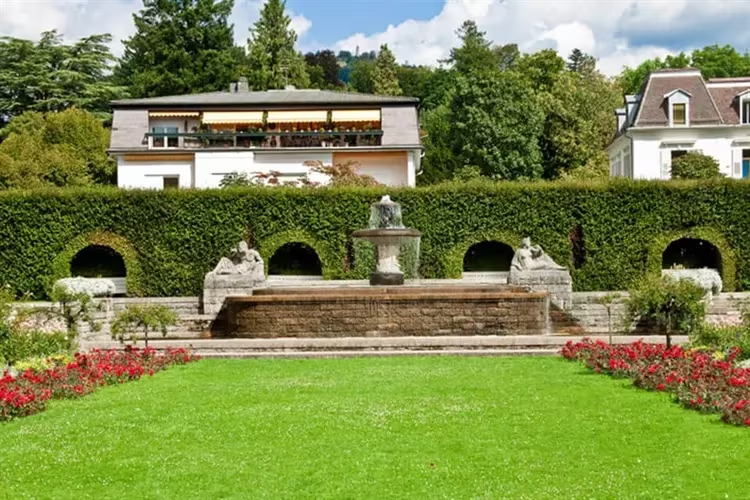
The beauty of roses surprises, delights, inspires the creation of masterpieces of landscape design. A vivid example of this is Genneranlage Park, whose history began in 1909. It took 3 years to open it, and the work did not stop there. Since the 50s, roses have become the main ones in the park area, which occupies 1.6 hectares. The park is named after its founder, the mayor of Baden, who did everything possible to create a new attraction in his beloved city.
Today, over 10,000 roses grow in the Genneranlage. From May to October, the air is filled with the scent of flowers. The number of cultivated varieties of roses is about 400, but this is not the limit. Every year, breeders hold professional competitions in the park, and samples of the best plants remain in the Genneranlage. The park was conceived as a place of respectable recreation. Sculptures, benches, wide alleys, a sea of flowers – this is exactly what this amazing place looks like from spring to autumn. On the territory there is a tennis court, a mini-golf course.
Old castle Hohenbaden
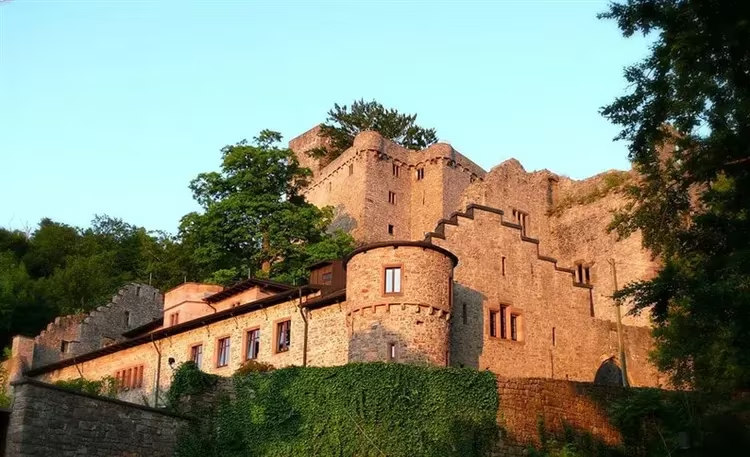
The Buttert Rocks are covered with forests, which makes them even more solid and majestic. At the top is Hohenbaden Castle, as if descended from illustrations of historical novels about beautiful ladies and noble knights. It was erected about 900 years ago at an altitude of 4100 meters, for 400 years it served as the residence of the Baden margraves. Part of the castle is in ruins, but the towers and walls are perfectly preserved. Fires broke out repeatedly in the building, the latter destroyed all valuable property.
The castle seemed like a real architectural sensation in the Middle Ages. It's not just the unique layout, 100 rooms, increased defense capability. During the arrangement, areas for close combat, traps, secret passages, halls for magnificent balls were traditionally provided. However, the presence of sewerage made it an exception among such structures, where there were no minimal amenities.
Today the castle is open to tourists. It attracts lovers of historical reconstructions, fans of wind music. The Aeolian harp in the Noenbaden Knights' Hall is not a historical monument. It was installed by the famous musician Rüdiger Oppermann. Wind and air vibrations create a stunning sound effect that enhances the mystical atmosphere of the castle, where, as the townspeople assure, there are ghosts of knights.
new castle
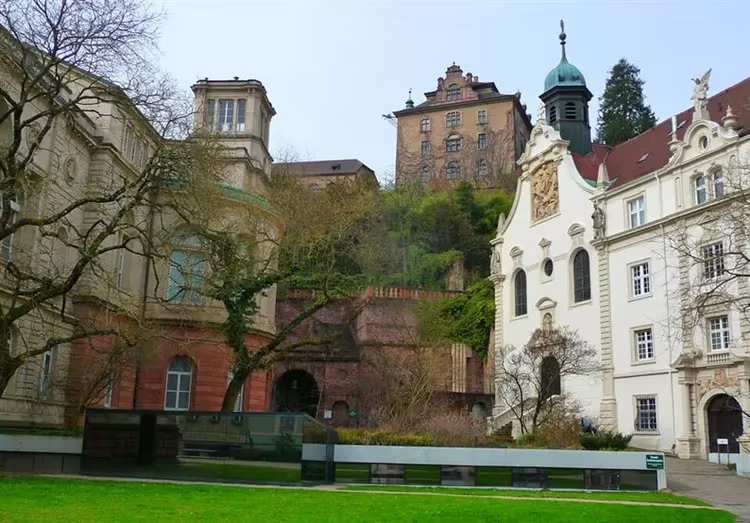
The place where the fortification was erected was the Florentine mountain. The construction of the castle dates back to the 14th century. It was the residence of the rulers of Baden, served as a repository of a unique local archive, a museum. The Neo-Renaissance ceremonial halls restored 200 years ago, basements, and part of the guest rooms are perfectly preserved. The fate of the building, whose magnificence amazes the residents and guests of the city, was bizarre. It can be summed up in two words: endless renovation.
The owners of the castle rebuilt, changed the interior, improved defenses. The structure escaped destruction, fires. It is sad that architectural innovations have destroyed much of the unique medieval heritage. Huge amounts of money were required for restoration and repair work. The local authorities did not have enough funds to maintain a unique architectural monument. Attempts by its successive owners to retain ownership of luxury real estate turned out to be a failure.
Mystically inclined Germans sometimes tell tourists about the curse of the new castle. Words can be treated like a fairy tale, but facts are stubborn things. The building was bought by a Kuwaiti company and after 13 years was close to ruin. The plans of investors seemed quite feasible: to equip an elite five-star hotel. The official opening of the latter was postponed several times.
Roman Irish Baths Friedrichsbad
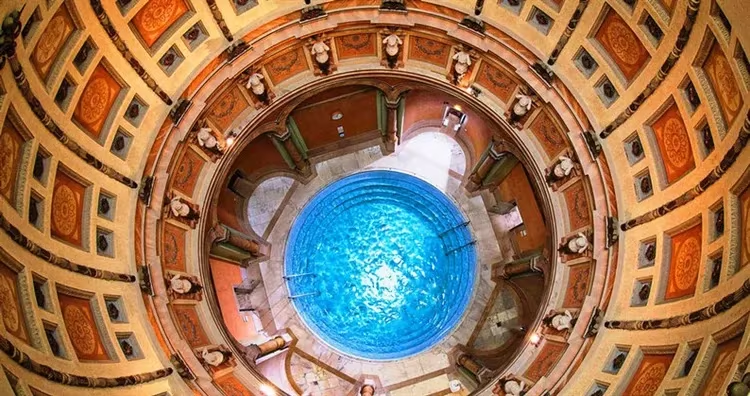
The thermal complex is reminiscent of the luxurious palaces of the French aristocrats, the palaces of the Roman nobility. “Caracalla Terme” – within walking distance from the Friedrichsbad baths. This neighborhood does not reduce the popularity of the second institution, whose main customers are residents of Germany. The age of the building: 150 years. It is recognized as a unique monument of antiquity; it was not damaged during the wars. Access to tourists in the baths is closed. What to do when there is a desire to see luxurious mosaics, wall decoration from a special type of marble, charming interiors in the style of the high renaissance?
Visit a unique place and take treatments. There are own system of pools, massage, beauty parlors, special drinking columns with healing thermal water are installed. The Roman-Irish Baths are open daily until 20.00. Access to children under 14 years of age is prohibited. The Germans joke: it will take a lifetime to test all the spa services offered here.
Hall of Music Festivals
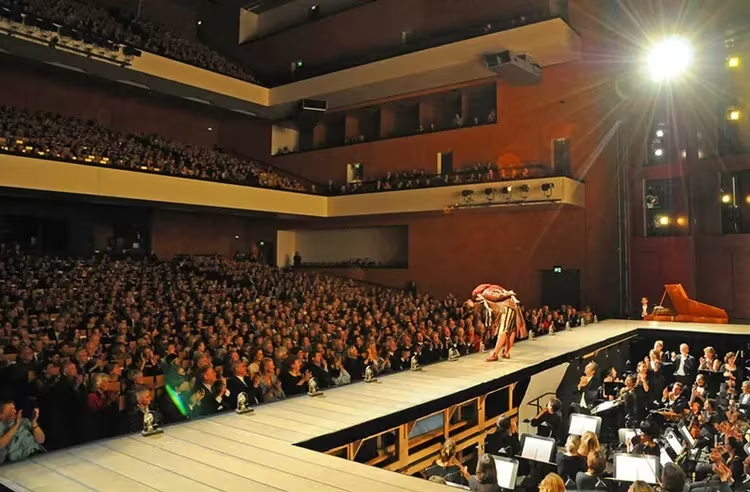
2500 people can gather in the building at the same time to enjoy musical masterpieces. It has a cozy children's theater, a chic restaurant. Since its opening in 1998, the hall has been recognized as the largest in Germany and loses to similar institutions in only one way: the Festspielhaus does not have the opportunity to maintain a theater troupe or orchestra. This does not prevent the hall of music festivals from being the center of attraction for the German, European creative elite, intellectuals, fans of jazz, classical music.
The unique acoustics of the building delight professionals. It is hard to believe that the building of the Baden railway station became the basis of the unique object. The Festspielhaus successfully operates without government subsidies, annually holds 4 large-scale music festivals, and is a favorite venue for performances by world-famous stars. Private donations, income from ticket sales are the 2 main sources of existence of a unique object. The townspeople were able to prove that art can successfully develop without the help of the state.
Ruins of Roman baths
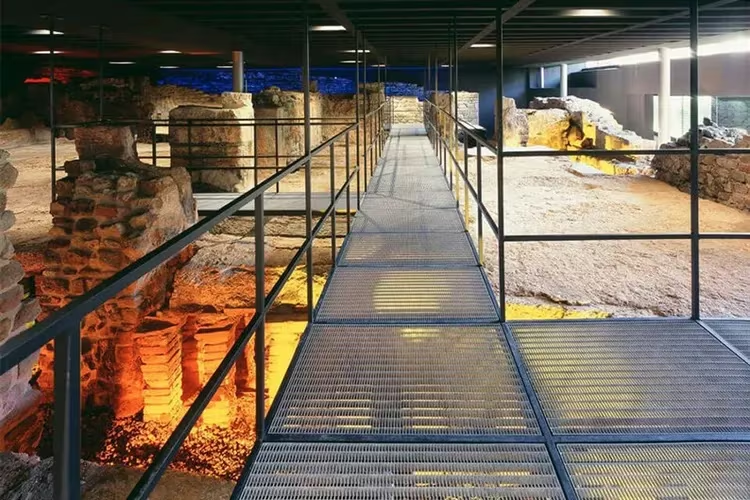
In various parts of the city there are remains of ancient buildings. Historical monuments attract the attention of tourists and treasure hunters. The latter managed to inflict multimillion-dollar damage to Baden in the last century, because the antique statues and decorative elements found by the “black diggers” disappeared forever. The ruins of Roman baths were discovered by accident in the 19th century. The discovery confirmed the well-known fact: the territory of Germany was captured by the Romans.
Citizens of the ancient great empire could not imagine life without water-hygienic procedures. The same can be said about the soldiers, whose rights were limited and at the same time they opened free access to the baths. It is noteworthy that horses of legionnaires had a similar privilege, special pools were equipped for animals next to the barracks.
Baths performed the tasks of cultural and leisure centers. A special place in the buildings was occupied by libraries, rooms for music lessons, sports grounds. Baths were the first structures in the territories conquered by the Romans. The age of the ruined buildings dates back to the 3rd century BC. Thousands of years later, ruins remained of the splendor. However, fragments of walls, communications, pools turned out to be enough to organize a popular museum dedicated to ancient baths.
Ruins of the Yburg fortress
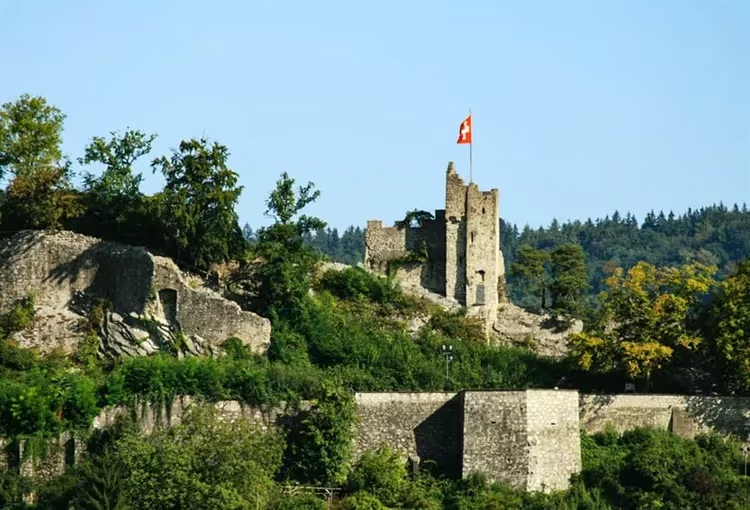
Longing for knightly romance has turned the remains of a defensive structure at an altitude of 515 meters above sea level into the most romantic place in Germany. The exact time of the construction of the fortress is a matter of heated debate. The towers and walls were erected before 1245, and by that time they were fulfilling their tasks. The fortress was the property of the Baden margraves. The valiant Count Yburg went down in history as the first appointed “head” of the fortress.
The construction has saved local residents from invaders for centuries. The latter partially destroyed walls and towers. 1689 was a fatal year for the fortress. Fragments of the walls remained from the building after the hostilities. The towers survived miraculously. After 150 years, lightning struck one of them. The owners considered it a sign from above, abandoned plans for the restoration of the fortress and the tower that had split into 2 parts. Today, there is a restaurant on the territory of the fortress, which serves traditional German cuisine.
Train Station
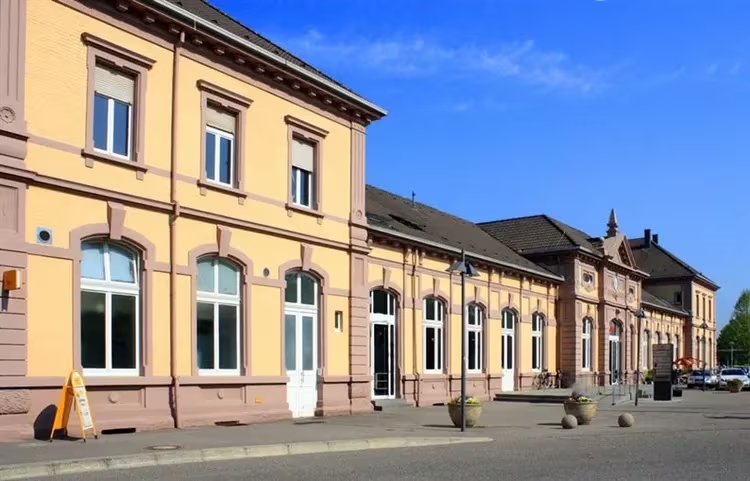
In old European cities, such objects are usually located in the center, in Baden-Baden – on the contrary. Distance between the settlement and the station: 5-6 kilometers (depending on the chosen route). Initially, the building was wooden, then brick. At the end of the 19th century, the railway station acquired a modern look.
The station complex resembles a miniature palace. The building was created according to the canons of the neo-Renaissance. The 2nd floor is occupied not only by waiting rooms, there are restaurants, shops, a mini-hotel. The length of the complex: 100 meters. It is one of the historical monuments protected by the state.
Water cascade “Paradise”
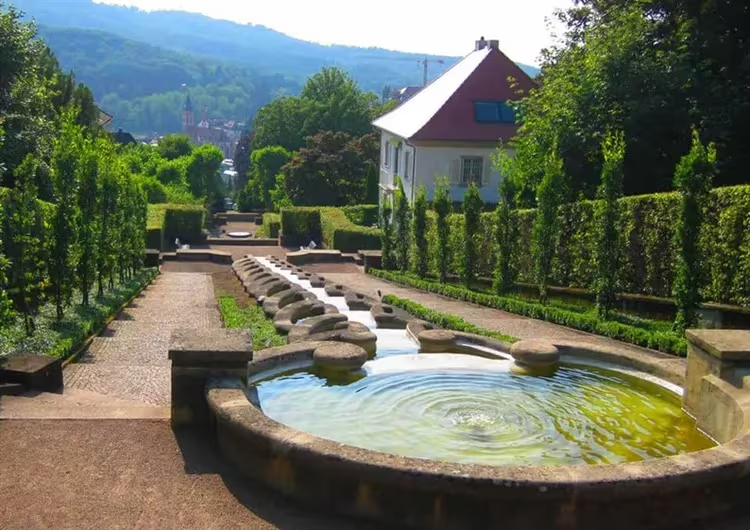
A special relationship to water is part of the Baden mentality. Residents of the city are well aware that unique natural resources generate income. The people of Baden are joking: 12 springs were not enough for the city and in 1925 a heavenly hydraulic structure appeared. The name “Paradise” in Russian means: “Paradise”. The water cascade corresponds to the aesthetic canons of the Renaissance. It consists of fountains, pools, surrounded by a park area. The main part of the landscape complex: an artificial 40-meter waterfall.
“Paradise” was created in the last century, functioned until the Second World War. The city was not able to restore the mini-park and cascade, whose construction defects arose from the characteristics of stamped concrete. The problem was solved by the beginning of the 20th century and the Paradise was given a second life.
Alley Lichtenthaler
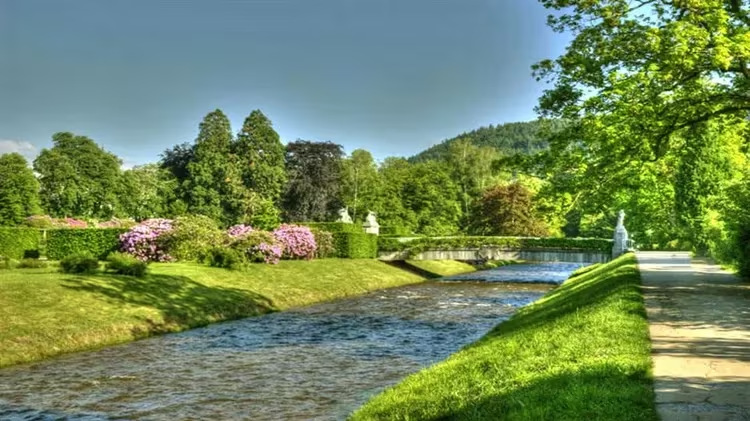
Its age exceeds 360 years. A favorite place for walks and romantic dates, the alley gradually became the center of the Baden park. It passes near the main attractions of the city, connects Goethe Square and the ancient monastery. Along the alley, whose length exceeds 2 kilometers, there are busts of great German musicians.
Oaks, the first trees planted near the pedestrian area, are majestically beautiful at any time of the year. They symbolize longevity and are the mascot of the magnificent park. In the warm season, the landscape complex is buried in flowers. There are no noisy rides in the park. The river Os flows nearby, through which graceful bridges are thrown.
Art Hall
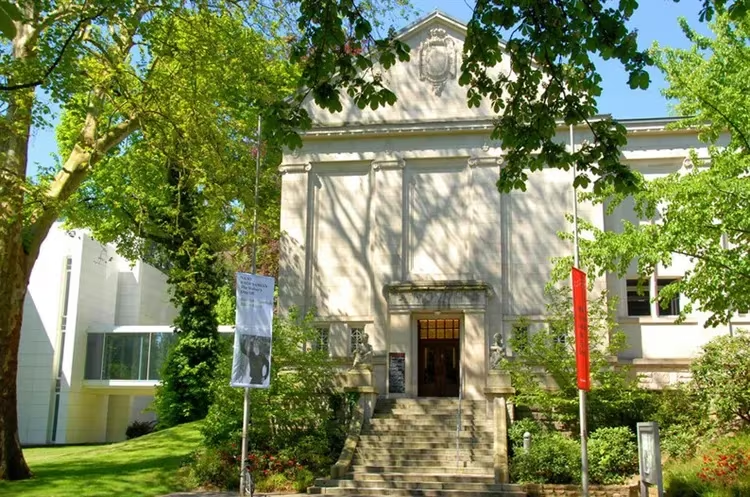
Translated from German, the word means: “showroom”. This is the name of museums without their own funds, whose financial capabilities do not allow creating conditions for storing their own collection of works of art. The Kunsthalle is located next to the Frieder Burda Museum. The buildings are connected by a glass bridge. The opening of the first took place in 1909, the second – a century later. The construction of the Kunsthalle was called a challenge to public taste. The absence of decorative elements on the facade, clear laconic forms, asymmetry, and strict style still cause bewilderment.
The 2 main halls of the Kunsthalle occupy the main part of the ground floor. However, the planning surprises begin in the neighboring rooms: the octagonal small halls have an interesting effect on the visual perception of the space. Visitors at some point begin to feel as if in another reality. The museum organizes exhibitions of works of art without limitation of eras, styles, trends. The activities of the Kunsthalle include the organization of lectures, creative meetings, concerts, film screenings.
drinking pavilion
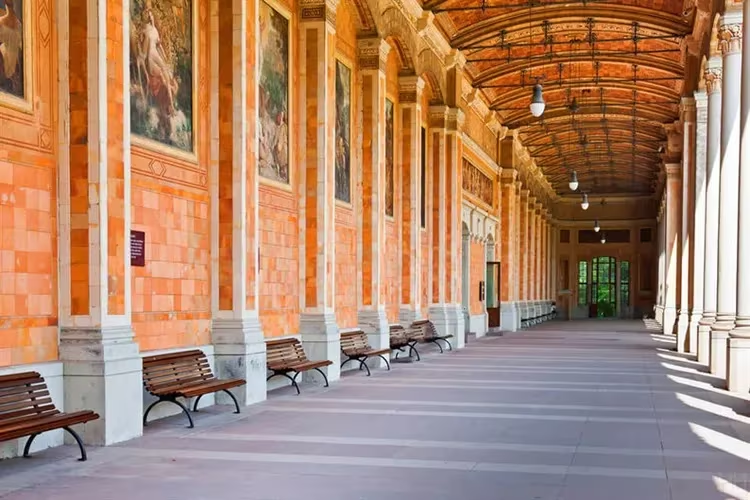
The Drinking Pavilion is located not far from the already famous Lichtental Alley. Its length reaches 90 meters, and these are 16 columns. Each column has a fresco that tells the story of one of the urban legends. But the highlight of this pavilion, of course, is tasty and healthy drinking water.
In the pavilion there is an adit with mineral water from two valuable springs in Baden-Baden. Hot water flows from them, the temperature is about 70 degrees. It tastes a little salty, but there are rumors around the world about its many medicinal properties. Missing this opportunity is simply unforgivable.
Sturdza Chapel
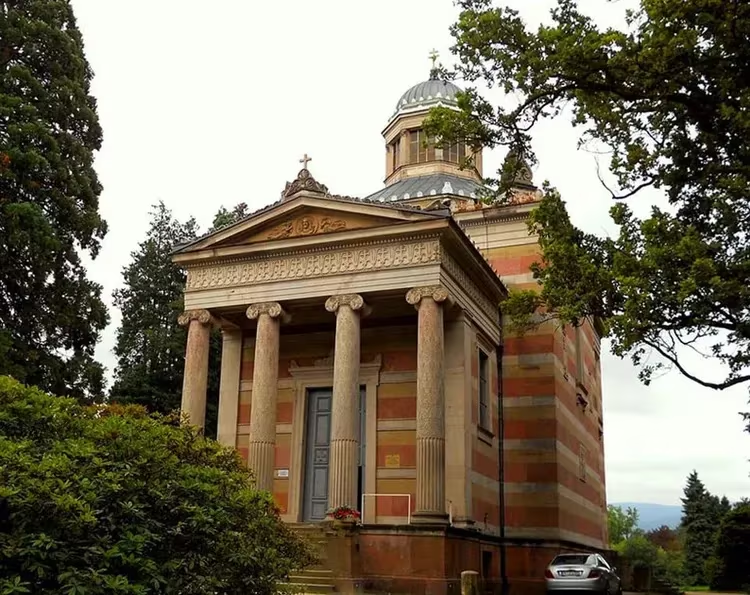
The Orthodox chapel in the late classical style recalls the fate of the Moldavian crowned dynasty of Sturdzov (Shtourdzov). The events took place 55 years before the execution of the Romanov imperial family, whose representatives also loved quiet Baden. The Sturds managed to escape from the state engulfed in revolution, but the young heir to the family suddenly died. Grief-stricken, the parents decided to perpetuate the memory of their son in a friendly German city: they donated funds for the construction of the temple and personally monitored the progress of the work.
The porch of the building (its main colors are white, red, brown) is supported by columns. The height of the chapel (excluding the only dome with a cross) reaches 24 meters. The interior decoration of the chapel corresponds to the oriental aesthetic canons.
Brahms House Museum
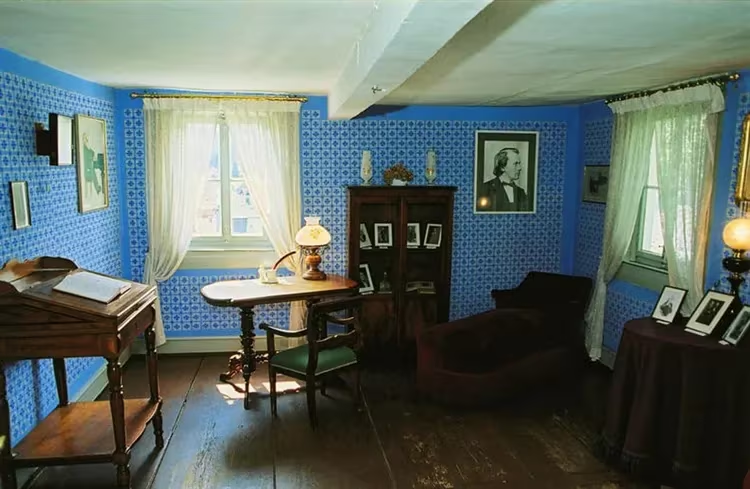
The bright house like a magnet attracts admirers of the German composer. The people of Baden managed to save the building and the rooms where Johannes Brahms lived. The house was threatened with demolition, but the people of Baden raised funds for restoration, perpetuating the memory of “the last knight of romanticism in music.” In the resort town, the composer found peace of mind and inspiration. For 9 years in a row, he came to Baden every summer, walked along the embankment of the Os River, and talked with the townspeople.
First and Second Symphonies, German Requiem. The creation of great works is connected precisely with the house number 8 on Lichtenthaler Alley. The Baden people managed to preserve the composer's personal belongings, scores, and the special atmosphere of antiquity. Upon entering the building, one gets the feeling: Brahms never left it, the house will soon be filled with the sounds of newly composed music.
Hospitalkirche
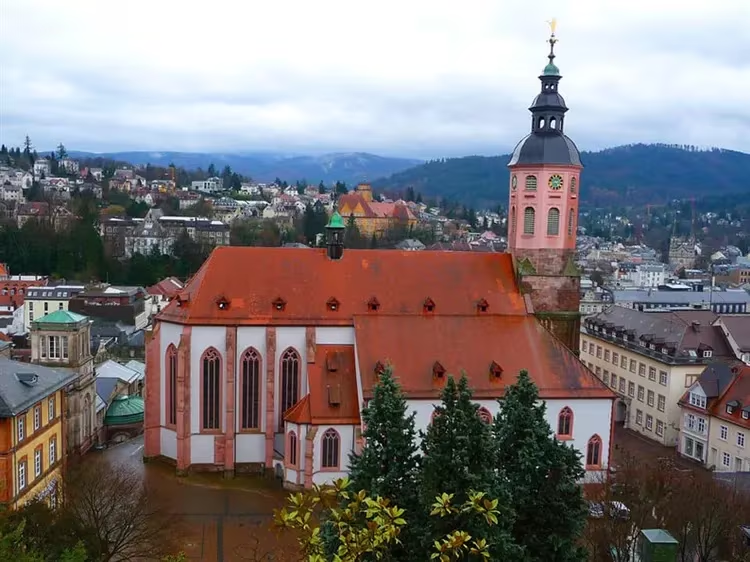
The hospital church is called the most elegant city temple. The construction of the Spitalkirche dates back to the 18th century, and the time of the foundation of the parish causes controversy among historians. The church was built in 2 years. In order to have time to plaster the walls, complete the paintings, assemble the organ, the craftsmen worked around the clock. Previously, there was another hospital church attached to the Baden hospital. When divine services began in the new church, it was closed, and the first one was called the Spitalkirche.
An important part of the interior of the temple are unique frescoes on biblical scenes, whose pristine beauty was preserved by parishioners in the most difficult times for Baden. During the Second World War, services did not stop in the hospital church. Today, the temple performs the tasks of an educational, cultural Christian center. Every year, organ concerts in the Spitalkirche gather fans of sacred music.
Ruins of the fortress Alt-Eberstein
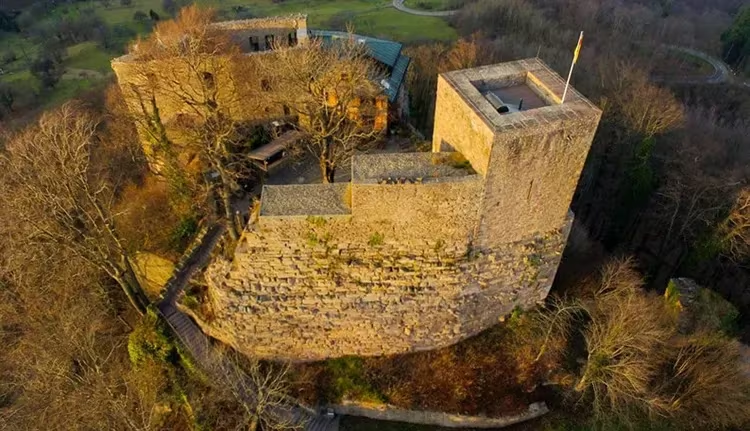
On the site of the ruins there was a luxurious residence of a representative of the famous noble family of the Ebersteins. Some sources call the building a “fortress”, others call it a “castle”, which does not reduce the attractiveness of the ancient ruins for fans of chivalric novels. The Eberstein family dates back to the founding of the Holy Roman Empire. His male line was interrupted in the 17th century. Passions boiled around the famous fortress in the 11th-13th centuries: the Ebersteins were accused of conspiracies, witchcraft, and they tried to seize their lands.
They tried to take the fortress earlier by storm, as evidenced by the miraculously preserved frescoes on the walls of the building. Fragments of the walls allow us to conclude that the structures were erected by skilled masons who knew the secrets of especially strong mortars. The 18-meter tower is not an architectural delight: from its height, an excellent view of the surroundings opens up, which allowed the defenders of the fortress to notice the approach of enemies in a timely manner. There is a dungeon on the territory of the complex, secret stairs and passages lead to it.
Lake Mummelsee
The most magical and beautiful place in the city is Lake Mummelsee. It is also called “white water lily”. It is located under the city near the Black Forest mountain road, but, nevertheless, it is very popular. The lake is located at an altitude of more than a thousand meters, and is surrounded by a black forest and interesting local legends.
Rumor has it that real mermaids live in the lake and the Lord of the Lake, who comes to the surface at night. Here the most crystal water and clean air. Tourists can have a short rest or picnic here, imagining how many years ago the famous Grimm brothers were looking for inspiration here.