
What to see in Amsterdam in 3 days on your own – route, photo, description, map
Many tourists come to the capital of the Netherlands for a short period of time. I would like not to miss the opportunity to get to know the city. But what to see in Amsterdam in 3 days and where to go? If you plan your route correctly, you can see many interesting places in such a period of time. So that you do not waste time on this, we have already prepared a guide. Everything has been thought of!
1 day
The day of arrival in the capital of the Netherlands usually turns out to be quite troublesome. The road from the airport, check-in to a hotel takes time, and you just want to relax after a long trip. Therefore, it is especially important to make a route for walking around the city so that you spend less energy and see as much as possible. It is best to hit the road from Leiden Square. It is quite interesting in itself, there are many cafes where you can have a bite to eat, and 5 tram lines intersect here. But the main thing is that this square is like a gateway to the historical part of the city.
Amsterdam City Card for 24, 48, 72 or 96 hours – from 60 €
Public transport ticket – from 7.50 €
Holland Pass: Amsterdam and Holland – 40 €
Public transport and Hop-off boat ticket (24 hours) – €32.50
Leiden Square
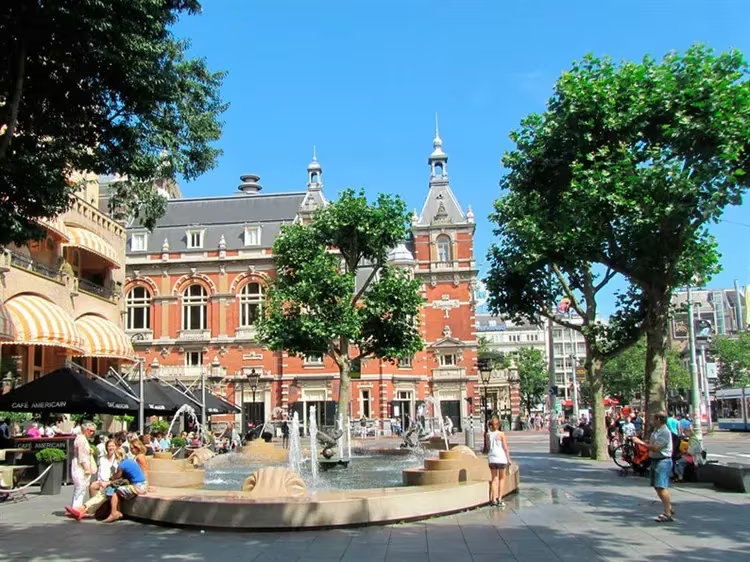
On Leiden Square, life is in full swing almost around the clock. Street performers perform here – fakirs, jugglers, singers – you can see the whole performance. Around the square there are enough clubs and cinemas, shops and art cafes. It is here, at Bulldog Palace, that you should buy a coffee as a memento of Amsterdam. Also here are the beautiful building of the City Theater, and another theater that bears a name similar to the square, several rock clubs and a street bureau where you can buy tickets for performances.
flower market
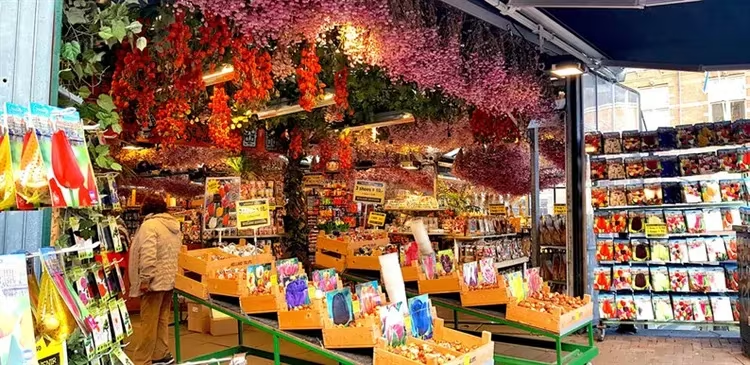
Leiden Square is within easy reach of the Flower Market. It has huge popularity: even those who have never been to the Netherlands have heard of it. After all, its age is measured in centuries. Even in the 17th century, merchants came here in boats and sold flowers. The flower market is still “standing on the water”, that is, it is placed on fixed barges. Here you can buy souvenirs at quite affordable prices – from magnets with views of the Netherlands, to T-shirts and baseball caps, buy cheese, even buy hemp seeds – they are sold legally in the country.
But the main thing that buyers come here for is, of course, flowers. Moreover, cut ones make up only a small part of the market assortment. Basically, bulbs of various varieties are sold here. And the most popular are tulips. The price of a package that includes several bulbs is 3-5 euros. Planning to take more? You will definitely get a discount.
Church De Kruytberg
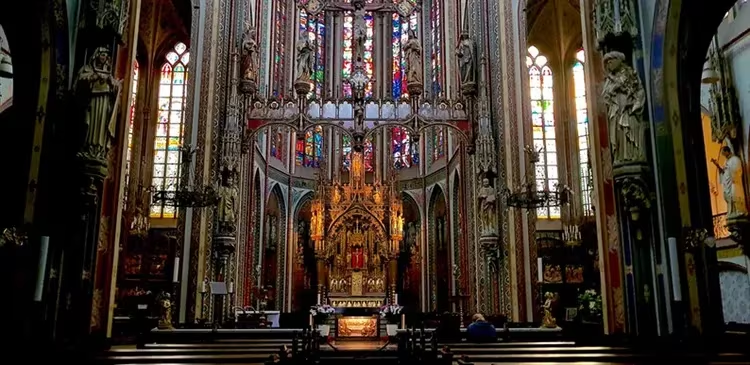
This is a famous Catholic church, consecrated in honor of St. Francis Xavier. The common name “Kreuterg” is translated as “chalk mountain”. At this place, there used to be a chalk merchant's house, and then there was a secret Catholic chapel in honor of Jesus Christ. At that time, Catholics in the Netherlands could only pray in secret – the Protestants were in power.
The Church of St. Francis was built in the 80s of the 19th century, the project was carried out by the architect Alfred Tepe. Today, both believers and ordinary tourists can come here. At the end of the 20th century, the church was restored – it took almost 24 years. But now you can admire the magnificent paintings and stained-glass windows, stucco and the main altar. It is so beautiful here that it is simply impossible to forget this place.
coin tower
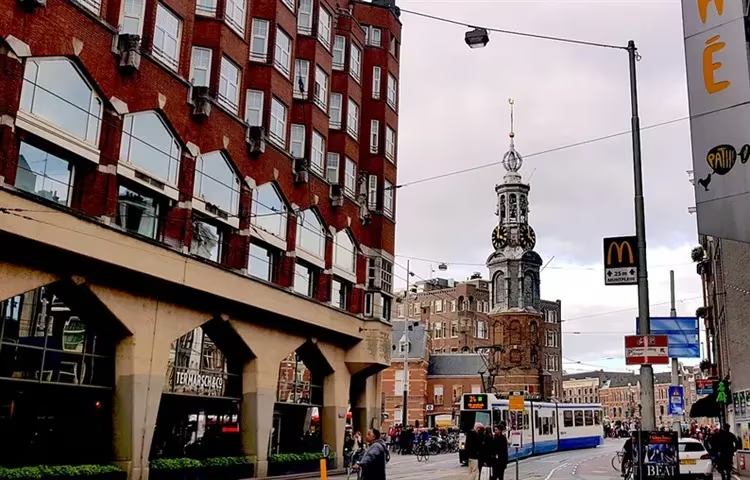
This is one of the oldest buildings in the city. In the 15th century, Amsterdam was surrounded by reliable fortress walls, and the entrance to the city was guarded by sentinels on watchtowers. In 1618 there was a major fire. Only part of the western tower was not damaged by the fire. Later it was tuned in the Renaissance style. They installed an elegant clock tower and a spire on top. The bells ring every quarter of an hour, and on Saturdays you can hear a professional bell ringer playing. In the 17th century, during the war with France, the Mint was evacuated to Amsterdam. He was located in the guardroom next to the tower. Thus the name of the tower was born. Today this place is very popular. The tower is located at the confluence of the Singel Canal with the Amstel River.
Speuil Square and the Beguinage Courtyard
The name Spey Square comes from the word “spillway”. Once in these places, the spillway was actually the southern border of the city. In the 80s of the 19th century, it was filled up and a square was laid out here. Now it is a favorite place for book lovers. Book and art fairs are regularly held here, and there are countless bookstores in the area. The statue of a street boy, installed here, is a real symbol of the inhabitants of the city, who are not accustomed to become limp under any circumstances. The old Lutheran church, the main building of the university and the unusual Helios building will also be seen by everyone who comes to Spey Square.
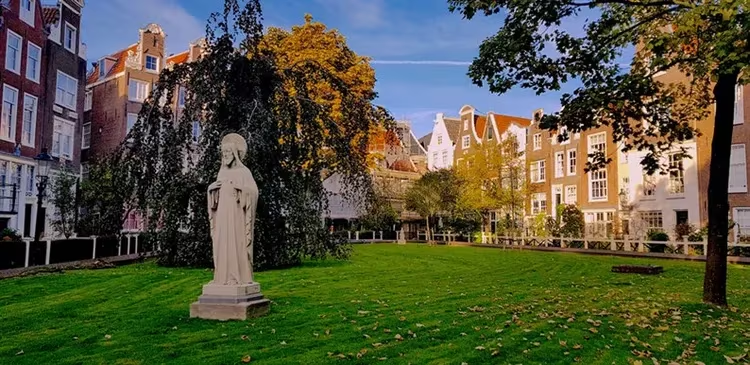
The main entrance to the Beguinage courtyard is also located from the side of the square. It is an arch decorated with stucco. Beguinage – that was the name in the Middle Ages of the place where women lived who did not take tonsure, but behaved almost like nuns. Beguinage in Amsterdam appeared in the 14th century. Today, there are no more runes here, but several dozen single women live. The center of the courtyard is a lawn on which stands a statue of Jesus Christ. Nearby are a Protestant church and a cemetery. And in one of the houses there is a Catholic church. Also here you can see an old wooden house, it belongs to the 16th century.
Dam Square
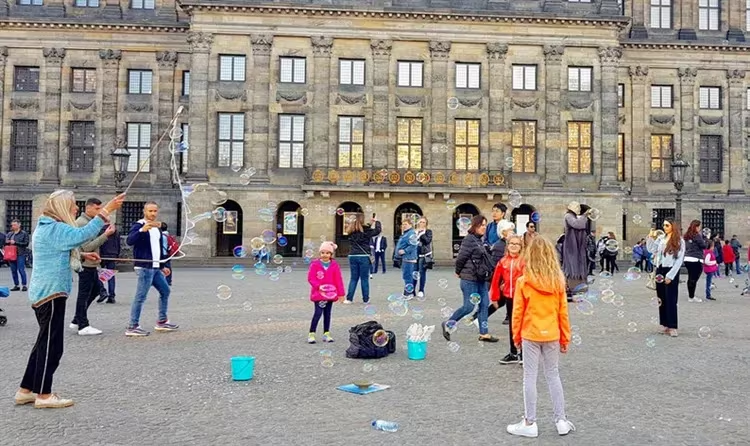
The name of the square is deceptive for the Russian ear. No, we are not talking about the beautiful ladies of past centuries. Dam means “dam”. In the 13th century, a dam appeared here, which connected the settlements located on different banks of the Amstel River. The word “dam” in translation into Russian just means “dam”. The dam expanded and strengthened, eventually turning into a square. Now there was a brisk trade, and the Fish Market became famous even outside of Amsterdam.
Of course, there are many sights to see here. For example, the Gothic Nieuwekerk church, built at the end of the 14th century. Here those who are to govern the country are crowned for power. Arouse interest among tourists and Madame Tussauds Wax Museum. As well as the Royal Palace (former town hall) – a building of the 17th century. The most modern monument is the National Monument, dedicated to those who died in World War II.
Tickets to Madame Tussauds and the Amsterdam Dungeon – 30 €
Red light district
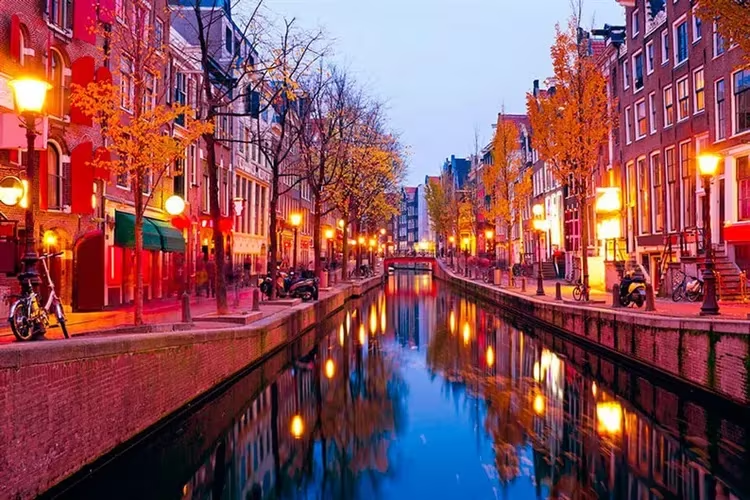
The whole world knows about this place. And a person who has visited Amsterdam will definitely be asked if he visited the Red Light District. Although the inhabitants of the country themselves do not see anything surprising and exciting in this, prostitution in Holland is officially allowed, moreover, it is inscribed in everyday life. Prostitutes are the same taxpayers. The risk of getting sick, thanks to women of easy virtue, is also minimized – all these ladies undergo regular medical examinations. On average, a lady charges a client 50 euros for a 15-minute visit, and a transsexual – 30 euros.
Those who find themselves in the Red Light District during the day – we can recommend returning there at night – the spectacle will be much brighter. The history of the quarter is also impressive. Prostitutes rented clients here already in the 14th century. They were most popular with sailors who returned from a long voyage. For sailors, local taverns were opened. Today, as soon as it gets dark, it seems that a holiday begins in the Red Light District. The music is playing, the lights are on… Girls – blondes and brunettes, whites, blacks and Asians, large and petite, thin and fat, sit on high chairs in beautifully illuminated shop windows.
Not everyone who comes to the Red Light District becomes their client. Most are just tourists who have come to stare (by the way, photographing girls is prohibited), but the ladies smile and wink at everyone without exception. When a client comes to the girl, she lowers the curtain. During the day, the Red Light District is empty, although some prostitutes continue to work. If you're lucky, you can get to the “open day”. In this case, you can look into the girls' rooms just for the sake of interest, and even chat with the beauties. This is done so that people do not treat priestesses of love as second-class. Many of the girls are very pleasant companions.
Oudekerk Church
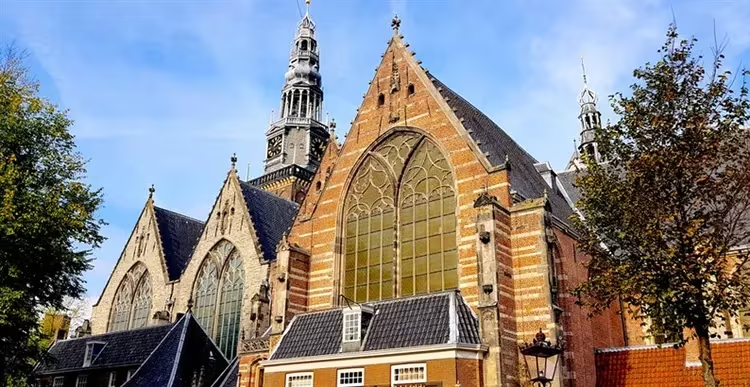
This name translates as “old church”, and the Oudekerk fully deserves it. The chapel appeared here at the beginning of the 13th century, and the stone church began to be built in the 14th century. There is no older building in the city. In order for the weak soil to withstand the weight of the temple, it was repeatedly completed and rebuilt. In its final form, it took the form of a cross. In the 16th century, a Renaissance bell tower was erected, its height is 67m. The temple has a unique acoustics. There are 3 organs, the largest of them is considered the best in Europe. There is also a carillon from the 17th century. And a 15th century bell.
The walls of the temple are whitewashed, but there are stained-glass windows of the Catholic period, they were made in the 16th century. For several centuries, the temple served as a cemetery; many famous personalities rest here, for example, Saskia, the wife of Rembrandt. In the second half of the 20th century, the temple was closed for renovation, and reopened in 1979. Today, not only pray here. The Oudekerke hosts an international organ music festival, honorary ceremonies and even light installations.
Central station
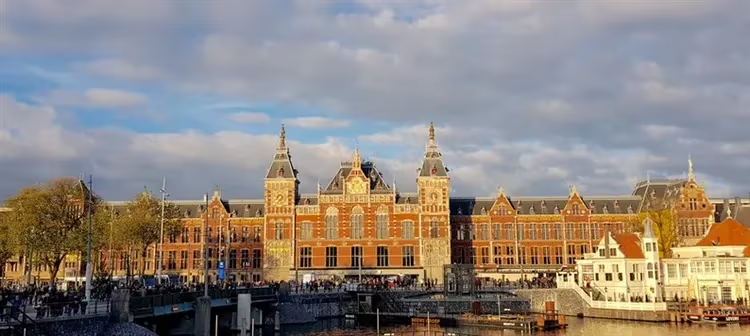
Even those who came to Amsterdam by plane should visit the Central Station. The building, built in the 19th century according to the design of Peter Kuipers, is so beautiful that it evokes an association with an old castle. An additional effect is given to it by evening illumination. The station is a place where the paths of a variety of transport converge. Trains and electric trains, intercity buses arrive here. There is a metro station, and next to the pier where liners and ferries stop.
On one of the towers of the station you can see a clock, and on the other – a weather vane that indicates the direction of the wind. Inside the station, today is adjacent to yesterday. For example, there are ticket machines here, but there is also a piano that anyone can play. Do not forget that the people of Amsterdam are big fans of bicycles. For two-wheeled transport there is a spacious parking lot.
Church of St. Nicholas
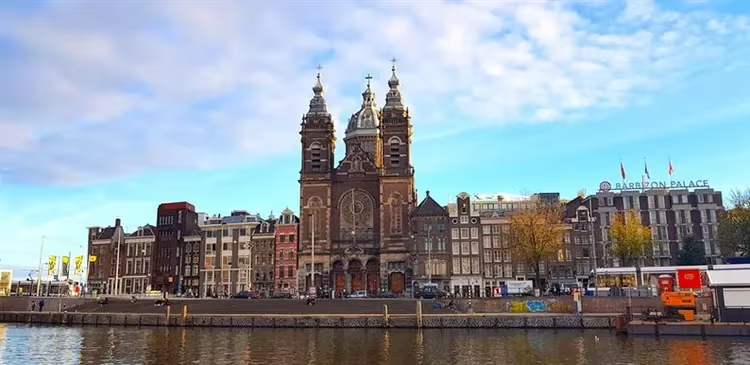
The church is located in the ancient part of Amsterdam and has the official name “Church of St. Nicholas in the Walls”, because once it was surrounded by the walls of the fortress. The church of St. Nicholas was built in the second half of the 19th century according to the project of the architect Blais. It has 3 towers and a very beautiful rose-shaped window depicting Jesus and His disciples. Also on the pediment you can see the sculpture of St. Nicholas. He has always been considered the patron saint of sailors, and in Amsterdam, a city standing on the water, he was especially revered.
Canal Cruise
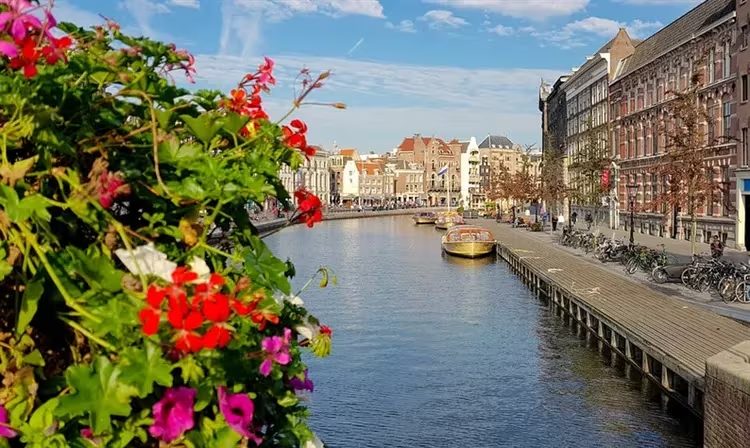
It is simply impossible to visit Amsterdam and not touring its canals. Even if you stay in the capital of the Netherlands for only a few hours, you should buy such an excursion. It's inexpensive and won't tire you out at all. But there will be impressions – more than enough. Tourists have a wide choice – several hundred boats and ships ply the canals. An hour walk costs about 15-16 euros. You can also save money by buying a combined tour that includes a visit to the museum and a canal cruise.
Those who travel with a group can rent a boat, which will be led by a professional captain. A two-hour trip will cost 200-250 euros. The most convenient way to start your journey is from the Central Station. Boats leave every half an hour, and in the high season there are queues of people who want to ride. You can travel in any weather. In rain and strong winds, boats are covered with glass roofs. Evening cruises are more of an entertainment nature. On board they offer a full dinner and wine, or a lighter option – snacks, pizza, alcoholic drinks. The cost of such a cruise is slightly higher – about 80 euros.
Active tourists who want to see as much as possible are advised to take a ticket for a water taxi. A ticket for a day costs about 27 euros. You can get off at stops, go sightseeing, then come back, get on the boat and go on. You can go on cruises even in the cold season. In winter, evening cruises are especially spectacular during the Festival of Lights.
4-Course Dinner Cruise €79 Evening Pizza Cruise
€39 Open Top Canal Cruise €13 Canal Cruise € 13 1.5-Hour Evening Canal Cruise €19.50
Sex Museum
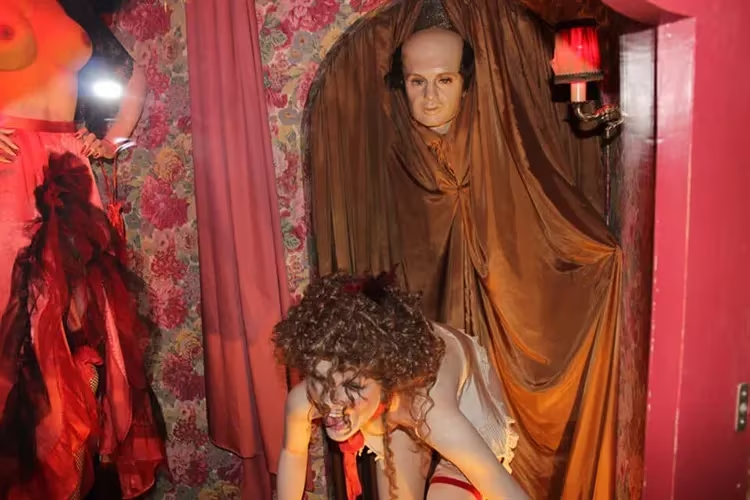
Even children are allowed into the Museum of Sex, however, accompanied by adults. From here you can bring erotic souvenirs that are sold in shops located on the territory of the museum. Also, guests will receive just a sea of different information related to erotica – from ancient times to the present day. And, of course, special attention is paid to the Red Light District. There is even a special room imitating this place. Here you can see the figure of the priestess of love, made of wax.
Nemo Museum
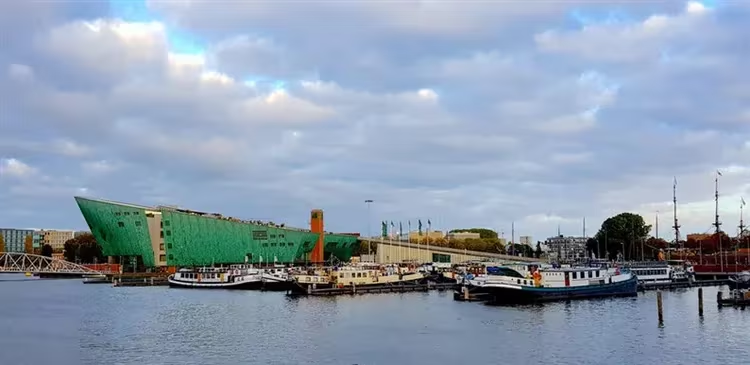
The museum is located next to the Central Station. With its shape, it resembles a ship that suddenly found itself on land. Such an unusual appearance was given to him by the architect Renzo Piano. The museum opened in 1997. Its name can be misleading, bringing to mind Captain Nemo from Jules Verne's 20,000 Leagues Under the Sea. Yes, and the cafe “Nautilus” is here. And yet, first and foremost, NEMO is a museum of science. And his main guests, those who are most expected here, are children. Young tourists come not only from different cities in the Netherlands, but also from other countries. It is here that they can get a visual representation of the structure of the world. Here they understand that the laws of science, combined with imagination, can work wonders.
Here you can make exciting journeys into various fields of science, and the exhibits are allowed to be taken in hand. Children are also delighted with attractions, thanks to which they learn new facts about light, sound and energy. If you wish, you can see all the places described above in one day, or you can choose something especially interesting for yourself and your companions.
2 day
The second day of your stay in the capital of the Netherlands is best devoted to museums. There really is something to see here. Visiting these museums will be interesting for both adults and children. In conclusion, it would be nice to go to the zoo. And to end the day, full of impressions, in a cozy pub with a glass of beer.
OBA City Library
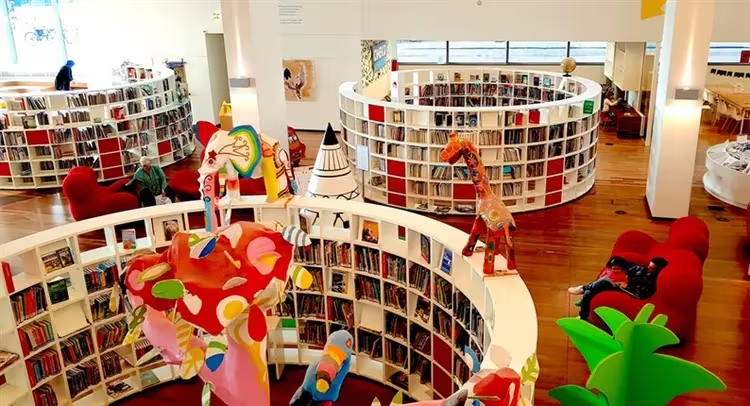
The public library is located near the Central Station. It has 26 branches, so it is convenient for all residents of the city to use the funds. More than 4 million readers annually. The library is open daily until 22:00. She can be proud of a truly modern equipment. There are hundreds of places where you can work with the Internet, special places with computers for viewing digitized publications, there are places where you can listen to music files or just read.
Today, the library has a theater, a cafe, a restaurant, and conference rooms. Almost 6,000 events are held every year. The Amsterdam Library is recognized as the largest public library in Europe. And it all started very modestly. The public library opened about a hundred years ago, in 1919, in a modest building on the Keizersgracht. The modern building was completed only in 2007, and the library soon became the most visited cultural institution in the city.
And what about those whose plans do not include reading? Firstly, to see a beautiful creation of modern architecture, where, thanks to free Wi-Fi, you can explore any modern publication. Secondly, go up to the 7th floor, to the La Place cafe. Here, not only the cheapest breakfasts in the city, but also a wonderful view of Amsterdam.
Anne Frank House Museum
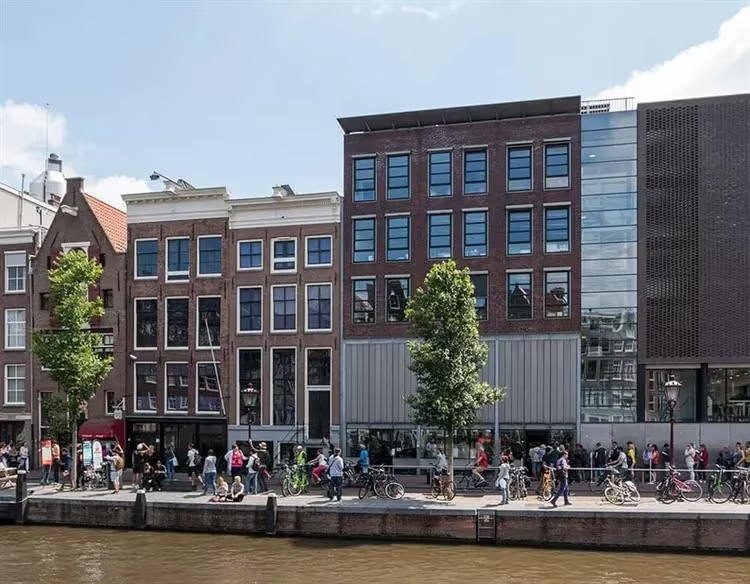
This museum makes a deep impression on tourists. Anna is a Jewish girl. Until 1933, her family lived in Germany. When the Nazis came to power, it became clear what awaited all Jews in the near future. The Frank family hastened to leave for Amsterdam. But, thanks to the Second World War, the Nazis came to the Netherlands. All Jews were to be sent to concentration camps. But the family did not leave the old 17th century house. There used to be a mansion here. And then housed the company that produced household appliances. One of her employees was Anna's father.
A family friend designed a secret closet. Behind him was a niche where the whole family hid during the day. When the company closed in the evenings, it was possible to leave. But still I had to be very quiet so as not to attract the attention of strangers. Anna kept a diary, where she wrote down the details of the family's life, shared her fears with the diary – after all, it was not known what tomorrow would bring. So the family managed to hide for 2 years. In 1944, following a denunciation, the family was arrested and sent to a camp, where Anna died shortly before the end of the war.
Her diary was published and received a wide public response. In the 1950s, the house was about to be demolished, but public opinion prevailed. The result was the opening of the Anne Frank Museum. In front of the entrance there is a statue of a girl, next to which there are always flowers. In the museum you can see the famous diary, photographs of family members, furniture and household items of that time, pictures of Amsterdam during the Second World War. The museum is open daily.
Rijksmuseum Art Museum
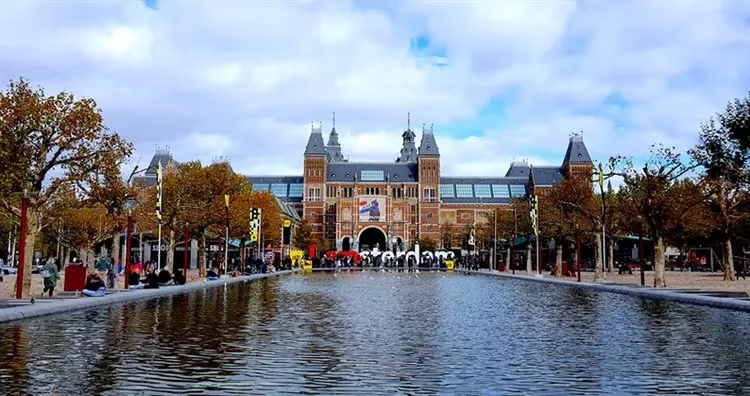
The museum is located in the historical center of the city and is very popular. Usually, to get here, you have to stand in line. The museum was created with the participation of the King of Holland, Louis Bonaparte. At first he did not have a permanent place, he had to move. In the 80s of the 19th century, a separate neo-Gothic building was built for the museum. Later, in accordance with the needs, it was rebuilt and reconstructed. This could be done, for example, in order to show the public a large painting by Rembrandt “The Night Watch”.
Today, the museum is so large that it is simply impossible to get around it at a time and admire all the exhibits. After all, here are collected paintings, furniture, utensils, porcelain, sculptures created by the masters of the country – starting from the 11th century. But you can see the most interesting. For example, the works of such great artists as Rembrandt, El Greco, Rubens, Van Dyck, Veronese. The doll house exhibition is also very popular. Among them there are really old ones – the 17th century. Porcelain collections and graceful models of ships also make a great impression on tourists.
Rijksmuseum: Skip-the-line ticket €18.50
Van Gogh Museum
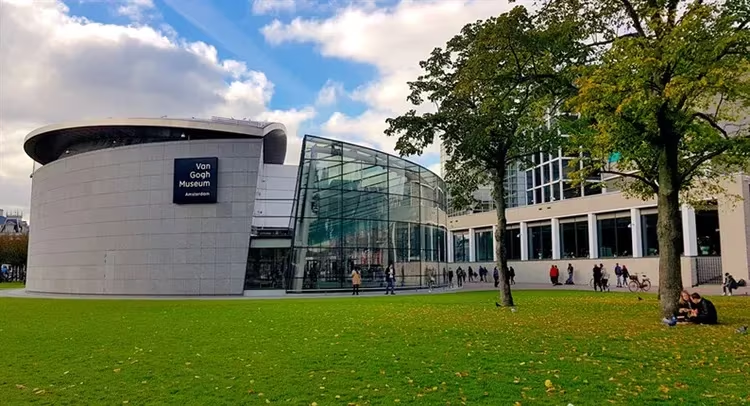
Next to the Rijksmuseum is the Van Gogh Museum. A huge merit in the fact that such a museum appeared belongs to Johanna van Gogh, the wife of Vincent's brother. Theo and Johanna carefully kept the artist's letters – hundreds of them have accumulated. Most of them contain illustrations to the written text. Paintings and drawings were preserved with the same care. Johanna was left a widow at the age of 29. Years later, she prepared Van Gogh's letters for publication. And she passed on the originals and artwork to her son Vincent. He proposed to the city authorities to build a museum.
The building was designed by the Dutchman G. Rietveld, and in 1973 the museum was opened. Today it houses about 200 paintings by the artist. Moreover, they are placed the way Vincent van Gogh himself once conceived. The whole life of the great painter passes before the viewer. First, museum visitors see early works, still angular and imperfect. Then the paintings created in Paris, when Van Gogh discovered the work of the Impressionists. Next – Arles, in this small town Vincent wrote his masterpieces. Finally, Saint-Remy and Auvers are the last paintings. Also recreated the environment, as close as possible to the one in which Vincent van Gogh worked.
Ticket to the Van Gogh Museum – 20 €
Diamond Museum
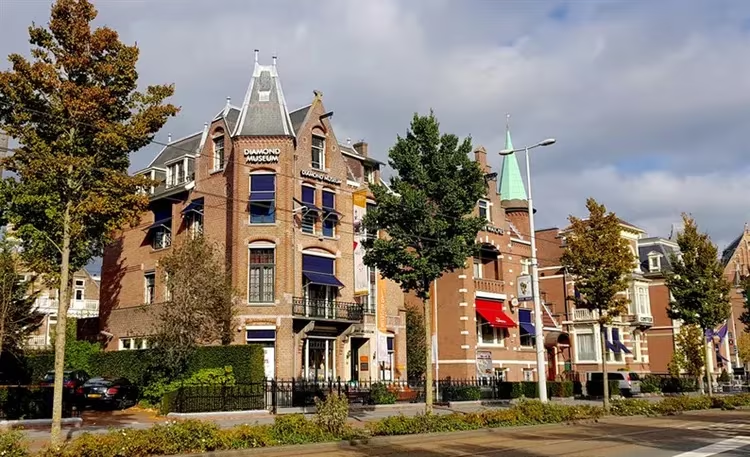
This museum appeared in the capital of the Netherlands, thanks to the company Coster Diamonds, engaged in cutting jewelry. Tourists can visit both the diamond factory and the museum at the same time (they are located in the same building). Guests will see how jewelers are engaged in cutting stones, learn a lot of new information about what diamonds are. In the museum, they will watch a film that tells how diamonds are mined and how they are cut. Guests will also be presented with exhibits acquired in various parts of the world – from South Africa to India.
You can also see works of art, for example, a copy of Van Gogh's famous painting “Starry Night”, which all sparkles and shimmers with diamond brilliance. Diamond jewelry made by famous jewelers is also presented. The gift shop at the museum also sells diamonds and jewelry.
Entrance ticket to the Diamant Museum – 7.50 €
Heineken Beer Museum
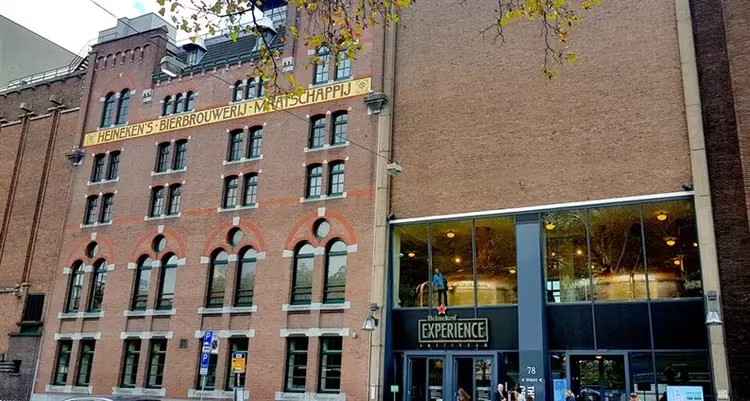
A very impressive museum that you just can't help but like. Beer “Heineken” appeared on sale in the middle of the 19th century. Generations changed in the Heineken family, and their beer continued to conquer the world. It is located in the building of the brewery, built in 1867, and served its owners for more than a century – until a new plant was built. Along with the entrance ticket, tourists receive a bracelet with studs. They can be exchanged for glasses with a foamy drink and a souvenir you like.
Guests will see how the brand developed, where the beer was produced, how the Heineken branded bottle changed its appearance over the years. There are also attractions, for example, everyone can create a name label. Lectures are given here, which deal with the beer business, they show commercials for the company, and conduct tastings. “Heineken” is a well-known sponsor of football players. Therefore, right in the museum you can watch the broadcast of major matches, see exhibits from the world of football. You can buy your favorite kind of beer, and at the end of the tour, guests go to the company store, where they receive souvenirs.
Ticket to the Heineken Experience Museum – 18 €
Albert Cuyp Market
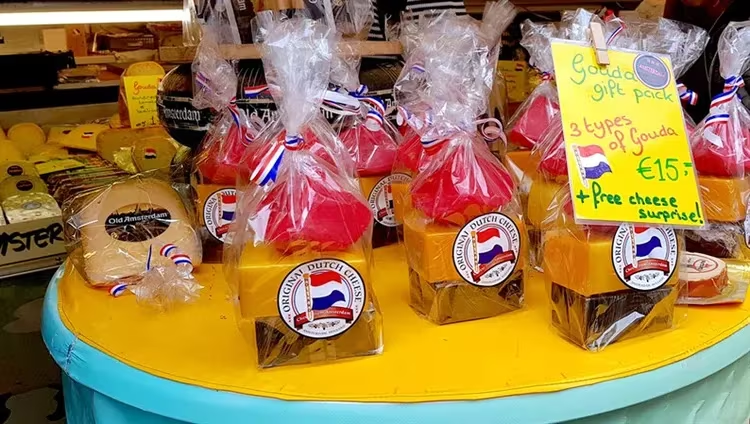
Those who find themselves in Amsterdam on weekdays can be recommended to visit the Albert Cuyp market (it is closed on Sundays). Here you can buy unusual souvenirs and feel the real spirit of the capital of the Netherlands. The official age of the market is over 100 years. Today, about 300 stalls have been set up here, where goods from all over the world are sold. Here you can see the inhabitants of Asia, Africa, Latin America, buy spices, fabrics, unusual handicrafts, jewelry. There are also many cafes that offer national dishes from different countries.
The market bears the name of the famous artist Albert Cuyp, and here you can also see the statue of the Dutch singer Andre Hazes, who was very popular with his compatriots. It is worth taking time to the Cheese Museum, which is located here. Famous Dutch cheeses – you will learn a lot about them. And, of course, you can buy “the same cheese.” The market is located in the De Pijp area, it is easy to get to it by tram number 4, 16, 24.
Vondelpark
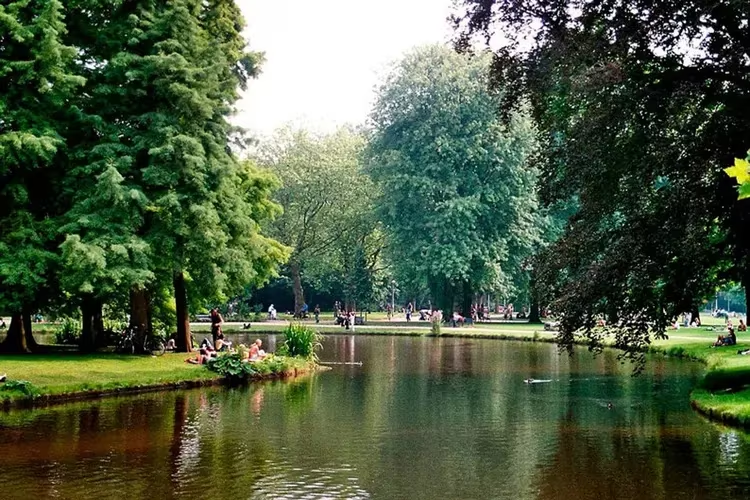
Residents of the city say about their favorite park: “This is a place where you can feel completely free.” You can jog along the paths or lie on the grass, barbecue and walk the dogs, take your child to the playground, and go to the museum or summer theater yourself, which are located in the same park. You can even make love – just away from playgrounds and public trails, please. And don't leave condoms!
The park gives the impression of a corner of natural nature, although it is located in the city center. It was broken over 150 years ago, and received its modern name later, when a sculpture of the playwright Jost van den Vondel was installed here. Lurking in the depths of the park and the sculpture of Picasso. The artificial reservoirs of the park were connected into one large one, and the shores were designed in such a way that it gives the impression of a natural lake. Up to 10 million people visit the Vondelpark every year.
There is a very interesting Museum of Cinematography here, where lectures are given and films of “all times and peoples” are shown – from silent films to modern 3D technologies. In the open-air summer theater, you can listen to various musical works – from classics to modern musicals. Those who wish can rent skateboards or play tennis on wonderful courts where prestigious tournaments are held. There are cafes and restaurants.
Zoo

The name translates as follows: “Nature is the teacher of art.” It was founded in 1838 and is the oldest zoo in the country. There is a planetarium and 2 museums – geological and zoological. An interesting fact – until his death, this zoo kept the last quagga on the planet – an animal very similar to a zebra, exterminated in its homeland in Africa. You can see a wide variety of animals that are kept in conditions as close as possible to their natural habitat.
Various species of monkeys settled here, the so-called “Monkey Rock” was arranged for them. Huge macaw parrots admire with their bright colors. A whole family lives in the zoo. And in the “Land of Lemurs” visitors can come across the bridge and chat with these cute animals. Three ponds are given to waterfowl. The atmosphere of the South American pampas has been recreated. Here you can see capybaras, anteaters, llamas and other animals. Attracts visitors “Wolf Forest” and enclosures where elephants live. There are even “Night Jungles” for those animals that are nocturnal.
ARTIS Zoo: Skip-the-line ticket €23 Skip
-the-line ticket for Amsterdam Micropia €15
Пивная ‘t Arendsnest
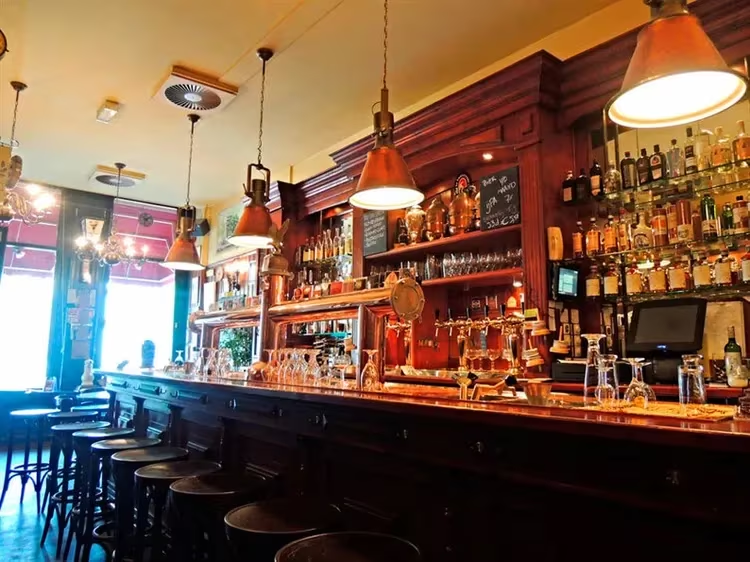
Round off a second such busy day in Amsterdam at the beer hall located at Herengracht 90. You can try 350 beers, not counting 250 seasonal beers. Moreover, products are presented only from Dutch breweries. Periodically, thematic events are held here, tastings are organized. Guests of the pub note that they have not tried such delicious beer as here. Old recipes, proven for centuries, what can I say!
There is no need to be afraid that here you will run into a crowd of people. On weekdays, the place is not crowded. You can try draft beer – buy small glasses first, if you like it – order a large mug. If you like bottled beer, you have to take the whole bottle. However, this is rarely regretted. The pub is open from 16:00 to 24:00, and on Fridays and Saturdays from 14:00 to 2:00 in the morning. Walk, so walk!
3 day
If there is an opportunity to spend one more day in the Netherlands, it is worth spending it on a trip to one of the cities or villages located nearby. There you can feel the atmosphere of the real Holland. Communication here is excellent, and you can get anywhere from the Central Station in a short time. Of course, you won't have time to visit everywhere, so choose what you like.
Villages and suburbs on a hop-on hop-off bus – 28 €
Zandfort
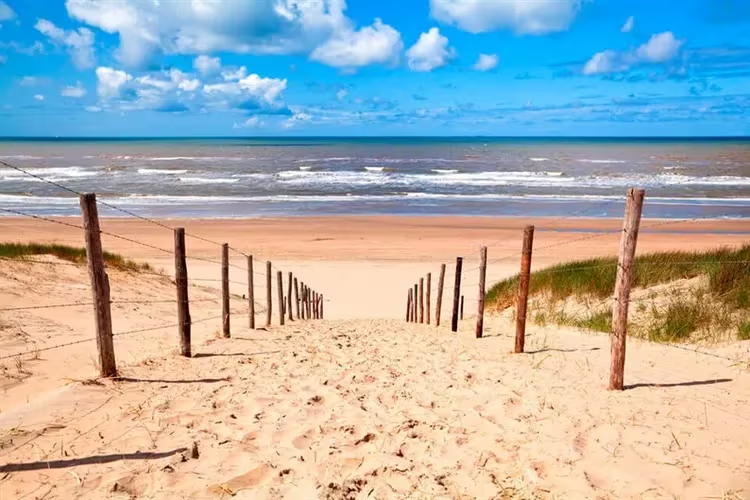
If you missed the sea in Amsterdam, go to Zandvoort. This is a small resort town where everything contributes to bliss and relaxation. Wide white sand beaches and the sound of waves. Zandvoort was founded at the end of the 11th century. At first it was a small village, and in the middle of the 19th century it began to develop as a resort. The name of the place literally translates as “sand ford”. At the end of the 19th century, a railway was laid here, which greatly increased the number of tourists. An interesting fact is that one of the first Dutch films was filmed here. It happened in 1905.
Even if you arrive on a cloudy or rainy day, there is plenty to do in the town. There are numerous cafes and bars, shops and restaurants. You can sit with a cup of coffee almost on the beach – the glass walls will protect from bad weather. The journey by commuter train will take only half an hour.
Zaanse-Shans
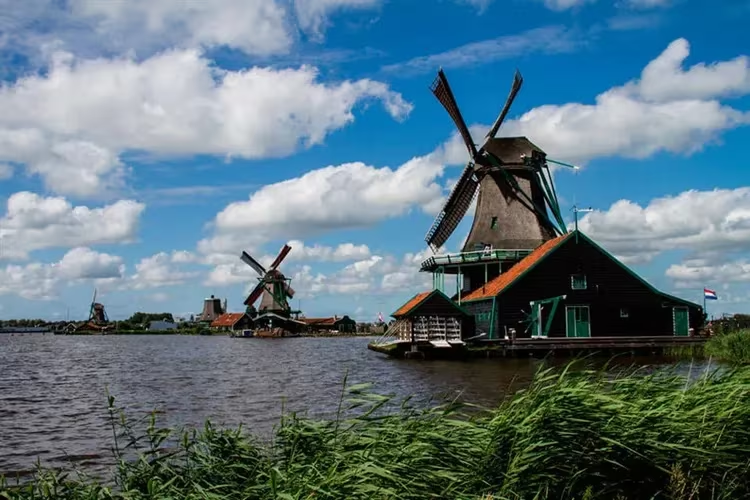
The windmill is a real symbol of the country. Such a mill was a breadwinner. It depended on the wind whether the grain would be ground, whether the butter would be churned. The picturesque Dutch windmills have been on the canvases of artists more than once, they have been captured in photographs, in films. Mills can be seen in different places in the Netherlands. But it is in the village of Zaanse Schans that tourists get acquainted with different types of mills. Many of them work, you can watch the process.
It is rare that anyone avoids the opportunity to go to a farm where cheese is prepared according to old recipes, and, of course, to buy such a rarity. And in the Zaanse Schans, in front of tourists, they make national shoes – klomps. They are also willingly bought as souvenirs. The open air museum can be seen at any time. But in order to get inside the mills, you need to arrive between 10 am and 5 pm, the entrance ticket costs 10 euros. The most convenient way to get from the Central Station is by bus or train.
Rotterdam
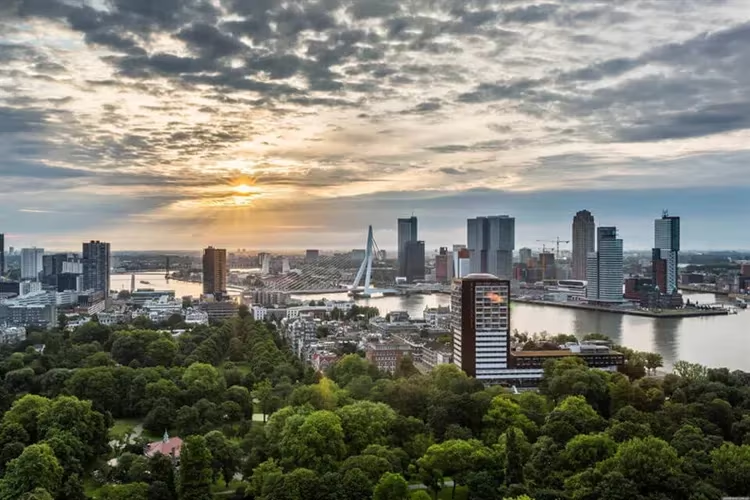
Rotterdam makes a big impression on guests. And how could it be otherwise – the second largest city in the Netherlands, the largest port, which until recently was considered the busiest in the world. Its center is built up with futuristic buildings that seem to have come from science fiction films. There are also museums in the city worth visiting. You can also admire the windmills – there are 7 of them. As you can see, the past is organically combined with the future.
Shoppers will appreciate the shopping zones. Those who need a vibrant evening life will find here dozens of clubs where you can hear all kinds of music. Some tourists come here because of the magnificent Rotterdam Zoo. And, of course, everyone, without exception, notes the special atmosphere of the city – more multinational than all other cities in the Netherlands.
Rotterdam is an old city. It was founded in the 13th century on the Rotta River, where there was already a dam. These 2 words merged and gave the city its name. The location of Rotterdam was very advantageous, and it quickly became a major trading city. In the 16th century, it survived sack by the Spaniards, but successfully revived. And in the 17th century a new port was built here. The wars also left their mark on Rotterdam. During the First World War, special services bases were located here. And during the Second World War, the city was bombed.
What is interesting to see in Rotterdam:
- Kijk-Kubus are “cubic houses” designed by P. Blom.
- De Markthal is a market where residential apartments are located. The painting on the walls and ceiling deserves special attention.
- De Verwoeste Stad – “The Ruined City”, a memorial dedicated to the Second World War.
- Erasmus Bridge – the length of this bridge connecting the northern and southern parts of Rotterdam is 800 m. The spectacular bridge has become a symbol of the city.
- Rotterdam Tower – you can climb to the observation deck (100m) to see the panorama of the city. And the total height of the tower is 185 m.
- De Brug is a very interesting office that is worth seeing. It was built in the form of a bridge over the factory.
- The White House of Rotterdam is the first skyscraper built in Europe. The building was erected at the end of the 19th century, its height is 45 m.
- Laurenskerk Church – not so many medieval sights have survived in Rotterdam. This temple is one of them.
The Hague – Delft
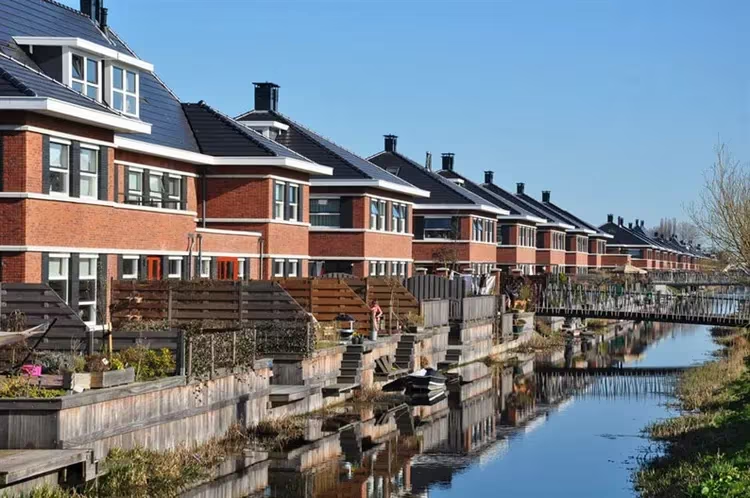
The Hague is the residence of the Queen. This is where the government sits. It is also the legal capital of the world. After all, this is where the International Court of Justice is located. At first glance, it becomes clear that The Hague is an aristocratic city that sacredly honors its traditions. As in the old days, only low houses stand here, each of them is built with great taste. Not a single high-rise building will disturb the appearance of the city. The streets here are like in the Middle Ages – narrow. Very green – there are three dozen parks. Tourists are sure to take pictures of the Peace Palace, because it resembles a fairy-tale castle. They stop at the Parliament, visit the Mauritshaus painting museum, which displays paintings by Rubens, Rembrandt and other great artists.
You can continue your walk to the suburb of The Hague, Scheveningen, which overlooks the sea. Delft is another interesting town. It is on the way from Rotterdam to The Hague. The great painter Vermeer was born here. Quiet streets, old houses – one gets the impression that the yard is still in the 17th century. And the local market appeared even earlier – in the 14th century. Its main products are fresh seafood and flowers. In local shops it is worth asking the price of porcelain. After all, Delft is the capital of Dutch porcelain.
Volendam – Edam – Marken
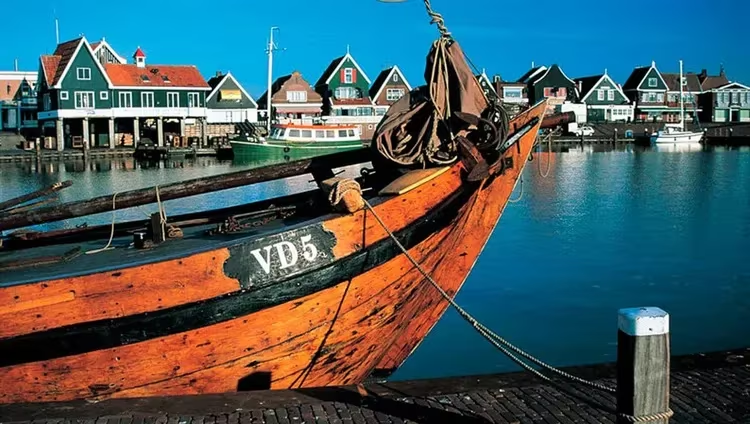
The picturesque fishing village of Volendam has long been loved by artists, performers and people of other creative professions. Here you can visualize how fishermen lived in the 19th century. But first you need to say a few words about the town of Edam, which is located in the neighborhood. After all, originally Volendam was the harbor of Edam. The town was founded in the 13th century. Ships were built here for several centuries. But then the main occupation of the inhabitants was the production of cheese. Today, about 7 thousand people live in Edam. On Wednesdays there are cheese fairs. But the delicious cheese bearing the same name as the city can be bought at any time.
About 3 times more people live in Volendam than in Edam. But gastronomic tourism is also popular here. People come here for the most tender herring, smoked eels, fresh oysters. All this is sold here literally for a penny. Almost always, fresh fish can be bought from boats – from fishermen who have just returned from fishing. Tourists also buy small fish for feeding birds. This is a kind of local attraction. Ducks and cormorants are ready to grab treats right from the hands.
The most crowded and noisy place is the Volendam embankment. It is slightly higher than the rest of the village, as it is located on a dam that protects the city from the sea. Another feature can be noted here – the absence of curtains on the windows. This is also a tradition. The wives of the fishermen who went to sea did not draw the curtains – they say, we have nothing to hide, we are faithful to our husbands. The custom took root. Attractions are the Historical Museum, the 19th century St. Vincent's Church and Art Gallery, as well as the bronze figures of people from the past that can be seen on the streets.
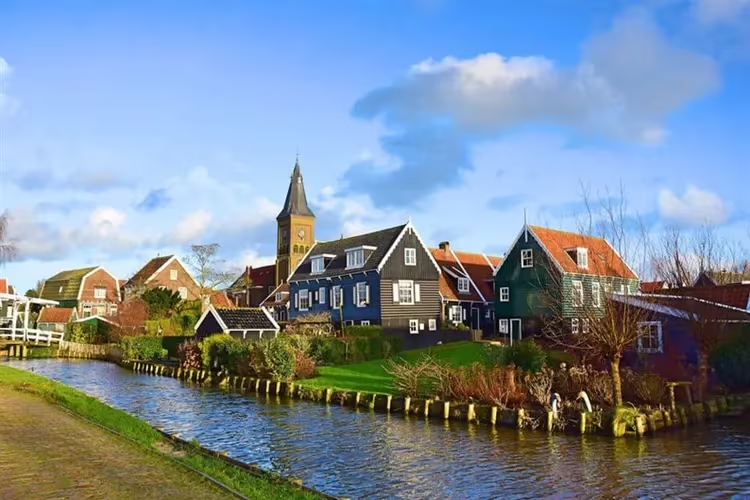
It is worth visiting the village of Marken, located on the island. You can get to it by ferry or bus (paved highway). Less than 2 thousand people live in the village, but it looks very colorful. Previously, Marken was part of the land, but in the 13th century, after a flood, it turned into an island. So the old days come alive here. Houses on stilts, well-groomed courtyards, dishes in cafes – you will not try these anywhere else…
To visit all these places, it is most convenient to purchase a WaterLand ticket – a magnetic card that costs 10 euros. It makes it possible to travel without restrictions along the route – from Amsterdam to Volendam, Edam and Marken.
Bus tickets Volendam Marken Boat Cruise & One Day – 23.50 €
From Amsterdam: train Volendam, Edam and Zaanse Schans – 49 €
Kinderdake
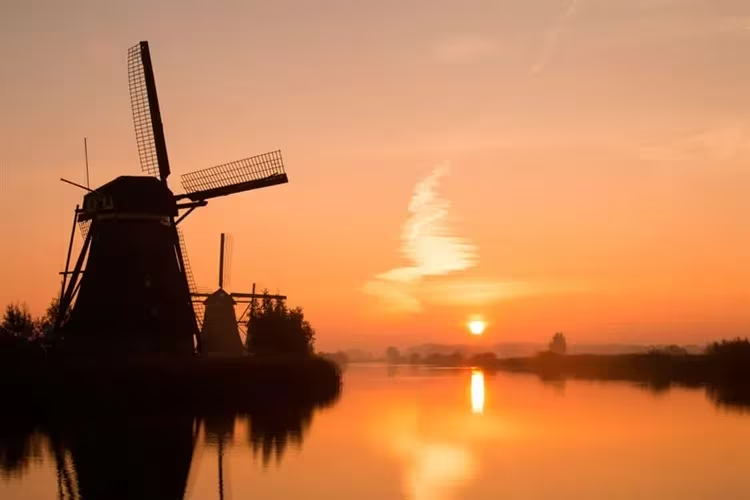
To visit this famous windmill park, located in the small village of Kinderdijk, you need to drive 2.5-3 hours from Amsterdam. First to Rotterdam, and then by ship, or first by tram, and then by bus. But the spectacle is worth it – here you will see 19 windmills that were built in the 18th century. The name of the village “children's dam” is associated with a legend, when after the flood only a cradle with a child survived on this place. And so many mills were built here in order to hold water, and not allow two local rivers to flood the village.
Mills stand on the banks of the canal – an unforgettable sight. One of them is available for inspection from the inside. And to go around the entire park, you can rent a bike. In winter, it is also worth coming here to admire the skaters who glide on the ice of the canal. A spectacle like from an old book. The park of mills is under the protection of UNESCO.
Texel Island
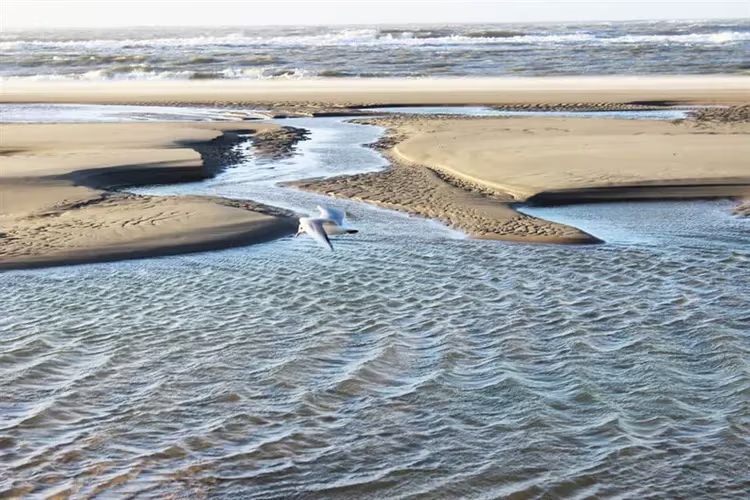
The film “Knocking on Heaven's Door” received wide recognition in Russia. How his heroes wanted to see the sea! Filmed on the island of Texel. Or Tesla, as the Dutch themselves call it. The large island contains 7 towns and several dozen villages. And it is also a barrier between the North Sea and the Wadden Sea. Today it houses a nature reserve where birds live. The economy of the island is directly dependent on tourism. Guests inspect the territory, going on foot trips, order cycling or horseback riding. You can get to the island by ferry, which departs from the port of Den Helder.
The island is also famous for the fact that a large catamaran regatta takes place here. The Maritime Museum is also located here, where you can see things raised from sunken ships. You can also climb the old lighthouse and enjoy the view. And in October there is a 10-day Blues Festival.
Must-Try Foods
There is such a thing as “gastronomic tourism”. But whatever the purpose of your trip to this amazing country, there are things that you must definitely try in the Netherlands. Amsterdam is a cosmopolitan city, and many dishes have been around since the colonial era. Now in the capital you can buy themed tours. One of them is dedicated to the pubs of Amsterdam, and the other is called the “Gastronomic Bike Tour”. But not everyone is ready to ride an iron horse, and besides beer, you need to try something else more substantial. It remains to embark on an independent journey through cafes and restaurants. What do we order?
Kebabs, which here, as in Russia, are made from pork, beef or even chicken. They are only served with peanut sauce (a mixture of soy sauce, peanut butter and chili sauce).
Bami Goreng is actually an Indonesian dish. But the Dutch loved it so much that now it is served in every restaurant. These are noodles with pieces of meat, beans and soy sprouts.
Dessert Oliebollen – sweet donuts are most popular in winter – traditionally served at Christmas. But at other times of the year they may also appear on sale. Raisins are included in the ingredients of donuts, and those with more apple slices will be especially delicious.
Boerenkool Stamppot – mashed potatoes are familiar to Russians. And the Dutch mix it with finely chopped kale. Unusual, tasty and very useful. You can order this dish as an appetizer, or as a side dish for meat or fish.
Erwtensoep – pea soup. In fact, soups are not in honor of the Dutch. In restaurants, you will hardly see “national soups” except for pea soup. Its preparation is treated with great care, the first course is served in portioned pots. The composition includes chopped smoked sausage, and the soup itself is so thick that a spoon stands in it.
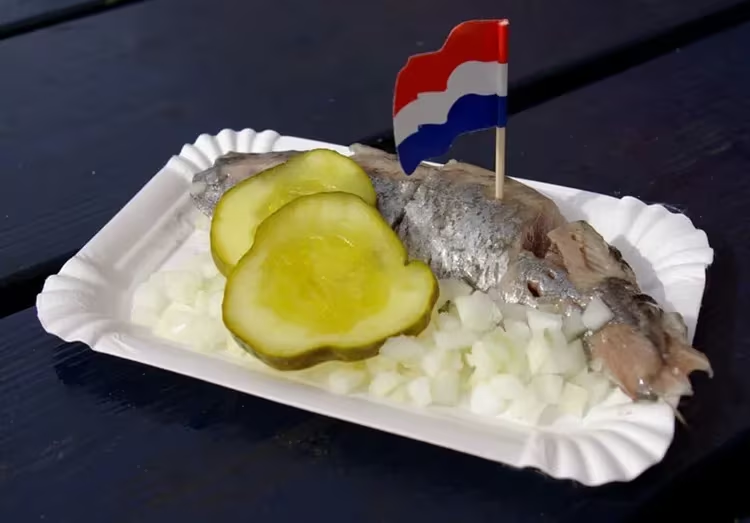
Hollandse Nieuwe is the same herring that the royal family eats. It is she who is presented with the first catch of the new year. Herring is salted in special barrels, and it turns out just incredibly tasty. It's impossible to resist.
Kibbeling are deep fried fish pieces. This dish can be tasted not only in cafes and restaurants, but also in street tents. Pieces of white fish in dough are served with garlic sauce.
Rookworst – but this is already meat. Specifically, smoked sausages. The Dutch love them very much. They add them to soups, serve them with beer, put them on bread and make sandwiches, and, of course, they eat them as an independent dish. The recipe for their manufacture is not so simple – after all, sausages include 3 types of meat. Tourists like this dish so much that they buy packaged sausages and take them home as souvenirs.
Drop – lollipops, and suddenly salty? Yes, yes, and you should definitely try them. Licorice lozenges, although they have an unusual taste, are very good, and, by the way, are useful during a cold.
What else is worth trying? Small pancakes Poffertjes, Stroopwafels – waffles with caramel, Vlaamse friet – fried potatoes in a special way, soft inside and crispy outside, Kapsalon – this is also fried potatoes, but served with kebab or shawarma, Old Amsterdam – cheese, which is the pride of Amsterdam. You can also recommend ordering Stamppot – mashed potatoes with sausage, this dish is cooked here extremely tasty. And the Dutch are very fond of fried salmon.
This is how it is, Amsterdam and its environs – noisy, multinational and unusually charming. Come here at any time of the year and it will enchant you forever.
In Amsterdam, we recommend the following hotels: