
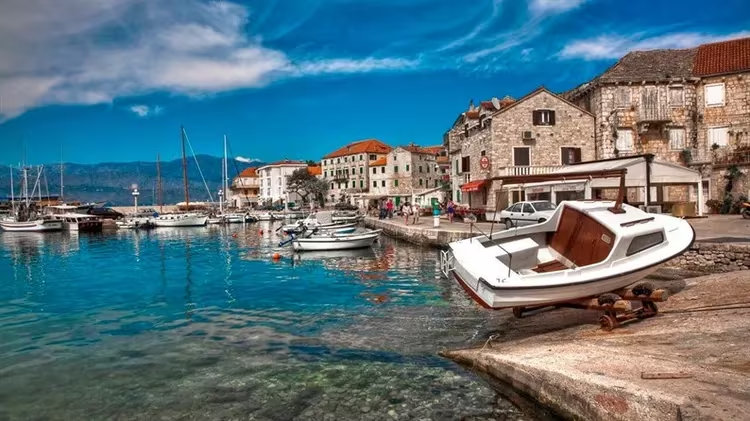
25 best resorts in Croatia – photo, description
More than 1,000 islands and almost 6,000 kilometers of coastline characterize Croatia, located in the heart of Europe. Mountain ranges descending to the water's edge, beaches washed by crystal clear seas, national parks, healing thermal springs and a rich cultural heritage make the sunny Adriatic country a favorite destination for travelers. Whether you dream of gentle turquoise waves, want to explore famous sights, many of which are under the protection of UNESCO, or look forward to meeting snow-capped mountain peaks, the best resorts in Croatia can fulfill the dreams of any tourist.
Dubrovnik
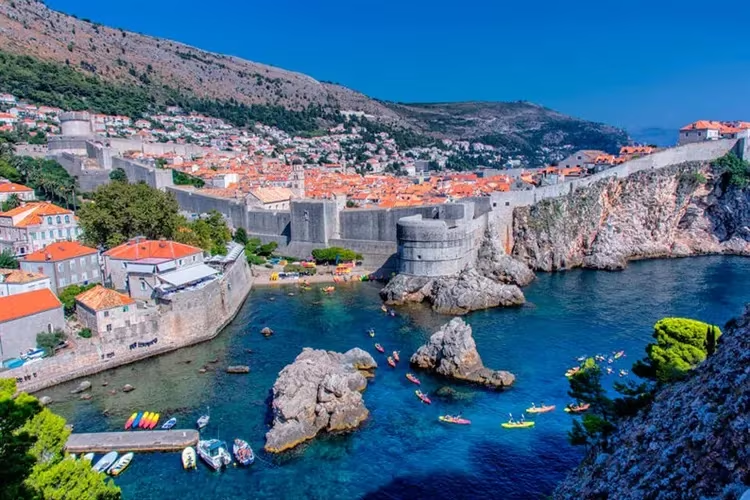
The unique city, as if woven from the rays of the sun and ancient stones, is the pearl of the Adriatic. Dubrovnik, whose history began 14 centuries ago, still retains the medieval charm of cobbled streets, magnificent palaces and churches. The view of the turquoise surface of the sea, the fortress walls crowned with 16 towers, and the red roofs of old houses will forever remain in the memory and make you come back here again and again.
Greeks, Romans, Venetians… Many nations have left their mark in Dubrovnik, reflected in the famous sights. Nature boasts of national parks, waterfalls, snow-capped mountain peaks and dense forests inhabited by bears, wolves and lynxes. The coast beckons with crystal clear waters, Blue Flag beaches and a variety of hotels: from five-star complexes to budget apartments.
Split
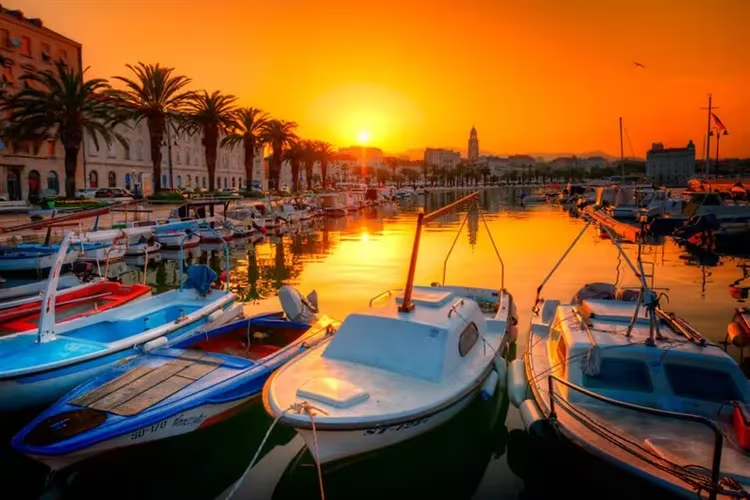
The unofficial capital of Croatia is located on a picturesque peninsula in the heart of Dalmatia. From the sea, Split is adjacent to the islands of Brac, Solta and Dugi Otok, the mainland is surrounded by green slopes of the mountain range. The city, whose origins date back to the 3rd century, today attracts tourists with its bright turquoise sea, pebble and sandy beaches, hotels of various comforts, cultural events and rich nightlife.
The main attraction of the resort is the Palace of the Roman Emperor Diocletian, built in 305. It would be more correct to call the grandiose building a complex that contains the entire historical center of the city. It consists of fortress walls, ancient temples and ancient buildings. In addition to historical monuments, Split is known for museums, theaters, summer stages and art galleries.
Poreč
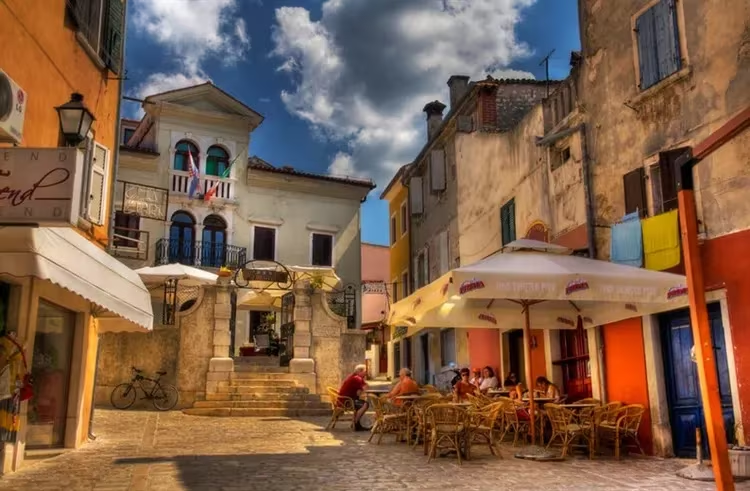
The appearance of Porec is impressive – the city is located on an elongated cape overlooking the open sea. This small resort in the north-west of Istria is proud of its two thousand years of history and monuments of ancient architecture. Long-gone centuries come to life before the eyes of travelers, reflected in the Euphrasian Basilica of the 4th century, the Roman Pentagonal Tower, which celebrated its 600th anniversary, and Marafor Square with columns preserved from pagan temples.
In summer, dance lovers flock here until the morning – the largest nightclub in Croatia, Byblos, attracts DJs from all over the world to Poreč. Those who come to the resort for a relaxing holiday on the seashore will not be disappointed either. For cleanliness and excellent water quality, most of the pebble beaches have been awarded the Blue Flag. The best on the coast are the Brulo surrounded by vegetation, the party Green Lagoon and the rocky Donji Spadichi.
Umag
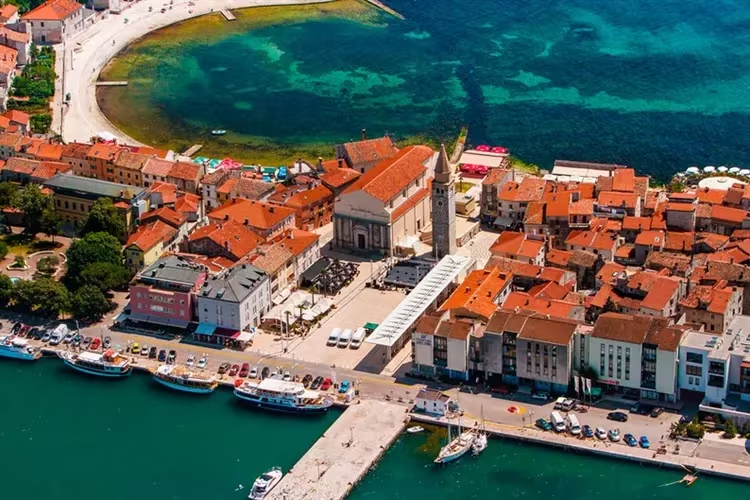
The westernmost point of the country – located in Istria Umag – offers travelers a successful symbiosis of a beach holiday and an interesting excursion program. Back in the days of the Roman Empire, there was a port city in the harbor of the Adriatic Sea, which later belonged to Byzantium, Italy, Austria and Yugoslavia. As a result, a multinational population and historical monuments representing different eras. The proximity to Venice (50 miles) makes it possible to make a day trip to the city of canals.
Stretching for 45 km, the rocky coast of Umag cannot boast of comfortable beaches, the vast majority of which are covered with concrete platforms. However, this does not prevent you from exploring the wonderful world of Neptune or cutting through the water surface on a shortboard. With the sunset, life in the resort continues. The embankment and the old town invite you to take a romantic walk, and discos offer you to immerse yourself in an atmosphere of fun and carelessness.
Makarska
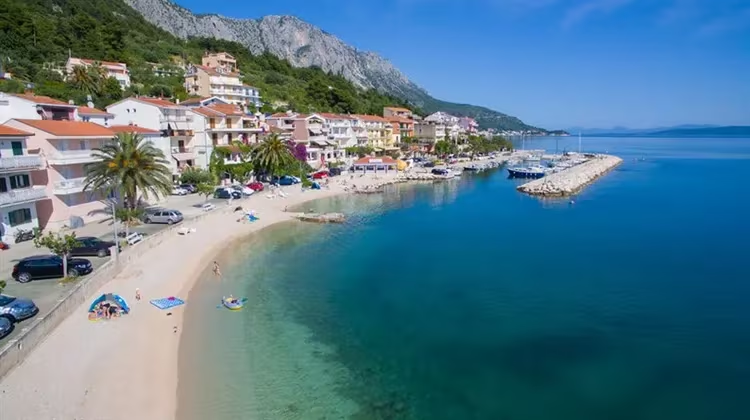
In the central part of the country, south of Split, Makarska awaits guests. Nestled in the arms of majestic mountains and the emerald sea, the city enchants with an atmosphere of comfort and harmony. Those who decide to spend their holidays in this resort will be rewarded with the fragrant air of pine forests, developed infrastructure, acquaintance with the historical buildings of the city center and the opportunity to visit the nearby islands.
The coast of the resort is divided into two parts by Cape St. Peter. The east side is used as the city's port and marina. The western bay was chosen by fans of the sea and the sun. Along the coastline is a promenade teeming with shops, restaurants, nightclubs and bars. For children there are playgrounds and an area with attractions. The embankment borders well-maintained beaches covered with small pebbles. The water here is warmer than in Northern Dalmatia, and the swimming season lasts until October.
Baska-Voda
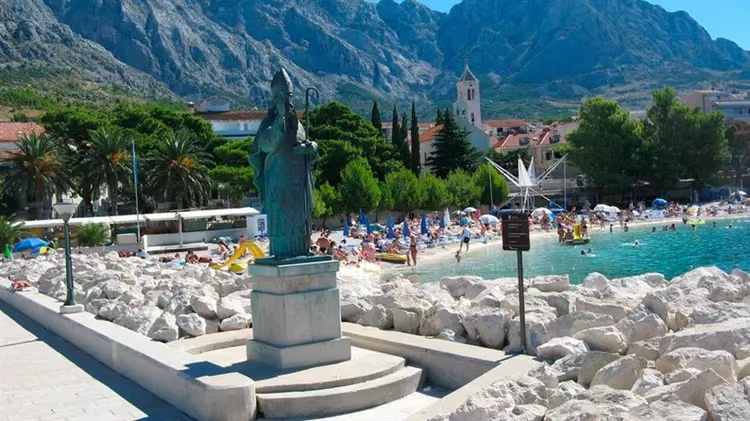
Surrounded by vineyards, olive groves and the imposing mountains, Baska Voda is located about 50 km south of Split and is part of the Makarska Riviera. The former fishing village, which was first mentioned in the 18th century, has preserved for posterity the archaeological sites of that time, at the same time turning into a popular resort that has absorbed tennis courts, diving centers, bars and discos.
Bathers are waiting for white pebble beaches. The most popular and comfortable of them is the city Nikolina, over which the Blue Flag flutters. In the evenings, life is concentrated here on the Riva promenade framed by palm trees. Restaurants and taverns overlooking the sea offer to enjoy a glass of excellent wine and taste local culinary delights: grilled fish, seafood and burek meat pie.
Tucepi
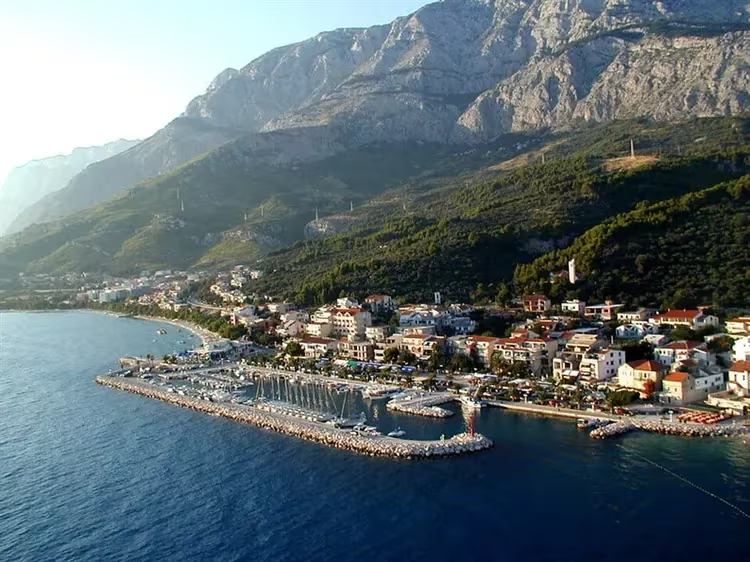
The second famous resort of the Makarska Riviera – Tucepi – is an ideal place for a family holiday. The Biokovo mountain range approaching the sea, sheltering the coast from strong winds, and lush pine forests form a mild climate that creates excellent conditions for a beach holiday from early June to late September. There are few hotels on the 4-kilometer pebbly coast, but almost all of them have professional children's animation.
Active tourists will also fall in love with Tučepi — the SKATINA sports center is equipped with tennis courts, a football field, badminton, handball and basketball courts. There is a rental shop for bicycles, catamarans and diving equipment. Nightlife lovers will be bored here – there are no discos in the resort and noisy events are held.
Rovinj
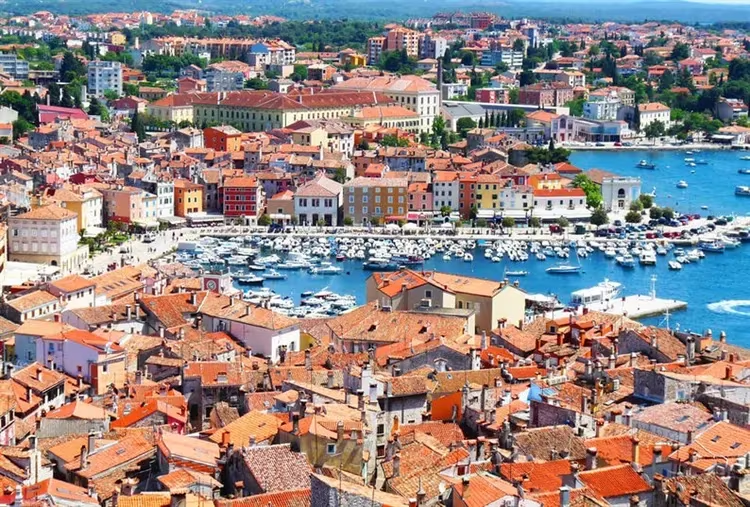
Walking through the labyrinths of Rovinj's white-tiled streets, you can momentarily forget that you are in Croatia – the romantic old town looks like a fabulous Venice. The pearl of Italy is reminiscent of the houses descending to the very edge of the water, and the 62-meter bell tower of the Church of St. Euphemia, surprisingly similar to the Campanile of St. Mark's Cathedral. Life is in full swing around the attraction: souvenir shops are selling, fashionable restaurants and traditional taverns are inviting customers, the old Trevisol Street is teeming with tourists.
The coastline of the resort stretches for 67 km. Here you can find areas with small pebbles, and picturesque secluded bays, perfect for families with children. The best beaches of Rovinj are the urban Monte, the shallow pebbly sloping Lone and the Kuvi equipped with sports grounds.
pool
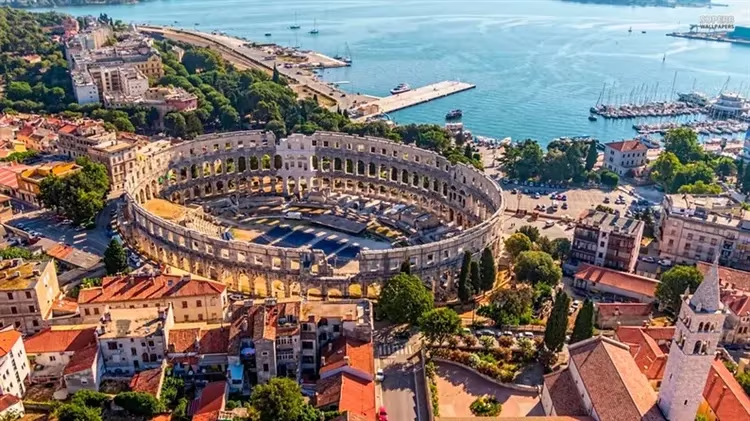
The Istrian peninsula is one of the most popular holiday regions in Croatia, not only because of the famous beaches. Here is Pula – the oldest port city, combining historical monuments from the time of the Roman Empire, modern hotels, nightclubs, diving centers and picturesque sea bays. The coast here is mostly covered with concrete platforms or paved with pebbles. Therefore, going to the resort, do not forget to pack special shoes for swimming in your suitcase. If you come to the country with children, then choose hotels located near the sandy beach of Bijeca.
Travelers appreciate the city for the sixth largest Roman amphitheatre, also known as the Pula Arena. The grandiose building was erected in the 1st century BC. e. Over the centuries, it has witnessed gladiator fights, wars, and city fairs. Today, concerts and colorful performances are organized behind the 29.4 m high outer walls during the summer months.
Medulin
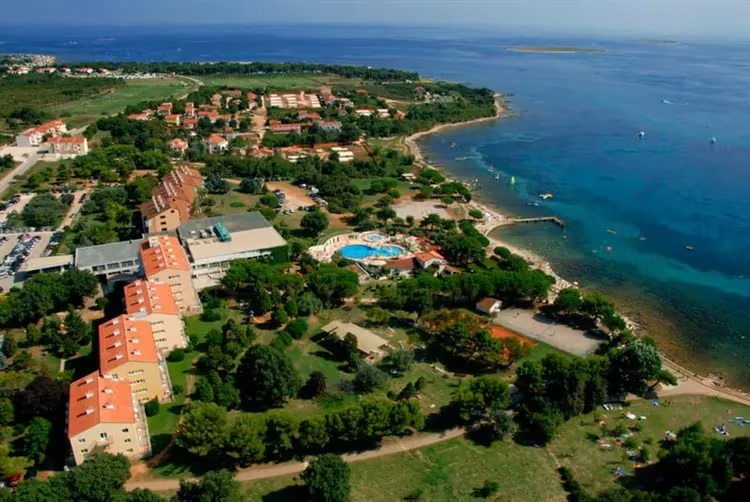
If you are looking for a place away from the hustle and bustle and want to spend your holidays exclusively by the sea, then welcome to Medulin, located on the southern tip of Istria, 10 km southeast of Pula. The resort is surrounded by dozens of small islands, chosen by lovers of sunbathing naked. All conditions for a carefree holiday are created here. You are waiting for excellent beaches, deserted bays and turquoise calm sea.
The most popular beach is the 1.5-kilometer sloping Bjieca. For soft sand and reliable protection granted by pine groves, it is especially appreciated by families with children. Active travelers will not be bored here either. Medulin has diving centers, tennis courts, a golf club and a riding school. Evenings can be spent on the city promenade, which attracts with bars and traditional taverns.
Opatija
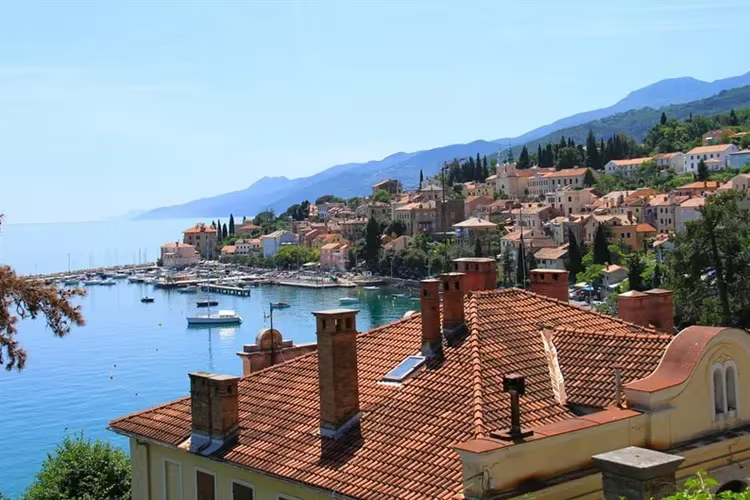
The atmosphere of luxury and carefree life reigns in Opatija, a small town in the northern part of Istria. The modern resort combines a well-developed tourist infrastructure and historical charm. Established 500 years ago, Opatija was a favorite vacation spot for the Venetian nobility and the Austrian emperor Franz Joseph I. It was here that the first elite yacht club on the Adriatic appeared in 1886. Due to the many attractions and the availability of luxurious hotels, today the famous resort is called the “Croatian Nice”.
The coastline of the city is divided into several well-equipped beaches, many of which are marked with the Blue Flag. Here you will find trampoline parks, playgrounds, sports areas, cafes and summer scenes. The promenade, which stretches for several kilometers, is an ideal place where you can admire the sea views and taste the delicacies of national cuisine in numerous restaurants.
Cavtat
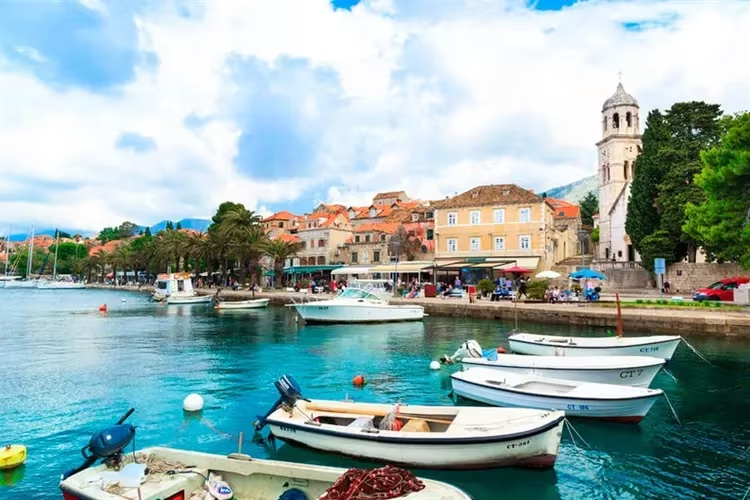
About 20 km south of Dubrovnik is one of the most beautiful places in South Dalmatia. Due to its proximity to the airport (5 km), Cavtat is one of the most popular resorts in Croatia. Its history goes back over 2 thousand years. The city has experienced many historical events, which are reflected in the unique architectural monuments representing the styles of baroque, renaissance, gothic and classicism. The most famous of them are the church of St. Nicholas of the 15th century, the Prince's Palace, the stone staircase leading to the hill and the mausoleum of the Racic family.
Cavtat cannot boast of having entertainment centers and nightclubs. People come here for a relaxing holiday. The tiny resort is rich in picturesque parks, cozy harbors suitable for fishing or scuba diving and, of course, magnificent beaches. Tourists have at their disposal the well-equipped city of Ipod Gospe, the pebbly Punta Rata surrounded by pine trees and the two-kilometer Vela Plaza.
The gallows
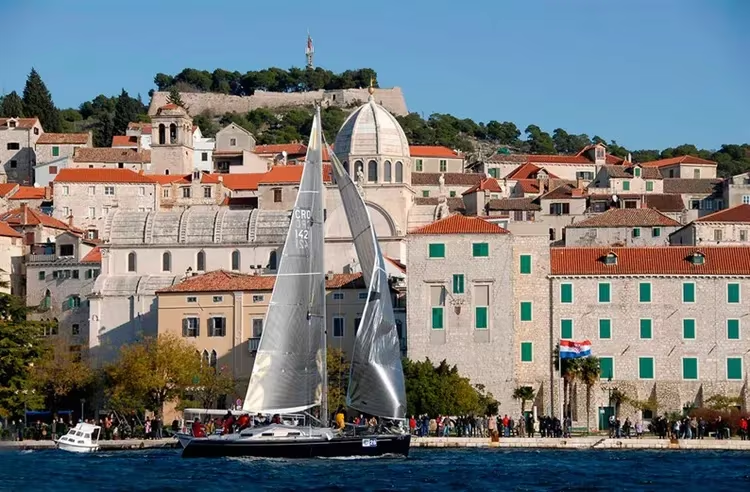
The charming old center with cultural and historical sights, narrow streets, shops, cafes and a spectacular promenade make Šibenik a worthy holiday destination on the Adriatic coast. For the first time the resort of North Dalmatia is mentioned in the documents of 1066, which gives the right to call it the oldest city in the country. Built as the residence of the king of Croatia, for centuries Sibenik belonged to Venice, Austria-Hungary, Yugoslavia.
During military conflicts in Turkey, it served as a pillar of Christian civilization, as evidenced by the fortress that has survived to this day. Those who come to Sibenik for the sake of the turquoise waters should pay attention to the small-pebble city beach Banj, suitable for families with children, and one of the best sandy beaches in the country – 4-kilometer Solaris.
Lovran
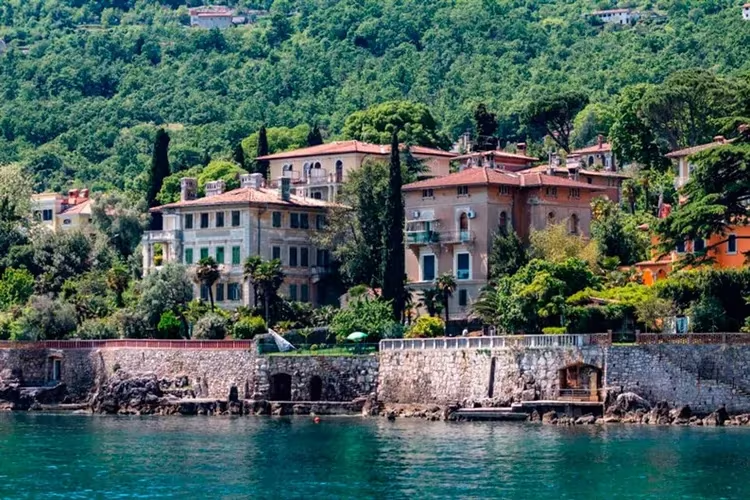
Lovran is one of the first settlements in the north of Istria, which already served as an important shipbuilding center in the early Middle Ages. The city turned into an attractive resort around the same time as Opatija, located 6 km away. Since the middle of the 19th century, tourism has been the main branch of the local economy. The mansions, previously owned by Austro-Hungarian aristocrats, now offer guests of Croatia comfortable rooms with excellent service.
Lovran is attractive to travelers all year round. In summer, tourists can expect clean beaches framed by lush subtropical vegetation. With the onset of autumn comes the time for themed festivals, and in winter there will be a sailing regatta and a traditional carnival. Health-improving rest is an important direction of the resort. The Wellness Medical Spa Center offers thalassotherapy sessions, massages and mud treatments.
Rab Island
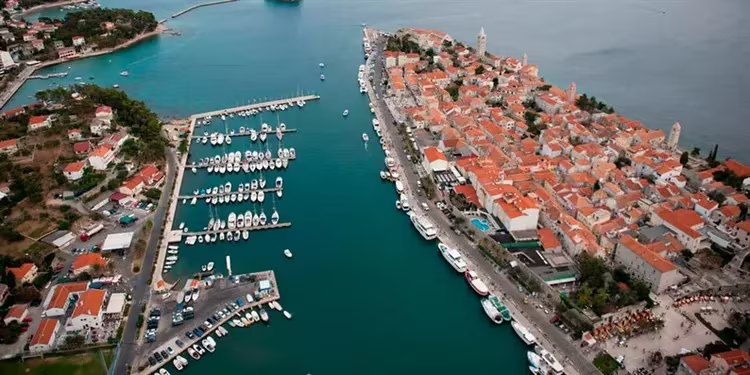
Rab, shrouded in legends, sunbathed for 2,499 hours a year, is located in the northern part of the country, in the Kvarner Bay. You can get here by ferry leaving the port of the city of Yablunytsya. To newcomers to the island, it seems that it consists entirely of bare rocks. But it is worth getting to know this region better, as it opens its guests to dense vegetation, fertile fields and blue lagoons.
The island is small – an area of 93.6 km2 can be bypassed in one day. During this trip, you will get to know the capital of the island – the city of Rab, famous for its medieval monasteries and churches, small villages, and, of course, the picturesque coastline. The island offers beaches for every taste, but the most popular is the sandy Rajska plaža, loved by both families with children and active tourists who are fond of water sports.
Brioni Island
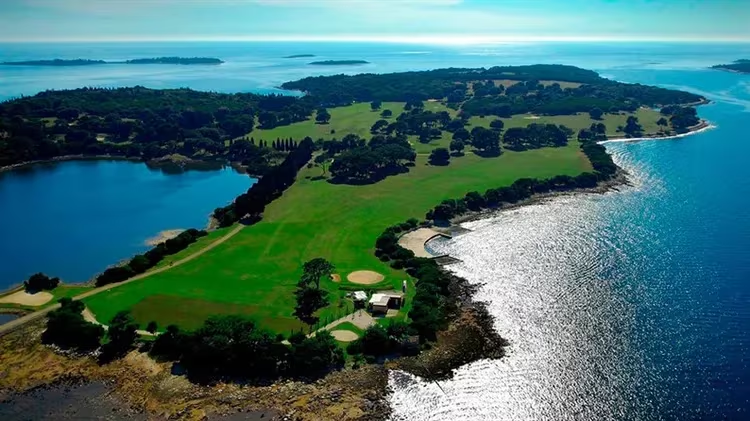
The Brijuni archipelago, which includes 14 small islands, stretches along the southwestern coast of Istria. These places are familiar to mankind since the Bronze Age. For centuries, the lands washed by the Adriatic Sea were owned by the Celts, Romans and Byzantines. The powers that be have always appreciated the mild climate and colorful landscapes. Brijuni was the favorite resort of German Emperor Wilhelm II, and Yugoslav party leader Josip Broz Tito built a luxurious summer residence here.
Modern Brijuni is famous for its National Park. A visit here can be compared to an exciting journey through the jungle. Sitting comfortably in the carriages of a tourist train, you will get acquainted with the inhabitants of the reserve (elephants, antelopes, zebras, llamas), study the ancient exhibits of the archaeological museum and swim on a wild beach.
Ciovo Island
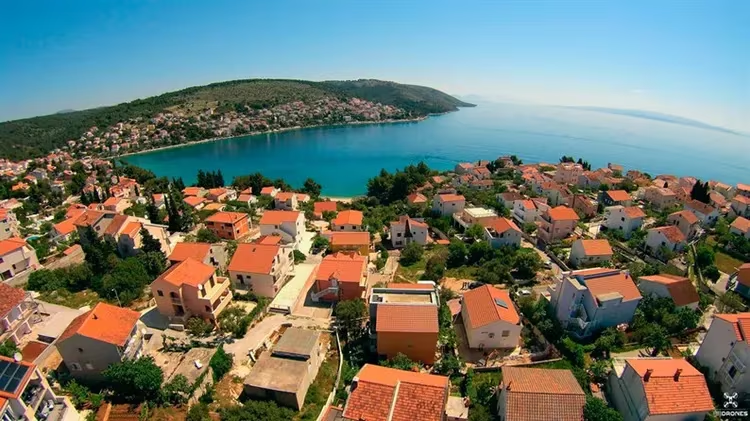
A quiet oasis in the Adriatic Sea, 30 km away from the noisy Split, was chosen by families who come to Croatia with children on vacation. Beaches with snow-white smooth pebbles, washed by warm transparent waves, are perfect for kids to play. Locals advise coming to the resort from July to September – at this time you can safely step on the seabed without fear of prickly hedgehogs.
It is pleasant to spend time free from swimming and sunbathing by visiting local sights: the Monastery of the Holy Cross built in the 15th century and the monastery of St. Mary. If this is not enough, then go on an excursion to nearby Split, Dubrovnik or Zadar. Tired of masterpieces of architecture? Then the underwater world of the Adriatic Sea awaits you, which the trainers of the modern diving center will help you explore.
Island of Brac
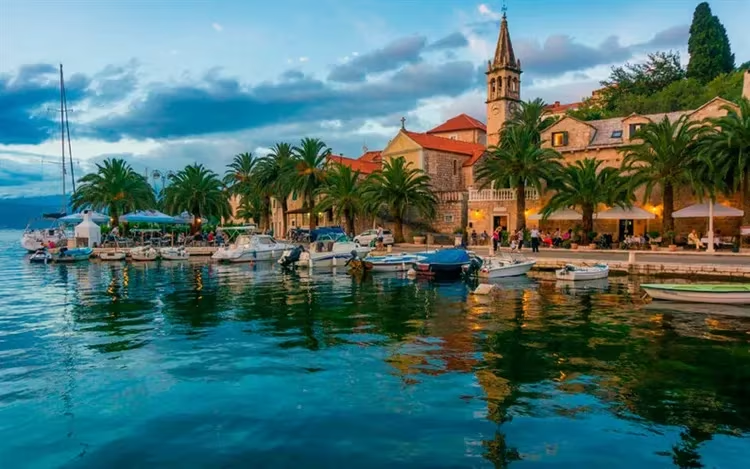
Green hills and impregnable rocks, cozy villages and ruins of ancient buildings are offered to tourists by Brac, the third largest island in the country. In Croatia, there is no more famous beach than Zlatni Rat – a cape that looks like a giant tongue, covered with sand and tiny pebbles. All the opportunities for a varied vacation are created here – a paradise place offers to ride a jet ski, paragliding, study the inhabitants of the sea day and master windsurfing.
If you are tired of relaxing on the beach, then visit the Blaz Monastery, carved into the rock, the Church of the Annunciation, the mysterious Dragon Cave, the 16th-century Kerinich Castle and the ruins of the Church of St. Vida, located at an altitude of 778 m above sea level. And the evening can be spent in one of the many restaurants. Dinner, consisting of regional dishes, will be complemented by local wines, national music and the lively atmosphere of one of the best resorts in Croatia.
The island of Krk
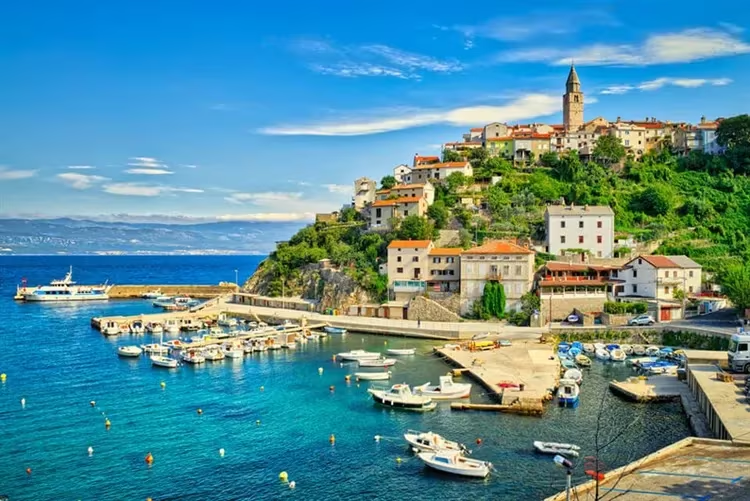
The largest island in the country, the images of which most often appear in advertising tourist photographs, offers its guests the opportunity for both beach and sightseeing holidays. Medieval cathedrals, ancient fortress walls and mysterious caves decorated with stalactites are concentrated on its territory. The coastline of the island of Krk is ideal for travelers with children – sand and small pebbles will not hurt your feet, and the gentle slope is safe even for the smallest swimmers.
The treasure of the island is a national park that dazzles with a variety of landscapes and is not inferior in beauty to the legendary Plitvice Lakes. On an area of 109 km2, covered with green hills, dangerous gorges and dense forests, about 850 representatives of the fauna live. Here you will find the ruins of the Roman Forum, as well as Orthodox and Franciscan monasteries from the 14th century. Waterfalls will be a godsend for photographers. The largest of them – Skradinski buk – brings down its waters from a height of 46 m.
Island Hvar
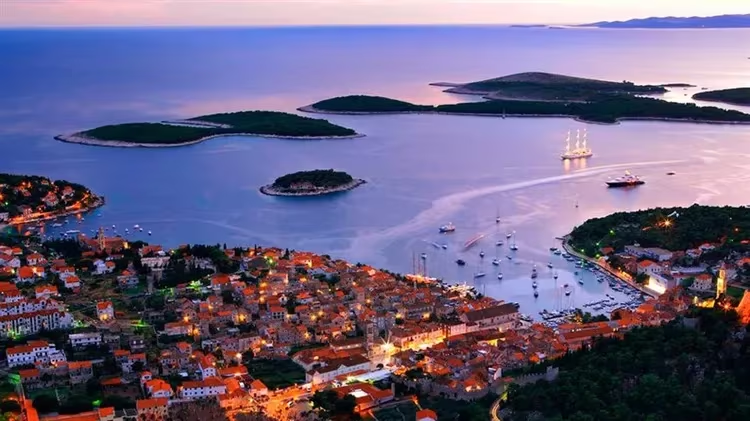
According to Forbes magazine, Hvar, located in the southern Adriatic, is recognized as one of the ten most beautiful islands in the world. But this is not the only reason that annually attracts thousands of tourists to the island, in whose ranks Beyoncé and Tom Cruise were seen. What attracts travelers to the picturesque coast, caressed by the sun for 2,720 hours a year? Ancient history, which began in the III millennium BC. e., left many architectural monuments to contemporaries. The nature of the island is also captivating.
The fields of the eastern part turn purple in June and fill the surroundings with the heady scent of lavender. The local beaches are also beautiful – the coastline, washed by turquoise-colored waves, will suit lovers of a relaxing holiday (Dubovica beaches), divers (Amphora) and active youth (Hula Hula). In the evenings, Hvar attracts with its fish restaurants, chic clubs and bars. And the most romantic sunset can be seen in the picturesque fortress of the 15th century, which offers a breathtaking panorama of the sunny island of Croatia.
Lošinj Island
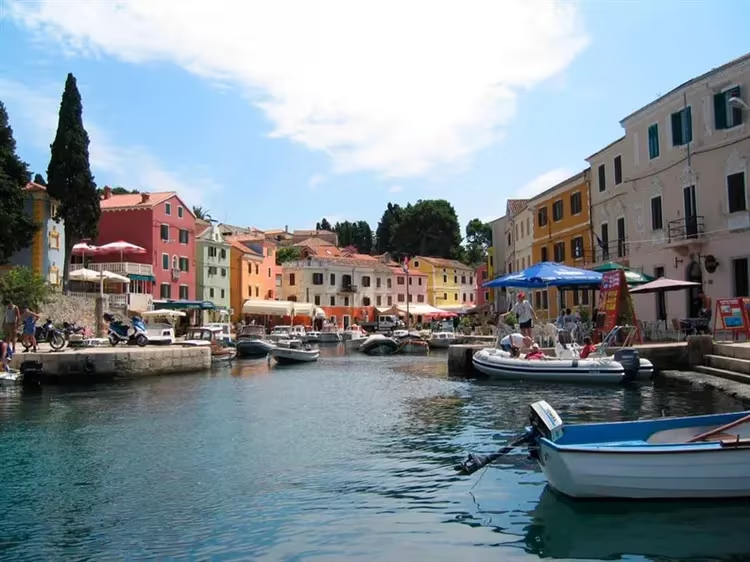
If you ask one of the 8,000 inhabitants of Lošinj what their island is famous for, they will surely answer: “Pristine nature”. People come here to take a break from noisy cities, enjoy the beauty of pine forests, rocky bays, and gain physical and mental strength in health centers that practice aromatherapy. The local coast is rich in quiet bays, and a colony of dolphins lives in the water area, whose members can be greeted while walking on a yacht.
Flanking through the streets of one of the cities of the island – Veli – you will feel the atmosphere of Italy. Ancient basilicas, renaissance buildings, and pastel-colored houses turn the life of tourists into a coveted Dolce Vita for a while. The second settlement in Mali is proud of a unique relic – an antique bronze statue of an athlete, raised from the seabed in 1996.
Kolochep Island
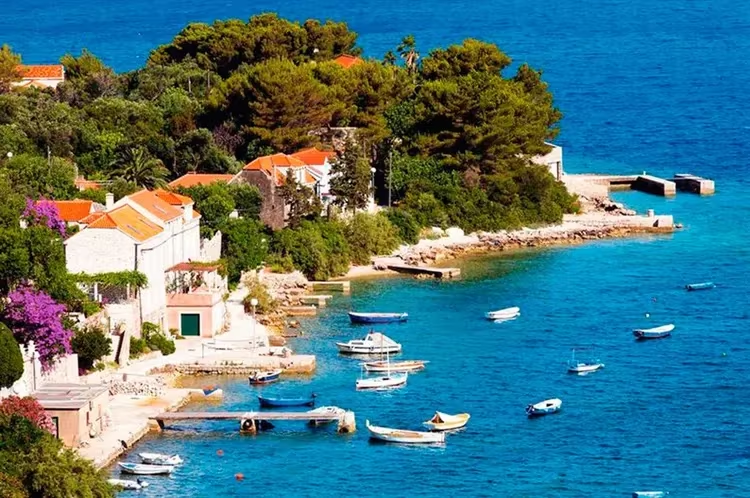
If you are tired of the incessant noise of metropolises and car exhaust, then pay attention to Kolocep, an island located 5 km from the popular Dubrovnik. The area of 2.4 km2 is home to 160 inhabitants whose houses are located in two small villages. Cars do not drive here, local transport is represented by electric cars, bicycles and donkeys. Centuries-old pines, fragrant oleanders, crystal clear sea and coral reefs dominate Kolochep.
The sights of the island are early Christian temples built in the period from the 19th to the 11th centuries, the Blue Cave and the botanical garden. Tourists arriving at the resort are waiting for the only hotel – located on a sandy beach, a three-star hotel Villas Kolocep. It can only be reached by boat departing from the port of Dubrovnik.
The island of Korcula
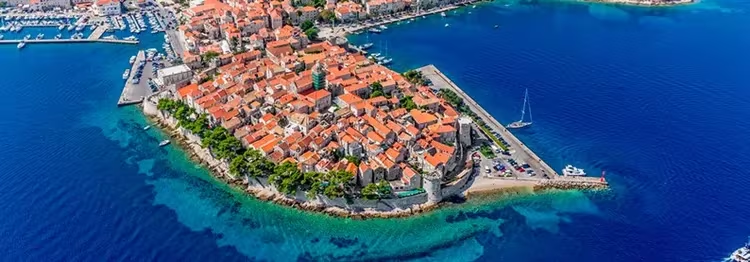
Lush vegetation and centuries-old pine trees exuding a breathtaking aroma frame the picturesque coast of the island of Korcula located in the south of Croatia. The resort is known for the Kalos Rehabilitation Institute, which offers wellness treatments based on therapeutic mud. No less famous is Lumbarda – a picturesque fishing village, in the vicinity of which there are sandy beaches rare for Croatia.
According to legend, the ancient city of Korcula was founded in the 11th century by the warrior Antenor, who was expelled from Troy.
The modern resort is rich in sights that have come down to us since the Middle Ages. The interest of tourists is invariably aroused by the powerful fortress walls of the 8th century, the Church of the Blessed Virgin Mary and the Gothic Cathedral of St. Mark. The island is rightfully proud of its famous son, the traveler Marco Polo. Here, a museum is dedicated to him, opened in the father's house of the legendary Venetian merchant.
Mljet Island
The island in southern Croatia, with a coastline of only 48 km, is one of the most popular tourist destinations. On a small stretch of land, you will find traces of ancient structures (the ruins of a Roman palace of the 2nd century and a basilica built in the 5th century), and idyllic sandy beaches, and unsurpassed cuisine, and sunken ships, and a rich underwater world that attracts diving fans here.
The main attraction of the island is the National Park, which hides in its heart two huge salt lakes connected to the sea by narrow channels. On one of them you will find an island on which rises a Benedictine monastery of the 12th century crowned with a defensive tower. Today, a restaurant has been opened on the territory of the former monastery, serving its guests with grilled meat and fish dishes.
Vrsar
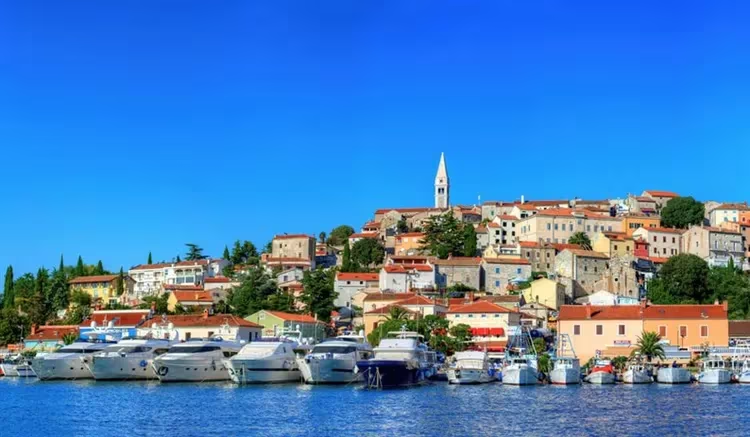
Medieval Vrsar, washed by the waves of the Liman Bay, was created for leisurely relaxation and contemplation of natural beauties. The picturesque coastline, charming bays and lush vegetation invariably captivate visitors to the city. In the middle of the 18th century, the legendary heartthrob Giacomo Casanova fell in love with this place, whose house is today a famous landmark of the resort. In addition, in July there is a festival named after the great ladies' man – a holiday dedicated to eroticism and love.
The beaches of Vrsar, covered with pebbles or concrete platforms, are equipped with the necessary equipment for a comfortable stay and playgrounds that make the hearts of young travelers beat faster. Coastal reefs and wrecks attract divers here. On one of the 18 islands of the archipelago stretching off the coast, the largest European hotel complex, Koversada, is built, famous for its secluded nudist beach.
Resorts with sandy beaches
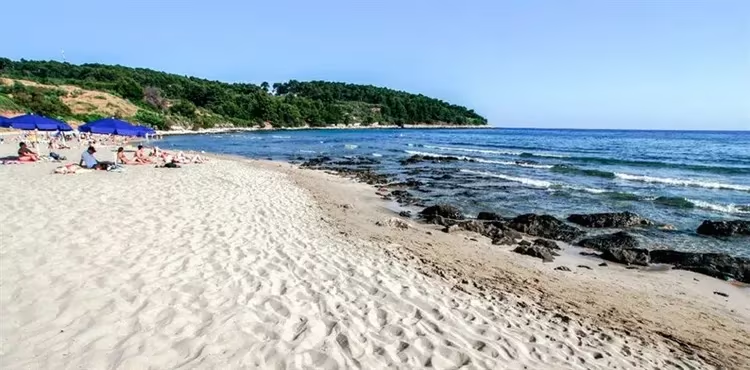
The Adriatic coast year after year is recognized as one of the cleanest in Europe. And contrary to the prejudice that the local shores are covered only with concrete slabs and large pebbles, several resorts in the country are ready to offer their guests beaches strewn with soft golden sand. The island of Brac is known to travelers not only as the most picturesque place in the country. In its southern part is the pearl of Croatia – Zlatni Rat spit covered with sand and the smallest pebbles, resembling a 634-meter wedge cutting through azure waters. The coastal zone is unique – its shape changes depending on the direction and strength of the wind, so it seems that the beach is made of liquid gold.
Generous to the sandy coast and the island of Rab. The best beaches are stretched here near the village of Lopar. The most famous of them is Rajska plaža – a 1.5-kilometer strip that offers many picturesque bays and a gentle entrance to the sea. Sandy areas are also hidden among the usual pebbly shores of Central and Southern Dalmatia. Those who like to go into the water without fear of getting hurt by sharp stones will like Bacvice in Split, surrounded by pine forests of Uvala in Dubrovnik and Punta Rata in the resort of Makarska, suitable for outdoor activities.
Which one to choose for families with children
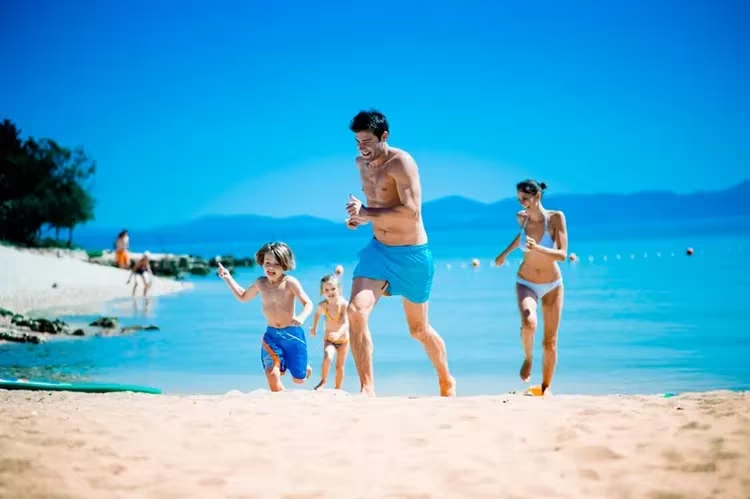
The mild climate, short flight, gentle sea and amusement parks that turn vacations into real adventures make Croatia an ideal country for families with children. Parents traveling with babies should pay attention to the islands of Krk and Rab. There are quiet bays and the best sandy beaches in Croatia. The resorts of Split, Sibenik, Makarska and Baska Voda are also suitable for families with children. These stretches of coast are equipped with playgrounds, and giant pine trees provide natural protection from the sun.
Families with teenage children will enjoy resorts that combine beach holidays, a rich excursion program and the opportunity for active games and sports. One of the best resorts for the younger generation is Dubrovnik with its picturesque coastline, ancient buildings, an old port and a spacious aquarium located within the walls of St. John's Fortress. If your child is interested in history, then visit medieval Poreč, where you can combine a sea holiday with exciting walks around the city, which carefully preserves architectural masterpieces built during the Byzantine and Roman Empires.
Dreamlines – cruises with a stopover in Dubrovnik from 299 €
Teenagers will also be interested in Istria, located in the north of the country, offering young explorers to visit the Dinosaur Park and find themselves in the amazing Baredine cave. You can relax from a breathtaking walk through the world of prehistoric dinosaurs and explore the mysterious dungeon on the beaches of the Medulin resort. Pine groves provide shade that reliably protects from the scorching sun, and stretching for several kilometers, the coastline, strewn with small pebbles and sand, invites you to soak up the sun loungers and go windsurfing or diving.
Ski resorts
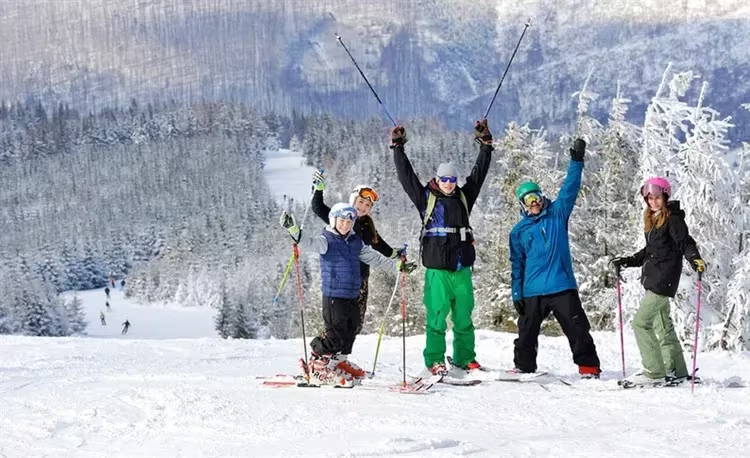
Croatia, associated by many with the bright summer sun and warm sea, is ready to offer excellent conditions for winter holidays. A few kilometers from the Adriatic coast, in December, the season begins, which lovers of storming snow-capped mountain peaks are looking forward to. Ski resorts of the country attract with low prices, professionally equipped slopes, picturesque landscapes and a friendly atmosphere.
Sleme is the most famous place among slalomists in Croatia, located on the mountain of the same name with a height of 1,033 m. The 4 tracks laid here with a total length of 4,150 m are suitable for both those who take their first steps on the ski track and professionals. The resort has hotels, cafes, equipment rental, chairlifts and rope tows. Belolasitsa is not only a popular resort, but also an Olympic center. For those who are familiar with skiing firsthand, there are 2 red (1,200 and 1,700 m) and black (1,540 m) slopes. Children and beginners are not forgotten – short and gentle slopes are prepared for them. Evenings in Belolasitsa can be spent in a restaurant or bar.
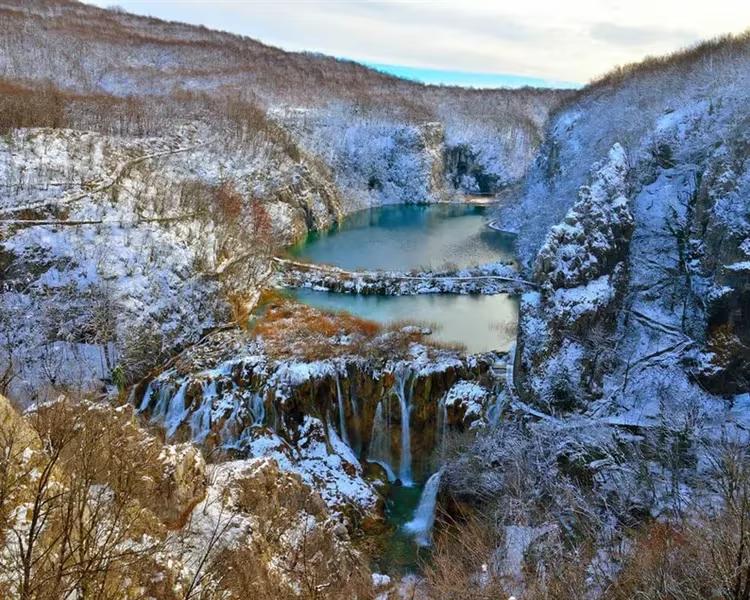
Platak, known in summer as a recreational park, transforms into a rapidly developing ski resort in winter. Here you can use seven tracks, one of which is illuminated at night. For those who like to rush from the mountainside on a sleigh, there is a separate descent. The highlight of Platak is the panorama of the Adriatic Sea, which opens from a height of 1,363 m.
Best time to travel
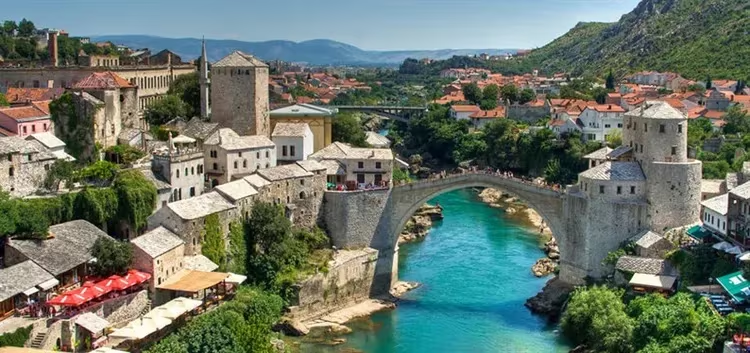
The tourist season lasts all year round in the country, so everyone chooses the best time to relax in Croatia based on their own interests and preferences. Lovers of swimming and golden tanning visit the resorts of the Adriatic from May to September. The hottest month is August. The air warms up to +33 °C, and the water – up to +25 °C, however, the sea breeze characteristic of the entire coast makes it easy to endure even the midday heat.
With the advent of autumn, tourist life in the resorts does not stop. The absence of sweltering heat and comfortable temperature (+15 to +20 °C) create excellent conditions for a therapeutic holiday in Croatia. It has the healing air of pine forests, an abundance of health centers, mud and thermal springs. In the heart of the country, not far from Zagreb, is the city of Ivanić Grad, famous for its naftalan deposit, a thick liquid with antibacterial, anti-inflammatory and stimulating effects and used to combat skin problems, diseases of the nervous system and the musculoskeletal system.
From December to March, fans of skiing become guests of Croatia. At an altitude of 1,000–1,700 m above sea level, the air temperature drops to -10 °C. Stable cover is provided by artificial snow generators.