





 129 posts
Spring
Weather, holidays and routes from March to May

The destination is chosen, but the vacation dates are not. Or the other way around: your days off are already approved at work, and you need to find out where it is warm, dry and not too crowded at that time. The "When to Travel" section answers both questions. It is built around the calendar, not around the map.
Inside are five subsections: "Spring", "Summer", "Autumn", "Winter" and "Festivals & Celebrations". The section has no articles of its own, it works as a gateway to the seasons. The subsections hold three types of texts. The first type: month-by-month overviews of a country, for example Italy, Georgia or the Netherlands, with weather, sea and reasons to go. The second: a specific city or region in a specific month, for example Paris in April, Cyprus in May, Greece in October, Lisbon in November, the Canary Islands in January. The third: roundups of destinations for a given month, for when you are still deciding where to fly for a beach trip in July, September or December.
A separate group of articles is tied to seasonal activities. For winter, these are Germany's ski areas, the resorts of Montenegro and children's ski courses in the Alps. For summer: the warm lakes of Austria, a night in a mountain hut in Tyrol and tips on getting through the August heat in Europe. For autumn: a safe hike in the Alps and the signs that it is time to turn back. The "Festivals & Celebrations" subsection gathers events with a date: the Christmas markets of Innsbruck, Colmar and Budapest, carnival in Germany and in Binche, the Feria de Abril in Seville, the Day of the Dead in Mexico City, Ramadan in Egypt, New Year in Prague.
Every article opens with a short answer: go or not, and what for. Then come the practical blocks: weather, water temperature, price level, crowds, what is open and what is closed. For each figure we give the source and the date it was checked. We state the downsides plainly. If April is rainy and August is cramped and hot, that is said at the beginning, not at the end.
The section suits those who plan on their own and are tied to dates: school breaks, public holidays, scheduled leave. It is also useful for those who want to catch a specific event and get the day right. If you are looking for a general city guide with no link to the season, you are better off starting with other sections of the site. We do not have a weather forecast for the coming week either: we describe the typical picture of a month.
It is easiest to start from what you already know. If you know the country, open the month-by-month overview and pick a period that fits your goal: beach, city, mountains or skiing. If you know the dates, go to the subsection for that season and look at the destination roundups. After that, read the article about a specific place in a specific month. Check the event last: its dates change from year to year.
The subsections overlap in topics, and that is fine. Sicily in spring is described as a seasonal trip, and the Feria de Abril in Seville as an event, although both articles belong to the same time of year. The Christmas markets and New Year in Prague are worth reading together with the "Winter" subsection, and the Almabtrieb in Austria together with the "Autumn" subsection. So when planning, it helps to open two subsections: your season and "Festivals & Celebrations".
Seasonal articles go out of date faster than others. Festival dates, market schedules, prices for ski passes and tickets change every year, so we update the texts and check them against the official websites of organizers, resorts and city services. The year in the headline shows which season the data was checked for. If you are reading an article about a past season, recheck the dates with the organizer.
Where a trip depends on entry rules, we do not give advice, we show what to look at and which official sources to check. The same goes for mountain safety: confirm route conditions with local services on the day you set out. Pick a month, check it against your goal and build in a backup option for bad weather. That way the plan will be realistic.
129 postsWeather, holidays and routes from March to May
 127 posts
Sea, mountains and cities in June, July and August
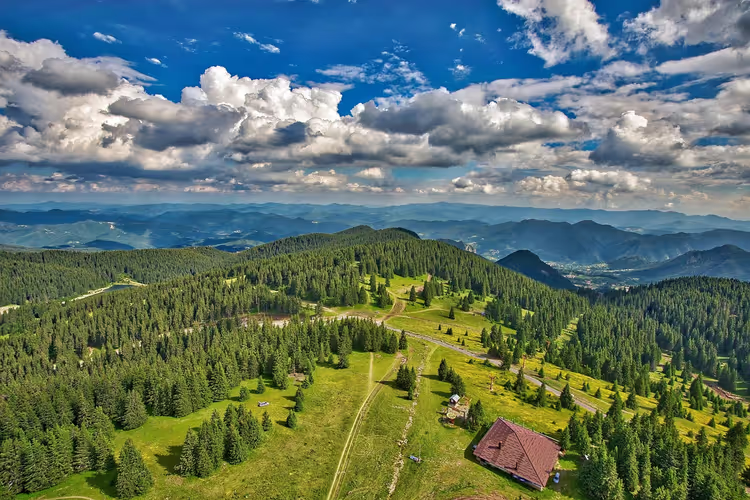 98 posts
Where to go in September, October and November and what to expect
 125 posts
Skiing, Christmas markets, the North and warm seas in winter
 AIIllustrative image: AI-generated170 posts
Events in Europe and worldwide: dates, tickets, viewing spots