
















India: a guide for planning it yourself
On a single trip you will see only a small part of India. The beaches of Goa, the canals of Kerala, the palaces of Rajasthan, colonial Kolkata and the hill stations of the Himalayas lie far apart and live in different climates. So the first decision here is not the hotel but the region and the season: everything else depends on them. This page lays the country out for planning it yourself: which regions are known for what, where to stay, how to get around, when to go and what your total is made of. Each section is short and leads on to our detailed articles. There are no prices here: between the dry season and the monsoon, between the north and the south of the same state, they differ so much that a single figure would be misleading.
What to see: the big picture
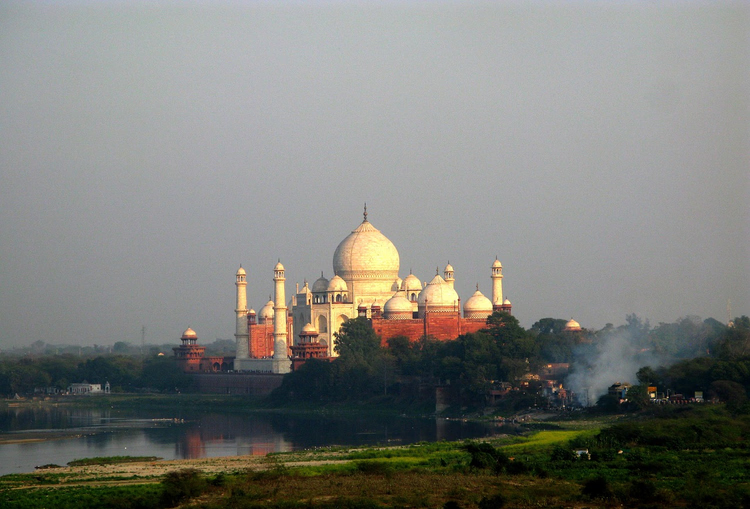
A first trip for culture usually rests on the Golden Triangle: the Red Fort in Delhi, the Taj Mahal in Agra and the Hawa Mahal palace in Jaipur. In Delhi, people add the Lotus Temple. It belongs to the Baha'i community, and entry is open to people of any faith.
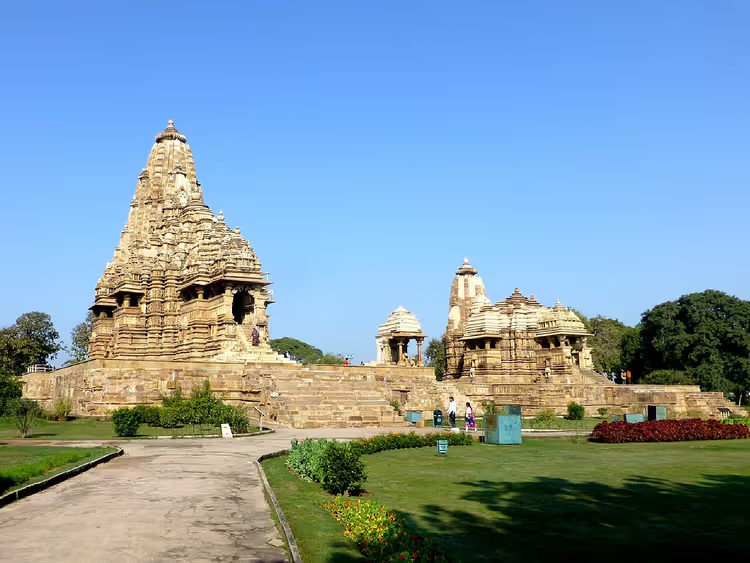
Further from the usual circuit are the temples of Khajuraho, built by the Chandela dynasty. About twenty structures survive, divided into three groups, and the advice is to start with the western one: the largest stand there. In Varanasi people come for the ghats, the wide steps down to the Ganges, in Amritsar for the Golden Temple, and in Kolkata for the colonial center around the Maidan park, with the Victoria Memorial and the Indian Museum, the oldest in the country.
On the coast the history is different. Old Goa was the capital of Portuguese India: the Basilica of Bom Jesus and the Se Cathedral stand side by side, and Fort Aguada survives on the shore. Keep two things in mind. Some working temples are closed to foreigners, and a sign at the entrance says so. And Kolkata's museums are closed on Mondays, so choose your sightseeing day in advance.
Our articles on this
Regions and cities: where to go
Goa remains the country's main beach destination, and the state is split into two halves. The north, from Candolim and Calangute to Anjuna and Arambol, means guesthouses, markets and parties. The south, from Majorda to Agonda and Palolem, means large hotels, quiet and higher prices. You choose your half before booking, because both the airport and the pace of the vacation depend on it.
Kerala is chosen for its canals, greenery and Ayurveda, and in this state's Western Ghats lies Munnar, set among tea plantations. In the north, people escape the heat of the plains in the hill stations: colonial Shimla, Manali, Mussoorie not far from Delhi, tea-growing Darjeeling with its view of Kangchenjunga, and McLeod Ganj, the center of the Tibetan community.
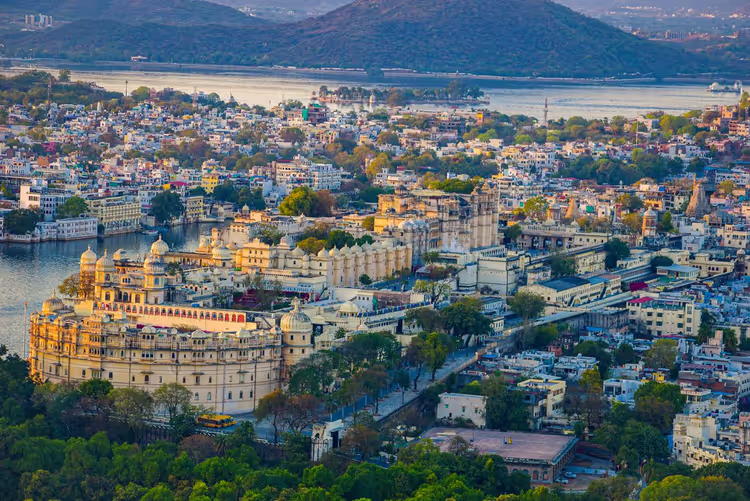
Rajasthan means Jaipur, Udaipur on its lakes, Jaisalmer, and Pushkar with its fair. Kolkata in the east suits those interested in colonial history and museums. For most travelers Delhi becomes the city of arrival and departure: it is a convenient place to start a route and to return to before flying out.
| Region | What people go for | What to keep in mind |
|---|---|---|
| North Goa | Guesthouses, markets, parties | Mopa airport is closer |
| South Goa | Large hotels and quiet | Higher prices, Dabolim airport is closer |
| Kerala | Canals, greenery, Ayurveda, the tea plantations of Munnar | The monsoon arrives here first |
| Hill stations | Cool air when the plains are hot | Best in spring and fall, many roads are closed in winter |
| Rajasthan | The palaces of Jaipur, the lakes of Udaipur, the fair in Pushkar | Crowded in January, lodging is booked early |
| Kolkata | Colonial history and museums | Museums are closed on Mondays |
| Delhi | Start and end of the route | From November, smog settles in for two to three months |
Our articles on this
- Goa: what to see, which beach to choose and where to bargain at markets
- North or South Goa: which coast to choose for beach, parties and family
- 7 Hill stations of India where people escape the summer heat
- Kolkata: museums, metro and ticket prices 2026
- Goa beaches: 17 spots from quiet Varca to kite beach Ashwem
- Goa: north for parties, south for silence
- North and south Goa: guest house or five-star hotel
Hotels: what decides the choice
In Goa, the star rating matters less than the half of the state and the distance to the water. In the south, five-star resorts with enclosed grounds predominate, and some of them have their own stretch of shore. In the north there are more guesthouses, bungalows and simple hotels. Check the distance to the beach on the map, not in the description.
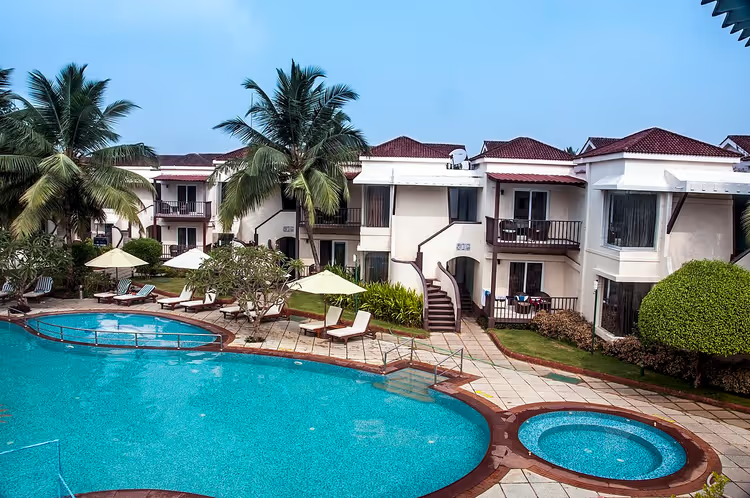
Before booking, find out what is included in the rate and what is charged separately. In winter the nights in the north of the country are cold, and only expensive hotels have heating. In summer air conditioning matters, and not every place has it. For peak dates, meaning January in Rajasthan, Diwali and the New Year period in Goa, lodging is taken well in advance, and the good options go first.
Ad
Compare hotels in India on Trip.com
We earn a commission through this link; your price stays the same.
Our articles on this
- Where to stay in Goa by the sea: 15 hotels with beach access
- Where to stay in Goa: 13 five-star hotels with a private beach
- 15 4-Star hotels near the beach in Goa: what to choose in 2026
- 14 Goa 4 star hotels on the first line: comparison of beaches and areas
- Goa hotels with a kids club: 15 options for 2026
Tours, tickets and day trips
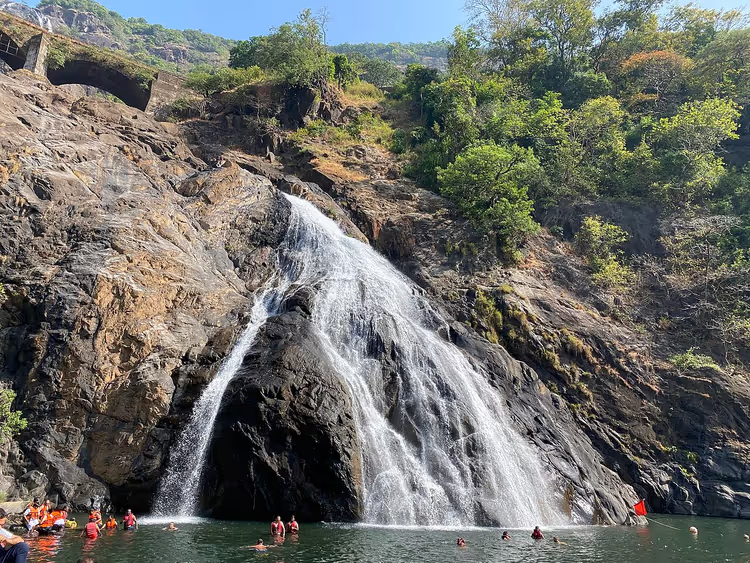
Some experiences in India cannot be arranged on your own. The last stretch to Dudhsagar Falls in Goa is covered by jeep through a wildlife sanctuary, and seats are booked ahead. In Varanasi the ghats are best seen from a boat on the Ganges, in Udaipur from the water of Lake Pichola. Between Agra and Jaipur lies Ranthambore National Park with its tiger safaris.
In the mountains, the historic narrow-gauge railways to Shimla and Darjeeling, which locals call the Toy Train, have become an attraction of their own, as has sunrise on Tiger Hill. We recommend getting your Taj Mahal ticket in advance.
Ad
See tours and excursions in India on GetYourGuide
We earn a commission through this link; your price stays the same.
Ad
See tickets for attractions on Tiqets
We earn a commission through this link; your price stays the same.
Our articles on this
Food: spice, water and the cuisine of Goa
Indian cuisine is built on rice, curry, vegetables, fish and seafood, and the flavor comes from spices and sauces. The local “a little spicy” is often already very spicy for a European, so ask about the heat before ordering and ask for a milder version. A vegetarian has an easier time in India than a meat lover. A thali lets you try many things at once: a set of small bowls on a large tray.
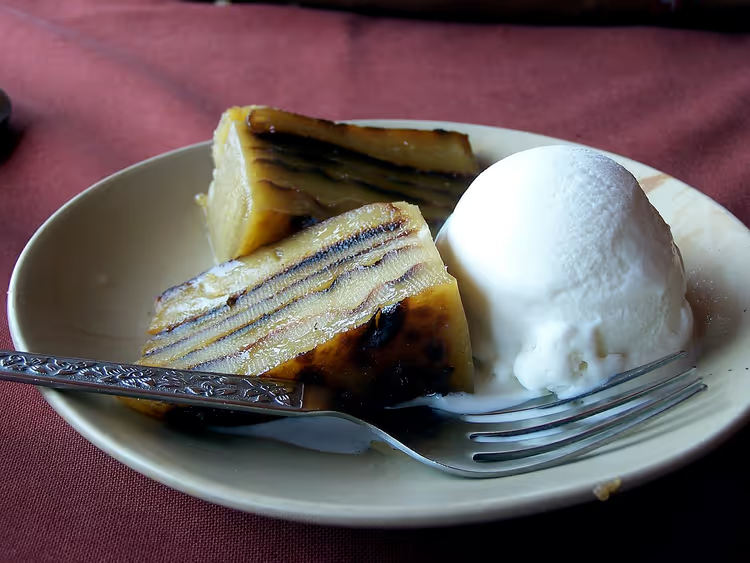
Goa stands apart. Its cuisine grew out of Indian, Portuguese and coastal traditions, it is milder than North Indian food, pork is cooked here and alcohol is served freely. Grilled seafood, the dessert bebinca and lassi are worth trying.
Two rules concern your health. Drink only sealed bottled water, use it to rinse your mouth after brushing your teeth, and skip the ice in drinks. Choose places with a steady flow of customers, where locals themselves eat: the food there is fresher.
Our articles on this
Flights, trains and getting from the airport
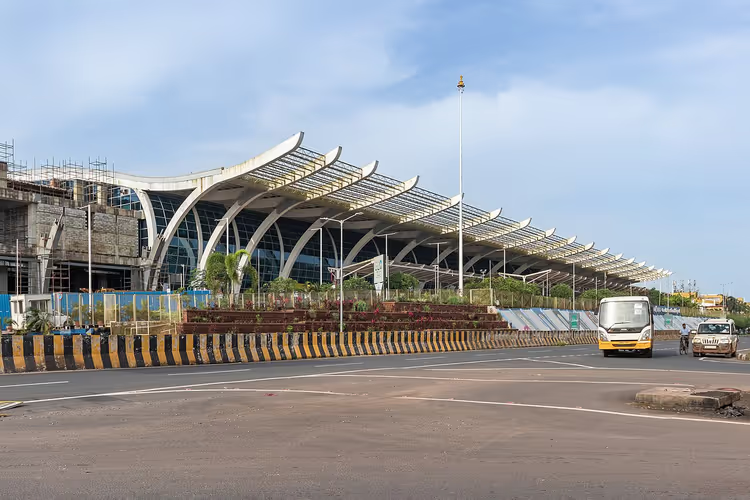
Many flights serve the big cities of Delhi, Mumbai and Bengaluru. Goa has two airports: Dabolim is closer to the southern beaches, Mopa to the northern ones. Pick the beach first, then the airport, and only then look at flights. A direct flight saves time, a connection through Mumbai or Delhi saves money, and there is also an overnight train from Mumbai to Goa on the Konkan Railway.
Within the country, train tickets are bought in advance: some seats are held under a tourist quota, but that sells out too. In the big cities the metro helps, since it does not sit in traffic. You hail a rickshaw on the street or order one through an app, and you agree on the price before getting in.
Traffic in India drives on the left, and the rules of the road are not strictly followed. A newcomer is better off not driving: hire a car with a driver. In January, dense fog around Delhi and Agra disrupts flight and train schedules, and on major holidays transport is packed, so do not plan tight connections.
| Situation | How to travel | What to keep in mind |
|---|---|---|
| Southern beaches of Goa | Flight to Dabolim airport | Pick the beach first, then the airport |
| Northern beaches of Goa | Flight to Mopa airport | A connection through Mumbai or Delhi is cheaper than a direct flight |
| From Mumbai to Goa | Overnight train on the Konkan Railway | Buy tickets in advance |
| Between cities | Train | Tourist quota seats sell out too |
| In a big city | Metro | Does not sit in traffic |
| A short ride | Rickshaw from the street or through an app | Agree on the price before getting in |
| Trips by car | Car with a driver | Traffic drives on the left, a newcomer is better off not driving |
Ad
Book a fixed price airport transfer in India
We earn a commission through this link; your price stays the same.
Our articles on this
When to go: dry season, monsoon and festivals
For most regions the best time runs from October through March: it is dry and the heat eases, but there are more tourists. The beach season coincides with the dry winter, roughly from November through March. January is the coolest month and almost rainless, yet it is the peak: Rajasthan and Goa are crowded, while in the Himalayas there is snow and many roads are closed. Spring and fall are best for the hill stations.
The monsoon lasts from June through September. The rains reach Kerala first, cover almost the whole country by mid-July, and the most water falls in July. At that time it is relatively dry in Rajasthan, Ladakh, Delhi, Bengaluru and Hyderabad. The rains bring shorter lines and lower prices, but in Goa lifeguards often close the water to swimmers, and landslides occur in the mountains. In Delhi, smog settles in from November for two to three months.
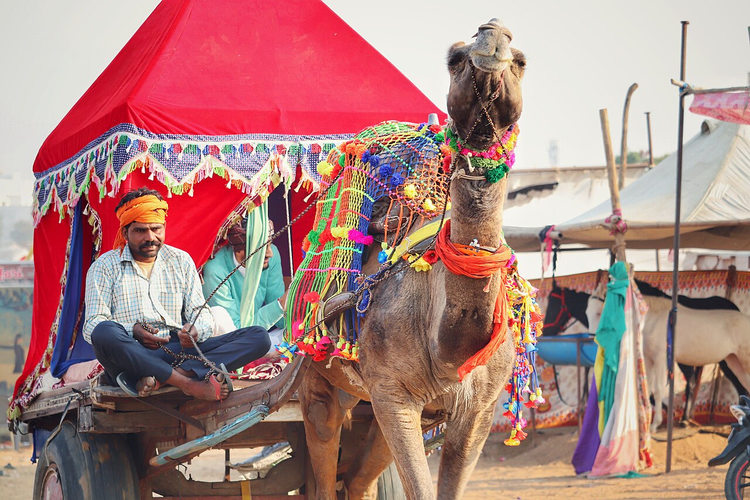
Festivals shift every year because they follow the lunar calendar. Diwali, the festival of lights, falls in October or November, Holi at the start of spring, the Pushkar fair in November. For these days, lodging and transport are booked several months ahead.
| Period | Weather and crowds | What it suits |
|---|---|---|
| October to March | Dry, the heat eases, more tourists | Most regions of the country |
| November to March | Dry winter on the coast | Beach vacations |
| January | Coolest month, almost rainless, peak season | Rajasthan and Goa, though they are crowded; snow in the Himalayas |
| Spring and fall | Between the winter snow in the Himalayas and the monsoon landslides | Hill stations |
| June to September | Monsoon, the most rain in July | Rajasthan, Ladakh and Delhi, where it is relatively dry; not for the beach |
Twelve months compared: find the best time to go
Our articles on this
- Rainy season in India: where to go to avoid downpours
- Weather in India in January: where to go and what to pack
- Diwali in India: when is the holiday in 2026 and which city to visit
- Holi 2026 in India: 10 places with the most unusual tradition
- Pushkar Fair 2026: dates, camel market and bathing at the ghats
- Smog in Delhi: why the air in India's capital worsens every autumn
Budget: how to work out your own total
Three things move the total in India. The season: the dry winter months and the days of Diwali keep prices high, while in the monsoon flights and hotels usually get cheaper. The region and class of lodging: South Goa with its large hotels costs noticeably more than the north with its guesthouses. The journey: a direct flight costs more than a route with a connection, and internal transfers add both money and days.
There are local specifics too. In museums, a ticket for a foreigner costs more than for an Indian citizen. In bazaars and rickshaws the price quoted to a tourist is usually already inflated, and bargaining is normal here. Markets take cash, while cards are accepted in hotels and large stores. That is why you find a calculator here instead of a figure: it separates lodging, food, transport, tickets and a reserve, and shows which item pushes your total up.
Routes: the first trip and how to extend it
The classic base for a first trip is a week in the Golden Triangle: Delhi, Agra and Jaipur. A rough schedule looks like this: two days for Delhi, two for Agra with the Taj Mahal and the fort, the rest for Jaipur. From there the route is extended by interest, adding roughly two days for each destination.
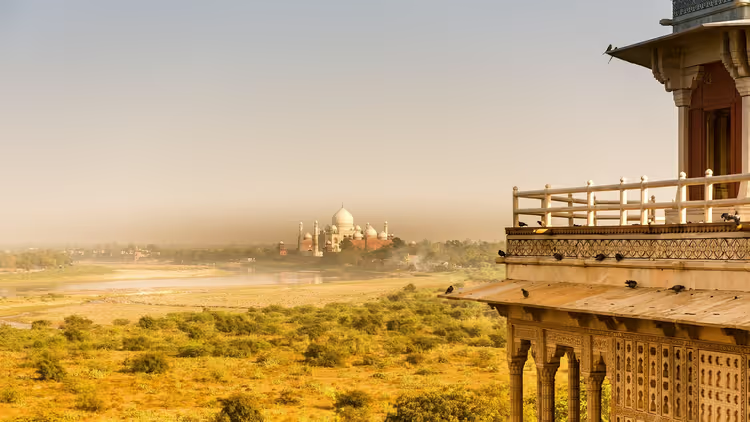
The most common additions: a safari in Ranthambore, the ancient rituals of Varanasi or Amritsar, the palaces of Jaisalmer, Jodhpur and Udaipur, Mumbai, and at the end a few days on the beach in Goa. Kolkata needs two full days, and up to four for lovers of colonial history.
Leave the first day after the flight for acclimatization: the body does not adjust to heat and humidity right away. And do not try to fit the north, the south and the mountains into one vacation. Distances here are large, and every transfer takes up a good part of the day.
| Part of the route | How many days | What fits in |
|---|---|---|
| After the flight | First day | Acclimatization to heat and humidity |
| Delhi | Two days | The Red Fort and the Lotus Temple |
| Agra | Two days | The Taj Mahal and the fort |
| Jaipur | Rest of the week | The Hawa Mahal palace |
| Each additional destination | About two days | Ranthambore, Varanasi, Amritsar, Udaipur or the beach in Goa |
| Kolkata | Two full days, up to four | The colonial center around the Maidan park and the museums |
Day planner: check what fits into one day
Our articles on this
Practical matters: visa, connectivity, customs
A tourist visa is required for India. It is issued online through the official e-Visa portal, with no visit to a consulate, and we recommend applying before you buy your plane tickets. Check the terms for your passport on the same portal. A separate form, the e-Arrival card, is filled in 72 hours before arrival, and it does not replace the visa. Taking cash rupees in and out of the country is capped by a limit, so spend any leftover local currency before you fly out.
No vaccinations are mandatory for entry, but check the list of recommended ones with a doctor about a month before the trip. Private clinics in India are good, yet the bill is presented right away, so take out travel insurance before you leave and read what exactly it covers. Check roaming terms with your carrier before the trip. An eSIM set up while you are still at home gives you internet from the first minute, a local SIM card is sold at the airport, and hotel Wi-Fi is often slow.
The customs are simple, but people notice them. The greeting is the word “namaste” with palms pressed together at the chest. Food and money are handed over with the right hand, because the left is considered unclean. Before a temple, shoes come off and shoulders and knees are covered. People and rituals are not photographed without permission.
Build a packing list for the India trip
Ad
See eSIM options for India on Yesim
We earn a commission through this link; your price stays the same.
Ad
See travel insurance on World Nomads
We earn a commission through this link; your price stays the same.
Our articles on this
- How to prepare for a trip to India: visa, water, transport and food
- What you can and cannot do in India: 10 rules of conduct for a tourist
- Vacation in India: 8 facts worth knowing in advance
- How to behave in India: customs and rules for visitors
- What surprises in India: temples, rupees and left-hand traffic