








Georgia: a guide for independent planning
Georgia is compact, yet it holds several very different trips at once: a capital spread over hills, the wine country of Kakheti, the high Caucasus with its stone towers, and the subtropical Black Sea coast. You can combine city, mountains and sea in a single vacation, but mountain roads take more time than the map suggests. This page lays the country out for independent planning: what to see, which regions to choose, where to stay, how to get around, when to go and what your costs are made of. Each section stays short and leads on to our detailed articles. There are no prices here: they depend on the season and the region and go out of date quickly, so instead of a figure we give you a calculator.
What to see: from Tbilisi to the glaciers
Most visitors start with Tbilisi. The old town is explored on foot: Freedom Square, the Abanotubani sulfur baths, Narikala Fortress, reached by cable car, and Mount Mtatsminda with its funicular. Most viewpoints, churches and bridges are free to visit.
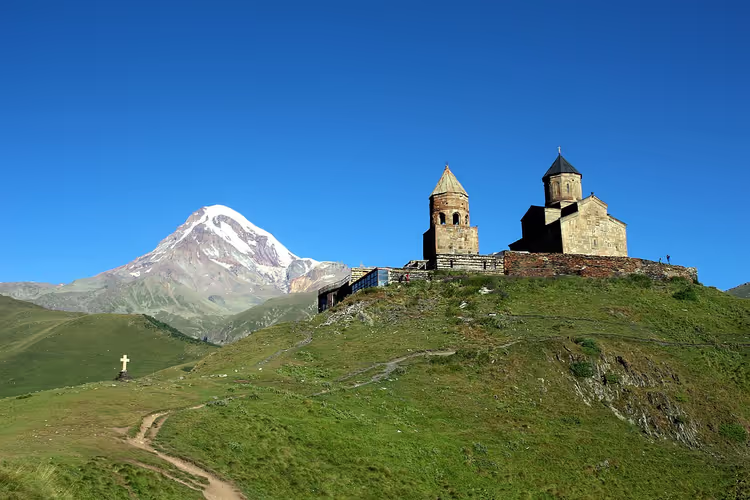
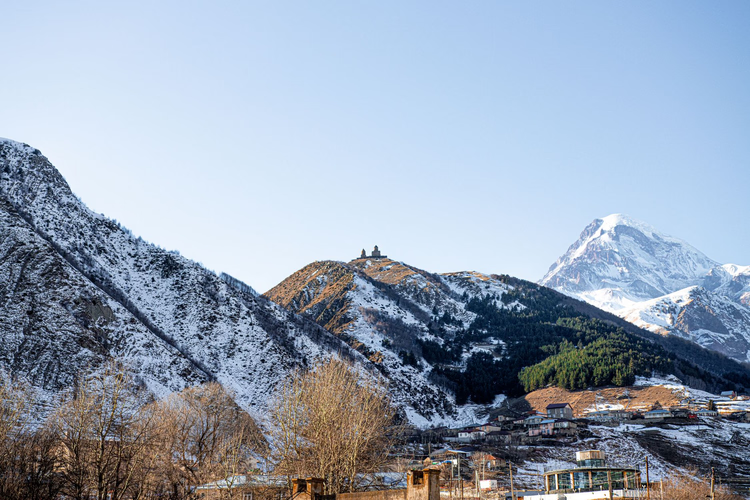
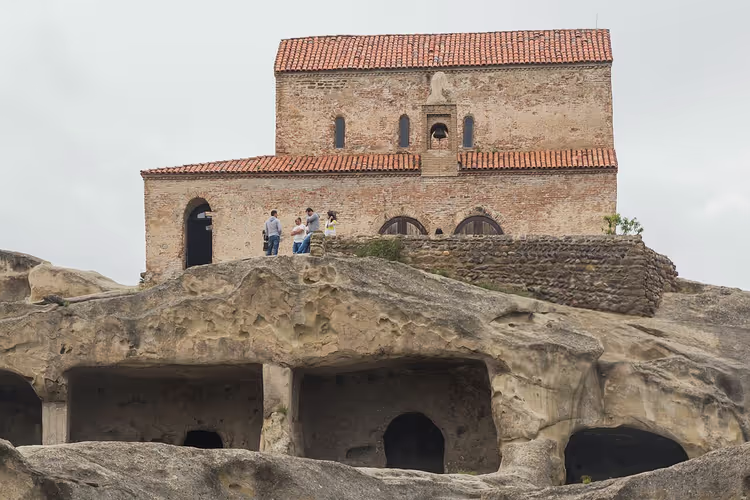
Half an hour's drive from the capital lies Mtskheta, with Svetitskhoveli Cathedral and Jvari Monastery above the confluence of two rivers; its churches are on the UNESCO World Heritage list. Further out come the cave towns of Uplistsikhe and Vardzia, the cave monasteries of David Gareja, Ananuri Fortress on the Georgian Military Highway and Gergeti Trinity Church against the backdrop of Mount Kazbek. In the west, near Kutaisi, people visit Gelati Monastery, Prometheus Cave and Martvili Canyon.
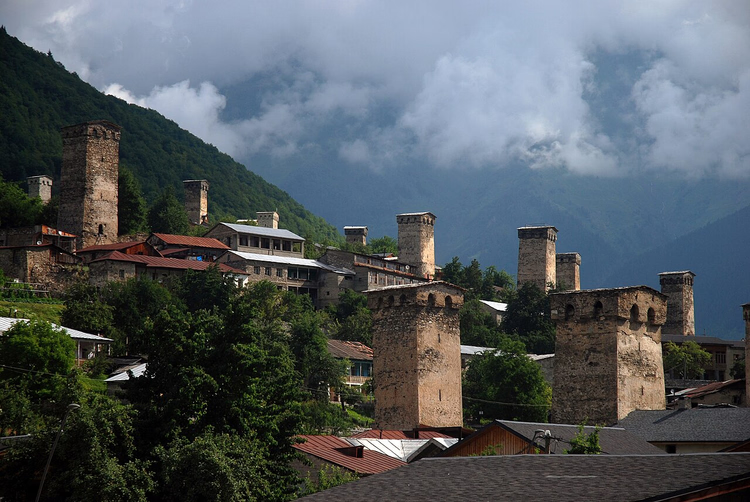
Svaneti is a subject of its own: the Svan towers of Mestia, the high mountain village of Ushguli, the trail to the Chalaadi Glacier. On the coast the main city is Batumi, with its seaside boulevard, botanical garden, the “Argo” cable car and the “Ali and Nino” sculpture.
Our articles on this
Regions and resorts: where to go
For a first trip, Tbilisi makes a convenient base: from here you can reach Mtskheta, Kakheti with Sighnaghi and Telavi, and Stepantsminda, also known as Kazbegi, within a day. Kakheti is the nearest wine region, while Stepantsminda means mountains, hikes and a view of Mount Kazbek. Borjomi, with its mineral springs and national park, sits in a gorge on the way to the ski resort of Bakuriani, and the two are visited in one trip. Kutaisi serves as a base for the west of the country, and Mestia for Svaneti.
The coast is short, but the resorts differ. Batumi runs at a city pace, with a pebble beach and entertainment. Kobuleti is quieter and suits families, Ureki and Shekvetili have black magnetic sand and a gently sloping entry into the water, and in Gonio, Kvariati and Sarpi the mountains come right down to the sea and there are fewer people.
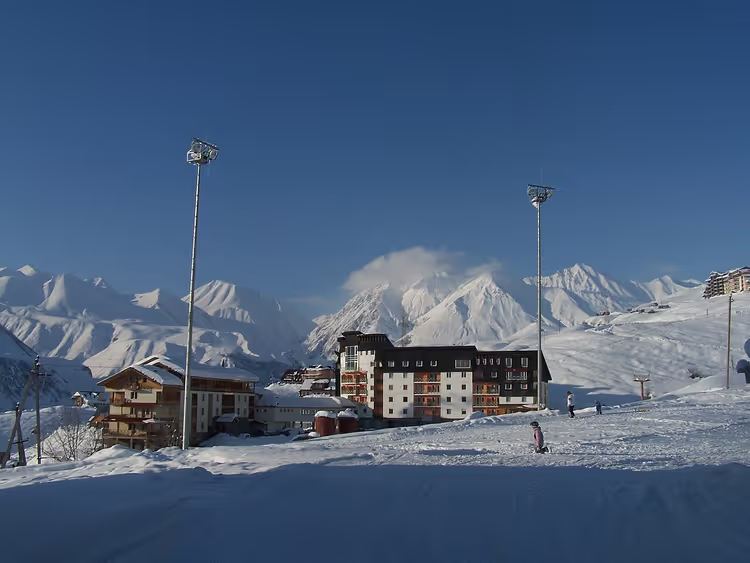
Five ski resorts operate in winter. Gudauri is the highest and the closest to Tbilisi, Bakuriani is the oldest and works well for beginners and families, Tetnuldi and Hatsvali are in Svaneti, and Goderdzi is in Upper Adjara.
| Place | Who it suits | What to keep in mind |
|---|---|---|
| Tbilisi | First trip, base for day trips | Mtskheta, Kakheti and Stepantsminda are within a day's reach |
| Kakheti: Sighnaghi and Telavi | Wine and unhurried walks | The wine region closest to the capital |
| Stepantsminda (Kazbegi) | Mountains, hikes, a view of Mount Kazbek | It is cool in the mountains even in summer |
| Mestia and Svaneti | Trekking and Svan towers | The drive from Tbilisi takes almost a full day |
| Batumi | City, entertainment, sea | Pebble beach, crowded from July |
| Kobuleti, Ureki, Shekvetili | Families with children | Quieter than Batumi; Ureki and Shekvetili have a gently sloping entry into the water |
| Gonio, Kvariati, Sarpi | A quiet stay by the sea | The mountains come right down to the sea, fewer people |
| Gudauri and Bakuriani | Skiing in winter | Gudauri is the highest, Bakuriani works well for beginners and families |
Our articles on this
- Where to go in Georgia: 15 resorts for sea, mountains and treatment
- 10 Seaside resorts in Georgia: from Batumi to Sarpi, where it is quieter and cheaper
- Vacation in Georgia: resorts, hotels and season by the sea
- Georgia without a visa for up to a year: five ski resorts and the best cities
- 5 Tbilisi neighborhoods: transport, prices and what is nearby
- Where to stay in Batumi: three districts and hotels for every scenario
- Skiing in Georgia: five resorts and when they have the best snow
- Tetnuldi resort in Svaneti: season, slopes and how to get there
Hotels: what shapes the choice and the price
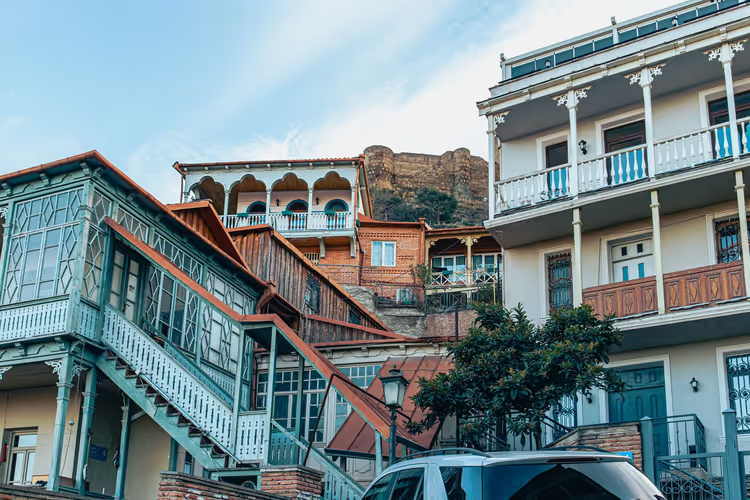
In Tbilisi the neighborhood matters more than the star rating. The city stands on hills, and two addresses that look close on the map are in fact separated by a climb and flights of stairs. Check the distance to the metro and the noise under the windows. In the old town everything is within walking distance, but there are almost no outdoor pools in the center.
In Batumi the main question is the distance to the water. The beaches are pebbly and free, the beachfront row costs more, and only some hotels have their own stretch of shore. All-inclusive is less common in Georgia than at the familiar beach destinations: the rate often covers breakfast only. In July and August there are almost no vacant rooms left on the coast.
In the mountains, guesthouses and small hotels dominate. In Svaneti and around Kazbek the choice is narrower than by the sea, so book ahead, and in winter check whether the house has heating.
Ad
Compare places to stay in Georgia on Trip.com
We earn a commission through this link; your price stays the same.
Our articles on this
- Hotels in Georgia on the seashore: 15 options from Batumi to Shekvetili
- Where to stay in Old Tbilisi: 13 hotels from Freedom Square to the sulfur baths
- Where to stay in central Tbilisi: 15 3-star hotels, 10 have breakfast
- Tbilisi hotels with a pool: 11 options for different trip formats
- 16 Tbilisi hotels with a balcony and panorama: how to choose a room view
- Where to stay in Batumi: 15 hotels with a beach and sea view
- 12 Batumi hotels by the sea: breakfasts, pools and the way to the beach
- 13 Batumi 4 star hotels by the sea: distance to the beach and what is included in the rate
- Where to stay in Batumi: 10 hotels with a pool and sea view
Tours and day trips
Most tours around the country are day trips from Tbilisi by car or minivan: Mtskheta and Jvari, Uplistsikhe and Gori, Kakheti with a wine tasting, the Georgian Military Highway to Kazbek. Similar names hide different sets of stops, so compare programs by the sites they include rather than by the title, and check whether entrance tickets are included in the price. More than two destinations do not fit into one day, and for Kutaisi and for Akhaltsikhe with Vardzia it is better to plan an overnight stay.
In winter some mountain roads are closed, which leaves Mtskheta, Kakheti and Kutaisi. Do not agree to a “tour” offered next to a car with a banner in central Tbilisi: most often it is a driver without a guide. In Tbilisi itself there are free walking tours, food tours and audio guides.
Ad
See tours and excursions in Georgia on GetYourGuide
We earn a commission through this link; your price stays the same.
Ad
See tickets for museums and attractions on Tiqets
We earn a commission through this link; your price stays the same.
Our articles on this
Georgian food and wine
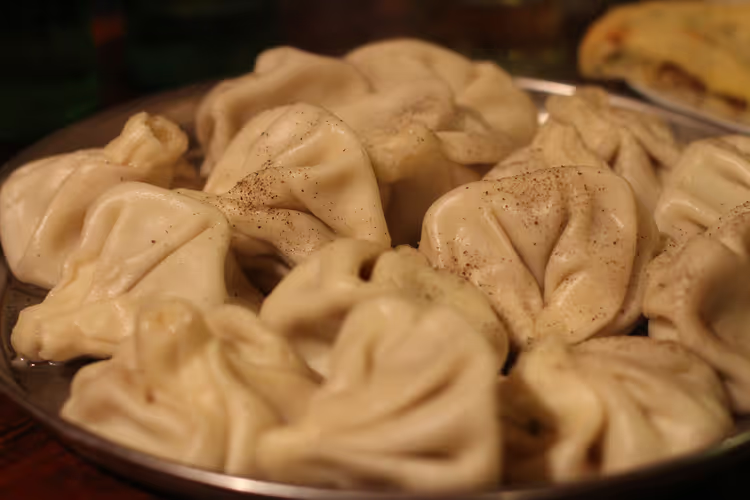
Start with khinkali and khachapuri, but do not stop there: almost every region has a dish of its own. Khinkali are eaten by hand, held by the topknot, and you drink the broth first. Khachapuri comes in Imeretian, Megrelian and Adjarian versions. Among the soups, people order the mildly spicy kharcho or the gentle chikhirtma; among the mains, chakhokhbili, shkmeruli in a milk sauce and ojakhuri on a hot pan. Vegetarians will do well with lobio, eggplant dishes and walnut sauces, and pelamushi is the dessert to pick.
Wine is a subject of its own here. In Kakheti it is aged in qvevri, clay vessels buried in the ground, and in the fall the region harvests its grapes: rtveli starts at the end of August and moves in a wave from east to west.
A practical note: tips are welcome but not required, and people usually round up the bill or leave about a tenth.
Our articles on this
Airports, trains, marshrutkas and car rental
Three airports handle international flights: Tbilisi, Kutaisi and Batumi. Kutaisi is convenient if you are planning the west of the country, Svaneti or the sea, but the capital is several hours away by road. A city bus runs from Tbilisi airport to the center, but it does not run at night, and then your options are a taxi through an app or a transfer booked in advance.
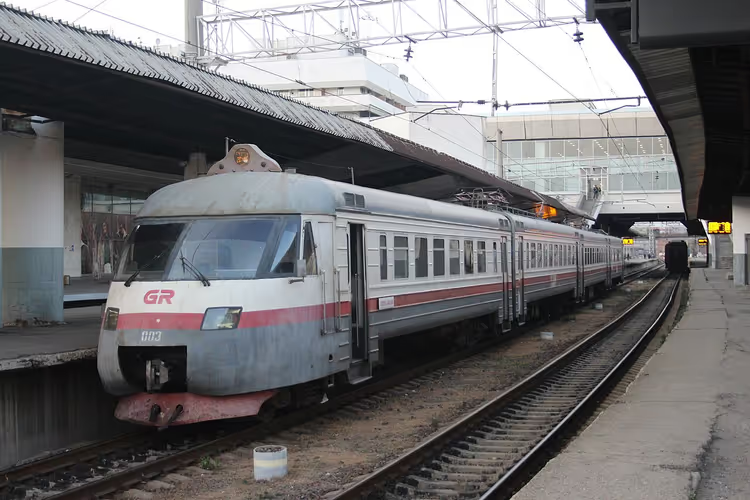
Trains link Tbilisi with Batumi and Kutaisi, and tickets sell out quickly around holidays. Marshrutkas, shared minibuses, go to the other cities: in Tbilisi they leave from Didube station as they fill up. Order taxis in the Bolt app, which shows the price before you get in.
Public transport often does not reach the monasteries, canyons and cave towns, so for a loop route people rent a car in Tbilisi, Batumi or Kutaisi. You need a passport, a driver's license and a card in the driver's name, and some rental companies ask for an international driving permit. A regular car is enough for the main highways; four-wheel drive is needed for Tusheti, the dirt roads of Svaneti and the climb to Gergeti. In winter ask about winter tires: the Jvari Pass may be closed during snowfall.
| Route | How to travel | What to keep in mind |
|---|---|---|
| Tbilisi airport, city center | City bus | Does not run at night, then a taxi through an app or a transfer |
| Tbilisi, Batumi and Kutaisi | Train | Tickets sell out quickly around holidays |
| Tbilisi, other cities | Marshrutka from Didube station | Leaves once it fills up |
| Trips within the city | Taxi in the Bolt app | The price is shown before you get in |
| Monasteries, canyons, cave towns | Rental car | Public transport often does not go there |
| Tusheti, dirt roads of Svaneti, the climb to Gergeti | Four-wheel-drive car | In winter ask about winter tires |
Ad
Book a fixed-price airport transfer in Georgia
We earn a commission through this link; your price stays the same.
Our articles on this
When to go: seasons by purpose
There is no universal month; it all depends on your purpose. For cities and wine, May, June, September and October work best: the weather is mild and there are fewer people than at the peak. Tbilisi gets very hot in summer, so in July walks are moved to the morning and the evening.
For trekking in the mountains the window is short: July and August. Tusheti and Khevsureti open no earlier than June, and from mid-October snow closes the passes. It is cool in the mountains even in summer, so always take a jacket.
The swimming season in Adjara lasts from May to early November, the sea is warmest in July and August, and from July the coast gets crowded. Humid subtropics mean heavy rain, and Batumi has no dry month. The ski season runs from December to roughly the end of March, and to April at some resorts.
| Purpose of the trip | Months | What to keep in mind |
|---|---|---|
| Cities and wine | May, June, September, October | Mild weather, fewer people than at the peak |
| Tbilisi in summer | July | The city gets very hot, walks are moved to the morning and the evening |
| Trekking in the mountains | July and August | From mid-October snow closes the passes |
| The sea in Adjara | From May to early November | The water is warmest in July and August, Batumi has no dry month |
| Skiing | From December to roughly the end of March | At some resorts the season lasts until April |
Twelve months compared: find the best time for your trip
Our articles on this
Budget: what your total is made of
Georgia remains an inexpensive destination, but these days you save on food, transport and free churches rather than on accommodation. Accommodation itself has become the main expense, especially in central Tbilisi, and the gap between a frugal and a comfortable version of the trip lies almost entirely there.
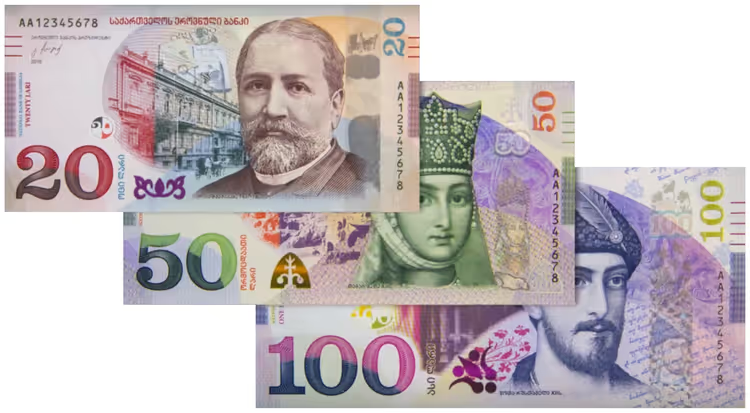
The season moves the total just as much. Batumi in July and August is more expensive than the capital, while in winter it empties out and prices drop. Outside Tbilisi, guesthouses are noticeably cheaper. Add the mandatory insurance policy, a rental car or tours for trips out of town, and a separate rate for foreigners at some sites. It pays to exchange currency in the city rather than at the airport.
That is why you will find a calculator here instead of a figure: it separates accommodation, food, transport, tickets and a reserve, and shows which item pushes your total up.
Calculate your budget for a trip to Georgia
Our articles on this
Itineraries: a week, ten days, two weeks
Allow three or four full days for Tbilisi alone: the city seems compact, but the hills wear you out. A week gives you the classic eastern loop: Tbilisi, Mtskheta with Jvari, two days in Kakheti and David Gareja. Ten days add the Georgian Military Highway with Kazbegi and the west of the country: the train to Kutaisi and the Martvili and Okatse canyons. Two weeks also fit in Borjomi with Vardzia.
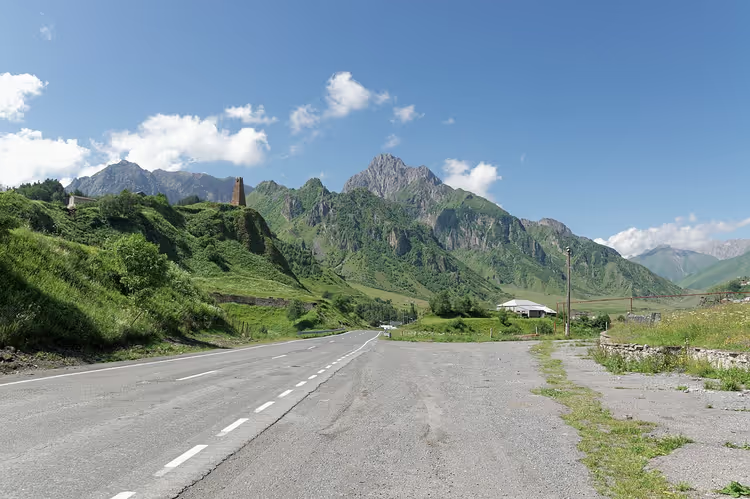
Svaneti needs a margin of its own: the drive from Tbilisi to Mestia takes almost a full day, so do not plan fewer than three days for the region. The classic trek from Mestia to Ushguli takes three or four days, with nights in guesthouses. Borjomi and Bakuriani make a standalone trip of three or four days, and a stay by the sea takes a week.
| Duration | What fits |
|---|---|
| 3-4 days | Tbilisi alone, at an easy pace |
| A week | Eastern loop: Tbilisi, Mtskheta with Jvari, two days in Kakheti and David Gareja |
| Ten days | Add Kazbegi and the west of the country: Kutaisi, the Martvili and Okatse canyons |
| Two weeks | Borjomi with Vardzia as well |
| Three days or more, separately | Svaneti: Mestia, and the trek to Ushguli needs three or four days |
| A week by the sea | A beach vacation in Adjara |
Day planner: check what fits into one day
Our articles on this
- Tbilisi in 3 days: a walking route with prices and opening hours
- Tbilisi and Kakheti: a route through the old town, Narikala and Sighnaghi wineries
- Tbilisi and Kazbek in a few days: a route without overpaying
- Borjomi and Bakuriani: a 3-4 day route with springs and skiing
- One day in Batumi: a walking route to 20 places with tickets and prices
Practicalities: entry, insurance, money, connectivity
EU citizens do not need a visa and may stay in the country for up to a year; check the rules for your own passport before the trip on the website of Georgia's Ministry of Foreign Affairs. A medical policy with accident coverage is mandatory for all tourists, regardless of the visa regime. Take it out before you fly, for the whole length of the trip: the policy is not sold at the airport, and the document must be in Georgian or English.
The national currency is the lari. Cards are accepted almost everywhere, but you need cash at markets, in small bakeries, in marshrutkas and in the mountains. Check the roaming terms with your own carrier, and keep an eSIM as a backup way to have internet from the first minute. For a long trip, a local SIM card from Magti, Silknet or Cellfie is the better deal; it is issued against your passport at a store in the city. In the mountains the signal drops out, so download your maps in advance.
Churches and monasteries are working places of worship: shoulders and knees must be covered, and women will need a headscarf. Tap water is safe to drink. The single emergency number is 112. Politics and religion are best not discussed with locals.
Build a packing list for a trip to Georgia
Ad
See eSIMs for Georgia on Yesim
We earn a commission through this link; your price stays the same.
Ad
See travel insurance on World Nomads
We earn a commission through this link; your price stays the same.
Our articles on this