


Bulgaria: a guide for planning your own trip
Bulgaria fits three different trips into one small country: Black Sea beaches, mountains with ski slopes and hiking trails, and old towns with fortresses and monasteries. You can get from the coast to the mountains in a day, so the formats combine easily. Each of them has its own season, though, and a single calendar for all three does not work. This page lays the country out for independent planning: where to swim, where to ski, what to see inland, how to get around and what your costs depend on. Each section stays short and leads on to our detailed articles. There are no prices here: between July and September they differ so much on the coast that a fixed figure would be misleading.
What to see: towns, monasteries, rocks
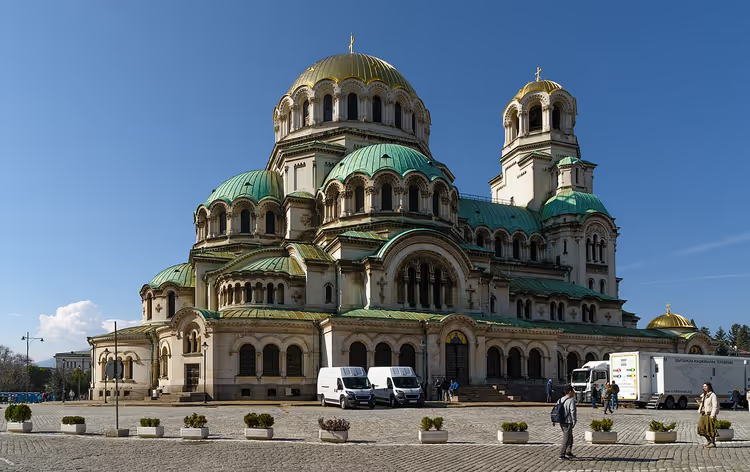
Sofia is usually the first stop. In the center, Alexander Nevsky Cathedral, the Rotunda of St George, considered the oldest building in the city, and the ancient ruins of Serdica stand close together. Vitosha rises right above the city, and its slopes are easy to reach by public transportation.
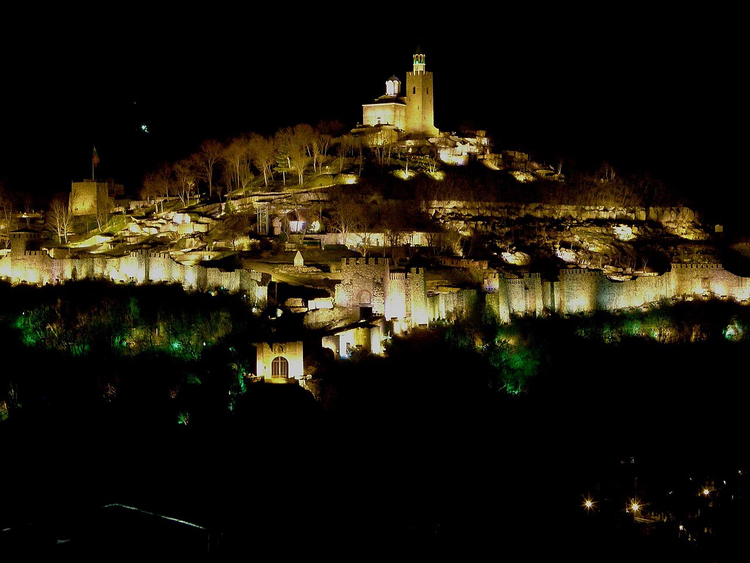
Inland, the main addresses are these: Rila Monastery, the largest monastery in Bulgaria and a UNESCO World Heritage Site; the old town of Plovdiv with its ancient theater and Roman stadium; Veliko Tarnovo with Tsarevets Fortress above the Yantra River; Kazanlak with the Rose Museum and the Thracian tomb. In the northwest stand the Belogradchik Rocks with Kaleto Fortress, and near Shumen the Madara Rider is carved into a rock plateau.
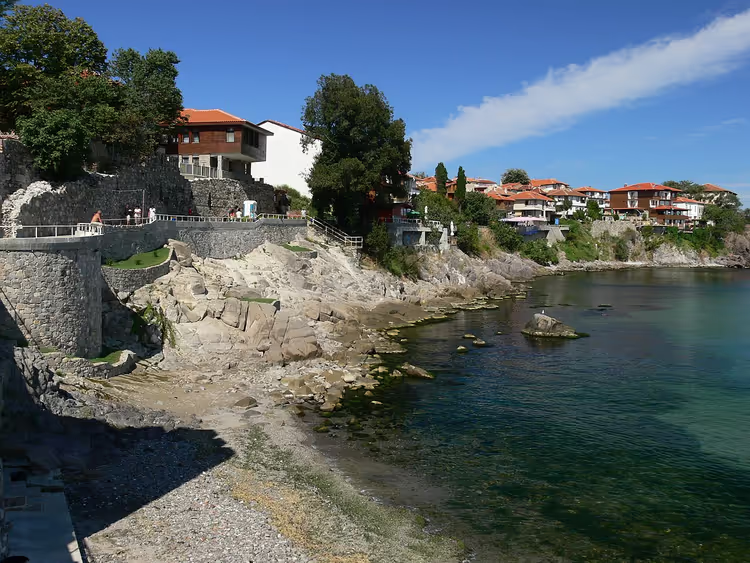
On the coast, it is easy to mix beach time with history. Old Nessebar occupies a peninsula and is on the UNESCO list in its entirety, and entry to the peninsula is free. In Varna, people visit the Roman baths and the Archaeological Museum, and outside the city the Aladzha rock monastery and Euxinograd Palace. Farther north lie Balchik with its botanical garden and Cape Kaliakra.
| Place | What it is | How much time to allow |
|---|---|---|
| Sofia | Alexander Nevsky Cathedral, the Rotunda of St George, the ruins of Serdica | Half a day for the center; Vitosha is best kept for a separate outing |
| Rila Monastery | The largest monastery in the country, a UNESCO site | A day from Sofia |
| Plovdiv | Old town, ancient theater, Roman stadium | One day |
| Veliko Tarnovo | Tsarevets Fortress above the Yantra River, old town | One day, best with an overnight stay |
| Belogradchik | Rocks with Kaleto Fortress | A day from Sofia, about two and a half hours' drive each way |
| Old Nessebar | A peninsula on the UNESCO list, free entry | Easy to combine with a beach day in Sunny Beach |
| Balchik | Botanical garden above the sea | 2-3 hours for the park, one day together with Cape Kaliakra |
Our articles on this
Where to go: coast, mountains, towns
The coast divides into the north around Varna and the south around Burgas. In the north you have Golden Sands next to a forest, quiet Albena with its enclosed grounds, the small resort of Saints Constantine and Helena, and Balchik. In the south lies Sunny Beach, the largest and loudest resort in the country, with Nessebar and the quieter Sveti Vlas next to it, and farther on Sozopol with its old town on a rocky headland. For peace and quiet, people head to Sinemorets by Strandzha Nature Park, to the undeveloped beach at Irakli and to Kamchia, where the river flows into the sea; these places are hard to reach without a car.
Families with children most often choose Albena or the northern part of Sunny Beach. If a week of beach with no city is too much for you, look at Golden Sands, which is close to Varna.
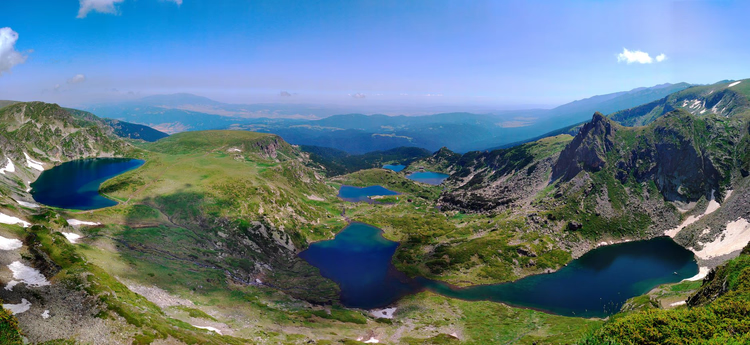
In the mountains, the choice is between three ranges. Bansko in the Pirin is the largest resort, with three ski zones and snow cannons. Borovets in the Rila is the closest of the big resorts to Sofia. Pamporovo and neighboring Chepelare in the Rhodopes offer gentle slopes, plenty of sun and cheaper accommodation. For a single day, people go up Vitosha from Sofia, and for quiet and thermal water they travel to Uzana or Dobrinishte.
| Resort | What sets it apart | Who it suits |
|---|---|---|
| Bansko | Pirin, three ski zones, snow cannons, a long season | A first trip, families, confident skiers |
| Borovets | Rila, the closest of the big resorts to Sofia | Groups who want nightlife |
| Pamporovo | Rhodopes, gentle slopes, plenty of sun | Learning to ski and a budget vacation |
| Chepelare | A small, quiet town next to Pamporovo | Those looking for calm and inexpensive accommodation |
| Vitosha | A lift straight from Sofia | A day trip or a weekend |
| Uzana | Short runs in the forest, guesthouses | A quiet vacation with children |
| Dobrinishte | Thermal pools close to the slopes | A relaxed vacation with thermal water |
Our articles on this
- Bulgaria for holidays: Black sea beaches, skiing and ancient cities
- Bulgaria resorts: 20 Black Sea destinations in 2026
- 25 Best beaches in Bulgaria: where to swim and how to get there in 2026
- 20 Bulgaria resorts for family holidays: where the sea is calm and what is near the hotel
- Bulgaria's coast in July: where silence awaits and where the crowds are
- Nessebar with kids: beaches, UNESCO and tickets in 2026
- Albena: water park, 6 km of beach and hotels for family holidays
- Where to ski in Bulgaria in winter: seven resorts and ski pass prices
- Ski Bulgaria: resorts, prices and ski pass for the 2025/2026 season
Hotels: what “all-inclusive” really means
On the coast, most guests look for a hotel with meals, and this is where it is easiest to go wrong. A full package with drinks and snacks is offered by a smaller share of hotels in Bulgaria than in Turkey or Egypt, and the label “all-inclusive” is used both for a city hotel with breakfast and for a complex with several restaurants and a water park. Before you book, read what the package includes, not the headline.
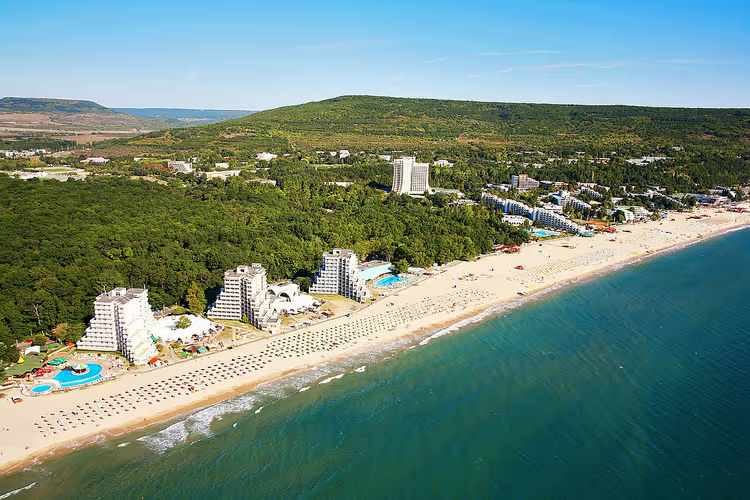
The second thing that matters more than the stars is location. Some beachfront hotels stand right at the edge of the beach, while from others you will have to walk. In Sunny Beach, on similar terms, you can end up with a quiet family courtyard or a building next to the nightlife street, where the promenade is noisy late into the night.
Accommodation for July and August by the sea and for the New Year holidays in Bansko gets booked up well in advance.
Ad
Compare hotels in Bulgaria on Trip.com
We earn a commission through this link; your price stays the same.
Our articles on this
- Bulgaria all inclusive hotels: 20 resorts for families, couples and golf
- Where to holiday in Bulgaria all inclusive and full board: 15 hotels by the sea and in the mountains
- Private beach and all inclusive: 20 hotels in Bulgaria for a seaside holiday
- 20 Hotels in Bulgaria on the first line: where all inclusive is available and how far to walk to the sea
- Bulgaria hotels with a water park: 20 options where slides are included in all inclusive
- Bulgaria with kids: 20 hotels for family holidays by the sea and in the mountains
- 15 Hotels in Bulgaria for family holidays: pools, clubs and animation
- 11 4* Hotels in Sunny Beach: how to choose by beach and dining
- All inclusive hotels on the first line of Golden Sands: where to stay by the sea
Tours, tickets and events
Most of Bulgaria's sights can be visited on your own, but a few places require planning. The halls of Euxinograd Palace are shown to groups and at set times. On Tsarevets Hill in Veliko Tarnovo, the “Sound and Light” show is staged on weekends, and you need tickets to watch it up close.
An organized tour takes care of the logistics: you do not have to look for parking or watch the road. In return, you are tied to the group and a fixed return time, and for a family such a trip to Rila or Plovdiv usually works out more expensive than renting a car for the same days.
In September, the wineries of the Thracian Valley and Melnik invite visitors to tastings during the harvest; it is best to arrange the time of your visit in advance.
Ad
See tours in Bulgaria on GetYourGuide
We earn a commission through this link; your price stays the same.
Ad
See tickets for museums and sights on Tiqets
We earn a commission through this link; your price stays the same.
Food and wine: what to try
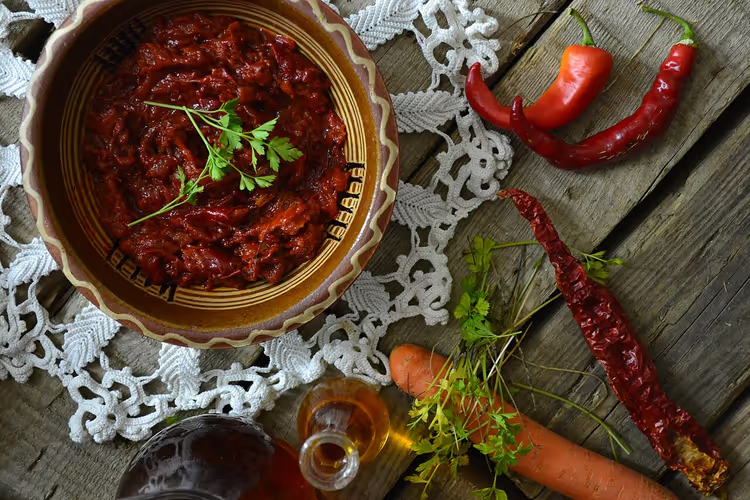
The Bulgarian table rests on vegetables, cheese and preserves. Lyutenitsa, a thick paste of peppers and tomatoes, is considered the all-purpose local appetizer: in September it is cooked in backyards in large batches and eaten fresh with bread. There are two main cheeses: sirene, a soft, salty brined cheese, and yellow kashkaval, which is added to dishes and even fried. Among the meat specialties, the dry-cured sausage lukanka stands out.
Winemaking here is old. The Thracian Lowland is known for full-bodied reds, the Danubian Plain produces dry whites and sparkling wines, the Rose Valley light whites, and the Struma River region with Melnik dense reds. Rakia, a strong fruit spirit, is drunk in small sips before a meal as an aperitif, usually with brined cheese, vegetables and cured meats.
Edible souvenirs, including honey, lyutenitsa and rose petal jam, are better value in supermarkets and at fairs than at stalls by the beach.
Airports, roads and car rental
The country has three main airports. In summer, direct flights go to Burgas and Varna, and in winter most travelers arrive through Sofia. Burgas serves Sunny Beach, Nessebar and Sozopol, while Varna is the airport for Golden Sands, Albena and Balchik. From Sofia Airport, the metro is the most predictable way to the center: line M4 starts at Terminal 2 and runs to the center with no changes.
Buses and trains run between Sofia, Plovdiv and the coast, but the journey from the capital to Varna or Burgas takes almost a full day. You can realistically manage without a car in the big resorts, in Nessebar, Sozopol and Varna. Wild beaches, mountain trails, Shipka and Belogradchik lie away from the stops.
A rental car needs an electronic vignette linked to the license plate. The rental company has usually paid for it already, but it is worth checking on the first day. The A1 highway connects the coast with Sofia with no hairpin bends; secondary and mountain roads are slower than the map suggests. To drive into neighboring countries you need written permission from the rental company.
| Airport | Where people go from here | What to keep in mind |
|---|---|---|
| Burgas | Sunny Beach, Nessebar, Sozopol | Direct flights mainly in summer |
| Varna | Golden Sands, Albena, Balchik | Direct flights mainly in summer |
| Sofia | The capital, mountain resorts, routes inland | Most arrivals in winter; metro line M4 from Terminal 2 runs to the center with no changes |
Ad
Book a fixed-price airport transfer in Bulgaria
We earn a commission through this link; your price stays the same.
Our articles on this
When to go: three seasons in one country
Swimming in the Black Sea is comfortable from mid-June to mid-September. The water is warmest in July and August, and that is also when the coast is most crowded and prices are highest. Late June and September bring warm water and noticeably emptier beaches.
In the Rila and Pirin, snow lingers until early summer, so the high mountain trails do not open before July, and July and September are considered the best months for hiking. The ski season in Bansko lasts from mid-December to mid-April; the most reliable time is the second half of January and February.
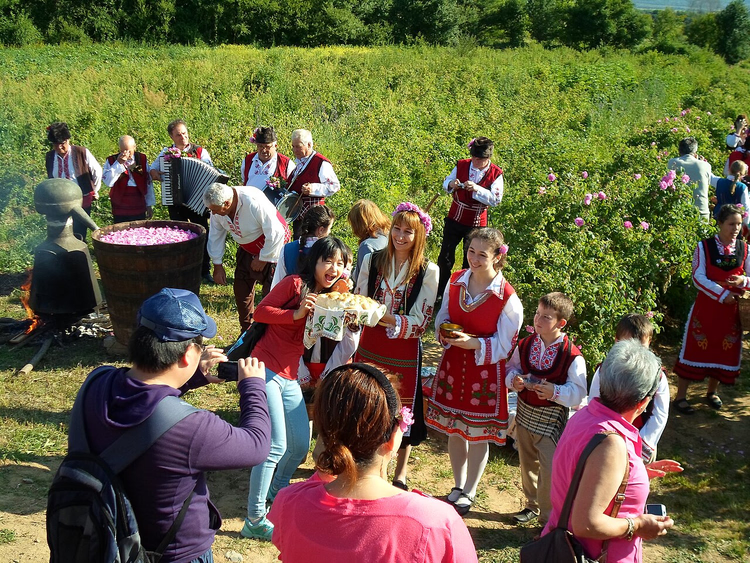
May, June and September suit the cities: in August it is hot in Sofia and Plovdiv. In early June, Kazanlak hosts the Rose Festival with petal picking in the valley, and in late August and early September Sozopol holds the “Apollonia” festival.
| When | Where | What it suits |
|---|---|---|
| Mid-June to mid-September | Black Sea coast | Swimming; the water is warmest in July and August, but it is also the most crowded |
| Late June and September | Black Sea coast | Warm water and noticeably emptier beaches |
| July and September | Rila and Pirin | Mountain hiking; high mountain trails do not open before July |
| Mid-December to mid-April | Bansko | Skiing; most reliable in the second half of January and in February |
| May, June, September | Sofia, Plovdiv | City walks without the August heat |
| Early June | Kazanlak | Rose Festival with petal picking |
| Late August and early September | Sozopol | “Apollonia” festival |
Twelve months compared: find the best time for your trip
Our articles on this
Budget: how to work out your own total
Bulgaria has a reputation as an inexpensive seaside destination, but in this country the total depends on the month more than on the destination. On the coast the peak falls in July and August, in the mountains over the New Year holidays and school breaks. Shifting the trip to late June or the first week of September keeps the water warm and makes the accommodation bill smaller.
The second big item is the format. A package with meals gives you a predictable budget, but you need to compare what the package includes, not what it is called. A trip by car is made up of rental, fuel, the vignette and parking. For skiing, Pamporovo and Chepelare in the Rhodopes cost less than Bansko.
That is why you will find a calculator here rather than a figure. It separates accommodation, food, transport, admission tickets, travel and a reserve, and shows which item is pushing your total up.
Calculate your trip budget for Bulgaria
Our articles on this
Routes: from one to three days
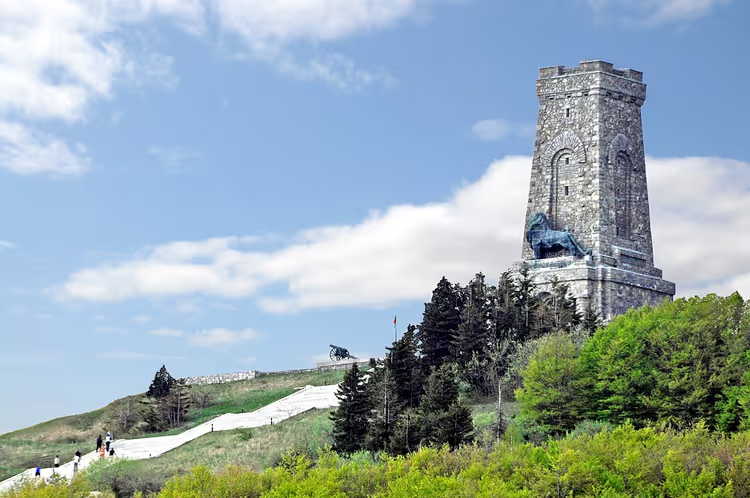
To get to know the country beyond the beach, there is a loop of three days and two nights: Sofia, Veliko Tarnovo, Gabrovo, Kazanlak and back to Sofia. The first day goes to the center of the capital, the second to Tsarevets Fortress and the old town, the third to Dryanovo Monastery with the Bacho Kiro cave, the Etar open-air museum of crafts, Shipka Pass and the Rose Museum. The route is designed for a car: buses between these points are infrequent.
From the coast, short outings are convenient. The loop of Varna, Balchik and Cape Kaliakra takes one day. The road from the sea inland via the Stone Forest and Madara, with an overnight stay in Veliko Tarnovo, needs two days. From Sofia, people make day trips to Rila Monastery or to Belogradchik.
One rule saves both time and money: one move between towns per day. The more towns in the plan, the higher the spending on fuel and overnight stays.
Day planner: check what fits into one day
Our articles on this
Practicalities: money, connectivity, insurance
Bulgaria is part of the EU, the Schengen Area and the eurozone; the lev has gone out of circulation, and exchange offices are no longer needed. Cards are accepted almost everywhere, but cash will come in handy in villages, at small markets, in family-run cafes and at some gas stations where you pay the cashier. Check roaming terms with your provider before the trip, and an eSIM remains a backup way to have internet from the first minute.
When driving, keep your license, the vehicle registration document and insurance with you. National licenses from EU countries are valid without additional documents, and for licenses issued outside the EU an international permit is recommended.
Emergency help is reached by calling 112. Those who are not part of the local insurance system mostly have to pay for medical care, so take out travel insurance before you leave and read exactly what it covers. For the mountains, pack a rain jacket and a warm layer even in summer.
Make a packing list for your trip to Bulgaria
Ad
See eSIMs for Bulgaria on Yesim
We earn a commission through this link; your price stays the same.
Ad
See travel insurance on World Nomads
We earn a commission through this link; your price stays the same.
Our articles on this