



France: the guide for planning it yourself
France is far more than Paris. The country faces the Mediterranean, the Atlantic and the English Channel, and each coast offers a different kind of vacation. Add to that the Alps with their ski resorts, the Loire Valley with its châteaux, Provence with its lavender fields, and Corsica. The region decides the weather, the water, the crowds and the price of a place to stay, so the question of “when and where” has no single answer here. This page sorts the country for your own planning: what to look for where, where to stay, how to get around, when to go and what to work out your costs with. Every section stays short and leads on to our detailed articles. Paris has a guide of its own, so here the capital is just one of the points on the map. There are no prices on this page: between August and September, and between the French Riviera and the Atlantic, they differ so much that a single figure would mislead you.
The main places beyond Paris
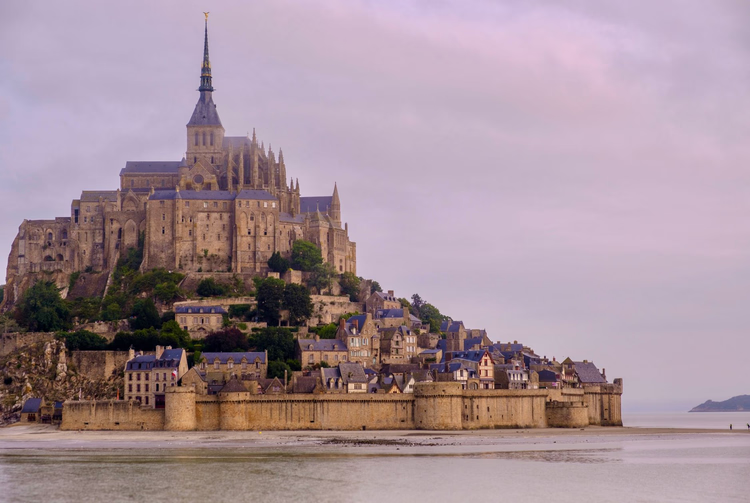
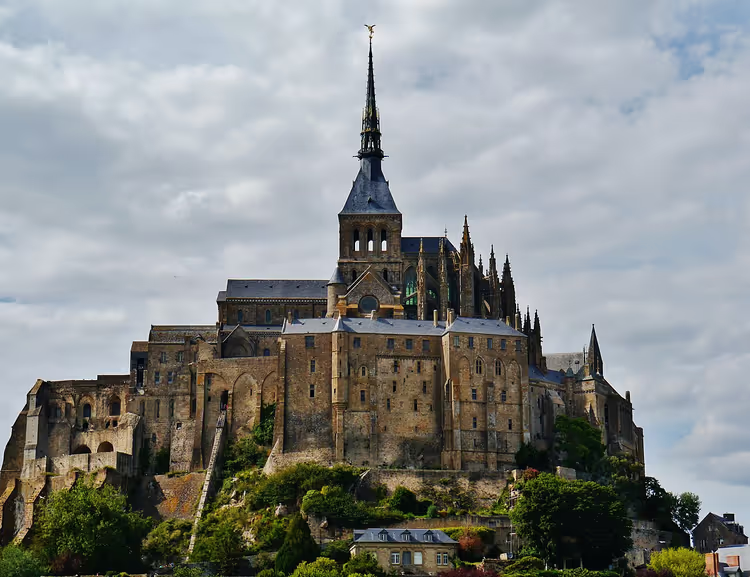
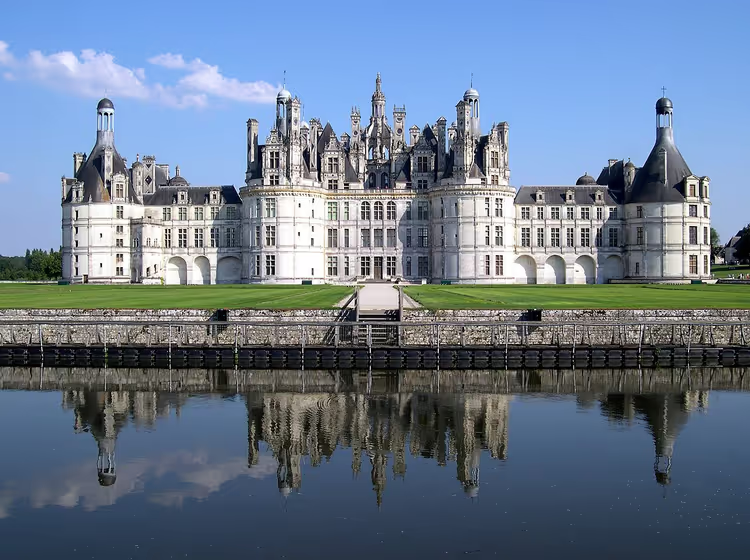
Outside the capital, three places from our articles are on the UNESCO World Heritage List. Mont-Saint-Michel is a granite island with an abbey in a bay in Normandy, cut off from the shore by the water at high tide. Carcassonne is a fortified town on a rock above the River Aude, with a double wall and 52 towers. The middle Loire, the “valley of the kings”, strings dozens of châteaux along a single river: the biggest names here are Chambord, Chenonceau, Amboise and Blois, while Villandry is visited for its terraced gardens.
Among the natural sights the Verdon Gorge in Provence stands out: a canyon 25 kilometers long and up to 700 meters deep that ends at the Lac de Sainte-Croix. There is no separate entrance fee. The Gardens of Marqueyssac sit on a rock above the River Dordogne: terraces of clipped boxwood with a view over the valley.
For the châteaux and the abbey there is one rule: arrive for opening time and buy a ticket for a specific time slot online. At Chambord and Chenonceau the line in summer stretches to an hour or more, and in Carcassonne it is already cramped inside the walls by midday.
Our articles on this
- Mont Saint-Michel: how to get there, when the tide is and how much the abbey costs
- Loire castles: 25 palaces worth seeing in 2026
- Carcassonne castle: how much does entry cost and how to get there from Toulouse
- Verdon Gorge: canyon route, trails and Lake Sainte-Croix
- Gardens of Marqueyssac: 150,000 boxwoods, a view from 130 meters and a ticket for 12.90 €
- One day in Versailles: tickets 2026, palace halls and Trianon park
- Palace of Versailles: tickets, opening hours and main halls
- What to see in Paris: 30 main places with tickets and opening hours
Regions, cities and coasts: where to go
A seaside vacation divides between three coasts. The Mediterranean gives you warm water and a long season: Nice with its pebble beaches, Cannes with sand and the Croisette promenade, Saint-Tropez. The Atlantic is colder but has wide sandy beaches and surfing at Biarritz, Lacanau and Biscarrosse, while the water in the shallow Arcachon Bay is calm. On the Channel the summer is cool and the tides are strong: Deauville and Cabourg in Normandy, Saint-Malo and Dinard in Brittany. The fourth option is Corsica, with Ajaccio and Porticcio, where a warm sea meets the mountains.
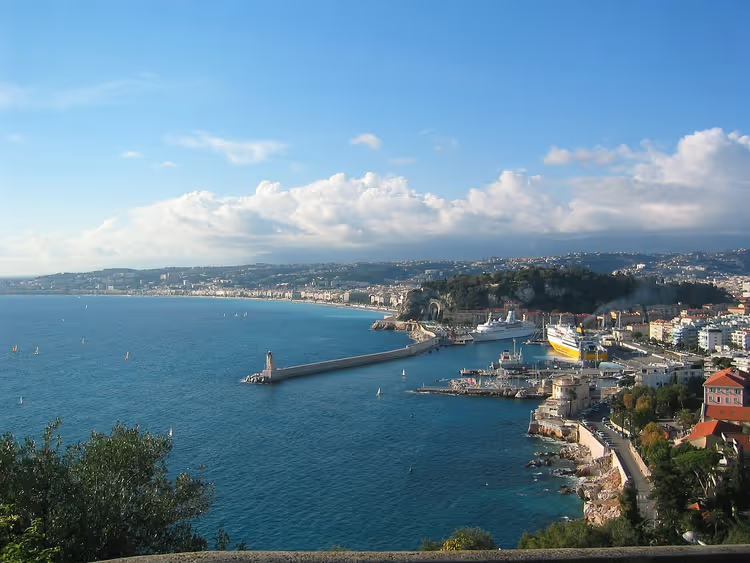
Of the cities outside the capital, we cover three in detail. Lyon stands on the Rhône and the Saône: Fourvière hill with its basilica and ancient theater, and the Old Town with its traboules. Marseille is the Old Port, the Le Panier quarter, the Château d'If on its island and the calanques, rocky inlets in the direction of Cassis. Nice works well as a base on the French Riviera: from here local trains get you to Menton, Monaco, Antibes and Cannes on a day trip.
Inland, Provence means the villages of the Luberon, the ochre cliffs of Roussillon and the lavender on the Valensole plateau. Alsace runs in a narrow strip between the Vosges and the Rhine, with Colmar, Mulhouse and the Wine Route. Burgundy is vineyards and small villages away from the railway. In the Alps the resorts divide into high-altitude ones with a long season, such as Val Thorens, Tignes and Val d'Isère, and family resorts with gentle slopes. To escape the August crowds, people head for the Pyrenees, for Finistère in Brittany or for the island of Réunion in the Indian Ocean.
| Coast | Resorts | Water and beaches | Who it suits |
|---|---|---|---|
| Mediterranean | Nice, Cannes, Saint-Tropez | Warm water and a long season; pebbles in Nice, sand in Cannes | Anyone for whom a warm sea matters most |
| Atlantic | Biarritz, Lacanau, Biscarrosse, Arcachon | Colder water, wide sandy beaches; the water in Arcachon Bay is calm | Surfing and waves; with small children Arcachon is convenient |
| English Channel | Deauville, Cabourg, Saint-Malo, Dinard | A cool summer and strong tides | An unhurried vacation; with small children Cabourg is convenient |
| Corsica | Ajaccio, Porticcio | A warm sea right beside the mountains | Anyone who wants to combine sea and mountains |
Our articles on this
- Where to swim in France: 20 seaside resorts from the Cote d'Azur to Corsica
- What to see in Marseille: 30 places with tickets and opening hours
- What to see in Lyon in three days: Fourviere, Old Town and museums
- Nice: 25 places to go first
- How to choose a ski resort in France: 20 stations and their slopes
- Where to go with children in France: Mediterranean, Atlantic and Corsica resorts
- Beaches of Nice: how to choose a spot and how much a sunbed costs in 2026
- Beaches of Nice: where to swim for free and where to pay for a sunbed
- Reunion: active volcano, cirques and climbing Piton des Neiges
- Where to stay in Paris: 9 districts with hotels for any budget
Places to stay: what drives the price in France
In France the coast and the season move the price of accommodation more than the star rating does. The Mediterranean costs more than the Atlantic, and the French Riviera costs most of all. In the first half of August, house rentals reach their peak for the year. Places by the sea are booked several months ahead for high season, and popular houses a year ahead.
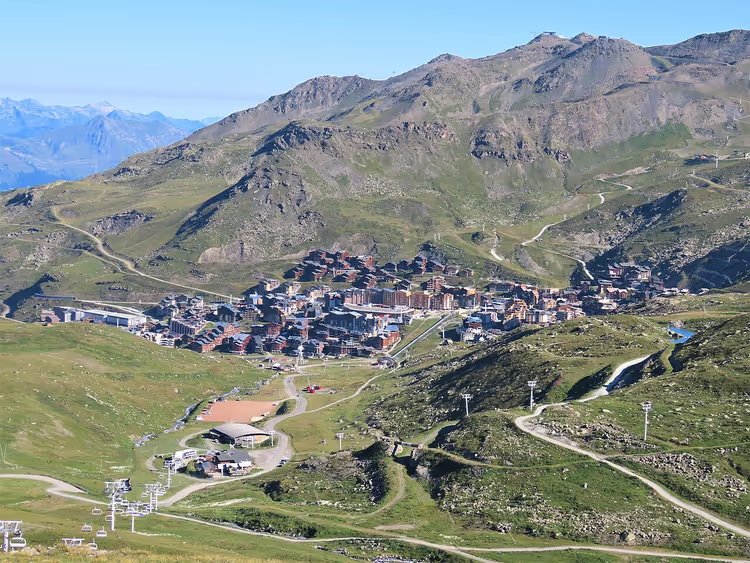
In the Alps the most expensive weeks fall in the school holidays: Christmas, February and Easter. An apartment in a village by the lift is usually cheaper than a hotel in the main resort, and having your own kitchen cuts the cost of lunches. In the villages of Provence and around the Verdon Gorge the choice is small, so look for summer accommodation while it is still spring.
Ad
Compare places to stay in France on Trip.com
We earn a commission through this link; your price stays the same.
Our articles on this
Tours, tickets and day trips
A timed ticket bought in advance is worth it for the Loire châteaux, the abbey of Mont-Saint-Michel and the castle in Carcassonne: in season the convenient times sell out.
A tour with transport makes sense where it is hard to manage without a car: the Verdon Gorge from Nice, the lavender fields of Provence, the wineries of Alsace. People cross the bed of the bay to Mont-Saint-Michel at low tide only in groups with a guide: doing it on your own is dangerous because of quicksand and the fast incoming tide. Of the theme parks outside Paris, we cover Futuroscope near Poitiers: a high-speed train runs there from Montparnasse station in Paris, and the park fits into one day.
Ad
See tours and tickets for France on GetYourGuide
We earn a commission through this link; your price stays the same.
Ad
See tickets for châteaux and museums on Tiqets
We earn a commission through this link; your price stays the same.
Our articles on this
Food: every region has its own
On the ground, French cuisine breaks down into regional ones. Near Mont-Saint-Michel you are served pré-salé lamb from the salt meadows of the bay, mussels and a fluffy omelette, with cider or calvados to go with them. Arcachon is called the oyster capital, and in Menton, by the Italian border, pasta and olive oil are the usual things on the table.
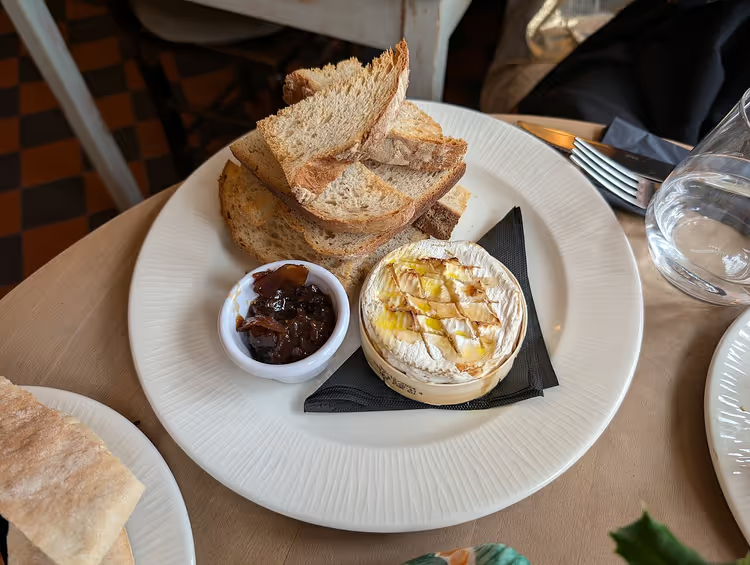
The country has hundreds of cheeses, and the most prized carry the AOC label. Camembert, Brie and Roquefort ripen quickly in the warmth, so they are best eaten on the spot, while firm Cantal and Comté are the ones to take on the road. With wine the reference points are simple: Bordeaux, Burgundy, Alsace, Beaujolais and Champagne. Only sparkling wine from Champagne may legally be called champagne; the rest is sold as crémant.
Our articles on this
Trains, car rental and getting in from the airport
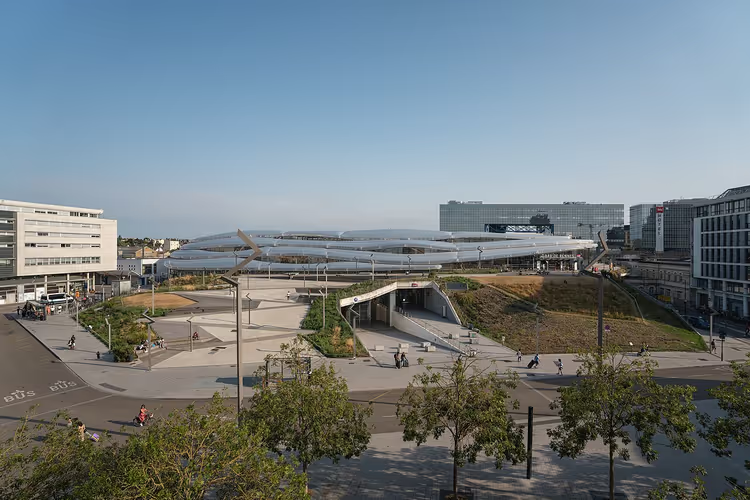
Between cities the train is the most convenient way to travel. From Paris the high-speed TGV runs to Rennes, where a bus continues to Mont-Saint-Michel, and to Futuroscope near Poitiers, and there is a direct train to Tours in the Loire Valley. On the French Riviera, local TER trains link Nice with Menton, Monaco, Antibes and Cannes: they need no reservation, and tickets are sold at machines in the station. In Alsace regional trains run between Strasbourg, Colmar and Mulhouse, and Carcassonne is a direct train ride from Toulouse.
You need a car where the railway ends: the villages of the Luberon, the Verdon Gorge, the lavender fields, the villages of Burgundy, the more remote Loire châteaux. In Provence the roads are narrow and winding, and the parking lots by the villages are paid and in summer fill up early in the morning. In Marseille it is worth renting a car only for the day you head out of the city: parking in the center is paid and tight. Rental companies ask for a category B driver's license, a passport and a bank card in the driver's name.
Most flights arrive at the Paris airports, Charles de Gaulle and Orly. The French Riviera has Nice airport, and Corsica has the airport at Ajaccio, a town that is also served by ferry. A transfer booked in advance is worth it at night and with children.
| Where to | How to travel | What to bear in mind |
|---|---|---|
| Mont-Saint-Michel from Paris | High-speed TGV to Rennes, then a bus | The journey takes about three hours, and you do not need a car of your own |
| Futuroscope near Poitiers from Paris | High-speed TGV from Montparnasse station | About an hour and a half on the train; the park fits into one day |
| Tours in the Loire Valley from Paris | Direct train | You need a car for the more remote châteaux |
| Menton, Monaco, Antibes and Cannes from Nice | Local TER trains | No reservation needed, tickets are sold at machines in the station; about 40 minutes to Menton |
| Carcassonne from Toulouse | Direct TER train | Roughly an hour on the train; about 30 minutes on foot from the station to the walls |
| Strasbourg, Colmar and Mulhouse | Regional trains | For the wineries of Alsace a tour with transport is more convenient |
| Luberon villages and the Verdon Gorge | Rental car | The roads are narrow and winding; the parking lots by the villages are paid and in summer fill up early in the morning |
Ad
Book a fixed price airport transfer in France
We earn a commission through this link; your price stays the same.
Our articles on this
Best time to go and weather
For cities the reliable months are May, June and September: that is the advice for both Lyon and Marseille. For the Loire châteaux the best times are April, May and the second half of September. For the sea, the season on the Mediterranean runs from May to October, and on the Atlantic and the Channel from June to September.
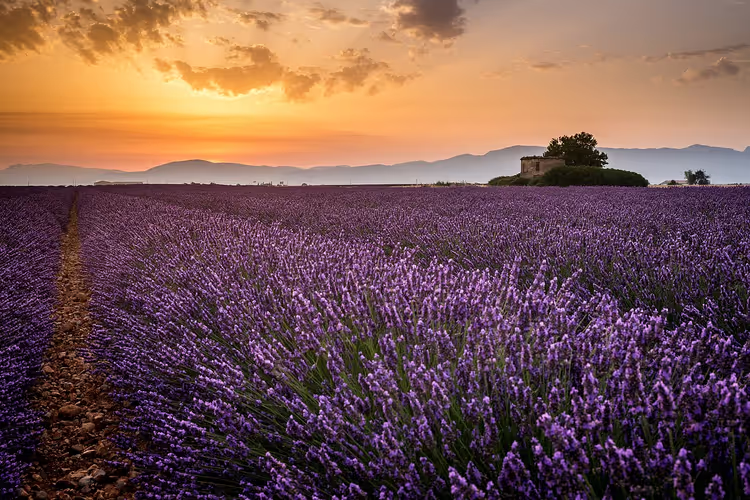
August is the month when France itself goes on vacation. The first two weeks are the busiest, and the crowds ease as the start of the school year approaches. In the south it is hot and crowded during the day, while on the coasts of Normandy and Brittany it is noticeably cooler and there is more room. Lavender in Provence blooms from mid-June to the end of July, and the most reliable window is late June and the first half of July.
In the fall people come for the wine: in Alsace the grapes are picked in September and October, and in October the vineyards of Burgundy turn copper. Most Alpine resorts open in early December and close in April, the high-altitude ones keep their snow until May, and on the Les Deux Alpes glacier there is skiing in summer too.
| Time of year | Where to go | What to bear in mind |
|---|---|---|
| April and May | Loire châteaux | Another good time for the châteaux is the second half of September |
| May, June, September | Cities: Lyon, Marseille | The reliable months for cities |
| May to October | The sea on the Mediterranean | On the Atlantic and the Channel the season is shorter: June to September |
| Late June and the first half of July | Lavender fields of Provence | Lavender blooms from mid-June to the end of July |
| August | The coasts of Normandy and Brittany | In the south it is hot and crowded during the day; the first two weeks of the month are the busiest |
| September and October | Alsace and Burgundy | In Alsace the grapes are picked; in October the vineyards of Burgundy turn copper |
| December to April | Alpine ski resorts | The most expensive weeks fall in the school holidays; the high-altitude resorts keep their snow until May |
Twelve months compared: find the best time to go
Our articles on this
- France in August: where it is not hot, where there are no crowds and where to go
- Lavender in Provence: when to go for full fields
- Autumn in Alsace: wineries, museums and castles in 3-4 days
- Burgundy in autumn: hot air balloon flight, cooking class and chestnut festival
- Paris in April: blossoms, rains and events of the month
- Paris in January 2026: sales, exhibitions and a city without queues
- Paris in November: debutante ball, Christmas markets and the musical Notre-Dame de Paris in December
- Tomorrowland Winter 2027: sale dates, tickets and accommodation in Alpe d'Huez
- New Year on St. Barts: ideas for the night, weather and how to get there
Budget: how to work out your own total
A single figure says nothing about France. The total is set by the region and the dates: the French Riviera costs more than the Atlantic, the first half of August more than the end of the month, and a week in the Alps during the school holidays more than the same week in early January or the second half of March.
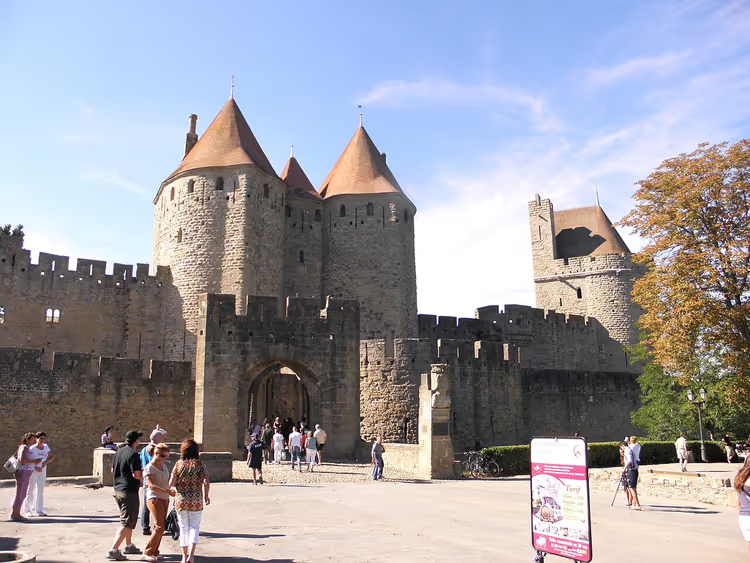
The savings are where entry is free. In Lyon the Fourvière basilica, the ancient theater, the Cathedral of Saint-Jean and the Parc de la Tête d'Or with its zoo cost nothing; in Marseille the same goes for the Old Port, the beaches and the churches, and in Nice for more than half the places on our list. You can walk the streets of the citadel of Carcassonne without a ticket, and at most Loire châteaux children under 18 get in free.
You work out your own total in the calculator: it separates accommodation, food, transport, admission tickets, getting there and a reserve.
Calculate a travel budget for France
Our articles on this
Routes: from one day to a week
The simplest way to see the country and not just the capital is to add one region to Paris. Mont-Saint-Michel and Versailles can be done as day trips, back by the evening. The Loire Valley is explored in stretches around Blois, Tours and Angers, allowing two or three châteaux a day; if you have a single day, take Chambord and Chenonceau.
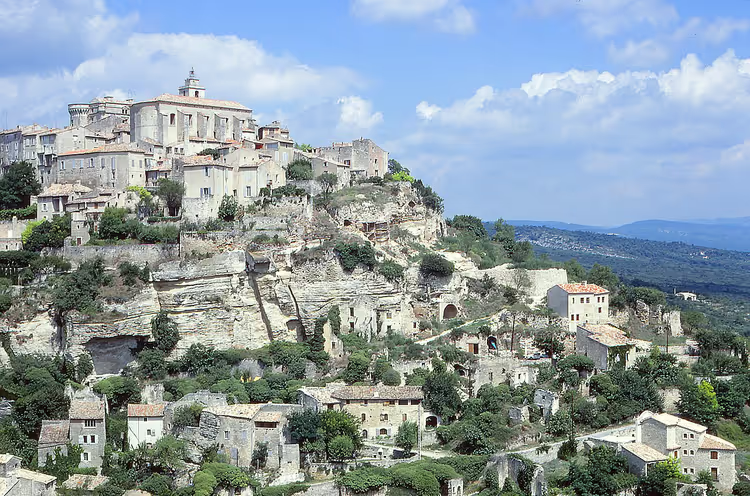
In the south the convenient base is Nice: a day for the city itself on a short loop from the Promenade des Anglais to Castle Hill and the Old Town, then day trips by train to Menton, Monaco or Cannes. The Luberon is a drive of three days and two nights: L'Isle-sur-la-Sorgue, Gordes, Roussillon, Lourmarin. The Verdon Gorge needs a day for the roads along the canyon and a second one if you want to go down to the water. Carcassonne can be seen in a day from Toulouse.
For an active trip there is the La Loire à Vélo cycle route: about 330 kilometers from Tours to Saint-Nazaire in six days, by way of Saumur, Angers and Nantes.
| Destination | How much time | What fits in |
|---|---|---|
| Mont-Saint-Michel | One day from Paris | The island with its abbey, and you are back in Paris by the evening |
| Loire Valley | From one day | Two or three châteaux a day, each taking two to three hours; with a single day, take Chambord and Chenonceau |
| Nice | One day for the city | The Promenade des Anglais, Castle Hill and the Old Town; then day trips by train to Menton, Monaco or Cannes |
| Luberon | Three days and two nights by car | L'Isle-sur-la-Sorgue, Gordes, Roussillon, Lourmarin |
| Verdon Gorge | One or two days | A day for the roads along the canyon, a second for going down to the water |
| Carcassonne | One day from Toulouse | About 2 hours for the castle and the wall; add a couple more hours for the whole citadel and lunch |
| Lyon | Two days | Fourvière hill and the Old Town with its traboules |
| La Loire à Vélo | Six days by bike | About 330 kilometers from Tours to Saint-Nazaire by way of Saumur, Angers and Nantes |
Day planner: check what fits into one day
Our articles on this
- Luberon by car: three days, markets and the orange cliffs of Roussillon
- Loire à Vélo: 6 days and 330 km from Tours to the Atlantic
- Nice in one day: a walking route from the promenade to the Old Town
- Cannes in a day: 15 places from the Old Port to Ile Sainte-Marguerite
- Paris in 3 days: what to fit in, how much it costs and when to go
- Paris in 2 days: a walking route through 23 locations
- Paris in one day on foot: eight stops from the cathedral to the Eiffel Tower
- Paris on foot: a five-day plan, museum tickets and opening hours
Practical matters: language, documents, staying connected
Start the conversation in French: a simple bonjour, merci and s'il vous plaît makes things noticeably easier in a café or at the market. On the pebble beaches of Nice you need water shoes, and in the hills of Provence the signal drops out in places, so download the map for offline use.
Shoppers from outside the European Union can reclaim part of the VAT under the tax-free scheme: the form is filled in at the checkout on presentation of your passport, and it gets a customs stamp when you fly out of the EU. The overseas territories have entry rules of their own: a Schengen visa is not valid on Réunion, and Saint-Barth belongs neither to the Schengen area nor to the EU, so check the conditions before you buy tickets.
Check the roaming terms for France with your own operator before you travel. An eSIM is a backup way to have internet from the first minute. Take out travel insurance before you leave and read what exactly it covers.
Build a packing list for a trip to France
Ad
See eSIM options for France on Yesim
We earn a commission through this link; your price stays the same.
Ad
See travel insurance on World Nomads
We earn a commission through this link; your price stays the same.
Our articles on this