
















Brazil: a guide for independent planning
Brazil covers almost half of South America and does not fit into a single vacation. The Amazon in the north, the sunny northeastern coast, Rio de Janeiro and São Paulo in the southeast, the subtropical south and Iguazu Falls on the border with Argentina each run on a different climate calendar. That is why it makes sense to split the country into parts rather than try to cover all of it. This page lays Brazil out for independent planning: what to see, which regions to choose, how to get around, when to go and what the budget is made of. Each section stays short and leads on to our detailed articles. There are no prices here: between carnival week and the low season they differ so much that a fixed figure would be misleading.
What to see: Rio, waterfalls and wildlife
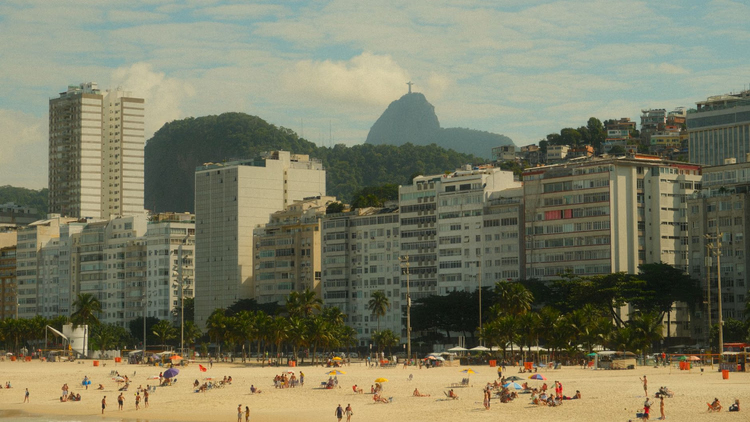
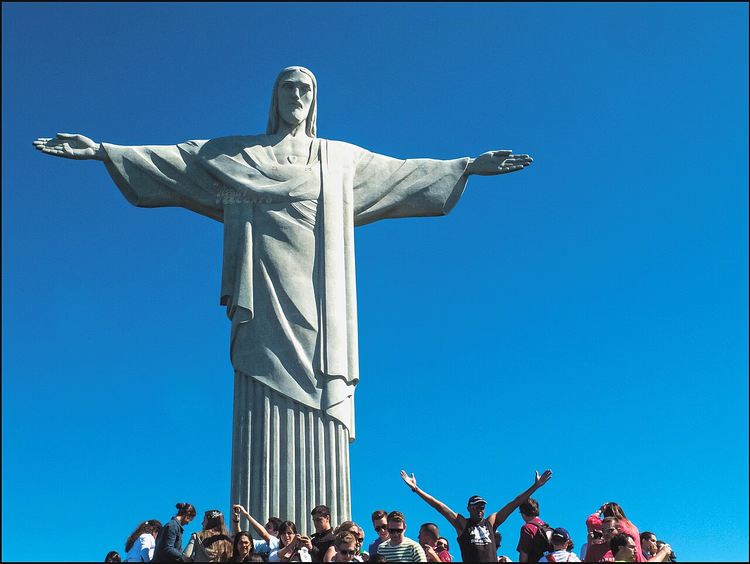
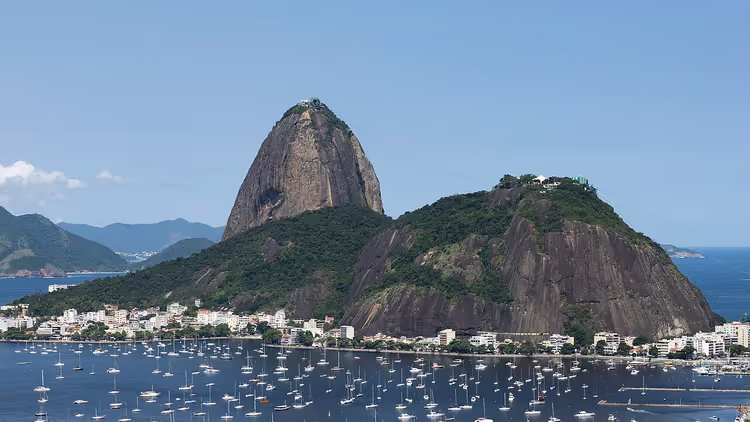
A first trip almost always starts in Rio de Janeiro. The Christ the Redeemer statue stands on top of Corcovado inside Tijuca National Park, and the ways up are the Trem do Corcovado train from Cosme Velho station, official minivans and a hiking trail. The city's second viewpoint, Sugarloaf Mountain, has a cable car with two stops. Plan both summits for a clear morning.
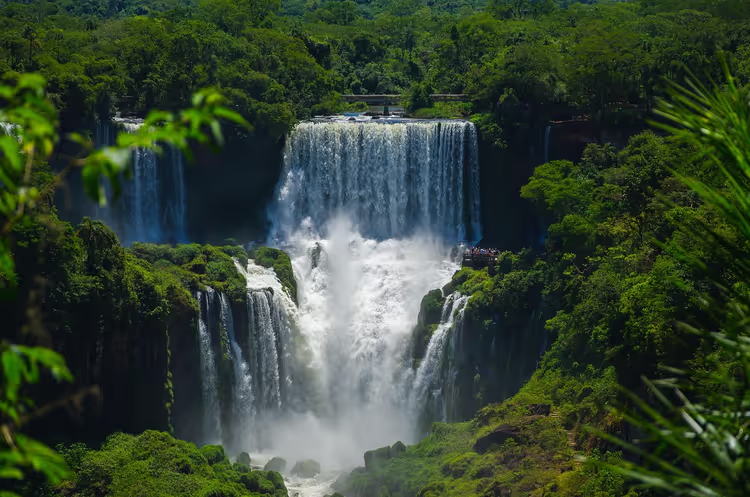
Iguazu Falls lie on the border between Brazil and Argentina. The Brazilian side shows the whole cascade, the Argentine side takes you along walkways right up to the water, so allow two days for both. People pick the Pantanal, the largest tropical wetland on the planet, for its animals: it is an open plain where wildlife can be seen from the water and from dirt roads.
Farther from the usual routes are Chapada dos Veadeiros National Park in the state of Goiás with its cerrado savanna and waterfalls, the Itiquira waterfall not far from the capital Brasília, and Poço Encantado in Bahia, a cave with a lake that glows blue in the dry season. Amazon trips start in Manaus, with a lodge program of several days.
Our articles on this
- Christ the Redeemer statue: tickets and best hours to visit in 2026
- When to go to Iguazu Falls: months, water levels and prices 2026
- Pantanal in Brazil: where to see jaguars and when to go
- Chapada dos Veadeiros: tickets, hours and park trails
- Enchanted well in Brazil: when and how to see the blue light
- Itiquira waterfall: how to get there from Brasilia and how much the entrance costs
Regions and cities: where to go
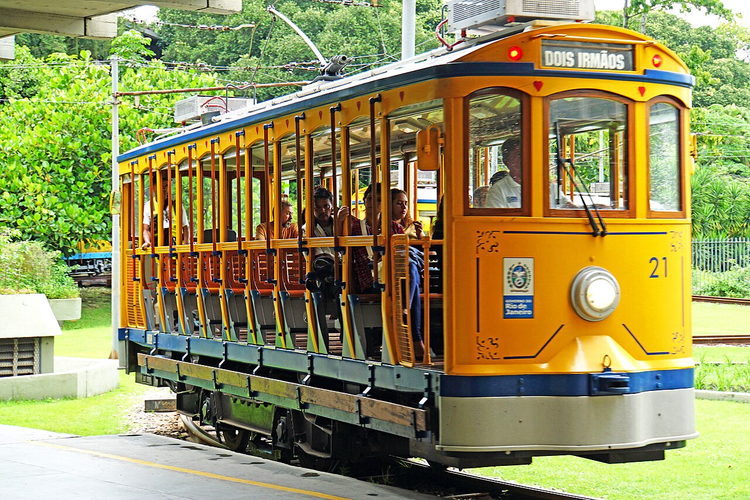
The southeast is defined by two very different cities. Rio de Janeiro sits between mountains and ocean: the beach districts of Copacabana, Ipanema and Leblon, bohemian Santa Teresa with its old tram, and a center with museums. São Paulo has few classic sights but strong restaurants, parks and a big-city rhythm. Two to three hours away by road is the mountain town of Campos do Jordão with cooler air.
The northeast is a warm coast with almost no swings in temperature. Fortaleza, the capital of the state of Ceará, has long city beaches, but swimming is not possible on every one of them, and the water conditions are worth checking before you head out. The village of Preá in the same state draws visitors with its steady kitesurfing wind, dunes and simple pousadas by the ocean.
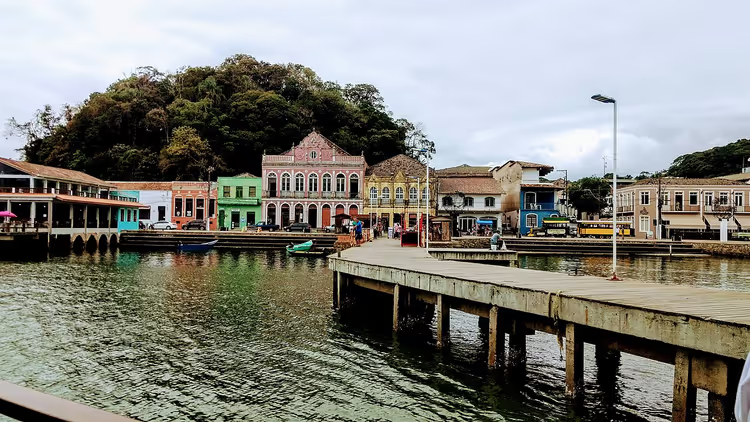
The south of the country is subtropical and calmer. In the state of Santa Catarina you find Joinville, a city with German roots and a big dance festival, and the island of São Francisco do Sul with a colonial center on the shore of Babitonga Bay and long ocean beaches.
| Place | Who it suits | What to keep in mind |
|---|---|---|
| Rio de Janeiro | First trip: beaches, mountains, museums in the center | Busy Copacabana sees more petty theft |
| São Paulo | Restaurants, parks, big-city rhythm | Few classic sights |
| Fortaleza | Long city beaches on the warm coast | Swimming is not possible on every beach, check the water conditions |
| Preá | Kitesurfing, dunes, quiet by the ocean | Simple lodging in pousadas; from Fortaleza a rental car is the easier way to get there |
| Joinville | German roots and a dance festival | Easy to combine with the nearby island of São Francisco do Sul |
| São Francisco do Sul | Colonial center and long ocean beaches | Public transportation is weak, a rental car is worth it |
Our articles on this
Where to stay: what the choice depends on
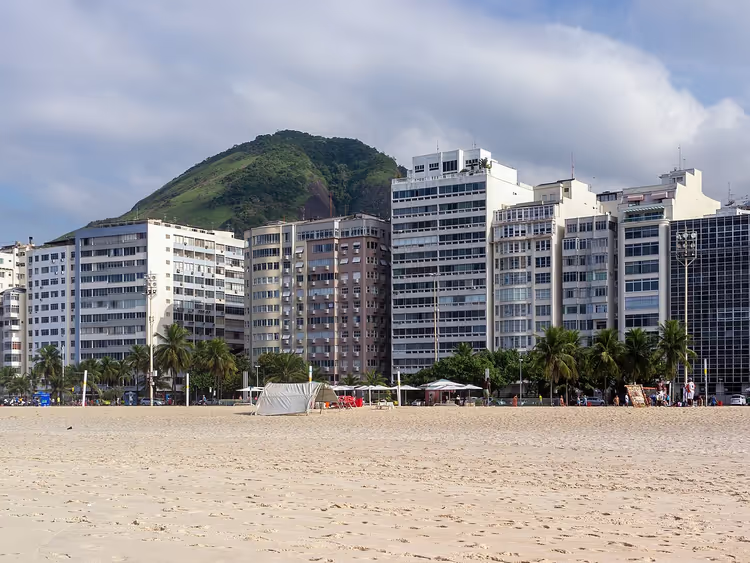
In Rio the neighborhood matters more than the star rating. Copacabana is the busiest, and where there are many tourists there is more petty theft, so for a calmer stay look at Ipanema and Leblon. Neighborhoods away from the ocean cost noticeably less and are linked to the shore by metro. In São Paulo, Moema, Itaim Bibi, Vila Olímpia and Campo Belo are considered the quietest.
Outside the big cities the format is different. On the coast of Ceará people stay in pousadas, small guesthouses, in the Pantanal they sleep at fazendas with a guide, a boat and transfers, and in the Amazon in lodges. For New Year's Eve and carnival, lodging in Rio is booked several months ahead, and Brazilian school vacations in December, January and July push prices up across the country.
Ad
Compare places to stay in Brazil on Trip.com
We earn a commission through this link; your price stays the same.
Tours, tickets and boat trips
Timed tickets are needed for the ride up to Christ the Redeemer: in high season the convenient morning slots are gone several days in advance. Tickets for the Brazilian side of Iguazu are sold online only, for a specific day and entry time.
A guided tour is worth it where you would see little without one: a safari in the Pantanal, lodges in the Amazon, a boat trip out to the whales. Humpbacks come to the shores of Bahia from July to November, southern right whales stay off Santa Catarina in the same months, and dolphins in Pipa and on Fernando de Noronha can be seen from shore all year round.
| Place | Season | What you see | How to watch |
|---|---|---|---|
| Praia do Rosa, Santa Catarina | July to November, peak in September | Southern right whales | From shore and by boat |
| Abrolhos, Bahia | July to November | Humpbacks | By boat only, about two hours each way |
| Itacaré | July to October | Humpbacks | By boat from the town beach |
| Fernando de Noronha | All year | Dolphins | From the viewpoint, entering the water is not allowed |
| Pipa | All year | Dolphins | From the cliffs, no boat needed |
Ad
See tours and excursions in Brazil on GetYourGuide
We earn a commission through this link; your price stays the same.
Ad
See tickets for sights in Rio de Janeiro on Tiqets
We earn a commission through this link; your price stays the same.
Our articles on this
Food: four meals a day and different regions
Brazilian cooking is broader than meat on a skewer and varies noticeably by region. The south loves meat, the northeast couscous and cheese flatbreads, the Amazon fish and açaí. An introduction usually starts with pão de queijo cheese rolls from a bakery, feijoada made of black beans with meat, and churrasco, meat grilled over charcoal. On the coast these are joined by moqueca, fish or shrimp in coconut milk, and fried acarajé balls from street carts in Bahia.

Two practical points. Brazilians eat lunch in the middle of the day, and many places open only at that time, often charging by the weight of your plate. Dinner is late, and restaurants keep no common schedule, so opening hours are worth checking in advance. In rodízio restaurants the waiters carry meat from table to table until you stop the service yourself.
Our articles on this
Flights, roads and getting around cities
From Europe there are nonstop and connecting flights to São Paulo and Rio de Janeiro: convenient connections run through Lisbon, Madrid, Frankfurt, Paris and Rome. International flights to Rio arrive at Galeão airport, roughly twenty kilometers north of the center. You reach Copacabana and Ipanema by taxi or with a ride app, and in evening traffic the trip easily takes over an hour.
Inside the country the main means of transportation is the plane. The railroad is mostly for freight and the highways have strict speed limits, so overland journeys are long. Carriers between the big cities include the low-cost airlines GOL and Azul. In cities, taxis and Uber are the more reliable way to get around, especially in the evening; in Rio the metro is handy between the beaches and the center.
A rental car is worth it where public transportation is weak: on the island of São Francisco do Sul, on the road from Fortaleza to Preá, and on trips through the state of Rio to Paraty or Petrópolis.
Ad
Book a fixed-price airport transfer in Brazil
We earn a commission through this link; your price stays the same.
When to go: reversed seasons and different regions
Brazil lies in the Southern Hemisphere, so the seasons here are the opposite of Europe's: summer lasts from December to March, and winter falls in June, July and August. There is no single best month for the whole country, so dates are chosen by region. High season on the coast is December, January, February and March: hot, humid, crowded and expensive. For sightseeing in Rio, May and June or September and October work better.
The Amazon is planned for the dry season, roughly from July to the end of the year, although it rains in the forest all year round. On the northeastern coast the driest months are August to December, and rainfall peaks in March and April. The south is warm from November to March. People go to the Pantanal for the animals from May to September, and to Iguazu for comfortable weather from March to June or for the highest water from December to March.
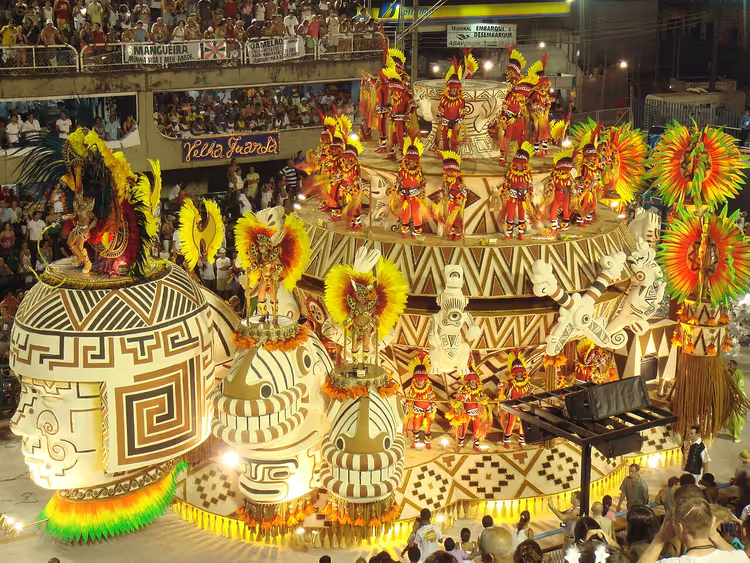
Two main events are tied to summer. New Year's Eve in Rio is celebrated on Copacabana beach in white clothes, and carnival takes place before Lent, usually in February, with dates that shift every year.
| Region | Best months | What to keep in mind |
|---|---|---|
| Rio de Janeiro | May and June, September and October | December to March is hot, humid, crowded and expensive |
| The Amazon | Dry season from July | Hot and humid all year, trails wash out in the rainy months |
| Northeastern coast | August to December | Rainfall peaks in March and April |
| The south | November to March | In winter the nights are cool and the ocean is cold |
| The Pantanal | May to September | Dirt roads flood in the rainy season |
| Iguazu Falls | March to June | Highest water from December to March, but with heat and lines |
Twelve months compared: find the best time for your trip
Our articles on this
Budget: how to work out your own total
Three things affect your total in Brazil the most: the dates, the number of domestic flights and the format of your nature trips. New Year's Eve, carnival, Easter week and school vacations push up prices for lodging and flights, while in the low season from May to September hotels on the coast get cheaper.
Each extra region means one more flight, and a safari in the Pantanal or a program at an Amazon lodge is priced as a package with lodging, guide and transfers, with a wide spread between operators. That is why you will find a calculator here instead of a figure: it separates lodging, food, transportation, entry tickets, getting there and a reserve, and shows which item pulls your total up.
Itineraries: the first trip and the next ones
A short trip fits one city, and that is usually Rio de Janeiro. Three days are enough for the main places: Corcovado and Sugarloaf Mountain, the historic center with Santa Teresa and the Selarón Steps, a beach and the Botanical Garden. A week lets you add Iguazu Falls, and two weeks also fit the Amazon with Manaus.
For a return trip there are other combinations. São Paulo with an outing to the mountains at Campos do Jordão. The south with the state of Santa Catarina, where Joinville and the island of São Francisco do Sul sit side by side. The northeast with Fortaleza, Preá and the dunes. A separate trip to the Pantanal, entered from the north via Cuiabá or from the south via Campo Grande.
A rule that protects the plan: do not overload a short trip with domestic flights, and leave a spare day wherever the weather decides everything, at the falls, on safari or before a boat trip.
| Length | What fits |
|---|---|
| Three days | Rio de Janeiro: Corcovado, Sugarloaf Mountain, the center with Santa Teresa, a beach and the Botanical Garden |
| One week | Rio de Janeiro and Iguazu Falls, which take two days |
| Two weeks | Rio, Iguazu and the Amazon with Manaus, which takes about three days; the rest of the time goes to flights |
Day planner: check what fits into one day
Our articles on this
Practicalities: documents, safety, connectivity
According to our articles, citizens of Germany and most EU countries do not need a visa for a tourist trip of up to 90 days; at the border you are asked for a valid passport and a return ticket. For other passports and for longer stays, check the rules on the website of the Brazilian consulate before buying tickets. If the Amazon is in your plan, ask your doctor about vaccinations well in advance.
Crime levels in the big cities are high. Do not hold your phone in your hand on the street, do not take valuables to the beach, get around by taxi or Uber in the evening and stay in calm neighborhoods. The country speaks Portuguese, and English is poorly understood even in hotels.
Check roaming terms with your carrier before the trip, and an eSIM gives you a backup way to be online from the first minute: a local number is not issued without the CPF tax number. Medical care for a tourist in Brazil is expensive, so arrange insurance before you leave and read what exactly it covers.
Make a packing list for your trip to Brazil
Ad
See eSIM plans for Brazil on Yesim
We earn a commission through this link; your price stays the same.
Ad
See travel insurance on World Nomads
We earn a commission through this link; your price stays the same.
Our articles on this