
















Vietnam: a guide for independent planning
Vietnam stretches more than 1650 km from north to south, and one country holds three different climates. While you need a jacket in Hanoi, people on Phu Quoc swim until sunset, and the center follows a rain calendar of its own. That is why a trip here is planned not for the country as a whole but for a specific region and month. This page lays Vietnam out for independent planning: what to see, which cities and resorts to choose, where to stay, how to get around and when to go. Each section stays short and leads on to our detailed articles. There are no prices here: between the dry season and the rainy months they differ so much that a fixed figure would be misleading.
What to see: cities, heritage and nature
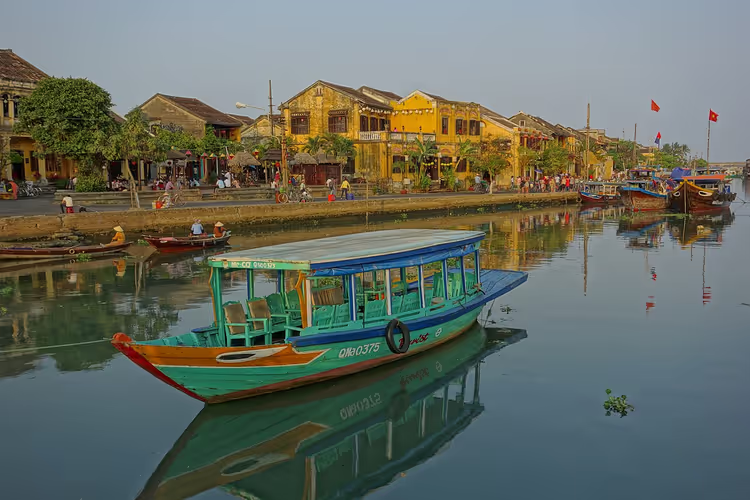
A first trip usually rests on three cities. Hanoi offers the Old Quarter with its craft streets, Hoan Kiem Lake, the Temple of Literature and the Museum of Ethnology. Hue was the capital of the Nguyen dynasty: here you find the Citadel, the Imperial City, Thien Mu Pagoda and the emperors' tombs outside the city. Hoi An, an old trading port on the UNESCO World Heritage List, is best seen in the evening, when silk lanterns are lit in the Old Town. Not far away lies My Son, the sanctuary of the Champa kingdom.
In the south the main city is Ho Chi Minh City. The Reunification Palace, the cathedral and the Central Post Office stand close together, followed by the War Remnants Museum and Ben Thanh Market. Out of town, people head to the Cu Chi Tunnels and to the Mekong Delta with its floating markets.
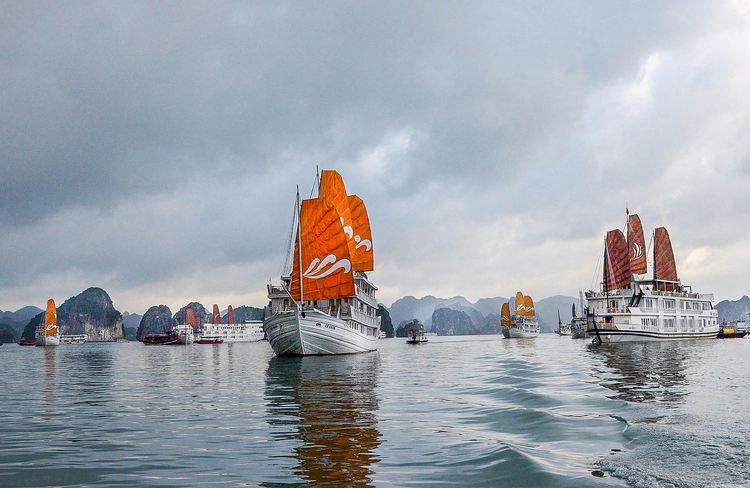
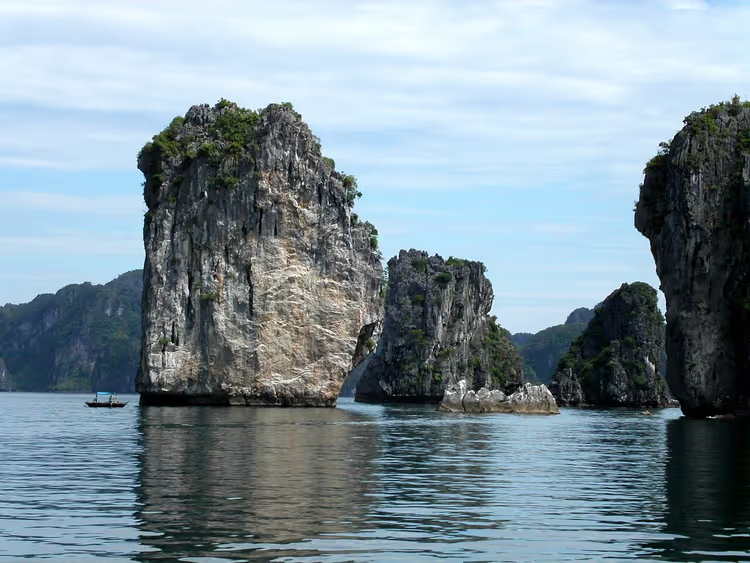
Nature in Vietnam is a match for the cities. Ha Long Bay with its hundreds of limestone rocks is a UNESCO World Heritage Site, in the Trang An reserve boats pass between the mountains through caves, and Phong Nha-Ke Bang National Park is home to Son Doong, the largest cave on the planet.
Our articles on this
Regions, cities and resorts: where to go
The north means Hanoi and everything that starts from it: cruises on Ha Long Bay, Cat Ba Island with its national park, and Sapa with rice terraces and hiking trails through mountain villages.
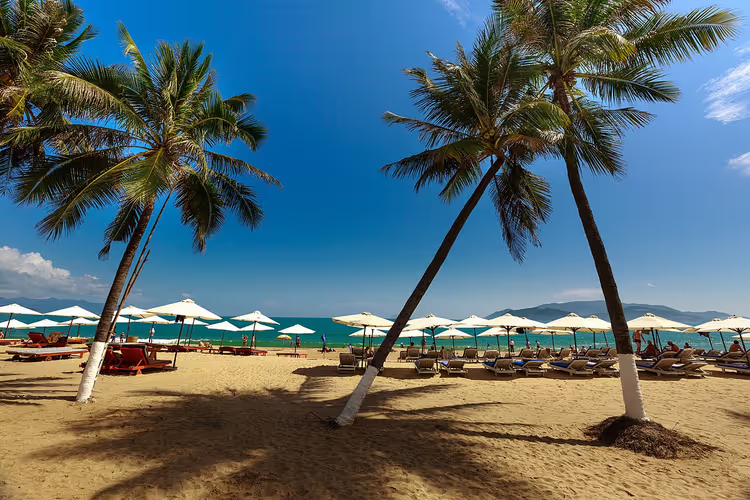
The center combines history and sea. Hoi An has An Bang Beach nearby, Da Nang sits on the long city beach of My Khe, and Hue remains a city of sights with no swimming. Farther south lie Nha Trang, the most versatile resort in the country with islands, Cham towers and nightlife, and quiet Cam Ranh with hotels right by the water and the airport close by. In the mountains stands Da Lat, where people go for cool air, waterfalls and coffee farms.
The south means Ho Chi Minh City as the gateway to the region, Mui Ne with wind for kitesurfing and dunes, Vung Tau as the sea closest to the metropolis, and two island destinations. Phu Quoc is chosen for a calm winter beach, the Con Dao archipelago for seclusion, diving and watching sea turtles. Families with small children most often compare Nha Trang, Phu Quoc and Mui Ne: the first two have a gentle slope into the water, the third lies far from the airports.
| Resort | Who it suits | What to keep in mind |
|---|---|---|
| Nha Trang | Those who want everything at once: beach, islands, Cham towers, nightlife | Dry from February to August, rain and typhoons in the fall |
| Cam Ranh | A quiet stay in a hotel right by the water | A quiet place, the airport is close by |
| Hoi An and Da Nang | A combination of sights and sea | An Bang and My Khe beaches, the same season as in Nha Trang |
| Mui Ne | Kitesurfing and dunes | Far from the airports, waves on the sea in summer |
| Phu Quoc | A calm winter beach, families with small children | Dry from December to April, rain from May |
| Con Dao | Seclusion, diving, sea turtles | Flights from Ho Chi Minh City or a bus and ferry |
| Da Lat | Those looking for cool air instead of a beach | Mountains: waterfalls and coffee farms, no sea |
Our articles on this
- Which Vietnam resort to choose: 14 places by type of holiday and season
- Vacation in Vietnam: resorts, seasons, and hotels for your trip
- Nha Trang: when to go, what to see and where to stay by the sea
- Vietnam islands for a beach holiday: 17 places, seasons and how to get there
- Beaches of Vietnam: 10 places to go by season
- 12 Best beaches in Nha Trang: where to swim and how to get there
- Where to go with a child in Vietnam: ten resorts and the 2026 season
- Where to go with a child in Vietnam: Nha Trang, Mui Ne or Phu Quoc
Hotels: beachfront, all-inclusive and bungalows
The hotel market in Vietnam is broad: from large resorts to simple guesthouses and family-run hotels. In Nha Trang star categories are only a rough guide, so read reviews from the last few months rather than just looking at the scores. There is also no accommodation right on the shore in the center there: beachfront properties exist only on the outskirts, and hotels in the center stand two or three blocks from the beach.

The words “private beach” and “all-inclusive” mean different things in descriptions. At one resort it is a long strip of sand in front of the villa, at another a narrow stretch by the city promenade. The list of services in the package also changes from hotel to hotel. For a trip with children check three things: a kids' club, a gentle slope into the sea and a pool, because not every hotel has them.
Bungalows by the water for winter dates in Nha Trang, Mui Ne and on Phu Quoc are the first to go, and the price rises with demand. For the high season it is worth booking accommodation two or three months ahead.
Ad
Compare hotels in Vietnam on Trip.com
We earn a commission through this link; your price stays the same.
Our articles on this
Tours, cruises and amusement parks
Vietnam has quite a few places that are easier to reach on an organized trip. Ha Long Bay is seen from a cruise boat: for a day or with a night on board. In July some departures are canceled because of wind and thunderstorms, and in December because of fog. The Cu Chi Tunnels are about two hours one way from Ho Chi Minh City, the Mekong Delta is a day trip or an overnight one, and the markets there operate early in the morning.
A guide is worth it where only ruins remain without an explanation, for example at the My Son sanctuary. Son Doong Cave can be entered only with a licensed group and by advance booking, and the elephants in Yok Don National Park are shown in an observation program with no riding.
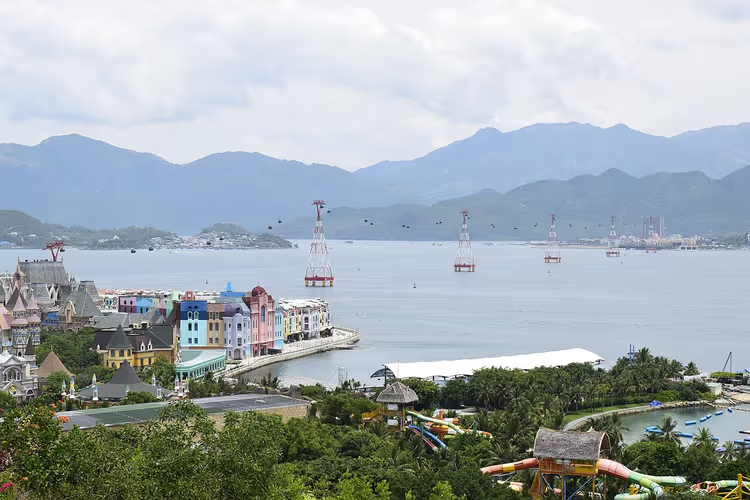
For families the main attraction is VinWonders on Hon Tre Island near Nha Trang: a water park, an aquarium and rides on a single ticket. Tickets for the evening shows of the water puppet theater in Ho Chi Minh City sell out quickly, so get them in advance.
| Where | Format | What to keep in mind |
|---|---|---|
| Ha Long Bay | A day cruise or one with a night on board | In July some departures are canceled because of wind and thunderstorms, in December because of fog |
| Cu Chi Tunnels | A trip out of Ho Chi Minh City | About two hours on the road one way |
| Mekong Delta | For a day or with an overnight stay | The floating markets operate early in the morning |
| My Son sanctuary | A guided tour | Without an explanation only ruins remain |
| Son Doong Cave | Only with a licensed group | Advance booking required |
| VinWonders near Nha Trang | A day on Hon Tre Island | A water park, an aquarium and rides on a single ticket |
| Water puppet theater in Ho Chi Minh City | Evening show | Get tickets in advance |
Ad
See tours and cruises in Vietnam on GetYourGuide
We earn a commission through this link; your price stays the same.
Ad
See tickets for parks and museums on Tiqets
We earn a commission through this link; your price stays the same.
Our articles on this
Food: street cuisine, coffee and fruit
The main street dish is banh mi: a short baguette with rice flour in the dough, filled with meat, fish, vegetables, pâté or fried egg. Vietnam ranks second in the world for coffee production and first for robusta, and here it is most often drunk black, with ice and condensed milk.
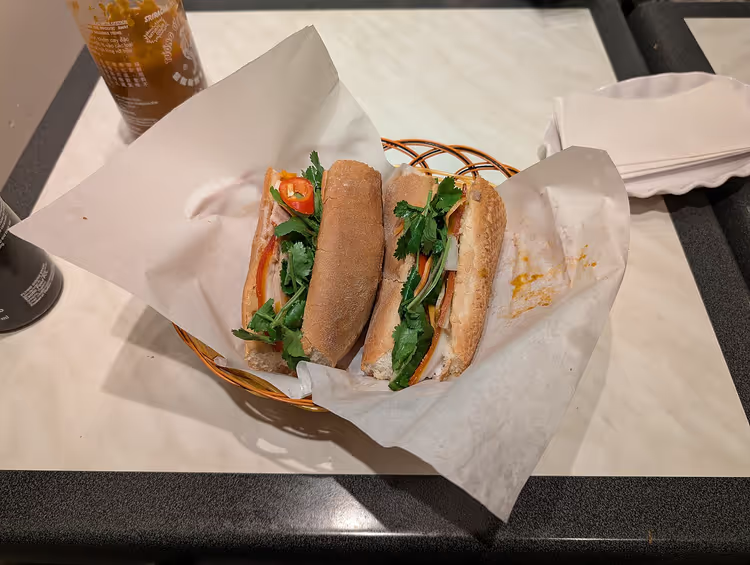
Buy street food where it is cooked in front of you and locals are lining up. In Nha Trang and Mui Ne look for seafood near the piers, and Hue is known for the cuisine of the imperial court.
Buy fruit at the morning market, because by midday the best of it is gone. Look for mango and lychee in spring, longan and salak in summer, while dragon fruit and guava are sold all year round. Among drinks, local beer is the most common, wine is made in Da Lat, and the strong alcohol here is rice spirits. Buy alcohol in supermarkets, not from street stalls: there a well-known brand sometimes hides a counterfeit.
Our articles on this
Flights, trains and getting from the airport
Most flights from Europe arrive in Hanoi or Ho Chi Minh City, and the way to the resorts almost always involves a connection and a domestic flight. Visitors to Nha Trang land at Cam Ranh Airport south of the city, while Da Nang and Phu Quoc Island have airports of their own. Between north and south it is more convenient to fly.
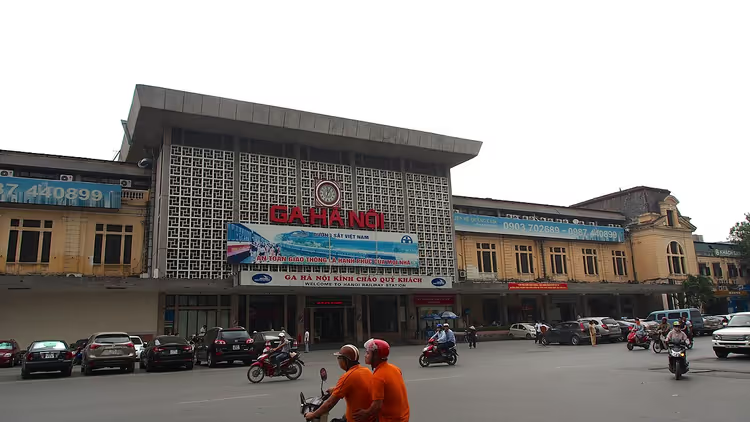
The train takes longer but shows you the country from the window. Hue lies on the main railway between Hanoi and Ho Chi Minh City, and Sapa is reached by night train to Lao Cai or by bus. Mui Ne is reached by bus from Ho Chi Minh City or Nha Trang, Vung Tau by fast boat or bus. A ferry runs to Cat Ba from the mainland, while Con Dao is reached by plane from Ho Chi Minh City or by bus to Soc Trang and then a ferry.
In the cities traffic runs on mopeds, and there are few cars. It is easier to order a taxi through an app than to hail one on the street. Book your airport transfer in advance: in high season drivers at the terminal charge noticeably more.
| Where | How to get there | What to keep in mind |
|---|---|---|
| Nha Trang | Flight to Cam Ranh Airport | The airport lies south of the city, a transfer is needed |
| Da Nang and Phu Quoc | Flight | Both have their own airports |
| Hue | Train | The city stands on the main railway between Hanoi and Ho Chi Minh City |
| Sapa | Night train to Lao Cai or bus | The train runs overnight, from Lao Cai you continue on to the mountains |
| Mui Ne | Bus from Ho Chi Minh City or Nha Trang | The resort lies far from the airports |
| Vung Tau | Fast boat or bus | The closest sea to Ho Chi Minh City |
| Cat Ba and Con Dao | Cat Ba by ferry from the mainland, Con Dao by plane from Ho Chi Minh City or by ferry | Buy tickets in advance in high season |
Ad
Book a fixed-price airport transfer in Vietnam
We earn a commission through this link; your price stays the same.
When to go: three climates in one country
There is no single best month for all of Vietnam. In the south, in Ho Chi Minh City, Mui Ne and on Phu Quoc, it is dry from December to April, and from May the rains begin, usually falling in the afternoon. The center with Da Nang, Hoi An and Nha Trang is dry from February to August, and from September to December rain and typhoons arrive there.
The north lives with four seasons. Winter in Hanoi and on Ha Long Bay is cool, in the mountains it can be close to zero, and summer is hot and humid. For a trip around the north the best time is from October to April, for trekking in Sapa late April with May and September with early October.
Separately, take Tet into account, the Lunar New Year. The date changes every year and falls in late January or in February. During the holiday, shops and local cafes close, transport is overcrowded and hotels become more expensive. If you are covering the whole country in one trip, aim for spring.
| Region | Best time | When it is harder |
|---|---|---|
| South: Ho Chi Minh City, Mui Ne, Phu Quoc | From December to April, dry | Rain from May, usually in the afternoon |
| Center: Da Nang, Hoi An, Nha Trang | From February to August, dry | Rain and typhoons from September to December |
| North: Hanoi, Ha Long | From October to April | Winter is cool, summer is hot and humid |
| Mountains: Sapa | Late April and May, September and early October | In winter it can be close to zero |
Twelve months compared: find the best time for your trip
Our articles on this
- When to go to Vietnam: dry months, rains and warm sea
- Vietnam by month: where it is dry and warm, and where there are rains and typhoons
- When to go to Vietnam without rain: weather by region and month
- Vietnam in January: weather by region, Tet and travel tips
- Weather in Vietnam in January: where to swim and where you need a jacket
- February in Vietnam: where it is dry and warm, and where it is wet
- Vietnam in March 2026: where to swim and where it is still cool
- Vietnam in April: where it is sunny and where the rains begin
- May in Vietnam: where it is dry for the beach
- Weather in Vietnam in June: where to go and where there is no rain
- Where to go in Vietnam in July: dry center vs rainy north and south
- Which region of Vietnam to choose in August for a beach holiday
- September in Vietnam: drying north, rainy center and warm south
- Weather in Vietnam in November: where it is dry and where it rains
- Weather in Vietnam in December: where to swim and where to bring a jacket
Budget: what the total depends on
The total in Vietnam depends above all on season and region. In the dry season hotels become more expensive, the highest prices in the south hold from late December to early January and during Tet, and in the rainy months the resorts offer discounts. The second factor is the number of domestic flights: a route from north to south costs more than a vacation in one region.
On the spot, small things decide a lot. Bargaining is appropriate at markets, and a couple of blocks from the promenade the same goods are cheaper. It is better value to exchange money in banks than at the airport.
That is why there is a calculator here instead of a figure. It separates accommodation, food, transport, entrance tickets, travel and a reserve and shows which item pushes your total up.
Itineraries: the whole country or one region
The ten main places from Hanoi to Phu Quoc take roughly two weeks if you travel without rushing. The route is divided into north, center and south. First Hanoi, Ba Be National Park and Trang An, then Hue, Hoi An and My Son, and to finish Ho Chi Minh City, the Mekong Delta, the Cu Chi Tunnels and the beach on Phu Quoc.
If you have less time, take one region. In the center it is easiest to combine beach and excursions: Hoi An with the sea nearby, Hue and My Son. In the south a few days in Ho Chi Minh City are rounded out with Phu Quoc or Mui Ne, in the north a cruise on Ha Long Bay and trekking in Sapa are added to Hanoi.
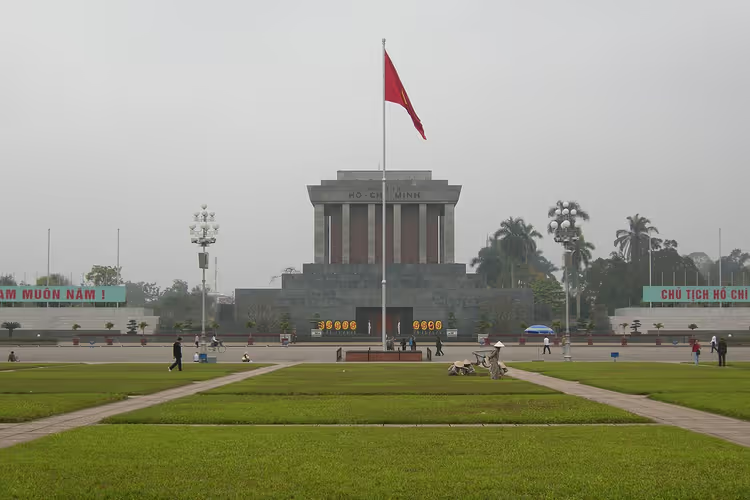
Within the cities there are ready-made plans too. The old center of Hanoi from Ba Dinh Square to the Opera House can be walked in one day, Ho Chi Minh City gets two to four days, and Da Lat one day in town and two more for the surroundings with their waterfalls.
Day planner: check what fits into one day
Our articles on this
Practical matters: connectivity, health, customs
Entry rules depend on citizenship and change, so check your own conditions with official sources before buying tickets. Check roaming terms with your carrier before the trip, and keep an eSIM as a backup way to have internet from the first minute. Take out travel insurance before you leave and read exactly what it covers.
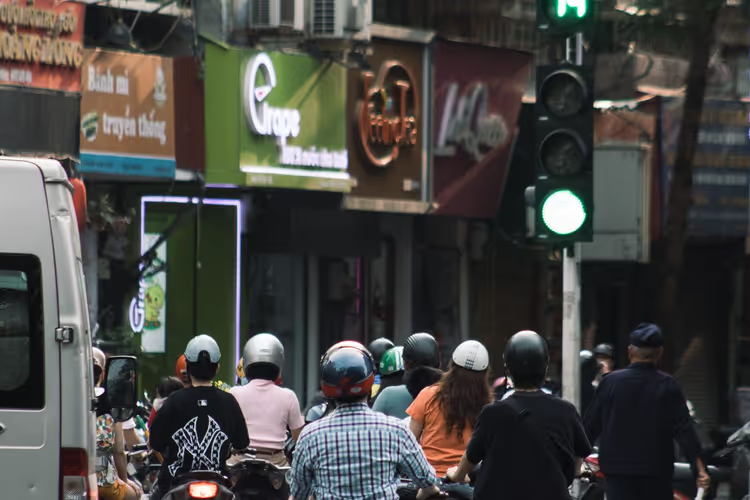
You will not be let into temples and pagodas in shorts or with bare shoulders, so keep a wrap in your bag. Cross the street slowly and at a steady pace: the stream of mopeds will go around you on its own.
Discuss vaccinations with your doctor at least a month before departure. Dengue fever and malaria are transmitted by mosquitoes, so bring repellent and check the mosquito nets in your room. Be careful with purchases at the border: ivory items cannot be taken out at all, antiques need a permit, and in jewelry shops ask for a certificate and a receipt.
Make a packing list for a trip to Vietnam
Ad
See eSIMs for Vietnam on Yesim
We earn a commission through this link; your price stays the same.
Ad
See travel insurance on World Nomads
We earn a commission through this link; your price stays the same.
Our articles on this