


Hungary: a guide for planning your own trip
Most trips to Hungary begin and end in Budapest, and that makes sense: the capital sits on both banks of the Danube, and thermal water rises right inside the city limits. But the country does not stop there. A few hours away lie Lake Balaton, the thermal lake of Hévíz, the wine cellars of Eger and Tokaj, the fortresses of the Danube Bend and the quiet towns of the east. This page lays the country out for independent planning: what is where, where to stay, how to get around, when to go and how to work out your costs. Each section stays short and leads on to our detailed articles. There are no prices here: rates for baths, tickets and hotels change with the season, so a fixed figure would quickly become misleading.
What to see: Budapest and the rest of the country
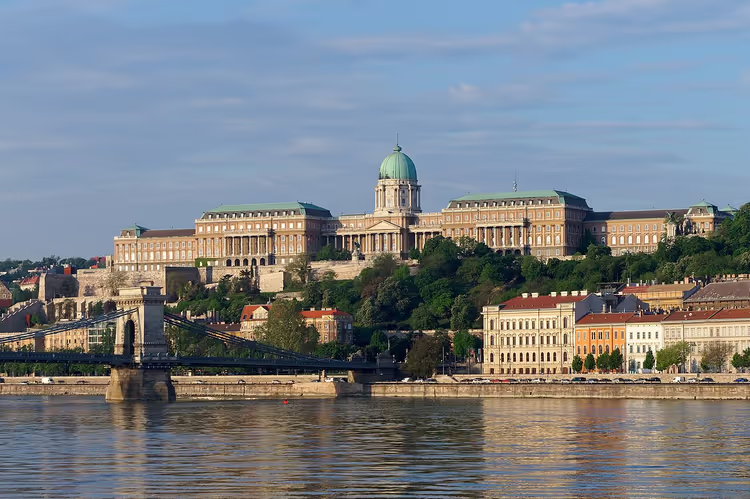
In Budapest the program rests on two banks. In Buda it is Buda Castle, Fisherman's Bastion and Matthias Church on Castle Hill; the hill, together with the Danube embankment, is on the UNESCO World Heritage list. In Pest it is the Parliament, St. Stephen's Basilica, Andrássy Avenue, Heroes' Square and City Park with the Széchenyi Baths and Vajdahunyad Castle.
The country's second theme is thermal water. Hungary is among the top five countries in the world by number of thermal springs, and baths operate well beyond the capital. One item from older guidebooks deserves a separate check: the Gellért Baths are closed for renovation, so look up their status on the official website before you travel.
Outside the capital, the places worth a trip of their own are Lake Balaton, which locals call the Hungarian sea, the Tokaj wine region and the UNESCO-listed village of Hollókő, the Early Christian necropolis in Pécs, Pannonhalma Abbey and the karst caves of Aggtelek National Park.
Our articles on this
- What to see in Budapest: 30 places and opening hours 2026
- Balaton: why the water seems murky and where it is safe to swim
- Széchenyi bath in Budapest: how to skip the line and what a morning ticket gives you
- Szechenyi Baths in winter: steam, best time and skip-the-line tickets
- Budapest Parliament: how to get inside and when to buy tickets
- Pest: what to see, when it is open and how much entry costs
- 20 Best museums in Budapest: what to see and who each one suits
- Vajdahunyad Castle in Budapest: free courtyard, museum inside and the Anonymous statue
- Margaret island in Budapest: what to see and how to get there by tram
- 15 Best parks in Budapest: where to go for quiet and views
Regions and towns: where to go
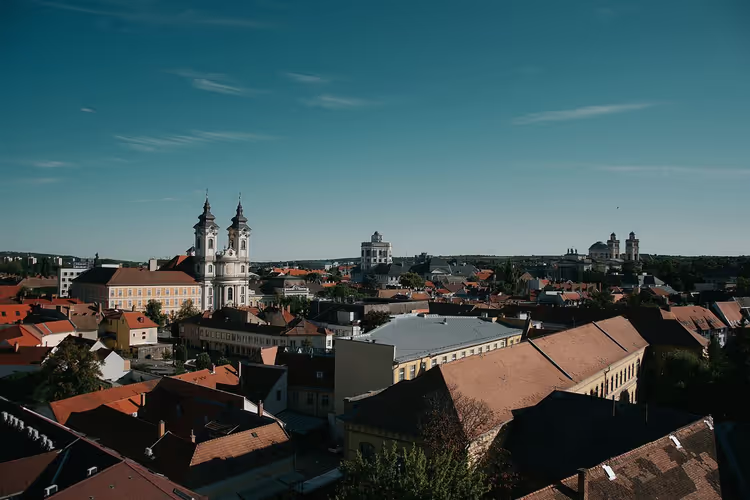
North of Budapest lies the Danube Bend: Szentendre with its galleries, Visegrád with a fortress on the rock and Esztergom with its basilica. This is the closest outing from the capital. In the northeast stands Eger, which combines a fortress, baroque streets, thermal baths and the Valley of the Beautiful Women with its wine cellars. Farther still lies Tokaj-Hegyalja: the town of Tokaj and the surrounding villages with cellars carved into volcanic tuff.
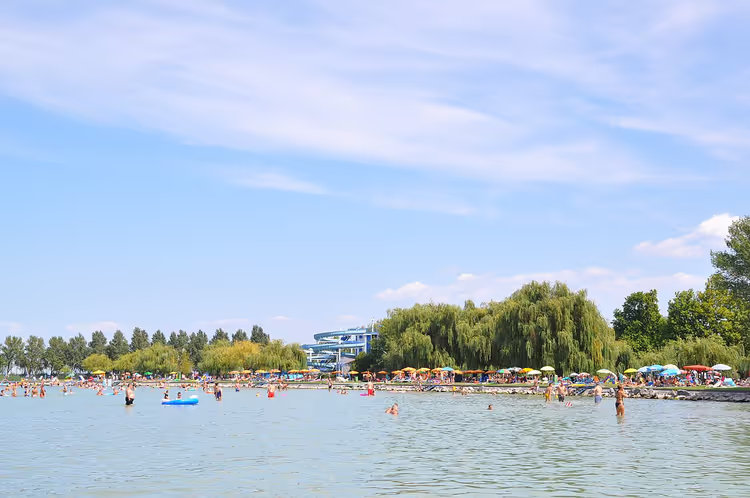
Lake Balaton divides into two shores. The northern one is deeper, with volcanic hills, vineyards, the Tihany Peninsula, Szigliget Castle and Balatonfüred. The southern one is shallow and flat, with wide beaches and Siófok, so it is easier there with small children. Nearby is Hévíz with its thermal lake, where people bathe all year round.
The east of the country means Debrecen, Hungary's second city with the Nagyerdő thermal park, the resort of Hajdúszoboszló, Nyíregyháza with its zoo and Szolnok on the Tisza. In the south are Pécs with its Zsolnay ceramics and Mohács, known for its winter carnival. Thermal resorts are scattered across the whole country: Bükfürdő and Sárvár in the west, Harkány in the south, Miskolctapolca with its cave bath in the northeast.
| Region | What is there | Who it suits |
|---|---|---|
| Danube Bend | Szentendre with its galleries, the Visegrád fortress, the Esztergom basilica | Those who need the closest outing from the capital |
| Eger | Fortress, baroque streets, thermal baths, the cellars of the Valley of the Beautiful Women | Those who want to combine a town, wine and thermal water |
| Tokaj-Hegyalja | The town of Tokaj and villages with cellars in volcanic tuff | Those who come for wine and tastings |
| Northern shore of Balaton | Tihany Peninsula, Szigliget Castle, Balatonfüred, vineyards | Those who want sights next to the water |
| Southern shore of Balaton | Shallow water, wide beaches, Siófok | Families with small children |
| Hévíz | A thermal lake where people bathe all year round | Those who come for thermal water at any time of year |
| East of the country | Debrecen with the Nagyerdő thermal park, the resort of Hajdúszoboszló, Nyíregyháza with its zoo | Those who have already seen the capital and want quieter towns |
| South of the country | Pécs with its Zsolnay ceramics, Mohács with its winter carnival | Those planning a trip around the carnival or the museums |
Our articles on this
- 13 Thermal resorts of Hungary: where water heals and how much a course costs
- North or south shore of Balaton: where to swim and what to see
- Tokaj wine region: cellars, aszu tastings and the road from Budapest
- Tokaj and Nyiregyhaza: a wine route through eastern Hungary
- Szolnok: a city on the Tisza worth seeing
- Where to stay in Budapest: 5 districts and hotels for every scenario
Hotels: the capital, the lake and the resorts
In Budapest the choice of district matters more than the star rating. Pick Pest if you want to be closer to bars, restaurants and Andrássy Avenue; choose Buda for quiet and a view of the Danube. If you need thermal water in the hotel itself, read the description carefully: there is a big difference between a hotel with a spa and a hotel with its own thermal bath, and on the booking page it is almost invisible.
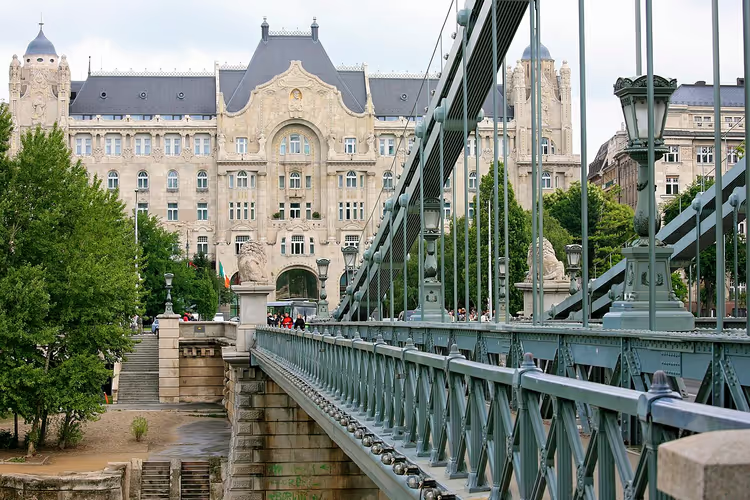
At the resorts the main question is the distance to the water. In Hévíz the spa hotels differ in how far they are from the lake, in their range of treatments and in hotel category; at other thermal resorts some hotels are linked to the bath by a walkway, which spares you the daily trips. On Balaton, accommodation on the northern shore costs more than on the southern one, especially in July and August, and in Tihany there is simply less of it.
For summer by the lake, for Easter and the May holidays, and for the December dates in Budapest, book well ahead: the choice narrows quickly.
Ad
Compare hotels in Hungary on Trip.com
We earn a commission through this link; your price stays the same.
Our articles on this
- Sanatoriums of Heviz with treatment: 14 hotels, pools and honest cons
- Where to stay in central Budapest: 15 four-star hotels with honest downsides
- Budget hotels in central Budapest: 15 options near the metro
- 15 3-Star hotels in central Budapest: from the Danube to the Jewish Quarter
- 15 Five-star hotels in central Budapest: which one to choose for your trip
- Spa hotels in Budapest: 15 best options with a pool and thermal baths
- Budapest hotels with thermal pools: 14 options for 2026
- 15 Budapest hotels with Danube views: from 3 to 5 stars
Tours, tickets and day trips
You need a ticket in advance in two cases. The Parliament in Budapest admits visitors only on a guided tour, the number of places per day is limited, and in high season the nearest slots are taken early; every visitor needs a passport or ID card. In summer there are lines at the ticket desks of the baths, so an online ticket for the morning hours saves time.
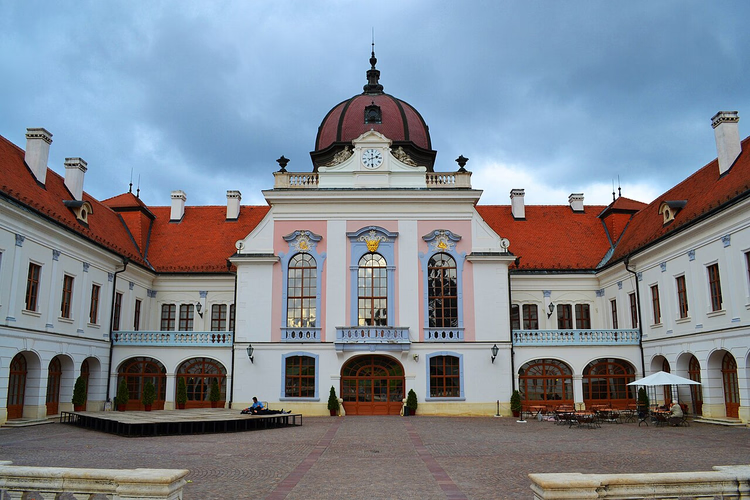
Budapest is a convenient base for day trips. The closest destinations are Szentendre and Visegrád; next come Esztergom, Eger, the palace in Gödöllő, Székesfehérvár, Pannonhalma Abbey and Pécs.
A guided tour pays off in the Danube Bend, because buses between Visegrád and Esztergom run infrequently, and in Tokaj if you have no car: a ready-made tour fits vineyards, a cellar and a tasting into one day.
Ad
See tours in Hungary on GetYourGuide
We earn a commission through this link; your price stays the same.
Ad
See tickets for baths and museums on Tiqets
We earn a commission through this link; your price stays the same.
Our articles on this
Food and wine: paprika, goulash and Tokaji
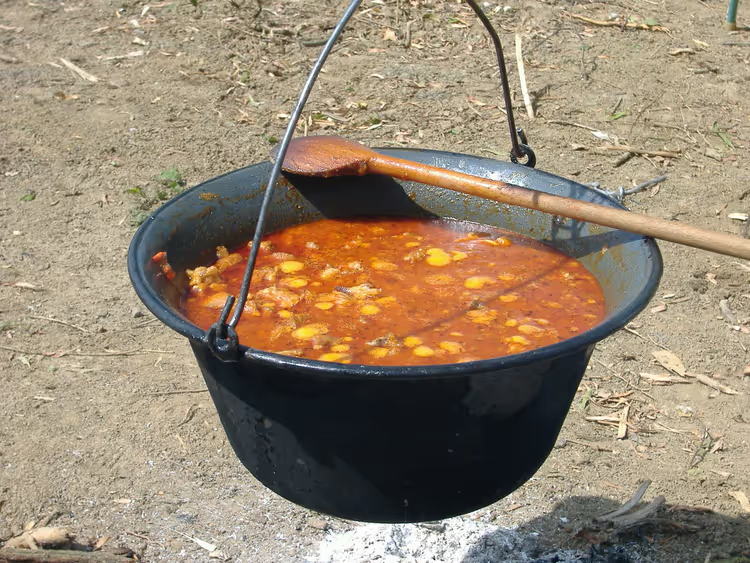
Hungarian cooking is built on paprika. Gulyás here is a thick soup with beef and paprika, not a main course. On the street people eat Lángos, fried yeast dough with garlic, sour cream and grated cheese, and Kürtőskalács, a sweet spiral of dough baked over a fire. The cheapest place to try them is at the markets; in the tourist center of Budapest the same dishes cost more.
Wine in Hungary is tied to the region. Tokaj is known for sweet aszú made from grapes affected by noble rot and for dry Furmint; at a tasting, start with the dry and finish with the sweet. Eger is known for Egri Bikavér and the cellars of the Valley of the Beautiful Women. On the northern shore of Balaton, in Badacsony, Szürkebarát, Kéknyelű and Olaszrizling grow on volcanic soil.
What people usually take home is edible: paprika, Pick salami, pálinka, Unicum liqueur, Tokaj wines and marzipan.
Our articles on this
Trains, car and getting in from the airport
Hungary's railroads converge on Budapest, and most trips around the country start from one of three stations: Keleti, Nyugati or Déli. Trains to Eger and Tokaj leave from Keleti, to Balaton from Déli, to Esztergom from Nyugati. The HÉV suburban train runs to Szentendre and Gödöllő.
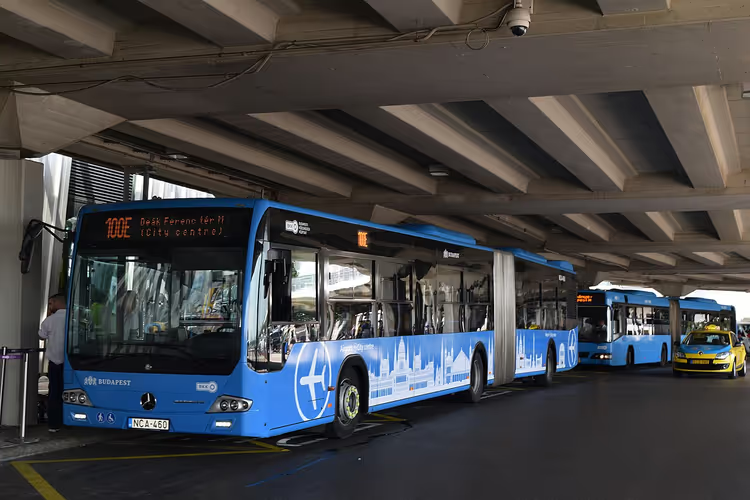
You need a car where the timetable thins out: in the Danube Bend, between the villages of Tokaj, near the flower fields and wineries of Balaton. The M7 highway leads to the southern shore of the lake, the M3 toward Tokaj.
From Budapest airport the direct 100E express runs around the clock to Deák Ferenc tér square in the center; it requires a separate ticket, and a regular travel pass is not valid. The cheaper way is bus 200E with a change to metro line M3. A pre-booked transfer helps at night, with children and with a lot of luggage. Two night trains run daily from Germany to Budapest: the Metropol from Berlin and the Kálmán Imre from Stuttgart via Munich and Vienna.
| Where to | How to get there | What to keep in mind |
|---|---|---|
| Eger and Tokaj | Train from Keleti station | The timetable between the villages of Tokaj is sparse; a car or a tour is easier there |
| Balaton | Train from Déli station | By car, the M7 highway leads to the southern shore |
| Esztergom | Train from Nyugati station | Buses between Esztergom and Visegrád run infrequently |
| Szentendre and Gödöllő | HÉV suburban train | Both destinations fit into a day trip |
| From the airport straight to the center | 100E express to Deák Ferenc tér square | Runs around the clock, separate ticket required |
| From the airport to the center for less | Bus 200E and metro line M3 | The trip involves a change |
| From Germany to Budapest | Night trains Metropol and Kálmán Imre | The first runs from Berlin, the second from Stuttgart via Munich and Vienna |
Ad
Book a fixed price airport transfer in Budapest
We earn a commission through this link; your price stays the same.
Our articles on this
When to go: weather, swimming season and festivals
For cities and excursions the best months are April, May, September and October: mild weather and short lines. In July and August Budapest is hot, hotels get more expensive and there are lines at the baths.
People swim in Balaton from June through August, with the peak in July and August; in September it is still warm and the beaches empty out. Thermal baths are open all year, including the outdoor pools of the Széchenyi Baths in Budapest; at the resorts the outdoor pool season lasts from early May to early October.
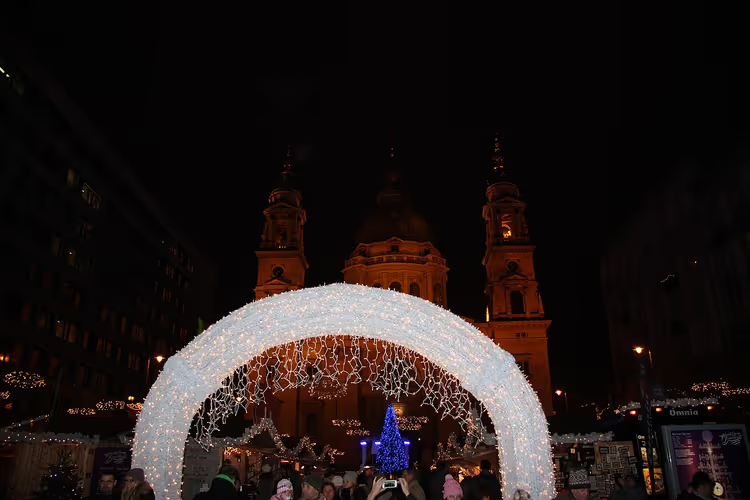
The events calendar also suggests dates. In February Mohács holds the Busójárás carnival, at Easter the village of Hollókő puts on a festival, in April the tulip fields open, and in the second half of June lavender blooms on the Tihany Peninsula. September and October bring the harvest in Tokaj and the grape festival in Badacsony. In December Christmas markets take over the center of Pest, and these dates are the first to be booked.
| When | What happens | What it suits |
|---|---|---|
| February | Busójárás carnival in Mohács | A trip built around an event |
| April and May | Mild weather, short lines, the Easter festival in Hollókő, tulip fields | Cities and excursions |
| June | Start of the swimming season on Balaton; lavender blooms in Tihany in the second half of the month | The lake before the peak months |
| July and August | Heat in Budapest, pricier hotels, lines at the baths, peak season on Balaton | Swimming in the lake, if accommodation is booked well ahead |
| September and October | Mild weather, beaches empty out, harvest in Tokaj, grape festival in Badacsony | Cities, excursions and wine regions |
| December | Christmas markets in the center of Pest | A festive trip; these dates are the first to be booked |
Twelve months compared: find the best time to go
Our articles on this
- When to go to Budapest in 2026: weather, crowds and prices by month
- Spring in Hungary: tulip fields, Easter villages and festivals at Balaton
- Busójárás in Mohács 2026: how Hungary's winter carnival takes place
- Grape harvest festival in Badacsony: program for September 11-13, 2026
- Five Christmas markets in Budapest you can visit in one evening
- New year in Budapest: where to watch fireworks and where to go to celebrate
Budget: how to work out your own total
Budapest is cheaper than Vienna, but you can no longer call it cheap. Three things move the total: the month of the trip, the location of the hotel and how many paid admissions are in your plan. City transport has little effect on the result. The biggest lines are accommodation, dinner in the tourist center and the baths, whose tickets you should count as a separate line: rates are higher on holidays.
If you are going for treatment, a course at a thermal resort lasts from one to three weeks, and accommodation and meals are paid separately from the treatments. That is why there is a calculator here instead of a figure: it separates accommodation, food, transport, admission tickets, travel to the country and a reserve, and shows which item pushes your total up.
Calculate a travel budget for Hungary
Our articles on this
Routes: from a weekend to a week
Hungary is easy to cover in a single trip: Budapest remains the core of the program, with one or two towns added to it. Allow two full days for the capital, another day for Eger with its wine valley and a day for Debrecen with its thermal park. For a short weekend, Budapest and Szentendre are enough. If you have a week, add Eger and Debrecen, and for thermal water head to Hévíz or Hajdúszoboszló.
With children the route is built differently: three to four days in Budapest with the zoo and the baths, then two to three days in Hévíz or on the southern shore of Balaton. The east of the country makes a separate two-day trip by train: Tokaj with its cellars and Nyíregyháza.
In Budapest itself a simple rule works: cross the Danube no more than twice a day.
| How much time | What fits | Focus |
|---|---|---|
| Short weekend | Budapest and Szentendre | The capital and one outing |
| Four days | Two days in Budapest, a day in Eger, a day in Debrecen | The capital, wine and a thermal park |
| A week | Budapest, Eger, Debrecen and Hévíz or Hajdúszoboszló | Towns and thermal water |
| A week with children | 3 to 4 days in Budapest, then 2 to 3 days in Hévíz or on the southern shore of Balaton | Zoo, baths, shallow water |
| Two days in the east | Tokaj with its cellars and Nyíregyháza, travel by train | Wine and the zoo |
Day planner: check what fits into one day
Our articles on this
- Budapest baths, Eger wine and Debrecen thermal baths: a route through Hungary
- Hungary with kids: Budapest, baths and Lake Balaton
- Budapest in 3 days on your own: a route along two banks of the Danube
- Budapest in 5 days: a route through Buda and Pest with transport and prices
- Budapest in one day: 17 places from Fisherman's Bastion to Gellert Baths
- One day in Budapest: castle, parliament and baths
- Buda in one day: the castle, Fisherman's Bastion and Gellert Hill
Practical matters: money, connectivity, baths
In Hungary you pay in forints. ATMs and card terminals often offer to charge the amount in euros: choose forints, because the bank does the conversion at a worse rate. Cards are accepted almost everywhere, while cash is needed at markets, at small wineries and at village festivals. In a restaurant, check the bill before paying: a service charge is often already included as a separate line, and then no tip is needed. Leaving money on the table is not customary; and if you say “thank you” while handing over cash, the waiter may take it as “keep the change.”
On Budapest city transport tickets are checked often, and a single ticket does not allow a transfer outside the metro, so for several days a travel pass is simpler. If you are going for a course of treatment, talk to your doctor first: with heart conditions, thermal water calls for caution.
Check roaming terms with your carrier before the trip, and keep an eSIM as a backup way to have internet from the first minute. Take out travel insurance before you leave and read exactly what it covers.
Build a packing list for the trip to Hungary
Ad
See eSIM options for Hungary on Yesim
We earn a commission through this link; your price stays the same.
Ad
See travel insurance on World Nomads
We earn a commission through this link; your price stays the same.
Our articles on this