











Spain: the guide for planning it yourself
Spain is bigger and more varied than it looks in a beach brochure. The coastline runs for almost eight thousand kilometers, the country includes two archipelagos, the Balearics in the Mediterranean and the Canaries in the Atlantic, and the green Atlantic north has little in common with sun-baked Andalusia. Anyone who tries to fit all of that into one vacation spends most of the time on the road. This page sorts the country for your own planning: what each city and coast is good for, where to stay, how to get around, when to go and what to work out your costs with. Every section stays short and leads on to our detailed articles. There are no prices here: train tickets are sold at dynamic fares, hotels by the sea go up in summer, and a fixed figure would soon be out of date.
Cities and sights: the overall picture
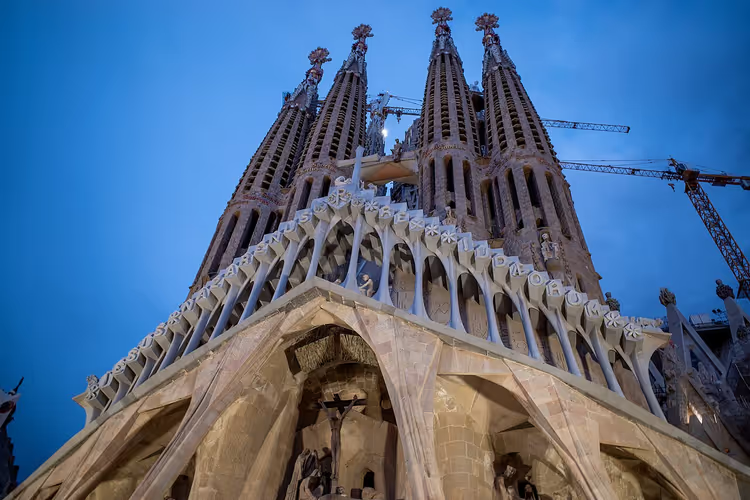
Two cities usually carry a first trip. Barcelona means Gaudí's architecture, with the Sagrada Família and Park Güell, the Gothic Quarter, La Rambla and the hills of Montjuïc and Tibidabo. Madrid means the Royal Palace, the Plaza Mayor and three major museums that stand almost side by side: the Prado, the Thyssen-Bornemisza Museum and the Reina Sofía art center.
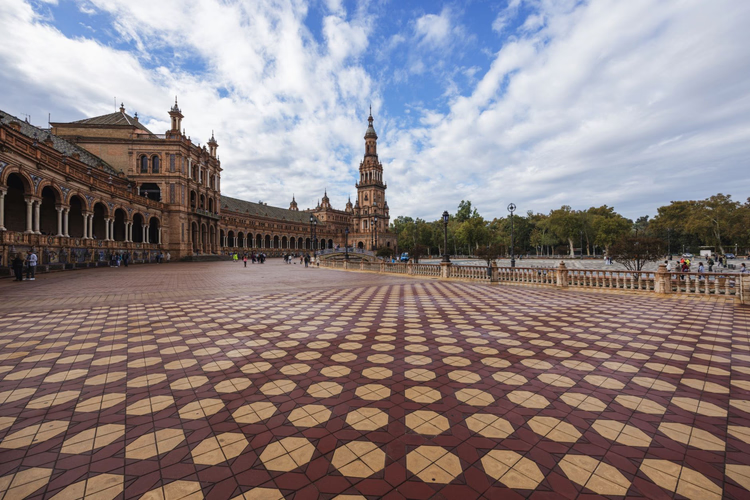
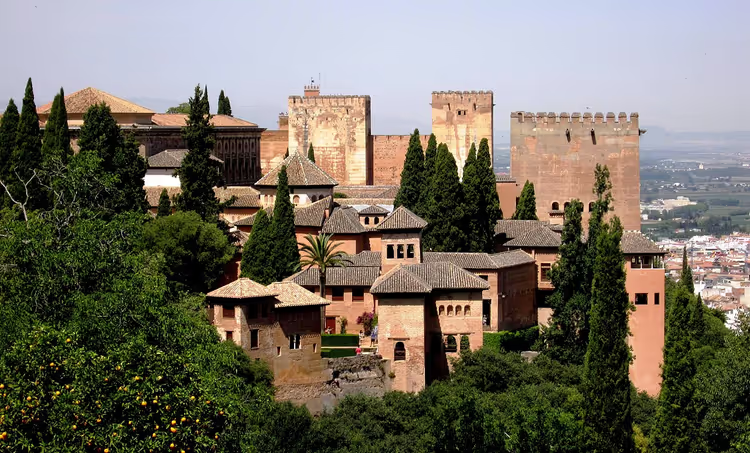
The country's second layer is Andalusia: Seville with its cathedral, the Giralda tower and the Alcázar, Córdoba with the Mezquita, its Mosque-Cathedral, and Granada with the Alhambra on the hill above the city. In Valencia the medieval Old Town sits next to the futuristic City of Arts and Sciences, and in Bilbao the old quarter of Casco Viejo is complemented by the Guggenheim Museum.
Beyond the cities lies what people make a separate trip for. The Teide volcano on Tenerife is the highest point in Spain. The Garajonay laurel forest on the island of La Gomera is on the UNESCO World Heritage List. The Altamira cave in Cantabria is closed to visitors, and a replica of its main chamber is shown at the museum in Santillana del Mar.
Our articles on this
- What to see in Barcelona: 30 places from La Rambla to Tibidabo
- 20 Best places in Barcelona: tickets, route and tips by district
- What to see in Madrid: 30 places from Plaza Mayor to Linares Palace
- 35 top attractions in Seville: what to see and when
- What to see in Valencia: 30 places, tickets and opening hours 2026
- What to see in Cordoba: 25 places from the Mezquita to the Caliphal Baths
- What to see in Bilbao: 25 places from the Guggenheim Museum to Casco Viejo
- 15 Places in Malaga worth seeing in two days
- What to see in Tenerife: 25 places with prices and opening hours
- Gaudi architecture in Barcelona: 7 sites with addresses and tickets
- 20 Best museums in Barcelona: tickets, hours and what to see
- Where to go in Madrid: 11 museums with prices and free intervals
- Altamira Cave: why it is closed and how to see the paintings
- Cathedrals beach: when is low tide and do you need to book entry
- Garajonay on La Gomera: laurel forest, trails and ferry from Tenerife
Coasts, islands and where to base yourself
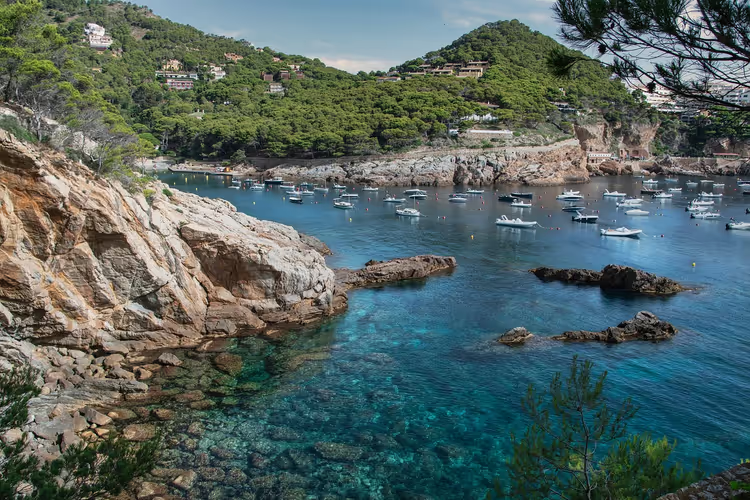
The mainland coasts differ more than the map suggests. The Costa Brava in the north of Catalonia is cliffs, pine-covered slopes and small coves. The Costa Dorada south of Barcelona has a gentle entry into the sea and shallow water, which is why it is considered the most child-friendly coast in the country; Salou and the PortAventura World park are here too. The Costa Blanca holds the record for Blue Flag beaches. The Costa del Sol in the province of Málaga has the most hotels in the top category, but the water there is cooler than on the neighboring Mediterranean coasts.
The islands fall into two archipelagos. The Balearics in the Mediterranean offer beaches and a short flight: Mallorca is the liveliest, Menorca is quieter and has been declared a biosphere reserve, and Ibiza is known for its clubs, although the north of the island has peaceful coves. The Canaries in the Atlantic mean winter warmth and volcanic landscapes.
In the cities the neighborhood changes the trip more than the hotel category does. In Barcelona, Eixample or El Born is recommended for a first visit, and Barceloneta lies by the sea. In Andalusia, Seville or Málaga makes a convenient base: from either it is easy to get out to the neighboring cities.
| Coast or island | What sets it apart | What to bear in mind |
|---|---|---|
| Costa Brava | Cliffs, pine-covered slopes and small coves in the north of Catalonia | Pines give shade near the water, so this coast is recommended for July and August |
| Costa Dorada | A gentle entry into the sea and shallow water: the most child-friendly coast in the country | Salou and the PortAventura World park are here |
| Costa Blanca | The record for Blue Flag beaches | In late September and the first half of October the sea is still warm and the beaches are less crowded |
| Costa del Sol | The most hotels in the top category | The water is cooler than on the neighboring Mediterranean coasts |
| Mallorca | The liveliest of the Balearic islands | The season lasts roughly from May to October |
| Menorca | Quieter than Mallorca and declared a biosphere reserve | Along with Mallorca it is recommended most often for families with children: the beaches shelve gently |
| Ibiza | Known for its clubs | The north of the island has peaceful coves |
| Canaries | Winter warmth and volcanic landscapes | They welcome visitors all year round; a vacation here usually costs more than on the mainland |
Our articles on this
- Resorts of Spain: 17 destinations and the best season to visit
- Where to go in Spain: 5 resorts, all-inclusive hotels and the 2026 season
- Islands of Spain: how to choose between the Balearics and the Canaries
- Cities of Andalusia: 20 places worth visiting in 2026
- Galicia and Asturias: islands, lighthouses and caves with ancient drawings
- Costa Brava: best beaches, hidden coves and the Camí de Ronda trail
- Costa Brava: where to stay, what to see and how to get there
- Costa Dorada: 8 places from Roman Tarragona to the Ebro Delta
- Ibiza: Dalt Vila, best beaches and clubs of the 2026 season
- Quiet coves of Mallorca: where to go instead of crowded beaches
- Where to go with children in Spain: 17 resorts and their seasons
- Beaches of Spain: 30 shores for families, surfers and snorkeling
- Where to stay in Barcelona: six districts and price guide
- Where to stay in Madrid: 7 neighborhoods and hotels from hostel to luxury
- Five districts of Malaga: where to live in the center and by the sea
Hotels: all-inclusive and what makes up the price
All-inclusive is less common in Spain than in Turkey or Egypt and is concentrated mainly on the islands: Tenerife, Mallorca, Gran Canaria and Lanzarote. Most hotels sell breakfast only or breakfast and dinner, and on that rate drinks at dinner usually cost extra. What is included differs from hotel to hotel, so check exactly what the package covers before you book.

The price is driven by the island and the season. The Canaries take guests all year round, Mallorca, Ibiza and the Costa Brava operate roughly from May to October, and rates are highest in July and August. In Barcelona the tourist tax is paid on the spot and is not included in the room price.
Ad
Compare places to stay in Spain on Trip.com
We earn a commission through this link; your price stays the same.
Our articles on this
- All inclusive in Spain: 20 5-star hotels for a seaside holiday
- 4-Star all-inclusive hotels in Spain: 20 seaside options for families and couples
- 20 Best 3-star all-inclusive hotels in Spain: comparison and drawbacks
- 20 Hotels in Spain for family holidays: what to check in 2026
- Where to stay in Barcelona: 11 hotels from five stars to a hostel
- Where to stay in Barcelona: 13 3-star hotels near La Rambla and the cathedral
- 12 5-Star hotels in central Barcelona: pool, views and distances
- Where to stay in Barcelona by the sea: 14 hotels from 5* to budget
- 15 4-Star hotels in central Madrid: where to stay near Gran Via
- 15 3-Star hotels in central Madrid: where to stay in 2026
- With kids to Mallorca: 15 hotels with water zones and kids' clubs
- Seaside holiday in Mallorca: how to choose a hotel with a beach and all inclusive
- Tenerife 4 star all inclusive hotels: how to choose and what to expect
- Tenerife 5 star hotels on the first line: 15 options by the ocean
- Salou 4 star hotels near the beach: 15 options for families and couples
Tours and timed tickets
Spain's main sights admit visitors by time slot, and this is the first thing to sort out once you have bought your flights. Tickets for the Sagrada Família are sold online only, there are no ticket desks on site, and the popular slots go several weeks ahead. At the Alhambra the daily quota is limited, the entry time for the Nasrid Palaces is printed on the ticket, and admission is strictly at that time. Tickets for the Mezquita in Córdoba, the Alcázar in Seville and the Prado Museum in Madrid are also bought in advance.
The big cities are good starting points for day trips. From Madrid there are direct trains to Toledo and Segovia, both of them on the UNESCO list. From Barcelona you take the train to Girona and to Figueres with the Dalí Theatre-Museum, and Montserrat is reached by train and rack railway. On Tenerife you can climb to the crater of Teide only with a free permit, which is arranged in advance.
| Sight | Ticket and entry | What to bear in mind |
|---|---|---|
| Sagrada Família, Barcelona | Tickets online only, no ticket desks on site | The popular slots go several weeks ahead; the church is open daily |
| Park Güell, Barcelona | The monumental zone is open by ticket and time slot | Allow about an hour for the monumental zone |
| Alhambra, Granada | The entry time for the Nasrid Palaces is printed on the ticket and admission is strictly at that time | The daily quota is limited; the complex has no closing day |
| Mezquita, Córdoba | Buy your ticket in advance | On weekday mornings entry is free, though not for groups |
| Alcázar, Seville | Buy a timed ticket in advance | The visit takes half a day; it is quietest early in the morning |
| Prado Museum, Madrid | Buy a timed ticket in advance | There are free-entry hours in the evenings |
| Crater of Teide, Tenerife | You need a free permit, which is arranged in advance | Without a permit you stay at the upper cable car station |
Ad
See tours and tickets in Spain on GetYourGuide
We earn a commission through this link; your price stays the same.
Ad
See museum and attraction tickets on Tiqets
We earn a commission through this link; your price stays the same.
Our articles on this
- Sagrada Familia in Barcelona: tickets, prices and tower climb
- Sagrada Familia in Barcelona: tickets, hours and what to see
- How to get to the Alhambra in Granada: tickets with a slot and what to see
- Alhambra and Albaicin: tickets, time slots and the best views of Granada
- Prado Museum in Madrid: timed-entry tickets, opening hours and free admission
- Royal Palace of Madrid: tickets, hours and what to see
- Park Guell in Barcelona: 18 € ticket online and route from the metro
- PortAventura World: zones, rides and tickets 2026
- Day trips from Madrid: 20 cities and castles of Castile
- Day trips from Barcelona: 20 cities, beaches and mountain villages
- 15 Best tours in Madrid: how to choose the format and guide
- 15 Excursions in Malaga: on foot, by Segway and to Seville
- Tenerife: 18 routes from the Teide crater to the pirate Masca
- Where to go from Valencia: 17 guided tours to caves and fortresses
- 20 Excursions in Alicante: what to choose and how to get there
Food: tapas, pintxos and a late dinner
Spaniards have dinner late and go out after sunset, so restaurant kitchens also open toward the evening. The cheapest proper lunch is the menú del día, a set menu of the day with a first course, a second course and a drink. Tapas at the bar work out cheaper than at a table on a tourist street.

The cooking here is regional. In Madrid people try cocido, a thick chickpea stew with meat, the squid sandwich bocadillo de calamares, and churros with hot chocolate. In the Basque Country you are served pintxos, snacks on a piece of bread held with a cocktail stick: in the bars of Bilbao you take them from the counter yourself, and at the end your sticks are counted. The village of El Palmar, by the Albufera lake near Valencia, is regarded as the birthplace of paella.
Our articles on this
Trains, car rental and getting in from the airport
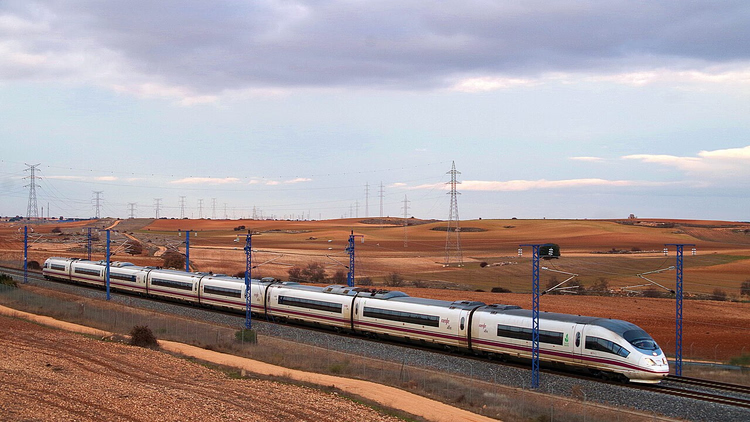
Between the big cities the high-speed train is the most convenient way to travel. The AVE links Madrid, Barcelona, Valencia and Seville. The AVE train takes about two and a half hours between Barcelona and Madrid from center to center, whereas flying, with the trips to and from the airports, stretches to around four hours. Fares are dynamic: the cheapest tickets are on the low-cost Ouigo and Avlo trains, but they take longer, almost three hours or more.
Car rental makes sense where the railway ends: the white towns of Andalusia, Extremadura and La Rioja, the Pyrenees, Galicia and Asturias, Tenerife. To rent a car you need a passport or an EU identity card, a driver's license held for at least a year and a bank card in the driver's name; for licenses issued outside the EU, an international driving permit is requested.
From El Prat airport to the center of Barcelona you can take the Aerobús to Plaça de Catalunya, the R2 Nord train or metro line L9 Sud, which needs a separate airport ticket. From Madrid's Barajas airport an express bus runs to the center around the clock, and there is also the metro with an airport supplement and taxis at a fixed fare. A transfer booked in advance is more convenient at night, with children and with a lot of luggage.
| Route | How to travel | What to bear in mind |
|---|---|---|
| Between Barcelona and Madrid | AVE high-speed train | About two and a half hours from center to center; the Ouigo and Avlo trains are cheaper but take longer |
| From El Prat airport to the center of Barcelona | Aerobús to Plaça de Catalunya, the R2 Nord train or metro line L9 Sud | The Aerobús takes about 35 minutes and leaves every 5-10 minutes; the metro needs a separate airport ticket |
| From Barajas airport to the center of Madrid | Express bus, metro or taxi at a fixed fare | The express bus runs around the clock, less often at night; the metro carries an airport supplement |
| From Madrid to Toledo and Segovia | Direct train: to Toledo from Atocha station, to Segovia from Chamartín station | About 30 minutes to Toledo |
| From Barcelona to Girona or Figueres | Train | About an hour's journey, and tickets are easy to buy online |
| From Barcelona to Montserrat | Train and rack railway | The bus there runs only once a day |
| White towns of Andalusia, the Pyrenees, Galicia and Asturias | Rental car | You need a driver's license held for at least a year and a bank card in the driver's name |
Ad
Book a fixed price airport transfer in Spain
We earn a commission through this link; your price stays the same.
Our articles on this
Best time to go and weather
The beach season on the mainland and in the Balearics lasts roughly from May to October, while in the north of the country swimming starts closer to June. The calmest months for the sea are June and September: the water is warm and there are fewer people. July and August are the peak of heat, prices and crowds; for those months the advice is to pick the coasts north of Barcelona, where pines give shade near the water.
For cities the reckoning is different. Madrid, Seville, Córdoba and Granada are at their most pleasant in spring and fall, while in summer the inland cities heat up and are best walked in the morning or evening. In the Canaries the air is warm in winter too, so that is the place to look for a beach in February.
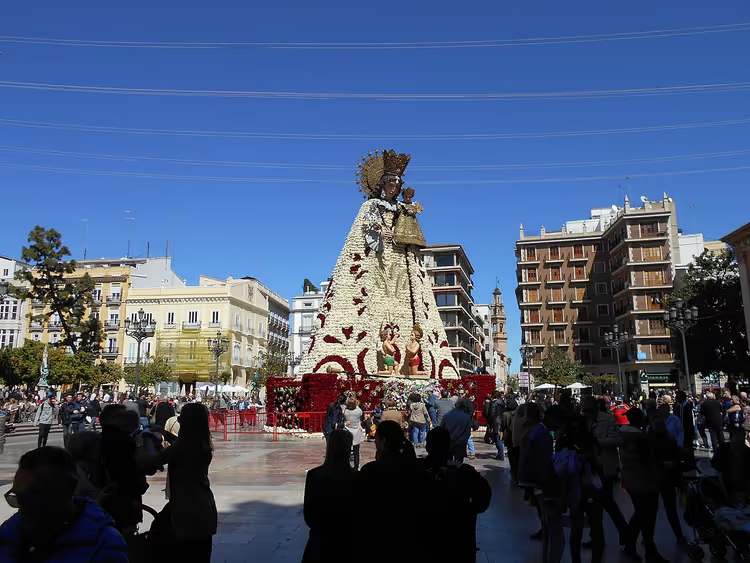
For the big festivals accommodation is booked a long way ahead. In March Valencia holds Las Fallas, at the end of April Seville gathers for the Feria de Abril, in August La Tomatina takes place in Buñol, and in October Zaragoza celebrates the Fiestas del Pilar.
| Time of year | Where it is good | What to bear in mind |
|---|---|---|
| May and October | The start and end of the beach season on the mainland and in the Balearics | In the north of the country swimming starts closer to June |
| June and September | The sea on the mainland and in the Balearics: the water is warm and there are fewer people | The calmest months of the beach season |
| July and August | The coasts north of Barcelona, where pines give shade near the water | The peak of heat, prices and crowds; the inland cities heat up |
| Spring and fall | Madrid, Seville, Córdoba and Granada | The most pleasant time for walking around the cities |
| Winter | The Canaries: the air is warm in winter too | That is the place to look for a beach in February |
| Days of the big festivals | Las Fallas in Valencia in March, the Feria de Abril in Seville at the end of April, the Fiestas del Pilar in Zaragoza in October | Accommodation for the festivals is booked a long way ahead |
Twelve months compared: find the best time to go
Our articles on this
- Autumn holidays in mainland Spain: 9 destinations from Costa Brava to Rioja
- When to go to the Canary Islands: weather and water temperature by month
- Canaries in January: where it is warm and when prices drop
- When is the best time to go to Barcelona: a month for beach, city and budget
- Madrid by season: when to go and what to pack
- Water temperature in the Mediterranean Sea: when swimming is comfortable
- Velvet season on the Costa Blanca: resorts, parks and excursions
- February in Barcelona: museums, temples and Chinese New Year
- Las Fallas in Valencia: what is burned on March 19 and how to see it
- Feria de Abril in Seville: 2026 dates, casetas and how to get to the festival
- La Tomatina 2026: tickets, date and rules of the tomato battle
- Almond blossom in Mallorca: when to go and where to see
Budget: how to work out your own total
The total is set by the season, the region and the type of accommodation. In July and August hotels by the sea go up, and in the fall prices on the mainland come down from their peak. The Canaries are usually more expensive than the mainland: a vacation on Tenerife traditionally costs more than one on the mainland coasts.
The savings show most in three things. First: free hours at the museums. The Prado admits visitors without a ticket in the evenings, the Thyssen-Bornemisza Museum on Mondays, and entry to the Mezquita in Córdoba is free early in the morning on weekdays. Second: lunch from the menu of the day instead of dinner à la carte. Third: a train ticket bought in advance.
You work out your own total in the calculator. It separates accommodation, food, local transport, admission tickets, getting there and a reserve, so you can see which item is pushing the total up.
Calculate a travel budget for Spain
Our articles on this
Routes: two cities, Andalusia and a road trip
A first trip usually consists of two cities and the high-speed train between them. Allow three days for Barcelona: the old town with the Gothic Quarter, Gaudí's houses, Montjuïc and Tibidabo. Two or three are enough for Madrid: the Royal Palace and the old town, the museums on the Paseo del Prado, the Retiro park. From Madrid it is easy to add a day in Toledo or Segovia.
Andalusia makes a loop of its own: Seville, Córdoba, Granada and Málaga. A six-day route takes in all four if you give Seville two days and the others one each. Buy tickets for the Alhambra and the Mezquita as soon as you have fixed your dates.
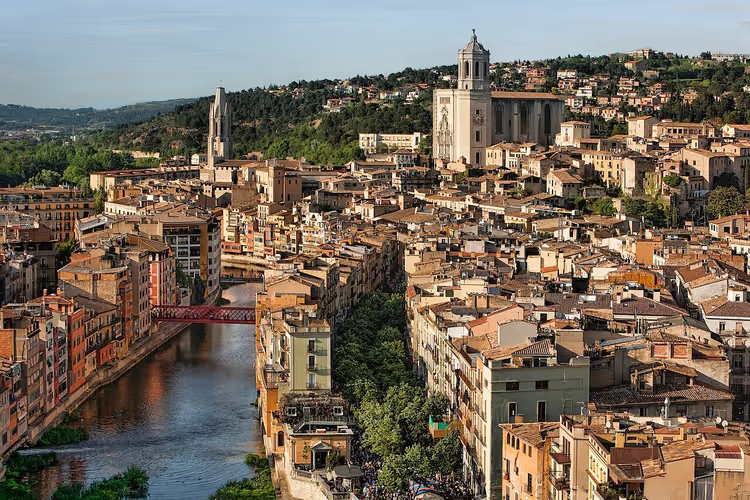
Catalonia works well by car: Barcelona, the Costa Brava, medieval Girona and the Pyrenees in six days. For those who travel on foot there is the Camino de Santiago: routes from one hundred to eight hundred kilometers long, and the certificate is awarded for walking just the last hundred kilometers as well.
Day planner: check what fits into one day
Our articles on this
- Andalusia in winter: 6-day route with tickets to the Alhambra and Mezquita
- Spain road trip by car: six days from Barcelona to the Pyrenees
- Camino de Santiago: four routes, lodging and packing for the hike
- Barcelona in 3 days: walking route, timed tickets and transport
- Barcelona in one day: a walking route through Gaudi, Rambla and Montjuic
- What to fit in Madrid in three days: museums, palace and best markets
- What to see in Madrid in one day: a route through 20 places
- Seville in one day: 15 stops of a walking tour with prices and tickets
- Valencia in one day: 15 places from the Old Town to the Oceanarium
- Walking around Malaga in a day: Alcazaba, cathedral and port views
- Alicante in one day: a route through 15 places with tickets and hours
- Girona in one day: 19 places for a walking tour
- Bilbao for a weekend: Guggenheim, pintxos and Casco Viejo
- La Palma: hikes to volcanoes, the crater and laurel forests
- Barcelona Gothic Quarter: a route from the Roman columns to the cathedral
Practical matters: safety, documents, staying connected
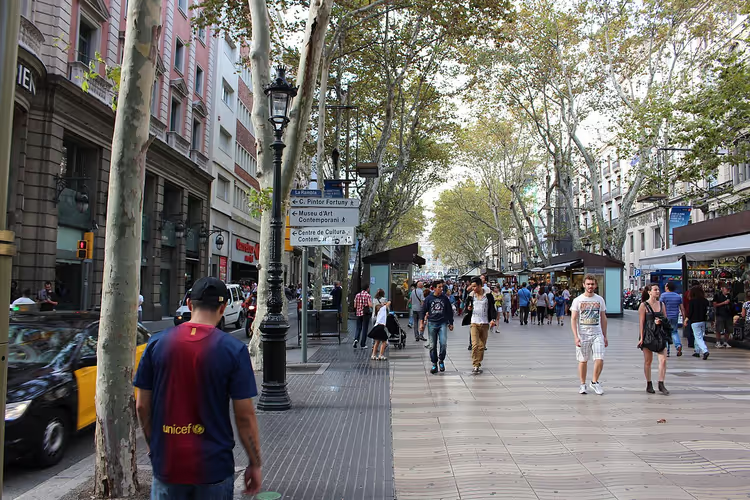
Spain's big cities are calm, and being out late is normal here, but pickpockets work wherever there are a lot of people: on La Rambla in Barcelona, in the metro, in squares and in lines. Keep your bag in front of you and do not leave your phone unattended. On the beach, look at the flags: green allows swimming, yellow calls for caution, red forbids going into the water.
Citizens of the EU and Switzerland do not need a visa; an identity card or passport is enough. Travellers from countries without a visa-free arrangement need a Schengen visa, which is arranged in advance. During the siesta hour some shops are closed, and Monday is the closing day at most museums in Madrid.
Check the roaming terms for Spain with your own operator before you travel. An eSIM is a backup way to have internet from the first minute: for maps, tickets on your phone and contact with the hotel. Take out travel insurance before you leave and read what exactly it covers.
Build a packing list for a trip to Spain
Ad
See eSIM options for Spain on Yesim
We earn a commission through this link; your price stays the same.
Ad
See travel insurance on World Nomads
We earn a commission through this link; your price stays the same.
Our articles on this