
















Singapore: a guide for planning your own trip
Singapore occupies one small island almost on the equator, and it is a city and a country at once. Skyscrapers stand around Marina Bay, and a few metro stops away you find old quarters with Chinese and Indian markets, a botanic garden with patches of rainforest and the beach island of Sentosa. Distances are short here, so three or four days are usually enough for a first visit. This page lays Singapore out for independent planning: what to see, which neighborhood to stay in, where to eat, how to get around and when to go. Each section stays short and leads on to our detailed articles. There are no prices here: they depend on your dates, the day of the week and events in the city, so a fixed figure would be misleading.
What to see: the bay, gardens and temples
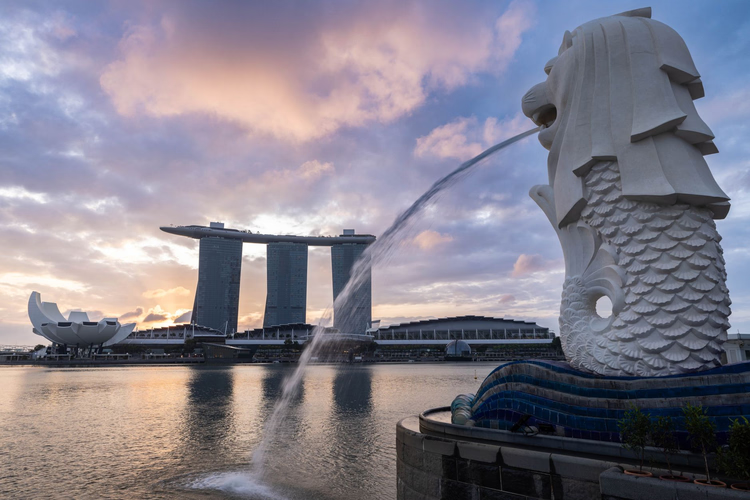
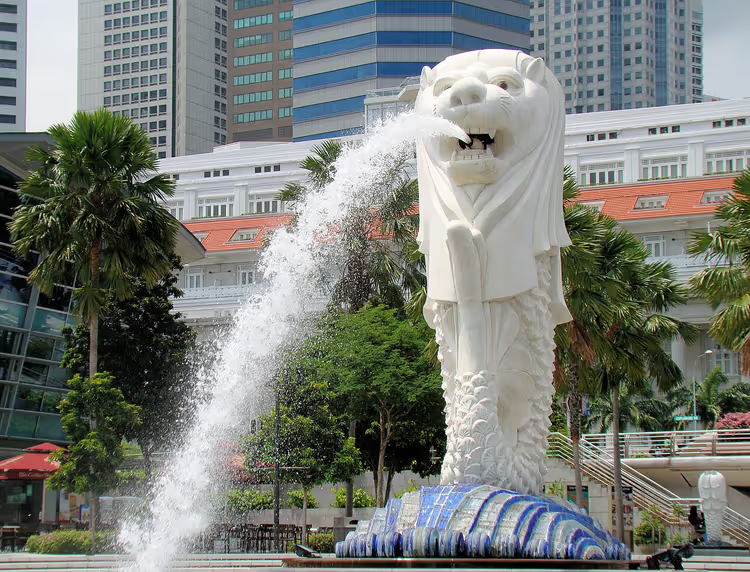
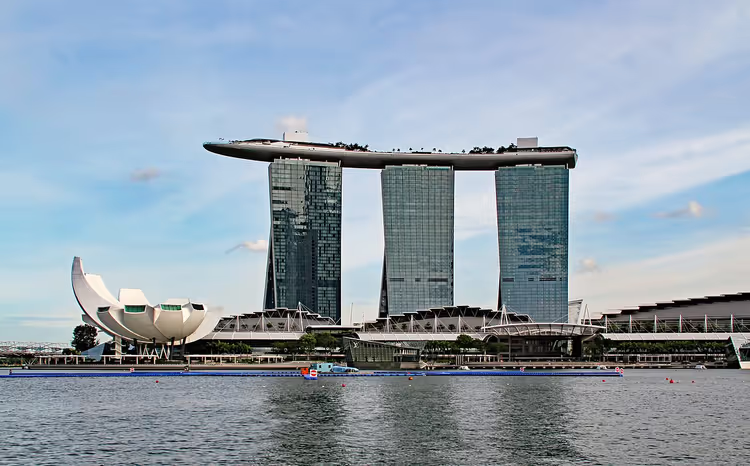
The main sights are gathered around Marina Bay. Merlion Park holds the original statue with a lion's head and a fish's body, and entry is free. Across the water rise the three towers of Marina Bay Sands: the SkyPark observation deck is open to everyone, while the rooftop pool is for hotel guests only. Nearby is the Singapore Flyer, an observation wheel 165 meters high, and a full rotation takes half an hour. Behind the complex Gardens by the Bay begins: Supertree Grove is free, while the Flower Dome and Cloud Forest conservatories are paid for separately.
Gardens, temples and museums show a different Singapore. The Botanic Gardens are on the UNESCO World Heritage List and entry is free, with a ticket needed only for the National Orchid Garden. Chinatown has the Buddha Tooth Relic Temple and Sri Mariamman, the oldest Hindu temple in the city, and in Kampong Glam you can see the golden dome of the Sultan Mosque. For the history of the country the best choice is the National Museum of Singapore, with the Asian Civilisations Museum and the Peranakan Museum close by.
Treat old guidebooks with caution. Jurong Bird Park has closed, and its collection was moved to Bird Paradise in the Mandai area. The large Merlion on Sentosa was demolished, the Tiger Sky Tower was taken down, and the aquarium on the island has reopened as the Singapore Oceanarium.
| Place | What it is | Entry |
|---|---|---|
| Merlion Park | The original statue with a lion's head and a fish's body by the bay | Free |
| Marina Bay Sands | Three towers with the SkyPark observation deck on the roof | The deck is ticketed and open to everyone, the pool is for hotel guests only |
| Singapore Flyer | An observation wheel 165 meters high | Ticketed, a full rotation takes half an hour |
| Gardens by the Bay | Gardens behind the Marina Bay Sands complex | Supertree Grove is free, the Flower Dome and Cloud Forest conservatories are paid |
| Botanic Gardens | A garden on the UNESCO World Heritage List | Free, a ticket is needed only for the National Orchid Garden |
| Buddha Tooth Relic Temple and Sri Mariamman | A Buddhist and a Hindu temple in Chinatown | Free |
Our articles on this
- Singapore attractions: what to see and where to buy tickets
- Singapore: 7 places worth seeing
- Marina Bay Sands in Singapore: guest pool and observation deck for tourists
- Merlion in Singapore: where the statue stands and where the 37-meter replica went
- Singapore Flyer: hours, prices and how to get there by MRT
- Singapore botanic gardens: what to see for free and what to pay for
- 20 Museums in Singapore: what to see and how to buy tickets
- Sri Mariamman in Singapore: opening hours, entry and route from the metro
- Clarke Quay in Singapore: river cruise and night lights
Singapore neighborhoods: where to go and where to stay
Three districts share the center by the bay. Marina Bay is the choice for a first visit: the main views are close, but prices here are the highest in the city. The Civic District is convenient for museums. Clarke Quay by the river comes alive in the evening: bars, restaurants and clubs stay open late, so do not expect quiet there. Orchard Road, north of the center, is the main shopping street, with malls following one after another.
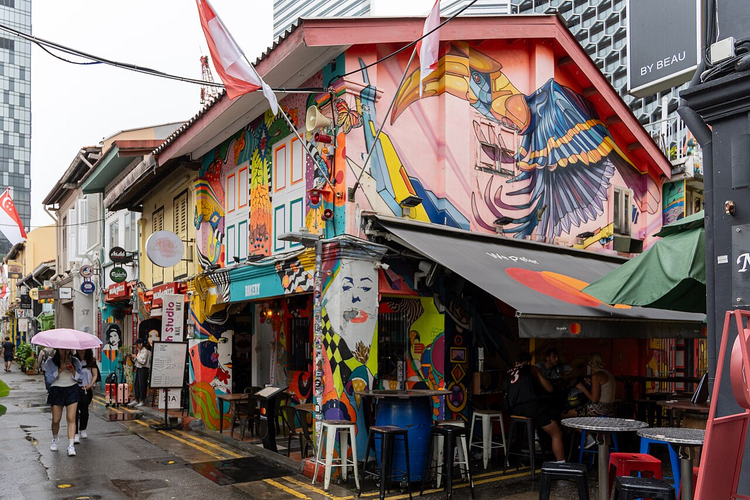
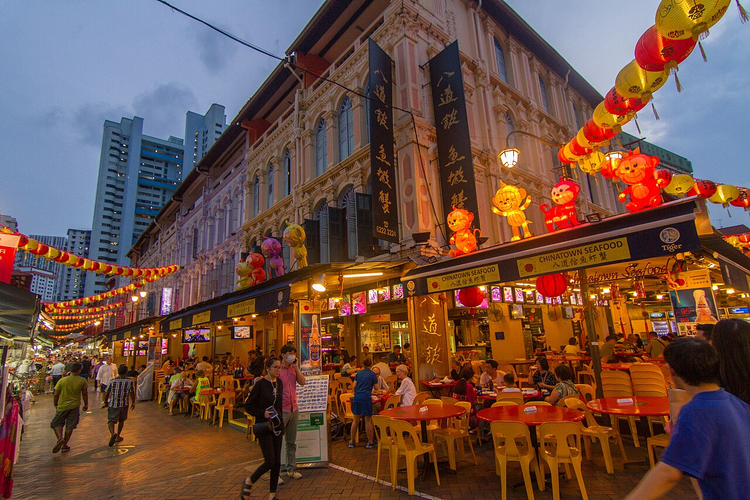
The ethnic quarters are cheaper than the center and offer character instead of glass and concrete. Chinatown has kept its old temples and a night market. Life in Little India centers on Serangoon Road with its Indian restaurants and bazaars. Bugis and Kampong Glam run into each other: the first is known for the Bugis Street market, the second is called the Arab quarter, with the Sultan Mosque and the narrow Haji Lane. Away from the center lies Katong, with the colorful facades of old shophouses and Peranakan cuisine.
Sentosa, the leisure island south of the center, has three beaches: Siloso, Palawan and Tanjong. The island has no metro station of its own, and you get there by monorail, by cable car or on foot. In the north is the Mandai area with the zoo and the neighboring wildlife parks. A hotel near Changi Airport makes sense only for a short layover or an early departure.
| Neighborhood | Who it suits | What to keep in mind |
|---|---|---|
| Marina Bay | A first visit: the main views are close | The highest prices in the city, no hostels |
| Civic District | Museums and a first visit | A few minutes by metro to the other quarters |
| Clarke Quay | Nightlife: bars, restaurants and clubs | Noisy in the evening, pick a hotel a ten-minute walk from the riverfront |
| Orchard Road | Shopping | A wide choice of places to stay: boutique hotels, hostels and big chains |
| Chinatown | A tight budget, old temples and a night market | Street-facing rooms are noisy because of the market, ask for a room facing the courtyard |
| Little India | A tight budget, Indian food and bazaars | Life in the district centers on Serangoon Road |
| Bugis and Kampong Glam | Character: the Bugis Street market, the Sultan Mosque, Haji Lane | Boutique hotels in Kampong Glam occupy former shophouses |
| Sentosa | Beaches and theme parks | No metro station of its own: monorail, cable car or on foot |
Our articles on this
Hotels: the neighborhood matters more than the stars
In Singapore the neighborhood and the distance to the metro shape a trip more than the hotel category does. For your first nights look for a place near an MRT station: a good location saves hours of travel.
By the bay the accommodation is almost entirely five-star chains, and there are no hostels in Marina Bay. The panorama opens up only from the upper floors there, so do not overpay for a “bay view” in a low building. On Orchard Road the choice is wider: boutique hotels, hostels and big chains. Chinatown has many hostels of varying quality, and mid-range hotels often occupy restored old buildings. Street-facing rooms there are noisy because of the market, so ask for a room facing the courtyard. In Kampong Glam boutique hotels are tucked into former shophouses. If you are coming for the nightlife at Clarke Quay, pick a hotel a ten-minute walk from the riverfront: the clubs will be close and your sleep undisturbed.
Prices depend heavily on the dates. It is most expensive on weekends, during the Formula 1 race days and at Chinese New Year, so book early for those periods or shift your trip to weekdays.
Ad
Compare hotels in Singapore by neighborhood on Trip.com
We earn a commission through this link; your price stays the same.
Our articles on this
Tickets, theme parks and shows
Most paid attractions are concentrated in two places. Sentosa is home to the Resorts World Sentosa complex: the Universal Studios Singapore park with seven themed zones, the Singapore Oceanarium with 22 marine zones and a water park. Also on the island are the Madame Tussauds museum and Megazip Adventure Park with a zip line that runs down to Siloso Beach. At Megazip each attraction is paid for separately, and weight and height limits are checked before the start.
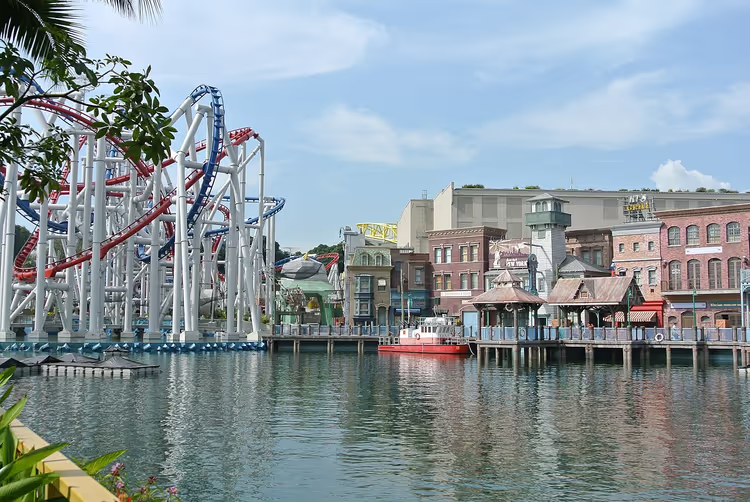
The second group is the parks of the Mandai reserve. Singapore Zoo has no classic cages: the animals are separated by moats, rocks and glass. A relaxed walk around takes half a day. The Night Safari operates separately, with tickets sold for an evening time slot, and Bird Paradise and River Wonders are next door. Animal feedings and breakfast with the orangutans are booked in advance, and places run out fast.
Buy tickets for the conservatories, the oceanarium and the observation decks online for a specific time: on weekends and holidays the slots sell out, and the sunset hours go first. Sightseeing boats run along the Singapore River from Clarke Quay, and the evening cruise lasts 40 minutes. Some experiences are free: the Garden Rhapsody light and music show in Supertree Grove and the Spectra show on the waterfront by Marina Bay Sands can be watched without a ticket.
Ad
See tours and cruises in Singapore on GetYourGuide
We earn a commission through this link; your price stays the same.
Ad
See tickets for parks and conservatories on Tiqets
We earn a commission through this link; your price stays the same.
Our articles on this
- Universal Studios Singapore: how much tickets cost and how to skip the line
- S.E.A. Aquarium on Sentosa: tickets, opening hours and what to see
- Resorts World Sentosa: what to see and how to get to Sentosa
- Singapore Zoo: tickets with time slots, opening hours and park zones
- Jurong Bird Park closed: where to see birds in Singapore
- Megazip Adventure Park on Sentosa: zipline, bungee and tickets
Food: hawker centers, satay and Peranakan cuisine
The cheapest and most local way to eat is at the hawker centers. These are open-air food courts where dozens of stalls are gathered under one roof, each cooking its own dish. The local classics are Hainanese chicken rice, laksa, satay with peanut sauce and chili crab, which is not cheap even at a food court. Among the best-known addresses are Maxwell Food Centre, Lau Pa Sat in the business district, where a satay street with rows of grills opens in the evening, and Chinatown Complex, the largest hawker center in the city.
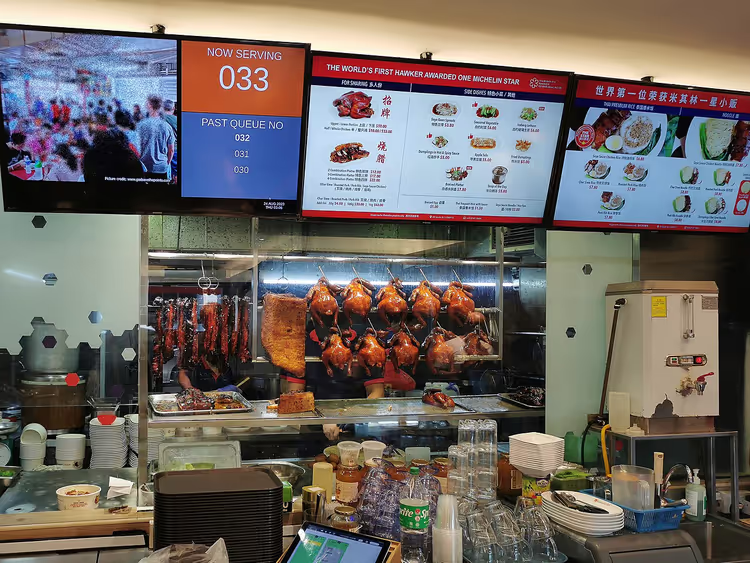
The rules are simple. Join the stall with the long line, pay at each stall separately and carry cash: cards are not accepted everywhere. People hold a table with a packet of paper tissues while they stand in line. A hygiene grade is displayed at each stall, where A is the best and B is fine too.
For Indian food go to Little India: there meals are served on a banana leaf, and there are South Indian vegetarian restaurants. Peranakan cuisine is cooked in Katong, and the restaurant Candlenut was the first in the world to earn a Michelin star for it. As for drinks, try the local coffee kopi, teh tarik tea with condensed milk and sugarcane juice. Alcohol in Singapore is expensive.
Our articles on this
Getting around: Changi Airport, the metro and the way to Sentosa
Everyone arrives at Changi Airport, about 20 km from the business district. The cheapest way in is the MRT metro: the ride with one transfer takes from half an hour to 45 minutes, but with two suitcases the transfer is awkward. Taxis wait at the exit of each terminal and run on the meter, so there is no need to haggle. A shared shuttle drops passengers at their hotel doors and runs in one direction only, from the airport. At night the metro is closed, which leaves taxis and Grab.
The MRT is the easiest way around the city: the metro covers almost all the tourist districts, and the ride between most of them takes ten to fifteen minutes. You pay with a contactless bank card or an EZ-Link card, and there is also a one-day Tourist Pass for the metro and buses. Eating and drinking are not allowed in the trains or at the stations, not even water.
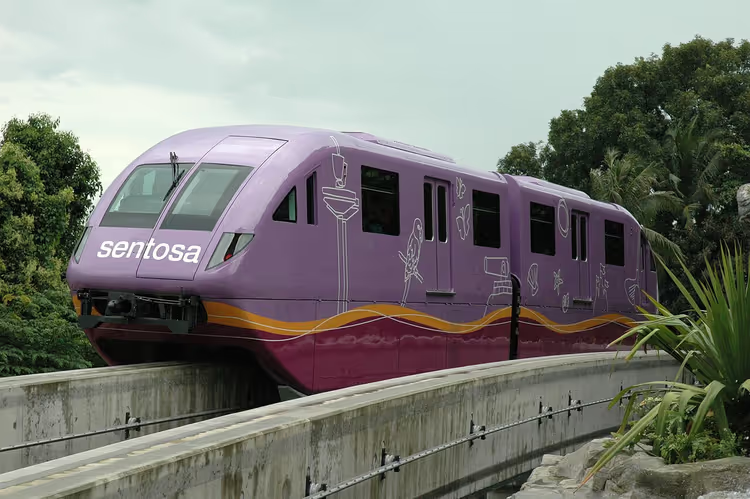
For Sentosa, ride to HarbourFront station. From there the Sentosa Express monorail runs from the VivoCity mall, the cable car starts nearby, and on foot along the Sentosa Boardwalk it takes about a quarter of an hour. For the Mandai parks take the North-South Line to Khatib station and continue by shuttle or taxi.
| Route | How to travel | What to keep in mind |
|---|---|---|
| From Changi Airport to the center | MRT metro with one transfer, from half an hour to 45 minutes | The cheapest, but with two suitcases the transfer is awkward |
| From the airport with luggage | Metered taxi from the terminal exit | No need to haggle |
| From the airport to the hotel door | Shared shuttle | Runs in one direction only, from the airport |
| From the airport at night | Taxi or Grab | The metro is closed at night |
| Between city districts | MRT metro, mostly ten to fifteen minutes | Pay by bank card or EZ-Link, no eating or drinking in the trains or at the stations |
| To Sentosa | Metro to HarbourFront, then the Sentosa Express monorail or the cable car | On foot along the Sentosa Boardwalk about a quarter of an hour |
| To the Mandai parks | North-South Line to Khatib station, then shuttle or taxi | The journey takes time, these parks need a day of their own |
Ad
Book a fixed-price transfer from Changi Airport
We earn a commission through this link; your price stays the same.
Our articles on this
When to go: heat all year and the rainy season
Singapore lies about one degree from the equator, so there are no seasons here. Daytime temperatures stay between 30 and 32 degrees Celsius, and humidity does not drop below 80 percent. It is rain, not temperature, that decides the date of your trip. From February to September there is noticeably less rainfall, and June is considered the driest month. From November to January the northeast monsoon blows and downpours are most frequent, with December the wettest month.
A tropical downpour rarely lasts all day. It usually covers the city for half an hour or an hour in the afternoon, and then the sun comes out again. Keep a few indoor places in your plan: the conservatories, museums, the oceanarium, shopping malls. April and May are the hottest, so schedule walks for the morning.
Holidays affect prices and crowds. Chinese New Year falls in late January or February and lasts 15 days: banks and some shops are closed, and hotels are booked in advance. National Day is celebrated on August 9 with a parade and fireworks over Marina Bay. In the fall the Formula 1 night race runs through the streets by the bay, and some streets are closed on those days.
| When | What happens | What to keep in mind |
|---|---|---|
| February to September | Noticeably less rainfall, June is the driest month | The heat is the same: 30 to 32 degrees Celsius in the daytime |
| April and May | The hottest time | Schedule walks for the morning |
| November to January | Northeast monsoon, downpours are most frequent, December is the wettest month | A downpour usually lasts half an hour or an hour, keep indoor places in your plan |
| Late January or February | Chinese New Year, the holiday lasts 15 days | Banks and some shops are closed, book hotels in advance |
| August 9 | National Day | Parade and fireworks over Marina Bay |
| Fall | Formula 1 night race through the streets by the bay | Some streets are closed, hotels get more expensive |
Twelve months compared: find the best time for your trip
Our articles on this
Budget: what your total depends on
The hotel and tickets to paid attractions take the most money. The price of a night is set by the neighborhood and the dates: it is most expensive by the bay, noticeably cheaper in the ethnic quarters, and on weekends, at Chinese New Year and during the Formula 1 days prices rise everywhere.
Food and transport are easy to save on. Lunch at a hawker center costs a fraction of what an air-conditioned restaurant charges, and the metro is inexpensive. Alcohol, on the other hand, pushes the bill up noticeably. Tickets offer some levers too: an evening visit to the Marina Bay Sands observation deck costs more than a daytime one, and a combined ticket for the two conservatories is better value than two separate ones.
Many places are free: Merlion Park, Supertree Grove with its evening show, the Botanic Gardens, the Marina Barrage dam with the lawn on its roof, the temples and the beaches of Sentosa. That is why there is a calculator here rather than a figure. It separates accommodation, food, transport, entry tickets, travel and a reserve, and shows which item pushes your total up.
Calculate your trip budget for Singapore
Our articles on this
Routes: three days and what to add
Three days cover the basics without rushing. Give the first day to the bay: Merlion Park in the morning, the Jubilee Bridge and the Helix Bridge, the Gardens by the Bay conservatories in the hot afternoon hours and the light show in the evening. Spend the second day in the ethnic quarters: start in Little India, walk on to Kampong Glam, then head to Chinatown, and end the evening by the river, at Clarke Quay or Boat Quay. Choose the third day by mood: Sentosa with its parks and beaches, or the Botanic Gardens.
If you have four or five days, add Mandai with the zoo and Bird Paradise: the journey there takes time, so these parks need a day of their own. Katong deserves another half day, and a rainy day goes to the museums. For a layover of one or two days the bay, the gardens and the Jewel complex at Changi Airport are enough.
It is easier to split your days by neighborhood than by time of day. Within one neighborhood everything is covered on foot, and between neighborhoods you take the metro. Put the evening show as the last item of the day, and buy timed tickets before the trip so you do not lose hours in lines.
Day planner: check what fits into one day
Our articles on this
Practicalities: rules, fines, connectivity
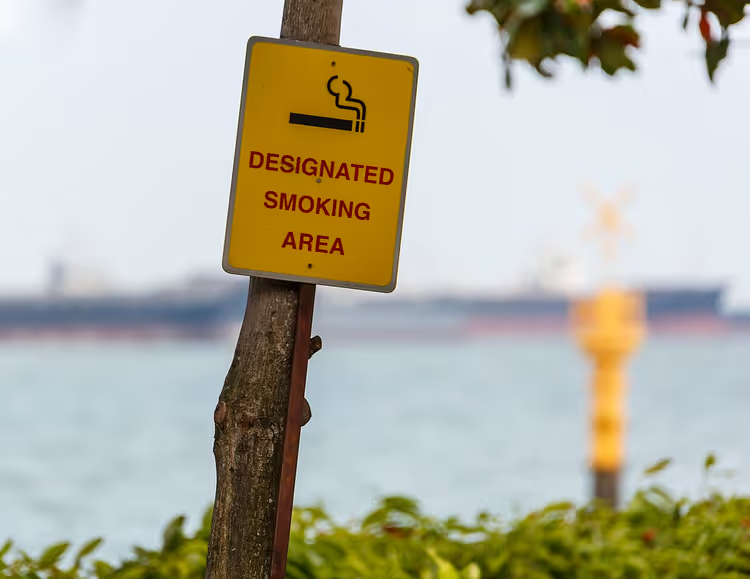
Singapore keeps order with fines, and the rules apply to every tourist. Chewing gum is not sold and may not be brought in. Fines are issued for littering, for smoking outside designated areas, for food and drinks in the metro and for crossing the road where it is not allowed. Alcohol in the street is banned from 10:30 p.m. to 7:00 a.m., while the restriction does not apply in bars and restaurants. The drug laws here are among the strictest in the world. Carry strong medication in its original packaging with a prescription, and never agree to carry someone else's bag.
In temples and mosques cover your shoulders and knees, and shoes are taken off at the entrance almost everywhere. Tap water is safe to drink.
Entry rules depend on citizenship. According to our articles, EU citizens do not need a visa for a short trip, but check your own conditions on the embassy website before buying tickets. Check roaming terms with your operator before the trip, and keep an eSIM as a backup way to have internet from the first minute: you need it for maps and for calling a Grab. Take out travel insurance before you leave and read what exactly it covers. Pack light clothing, a compact umbrella and a thin jacket for the conservatories, where it is noticeably cooler than outside.
Make a packing list for your trip to Singapore
Ad
See eSIM plans for Singapore on Yesim
We earn a commission through this link; your price stays the same.
Ad
See travel insurance on World Nomads
We earn a commission through this link; your price stays the same.
Our articles on this