
















What to bring from Azerbaijan: 20 souvenirs and export limits
Souvenirs from Azerbaijan are rarely formal: people bring silk, tea, spices, and silver from here. The selection is huge, and some gifts are restricted by customs. The country's main souvenirs: Sheki silk, handmade carpets, silver, tea, spices, and brandy. You can take no more than 125 g of sturgeon caviar in personal luggage (as of 09/2026, State Customs Committee of Azerbaijan). Edible gifts travel well, while items with history last for years. Below are 20 items with honest catches and export limits. Check them before buying your return ticket so you don't leave half your suitcase at the border.
What people bring from Azerbaijan
💡 In short:
- Fabrics and decor: Sheki silk, kelaghayi, handmade carpet, and ceramics.
- Food and drinks: Lankaran tea, spices, Sheki halva, brandy, and pomegranate wine.
- Jewelry: local silver, filigree, and turquoise.
- Export limits: 09/2026, verified on the official Azerbaijan customs website
First decide what matters more: an edible gift or something that will stay in the home for a long time. Then check the selection below and remember the limits.
Our picks
Souvenir | Who to bring it for | Where to find it |
|---|---|---|
Sheki silk | fabric and accessory lovers | Sheki, fabric shops in Baku |
Kelaghayi | those who collect textiles with history | Sheki, Basgal, souvenir rows |
Handmade carpet | for the home and as an investment | carpet shops in Baku |
Sheki halva | those with a sweet tooth | Sheki, Baku markets |
Silver and turquoise | those who wear jewelry | workshops in central Baku |
Tea and spices | for the kitchen and food lovers | Lankaran, Baku bazaars |
Black caviar | for an expensive gift | fish shops in Baku |
Export limits
What we bring | Limit | Source |
|---|---|---|
Sturgeon caviar | up to 125 g | State Customs Committee, 09/2026 |
Sturgeon fish | up to 5 kg | customs service, 09/2026 |
Cold weapons and antiques | declaration required | declaration rules, 09/2026 |
Rules change, so before your flight open the customs website and check the limits for your route.
1. Sheki silk
 © Adam Jones from Kelowna, BC, Canada · CC BY-SAPhoto: Adam Jones from Kelowna, BC, Canada, CC BY-SA (https://creativecommons.org/licenses/by-sa/2.0), Wikimedia Commons
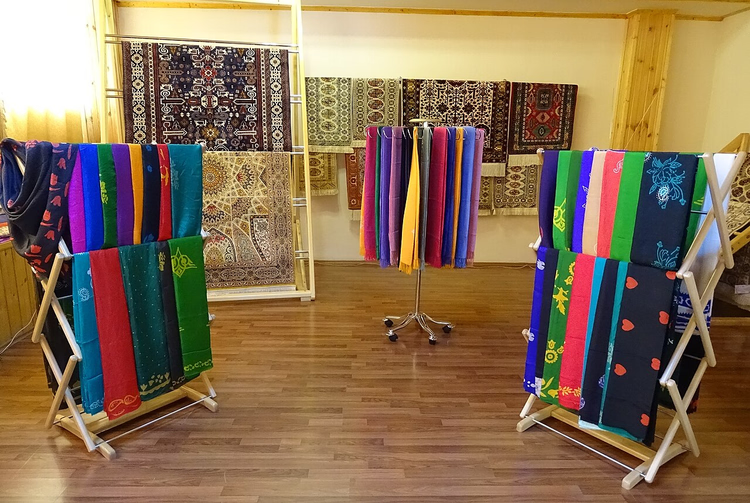
Sericulture here is considered one of the oldest industries: cocoons were raised in Sheki and Basgal, and the fabric was used for headscarves, shirts, and accessories. Local silk is lighter and more expensive than the cheap viscose that markets pass off as silk. A length for a dress, scarf, or wallet will cost more than ordinary textiles, but it lasts for years.
Telling the original apart is simple. Squeeze the fabric in your fist and open your hand: real silk barely wrinkles, while a fake holds deep creases. Look at the selvage: on quality fabric it is even and does not fray. Sellers usually don't argue and will show you another length.
- Where to find it: Sheki and specialized fabric shops in Baku.
- Who it's for: those who sew or wear headscarves and scarves.
- The catch: cheap "silk" fabric quickly loses its sheen and shape.
2. Charyks
Charyks, leather shoes with a pointed toe and hand embroidery, once belonged to the nobility and wealthy artisans. Today pairs are made from natural leather and decorated with embossing, so the footwear costs more than ordinary souvenirs and is noticeably different from factory-made shoes.
The main risk here is not quality but quantity. If you bring several identical pairs, customs may consider the purchase a commercial shipment and require a duty. Take different sizes and models, and there will be no questions at the border.
- Where to find it: shoe workshops and souvenir shops in Baku.
- The catch: leather shoes take up space and require care, so as a gift they are not for everyone.
3. Kelaghayi
 © Rəcəb Yaxşı · CC BY-SAPhoto: Rəcəb Yaxşı, CC BY-SA (https://creativecommons.org/licenses/by-sa/4.0), Wikimedia Commons
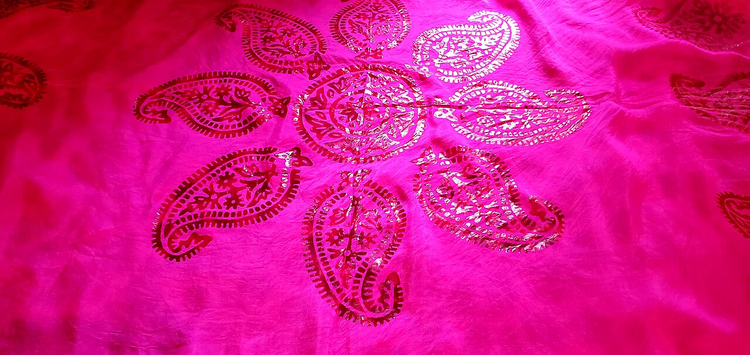
Kelaghayi, a square silk headscarf from Sheki and Basgal, is made with a printed pattern. In 2014, UNESCO added the art of kelaghayi to the list of intangible cultural heritage (UNESCO, 2014).
The headscarf's history goes back about 1,500 years (according to the Azerbaijan National Commission for UNESCO, 09/2026). Color and pattern carried meaning: they indicated a woman's age and the occasion for which the headscarf was worn. Patterns can be floral and geometric, and they are applied using an ancient block-printing technique.
- Where to find it: Sheki, Basgal, and Baku souvenir rows.
- Who it's for: those who collect textiles with history.
- The catch: natural silk does not tolerate hot water, wash the headscarf by hand in cold water.
4. Armudu
 © Interfase · CC BY-SAPhoto: Interfase, CC BY-SA (https://creativecommons.org/licenses/by-sa/3.0), Wikimedia Commons
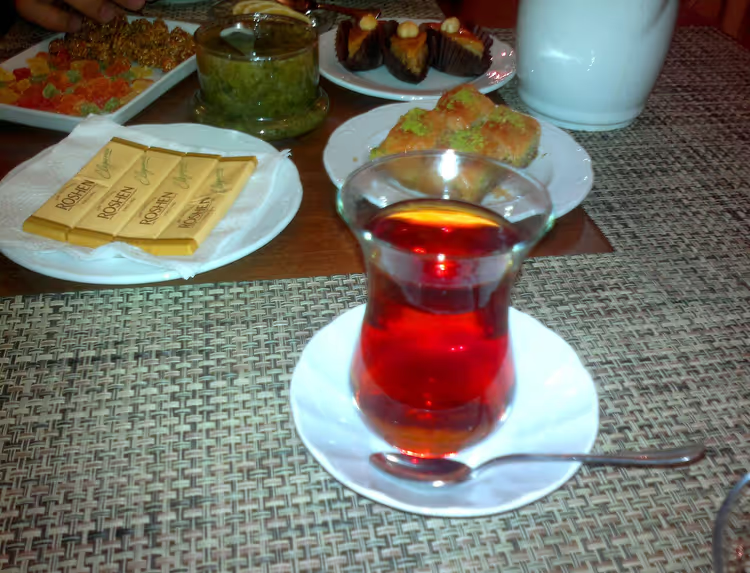
Armudu, a pear-shaped tea glass, keeps the drink hot longer than an ordinary glass. It has a narrow waist and a wide lower part, so the tea does not cool down before the conversation ends. Artisans make this ware from porcelain, glass, silver, and crystal.
Local etiquette is strict: do not pour tea all the way to the rim. Leave about a finger's width of space below the rim, otherwise it will be considered impolite at the table. An armudu set works both for home and as a gift for a colleague.
- Who it's for: those who drink tea every day.
- The catch: glass and crystal break in a suitcase, wrap each glass separately.
5. Jewelry
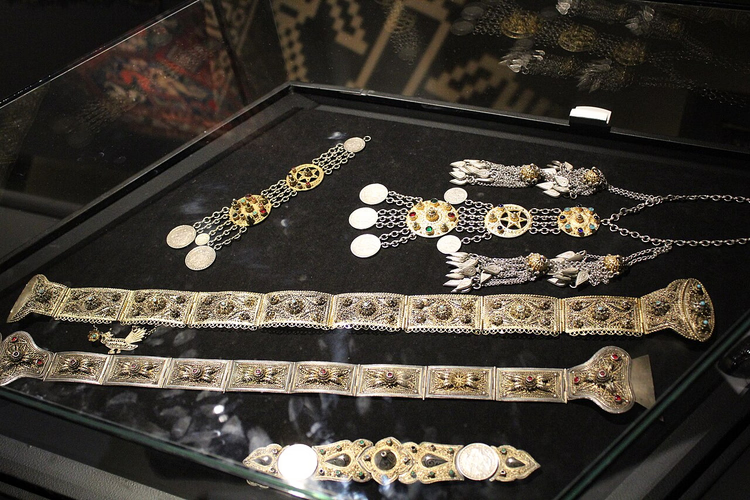 © Interfase · CC BY-SAPhoto: Interfase, CC BY-SA (https://creativecommons.org/licenses/by-sa/4.0), Wikimedia Commons
Jewelry making here is almost a national sport: workshops compete on finishing quality, and the buyer gets filigree work at a reasonable price. Silver, niello, and turquoise are the most prized, especially in amulet jewelry.
Local brands worth checking out: Butali Azerbaijan Jewelry with filigree and turquoise collections, and the Azerbaijani NarCrafts with unconventional design. Prices at a private workshop are negotiable; at a boutique they are fixed.
The same silver can cost different amounts at a boutique and at a private workshop. The reason is middlemen, not the quality of the metal.
- Where to look: workshops and boutiques in central Baku.
- Who it's for: people who wear silver and appreciate handmade work.
- The catch: in cheap pieces the stones are often synthetic, so ask for a certificate for the stone.
6. Designer clothing
Local designers focus on quality fabrics, leather, and natural stones, so their pieces look no weaker than European brands. The price difference is noticeable, and that is the main argument for shopping enthusiasts.
Look for twill with handmade lace, leather accessories, and numerous items made from Caucasian silk. In Baku boutiques you can easily find a cut that is both strict and unexpected, one that almost no one back home will replicate.
- Where to look: boutiques and ateliers in central Baku.
- The catch: local brands' size charts differ from European ones, so try things on before buying.
7. Handmade carpet
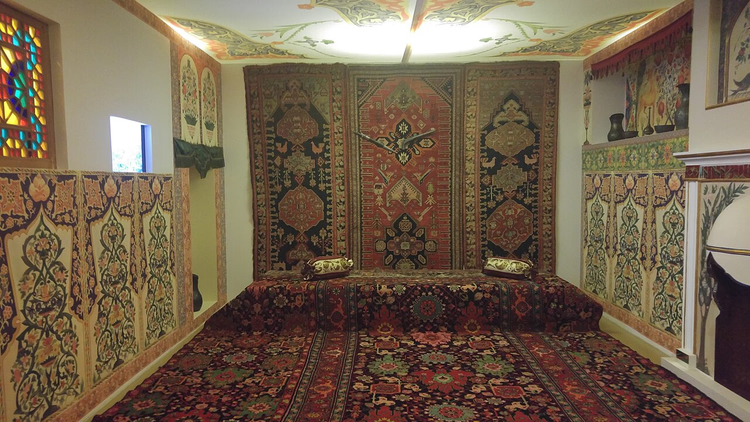
A handmade carpet can hardly be called a souvenir: it is an investment. In 2010, UNESCO added the art of Azerbaijani carpet weaving to the list of intangible cultural heritage (UNESCO, 2010).
A large carpet requires separate shipping and money, so decide in advance whether you are ready for such expenses. If your budget and luggage are not unlimited, get a mini copy or a carpet trivet for a teapot: they are sold in souvenir shops and at markets for reasonable money.
- Where to look: carpet stores and markets in Baku.
- The catch: handmade work is expensive, and the price is almost impossible to negotiate down.
8. Ceramics
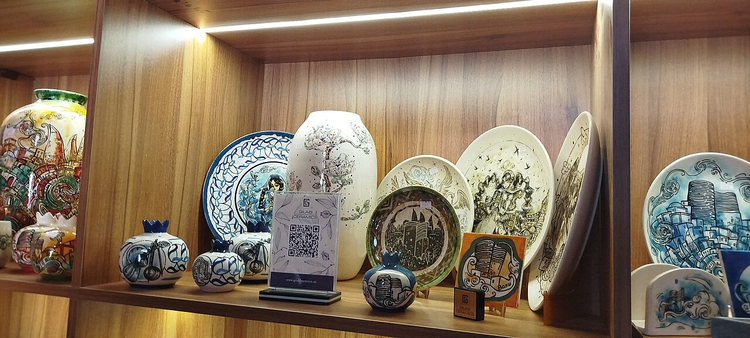 © 가웨인 · CC BY-SAPhoto: 가웨인, CC BY-SA (https://creativecommons.org/licenses/by-sa/4.0), Wikimedia Commons
Ceramics are recognizable by their painted decoration and warm clay tones: large platters, tea sets, deep plates, and vases. The dishes hold temperature well and look good on a shelf, and the eco-friendly firing leaves no smell.
At the market, haggle: the price of ceramics can almost always be brought down, and bargaining here is also a sign of respect for the seller. If you do not need clay, look at paired salt and pepper shaker sets shaped like figures in national dress. A separate line of souvenirs made from Baku oil is sold in sealed glass containers.
- The catch: fragile items do not survive the baggage belt well, so ask for double packaging.
9. Backgammon
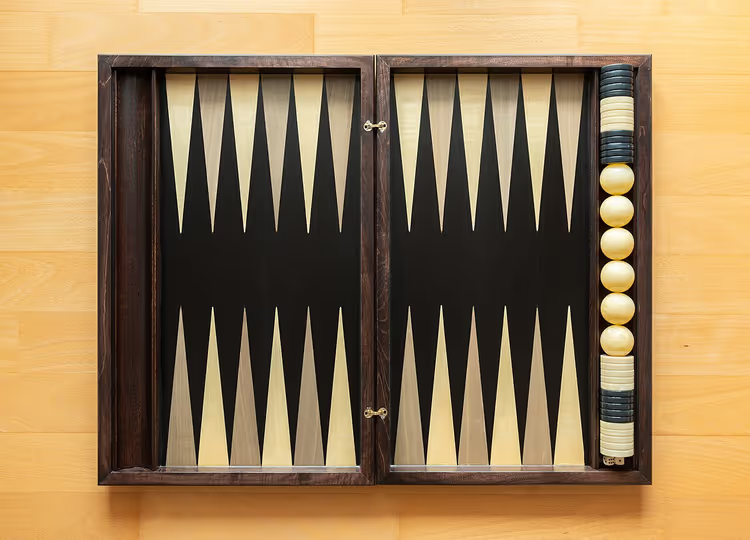 © Nikos Kitsakis · CC BYPhoto: Nikos Kitsakis, CC BY (https://creativecommons.org/licenses/by/4.0), Wikimedia Commons
Backgammon is valued here more than chess and checkers. Boards are made from dense wood, sometimes with inlay, and no two sets are ever the same: craftsmen add their own patterns and follow the ritual of making them.
If you do not know the rules, the seller will usually show you a couple of moves and point you to a shop where sets are cheaper. This is a gift that ends up being played by the whole family rather than put away on a high shelf.
- Who it's for: homes where people love board games.
- The catch: a heavy wooden board eats into your carry-on weight allowance.
10. Daggers
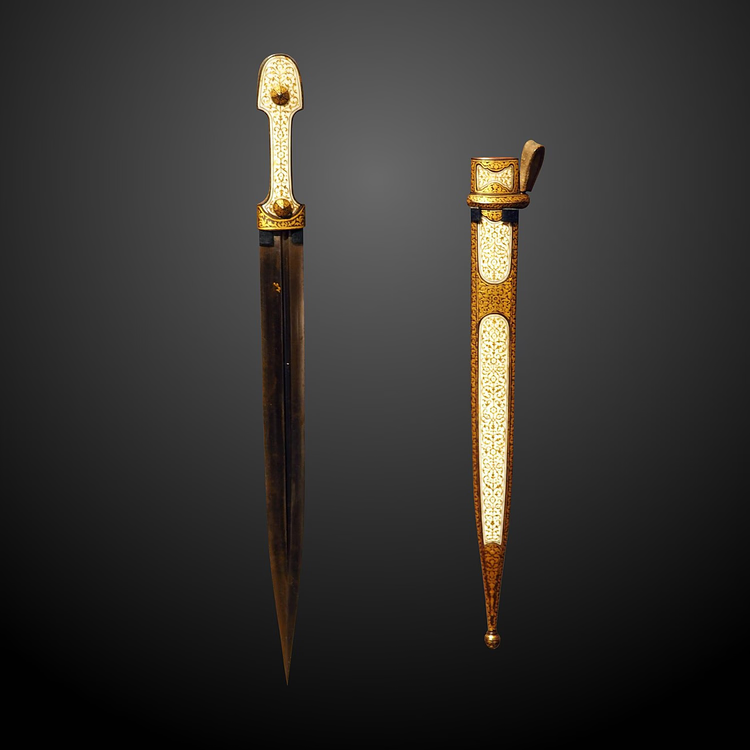 © Rama · CC BY-SAPhoto: Rama, CC BY-SA (https://creativecommons.org/licenses/by-sa/3.0/fr/deed.en), Wikimedia Commons
A dagger with an inlaid handle is one of the most problematic gifts at the border. Edged weapons cannot be taken out of the country without declaration, so the purchase is best planned in advance.
Souvenir daggers do get through: the item is officially declared, and the paperwork takes little time. Buy them in souvenir shops rather than weapons stores, and keep the receipt until the end of the trip. Collectors usually take two or three pieces of different sizes to build a series.
- Where to find: souvenir shops in Baku's Old City.
- The catch: an undeclared dagger will be confiscated and the buyer fined.
11. Jam
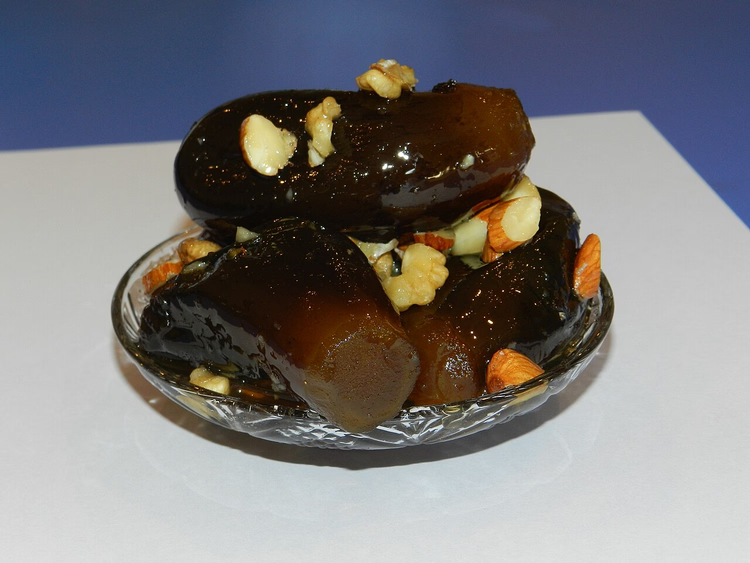 © Irada · CC BY-SAPhoto: Irada, CC BY-SA (https://creativecommons.org/licenses/by-sa/3.0), Wikimedia Commons
Local jam is made from quince, white cherries, mulberries, and walnuts. It is thicker and richer in color than Mediterranean equivalents, which is how gourmets can tell where the treat was made by its shade.
Homemade jam does not keep long, so for travel it is better to take products from local producers in sealed containers. The tastiest is made from mulberries and green walnuts, and a spoonful of this jam with local tea replaces dessert after a heavy meal.
Producers pack the treat in glass and tin, so decide in advance whether you can get a jar home without losses. Small jars are more convenient both as a gift and as a supply for the return trip. Many market sellers let you taste the jam before buying, and that is the best way to find your flavor.
- Where to find: food markets and stores in Baku.
- Who it's for: for tea and breakfasts.
- The catch: an opened jar lasts only a few weeks in the fridge.
12. Sheki halva
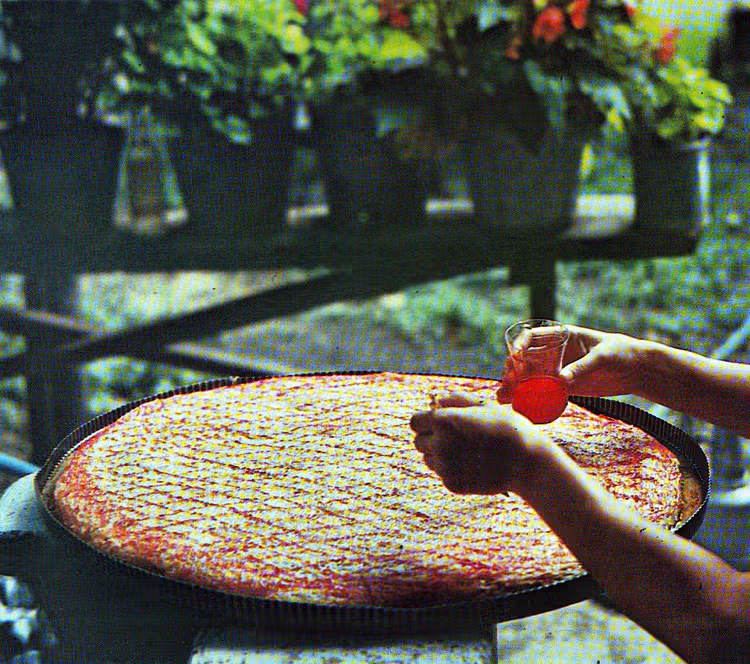 © MrArifnajafov · CC BY-SAPhoto: MrArifnajafov, CC BY-SA (https://creativecommons.org/licenses/by-sa/4.0), Wikimedia Commons
Sheki halva barely resembles the familiar halva made from seeds. It is made from rice flour, honey, and a large amount of nuts, and the recipe is kept secret in Sheki and passed down within families.
The original is packed in a cardboard box: makers believe that plastic and tin kill the flavor. The spice combination in the filling is almost impossible to reproduce, so a fake is easy to spot by its dry texture.
Real halva is heavy and dense, while a light box usually hints at skimping on nuts. Check the packing date: fresh halva smells of honey and nuts, while old halva gives off a rancid oil note. For a gift, take a box with a tight lid and moisture protection.
- Where to find: Sheki and the sweets sections of Baku markets.
- The catch: fresh halva does not keep long, check the date on the package.
13. Tea
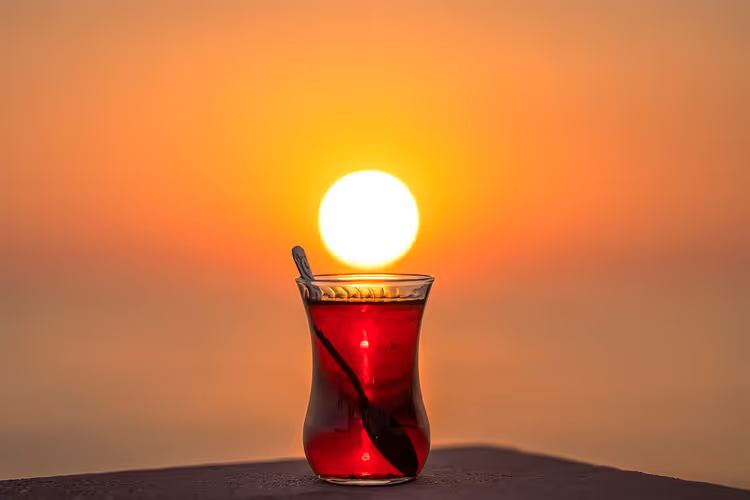 © Prodronemovie · CC BY-SAPhoto: Prodronemovie, CC BY-SA (https://creativecommons.org/licenses/by-sa/4.0), Wikimedia Commons
Tea is drunk constantly in Azerbaijan, and black leaf tea from Lankaran is considered the best. Local tea is picked and processed by hand, so the taste differs from Indian and Chinese tea, and it is easy to recognize by its dense infusion.
It is customary to add medicinal herbs to tea, so the drink offers double benefits. For a gift, take tea in sealed patterned tin cans: loose tea from the market tastes better, but it can raise questions at the border. Cold tea is also drunk here: in summer it is brewed in advance and served with ice.
For a gift, take two or three varieties: black leaf tea, tea with herbs, and a fruit blend. Such a set covers both everyday tea drinking and the festive table. Store tea in a dark container, otherwise the leaves fade and lose their aroma.
- Where to find: Lankaran, bazaars, and tea shops in Baku.
- The catch: an opened can loses its aroma within a couple of weeks.
14. Cognac
Azerbaijani cognac is recognizable by its deep color and intense flavor with a buttery note. Popular brands: "Golden Baku," "Absheron," "Ganja," and "Azerbaijan," and each has its own character.
Buy it in the country itself: here the chance of getting an original is almost one hundred percent. A fake is distinguished by viscosity and shade, because synthetic dye does not produce a noble color. This cognac is served without food, with ice, with tonic, or with strong coffee.
For a gift, ask for the factory tube: in rigid packaging the bottle survives the flight more calmly. Check at the counter for the alcohol export allowance on your route, as it depends on the country of entry. Buy from a factory brand boutique or a chain store, not from street sellers.
- Where to find: chain stores and factory brand boutiques.
- The catch: liquid from the bottle cannot be taken in carry-on luggage, check it in protective packaging.
15. Wine
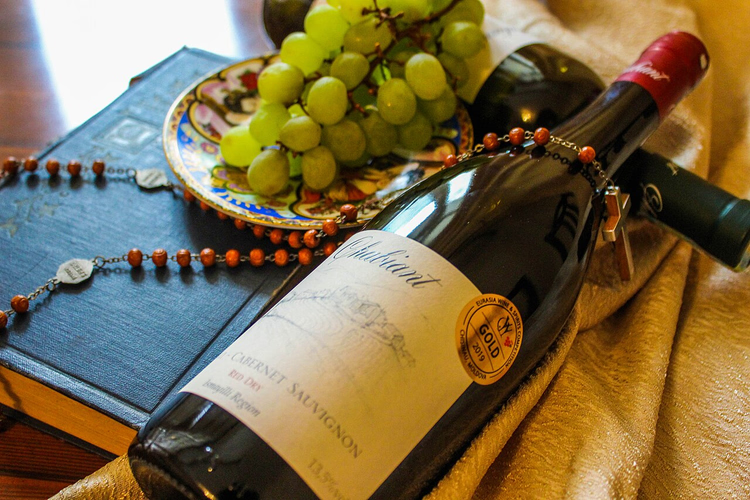 © Sefer azeri · CC BY-SAPhoto: Sefer azeri, CC BY-SA (https://creativecommons.org/licenses/by-sa/4.0), Wikimedia Commons
Winemaking here is older than many European schools: local grape varieties produce a tannic and rich wine that is exported abroad, including to China. Take a bottle for dinner, not a case for your suitcase.
Pomegranate wine from private wineries deserves a separate tasting: each brand has its own bouquet, and the techniques are close to Italian ones. It is drunk as a standalone drink, and one bottle is enough to try at home.
Dry wines are sold in supermarkets and at wineries, but it is better not to buy them at markets: storage conditions there are unpredictable. For the flight, choose a bottle in a factory box and check it in. The cork should be secured with tape, otherwise the wine will ruin your clothes in transit.
- The catch: pomegranate wine does not handle heat well, carry it in checked luggage.
16. Basturma
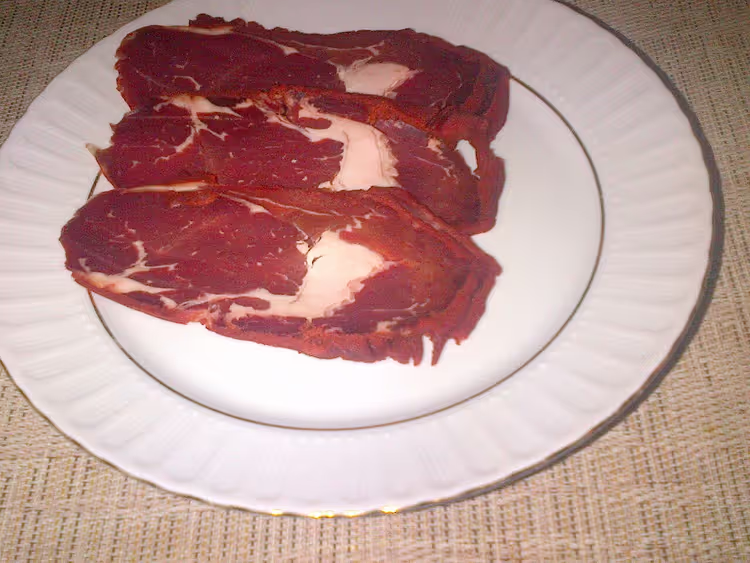 © E4024 · CC BY-SAPhoto: E4024, CC BY-SA (https://creativecommons.org/licenses/by-sa/4.0), Wikimedia Commons
Basturma is made from beef or chicken: pork is not used here. The local version has a lot of coriander, and the spice bouquet always includes blue fenugreek.
The meat is not kept in the fridge before cooking, otherwise the taste is considered spoiled. The classic version is made from beef, while chicken is considered a lighter take. The recipe also includes rock salt, red pepper, dill, and garlic.
At the market, ask for a slice and a taste: the flavor immediately tells you how much spice is in the meat. Wrap basturma in paper rather than a plastic bag, otherwise it will get damp in transit. If you are taking it as a gift, choose vacuum packaging: that way the product will survive the trip home.
- Where to find: butcher shops and markets in Baku.
- The catch: many European Union countries prohibit bringing meat products in personal luggage, check the rules in advance.
17. Nuts and dried fruits
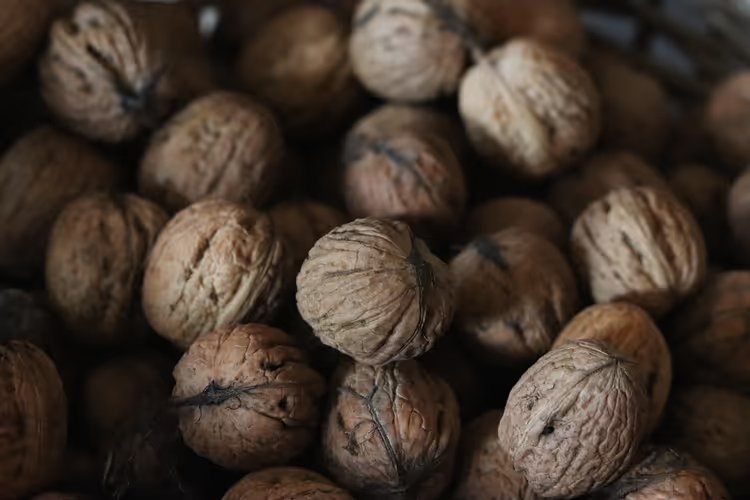
Almost everyone brings back nuts and dried fruit: it is the most reliable edible souvenir. They are stocked up for future use and added to dough and sweets, and local nuts are almost as calorie-dense as meat.
Go for mixes: dried, sour and sweet fruits together are more convenient for pies and desserts. Raw food enthusiasts especially value such blends, and crushed nuts with honey make a dense layered dessert.
At the market, have your purchase weighed in front of you and check that the mix has no mold or musty smell. Kishmish, dried apricots and walnuts travel best, while soft dried fruits spoil quickly in hot weather. Take only as much as you can eat within a couple of months.
- Where to look: bazaars in Baku and Ganja.
- The catch: an opened mix quickly absorbs moisture, so keep it in vacuum packaging.
18. Black caviar
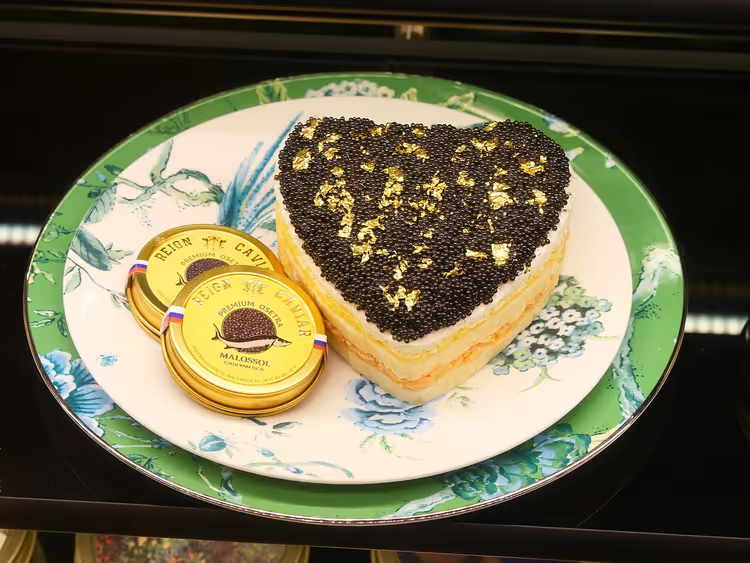 © Peachyeung316 · CC BY-SAPhoto: Peachyeung316, CC BY-SA (https://creativecommons.org/licenses/by-sa/4.0), Wikimedia Commons
Black caviar will cost more than anything else: it is the most expensive edible souvenir and the most restricted one. You can take no more than 125 g of sturgeon caviar and up to 5 kg of sturgeon fish out of the country (as of 09/2026, Azerbaijan customs).
Local caviar is valued for its quality: no preservatives are used in processing. Buy it legally and keep the receipt: without documents the delicacy will be confiscated, and a barrel will not be allowed through in any form.
Ask for a jar with factory labeling and a packing date, and it is better not to buy loose caviar at the market. Check whether the seller is licensed to trade in this delicacy, and keep the receipt until the end of your trip. At home, store an opened jar in the refrigerator and finish it within a couple of days.
- Where to look: fish stores and specialty boutiques in Baku.
- The catch: the price is high, and an opened jar lasts only a few days.
19. Spices
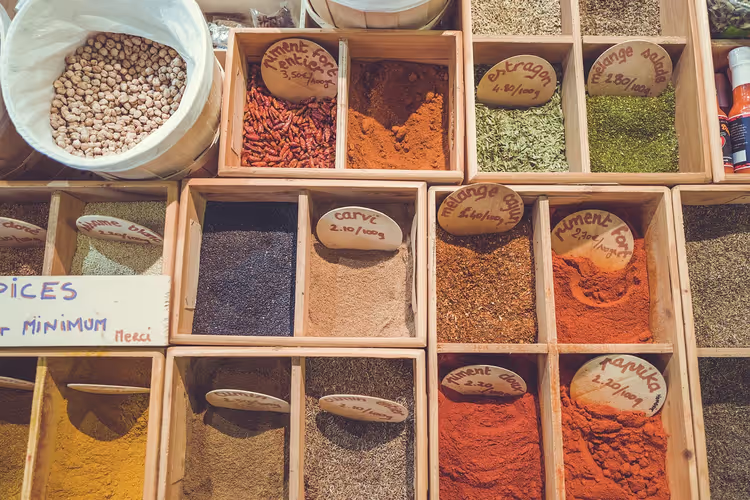
Spices are the easiest thing to bring back: they're sold in sealed bags and pouches. Baku holds the status of the main spice market of the Caucasus, so the selection here is larger than in other cities in the country.
The most popular items: saffron, cardamom, and mixed sets for meat and fish. Go for the large sets, one will be enough for a dozen dishes. Each type of meat gets its own blend here, so the seller will happily put together a set for your kitchen.
At home, transfer the spices into airtight jars and keep them away from light. Ground saffron is the most commonly counterfeited, so whole threads are more reliable than powder. If you don't know where to start, get two sets: one for meat and one for fish.
- Where to look: Baku markets and spice shops.
- The catch: ground spices lose their punch quickly, buy seeds and whole roots.
20. Pickles
 © Aykhan Zayedzadeh · CC BYPhoto: Aykhan Zayedzadeh, CC BY (https://creativecommons.org/licenses/by/4.0), Wikimedia Commons
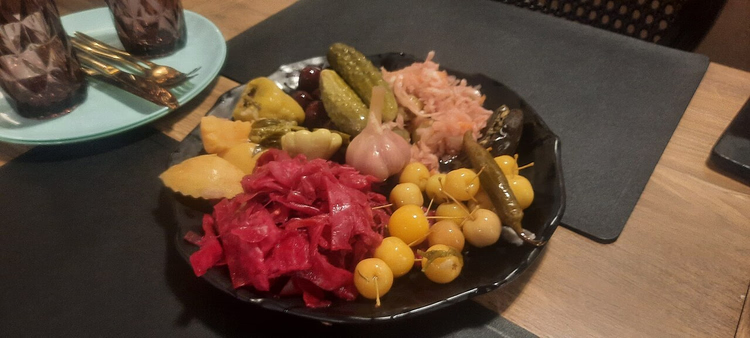
Pickled apples, cherries, and quince are not a side dish here, they're a standalone snack. The fruits are prepared according to old recipes with plenty of spices that bring out their flavor and make it distinctive.
Pickled cherries, apples, and quince are the most common on the shelves, while pickled grapes are hardly in demand. Pickles are also served with cognac when the main appetizer is caviar.
For a gift, choose jars with tight lids and ask for vacuum packaging. At the market, taste the brine: a good maker's brine is tangy and aromatic, not just salty. If you're traveling with several jars, carry them in a separate bag away from your clothes.
- Where to look: markets and grocery shops in Baku.
- The catch: glass jars are heavy and leak if damaged, pack them separately from clothes.
⁉️🤔 Frequently asked questions
What to bring from Azerbaijan as a gift?
A universal option: tea and spices. They're light, inexpensive, and always appropriate. For a more personal gift, go for a kelaghayi or silver with turquoise. A sweet tooth will love Sheki halva and mulberry jam. An expensive gift is black caviar, but remember the export limit (as of 09/2026, State Customs Committee of Azerbaijan).
How much caviar can you take out of Azerbaijan?
The official allowance for a private individual: 125 g of sturgeon caviar and up to 5 kg of sturgeon fish (as of 09/2026, State Customs Committee of Azerbaijan). Buy the delicacy legally and keep the receipt, otherwise the caviar will be confiscated. A barrel of caviar will not get through the border under any circumstances.
Can you take a dagger out of Azerbaijan?
Yes, if the item is a souvenir and officially declared. An undeclared dagger is confiscated by customs, and the buyer pays a fine.
What are the cheapest souvenirs from Azerbaijan?
The most affordable: spices, tea, jam, and dried fruit. They take up little space and always travel without problems. For inexpensive textiles, go for a small kelaghayi. Handmade carpets and jewelry with natural stones are the most expensive.
What to bring for a man?
For a man, a solid wood backgammon set, local silver, a souvenir dagger, and cognac all work well. If he likes to cook, add a spice set for meat. All of these are sold in central Baku and at city markets, and haggling is appropriate almost everywhere.
Can you take wine or cognac out of Azerbaijan?
Alcohol in personal luggage can be taken out, but check the allowance on the customs website before your flight: it depends on the country of entry. Put bottles in checked luggage, liquids won't get through in carry-on. For a gift, one bottle of cognac and one bottle of wine is enough.
In short: what's worth booking
If you're on a limited budget: go for spices, tea, and jam. If the gift is for the home: a miniature carpet or ceramics. If you want something with history: a kelaghayi and silver with turquoise. An expensive option is black caviar within the export limit. For sweet tooths, the unbeatable combo is Sheki halva and mulberry jam.
Pack your suitcase ahead of time: glass and fragile items need their own space. Check the export allowances on the Azerbaijan customs website before buying your ticket.

A small editorial team writing guides for independent travel. We travel ourselves, but we haven’t been everywhere, so we check prices, opening hours and how to get there against official sources.