













The Netherlands: a guide for planning it yourself
The Netherlands is often reduced to a single city, although the country is far bigger than Amsterdam. It has windmills, a village with no roads for cars, islands with dunes, heathland and a port rebuilt from scratch after the war. Distances are short: you can cross the country from north to south in about three hours, and the big cities are half an hour apart by train. This page lays the country out for independent planning: what to see, where to base yourself, how to get around, when to go and how to work out your costs. Each section stays short and leads on to our detailed articles. There are no prices here: between winter weekdays and tulip season in April they differ so much that a fixed figure would be misleading.
What to see: Amsterdam and the country beyond it
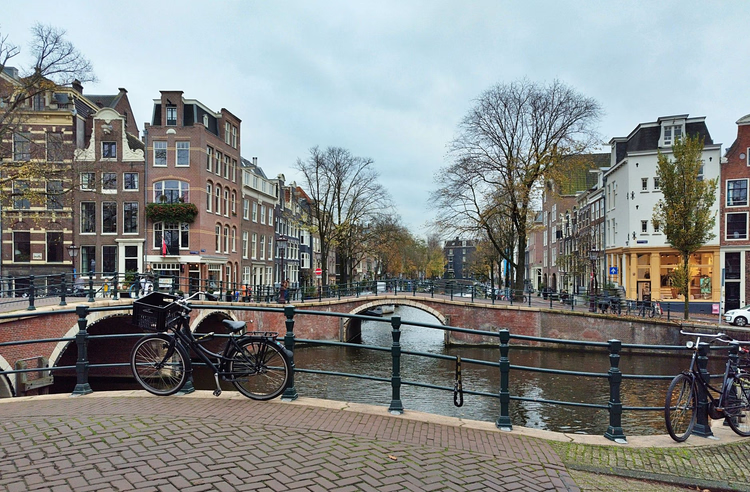
Amsterdam has the longest lines in the country: the Rijksmuseum, the Van Gogh Museum and the Anne Frank House, with the canal ring and the Jordaan district in between. The center is compact and easy to cover on foot, and the water is best in the early evening, when there are fewer daytime tour boats.
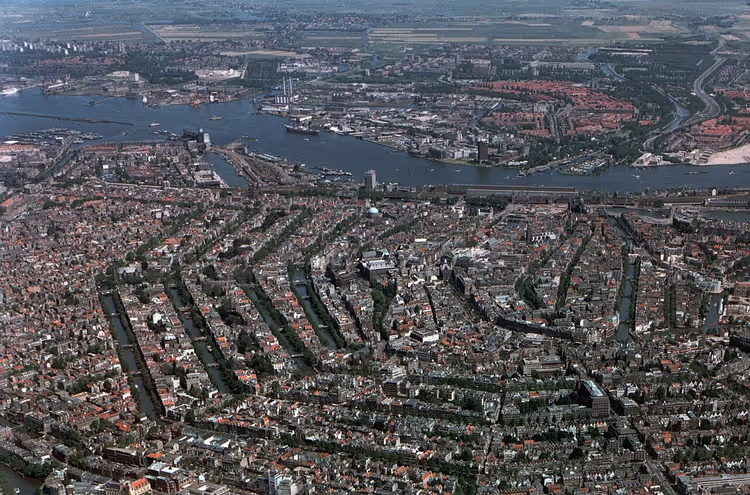
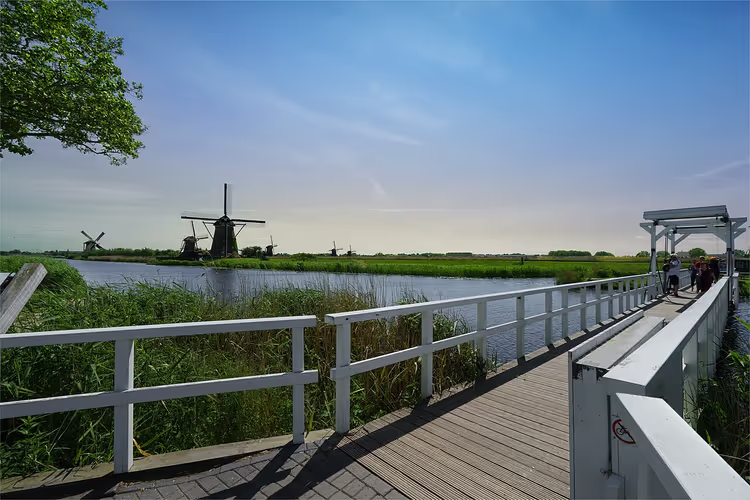
Outside the capital lies what makes it worth traveling around the country. You can see windmills at Zaanse Schans and at Kinderdijk, which is a UNESCO World Heritage Site. The old center of Giethoorn has no roads, so people get around on foot, by bike or by boat. Rotterdam shows off modern architecture with the Markthal covered market, the Cube Houses and the Erasmus Bridge, while The Hague has the Mauritshuis museum and the Peace Palace.
For nature there is De Hoge Veluwe National Park, with forest, sand dunes, deer and the Kröller-Müller Museum. In spring the list also includes Keukenhof, a park that is open for less than two months a year.
Our articles on this
- Attractions of Holland: Amsterdam and what to see beyond it
- Amsterdam: thirty main sights, ticket prices and route
- 25 Amsterdam museums: what to see and how to buy a ticket with a time slot
- What to see in The Hague: from the Peace Palace to the Scheveningen pier
- Rotterdam in two days: 25 places from the Euromast to Kinderdijk
- How a trip to Giethoorn works: boat, parking and museum ticket
- De Hoge Veluwe: deer, heathlands and camping in the park
- Royal Palace Amsterdam: tickets, opening hours and what to see inside
- NEMO museum in Amsterdam: timed entry tickets and walking route from the station
Cities, the coast and where to base yourself
Amsterdam, Utrecht, The Hague and Rotterdam are linked by frequent trains, so it is easy to see them in one trip. Utrecht draws visitors with its medieval center and canals with two-level wharves, The Hague combines museums with Scheveningen beach, and Rotterdam suits those who are tired of old-town facades. Haarlem and Delft feel like a smaller Amsterdam and can be covered on foot in half a day.
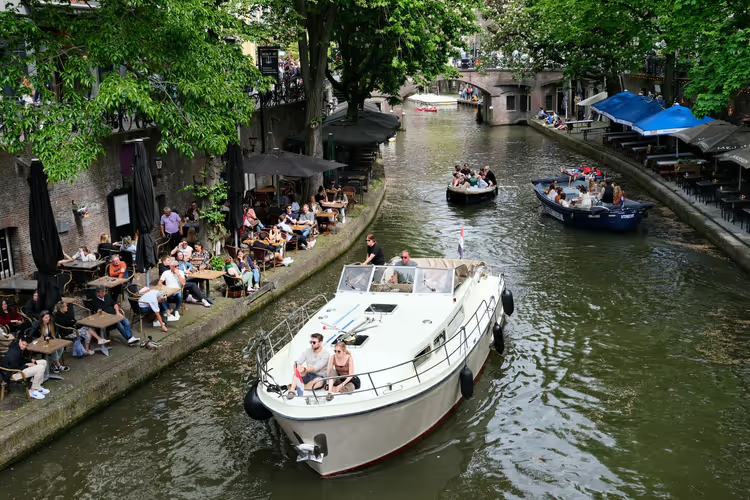
Farther from this core the pace is calmer. Maastricht in the south sits on the River Maas and is known for Vrijthof square and a cuisine closer to French. Groningen in the north revolves around its university and the bicycle, Leeuwarden shows Frisian culture, and Eindhoven is interesting for design and the Philips Museum.
The sea here is the North Sea: the big resorts of Zandvoort and Scheveningen lie close to Amsterdam and The Hague, while those looking for quiet head to the islands of Texel, Ameland and Terschelling. Amsterdam or Utrecht makes a convenient base for trips around the country, and in tulip season so do Haarlem or Leiden, close to the fields.
| City | Known for | Who it suits |
|---|---|---|
| Utrecht | Medieval center and canals with two-level wharves | Those looking for a base for trips around the country |
| The Hague | Museums and Scheveningen beach | Those who want to combine city and sea |
| Rotterdam | Modern architecture and the port | Those who are tired of old-town facades |
| Haarlem and Delft | A smaller Amsterdam, with a center you cover on foot | Half a day; Haarlem works well as a base in tulip season |
| Maastricht | The River Maas, Vrijthof square, a cuisine closer to French | Those heading south for a calmer pace |
| Groningen | The university and the bicycle | Those heading north, away from the main core |
Our articles on this
Hotels: what makes up the price
Accommodation in Amsterdam is the most expensive in the country, and it is what sets the budget for the trip. The price is driven by the season, the day of the week and the distance from the center. Most people choose between the Centrum, Jordaan, De Pijp, Oud-West and Museumkwartier districts: in the center you can walk everywhere, but it is noisy and expensive, while farther out it is quieter and a tram takes you to the museums. A tourist tax per night is added to the room rate, so look at the final total at the booking stage.
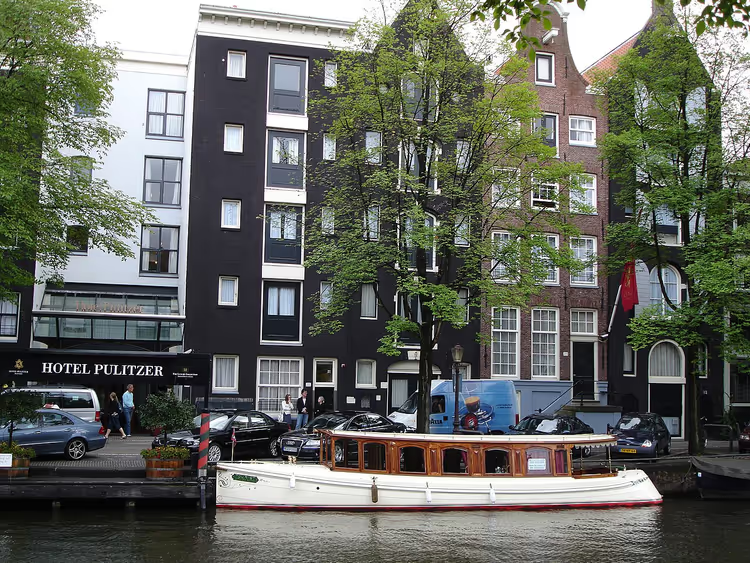
Haarlem and Utrecht make a quieter base: the train to the capital takes less than half an hour from there. Book early for April and May: in tulip season prices rise and there are few rooms left. If you are driving, check the parking near the hotel before you pay: in city centers it is paid and limited.
Ad
Compare places to stay in the Netherlands on Trip.com
We earn a commission through this link; your price stays the same.
Our articles on this
Tours, tickets and day trips
The main museums in Amsterdam sell tickets online and for a specific entry time. The Anne Frank House is the hardest: slots are released on Tuesdays for the week that starts six weeks later, and no tickets are sold at the door. Keukenhof also works by date and time, and weekends there sell out in advance.
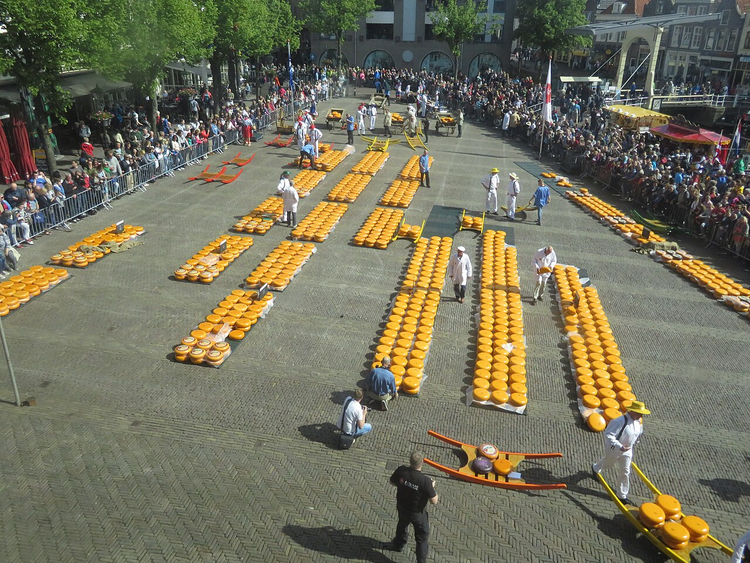
Amsterdam is a convenient base for day trips by train. The most popular destinations are the windmills of Zaanse Schans, the fishing villages of Volendam, Edam and Marken, Delft together with The Hague, Utrecht and Kinderdijk. From late March to late September the cheese market in Alkmaar is held on Fridays. Get to the windmills before nine in the morning or after four in the afternoon: during the day they are crowded with tour groups.
With children, the Efteling theme park gets a day of its own, and tickets for peak days there are also bought in advance.
| Place | How tickets work | What to keep in mind |
|---|---|---|
| Anne Frank House | Online only, for a specific time | Slots are released on Tuesdays six weeks ahead, and there are no tickets at the door |
| Rijksmuseum and Van Gogh Museum | Online, for a specific entry time | In high season, take the morning slots |
| Keukenhof | By date and time | Open only in spring, and weekends sell out in advance |
| Zaanse Schans and Kinderdijk | Day trip from Amsterdam | Arrive before nine in the morning or after four in the afternoon: tour groups fill the place during the day |
| Cheese market in Alkmaar | Day trip from Amsterdam | Held on Fridays from late March to late September |
| Efteling | Tickets for peak days are bought in advance | A day of its own, good with children |
Ad
See tours and tickets in the Netherlands on GetYourGuide
We earn a commission through this link; your price stays the same.
Ad
See tickets for museums and parks on Tiqets
We earn a commission through this link; your price stays the same.
Our articles on this
Food: simple, filling and seasonal
Dutch food is simple and filling. Herring with onions is eaten right on the street, bitterballen are served in pubs with mustard, and kibbeling, pieces of white fish in batter, is what you pick up by the sea. Coffee comes with a stroopwafel filled with caramel syrup, a recipe that originated in Gouda. Behind this front there is more: the winter potato mash called stamppot, thick pea soup, Indonesian rijsttafel and Surinamese roti.

Season matters more here than location. The first herring, Hollandse Nieuwe, is served from mid-June, white asparagus is sold from mid-April to the end of June, and oliebollen are fried in December. Look for street food in snack bars and at markets: Albert Cuyp Markt in Amsterdam's De Pijp district feeds you for less than the center does. For cheese, people go to the markets of Alkmaar, Edam and Gouda.
Our articles on this
Trains, OVpay, car rental and getting in from the airport
The country is easy to see by train. Intercity trains run between the big cities, and the slower Sprinter serves the small stations. From Amsterdam it is about half an hour to Utrecht, Rotterdam or The Hague, and about two and a half hours to Maastricht in the south.
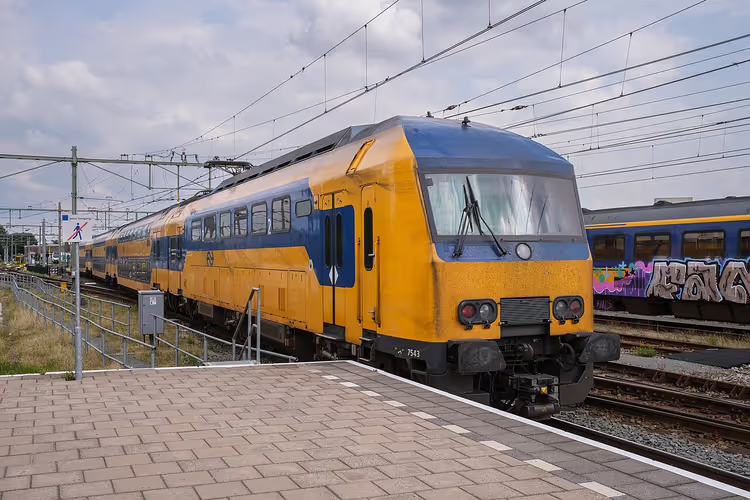
Paying is simple: the OVpay system works on trains, metros, trams and buses across the country. You tap a bank card or phone when you get on and when you get off; if you do not check out, the maximum fare is charged. The anonymous chip card recommended by old guidebooks is no longer sold to tourists. For a busy day with several cities there is the one-day Holland Travel Ticket.
Schiphol Airport has a train station right under the terminal, and the train to Amsterdam Centraal takes about 17 minutes and runs around the clock. You need a car for the parks of the Veluwe, the villages and the coast, where the railway does not reach. Pick it up at the airport, not in the center: in Amsterdam, Utrecht and Rotterdam the center is partly closed to cars, parking is expensive, and the big cities have environmental zones.
| From and to | How to travel | Time and conditions |
|---|---|---|
| Schiphol - Amsterdam Centraal | Train from the station under the terminal | About 17 minutes, runs around the clock |
| Amsterdam - Utrecht, Rotterdam, The Hague | Intercity | About half an hour |
| Amsterdam - Maastricht | Intercity | About two and a half hours |
| Small stations between the cities | Sprinter | Slower than the Intercity |
| Several cities in one day | Trains with the one-day Holland Travel Ticket | Pays off when you visit three cities in a day |
| Veluwe, villages, the coast | Rental car | Pick it up at the airport: the centers of the big cities are partly closed to cars |
Ad
Book a fixed price airport transfer in the Netherlands
We earn a commission through this link; your price stays the same.
Our articles on this
When to go: weather, tulips and the sea
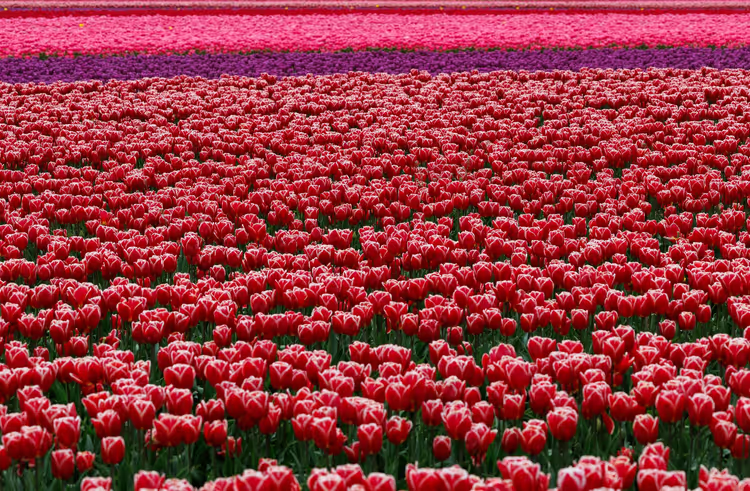
The season in the Netherlands is chosen by the purpose of the trip. April and May are best for cities and museums: April has the least rain of the year, May has the most sun, and the lines are shorter than in summer. Tulips bloom from late March to early May, the peak usually falls in mid-April, and the exact weeks depend on the spring weather.
People swim from mid-June to the end of August, but the water in the North Sea stays cool even in August. July is the warmest and also the wettest month, and in summer Amsterdam has the biggest crowds and the highest prices. September often brings the best days: it is still warm, and there are already fewer tourists.
In fall and winter hotels get cheaper, the lines disappear, Amsterdam holds its light festival and the ice rink on Museumplein is open. You need a jacket for rain and wind in any month, even in July.
| Period | Weather and crowds | What it suits |
|---|---|---|
| Late March - early May | Tulips are in bloom, the peak is usually in mid-April | Keukenhof and the flower fields |
| April and May | April has the least rain, May the most sun, and lines are shorter than in summer | Cities and museums |
| Mid-June - end of August | July is the warmest and wettest, crowds are the biggest, prices the highest | The sea, although the water stays cool |
| September | Still warm, already fewer tourists | Cities without the summer crowds |
| Fall and winter | Hotels get cheaper, the lines disappear | Museums, the light festival and the ice rink in Amsterdam |
Twelve months compared: find the best time to go
Our articles on this
- Netherlands by month: when to go for the beach, the city and the tulips
- When is the best time to go to Amsterdam: weather and prices by season
- When to go to Keukenhof: 2027 season, tickets and queues
- 6 Places in the Netherlands where tulips bloom in spring
- Amsterdam in summer 2026: WorldPride, museum prices and daily budget
- Amsterdam in autumn: a route along the canal ring, markets and museums
- Winter Amsterdam: light festival, ice rink and 12 places to stay warm
Budget: how to work out your own total
The biggest expense in the Netherlands is accommodation: in Amsterdam it takes more than half the budget and gets sharply more expensive in summer, on weekends and in tulip season. That is why it is easier to plan from the nights: dates and base first, then museums and transport, with food adjusting to what is left. A trip on off-season weekdays cuts the bill more than saving on food does.
The second lever is early booking: train tickets to the country and museum slots are cheaper and easier to get in advance. Inside the country, contactless payment is enough for one city, while for three cities in a day the day ticket is the better deal. The Amsterdam city card pays for itself only with a packed museum program. Instead of a figure there is a calculator here: it separates accommodation, food, transport, tickets, travel there and back, and a reserve.
Calculate a travel budget for the Netherlands
Our articles on this
Routes: a weekend, five days and a week
For a first trip, four to five days without a car are enough: two days for Amsterdam, a day for the windmills of Kinderdijk and Zaanse Schans, and a day for Haarlem and the coast. If you want to add the parks of the Veluwe and the islands, allow two more days.
For a week with a car, a loop from Amsterdam works: Utrecht, the small town of Thorn in the south, Tilburg, Kinderdijk, Rotterdam and Delft, The Hague with Scheveningen, Haarlem, and at the end Alkmaar, Volendam and Edam. With three to four days, keep only the western part: Amsterdam, Utrecht, Kinderdijk, Rotterdam, The Hague. Giethoorn and Friesland lie off to the side and need a day of their own.
The rule for both options: a day for a big city, half a day for a small town, and cover the centers on foot. For cyclists the country has a network of numbered junctions: you put the route together as a list of junction numbers and ride from one to the next.
Day planner: check what fits into one day
Our articles on this
- Netherlands in a week: a circular road trip route from Amsterdam by car
- 3 days in Amsterdam: day-by-day itinerary, museum and canal cruise tickets
- One day in Amsterdam: a walking route with thirteen stops
- What to see in central Amsterdam: 7 stops on foot from the station
- How to plan a bike route in the Netherlands by junction numbers
Practical matters: payment, staying connected, safety, clothing
In the Netherlands you can pay for almost everything by card, and some cafes and shops accept cards only. Keep cash as a backup for markets and tips, and in small bills: large banknotes are far from accepted everywhere. Foreign Mastercard and Visa cards are accepted without any trouble, and you can withdraw cash from an ATM if you need it.
Pickpockets work in the center of Amsterdam and on the trams: keep your wallet in an inside pocket and wear your backpack on your front on public transport. The cities are full of bicycles and some streets are given over to cyclists, so look at the bike lanes twice, both when driving and on foot. The weather is changeable, and a raincoat or a jacket with a membrane and non-slip shoes will be useful in any season.
Check the roaming terms with your provider before you leave, and an eSIM remains a backup way to have internet from the first minute. Take out travel insurance before you leave and read exactly what it covers.
Build a packing list for a trip to the Netherlands
Ad
See eSIM options for the Netherlands on Yesim
We earn a commission through this link; your price stays the same.
Ad
See travel insurance on World Nomads
We earn a commission through this link; your price stays the same.
Our articles on this