
















England: the guide for planning it yourself
For most travelers England begins with London and often ends there too. Yet direct trains run from the capital's stations to Oxford, Cambridge, Bath, Dover and Brighton, and the journey to most of these places takes between forty-five minutes and two hours. Beyond them lie Dorset, Devon and Cornwall, and in the north Liverpool and Manchester. This page lays the country out for planning it yourself: what to see, where to go from London, where to stay, how to get around and when to come. Each section stays short and points on to our detailed articles. There are no prices here: hotel and ticket costs shift noticeably with the season and the day of the week, so you work out your own total in the calculator.
What to see: the big picture
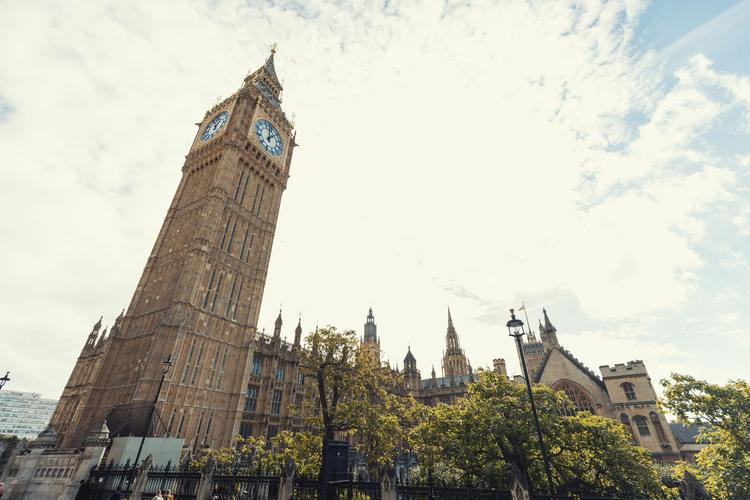
London carries a first trip. The Tower of London on the bank of the Thames holds the Crown Jewels, British monarchs are crowned in Westminster Abbey, and the climb to the dome of St Paul's Cathedral is included in the standard admission ticket. The State Rooms of Buckingham Palace open only in summer, but you can watch the Changing of the Guard at the railings without a ticket. The city's biggest museums are free: the British Museum, the National Gallery, Tate Modern and the Victoria and Albert Museum charge only for temporary exhibitions.
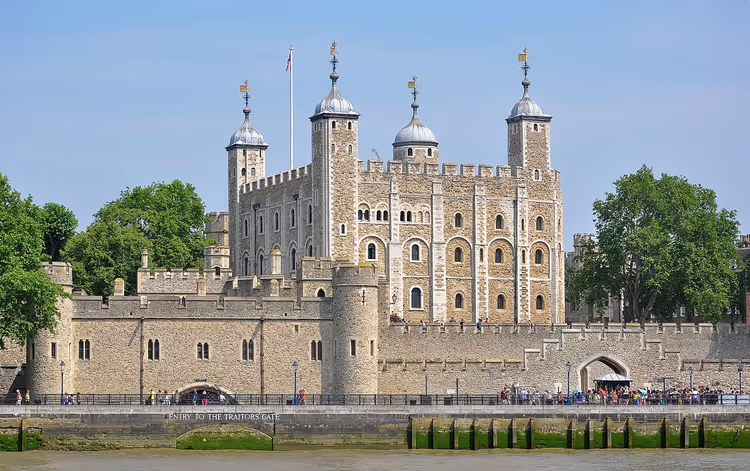
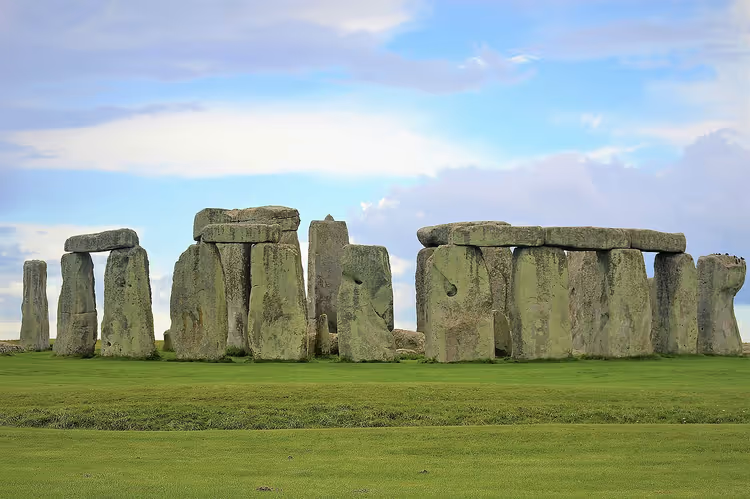
Outside the capital, the main sights are gathered in the south. Stonehenge stands on Salisbury Plain and is a UNESCO World Heritage Site, Windsor Castle remains the Crown's country residence, Bath grew up around its Roman baths, and Dover Castle stands on the chalk cliff above the strait. Add to that list Canterbury Cathedral, the Tudor palace of Hampton Court on the Thames and Leeds Castle in the county of Kent.
There is one practical rule: the Tower, the Abbey, Windsor Castle and Stonehenge sell tickets for a set time, and in summer the morning slots go first.
Our articles on this
- What to see in London: 35 places with directions and the catch for each
- Where to go in London: 33 museums, free entry and timed tickets
- Tower of London: how much entry costs and what to see in half a day
- Tower of London: tickets from £37, opening hours and how to skip the queue
- Westminster Abbey in London: tickets 2026 and what to see inside
- Westminster Abbey: timed entry tickets and what to see inside
- British museum: what to see and how to get in without queuing
- British Museum in London: what to see for free and when queues are shorter
- St Paul's Cathedral: tickets, dome and climbing to the viewing gallery
- Buckingham Palace: when it is open and how to get into the state rooms
- Stonehenge: how the stone ring works and how much entry costs
- Hampton Court: how much entry costs and how to get there from Waterloo
- Hampton Court near London: tickets, train from Waterloo and main halls
- Leeds Castle: ticket valid for a year, and the train from London takes just over an hour
- Whitby Abbey: tickets, opening hours and the Dracula legend
Cities and regions: where to go
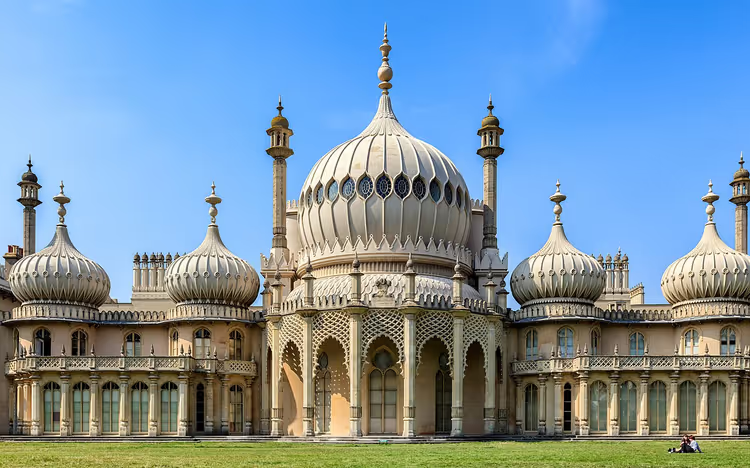
The south of England divides neatly into two parts. The western part is Oxford, Windsor, Bath, Stonehenge and Stratford-upon-Avon, Shakespeare's home town. The eastern part is Canterbury, Dover and Arundel Castle. Brighton is a seaside resort with a pier, the Royal Pavilion and a shingle beach.
Further west, the Jurassic Coast stretches from Dorset to Devon and is a natural World Heritage Site. In Cornwall the Gulf Stream lets subtropical gardens grow, and people head to the beaches near Newquay and St Ives for the surfing; the roads there are narrow, and in summer they are clogged. The Isle of Wight, with its chalk cliffs, can only be reached by ferry.
In the north, a full day each goes to Liverpool, with its docks on the River Mersey and The Beatles Story museum, and to Manchester, with its museums, canals and football stadiums. Our articles go beyond England too: in Scotland Edinburgh serves as the base, with easy trips to the valley of Glencoe and to Loch Ness, and off the north coast of Wales lies the island of Anglesey.
Our articles on this
- What to see in southern England: nine places from Oxford to the New Forest
- Which London area to choose for an overnight stay and how much a hotel costs
- Liverpool in one day: docks, The Beatles Story and town hall
- Scotland in one trip: 15 things to do from whisky to the Isle of Mull
- Oxford, Cambridge and Edinburgh: three UK universities worth seeing
- Isle of Anglesey: Plas Newydd, South Stack and Beaumaris Castle
- Eastbourne with a dog: city guide and places that welcome pets
Hotels: area first, stars second
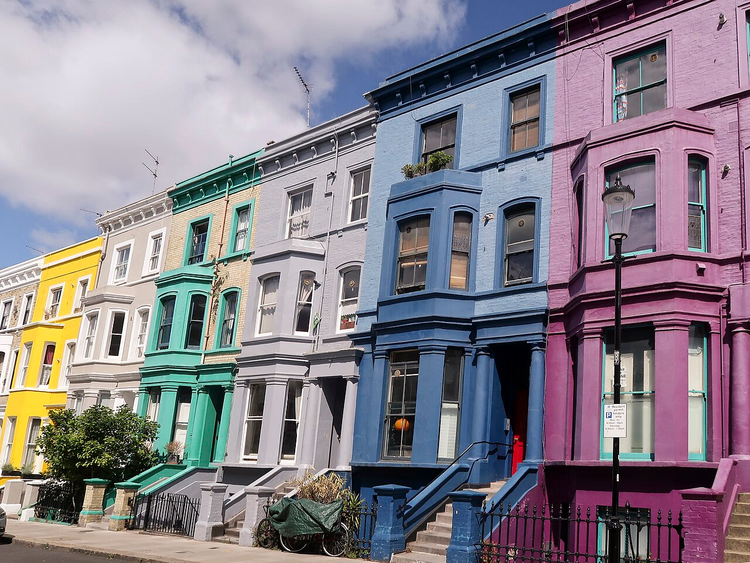
In London the area decides more than the hotel category. For a first visit people choose Covent Garden or the South Bank: the main sights are close by, and much of it can be covered on foot. Go to Notting Hill for quiet, to Soho for restaurants and nightlife, and to Shoreditch for street art and bars. Around King's Cross and Paddington stations it is cheaper but noisier.
Check two things. The first is the zone: stay in Zone 1 or Zone 2 at most, because further out the travel eats up what you save on the room. The second is the Tube: the station should be no more than an eight to ten minute walk away.
The lowest prices fall in January, February and November, and nights from Tuesday to Thursday are cheaper than Friday and Saturday. Book as soon as you know your dates: prices rise as the trip gets closer. In Cornwall accommodation in August is expensive and sells out fast; things are calmer in the inland towns, such as Redruth, Camborne and Launceston.
| Area | Who it suits | What to keep in mind |
|---|---|---|
| Covent Garden | A first visit and anyone who loves the theater | Hotels cost more than the city average |
| South Bank | Walks along the Thames and an unhurried pace | Some hotels face the busy riverside walk: ask for a quiet room on the courtyard side |
| Notting Hill | Couples who want quiet evenings | About 15 minutes to Westminster by Tube; you ride to the central sights rather than walk |
| Soho | Anyone who cares about restaurants and nightlife | The area is loud, so book a room with soundproofing |
| Shoreditch | Street art, markets and bars instead of postcard views | About 25 minutes to Westminster and Buckingham Palace |
| Victoria | Short trips and arriving by train | Buckingham Palace is a walk away, but there is less atmosphere than in Soho |
| King's Cross and Paddington | A late arrival and an early departure | Cheaper but noisy; choose the hotel's address with more care |
Ad
Compare places to stay in England on Trip.com
We earn a commission through this link; your price stays the same.
Our articles on this
Tours and tickets
A simple rule works for a short trip to London: one sightseeing walk, one tour with a ticket inside, and one trip out of town. A cruise on the Thames to Greenwich takes about two hours and sits well on the second or third day.
Buy tickets in advance for the Tower, Westminster Abbey, Windsor Castle, Stonehenge and the Warner Bros. studio where the Harry Potter films were shot: studio places for weekends and school holidays run out long before the date. Entry to the National Gallery is free, and a free timed ticket only speeds up getting in. The London Pass pays off if your plan has three or more paid attractions.
A trip out of town takes a whole day. Stonehenge is usually combined with Bath, and Oxford with Stratford-upon-Avon, while Cambridge is easy to reach by train on your own. Passes from English Heritage and the National Trust pay for themselves once you visit three or four sites run by the same organization.
| Where | Journey from London | The main thing there | What to book ahead |
|---|---|---|---|
| Oxford | Direct train from Paddington, about an hour | The university colleges and the Covered Market | A guided tour |
| Cambridge | Train from King's Cross, about an hour | King's College Chapel | A guided tour |
| Windsor | Train from Waterloo, about an hour | Windsor Castle | A castle ticket |
| Canterbury | Train from St Pancras, about an hour | Canterbury Cathedral | A cathedral ticket |
| Dover | Train from St Pancras, about an hour | Dover Castle and the chalk cliffs | A castle ticket |
| Brighton | Train from Victoria station, about an hour | The Royal Pavilion and the pier | A guided tour |
| Bath | Train from Paddington, about an hour and a half | The Roman Baths | A ticket for the baths with a timed entry slot |
| Stonehenge | Train from Waterloo to Salisbury, then a bus; about two hours | The stone circle, viewed from the path | A timed ticket or a tour |
Ad
See guided tours and tickets for England on GetYourGuide
We earn a commission through this link; your price stays the same.
Ad
See museum and attraction tickets on Tiqets
We earn a commission through this link; your price stays the same.
Our articles on this
- 25 London tours: how to choose a format and which tickets to book in advance
- 19 Day trips from London: routes, tickets and travel time
- Albert Hall in London: how to buy a ticket for a concert or tour
- Albert Hall from inside: tours of the hall, tickets and opening hours
- The Globe Theatre in London: how the auditorium works and how to get to a performance
- Covent Garden in London: history of the Royal Opera and backstage tours
- World of Jumanji zone at Chessington: three rides, hotel and tickets
Food: the pub, tea and markets
A classic pub works simply: you order at the bar, pay straight away and find your own table, and there is usually no table service. The classics to order are fish and chips, meaning cod or haddock in batter, and the Sunday roast: roast beef, Yorkshire pudding and thick gravy.
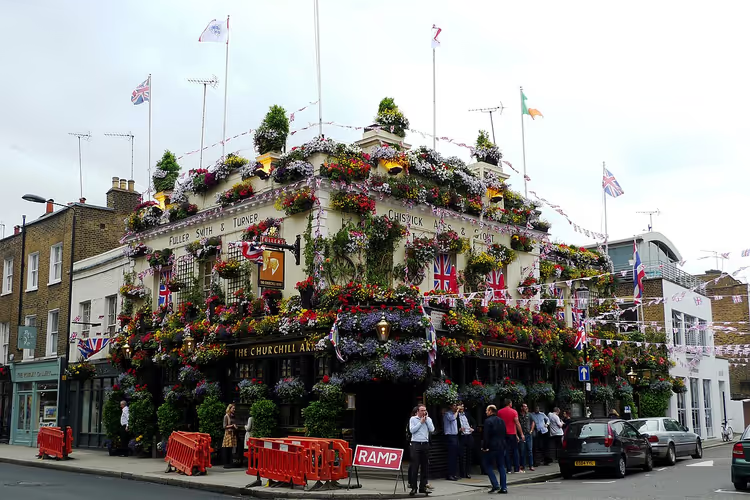
Afternoon tea is considered the main British ritual, and at the well-known venues you book a table in advance: weekends go weeks ahead.
The price of a pint depends on the area: in the City, Westminster and Mayfair it is noticeably higher than in the East End. It is cheaper to eat at street food markets such as Borough Market and Camden Market, and the supermarkets Tesco and Sainsbury's cover breakfast and snacks. Keep cash on you at the markets: not every trader takes cards.
Our articles on this
Airports, trains and getting around
London has five airports, and Heathrow is the busiest. From there the cheapest way to the center is the Tube, on the Piccadilly line, in about an hour. The Elizabeth line takes roughly half an hour and runs through the center without a change, while the Heathrow Express reaches Paddington station in a quarter of an hour but costs the most. From Gatwick you take the train to Victoria station, and from Stansted the Stansted Express runs to Liverpool Street. A fixed price transfer is more convenient at night, with suitcases and for a group.
In the city you pay with a contactless bank card or your phone: the system stops charging by itself at the daily cap, so you do not need a day travelcard. Touch in when you enter and touch out when you leave. Buses do not take cash.
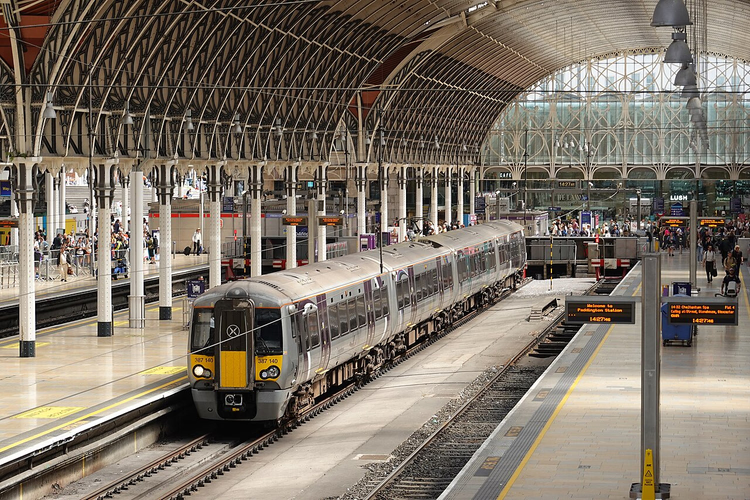
The train is a convenient way to travel the country. Trains to Oxford and Bath leave from Paddington, to Cambridge from King's Cross, to Dover and Canterbury from St Pancras, and to Liverpool and Manchester from Euston. You need a car where the railway ends: for the gardens and country houses of the south and in Cornwall.
| Option | Journey time | Who it suits | What to keep in mind |
|---|---|---|---|
| Tube, Piccadilly line | 50-60 minutes | Light luggage and the lowest cost | No luggage racks, and the carriage fills up in the city |
| Elizabeth line | 29-35 minutes | A hotel in the center or the City: the train runs without a change | At rush hour the train is sometimes overcrowded |
| Heathrow Express | 15 minutes to Paddington station | A tight schedule or a hotel near Paddington station | The most expensive option; you may need to carry on by Tube |
| National Express coach | 60-90 minutes to Victoria Coach Station | Two suitcases and a wish to travel seated | In traffic the coach falls behind the timetable |
| Black cab | 40-60 minutes | A family with luggage: you are taken to the hotel door | The fare is not fixed, and at rush hour the meter climbs noticeably |
Ad
Book a fixed price airport transfer in England
We earn a commission through this link; your price stays the same.
Our articles on this
Best time to go and weather
For London the best months are May and September: it is warm, there is less rain and prices sit in the middle range. July, August and the Christmas weeks are the most expensive and the most crowded. The climate is maritime, without hard frosts or exhausting heat, but the sky changes several times a day, so people carry an umbrella all year round.
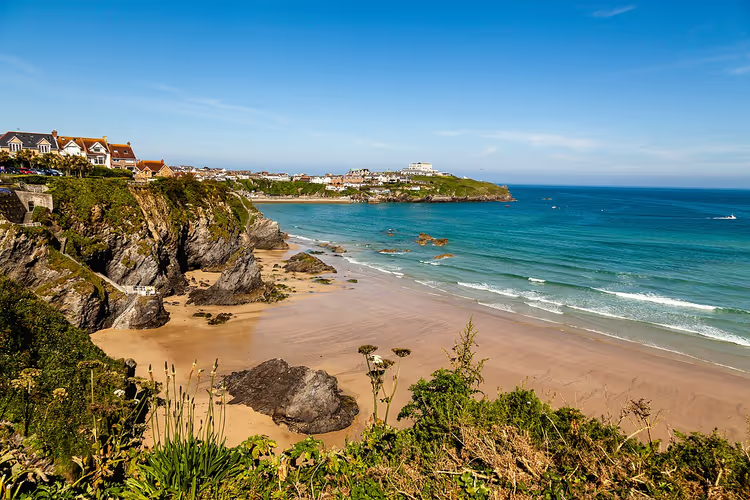
The south of the country is best traveled in April and May: the gardens are already in bloom and the beach season has not yet begun. In Cornwall, August brings the warmest days and, with them, school holidays, queues and peak prices; it is calmer there in late June and in September.
Some dates are set by events. Brighton's festival season starts in May, Wimbledon takes place at the turn of June and July, Edinburgh hosts the Fringe in August, and on the fifth of November Bonfire Night is celebrated, on the largest scale in Lewes.
| Months | Weather and crowds | What it suits |
|---|---|---|
| January and February | Cold and damp; the fewest tourists, the lowest prices | A budget trip and museums |
| March and April | Cool and changeable, April showers are frequent and short; still few tourists in March | A quiet city break, parks and galleries |
| May | Warm, parks in bloom; moderate crowds | The best balance of weather and prices |
| June | Warm, long days; crowded, high prices | Festivals and walks |
| July and August | The warmest time, school holidays in August; peak crowds and prices | A trip only with accommodation booked in advance |
| September | Mild, no heat; fewer people than in summer | The city and museums |
| October and November | Cool, gray and damp by November; few people | Museums without queues and a budget trip |
| December | Cold, festive lights; crowded, high prices | Christmas markets and illuminations |
Twelve months compared: find the best time to go
Our articles on this
- When to go to London: May, September and cheap winter
- Cornwall in August: pros and cons of the busiest month
- Wimbledon 2026: how to get on the courts if the ballot is already closed
- Bonfire Night in Lewes 2026: torches, effigies and tar barrels
- Christmas in England: why gifts are hidden in a stocking
Budget: how to work out your own total
There are no daily rates here. London is not expensive everywhere: the biggest museums are free, and what you spend on city transport stops at the daily cap. Accommodation takes more than half of the daily budget, and the price of a night depends on the area, the day of the week and how far ahead you book.
Where saving actually gets you something: traveling as a pair, because a double room costs almost the same as a single; midweek instead of the weekend; one paid ticket a day paired with two free museums; lunch at a market instead of a pub; tickets bought online in advance. Budget the journey from the airport as a separate line: Gatwick, Luton and Stansted lie outside the Tube zones.
You work out your own total in the calculator: it separates accommodation, food, transport, admissions, travel there and a reserve.
Calculate a travel budget for England
Our articles on this
Routes: London, the south and beyond
In one day you walk London in an arc along the Thames: from Tower Bridge through the City and past St Paul's Cathedral to Westminster and on to Marylebone, about eight kilometers on foot. Three days fit the essentials without rushing. Day one: Westminster and the free museums of South Kensington. Day two: viewing platforms, a boat on the Thames and Greenwich. Day three: markets and Oxford Street. For Windsor or the Warner Bros. studio, allow a fourth day.
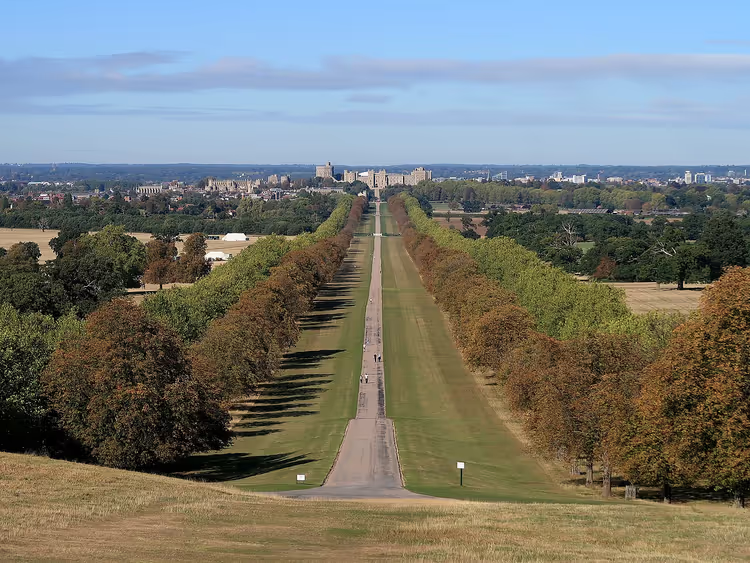
Without a car, the south is built as spokes from the capital: each trip is a single day out. Two days are enough for the western part with Oxford, Bath and Stonehenge, and the eastern part with Canterbury, Dover and Arundel takes two more. Dover and Canterbury combine into one day, while Greenwich and Windsor lie at opposite ends and do not fit together.
A driving route from Dover to Cornwall and back via Bath and Windsor takes at least seven days, or ten at a comfortable pace. Liverpool can be covered on foot in a day, from the Albert Dock to the Baltic Triangle.
Day planner: check what fits into one day
Our articles on this
- London in 3 days on your own: day by day itinerary and what to book in advance
- London in three days: 20 places from Big Ben to Greenwich
- London in 2 days: a ready-made route to 28 places with ticket prices
- London in one day: a route with twenty stops
- Spring route through southern England: from Dover to Cornwall
- Liverpool itinerary for one day: port, cathedral and the Beatles
- 24 Hours in Edinburgh: route from the airport to sunset at Calton Hill
- Whitechapel: where Jack the Ripper walked in 1888
Practical matters: customs, connectivity, insurance
Local etiquette is simple, but people notice when it is broken. On escalators you stand on the right, and those in a hurry walk on the left. Nobody jumps a queue; if you cannot see where it ends, ask. A request comes with please, the reply is thank you, and the slightest inconvenience calls for sorry. Show two fingers only with your palm facing the other person: with the back of the hand turned outward the gesture is offensive.
Dress in layers: a T-shirt, a sweater and a light waterproof jacket work better than one warm item. Comfortable shoes are essential.
Check the entry rules and document requirements for your passport before you buy tickets. Check the roaming terms for the United Kingdom with your mobile provider before you travel. An eSIM is a backup way to have internet from the first minute: for maps, tickets on your phone and contact with the hotel. Take out travel insurance before you leave and read exactly what it covers.
Build a packing list for the trip to England
Ad
See eSIM options for the United Kingdom on Yesim
We earn a commission through this link; your price stays the same.
Ad
See travel insurance on World Nomads
We earn a commission through this link; your price stays the same.
Our articles on this