










Portugal: a guide for planning your own trip
Portugal stretches in a narrow strip along the Atlantic and looks compact on the map. In reality the north and the south differ in climate, food and pace, and the mainland is joined by Madeira and the Azores. Getting from Porto to Faro takes a whole day, so your choice of base decides how much of your vacation goes on travel. This page lays the country out for independent planning: what to see, which regions to choose, where to stay, how to get around, when to go and what the budget is made of. Each section is short and leads to our detailed articles. There are no prices here: they change with the seasons, and the exact total for your dates is better worked out in the calculator.
What to see: cities, palaces and the edge of Europe
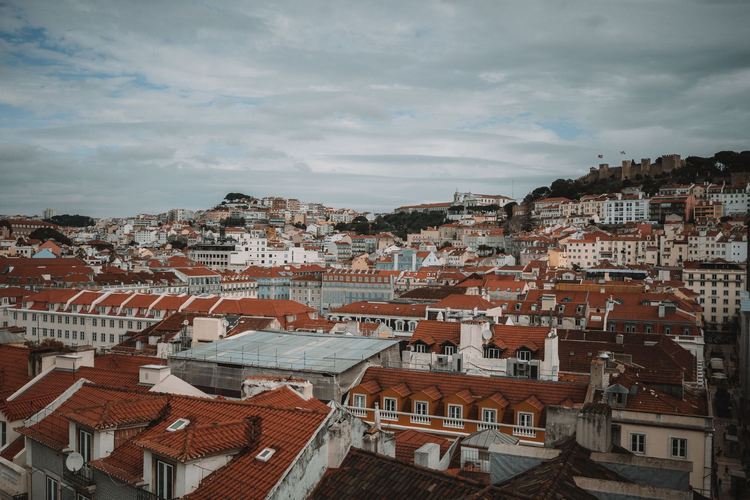
A first trip usually rests on two cities. In Lisbon that means Belém with the Jerónimos Monastery and Belém Tower, São Jorge Castle, Alfama and the historic tram 28. In Porto it means São Bento station, the Clérigos Tower, the Dom Luís I Bridge and the port wine cellars on the other bank of the Douro.

Close to the capital lies Sintra with Pena Palace, Quinta da Regaleira and the Moorish Castle, and beyond it Cabo da Roca, the westernmost point of mainland Europe. Central Portugal fits between Lisbon and Porto: Óbidos inside its fortress wall, the Gothic monastery in Batalha, the University of Coimbra, the Convento de Cristo in Tomar. In the south the list grows with Évora and its chapel built of human bones, and with the cliffs of the Algarve.
A practical detail for your plan: most museums in Lisbon, the Jerónimos Monastery and Belém Tower are closed on Mondays, and the palaces of Sintra admit visitors in timed slots with an entry time chosen in advance.
Our articles on this
- 35 Places in Lisbon: tickets, opening hours and what to see for free
- What to see in Porto: 30 places with tickets and opening hours
- 16 Attractions in Sintra: palaces, parks and Cape Roca
- Where to go in Lisbon: 20 museums with tickets and opening hours
- Cape Roca: the lighthouse at the edge of Europe and the route from Lisbon
- 25 Beaches in Portugal: from the cliffs of Sintra to the quiet coves of the Algarve
- Madeira in winter: 10 places with cliffs, levadas and sunsets
- Azores: what to see on Sao Miguel and how much it costs
- How to get to Princess Ring: a nature reserve island off the coast of Sao Miguel
- Monsanto: a village of granite boulders and a Templar fortress
- Vasco da Gama Bridge: toll rates and best photo spots
Regions and cities: where to go
The north means Porto, Guimarães, known as the cradle of Portugal, Braga with its sanctuaries, the vineyards of the Douro Valley and Peneda-Gerês National Park. It is cooler here and it rains more than in the south. The center of the country is held by Coimbra, Aveiro with its canals and moliceiro boats, Nazaré with its winter waves, and Serra da Estrela, the highest mountain range in mainland Portugal.
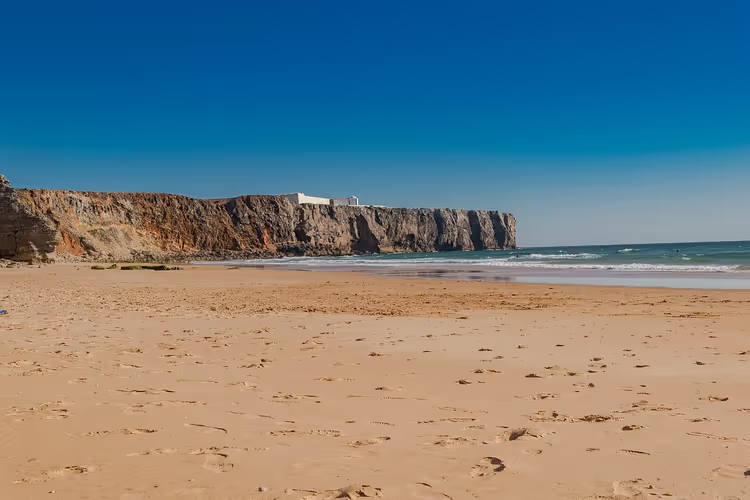
Around Lisbon, Sintra, Cascais and Setúbal with its ferry to the Tróia Peninsula are all within a day's reach. Farther south begins the Alentejo, the largest region in the country, with fishing towns and almost empty beaches. The Algarve is the main beach coast: Lagos, Albufeira, Portimão, Faro and the Benagil Cave, which can only be reached from the water.
The islands live a life of their own. On Madeira the south is drier and warmer, the north greener and rainier. São Miguel in the Azores is made of volcanoes: crater lakes, hot springs, tea plantations. It makes sense to choose a base by route: the north is explored from Porto and Coimbra, the center from Lisbon, the south from Lagos, Carvoeiro, Aljezur or Faro.
| Region | What is there | What to keep in mind |
|---|---|---|
| North | Porto, Guimarães, Braga, the Douro Valley, Peneda-Gerês park | Cooler and rainier than the south; base yourself in Porto |
| Center | Coimbra, Aveiro, Nazaré, Serra da Estrela | Coimbra and Aveiro lie on the way between Lisbon and Porto |
| Around Lisbon | Sintra, Cascais, Setúbal and the ferry to the Tróia Peninsula | Everything is within a day's reach of the capital |
| Alentejo | Fishing towns, almost empty beaches, Évora | The largest region in the country |
| Algarve | Lagos, Albufeira, Portimão, Faro, the Benagil Cave | The main beach coast; a car is needed |
| Madeira | A drier, warmer south and a green, rainy north | Mild weather all year round |
| Azores, São Miguel | Crater lakes, hot springs, tea plantations | Better as a separate trip than as an add-on to the mainland |
Our articles on this
- Algarve beaches: when to go, where to swim and what to see
- Where to swim and live quietly on Madeira: ten resorts of the island
- Alentejo coast: three towns by the ocean and a day in Evora
- Guimaraes and Braga: what to see in two days and how much tickets cost
- Aveiro in one day: a route along the canals and three beaches nearby
- Setubal and Troia in two days: market, fort and ferry to the beaches
- Costa Vicentina: beaches, surfing and a hiking trail along the Atlantic
- Douro Valley in autumn: quintas, tastings and river walks
Hotels: what to check before you book
In Portugal a few local criteria join the usual ones. Far from every building has central heating, so outside summer ask about heating before you book. In historic centers with narrow streets private parking is rare, and if you are driving it is better to confirm a space in advance.
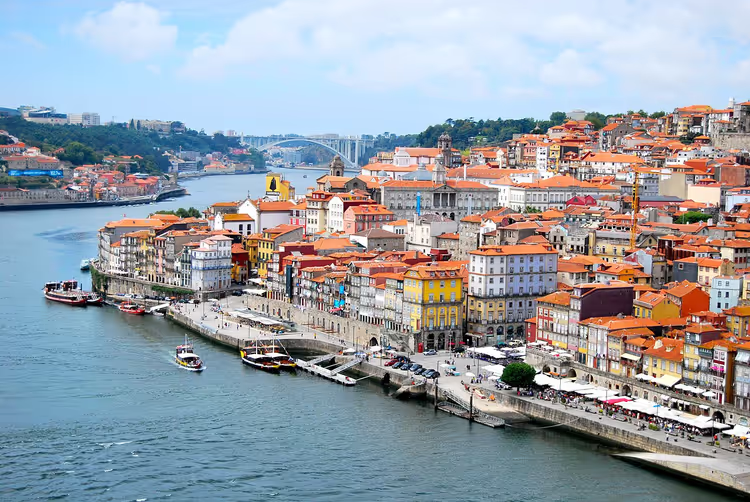
For August, the busiest month, accommodation is booked several months ahead, and for the June festivals central Lisbon fills up earlier than usual. In Lisbon and Porto a tourist tax is added to the bill.
Ad
Compare places to stay in Portugal on Trip.com
We earn a commission through this link; your price stays the same.
Our articles on this
Tours and tickets
Tickets to the palaces of Sintra are bought online and for a specific time: in high season the morning slots are gone several days ahead, and the line at the ticket offices grows until midday.
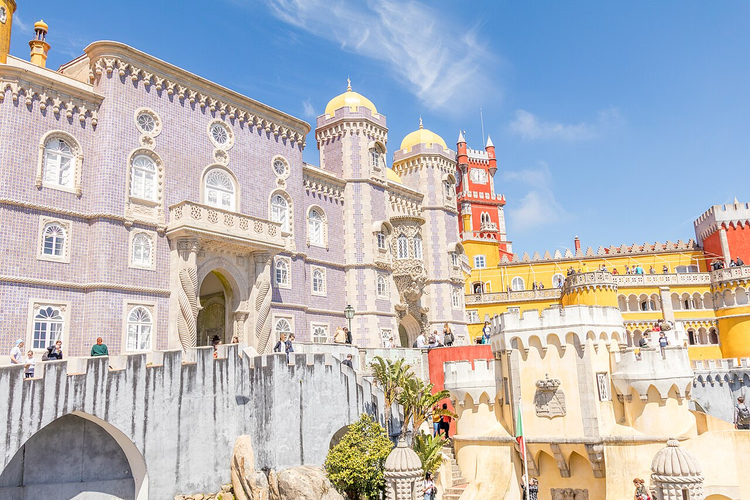
A tour earns its place where the logistics are complicated. From Lisbon that is the day with Sintra, Cabo da Roca and Cascais. On Madeira sightseeing trips split the island into west and east, and the sunrise trip to Pico do Arieiro is a separate outing. In the Douro Valley you sign up in advance for tastings at the quintas and for boat trips from Pinhão, and in the Algarve for the trip out to the Benagil Cave.
Ad
See tours in Portugal on GetYourGuide
We earn a commission through this link; your price stays the same.
Ad
See tickets to palaces and museums on Tiqets
We earn a commission through this link; your price stays the same.
Our articles on this
Food: what to order and when to eat
All along the coast the menu rests on bacalhau, sardines and seafood, while in the mountains it is thick soups and stewed meat. The names worth remembering are caldo verde, cozido à portuguesa, the francesinha sandwich in Porto, cataplana in the Algarve and pastel de nata for dessert. On Madeira people try bolo do caco bread, and in Aveiro the sweets called ovos moles.
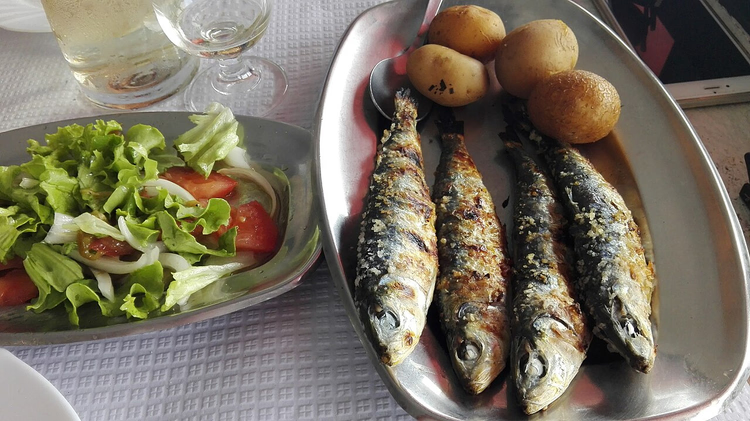
The Portuguese eat on a schedule, and a visitor feels it on the very first day. Lunch runs from 12:00 to 15:00, dinner starts at 19:00, and between them the hot kitchen is closed. In that gap you can fall back on a pastelaria, where you get coffee, toast and pastries, on a supermarket or on the food courts of shopping malls.
Two points about the bill. The set lunch or the dish of the day, prato do dia, costs noticeably less than ordering from the menu. The bread, olives, butter and cheese placed on the table without being ordered are the couvert, and it is charged for: if you do not want it, send the plate back right away.
Our articles on this
Getting there and getting around the country
The fastest way to Portugal is by plane: Lisbon, Porto and Faro receive direct flights from European cities. There is no direct train from Central Europe, and the rail route runs through France and Spain with changes. The bus from Madrid to Lisbon takes about eight hours. From Lisbon airport the metro, Carris city buses, taxis and transfers run to the center.
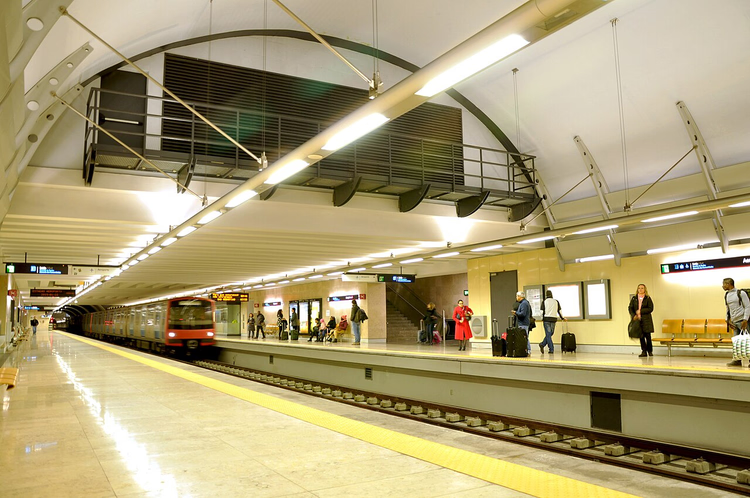
Between the big cities there are CP trains: the faster Alfa Pendular and the Intercidades link Porto, Coimbra, Lisbon and Faro, while regional and suburban trains cover the short distances. Tickets are bought on the operator's website, sales open 60 days ahead, and booking early gives a lower fare. The network does not cover the whole country: Ericeira and Fátima have no stations, and Albufeira station stands several kilometers from the town. On routes like these the intercity buses of Rede Expressos and FlixBus fill the gap.
A car is needed in the Algarve, in the Douro Valley and in Peneda-Gerês park, while in Lisbon and Porto it is more of a hindrance. The main highways are tolled, some with electronic payment only, so when you pick up a rental car, ask whether it has a transponder.
| Stretch | How to travel | What to keep in mind |
|---|---|---|
| Lisbon airport and the center | Metro, Carris buses, taxi or transfer | The metro is cheaper than a taxi |
| Lisbon and Porto | Alfa Pendular or Intercidades train | About three hours; reserve a seat in advance, especially in summer |
| Lisbon and Faro | CP train | About 3 hours 20 minutes |
| Albufeira | CP train, then local transport | The station stands several kilometers from the town |
| Ericeira, Fátima | Rede Expressos or FlixBus buses | There are no train stations there |
| Algarve, Douro Valley, Peneda-Gerês | Rental car | Highways are tolled, ask about the transponder |
| Madrid and Lisbon | Bus | About eight hours on the road |
Ad
Book a fixed price airport transfer in Portugal
We earn a commission through this link; your price stays the same.
Our articles on this
When to go: seasons and weather
For a trip across the whole country the most convenient times are late April, May, September and the first half of October: warm without exhausting heat, and rain is rare. June, July and August are high season, with the warmest water, crowds and higher prices. From November to March the country is cheaper and less crowded, the south is dry, the north is rainy, and some museums keep shorter hours.
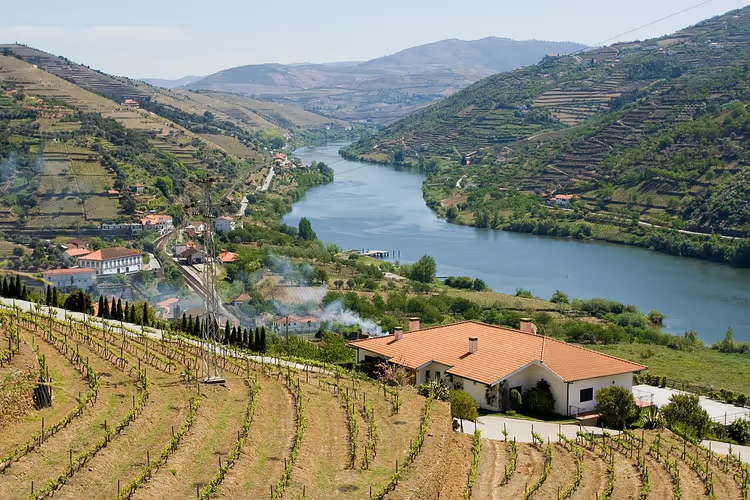
The climate varies within the country: the north is cooler and rainier, the south warmer and drier, and Madeira is mild all year round. The Atlantic is cold even in August. The swimming season in the Algarve lasts from June to October, and it is at its most comfortable there in September and October. The biggest waves for surfing arrive from October to March.
You can also fit your dates around events. In June Lisbon celebrates the Festas de Lisboa, and at the end of the month Porto marks the Festa de São João. In September and October the grapes are harvested in the Douro Valley.
| Period | Weather and crowds | What it suits |
|---|---|---|
| Late April and May | Warm without exhausting heat, rain is rare | Cities and a route across the whole country |
| June, July, August | High season: the warmest water, crowds, higher prices | The beach, the June festivals in Lisbon and Porto |
| September and the first half of October | Warm, the most comfortable swimming in the Algarve | The beach without peak crowds, the grape harvest in the Douro Valley |
| November to March | Dry in the south, rainy in the north; cheaper and less crowded | Cities without crowds, surfing on big waves |
Twelve months compared: find the best time to go
Our articles on this
- When to go to Portugal: seasons, weather and holidays
- Portugal by month: when to go for beaches, surfing and cities
- When to go to Lisbon: weather by month and seasons
- Weather in Porto by month: when to go and can you swim
- Portugal in April: warm south, rainy north and low prices
- Lisbon and Porto in May: is it worth going before the season starts
- Portugal in November: weather, water and a Lisbon itinerary
- Lisbon in November: a three-day itinerary, budget and what to pack
- Winter Portugal: 7 things to do without the summer crowds
- Algarve in winter: cycling, hiking and nature parks
- Holidays in Portugal: from sardines and wine to chestnuts and festivals
Budget: how to work out your own total
The biggest item in Portugal is the overnight stay, followed by getting around and food. The season decides a lot: in July and August accommodation in Lisbon, the Algarve and Madeira gets noticeably more expensive, while in May and October the same rooms cost considerably less. The total is also affected by the tourist tax in the big cities, by a rental car with fuel, tolls and parking, and by the number of paid palaces and museums in your plan.
People save here on habits, not on experiences: they buy train tickets in advance, have the dish of the day for lunch, walk a couple of streets away from the tourist quarters, and decline conversion into their own currency at the ATM. We do not name an exact figure. The calculator separates accommodation, food, transport, entry tickets and a reserve, and shows which item is pushing your total up.
Calculate a travel budget for Portugal
Our articles on this
Routes: from a few days to two weeks
Allow two full days for Lisbon and one more day for Sintra, while two days are enough for Porto. The journey between the two cities is worth breaking up with stops: Óbidos, Batalha, Coimbra, Aveiro. Seeing this stretch at an unhurried pace takes three days.
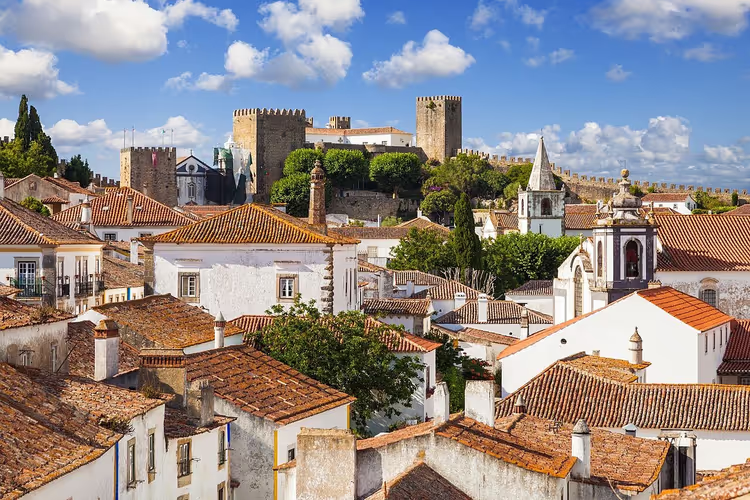
For ten days three plans work, and all of them start in Porto so that you do not travel the same road twice. The first runs through Lisbon to the Algarve and ends in Faro. The second adds the north: Guimarães, Braga, Viana do Castelo and Peneda-Gerês park. The third goes through the center via Coimbra, Tomar, Nazaré and Óbidos. You cannot cover everything in one trip, so first decide what matters more: the ocean, nature or history.
The mainland alone fills two weeks: Lisbon, Sintra and Porto are joined by Coimbra, Évora, Guimarães with Braga and three days in the Algarve. Madeira and the Azores are better left for a separate trip, otherwise you will be constantly on the move. In any plan the car is rented only for the stretches where it is needed, and Porto and Lisbon are covered on foot.
| Length | What fits in |
|---|---|
| 2 days | Porto on foot, without a car |
| 3 days | Lisbon: two full days in the city and a day for Sintra |
| 3 days | The road between Lisbon and Porto with stops in Óbidos, Batalha, Coimbra and Aveiro |
| 10 days | Porto, Lisbon and one region of your choice: the Algarve, the north or the center |
| 2 weeks | The mainland from north to south: Porto, Guimarães and Braga, Coimbra, Lisbon, Sintra, Évora, the Algarve |
Day planner: check what fits into one day
Our articles on this
- Portugal in 10 days: three routes from Porto to the Algarve and Lisbon
- Two weeks in Portugal: palaces, ocean and islands
- Portugal: 8 stops from Lisbon to the Algarve
- Five stops between Lisbon and Porto: prices, hours and parking
- Lisbon on foot in 48 hours: Belem, Alfama and viewpoints
- Lisbon in one day: old town, Belem and Alfama
- Porto in two days: a walking route from the center to the ocean
- Porto in one day: 20 stops, prices and opening hours 2026
- Hiking in Portugal: 5 routes from Douro to the Atlantic
- Serra da Estrela by car: 10 places from Piodao to Linhares
- São Pedro do Sul in one day: three waterfalls, thermal baths and a swing over the valley
Practical matters: documents, money, staying connected
Portugal is part of the Schengen Area. For EU citizens an identity card or a passport is enough. For travelers from third countries the passport must have been issued no more than ten years ago and be valid for at least three months after departure, and the EES system operates at the border: instead of a stamp, a digital record with a photo and fingerprints. It has made the lines on entry longer, so do not book a tight connection. Check the requirements for your citizenship on the official portal before you buy tickets.
The currency is the euro, cards are accepted almost everywhere, but a small amount of cash is needed at markets and in villages. ATMs are joined in the Multibanco network. The mainland and Madeira are one hour behind Berlin, the Azores two. Pickpocketing happens in the big cities, and in remote parking lots do not leave belongings in plain sight inside the car.
Check roaming terms with your carrier before the trip, and keep an eSIM as a backup way to have internet from the first minute. The EHIC card gives EU citizens access to care in public clinics, but it does not cover private clinics, dental treatment or the journey home, so take out travel insurance before you leave and read exactly what it covers.
Build a packing list for a trip to Portugal
Ad
See eSIM options for Portugal on Yesim
We earn a commission through this link; your price stays the same.
Ad
See travel insurance on World Nomads
We earn a commission through this link; your price stays the same.
Our articles on this