













Egypt: a travel guide for independent planning
Egypt is made up of two different trips. The first is the sea: the Red Sea resorts, where people swim all year round, and the Mediterranean coast with its milder climate. The second is the Nile Valley with the Pyramids of Giza, the temples of Luxor and Abu Simbel. The sights are scattered from the Nile Delta to Nubia, and the journeys between them eat up vacation days. This page lays the country out for independent planning: what to see, which resort suits whom, how to choose a hotel, how to get around and when to go. Each section stays short and leads on to our detailed articles. There are no prices here: hotel costs depend on the season, and tickets to the sights are revised from time to time, so any figure would quickly go out of date.
Sights: Giza, Luxor, Abu Simbel and Sinai
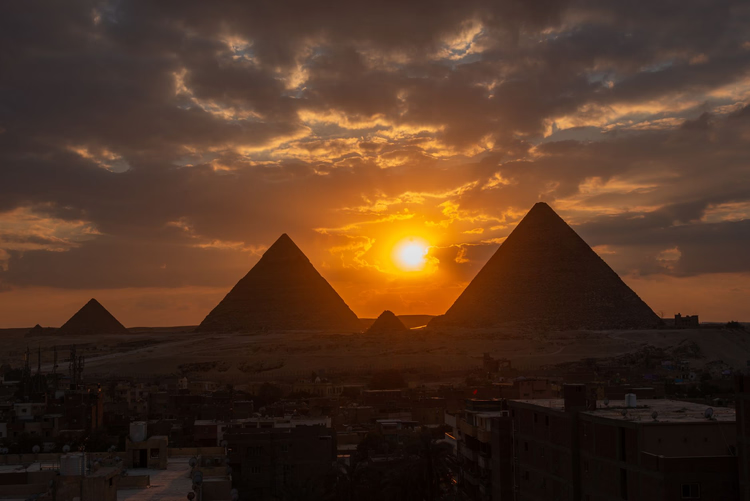
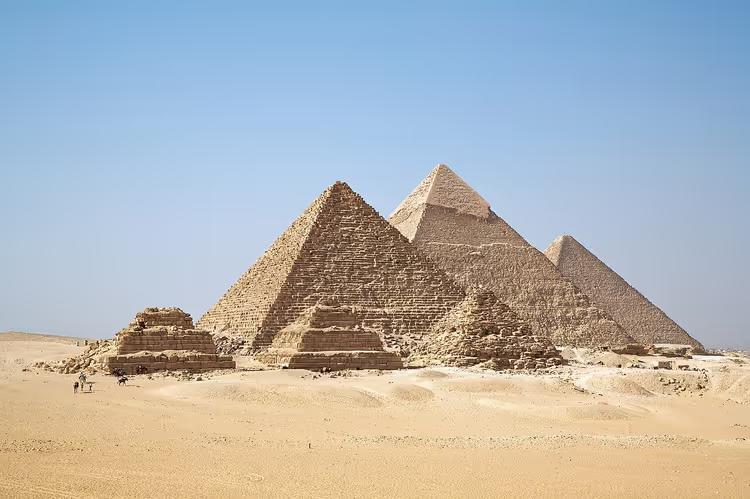
A first sightseeing trip usually starts in Giza. The plateau holds the pyramids of Khufu, Khafre and Menkaure and the Sphinx, and it is the only surviving wonder of the ancient world. There is almost no shade there, so arrive for opening time. The Grand Egyptian Museum is open in Giza, and in Cairo the Egyptian Museum and the Hanging Church in the Coptic quarter are worth the time.
The second hub is Luxor. On the west bank of the Nile lies the Valley of the Kings, where the tomb of Tutankhamun was found, and the Colossi of Memnon stand on the way to it. In the city itself are Karnak Temple, the largest temple complex of Ancient Egypt, and Luxor Temple, which is lit up toward evening. Farther south still, in Nubia, the two rock temples of Abu Simbel stand above Lake Nasser. Twice a year, in late February and late October, the sun reaches the sanctuary of the Great Temple.
In the north lies Alexandria with the Citadel of Qaitbay, built on the site of the Lighthouse of Alexandria. The natural sites are concentrated in Sinai and in the desert: Ras Mohammed National Park with its coral reefs, Mount Sinai with Saint Catherine's Monastery, the Colored Canyon near Nuweiba and the White Desert near the Farafra oasis.
Our articles on this
Resorts and regions: where to go
On the Red Sea the choice most often comes down to two resorts. Hurghada is considered the oldest resort in the country: long sandy beaches and a gentle entry into the water, which is why it is recommended to families with children and to first-time visitors. There is almost no coral near the shore there, and people reach the reefs by boat. Sharm El Sheikh occupies the south of the Sinai Peninsula, and its coral begins right at the shore.
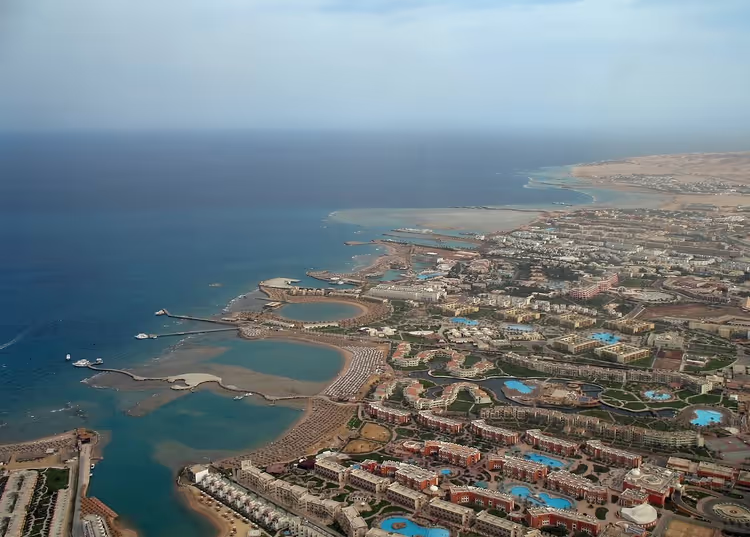
Quieter places lie around these two centers. Makadi Bay, Soma Bay and Sahl Hasheesh are calm resort areas near Hurghada, and El Gouna is cut through by canals. Marsa Alam is considered the southernmost resort in Egypt: the reefs come up to the shore, the beaches are uncrowded, and life is centered on the hotels. Dahab in Sinai is chosen for its wind, which suits windsurfing, and for the Blue Hole, but it is not suitable for swimming with small children.
On the Mediterranean coast the climate is milder, there are fewer tourists, and the swimming season is shorter. Alexandria combines city beaches with ancient sights, El Alamein appeals with its quiet, and Marsa Matruh with its gentle entry into the sea is popular with families.
| Resort | Who it suits | What to keep in mind |
|---|---|---|
| Hurghada | Families with children and first-time visitors | Almost no coral near the shore, the reefs are reached by boat |
| Sharm El Sheikh | Those who come for coral and snorkeling right off the shore | The “Sinai only” stamp is valid only in the resort areas of South Sinai |
| Makadi Bay, Soma Bay, Sahl Hasheesh | Those looking for a calm resort area | They lie near Hurghada |
| Marsa Alam | Those looking for quiet, reefs near the shore and diving | Life is centered on the hotels |
| Dahab | Windsurfers and divers: the wind and the Blue Hole | Not suitable for swimming with small children |
| Alexandria | Those who combine a city beach with ancient sights | The swimming season is shorter than on the Red Sea |
| Marsa Matruh | Families: a gentle entry into the sea | The swimming season is shorter than on the Red Sea |
Our articles on this
- 15 Egypt resorts on the Red Sea: where to go for diving, wind or silence
- Egypt all year round: Red Sea resorts, visa and best season
- Egypt resorts on the Mediterranean sea: five destinations and swimming season
- Where to go in Egypt with children: 15 resorts for sea and diving
- Marsa Alam: quiet Red Sea diving instead of crowded Sharm el-Sheikh
Hotels: all-inclusive, beachfront and entry into the sea
Most resort hotels in Egypt work on an all-inclusive basis. It usually covers buffet meals, local drinks, pools, the beach and entertainment. Almost everywhere, à la carte restaurants, imported alcohol, the spa, diving and excursions are paid for separately. The list differs from chain to chain, so check it before you book.
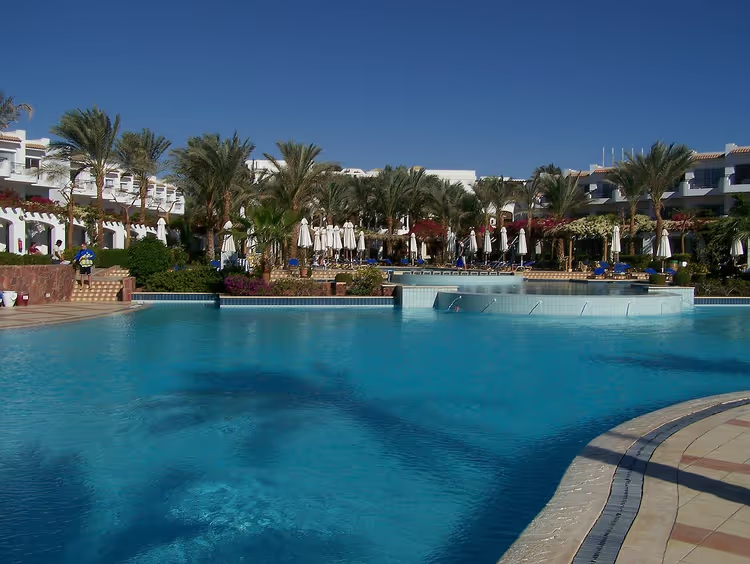
The area and the stretch of coast matter more than the number of stars. Beachfront means reaching the beach without crossing a road or taking a hotel bus; in some complexes a shuttle takes guests to the sea. Look at the entry into the water: a sandy lagoon is convenient for small children, while where there is coral near the shore you enter the sea from a jetty and need reef shoes.
For a winter trip, look for a hotel with heated pools: the water is heated roughly from November to April.
Ad
Compare hotels in Egypt on Trip.com
We earn a commission through this link; your price stays the same.
Our articles on this
- Where to go in Egypt: 15 5-star all inclusive hotels by the sea
- Egypt 4 star all inclusive hotels: 15 options on the first line
- 15 Egypt hotels for family vacations: water parks and gentle beach entry
- Hotels in Egypt with a water park: 15 options for a family vacation
- Hotels in Egypt with a coral reef: 15 options for snorkeling near the shore
- Swimming in December: 15 Egyptian hotels with a warm pool
- Where to stay in Hurghada: 15 five-star hotels with water parks and reefs
- Where to stay in Hurghada with kids: 15 hotels with water parks and shallow sea
- Hurghada hotels with a water park: 15 options for a family holiday
- Where to go in Sharm el-Sheikh: 15 first line all inclusive hotels
- 4 Star hotels in Sharm el-Sheikh on the first line: 15 options with their own reef
- Hotel in Sharm el-Sheikh with children: water park, club or quiet
- The water park works in winter too: 15 all inclusive hotels in Sharm el-Sheikh
Excursions, tickets and diving
Get tickets to the main sites of the Nile Valley in advance: for the Valley of the Kings, Karnak and Luxor temples, and in season for Abu Simbel too. Entry inside the Great Pyramid of Khufu is paid for separately from the plateau, and the daily quota there is small. Buy excursions from trusted sellers, not from random people on the beach.
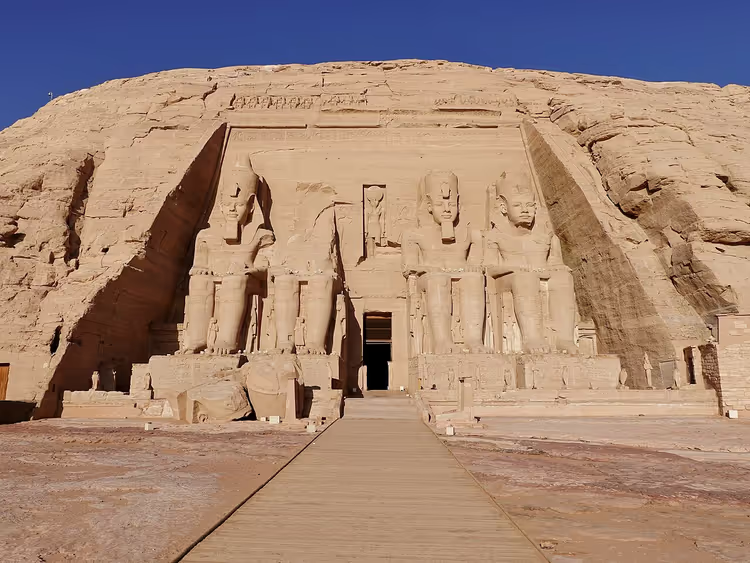
Long-distance outings take a whole day. Abu Simbel is reached from Aswan: groups set off early in the morning and return toward evening. Mount Sinai is climbed at night to meet the sunrise at the summit; climbing without a guide is prohibited. Departures are from Sharm El Sheikh, Dahab and Taba.
For diving without a certificate, only dives with an instructor after an introductory course are available. Beginners are advised to try Ras Mohammed and Abu Dabbab Bay with its turtles and dugongs, and experienced divers the Elphinstone Reef and the Brothers Islands.
| Site | Where they leave from | What to keep in mind |
|---|---|---|
| Valley of the Kings, Karnak and Luxor temples | Luxor | Get tickets in advance |
| Inside the Great Pyramid of Khufu | The Giza Plateau outside Cairo | Entry is paid for separately from the plateau, the daily quota is small |
| Abu Simbel | Aswan | Departure early in the morning, return toward evening; in season get the ticket in advance |
| Mount Sinai | Sharm El Sheikh, Dahab, Taba | A night climb for the sunrise at the summit; climbing without a guide is prohibited |
| Ras Mohammed National Park | Sharm El Sheikh | A site for beginner divers; without a certificate you dive only with an instructor |
Ad
See excursions and tours in Egypt on GetYourGuide
We earn a commission through this link; your price stays the same.
Ad
See tickets to temples and museums on Tiqets
We earn a commission through this link; your price stays the same.
Our articles on this
Food: the hotel, the market and the evening after sunset
At the resorts most guests eat in the hotel, because breakfast, lunch and dinner are part of the all-inclusive package. It is worth stepping outside the hotel for the market: Egyptian mango is praised in particular, and there are also guava, papaya, pomegranates and melon.
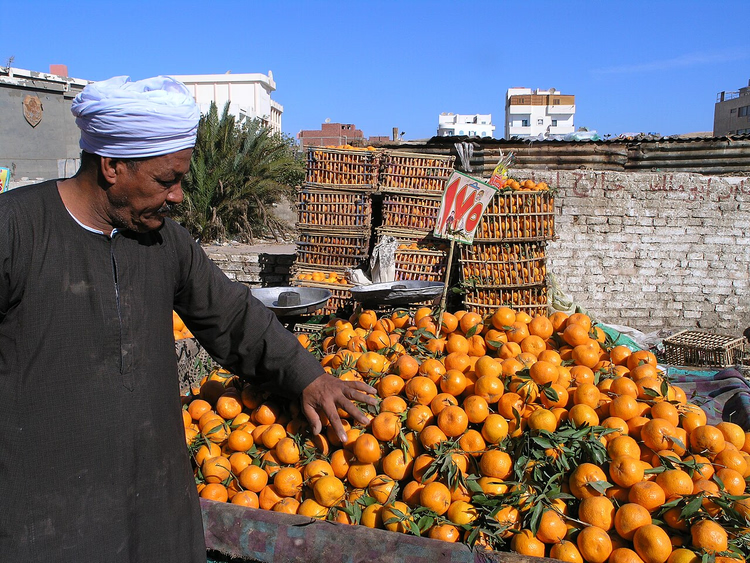
Tea in Egypt is not steeped but boiled for a long time and often drunk with milk or mint, and the best-known variety at the markets is karkade. Coffee is made strong, with cardamom. Among the national sweets, the ones named most often are qatayef, filled feteer and om ali.
During Ramadan some cafes outside the resorts are closed in the daytime, but after sunset iftar begins: dates and water, and then a full dinner. Many hotels and restaurants put on an iftar buffet, and a place at it is booked in advance. Drink bottled water and wash fruit.
Transportation: airports, journeys and transfers
There are direct flights from Europe to Hurghada and Sharm El Sheikh, so these resorts are the easiest to reach. Marsa Alam has its own international airport; if there is no direct flight from your city, you fly to Hurghada and then travel along the coast by transfer for several hours.
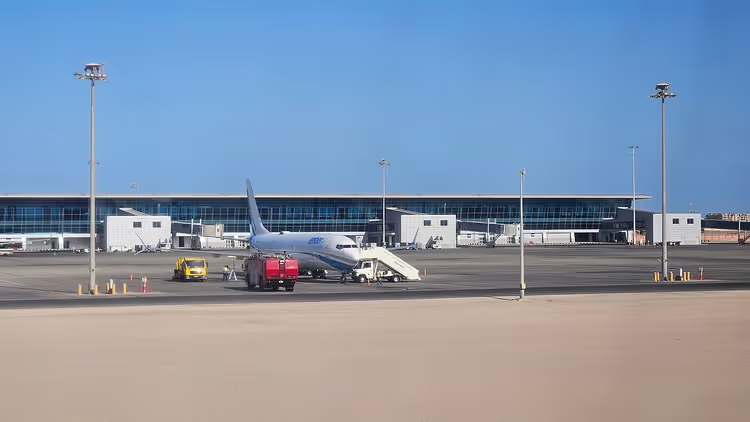
Distances between the regions are large. From Cairo to Luxor there is a domestic flight that takes about an hour and a night train that takes longer. From Hurghada to Luxor the drive is about four hours one way. A single desert highway leads from Aswan to Abu Simbel: people get there by excursion bus, by car with a driver, or by plane.
Taxis here do not run on a meter, and the fare is agreed before you get in. It is worth booking the airport transfer in advance, especially if you arrive late in the evening or with children.
| Route | How to travel | What to keep in mind |
|---|---|---|
| From Europe to Hurghada and Sharm El Sheikh | Direct flight | The easiest way to get to the sea |
| From Hurghada to Marsa Alam | Transfer along the coast | The journey takes several hours; Marsa Alam also has its own international airport |
| From Cairo to Luxor | Domestic flight or night train | The flight takes about an hour, the train takes longer |
| From Hurghada to Luxor | Overland journey | About four hours one way |
| From Aswan to Abu Simbel | Excursion bus, car with a driver, or plane | A single desert highway leads there |
| From the airport to the hotel | A transfer booked in advance or a taxi | Taxis have no meter, the fare is agreed before you get in |
Ad
Book a fixed-price airport transfer in Egypt
We earn a commission through this link; your price stays the same.
Best time to go and the weather
The best month depends on the region, not on the country. On the Red Sea people swim all year round, and it is most comfortable there from October to April: in summer the air rises above 35 °C. In winter the water stays at about 21-23 °C, the evenings are cool, and you need a jacket. On the Mediterranean people swim from May to October, and in winter it is cool there with occasional rain.
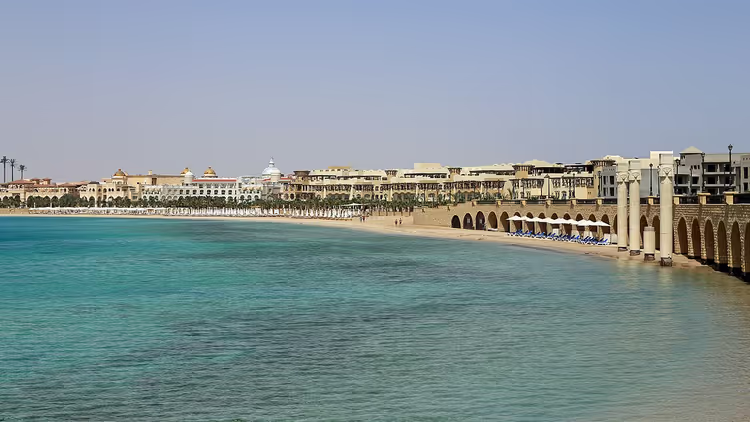
The pyramids and Luxor are best visited from March to May and in October and November. A Nile cruise is comfortable from October to April; in summer Luxor can reach 41 °C, and excursions are moved to the early morning. In spring the khamsin may arrive, a hot wind carrying sand: an episode usually lasts a day or two, so keep a spare day.
The peak of demand and prices falls on Christmas and New Year. Ramadan shifts through the calendar every year: resort hotels operate as usual, while temples and museums close earlier.
| Region | Best months | What to keep in mind |
|---|---|---|
| Red Sea | October to April, swimming all year round | In summer the air is above 35 °C; in winter the water is about 21-23 °C and the evenings are cool |
| Mediterranean | May to October | In winter it is cool with occasional rain |
| The pyramids and Luxor | March to May and October to November | In spring the khamsin may arrive, keep a spare day |
| Nile cruise | October to April | In summer Luxor can reach 41 °C, excursions are moved to the early morning |
Twelve months compared: find the best time to go
Our articles on this
- When to go to Egypt: sea, pyramids and the Nile by month
- Egypt by month: when to swim and when to go to the pyramids
- Egypt all year round: choosing a season for diving, temples, or the beach
- Nile cruise: comfortable from October to April, 41 °C in summer
- Egypt in April 2026: weather, queues and prices after Easter
- January in Hurghada: warm sea, quiet beaches and low prices
Budget: how to work out your own total
The total is determined by the season, the resort and the type of vacation. The most expensive weeks are Christmas and New Year. On the Red Sea the low season falls in summer, on the Mediterranean it is cheaper from November to April, and Nile cruises get cheaper from June to August.
The resorts differ too. Makadi Bay, Dahab and Nuweiba are considered cheaper. Ain Sokhna, Port Ghalib and El Quseir cost noticeably more. All-inclusive makes spending predictable, but excursions, diving, the spa, transfers and the visa remain outside the package.
At the bazaar the price is negotiable and haggling is considered normal there, while in shops with price tags you pay the listed price. You work out your own total in the calculator: it separates accommodation, food, transportation, entry tickets and a reserve.
Routes: a week across the country, a cruise and day trips from the resort
In one day you cover Giza or Luxor, but not the whole country at once: they are about 650 km apart. A week-long route is usually divided into three parts. The first days go to Cairo: the Giza Plateau with the Sphinx, the museums and the Khan el-Khalili market. Next comes a domestic flight to Luxor for the Valley of the Kings and Karnak Temple, then Aswan with Philae Temple and Abu Simbel. It makes sense to spend the last days by the sea, in Hurghada or Sharm El Sheikh.
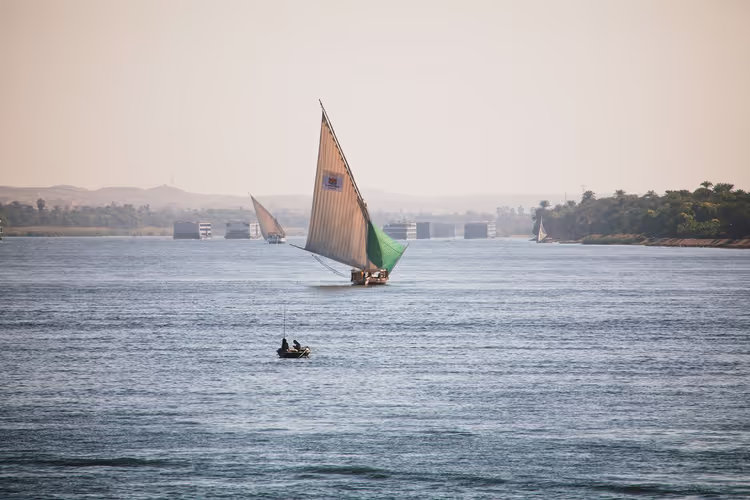
The second way to see the south is a cruise between Luxor and Aswan with stops at the temples.
If the beach is the core of the vacation, the sights are added as day trips: from Hurghada to Luxor and Cairo, from Sharm El Sheikh to Ras Mohammed National Park and to Mount Sinai. Plan each of these outings as a separate day.
Practical matters: visa, safety, customs, connectivity
A visa is required for a trip to Egypt. The electronic visa is issued through the official portal, and the application is submitted at least seven days before departure; the other option is a visa on arrival at the airport. Your passport must be valid for another six months. The free “Sinai only” stamp given after landing in Sharm El Sheikh is valid only in the resort areas of South Sinai, and trips beyond them require a full visa. Check the requirements for your passport on the official portal before buying tickets.
The Red Sea resorts and the south of Sinai are considered calm for tourists, while North and Central Sinai are not visited. Before the trip, look through the current official travel advice for the country. Outside the resorts, dress modestly; during Ramadan do not eat, drink or smoke in the street in the daytime. Taking coral, shells and antique objects out of the country is prohibited.
Check the roaming terms for Egypt with your carrier before the trip. An eSIM is a backup way to have internet from the first minute: for maps, tickets on your phone and contact with the hotel. Take out travel insurance before you leave and read what exactly it covers.
Build a packing list for the Egypt trip
Ad
See eSIM options for Egypt on Yesim
We earn a commission through this link; your price stays the same.
Ad
See travel insurance on World Nomads
We earn a commission through this link; your price stays the same.
Our articles on this