





Maldives: A Guide for Independent Planning
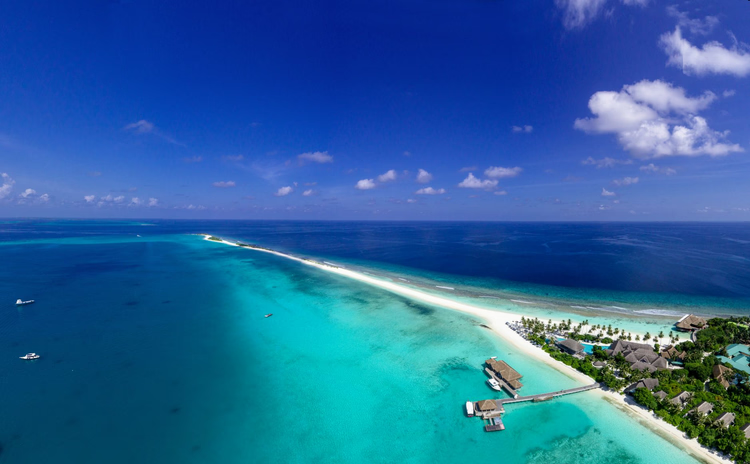
The Maldives is not a single resort but 26 atolls and 1,192 coral islands strung in a chain across the equator. About two hundred of them are inhabited, and some of the rest are taken up by resorts under the “one island, one hotel” rule. People come for the lagoon, the reef and the quiet of a place without cars. This page lays the country out for independent planning: which atoll to choose, where to stay, how to get from the airport, when to go and what the total is made of. Each section stays short and leads on to our detailed articles. There are no prices here: between the dry and the wet season, and between a resort and a guesthouse, they differ so widely that a single figure would be misleading.
What to See: Reefs, Manta Bay and the Capital
The main sight of the Maldives lies under water. The reefs of the archipelago are home to roughly a thousand species of fish, and manta rays and whale sharks come in to the currents. The best-known spot is Hanifaru Bay in Baa Atoll, which is part of a UNESCO biosphere reserve. In the wet season the current pushes plankton into the bay, and dozens of mantas, on some days hundreds, gather to feed on it. Scuba diving is banned there: you enter the water only with a mask, with a licensed guide and for a limited time.
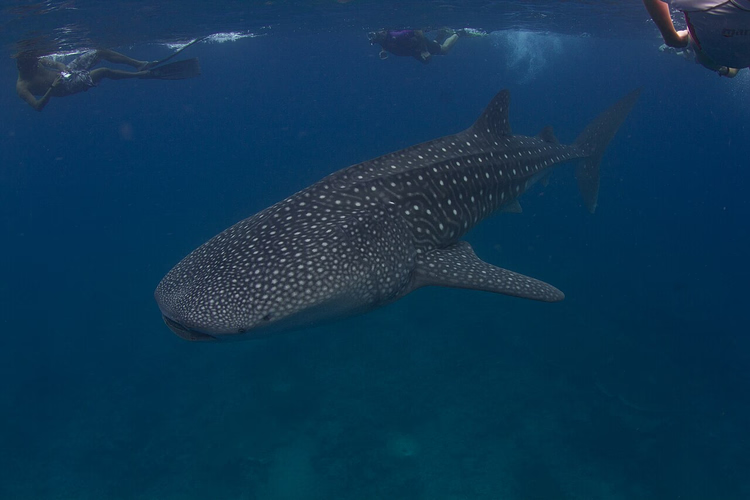
Whale sharks are seen most often off South Ari, and for tiger sharks and hammerheads divers head south, to Fuvahmulah and Addu.
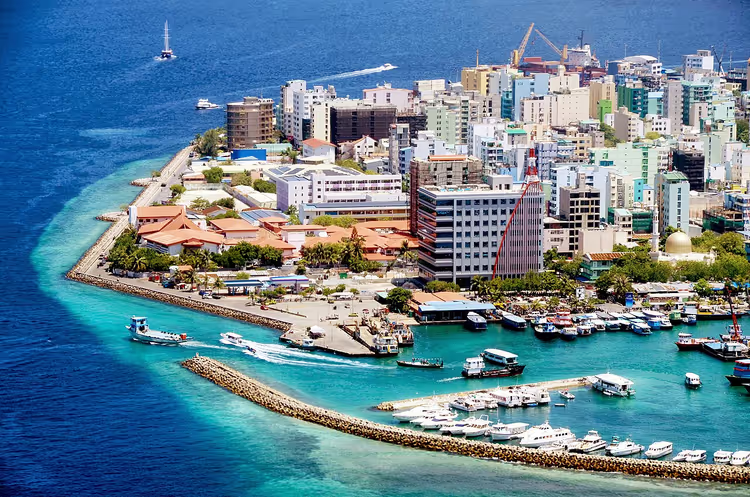
The capital, Malé, can be covered on foot in a few hours: Jumhooree Maidhaan square, the National Museum, the Muliaage presidential palace, the Grand Friday Mosque and the fish market in the northwest of the island. It is a half-day stop, not a reason for a separate trip.
Our articles on this
Atolls and Islands: Where to Go
An atoll is chosen on two things: how long the journey from the airport takes and what kind of vacation you want. North and South Malé lie next to the capital and are reached by boat, which makes them the simplest option for a first or a short trip. Ari is considered the most resort-heavy atoll, with a wide choice of hotels and strong dive sites, and you get there by seaplane.
Farther from the capital it gets quieter. Baa means the protected reef and the manta bay, Raa and Lhaviyani have few resorts and few neighbors, and Faafu is known for villas over the lagoon. The far south, Addu, Gaafu and Laamu, is reached by domestic flight: the journey takes a noticeable part of the day, but there are fewer guests.
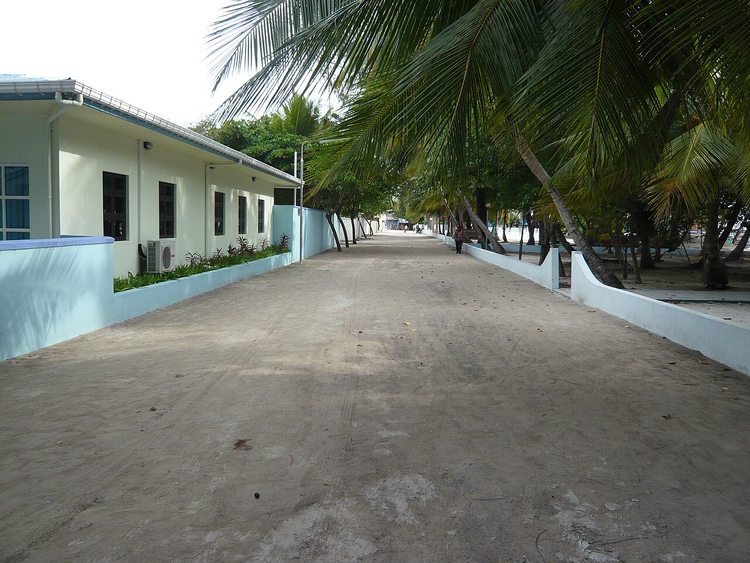
The inhabited local islands with guesthouses are a world of their own. The best known is Maafushi, with Gulhi and Guraidhoo nearby in the same atoll, and in other atolls Rasdhoo, Thoddoo and Fulidhoo are popular. It is cheaper there, but local rules on clothing and alcohol apply.
| Atoll | How to get there | Who it suits |
|---|---|---|
| North and South Malé | Boat from the airport | A first or short trip with no connections |
| Ari | Seaplane | Those who want a wide choice of hotels and strong dive sites |
| Baa | Seaplane or domestic flight | Those who come for the protected reef and the manta bay |
| Raa and Lhaviyani | Seaplane | Those looking for quiet: few resorts and few neighbors |
| Addu, Gaafu and Laamu | Domestic flight, the journey takes a noticeable part of the day | Those willing to travel far for islands with few visitors |
Our articles on this
Hotels: Resort, Overwater Villa or Guesthouse
There are two ways to stay in the Maldives. A resort takes up a whole island of its own: its own beach, restaurants, spa, dive center and licensed alcohol. A guesthouse stands on a local island among residents: a room with breakfast, a shared beach and stricter rules. The country has no star system of its own, so compare not the stars but the villa type, the size of the island and what the rate includes.
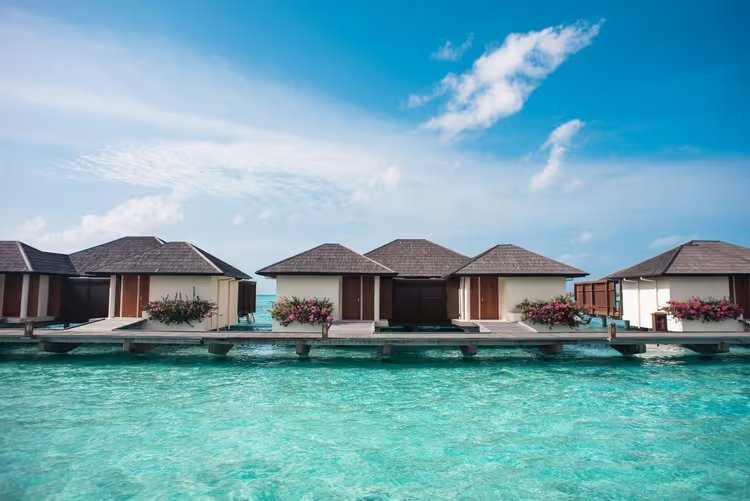
Check four things before you book. The size of the island: a small one takes a quarter of an hour to walk around, while a large one has several restaurants and sports. The transfer: speedboat or seaplane. The villa type: overwater is more striking, a beach villa is easier with children. The house reef: whether it really is by the shore or you are taken to it by boat.
The transfer and the state green tax, charged per guest per night, are almost always added to the nightly price. The rate differs for resorts and guesthouses.
| What we compare | Resort | Guesthouse |
|---|---|---|
| Where it stands | Takes up a whole island of its own | On a local island among residents |
| Beach | Its own, swimwear is allowed across the whole property | Shared, swimwear only in the bikini beach zone |
| Food | Its own restaurants, rates from full board to “all inclusive” | Usually breakfast only, lunch and dinner in local cafes |
| Alcohol | Sold under license | None on the island |
| Cost | Several times more expensive | Cheaper, but you find your own activities |
Ad
Compare hotels and guesthouses in the Maldives on Trip.com
We earn a commission through this link; your price stays the same.
Our articles on this
- 15 Maldives all-inclusive resorts: how to choose and get there
- 15 Maldives 4 star hotels: transfer from Male, reefs and who they suit
- Water bungalows in the Maldives: 15 resorts, transfers and fees
- 15 Maldives resorts for a family holiday: all inclusive, kids club and transfer
- Shore snorkeling: twenty Maldives hotels where no boat is needed
- Waldorf Astoria Maldives Ithaafushi: villas, yacht and prices
- One&Only Reethi Rah: villas, reefs and budget of a private island
- Soneva Jani Maldives: seaplane, villas with a slide and resort prices
- Joali Maldives: art resort on Raa Atoll and how to get there
- W Maldives on Fesdu: what is included in the stay and how much it costs
- Lily Beach Resort and Spa: what is included in the all-inclusive rate
- Emerald Maldives Resort & SPA: villas, transfer and cost of stay
- Vagaru: overwater villas, coral reef and seaplane from Male
- The St. Regis Maldives Vommuli Resort: villas over the reef, spa and holiday prices
- Review of The Halcyon Private Isles on Meradhoo: 38 villas and two house reefs
Diving, Snorkeling and Trips off the Island
There are few classic excursions in the Maldives, and the water sets the program. Almost every resort has a dive center offering courses, and snorkeling often starts right from the shore or from the deck of your villa. Trips to see mantas and whale sharks, as well as fishing, are sold both by hotels and by operators on local islands.
Divers should look at liveaboards: the boat moves between atolls, and the dives are usually included in the price. The northern route is planned for the manta months, the central one through Ari and the Malé atolls for the dry season, and the southern one to Fuvahmulah for the start of the year, for the big sharks. Surfers come in the wet season, when the reef breaks near Malé are working.
From a guesthouse you can spend a day at a neighboring resort: almost all resorts sell such day passes.
Ad
See diving, snorkeling and boat trips on GetYourGuide
We earn a commission through this link; your price stays the same.
Ad
See tickets and activities on Tiqets
We earn a commission through this link; your price stays the same.
Our articles on this
Food: Tuna, Rice and Your Hotel Meal Plan
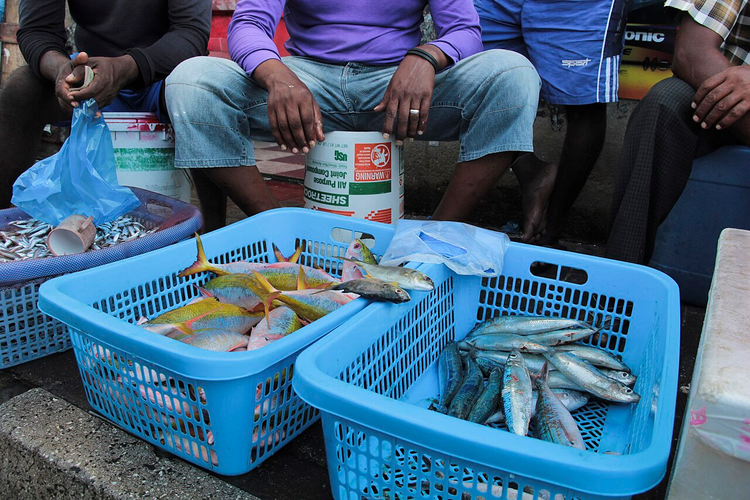
Local cooking rests on fish, tuna above all, along with rice, coconut and hot spices. Mas Huni is worth trying: a breakfast of tuna with grated coconut, onion and chili, served with a thin flatbread called Roshi. Garudhiya is a clear fish soup with rice and lime, Rihaakuru is a thick paste of boiled-down tuna, and Hedhikaa is a selection of small snacks.
At a resort the question of food is settled by the rate. Full board gives three meals without drinks, “all inclusive” adds the drinks, and that matters, because there is no shop outside the hotel grounds. On a local island the price usually includes breakfast only, and the best value for lunch is in the simple cafes where residents themselves eat.
Alcohol is sold only on resort islands, on licensed vessels and in floating bars off local islands. On inhabited islands there is none at all, and bringing alcohol into the country is prohibited.
Transfers: Speedboat, Seaplane and Ferries
International flights arrive at Velana Airport on the island of Hulhulé next to Malé, and a bridge connects it to the capital. Then the most important part of the logistics begins: a speedboat runs to the nearby atolls, a seaplane flies to the middle ones, and the far southern atolls need a domestic flight plus a boat from the local airport.

The transfer to a resort is arranged by the hotel itself, you cannot choose it separately, and it appears on the bill as a separate line. The boat runs at any hour, the seaplane flies only in daylight. If your flight lands after sunset, you will have to spend the first night in Malé, so check your arrival time with the hotel before you pay.
State ferries and speedboats run to the local islands. The ferry is the cheapest, but it does not run every day or go everywhere, and on Fridays, the local day off, public ferries do not operate.
| Where to | How to travel | What to keep in mind |
|---|---|---|
| Malé | Bridge from the island of Hulhulé | The capital lies next to the airport |
| Nearby atolls | Speedboat | Runs at any hour |
| Middle atolls | Seaplane | Flies only in daylight; after an evening arrival the first night is in Malé |
| Far southern atolls | Domestic flight and a boat from the local airport | The journey takes a noticeable part of the day |
| Local islands | State ferry or speedboat | The ferry is the cheapest, but it does not run every day and not on Fridays |
Ad
Book a fixed-price transfer from Malé airport
We earn a commission through this link; your price stays the same.
When to Go: Dry Season, Rain and Prices
The Maldives is warm all year: the air stays between 25 and 32 °C, and the water hardly cools. Two monsoons shape the weather. The weather service assigns the dry northeast monsoon to January, February and March and treats December and April as transitional, while travel agencies count the whole stretch from late fall to April as the dry season. This is the time of clear skies, calm seas and the best underwater visibility, but also of the highest prices, peaking over the New Year holidays.
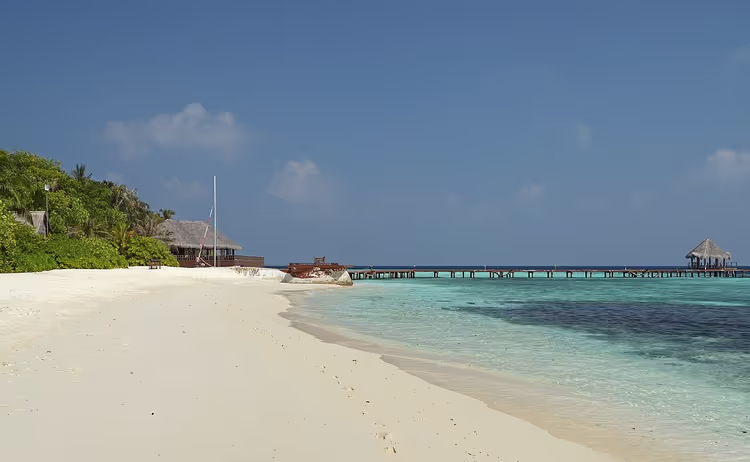
The wet southwest monsoon arrives in mid-May and lasts until November. Downpours are more frequent but usually short, and the sun comes out again afterward. Hotels lower their prices in these months, and the cheapest weeks fall in summer and September.
Every activity has its own calendar. For the beach and calm snorkeling take the dry months, for surfing the wet season, and for the mantas in Hanifaru Bay the stretch from May to November.
| Period | Weather | What it suits |
|---|---|---|
| January, February, March | Dry monsoon: clear skies, calm seas, the best underwater visibility | Beach and calm snorkeling; prices are highest |
| December and April | Transitional months, travel agencies count them as the dry season | Beach vacation; prices peak over the New Year holidays |
| Mid-May - November | Wet monsoon: downpours are more frequent but usually short | Surfing and mantas in Hanifaru Bay; lower prices |
| Summer and September | The height of the wet season | The cheapest weeks of the year |
Twelve months compared: find the best time for your trip
Our articles on this
- Maldives by month: dry season, rains and cheap weeks
- When to go to the Maldives: dry season, rains and monthly weather
- Rainy season in the Maldives: when to go and what it changes for your vacation
- Climate of the Maldives: temperature, monsoons and weather by month
- New year in the Maldives: which resort to choose for a couple or family
Budget: What the Total Depends On
The Maldives can be very expensive or moderate, and the format makes the difference. A night at a resort and a night in a guesthouse on a local island differ several times over, although the ocean alongside is the same. The second biggest item is getting there: on a budget trip the flight from Europe takes more than half of the spending, and a seaplane to a distant atoll costs noticeably more than a boat.
Then factor in the season, the meal plan, the green tax for every night and the trips out to sea. The biggest savings come from the wet season, a room with breakfast on a local island, a route within a single atoll and your own mask and snorkel instead of rentals.
That is why there is a calculator here rather than a figure. It separates accommodation, food, transfers, activities, travel and a reserve, and shows which item is pulling your total up.
Calculate your Maldives trip budget
Our articles on this
Routes: One Island or Several
The simplest scenario for a first trip is one island in North or South Malé: a short boat ride from the airport, no connections and no nights in the capital. A distant atoll gives you quiet, but the journey takes half a day each way.
If you stay in guesthouses, you can link several islands. The main rule: stay within one atoll, because moving between atolls costs an entirely different amount of money. Combinations that work: Maafushi, Gulhi and Guraidhoo in South Malé; Ukulhas, Mathiveri and Rasdhoo in North Ari; Fulidhoo with the neighboring islands in Vaavu Atoll. Plan at least two to three nights per island, otherwise the vacation will be spent on the move.
Leave a spare day for getting back to Malé before your flight home.
Practicalities: Entry, Bans, Money and Connectivity
A 30-day visa is issued free of charge on arrival. At the border you may be asked for your passport, a return ticket, a confirmed accommodation booking and funds for the trip, and before departure travelers fill in the IMUGA online declaration. Check the rules on the Maldives Immigration website before you travel.
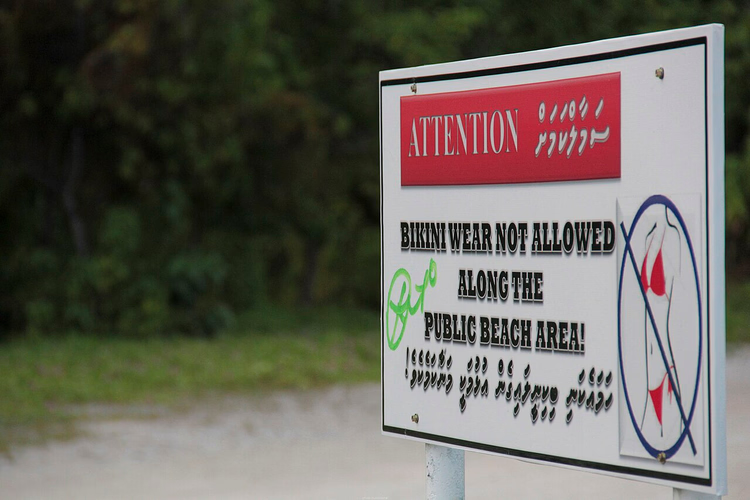
The Maldives is a Muslim country with strict laws. Alcohol, pork, vapes and e-cigarettes may not be brought in. On local islands cover your shoulders and knees, and swimwear is allowed only in the bikini beach zone; resorts have no such restrictions, but going topless and nudism are banned everywhere. Corals and shells must not be broken off, collected or taken out of the country without a shop receipt.
The local currency is the rufiyaa, and US dollars are readily accepted in tourist places. Cards are not taken everywhere, so carry cash, and bring your usual medicines with you: there are almost no pharmacies on small islands. Check roaming terms with your operator in advance; a tourist SIM card is sold at the airport, and an eSIM gives you internet from the first minute. Take out insurance before you leave and read exactly what it covers: medical costs in the Maldives are high.
Build a packing list for the Maldives
Ad
See eSIM for the Maldives on Yesim
We earn a commission through this link; your price stays the same.
Ad
See travel insurance on World Nomads
We earn a commission through this link; your price stays the same.
Our articles on this