


Montenegro: a travel guide for planning it yourself
Montenegro fits sea, mountains and medieval towns into a very small territory. In a single trip you can stay by the Adriatic, walk through Kotor's old town and climb to the glacial lakes of Durmitor. But the country is small only on the map: the roads are narrow, the switchbacks are long, and in summer time is lost in traffic around Budva and Kotor. This page is meant as an overview from which you put the trip together yourself. Each section tells you in a few sentences what matters here and leads on to our detailed articles. We deliberately give no prices: between July and the off-season, the cost of accommodation, car rental and tours in Montenegro differs noticeably.
The essentials: the bay, old towns and national parks
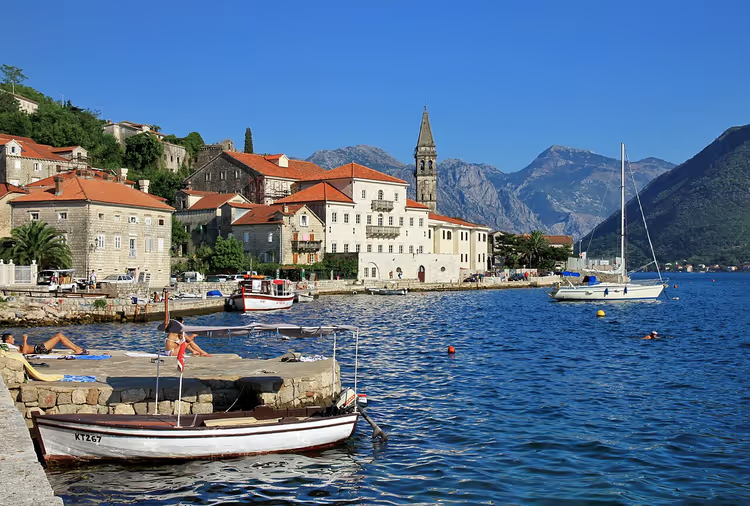
A first trip usually centers on the Bay of Kotor. Its inner part, with the towns of Kotor, Perast and Risan, is on the UNESCO World Heritage List. In Kotor, people come for the old town behind the Sea Gate, St. Tryphon's Cathedral and the climb up the steps to the San Giovanni fortress. From the Perast waterfront, boats run to the man-made island of Our Lady of the Rocks. Above the bay stands Lovćen National Park with the Njegoš Mausoleum.
The second part of the country is the mountains. Durmitor National Park is also on the UNESCO list: here you find the Black Lake near Žabljak, the Tara River Canyon, considered the deepest in Europe, and the Đurđevića Bridge above it. On the way between the mountains and the sea lie Ostrog Monastery, carved into the rock, Lake Skadar with its pelicans and herons, and Cetinje, the former capital with a monastery and museums. On the coast, add Budva's old town with its Citadel and Stari Bar, an open-air museum.
Three things are worth knowing in advance. Until noon, cruise ships land thousands of people in Kotor, so go into the old town early in the morning or after five in the evening. Entry to the national parks is paid, and it is convenient to buy the ticket online. The Njegoš Mausoleum is closed from mid-November to mid-April.
| Place | What to see | What to keep in mind |
|---|---|---|
| Kotor | Old town behind the Sea Gate, St. Tryphon's Cathedral, steps to the San Giovanni fortress | Thousands of cruise passengers are here until noon, so go early in the morning or after five in the evening |
| Perast | The waterfront and the man-made island of Our Lady of the Rocks | Boats run to the island from the waterfront |
| Lovćen | National park above the bay with the Njegoš Mausoleum | Entry to the park is paid, the mausoleum is closed from mid-November to mid-April |
| Durmitor | Black Lake near Žabljak, the Tara Canyon and the Đurđevića Bridge | Entry to the park is paid, it is convenient to buy the ticket online |
| Ostrog | A monastery carved into the rock | Working monasteries ask for covered shoulders and knees |
| Lake Skadar | A lake with pelicans and herons, boat trips | Bring mosquito repellent |
| Budva and Stari Bar | An old town with a Citadel and an open-air museum | Parking in Budva is difficult in summer, so arrive in the morning |
Our articles on this
- Bay of Kotor: two paths to the fortress of San Giovanni and what to see nearby
- Bay of Kotor: towns, panoramas and season for a trip
- 20 Main churches and monasteries of Montenegro: what to see and how to get there
- 20 Places in Budva: what to see in three days and how much it costs
- 20 Sandy beaches of Montenegro: where to find sand, gentle entry and fewer people
Regions and resorts: where to go
The coast divides into three parts, and each gives you a different vacation. The Bay of Kotor, with Kotor, Perast, Tivat and Herceg Novi, is quiet and sheltered from waves, but the shore here is stone and concrete, with almost no sand.
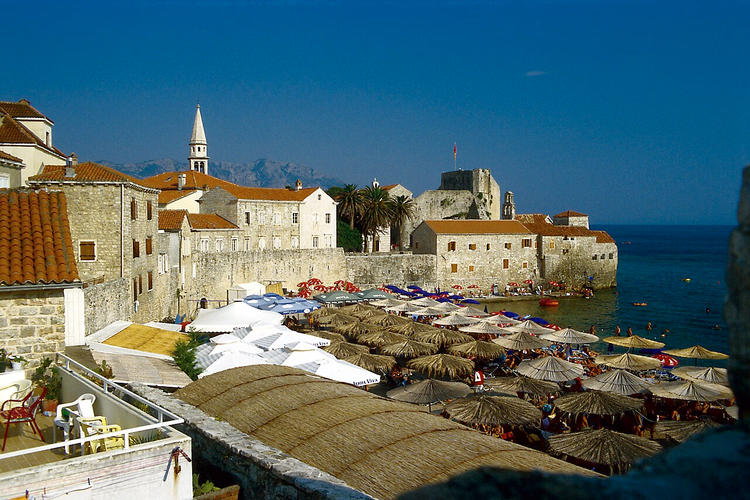
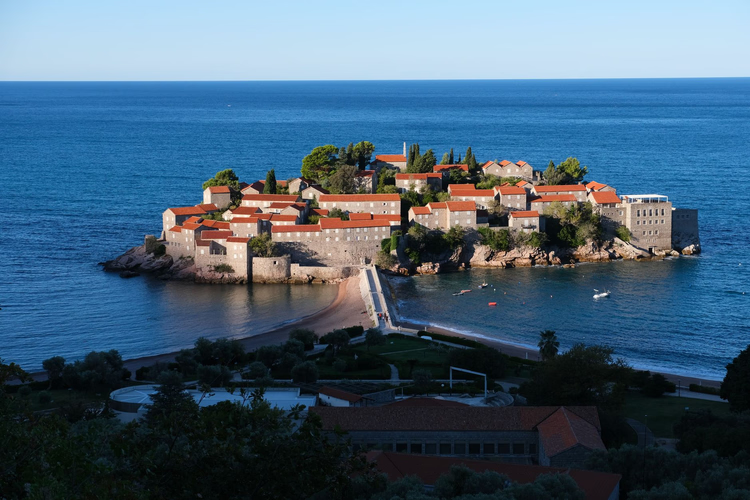
The Budva Riviera is the main beach area. Budva is loud, with an old town, a promenade and nightlife. Bečići and Rafailovići sit on a long strip with hotels along the shore, Petrovac is quieter and more expensive, and Sveti Stefan gives you the postcard view of the island. Farther south come Sutomore, Bar and Ulcinj: Sutomore is chosen for an inexpensive long stay, Bar works as a practical base with a car, and Ulcinj has Velika Plaža, a strip of sand about 13 km long.
The mountains run on their own schedule. Žabljak in Durmitor and Kolašin near Biogradska Gora welcome hikers on the trails to the lakes in summer, and in winter they operate as ski resorts. With small children, look for a gentle entry into the water: Bečići, Petrovac and Ulcinj have it, while in the bay people more often swim from concrete platforms.
| Place | Who it suits | What to keep in mind |
|---|---|---|
| Bay of Kotor | Those looking for quiet and old towns | The shore is stone and concrete, with almost no sand |
| Budva | Those who want an old town, a promenade and nightlife | Loud, with traffic jams and difficult parking in summer |
| Bečići and Rafailovići | Beach vacations, families with small children | A long strip of hotels along the shore |
| Petrovac | A quiet vacation, families with children | One of the most expensive resorts on the coast |
| Sutomore and Bar | An inexpensive long stay, a practical base with a car | Prices are more moderate than on the Budva Riviera |
| Ulcinj | Those who want a long sandy beach with a gentle entry | At the southern end of the coast, so set aside a separate day for the trip |
| Žabljak and Kolašin | Hikes to the lakes in summer, skiing in winter | Buses to the mountains are infrequent |
Our articles on this
- Resorts of Montenegro: 13 towns with sandy beaches and ski slopes
- Montenegro in 2026: where to relax by the sea and in the mountains
- Montenegro 2026: best resorts, hotels and swimming season
- Montenegro resorts for family holidays: 15 places with beach breakdowns
- Where in Montenegro there is sand, not pebbles: 10 resorts for a seaside holiday
- Becici, Budva and Kotor: a relaxed Adriatic holiday without a car
- Ski resorts of Montenegro: Kolasin, Zabljak and ski pass prices 2026
Hotels: what to look at in Montenegro
The main question about a seaside hotel here is not the stars but the shore. A private beach does not always mean sand: it can be pebble or concrete, with steps into the water. Check the type of shore before you book. With children, a gentle entry is more convenient, and a rocky seabed suits snorkeling.

The second question is meals. On the coast there are hotels with all-inclusive, full board, half board or breakfast only, and you choose the format when you book. For a family trip, check whether there is a children's pool and a children's menu. If you are coming by car, ask about private parking.
For July and August, accommodation on the riviera goes quickly, so book it well in advance.
Ad
Compare places to stay in Montenegro on Trip.com
We earn a commission through this link; your price stays the same.
Our articles on this
- Private beach and meals included: 20 Montenegro hotels by the sea
- Private beach in Montenegro: 15 hotels from Perast to Sutomore
- 15 Five-star hotels in Montenegro with their own beach: comparison by bays
- Full board on the Adriatic: 15 resorts of Montenegro from Kotor to Velika Plaza
- Montenegro with a child: 15 hotels by the sea and what they have for kids
Tours and day trips
Organized tours are easiest to take from Budva: from there, any point in the country is less than three hours away by road. Walking tours of an old town last two to three hours, and bus tours take half a day or a full day.
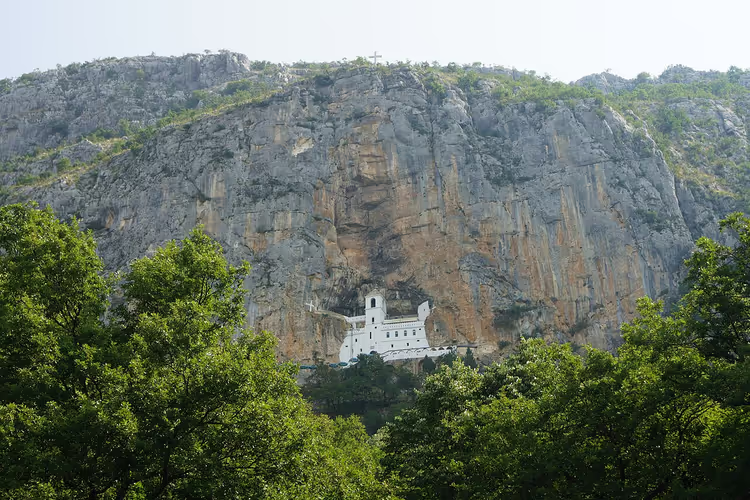
Typical day routes: the Bay of Kotor, Lovćen and Cetinje, Lake Skadar with a boat trip, Ostrog Monastery, Lipa Cave, Biogradska Gora National Park, and the north with Durmitor and the Tara Canyon. There are wine tastings and trips to Albania and to Bosnia and Herzegovina, for which you need a passport.
Entry to national parks and caves is almost always paid separately from the tour, so keep cash on hand. Long mountain routes are a poor fit for small children and for anyone who handles switchbacks badly.
Ad
See tours in Montenegro on GetYourGuide
We earn a commission through this link; your price stays the same.
Ad
See tickets and trips on Tiqets
We earn a commission through this link; your price stays the same.
Our articles on this
Food: what to try and where
A local restaurant serving home-style cooking is called a konoba here. Lunch at a family-run konoba is usually cheaper than dinner on the Perast waterfront, and the highest prices are found in Kotor's old town.

Pršut from the village of Njeguši on the slope of Lovćen is cured with sea salt and smoked over beech wood, and Njeguši cheese is tasted there too. Kajmak, a thick product made from skimmed cream, is served in most restaurants with national cuisine. Olive oil is pressed in the south, near Bar and Ulcinj. The best-known wines are the red Vranac and the white Krstač. In the bay near Perast there are farms that serve oysters and mussels right by the water.
A tip in a café is about a tenth of the bill, and in simple places rounding up is enough. Meat and dairy products from Montenegro may not be brought into the EU in personal luggage, so try pršut and kajmak on the spot.
Getting around: airports, buses, car
The country has two international airports. Tivat sits right by the Bay of Kotor, and the drive from here to Budva, Kotor or Herceg Novi is short. Podgorica handles more flights and is more convenient for the mountains in the north, but it is about an hour by car from there to the coast. From the airport to your resort you go by bus, taxi or a transfer booked in advance.
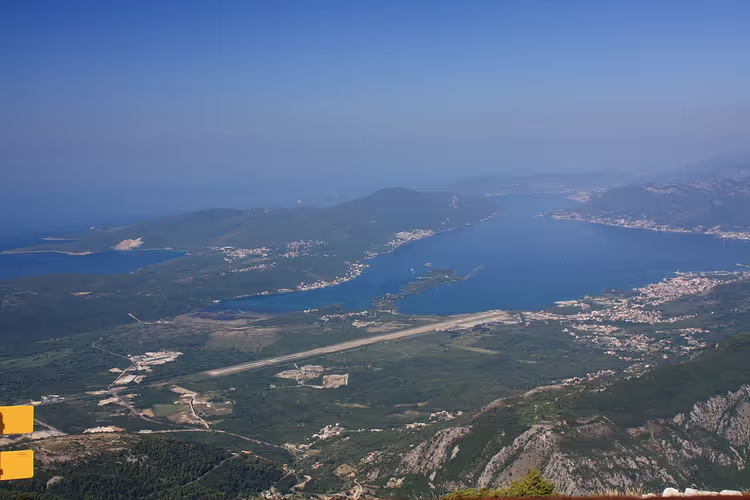
Scheduled buses run between Budva, Bečići, Petrovac, Kotor and Tivat, so you do not need a car for short hops along the coast. A car pays off when you are heading to Ulcinj, the Luštica peninsula, Durmitor or quiet coves: buses to the mountains are infrequent. To rent one, you need a passport and a valid driver's license.
The rules on the road are simple: low beams stay on all year, day and night, and the permitted alcohol level is very low, so do not drink at all when driving. Montenegro has no vignette, and you pay only for the Sozina tunnel and a section of the A1 highway. The biggest difficulty in summer is parking in Budva and Kotor: arrive in the morning and look for accommodation with its own parking space.
| Where | How to travel | What to keep in mind |
|---|---|---|
| From Tivat airport to Budva, Kotor, Herceg Novi | Bus, taxi or a booked transfer | The airport sits right by the bay, and the drive is short |
| From Podgorica airport to the coast | Bus, taxi or a booked transfer | About an hour by car to the coast, but closer to the mountains in the north |
| Between Budva, Bečići, Petrovac, Kotor and Tivat | Scheduled bus | You do not need a car for short hops along the coast |
| Ulcinj, the Luštica peninsula, quiet coves | Rental car | To rent one, you need a passport and a valid driver's license |
| Durmitor and the north | Rental car | Buses to the mountains are infrequent, and the roads are full of switchbacks |
Ad
Book a fixed price airport transfer in Montenegro
We earn a commission through this link; your price stays the same.
Our articles on this
Best time to go and weather
The coast and the mountains follow different climate calendars. The swimming season at the sea lasts from late May to October, and the water is warmest in July and August. That is also when the coast is hot and crowded and accommodation gets more expensive. The best balance comes in late May, June and September: the sea is warm, there are fewer people and prices are lower.
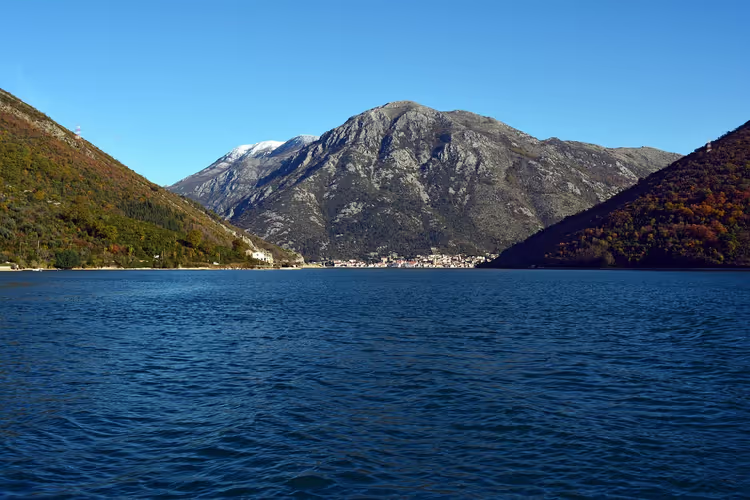
April, May and October are convenient for the old towns, when there is no heat. In Durmitor the hiking trails are open from June to September, and July and August bring the most stable weather for hiking.
In winter the coast is in its off-season: it rains often and some cafés are closed, but accommodation is at its cheapest and you walk the old towns without lines. In the mountains, the ski centers of Žabljak and Kolašin operate at this time.
| Time | Weather and crowds | What it suits |
|---|---|---|
| April, May, October | No heat | Old towns and walks |
| Late May, June, September | The sea is warm, fewer people, lower prices | A beach vacation without crowds |
| July and August | The warmest water, hot and crowded on the coast, accommodation gets more expensive | The sea, and hiking in Durmitor in the most stable weather |
| Winter | It rains often on the coast, some cafés are closed, accommodation is at its cheapest | Old towns without lines, skiing in Žabljak and Kolašin |
Twelve months compared: find the best time to go
Our articles on this
Budget: how to work out your own total
We do not list daily rates here. The cost of a trip to Montenegro is made up of getting there, accommodation, food, local transport and tickets. The month affects the total most: in July and August, accommodation, car rental and tours cost noticeably more than in May or October. The second most important decision is the resort. Accommodation on the riviera is more expensive than inland, Petrovac and Sveti Stefan are among the most expensive places on the coast, and Sutomore and the south keep more moderate prices.
Parking on the coast is paid almost everywhere, a sunbed and umbrella on public beaches are paid too, and entry to national parks and caves is paid separately from the tour. What really saves money: accommodation with its own parking and lunch at a konoba instead of dinner on the promenade.
The currency in the country is the euro, so there is no need to exchange money. You work out your own total in the calculator.
Routes: from a week on the coast to a ten-day loop
For a short vacation, two bases are enough: Budva for the beach and Kotor for the old town and the bay. A week on the coast breaks down like this: three days for Budva, Bečići and Petrovac, two days for Kotor, Perast and Tivat, and a separate day each for Herceg Novi and Ulcinj.
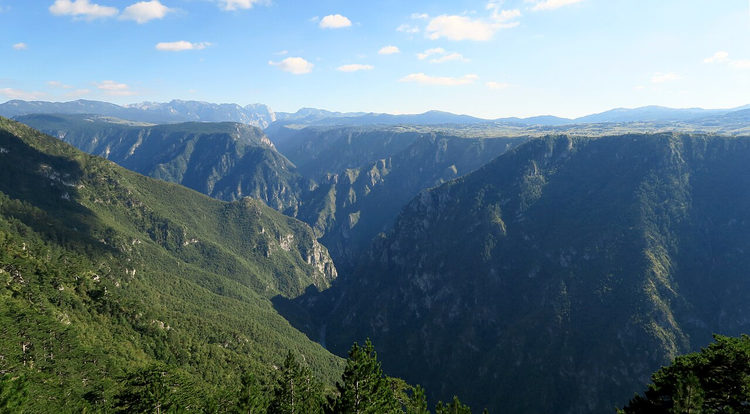
The full loop around the country by car takes ten days and about six hundred kilometers. A convenient way to run it: Kotor, Perast, Lovćen and Cetinje, then Herceg Novi and Tivat, then the north with Lake Piva, Žabljak and Durmitor, from there the Morača Canyon, Ostrog, Ulcinj, Lake Skadar, Podgorica and the final days on the Budva Riviera. There are three main bases: Kotor, Žabljak and Budva. If you have less time, cut the north, and the loop shrinks to seven days.
Count switchbacks, not kilometers. In one day you can realistically see three or four sights, and it is not worth planning more than two hundred kilometers a day.
Day planner: check what fits into one day
Our articles on this
Practical matters: documents, money, connectivity, insurance
Montenegro is part of neither the EU nor Schengen, but entry is visa-free for citizens of the EU and many other countries. Check the rules for your passport before the trip. Payments here are in euros. Cards are accepted in hotels and large restaurants, while parking lots, kiosks and buses require cash.
Working monasteries ask for covered shoulders and knees, and women are often given a scarf at the entrance. Bring two kinds of footwear: sneakers with good tread for the mountains and sandals for the water, because the entry on many beaches is rocky. At Lake Skadar, mosquito repellent will come in handy.
Check the roaming terms in Montenegro with your carrier before the trip. An eSIM is a backup way to have internet from the first minute. Take out travel insurance before you leave and read what exactly it covers.
Build a packing list for the Montenegro trip
Ad
See eSIM options for Montenegro on Yesim
We earn a commission through this link; your price stays the same.
Ad
See travel insurance on World Nomads
We earn a commission through this link; your price stays the same.