















USA: the guide for planning it yourself
The main difficulty with a trip to the USA is distance. A coast to coast flight, together with getting to the airport, takes up a day, and the national parks are scattered across the whole country, so on one trip you can realistically cover two or three neighboring ones. That is why you pick a region first: the cities of the East Coast, California with the Pacific Coast Highway, the parks of the Southwest, Florida or Hawaii. This page lays the country out for planning it yourself: what to see, which cities and coasts to choose, how to get around, when to go and what to arrange before you fly. There are no prices here: fares, fees and park entry rules are revised every year, so you work out your own total in the calculator.
What to see: parks, cities and waterfalls
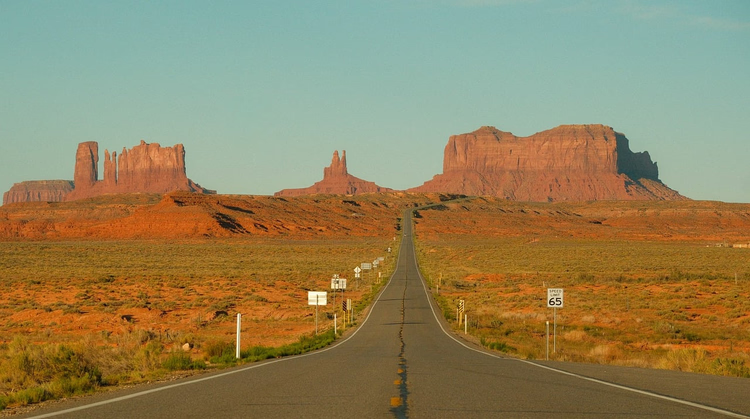
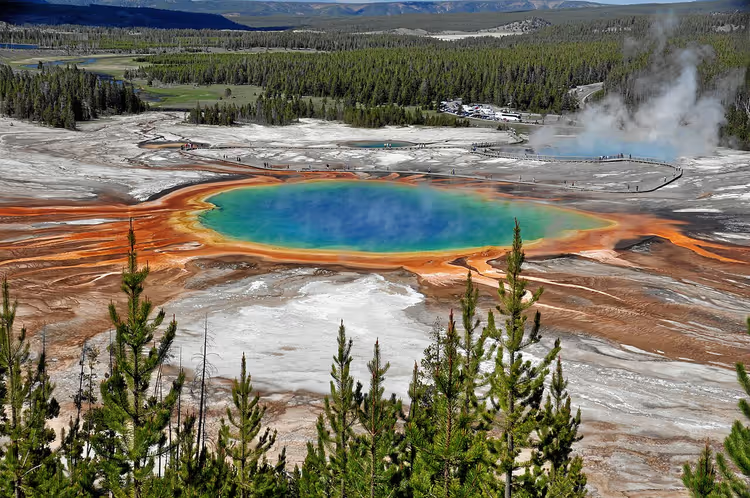
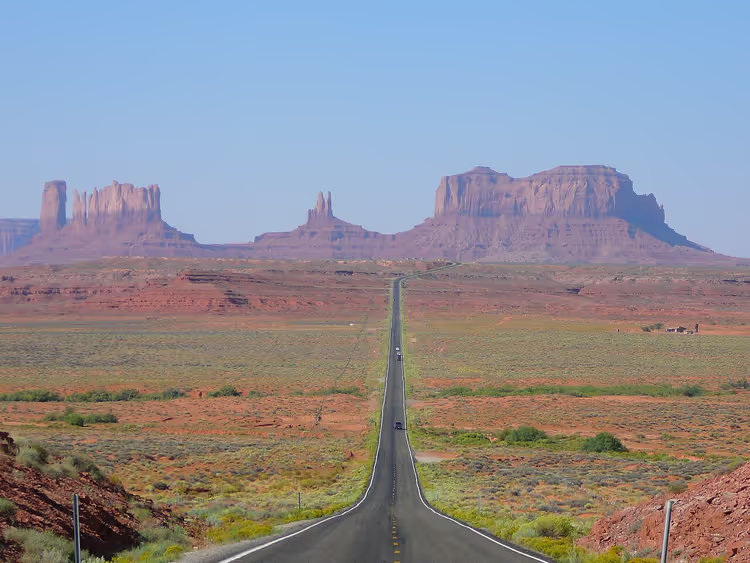
National parks are the backbone of nature in the USA: the system has sixty-three of them. For a first trip, most people choose the Grand Canyon in Arizona or Yellowstone with the Old Faithful geyser: they have the best developed infrastructure and are easier to reach. In the Southwest, Zion, Arches and Monument Valley on Navajo land sit close together; California has Yosemite, Sequoia and Death Valley, Florida has the Everglades, and Alaska has Denali.
The cities offer a different set. In New York it is the Statue of Liberty, Central Park, the Brooklyn Bridge, the 9/11 Memorial and the skyscraper observation decks. In Washington almost everything stands along the National Mall from the Capitol to the Lincoln Memorial, and admission to the Smithsonian museums is free. In San Francisco people go to see the Golden Gate Bridge and the former prison of Alcatraz, and in Las Vegas the Strip with the Bellagio fountains.
Niagara Falls can be viewed from two banks: the Canadian side is closer to the most powerful cascade, Horseshoe Falls, while from the American side you look along the wall of water from almost the very edge.
| Park | State | What it offers | When to go |
|---|---|---|---|
| Grand Canyon | Arizona | The gorge of the Colorado River; the more accessible South Rim suits a first trip | March to May and September to November |
| Yellowstone | Wyoming, Montana, Idaho | Geysers and hot springs | June to September; some roads are closed in winter |
| Zion | Utah | Red canyons and the Virgin River | April and May, September and October |
| Arches | Utah | More than two thousand natural arches | April and May, September and October; the trails have no shade in summer |
| Monument Valley | Arizona and Utah | Rock towers on Navajo land; not part of the national park system | March to October; hot in summer |
| Yosemite | California | Granite cliffs and waterfalls | May and June for the waterfalls, September and October for quiet trails |
| Everglades | Florida | Subtropical wetlands and alligators | November to April; summer is the rainy season |
| Denali | Alaska | The highest peak in North America | June to early September |
Our articles on this
- US national parks: 17 places worth seeing
- Grand Canyon: entry prices, viewpoints and route to the park
- Yellowstone: what to see and how to get to the geyser park
- Niagara Falls: which shore is better for viewing and how much the boat costs
- Zion National Park in Utah: entrance, shuttles and Angels Landing permit
- How the Golden Gate Bridge was built and how much it costs to cross
- 9/11 Memorial in New York: hours, tickets and what to see
- How to visit the Lincoln Memorial in Washington: entry, hours and key details
- Everglades national park in Florida: tickets and what to see
- Glacier National Park: trails, glaciers and entry in 2026
- Olympic National Park: how much entry costs and where to see the rainforests
- Canyonlands: what to see, entry fees and when to go
- Haleakala National Park on Maui: sunrise, tickets and routes 2026
- Carlsbad Caverns in New Mexico: ticket, routes and bat flight
- Mesa Verde national park: how to get inside the cliff dwellings of Colorado
Cities, coasts and regions: where to go
The East Coast means cities. In New York most of the main sights are gathered in Manhattan, while Brooklyn, Queens and the Bronx show how the everyday city lives; for a first trip our articles recommend five to seven days. Washington needs two to three days, Chicago three.
The West means California and the desert. Los Angeles is huge and dependent on the car, central San Francisco is covered on foot, and the Pacific Coast Highway runs between the two. Las Vegas sits in the Mojave Desert: you walk the Strip, the old downtown with Fremont Street lies farther north, and the city is where people set out from for the Grand Canyon.
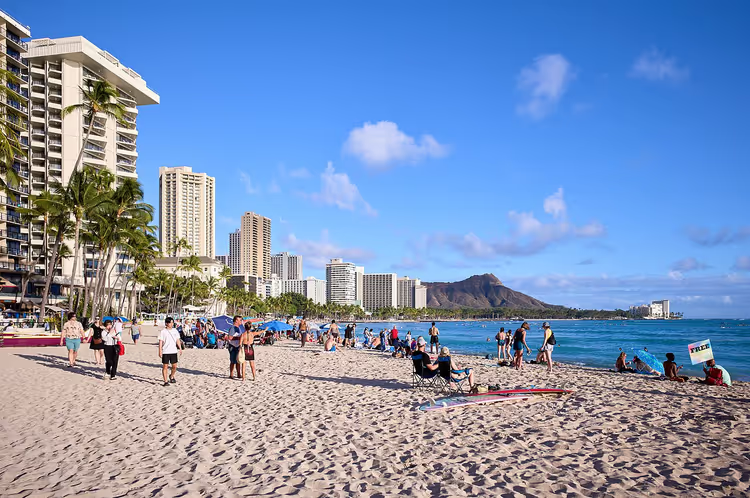
For a beach you choose among three destinations. California gives you city, surfing and cool water: Santa Monica, Malibu, San Diego. In Miami people swim all year. In Hawaii the ocean is also warm all year: Oahu with Waikiki Beach is the most crowded, families choose Maui for its quiet, and Kauai and Molokai suit those who want wild nature.
Our articles on this
- New York in 40 places: what's open, where you need a ticket and what's free
- The real New York beyond Manhattan: Brooklyn, the Bronx and Queens
- New York from another side: 18 places from a cable car to observation decks
- Washington: fifteen places from the Capitol to Arlington
- Las Vegas: 10 main places and hotels near them
- Las Vegas: 7 attractions worth seeing
- Chicago: museum tickets, deep-dish pizza and evening blues
- What to see in Miami: 30 locations from art deco to the Everglades
- 13 Best Miami beaches: which one to choose in 2026
- US beach resorts: 15 destinations from Santa Monica to St. John
Hotels: neighborhood, taxes and fees
In the big cities the neighborhood matters more than the number of stars. In New York, Midtown lets you cover the main sights on foot, but a night there costs more; Brooklyn and Queens are cheaper and add a subway ride. In Las Vegas almost every hotel on the Strip is a resort with a casino, shows and a pool, and on weekdays outside the big trade shows rooms are noticeably cheaper than on weekends.
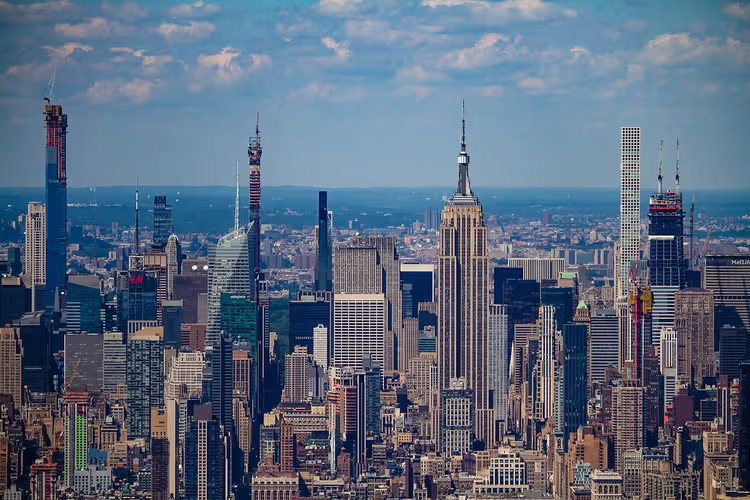
The price on the website is rarely the final one: taxes are added to the rate, and in Las Vegas and Hawaii a resort fee as well, so look at the total on the last booking step. In the USA you pay for the room, not per guest, so for a group of three or four a room with two beds works out cheaper per person. Hotels inside the national parks cost considerably more than those outside them.
Ad
Compare places to stay in the USA on Trip.com
We earn a commission through this link; your price stays the same.
Our articles on this
Tours, tickets and reservations
A lot in the USA runs on time slots. Tickets for the ferry to Alcatraz sell out weeks ahead, a single official operator runs boats to the Statue of Liberty, and New York's observation decks sell tickets for a specific time. In Washington you cannot get into the Capitol or up the Washington Monument without a reservation, even though admission itself is free.
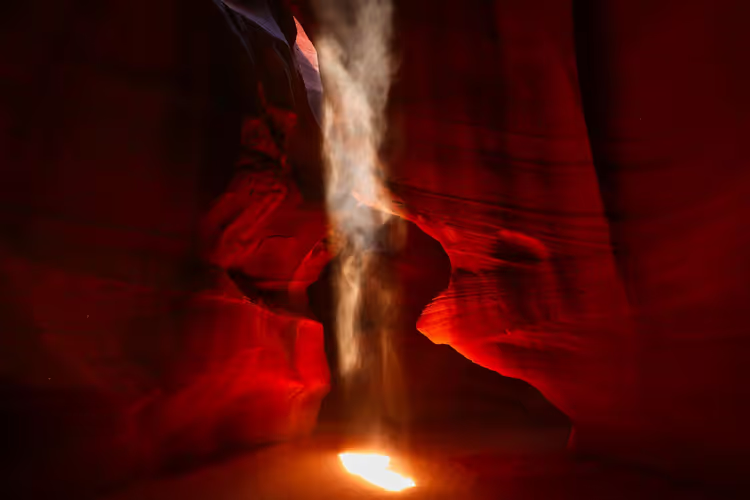
Antelope Canyon in Arizona lies on Navajo Nation land, and you can only go in with a guide from a licensed operator. In the national parks reservations come in three kinds: a timed entry, a vehicle permit for a particular road, and a permit for a popular trail such as Angels Landing in Zion. Almost all of it is booked on recreation.gov.
On Broadway, the TKTS booths in Times Square sell discounted tickets for tonight's shows, but the choice there is limited to what did not sell out online.
| Park | What you reserve | What to keep in mind |
|---|---|---|
| Zion | A permit for the Angels Landing and Subway trails and for the top-down Narrows route | Permits are awarded by lottery; the rest of the park and the shuttle need no reservation |
| Yosemite | A permit for the Half Dome climb | It is awarded by lottery and applications are filed in March; keep a backup route ready |
| Rocky Mountain | A timed entry to the park | Required from late May to mid-October; slots that include Bear Lake Road go fastest |
| Acadia | A vehicle permit for Cadillac Summit Road | In effect from May to October; sunrise slots go first, and the rest of the park needs no reservation |
| Haleakala | Sunrise entry to the summit | Without a reservation you are let into the park only after seven in the morning; sunset needs no reservation |
| Glacier | A ticket for the shuttle to Logan Pass | The shuttle runs from July to early September; tickets are sold online only, not on the shuttle itself |
| Carlsbad Caverns | A timed entry to the caverns | Required all year, for children too |
| Shenandoah | A permit for the Old Rag trail | Required from March to late November; the rest of the park is open without a reservation |
Ad
See tours in the USA on GetYourGuide
We earn a commission through this link; your price stays the same.
Ad
See museum and attraction tickets on Tiqets
We earn a commission through this link; your price stays the same.
Our articles on this
- US national parks: where reservations are needed and how to get them in 2026
- Broadway in New York: where to buy musical tickets and how to get there
- Alcatraz in San Francisco Bay: tickets, hours and what to see
- Antelope canyon in Arizona: tickets, slots and choosing a gorge
- MoMA or the Met: comparing tickets, hours and collections
- 5 Places in California for kids aged 2 and up: tickets and prices
- Honokohau Falls on Maui: how to see it by helicopter
Food: where and what to order
Our articles describe not one American cuisine but several city ones. In New York everyday eating rests on three formats that cost less than a restaurant with table service: pizza by the slice, street carts with chicken and rice, and delis with sandwiches. Chicago argues about deep-dish pizza with its high crust and serves a hot dog with no ketchup on it.
The check in the USA comes to more than the menu price. Sales tax is added at the register, and in a restaurant with table service a tip goes on top: in New York the custom is to leave about a fifth of the check. At a counter and at street carts tipping is optional. Tap water in New York is drinkable, and restaurants bring it for free.
Our articles on this
Flights, travel between cities and car rental
There are direct flights from Europe to New York and Chicago, while getting to Los Angeles, Las Vegas or Miami more often means a connection.
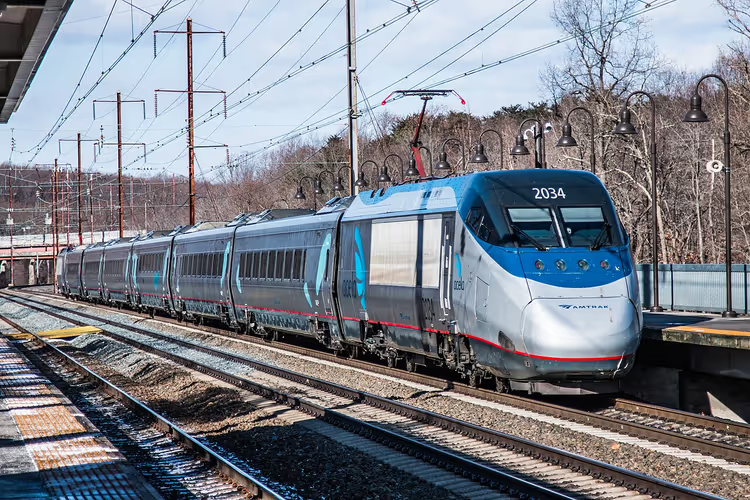
Inside the country there are four ways to travel. Flying makes sense over long distances. Amtrak trains run frequently only on the Boston, New York, Washington line; in other regions there may be one departure a day. The bus is the cheapest. A rental car is the only realistic option for national parks and scenic roads: bring your driver's license, an international driving permit and a credit card for the deposit.
In the big cities a car mostly gets in the way: in New York, Chicago and Washington people get around by subway. From the New York airports, AirTrain with a subway or commuter rail connection takes you into the city, and in Chicago a subway line runs right to the terminal. A transfer is convenient at night or with a lot of luggage: the driver waits in the arrivals hall.
| Transport | When to choose it | What to keep in mind |
|---|---|---|
| Plane | Long distances, including a coast to coast flight | Getting to the airport and security screening take several hours; compare the full door to door time |
| Amtrak train | The Boston, New York, Washington line | In other regions there may be one departure a day, and a trip across half the country takes a day or more |
| Bus | When budget matters more than comfort | Many departures are overnight; seats are not assigned, so get to boarding early |
| Rental car | National parks, scenic roads, small towns | You can pick the car up in one city and return it in another; parking in the center of big cities is paid |
| Subway and city transit | Trips within the big cities | The New York subway runs around the clock |
| Taxi, Uber and Lyft | Evening trips, when public transit runs infrequently | You order the car through an app |
Ad
Book a fixed price airport transfer in the USA
We earn a commission through this link; your price stays the same.
Our articles on this
Best time to go and weather
There is no single season for the whole country. For New York the best times are late April, May, September and October: summer in the city is hot and humid, winter cold and windy. For most national parks May, June, September and October are ideal; the desert parks of Death Valley and Joshua Tree are visited in winter, and Denali in Alaska is open from June to early September.
Hurricane season on the Atlantic and Gulf of Mexico coasts officially lasts from early June to the end of November, with the most storms in August, September and October. Florida, Louisiana and the East Coast are at risk. For Florida the best months are February and March. In Hawaii the ocean is warm all year, and it is quietest there in April, May, September and October.
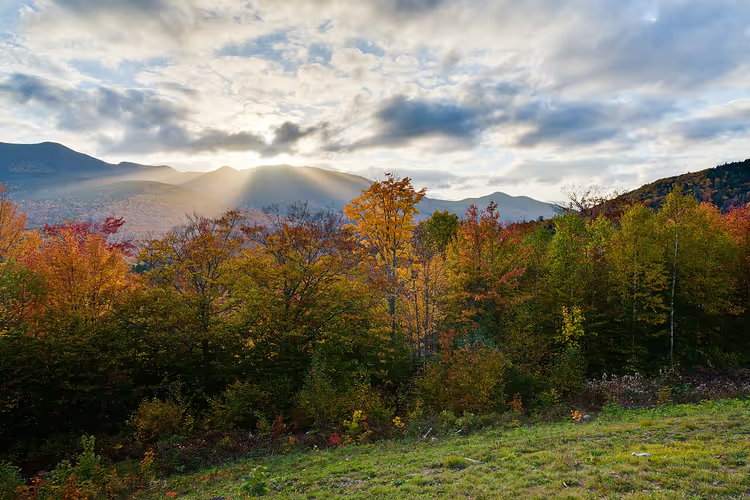
Two events are tied to short windows. The cherry blossoms in Washington bloom in late March and the first days of April. Fall colors in New England move from north to south, from late September to the second half of October.
| Where | Best time | What to keep in mind |
|---|---|---|
| New York | Late April, May, September and October | Summer in the city is hot and humid, winter cold and windy |
| Most national parks | May, June, September and October | Mild weather, fewer people than in summer |
| Death Valley and Joshua Tree | Winter | The desert is too hot in summer |
| Denali in Alaska | June to early September | A single road leads into the park, and beyond it you go on foot only |
| Florida | February and March | Hurricane season lasts from early June to the end of November, with the most storms in August, September and October |
| Hawaii | April, May, September and October | The ocean is warm all year, and these are the quietest months on the islands |
| Washington | Late March and the first days of April | This is the short cherry blossom window |
| New England | Late September to the second half of October | Fall colors move from north to south |
Twelve months compared: find the best time to go
Our articles on this
- Hurricane season in the USA: when to go and how to plan a trip without risk
- New York by month: when to go and what weather awaits you
- Fall colors USA 2026: peak calendar by region
- Indian summer in New England: when to go and what to book in advance
- Sakura in Washington: when it blooms and where to see it
- Firefall in Yosemite: ten minutes of February and how not to miss them
- Art Basel Miami Beach 2026: dates, sectors and tickets to the fair
Budget: how to work out your own total
There are no totals here: prices in the USA depend on the city, the season and the booking date. In New York lodging takes almost half of the daily budget, in Hawaii accommodation rates are among the highest in the country, and on a road trip most of the money goes to the rental car and overnight stays.
Visitors from Europe often miss three things. Sales tax and tips push the restaurant check above the menu price. In eleven national parks, foreign visitors over sixteen pay a separate surcharge on top of the entrance ticket; holders of the America the Beautiful annual pass are exempt. And medical care in the USA is paid for and expensive, so insurance is a budget item, not a formality.
Savings come from staying outside the center near a subway station, eating at the counter, free parks, memorials and ferries, traveling in the off season and booking early. You work out your own total in the calculator: it separates accommodation, food, transport, admissions, travel there and a reserve.
Calculate a travel budget for the USA
Our articles on this
Routes: cities, California by car and the parks
A first trip usually sticks to one region. New York in three days divides up by area: Downtown with the Statue of Liberty, the museums by Central Park, and Midtown. Between New York, Boston and Washington the Amtrak train is the more convenient way to go.
The classic of the West is California by car. The Pacific Coast Highway from Los Angeles to San Francisco takes five to seven days with stops in Santa Barbara, Big Sur and Monterey. A two-week loop adds Yosemite, Sequoia and Death Valley. Before you set out, check whether the stretch near Big Sur is open: it is closed from time to time because of landslides and wildfires.
The parks of the Southwest combine into a single road trip: the Grand Canyon, Zion, Arches and Monument Valley are a few hours' drive apart. In the fall New England is a route of its own: from Acadia in Maine through the White Mountains to Vermont, at least a week.
Day planner: check what fits into one day
Our articles on this
- California coast road trip: 6 days from Los Angeles to San Francisco
- California by car: a two-week route through parks and coast
- California road trip: nine days from Los Angeles to Yosemite
- Three days in New York: a route through neighborhoods with tickets and sightseeing time
- New York in one day: what to see and how much tickets cost
- One day in Las Vegas: 15 places you can actually fit in
- Chicago in one day: a route through 15 places and what to book in advance
- Appalachian Trail in the USA: how long it takes, permits and preparation
- Pink route across the USA: 5 places in Barbie style
Practical matters: entry, insurance, safety, connectivity
According to our articles, citizens of most EU countries travel on a short tourist trip without a visa, under the Visa Waiver Program: instead of a visa they fill in the ESTA electronic authorization. The application is filed on the official website in advance, because without a valid authorization you will not be allowed to board. Those not covered by the program need a B1/B2 visa with an interview at a consulate. Check the rules for your own passport before you buy tickets.
Medical insurance is not among the requirements for a visa or ESTA, but in the USA the patient pays for treatment, and the bills here are high. Take out the policy before you leave and look at the coverage limit and the exclusions. If you need to make a claim, call the assistance company first and only then go to a clinic.
Big cities have neighborhoods a tourist is better off staying out of, and in crowded places keep an eye on your phone and wallet. Check the roaming terms for the USA with your own carrier before you travel. An eSIM is a backup way to have internet from the first minute: for maps, tickets on your phone and contact with the hotel.
Build a packing list for the USA trip
Ad
See eSIM options for the USA on Yesim
We earn a commission through this link; your price stays the same.
Ad
See travel insurance on World Nomads
We earn a commission through this link; your price stays the same.
Our articles on this