



Austria: a travel guide for independent planning
Austria fits two different trips into one: imperial Vienna in the east and the Alps, which cover almost two thirds of the country. In a week you can realistically combine a museum, a cable car and a thermal pool. In winter the country runs on the ski season, and in summer the lakes and hiking trails open up. This page lays Austria out for independent planning: what to see, which regions to choose, where to stay, how to get around, when to go and how to work out your costs. Each section stays short and leads on to our detailed articles. There are no prices here: the cost of a room and a ski pass in Austria depends on the season and the school holiday calendar, so a fixed figure would be misleading.
Cities, palaces and nature: the big picture
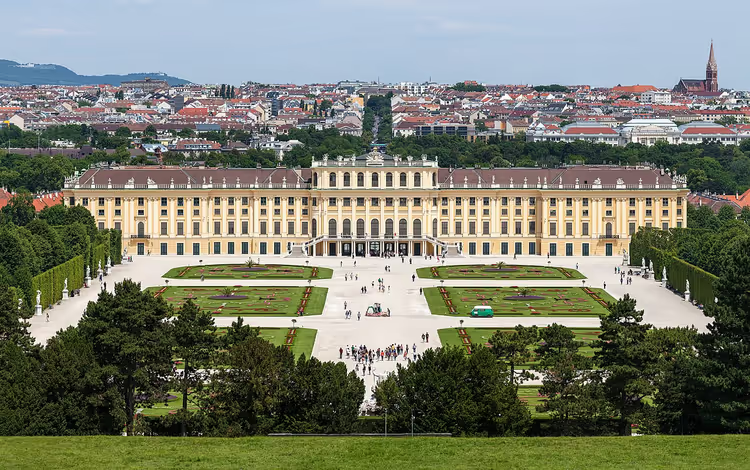
Vienna carries most first trips. The historic center can be covered on foot in a day: St. Stephen's Cathedral, the Hofburg and the Vienna State Opera stand close together. Farther out are Schönbrunn, the Habsburg summer residence with its park and a zoo considered the oldest in the world, the Belvedere with two palaces and a garden between them, and the Prater with its old Ferris wheel.
Salzburg sits between the Salzach river and the mountains: Hohensalzburg Fortress stands above the rooftops, and the house where Mozart was born is now a museum. In Innsbruck the imperial center with the Hofburg and the Golden Roof lies next to the Nordkettenbahn cable car, and nearby Wattens has the underground halls of Swarovski Kristallwelten. The baroque Melk Abbey stands above the Danube.
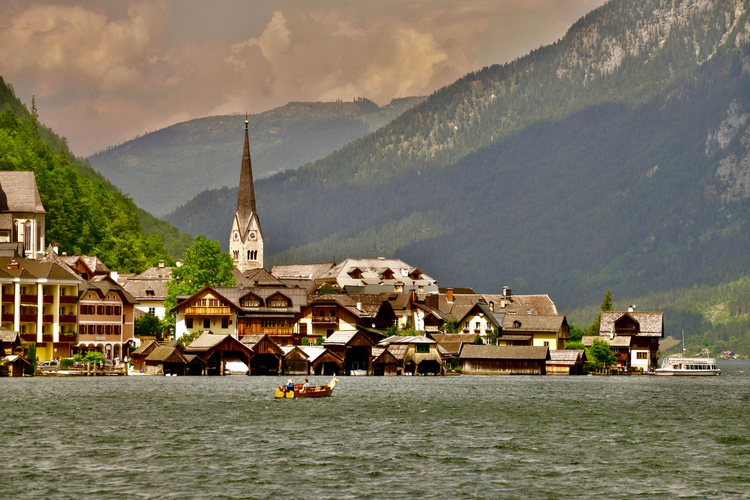
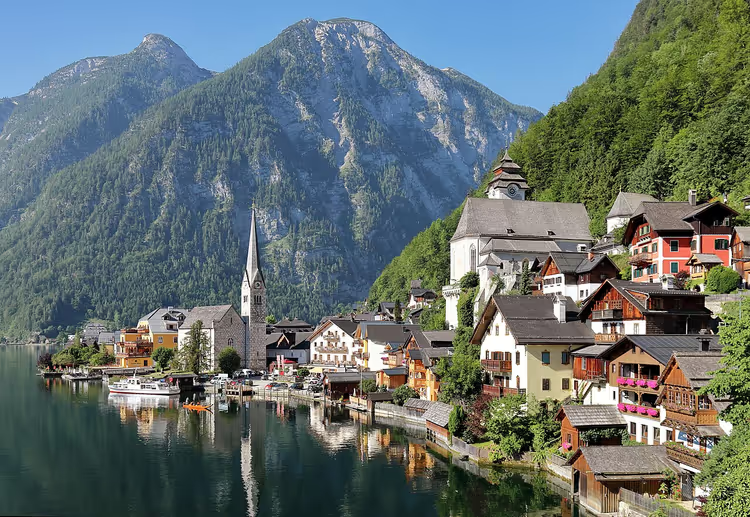
Nature here is just as prominent as the palaces. Hallstatt sits by a mountain lake in the Salzkammergut, the trail through the Liechtensteinklamm gorge runs over walkways and through tunnels to a waterfall, and the Krimml Waterfalls are considered the highest in the country. The Pasterze glacier lies below the summit of the Grossglockner, and near Graz the Lurgrotte cave is open, with its two entrances. The Liechtensteinklamm gorge is closed in winter.
Our articles on this
- Austria in one trip: 10 places from Vienna to Liechtensteinklamm gorge
- What to see in Austria: Vienna, Tyrol and thermal spas in one trip
- Vienna: 30 places from St. Stephen's Cathedral to the Danube Tower
- 25 Places in Salzburg: tickets, opening hours and what to see in a day
- Twenty places in Innsbruck: tickets, opening hours and how to see everything in two days
- Where to go in Vienna: 25 museums with tickets and opening hours in 2026
- Belvedere in Vienna: tickets with time slot and two palaces
- Melk Abbey: what to see inside and ticket prices in 2026
- Green Vienna: 17 parks and gardens for walks and picnics
- Lurgrotte caves near Graz: 2026 tickets and which entrance to choose
- Dungeons, water and ice: 13 places in Vienna where it's easier to breathe
Regions: where to go and what for
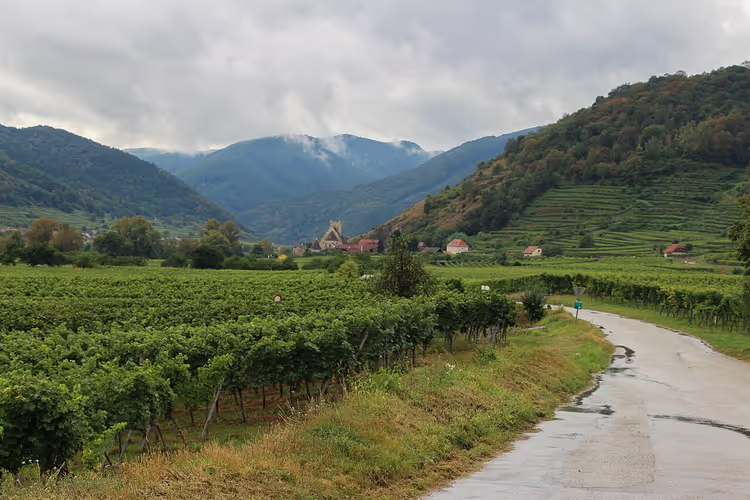
The east of the country means Vienna and everything within easy reach of it. Lower Austria has the Wachau, the Danube valley between Krems and Melk with terraced vineyards and castle ruins. Baden near Vienna is built on sulfur springs, and Burgenland has Lake Neusiedl, the largest lake in the country: it is shallow, warms up quickly and suits families with children.
The west and the center belong to the mountains. Tyrol has more ski infrastructure than the rest of the country: St. Anton is the choice of strong skiers, Serfaus-Fiss-Ladis and Mayrhofen work for families with small children, and on the glaciers of Sölden and Kaprun skiing starts in the fall. In the state of Salzburg skiing combines with the lake in Zell am See and with the thermal baths in Bad Gastein. In the far west, in Vorarlberg, lies the Bregenzerwald with its villages on grassy slopes.
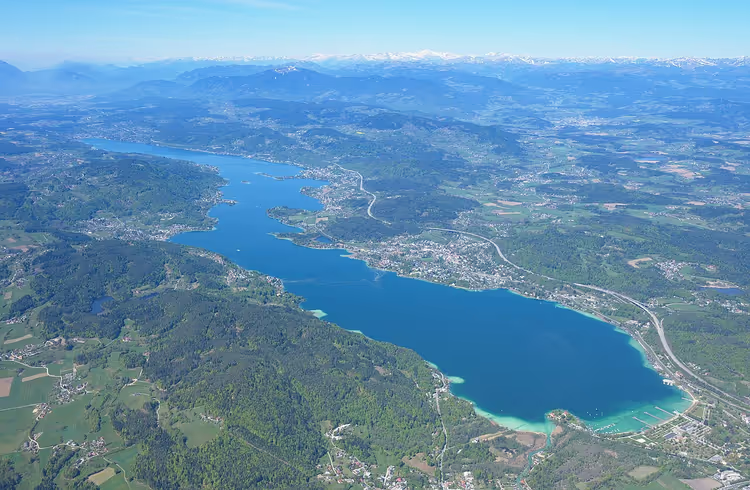
The south means water and wine. Carinthia has the warmest lakes in the country, among them Klopeiner See and Wörthersee with resorts on the shore. Styria has Graz, and the south of the state is covered with vineyards.
| Region | What to go for | Who it suits |
|---|---|---|
| Vienna and Lower Austria | The capital, the Wachau valley, the sulfur springs of Baden | A first trip and day trips from a single base |
| Burgenland | Lake Neusiedl, the largest lake in the country | Families with children: the lake is shallow and warms up quickly |
| Tyrol | St. Anton, Mayrhofen, Serfaus-Fiss-Ladis, the Sölden glacier | Skiers: St. Anton for strong ones, Serfaus-Fiss-Ladis and Mayrhofen for families with small children |
| State of Salzburg | Zell am See, Bad Gastein, the Kaprun glacier | Those who combine skiing with a lake or thermal baths |
| Vorarlberg | The Bregenzerwald with villages on grassy slopes | Those who come for mountains and villages rather than cities |
| Carinthia | Klopeiner See and Wörthersee, the warmest lakes in the country | A summer vacation by the water, resorts on the shore |
| Styria | Graz and the vineyards in the south of the state | City and wine taverns, best in the fall |
Our articles on this
- 20 Ski resorts in Austria: where to ski in the 2026/27 season
- Thermal resorts of Austria: 20 places for treatment and recreation with children
- 7 Warmest lakes in Austria: water in summer from 24 to 28 °C
- Skiing in Austria with kids: where to ride in the 2026/2027 season
- Serfaus-Fiss-Ladis: 200 km of slopes, children's area and a car-free village
- Bregenzerwald: mountains, lake and villages of western Austria
- Hotel in Vienna: which district to choose for your stay
Where to stay: city, resort and mountain hut
In Vienna you choose a hotel by district, not by stars. In the first district, the Innere Stadt, everything important is close by, but it is more expensive and noisier. Leopoldstadt and Landstrasse are cheaper and quieter, and Neubau suits those who like galleries and coffee shops. A place near a subway station costs less than one in the center.
In the mountains the price is set by the dates, not the category. During school holidays accommodation gets noticeably more expensive, and free rooms go early. For a family or a group, an apartment is better value than a hotel because you cook for yourself. In many regions children's discounts on the ski pass apply only if you stay at a partner property, so check this before booking.
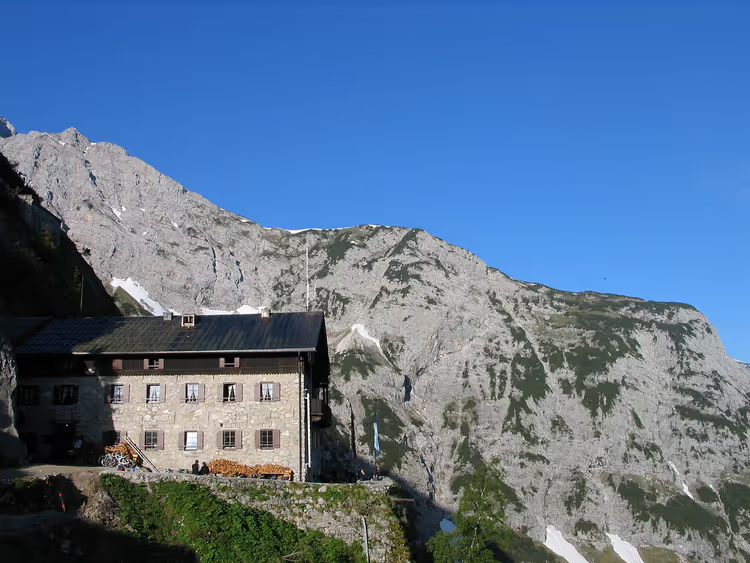
A mountain hut is a format of its own, not a hotel. You book a place by phone or email, you usually pay in cash, and for a night in the shared dormitory you need your own thin sleeping bag liner.
Ad
Compare places to stay in Austria on Trip.com
We earn a commission through this link; your price stays the same.
Our articles on this
- Which hotel to choose in central Vienna: 24 options from pension to five stars
- 11 Hotels in Vienna: center, Opera and the way to Hauptbahnhof station
- 5-Star hotels in central Vienna: 13 addresses you can walk to
- 3 Star hotels in central Vienna: 12 options near St. Stephen's Cathedral
- Where to stay in central Vienna: 11 three-star hotels
Tickets, tours and day trips
Schönbrunn Palace admits visitors by time slot, and in high season the morning slots are taken well in advance. At the Belvedere each palace needs its own ticket. For Hohensalzburg Fortress and Melk Abbey it is easier to buy the ticket online: that way you skip the ticket office. Most Vienna museums are closed on Mondays and a few on Tuesdays, and combined tickets are better value than single ones.
You can get into the Vienna State Opera without an expensive ticket too: standing places are sold on the day of the performance, and during the day there are guided tours of the building when no rehearsals are on.
Vienna works well as a base for day trips: the castles of Lower Austria, the Wachau, Melk, Baden, and farther out Hallstatt, Salzburg, Graz and neighboring Bratislava. Take one place per day, two neighboring ones at most, because the journey uses up a noticeable part of the day.
| Where | How to get there from Vienna | One way |
|---|---|---|
| Baden | By tram on the Badner Bahn line | About an hour |
| Bratislava | By train from the main station | About an hour |
| Melk Abbey | By train, then a 10-15 minute walk from the station to the gate | About an hour |
| Wachau | By train to Krems or Melk, then by boat or bus | About an hour to Krems |
| Graz | By direct train | About two and a half hours, easier with an overnight stay |
| Hallstatt | By train, then by ferry across the lake | 3.5-4 hours, it makes for a long day |
Ad
See tours and tickets in Austria on GetYourGuide
We earn a commission through this link; your price stays the same.
Ad
See tickets for museums and palaces on Tiqets
We earn a commission through this link; your price stays the same.
Our articles on this
Food: schnitzel, coffee houses and heurige
Viennese cooking rests on veal schnitzel, Tafelspitz, Kaiserschmarrn and strudel. Look for it in a Gasthaus, not on the tourist menus next to the sights. Book a table for the evening in advance and check the day of the week: some places are closed on Sunday and Monday.
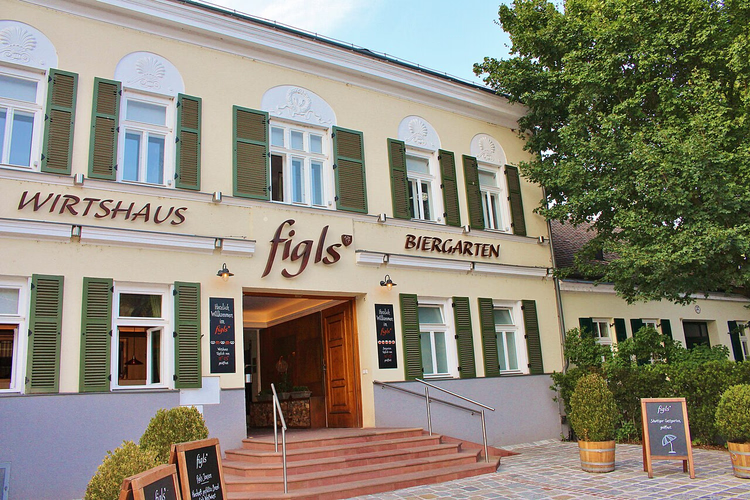
A Viennese coffee house works differently from an ordinary café. A glass of water comes with the coffee, you can sit for as long as you like, and you ask for the check yourself.
Fall adds a table of its own. In the heurige, the wine taverns attached to wineries in Vienna, the Wachau and Southern Styria, they serve the young wine Sturm and cold snacks, and in November it is time for the Martinigansl goose. The original Mozartkugel by Fürst of Salzburg is recognized by its blue wrapper.
Our articles on this
Train, car and getting in from the airport
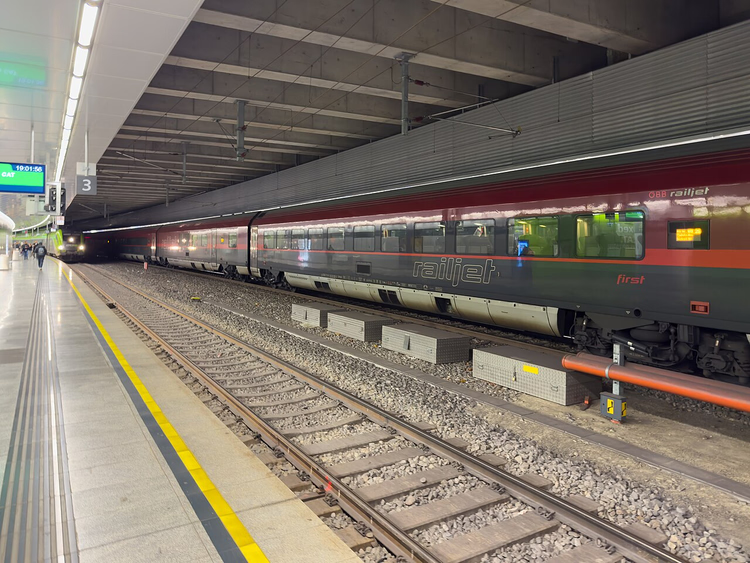
Vienna, Salzburg and Innsbruck are linked by direct trains that run from center to center and do not depend on traffic. Around public holidays free seats run out fast, so buy the ticket in advance. Trains also take you to the slopes: in Bad Gastein, Zell am See and Kitzbühel the lower cable car station is a few minutes' walk from the train station.
A car makes sense for lakes, villages and mountain passes. All highways in Austria are tolled: the vignette is bought at a gas station or online from ASFINAG, and you do not need it inside the city. Free parking lots have a time limit, and a parking disc goes behind the windshield.
Flights to Vienna land at Schwechat airport. The City Airport Train, the S7 commuter train, a bus, taxis and a pre-booked transfer all run toward the center. While the line is being renovated, the City Airport Train runs as a bus and the S7 ends at St. Marx, so check the route the day before you fly. A transfer makes sense with a family, with suitcases or at night. For the resorts of Tyrol, Innsbruck airport is closer.
| How to go | Travel time | Who it suits |
|---|---|---|
| City Airport Train | 21 minutes nonstop to Wien Mitte station; runs as a bus while the line is renovated | Those in a hurry |
| S7 commuter train | Only as far as St. Marx during the renovation, then by tram or bus | Those saving money: it is the cheapest train toward the center |
| Vienna Airport Bus | 35-40 minutes | Those heading to the Westbahnhof station |
| Taxi or transfer | About 20 minutes, longer at rush hour | Families and passengers with suitcases: the car takes you door to door |
Ad
Book a fixed price airport transfer in Austria
We earn a commission through this link; your price stays the same.
Our articles on this
When to go: city, mountains, lakes
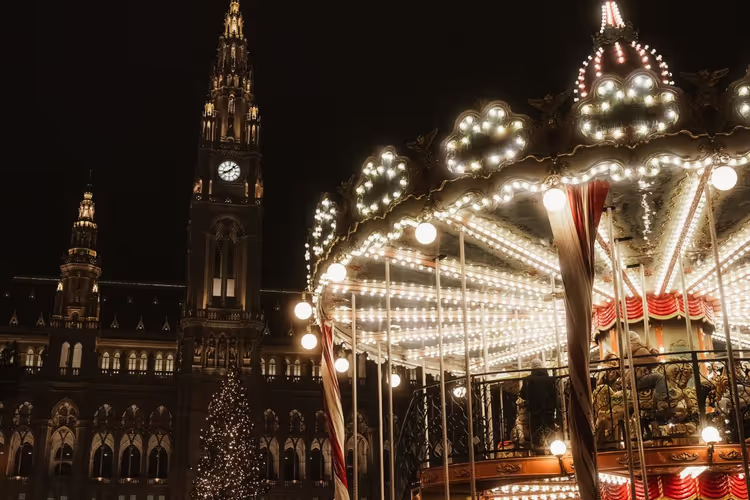
The country's climate comes in two parts: in the east summers are hot and winters mild, while the mountains get more precipitation and a longer winter. For the cities the best months are May, June and September. In July Vienna is hot and crowded. From mid-November to the end of December the Christmas markets are open.
Regular ski resorts run from December to April, and the glaciers open as early as October. The most expensive time on the slopes falls in the school holidays, and it is cheaper in early December and in March. The swimming season on the lakes is summer: Carinthia and Burgenland keep the water warm for almost the whole summer, while mountain lakes stay cool.
There is not one fall here but two. The early one, from mid-September to mid-October, belongs to the Alps: cattle are brought down from the pastures at the Almabtrieb festival, and the grapes are harvested. The late one is better spent in the cities and wine regions, because in November the mountains are already in winter mode. In spring the apricot orchards of the Wachau bloom only briefly, for three weeks at most, while in the mountains snow still lies in April.
| When | What is going on | What it suits |
|---|---|---|
| May, June, September | The best months for the cities, without the July heat and crowds | Vienna, Salzburg and other cities |
| Summer | In July Vienna is hot and crowded; the lakes of Carinthia and Burgenland keep warm water | Lakes, swimming, hiking trails |
| Mid-September to mid-October | The Almabtrieb festival, the grape harvest | The Alps and hiking |
| November | The mountains are already in winter mode, and it is time for the Martinigansl goose | Cities and wine regions |
| Mid-November to the end of December | The Christmas markets are open | Vienna; book the hotel in advance |
| December to April | Ski season; most expensive in the school holidays, cheaper in early December and in March | Skiing; on the glaciers as early as October |
Twelve months compared: find the best time to go
Our articles on this
- Autumn vacation in Austria: 7 destinations for October and November
- When to go to Vienna: weather and holidays by season
- Almabtrieb in Austria 2026: where to see the decorated cow descent
- Apricot blossom in Wachau 2026: dates, boats and routes
- New year in Vienna 2026: what to book in advance and how to celebrate midnight
Budget: what the total depends on
Austria costs more than neighboring Czechia or Hungary but less than Switzerland. On a city trip three things move the total: the train instead of a taxi, a place near the subway instead of the center, and tickets bought online. In Vienna many of the main places can be seen for free, and accommodation prices drop after the September peak.
A ski week is made up of the ski pass, accommodation, rental and lunch on the slope. You save here with dates outside the school holidays, small resorts instead of big ones, buying the ski pass online and in advance, children's discounts and an apartment instead of a hotel.
That is why you will find a calculator here, not a figure. It splits accommodation, food, transport, admission tickets, getting there and a reserve, and shows which item pushes your total up.
Calculate a travel budget for Austria
Our articles on this
Itineraries: the first trip and the next one
Five or seven days are enough for a first trip: two days for Vienna, a day for Salzburg and two or three days for the Alps or the lakes. If the vacation is short, take only Vienna and Salzburg, which are linked by a direct train. Schönbrunn takes half a day, so it cannot be combined with Salzburg in a single day.
Those who come for nature add Hallstatt, the Liechtensteinklamm gorge and the passes of Tyrol, and here a car gives you the freedom to stop where you like. Hallstatt takes a full day of daylight. Salzburg can realistically be covered on foot in one day, and for Innsbruck allow two.
In the mountains a route is measured by elevation gain, not by kilometers, and you always leave a time margin. The Karwendel range north of Innsbruck has multi-day routes from hut to hut. In the Wachau, hiking trails and a bike route run along the Danube.
Day planner: check what fits into one day
Our articles on this
- Vienna: city itinerary, tickets and best season
- What to do in Vienna in three days: coffee houses, Schonbrunn and the Vienna opera
- Vienna in 2 days: a walking route through the center and Schonbrunn
- One day in Vienna: a route through the main sights without rushing
- Salzburg in one day: 15 places you can actually see on foot
Practicalities: money, customs, connectivity, insurance
Tap water in Vienna is drunk without boiling: it comes from Alpine springs. On Sundays stores in Austria are closed, while cafés, museums and the shops at large train stations stay open. Cards are accepted almost everywhere, but sausage stands, small eateries, market stalls, heurige outside the city and mountain huts often take cash only. You state the tip out loud when you pay: you round the check up or add about a tenth, and you do not leave money on the table.
The Vienna subway has no turnstiles, but riding without a ticket brings a fine, and a paper ticket has to be validated. In the mountains, check the trail conditions and the avalanche bulletin before you set out, and decide in advance on the time at which you will turn back.
Check the roaming terms with your carrier before the trip, and keep an eSIM as a backup way to have internet from the first minute. Take out travel insurance before you leave and read what exactly it covers.
Build a packing list for the Austria trip
Ad
See eSIM options for Austria on Yesim
We earn a commission through this link; your price stays the same.
Ad
See travel insurance on World Nomads
We earn a commission through this link; your price stays the same.
Our articles on this