


Croatia: a travel guide for planning it yourself
Croatia only looks compact on the map. Hundreds of kilometers of coastline and more than a thousand islands lie between Istria in the north and Dubrovnik in the south, so in a week you can realistically cover one region, not the whole country. The trip starts with choosing a region: green Istria with its short drive, or Dalmatia with its islands and ancient cities. This page lays the country out for independent planning: what to see, which region to choose, how hotels, ferries and toll roads work, and when the sea is warm. Each section leads on to our detailed articles. There are no prices here: accommodation, ferries and national park tickets in Croatia go up and down with the season, so you work out your own total in the calculator.
What to see: the big picture
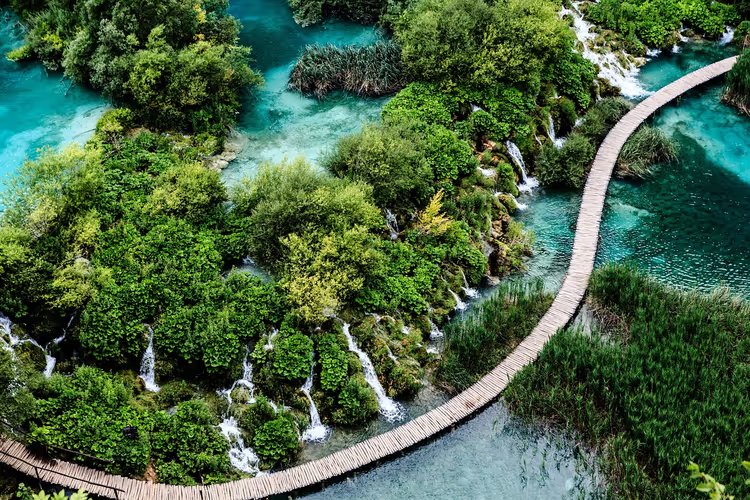
The country's nature program rests on its national parks. Plitvice Lakes lie between Zagreb and Zadar and are a UNESCO World Heritage site: a cascade of sixteen lakes that you walk along on wooden boardwalks. Krka National Park, inland behind Šibenik, is known for the Skradinski buk waterfall.
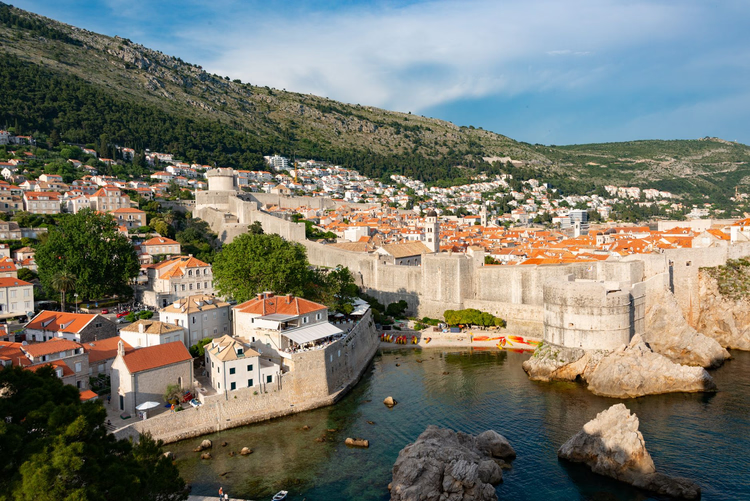
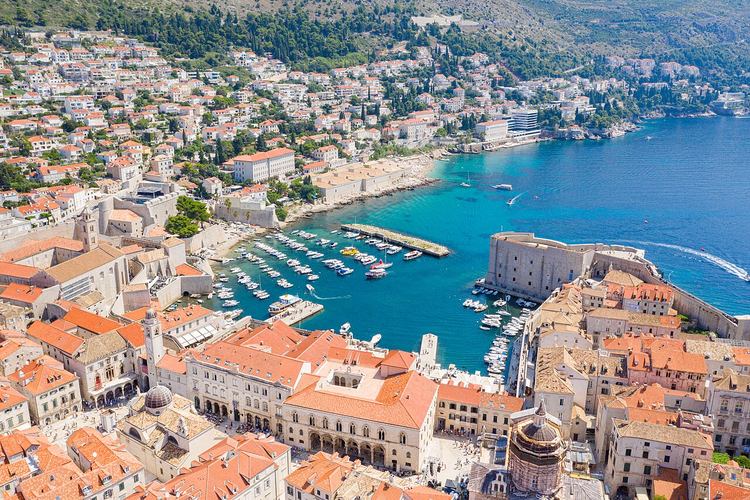
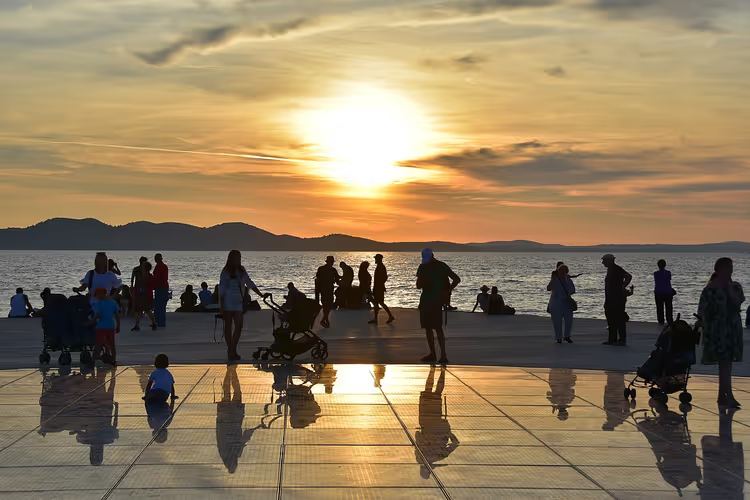
The cities provide the history. In Split, Diocletian's Palace still works as the living center of the old town. Dubrovnik is enclosed by a complete ring of city walls, and the old town itself is pedestrian only. Pula has a Roman amphitheater, one of the six largest in the world, and on the Zadar waterfront the Sea Organ plays next to the Greeting to the Sun installation. In Šibenik people come for the cathedral and Barone Fortress, in Ston for the long defensive walls. The center of Zagreb fits on two hills and can be covered on foot in a day.
Beaches are a topic of their own. The shore is pebbly and rocky almost everywhere, and sand is rare: at Lopar on the island of Rab, in Medulin, near Nin. The country's best known beach, the Zlatni rat spit on the island of Brač, changes shape with the wind and the current.
Our articles on this
- What to see in Croatia: 10 places from Plitvice Lakes to Dubrovnik
- Plitvice lakes 2026: how to plan a day in the park without crowds
- 25 Best beaches in Croatia: where to swim and when to go
- 20 Beaches in Croatia with sand underfoot, not pebbles
- What to see in Zagreb: 11 places and their status in 2026
- Barone Fortress in Sibenik: tickets, hours and what's inside
Regions, cities and islands: where to go
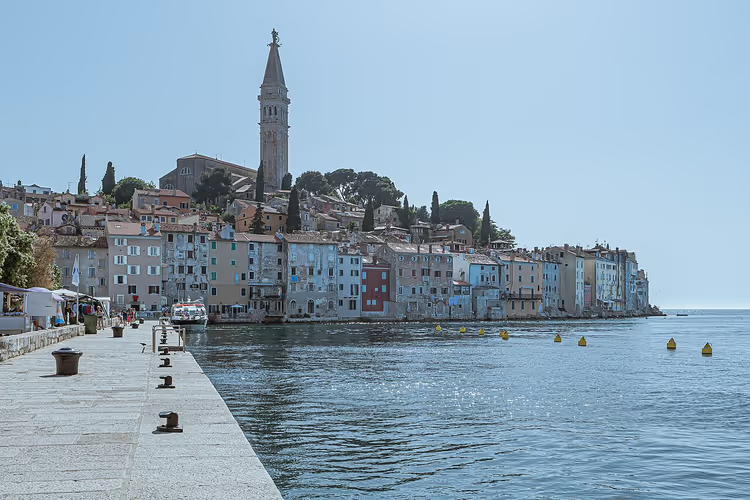
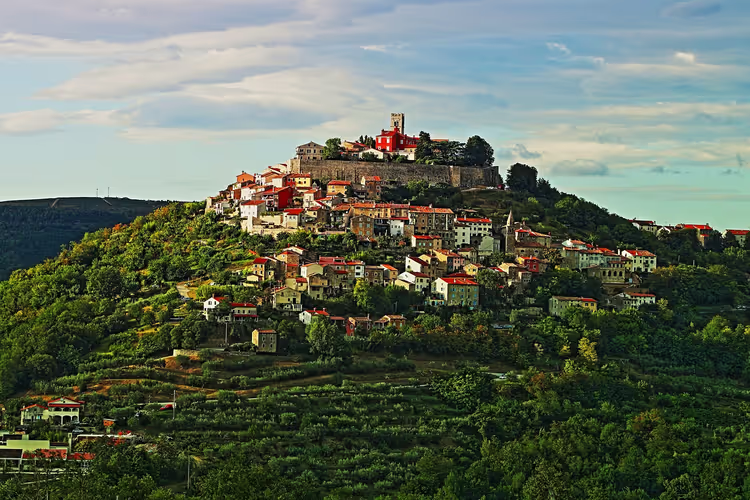
The coast is divided into three parts: Istria in the north, Kvarner Bay in the middle and Dalmatia in the south. Istria is green and hilly. Here you find Rovinj with its pastel houses by the water, Poreč with family resorts and campsites, Pula with the amphitheater, and hilltop towns such as Motovun and Grožnjan in the interior of the peninsula. People choose the region for the short drive, the food and the child-friendly beaches. Kvarner Bay is more compact, and it is easy to move between its resorts.
Dalmatia is drier and more rugged: the mountains drop straight to the sea, and islands stretch along the coast. This is where Zadar, Šibenik, Trogir, Split, the Makarska Riviera and Dubrovnik are. Split is larger and makes a convenient base for the islands and Krka National Park. Dubrovnik is more compact and suits a short, packed trip, but it is the most expensive city in the country.
Among the islands, Hvar is chosen for lavender and nightlife, Brač for Zlatni rat beach, Vis for quiet and little development, Korčula for its old town, which is compared to a smaller Dubrovnik. With small children, look at Medulin with its gently shelving entry into the water, and at the islands of Krk and Rab.
| Region or city | Who it suits | What to keep in mind |
|---|---|---|
| Istria | Families with children and anyone who values a short drive and good food | Green and hilly; the resorts of Rovinj, Poreč and Pula, with hilltop towns in the interior |
| Kvarner Bay | Anyone who wants to see several resorts in one trip | Compact, and it is easy to move between the resorts |
| Dalmatia | Anyone coming for the islands and ancient cities | Drier and more rugged, the mountains drop to the sea; many coves cannot be reached without a car |
| Split | Anyone who needs a base for the islands and Krka National Park | The city is larger than Dubrovnik |
| Dubrovnik | For a short, packed trip | Compact, but the most expensive city in the country |
| The islands of Hvar, Brač, Vis and Korčula | Hvar for nightlife, Brač for the beach, Vis for quiet, Korčula for the old town | Reached by ferry or catamaran; a car space is booked in advance in summer |
| Medulin, Krk and Rab | Families with small children | Medulin has a gently shelving entry into the water |
Our articles on this
- Where to go in Croatia: 25 resorts for beaches, islands and mountains
- Istria or Dalmatia: how to choose a region for your vacation
- Where to go in Croatia in 2026: resorts, hotels and swimming season
- Split or Dubrovnik: which city to choose for a 2026 vacation
- Brac island: Zlatni rat beach, Vidova gora and Pustinja Blaca hermitage
Hotels: what to check before you book
Croatia has few all-inclusive hotels with their own beach, and the concept works differently than in Turkey or Egypt. It usually means three buffet meals, water, local wine and beer, while imported alcohol, coffee from the bar and à la carte dishes most often cost extra. Before you book, check the type of beach: sand, pebbles or stone slabs. The largest camping resorts with water parks are concentrated in Istria.
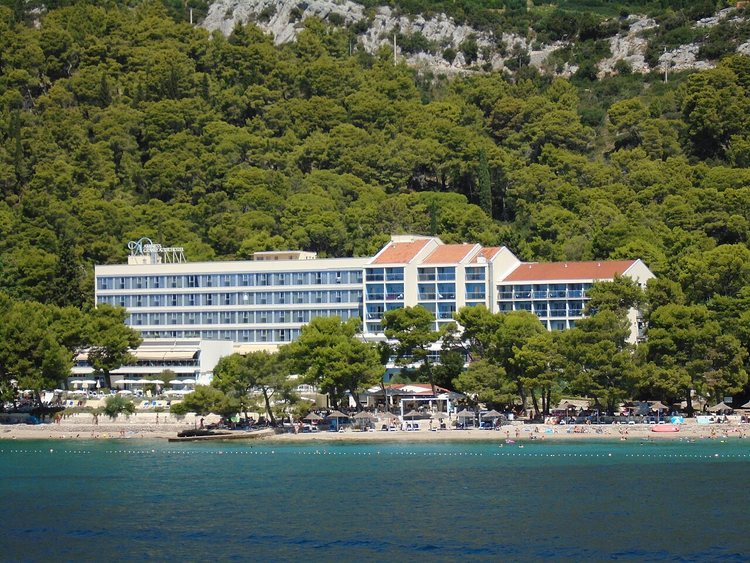
The cheapest accommodation is almost always an apartment, not a hotel. A few kilometers from the resort center it costs about the same, but you get more space. A tourist tax is added to the nightly rate: its amount is set by the municipality, and it is usually paid at check-in. Hotels for August are taken months ahead, so book the peak season early.
Ad
Compare places to stay in Croatia on Trip.com
We earn a commission through this link; your price stays the same.
Our articles on this
- Croatia all inclusive: 15 hotels with a private beach and meals included
- 10 Best hotels in Croatia with a beach and all inclusive: where to stay
- Sandy beach in Croatia: 15 hotels by the sea
- 15 Hotels in Croatia for family holidays: where to stay by the sea
- Where to go with kids in Croatia: hotels and campsites with water zones
Tours and tickets
A ticket to Plitvice Lakes is tied to a specific entrance and a time slot, and the number of tickets is limited, so buy it online in advance. The electric boat and the panoramic train in the park are already included in the ticket.
Tours start from three cities: Dubrovnik, Split and Zagreb. Choose the ones that depart from where you are staying: Dubrovnik and Split are about three hours apart by car one way. From Dubrovnik, boats go to the island of Lokrum and day trips go to Mostar. From Split the closest options are Omiš, Krka and Trogir, and from Zadar boats run to the Kornati islands. A bus tour to Plitvice Lakes makes sense if you have no car.
Ad
See tours in Croatia on GetYourGuide
We earn a commission through this link; your price stays the same.
Ad
See attraction tickets in Croatia on Tiqets
We earn a commission through this link; your price stays the same.
Our articles on this
Food: how to read a konoba menu
The local tavern is called a konoba. Portions are large, so two people can share one main dish, a salad and bread. The menu splits into two halves. Dalmatia and the islands offer fish, mussels, octopus and stewed meat; Istria, Kvarner and the mainland rely on pork, sausages and lamb.
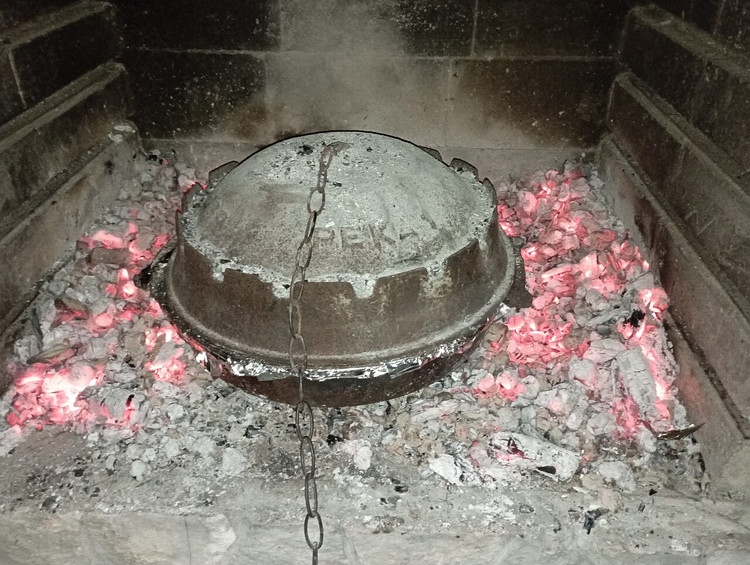
Among Dalmatian dishes, people order pašticada, stewed beef with gnocchi, black risotto with squid ink, and grilled sardines. Peka is meat or octopus with potatoes under a lid covered with embers: it takes a long time to cook, so order it as soon as you walk in, or in advance.
Istria is known for truffles from the forests near Motovun, for olive oil and for Fuži pasta. The wine to choose here is the white Malvazija Istarska, in Dalmatia the red Plavac Mali.
| Name on the menu | What it is | Region and tip |
|---|---|---|
| Pašticada | Stewed beef with gnocchi | Dalmatia |
| Black risotto | Risotto with squid ink | Dalmatia and the islands |
| Grilled sardines | Fish from the Dalmatian half of the menu | Dalmatia and the islands |
| Peka | Meat or octopus with potatoes under a lid covered with embers | Takes a long time: order as soon as you walk in, or in advance |
| Truffles | Fungi from the forests near Motovun | Istria |
| Fuži | Istrian pasta | Istria |
| Malvazija Istarska | White wine | Istria |
| Plavac Mali | Red wine | Dalmatia |
Our articles on this
Airports, roads and ferries
In summer it is most convenient to fly to Split, Zadar or Dubrovnik; Pula also has an airport, but fewer flights go there. Once there you will almost certainly need a car, especially in Dalmatia: public transport barely reaches many of the coves. Split and Dubrovnik are about 250 km apart, there is no direct train, and people travel by bus, car or ferry.
Croatian motorways are tolled, but there is no vignette: you take a ticket when you enter and pay for the stretch you drove when you exit, in cash or by card. If you are driving your own car through Austria and Slovenia, get the vignettes for those countries before you leave. In July and August, do not set off on a Saturday: that is the day with the most cars at the border.
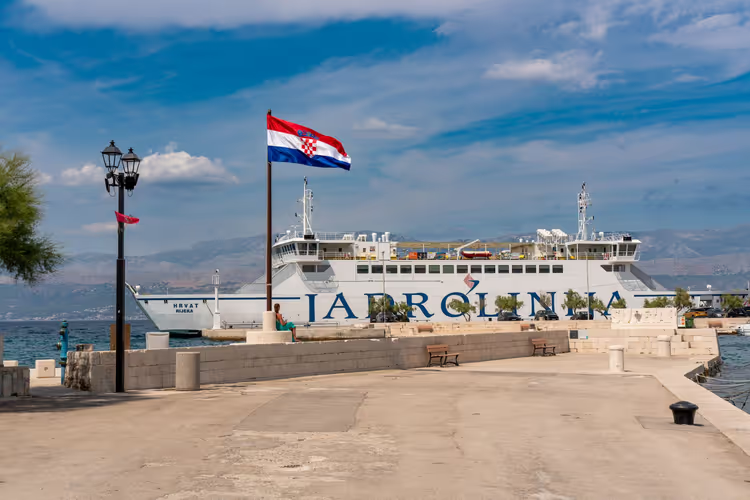
Ferries come in two types. Catamarans carry passengers only and are fast, car ferries take vehicles. Most lines depart from Split, Zadar and Dubrovnik; the main operator is Jadrolinija. The catamaran from Split to Hvar town takes about 50 minutes. In July and August book a car space in advance, and check the timetable on the day of travel: the wind on the Adriatic changes sailings without warning.
| From and to | How to travel | What to keep in mind |
|---|---|---|
| Split to Dubrovnik | Bus, car or ferry | About 250 km, no direct train; about three hours by car, longer by bus and ferry |
| Split to Hvar town | Catamaran | About 50 minutes; catamarans carry passengers only |
| To the islands with a car | Car ferry | In July and August book a car space in advance, check the timetable on the day of travel |
| Split to Krka National Park | Car | About an hour's drive |
| Split to Plitvice Lakes | Car on the toll motorway | Almost three hours; without a car a bus tour makes sense |
| Istria to Dalmatia | Car on the motorway | The road is tolled: ticket on entry, payment for the stretch you drove on exit |
Ad
Book a fixed price airport transfer in Croatia
We earn a commission through this link; your price stays the same.
Our articles on this
Best time to go and weather
You can swim on the coast from May to October. In May the water stays at about 17 °C, in June it rises to 21 °C, in July and August it reaches 23 or 24 °C, and in September it stays at about 22 °C. July and August are the months for the beach, but they also bring the crowds and the highest prices. In spring and fall the water is warmer in the south, so if you want to swim in May or October, look at Dalmatia.
May, June and September are more comfortable for cities and national parks: the heat is milder and the lines are shorter. Spring is asparagus season in Istria, and in fall the grapes are harvested and truffle season begins.
In winter the Adriatic resorts go quiet, the temperature on the coast rarely drops to zero, and snow lies in the mountains and around Plitvice Lakes. The winter program is Advent in Zagreb, the carnival in Rijeka in February, thermal pools and skiing. Summer festivals run from late June to mid-September.
| Time of year | Sea and weather | What it suits |
|---|---|---|
| May | Water about 17 °C, warmer in the south | Cities and national parks, asparagus season in Istria; for swimming, look at Dalmatia |
| June | Water rises to 21 °C, the heat is milder | Cities, national parks and the sea without peak crowds |
| July and August | Water 23-24 °C | Beach vacations and festivals; crowds and the highest prices |
| September | Water about 22 °C, shorter lines | Warm sea, cities and national parks |
| October | End of the swimming season, water warmer in the south | Dalmatia for the sea, grapes and truffles in Istria |
| Winter | The temperature rarely drops to zero on the coast, snow in the mountains and around Plitvice Lakes | Advent in Zagreb, the carnival in Rijeka in February, thermal pools and skiing |
Twelve months compared: find the best time to go
Our articles on this
- When to go to Croatia: sea temperature by month
- Autumn vacation in Croatia: warm sea, wine and truffles until November
- Croatia in May: warm cities, cold sea and a ticket for 23 €
- Istria in spring: weather, asparagus and cities without crowds
- What to do in winter in Croatia: thermal pools, skiing and campsites without crowds
- Zagreb in December 2026: fairs, markets and city walks
- What to see in Croatia in summer: 10 festivals of 2026
Budget: how to work out your own total
There are no daily rates here. The total for a trip to Croatia is made up of getting there, accommodation, food, toll roads and ferries, and entrance tickets. The main lever is the region: the difference between regions is bigger than the difference between years. Dubrovnik and the islands are the most expensive, while the inland part of the country, the Istrian interior and second-tier towns such as Šibenik and Trogir are noticeably cheaper.
The second variable is the month. Accommodation and car rental cost noticeably less in September and October than in August, and national park tickets in spring and fall are almost half the July and August price. Restaurants in the tourist centers have gone up the most: walk a couple of blocks away from the old town.
Where saving really makes a difference: an apartment with a kitchen instead of a hotel, accommodation a few kilometers from the resort, groceries from the supermarket, traveling outside the peak. You work out your own total in the calculator: it separates accommodation, food, transport, entrance tickets, getting there and a reserve.
Calculate a travel budget for Croatia
Our articles on this
Routes: one week, ten days and two weeks
For a week, this plan is enough: two days for Dubrovnik and Ston, a day for Split, a day for Plitvice Lakes and a day for Zadar.
In ten days you can comfortably cover Dalmatia by car, not the whole country. Stick to three or four bases: Zadar, Split, the Makarska Riviera with Mount Biokovo, and Plitvice Lakes. Both main parks can realistically be done in two days from Split: Krka is about an hour's drive, Plitvice Lakes almost three hours on the toll motorway.
With two weeks, combine the regions: start in Istria and work your way down the coast to Dalmatia, the motorway links them directly. Leave a spare day before your flight, because a ferry can be rescheduled due to wind.
Day planner: check what fits into one day
Our articles on this
Practical matters: documents, money, connectivity, insurance
Croatia is part of the Schengen Area and the eurozone. EU citizens do not need a separate visa, and general Schengen rules apply at the border.
Cards are accepted almost everywhere. You need cash at markets, in village konobas, at parking meters and on small islands, so keep a small reserve. If a card terminal or an ATM offers conversion, choose to be charged in euros.
Bring water shoes for the pebbles and rocks: they also protect you from sea urchins. Swimming is prohibited in Plitvice Lakes. Check the roaming terms for Croatia with your carrier before the trip. An eSIM is a backup way to have internet from the first minute: for maps, tickets on your phone and the ferry timetable. Take out travel insurance before you leave and read what exactly it covers.
Build a packing list for the Croatia trip
Ad
See eSIM options for Croatia on Yesim
We earn a commission through this link; your price stays the same.
Ad
See travel insurance on World Nomads
We earn a commission through this link; your price stays the same.
Our articles on this