





Cyprus: a guide for independent planning
Cyprus is a compact island in the eastern Mediterranean where beaches, mountains and ancient ruins fit into a single trip. There are two tourist zones: the south, the Republic of Cyprus, and the north with Kyrenia and Famagusta, which you reach through the crossing points on the “Green Line.” The resorts of the south offer very different vacations, so the trip starts with choosing a base. This page lays out the island for independent planning: what to see, which resort to choose, how hotels, airports and roads work, and when to go. Each section stays short and leads on to our detailed articles. There are no prices here: hotels, car rental and tickets in Cyprus rise and fall with the season, so you work out your own total in the calculator.
What to see: the big picture
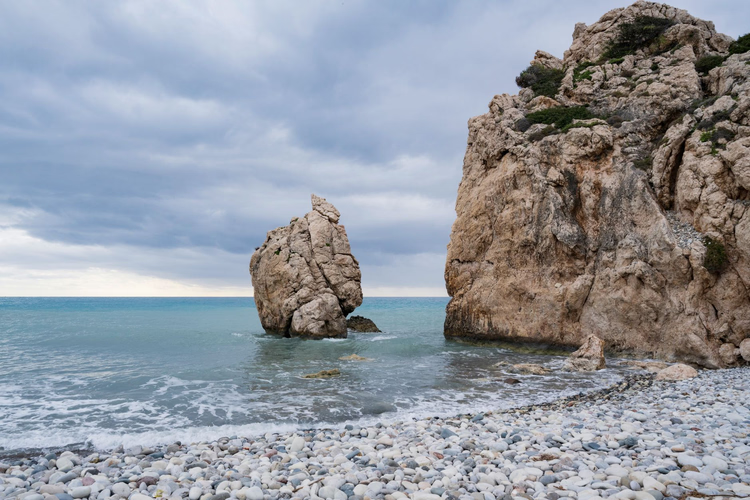
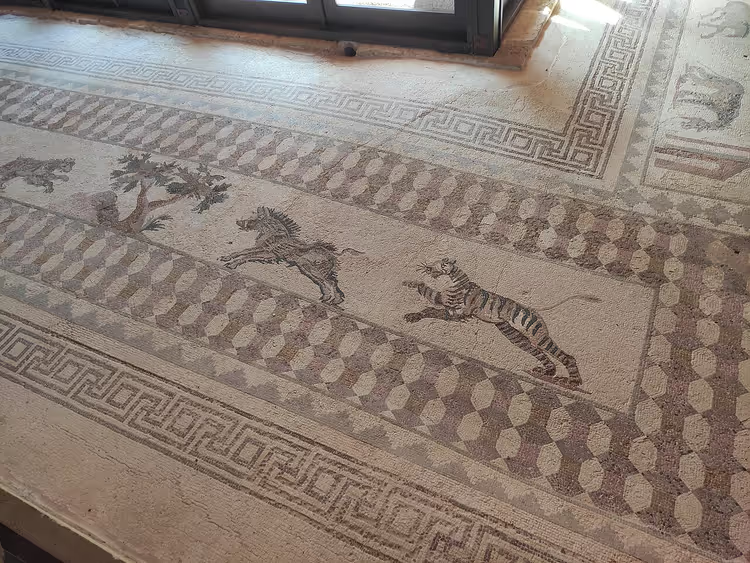
Paphos anchors the island's ancient sights. The Archaeological Park in Kato Paphos, with the mosaics of Roman villas including the House of Dionysus, is on the UNESCO World Heritage List. Nearby are the rock-cut Tombs of the Kings and the medieval castle by the harbor. Between Paphos and Limassol people stop at Aphrodite's Rock, and near Limassol they visit ancient Kourion with its theater.
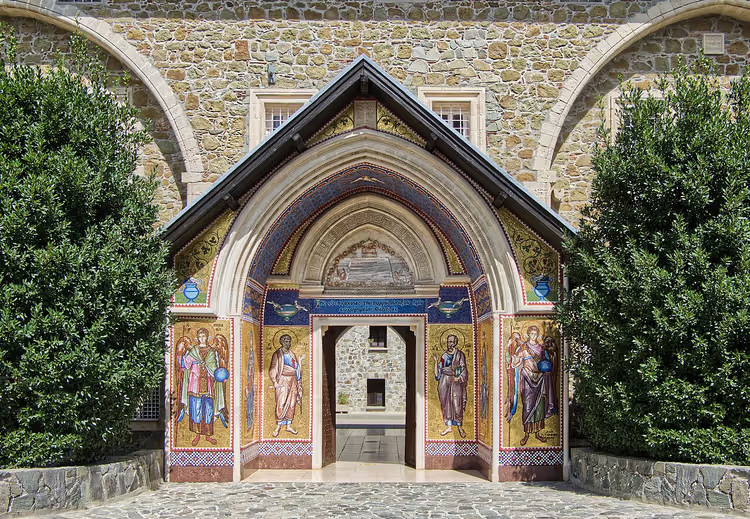
In the center of the island rise the Troodos Mountains, with Mount Olympus as the highest point. It is cooler here than on the coast, and the sights are stone villages, Kykkos Monastery, Caledonia Waterfall and the painted churches from the UNESCO list. In the southeast the natural highlights are Cape Greco with its sea caves and the Blue Lagoon, in the west the Akamas Peninsula with Avakas Gorge.
Nicosia is the capital, divided by the “Green Line”; its historic center lies within the Venetian walls. In the north, people go to Famagusta for the old town, the empty quarter of Varosha and ancient Salamis, and to Kyrenia for the castle by the harbor and Bellapais Abbey.
Our articles on this
Resorts and regions: where to go
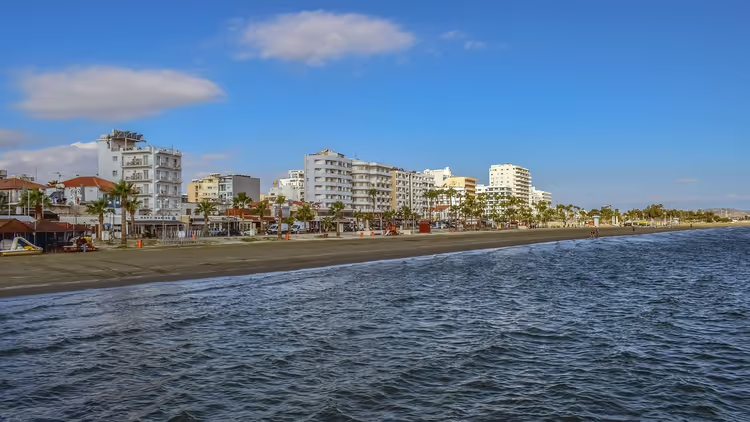
There are five resort areas in the south. Limassol is the largest and the most versatile: a seafront promenade, an old town, nightclubs, a water park, and the Troodos and Kourion are close by. Paphos is quieter and has no late-night discos; people choose it for antiquity and calm, but the entry into the sea is often rocky, so look for sandy stretches in Coral Bay. Larnaca is usually cheaper than its neighbors and sits next to the main airport: the beaches are sandy and shelve gently.
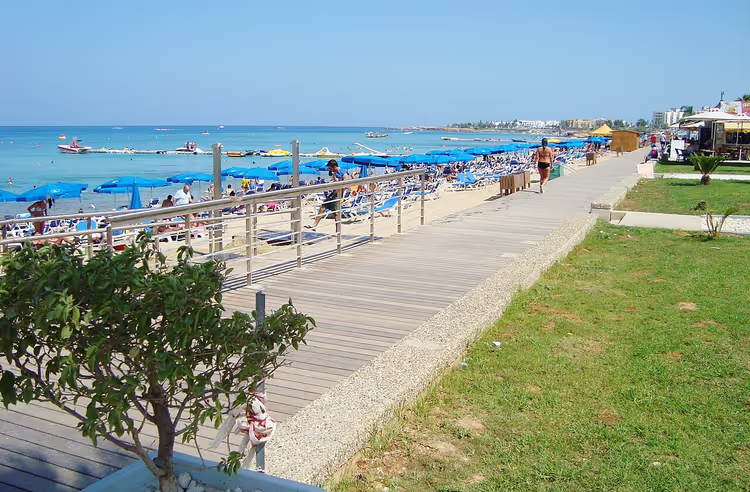
Ayia Napa is a clubbing resort with pale, fine sand: at night the music plays until dawn, so for quiet sleep people stay away from the center. Protaras lies next door but has no loud clubs: couples and families choose it for the coves and the gentle entry at Fig Tree Bay. With children, people most often go to Protaras, Larnaca and the sandy beaches of Ayia Napa.
Cyprus is easy to put together from two bases: Limassol or Larnaca give you beach and city, while Paphos and Protaras add antiquity and quiet. In the north, Kyrenia and Famagusta welcome visitors.
| Resort | Who it suits | What to keep in mind |
|---|---|---|
| Limassol | Those who want everything at once: beach, city, nightlife | The highest accommodation prices; the Troodos and Kourion are close |
| Paphos | Those who come for antiquity and calm | No late-night discos; the entry into the sea is often rocky, look for sand in Coral Bay |
| Larnaca | Families with children and those watching their budget | The main airport is nearby; sandy beaches that shelve gently |
| Ayia Napa | Fans of clubs and pale, fine sand | The music plays until dawn; for quiet sleep, stay away from the center |
| Protaras | Couples and families with children | No loud clubs; a gentle entry at Fig Tree Bay |
Our articles on this
- Cyprus: which resort to choose for a holiday and what to see
- Five Cyprus resorts: which one to choose for beaches, clubs and antiquity
- 11 Cyprus resorts 2026: beaches, quiet and nightlife
- Where to go in Cyprus: resorts and hotels for all inclusive holidays
- Cyprus with kids: 10 resorts and towns for a family vacation
- Where to stay in Paphos: 5 districts and the best hotels in each
- Ayia Napa: which area to choose for your type of holiday
Hotels: beachfront, all-inclusive and what to check
Cyprus has more than fifty Blue Flag beaches, and many resort hotels operate on an all-inclusive basis. Beachfront means different things: for one hotel it is a private sandy beach with sunbeds, for another a public strip across the road. Sand is not everywhere, and at some Paphos hotels the entry into the sea is rocky, so before booking check the shore, the distance to the water and the meal plan.
For a trip with children, look for a gentle entry into the water, a kids' club and a heated pool in the shoulder season; hotels with their own water park are on the southern and eastern coasts. For a vacation without children, the island has a separate group of hotels that do not accept guests under sixteen. Book accommodation for the high season well in advance.
Ad
Compare places to stay in Cyprus on Trip.com
We earn a commission through this link; your price stays the same.
Our articles on this
- Where to stay by the sea in Cyprus: 20 5-star hotels with all inclusive and half board
- 15 Cyprus 4 star hotels on the first line: how to choose for a couple and family
- Your own beach by the sea: 17 hotels in Cyprus where you can stay on the property
- Cyprus 3 star all inclusive hotels: 15 options by the sea with a pool
- Where to stay in Cyprus: 15 hotels by a sandy beach
- Family hotels in Cyprus: 15 options for a seaside holiday with children
- Where to go with a child in Cyprus: 15 hotels with a kids club and pool
- Cyprus with kids: 15 hotels with their own water park
- 15 Adults-only hotels in Cyprus: where to stay without children
- Paphos 4* all inclusive hotels: private beach or 400 meters to the sea
- How many meters to the beach: 13 hotels in Paphos 3 stars
- 20 Hotels in Ayia Napa: comparing beaches, food and location
- Family hotels in Ayia Napa: 15 options near Nissi and Landa beaches
- 12 3* Hotels in Ayia Napa: pool, dining and who it suits
Tours and tickets
At the Paphos Archaeological Park, a line forms at the ticket office by ten in the morning in high season, so an online ticket is more convenient, and the visit is best planned for the morning: there is little shade. If you have several ancient sites in your plan, look at the combined ticket from the Department of Antiquities for one or several days. A ticket to the WaterWorld water park in Ayia Napa is also easier to get online in advance.
Boat trips leave from the ports of Paphos, Larnaca, Limassol and Ayia Napa. From Ayia Napa, boats go to Cape Greco, the sea caves and the Blue Lagoon with a swimming stop, while cruises to the bays of Akamas set off from Latchi harbor.
A tour makes sense where you would rather not drive on the left side of the road: groups travel to the monasteries and villages of the Troodos from Limassol and Paphos. Organized trips also go to Famagusta in the north of the island; you need a passport for this trip.
Ad
See tours in Cyprus on GetYourGuide
We earn a commission through this link; your price stays the same.
Ad
See tickets for sights and attractions on Tiqets
We earn a commission through this link; your price stays the same.
Our articles on this
Food: meze, halloumi and village tavernas
Cypriot cuisine combines Greek and Turkish traditions. The main format is meze: a set of many small plates brought in several rounds, from salads and cheeses to hot meat or fish dishes. One set is enough for two. Halloumi cheese is grilled and served warm: it does not melt and holds its shape.
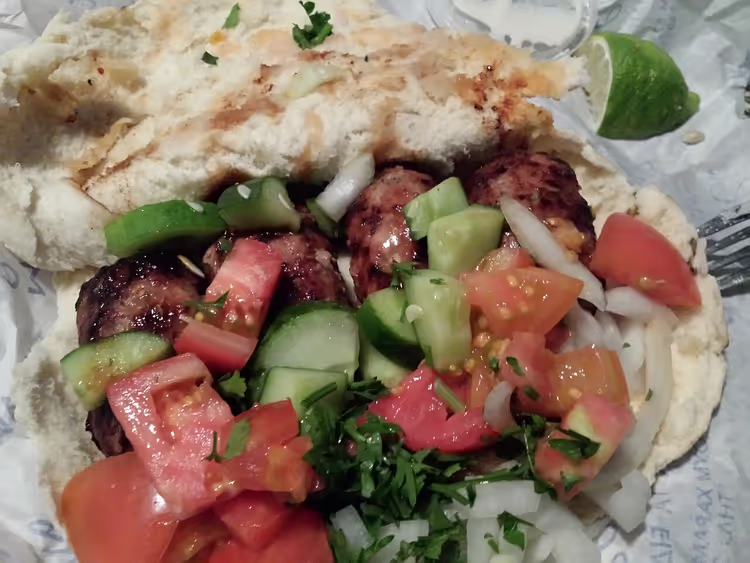
For meat, people order souvlaki, sheftalia, kleftiko and afelia. Seafood is cooked best in the cafes on the coast: grilled squid, octopus in red wine.
Dinner is worth having in a village taverna: the portions there are more generous and the bill is lower than on a resort's beachfront. It is better to book a table in a village by phone, because on weekdays places close early and on Sundays they are packed. The southern slopes of the Troodos are the island's main wine region, where Commandaria wine is made; seven wine routes run across the island.
Airports, buses and car rental
The island's main gateway is Larnaca Airport in the southeast; a second international airport operates in Paphos in the west. From Larnaca, city bus 425 runs to the Finikoudes promenade in the city center, a direct express goes to Limassol about once an hour, and a direct shuttle goes to Ayia Napa. The express does not run at night, which leaves a taxi, a transfer booked in advance or a rental car. From Paphos Airport, bus 612 goes to the Kato Paphos seafront and bus 613 to the upper town.
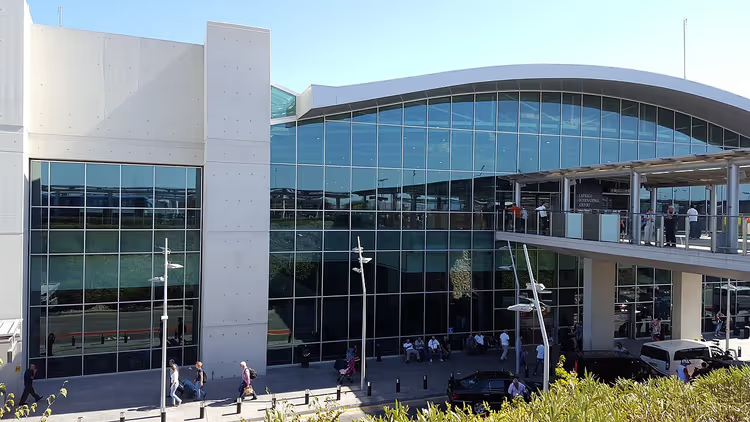
Intercity buses run between the resorts of the south, but the timetables are sparse, especially in the evening and on weekends. You need a car for the villages, the monasteries of the Troodos, the Akamas Peninsula and remote coves, which public transportation barely reaches.
Cyprus drives on the left and the steering wheel in a rental car is on the right, so take an automatic and drive the first kilometers more slowly. To rent, you need a driver's license, a passport and a card for the deposit. Driving a rental car to the north requires additional insurance.
| From and to | How to travel | What to keep in mind |
|---|---|---|
| Larnaca Airport to central Larnaca | City bus 425 | Takes you to the Finikoudes promenade |
| Larnaca Airport to Limassol | Direct express | Runs about once an hour, not at night |
| Larnaca Airport to Ayia Napa | Direct shuttle | At night, a taxi or a transfer booked in advance |
| Paphos Airport to Kato Paphos | Bus 612 | Goes to the seafront |
| Paphos Airport to the upper town | Bus 613 | For those staying in the upper town |
| Villages, Troodos, Akamas | Rental car | Driving is on the left, take an automatic |
Ad
Book a fixed-price airport transfer in Cyprus
We earn a commission through this link; your price stays the same.
Our articles on this
Best time to visit and weather
The sea in Cyprus is warm for almost half the year: swimming is comfortable from June through November, and the water is warmest in August. In May the days are already warm, but the sea does not heat up right away, so this month is chosen more for sightseeing and empty beaches. June is the most balanced: the water is warm and the real heat has not arrived yet.
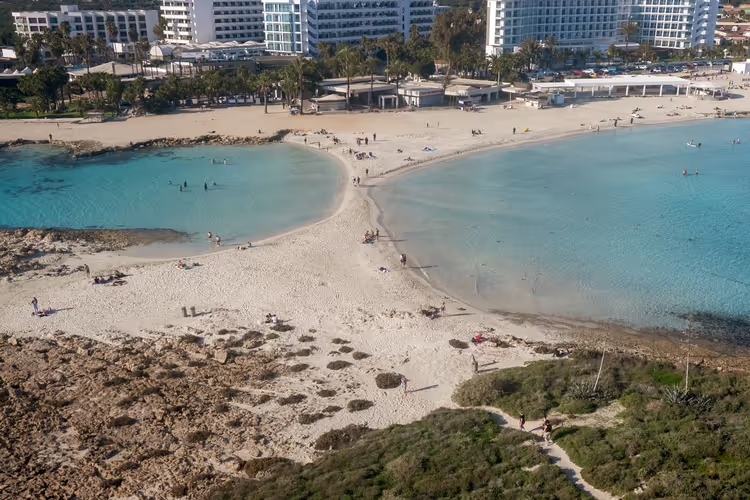
July and August are the hottest and the most expensive. There is almost no rain, the beaches are crowded, and sightseeing moves to the morning and evening. September and October are the mellow late season: the sea is still warm, there are fewer people, and these months suit exploring the island on foot better than summer.
The island does not close in winter. Museums and some of the hotels stay open, and in the Troodos Mountains snow usually settles before Christmas and a short ski season opens. In spring the island is green, but the water stays cold until April.
| Time of year | Weather and crowds | What it suits |
|---|---|---|
| April and May | The island is green, days are warm, the sea is still cool | Sightseeing, walks, empty beaches |
| June | The water is warm, the real heat has not arrived yet | Beach and exploring the island together |
| July and August | The hottest months, almost no rain, crowded beaches | The sea; sightseeing only in the morning and evening |
| September and October | The sea is still warm, fewer people | Beach and exploring the island on foot |
| Winter | Museums and some of the hotels are open, snow in the Troodos Mountains | Cities, museums, a short ski season |
Twelve months compared: find the best time to go
Our articles on this
- When to go to Cyprus: six months of warm sea and skiing on Troodos
- When to go to Ayia Napa: 27-28 °C sea and rainy season
- When is the best time to go to Paphos: monthly weather and sea season
- Cyprus holidays in May: weather, sea and prices by resort
- Cyprus in May: 8 beach resorts where the water is already warming up
Budget: how to work out your own total
There are no daily rates here. The total for a trip to Cyprus is made up of flights, accommodation, food, transportation or car rental, admission tickets and entertainment. Accommodation takes the largest share, and it also depends most on the season: July and August are the most expensive, while in spring and fall the same rooms cost noticeably less. The resort matters too: Limassol has the highest accommodation prices, Larnaca is considered more budget-friendly, and Paphos sits in between.
Where saving really makes a difference: traveling in the shoulder season, an apartment with a kitchen for a longer stay, lunch one block back from the promenade, and dinner in a village taverna instead of on the beachfront. A car is cheaper to book in advance.
You work out your own total in the calculator: it separates accommodation, food, transportation, admission tickets, getting there and a reserve.
Calculate your Cyprus trip budget
Our articles on this
Routes: a loop around the island, Paphos and the Troodos
For a first trip, a simple rule works: one outing inland for every two beach days.
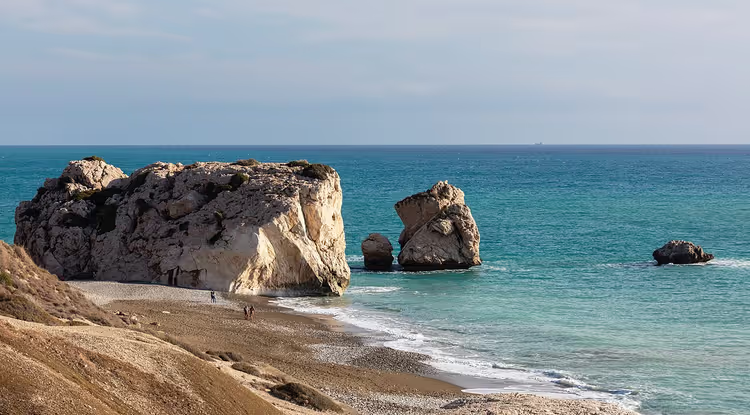
By car, you circle the island clockwise: start in Larnaca, then Ayia Napa and Cape Greco, the village of Lefkara, Zygi, Aphrodite's Rock, Paphos in the west, the climb into the Troodos and Nicosia in the center. Plan no more than two or three stops a day. In three or four days you will only cover the south, and the north with Kyrenia and Famagusta is better left for a separate trip.
Paphos fits into two days: Kato Paphos with the Archaeological Park, the upper town and one big outing to the mountains or to the bays of Akamas. The Troodos cannot be seen in one day: give one day to the villages and the second to Kykkos Monastery and Caledonia Waterfall.
| How many days | What fits | Tip |
|---|---|---|
| 2 days | Paphos: Kato Paphos with the Archaeological Park, the upper town and one big outing | Choose one outing: the mountains or the bays of Akamas |
| 2 days | Troodos: villages, Kykkos Monastery and Caledonia Waterfall | One day for the villages, the second for the monastery and the waterfall |
| 3-4 days | Only the south of the island by car | Leave the north with Kyrenia and Famagusta for a separate trip |
| A week | Beaches and two outings inland | One outing for every two beach days |
| 7-10 days | A loop around the island with all the main stops | No more than two or three stops a day |
Day planner: check what fits into one day
Our articles on this
Practicalities: documents, rules, connectivity, insurance
The Republic of Cyprus is a member of the European Union but not of the Schengen Area. EU citizens do not need a visa, and an ID card is enough to enter. Everyone else should check with a consulate in advance whether a visa for Cyprus is required and which documents to prepare for it. You cross to the north of the island through the crossing points on the “Green Line,” for example on Ledra Street in Nicosia: take your passport and allow up to half an hour for the crossing.
Working monasteries and mosques have a dress code: shoulders and knees covered. Behind the wheel, remember that driving is on the left, do not park at a curb marked with a yellow line, and keep in mind that the penalties for speeding and alcohol are severe.
Check the roaming terms for Cyprus with your carrier before the trip. An eSIM is a backup way to have internet from the first minute: for maps, tickets on your phone and bus timetables. Take out travel insurance before you leave and read what exactly it covers.
Make a packing list for your Cyprus trip
Ad
We earn a commission through this link; your price stays the same.
Ad
See travel insurance on World Nomads
We earn a commission through this link; your price stays the same.
Our articles on this