



Greece: the guide for planning it yourself
Greece is a mainland plus islands, about six thousand of them across the country, of which only 227 are inhabited. One trip realistically covers one or two islands, so it starts with a choice: Athens with its antiquity, one big island for a week, or several small ones linked by ferry. Moving between islands takes a whole day, and that belongs in the plan from the start. This page sorts the country for your own planning: what to see, which island or region to choose, how hotels, ferries and roads work, and when to go. Every section stays short and leads on to our detailed articles. There are no prices here: hotels, ferries and tickets in Greece rise and fall with the season, so you work out your own total in the calculator.
What to see: the big picture
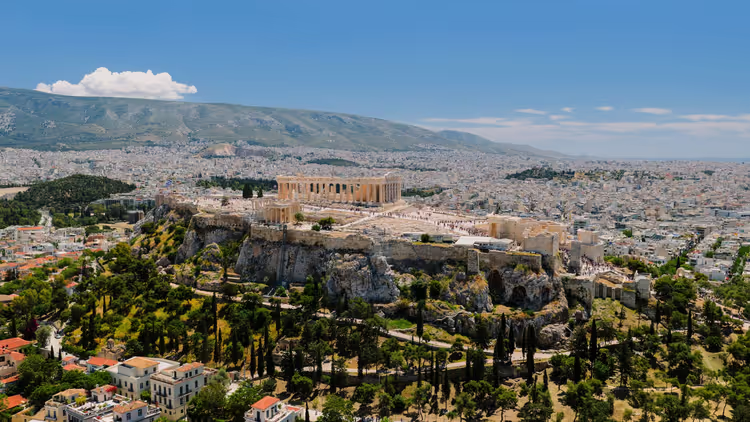
Athens carries the country's ancient program. The Acropolis with the Parthenon stands above the city, the Theater of Dionysus lies on its southern slope, and close by in the center are the Ancient and Roman Agoras, the Temple of Olympian Zeus and the marble Panathenaic Stadium.
On the mainland, Meteora in Thessaly is worth a trip of its own: six working monasteries on top of rock pillars above the town of Kalambaka, a UNESCO World Heritage site. Delphi, with the ruins of the Temple of Apollo, lies at the foot of Mount Parnassus. In Thessaloniki people go to see the White Tower on the waterfront, the Arch of Galerius and the Byzantine churches, and in Halkidiki the Petralona Cave.
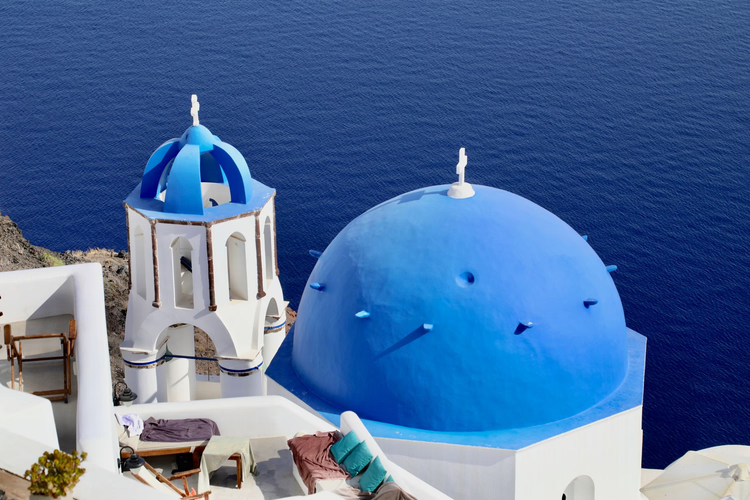
On the islands history stands next to the beach. On Crete it is the Palace of Knossos near Heraklion and the fortress of Spinalonga; on Rhodes the medieval old town on the UNESCO list and the acropolis of Lindos; on Corfu the Venetian old town with its two fortresses; on Santorini the caldera and the excavations at Akrotiri.
Our articles on this
- Acropolis in Athens 2026: tickets, hours and main temples
- What to see in Athens: 30 places, tickets and practical tips
- Knossos palace: tickets, opening hours and the road from Heraklion
- Meteora monasteries: tickets, closed days and the road from Athens
- Rhodes in a week: 30 attractions with prices and opening hours
- What to see in Corfu: 15 main places on the island
- Thessaloniki sights: 9 places for a first visit
- Halkidiki: 25 places from Petralona cave to Varvara waterfalls
- Santorini: what to see, where to swim and how to get there
- 10 Places on Kos: Asclepieion, Hippocrates plane tree and old town
- 20 Museums in Athens: what to see and how to plan your day
- What to see in Athens: 8 places from the Acropolis to Panathinaiko
- Theater of Dionysus in Athens: where the first tragedies were performed and how to see it
- Labyrinth of the Minotaur: where the real palace is and how much a ticket costs
- Melissani lake in Kefalonia: tickets, boat and time for photos
Islands, regions and cities: where to go
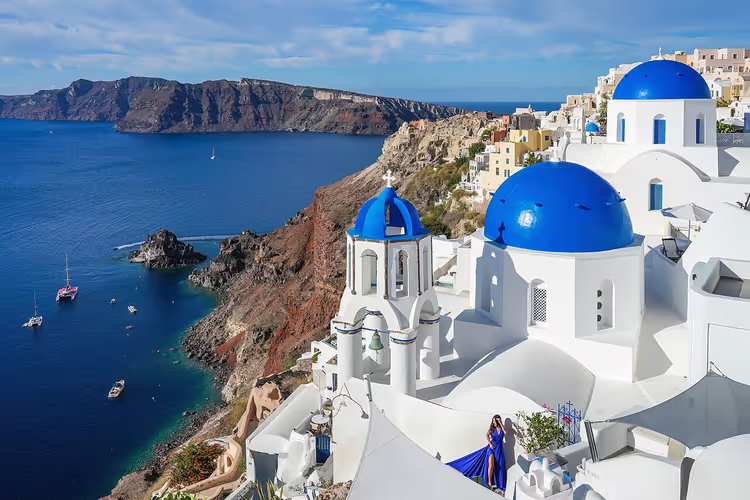
The islands are grouped into archipelagos, which makes the choice easier. The Cyclades offer white towns and volcanic beaches: people pick Santorini for the caldera and the sunsets, Mykonos for the nightlife. The Dodecanese mean ancient history: Rhodes, Kos and Karpathos. The Ionian Islands are greener, with a milder climate: Corfu, Zakynthos, Kefalonia.
Crete stands apart: it is the largest island in the country, and you cannot get around all of it in one trip. The best beaches lie in the west, from Balos to Elafonisi, the all-inclusive hotels and the nightlife cluster in the northeast around Malia, and Chania or Rethymno are the recommended base for a first visit.
On the mainland, Athens works as a city for a few days and Thessaloniki as the country's second city, with a Byzantine heritage. Halkidiki is three peninsulas: Kassandra with its hotels and lively beaches, the quieter and greener Sithonia, and Athos with its monasteries. The Peloponnese is chosen for antiquity and quiet. Families with children most often go to Crete, Rhodes, Kos, Corfu and Zakynthos, and those after peace and quiet to Karpathos, Ikaria, Samos and Andros.
| Destination | Who it suits | What to keep in mind |
|---|---|---|
| Crete | A first trip of a week, families with children | The largest island in the country, you cannot get around all of it in one trip; Chania or Rethymno are the recommended base |
| Rhodes | Ancient history and beaches, families with children | More compact than Crete and easy to get around in a few days |
| Santorini | Caldera views and sunsets | The island is compact, three or four days are enough |
| Mykonos | Nightlife | Allow three or four days |
| Corfu, Zakynthos, Kefalonia | Green islands with a milder climate; families with children go to Corfu and Zakynthos | In October the rains are already beginning on the Ionian Islands |
| Halkidiki | A beach vacation on the mainland | Three peninsulas: Kassandra with its hotels and lively beaches, the quieter Sithonia, and Athos with its monasteries |
| Athens | A city for a few days with antiquity | Best months: April, May, September and October |
| Karpathos, Ikaria, Samos, Andros | Those after peace and quiet | A move between islands takes a whole day, so build that into the plan from the start |
Our articles on this
- Where to go in Greece in 2026: 25 resorts for different types of holidays
- 30 Islands of Greece: which one suits beaches, family or quiet
- Islands of Greece: which one to choose for beaches, history and nightlife
- Where to go in Greece: 20 destinations with beaches, views and history
- 8 Resorts in Greece: where to go for beaches, wine and history
- Resorts of Greece on the Aegean Sea: 15 destinations for different vacations
- Holidays with kids in Greece: 15 resorts with gently sloping sea entry
- Where to stay in Crete: areas, beaches and hotels for vacation
- Which side of Crete is better: four coasts and travel times
- Where to stay in Athens: 9 neighborhoods from Plaka to Pangrati
- Caldera, beach or village: how to choose where to stay on Santorini
- Chora, Ornos or a wild beach: 20 Mykonos areas to stay in for 2027
- Where to stay on Naxos: areas from the port to remote beaches
- Where to stay in Rhodes: 6 places for quiet and lively holidays
- Rhodes all inclusive: hotels, beaches and the best time to visit
Hotels: all-inclusive and what to check
On the islands many resort hotels run on an all-inclusive basis. The price usually covers breakfast, lunch and dinner, drinks and some of the entertainment, but the package varies: ask whether alcohol, dinners in the à la carte restaurants, sun loungers and umbrellas are included. Check the type of beach too, sand or pebbles, and the journey from the airport: on Crete it takes anywhere from ten minutes to two hours.
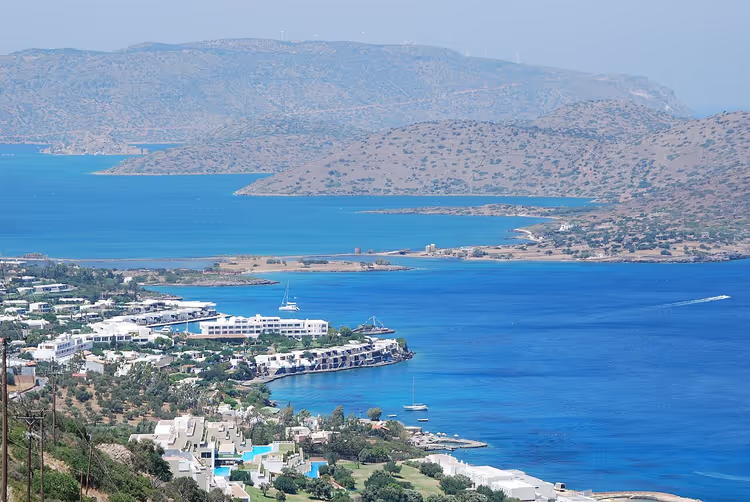
Book hotels with their own beach several months ahead, especially if you need particular dates and family rooms. In winter the resort villages on the islands are closed, and hotels operate only in the towns. In Athens you choose the neighborhood first: Plaka or Monastiraki right by the Acropolis for a first visit, while Koukaki is quieter and cheaper.
Ad
Compare places to stay in Greece on Trip.com
We earn a commission through this link; your price stays the same.
Our articles on this
- Private beach and all inclusive: 16 hotels in Greece on Crete, Mykonos, Rhodes and in Athens
- 10 Family hotels in Greece all inclusive: pools, kids club, private beach
- 15 All inclusive hotels in Greece: Crete, Mykonos, Zakynthos and honest downsides
- Greece 4 star all inclusive hotels: 12 options for a beach holiday
- Greece with kids: 16 hotels with a water park and slides
- Crete all inclusive: 25 five-star hotels for families and couples
- Crete 5 star hotels by the sea: 15 options for families, couples and quiet holidays
- Beach without transfer: 12 Crete 4* hotels with all inclusive
- Which 4 star hotel to choose in Crete: 15 options with a sandy beach
- Where to go in Crete with a child: 15 family hotels with children's pools
- 15 Best 3-star hotels in Crete: sandy beach and meals
- Rhodes 5 stars all inclusive: thirteen hotels on the first line
- 15 Rhodes 4 star hotels: all inclusive and first line by the sea in 2026
- Which Rhodes hotels are right on the sand: 15 options for families and couples
- Where to stay in Corfu: ten seaside all inclusive hotels
Tours and tickets
You need a timed ticket for the Acropolis in Athens: in high season the slots go several days ahead, and without a booking you can stand at the entrance for more than an hour. Entry to the acropolis of Lindos on Rhodes is sold online by time slot in the same way. Meteora has no combined ticket, and admission is paid in cash separately at each monastery.

A tour pays off where the journey is complicated. From Athens the bus to Meteora takes about four and a half hours and the train about five each way, so a day tour takes the timetable and the closing days off your hands. Cape Sounion with the Temple of Poseidon is easiest to reach on a day tour from Athens. On Crete a typical day trip is the Lasithi Plateau with a wine tasting and the Kera Monastery.
| Site | Ticket and entry | What to keep in mind |
|---|---|---|
| The Acropolis in Athens | Timed ticket; you choose the slot when you buy | In high season the slots go several days ahead; allow three hours for the visit |
| The acropolis of Lindos on Rhodes | Entry by hourly time slot, tickets are sold online | The climb is long and goes up steps, so bring water in the heat |
| The Meteora monasteries | No combined ticket; admission is paid in cash separately at each monastery | Each monastery is closed one day a week, and all six are open on weekends |
| The Palace of Knossos on Crete | A ticket with a time slot is best booked online in advance | The visit takes an hour and a half to two hours; there is little shade, so bring water and a hat |
Ad
See tours in Greece on GetYourGuide
We earn a commission through this link; your price stays the same.
Ad
See museum and attraction tickets on Tiqets
We earn a commission through this link; your price stays the same.
Our articles on this
Food: how to read a taverna menu
Greek cooking rests on a handful of ingredients: olive oil, vegetables, feta cheese, fish, and meat grilled over charcoal. A meal starts with meze, a set of small dishes placed in the middle of the table and shared by everyone: tzatziki, dolmadakia, fava. Order two or three per person, otherwise there will be no room left for the main course.
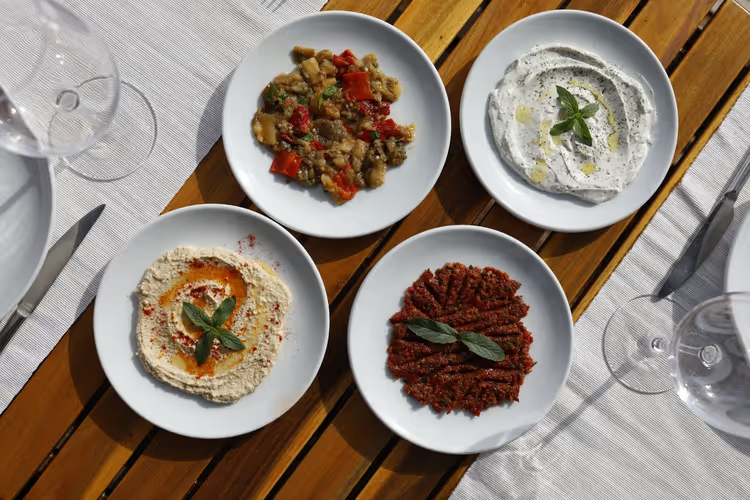
For hot dishes people order moussaka, souvlaki and kleftiko, and by the sea grilled octopus and squid. Gyros in pita comes from street food counters, and the same places sell spanakopita for breakfast, a flaky pastry pie with spinach and feta.
Look for local cooking in tavernas, small family run restaurants. A psarotaverna is a fish restaurant, and near a port its octopus and squid are fresher. On the islands in summer the bill is higher than on the mainland in winter.
Our articles on this
Airports, ferries and rental cars
The country's main gateway is Athens airport. Metro line 3 gets you from there to Syntagma Square in about forty minutes, but it does not run at night; the X95 bus runs around the clock, and taxis charge a fixed fare. Crete, Rhodes, Kos and Santorini are easy to reach on a direct flight.
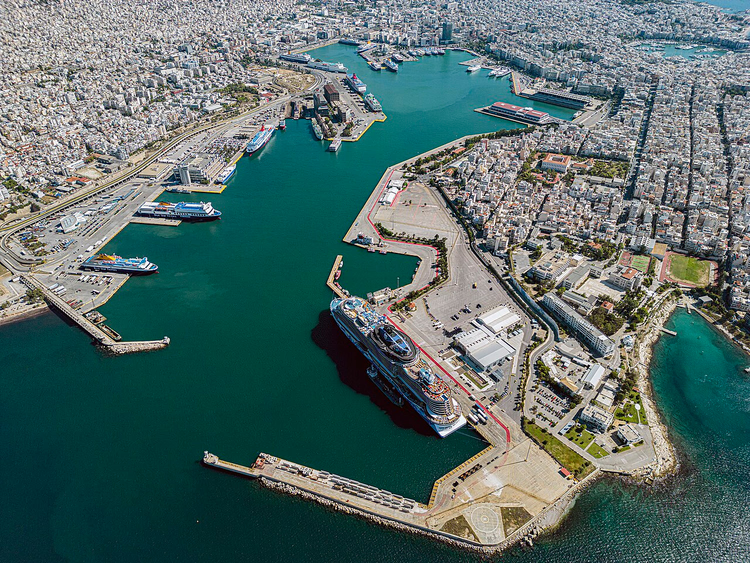
Ferries run between the islands, and to islands without an airport there is no other way. From Athens they leave from three different ports, Piraeus, Rafina and Lavrio, so check the port on your ticket carefully. For an overnight crossing take a cabin. In summer sailings are sometimes halted because of the meltemi, a strong northerly wind, so do not put a ferry and your flight home on the same day.
Buses on the islands follow the coast and hardly go inland, so you need a car for beaches and mountain villages. To rent one you need a license held for at least a year and a bank card in the driver's name; with a license issued outside the EU you also need an international driving permit. An airport transfer is convenient at night, with children and with suitcases.
| Route | How to travel | What to keep in mind |
|---|---|---|
| From Athens airport to the center by day | Metro line 3 to Syntagma Square | About 40 minutes; the metro does not run at night |
| From Athens airport to the center at night | The X95 bus or a taxi at a fixed fare | The bus runs around the clock and takes about 60 minutes to Syntagma Square |
| From Athens airport to the port of Piraeus | The X96 bus | The ride takes about 90 minutes; metro line 3 also goes as far as Piraeus |
| To Crete, Rhodes, Kos and Santorini | Direct flight | Small islands work better as the second stage, after a big island with a direct flight |
| Between the islands | Ferry | From Athens the ferries leave from three ports, Piraeus, Rafina and Lavrio; for an overnight crossing take a cabin |
| To beaches and mountain villages on the islands | Rental car | Buses follow the coast and hardly go inland; you need a license held for at least a year |
| From Athens to Meteora | Bus or train | The bus takes about four and a half hours, the train about five each way; a day tour takes the timetable off your hands |
Ad
Book a fixed price airport transfer in Greece
We earn a commission through this link; your price stays the same.
Our articles on this
Best time to go and weather
Swimming in Greece is comfortable from mid May through October. Around Crete, Rhodes and Halkidiki the water warms up earlier than in the Cyclades. The most even months are June and September: the sea is warm and there are fewer people on the beaches. July and August are the hottest and the most crowded, and in the Aegean the meltemi then blows almost every day: windsurfers need it, while in sheltered coves it almost dies down.
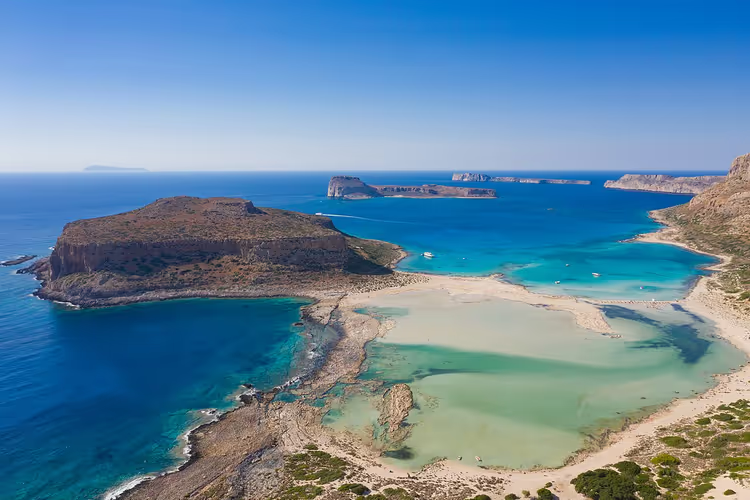
In October the sea around Crete and Rhodes stays warm, and people swim there until the end of the month, while the rains begin in the north and on the Ionian Islands.
For Athens the best months are April, May, September and October. Winter in Greece is the season of the mainland: the Acropolis and the museums without lines, cheaper hotels, snow in the mountains, and skiing on Parnassus near Arachova. The resort villages on the islands are closed in winter, and there are noticeably fewer ferries.
| Time of year | Sea and weather | What to keep in mind |
|---|---|---|
| April and May | The best months for Athens | Hotels on the islands cost noticeably less than in August |
| Mid May | The start of the swimming season | Around Crete, Rhodes and Halkidiki the water warms up earlier than in the Cyclades |
| June and September | The sea is warm and there are fewer people on the beaches | The most even months for a vacation by the sea |
| July and August | The hottest and most crowded months | In the Aegean the meltemi blows almost every day, and ferry sailings are sometimes halted |
| October | Around Crete and Rhodes the sea stays warm until the end of the month | The rains begin in the north and on the Ionian Islands |
| Winter | The season of the mainland: snow in the mountains, skiing on Parnassus | The Acropolis and the museums without lines; the resort villages on the islands are closed, and there are noticeably fewer ferries |
Twelve months compared: find the best time to go
Our articles on this
- Greece in May: where it is warm, what is open and what to book in advance
- Greece in May: when the sea warms up and which resort to choose
- Greece in October: warm sea, empty beaches and prices below August
- Greece in April: where you can already swim and how much a night costs before the season
- Winter Greece: the Acropolis without queues and skiing on Parnassus
- Winter Crete and Rhodes: where everything works, but resorts stay closed
- Athens by season: when there are fewer tourists and the heat is not a problem
- Athens in November: how to buy an Acropolis ticket without queues
- Meltemi: where in Greece it blows strongest and when to go
- Festival calendar of Crete: ten unusual holidays by season
Budget: how to work out your own total
There are no daily rates here. The total for a trip to Greece is made up of flights, accommodation, ferries or a rental car, food and admissions. Accommodation changes the most: it peaks in August, hotels on the islands cost noticeably less in April, May and October, and in Athens the lowest prices hold from November to March.
Where saving really makes a difference: a trip at the start or the end of the season, a taverna away from the main tourist streets, the set lunch menu instead of dinner, gyros and spanakopita from a street food counter. It is often cheaper to rent a car on the island itself than to bring one over by ferry: a car on board is charged separately.
You work out your own total in the calculator: it separates accommodation, food, transport, admissions, getting there and a reserve.
Calculate a travel budget for Greece
Our articles on this
Routes: Athens, the mainland and the islands
Athens fits into a short itinerary because the main antiquities stand close to one another in the center. In one day you can walk the loop: the Acropolis, the Temple of Zeus, Syntagma Square, Plaka, both agoras and sunset on Lycabettus Hill. From Athens people go to Delphi, Olympia, Nafplio and Corinth for a day or with one overnight stay.
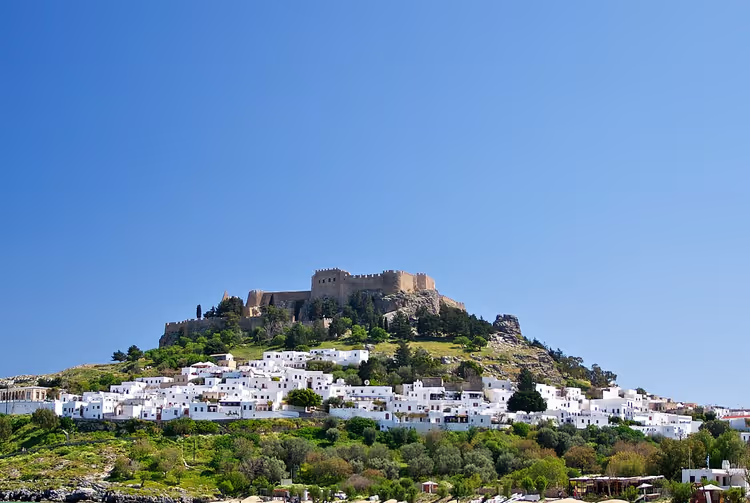
On the islands the rule of bases applies. A compact island like Santorini or Mykonos needs three or four days; for Crete or Rhodes allow at least a week. A week on Crete is split between two bases, in the west and in the center, so that you are not behind the wheel every day.
If several islands are in the plan, do not change them too often: every move eats a whole day. Small islands work better as the second stage, after a big island with a direct flight, and between the last ferry and the flight home leave a margin of one or two days.
Day planner: check what fits into one day
Our articles on this
- Athens in 3 days: route through the Acropolis, Agora and Sounion
- Athens in 2 days: route from the Acropolis to Plaka and the coast
- Athens in one day: a route through ancient sites with prices
- Crete in a week: where to stay, what to see and what to try
- Heraklion in 4 days: route with ticket prices and airport transfer
- How to travel around Rhodes in five days: Lindos, Faliraki and Prasonisi
- Crete by rental car: 20 places, tickets and route around the island
- Rhodes by car: twenty places on the island and a three-day route
- Corfu by car: 20 places from a Venetian shipyard to wild bays
Practical matters: documents, rules, connectivity, insurance
Greece is part of the Schengen Area. EU citizens do not need a visa; a passport or a national ID card is enough. Everyone else should check whether their country has visa free travel to the Schengen Area. The Entry/Exit System, EES, operates at the border, and travelers from third countries have their fingerprints and a photo taken, so allow more time for the checks.
Monasteries only admit visitors in modest clothing: shoulders and knees covered, and women need a skirt below the knee. In Athens watch your bags on the metro at the Acropolis, Syntagma and Monastiraki stations and in the crowd by the Parthenon: pickpockets work there. There is almost no shade on the Acropolis, and the marble is polished smooth and slippery, so bring comfortable shoes, water and a hat.
Check the roaming terms for Greece with your own provider before the trip. An eSIM is a backup way to have internet from the first minute: for maps, tickets on your phone and the ferry timetable. Take out travel insurance before you leave and read what exactly it covers.
Build a packing list for the Greece trip
Ad
See eSIM options for Greece on Yesim
We earn a commission through this link; your price stays the same.
Ad
See travel insurance on World Nomads
We earn a commission through this link; your price stays the same.