
















Sri Lanka: A Guide for Independent Planning
Sri Lanka fits ocean, jungle, tea hills and ancient cities onto a single island. On the map it looks compact, but two rules shape the whole trip. First: the weather is set by two monsoons, and when it rains on one coast, it is dry on the other. Second: distances here are deceptive, the roads wind, and a stretch that looks short on the map easily takes half a day. This page lays the island out for independent planning: what to see, which coast to pick for your month, where to stay, how to get around and what to know before you fly. There are no prices here: they depend on the season, the coast and the rupee exchange rate, so instead of figures we give you a calculator.
What to See: Ancient Cities, Hills and National Parks
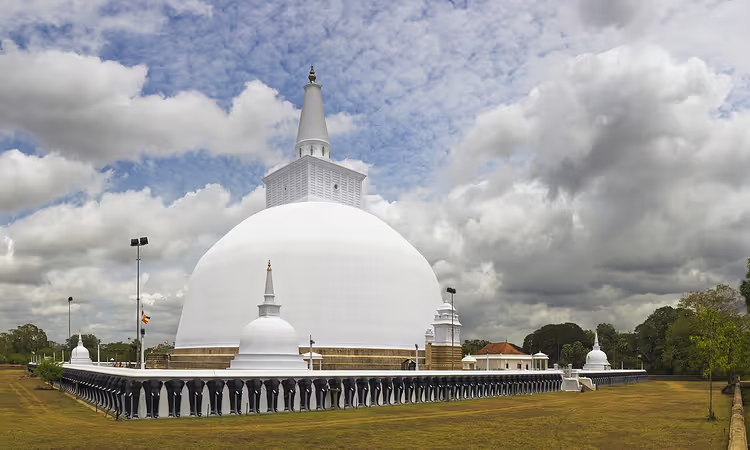
A tour of the island usually starts in the Cultural Triangle in the center. This is where Sigiriya stands, the Lion Rock with palace ruins on the summit, frescoes, the Mirror Wall and the Water Gardens at its foot. Nearby are the Dambulla cave temple with its murals and Buddha statues, the ruins of the island's second capital at Polonnaruwa and the sacred city of Anuradhapura with the Ruwanwelisaya stupa and the Bodhi tree.
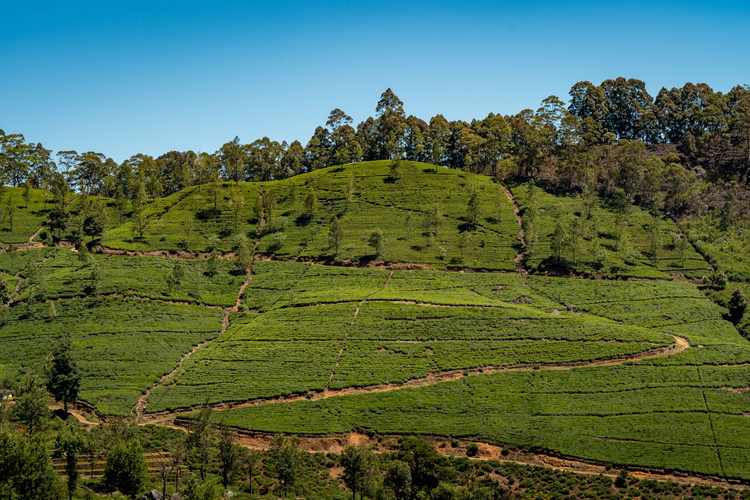
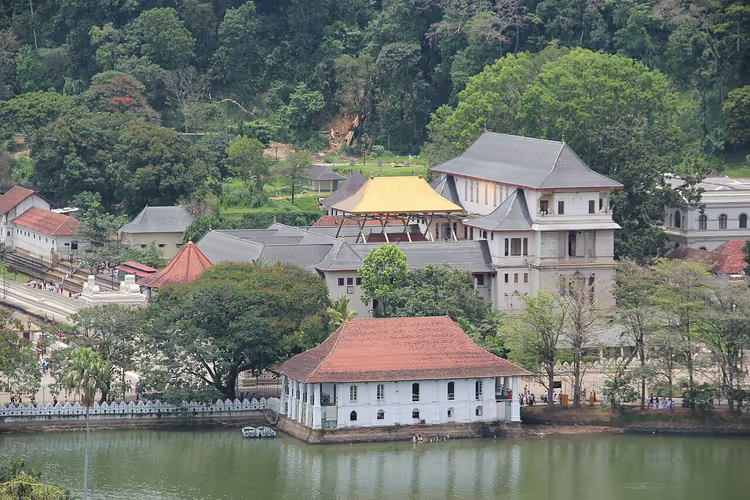
The second part is the hills. People go to Kandy for the Temple of the Tooth and the Royal Botanical Gardens in Peradeniya, to Nuwara Eliya for the tea plantations, and to Ella for the Nine Arch Bridge and Little Adam's Peak. On the coast, the main historic site is Galle Fort.
The third part is wildlife. In Yala National Park people look for leopards, in Udawalawe you will almost certainly see elephants, and Wilpattu on the west coast is the country's largest park, with noticeably fewer visitors. The island has eight UNESCO World Heritage sites.
Our articles on this
- 25 places in Sri Lanka: what to see and when to go
- Sigiriya in Sri Lanka: how to climb Lion Rock and what to see
- Colombo and Kandy: 18 places, tickets and the road between the cities
- Sri Lanka: season, visa and eight places worth seeing
- Sapphires of Ratnapura: how to visit the mines and avoid buying a fake
Coasts and Regions: Where to Go
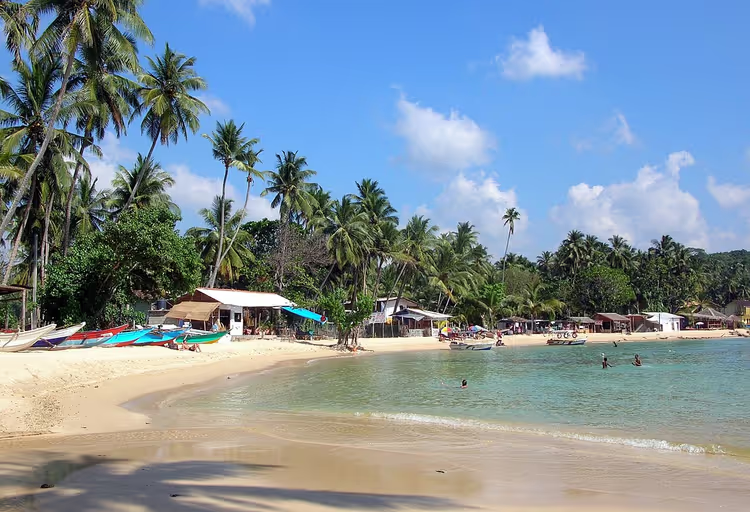
The main choice in Sri Lanka is not between hotels but between coasts. The west coast means Negombo near the airport, convenient for the first and last night, and Bentota with its long beach and water sports. In the south, one after another, come Hikkaduwa with its coral reef and surfing, Unawatuna with a quiet bay that is good for swimming with children, Galle, Mirissa, where the whale-watching boats set out, and peaceful Tangalle.
The east coast runs on the opposite season. Trincomalee, with the beaches of Uppuveli and Nilaveli, is chosen for a summer vacation, Arugam Bay draws surfers from all over the world, and Batticaloa suits those looking for quiet. In the north lies Jaffna, where Tamil is spoken and tourists are few.
The hill towns stand apart from the sea and need a leg of the route to themselves. Kandy is the cultural capital by the lake, Nuwara Eliya is a cool resort among tea plantations, and Ella is a base for hiking. The drive between the coasts takes almost a full day, so for one trip plan one coast and the hills, not both coasts at once.
| Region | Main places | Who it suits |
|---|---|---|
| West coast | Negombo, Bentota | First and last night near the airport, a long beach and water sports |
| South coast | Hikkaduwa, Unawatuna, Galle, Mirissa, Tangalle | Surfing and a coral reef, a quiet bay for swimming with children, boat trips to the whales |
| East coast | Trincomalee, Arugam Bay, Batticaloa | Summer vacation, surfing, quiet |
| North | Jaffna | Those looking for places with few tourists |
| Hills | Kandy, Nuwara Eliya, Ella | Cultural capital, tea plantations, hiking; needs a leg of the route to itself |
Our articles on this
- 25 Sri Lanka resorts: where to swim, catch a wave and watch whales
- 20 Best beaches in Sri Lanka in 2026: where to swim and when to go
- Sri Lanka: where to stay, what to see and when to go
- Hikkaduwa or Unawatuna: where the surfing is and where the quiet swimming bay is
- Nuwara Eliya: train through tea plantations and the climb up Adam's Peak
Hotels and Guesthouses: How to Choose
The island has no official star system: hotel categories are assigned by tour operators and the owners themselves, so look at the range of services and recent reviews rather than the number. Family-run guesthouses often include breakfast in the rate and real contact with the hosts, while large beachfront resorts offer their own beach, a pool and an “all-inclusive” format. Before booking, ask about a mosquito net and hot water.
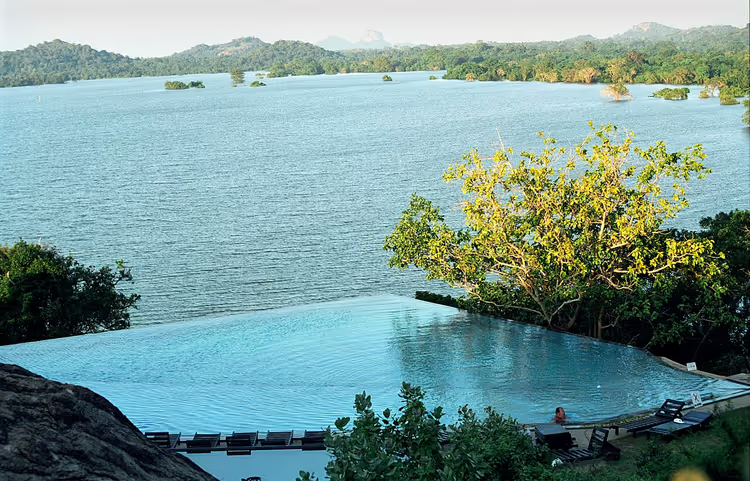
Picking one base and driving from it to every sight will not work: the places are scattered across the island. You sleep where you sightsee. The first night after the flight is easiest to spend in Negombo near the airport. Book high-season accommodation in advance: in late December and over the New Year holidays the south is packed. Choose a beach hotel together with the coast: south and west in winter, east in summer.
Ad
Compare hotels and guesthouses in Sri Lanka on Trip.com
We earn a commission through this link; your price stays the same.
Our articles on this
- 13 guesthouses and hotels in Sri Lanka: where to stay and what's included
- 15 Beach hotels in Sri Lanka: which coast to choose in 2026
- Sri Lanka all inclusive: 15 hotels from Sigiriya to Yala
- Where to stay in Sri Lanka: 13 4-star hotels by the ocean
- Where to swim without waves in Sri Lanka: 15 hotels near reefs and lagoons
- Where to go with a child in Sri Lanka: 15 hotels by the sea and in the jungle
Safaris, Whales, Climbs and Tours
Safaris in the national parks run only by jeep with a driver or guide, and the vehicle is booked in advance. In Yala the chances are best early in the morning or toward evening, when the predators go out to hunt, but nobody can guarantee a leopard. Udawalawe is where you go for elephants, and near Sigiriya the herds gather in the Minneriya and Kaudulla parks. Whales are watched from a boat: off Mirissa the season runs from January to April, off Trincomalee from June to September.
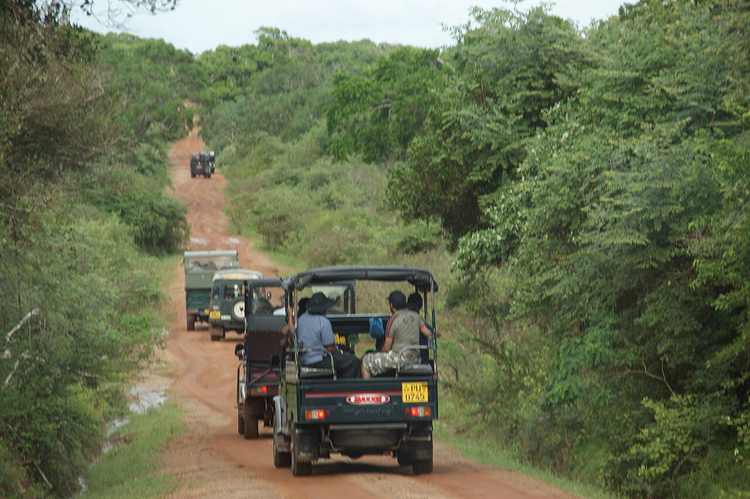
The climb up Adam's Peak starts at night so that you meet the sunrise on the summit; in the pilgrimage season, roughly from December to May, the steps are lit. Snorkeling needs no certification: the reef comes right up to the shore at Hikkaduwa and near Pigeon Island in the east. A ticket for Sigiriya is easier to get online ahead of time, so you do not have to stand in line at the ticket office.
| What | Where | When and what to keep in mind |
|---|---|---|
| Leopard safari | Yala National Park | Best chances early in the morning or toward evening; a jeep with a driver is booked in advance, a leopard sighting is not guaranteed |
| Elephants | Udawalawe, the Minneriya and Kaudulla parks near Sigiriya | In Udawalawe you will almost certainly see elephants |
| Whales in the south | Mirissa | January to April, by boat |
| Whales in the east | Trincomalee | June to September, by boat |
| Adam's Peak | Central highlands | A night climb to meet the sunrise; the steps are lit roughly from December to May |
| Snorkeling | Hikkaduwa, Pigeon Island | No certification needed, the reef comes right up to the shore |
Ad
See safaris and tours in Sri Lanka on GetYourGuide
We earn a commission through this link; your price stays the same.
Ad
See tickets for Sri Lanka attractions on Tiqets
We earn a commission through this link; your price stays the same.
Our articles on this
Food and Tea: Rice, Curry and Spices
The island's cooking is built around rice, fish, seafood and spices: dishes are generously seasoned with curry, cinnamon and coconut. Try rice and curry, coconut roti and fresh fruit from the market: mango, papaya, passion fruit. A Sri Lankan breakfast is egg hoppers, curry, fruit and tea. If you are not used to spicy food, say so when you order.
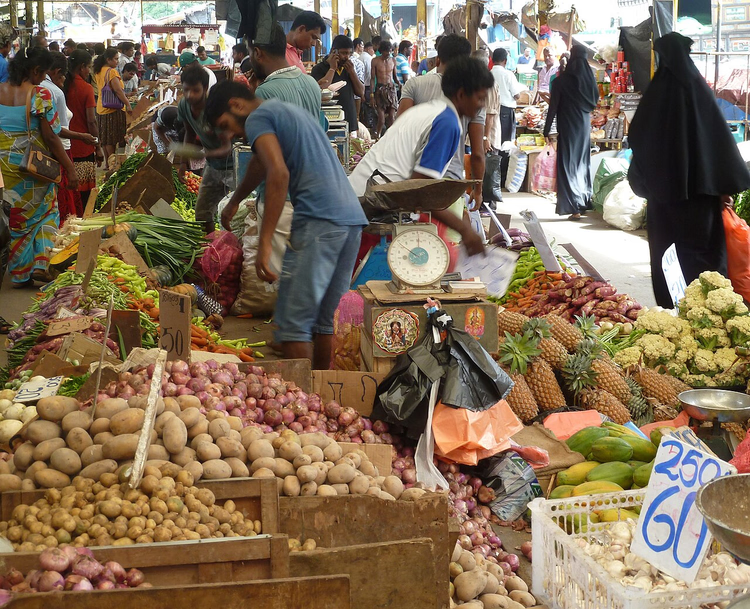
The tea here is still called Ceylon tea. Buy it in brand stores or at a factory and look for the Sri Lanka Tea Board logo on the pack. Tap water is not for drinking, in a hotel or in a restaurant: get bottled water. On Poya full moon days alcohol is not sold anywhere in the country, even in “all-inclusive” hotels.
Our articles on this
Getting Around: Train, Bus, Driver and Tuk-Tuk
Bandaranaike International Airport is in Katunayake: Negombo is very close from there, Colombo is farther, and the southern beaches are several hours away. At night, with children or with a lot of luggage, a transfer is more convenient: the driver waits in the arrivals hall.
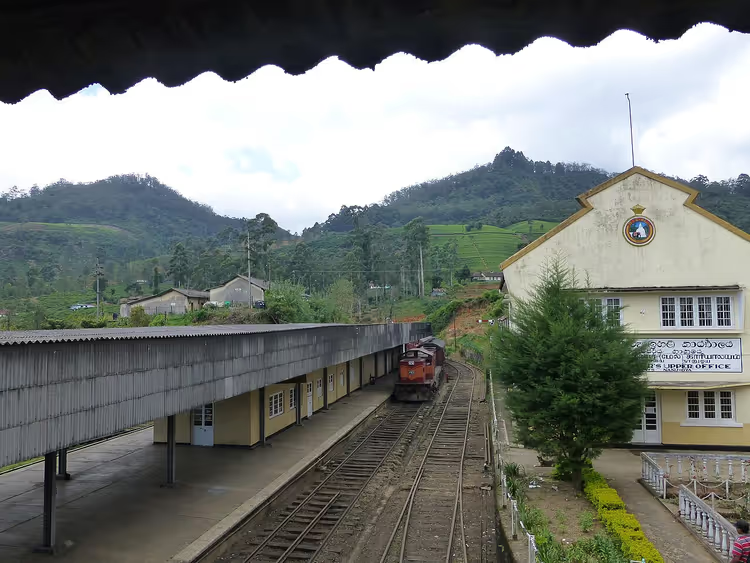
Between towns you have the train, the bus, a private driver and a rented tuk-tuk. The railway runs from Colombo into the hills and along the south coast through Hikkaduwa and Galle, but the tracks do not reach Arugam Bay or Tangalle. The hill line through the tea plantations is considered a sight in its own right, and seats on it sell out weeks ahead. After the cyclone, the section between Kandy and Nanu Oya was closed for repairs, and trains run from Nanu Oya to Ella: before your trip, check on the Sri Lanka Railways website whether the whole line has reopened. Buses are cheap and go almost everywhere, but they take a long time.
A driver with a car for the day removes the question of timetables and is convenient for families. For your own tuk-tuk you need a temporary local license, which the rental company arranges; for a car or a scooter you need an international one. In the cities PickMe and Uber operate: you see the fare before the ride, and there is no need to bargain.
| Transport | Where it takes you | What to keep in mind |
|---|---|---|
| Train | From Colombo into the hills and along the south coast through Hikkaduwa and Galle | The tracks do not reach Arugam Bay or Tangalle; seats on the hill line sell out weeks ahead |
| Bus | Almost everywhere | Cheap but slow |
| Driver with a car | Along your own route for a full day | Removes the question of timetables, convenient for families |
| Rented tuk-tuk | Anywhere, at your own pace | A temporary local license is needed, the rental company arranges it |
| PickMe and Uber | Rides around town | You see the fare before the ride, no need to bargain |
| Airport transfer | From the arrivals hall to your hotel | Convenient at night, with children and with a lot of luggage |
Ad
Book a fixed-price transfer from Colombo airport
We earn a commission through this link; your price stays the same.
Our articles on this
When to Go: Two Monsoons and Two Seasons
There is no single season for the whole island. The southwest monsoon brings rain to the west and south coasts and to the hills from May to September, and the northeast monsoon soaks the east and the north from October to January. So the rule of thumb is this: the south and west are dry from December to April, the east and north from May to September. Pick the coast first, then the month.
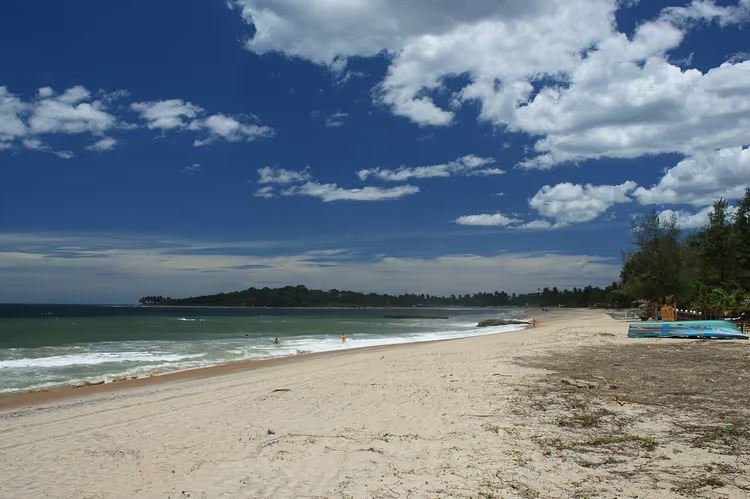
The central highlands are at their best from January to March, the nights there are cool, and you need a jacket even in the dry season. In the Cultural Triangle short downpours happen all year round. For a full loop of the island, February and March work well, when neither side is at its rainfall peak.
For the Yala and Udawalawe parks, the months from December to May are suitable. Part of Yala is closed in early fall for the drought season, so check the park's status before you book a safari.
| Months | Weather | Where to go |
|---|---|---|
| December to April | South and west are dry | Beaches of the west and south, the Yala and Udawalawe parks |
| January to March | Best time in the central highlands, cool at night | Kandy, Nuwara Eliya, Ella; a jacket is needed |
| February and March | Neither side of the island is at its rainfall peak | A full loop of the island |
| May to September | East and north are dry; rain in the west, the south and the hills | Beaches of the east coast |
| October to January | The northeast monsoon soaks the east and the north | The east and north are better postponed |
Twelve months compared: find the best time for your trip
Our articles on this
Budget: What the Total Depends On
Sri Lanka remains an inexpensive country, but the total depends on four things. The first is season and coast: at the peak, accommodation by the water in the south gets noticeably more expensive, while in the east prices are lower in those same months. The second is transport: the train and the bus cost little, a driver with a car is paid for the full day, and your own tuk-tuk is rented by the day, with fuel paid separately.
The third item is entrance tickets. Beaches are free, while the ancient cities, the Temple of the Tooth and the national parks charge foreigners; on a safari the jeep is paid for separately. The fourth is the type of accommodation: a guesthouse with breakfast and a beachfront resort belong to different price worlds. It is easier to put your own total together in the calculator than to look for an average figure.
Routes: One Week, Ten Days, Two Weeks
In a week you will see one region: either the Cultural Triangle with the hills, or the southern beaches with one trip up into the highlands. The classic route for seven to ten days looks like this: the Cultural Triangle with Sigiriya, Kandy with the Temple of the Tooth, Nuwara Eliya with its tea plantations and a few days on the beach in Bentota before the flight home.
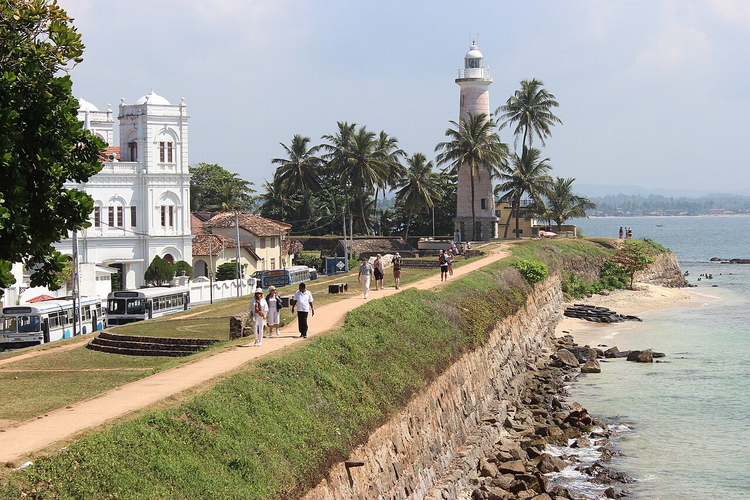
Two weeks fit in Kandy, Ella, one safari in Yala or Udawalawe and several beaches in the south. A month lets you add the east coast and the north. The last day is conveniently split between Galle Fort in the morning and Colombo in the evening: from there the airport is closest.
Count the route in hours on the road, not in kilometers, and keep one spare day: in the rains, roads in the hills flood. Schedule long drives every other day.
Day planner: check what fits into one day
Our articles on this
Practicalities: Visa, Money, Connectivity and Rules
To enter you need an ETA electronic travel authorization, which is arranged online before you fly. The terms and the fee depend on citizenship: for citizens of a number of countries the 30-day authorization is free, for the rest it is paid. Apply only on the official portal eta.gov.lk, because intermediaries charge extra for the same document. Your passport must be valid for at least six months from the date of entry, and it is worth printing the confirmation.
Payment on the island is in rupees. Cards are accepted in hotels and large restaurants, beyond that you need cash; there are ATMs right in the airport terminal. Check the roaming terms with your carrier before the trip, and take an eSIM as a backup way to have internet from the first minute. Bring a plug adapter from home. Arrange travel insurance before you leave and check whether it covers safaris, surfing and tuk-tuk rental.
In temples, shoulders and knees are covered and shoes come off. Posing for a photo with your back to a Buddha statue is not allowed, and photographing the Sigiriya frescoes is forbidden. On every full moon, Poya day, shops are closed and trains and buses are packed.
Build a packing list for Sri Lanka
Ad
See eSIM for Sri Lanka on Yesim
We earn a commission through this link; your price stays the same.
Ad
See travel insurance on World Nomads
We earn a commission through this link; your price stays the same.
Our articles on this