
















Indonesia: a guide for planning your own trip
Indonesia is an archipelago of more than 17,000 islands, and you cannot cover it in a single trip. Bali, Java, Sumatra, Sulawesi and hundreds of small islands are nothing alike: the nature, the prices and even the months of the rainy season differ. So the first decision here is not the dates or the hotel but the one or two islands where you will spend your vacation. This page lays the country out for independent planning: what to see, which islands to choose, where to stay, how to get between them, when to go and what the budget is made of. Each section stays short and leads on to our detailed articles. There are no prices here: between Bali and Java, between August and the rainy season, they differ so much that a single figure would be misleading.
What to see: temples, volcanoes and reefs
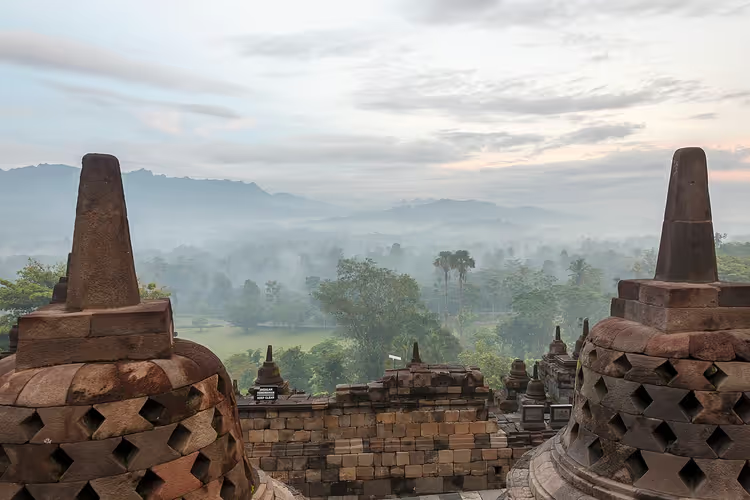
The country's main sights are scattered across different islands, and the transfers between them eat up days. On Java these are Borobudur near Yogyakarta, considered the largest Buddhist temple complex in the world, the Hindu temple of Prambanan nearby and the volcanoes in the east of the island: Bromo, which people reach by jeep for sunrise, and Ijen with its crater lake and the blue fire that is visible only in the dark.
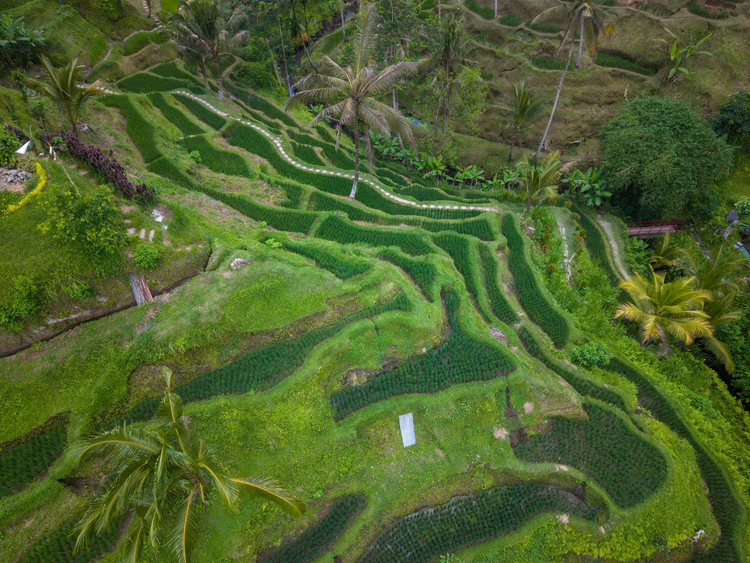
Bali rests on its temples. Pura Besakih stands on the slope of Mount Agung and is considered the island's main sanctuary, Uluwatu Temple sits on a cliff above the ocean, Tanah Lot can be reached on foot only at low tide, and at Tirta Empul visitors take part in a purification ritual. Add to these the rice terraces, the waterfalls and the Monkey Forest in Ubud.
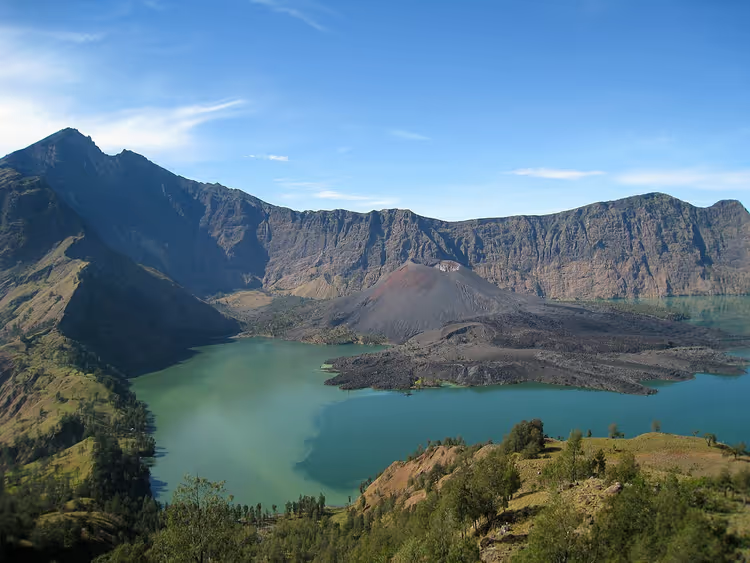
Beyond that begins the Indonesia that takes a separate flight: Mount Rinjani on the island of Lombok, Komodo National Park, the Raja Ampat islands, the orangutans of Sumatra and Kalimantan, the rock tombs of Toraja and the diving off Bunaken in Sulawesi.
Our articles on this
- What to see in Indonesia: 19 places worth seeing at least once
- 35 places in Bali: a practical guide to temples, waterfalls and parks
- Temples of Bali: 19 main shrines with entrance, hours and route
- Pura Besakih in Bali: how to get to the Mother Temple and how much entry costs
- Pura Besakih: tickets, dress code and fake guides at the entrance
- Uluwatu Temple in Bali: tickets, opening hours and the Kecak dance at sunset
- Pura Tanah Lot: when low tide opens the path to the temple in the ocean
- Tirta Empul in Bali: purification ritual, tickets and opening hours
- Ulun Danu Temple on Lake Beratan: tickets, best time and how to avoid the crowd
- Tirta Gangga in Bali: entry price and is it worth swimming
- Taman Ujung Water Palace: what remains of the raja's residence
- How much does it cost to enter the Monkey Forest in Ubud and what not to do in the sanctuary
- West Bali National Park: guided trails and diving near Menjangan
- Botanical garden in Bali: what to see in Eka Karya and how to get there
- 26 Best beaches in Bali: where to swim and where to catch a wave
Islands and regions: where to go
It is easier to choose an island by the type of vacation than by its name. Bali offers temples, rice terraces, beaches and the densest tourist infrastructure in the country. Java means cities, volcanoes and the trains between them. Lombok lies next door to Bali and lives at a calmer pace: beaches, mountains, waterfalls. Sumatra and Sulawesi suit those who come for nature, hiking and diving, while Borneo with its jungle and New Guinea remain the wildest part of the country.
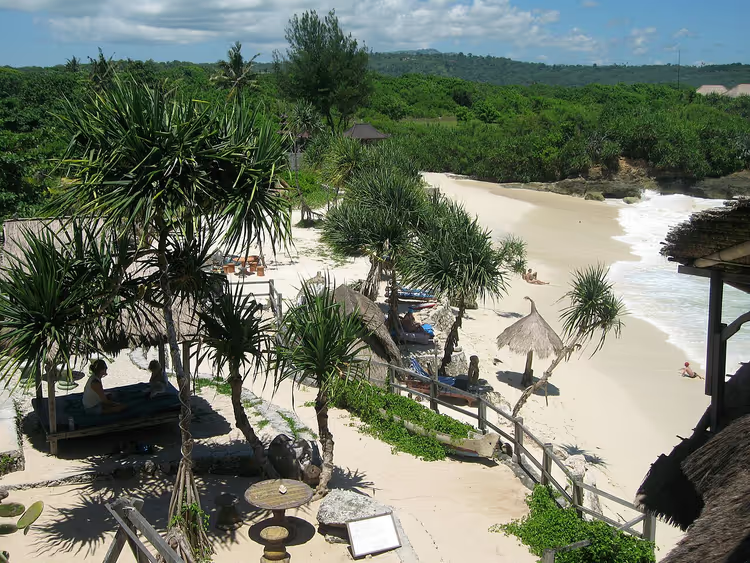
The small islands have a character of their own. Gili Meno is chosen for its quiet, Gili Trawangan for its cafes, snorkeling and livelier evenings, and there are no cars on these islands. Nusa Lembongan lies close to Bali and a boat runs there. Flores is known for Kelimutu National Park with its colored lake and for its craft villages.
On Bali itself the area matters more than the hotel category. Kuta means nightlife, Nusa Dua and Sanur offer a calm ocean, Seminyak is calmer than neighboring Kuta, Canggu is the surfers' choice, and Ubud sits among rice terraces and jungle, far from the beach.
| Island | Who it suits | What to keep in mind |
|---|---|---|
| Bali | Surfers, couples and families who need well-developed infrastructure | In the rainy season the current washes plastic onto the southern beaches |
| Java | Those who come for volcanoes, temples and cities | Trains are a convenient way between cities, buy tickets in advance |
| Lombok | Fans of trekking, quiet and nature without crowds | Rinjani can be climbed only with a guide, and the trek takes two to three days |
| Gili Meno | Couples and those who want calm without entertainment | There is little to do on the island and there are no parties |
| Gili Trawangan | Those who want cafes, snorkeling and livelier evenings | There are no cars on the island |
| Sulawesi | Divers and those who come for nature and hiking | Best visited from mid-May through October |
Our articles on this
Where to stay: from a homestay to a villa with a pool
There is no single accommodation market in Indonesia. Some islands have hundreds of villas and resorts, others are left with a modest homestay run by a local family. Hotels on Bali cost more, while on Java or Sumatra the same level of comfort comes noticeably cheaper. A villa on Bali often turns out to be better value than a hotel for a family or a group, and those looking for quiet head to the eco-resorts of Sulawesi and the Maluku Islands.
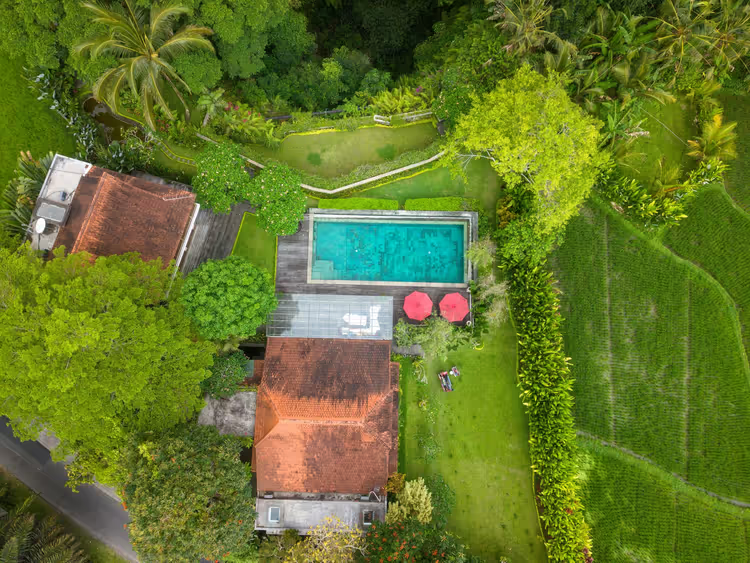
Look at the final total, not at the advertised rate: tax and fees are added on top. Some hotels ask for a cash deposit at check-in, which is returned after the room has been inspected.
In July, August and December popular resorts fill up fast, and it is better not to put off booking. The rainy season, apart from late December, is by contrast a good time for saving money and spontaneous decisions: more rooms are free.
Ad
Compare places to stay in Indonesia on Trip.com
We earn a commission through this link; your price stays the same.
Our articles on this
- Where to stay in Indonesia: hostel, villa or eco resort
- 15 Bali 5 star all inclusive hotels: how to choose an area for your vacation
- Bali 5 star hotels: 13 options with meals and villas, three all inclusive
- Nusa Dua: 15 five-star resorts for a calm beach holiday
- 15 Bali hotels that really have their own beach
- Bali hotels for family holidays: 15 options by area
- Where to go in Bali: 15 4-star hotels with breakfast
Tours, treks and tickets
In Indonesia you often need a tour not for the guide's commentary but for the logistics. East Java with Ijen, Bromo and the Tumpak Sewu waterfall is easier to cover on an organized tour of several days. Before you book, ask the operator about the status of Bromo: the national park is closed from time to time, and the tour is then planned without it. Sunrise tours to Borobudur are sold in advance. Rinjani can be climbed only with a guide, and in Bali Barat National Park the trails are open only in daytime and only with a licensed guide.
On Bali, temples, terraces and waterfalls are usually combined into one day with a car and driver. Diving, rafting, surf lessons and a cooking class, which takes half a day and often starts at the market, are booked separately. Multi-day treks sell out ahead of time in high season, so sort them out before you fly.
Ad
See tours and activities in Indonesia on GetYourGuide
We earn a commission through this link; your price stays the same.
Ad
See tickets for sights and attractions on Tiqets
We earn a commission through this link; your price stays the same.
Our articles on this
Food: rice, warungs and what to order
The basis of Indonesian cuisine is rice, nasi in the local language, and it is served with almost every dish. The classics you will see on every menu: nasi goreng, that is fried rice, mie goreng with noodles, nasi campur with a selection of meat, tofu and vegetables, gado-gado made of vegetables in peanut sauce, grilled satay and tempeh made from fermented soybeans.
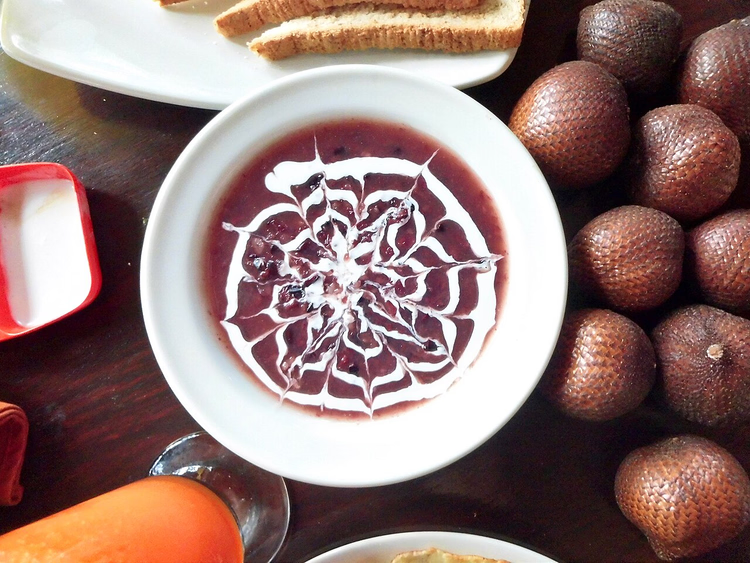
For a traditional lunch people go to a warung, a small family kitchen or street stall. Locals eat there, and the bill is noticeably smaller than in a tourist cafe.
Drink bottled water only. Choose street food that is hot and freshly cooked, and pick fruit that you can peel.
Getting around: flights, ferries, trains and scooters
Transportation in Indonesia depends on the island. Java has a railway, and the train is the most predictable way to travel between cities there. Bali and the island of Lombok have no trains: people get around by taxi through the Grab and Gojek apps, by car with a driver or by scooter. It is worth installing both apps while you are still at home: they show the fare before you order.
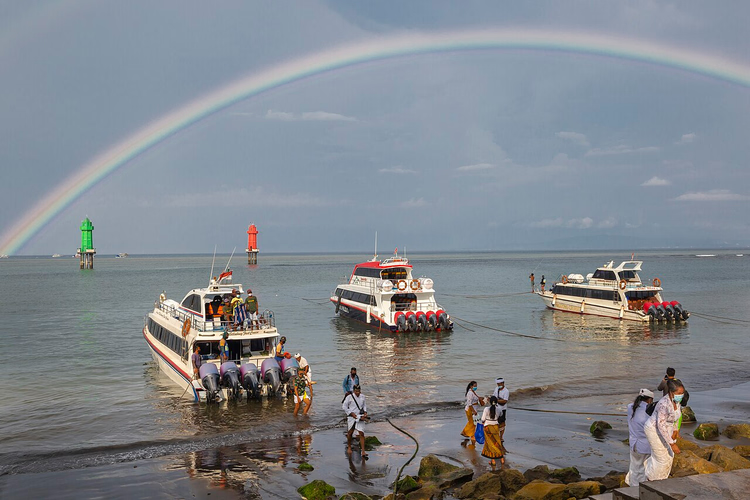
Between distant islands a plane saves days, while ferries and fast boats run between neighboring ones. The ferry is slow, cheap and calm, the fast boat is quicker and more expensive, and both depend on the waves: in a storm the crossings are canceled. So keep one free day for every transfer between islands and do not plan a ferry and a connecting flight on the same day.
The scooter remains the most popular way to get around locally and the riskiest. It requires an international driving permit: without one you may face a fine and a refusal from your insurer. From the airport the simplest option is an official taxi from the counter or a transfer booked in advance, especially at night and with children.
| Transportation | Where it runs | When it works best |
|---|---|---|
| Train | Java | Long journeys between cities; buy tickets in advance |
| Plane | The whole country | When time is short and the islands are far apart |
| Ferry | Between islands | Cheap and you can take a scooter along, but slow |
| Fast boat | Between islands | When you need to save time; costs more than the ferry |
| Car with a driver | The whole country | Day trips around an island and groups of three or four people |
| Scooter | Bali, Lombok, other islands | Independent trips locally; an international driving permit is required |
| Taxi through an app | Cities | At night and with luggage; the fare is shown before you order |
Ad
Book a fixed-price airport transfer in Indonesia
We earn a commission through this link; your price stays the same.
Our articles on this
When to go: dry season and rainy season
There is no single best season for all of Indonesia: the archipelago stretches along the equator, and the weather depends on the region. For most of the country the dry season lasts roughly from April through October and the rainy season from November through March. Bali and Java get the least rain from June through August, Sulawesi and Kalimantan are best from mid-May through October, and parts of the Maluku Islands and West Papua follow a different pattern, so check those regions separately.
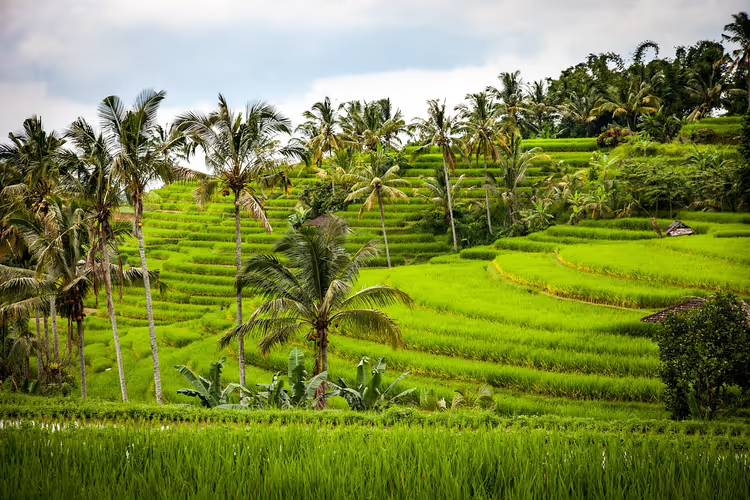
April, May and September work well for a first trip: the landscape is still green, the roads are dry and there are fewer people than at the height of summer. July and August bring the most stable weather and the highest accommodation prices.
The rainy season does not rule out a trip. Rain usually falls for a few hours rather than all day, accommodation gets cheaper and the beaches are emptier. The downsides are real too: some of the boats between islands are canceled, trails get washed out, and the Rinjani climb is closed from January to mid-March.
| Region | Best time | What to keep in mind |
|---|---|---|
| Sumatra | Mid-April to mid-October | Rain is possible in any month |
| Java | May through October | The west of the island sees downpours even in the dry season |
| Bali and Lombok | May through October | Least rain from June through August; Rinjani is closed from January to mid-March |
| Kalimantan and Sulawesi | Mid-May through October | On the east coast of Sulawesi the rains fall from May through August |
| West Papua | April through October | Rain is spread more evenly; in Raja Ampat it falls from July to early September |
Twelve months compared: find the best time for your trip
Our articles on this
Budget: how to work out your own total
Indonesia remains an inexpensive destination, but within the country the gap is wide: Bali is noticeably more expensive than Java, Sumatra and Lombok. The total depends on the island, the season and how you eat and get around. Warungs, simple guesthouses and public transportation give one level of spending, tourist cafes, a car with a driver and domestic flights quite another.
Flights between islands and alcohol inflate the budget most. Add the one-off costs to your daily spending: the visa, the Bali tourist levy, insurance. Keep small bills on hand: warungs and markets do not take cards.
That is why there is a calculator here instead of a figure. It separates accommodation, food, transportation, entrance tickets, travel to the country and a reserve, and shows which item pushes your total up.
Routes: how many islands to take on
The main rule: fewer islands, more time on each. Java, Bali and Lombok cover the country's three main themes, volcanoes, beaches and temples, and at an unhurried pace they take two to three weeks. If you have ten days and it is your first trip, take Java with Borobudur and one beach island. If transfers are not for you, stay on Bali and make a trip to the Gili Islands.
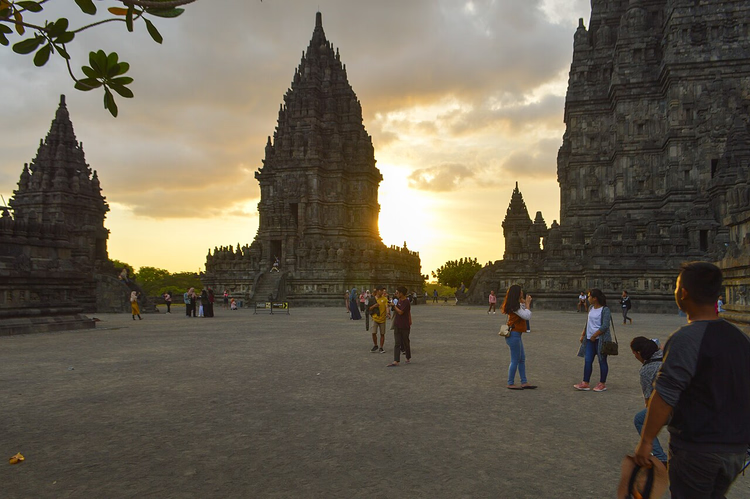
For two weeks the pairing of Java plus Lombok works well: Yogyakarta with Borobudur and Prambanan, the volcanoes of East Java, then a flight, beaches, the Rinjani climb and a day on the Gilis. A week on Bali is easier to build around one or two bases, in the south and in Ubud, with early morning outings to temples and waterfalls.
Buy tickets in two steps: first the long legs between islands, then the local transfers.
| Days | Highlights | What to book in advance |
|---|---|---|
| 1-2 | Yogyakarta: palaces and old quarters | Hotel |
| 3-4 | Borobudur and Prambanan at sunrise | Sunrise tour |
| 5-8 | Ijen, Tumpak Sewu, Bromo | East Java tour; check the status of Bromo with the operator |
| 9-11 | Beaches of Kuta on the island of Lombok | Hotel and scooter |
| 12-13 | Rinjani climb | Trek with a guide |
| 14 | Gili Islands | Boat tour |
Day planner: check what fits into one day
Our articles on this
Practicalities: documents, customs, health, connectivity
Sort out three things before you fly. The first is the visa on arrival: its electronic version, the e-VoA, is issued only on the official portal of the immigration service, and that is also where you check whether it is available for your passport. Your passport must be valid for at least six months from the date of arrival. The second is the All Indonesia electronic arrival card, which is filled in online before the flight. The third is the Bali tourist levy, if you are heading to that island.
Most of the country's residents are Muslim, while Bali is Hindu. You enter a temple with your shoulders covered and wearing a sarong. During Ramadan some cafes are closed in the daytime, and for Idul Fitri transportation sells out weeks ahead. On Nyepi, the Balinese New Year, the island comes to a standstill for a day: you may not go out into the street, and the airport does not operate. Drug laws are very strict.
Before the trip, talk to a doctor about vaccinations and take insect repellent and a first-aid kit. Do not drink tap water, and do not touch dogs or monkeys. Take out travel insurance before you leave and read whether it covers evacuation and riding a scooter. Check the roaming terms with your carrier, and take an eSIM as a backup way to have internet from the first minute.
Make a packing list for your trip to Indonesia
Ad
See eSIM plans for Indonesia on Yesim
We earn a commission through this link; your price stays the same.
Ad
See travel insurance on World Nomads
We earn a commission through this link; your price stays the same.
Our articles on this