




Where to stay in Brussels: 5 districts and hotels near the metro
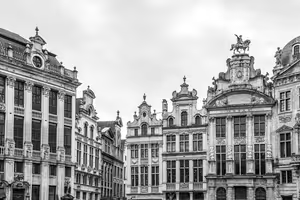
🏨 Five Brussels districts for an overnight stay: center near Grand Place, Sablon, European Quarter, Ixelles and…
Read more →
Belgium rarely takes up more than a few days of a trip. So readers come here with a specific task: dividing a short stay between Brussels, Bruges, Ghent and Antwerp. You need to work out where to stay, what fits into a day and how to get in from the airport or from a neighboring country. On a short trip, every logistics mistake costs a noticeable part of the day. This section is built around those questions.
Most of the articles are about Brussels. There is a general overview of what to see in the city, with ticket prices and opening hours, and ready-made routes for one and two days, from the Grand-Place to the Atomium. Museums are covered separately, including a detailed piece on the Magritte Museum: how much a ticket costs and which days the museum is closed. There is also a selection of parks, from the center to the Sonian Forest, and a shopping guide: chocolate, lace, designer pieces.
The practical side of the capital is covered too. We compare neighborhoods to stay in and hotels near the metro, and break down the trip budget and the expenses where you can save. A separate article explains when to go: season by season, with prices by month. The journey from Brussels Zaventem airport to the center is described for all the main options. This is the set you need before buying tickets.
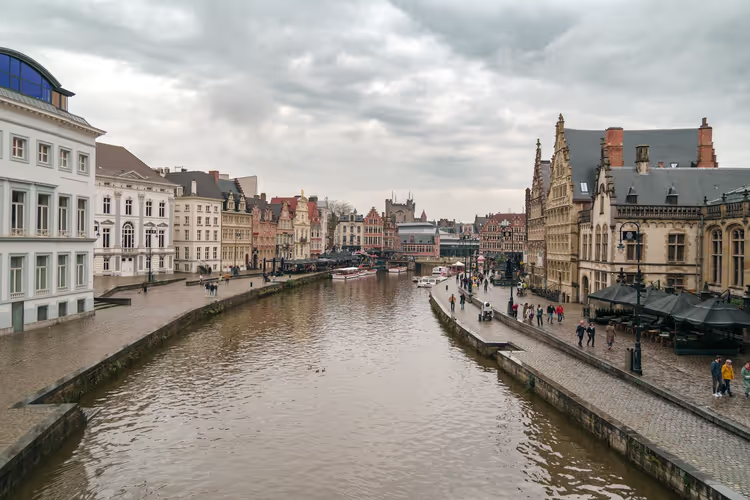
The other cities are covered in a one-day format. For Ghent there is a route with tickets and opening hours and an overview of neighborhoods with hotels for different budgets. For Antwerp there are two pieces: a list of places for one day and a walk from Grote Markt to the MAS museum. Bruges is described as a day trip from Brussels by train and as an outing from Amsterdam. There is also a comparison of ways to get from Amsterdam to Brussels: train, bus, car, plane. For a general introduction to the country, try the piece on what surprises people in Belgium: chocolate, beer and unusual laws.
Every article opens with a short answer to the main question, and the details follow below. We check prices, opening hours and timetables against the official websites of museums and transport operators and give the source next to the figure. Each text carries the date it was last checked. We are direct about downsides: if a neighborhood is noisy or a one-day route turns out too packed, the article says so.
The section is meant for independent travelers planning a short city trip: a weekend in Brussels or a few days with outings to nearby cities. It is also useful if you are coming into Belgium from the Netherlands for a day. For a long journey through small towns and the countryside, there is not much material yet. There is nothing here on beach vacations or hiking. If that is what you need, this section will not help.
A good place to start is the piece on seasons and the one on budget: they help you pick dates and estimate costs. Then choose a neighborhood and a hotel, and after that move on to the day-by-day routes. Leave the articles on museums, parks and shopping for last, to round out a finished plan. If you are traveling via Amsterdam, open the transport comparison first. It determines how much time you will have left for the city.
Belgium is part of the "Europe" section, which belongs to the "Destinations" section. The country has no subsections, and all the cities sit in a single list. If your route continues further, take a look at the neighboring sections: "France", "Germany", "England", "Denmark". Nearby you will also find "Andorra", "Bulgaria", "Finland" and "Georgia". The articles there are organized on the same principle.
We update the articles when prices, timetables and visiting rules change, and check them again against official sources. New pieces appear when they are ready, with no promises about timing. Before your trip, still check opening hours and ticket prices on the website of the museum or transport operator itself: they change more often than any guide. That way your plan will still work on the day you travel.
🏨 Five Brussels districts for an overnight stay: center near Grand Place, Sablon, European Quarter, Ixelles and…
Read more →🌷 Brussels by season: blooms at Groot-Bijgaarden, Christmas markets, peak prices in August and the cheapest, quietest…
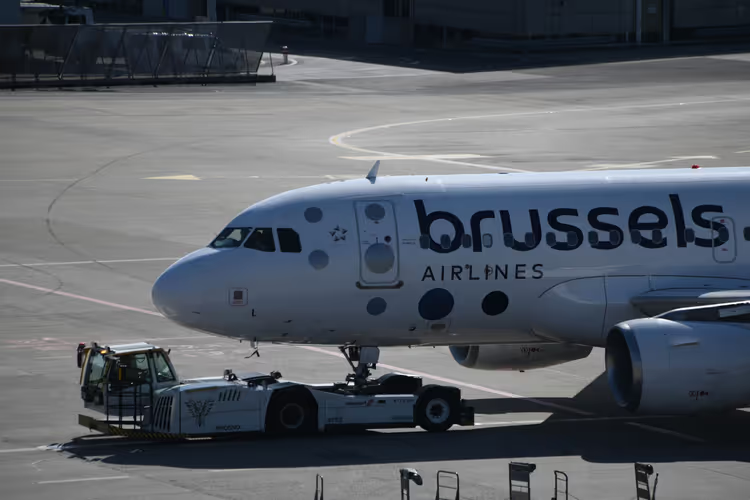
✈️ Train, bus, taxi or car rental: how to get from Zaventem airport to Brussels center, how much it costs in 2026 and…
💶 How much a trip to Brussels costs in 2026: daily budget, museum, food, transport and…
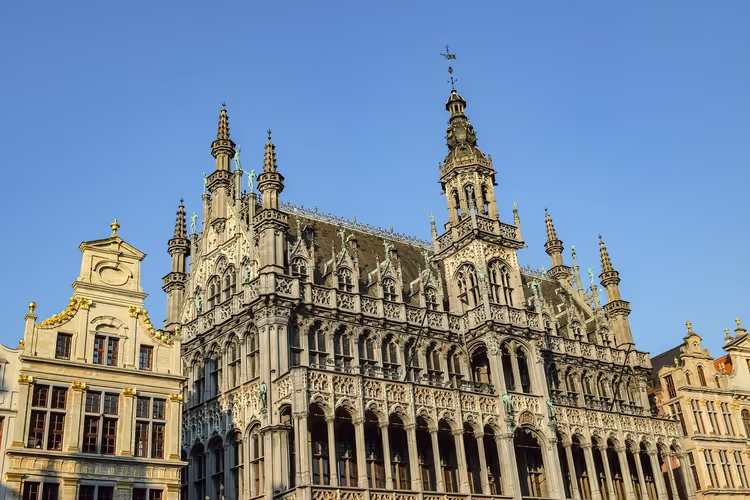
🍫 Grand Place, the Royal Palace, the Atomium and chocolate museums: a practical two-day…
🌳 20 Brussels parks: where locals walk, free entry and opening hours, what to see with…
🚶 See 15 Antwerp highlights in one day: Central Station to MAS. Route with prices,…
🚆 25 Museums in Brussels: what to see, where entry is free and how to save with the Brussels Card, which gives access…
Read more →Grand-Place, Atomium and Mini-Europe in one day: a route through 20 sights with prices, hours, map and airport transfer…
🗺️ Gravensteen, Belfort and the Ghent Altarpiece: 15 Ghent places with opening hours, ticket prices, transport and a…