


Czech Republic: the guide for planning it yourself
The Czech Republic is small, yet a single trip takes in very different things: a capital with the largest ancient castle complex in the world, Gothic castles on rocky crags, spa towns built on mineral springs, vineyards near the Austrian border and sandstone cliffs on the edge of Saxony. Most first itineraries are built around Prague, and that is convenient, because the country's main sights are linked to it by train and bus. This page is meant as an overview from which you put the trip together yourself. Each section says in a few sentences what matters here and leads on to our detailed articles. We do not quote prices here: entrance tickets, hotels and spa programs in the Czech Republic change noticeably with the season, so instead of a figure you get a calculator in which you work out your own total.
The essentials: cities, castles, nature
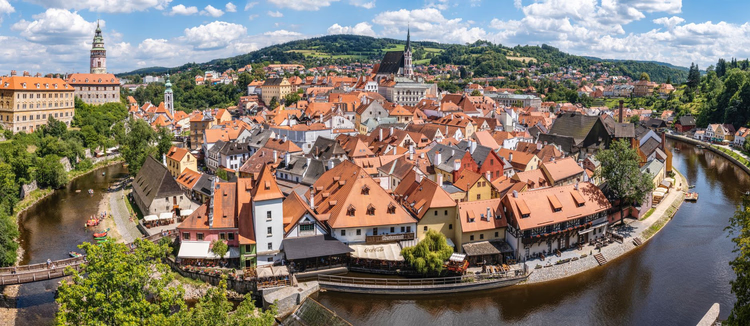
A first route through the Czech Republic usually rests on six places: Prague, Český Krumlov, Karlštejn Castle, Olomouc, the Moravian Karst and Pilsen. In Prague that means Prague Castle with St. Vitus Cathedral, Charles Bridge and the Old Town. Český Krumlov sits in a loop of the Vltava, its entire historic center is on the UNESCO list, and its castle is second in size only to Prague Castle.
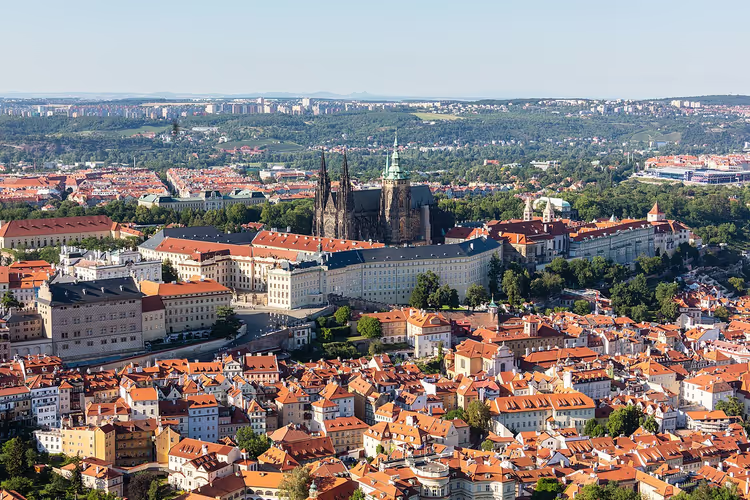
The country has hundreds of castles, and several lie within a day trip of the capital. Karlštejn was founded by Charles IV in the 14th century to hold the imperial regalia. The white neo-Gothic castle of Hluboká nad Vltavou was rebuilt on the model of England's Windsor. In Kutná Hora, visitors see the ossuary in Sedlec and St. Barbara's Cathedral.
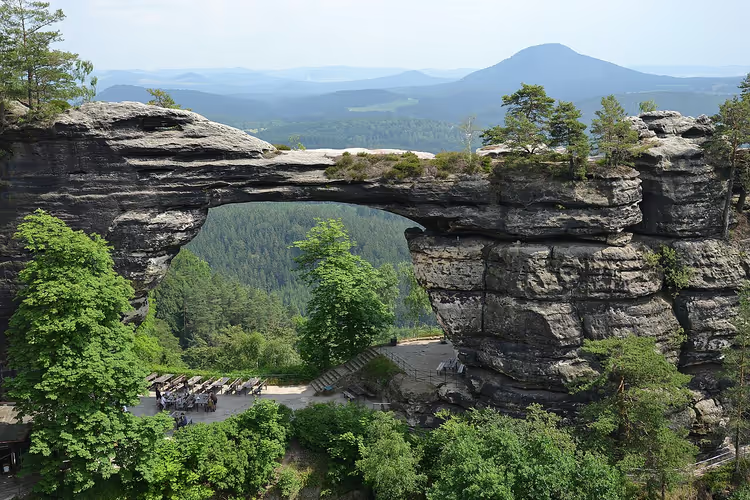
For nature, people head in two directions. North of Brno lies the Moravian Karst with the Punkva Cave, an underground river and the Macocha Abyss. Near the German border, Bohemian Switzerland begins with the Pravčice Gate, the largest natural rock bridge in Europe.
Our articles on this
- What to see in Czechia: 6 best places from Prague to the Moravian Karst
- Karlstejn Castle: tickets, tours and how to get there from Prague
- What to see in the Kutna Hora ossuary and how to buy a ticket by slots
- Hluboka nad Vltavou castle and Cesky Krumlov: tickets, opening hours and route
- Hluboka nad Vltavou Castle: tickets, opening hours and what to see inside
- Karlovy Vary: 30 places worth seeing, with tickets and hours
- 18 Colonnades and springs of Karlovy Vary: water temperature and route
- Houska Castle: ticket prices, opening hours and the legend of the gates of hell
- Cesky Sternberk Castle: tickets, opening hours and the route from Prague
- 35 Prague landmarks: what to see and how to get there
- Prague Castle in 2026: opening hours, tickets and a half-day route
- St. Vitus Cathedral: tickets, opening hours and tower climb
- Charles Bridge in Prague: where to make a wish and how to climb the tower
- Old Town Square: what to see and when to go to the astronomical clock
- Vysehrad: casemates, cathedral and panorama of Prague over the Vltava
Regions and cities: where to go
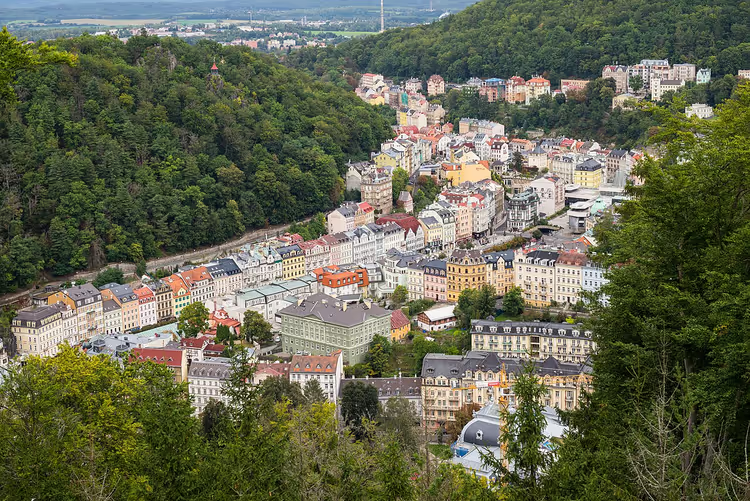
Prague works well as a base for a first trip: from there you take day trips to Karlštejn, Kutná Hora and Český Krumlov. West Bohemia is the spa triangle: Karlovy Vary, Mariánské Lázně and Františkovy Lázně. Karlovy Vary keeps a city pace in its narrow valley, while Mariánské Lázně is quieter, full of parks and surrounded by forest.
South Moravia lies near the Austrian border and lives on wine. Here you find the UNESCO-listed castles of Lednice and Valtice, Brno, the country's second-largest city, and the small towns of Mikulov and Znojmo, each of which can be covered on foot in a day. The region is small, but from a single spot the drive to the more distant castles is long, so two or three bases are recommended, for example Lednice, Brno and Znojmo.
Bohemian Switzerland in the north is easiest to plan from Děčín, the region's largest town and its main transport hub. People go to the mountains in winter: the Krkonoše with Špindlerův Mlýn, the Ore Mountains with Klínovec and the Šumava with Lipno beside its large reservoir.
| Region | Who it suits | What to keep in mind |
|---|---|---|
| Prague | A first trip and a base for day trips | From here you go to Karlštejn, Kutná Hora and Český Krumlov |
| Karlovy Vary | A spa town with a city pace | The town lies in a narrow valley |
| Mariánské Lázně | A quiet spa stay | A town of parks, surrounded by forest |
| South Moravia | Wine, the castles of Lednice and Valtice | From a single spot the drive to distant castles is long, so pick two or three bases |
| Bohemian Switzerland | Sandstone cliffs and gorges | Easiest to plan from Děčín, the main transport hub |
| Krkonoše, Ore Mountains, Šumava | A winter stay in the mountains | The ski season usually runs from December through March |
Our articles on this
Hotels and spa houses: how to choose
In Prague, location matters more than stars. The Prague 1 district covers the Old Town, Josefov, the Lesser Town and part of the New Town, and a hotel here saves you transit, though every night costs more. Vinohrady, Žižkov, Karlín and Holešovice offer the same categories for less, and the center is a few stops away.
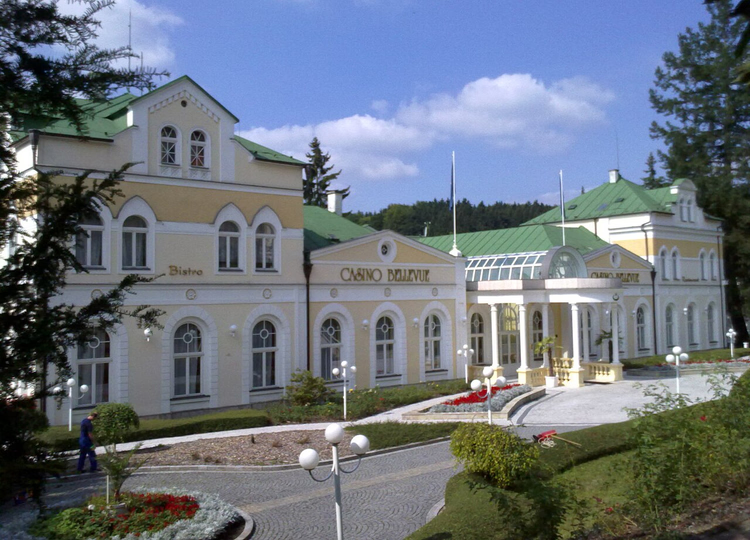
In the spa towns, a hotel is chosen by two things: what you plan to have treated and how close the colonnade and the spring are. Spa houses have different specialties, and the treatment plan is drawn up by a doctor on site after an initial examination. A classic course lasts two to three weeks, and the minimum stay is a week. The spa tax is charged per guest per night, and it is often not included in the online price.
In Bohemian Switzerland, overnight stays depend on private rooms and small guesthouses. In South Moravia, rooms in the center are the first to go on wine harvest festival days, so book your accommodation there in advance.
Ad
Compare hotels in the Czech Republic on Trip.com
We earn a commission through this link; your price stays the same.
Our articles on this
- Karlovy Vary sanatoriums with treatment: how to choose a profile and how much it costs
- Sanatoriums of Marianske Lazne with treatment: 30 hotels and their profile
- Where to get treatment in Karlovy Vary: 12 four-star sanatoriums with procedures
- Where to stay in Prague: 15 4-star hotels within walking distance of the center
- 15 Best 4 star hotels in Prague city center
- Prague 3 star hotels in the center: 15 options from Old Town to Mala Strana
- Prague 3 star hotels in the center: 14 options near attractions
- Where to stay in Prague: thirteen hotels from Old Town Square to Mala Strana
- 11 Hotels near Charles Bridge: prices, downsides and what to choose in 2026
- Where to stay near Wenceslas Square: 13 options with photos and prices
Tours and tickets: where you need a timed entry
In Prague, tickets for Prague Castle and the Old Town Hall tower are bought in advance: in summer the lines at the ticket offices are long, and a time slot lets you walk in without waiting. A single ticket covers the main circuit of the Castle, which includes St. Vitus Cathedral, the Old Royal Palace and Golden Lane.
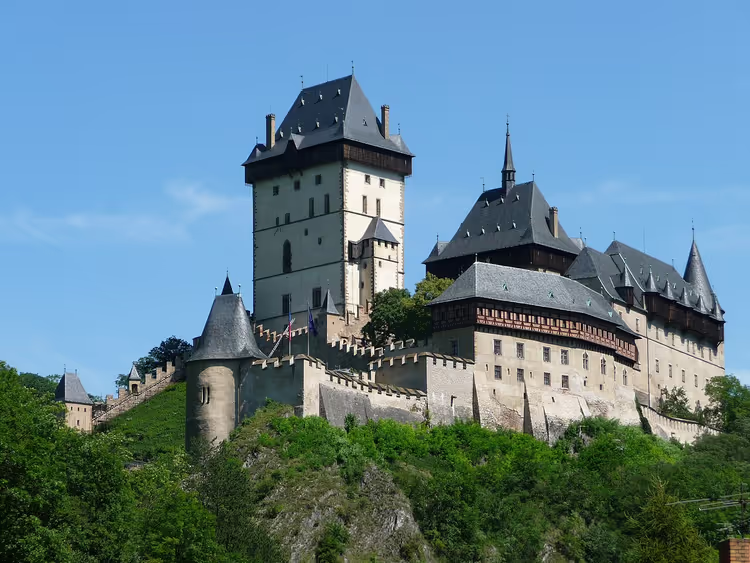
Czech castles follow a different rule than museums: you are let inside only with a guide and at set tour times. That is how Karlštejn, Hluboká nad Vltavou, Lednice and Valtice work, and on weekends the popular tour times sell out. Some tours run only in Czech, so check the schedule of tours in other languages on the castle's website. The ossuary in Kutná Hora has limited capacity, and the ticket is for a specific time. The tour of the Pilsner Urquell brewery in Pilsen is also booked ahead.
| Site | How entry works | What to do in advance |
|---|---|---|
| Prague Castle | One ticket for the main circuit: St. Vitus Cathedral, the Old Royal Palace, Golden Lane | Get the ticket ahead: in summer the lines at the ticket offices are long |
| Old Town Hall tower | By time slot, with no waiting in line | Get the ticket ahead |
| Karlštejn, Hluboká nad Vltavou, Lednice, Valtice | Only with a guide and at set tour times | Check the castle's website for tours in other languages, and book earlier for weekends |
| Ossuary in Kutná Hora | Limited capacity, entry with a ticket for a specific time | Choose a time and get the ticket before the trip |
| Pilsner Urquell brewery in Pilsen | With a tour | Book the tour ahead |
Ad
See tours and tickets for the Czech Republic on GetYourGuide
We earn a commission through this link; your price stays the same.
Ad
See tickets for castles and museums on Tiqets
We earn a commission through this link; your price stays the same.
Our articles on this
- Prague by bus tour: what to see and how to get tickets
- Prague with kids: 20 places to go in rain and heat
- Prague Zoo: tickets 2026, best pavilions and route from the metro
- National Theatre Prague: tickets, box offices and tours of the halls
- Municipal house in Prague: tour of the halls, tickets and metro route
Food, beer and wine
On the menu, look for pork knuckle, goulash with dumplings, soup served in a bread bowl, goose with cabbage, and Svíčková, beef sirloin in a cream sauce. Among desserts, apple strudel and trdelník are popular. At midday on weekdays many pubs offer a lunch menu, polední menu, and it costs less than ordering in the evening.
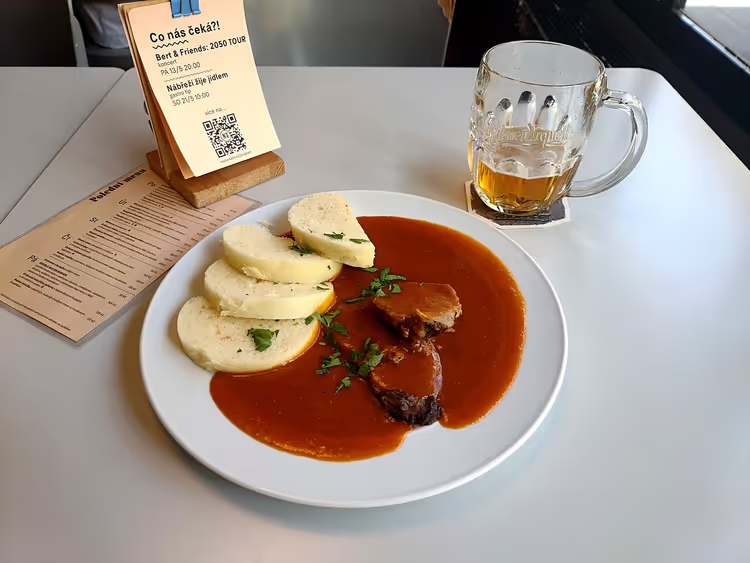
Beer here is a long-standing everyday habit, not a tourist amusement: the Czech Republic ranks first in the world for consumption per person. The main beer addresses are Pilsen, where Pilsner Urquell is brewed, the village of Velké Popovice and Prague's beer halls with their own breweries, among them the oldest one still operating, U Fleků. The liqueur Becherovka comes from Karlovy Vary.
The south of the country lives on wine. Almost all Czech vineyards lie in South Moravia, where white wines are made from the local varieties Pálava, Muškát moravský and Aurelius. During the harvest, Burčák is poured on the squares, a young wine that is still fermenting; it is sold only in season, from August through October.
Our articles on this
Getting around: trains, buses, car
The country's main sights are linked by rail and bus, and a first route does not require a car. From Prague, the train to Karlštejn takes less than an hour, and to Kutná Hora about an hour. Český Krumlov is reached by direct bus or by train via České Budějovice with a change to a bus. Mariánské Lázně is on the rail line from Prague via Pilsen, and buses run from the capital to Karlovy Vary several times a day.
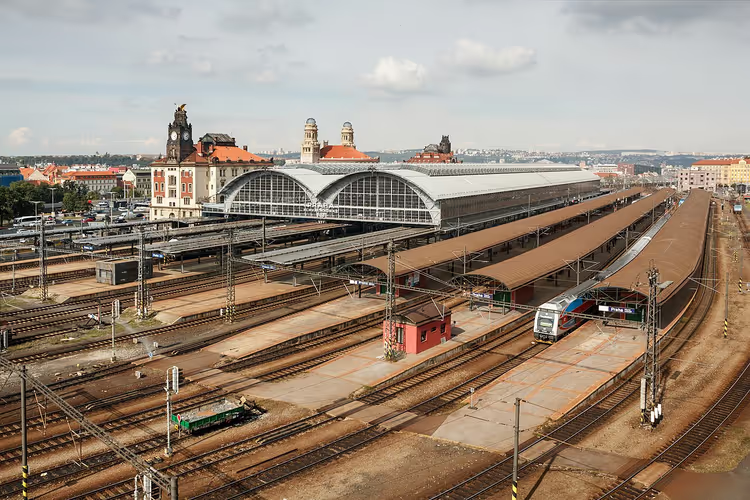
Václav Havel Airport lies within Prague's city limits, but the metro does not reach the terminals. The cheapest way is to take a city bus to a metro station and continue by subway on the same ticket. Late in the evening, with children or with suitcases, a transfer booked in advance is the calmer option. From Germany, direct trains run to Prague from Berlin, Munich and Nuremberg.
A car makes sense where things take a long time without one: in South Moravia for the full circuit of castles and wine routes, in Bohemian Switzerland and in the mountains. Czech highways require an electronic vignette, which is bought online and tied to the car's license plate. In Prague itself a car is rarely needed: parking in the center is paid and expensive.
| Where to | How to travel | What to keep in mind |
|---|---|---|
| Karlštejn | Train | Less than an hour on the way |
| Kutná Hora | Train | About an hour on the way |
| Český Krumlov | Direct bus or train via České Budějovice | The train option involves a change to a bus |
| Mariánské Lázně | Train | The line from Prague runs via Pilsen |
| Karlovy Vary | Bus | Runs several times a day |
| South Moravia, Bohemian Switzerland, the mountains | Car | Highways require an electronic vignette |
Ad
Book a fixed price airport transfer in Prague
We earn a commission through this link; your price stays the same.
Our articles on this
Best time to go and weather
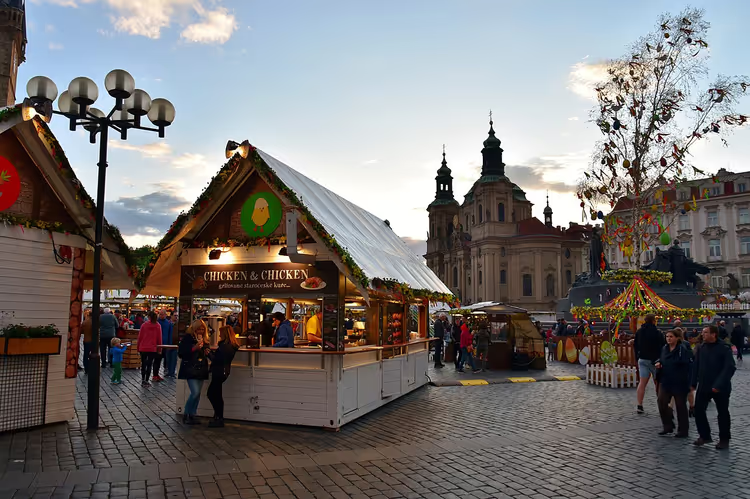
For the cities, May, June and September are the most pleasant: it is warm, and there are fewer tourists than at the height of summer. In July and August, Charles Bridge and Český Krumlov get crowded. In winter it gets dark early, but after the New Year holidays Prague empties out and the museums have no lines. In late November, Christmas markets open in Prague on Old Town Square and Wenceslas Square, and before Easter the same squares host Easter markets.
Houska Castle receives visitors from April through October. Hluboká is open almost all year, but in the cold months it runs a separate winter route, so check the schedule before you set out. June or September is the recommended time for South Moravia: the weather is mild and the lines are shorter. In September the harvest is also under way, and Znojmo and Mikulov hold their wine harvest festivals.
In the spa towns of West Bohemia, fall is good value: from mid-September to early November the spa houses lower their prices, and the colonnades and springs are open all year. The ski season usually runs from December through March.
| Time of year | What is happening | Where to go |
|---|---|---|
| May, June, September | Warm, with fewer tourists than at the height of summer | Prague and the other cities |
| July and August | Charles Bridge and Český Krumlov get crowded | Prague early in the morning; book timed tickets a few days ahead |
| September | Harvest, wine harvest festivals in Znojmo and Mikulov | South Moravia |
| Mid-September to early November | Spa houses lower their prices, colonnades and springs are open | Spa towns of West Bohemia |
| Late November and December | Christmas markets on Old Town Square and Wenceslas Square | Prague |
| After the New Year holidays | It gets dark early, but the city empties out and the museums have no lines | Prague |
| December through March | Ski season | Krkonoše, Ore Mountains, Šumava |
Twelve months compared: find the best time to go
Our articles on this
- When to go to Prague: weather, crowds and seasonality by month
- Prague Christmas markets: dates, opening hours and where there are fewer crowds
- Easter markets in Prague: dates, traditions and menu
- New Year in Prague 2026: where pyrotechnics are banned and what works during the holidays
- Skiing in Czechia: how much a ski pass costs and where to ski
- Prague in winter: 8 quiet walks without crowds
- Prague in August 2026: 12 events, evenings on the Vltava and a plan against the heat
Budget: how to work out your own total
The cost of a trip to the Czech Republic is made up of four blocks: accommodation, transport, food and entrance tickets. The biggest lever is accommodation: a hotel night easily outweighs transport and tickets combined, and the gap between Prague's historic center and the districts a few stops away is more noticeable than the gap between hotel categories.
Where saving really works: a lunch menu at midday instead of dinner in the tourist core, and a hotel outside Prague 1. A lot in the country is free: Charles Bridge, the squares and courtyards of Prague Castle, the grounds of Vyšehrad, the mineral springs in the spa towns. At a spa, add the spa tax to the package price, and in Bohemian Switzerland add parking, which eats into the budget faster than tickets do.
You work out your own total in the calculator. It separates accommodation, food, city transit, entrance tickets, travel and a reserve, so you can see which item pushes the total up.
Calculate a travel budget for the Czech Republic
Our articles on this
Routes: the first trip and beyond
Four to five days are enough for a first visit to the Czech Republic. Give Prague two days, one of them for the outing to Karlštejn. Another day each goes to Český Krumlov and Pilsen, Olomouc is easy to see on the way to Brno, and the Moravian Karst needs a day of its own.
Prague itself can be laid out over one, two, three or seven days. For a short visit two are enough: one for Prague Castle, the Lesser Town and Charles Bridge, the other for the right bank with Vyšehrad and the Jewish Quarter.
A second trip usually goes to a single region. South Moravia means six stops: Mikulov, Lednice, Valtice, the Reistna colonnade, Brno and Znojmo, which comfortably take four to five nights. Bohemian Switzerland fits into two days: the Pravčice Gate in the morning, and the Kamenice gorges by boat the next day.
Day planner: check what fits into one day
Our articles on this
- Six stops in South Moravia: Lednice and Valtice castles, Brno and Znojmo
- Prague in 3 days on your own: day by day itinerary, tickets and queues
- Prague in 2 days: a route along both banks with prices and opening hours
- Prague in 7 days: route by districts, tickets and opening hours
- Prague in one day: a walking route to 20 places with prices and tickets
- Karlovy Vary in one day on foot: 20 places, colonnades and viewpoints
- Prague Castle in half a day: a ten-stop route with prices and hours
- Prague Castle without the queue: half-day route and opening hours
- Prague in half a day on foot: Charles Bridge, Loreta and Strahov Library
- Walking route through Nove Mesto: eighteen spots in one day
Practical matters: money, connectivity, insurance
In the Czech Republic you pay in crowns, not euros. Cards are accepted almost everywhere in hotels, restaurants and stores, and a small supply of cash is needed for the spa tax, the market, small cafes and minor vending machines. Exchange offices with bright signs on the tourist squares give a poor rate: withdraw crowns from an ATM or exchange money at a bank.
A paper ticket for city transit in Prague is validated as you board, and without the stamp the inspector will write you a fine; tickets cost less in the app. Fireworks are banned in Prague on New Year's, and on January 1 large stores are closed all day.
Check the roaming terms for the Czech Republic with your own carrier before you travel. An eSIM is a backup way to have internet from the first minute: for maps, tickets on your phone and contact with the hotel. Take out travel insurance before you leave and read exactly what it covers.
Build a packing list for a trip to the Czech Republic
Ad
See eSIM options for the Czech Republic on Yesim
We earn a commission through this link; your price stays the same.
Ad
See travel insurance on World Nomads
We earn a commission through this link; your price stays the same.
Our articles on this