
















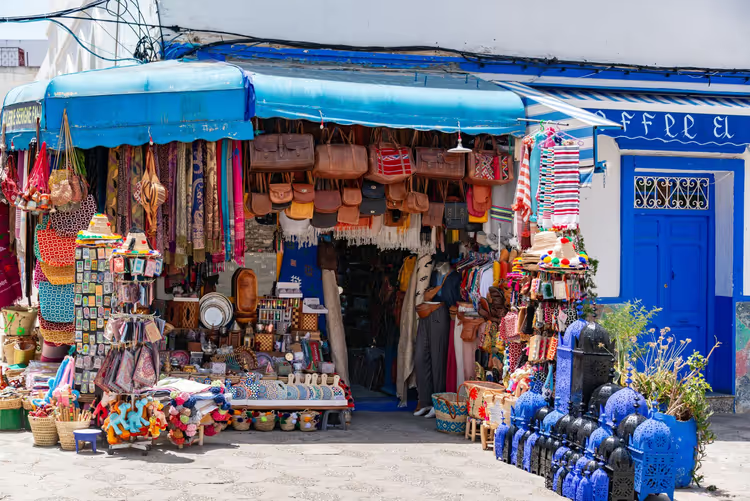
What to bring from Tunisia: 7 souvenirs from Nabeul ceramics to a copper cezve
Tunisia's markets sell things you won't find in duty-free. Copper cezves, painted plates, carpets, and dates travel home with tourists. But some purchases break in the suitcase, and some turn out to be cheap fakes.
We've put together seven groups of souvenirs from markets and workshops. For a quality item, go where it's made. Ceramics come from Nabeul, carpets from Kairouan, birdcages from Sidi Bou Said.
What tourists bring home from Tunisia
💡 In short:
- For clothing and shoes, head to the markets of Mahdia and Hammamet.
- Pick up ceramics and glass in Nabeul, Guellala, and Carthage.
- Carpets and silver await you in Kairouan.
- Buy dates, olive oil, and harissa in shops and oases.
- Market and craft assortment: 09/2026, according to the official Tunisian tourism board.
Souvenir | Where to look | Who it's for |
|---|---|---|
Silk, linen, shoes | Mahdia, Hammamet | Those who wear handmade items |
Gold and silver | Jewelry stores in cities | Jewelry buyers |
Carpets | Kairouan | For the home and gifts |
Ceramics and glass | Nabeul, Guellala, Djerba | For the kitchen and table setting |
Copper cookware | Medina markets, Kairouan | Coffee lovers |
Cages and straw | Sidi Bou Said, Gabes | For interior decor |
Dates, oil, harissa | Markets and the Djerid oasis | For food and gifts |
You should pay attention not only to the product but also to where you buy it. The price at a producer's workshop is usually lower than at a stall near the hotel. Plan your trip in advance: on market day, your selection will be larger.
1. Clothing and shoes
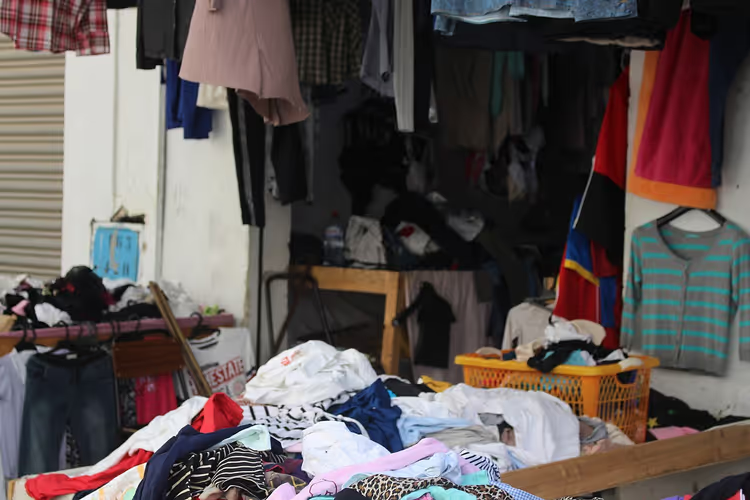
Clothing and shoes take the top spot in almost every tourist's spending. Wool, fabric, and leather have been processed here for centuries, and craft secrets pass from father to son. There are plenty of ready-made items and fabrics on the shelves, and bargaining is almost always appropriate.
 © Csisc · CC BY-SAPhoto: Csisc, CC BY-SA (https://creativecommons.org/licenses/by-sa/4.0), Wikimedia Commons
Silk from Mahdia and linen from Hammamet are a story of their own. They're used to make bright patterned scarves, stoles, large fabric panels, and small bags. These items become an accessory to any outfit.
Modern artisans sew dresses in fashionable cuts using old methods and add gold threads. Wedding outfits from Hammamet are part of the traditional bridal attire. Men are offered a jebba, a long robe, and short serouel pants.
Locally made shoes are primarily crafted from camel leather. There are open sandals for hot weather and neat shoes to pair with a business suit. The pairs are sturdy and practical, but it's best to try on the size in person.
If your size doesn't fit, the workshop will make shoes to order. First they take measurements, then you choose the leather. Custom orders take time, so place them in the first days of your trip.
- Where to look: Mahdia, Hammamet, medina markets
- Who it's for: those who wear handmade items
- The catch: custom shoes aren't made immediately; measurements are taken in advance.
2. Jewelry
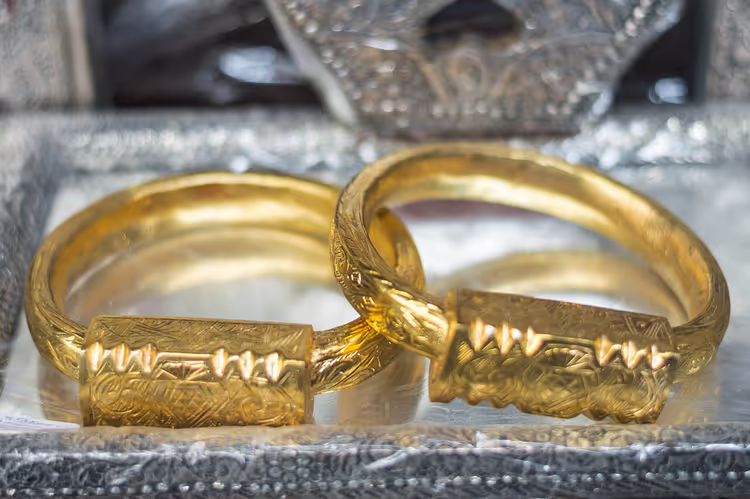
Jewelry is bought in Tunisia almost as eagerly as carpets. Artisans work mainly with high-karat gold and rarely add precious stones. More often, gold is complemented with inexpensive inserts, such as synthetic cubic zirconia.
 © Ryadh Gharbi · CC BY-SAPhoto: Ryadh Gharbi, CC BY-SA (https://creativecommons.org/licenses/by-sa/4.0), Wikimedia Commons
Classic low-karat gold is considered mediocre here. Fine pieces use high-quality gold, so the price is higher than what you're used to. If you need diamonds or white gold, look for them in a specialized store.
Silver in traditional Berber style is also sold there. In 2023, UNESCO added the art of metal engraving on gold, silver, and copper to its heritage list (as of: 09/2026, UNESCO).
- Where to look: specialized jewelry stores
- Who it's for: those buying jewelry as a gift
- The catch: gold with diamonds and white gold are almost never found in ordinary shops.
3. Carpets and home decor
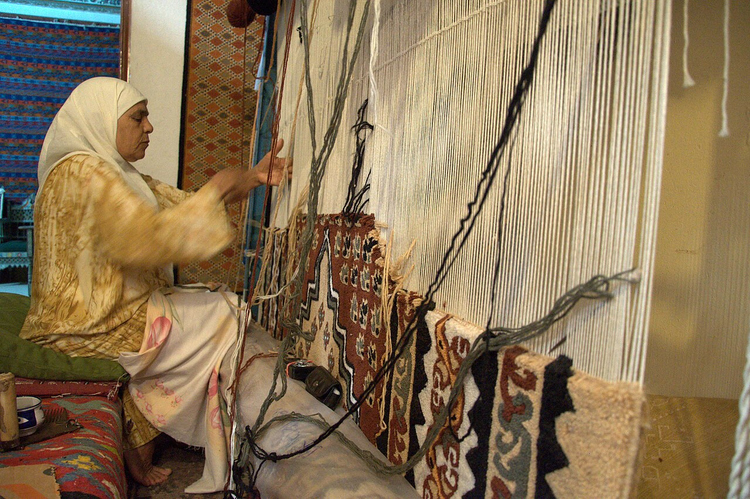
For handmade carpets, people go to Kairouan. The city is known for knot weaving, and almost every family here masters this craft. Choose a carpet by its pile and knot density, not by the picture.
 © Alexandre Moreau · CC BY-SAPhoto: Alexandre Moreau, CC BY-SA (https://creativecommons.org/licenses/by-sa/2.0), Wikimedia Commons
Several types are available. Traditional wool carpets feature "windows of paradise," "jasmine," and "henna" patterns. There are modern striped models and Berber fabric with long pile for cold weather. Handmade silk carpets are the most highly valued.
For lovers of the exotic, sellers will offer pieces with camels, human figures, and other traditional motifs. Check the quality on the reverse side: there you'll see the density of the foundation.
- Where to look: Kairouan
- Who it's for: those looking for a gift for the home
- The catch: genuine carpets are heavy and take up a lot of luggage space.
4. Ceramics and glass
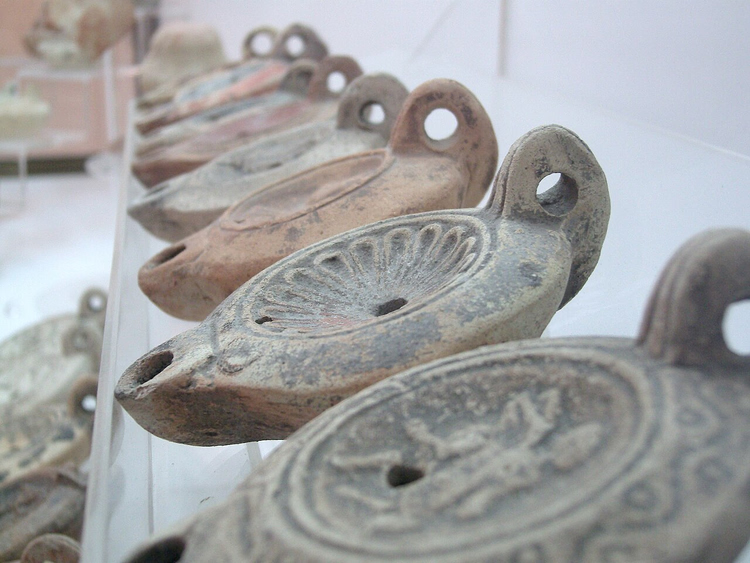
Ceramics are the most convenient souvenir from Tunisia. People travel to northern Nabeul, to Guellala, and to the island of Djerba for them. Artisans use blue, light blue, yellow, orange, and red colors.
 © Habib M'henni · CC BY-SAPhoto: Habib M'henni, CC BY-SA (https://creativecommons.org/licenses/by-sa/3.0), Wikimedia Commons
On the shelves are painted flower pots, decorative plates, and dish sets with candlesticks. In Guellala, items are made from unfired clay: water jugs, containers for oil and spices, couscous sets, and ashtrays.
Glass is a separate category. Traditionally it's made in Carthage, a suburb of Tunis, and on Cap Bon. Look for the Sadika atelier stamp: such pieces are valued by collectors. A glassblowing art museum operates nearby.
- Where to look: Nabeul, Guellala, Djerba, Carthage
- The catch: thin glass and unfired clay break in transit; pack them separately.
5. Copper cookware
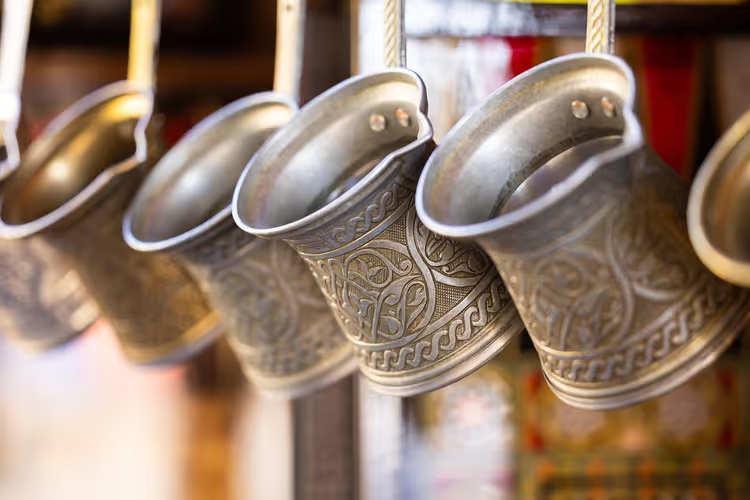
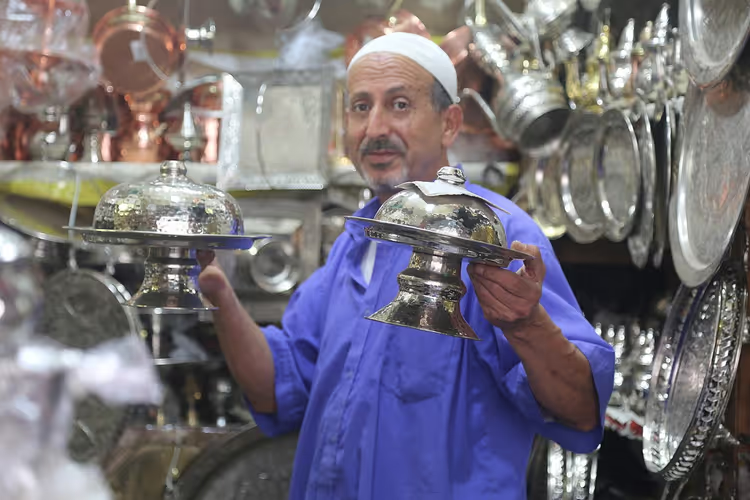
Copper cookware is also considered a classic souvenir. Artisans add other metals to copper and achieve different shades, from the familiar red to a silver-like color. Copper is used to make tableware and cooking utensils.
 © Faiza affes · CC BY-SAPhoto: Faiza affes, CC BY-SA (https://creativecommons.org/licenses/by-sa/4.0), Wikimedia Commons
If you love coffee, the main purchase here is a cezve. Almost no Tunisian cuisine is complete without one. Copper teapots are useful for green tea with mint.
Nearby are small couscous pots, boxes, and carved buckets with a ladle for the hammam. Everything is made by hand, so identical pieces are rare.
- Where to look: medina markets, Kairouan
- Who it's for: coffee lovers and kitchen utensil enthusiasts
- The catch: copper tarnishes over time; it needs polishing.
6. Cages and straw items
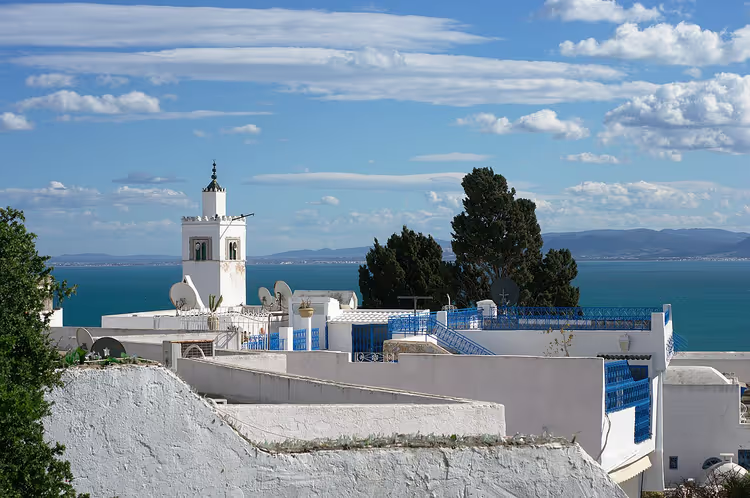
You won't confuse the birdcages from Sidi Bou Said with anything else. They're woven from wicker and wire and decorated with beads. Sizes vary: from tiny ones for decorative birds to structures as tall as a person.
 © Habib M'henni · CC BYPhoto: Habib M'henni, CC BY (https://creativecommons.org/licenses/by/4.0), Wikimedia Commons
Gabes and the oases of Chebika and Mides are famous for straw and wicker. Baskets, chests, and even furniture are woven here. In Gabes, people more often buy floor lamps and lamps, while in Nabeul they buy boxes and furniture pieces.
- Where to look: Sidi Bou Said, Gabes, Nabeul
- Who it's for: those decorating their interiors
- The catch: large human-sized cages won't fit in luggage.
7. Food and sweets
Food holds a separate spot on the souvenir list. Dates from Djerid are considered one of Tunisia's well-known export products. The fruit is harvested in oases on the edge of the Sahara, and fresh dates appear on shelves in mid-autumn.
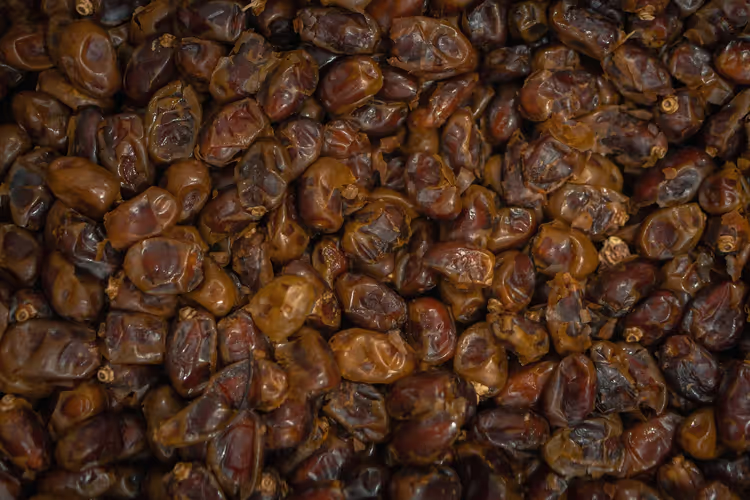
Extra virgin olive oil is sold in shops and stores. The country has dozens of olive tree varieties, so the oil differs in taste. Harissa is rarely found in other countries, but here almost no dish is complete without it. In 2022, UNESCO added harissa to its intangible heritage list (as of: 09/2026, UNESCO).
Look for sweets in pastry shops, where they'll show you fresh baked goods. The base of almost all treats is honey, nuts, and sugar. The taste of the pastries is unusual for Europe but recognizable.
- Where to look: markets, Djerid oases, pastry shops
- Who it's for: for gifts and home cooking
- The catch: oil and dates are heavy, and opened harissa is inconvenient to transport.
⁉️🤔 Frequently asked questions
Where in Tunisia can you buy souvenirs cheaper?
At medina markets and producer workshops, not at hotel stalls. In Nabeul and Kairouan, prices are lower because ceramics and carpets are made there. Confirm the price before buying: at the bazaar you can always bargain and bring the price down.
Which souvenirs from Tunisia are worth bringing home?
Nabeul ceramics, a copper cezve, a Kairouan carpet, and harissa. These items are handmade. Ceramics break in transit, so pack them separately. For gifts, take dates, olive oil, and sweets with honey and nuts; they're easy to carry in a sturdy box.
Can you take carpets and large cages out of Tunisia?
Yes, but large items won't fit in a suitcase. Cages from Sidi Bou Said can be human-sized, and Berber carpets are heavy and bulky. Confirm packaging and shipping with the seller in advance so you don't leave your purchase at the hotel. To export a carpet, ask the seller for a certificate or ONAT stamp.
Is the gold sold in Tunisia real?
Ordinary shops more often carry high-karat gold without precious stones, sometimes with cubic zirconia. Large pieces with diamonds and white gold should be sought in specialized stores. Ask for a certificate and receipt for every purchase; that's how you protect yourself.
What should you bring from Tunisian food?
Dates from Djerid, extra virgin olive oil, and harissa. Fresh dates appear in mid-autumn. Buy oil in dark containers and harissa in a glass jar. Pastries with honey and nuts are easy to carry in a sturdy box.
In short: what's worth booking
Before your trip, decide what you'll bring home and calculate your luggage weight.
- If you have little space: take harissa and a copper cezve.
- If you want a large gift: look at a Kairouan carpet.
- If you're looking for jewelry: take Berber silver or high-karat gold.
Check market days and workshop offerings on the official Tunisian tourism board website before your trip.

A small editorial team writing guides for independent travel. We travel ourselves, but we haven’t been everywhere, so we check prices, opening hours and how to get there against official sources.