
















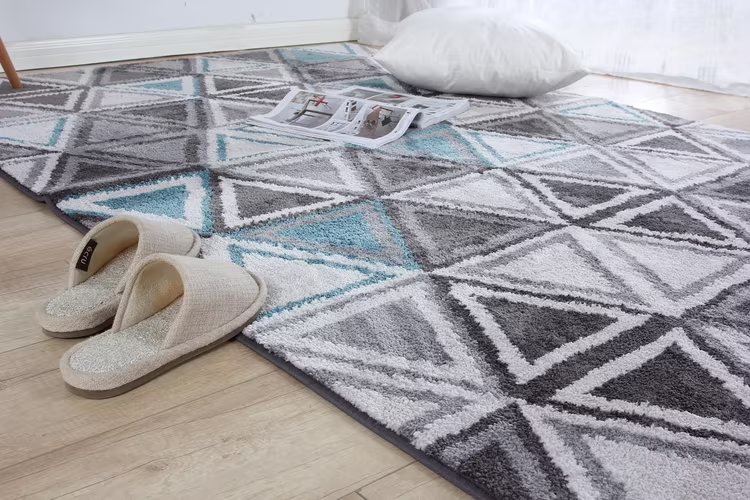
Handmade carpet: how to check the knot and density when buying
A handmade rug costs noticeably more than a machine-made one, and the difference is not obvious at first glance. Manufacturers mix hand-knotted and tufted techniques, so fakes end up even in good showrooms. You can check a piece yourself if you know where to look.
The density of a quality rug reaches up to a million knots per square meter (according to Teppich-Fibel, checked 10/2026). Each knot is tied by hand, so such a piece cannot cost the same as a factory rug. You will see the difference from the back side in one minute.
What a handmade rug is
💡 In short:
- A handmade rug is knotted one knot at a time on a loom, so the back side mirrors the front pattern.
- The price is determined by density, material, and knot type, not just the brand.
- Knot density and the speed of a weaver's work: 10/2026, according to Teppich-Fibel.
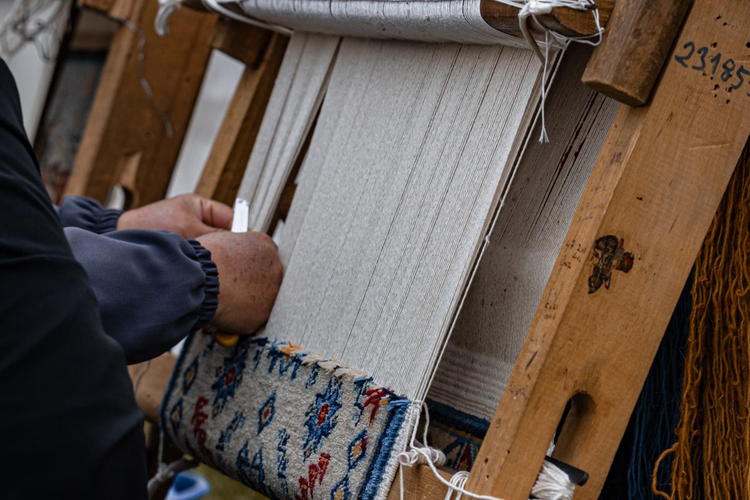
A handmade rug is created on a vertical loom. The weaver ties each knot around the warp threads and then trims the pile with scissors. The finished piece is held together by tens of thousands of knots, not by a glue backing.
This kind of piece differs from tufted and machine-made rugs. Tufting punches yarn through a fabric with a needle and fixes it with latex: the process is faster and cheaper. A machine loom turns out meters of rug per hour. A weaver ties from 5,000 to 12,000 knots per day. A simple rug of two by three meters takes months, and a dense one can take up to a year of work. That is how you will immediately understand whether a piece is handmade or factory-made.
Design from Germany, craftsmanship from workshops
Modern rugs are often designed from German sketches and knotted in workshops in Asia. Design studios in Germany draw the pattern and select the colors, while the knots are tied by hand in Nepal, India, or Turkey. This approach combines precise calculation with the old technique of hand weaving.
One of the leading figures in this direction is Jan Kath from Bochum. He combines classic oriental rug ornaments with modern minimalism. Among the German designers in this circle are also Stefan Diez and Katrin Greiling.
The German rug store SayRug.de works on the same principle. According to the store's description, its collection combines German design concepts with handwork from workshops in different countries. Before buying, you can check the design and knot against the signs below.
How to tell handmade from machine-made
The first sign: the back side. On a handmade rug it is soft, with raised knots and a clear pattern that mirrors the front. On a machine-made rug the back side is smooth, with an even grid and a glue backing.
The second sign: the edge. A handmade piece has a living, uneven edge, because it is knotted, not cut. The third sign: the pile. On a handmade rug it varies in height, on a machine-made one it is uniform.
Examine the rug in daylight and touch the pile with your hand. Fold back a corner and look at the foundation: if you see glue and a woven grid, you are looking at tufting or machine work. Ask to see the back side before paying, not from a photo in a catalog.
Quality criteria: knot and density
Density is measured in knots per square meter. The more knots, the finer the pattern can be rendered: a curl, a smooth color transition, a thin border. A dense rug with a million knots per square meter takes several years to knot. Count the knots on a square decimeter of the back side and multiply by one hundred, this will give you an accurate reference point.
Criterion | What to check | How it looks on a handmade rug |
|---|---|---|
Back side | relief and pattern | soft, with knots, mirrors the pattern |
Edge | edge finishing | knotted and living, without machine stitching |
Pile | height and evenness | varying height, not uniform |
Foundation | presence of glue | threads without latex fixing |
Density | knots per square meter | up to a million on fine pieces |
Look at the knot itself more closely. The asymmetrical (Persian) knot gives a fine pattern and high density, the symmetrical (Turkish) knot holds a larger ornament. For your home this means a simple thing: the finer the pattern in the photo, the more time went into the rug.
Materials and fiber properties
The foundation is usually woven from cotton, and the pile from wool, silk, or plant fibers. Wool holds its shape and does not flatten for years, so it is chosen for living rooms and hallways. Silk gives a fine pattern and a light sheen, but fades in the sun.
Modern studios increasingly use recycled fibers and plant materials. This reduces the strain on raw materials, but does not always improve wear resistance. Touch the pile with your hand: wool is warm and springy, silk is cool and smooth, synthetics feel slippery. This way you will choose the right material for your room.
Material | Pros | Characteristics |
|---|---|---|
Wool | springy, holds its shape | sensitive to dampness and moths |
Silk | fine pattern, sheen | fades in the sun |
Bamboo silk | soft, more affordable | less wear-resistant |
Cotton | strong foundation | does not hold pile |
Hemp | strong, coarser | for modern interiors |
What determines the price of a rug
The price is made up of the weaver's time, the material, and the design. A dense piece is knotted for months, so a rug cannot cost the same as a factory one. Compare offers by characteristics, not by price per square meter.
Factor | How it affects the price |
|---|---|
Density | higher density, more weaver time |
Material | silk is more expensive than wool, cotton is cheaper |
Size | price grows with the area of the piece |
Designer design | a named sketch costs more than a mass-produced one |
Fair production | certification adds to the cost |
A separate part of the price: fair production. The Label STEP certificate is issued to companies, not to individual rugs: the seller confirms that the entire handmade range meets fair trade rules (according to Label STEP). A second reference point: the GoodWeave mark, which confirms the prohibition of child labor in production (GoodWeave).
Be careful with prices without documentation. If a silk rug costs the same as a wool one, check the knot and the country of origin. Exact amounts depend on exchange rates and sizes, so ask the seller for the specifications in writing, this will protect you from substitution.
Care and storage
A handmade rug is easier to care for than it seems. Vacuum the piece once or twice a week with a smooth attachment without a brush, so as not to pull the pile. Once a year, turn the rug over and air out the foundation, this way you will preserve the pile and the shape of the piece.
Blot a stain with a napkin, do not rub. Absorb liquid from the edge toward the center, so the mark does not spread. For deep cleaning, call a professional: wool felts in a washing machine, and the pile loses its shape.
Store the rug rolled, not folded. Folding leaves creases on the knots and wears down the pattern. Choose a dry place, away from direct sun and dampness.
⁉️🤔 Frequently asked questions
How do you tell a handmade rug from a machine-made one in a minute?
Fold back a corner and look at the foundation. On a handmade piece it is soft, with raised knots and a pattern that mirrors the front. On a machine-made rug the back side is smooth, with a woven grid and glue fixing. The pile on a handmade rug varies in height, on a machine-made one it is uniform.
Why is a handmade rug so expensive?
The price is determined by the weaver's time, the material, and the complexity of the pattern. A weaver ties from 5,000 to 12,000 knots per day, so a dense rug is knotted for months. Plus silk and wool cost more than synthetics, and a named design adds to the price.
What does the Label STEP certificate mean?
Label STEP is issued to companies, not to individual rugs: the seller confirms that the entire handmade range is made according to fair trade rules. The GoodWeave mark complements it and confirms the prohibition of child labor in production.
How do you care for a handmade rug?
Vacuum the rug with a smooth attachment without a brush and turn it over once a year to air out the foundation. Blot stains with a napkin from the edge toward the center, do not rub. Entrust deep cleaning to a workshop that works with handmade rugs made of natural fibers.
Can you wash a handmade rug in a washing machine?
No. In a washing machine, wool felts and the foundation loses its shape. Home washing wipes out the value of the piece. For deep cleaning, look for a workshop that gives a guarantee for work with handmade rugs.
In short: how to choose a handmade rug
A handmade rug costs more, but holds its shape for decades and handles cleaning well. Evaluate the piece by the back side, density, and material, not by a photo in a catalog.
If you need a rug for the living room, take wool with a short pile. For the bedroom, soft silk or bamboo silk works well. Before paying, ask to see the foundation and the edge in daylight.
If you want to compare ready-made options, look at the handmade rug collection from SayRug.de. There German sketches are combined with the work of workshops. Still, check any purchase in person.

A small editorial team writing guides for independent travel. We travel ourselves, but we haven’t been everywhere, so we check prices, opening hours and how to get there against official sources.