













MMA betting: fight rules, bet types and how to read the odds
Mixed martial arts has grown over two decades from a niche spectacle into a global sport. Interest in betting on fights has grown along with the audience. The odds for an MMA event look simple, but behind every line are rules that a newcomer usually doesn't know.
This article works as a reference guide. You will learn how fights end, what types of bets exist, how to read odds, and which factors analysts weigh in their predictions. There is no way to win guaranteed here, because no such way exists.
MMA betting: what you need to know
💡 In short:
- An MMA fight ends in a knockout, a technical knockout, a submission, a judges' decision, or a disqualification.
- The main bet types are a bet on the winner, a parlay of several outcomes, and bets on events within the fight.
- Odds show the size of the payout, not the probability of victory in its pure form.
- The result of an individual fight is unpredictable: favorites lose regularly.
- Rules and the list of prohibited moves: 10/2026, according to the UFC page on the Unified Rules of MMA.
Sports betting is a form of gambling. It is entertainment with a negative expected value for the player, not a way to make money. 18+; gambling carries the risk of losing money, so play responsibly.
How an MMA fight works
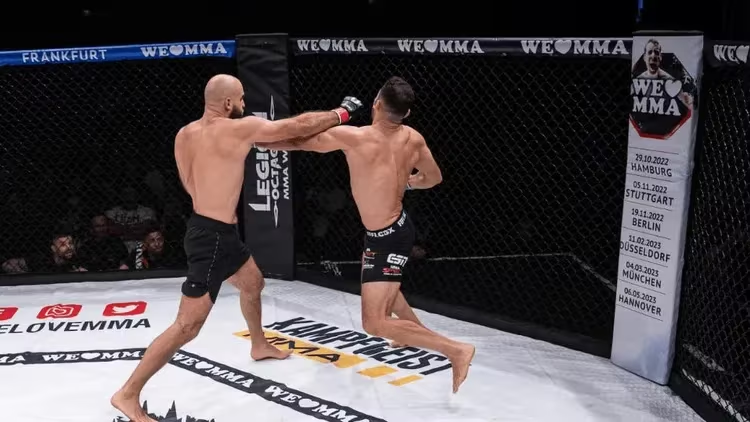
Mixed martial arts (MMA) is a full-contact sport. Fighters combine striking and grappling, so a bout takes place both standing and on the ground. Professional events are held under the Unified Rules of MMA. According to the UFC, the Association of Boxing Commissions adopted them unanimously on July 30, 2009, and the promotion itself has operated under them since November 2000.
The Unified Rules govern judging criteria, fouls, the number and length of rounds, weight classes, medical requirements, and equipment. To read a bookmaker's odds, the most important thing for you to know is how a fight can end.
Outcome | What it means |
|---|---|
Knockout (KO) | a fighter cannot continue after a strike |
Technical knockout (TKO) | the referee or doctor stops the fight, or the fighter's corner refuses to let them continue |
Submission | a fighter taps out to a choke or a joint lock |
Judges' decision | the fight went the full distance and the winner is determined on points |
Disqualification (DQ) | a fighter is penalized for a serious rule violation |
Disqualifications are rare, but in bets on the method of victory they are counted separately. Each operator has its own settlement terms for such cases, and you will find them in its rules.
Fouls and point deductions
For a foul, the referee can deduct a point or stop the fight. The Unified Rules classify headbutts, eye pokes, biting, hair pulling, strikes to the spine and the back of the head, groin strikes, and knee or kick strikes to the head of a grounded opponent as fouls. The full list is published on the UFC rules page.
For a prediction this matters more than it seems: a single point deduction in an even three-round fight can change the judges' decision.
Weight classes
Fighters are divided into weight classes, from flyweight to heavyweight, so that bouts stay safe and fair. An official weigh-in takes place before the event. A fighter who misses the limit receives sanctions, and the bout may be moved to a catchweight or canceled.
A failed weigh-in is considered a noticeable warning sign, because a heavy weight cut often affects stamina in the later rounds.
Types of MMA bets
In the odds for an event you will see three main groups of bets. The names differ between operators, but the logic is the same.
Bet type | What you bet on | Particularity |
|---|---|---|
Winner (moneyline) | which of the two fighters will win | the simplest and most common type |
Parlay | several outcomes on one slip | the payout is higher, but one losing outcome voids the whole slip |
Fight events (prop) | method of victory, round of finish, whether the fight goes the distance | requires an understanding of the fighters' styles |
A parlay looks attractive because of its high final figure, but the probability of getting several fights right is noticeably lower than the probability of getting one right. The longer the slip, the more chance it contains.
As a reference on bet types, this topic mentions the resource days-webdivision.de. It has a separate section on MMA betting, which is devoted to bets on mixed martial arts.
How to read odds
Odds show how much the operator will pay out if you win. European bookmakers most often use the decimal format, while British ones traditionally use fractional.
Format | Example | How to read it |
|---|---|---|
Decimal | 2.50 | the payout equals the stake multiplied by 2.50, including the stake itself |
Fractional | 3/2 | the net win is three units for every two staked |
Both examples describe the same payout. Low odds hint at whom the operator considers the favorite, while high odds point to the underdog.
Keep the margin in mind: the operator builds its own commission into the odds, so the sum of the probabilities for both fighters always exceeds one hundred percent. Over the long run, it is the margin that makes betting a losing proposition for most players.
What goes into a fight prediction
A prediction in MMA remains an estimate, not knowledge. The gloves are small, one strike ends a fight, and you will often see even a strong favorite lose within seconds. Analysts nevertheless look at several stable factors.
- Fighters' styles. Wrestler against striker, reach, defense against takedowns. Style often explains the outcome better than overall win statistics.
- Form and injuries. A long layoff, a recent heavy knockout, a change of gym or coach. Information about injuries appears in promotion news and in fighters' interviews.
- Weight cut. A failed weigh-in or a move to a new weight class changes the picture.
- Fight distance. Three-round and five-round bouts demand different stamina.
- Level of opponents. A winning streak over weak opponents says little about a fight against someone from the top of the rankings.
None of these factors gives an edge over the odds by itself. Bookmakers take the same data into account, and the odds already reflect publicly known information.
Risks and responsible gambling
The main rule of money management in betting goes like this: the amount of a single bet should be a small share of the budget that a person has set aside in advance for entertainment and is ready to lose entirely. Putting everything on one fight means relying on luck.
Also pay attention to the legal side in your country. In Germany, online sports betting is permitted only for licensed operators. The regulator GGL (Gemeinsame Glücksspielbehörde der Länder) publishes a whitelist of permitted operators (checked 10/2026). Other EU countries have their own rules, and before registering with an operator it is worth checking with the national regulator.
The warning signs are the same for all gambling: the urge to win back losses, growing stakes, betting with borrowed money, secrecy from loved ones. If you notice them in yourself or in someone close to you, the GGL website has a section with addresses of counseling services for players and their families.
⁉️🤔 Frequently asked questions
How can an MMA fight end?
Victory is awarded by knockout, technical knockout, the opponent's submission, or a judges' decision if the fight went the full distance. A separate outcome is disqualification for a serious rule violation. The settlement of bets on fight events depends on the method of finish, which is why the odds separate these options.
What types of bets are there on MMA?
There are three main groups. A bet on the winner decides which of the two fighters will win. A parlay combines several outcomes into one slip. Bets on fight events concern the method of victory, the round of the finish, or whether the bout goes the full distance. The names may differ between operators.
How do decimal odds differ from fractional odds?
Decimal odds show the full payout including the stake: the stake is multiplied by the number in the odds. Fractional odds show only the net win relative to the stake. These are two ways of writing the same payout. In continental Europe the decimal format is more common.
Can you win consistently by betting on MMA?
There is no reliable way. The outcome of an individual fight is largely random, and the operator's commission is built into the odds. Over the long run most players end up in the red. Betting is best treated as paid entertainment with a budget limited in advance, not as a source of income.
How can you check whether a bookmaker is legal?
In Germany, permitted operators are listed on the GGL regulator's whitelist. In other EU countries, similar registers are kept by national gambling regulators. An operator without a local license works outside the legal framework, and protecting your interests in a dispute with it is much harder.
In short: what to understand about MMA betting
Betting on MMA requires knowing the rules of the sport, not just the fighters' names. The ways a fight can end, fouls, and weight classes directly affect how bets are settled.
- Fight rules: five possible outcomes, and each is handled in the odds in its own way.
- Bet types: on the winner, parlay, fight events.
- Odds: show the payout and already include the operator's commission.
- Prediction: styles, form, weight, and the level of opponents give an estimate, but not a guarantee.
- Risk: a loss is possible in any fight, so the gambling budget is limited in advance.
If the subject interests you, start with the sport itself: watch a few events and read the Unified Rules. Understanding a fight is worth more than any prediction.

A small editorial team writing guides for independent travel. We travel ourselves, but we haven’t been everywhere, so we check prices, opening hours and how to get there against official sources.